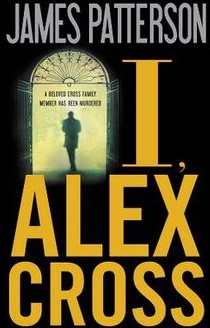
To be clear, I usually don’t believe in conspiracy theories, but I might talk myself into believing this one, if only because I came up with this theory myself. The Great American Read is a PBS (Public Broadcasting System) sponsored vote, listing the most popular 100 novels, chosen in the United States. It’s a great idea, letting readers choose their favorite novels, with some conditions, such as only one book per author, and a popular series will get consolidated to its first book.
That’s not the conspiracy part.
One of the books/series listed is the Alex Cross series by James Patterson. If this Great American Read is based on quantity, I could see why Alex Cross might be included. James Patterson has written a lot of books. Any list involving quantity has to include James Patterson. If we’re talking quality, however, Patterson shouldn’t even be sniffing this list.
Here’s the conspiracy (that nobody is talking about). I don’t believe anybody really chose a James Patterson book as a favorite. I think (with no evidence to support me) that the original voting for the top 100 books was rigged in some way. According to the PBS website, YouGov conducted the original poll with a sample of 7200 people and asked what their “most-loved” novel was.
I’m not suggesting that James Patterson had people voting for him in the YouGov poll. I would never make an accusation like that. I have no proof, and I don’t care enough to research it. If he’s secretly having employees (coauthors) vote for his Alex Cross books, that would be pretty funny (and sneaky). If he’s openly courting his fans to vote, that’s almost unfair. Most authors (especially the dead ones) won’t lobby. I’m not sure I can trust a poll that would say that anybody’s most-loved book is a James Patterson novel.
Why would anybody choose a James Patterson book as his/her favorite? I’m trying to comprehend this; out of all the great novels/series out there, somebody out there likes the Alex Cross series more than anything else. At best, an Alex Cross book is okay. It’s great for the airport when your mind is mush waiting for the legal drugs to kick in before the flight. It’s great when you’re a blogger with writer’s block and need a topic; you can always fall back on the crappy writing in the new James Patterson book. But a favorite? I don’t get it.
Even worse, the Alex Cross series starts wit the letter A (for Alex), so everybody who goes to the Great American Read website will see Alex Cross by James Patterson as one of the top books/series on the list. It might not help the book in its next round of voting, but it probably boosts Patterson’s ego. Yeah, he’s really pulled a fast one on the publishing industry.
To PBS’s credit, there is a section (Share Your Story) where readers can post about their favorite books. A lot of websites wouldn’t allow readers to express their views today. I’ve seen a bunch of BOOKS YOU MUST READ lists on websites that don’t have a comments section. But this Great American Read has a place to comment (and it’s NOT a gallery either). Out of all the books shared in the Share Your Story section, not one has mentioned a James Patterson novel. I admit, it’s early, but I’ve read hundreds of selections on that page so far, and from what I’ve seen, Patterson is getting shut out. He needs to step up his game and get a student from his Masterclass to write up an Alex Cross novel and say how it changed his/her life.
Maybe my conspiracy theory is lame. The only evidence is my belief that nobody would choose a James Patterson novel as a most loved. Patterson is like Arby’s, the fast-food place that comedians love to make fun of; it’s nobody’s most-loved, but it’s okay if you’re desperate. In fact, I believe that more people would choose Arby’s as their favorite fast food place than would choose a Patterson novel as their most-loved. I’m not sure I can afford a YouGov poll to prove this, so I’ll just yell it with enough confidence and repeat myself at least one time for every book that James Patterson has written.
If I do that, my conspiracy theory will be taken seriously. Or people will think I’m crazy.
*****
What do you think? Is it plausible that a James Patterson novel would be anybody’s “most loved” book? Does my first conspiracy theory have merit, or am I quickly descending into madness?

(image via wikimedia)
I should have been glad a female in my dorm was interested in me. The first couple months of my college life, what I thought was going to be a crazy college sex comedy, were just new chapters of my unintentional young adult celibacy farce. You’d think I would have jumped at the chance to have a girlfriend like Brenda. She had spiky hair and walked around in a trench coat. To some guys (mostly socially awkward ones in the mid-1980’s), she oozed sarcastic cool. Instead, I found her annoying.
She tried to talk to me at the University Library almost every night. In response, I’d get to the University Library at different times every day and take a different stairwell and then go to a different level, all just to avoid her. I chose small tables that were already at full capacity, just so she knew she wouldn’t be able to sit next to me if she saw me. I even pushed a cushioned chair to a back section of the stacks so that I wouldn’t be found by anybody for hours. When a student-librarian caught me sleeping, I lied and said the chair had already been placed there when I’d found it.
One night when Brenda cornered me, I lied and said I had to do some research with microfiche (remember, this story happened over 30 years ago). I thought for sure the microfiche would scare her off. Nobody wanted to spend time with the microfiche. It took true love or commitment to help somebody with the microfiche. But she did it. And she stayed with me with doing meaningless research with microfiche for two hours. Brenda and microfiche for two hours.
“She wants you,” Kirk said the morning after the microfiche incident as we were getting ready for class.
“Microfiche didn’t get rid of her,” I said. “Something’s wrong with her. I’m okay on a good day, but I’m not good enough to put up with microfiche.”
“Maybe you should give her a chance,” Kirk said. “She’s almost cute. I’d do her, two beers with the spike, four beers without.”
Ted Tinkle was sitting at Kirk’s desk, eating a bowl of grapes. “If she likes you that much, she’ll do anything.” Then Ted Tinkle started bragging about how much his girlfriend liked him, and what she was willing to do. Then he told a story about something crazy his girlfriend did because she liked him so much. It was a good story, but I’m not that kind of blogger, even if this story is supposed to be a college sex comedy.
“I thought you’d like Brenda,” Ted Tinkle said after he finished the story. He ate his grapes with such confidence that he maintained eye contact with me as he pulled several grapes out of the bowl at a time. “She’s weird.”
“Jimmy’s not weird,” Kirk said. Kirk probably thought I was weird, but he had to defend his roommate. He wouldn’t have been able to handle living with a weird roommate.
“But he gets along with weird people,” Ted replied.
That was true. I flipped out whenever anybody called me Scooter, but other than that I was okay. I felt my blood pressure rise as I thought about the nickname Scooter when I noticed that some of the grapes in Ted’s hand were glazed with white. Not white cream, but…
“Ted, your grapes are moldy,” I said, but it took him too long to process what I’d said and he stuffed them in his mouth and chewed.
“Ted!” I exclaimed. “Moldy grapes!”
“What the f***?” Ted sputtered with his mouth full. Then he shrieked and spit the chewed grapes and mold into the dish. He held up a vine with wilted moldy grapes. “I f***ing put these in my mouth. Ugh, and I f***ing swallowed a bunch of them!”
“You’re supposed to look at food when you eat it,” I said.
Kirk shook his head. “Ted Tinkle, Ted Tinkle.”
“Oh God,” Ted started huffing. “I ate a bunch of these. Am I gonna get sick? Oh God.”
“You might want to force yourself to puke,” I said. “Just to be safe.”
“Yeah, yeah,” Ted said and started to put his finger down his throat.
“Not here!” I exclaimed again. “Bathroom, Ted, bathroom!”
Ted Tinkle stumbled out of our room and ran into Brenda who had just turned into the doorway.
“Hey, Spike,” Kirk said.
“Shut up.”
I laughed. I wanted to tell Kirk to shut up a lot too, but I had to live with him.
“What’s going on with Ted?” Brenda asked, watching him run down the hallway. I waited for the gurgle/splatt, but it didn’t happen, at least not in the hall.
“He ate some moldy grapes,” I said.
Brenda smirked. “He’s lucky he’s nice-looking.” Then she turned to me. “Hey, are you going to the comic book store?”
No, I thought. It was Friday, the day the new shipment came in. I always went to the comic book store after my last class on Friday. The comic book store was only a few blocks from campus. I didn’t even have to drive the chevette scooter. Now Brenda was about to ruin it.
“The comic book store?” I asked.
“Sure,” she said. “I know you collect.”
And then it happened. I knew it was coming. I didn’t want her to say it. Please don’t say it, I inwardly begged, but she did.
“I collect too.”
And I knew that in order to get rid of Brenda, I was going to have to be brutally honest with her, which was going to be really awkward… or I was going to have to come up with a better plan.
*****
To be continued in University Library: The Naked Woman in my Dorm Room.
Or you can start at the beginning with University Library: State School .

It’s an interesting question: if you had the choice between being a bestselling author or a Pulitzer Prize winning writer, which would you choose? I like the money that a bestseller would bring in. On the other hand, there are a lot of ways to make money. The Pulitzer Prize is a prestigious award, one of the most prestigious, and prestige is pretty cool too.
Don’t get me wrong, I like money more than I like prestige, but I like the idea of a legacy, and a Pulitzer Prize for Fiction would be a good step. You could brag about that. You can brag about a bestseller too, but there are way more bestselling authors than Pulitzer Prize winners.
Here are recent recipients of the Pulitzer Prize for Fiction. Even though the Pulitzer is prestigious, I didn’t remember all of these titles right away:
2018 Less by Andrew Sean Greer
Even though the cover is cool, the book has a hack title. Less is about a guy named Arthur Less, a struggling writer for whom the narrator seems to feel contempt. Book titles with a character’s name seem lazy to me, but this novel won a Pulitzer, so I guess I can’t judge. Still, when it comes to Pulitzer Prizes, I expect more, not Less.
2017 The Underground Railroad by Colson Whitehead
This is a great novel about the Underground Railroad, but you’d better know your history before you read it. I feel sorry for the U.S. history student who reads The Underground Railroad and then takes a test in U.S. history class about the Underground Railroad. The history student’s results might not be all that good.
2016 The Sympathizer by Viet Thanh Nguyen
As soon as I heard that The Sympathizer had won the 2016 Pulitzer Prize for Fiction, I ran out to the local B&M Bookseller to purchase a copy. I might not ever read The Sympathizer, but I can always brag that I read the book before it won the Pulitzer. After all, I have a copy that was printed before the Pulitzer announcement had been made. I can say I was ahead of the times. I was the trend setter. Yeah, I run the risk of looking like a book snob (and maybe a liar), but people respect book snobs.
2015 All the Light We Cannot See by Anthony Doerr
I’ve written about this book a lot because it was always on the best sellers lists for a while when I did my monthly reviews. I haven’t read All the Light We Cannot See, but I know a lot of people who have (or claimed to have read it), and nobody I know despises this book. Usually a Pulitzer brings about a ton of extra criticism, but I haven’t seen any post-Pulitzer backlash for this like I’ve seen from other winners (especially The Goldfinchand A Visit from the Goon Squad).
If a book can be a long-term bestseller AND a Pulitzer Prize winner and NOT get post-award backlash, then that book must be AWESOME (except saying it’s AWESOME would be setting expectations too high and cause more undeserved backlash).
2014 The Goldfinch by Donna Tartt
This is what I’m talking about, a polarizing Pulitzer Prize winner that’s been a bestseller for a long time. A lot of readers love it, and a lot of readers hate it. Readers complain that it’s too long, too slow, and has sections that don’t make sense or contribute to the story. Others say the book is brilliant. Being “brilliant” implies that that readers who complain about the book just don’t get it. Readers who complain about it might say they “get” it but it’s not as brilliant as readers who love it say it is.
I haven’t read it. By my standards, it’s pretty long.
2013 The Orphan Master’s Son by Adam Johnson
North Korea is a rare setting for a novel, and the author uses a bunch of literary devices to describe all the horrible stuff going on there, so it’s more than just a laundry list of human rights abuses. I don’t like reading about human rights abuses, even when I know they’re fictional.
In The Orphan Master’s Son, the orphan master treats his son more harshly than the orphans in his care. That’s how it goes. When I was growing up, a friend of mine’s mom was a teacher, and one year he had to be in his mom’s class for the whole year, and he was miserable because she was always on his case. I’m sure it wasn’t as bad as being an orphan master’s son in North Korea, but still.
2012 No Award
I respect an award where there isn’t always a winner (or recipient). There shouldn’t always be a winner just because there’s an award available. There should be standards, by God!! If no novel written in 2012 meets those standards, then so be it. I wish the Heisman Trophy (for college football) had a No Award option.
2011 A Visit from the Goon Squad by Jennifer Egan
As a writer, you can’t go wrong with a metaphor as a title. As a reader, I can get confused with metaphors because I’m kind of literal. When I read A Visit from the Goon Squad, I was expecting an actual goon squad. I like books with goon squads. I don’t like goon squads in real life because they’re dangerous, but I like goon squads in literature because they make books interesting. Just so you know, there are no real goon squads in A Visit from the Goon Squad. I hope that doesn’t spoil anything.
2010 Tinkers by Paul Harding
Here’s another polarizing Pulitzer winner. Readers either love it or hate it. Some critics call it poetic, and other say the author tried too hard. I know what those critics mean. In this novel an old man is on his death bed thinking about his life with his family around him. It seems like a common idea.
I’ve read books and seen movies with that concept, but Tinkers uses a lot of metaphors regarding clocks and time. Some critics say the author tried too hard to make this book deep, but Tinkers won a Pulitzer, so who cares? If I’m the author and I’ve won a Pulitzer, I don’t care if critics say I tried too hard. Trying too hard shows you care. It’s better than not trying hard enough.
2009 Olive Kitteridge by Elizabeth Strout
Sometimes when a book title is a character’s name, I get confused. Did Elizabeth Strout write Olive Kitteridge? Or did Olive Kitteridge write Elizabeth Strout? Elizabeth Strout would have been a cool fictional name, and Olive Kitteridge would be a cool author’s name. At least when Jane Austen wrote Emma, she didn’t give Emma a last name. If Emma had been given a last name, I might have gotten Jane and Emma confused too.
2008 The Brief Wondrous Life of Oscar Wao by Junot Diaz
This is the opposite of Olive Kitteridge. Take a character’s name and add a bunch of adjectives to it. Plus, there are tons of pop cultural references in this book. I wonder how it will hold up 20, 50, even 100 years from now. When somebody reads The Brief Wondrous Life of Oscar Wao in 2108, will readers be turned off by all the references that are no longer in the cultural lexicon? That’s the thing about being a Pulitzer Prize winner; it’s forever. At least, it’s forever as long as people still read books.
*****
What do you think? Which book on this list have you read? Is it better to write a bestselling novel or a Pulitzer Prize winner? How many of these novels do you still remember?

(image via wikimedia)
Nobody should be surprised that Anne Frank wrote dirty jokes in her diary. At least, I’m not surprised. I’ve read The Diary of Anne Frank. Don’t be fooled by the picture of an innocent-looking girl on the cover. Her diary gets into some stuff that would have been shocking to a lot of people at that time. The only people surprised by Anne Frank’s dirty jokes probably haven’t read her diary. Maybe they’re just surprised that the jokes stayed secret for so long.
When I was a kid much younger than Anne Frank, I thought George Carlin’s dirty jokes were hilarious, even when I didn’t understand them. Dirty jokes are even funnier to kids because kids know the jokes are forbidden. Everything that’s forbidden is either funny or fascinating to a kid. That’s why kids sometimes giggle uncontrollably in inappropriate situations, like at church or at school.
At least Anne Frank was respectful with her dirty jokes by trying to hide them. She was so good at hiding her dirty jokes that it took more than half a century for some really smart people to figure out what they were. This shows that Anne Frank could have been a lot of things if she had survived the war. She could have been a writer, a comedian, a spy, or all three. I have serious respect for her.
You can’t judge people by how innocent they look. It’s like judging people’s character by how quiet they are. It’s the quiet people you have to worry about. But the quiet (or innocent-looking) people might also write the best dirty jokes. I have no proof of that. I’ve written a couple dirty jokes in my life, which surprises people because I’m kind of quiet. Here’s one that I wrote for my blog a few years ago. At least, I’m pretty sure I wrote it. I’m getting to the age where I’m starting to make up memories. I’m going to be embarrassed if I find out that I didn’t really write this joke.
Rich Guy Gets Off
One night while on vacation, a rich guy finished showering and stepped out naked from his bathroom. When he walked into his bedroom, still naked, he surprised his hot young maid, who was fluffing some pillows. He leered at her. She smiled at him.
And a few hours later he was arrested.
A veteran police officer and a rookie were at the police station discussing the case and the prospects of the rich guy going to prison.
“The defense attorney said it’s an easy case,” the rookie said. “The guy’s going to get off because when the maid told him to get off, he got off.”
“That’s not what the prosecution thinks,” the veteran said. “They said he won’t get off because when the maid told him to get off, he got off instead.”
“Let me get this straight,” the rookie said. “This rich guy might get off because he got off when the maid told him to get off, or he might not get off because he got off when the maid told him to get off.”
“This is worse than ‘Who’s on First?’” said the veteran.
“What are you talking about?” demanded the rookie.
“You’ve never heard of ‘Who’s on First?’” the veteran asked, astonished at the lack of knowledge this young rookie had.
“We already know who was on first,” the rookie said. “We just don’t know how he got off.”
HAHAHAHAHA!!!
I’m not sure it’s fair to compare my dirty joke to Anne Frank’s. I was older than she was when I wrote mine. Plus, I didn’t have to fit mine on one sheet of paper and hide it, like she did. On the other hand, her books have sold a lot more copies than mine, so her jokes should be held to a higher standard. Maybe.
*****
What do you think? Are you shocked that Anne Frank wrote dirty jokes in her diary? Is it wrong to compare your own dirty jokes to Anne Frank’s?
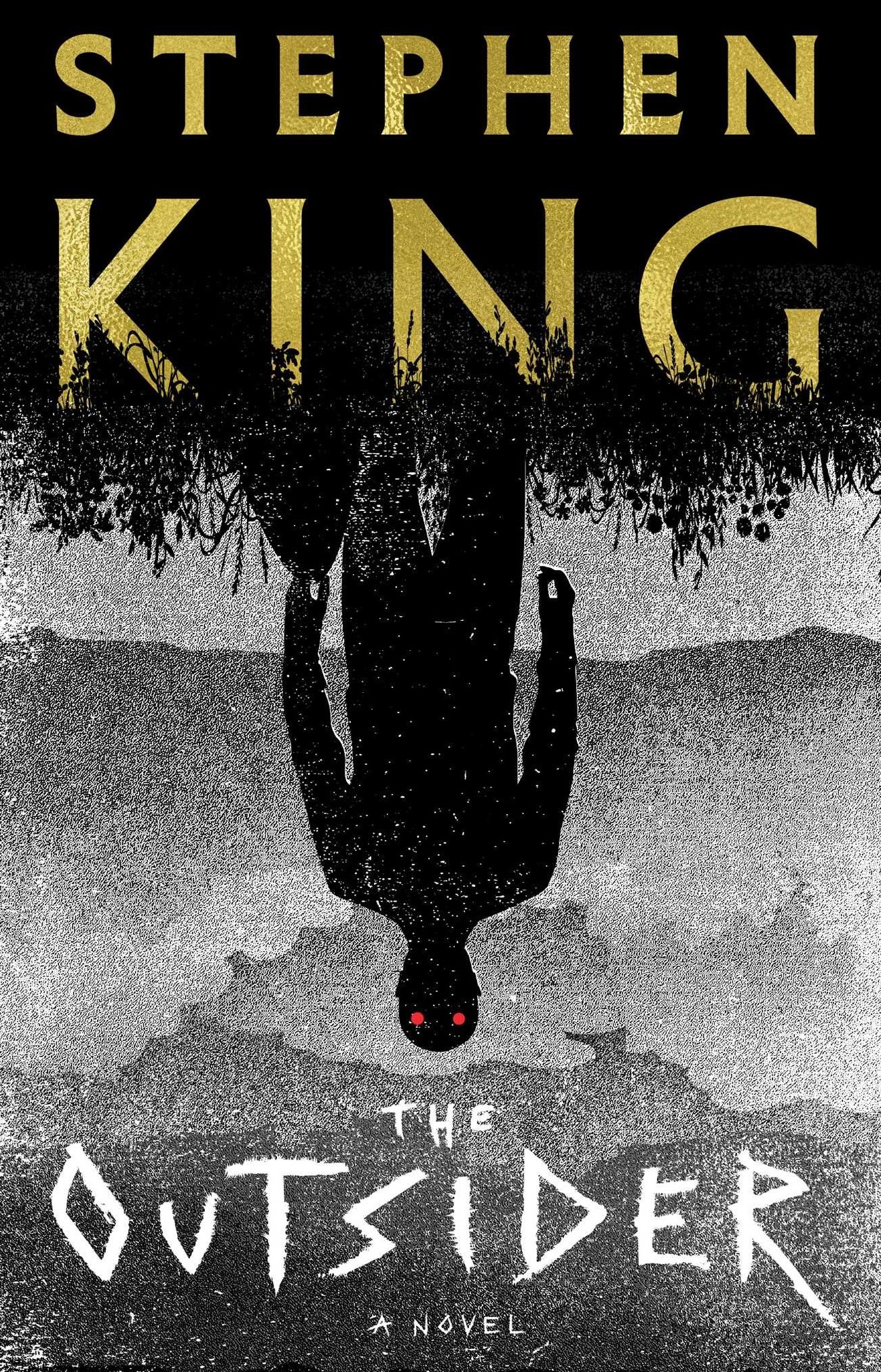
I’ve just started reading The Outsider by Stephen King, and the first victim (I’m guessing there will be more) is a teenage boy who has been mutilated with a bloody stick shoved up his butt. Normally, I wouldn’t be specific about graphic violence, but just last night I saw a scene on a Netflix show where a teenage boy is tortured with a mop stick shoved up his butt. This Netflix show is marketed to teens for them to binge watch, and it’s kind of mainstream.
Is this a new thing for mainstream entertainment, to depict boys getting stuff shoved up their butts? Or is it just a coincidence? I don’t know. The creators of this entertainment might say that the shock can inspire conversation about something that needs to be talked about… like… stuff being forced up kids’ butts? To me, it inspires conversation that mainstream entertainment might be run by a bunch of weirdos.
Maybe I’m wrong (it happens a lot), but sticking stuff up a fictional kids’ butt for shock value is kind of lazy. Killing a kid or torturing a kid in a story should be enough of a shock, if you’re the type who values that kind of shock. Stephen King has a history of writing about shockingly bad stuff happening to kids. If two fictional kids hadn’t had stuff shoved up their butts within a few days of each other, maybe I wouldn’t have noticed it.
The thing is, I wasn’t even shocked by either situation. Both times I thought the creators were trying too hard, which might seem contradictory to my earlier statement that the stuff up the butt was lazy. Both Stephen King and the Netflix show were trying too hard to do something shocking, but they came up with a lazy way to do it.
The bloody stick up the butt isn’t the only problem I have with The Outsider. The dialogue so far is really bad. King’s characters use forced slang. Teenagers refer to the police as “5-0.” An old person talks about his dog doing “a number one and a number two.” An editor should have encouraged King to ease up on the forced euphemisms. These are simple fixes; just refer to the police as “cops,” and say the dog is “taking a dump.” You can never go wrong with talking about “cops” and a dog “taking a dump.” I’m not a bestselling author, but I stand by that advice.
Don’t get me wrong. There are some good scenes early in The Outsider. Despite the flaws so far, it might be worth reading. But Stephen King should be able to write good scenes without the glaring clunkiness. If he can’t do it, then an editor should fix some of the clunkiness. Then again, he’s Stephen King and people will buy the book no matter what, so editors probably don’t want to tick off Stephen King.
If I were an editor with a family and bills to pay, I’d accept whatever Stephen King gave me because I wouldn’t want to get fired. If I were a financially independent editor, I’d red-mark King’s drafts. I’d red-mark them even if the drafts were perfect, just to see his reaction. I’d love to see how Stephen King responds to criticism, now that he can write just about anything.
*****
What do you think? Is it weird that a TV show and a bestselling novel released within a week of each other would feature boys tortured with something up the butt? Is this a trend and I just don’t know about it? Would you red-mark Stephen King’s rough draft if you had the chance?
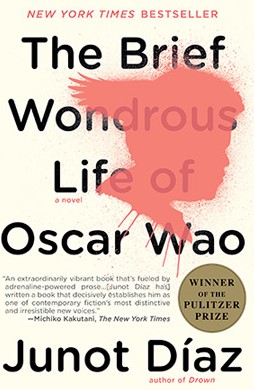
It seems like every segment of society is getting rocked by the #MeToo movement, and publishing isn’t immune. A couple weeks ago a kind of famous author was accused by multiple women of sexual harassment and inappropriate behavior. I usually don’t write about current events and social issues, but this guy who’s been accused wrote a novel that won the Pulitzer Prize for Fiction. He might not be a rich and famous author like Stephen King or James Patterson, but a Pulitzer Prize is prestigious and forever.
I’m not surprised that authors are getting accused of sexual harassment stuff. There’s a hierarchy in the book business, and every hierarchy has the potential for abuse. Plus, a lot of male authors are kind of homely looking awkward guys who might have struggled romantically until they became successful authors, and maybe being a successful author didn’t help much. Being a famous homely author isn’t the same as being a famous actor or singer or athlete. Most people don’t read much, so most people don’t know who the famous homely author is. They just know that he’s homely.
Women who are into literature probably don’t expect to get hit on (or be sexually harassed/assaulted) by a Pulitzer Prize winning author. Women who read books are going to be smarter than the average woman (or man), but they still might not know what to do right away when they’re being sexually harassed/assaulted. Instead of going public right away, they might want to be polite and keep quiet, but that won’t stop the inappropriate/illegal behavior from happening again.
At first, I thought maybe the Pulitzer Prize winning author was just an awkward guy who was clumsy at romantic gestures (until I read more about it). Some guys need a little help at that kind of thing. A normal clumsy guy will stop when a woman tells him to. Some might not get the hint right away but will stop when a woman yells out: “DON’T TOUCH ME, YOU F***ING CREEP!”
It’s probably tough for a polite woman to tell a guy that he’s a F***ING CREEP!!! Polite women like to be precise with their language and follow social norms. Calling a guy a F***ING CREEP to his face (preferably in public) causes a scene, and polite women often don’t want to cause scenes, which unfortunately is why a potential F***ING CREEP would get overly aggressive. If a guy is making unwanted advances, women shouldn’t feel the need to be precise with language or be polite.
DON’T TOUCH ME, YOU F***ING CREEP is a socially acceptable response to an unwanted overly-aggressive advance.
Calling a guy a F***ING CREEP to his face immediately is more effective than waiting a few years to say anything or writing a tweet. Again, I’m not blaming the women for waiting. It’s tough to respond immediately to surprise situations. I’m just saying now that everybody is aware it happens, there’s an effective immediate way to respond.
Just so you know, I was never called a F***ING CREEP in high school… or… uh… any other time in my life. I saw it happen to…. uh… a friend of mine. And it changed… his behavior forever. It even changed mine, and… it didn’t even happen to me.
Sexual harassers aren’t just the average clumsy guy, however, and they might be a bit selective with their potential victims. For example, a former president’s daughter recently interned with a famous Hollywood producer who has been accused of a lot of bad stuff. The Hollywood producer knows to leave a former president’s daughter alone. That producer would instead go after a young woman (or guy) from a no-name middle class family with little money and no clout. A woman (or man) from a family with no clout can often be intimidated into not saying anything.
Victims might feel guilty for making an accusation of sexual harassment or inappropriate behavior. Even in the case of the homely Pulitzer Prize winning author, victims ( or at least one of them) might have been hesitant to say anything because the author was too important to a certain demographic community (just to be clear, it was NOT the homely guy community. The homely guy community as a demographic has no power). If a guy is a F***ING CREEP, then it shouldn’t matter what other demographic group he belongs to. The F***ING CREEP part overrides everything else.
The thing is, I kind of liked the Pulitzer Prize winning novel that author wrote. I don’t think his Pulitzer Prize should be revoked or anything. Maybe an asterisks (or three) should be next to his name. After all, it’s not the Pulitzer Prize’s fault that the author might be a F***ING CREEP.
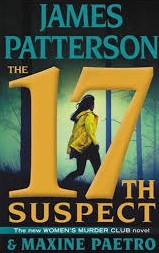
I just read the rough draft of the first seven chapters from The 17th Suspect, the new novel by James Patterson and Maxine Paetro. For a rough draft, it was okay. There’s the possibility of a decent story in that draft somewhere.
The first chapter features a murder with no emotional impact at all, and that can be a problem, but maybe that can get fixed with a couple quick rewrites. Maybe the lack of emotion was intentional, but as a reader, I want to care about what happens to the murder victim (or maybe even the murderer).
The second chapter introduces Yuki Castellano, one of the protagonists. A lot of readers probably know the protagonist from rough drafts of other James Patterson novels, but I haven’t read those rough drafts, so my brain has to fill in a lot of blanks. Filling in the details can be okay sometimes, but the first several chapters with Yuki contain almost all dialogue, and there’s no sense of setting. I’m confident an experienced author like Patterson can fix all that on a rewrite.
So far, this rough draft is kind of blah for a crime drama, but it’s not as bad as some other James Patterson rough drafts. The worst that I’ve read was his Bookshots a couple years ago, but I haven’t read everything James Patterson has written. That’s okay. Rumors suggest that even James Patterson hasn’t read everything he’s written either.
I don’t know about the serial killer in The 17th Suspect, but I think I’ve seen a sexual harassment/rape case like the book’s on a television crime show. There are so many television crime/legal shows that it’s tough to come up with an original case for a novel. I wouldn’t even try to write a murder mystery or legal drama anymore because there have been so many murder mystery and legal drama television shows, and it’s tough reading them too. Why would I spend hours and hours reading a murder mystery when I just saw the same case on some television show that I can’t think of anymore?
The 17th Suspect is the 17th book in the Women’s Murder Club series. I’m guessing from what I’ve read that the women in the murder club solve the murders instead of committing them. Maybe that’s what this series needs after 17 books. One of the women in the murder club can finally snap. It would put the other women in the murder club in a bad position. The good news is that they solved the murder; the bad news would be that their murder club just got smaller.
James Patterson and whatever publishing company that puts out his books have made a fortune writing rough drafts and publishing them. I’m pretty sure (from what I’ve read) that not much effort was put into The 17th Suspect. Writing a series has to get dull after a while. Once you hit double digits, you must get bored with it. The brain yearns for novelty, and this is especially true with creative people. I might mock some of James Patterson’s rough drafts, but I know he’s got an imagination, and writing 17 books with the same characters has to be getting old, even with a co-writer who might be doing most/all of the work.
I’d kind of like to read a book that James Patterson actually put some effort into. I know he can do it. He did it, I think, maybe 25 years ago. He could even advertise this new book (that has been revised several times) as… “The Book I Actually Wrote Myself and Put Effort Into!!!” Even if he wrote the novel in one day, he could still wait six months just make it look like he put effort into it. He could write it in one day, hire a bunch of editors/coauthors to work on it, and teach his Masterclass for five months, and at least pretend he worked on the novel for six months.
Even if James Patterson isn’t writing real books anymore, he could at least pretend.
But I’m not going to hold my breath waiting for that to happen.

(image via wikimedia)
My wife accused me of mansplaining, and I handled it by… mansplaining. Now she’s pissed off at me. That’s the short version.
My wife and I were having a discussion about finances and remodeling. It wasn’t an argument. We’re at the point where we can usually discuss things and disagree without actually arguing. That’s a pretty good place to be in a marriage. The bad part about that, though, is that I can get a little too comfortable with myself and slip up. You should never get too comfortable in a relationship.
Anyway, my wife wants to move ahead with some more remodeling and I want to wait a few more months. I was reviewing the financial numbers with her, going month-to-month, and then week-to-week to show why it would be better to wait (too many unpredictable surprises could happen in the next few months and I want more money to handle those surprises), and my wife accused me of mansplaining.
Mansplaining?
I’d heard of mansplaining before. I knew what it was, but it was one of those things that other men would get accused of. How could I get accused of mansplaining? I consider my wife’s point of view. I have often changed my mind because of my wife’s opinion. It was ridiculous of her to accuse me of mansplaining. As often happens with me when something unforeseen happens, my brain glitches.
“It’s not mansplaining,” I said. “It’s called logic.”
I meant this partially in humor and partially in seriousness, but that combination doesn’t always translate in my monotone voice.
“I meant that to be funny,” I clarified. I’d never been accused of mansplaining, even at work. Most of the women where I work probably mansplain, not because they’re men, but because there’s a lot of… explaining involved… with… stuff that needs… explaining… because it needs to be… explained.
If mansplaining is brought up too early in a relationship, it can destroy it. The woman doesn’t like feeling like she’s being talked down to, and the man doesn’t like being accused of mansplaining, and he’ll get defensive, and then they break up and call their friends and complain to them about how horrible their ex is. The accusation of mansplaining means the point of whatever was said is lost. The man might (or might not) be right, but we’ll never know because the issue has changed to how something is explained.
Luckily, my wife and I have been married for over 20 years. We can handle the mansplaining and the accusation of it. Maybe I can pre-empt any opinion or commentary with a mansplaining alert. If I announce ahead of time that I’m about to mansplain, it might make the mansplaining more tolerable to women who are sensitive to it.
I won’t apologize for mansplaining, though. If I’m a man, then there’s probably a biological reason why I mansplain. There’s also a thing called manspreading, but there’s a biological/physical reason for manspreading, and it makes logical sense for men to manspread when they sit. There must also be a logical reason for men to mansplain too. If I mansplain because I’m a man, then I’m not going to apologize for being a man. If I’m mansplaining for another reason, then it shouldn’t be called mansplaining, and the accusers should apologize to men for falsely diagnosing what they think is wrong.
I don’t think my wife is going to accuse me of mansplaining again. When my daughters heard about it, they laughed in front of my wife. I’m not sure if they laughed at the idea of mansplaining or the idea that I did it, but they laughed in front of my wife. I think my wife was having a bad moment when she accused me of mansplaining, and I don’t mean a female kind of bad moment because that would be a form of mansplaining. I mean, she was having a bad moment like anybody can have a bad moment at any time of the day, week, month, or year.
A man has to be careful when he talks about a woman’s bad moments. If a man’s remarks about his girlfriend/wife’s bad moments are misinterpreted, than a worse argument could happen and that could lead to a break up and any remarks about the situation would be called EX-plaining.
And that’s usually bad for a relationship.
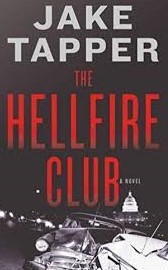
When I first saw The Hellfire Club by Jake Tapper at #3 on the New York Times Bestseller List in its first week, I thought, oh great, another book written by a celebrity.
The author Jake Tapper is a reporter/anchor for CNN, so he knows a bunch of people in the publishing industry. If he doesn’t know them, then he knows a bunch of people who know a bunch of people. And if they don’t know a bunch of people, they know a bunch of people who know a … you get the idea.
Jake Tapper isn’t the only news reporter/anchor/host to write a book. It seems like every on-air personality at FOX News has a book out. It must be written into their contracts that on-air personalities write at least one book every couple years. I can understand a news anchor writing a nonfiction book that is kind of related to current events, culture, or history. I can understand that.
But a novel? Either Jake Tapper is really arrogant, or he’s a pretty good writer, or he hired a pretty good writer who didn’t mind giving Jake Tapper credit. And then that novel hits #3 in its first week? That’s either a pretty good book with quick word-of-mouth, or it’s an author with some serious connections.
Is The Hellfire Club a bestselling novel on its merits? I guess some people would say the “merits” for a bestselling novel would be book sales, but I’m looking at quality of writing. Is Jake Tapper’s writing on par with normal bestselling authors like John Grisham, James Patterson, orDanielle Steel? To be honest, I don’t know because I haven’t read the whole book yet.
But here’s the first sentence:
He snapped out of the blackness with a mouth full of mud.
That’s not a bad first sentence. I’ve read a bunch of first sentences from bestselling novels that are way worse than this.
The first scene isn’t bad either. The pace is okay, the action is easy to follow, the dialogue isn’t clunky or forced. In my opinion, this novel compares favorably to a bunch of other novels in the thriller genre. That might not be saying much when you look at some of the other novels in that genre. Most of the sentences so far in The Hellfire Club are well-written, but there are still a few examples of clunkers, such as:
Charlie exited and joined LaMontagne, who was staring at what at first appeared to be a bundle of discarded clothes in a narrow drainage ditch but upon closer examination proved to be a young woman lying on her right side, facing away from the road, her left arm twisted awkwardly behind her.
This long sentence killed what could have been a dramatic scene. The two characters discover a dead body that will probably be important to the story, but the discovery feels rushed. Sometimes when I see a clunker of a sentence, I fix it, but the last time I fixed a famous author’s sentence on my blog, I missed a few grammatical mistakes in my own writing. True, I write my blog for free, but I try to keep the writing as mistake-free as possible for a guy with a full-time job that has nothing to do with writing.
Anyway, the writing quality so far in The Hellfire Club is okay for a bestseller, but this novel probably wouldn’t be a bestseller if the author wasn’t Jake Tapper, or a guy with connections like Jake Tapper. I don’t blame Jake Tapper. If I were in his profession and had his connections and wanted to write a bestselling novel, I’d do the same thing. You almost have a responsibility to use your connections to your advantage (as long as it’s done legally). I’m not complaining about Tapper using his connections to write a bestselling book. I’m just saying The Hellfire Club probably wouldn’t be a bestseller if the author wasn’t a famous guy with connections.
But it’s still waaaaay better than anything I’ve read by James Patterson.

(image via wikimedia)
First of all, I don’t think Brad Thor is a real name. I’ve always been very clear about that on this blog. I know people have first names for last names sometimes, and I don’t really have a problem with that, but Thor is too cool of a last name. If I met a guy named Jake Hulk or Todd Studd, I’d say those names were fake too.
Secondly, I try to avoid political stuff because it can be so divisive. Yes, politics is everywhere, but we need some unifiers that can always bring people together. Sports, movies, and music can be great unifiers, but political injections can ruin these. The same is true with books. Books can be unifiers too, especially for smart people who like to read. Maybe saying “smart” is biased, but I don’t know too many intellectually-challenged people who like to read a lot. It could happen, I admit, but I don’t see it.
Brad Thor, author of a bunch of military-thriller novels, announced last week that he was thinking about running against President Donald Trump in the 2020 Republican primary. This didn’t get reported a lot on the news. Donald Trump hasn’t tweeted about it (he has other things to deal with first, I guess). Maybe political wonks aren’t taking this seriously (they didn’t take Donald Trump seriously either).
I’m not going to delve into the reasons Thor might run (because that gets political), but since he’s a writer, and I comment about books/writing, I thought I should mention it. I promise I won’t take sides, though. I have my own strong opinions, but I’ll respect readers (who don’t care about my political views) by keeping my opinions to myself.
The best part of Brad Thor’s campaign would be the opposition research (if his opposition feels like he’s worth it). For years I’ve been telling the world that Brad Thor is not really Brad Thor’s real name. I have no proof of this. All evidence that I’ve seen indicates that Brad Thor is Brad Thor’s real name. It’s supposedly not a pen name, but I don’t believe that.
Brad Thor is too cool of a name to be real. It’s so cool that it’s almost like one of those fake joke names like Anita Dick or Eric Shawn. Nobody really gets named Anita Dick or Eric Shawn, unless the parents are intentionally being jerks. Nobody really gets named Brad Thor either. It’s too cool a name, and no parents are that cool.
I wouldn’t mind if Brad Thor just came out and admitted that Brad Thor was a pseudonym. I respect a good pseudonym. I just resent the arrogance of pretending that his cool fake name is real. And now it looks like Brad Thor might make the mistake of running for president.
Running for president is no game. Somebody will find out what Brad Thor’s real name is. And then Brad Thor will have to shamefully admit that he’s been lying all this time about his cool name. Lying about a cool name might not be the worst thing a public figure can do. It might not be worse than using taxpayer money to hire prostitutes or covering up a break-in, but it could be a political career killer. It’s so bad that I can’t offhand think of anybody who’s tried it.
Normally I would say that running for president is a great way to sell more books. But when you have a cool name like Brad Thor, you shouldn’t need to run for president to sell books.


 Dysfunctional Literacy