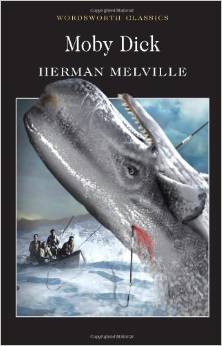
Reading about Moby Dick might be more fun than actually reading Moby Dick.
Classic literature is tough to read sometimes, and a book that gets criticized for this a lot is Moby Dick. Even though there might be books that are more hated than Moby Dick, it seems to be the standard. People who don’t read much aren’t familiar with polarizing novels like Infinite Jest or Finnegans Wake, but everybody’s heard of Moby Dick. Even people who don’t read hate Moby Dick just because of what they’ve heard.
Throughout the course of my life, I’ve been pro-Moby Dick, and I’ve been anti-Moby Dick. Right now I’m ambivalent about Moby Dick. It’s best to write about stuff when you’re not feeling too passionate. After all, you need to see both sides of an issue to be fair. A little passion is necessary for good writing, but too much can make you sound crazy. I don’t want to sound crazy when I’m talking about literature.
Sometimes I tell myself “I’ll never have to read Moby Dick again,” and I smile. I mean, I’m capable of reading Moby Dick. I might decide to challenge myself one final time, and that would be great. Even if I decide to read Moby Dick again, I probably won’t enjoy the experience. If I read Moby Dick again, I might even hate it.
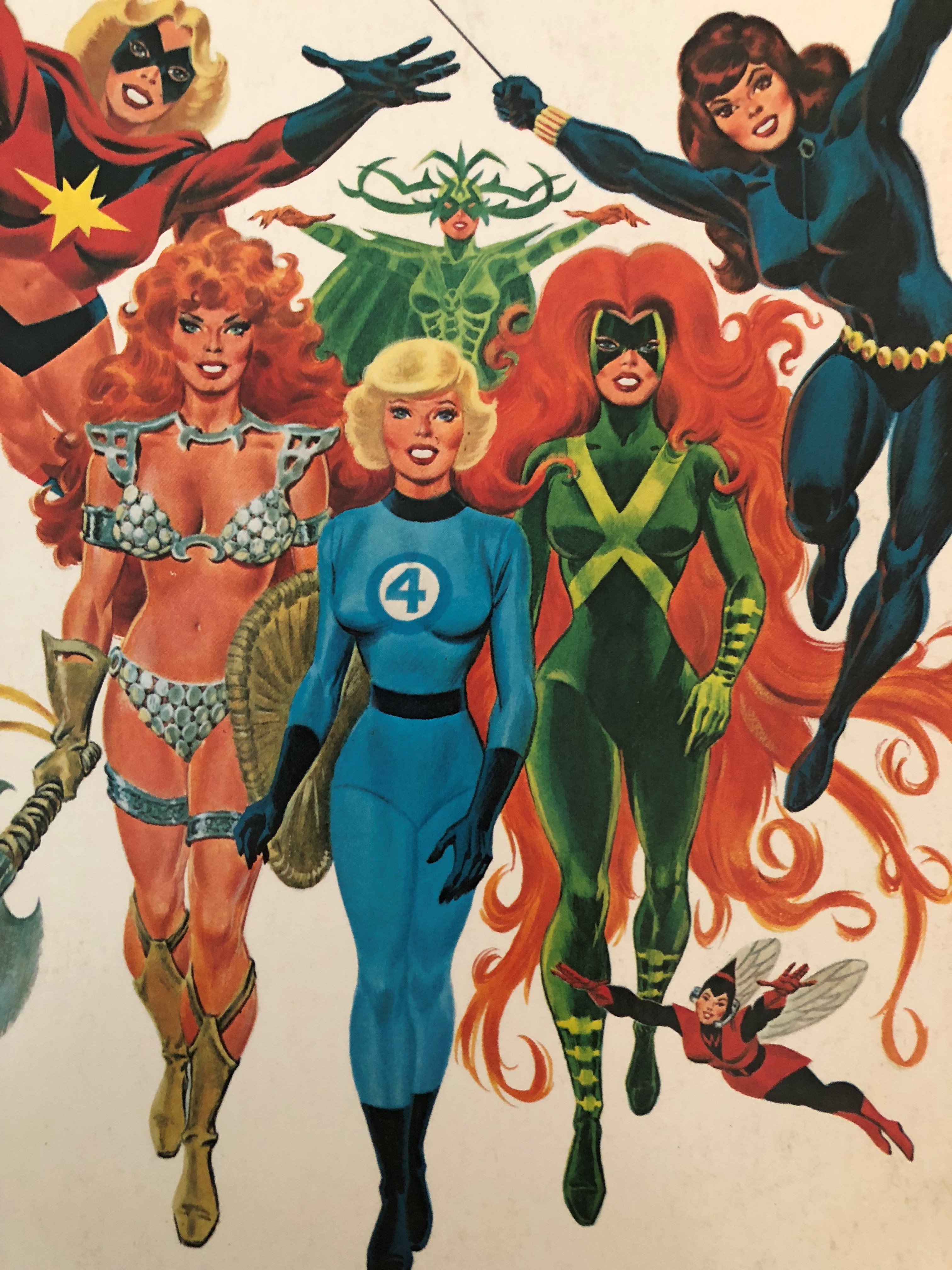
If you mess with these ladies, a hashtag will be the least of your problems! (image from book The Super-Hero Women)
Sexual harassment is easy to deal with in a comic book. If a guy harasses a woman in a comic book, the woman can just punch the guy through three walls. Or she can hit him with a lightning bolt. Or throw him out of orbit. Or send him into another dimension. In a comic book, dealing with sexual harassment and inappropriate behavior would be easy. And maybe even kind of fun.
But real life is different. Now the #MeToo stuff has rocked the comic book world, and it’s not fun for anybody. I mean, it hasn’t exactly rocked the comic book world. This incident doesn’t involve Marvel or DC, so it hasn’t gotten a lot of attention. It involves a bunch of people I’d never heard of, and I probably won’t even mention their names. The only reason I know about it is because a publishing website linked a Comics Journal article about it. Comic book controversies that aren’t Marvel or DC related don’t make it to the mainstream.
The short version is that a small press comic book publisher has been accused of something really bad by one person, and then several other people piled on with accusations of their own, and now the accused is suing the accusers for defamation of character because the accusations have crushed his business.
I wasn’t going to write about this, but a couple things caught my attention.
First of all, one accuser claims that the offender would use comic shows/conventions as “hunting grounds.” I don’t know about you, but I don’t trust a quote when there are only two words in it. That’s from the article in my link, and that article has no link to this quote, so I have no idea what the person quoted actually said. If I were a reporter, I’d at least use the full sentence, unless it was some run-on, in which case I’d use the subject and verb with a nice ellipsis if necessary. To me, a two word quote is always suspicious.
Secondly, I don’t know any guy who uses comic shows/conventions to meet women. Guys go to comic shows because they have a tough time with women (which would also explain a comic book guy’s alleged inappropriate behavior). Even if a comic book publisher is looking for female talent, there are much better places than the comic book show to meet women. To be fair, I’ve seen guys hit on the models dressed up as Wonder Woman or Black Widow or Storm at comic conventions, but these women were quick to reject the comic guys, even if the guys had some money.
Maybe things have changed. Maybe cosplay has changed the comic book hunting grounds, but I don’t think so. Maybe cosplay was invented to bring women to comic shows so that the shows could then become “hunting grounds.” Comic creators can think of some diabolical stuff. That’s why it’s better if comic creators put their efforts into comic books, rather than try to implement their crazy ideas in the real world.
I used to go to comic book shows, and the looking-at-women part of my brain always shut down when I got there. Almost every show had a Wonder Woman, and guys like me didn’t even notice. If Wonder Woman had been standing in the parking lot, maybe I would have glanced at her (in a completely appropriate way), but once I was locked in on the comic books, no woman was going to get in my way. It’s probably a reason why I got a late start on my dating (which I’ve explained a little bit in my blog serial University Library).
Even though I’m surprised a comic book guy would use conventions as “hunting grounds,” I’m not shocked that a comic book guy would get accused of inappropriate (at the least) behavior around women. Comic book guys have a reputation for not being the smoothest of gentlemen. When women friends of mine would read comic books (decades ago), their first comment was usually, “Whoever drew this needs a girlfriend.” A few comic book artists reputedly hung out with a certain kind of dancer, just to get the female proportions in their drawings right, of course. So I’m not shocked that a comic guy would do something creepy, if he’s actually guilty.
Remember, I’m not suggesting that the guy accused in this story is guilty. I’m not taking sides. After all, I don’t want to get sued for defamation of character.
*****
40 years ago, comic books were primarily for kids, and some adults discouraged us from reading them. I think some adults believed comic books weren’t challenging enough. True, they weren’t that challenging, but they were fun, and that was great for kids who hated reading because reading was a challenge to them. Comic books were a gateway to reading for me and some of my friends. I went from comic books to short fantasy novels to actual novels. I went from classic comic books to the actual classics. The Iliad was a tough read, but I did it in 6th grade because the classic comic was so awesome.
Comic books helped me to understand plot structure. Comics got me interested in the classics. Comics gave me common ground with other kids that I didn’t have much in common with (later on, football became my common ground). I learned a lot from comic books. Thankfully, though, I didn’t learn about sexual harassment.

(image via wikimedia)
This wasn’t the best dating situation I’d ever been in. I was on a first date with a woman named Jenny who had great cleavage and an obsession with Garth Brooks (this was before he was super famous). We were at a Mexican restaurant that her ex-boyfriend managed. I’d just met the ex-boyfriend (you can read more about it here), and then, as Jenny and I were eating, my nose began running. It was the kind of itchy running that you can’t sniff back, and it was about to drop out of my nose with Jenny looking straight at me.
I could feel the downpour about to rush out onto my upper lip. I don’t want to be gross about this, but Jenny was staring right at me. If you think you’re disgusted reading a description of snot flowing, think how bad it would have been for Jenny to see this. I wasn’t just trying to save my pride with what I was about to do. I was thinking about Jenny’s feelings too.
I pointed behind Jenny toward the restaurant entrance. “Haha! That guy just tripped over a step,” I said.
Jenny turned around, and I wiped my nose just as the drainage dropped. Jenny was quick and turned back to face me, catching me with the napkin at my nose.
“You’re not slick,” she said. “You okay?”
I was mildly surprised at the question. Women on dates usually pretended stuff like this didn’t happen. I was still in denial mode.
“Fine,” I said, and then I accidentally sniffed really hard. “Coke habit.”
Jenny laughed and then muttered, “You and Bob would get along.”
“I was joking about my coke habit,” I said. I’d rather Jenny thought I had a runny nose than a coke habit.
“I know.” But she didn’t say she was joking about Bob. I wasn’t sure if I should laugh at that or not, so I didn’t. I didn’t want her to think I found humor in her ex-boyfriend’s coke habit. Picturing that goofy-looking guy snort did make me laugh internally, though.
We continued working on our fajita plate, but now we were quiet. It wasn’t awkward because we were eating, and I don’t like to talk too much while I’m eating. But a few bites later, the drip feeling came back. I flexed my nostril muscles silently, hoping the itch and drip would go away, but it didn’t help. I tried a quick sniff and hoped that Jenny wouldn’t notice.
“Coke habit again?”
“I swear I haven’t touched the stuff in months.” I was joking again, and she knew that, I was sure, but I need to know that you as a reader know that I was joking. I usually don’t make coke jokes on a first date.
“I’m going to go wash my hands,” I said. I really didn’t want to deal with my issues in front of her.
I rushed into the bathroom and saw that the two stalls were taken. The urinals were available, but I needed the toilet paper. I hadn’t brought tissue (I learned from this experience), and the paper towel dispenser was empty and the air dryer was rusty, not that it would have done any good. What was I going to do with an air dryer? Stick my nose under it and let the rush of hot air blow it dry? I could hurt my neck trying a maneuver like that.
I sniffed hard and rubbed my nose with my arm, waiting for somebody to come out of the stall. One guy was in for the long haul, it was obvious, but I won’t explain why. I could tell from the angle of the other guy’s shoes that he was ready to come out.
I stood at the sink and pretended to wash my hands when the guy came out of the stall. As he stepped toward the available sink, I bee-lined to the stall and closed the door. I held my breath as I yanked a bunch of toilet paper from the roll. I threw the first batch into the toilet, flushed it, and then stuffed the second batch into my back pocket. Then I took a third batch and stepped out into the open area by the sinks. I blew my nose, threw away tissue, blew my nose, threw away tissue, and blew my nose again. I could still feel the itch.
Despite the stubborn itch, I had to return to Jenny. She was going to think something gross was going on in here if I stayed too long.
I sniffed hard a couple times and tried a leisurely stroll back to our booth. Crap! Bob had sat down across from Jenny. They were laughing about something. She seemed comfortable with him, brushing her hair back and looking him in the eye. To his credit, he wasn’t checking out her cleavage. I hadn’t gotten to the point where I was used to her cleavage yet. I hadn’t figured out yet whether I wanted to get to that point where I’d be used to her cleavage, but I wanted to make that decision myself.
I couldn’t just stand there and let Bob keep talking to my date. He was her ex, and he was sitting in a power position at the booth, and I was in the back of the restaurant with a drippy nose. I had to do something quick. But whatever I did, I didn’t want to embarrass myself. I really didn’t want to embarrass myself.
*****
To be continued in Awkward Moments in Dating: The Misinterpreted Joke!
In the meantime, start at the beginning with Awkward Moments in Dating: The Coworker!

(image via wikimedia)
This seems to be a bad time for the book store Barnes & Noble. Its CEO got fired a couple months ago and is counter-suing for severance pay (read more here) . Barnes & Noble’s stock keeps struggling. A secret potential buyer just pulled out of a deal after looking over all B&N’s financial records (read more here). If you’re a book buyer, you might want to save some extra money for a giant clearance sale in the near future.
Or you can use that money to buy Barnes & Noble.
Supposedly, Barnes & Noble needs a lot of cash. This is no surprise. Everybody needs a lot of money. Even Barnes & Noble’s competitor Amazon needs a lot of cash. Amazon spends more money than it brings in, but its shareholders don’t care because they’re confident in Amazon’s future. They might even believe that Jeff Bezos is going to use Amazon to take over the world and that they will, as shareholders, be major influencers in his decision making.
Nobody believes that Barnes & Noble will take over the world. Twenty years ago, Barnes & Noble took over the book world, crushing almost all of its smaller competition. Now it’s on the verge of being crushed, and this internal squabble probably doesn’t help its reputation.
I’d love to buy a Barnes & Noble book store. I’d buy one store, not the whole franchise. As much as I love brick and mortar bookstores, though, I’d make some changes.
If I owned a book store, I’d hire really talkative extroverts who knew nothing about books. Book readers tend to be introverts who have awkward conversations. It’s okay for me to say that because I’m an introvert who has awkward conversations. If the book buyer is an introvert and the store employee is an introvert, then every conversation is going to be awkward. It takes introverts a long time to get comfortable with others, even with other introverts, and my book store has product to move. Extroverts get along with introverts because introverts need to get pushed a little bit in conversation and extroverts need listeners.
This doesn’t mean that I’d hire only extroverts. That would be stupid. I’d need some introverts to do the actual book work and the organizing and the math. I’d make it comfortable for the introverts. They’d be instructed not to speak to customers unless they wanted to. They wouldn’t have to do any unnecessary greeting. Customers usually don’t like the unnecessary greeting anyway, especially if it’s from an awkward introvert.
If the talkative extroverts are really attractive too, that would be a bonus. Customers like attractive employees, but I don’t want to be in a position to get sued. I’m not going to turn my book store into a literary version of Hooters or Twin Peaks, where guys elbow each other and say stuff like, “I’d like to read what’s on the back of THAT book cover.”
I’d probably move the James Patterson books to the back of the store, just out of spite. I think James Patterson is running a literary scam, but I’d still sell his books. I’m not vindictive enough to hurt my own business. I’d just put them in the back, in their own section with giant letters that proclaim JAMES PATTERSON and arrows leading straight to them. I’d make James Patterson fans walk through the entire store to get to the James Patterson books, but I’d make it a positive experience for the readers.
Instead of classical music, I’d play an audio book over the store speakers. That’d be a little risky, I know. I probably wouldn’t want to play a novel because customers who walk in during the middle of the book might not know what’s going on. Maybe I’d play a bunch of short stories or humorous essays that customers could follow along to as they browse. Nothing political, though. I don’t want any political arguments in my book store. I’m for free speech, but politics is poison for businesses, so I’ll do everything I can to stay out of that crap.
Audio books could cause some problems. Introverts might get annoyed at the constant talking. Extroverts might get mad that they have to compete with somebody else’s voice over the store sound system. I don’t know. I’d rather hear an audio essay than get a stupid song stuck in my head for the whole day.
That’s what I’d do if I bought my own Barnes & Noble. I probably can’t afford my own book store, though. I guess I’ll just have to save my money for the upcoming clearance sales. Sigh!
*****
But enough about me! What do you think? If you owned one Barnes & Noble store, what changes would you make?

You can’t see inside, but I bet there’s nothing bad in there. (image via wikimedia)
Despite being a quiet person, I’m kind of a contrarian. I like to defend things that are unpopular. A few weeks ago I defended grammar Nazis , and most people understood my reasoning. A few months ago, I defended President Trump’s reading list , and I avoided the outrage mobs. Even though I’m a contrarian, I really don’t like dealing with outrage mobs because mobs don’t listen to quiet people.
Now I’m defending white vans. I know a lot of people think white vans are creepy, but I think white vans have an unfairly bad reputation.
******
Alright, enough about me! What do you think? Is there any vehicle creepier than a white van? If you had a white van, what would you keep inside?

Trust me, there’s a reason this book should get banned!
The upcoming Banned Book Week is kind of misleading. It sounds like a week where angry, close-minded readers could burn/defile/destroy any novels or books they found offensive or didn’t like. I was kind of getting excited. You mean, I get to ban books for a week?
Instead, the American Library Association uses Banned Book Week (September 22-29) to promote books that get challenged sometimes by local libraries or people in their communities. Ugh. That’s disappointing. I was looking forward to banning some books
Everybody claims they’re for free speech, but everybody has a breaking point. Even the ALA has limits. A couple months ago the ALA changed the name of the Laura Ingalls Wilder Award to the Children’s Legacy Literature Award because of some unintentionally offensive stuff Wilders wrote in her Little House on the Prairie books almost 100 years ago.
Removing the author’s name from an award isn’t the same as banning a book, but it shows that the ALA is tolerant of diverse points-of-views until it’s not. Removing the author’s name from an award is the first step on the slippery slope, the gateway, to banning books outright.
Just in case you can’t tell (because of my monotone voice), I don’t really believe in banning books. But if I had to ban books, if somebody threatened me with world destruction if I didn’t ban books, if I absolutely was forced to ban some books, these are the books I’d get rid of.
- 1984 by George Orwell and 2001: A Space Odyssey by Arthur C. Clarke
This is what happens when you write a futuristic book and use the futuristic year as your title. Both 1984 and 2001 have passed us by, and both books with these years as their titles were way off. They weren’t even close. Once the year of a futuristic book with the year in the title has passed us by, the book should get banned because it might confuse people who read it. What if befuddled readers thought 1984 and 2001: A Space Odyssey were historical novels? We must prevent such confusion and ban the books just to be on the safe side.
By the way, I also believe the Prince song “1999” should be banned. I was there in 1999 and saw how people partied that year, and believe me, it was ugly.
- Any book written by a politician
Politicians, especially at the federal level, have it made. They write/pass laws that they don’t have to follow. Many of them go in as middle class and come out wealthy (how does that happen?). They raise tons of money, much of it from people who probably can’t afford it. Then they write books and expect their constituents to buy them.
The only thing worse than listening to a politician is reading their books. BAN THEM ALL!!
- Any James Patterson book with a co-author
James Patterson has enough books published already (I’m not going to count them). He doesn’t need any more, especially if somebody else is writing the books for him.
I’m not completely unreasonable. If I’m James Patterson’s co-author, the book doesn’t need to get banned. Book banners always exempt themselves.
Otherwise, BAN ALL JAMES PATTERSON BOOKS!!
- Palo Alto and Actors Anonymous by James Franco
These books came out a few years ago, and you don’t hear much about them now, but I still like to mention them occasionally to remind people how fraudulent the media and the book industry can be. James Franco was promoted as a celebrity who had writing talent and flourished through a prestigious writing program, but Franco’s writing is… average (at best). Either the Ivy League university’s writing program is overrated, or the Ivy League university’s program looked the other way and pretended this celebrity had writing chops.
Ivy League… what a scam! These books deserve to be BANNED!!
- Any Book on a MUST READ List
I don’t like it when websites tell me what I must read. I didn’t like it when high school teachers and college professors did it. I really don’t like it when somebody who has no authority over tries to tell me I “MUST READ” a book. I’ll decide what books I must read. And if I could, I’d ban every book from those “Must Read” lists just to discourage others from making such lists.
While I’m at it, let’s ban any writer who even makes a MUST READ list. Why should the books get all the blame? BAN EVERYBODY INVOLVED!!
*****
Believe me, I take the act of banning books very seriously. I don’t like making decisions for other people, but if I don’t, then somebody else will make the decision for me. Why shouldn’t I be the one who gets to decide which books to ban? My opinion is just as important as anybody else who decides to ban books!
But enough about me! What books do you think should get banned? Do the books that I mentioned deserve to get banned? What criteria do you use when deciding what books to ban?
*****
Here’s a book that’s never been banned, but maybe it should be.
Now available on the Amazon Kindle
WARNING- The following essay has uncensored profanity! Do NOT continue if you are easily offended!
There are a lot of ways that an author can write a bestselling book.
A person can become a celebrity first and THEN write a book, such as Magnolia Table by Joanna Gaines and 12 Rules for Life by Jordan B. Peterson.
A writer can write a negative book about a current president (it doesn’t matter who the president is; a negative book automatically attracts readers who are mad that their side lost), such as Fire and Fury by Michael Wolff and A Higher Loyalty by James Comey.
A writer can coauthor a book with James Patterson, such as The President is Missing by Bill Clinton and JAMES PATTERSON!!!!!!!
An author can work as an editor/associate for a publishing company and then have that publishing company publicize the heck out of the author’s book (while calling it “the next Gone Girl), such as The Woman in the Window by A.J. Finn.
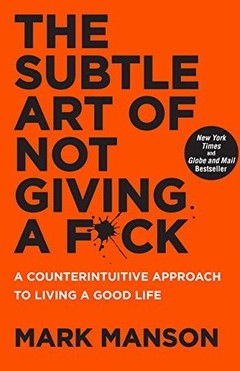
All of these strategies are effective in some way. To me, the most annoying strategy is putting profanity in the book title. Right now two books in the top ten of the Bestselling Books of 2018 (so far) have profanity in their titles. One is You are a Badass by Jen Sincero, and the other is The Subtle Art of not Giving a F*ck by Mark Manson.
Some might say The Subtle Art of not Giving a F*ck isn’t truly profanity because the publishing company put an asterisk in the Fuck. That’s lame because everybody knows F*ck means Fuck.
If anything , putting the asterisk in the title hurts the author’s credibility. If the author truly didn’t give a fuck, then Fuck would be in the title instead of F*ck. Maybe the publishing company wouldn’t print the book with Fuck in the title, and the author didn’t give a fuck what the publishing company did as long as the book got published.
It’s funny that an author who supposedly doesn’t give a fuck works with a publisher who does. That’s how creative people sell books, I guess. The creative guy(gender neutral) teams up with an uptight perfectionist. Even in that scenario, the book is based on a lie. If the publishing company gives a fuck, it shouldn’t put out a book called The Subtle Art of Not Giving a F*ck. This is just another example of why I don’t trust institutions.
The book You Are a Badass is also built on a lie. To its credit, it doesn’t fake-hide the word ass, which admittedly isn’t as bad as fuck. It’s not super brave to put ass in a title. The word ass is usually an insult, but sometimes it can be a compliment. If you call someone an ass, that’s an insult. Asshole is an insult. Jackass is an insult. But badass is a compliment.
The flaw with a book titled You Are a Badass is that a true badass will read the title and say, “Yeah, I know,” and walk off. Only somebody who’s not a badass will read the book. Somebody who is NOT a badass will read the book to see what makes a badass. A badass either know he/she is a badass or subtly doesn’t a give a fuck.
Most of the time, profanity in a book title is a shameless (maybe desperate) way to sell books. SHI*T My Dad Says by Mark Halprin a few years ago was okay, but the sequel was boring without much of the dad. Go the F*CK to Sleep by Adam Mansbach was an okay idea, but it really wasn’t better than most meme humor. Tough SH*T by Kevin Smith was the worst because it was written by a celebrity. Any celebrity who uses profanity in the title to sell books is beyond selfish. If you’re a celebrity and you can’t sell books without putting profanity in the title, then you suck and shouldn’t publish books.
I even told Kevin Smith that at a book signing. I said (in my monotone voice), “I think it was very selfish of you to put profanity in your title. You should let that be reserved for struggling first-time authors who can barely get book deals.”
You know what Kevin Smith, the author of Tough Sh*t, said to me?
I bet you could never guess what the author of Tough Sh*t said in response.
He said, “Go fuck yourself!”
Then I said, “You should have said ‘Tough SH*T,’ you overrated hack!”
And as I was getting escorted by security out of the book store, I shouted “AND YOUR BATMAN COMICS SUCKED TOO!!!”
*****
I’m kidding. That never happened. I’d never buy a book from a celebrity who put profanity in the book title.
Don’t get me wrong. I’d love to write a bestselling book, but there are certain things I’m not willing to do to achieve my goal, and that includes putting profanity in my book title.
*****
Watch Dysfunctional Literacy on YouTube!
Read Dysfunctional Literacy on Amazon!


Extreme bonus tip: If you’re really worried about your job, do NOT put your writing on the internet. (image via wikimedia)
More people than ever are writing because of the internet. Maybe it’s good that more people are writing, but a lot of these new people writing aren’t truly writers. I don’t mean that in a writer-snob kind of way. I mean that many of these new writers are actually talkers who are using writing as a tool. This can be a problem. Talkers are charming and personable, so when they say something tacky, people laugh and forgive it.
But when a charming talker writes a tacky comment and puts it on social media, it can be seen by countless people who don’t know how personable and charming the charming talker really is. Then the charming talker ends up getting fired, losing friends, or has to make embarrassing, insincere apologies.
The following tips for writing on the internet are for charming talkers (or anybody else) who want/need to write on the internet but don’t want to lose friends or get fired for it. These tips are not about grammar or punctuation. Once you have mastered writing on the internet without getting fired, then you can worry about the grammar and punctuation.
But until then,please concentrate on these tips.
- Don’t write too much online.
Yeah, that can take the fun out of writing, but the less writing you put on the internet, the less stupid stuff that can get traced back to you. If you do have to write, short responses are great. My e-mails, texts, and social media entries are filled with “Yes,” “No,” and “I’ll get back to you later.”
Short responses keep you from keyboarding snide remarks that can come back to haunt you. If you say “This job sucks,” to a co-worker, you can always deny it if the boss comes down on you. If you write “This job sucks” in an email, tweet, or Facebook entry, there is no plausible deniability. Saying somebody hacked into your account doesn’t work anymore, even if somebody did hack into your account.
- Avoid writing about personal problems.
Don’t get me wrong; I love reading about other people’s problems. But if you choose to write about it publicly, a lot of people who aren’t really your friends are going to read it. You’re basically providing free entertainment to readers you don’t know. And if the readers do know you, it can lead to awkward situations later.
The possibility of having an awkward situation will not stop acquaintances (or employers) from reading about your personal problems (and making comments behind your back). The only way to stop this is to not write about your personal problems. If you absolutely need to write about your problems, don’t publish (or send) what you wrote.
- Do not admit to personal vices.
Vices are really fun. Whether it’s getting drunk, getting high, hanging out with people of ill-repute, tearing up property during a protest, it’s best if you don’t brag about it. If you do write about your vices, make it sound fictional.
- Leave job related issues at work
Writing is a blast, but getting paid is way better. If you ever criticize your boss or employer or anybody who is giving you money, do it behind the scenes so that it can’t get traced back to you. Don’t put it in an e-mail, or a tweet, or on Facebook.
And if you absolutely have to take a stand (it happens!), be very careful about what you write. At the very least, that means deleting a lot of adjectives. And maybe have a trusted friend proofread it.
- Don’t write jokes that aren’t funny.
Yeah, I know the whole internet is filled with jokes that aren’t funny. I get it. At least when I write a bunch of lame, tasteless jokes, I’ll title it something like BEST LAME, TASTELESS, OFFENSIVE PORN JOKES EVER! You know what to expect from me, there’s a context to the lame jokes, and I don’t attach them to my name, or my employer, or anybody who knows me.
- Don’t write when you are emotional.
It’s okay to write stuff when you’re angry, or sad, or exhilarated, or in any other extreme emotion. But you’d be better off waiting until you’re in the right frame of mind before you actually publish it. Extremely emotional tweets can be very entertaining, but most people don’t write emotional stuff to entertain; they write extremely emotional stuff to vent.
Venting should be done in private. Then when you’re calm, go over it (delete all the adjectives and insults), and then… maybe… think about publishing it.
- Don’t write when you are drunk (or in a similar condition).
When you’re drunk (or in a similar condition), you don’t have control over yourself, so obviously you shouldn’t be writing. The problem is that people who aren’t in control of themselves often don’t realize they aren’t in control of themselves. I once wrote (what I thought was) an awesome joke when I wasn’t in control of myself and the next morning realized it said something like: “Lkomp gmbpg ju tyggdew bjklr!”
One commenter said it was the best joke I had ever written.
- Do not write when you are in a hurry (unless you’re going to get fired or get a bad grade for having nothing).
Always take a moment to think through your writing before you publish it. I once had a writing instructor say that a writer should leave a rough draft alone for six months before proofreading it. Unfortunately, I did that with my tweets, and got stuck with a bunch of 140 character “LeBron James chokes” jokes that are out of date.
Still, if you’re tweeting or texting, at least look them over closely before you send them. Think about the appropriateness of what you wrote and make sure the automatic spell check didn’t mess anything up.
- Do not multi-task while writing.
Some activities can be multi-tasked, and others can’t. I can fold my laundry and watch football at the same time. But there are at least three things you shouldn’t multi-task during: driving, reading legal documents, and writing.
Writing while doing something else can lead to disastrous mistakes. Yeah, it might just be a missing word, but it could also mean sending the wrong message (“My job sucks!”) to the wrong people (your employers). And that’s way worse than using the wrong form of “their” or “two.”
*****
Some people may complain that following my advice will lead to really boring writing on the internet. That would happen only if everybody followed my advice. The world is full of people who don’t follow advice, no matter how wise it is, so there will always be people who write entertaining stuff and get fired for it.
Just make sure it doesn’t happen to you.

(image via wikimedia)
I went to the bookstore a couple days ago to buy a cheap paperback.
This should have been easy. I had a little over $10 left on a book store gift card, and I didn’t want to use my own money. I had already purchased the book I really wanted with this same gift card a few weeks ago, so this was like a bonus book. You can use your own money to pay for part of a bonus book, but you try not to.
Unfortunately, all the books in paperback that I really wanted to read were $15.99 or $16.99 0r $17.99. One was even $22.99. To me, spending $20 on a paperback is ridiculous, even with a gift card. True, I can get a 20% or 25% discount at some bookstores because I’m a member, but I’d rather get a discount on a $9.99 paperback than a $17.99 paperback.
“You can afford the $20,” my daughter said.
“We can afford $20 because I don’t spend $20 for paperbacks,” I said.
If I wanted to spend $20 for a paperback, I might as well fork over the extra $10 or less to buy the hardcover. Hardcovers last longer and can take more abuse. A couple decades ago when one of my dogs tore through part of my book collection, only hardcovers (and a Bible) survived the onslaught. To be fair, my dog tore up one hardcover, The Silmarillion by JRR Tolkien, but I always regretted buying my own copy of that book anyway.
When I was a kid (here we go), comic books were 20 cents and paperbacks were 99 cents. I have proof. I’ve kept a bunch of them (my dog didn’t destroy everything). Yes, they were cheap and disposable, but that’s what paperbacks (and comics) are supposed to be. Paperbacks aren’t meant to last for generations. They’re meant to be read a few times and then thrown out or recycled. Yes, I know a lot of people (like me) keep paperbacks, but they’re not designed for that. People like me are supposed to be the exception. We buy the cheap stuff and then keep the cheap stuff.
My quest didn’t get any easier when I passed the James Patterson wing of the book store. Technically, James Patterson books are in the fiction section, but now he has three sets of shelves filled up with his books. Just a couple months ago, he had only two shelves. In case you don’t know, I think most James Patterson books are unreadable. Whenever I feel depressed (it doesn’t happen much), I read a few pages of a random James Patterson book and think, “At least I didn’t write this.”
Anyway, the three James Patterson shelves were filled with cheap paperbacks. Aaaargh! The writer I despise the most puts out a product in the format that I want. Oh, the cruel irony! I mean, I know people will pay top dollar for a James Patterson novel. Most of his books don’t go directly to paperback. His novels are hardcover bestsellers when they’re released, so somebody is paying way too much money. If he priced his paperbacks at $17.99, schmucks would still buy them. But he doesn’t do that with a lot of his books.
I really wished I liked James Patterson novels.
That’s never going to happen, so I’m stuck reading books that are overpriced.
Literary authors might complain that they’re not making a lot of money, certainly not as much as a bestselling author like James Patterson. There were several literary novels I almost bought, but the paperback prices were too high. Maybe if publishing companies put out more $9.99 copies of literary stuff, more people (like me) would buy it. Then again, maybe cheapskates like me don’t read literary stuff no matter how cheap it is, so the publishing companies overprice literary fiction for the chumps who will pay for it no matter what. This is what I get for not being a publishing insider; there are a lot of things I don’t know.
When I really want cheap paperbacks, I go to used book stores. If anything, there are too many cheap paperbacks at the used book store. My brain can’t absorb all the possibilities. In my younger days, I would walk out of the used book store with too many books because even if I didn’t read all of them, I hadn’t paid enough to be angry about it. If I buy a new paperback now, it’s a commitment, even when it’s $9.99.
Nobody gives gift cards to the used book store, though. I’m pretty sure they exist. I wonder if gift givers feel cheap giving a used book store gift card. It’s not like the gift card itself is used. If it’s a new gift card for a used book store, that’s okay. It’s the used gift cards that people usually don’t appreciate.
Just so you know, the story has a happy ending. My daughter found a hardcover, and I paid for some of it with the gift card. That’s allowed.
Thank you, gift giver, for the gift card!

Watching an introvert tell a joke can be awkward.
It’s tough for most introverts to tell jokes, especially in front of a large group. When an introvert tells jokes about introverts, it’s potentially more difficult because somebody who’s not an introvert might not understand the humor.
There are few things worse for an introvert than to tell a joke that bombs in front of a bunch of people. Even positive interactions can be painful for an introvert, but telling a joke that bombs? That’s a disaster!
I feel for the risk-taking introvert in the video below. If the comedy routine goes wrong, if it backfires, well…
The internet is only forever.


 Dysfunctional Literacy