Extreme bonus tip: If you’re really worried about your job, do NOT put your writing on the internet. (image via wikimedia)
More people than ever are writing because of the internet. Maybe it’s good that more people are writing, but a lot of these new people writing aren’t truly writers. I don’t mean that in a writer-snob kind of way. I mean that many of these new writers are actually talkers who are using writing as a tool. This can be a problem. Talkers are charming and personable, so when they say something tacky, people laugh and forgive it.
But when a charming talker writes a tacky comment and puts it on social media, it can be seen by countless people who don’t know how personable and charming the charming talker really is. Then the charming talker ends up getting fired, losing friends, or has to make embarrassing, insincere apologies.
The following tips for writing on the internet are for charming talkers (or anybody else) who want/need to write on the internet but don’t want to lose friends or get fired for it. These tips are not about grammar or punctuation. Once you have mastered writing on the internet without getting fired, then you can worry about the grammar and punctuation.
But until then,please concentrate on these tips.
- Don’t write too much online.
Yeah, that can take the fun out of writing, but the less writing you put on the internet, the less stupid stuff that can get traced back to you. If you do have to write, short responses are great. My e-mails, texts, and social media entries are filled with “Yes,” “No,” and “I’ll get back to you later.”
Short responses keep you from keyboarding snide remarks that can come back to haunt you. If you say “This job sucks,” to a co-worker, you can always deny it if the boss comes down on you. If you write “This job sucks” in an email, tweet, or Facebook entry, there is no plausible deniability. Saying somebody hacked into your account doesn’t work anymore, even if somebody did hack into your account.
- Avoid writing about personal problems.
Don’t get me wrong; I love reading about other people’s problems. But if you choose to write about it publicly, a lot of people who aren’t really your friends are going to read it. You’re basically providing free entertainment to readers you don’t know. And if the readers do know you, it can lead to awkward situations later.
The possibility of having an awkward situation will not stop acquaintances (or employers) from reading about your personal problems (and making comments behind your back). The only way to stop this is to not write about your personal problems. If you absolutely need to write about your problems, don’t publish (or send) what you wrote.
- Do not admit to personal vices.
Vices are really fun. Whether it’s getting drunk, getting high, hanging out with people of ill-repute, tearing up property during a protest, it’s best if you don’t brag about it. If you do write about your vices, make it sound fictional.
- Leave job related issues at work
Writing is a blast, but getting paid is way better. If you ever criticize your boss or employer or anybody who is giving you money, do it behind the scenes so that it can’t get traced back to you. Don’t put it in an e-mail, or a tweet, or on Facebook.
And if you absolutely have to take a stand (it happens!), be very careful about what you write. At the very least, that means deleting a lot of adjectives. And maybe have a trusted friend proofread it.
- Don’t write jokes that aren’t funny.
Yeah, I know the whole internet is filled with jokes that aren’t funny. I get it. At least when I write a bunch of lame, tasteless jokes, I’ll title it something like BEST LAME, TASTELESS, OFFENSIVE PORN JOKES EVER! You know what to expect from me, there’s a context to the lame jokes, and I don’t attach them to my name, or my employer, or anybody who knows me.
- Don’t write when you are emotional.
It’s okay to write stuff when you’re angry, or sad, or exhilarated, or in any other extreme emotion. But you’d be better off waiting until you’re in the right frame of mind before you actually publish it. Extremely emotional tweets can be very entertaining, but most people don’t write emotional stuff to entertain; they write extremely emotional stuff to vent.
Venting should be done in private. Then when you’re calm, go over it (delete all the adjectives and insults), and then… maybe… think about publishing it.
- Don’t write when you are drunk (or in a similar condition).
When you’re drunk (or in a similar condition), you don’t have control over yourself, so obviously you shouldn’t be writing. The problem is that people who aren’t in control of themselves often don’t realize they aren’t in control of themselves. I once wrote (what I thought was) an awesome joke when I wasn’t in control of myself and the next morning realized it said something like: “Lkomp gmbpg ju tyggdew bjklr!”
One commenter said it was the best joke I had ever written.
- Do not write when you are in a hurry (unless you’re going to get fired or get a bad grade for having nothing).
Always take a moment to think through your writing before you publish it. I once had a writing instructor say that a writer should leave a rough draft alone for six months before proofreading it. Unfortunately, I did that with my tweets, and got stuck with a bunch of 140 character “LeBron James chokes” jokes that are out of date.
Still, if you’re tweeting or texting, at least look them over closely before you send them. Think about the appropriateness of what you wrote and make sure the automatic spell check didn’t mess anything up.
- Do not multi-task while writing.
Some activities can be multi-tasked, and others can’t. I can fold my laundry and watch football at the same time. But there are at least three things you shouldn’t multi-task during: driving, reading legal documents, and writing.
Writing while doing something else can lead to disastrous mistakes. Yeah, it might just be a missing word, but it could also mean sending the wrong message (“My job sucks!”) to the wrong people (your employers). And that’s way worse than using the wrong form of “their” or “two.”
*****
Some people may complain that following my advice will lead to really boring writing on the internet. That would happen only if everybody followed my advice. The world is full of people who don’t follow advice, no matter how wise it is, so there will always be people who write entertaining stuff and get fired for it.
Just make sure it doesn’t happen to you.

(image via wikimedia)
I went to the bookstore a couple days ago to buy a cheap paperback.
This should have been easy. I had a little over $10 left on a book store gift card, and I didn’t want to use my own money. I had already purchased the book I really wanted with this same gift card a few weeks ago, so this was like a bonus book. You can use your own money to pay for part of a bonus book, but you try not to.
Unfortunately, all the books in paperback that I really wanted to read were $15.99 or $16.99 0r $17.99. One was even $22.99. To me, spending $20 on a paperback is ridiculous, even with a gift card. True, I can get a 20% or 25% discount at some bookstores because I’m a member, but I’d rather get a discount on a $9.99 paperback than a $17.99 paperback.
“You can afford the $20,” my daughter said.
“We can afford $20 because I don’t spend $20 for paperbacks,” I said.
If I wanted to spend $20 for a paperback, I might as well fork over the extra $10 or less to buy the hardcover. Hardcovers last longer and can take more abuse. A couple decades ago when one of my dogs tore through part of my book collection, only hardcovers (and a Bible) survived the onslaught. To be fair, my dog tore up one hardcover, The Silmarillion by JRR Tolkien, but I always regretted buying my own copy of that book anyway.
When I was a kid (here we go), comic books were 20 cents and paperbacks were 99 cents. I have proof. I’ve kept a bunch of them (my dog didn’t destroy everything). Yes, they were cheap and disposable, but that’s what paperbacks (and comics) are supposed to be. Paperbacks aren’t meant to last for generations. They’re meant to be read a few times and then thrown out or recycled. Yes, I know a lot of people (like me) keep paperbacks, but they’re not designed for that. People like me are supposed to be the exception. We buy the cheap stuff and then keep the cheap stuff.
My quest didn’t get any easier when I passed the James Patterson wing of the book store. Technically, James Patterson books are in the fiction section, but now he has three sets of shelves filled up with his books. Just a couple months ago, he had only two shelves. In case you don’t know, I think most James Patterson books are unreadable. Whenever I feel depressed (it doesn’t happen much), I read a few pages of a random James Patterson book and think, “At least I didn’t write this.”
Anyway, the three James Patterson shelves were filled with cheap paperbacks. Aaaargh! The writer I despise the most puts out a product in the format that I want. Oh, the cruel irony! I mean, I know people will pay top dollar for a James Patterson novel. Most of his books don’t go directly to paperback. His novels are hardcover bestsellers when they’re released, so somebody is paying way too much money. If he priced his paperbacks at $17.99, schmucks would still buy them. But he doesn’t do that with a lot of his books.
I really wished I liked James Patterson novels.
That’s never going to happen, so I’m stuck reading books that are overpriced.
Literary authors might complain that they’re not making a lot of money, certainly not as much as a bestselling author like James Patterson. There were several literary novels I almost bought, but the paperback prices were too high. Maybe if publishing companies put out more $9.99 copies of literary stuff, more people (like me) would buy it. Then again, maybe cheapskates like me don’t read literary stuff no matter how cheap it is, so the publishing companies overprice literary fiction for the chumps who will pay for it no matter what. This is what I get for not being a publishing insider; there are a lot of things I don’t know.
When I really want cheap paperbacks, I go to used book stores. If anything, there are too many cheap paperbacks at the used book store. My brain can’t absorb all the possibilities. In my younger days, I would walk out of the used book store with too many books because even if I didn’t read all of them, I hadn’t paid enough to be angry about it. If I buy a new paperback now, it’s a commitment, even when it’s $9.99.
Nobody gives gift cards to the used book store, though. I’m pretty sure they exist. I wonder if gift givers feel cheap giving a used book store gift card. It’s not like the gift card itself is used. If it’s a new gift card for a used book store, that’s okay. It’s the used gift cards that people usually don’t appreciate.
Just so you know, the story has a happy ending. My daughter found a hardcover, and I paid for some of it with the gift card. That’s allowed.
Thank you, gift giver, for the gift card!

Watching an introvert tell a joke can be awkward.
It’s tough for most introverts to tell jokes, especially in front of a large group. When an introvert tells jokes about introverts, it’s potentially more difficult because somebody who’s not an introvert might not understand the humor.
There are few things worse for an introvert than to tell a joke that bombs in front of a bunch of people. Even positive interactions can be painful for an introvert, but telling a joke that bombs? That’s a disaster!
I feel for the risk-taking introvert in the video below. If the comedy routine goes wrong, if it backfires, well…
The internet is only forever.

(image via wikimedia)
When you’re dating, meeting an ex-boyfriend can be a bad idea. Even if I were open-minded enough to meet an ex-boyfriend, I’d never want to meet one on a first date. Yeah, Jenny had great cleavage and she talked a lot and was kind of funny, but we were going to a Mexican restaurant that her ex-boyfriend managed. It kind of killed the initial optimism of a first date (you can get more details here ).
“The margaritas are great,” Jenny said as I held the entrance door open for her.
“How is the food?” I asked.
“Better after a few margaritas,” she admitted.
I didn’t want to act like I was ticked off. Ever since she had mentioned that her ex-boyfriend managed the restaurant, I had tried to play it cool, but it’s tough for an awkward guy to play things cool. Cool for an awkward guy is still awkward. Despite Jenny’s own coolness, she hadn’t noticed yet that I was awkward. Or she didn’t care.
As we walked into the restaurant (I remember the name, but it’s not important), I looked around to see if I could spot a guy who could be her ex-boyfriend. Most of the restaurant staff wore the same outfits, the tables were packed so it was tough to squeeze between seated customers, the 70’s music was loud (this happened in 1991), and we were approached by a short balding overweight guy dressed in slacks and a tie. The guy gave Jenny a quick hug, and Jenny pointed me out to him while I continued scouting the place for a guy who could be her ex.
“I’m Bob,” the guy said as he extended his hand. “It’s nice to meet you,” he continued with an almost feminine squeaky voice. His handshake was clammier than mine.
I almost laughed. This dumpy bald guy was her ex-boyfriend? My mood lifted. Jenny was nice-looking with great cleavage and a personality that bulldozed through awkward situations. Despite my mood shift, I knew that something didn’t fit.
I was pleasant enough to the ex, and he gave us a booth next to a window with a view of a small pond. Nice guy, I thought, for not seating us next to the bathrooms.
I don’t even remember ordering because I was too bewildered by the homely ex-boyfriend and mesmerized by Jenny’s cleavage. The combination clouded my judgement. I could probably have dealt with either of them in isolation, but I couldn’t focus with the combination.
“Bob seems like a nice guy,” I said. “Why did you two break up?”
“I shouldn’t talk about that on a first date,” she said.
“Normally, I’d agree with you, but you chose this restaurant. I think that makes your ex-boyfriend an appropriate conversation topic. If you want, I could talk about an ex-girlfriend to balance things out.”
“Have you ever been engaged?” she asked.
“No, but I once read Pride and Prejudice just to keep a woman from breaking up with me. That was a commitment.”
Jenny laughed. I’d used that line before and had gotten blank stares. It’s risky using a line that has previously bombed.
“It’s not quite the same thing as being engaged,” she said.
“I know,” I said. “Have you ever tried reading Pride and Prejudice?”
She dropped the engagement issue, and I dropped Pride and Prejudice (which I hadn’t really read). We relaxed again and made small talk, so I was able to start thinking this through.
Why would Jenny have had an ugly boyfriend? It couldn’t be money, I thought. Restaurant managers did alright but not great enough to attract a woman way above him on the attractiveness meter. Did she have low self-esteem? Compared to Bob, I was an A-list Hollywood actor (while in reality, I might have been an extra on a good day). We went through our appetizers, and Jenny consumed a couple margaritas (I maintained my sobriety). We shared a fajita plate, and I admit the dining experience was pleasant. Bob was leaving us alone. He wasn’t a hoverer. I was sober, and I thought the food was pretty good, even without a few drinks.
Then it happened. As we ate and casually talked, I felt the tickling in the back of my nose. It was a leak, a drip. At first, I thought it was no big deal because usually a quick intake of air through the nostril can suck the leakage back in without a great probability of being noticed, but it didn’t work. I tried a couple more quick snorts, but it did no good. The liquid continued its journey down the back of my right nostril. Jenny had noticed my third snort and stared at me hard.
No! No! No! A trail of snot was about to drain out of my nose, and I had no good options. If I dabbled my nose with a napkin, it would look really gross. Letting the drainage pour out onto my upper lip would be even worse; it wasn’t even an option. I couldn’t make a run for it because that would have caused a scene. I had about half a second to make a decision.
“Is something wrong?” Jenny asked, maintaining eye contact. She knew. The whole evening she had let her eyes wander so that I could check out her cleavage without getting caught, but now she was staring me down. She was waiting to see how I would handle it. The leak was about to drip out. I could feel it.
And there was nothing I could do to stop it.
*****
To be continued in Awkward Moments in Dating: The Runny Nose !
In the meantime, start here to read more Awkward Moments in Dating!

It looks peaceful on the outside, but you probably don’t want to go in. (image via wikimedia)
August is back-to-school time. Yes, thinking ahead to the upcoming school year can ruin the few vacation days that might (or might not) be left, but if you’re about to go back to school (as a student or a teacher), don’t stress. Everybody goes through it. The school day always ends. Vacations will always get here. And 20 years later, unless you really truly screw up, nobody will care what you did.
What makes school so bad? Everybody has to do it, so it can’t be that horrible. Except it is.
1. Kids sit all day.
People weren’t designed to sit all day, especially kids. When kids have to be still, they fidget. Nowadays, if they fidget too much, they get medicated. So kids are getting medicated for being kids. Back in the old days, if we fidgeted too much, we got beaten. That might seem abusive now, but it kept us off medication. The fear of getting beaten was enough to keep us from being fidgety. Living with a little fear isn’t bad, especially if it keeps kids from getting addicted to prescription drugs.
2. There are too many kids.
If you put hundreds (or even thousands) of people together in a confined space for 7-8 hours a day, bad things are going to happen. If it’s kids, it will be worse. It might be miraculous that school isn’t worse than it is. Between bad hygiene, bad manners, bad intentions, and low intelligence, every day at school is a disaster waiting to happen.
Between the hallways, lockers, classes, lunches, and buses, a kid has to deal with maybe hundreds of people. That’s a lot of social navigation, and that isn’t easy, especially for a self-aware kid.
3. There aren’t enough bathrooms
It sucks not being able to go to the bathroom whenever you want to. If you have to go during class, the teacher will probably say no and throw in a sarcastic comment (which might be deserved). Teachers who say yes are seen as weak, and teachers can’t afford to be seen as weak. A teacher would rather have a kid pee in his/her pants than let him/her go to the bathroom and appear weak.
Without bathroom privileges, kids fart. At least a teacher can move around the classroom to avoid farts, but kids are stuck at their desks. If you’re next to a farter, you have to suffer through the smells. Plus, you can be falsely accused of being the farter. Few accusations are worse than that of being a farter. During vacations, you can sit at home and fart all day. But at school, you have to hold it in… unless you’re a social deviant who loves the chaos that follows a smelly fart. In that case, you deserve to be in school.
4. It’s like prison.
Everybody who’s been in school understands how school is like a prison. Just add uniforms (maybe orange or gray with stripes) and a license-plate making class. If you can succeed in this prison-like environment, then you’re far more likely NOT to go to prison as an adult. But if you suck at school, then you might want to get used to that environment.
5. There’s too much criticism.
There is no way to get through school without being criticized. You’re going to make a mistake sometime. You’re going to talk without permission. You’ll choose an incorrect answer in front of the entire class. You’ll leave materials in your locker (or your previous class). And if you get caught, you’ll get criticized.
Nobody likes being criticized, but teachers have to do it. If they don’t, you’ll just keep repeating your mistakes. It would be nice if they could criticize you in a pleasant way, but life doesn’t work like that. Nice criticism would be like giving out trophies just for participating. We can’t have a bunch of kids growing up worthless and weak.
6. There’s no break.
Every adult job (except Amazon warehouses) has a break, but school (except maybe the elementary years) doesn’t. Students go to class for 45 minutes and then go to another class and then to another. Even lunch isn’t much of a break because you’re surrounded by hundreds of open-mouthed chewers. Everybody else in life gets a break.
How can students NOT get tired when they never get a break? Then, some teachers pile on the homework so that students can’t even get a break when they get home. The only thing that gets a break is a student’s spirit, and that’s only if it’s not crushed first.
As an adult, I probably should be more positive about school. I survived it and got myself a pretty good job because of (or despite) it. If anything, school prepares you for work. You learn to get there on time. You learn to follow the rules, and do what you’re supposed to do, and to try to learn something new every day. Those aren’t bad things to do. But it sucks that we have to go to school first to learn them.
*****
What do you think? Is school as bad as people make it out to be? Are critics of school being too dramatic?
.jpg)
If you really want to be a writer, don’t let anybody or anything discourage you. (image via wikimedia)
Most advice for bloggers is pretty common. Find a niche. Write consistently. Write about your passion. Become a valuable source for others. A lot of bloggers spread this advice, and some even follow it, but most bloggers don’t stay at it for long (I admit I have only anecdotal evidence to back that up).
I’ve been blogging consistently for over seven years, and I consider myself a productive blogger. I’m not bragging. I mean, I’m not putting out stuff at James Patterson rates. But I still write consistently and haven’t given up.
I have a few disadvantages when it comes to writing. I have a full time job and a family, so blogging is very low as a daily priority. I don’t tell my friends or co-workers (which means I can say what I want on my blog without getting fired, but it also limits my audience). Somehow, though, I create original content.
The secret to writing is to have lots of subject material. I call this a secret because it seems obvious to me but many bloggers get stuck in ruts and get discouraged. It could have happened to me. If I only wrote about books and writing, I’d run out of stuff to write about too. In seven years of blogging, I’ve never had writer’s block. If I go a few days or weeks without blogging, it’s because of time constraints, not writer’s blockage.
It doesn’t do much good if I give advice about writing but don’t show what I mean. For example, when I say that bloggers need to find unique approaches to common topics, I need to show evidence. Fair enough.
Since I read a lot of books, I’m tempted to write straightforward book reviews on my blog, but you can find book reviews everywhere. To be different, when I discuss a book, I focus almost exclusively on how the book is written.
Bad Sentences in Classic Literature: Moby Dick
Despite a title that causes some people to laugh inappropriately, Moby Dick by Herman Melville is a classic for a reason. When readers who love Moby Dick discuss Moby Dick, they talk about stuff like symbolism and theme. But when readers who despise Moby Dick explain why they hate it, they usually mention the way it’s written. The sentences are tough to read, and there are way too many of them.
I almost didn’t want to write about Moby Dick because people will automatically assume that I am making fun of the title, but I’m not. I’ve made fun of the title before, and it’s probably not fair to do that because the word “dick” didn’t mean the same thing back when Moby Dick was first published, so readers (probably) didn’t snicker at the title back then. If they did, they were ahead of their time.

When in doubt, a blogger can write about a relationship. I like to write stories, but my imagination is limited, so I have to write about stuff that has happened to me. Even if this next selection isn’t the best thing I’ve ever written, it’s probably my greatest writing achievement, a 60-episode blog serial romantic comedy that took up about a year of blogging.
The Literary Girlfriend
When I was in college, the best kind of girlfriend to have was the literary girlfriend. Literary girlfriends liked to read, so dates were cheap. We could go to a poetry reading or hang out in the university library. The only problem with literary girlfriends was that they didn’t like football, so we always broke up in September.
But after I graduated from college and entered the professional world, literary girlfriends were difficult to find. So for two years I went without even a hint of a girlfriend. I think I was considered by my friends and family to be a lonely guy. It was kind of humiliating being known as the lonely guy. But all of that ended in the most unlikely of places.
As I get older, I find myself giving more and more advice. People don’t usually listen, though. Even though I’ve been blogging for years, some writers won’t see me as a credible source because I’m not famous, so I resort to writing about what famous authors say about writing. Every writer will listen to what Stephen King and Ernest Hemingway have to say about writing, even when their advice is weird.
5 Famous Writing Quotes about Writing That Might Be Evil
When a famous author writes a quote about writing, aspiring authors pay attention. After all, nobody knows more about writing than a famous author. Some quotes about writing have become so widely known that they’re almost accepted without second thought. But what if these famous quotes were meant to be misleading? What if the famous authors were just messing with us? What if famous authors were toying with our emotions and fragile egos? What if these famous authors were just… evil?
Below are five famous quotes about writing that MIGHT be evil:

A blogger can’t go wrong criticizing pop culture. I knew I was getting old when I started mocking everything on TV and the radio. Yeah, I started doing that when I was 13 (almost 40 years ago), but now we have social media where we can post our criticisms. Every once in a while, though, I want to defend something that I actually like.
Shut Up About Seinfeld!
(image via wikimedia)
My daughter told me to shut up about Seinfeld. Those were her exact words:
“Shut up about Seinfeld!”
My daughter and a bunch of her friends had been binge-watching the television show Friends on Netflix and were talking about it within my ear range. I thought, Friends? Friends? People are still talking about Friends? After my daughter’s own friends had left, I went on a rant about Seinfeld and how Seinfeld deserved to be watched instead of Friends. Just so you know, it didn’t start off as a rant.
It just irked me that these teenagers had watched Friends instead of Seinfeld. Twenty years ago, the two shows had been broadcast on Thursday nights, and Friends had kind of piggybacked on Seinfeld’s success. Friends was okay. It did really well after Seinfeld was done, but it was no Seinfeld.
And I wasn’t trying to disparage Friends with my rant by any means. But the more I tried to explain how awesome Seinfeld was, the less attention my daughter gave me. She nodded and said “uh huh” occasionally, but she stared at her phone the whole time.

Writing about how things used to be can be risky because we don’t want to get into the “walking twenty miles to school every day in four feet of snow uphill in both directions” routine. That stuff gets tuned out. Instead, bloggers need to find a way to make that old stuff relevant. I do that by connecting that old stuff with what is going on today.
Old Things That Are Tough To Explain: Lack of Safety Precautions
(image via wikimedia)
The monkey bars at our local park just got taken down because a kid broke his arm on them a few weeks ago. At least, that’s the rumor, and I’m pretty sure it’s true. The park still has some slides and see-saws and exercise equipment, but it’s kind of bare. When I was a kid, parks had more stuff. We had merry go rounds (that we shot bottle rockets off of), monkey bars (that we’d break our arms on), and sand boxes (that somebody peed in). Most of those are gone now.
“That’s stupid,” my youngest daughter said when I told her why the bars were no longer in the park.
I don’t trust my daughter’s opinion on a lot of things. She doesn’t understand liability, hospital bills, and stuff like that. She knows a kid who got her toes sliced on an ice rink, so she understands inherent risk. The ice rink is still open, but part of that might be because parents have to sign waivers. I’m not sure the waivers mean much. A lawyer friend of mine laughs every time we have to sign waivers at a kid’s party.
“These don’t mean sh*t,” he declares, and he signs them without reading them. He’s my friend, but I don’t know how good of a lawyer he is. He travels a lot, though, and his house and cars are bigger than mine. As far as I remember, my parents didn’t have to sign many waivers when I was a kid. Life was more dangerous back then, and we didn’t know it.

So there you go. These are some of the secrets to blogging. These aren’t all of them. I’m sure there are some more secrets to blogging that I haven’t figured out. If everybody knew what all the secrets were, there wouldn’t be any secrets anymore.
*****
What do you think? What other secrets to blogging do you know about?
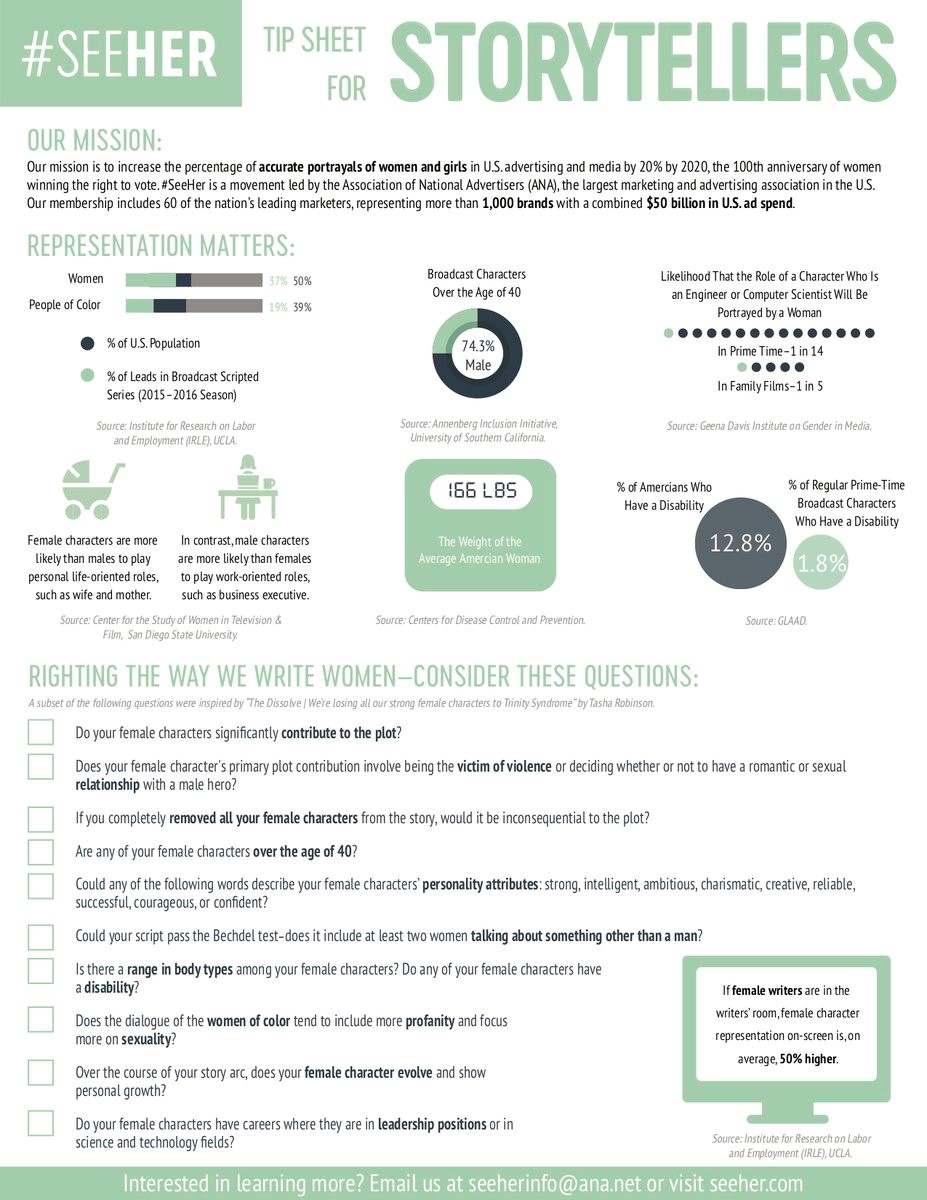
You might think this tip sheet gives great advice. Or you might think it’s bunk.
There’s a Tip Sheet for Storytellers floating around the internet explaining what writers should do while they’re writing their female characters for movies and television. The organization ( #SeeHer ) that created the tip sheet wants women to be portrayed more favorably in media, but this is the internet, so of course the tip sheet started some arguments The reaction of writers on the internet who saw the tip sheet can be explained in two ways:
One group of writers said: “Yeah! It’s about time women are portrayed better in media!”
Another group of writers said: “Don’t tell me how to write!”
Even though this sounds like a cop-out, I’ll say both sides are right. I’ve read enough Tom Clancy, James Patterson, Stephen King, and Brad Thor books to know that some male authors write horrible dialogue for women. I didn’t need a tip sheet to tell me this.
Even though some novelists write really crappy female characters, #SeeHer is more about movies and TV. Women in television and movies actually have to say the poorly written dialogue and then make it convincing. To me, the most memorable bad female dialogue in the media was in the movie GI Jane when the actress Demi Moore said to a male character: “Suck my dick.”
I think it was supposed to be empowering, but my wife laughed out loud in the theater(I think we were just dating at the time). It was okay for my wife to laugh out loud because she’s a woman and won’t be called sexist for laughing at ironically bad female dialogue. Then my wife whispered to me : “A man wrote that line.”
I never asked my wife what Demi Moore’s line should have been instead of “Suck my dick.” That’s not her job. As customers, all we have to do is watch and mock. We don’t have to improve. Anyway, that movie is over 20 years old, and all I remember is “Suck my dick.” To be fair, if “Suck my dick” hadn’t been in the movie, I might not have remembered GI Jane at all. Maybe poorly written female dialogue is a good thing.
I understand the point that women should be given more constructive things to do in movies than talk about men and relationships. A few years ago, I wrote an episode of my blog serial romantic comedy The Literary Girlfriend and titled it A Conversation Between Two Women That Has Nothing To Do With Men Or Relationships . It was based on a true incident where I eavesdropped on my girlfriend and she never mentioned me. I learned some stuff, but I also got caught.
I know it’s not unusual for women not to talk about men. Whenever I’ve seen my wife’s social media (always accidentally), I never see anything about me. It’s like I don’t exist. I’m glad I’m not that important. That means when I screw up and she gets mad, I know that she’s overreacting because she really doesn’t think about me much. I don’t tell her that she’s overreacting because I know she’ll overreact to that, so I just take her initial overreaction and wait for it to blow over. That’s what a man does. We hold it in. And then we die early because of it.
Men complain about how they’re portrayed in media as well. Movies and television shows depict married men as goofy incompetent schlubbs who need to get bossed around by their superior wives. I’m not complaining about that. I’m not suggesting that men start a competing movement called #SeeMen to improve the way men are portrayed in media because that wouldn’t go over well. A lot of things could go wrong with a #SeeMen movement.
To be fair, if you think of yourself as a demographic instead of an individual, you will always find something to gripe about. I’ve been a schlubb during various periods of my life, but I’ve always snapped out of it. Having a family can turn a man into a temporary schlubb. There’s always a tough transition, from juggling a job and a girlfriend, to juggling a job, a wife, kids, huge financial burdens, and maybe a girlfriend (which is usually a bad idea when you’re married). Taking care of so many issues at once can turn a man into a sleepless schlubb. Anyway, these TV programs and movies that show the husbands as schlubbs should also show the man break out of the schlubb shell. It happens.
I’ve come to the conclusion that when it comes to fiction and media, everybody gets everything wrong about everything. I recently saw a movie where a town less than 100 miles from me was portrayed as a desert when it’s really surrounded by a forest with hills. Another movie showed a beach about 100 miles from me with mountains in the background. I wish I had mountains nearby. These are geography errors and have nothing to do with gender, but it shows that when you create something for entertainment or enlightenment, you might not get all the details right.
It’s important for people like engineers and scientists and mathematicians to get all the details right. The artist is a little different. If you expect the artist to get details right, you will end up with a bunch of literal stuff that’s dry, uninteresting, and predictable. In other words, it will suck.
Right now, I’m writing a college sex comedy that takes place in the 1980s, based on a true story. If I follow the guidelines of the #SeeHer tip sheet, I’m screwed. You can’t write a 1980s college sex comedy while following the #SeeHer tip sheet. Maybe YOU can, but I can’t.
The #SeeHer tip sheet by itself isn’t bad. It’s good for male writers to be aware of the female perspective, but I’ll treat it like I treat everything else. I’ll see it, I’ll consider it, and then I’ll do what I want.
*****
What do you think about the Tip Sheet for Storytellers? Does it give good advice? Or is it bunk?

(image via wikimedia)
It’s a lot easier to defend a grammar Nazi than most people believe. Grammar Nazis are almost universally hated because they correct the grammar of others with no permission or warning. People hate being corrected, especially about what is perceived as minor stuff. People also hate Nazis. When you combine grammar with a Nazi, it’s easy to make somebody hated.
But is it really fair to malign a grammar Nazi? I’m not so sure anymore. For a long time, I believed that correcting a grammar error was worse than making a grammar error. For example, when a kid asks a teacher, “Can I go to the bathroom?” and the teacher responds with, “I don’t know; can you?” everybody thinks the teacher is being a dick. Nobody thinks the kid is a dick for not knowing the difference between the words can and may. Kids are almost always dicks, and the teacher gets blamed. This doesn’t make sense.
This just shows how group think can poison the mind. Grammar is important in making sure everybody can be understood. It’s okay if a minor rule is broken here or there, but if every rule is broken all the time, people eventually will have a tough time communicating, and poor communication leads to conflict, and conflict leads to murder and genocide. I don’t want genocide. It’s ironic that a grammar Nazi is actually trying to prevent genocide.
The term Nazi is really overused today. Technically, nobody is really a Nazi anymore. Nazi was a political party, the National Socialist German Workers’ Party (it really should be NAZI, but nobody does that anymore, and I don’t want to correct myself). Yeah, it was a political party filled with murderous thugs, but it was still a political party. I’ve never seen a grammar Nazi try to murder somebody over imperfect wording or bad punctuation. If anything, a grammar Nazi is more likely to be the victim of violence if he/she corrects the wrong person.
Besides, Nazi is just a term thrown around to disparage people you disagree with. If somebody is a Nazi, you don’t have to reason with him/her. Nazis are the lowest form of human scum and don’t need to be treated with respect. That’s why you have to be careful with the word Nazi. It’s a loaded word.
Some people don’t trust grammar Nazis because grammar Nazis are too structured, too bound to rules, and they change the topic of conversation just to correct grammar. Nobody is talking grammar when the grammar Nazi corrects grammar. The topic is politics or sports or reality TV when the grammar Nazi steps in. That’s part of the problem. The grammar Nazi almost always disrupts the flow of conversation just to make a point about grammar. If people wanted to know about grammar, they would have been talking about grammar. But nobody ever talks about grammar just for the heck of it, nobody except the grammar Nazi.
Even though most people don’t like grammar Nazis, I don’t trust people who get too defensive when their grammar is corrected. I understand annoyance, if only because of the disruption of the conversation. That’s understandable. But people get defensive and angry and mean-spirited when their grammar is corrected. You have to be angry if you call somebody a Nazi. Nazi is not a term of endearment. I don’t think even real Nazis walk around calling each other Nazi in a friendly way. I’ve never heard a Nazi greet another Nazi by saying “What’s up, Nazi?” I’ve never heard a Nazi say “How’s it hanging, Nazi?” to another Nazi. I mean, I don’t hang around Nazis, but I’m pretty sure that stuff never happens.
Nazi is one of the worst things to call somebody. A grammar stickler might be annoying, but the stickler doesn’t deserve being called a Nazi. Hardly anybody deserves to be called a Nazi. If somebody commits genocide in support of a political party, that person probably deserves being called a Nazi. If a person combines nationalism with socialism, maybe that person is a Nazi. But being obnoxious does not make a person a Nazi, even if that obnoxious behavior is about grammar.
This brings me to the hateful people with sloppy grammar who use the term grammar Nazi. Those lazy, sloppy communicators would rather call a grammarian a Nazi than admit their own minor mistakes in grammar. They would rather use a hateful term than agree that they were wrong about a really minor point and move on. The term Nazi is used to shame people who are simply trying to make sure that the standards of communication are maintained. Yeah, being called out on your grammar can be embarrassing and annoying, but it isn’t done from a place of hate. Calling somebody a Nazi, though… there is not much that is more hateful than that.
*****
What do you think? Do grammar Nazis really deserve that much hate? Is calling somebody a Nazi one of the worst insults you can use?

(image via wikimedia)
One morning I walked into my dorm room after I’d spent the night at the University Library, and a naked woman was sitting up hunched on my roommate’s bed. Since it’s been over 30 years, I don’t remember much about what she looked like, except she was very pale, very naked, with blonde hair, head leaning forward like she was about to throw up, and she was smoking a cigarette. I figured she wasn’t really going to throw up if she was still smoking a cigarette; that takes a skill that few people have. When she glanced up, her face was kind of rough in a tired (but not necessarily ugly) way.
“Where’s Kirk?” I asked.
“Breakfast.”
“You aren’t hungry?”
She eyed her cigarette. I threw my backpack onto my bed and began emptying the contents. I was hungry and wanted to get to breakfast as well, but I felt funny with a naked stranger in my room. I was in a social bind. If I stuck around, it would look creepy, like I was trying to stare at a naked chick. Then again, it was my own room. If a naked chick wanted to sit on a bed and smoke a cigarette in my room, that was her fault, not mine.
“You okay?” I finally asked.
“Hungover,” she said. “I could use a beer.”
I opened Kirk’s mini-fridge and pulled out a bottle. He still had a few left.
“Thanks,” she said. She drank and smoked and then drank and smoked.
“I’m the roommate,” I said, trying not to look at her without acting like I was trying. “Where are your clothes?”
She shrugged and worked on her cigarette some more. I looked at my bed and pulled the sheets up.
“We didn’t use your bed,” she said.
“Thanks, but I have to make sure,” I said. “Kirk left a gift for me once, so now I always check.”
The woman laughed and then stopped herself. It was a lie, that Kirk left me a “gift” on the pillow, but I told the story anyway, and everybody believed me because it sounded like something Kirk would do. Kirk never corrected me, even when he’d been there as I told the story. He liked the story.
“Don’t make me laugh,” the woman said. “It hurts.”
“I almost put my face on it,” I said. I have a bad habit of making one comment too many.
“I heard it’s good for your complexion,” she said with a straight face that threw me off.
I was going through a zit breakout, and even though it wasn’t as bad as some of the bursts I’d had in high school, I was still self-conscious of it. I was tempted to make a remark about her being an expert because of her flawless skin, but she was smoking and holding a beer bottle and was naked, and if she got mad at me and things got loud, it wouldn’t look good. Women weren’t even allowed on our side of the floor until noon.
“I’m going to get breakfast,” I said. I felt weird leaving a naked stranger alone in my room, but she had been there when I arrived, so I guess I wasn’t making the situation any worse by leaving than it already had been. Besides, everything valuable in that room, except for a bunch of overpriced textbooks, belonged to Kirk. If she stole his stuff, it would be his fault anyway.
I found a spot at the cool guys’ table in the cafeteria before everybody had left. The cool group was a bunch of guys, maybe 30-40 (I never counted), who lived on several floors but hung out together. They ate meals in the dorm cafeteria at the same time, they knew where the parties were, and they’d hang out in each other’s rooms in groups of 5-10. My roommate Kirk was one of the cool guys, so I was given unofficial temporary cool guy status. Having a car helped, and since I didn’t drink much, they could count on me to be a sober driver. That meant I was welcome to sit with them in the cafeteria. They never stopped outsiders from sitting with them, but they could make outsiders feel unwelcome, and they were usually nice enough to me.
“Where’s Kirk?” I asked as I set my tray on the table. A bunch of guys stared at my overloaded plate.
“Just left,” some guy said.
“There’s a naked chick in our room,” I said. “Smoking a beer and drinking a cigarette.”
A bunch of guys got up like I was the plague. For a second, I thought I was in high school again, but then I remembered what I’d just told them.
“The door’s locked,” I said. “She’s not the type to just let you in.”
“Hurry up and eat,” some guy demanded.
“Why?” I said. “I’ve already seen her.”
“Then let’s go see her again.”
“She’s not that great.”
“Is she naked?” one guy asked. “Like full… up top?”
“She was R-rated naked,” I said.
“Hurry up!” a couple guys insisted.
I didn’t make myself any more popular that morning. A couple guys were actually ticked off that I wouldn’t let them in to see the naked chick. To make things worse, I deliberately ate slowly and read the morning newspaper. They knew once I started reading the paper that I wasn’t going to budge, so they left me alone. A few guys even went up to my room and pounded on the door, but nobody answered. When I went back to my room a few hours later after class, she was gone.
This incident alone didn’t affect my life or my reputation in the dorm, but when that crazy thing happened at the University Library (and I’ll get around to explaining it later), this didn’t help me one bit.
*****
To be continued! In the meantime, start at the beginning with University Library: State School.

This is the cover of the book I’m reading.
Reading a novel from a writer’s perspective can cause you to notice things that make reading less enjoyable. For example, The Perfect Couple by Elin Hilderbrand seemed like an entertaining book at first, but once I read the first couple chapters, I realized that not much had happened. A couple characters had thought about a bunch of other characters, but those other characters who were thought about hadn’t actually shown up.
Readers of Hilderbrand’s previous books The Castaways, Beautiful Day, and A Summer Affair might know these characters, but I haven’t read those books, so as I read the first couple chapters of The Perfect Couple, I kept asking myself “Who?” “Who?” “Who?”
“The Chief”
Anyway, in the first chapter (called “The Chief”) Chief Ed Kapenish gets a call early on a Saturday morning, and he knows it’s going to be bad news. In the next few paragraphs, he thinks about Andrea, her two teenage twins Chloe and Finn, and Finn’s girlfriend Lola Budd, but none of these characters do anything in the chapter.
Chief then talks to Sergeant Dickson and mentions that Dickson one time had told him that Tess and Greg were dead, but I have no idea who Greg and Tess are (probably from another book).
Then Dickson talks about Merrit Monaco who’s been found dead (Merrit Monaco is a cool name for a dead character; I’d probably save the cool names for the characters who are alive for most of the story, but that’s just me).
Some guy named Roger Pelton called it in. Somebody named the Greek is on the way to the crime scene. Two characters named Cash and Elsonhurst are on “vacay” (Dickson’s word, but I don’t think men say the word “vacay.”).
Then Chief thinks about somebody named Jordan Randolph from the Nantucket Standard. Then it turns out the dead body with the cool name was the maid of honor for an upcoming wedding in town, but thankfully, the wedding names weren’t given. That was the first chapter.
“Greer”
Next is a chapter introducing Greer, and this takes place on the previous day. Greer Garrison Winsbury (that name sounds like somebody trying too hard) is thinking about weddings and thinks about her husband Tag.
Then she thinks about Benji’s wedding (who’s Benji?) and then Thomas and Abigail Freeman (Who are they?).
Then she mentions a singer named George Strait, and I think that’s a real person, but then she explains who George Strait is, and, yeah, I was right, I already knew who he was. I didn’t know who Benji or Thomas or Abigail were. I thought that was weird, the author explained who the real person was but not the fictional people who had never been introduced in this novel yet.
Then she thinks about picking up Celeste’s parents, Bruce and Karen Otis.
Then she listens to “Hooked on a Feeling” by BJ Thomas. I had to look that up because I only knew “Hooked on a Feeling” by Boston. (What? “Hooked on a Feeling” by BJ Thomas came out in 1968!!?? Thank you, internet!)
Then she worries about Tag’s faithfulness and a possible affair he’s having with Featherleigh Dale.
Then there’s Jessica Hicks the jeweler. Then she mentions Celeste’s mother Karen who has stage 4 breast cancer (I’m sorry).
Then she thinks about the protagonist of her books (she’s a novelist!) Miss Dolly Hardaway. Then traffic starts moving and there’s no time to think.
*****
That’s two chapters, and all we have is a dead body and lots and lots of thinking. I’m sure these characters who were thought about will show up later. Even though there’s a lot of thinking, it’s well-written thinking. I almost didn’t notice that nothing happened. Then I realized that I got more accomplished reading these chapters (I fixed the sink and clipped hedges) than the characters in the book. I’m not a bestselling author, but I’d probably wait until the middle of the book to have chapters where nothing happens. Maybe the rest of The Perfect Couple is action-packed!
*****
What do you think? How much background information should be dumped in the first few chapters? Is Merrit Monaco too cool of a name to waste on a dead character? Have you ever heard a man say “vacay”? How many characters should a writer mention before bringing them into the story?