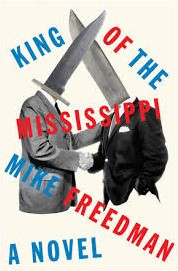
You can’t buy this book yet, but I’d love to party with these guys!
Self-promotion can be tough for independent authors. It’s so difficult that even extrovert authors who are comfortable with self-promotion might not be successful. So many writers are publishing stuff now that it’s difficult for many of them to stand out. Sometimes it feels like there are more writers than readers out there.
I recently wrote a blog post about deceptive self-promotion strategies that an independent author used in order to get a book deal. Some readers might think that the lying self-promoting author was clever, but I’d prefer cleverness that doesn’t require deception. I don’t want to pretend to be a publishing company or pretend to be a hot chick that likes my book.
Today I’m focusing on a different author who used a different strategy to sell books. I actually like what the independent author in this article has done so far. He’s written a historical novel set in the city of Houston, and a local Houston book store (not a chain) threw a preorder party for him.
The author and the store built up so much interest in the novel that it already has 300 preorders for a July publishing date. 300 pre-orders for an independent author in one location isn’t horrible. And the author doesn’t even live in Houston!
I have no idea of what happened at the party. As an introvert, I don’t like parties. But if I absolutely had to throw a party, I’d throw a pre-order party for my book (or somebody else’s). Maybe the book store hired a bunch of dancers and then got a bunch of patrons drunk. I know people who’ll purchase anything when they’re drunk, including book preorders.
I wouldn’t want loud music at a preorder party, but loud music is almost necessary for a party. And a fight. Every good party has to have a fight. If a preorder book party is too quiet, I’d pay a friend of mine (who knows how to fight) to loudly proclaim, “Stephen King is a hack!”
When you have a party filled with book lovers, calling Stephen King a hack will tick somebody off enough to at least cause a loud argument. I don’t really want violence at a preorder party. One loud argument will do.
Maybe I’d throw a preorder party, but I’m a little skeptical about the concept of pre-orders. As a reader, I never pre-order books. I don’t trust authors (traditional, famous, or indie) to write a book that matches the hype. When it came to my friends who self-published, I didn’t preorder. I bought their books, but I didn’t preorder.
Some authors might offer preorders to estimate how many copies to print or to get money up front. As an author, I think the independent writer should have some financial stake in the publishing. If you’re using somebody else’s money, you might get sloppy because you don’t have much to lose (except reputation).
Using somebody else’s money also means that they might think they have some control over what you write or how to spend the money. If I’m using my money, I have complete control (unless my wife says otherwise). Besides, I’m not going to do anything stupid when my family’s finances are at stake. At least, I won’t intentionally do anything stupid.
I probably shouldn’t admit that I’m not a fan of preorders. Now I might be accused of hypocrisy if I decide to offer preorders for my next book. Technically, I wouldn’t be a hypocrite because I’ve never said I was opposed to the principal of preorders; I just said I was skeptical. You can be skeptical of something and still try it. I’ve never told other authors not to do it. So if I offer pre-orders and somebody calls me a hypocrite, I’ll tell him/her to go screw off.
Next week, I’ll explain how telling potential book buyers to screw off is a great self-promotion technique. It probably isn’t, but I’d respect it more than lying.
*****
What do you think? Would you preorder from an author you’re not familiar with? If you’re an author, have you taken advantage of pre-orders?

If this isn’t a fake smile, nothing is. (image via wikimedia)
I can’t speak for all introverts, but I’m much more comfortable writing blog posts than I am making videos. When I talk, my voice sometimes seems to lack emotion. I feel emotion, I promise you, I do. Sometimes I’m even having fun, but other people can’t tell.
Last month I wrote a blog post (with a video) about how much I enjoy solitude. Right now, solitude isn’t an option, so I’m trying to improve my interactions with others. My interactions are rarely negative, but sometimes people think I’m more boring than I really am because of my voice.
Maybe I’m not as monotone as I’ve claimed in the past, but my voice lacks enthusiasm, and when you make presentations, you’re supposed to sound enthusiastic. If I try to sound enthusiastic, it can sound forced and fake, and audiences don’t like fake.
I’ve been practicing different ways to speak in my videos, and I think I’ve discovered a way to add inflection without sounding fake. Unfortunately, even if this technique works, I don’t think I can sustain it.
Some authors believe you should do whatever it takes to get book sales. I understand what they mean, but I believe in limits.
Last week I wrote a post about how I’m reluctant to tell my friends about my blog and books because I don’t want them to feel obligated to read or buy my stuff. From what I’ve seen, a lot of independent authors use their friends for an initial boost in book sales. If I’m not willing to do that (yet), then I need to find other ways to promote my books, ways that I’m comfortable with.
The book Diary of an Oxygen Thief by some guy named Anonymous took a few years to sell enough books to attract a major publishing company, and I keep seeing this novel every time I go to the local B&M Bookseller. Even though this novel was originally published independently (and I usually root for indie authors), this particular novel bothers me. From my perspective, this author lied and got a book deal out of it.
You can read more details here , including some strategies that are NOT lying. Remember, I’m not reviewing the content of the book. I’m reviewing the process the author went through to sell enough copies of his book to get noticed.
- Anonymous.
Yeah, the author called himself Anonymous. This was before Anonymous the hacker (I think), but there have been earlier versions of Anonymous authors. Anonymous wrote a controversial diary(?) called Go Ask Alice back in the 1970s. Another Anonymous back in the 1990s (who turned out to be a journalist named Joe Klein) wrote the book Primary Colors about a presidential campaign that mirrored the Clinton’s 1992 run.
Anonymous is the pen name authors sometimes use when they write stuff so controversial that they don’t want to attach a name to it. It’s a gimmick because the stories usually aren’t true but the author wants to pretend they’re true.
- Vulgarity
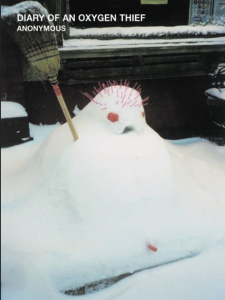
The cover of Diary of an Oxygen Thief has a snowman with a carrot in a provocative place. The cover ticks me off, not because it’s vulgar, but because I came up with that idea back in 1973, and I’m sure somebody else came up with it before me as well.
I was eight, and we’d just gone through a blizzard, and some friends and I had just built a snowman. We put a baseball cap on it, and used buttons for eyes and a carrot for a nose. In a moment of genius, I moved the carrot to a lower spot and pointed it out to everybody.
Nobody seemed offended, so I went inside and brought my older brother out. He nodded his approval, went inside the house, and came back out with a bigger carrot. If I’d had foresight, I would have photographed the snowman and used it for one of my ebook covers decades later.
- Lying
Anonymous made about 1,000 copies and got a few of them inside a local book store. Once copies of his book were distributed in small bookstores, the anonymous author supposedly pretended to be a publishing company to get his book into Barnes & Noble. I don’t like lying. But book publishers can be unethical too, so maybe it’s okay for an author to lie by pretending to be a publisher whom everybody assumes would be unethical anyway.
- Lying again
Anonymous also pretended to be a hot chick in an online dating service and mentioned the book in “her” profile as a book that she loved. Yeah, it’s clever, but it’s also dishonest, and I feel bad for all the lonely guys who bought this book thinking they had a chance with a hot chick who liked books.
I’ve never been a lonely guy, but I’m a writer, so I’m empathetic and would never intentionally put a lonely guy through that experience. I guess Anonymous is NOT empathetic. I too thought of posing as a hot chick to get people to read my blog and buy my books a few years ago. I could have done it and chose not to.
Over time, Diary of an Oxygen Thief sold enough copies to get a publishing company’s attention, and eventually Anonymous got a book deal. It’s great that Anonymous no longer has to pretend to be a publishing company and a hot chick. On the other hand, I don’t think he ever got punished for pretending to be a publishing company or a hot chick.
As an aspiring author, I’m torn about this Anonymous. I like to read success stories, but I don’t like to see bad behavior rewarded. His success teaches writers bad lessons, like lying to Barnes & Noble and giving lonely guys false hope is justified. I’m a little uncomfortable with that. Some aspiring authors see that as cleverness that should be rewarded. I see it as bad behavior that should be punished (I don’t mean mob justice; I just won’t buy the book).
At least the cover reminds me of the lesson my older brother taught me decades ago (I just wish I could apply this to publishing): When you’re building a snowman, use the biggest carrot.
*****
What do you think? Are Anonymous’s promotion techniques unethical? Should authors be rewarded for dishonest self-promotion behavior?

(image via wikimedia)
Phone calls early in a potential relationship can be stressful. During a phone call, the only communication is verbal. If two people are next to each other saying nothing for a long time, they can still enjoy each other’s company, but that can’t happen during a phone call. When you’re on the phone, you have to talk.
Phone calls are tough for introverts and shy people because talking for an extended time isn’t natural to us. An introvert talking to an extrovert can work out okay because an extrovert might take charge of the conversation. Two introverts sharing a call can be disastrous.
Jenny wasn’t shy, but I still didn’t want to answer her call (you can read more about her here). She was cute and had great cleavage, but she still had a thing for her ex-boyfriend and had been so aggressive with me in her apartment that I was pretty sure she had issues. Even in my twenties, I knew to stay away from women with certain issues.
Some guys would have thought I was crazy for not taking advantage of the Jenny situation. I’m not really better than the guys who would have taken advantage. I’m not a saint. I just think ahead. I know short term fun with a woman with certain issues can lead to long-term problems.
Anyway, Jenny was prettier than I was handsome, and she had great cleavage. The thing is, cleavage usually doesn’t matter to me that much, but hers was fascinating. It probably deserves its own “Awkward Moments in Dating” episode.
I knew Jenny was going to call. I’d told her at the end of our date that I was going to call her even though I’d been sure I wasn’t going to. It was a douche thing to do (“Douche” was a term in the 1990s), and I prided myself on avoiding douche moves when I was dating. But yeah, I lied to her.
When my phone rang on a Saturday afternoon (we didn’t have caller ID back then) a week after our date, I was pretty sure it was her.
“This is Jimmy,” I said. I like to announce myself when I answer the phone. It’s an easy assertive move, even for an introvert.
“Hey, Jimmy. This is Jenny,” she said. I don’t remember if those were her exact words, but I remember that I could tell she was nervous. How could a woman like Jenny be nervous? Normally, I’d be the nervous one.
“How are you?” I asked.
“Fine,” she said, and that was it. I wondered how she didn’t have anything other than “fine” to say. She was the one initiating the phone call.
“I had a good time last week,” I said, leaving out her Garth Brooks obsession, her ex-boyfriend, and the snot running out of my nose from the overly spicy food at her ex’s restaurant. “I… um… probably should have called you this week.”
Ugh. I probably shouldn’t have acknowledged that I was supposed to have called.
So I added, “There was a lot of stuff going on this week.” That was a lie.
“That happens,” she said. She knew I was lying.
The short sentences threw me off. The Jenny I’d gone out with would have talked right over me and told me everything about her past week, whether I was interested or not. This was like a robotic Jenny. I didn’t know how to talk to robotic Jenny.
“So what’s going on?” I finally asked.
“I know it’s late,” she said, “but do you want to do something tonight?”
I was surprised she asked, considering what a disaster this conversation was. Maybe her ex-boyfriend was working, I thought.
Oh man,” I said with fake exasperation. “I already have plans.”
I wasn’t lying, but the plans were lame. I was going to a sports bar with a bunch of friends to watch some football games. They would have mocked me if they’d known I was turning down a date with Jenny just to hang out with them. I made sure never to tell them about the phone call.
I didn’t even explain to Jenny what my plan for the night was.
“Maybe another night,” she said. We both knew there would be no other night. She actually sounded disappointed.
I was accustomed to being on the receiving end of phone call rejection. Suddenly, I understood how all those high school girls and college women (the first couple years) had felt when they turned me down. There was a little bit of guilt, but what else was I supposed to do? Go out with her just because she had great cleavage?
I should have told her that I thought she still had a thing for her ex-boyfriend. That would have explained why I was reluctant to go out with her again. She should also have known not to take other guys to that restaurant again. I couldn’t urge myself to tell her not to be too forward with a guy on a first date, especially if the date hadn’t gone that well. Looking back, maybe I should have told her.
Maybe it was easier to lie because I knew I’d never see her again. It’s easy to lie to strangers. Sometimes I do that just because it’s more interesting than telling the truth and there’s no real consequence for it. If a stranger catches me in a lie, who cares? Again, this was before the internet and social media. Back then, Jenny couldn’t get on social media and tell thousands of followers what a jerk I was.
People get mad today when a man or woman in a relationship ends it with a text. I kind of understand delivering bad news with a text. It’s wrong, but I understand it. Breaking up with Jenny over the phone was really uncomfortable, and we weren’t even officially dating.
*****
The dating saga with Jenny is over, but Awkward Moments in Dating will continue next week with a brutal tale of high school rejection (and I was on the receiving end this time)!
In the meantime, you can start Awkward Moments in Dating from the beginning!

I was kind of excited when I saw that a new mini-series version of Watership Down is on Netflix. I read the book by Richard Adams decades ago when I was in 6th or 7th grade because of a cheap (I think) animated movie I saw. The original animated movie from the 1970s might not hold up, but I think the book still does.
Watership Down is not the easiest book to describe when you’re enthusiastic about it, though.
“What’s it about?” my teenage daughter asked when I told her about the new mini-series (which I haven’t watched yet).
“A bunch of rabbits that leave their warren in search of a new home,” I said.
“That’s it?”
“One of the rabbits is psychic,” I said.
“So?”
“And the rabbits have adventures.”
“Oooooh. Adventures.”
“Shut up,” I said. “I hate everything I read, so if I like this book, you know it’s good.”
Telling somebody I hate everything might not be an effective persuasive technique, but it makes sense if people know that I’m a critical reader. I don’t really hate everything. It’s just that I notice flaws in writing that take away some of the enjoyment (unless I really like the book).
These conversations can work both ways. Last year Netflix put out 13 Reasons Why, which was based on a YA novel by Jay Asher, and it doesn’t sound appealing to a middle-aged guy like me.
“What’s 13 Reasons Why about?” I asked my daughter.
“A girl commits suicide and sends tapes about why to 13 people she knew in school.”
“That’s it?”
“Each person feels responsible in some way for the girl’s suicide.”
So?”
“It’s deep, Dad.”
“Ooooooh, suicide is so deep.”
“Shut up,” she said. “It’s better than I’m making it sound.”
It’s probably easier to pitch a Netflix series about teen suicide than it is an animated series about migrating rabbits. I’m not sure how to explain Watership Down. Even the cover blurb doesn’t do a good job.
As proof, here’s part of a blurb from Amazon–
“Set in England’s Downs, a once idyllic rural landscape, this stirring tale of adventure, courage and survival follows a band of very special creatures on their flight from the intrusion of man and the certain destruction of their home. Led by a stouthearted pair of brothers, they journey forth from their native Sandleford Warren through the harrowing trials posed by predators and adversaries, to a mysterious promised land and a more perfect society.”
Ugh. I probably wouldn’t want to read Watership Down if that’s all I had to go on. But Watership Down is a good book, maybe even great. I mean it.
*****
What do you think? Watership Down can’t be the only book that’s tough to explain. What other great books do you know that don’t really sound very appealing?

(image via wikimedia)
For years, I kept my blog Dysfunctional Literacy a secret. When I created this blog, I knew I’d write some stuff that could get me fired from my job, so I kept my name off of it. I was one of those… (pause of disgust)… anonymous bloggers.
I didn’t abuse my anonymity. I didn’t join any outrage mobs. I didn’t lead any personal guerilla attacks on celebrities. Yeah, I wrote a few posts about James Patterson being a scam, but he’s so rich (and I’m not) that he doesn’t care. I was very responsible with my anonymity.
I no longer have that job (don’t worry; everything’s great!), so I don’t care about being totally anonymous anymore. It’s fine if people I know learn about my blog, but I haven’t gotten comfortable telling people about it yet.
It’s nice having anonymity, but it doesn’t help when selling books. I have a few friends, acquaintances, and (former) coworkers who are self-publishing, and they’re encouraging (to varying degrees) the people they know to buy their self-published books. That’s what I talk about in the video below.
What do you think? If you self-publish, how do you promote your book to your friends, acquaintances, and coworkers? Or do you leave them out of it?
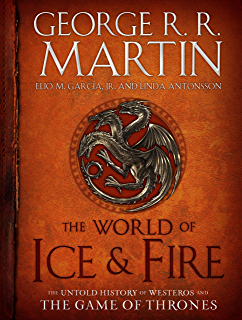
George R.R. Martin, author of A Game of Thrones, has never cursed out his readers or told them that they suck. At least if he has, I’ve never heard about it. Telling readers they suck is disrespectful.
But George R.R. Martin has taken more than seven years to finish The Winds of Winter, the sixth book in his Song of Ice and Fire series. It wouldn’t be as bad if he were working exclusively on making that novel great. Too many authors rush sequels so quickly that they’re disappointing. Martin, however, has published several books that are NOT The Winds of Winter.
The most recent, Fire and Blood: 300 Years Before A Game of Thrones (A Targaryen History)(A Song of Ice and Fire), makes me feel like A Song of Ice and Fire will never be completed. The fifth book came out in 2011. George R.R. Martin doesn’t look healthy. The HBO series is almost completed and has declined since it’s passed the books.
Maybe the television series has destroyed Martin’s motivation to finish the books (I’m just making that up). Maybe he’s written himself into a trap and doesn’t know how to get out (I just made that up too). Maybe he knows that no matter how he ends it, a bunch of fans will be disappointed. Maybe he’s lost interest in his own story or gotten lazy.
Fire and Blood isn’t even a novel; it’s a history of Westeros. It’s not even real history. I don’t want to read a fake history. I loved The Lord of the Rings and The Hobbit, but I had no interest in The Silmarillion. If I want to read history, I’ll read real history. I know that real history can be fake too, but at least I’m pretty sure some of it is real. Instead of reading about The Targaryens, I could read about the Tudors and the Lancasters.
Fire and Blood seems almost disrespectful to readers who are engaged with the story of A Song of Ice and Fire. These readers are emotionally committed. I personally don’t care that much because I haven’t started reading the books, but I feel for these fans. I think Martin has a responsibility to finish A Song of Ice and Fire before working on other stuff. I don’t mean he’s legally responsible. I just mean that he’s not respecting his audience.
I’m not going to read A Game of Thrones before George R.R. Martin finishes it, which means that I might not ever read it. I’ve heard that the first three books are great, but then the next two get sidetracked. Or they get boring. I’d like to judge them for myself, but I don’t want to get caught up in them and then have to wait years for the final books.
I had to wait three years after The Empire Strikes Back for Return of the Jedi to finish the original Star Wars trilogy. That was a long three years. It’s a crappy feeling, walking out of the movie theater knowing you have to wait three years for the next segment. I don’t want to go through that again with A Song of Ice and Fire.
Defenders of Martin say that he can write whatever he wants and critics should back off, get over it, get a life, or shut up. I don’t think anybody has said Martin HAS to finish A Song of Fire and Ice. We’re saying he should.
Book readers hate the way the HBO series has treated so many characters. Book readers want to see what REALLY happens. It’s unfair that Martin wait so long. Or maybe it’s by design. Maybe he wants the HBO series to suck so bad that anything he writes is better in comparison. I wouldn’t be surprised if that’s the case. He’s already proven how valuable his plotting is. Seasons 5-7 have shown what happens when the HBO writers can’t rely as much on the books. If this is true, it’s even more disrespectful to his fans because he’s putting his ego before his fans.
Telling fans they suck is disrespectful, but taking a decade to write an eagerly awaited book is bad too. I’d rather be told that I suck than wait so long for a book like The Winds of Winter. I’d tell George R.R. Martin that he sucks for making fans wait, but I can’t do that, even if being told you suck is a motivator (and it usually isn’t). I just don’t like being disrespectful to others.

(image via wikimedia)
The book business is struggling a little bit. That’s no secret.
Streaming services like Netflix cut into the average person’s discretionary time so much that book publishers met in London a few weeks ago to figure out how to “make books as compelling as Netflix.” A Brazilian publisher wrote a blog post pleading for people to buy books as gifts for Christmas. Barnes & Noble (yeah, B&N is a seller and not a publisher, but still…) in the United States seems to be teetering on and off toward bankruptcy.
With all of this going on, how can publishers sell more books? It isn’t as difficult as it sounds. I’m just a blogger (with a job that has nothing to do with writing), and even I have figured this out.
Below are four simple suggestions about how to improve book sales. There would be no begging involved. There would be no dumbing down of books to compete against Netflix. I’m not even asking publishers to make the books better (though that would be a start). I’m not asking for James Patterson to write only one novel a year. I’m not asking for Stephen King to stop doing perverted stuff to his fictional child characters. None of that would be reasonable to book publishers.
But the suggestions below?
- Make books cheaper.
This seems simple. When I was a kid, reading seemed like an entertainment bargain. Books cost about the same as a movie ticket and took more time to enjoy. Now streaming services like Netflix cost about $10 a month, and that’s less than the average paperback. If you have limited disposable income, what are you going to use $10 for? A month of Netflix or one paperback book?
Even paperbacks of public domain literature cost too much. When a flimsy paperback version of Lord of the Flies or Catcher in the Rye costs almost $20 each, you know publishers are price-gouging kids who are burdened with school reading lists. That doesn’t exactly encourage kids to read.
2. Hire attractive actors/actresses to promote books.
Writers are meant to be read and not seen/heard. Authors are usually horrible book promoters. Whenever I hear an author talk about his/her book, it almost always makes me less likely to read that author’s book. I don’t blame the author. The author can write the clever line, but the author can rarely deliver it.
Book publishers should hide the authors and hire attractive (but unknown) actors/actresses to pretend to be the authors and then do photo shoots and book signings. Maybe the attractive actor/actress won’t be smart enough to be convincing, but actors/actresses can memorize witty lines, improvise a little bit, be outgoing, and look good simultaneously. Nobody has to know the actors/actresses aren’t the real authors. That’s why the authors stay hidden.
If I wrote a famous book, I wouldn’t mind an actor taking my place at book signings. Book signings are awkward anyway.
- Focus on old books.
To be honest, most new books suck and don’t make that much of a profit anyway. Publishers can take old bestsellers that are actually proven winners and promote them as previous great reads. And make them relatively affordable. Consumers will read old books, especially if they’re cheap.
These old books don’t even have to be former bestsellers. An old obscure book can be promoted as being “ahead of its time.” Or maybe it was the opposite of ahead of its time. Maybe an old book was so wrong that it’s relevant today. Old nonfiction (such as old disproven science or political stuff) can be studied again and maybe even mocked.
For example, I ran across a famous book from the 1980’s that claimed the Soviet Union would outlast the United States as a world power. Haha! Rereading that classic was more fun than reading anything political today.
4. Get rid of public libraries.
How can book publishers significantly increase sales when local governments keep undercutting the industry with free books? Yeah, you have to return the book after you read it, but that’s not a big deal because most people read each book only one time anyway.
Libraries might be a great asset to the community, but they have to be hurting book sales. I don’t have any idea how much they hurt book sales, but it’s probably a significant number (I have no proof to back that up). If publishers shut down because of poor sales, then libraries can’t get new books.
Libraries… what a bunch of government parasites. Buy your own books, cheapskates.
*****
But enough about me! What suggestions would you have for book publishers? Which of the above suggestions do you think would work? Which suggestions do you think would backfire horribly?

(image via wikimedia)
I’m not sure what cashiers are called anymore. Back when I was a kid, the person who ran the check-out lane (or cash register) was the cashier, but I know that terminology changes over time.
If cashier is the wrong word, you can let me know what the correct term is. I won’t change the wording in this blog post, but I’ll know for future reference. Even though I’m a reasonably intelligent person, I have huge gaps in my knowledge.
Anyway, that’s not the point. This particular person who runs a check-out lane at a local grocery store wants to punch customers in the face. It’s a threat I take seriously. In the video below, I explain my dilemma. And I use the word cashier.

If you read during the holidays, prepare to be interrupted. (image via wikimedia)
The holiday season can be a frustrating time for introverts, especially for those of us who like to read. Even if we introverts have time off from work, we often have to use that time for extra chores/errands, or traveling, or spending time at other people’s homes. All the activity leaves little quiet time for reading, and that can be frustrating.
Holidays shouldn’t be frustrating. We introverts need our quiet time, and here’s how to read during holidays without causing conflict or putting ourselves in danger:
READING IN PUBLIC
Reading is almost essential for holiday traveling because traveling is really boring. However, reading in public places such as airports or bus stations (or even the mall) can be risky because you leave yourself vulnerable to getting conked on the head or having your stuff stolen (or both). It’s easy for evil-doers to sneak up on you while you’re reading in public, so if you absolutely HAVE to read in public….
- Put your back up against a barrier like a wall or window. Lean against a wall if you’re standing. Sit in a chair that’s against a wall or a window. This way, nobody will sneak up on you.
- Put your stuff behind your feet if you can’t hold all of it. Keep your legs connected to your possessions so that you’ll feel them if somebody tries to swipe your stuff accidentally.
- Look up while you’re reading and make eye contact. Give the nod of acknowledgement and then continue reading safely. Even when you’re reading, you need to be aware of your surroundings. If you’re not aware, at least act like you’re aware.
- Don’t read while you’re walking. You can trip or walk into other people (that usually ticks them off), or you might also get conked on the head.
READING AMONG FAMILY AND FRIENDS
There’s a stigma attached to reading in public or at social gatherings. It’s okay to watch television, listen to music, or get drunk (to a certain degree), but people will look at you weird if you read. With smart phones, it’s a little easier to get away with it, but you still have to do so in small (or short) doses. If you stare too much at your phone, everybody else will think you’re rude.
Normally, I don’t mind if others think I’m rude, but I try to get along with others during the holidays, especially my family, so here are a few tips to enjoying yourself without offending most reasonable people:
- Read while others are watching TV. People watching TV usually don’t care if somebody else is reading, but be ready to get talked to during commercials.
- Read if others start talking about politics. If the discussion gets heated, say you’re looking up information on your phone, then read the book of your choice. Let others get worked up into a political froth while you relax and read.
- Read in an isolated location (if possible). Nobody can disturb you or complain about you if they can’t see you. Tell others you need to go out for a smoke (even if you don’t smoke), and they’ll leave you alone unless they smoke. Then you might have to put up with talking AND smoking, so be careful.
WHEN NOT TO READ!!!
- Do NOT read when guests/family arrive or leave.
- Do NOT read at the meal table while others are eating.
- Do NOT read while the host is doing work that you can help out with. Help out the host (unless you are the host, but if you’re the host then you probably won’t have time to read). If you help out with the holiday chores, then you have the right to read later.
- Do NOT read while your kids are acting up. Its okay to read if somebody else’s kids are acting up.
- Do NOT read while opening presents. If somebody gives you a book, then you may read it while others are opening gifts.
*****
These rules work for me, but they might not work for you. What tips do you have for reading during the holidays (or any time you’re in public)? If you’re an extrovert, what reading tips do you have for the holidays?
For more about introverts, read Introvert Problems: I’m Addicted To Solitude.