(image via wikimedia)
When I first heard of one book that taught you everything you needed to know about life, I got excited and hurriedly bought a copy. It wasn’t a self-help book, so I wouldn’t look like a loser buying it.
Back then (I was in high school at the time), I thought only losers bought self-help books. Buying a self-help book was admitting to the public that you had problems, and I was taught to keep your problems to yourself.
This book that supposedly taught so much was a literary classic, so I knew I’d look intelligent by purchasing it. It was better to appear intelligent than to look like a loser. Buying a self-help book disguised as classic literature was brilliant, I thought.
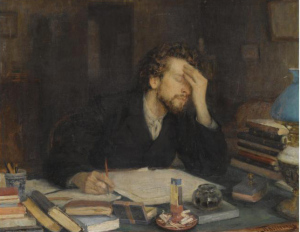
But then I started reading this book that could teach me everything I needed to know about life. I learned that I was gullible. And life was brutal. Once you learn you’re gullible in a brutal world, you’re ahead of almost everybody else.
Maybe that was all I needed to learn from a book.

(image via wikimedia)
Writing dialogue that sounds realistic is difficult. A lot of characters in fiction talk the same way, or sound campy, or seem overly formal/stiff. Very few authors can write dialogue that sounds like the way people actually talk.
I recorded this late night writing session over a week ago while I was revising Awkward Moments in Dating: The Bailout , which I put on this blog last week. If you watch the video and read the story, you can see some of the changes that I made.
I might have made a mistake trying to revise this dialogue scene at night. When I write in the middle of the night, I usually come up with new scenes because my brain is whirling in several directions at once.
I usually reserve editing and revising for times when my brain is calm and more precise. But revising at night is better than not revising at all… unless I really mess something up.
*****
Haha! Talk about messed up! The video is no longer available. I didn’t get much revising done anyway.

Maybe some things are more important during a holiday than family. (image via wikimedia)
A few years ago, my television broke down on the morning of a major holiday, and I had to wait until the next day to buy a new one. It wasn’t that big of a deal.
My wife and I had an extra television to get us through the holiday. Even so, when we drove around (we lived in a major city) looking for a possible store that was open on the holiday, we couldn’t find anything, at least nothing that sold new televisions.
We weren’t angry. We understood. Everybody should have the day off on certain major holidays, even people who work for stores that sell televisions. That’s how it was. Back then, convenience stores and gas stations were the only things open on major holidays. Nowadays, if you wait long enough, almost all the major stores are open.
Open stores can be annoying for the employees (unless they want the extra hours/pay), but shopping provides a relief for people who don’t like being stuck with their families. In the old days, families got together for the entire holiday (or longer). That was fine if everybody got along. But if not, the holiday could be brutally long.
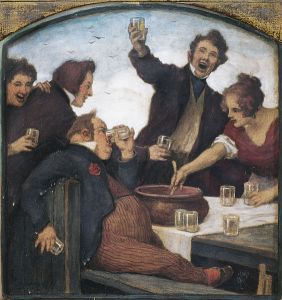
Holidays were also tough for the introverted or anti-social family members, who had to sit quietly amongst the drinking/singing/squabbling/jabbering of others and watch the time move (back then all clocks had second hands that you could actually watch move). The alternative to watching time move was to find a quiet location, but then family members would talk about you behind your back and that would make you paranoid. It’s okay to be paranoid about the government or institutions that want to control our lives, but it’s not healthy to be paranoid about your own family.
When I was a kid, I just sat and stared during holiday gatherings. Smart phones didn’t even exist, so I had nothing to stare at. I had an imagination, so I came up with stories in my head, but I couldn’t write them down because that would have been considered rude. Reading and writing during a gathering was rude back then, but reading and writing on a phone is considered normal now.
If I’d had a phone to stare at during family gatherings, I would have been fine. People shouldn’t need stores on major holidays now because they have phones to stare at. If anybody needed stores to be open on holidays, it was pre-smart phone generations.
The good thing about shopping on a holiday is that it can split the family up. Families that are stuck together all day can argue too much and make holidays unpleasant. Some families can’t stand being confined in one house during a major holiday. The house might be too small. The family might not get along. Someone in the family might be starting political fights.
For whatever reason, family members need to get out. The open stores give the family something to do right when everybody is tired of being around each other. If major stores are open, then families can get out and get along better.
The bad side of shopping on a holiday is that it can bring chaos to what’s supposed to be a peaceful day. Holidays were meant for people to relax/celebrate and get away from the daily routine. Now it seems like the daily routine gets intensified. Maybe that’s by design.
I blame Crazy Friday. I know some people use another term for Crazy Friday, but I refuse to inject color into it. That certain Friday is often associated with crazy behavior like shopping in the middle of the night, and coordinating family members from store-to-store, and getting into mob fights. If Crazy Friday had limited itself to Crazy Friday, everything would have been okay.
But crazy people are never satisfied. They always want to spread the craziness. They never leave the normal people alone. And then the crazy people call the normal people crazy.
Crazy Friday got extended when stores started opening late on the Thursday before Crazy Friday. This day before Crazy Friday used to be a holiday where nobody worked. But Crazy Friday was considered more important than the holiday. Now that the Thursday before Crazy Friday is safe for shopping, no holiday will be safe. And the hours will increase. Soon every store will be open on every holiday, which will mean holidays will no longer really be holidays, except for rich people and government employees.
Rich people will always have holidays. I’m pretty sure the vast majority of rich people don’t have to work during the holiday sales. So if you don’t like working on a major holiday, complaining about it might not be enough. You might just have to become rich.
If you try to tell your boss that holidays were originally meant for celebrating with your family/community (and despite what your employer might say, your job is NOT your family/community), your boss might look at you funny. The concept of stores closing all day during the holidays might be difficult to explain some day.
*****
For more “Old Things That Are Tough To Explain,” go to Old Things That Are Tough To Explain: The Home Page.

(image via wikimedia)
Bailing out is an essential skill in dating. You never want to say out loud that a date sucks (at least not during the date), but you need to be able to get out gracefully when there’s no hope for future compatibility.
Today, it’s easy. You can fake an emergency phone call or text. But back in 1991 (when this story takes place), you had to think on your feet and improvise.
A lot of guys wouldn’t have bailed out in this particular situation, and I kind of understand. My date Jenny was wearing a t-shirt and shorts and had her bare legs on my lap while we pretended to watch television on her couch in her apartment. It was pretty clear where things were going.
I was surprised that Jenny had put her legs on my lap because I really didn’t deserve her affection. I hadn’t earned it (You can read more about it here) . All I’d done was pay for dinner and drive her around a little bit. If she was putting her legs on me after dinner and no movie, I wondered how frequently she put her legs up on other guys.
Plus, she was obsessed over Garth Brooks and seemed attached to her ex-boyfriend. Yeah, she had great cleavage, but even so, these were warning signs I couldn’t overlook.
I knew I had to approach this diplomatically. “Don’t get me wrong, but this seems kind of forward,” I said.
“I’m a woman of the 90’s,” she said.
“90’s? It’s only 1991,” I said. “Has ‘woman of the 90’s’ even been established yet?”
“I behaved differently in the 1980’s.”
I couldn’t ask if she behaved good differently or bad differently back in the 80’s, but I had an idea which one it was.
“So on January 1, 1990, you decided to behave differently. That was your New Decade’s Resolution.”
She laughed because the way I said it was funnier than the way the words look on paper.
“Yes, I did,” she said. “And what did you do on January 1, 1990?”
“I went to bed early on New Year’s Eve 1989, just so I could get up in time to watch football without a hangover.”
“No New Year’s Resolution?”
“Just to watch a lot of football.”
“I like a man with goals,” she said, and then she edged her legs close to me, lifting one so that it almost brushed against my face.
There was no good way to do this.
“This probably isn’t a good idea,” I said. I scooted back on the couch a bit, giving myself some separation from her legs without touching them.
“Is anything wrong?” Jenny asked. She withdrew her legs almost instantly and sat up.
“My coke habit,” I said, faking a long sniff. When my nose had started running in the restaurant earlier, I’d made up a fake coke habit, which Jenny had understood as a joke. The runny nose had been real and I was ticked off at the time, but suddenly I was relieved that it had given me a way to bail out. “I can’t believe it keeps coming back.” I fake snorted again for effect.
“I told you it wasn’t the food,” she said.
“Do you mind if I…” I gestured toward the bathroom in the hallway.
“Go ahead,” she said.
As I stood up, I made sure to move my nose around my face as hideously as possible. “Of all the times…” I muttered.
Once in the bathroom, I shut the door, found some tissue, and blew into it like a trumpet. I knew she could hear me through the door. If this didn’t disgust her, I’d fake stomach issues. But I was pretty sure I wasn’t going to have to resort to that. No date deserves listening to stomach issues or dealing with the aftermath.
I stepped out of the bathroom and made sure that she saw me wiping my nose. “I think that’s just the beginning,” I said. “”I’m sorry. But I should probably go.”
“You don’t need to,” she said. “We can still watch a movie.”
“I’m dripping like a faucet,” I said. “I almost dripped on your leg.”
“It’s not a big deal,” she said, perplexed. Jenny seemed disappointed, and I hesitated. Usually women of Jenny’s stature turned me down. I wasn’t used to being hit on by a woman like her, and that was tough to ignore, but I needed time to think.
I fake snorted fake snot a couple times just to make sure Jenny didn’t go for a kiss. If she’d gone for the kiss, I might have relented. But the obnoxious snorting kept her back, and I headed for the door. I thought I was home free, that the bailout was successful. But then Jenny asked:
“Are you going to call?”
*****
To be continued! And you can start here to read Awkward Moments in Dating from the beginning!

I could probably hang out here for a few days without seeing too many people. (image via wikimedia)
As an introvert, sometimes my actions are misinterpreted. When I’m staring blankly, people think I’m zoning out but I’m really processing information. I mean, sometimes I’m zoning out. Interactions make me tired, so I need some zone-out time to get my interaction energy back if I’m working with people all day.
Sometimes people misinterpret my addiction to isolation as being anti-social, but that’s not what’s going on. When I’m by myself, I don’t get as tired. That’s part of why I’m so comfortable being by myself for long periods of time.
It’s not that I don’t like people. I like people, and I can work with people, but it makes me more tired than physical labor. That’s why I like working by myself instead of on a team (when it’s possible).
Being isolated too much can be unhealthy. I know that, but I still like it. Maybe I like being alone too much. I talk about that in the video below, but a lot of my words are imprecise. That’s why I like writing better than speaking out loud without a script. Writing by itself, however, doesn’t always have the appeal or impact of the spoken word.
Anyway, I hope what I talk about makes sense, but what do you think? How unhealthy is it to like being by yourself for long periods of time? Or is it just AWESOME!!???

A conspiracy theorist might say this eye is watching you and stealing your ideas. (image via wikimedia)
People on the internet accuse each other all the time of stealing ideas. Comedians accuse each other of joke thievery. Unknown musicians accuse famous performers of stealing songs. Every once in a while, two movies or two television shows with the same premise will come out at the same time.
I think most of the time, the similarity of ideas is due to parallel thought. There are so many people creating content that of course a bunch of stuff is going to look or sound the same.
I mention this because I just saw a promo for a new television show called God Friended Me. Even though I’m kind of religious, the show looks stupid, but I’m biased. I thought of a similar idea way back in 2011, and even then I was pretty sure it was a stupid idea.
Despite the title of this post, I know the television network didn’t steal my idea. I’m just surprised that a television network thought this God Friended Me was a good idea. Even when I wrote my version of it, I knew this was a bad idea, even for a joke. My blog was filled with a lot of bad ideas back then, and I knew it. But as I wrote more and more stuff, my ideas got better, and I think my writing improved a little as well.
At any rate, if you don’t want to watch the show God Friended Me, you can save time by reading the joke below. Looking back, it’s not that bad.
I’m providing the link here so that you can verify that I actually wrote it in 2011, but you don’t have to click it because…
God Gets Addicted to Facebook and Twitter.
It was the new millennium, and as God looked over humanity, He was again saddened and disappointed by what He saw. Humans had developed almost miraculous technology and yet were misusing it for their base desires. Men used technology for porn. Women used the technology for gossip. Criminals used the technology to help themselves steal and murder. Very little productive was being done with these wonderful tools that God had allowed/helped humans to discover.
And so God decided to step in.
First, God created an account on Facebook and friended everybody. When He was rejected by most Facebook users, God was stunned.
“Who would dare not to friend God?” God asked with indignation, tempted to set the world on fire.
But instead, God upgraded His Facebook page.
He put up photos of Adam and Eve with the apple, Moses parting the Red Sea, and Jesus walking on water. These pictures created a huge stir on the internet, as image experts closely examined the pictures for signs of image editing or anachronisms (God had made Moses take off his watch), but the photos were authentic, and people throughout the world began to believe that this particular Facebook page truly belonged to God.
And soon God had more friends than anybody else on Facebook, and God was happy.
Next, God went on Twitter. It was sometimes difficult to keep His good word to 140 characters, but He was God and the Twitter technology showed remarkable flexibility when God wrote too much. God used Twitter to shame individuals of their sins. He publicly warned men (and women) not to cheat, not to watch porn (at least not at work), not to discuss politics where food was being served, and of course not to steal, murder, and the usual stuff.
Humans did not stop committing acts of sin, but the number of acts of sin decreased greatly.
Atheists, however, refused to believe that this was the work of God. It had to be a hacker with enough resources to check individual internet usage and deduce who was sinning and how. No amount of evidence was enough to prove to them that God existed and had gotten addicted to Facebook and Twitter.
“Prove that you’re God,” the skeptics demanded to God. “Perform a miracle for us.”
“Is nothing enough for you?” God scoffed. “I have just used Facebook and Twitter in a positive way to do good in the world. If that’s not a miracle, I don’t know what is.”
*****
Yeah, that was my bad idea, but enough about me! What do you think? Have you ever seen any of your (bad) ideas used by somebody else?

This book didn’t win a Pulitzer, but maybe it should have!
I’m always going to think fondly of Stan Lee.
Stan Lee was a pop culture stud. This guy churned out comic heroes in the 1960’s faster than James Patterson can pump out “thrillers.” Yeah, Stan Lee was a shameless self-promoter, but I don’t care. Yeah, he hadn’t written any good comic books since maybe 1968, but I don’t care. Yeah, he had a really cheesy mustache, but so would I if I could get away with it.
Stan Lee created Spider-Man, the Fantastic Four, the Hulk, the Avengers, Captain America, Thor (well, the Norse created Thor, but Stan Lee made him relevant), and the X-Men (plus a whole lot more), and he created most of them within a few years of each other. Most writers would give anything to have a 5-10 year creative run that Stan Lee had in the 1960’s. I’m in awe of the guy.
I usually don’t write about celebrities when they pass because everybody else on social media does that. I’ll make an exception for Stan Lee. He’s one of my favorite authors ever, even if he’s just thought of as a comic book writer.
Stan Lee’s Marvel comic books got a lot of kids through troubled childhoods in a time when there was no cable or internet or cell phones. Stan Lee’s Marvel comic books got a bunch of kids who hated reading to suddenly become interested in the written word. I saw it happen with several of my friends.
I went through a phase where I loved comic books. I used to collect them, but that was before I had a wife and kids. Comic books now cost between $3.00 and $5.00 an issue, and they take about 5 minutes to read, so that’s not a good value for my money. I guess I now love the memories that older comic books, especially the comics written by Stan Lee, provided for me.
I had a couple chances to stand in long lines and then pay a lot of money for Stan Lee’s autograph and a picture, but I didn’t do it. Maybe I should have. He’s one of only a few people I’d do that for. But I believe standing in line and paying a lot of money isn’t really meeting somebody. You haven’t really met somebody if he/she won’t remember you afterwards. That’s just my way of looking at it.
I’ve only met two celebrities in my life (but I didn’t have to pay to meet them). One of them yawned in my face, and the other hit on my wife. If you’ve watched any of my videos, maybe you’ll understand why the celebrity yawned, but I’m proud that the other celebrity hit on my wife. Those two celebrities have nothing to do with Stan Lee, I know. I just like telling people about the two celebrities.
Now I kind of wish I had stood in line to “meet” Stan Lee. If he had yawned in my face, I could have laughed about it. If he had hit on my wife, I could have acted outraged. Man, that would have been a great story to tell.
One of my favorite books is Excelsior! The Amazing Life of Stan Lee by Stan Lee and some other guy whose name is on the cover. There’s a lot of interesting information about Stan Lee, including some stuff he drew for the U.S. Army during World War II. It’s kind of like a comic book version of On Writing by Stephen King. A lot of writers believe every aspiring author should read On Writing. Maybe every aspiring comic creator should read Excelsior!.
Excelsior! didn’t win a Pulitzer Prize, but maybe it should have. I’ll go even further. Stan Lee should have won a Pulitzer Prize just for being awesome. I think from now on I’ll say Stan Lee won a Pulitzer Prize for Awesomeness. If I repeat it often enough, everybody will start to believe it. I usually don’t lie, but this one would be for a good cause.

A lot of writers and bloggers seem to stress out over National Novel Writing Month (NaNoWriMo), an internet challenge where aspiring authors attempt to write a 50,000 word novel in 30 days.
If participating writers don’t get to 50,000 words, they often feel defeated or dejected, but that’s not why I stay out of it. I can’t even say “NaNoWriMo,” much less complete it.
I write too slowly to even attempt the challenge. I can churn stuff out, but I can’t do a 50,000 word burst in a month. I pace myself so that I don’t burn out. I respect writers who attempt it, but I’m sure most of the writing that comes out of NaNoWriMo is pretty bad.
In the video below, I’m kind of blunt about what I think of NaNoWriMo. It’s not really a rant, but I speak my mind.
What do you think? Would you try to write 50,000 words in 30 days? If you’ve participated, what kind of writing did you produce?
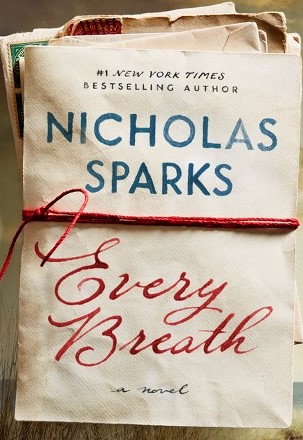
I’ve been lucky. In all my life, I’ve never had to sit through a movie based on a Nicholas Sparks book. My wife has never even read a Nicholas Sparks book. A husband can’t get much luckier than that.
As a book blogger, though, sometimes I have to try novels that I wouldn’t normally read. And so I tried reading Every Breath by Nicholas Sparks. I wasn’t looking forward to it. I know it’s not good to be biased when reading a book, but at least I’m upfront about my feelings.
Every Breath, what a title, I thought. If you like cheesiness, then Every Breath is a great title for a book. It reminds me of that song by The Police in the 1980’s, “Every Breath You take.” A bunch of girls I knew in high school at the time thought the song was romantic. When I told them it sounded like a creepy guy peeping tom control freak, the girls told me to shut up. To be fair, I was pretty obnoxious in the way I said it.
But I was right. And normal guys like me get annoyed when we see other guys do really insincere cheesy stuff for women and then women fall for it. That’s what Nicholas Sparks books remind me of, the insincere cheesy guy who can get women to pay for everything. In this case, he writes cheesy books that women will pay for. At least he’s doing something to earn the money. Most insincere cheesy guys don’t actually work. I respect a guy who works. Unless you think writing isn’t really work.
Every Breath even starts off cheesy. The introduction is titled “Kindred Spirits.” I’m not kidding. The term kindred Spirits is almost as cheesy as soul mate which has always made me cringe. I’m not explaining what that “Kindred Spirit” introduction is about (every other book review will do that), but it’s cheesy. And it’s a technique that I’ve seen too many authors use lately. I’d rather an author just get to the story than set up a cheesy beginning, especially when the beginning is titled “Kindred Spirit.”
Speaking of cheesy, here’s the first sentence in “Kindred Spirit”:
There are stories that rise from mysterious, unknown places, and others that are discovered, a gift from someone else.
I was taught never to start a sentence with the words there or here, that any sentence that began with here or there would automatically be passive or weak. Nicholas Sparks didn’t just start a sentence with “There are…”; he started the entire book with it. This doesn’t mean the whole book is going to be passive or weak, but it’s not a good sign.
Maybe I’m being nit-picky. If so, complain to my former English teachers. As a student, I was not allowed to get away with beginning a sentence with “There are…” I made no money from my high school essays. Nicholas Sparks makes a ton of money from his books and should be held to a higher standard than some high school kid who’s just trying to get through a school day with decent grades.
I mean, I have flaws in my writing, but I don’t think my flaw is cheesiness.
Anyway, a little further in the opening:
I parked my truck near the pier and hiked down the beach, heading for Bird Island, an uninhabited coastal preserve. Locals had told me there was something I should see; perhaps, they’d even suggested, the site would end up in one of my novels.
That was the giveaway that this story probably isn’t true. Novelists usually ignore suggestions from non-writers. Or they take the idea without giving credit.
Not long after the flag came into view, I kept my eyes peeled. I was to look for a mailbox called Kindred Spirit. The mailbox- planted on a pole of aging driftwood near a saw grass-speckled dune- has been around since 1983 and belongs to no one and everyone.
Ugh. “…no one and everyone.” I hate it when an author can’t make up his/her mind.
I’d better stop there so that I don’t belabor the point. Even the names are cheesy. At least one name is cheesy. The first character who’s introduced is named Tru Walls. In real life, Tru Walls might be a cool name. In fiction, it sounds like an author is trying too hard. There is a lot of potential meaning and symbolism in a name like Tru Wall, but it lacks subtlety. And it’s kind of… cheesy.
Maybe I’m overusing the word cheesy, but cheesy is perfect for what I’ve read so far. Every Breath doesn’t seem to be a horrible book. I could read it almost effortlessly if I had to, except for the cheese. Sometimes I have a tough time with cheese.
*****
What do you think? Is this typical for a Nicholas Sparks book. Am I oversensitive to cheesy writing? Is this great writing and I’m too cynical?
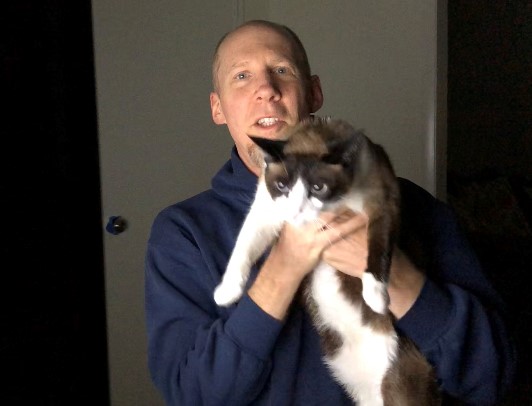
He’s kind of a jerk. And that cat isn’t too nice either.
Writing at night is getting better results than I thought it would. At first, I believed that whatever I wrote would look like gibberish the next day. So far, though, there hasn’t been anything glaringly bad.
In the past, I stayed in bed staring at the ceiling or rolling around restlessly. Now that I get up and write for a few minutes, I’ve been able to get rid of that nervous energy, and I fall asleep quickly after about 30 minutes on the computer.
It’s tough to take footage at night, though. In this current video, the camera is set up at a bad angle, and I was too groggy to notice until I checked it the next morning. I ran video for about 20 minutes, and most of my rambling was nonsense. But I caught one moment worth keeping.
The late night writing videos are my favorites so far, I think. If you haven’t watched them, check them out. They’re short and to the point. And I usually talk about writing a little bit.