Jacqueline Winspear, author of the current mystery bestseller The American Agent, has a cool name. As far as I know, it’s her real name. If she’d had a boring original name, I wouldn’t have blamed her for using Jacqueline Winspear as a pseudonym. It’s a cool name.
Fictional character Catherine Angelica Saxon from The American Agent also has a cool name, but then she gets killed off in the beginning of the novel. That’s not a spoiler because it’s in the book description, and if it’s in the book description, it’s not a spoiler. Anyway, I never understood wasting a cool name on a dead character. If I thought of a cool name, I’d save it for a character who shows up a lot or one who can come back in other books. Yeah, the cool name itself gets repeated a lot because the victims always gets talked about in mystery novels, but it still feels like so much wasted potential.
That’s not really my problem with The American Agent, though. It’s the dialogue. Sometimes a potentially great story is sidetracked by unnatural dialogue. I know fans of Maisie Dobbs will disagree. Detective/mystery fans can be the most loyal fans out there. The most vicious insults I’ve received are from Sue Grafton fans after I said the author put too many daily routine details into her books (this was years before she died, so I wasn’t being insensitive). Maybe it was also because I called the alphabet series a really dumb idea. Looking back, I probably should have used language that was more diplomatic.
A lot of mystery novelists use dialogue for exposition, and in the case of The American Agent, it’s unnecessary. In this early scene, Maisie finds out that an acquaintance of hers, a journalist from the United States, has been found dead. It’s a predictable scene, especially since I knew the character would die before I started reading. At this point, she is speaking with some guy named MacFarlance on the phone:
Maisie chewed her lip. It wasn’t like McFarlane to request forgiveness. She knew him only too well, and if he was rude, it was generally by design, not an error.
“Why are you calling me, Robbie? You’ve let me know you’re keeping tabs on me, but I am bone tired and I want to rest my weary head before I try to get some work done today, and then take my ambulance out again.”
“It’s about an American. One of those press people over here on a quest to keep our good friends on the other side of the Atlantic informed about the war. Name of Catherine Saxon. In fact, Miss Catherine Angelica Saxon, to give the woman her full monicker.”
“Angelica?”
“No accounting for the Yanks, Maisie.”
Maisie rubbed her neck, following the path of an old scar now barely visible, and shivered. “No, it’s just that… well, she was with us on the ambulance last night, just for a couple of runs because she had to make her first broadcast- she told us that she had previously only had her reports printed in the newspapers. I can’t remember which paper she’s working for . More than one. Anyway, I was just listening to her on the wireless at Mrs. Partridge’s house- her report was broadcast for the Americans last night. In fact, she told us she was very excited because it was also going out in London this morning, and she hoped she would get to be as popular as Mr. Murrow, who is as well known here as he is over there in America. I’ve heard of him a few times myself. Anyway, it’s just that she didn’t strike me as An Angelica, that’s all, even if it’s only a middle name.” Maisie was aware that she was rambling, staving off whatever news MacFarlane had called to convey. She’d wanted to escape war and death if only for the time it took to wallow in a hot bath.
Just so you know, Maisie spoke uninterrupted over the phone for 151 words. That’s a lot of consecutive words for a conversation. True, the author admits that Maisie knew she was rambling, but that doesn’t make the exposition through dialogue any more natural. Did Maisie really need to tell MacFarlane that Edward R. Murrow was well known in England? Did Maisie really need to explain her bewilderment over the name Angelica?
Here’s how this scene could have looked, with less dialogue but the same information:
Maisie chewed her lip. It wasn’t like McFarlane to request forgiveness. She knew him only too well, and if he was rude, it was generally by design, not an error.
“Why are you calling me, Robbie?” she asked. “You’ve already let me know you’re keeping tabs on me.” Maisie was bone tired and wanted to rest her weary head before she tried to get some work done, and then take her ambulance out again.
“It’s about an American. One of their press people. Name of Catherine Saxon. Miss Catherine Angelica Saxon.
“Angelica?”
“No accounting for the Yanks, Maisie.”
Maisie rubbed her neck, following the path of an old scar now barely visible, and shivered. “No, it’s just that… well, she was with us on the ambulance last night, just for a couple of runs because she had to make her first broadcast- she told us that she had previously only had her reports printed in the newspapers. I can’t remember which paper she’s working for. More than one.”
Maisie explained the details as best she could, how she had been listening to on the wireless at Mrs. Partridge’s house- Ms. Saxon’s report was broadcast for the Americans last night. Saxon had told them she was very excited because it was also going out in London this morning, and she hoped she would get to be as popular as Edward R. Murrow.
When Maisie caught herself rambling about how Mrs. Saxon hadn’t struck her as an Angelica, she knew she was staving off whatever news MacFarlane had called to convey. Maisie wanted to escape war and death if only for the time it took to wallow in a hot bath.
Maybe I’m old fashioned for believing exposition shouldn’t be all dialogue. Then again, a lot of old mystery novelists used the same technique as Winspear, so maybe she’s the old fashioned one and I’m just cranky and hypercritical. Maybe it’s just my personal preference.
This doesn’t mean that I don’t like The American Agent. It could still be a good mystery novel. And Jacqeline Winspear still has a cool name. No amount of block paragraph dialogue can change that.

(image via wikimedia)
The first phone call in a potential dating situation is uncomfortable, no matter which end of it you’re on. If you are the one making that initial phone call, you’re expected to carry the conversation. If you’re the recipient, you don’t control when the conversation takes place, and you don’t know who’s calling you when the phone rings. At least, back in 1993, we didn’t.
We had answering machines back then, so we could use those to screen calls. The answering machine gave more power to the phone call recipient. The answering machine gave the recipient the option to turn down the phone call without uncertainty. The answering machine was like the birth control pill of telecommunications. It was liberating but without the societal destruction and… uh… okay, maybe that chain of thoughts is for another blog post.
I really wanted Kimberly to call (you can get more details of our first accidental meeting here). Maybe I wanted too much for her to call. There’s always that excitement at the beginning of the potential new relationship. Maybe the new one will be better than the previous relationships (it usually won’t be). There’s always some optimism and hope. Despite what I’d told Suzanne, I was pretty sure Kimberly would call. She hadn’t had that look of silent rejection in her eyes when she’d taken my card. She hadn’t said, “I’ll call.”
Instead she’d said “You know this weird, right?”
Because of that honesty, I had a feeling she’d call, but I didn’t want to jinx it by saying that to Suzanne. I didn’t even believe in jinxes, but I still didn’t want to say it out loud. If I’d said Kimberly would call and Kimberly didn’t call, Suzanne could claim it was the jinx, and I didn’t want to give her the evidence to encourage irrational beliefs. Suzanne even told me Kimberly would call, but she’s still say it was the jinx.
I had some topics of conversation ready just in case Kimberly decided to call me. What happened with the guy who stood you up? Suzanne is really just a friend, I promise. Was my card too cheesy? That restaurant where we met is really overrated. Whenever she called, I knew, I’d be ready.
Since we had met on a Saturday night, I guessed that she’d call on Tuesday because three days was the acceptable number back then. Women were taught that calling earlier made them look too eager and waiting longer showed disinterest. It would be Tuesday. And Tuesday after work, my phone rang.
When I heard Kimberly’s voice on the answering machine, I let her talk for a moment. I didn’t want to pick up right away like a lonely guy, but I also didn’t want her hanging up. I really didn’t want to have to call her back because talking to her as the recipient would be easier than being the caller. I did a quick series of jumping jacks while she talked to the machine, and then I yanked up the phone like I was just rushing in.
“Hey, Kimberly,” I said out of breath. “Don’t hang up.”
“Jimmy?” she said.
“Yeah, I just got in,” I said. My out-of-breath voice covered up any anxiety that might otherwise show through my speaking.
“What were you doing?”
“Running,” I said. “I hate running,” I explained, just in case she thought I liked running. “I try it every once in a while because everybody says it’s good for you.”
“You could try jogging,” Kimberly suggested.
“If I’d been jogging, I might have missed your call,” I said.
“Okay,” she said, but I could tell she didn’t understand what I’d meant.
“If I’d been jogging,” I clarified, “I would have been running more slowly, and I wouldn’t have gotten home in time to answer your phone call.”
“Okay.”
“Then again, if I’d been sprinting, I could have answered before the machine got to it,” I said.
She was silent, and I knew I was overdoing it. I didn’t sound nervous, but I was talking too quickly and spewing nonsense. I had to slow down.
“Did you ever hear from the guy who stood you up?” I asked, slowing my speech.
“He said he was there.”
“But he wasn’t,” I said. “You have witnesses.”
“He said he had a table but never saw me come in.”
I asked her some details about how the whole thing with Thomas had been arranged. She said she’d met Thomas through newspaper personals and that the Saturday meeting had been their first actual outing. Back in the 1990s, the personals were in the back sections of newspapers and were usually used to sell stuff or to get a job. At the time, I knew about dating personals and had thought they were just one step above escort services. But I didn’t get that escort vibe from Kimberly.
“You were looking for a relationship with a guy in the personals,” I said, just to make sure that we had the same goals.
She laughed and clarified which newspaper she had used, the city’s high class (in their own minds) monthly periodical. She said to stay away from the daily papers. She said that young professionals used the monthly, and that it was a great way to meet people. Thomas had been the first guy to stand her up.
“You haven’t met any ogres yet?” I said. Even back then, I was certain guys would lie in their profiles. That’s not self-hating man-bashing because I knew women would do it too.
We’d been talking for a few minutes when I knew I’d have to take the next step. Even though Kimberly had initiated the call, I’d need to ask her for the date. That was the man’s responsibility (in a non-sexist way). I knew it was time to ask because I wasn’t even paying attention to what Kimberly was saying. She could have been talking about a death in the family or telling me she was physically attracted to Suzanne, and I would have completely missed it.
“So…” I said (this was before people started every sentence with so), as I took a breath. “Do you have any plans for the weekend?”
Just so you know, she didn’t have any plans, and we made arrangements for a date. And I’ll get to that in the next episode.
To be continued in … Awkward Moments in Dating: The Cheapskate!
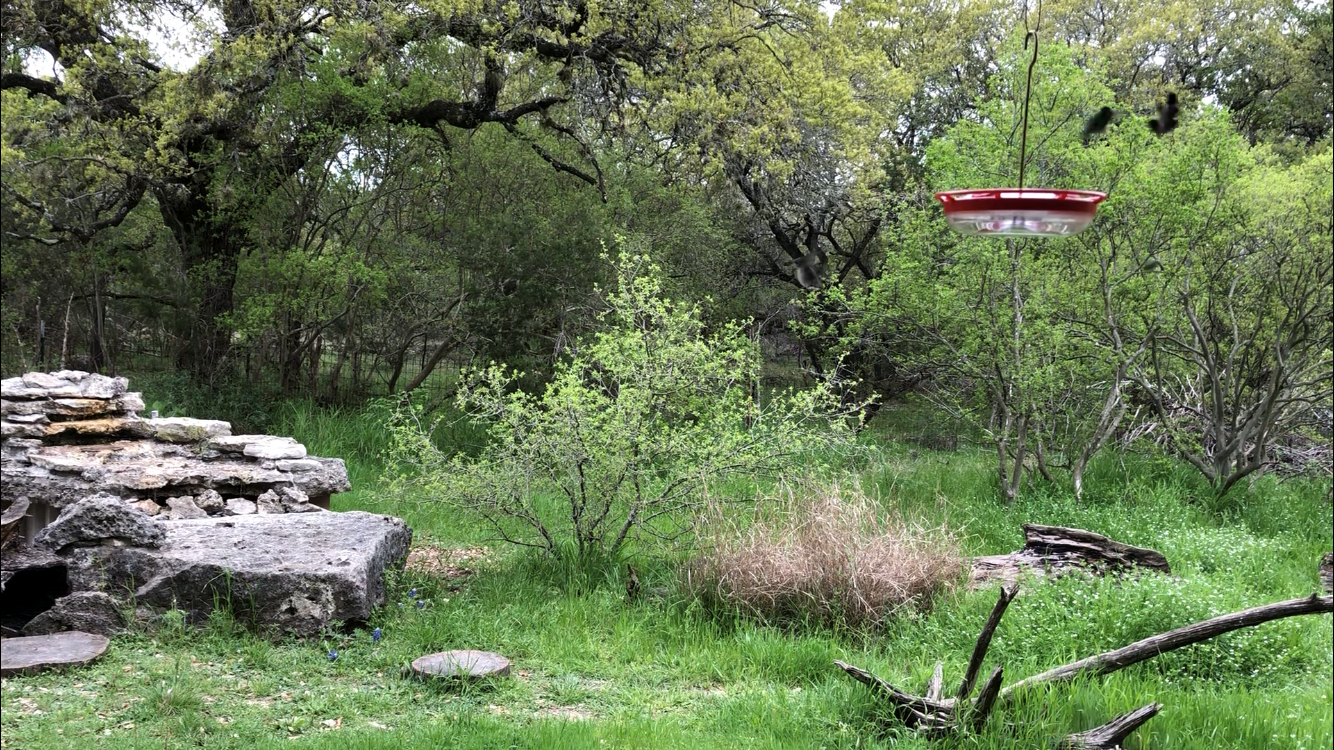
These birds wouldn’t sit still long enough to take a good picture, but they made cool sounds as they flew around.
This isolated bird watching spot off a local river was the perfect place to read, except I was paranoid somebody would sneak up from behind and conk me on the head. People will conk you on the head anywhere, even in the woods next to a river.
The solution was easy. I took a short video and looped it several times, and now I can read at home with my favorite background noise. I guarantee you, I’m not wasting this environment with a James Patterson novel.
IMPORTANT UPDATE!
The accompanying video has been temporarily removed.
I got tired of hearing birds all the time. Now I just turn the fan up really high, but I’m not going to make a video of a fan. I think somebody else has done that already.

Setting can be tough for an author. If you write too much, you can make the reader bored. If you don’t write enough, the story can feel incomplete.
Getting the setting wrong can ruin a book for a reader. My teenage daughter complains that too many pages in classic literature are devoted to descriptions of place. She already knows what all that stuff looks like, she says. I remind her that the internet didn’t exist when classic literature was written, so stuff had to be described. Back then, literature was relatively new. There were places, people, and ideas that had never been put into words before. A lot was new.
When it comes to words and ideas, not so much is new today. Almost everything has been described. It’s difficult to come up with new was to say the same thing. But it’s lazy to not try. I respect any current author who tries.
For example, Where the Crawdads Sing by Delia Owens starts off with a description of a marsh:
Marsh is not swamp. Marsh is a space of light, where grass grows in water, and water floats into the sky. Slow-moving creeks wander, carrying the orb of the sun with them to the sea, and long-legged birds lift with unexpected grace- as though not built to fly- against the roar of a thousand snow geese.
Then within the marsh, here and there, true swamp crawls into low-lying bogs, hidden in clammy forests. Swamp water is still and dark, having swallowed the light in its muddy throat. Even night crawlers are diurnal in this lair. There are sounds, of course, but compared to the marsh, the swamp is quiet because decomposition is cellular work. Life decays and reeks and returns to the rotted duff; a poignant wallow of death begetting life.
Of course, the reader knows that once decomposition is mentioned, something bad is going to happen. Something bad has to happen. It’s a marsh in fiction. Nothing good can happen in a marsh in fiction. If something good happens in a marsh in fiction, the novel won’t get published. It doesn’t matter who the author is or who the author knows, the novel won’t get published. Something bad has to happen in the marsh in fiction.
I had to look up the word diurnal. It means (of course, you probably know already) “active in the daytime,” demonstrating how dark the swamp is during the day if the nightcrawlers are moving around. I appreciate a novel that expands my vocabulary a little bit. I don’t appreciate it when an author shows off, and I have to rely on a dictionary page-by-page, but I appreciate Delia Owens.
Maybe I’m overstating how good this writing is. Last month I began reading a James Patterson book The Chef and was so disgusted by the poor writing that I stopped reading fiction for a while. Maybe this description of the marsh in Where the Crawdads Sing is mediocre writing (I doubt it), but compared to James Patterson, it’s awesome.
Here’s James Patterson’s description of New Orleans in the first few pages of The Chef. Yes, New Orleans is a city and not a swamp so the comparison of writing might be unfair, but New Orleans is a city built on a swamp:
A collision of food, music, history, passion, and chaos… yep, that pretty much sums up New Orleans for you. “Nawlins,” as us locals say it. NOLA. The Crescent City. The Big Easy. Different names for the same magical, one-of-a-kind place. My hometown of three-and-a-half decades. The capital of the world, as far as I’m concerned. A city where anything can happen, and nothing is ever as it seems.
Ugh, I can’t believe I forced myself to read that again. Yeah, I know. It’s my fault for reading a James Patterson book. I should know better. I do it because he writes so many books that I can’t ignore them because the public doesn’t ignore them. I feel like it’s my duty to occasionally point out what a scam his books are, even if nobody listens to me.
I’ll go one step further. Imagine a world where all novels are written in James Patterson style. Here’s how James Patterson might describe a marsh:
A collision of light, grass, and water… yes, that very much sums up the marsh for you. “Mahsh” as us locals say it. Marshland. The Marsh. The Big Swamp. Different names for the same, magical, one-of-a-kind place. My home for three-and-a-half decades. The center of the world, as far as I’m concerned. A place where anything can happen, and nobody ever knows it happened.
I’m glad James Patterson didn’t write Where the Crawdads Sing with Delia Owens.
I’ll keep reading Where the Crawdads Sing just because of the description of the marsh. I rarely find good description in novels anymore.
A lot could still go wrong with this book. The plot could be predictable (I don’t know, I haven’t read that far). The characters could all be two dimensional stereotypes (I don’t know, I haven’t read that far). The dialogue could be really bad (I don’t know). But I know that this novel at least has a great description of the marsh. And I know that something bad happens in it. Right now, that’s good enough for me.

Independent authors can come up with a lot of bizarre ways to sell books, but using corrupt politics (or the appearance of corrupt politics) has to be one of the worst. It’s worse than a male author pretending to be an attractive woman online convincing lonely guys to buy books. It’s worse than one author pretending to be an entire publishing company. It’s worse than one author writing one novel a week and glutting the market.
At first glance, Healthy Holly doesn’t seem to be the type of girl to abuse political power. Don’t get me wrong. I don’t want to criticize Healthy Holly. Healthy Holly seems to be a nice person. She’s healthy. She has a positive message. These books seemed well-intentioned. Who can be against healthy children?
Even if the books aren’t very good (I’m just speculating), at least the books have a good message. But now it looks like the author is a politician who used her influence to get these books purchased.
The details are here, and they’re kind of boring, especially for a tale of possible government corruption. This indie children’s author was a state senator who served on the board of directors for a statewide medical system. The indie author state senator then sold $500,000 worth of her books to that statewide medical system (while she was on the board of directors) and didn’t disclose it (until she got caught).
And it looks like a lot of her books were put into storage by the statewide medical system. And it looks like the indie author politician funneled some of the money from the books into political campaigns. And it looks like some of this might be illegal.
Maybe Healthy Holly had it coming to her. I’ve never liked children’s books that had an obvious positive message. I liked books that were fun to read. Healthy Holly might be a nice kid, but she doesn’t seem all that fun to hang around with. I’d rather spend time with a talking cat who trashed (other peoples’) houses or a kid who sailed off to a deserted island to dance around a bunch of monsters. I’d even rather run around with a purple crayon. These crazy books didn’t care about delivering a positive message. If crazy children’s books were fun to read, then a positive message was just a bonus.
In the indie author politician’s defense, I’ve been desperate to sell books before too. I’ve gotten over that phase, but I’ve been there. Even at my lowest, though, I’ve never tried to use my political influence to sell books. In fact, I’ve never even tried to get into politics. The only thing I’ve done is written the books and put them up for sale. I mean, I barely even promote.
I’ve never felt the urge to write a children’s book either. I like good children’s books, but most of them today are really dry uninspiring message books that don’t really encourage kids to read. If a moratorium on new children’s books were imposed (I’m not condoning that), kids could get by on Dr. Seuss and Berenstain Bears books and Harry the Dirty Dog without noticing the lack of new material.
This isn’t the first politician who’s tried to make a ton of money off books. Michelle Obama did pretty well recently with a memoir. Joe Biden sold a bunch of books too. Bill Clinton teamed up with James Patterson to write a novel that made no sense but made a bunch of money. These politicians used fame to promote their books, but they didn’t force another government entity to purchase them. At least, we don’t know about it if they did.
A few months ago, somebody commented on this blog that most indie authors need a book bully, a friend or a spouse who will do the promoting that makes most authors uncomfortable. In this case, the indie author politician might have been her own book bully and probably took it too far.
We indie authors want people to WANT to read our books. We don’t want to force sales or intimidate readers. I load my blog with a bunch of my original stuff so that potential readers can see what I write before they spend money on anything. And if they don’t buy anything, that’s okay because I have a job that has nothing to do with writing.
At any rate, I don’t think anybody is going to willingly read the Healthy Holly books anymore. She has been tainted with the appearance of corruption. I almost feel sorry for her. But at least she has her health.
(image via wikimedia)
I didn’t want to hear that my potential future date looked like my ex-girlfriend. I had gotten over my ex-girlfriend. I wasn’t bitter, and I didn’t want her back. Things were good. I also didn’t want my friends thinking I was trying to replace my ex-girlfriend with a woman who looked just like her.
Suzanne was just a friend but had known my ex-girlfriend and didn’t like her. So when Suzanne had said that Kimberly looked like my ex (you can get more details here ), I got a bit defensive.
“She doesn’t look anything like Daniella,” I said. Even though we were eating at a restaurant, I made sure no food was in my mouth whenever I spoke.
“They both have long, dark hair,” Suzanne replied. She was sitting across from me in a booth and had to lean forward to speak because the music in the restaurant was loud.
“That’s one-half of the female population in the city,” I said, having no proof to back up my statistic.
“They both wear glasses.”
“Daniella’s were fake,” I said. “The glasses.”
“Why did she wear fake glasses?” Suzanne asked and then paused. “I don’t want to know.”
“She wanted to appeal to intelligent guys,” I said. “And she didn’t really read those classic novels she carried around.”
“You are so shallow,” she laughed.
“Hey, I read the books I carry around,” I said. “And I’m sure Kimberly does too, if she carries books. Besides, their personalities seem completely different.”
“Does that matter?” Suzanne asked. “To such a shallow man?”
“Daniella would have thrown a fit about being stood up,” I said. “Daniella would have invited herself to sit with us. Kimberly seems more reserved. I like reserved.”
“Not too reserved,” Suzanne said. “You two will never say anything to each other.”
Two quiet people on a date, that could be disastrous, I knew. Still, I was getting ahead of myself. Kimberly had my phone number, but that didn’t mean she’d call me. She could have just thrown my card into the trash, and I’d never hear from her, and all of this speculation would end up being wasted energy.
“If she calls you, I want to know about it,” Suzanne said.
“I don’t do play-by-play,” I declared. It was true. I kept my romantic details to myself, even to my male friends. I lied about the details sometimes (I’m pretty sure my friends were lying too), but I never told too many details. Just a few to get them off my back, and rarely the truth.
“C’mon,” she said. “You met because of me. I deserve details.”
“She might not even call,” I said.
“I’ll be surprised if she doesn’t,” Suzanne said. “She knows you have a friend like me. That makes you more attractive to other women.”
I wasn’t sure how that worked. Looking back, I remembered a bunch of times I’d gotten snubbed by women during social occasions, even when I wasn’t trying to talk to them. When I was dating Daniella, however, women loved talking to me. I knew about the “girlfriend effect.” I wasn’t so sure about the “just friends effect.”
“Or you might have scared her off,” I argued. “She might think we have something for each other and decide to stay away.”
“She can tell we’re not into each other like that,” Suzanne said. “Women can sense those things.”
Suzanne actually wanted to bet me ten dollars that Kimberly would call. I thought about taking the bet. That way, even if Kimberly didn’t call, I’d win ten dollars. I like no-lose situations. But I wanted Kimberly to call more than I wanted the ten dollars, and I didn’t want to bet against my own self-interests, so I declined.
We finally moved away from the topic of Kimberly and discussed more Suzanne-related topics, like the new guy she was stalking and then the stupid people she had to work with. She was pretty sure the new guy she was interested in already had a girlfriend (which was why she was free to hang out with me on a Saturday night), and she was thinking about parking outside his house to see if he was there (and who was with him).
I didn’t put too much effort into listening about her work-related stories. Everybody complains about the stupid people they work with, and the listener only gets one side of the story. There were probably people where I worked who thought I was stupid too. So I nodded, and a couple times I muttered, “What a bunch of maroons.”
After the platonic dinner and movie (nothing happened between the two of us, of course), I had more time to compare Daniella and Kimberly. They didn’t really look alike, despite what Suzanne had said. Daniella and I had been a physical mismatch because she’d flaunted her looks and I was (at best) an average guy who could look presentable on a good day.
Kimberly probably could flaunt her looks if she wanted to but didn’t. At least, she hadn’t that night. She hadn’t been forward at all, like Daniella. I had talked to her first (which I probably wouldn’t have done before I’d met Daniella).
Kimberly seemed to carry herself well. She seemed to have a good nature. She probably wouldn’t be anything like my previous ex-girlfriend.
None of this speculation would matter, however, if Kimberly didn’t call.
But she did.
And I’ll get to that in the next episode.
To be continued in Awkward Moments in Dating: The Initial Phone Call !

(image via wikimedia)
When I read my older writing out loud, I get mad because I hear mistakes that I should have originally caught.
For example, a few years ago I wrote a 60 episode blog serial called “The Literary Girlfriend,” and it was based on stuff that actually happened. When I finished the series on my blog, I thought I had the foundation for a potential book, but now when I reread it, I hear/see a bunch of scenes that need to be rewritten.
Below is a video where I read one of my former favorite episodes of “The Literary Girlfriend” out loud. I treat this video like an ideal writer’s group where we’d hand out a copy of the excerpt to everyone and read a passage aloud before receiving feedback.
Reading out loud was more uncomfortable than getting criticism, but it’s an important part of the process. If you don’t want to hear my voice (I don’t like it either), you can mute the video or read the story here instead.
The video’s version is slightly different because I got rid of all the profanity in the dialogue. I didn’t want video of me saying bad words, even if it’s in dialogue. There are too many people who don’t understand context (or don’t care), and I’m still a little paranoid about things like that.
What do you think? Is the profanity in the dialogue necessary? Or does the sanitized version still sound realistic? I know what I think, but I’m interested in other opinions.
IMPORTANT UPDATE
The accompanying video has been temporarily removed.
I don’t like the sound of my voice reading my own words. I think I’ll hire a professional. And I’ll just permanently remove the video.

Daisy Jones & the Six by Taylor Jenkins Reid is an okay book so far. Daisy Jones is a fictional rock singer from the 1970s. The Six is the band she joined up with. The book is a collection of fictional interviews about the singer and the band from various points of view.
From what I’ve read so far, there was nothing to really complain about the writing or the book except… it’s fiction.
A few pages in, I asked myself, “Why am I reading this?”
By that, I meant, why was I reading fake interviews about a fictional rock singer? There are hundreds of real rock singers with compelling, (maybe) true stories that I could read. I couldn’t even listen to any of Daisy Jones’s songs to judge her voice for myself. Nowadays I keep hearing about how talented a bunch of current singers are, but when I listen they sound mediocre at best.
Maybe Daisy Jones was over-hyped. If the media is going to tell me that Daisy Jones has a great voice, then I want to hear her songs for myself, and the book doesn’t provide that. Even The Monkees and the Partridge Family gave us songs, and that was in the 1960s and 1970s.
Supposedly, the book is being turned into a mini-series for a streaming service. Maybe then, we’ll see what kind of a voice Daisy Jones has. If her voice isn’t up to my high standards, then I won’t believe all the hype in this book. And I can’t stand undeserved hype.
Anyway, since there’s no way for me to judge the quality of Daisy Jones’s voice and music, I don’t trust the hype.
So I put the book down.
At least I got a few pages into Daisy Jones & the Six. When George RR Martin came out with Fire and Blood: 300 Years Before A Game of Thrones, his fake history of Westeros, a few months ago, I barely started it. Why should I read fake history when there’s a ton of real history that I could learn about? I know that a lot of real history is probably fake, but you have to start somewhere.
If I had to choose between Daisy Jones & the Six and Fire and Blood, I’d read Daisy Jones & the Six. It’s not bad. It’s just not real.
(image via wikimedia)
Suzanne and I weren’t actually on a date. Our relationship was completely platonic, and both of us understood that. So on that Saturday night when I had been waiting for her to show up for our platonic dinner at some generic restaurant (belonging to a chain that still exists today) in 1993, I’d started a conversation in the waiting area with a brunette who had just been stood up ( I explain everything here.). When I told the brunette that Suzanne and I were “just friends,” Suzanne looked like she’d been offended.
“I can’t believe he just said that in front of you,” Suzanne said to the brunette.
Oh God, I thought, I’d said something inappropriate again. Despite my polite upbringing, I had a bad habit of making unintentionally inappropriate comments. Sometimes I wonder what I would have been like without that polite upbringing.
“Maybe you two need to talk,” the brunette said, smiling. At least she wasn’t fleeing the uncomfortable situation.
“No, he’s right,” Suzanne stated. “We’re just friends. I’m surprised he said that in front of you.”
“I wanted to be clear about the nature of our relationship,” I said. “Not that we’re in a relationship.”
The brunette didn’t respond to that. Instead, she glanced at the door. A family with a bunch of kids had just walked in, and we were blocking their way. I stepped to my right, and then both Suzanne and the brunette moved toward me, and the family nudged past us.
“I think he wants to ask you out,” Suzanne stage whispered to the brunette.
I could feel my ears turn red. I couldn’t deny what Suzanne had said. The red ears always give it away.
The brunette grinned. “But he’s with you,” she said.
“He’s not ‘with me’ with me,” Suzanne replied.
“I just got stood up,” the brunette said. “I can’t trust a man who ditches his date to ask me out.”
“She’s not getting ditched,” I said.
“Stay out of this,” Suzanne said. “It’s not about you.”
Suzanne turned back to the brunette. “He’s very shy. He doesn’t talk to women much.”
“How is this not about me?” I asked futilely.
“Did he talk to you first?” Suzanne asked. “Or did you talk to him?”
The brunette paused. “He talked to me first.”
“He never does that,” Suzanne said. “He must like you.”
“That’s enough!” I said, maybe too loudly. I stepped in front of Suzanne. Nowadays, it would probably be called something like man-blocking or man-terference, but it was necessary. Suzanne was fem-sabotaging me. But people didn’t talk like that in the 1990s.
“I apologize for my friend’s behavior,” I said to the brunette.
“I have issues,” Suzanne said. “That’s what my ex-boyfriend says.”
“Her ex-boyfriend is a jerk,” I said. “And I’m not her ex-boyfriend. Or her current boyfriend.”
“You should go out with him,” Suzanne said.
“Only if you want to,” I said. “But not tonight. Suzanne and I are hanging out tonight… in a completely platonic way.”
The brunette hesitated.
“You don’t have to decide right now,” I said. I took out my wallet and pulled out a card with my name and phone number.
Suzanne laughed. “You have a card?”
“It’s for work,” I said.
“Since when have you had a card?”
“I don’t know, a long time,” I said. “There’s never been a reason to give you my card. You know my name and number.”
To be honest, all of that was a lie. I’d had the cards made after my live-in literary girlfriend broke up with me, and I never used them for work. This was the first time I’d ever used the card, and I was a little self-conscious about it. But it was better than asking a woman whom I’d never met to give me her phone number.
The brunette took my card and looked at it. “James,” she said. “I’m Kimberly.”
“You’re going by James?” Suzanne said and then turned to the brunette. “He’s Jimmy to me.”
“Jimmy didn’t look right on the card,” I said.
“I don’t know you anymore,” Suzanne said, shaking her head.
“We’ve only been friends for a few months.” I noticed that several of the restaurant staff were staring at the three of us blocking one of the benches in the lobby. We probably looked like loiterers.
“It’s nice to meet you, Kimberly,” I said. “If you call me and we do something, I promise that she won’t come with us.” I nodded to Suzanne.
Kimberly still held the card. “You know this is weird, right?”
Kimberly didn’t say whether or not she’d call, and I didn’t want to seem too hopeful, so somehow we said our goodbye for the evening (or forever). As Kimberly walked out, a tall handsome guy coming in held the door open for her. They smiled at each other and she said “Thank you,” and kept walking. After she cleared the exit, he walked in and glanced around, and I was pretty sure he was by himself.
“You think that was the guy that stood her up?” Suzanne mumbled as we were escorted to our table.
“Is he really standing her up if he shows up, even if it’s 35 minutes late?” I asked. “And who gets first priority, the guy who’s late or the guy you meet because the guy is late?”
“Whoever I like better gets first priority,” she said. “And a guy shouldn’t be late at all. The woman gets 15 minutes.” We ordered drinks and probably got appetizers too. We were in our mid-late twenties and still ate everything just for the heck of it.
After a few minutes of conversation, Suzanne said, “I knew you’d want to ask Kimberly out as soon as I saw her. Even before I saw you talking to her, I knew.”
“I didn’t know you were psychic.”
“It was obvious,” Suzanne explained. “Kimberly looks just like Daniella.”
Daniella. My former girlfriend. The one who’d pulled a knife on me right before we broke up. Kimberly looked just like her? Of course, I had a dramatic reaction to that. And I’ll get to that in the next episode.
*****
To be continued in Awkward Moments in Dating: The Ex-Girlfriend Look Alike !
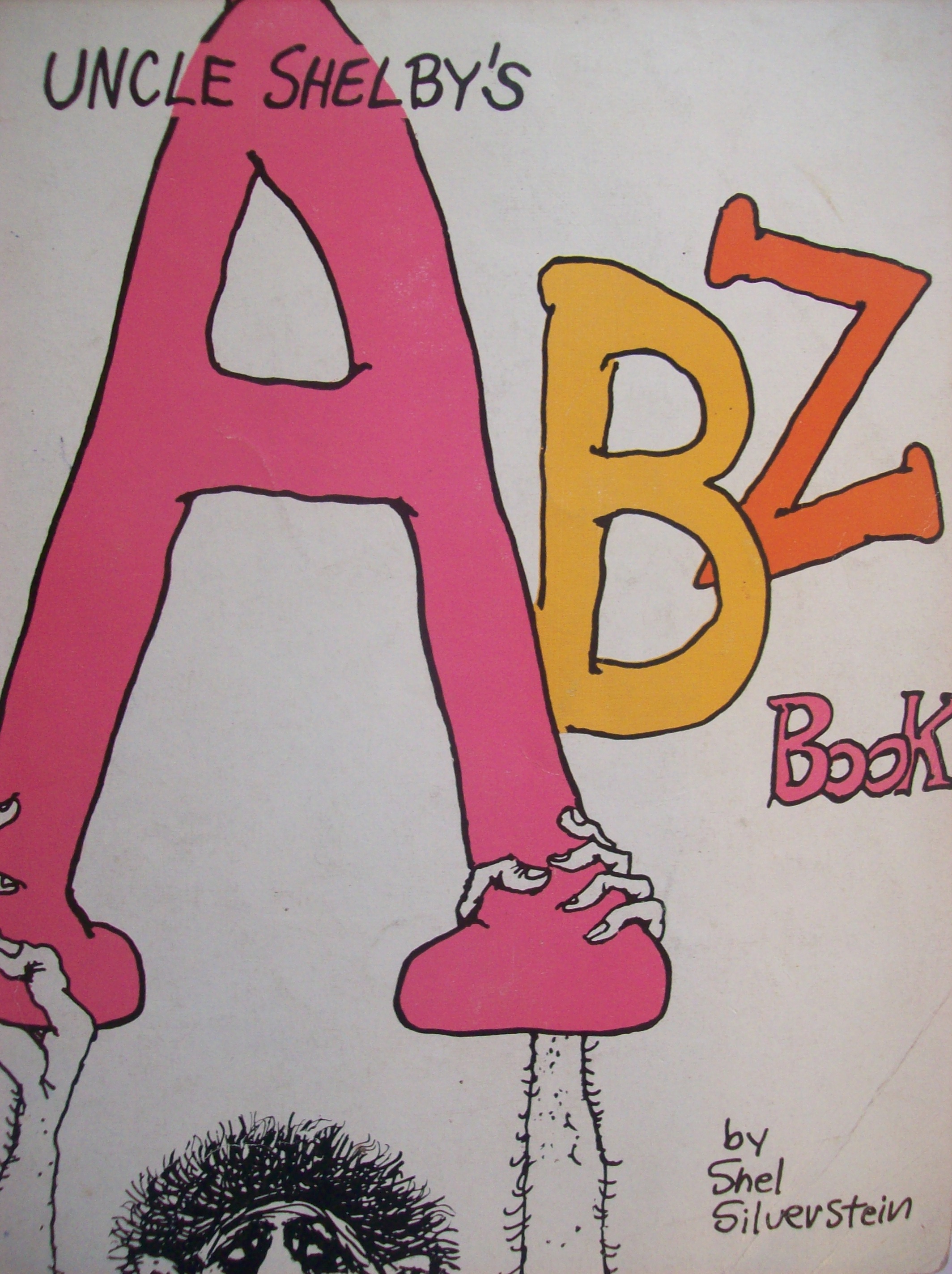
As much as I like Uncle Shelby’s A, B, Z Book by Shel Silverstein, I’ve never heard anybody else rave about it. Silverstein fans tend to focus on The Giving Tree or Where the Sidewalk Ends. I remember some poem about a girl who never took the garbage out. All of those were okay, but I thought Uncle Shelby’s A, B, Z Book was at a completely different level.
Now that I’ve found my old copy of Uncle Shelby’s A, B, Z Book, I can talk about why I like it so much. And why I think it’s a children’s book despite its tone and humor. And why it just might be communist propaganda.