The Harsh Unspoken TRUTH about Literary Gimmicks!!!!!!
SHORT VERSION!!!
Even though a lot of famous award winning novels use (or overuse) literary gimmicks, I rarely see readers discuss them. Sometimes these literary gimmicks can add new dimensions to an already decent novel, but other times I think they’re unnecessary or distracting(or both). Below is a group of blog posts where I’ve already discussed one specific novel that uses one or more literary gimmick.
Attack of the Literary Gimmicks
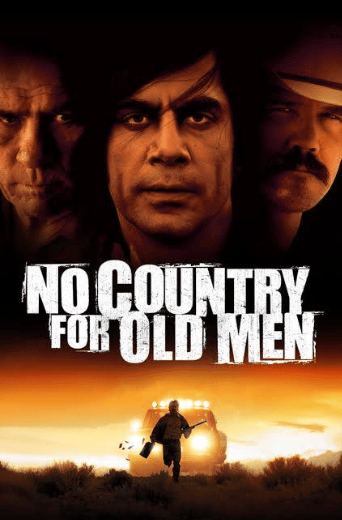
Literary Gimmicks in Famous Books: No Country For Old Men by Cormac McCarthy
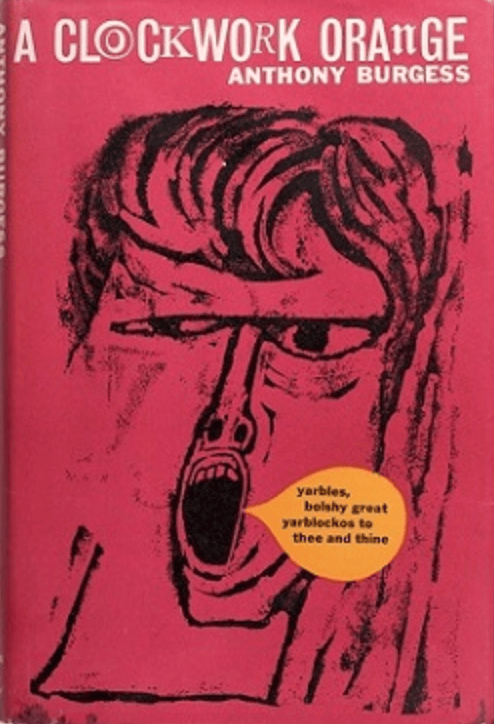
Famous Literary Gimmicks: A Clockwork Orange by Anthony Burgess
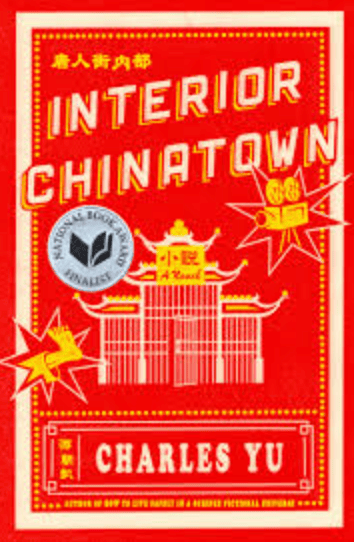
Fun with Literary Gimmicks: Interior Chinatown by Charles Yu
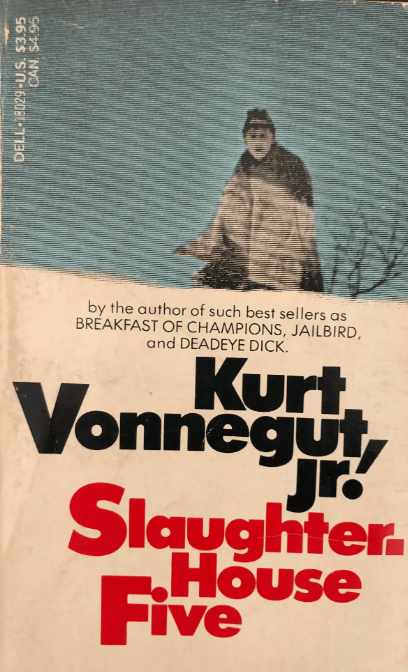
Literary Gimmicks in Famous Novels: Slaughterhouse-Five by Kurt Vonnegut
The Sunset Rises: A 1990s Romantic Comedy
REALLY REALLY MAYBE OVERLY LONG VERSION (but you get your money’s worth)!!!!
When describing what makes a great novel last week, I included the literary gimmick as one of the key devices, but I didn’t really define what a literary gimmick was. I assumed that most readers would know what I was talking about.
I know that assuming things can be seen as risky because of ‘THAT’ expression(when you ‘assume,’ you make an ass out of ‘u’ and ‘me’), but I’ve always thought that ‘THAT’ expression was kind of stupid because there are some things that everybody should know (Maybe I don’t know what those things are anymore), and if you don’t assume, then you end up overthinking or over-explaining, and I’d rather make an ass of myself by assuming than make an ass of myself by getting stressed out or over-explaining.
It’s one of those things where you allegedly lose either way, so screw the false binary. I don’t feel like defining the literary gimmick, but here are a few blog posts where I’ve given clear examples of them. Examples are almost always better than definitions anyway. At least, that’s what seemed to work in the classroom when I was teaching for over 30 years. Students would stare at me open-mouthed while I explained a topic, and then they would suddenly ‘get it’ when I provided an example or two. The challenge would then be for the students to come up with their own examples (because they always wanted to use mine).
HELPFUL HINT!!!! Below are several old posts where I have already written about literary gimmicks. I’ve also provided the links to the original posts, but since you might not have the time or the interest to check them out, I’ve reprinted the important stuff from each post below.
(The original) Attack of the Literary Gimmicks
Gimmicks are pretty common in some critically acclaimed fiction. Ulysses had stream-of-consciousness multiplied by infinity. The Shipping News had choppy sentences and fragments. Slaughterhouse-Five had “So it goes.” Holden Caulfield whines like hell in The Catcher in the Rye (or says …”like hell” a lot). When I think of these novels (I’m sure there are others, but I’m typing furiously and am probably missing something obvious), that’s what I think about, the gimmicks. The novels might have been great even without the gimmicks, and the gimmicks aren’t necessarily bad, but the gimmicks are what I think about.
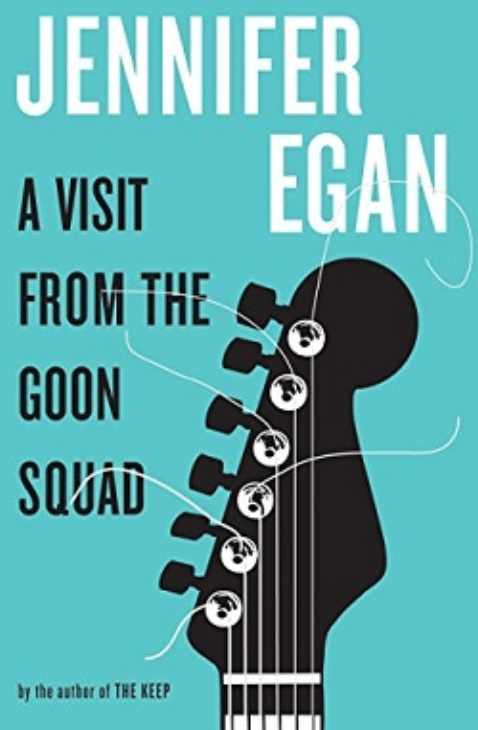
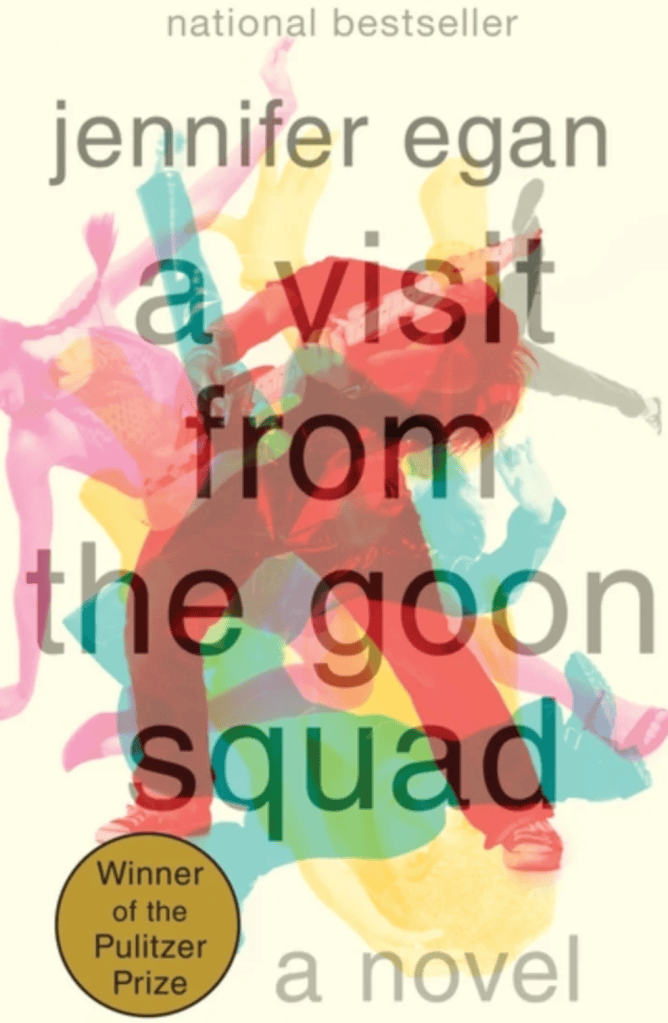
A Visit from the Goon Squad doesn’t use just one or two gimmicks. It uses a bunch:
1. Telling the story out of order.
2. Switching points of view (3rd to 1st to 3rd…)
3. Switching tenses (past to present to past…)
4. power point/ flow charts (don’t use an e-reader for this book)
5. lots of stream-of-consciousness
6. And the worst gimmick ever… 2nd person present tense!
*****
Ugh. 2nd person present tense! When I was in college, I got yelled at by a writing instructor for using 2nd person present tense in a story (hey, it was a “quick write,” and he told us to experiment!!!). The rest of the students nodded their heads as he lectured me about how gimmicks like 2nd person AND present tense took away from any merit my story had.
When Bright Lights, Big City by Jay McInerney came out a few months later with a lot of critical acclaim, I wanted to storm into the writing class with it and read dramatically to show them I had been (unintentionally) a trend setter (“trend” might be a bit strong), but it was a new semester, and all the students had different classes and we would never see each other again.
It was probably for the best. I didn’t like Bright Lights, Big City. All it did was prove that my writing instructor had been correct.
(End of excerpt)
Literary Gimmicks in Famous Books: No Country For Old Men by Cormac McCarthy
If I hadn’t seen the movie first, I wouldn’t have finished reading No Country for Old Men by Cormac McCarthy.
My problem with No Country for Old Men is that the author doesn’t use quotation marks in dialogue. I would have noticed that within the first few pages and thought, “Ugh, stupid literary gimmick” and would have tossed the book aside.
I’m not a fan of literary gimmicks. They usually don’t add anything to writing and are often an author’s way of showing off.
Fortunately, I saw the movie No Country for Old Men first. I liked it but thought it had some holes in the plot. I later heard that the novel explains most of the stuff that the movie doesn’t. Plus, the book is short.
*****
And then there’s my short book review of No Country for Old Men.
The book was good. A lot of the dialogue in the book was taken word-for-word for the movie. I don’t blame the script writers for using the same dialogue. It was good dialogue.
But the author didn’t use quotation marks. That’s just annoying.
(End of excerpt)
*****
Famous Literary Gimmicks: A Clockwork Orange by Anthony Burgess
A Clockwork Orange has a reputation of being a disturbing movie, but the novel by Anthony Burgess is controversial for a different reason: the United States version of the novel is missing the final chapter.
I haven’t read A Clockwork Orange, not because it’s disturbing, not because it’s missing a 21st chapter, but because the novel relies on a fake slang language (called Nadsat) throughout. Too much fake slang language can be distracting to me.
Creating a fictional language is a cool gimmick for a novel or short story, but I’m not a fan of learning a new language just to read a book. If I’m going to put the time and effort into learning a language, I want to apply it after I’ve learned it. Yeah, I’m interested in the 21st chapter of A Clockwork Orange, but I don’t want to slog through 20 chapters of a slang language just to get to it.
(End of excerpt)
Fun with Literary Gimmicks: Interior Chinatown by Charles Yu
Interior Chinatown by Charles Yu has just won the 2020 Nation Book Award for Fiction. I appreciate literary awards because without them I would miss out on a bunch of award-winning books that I’ve never heard of.
Even though I read (or skim through) a lot of books, the beginning of Interior Chinatown threw me off because it’s written in 2nd person.
*****
Int Golden Palace
Ever since you were a boy, you’ve dreamt of being kung Fu Guy./ You are not kung Fu Guy/You are currently Oriental Guy Making a Weird Face, but you’ve been practicing./Maybe tomorrow will be the day.
*****
The risk of opening in 2nd person is that the reader can deny the opening statement and stop reading:
Author: Ever since you were a boy, you’ve dreamt of being Kung Fu Guy.
Reader: No, I haven’t. (Gets annoyed, slams book shut, returns book to shelf)
Sigh! As a reader, I probably should go further to see what this narrator guy is talking about. A few pages later, the author/narrator explains how difficult it is for him to get a decent role in movies/television.
(End of excerpt)
Literary Gimmicks in Famous Novels: Slaughterhouse-Five by Kurt Vonnegut
I’m not going to summarize Slaughterhouse-Five because you can get that anywhere. I just want to look at a few devices that Vonnegut used and then question how much these gimmicks affected the quality of the book. Since I’m using a couple literary gimmicks in my own novel, I’m analyzing the literary devices some famous authors have used in their most successful books.
Slaughterhouse-Five begins and ends with chapters written from the author’s/narrator’s point-of-view. The author/narrator explains that he’s tried to write a book about his experiences as a POW in Dresden during World War II. The author rambles a little and claims that his book would be a failure.
I’m not sure if having an author/narrator claim that the book would be a failure is a literary device/gimmick or not. It’s similar to dramatic irony; when Vonnegut wrote his book, he didn’t know his novel would be so successful. Or did he?
The bulk of Slaughterhouse-Five, the Billy Pilgrim story, is told out of order because of the Tralfamadorians, aliens with an ability to see dimensions that humans are incapable of seeing/experiencing. I admit, I prefer linear stories. I believe there’s the possibility that time isn’t linear and that I’m simply not capable of seeing it, but I don’t feel threatened by my inability to see it. I might be better off not being able to see it.
(End of excerpt)
THE HARSH UNSPOKEN TRUTH!!!!!!
Not every book has a literary gimmick, but every literary gimmick has a book, so the gimmicks are worth examining. Maybe I’m wrong, but I don’t see many book readers or critics analyzing these literary gimmicks when they show up. Would Slaughterhouse-Five be held in the same high regard without all the gimmicks that Vonnegut uses? It would at least be a completely different novel.
Is the lack of quotation marks really necessary in No Country for Old Men? Personally, I found it distracting. (I wanted to fill all of the punctuation in throughout the book), but I think readers tend to accept the gimmicks because the author chose to use them, and if a book is good, the reader is going to accept almost anything the author does, which I think is fair. Authors should write their books the way that authors want to write their books, as long as the book is good.
These aren’t the only novels that have ever used literary gimmicks to add new dimensions or a little flair, but these examples should give you a good idea of what I mean without me having to define what a literary gimmick is. I mean, I could do it if I needed to or if I wanted to but I don’t. Besides, now if you ever want to use a literary gimmick in your own writing you have plenty of ideas to choose from now on. But at least try to be original. And no second person. And please use quotation marks. And please don’t make up your own new language. And also don’t…
*****
Enough about me and my opinions! What do you think? What is your favorite literary gimmick? What is your least favorite? What gimmick have you NOT seen tried? What novels do you think would have been better off without the use of literary gimmicks? Do I lose literary credibility if I never define ‘literary gimmick’? Demonstrate your mastery of the subject material by leaving a comment with an example (that I haven’t used) below.
*****
What literary gimmicks did I use in my ONE and only novel? Read it and find out for yourself!
It’s the oldest story in the world, 1990s style!
Man meets woman; man falls in “luuuvvv” with woman; man gets blindsided by reality!
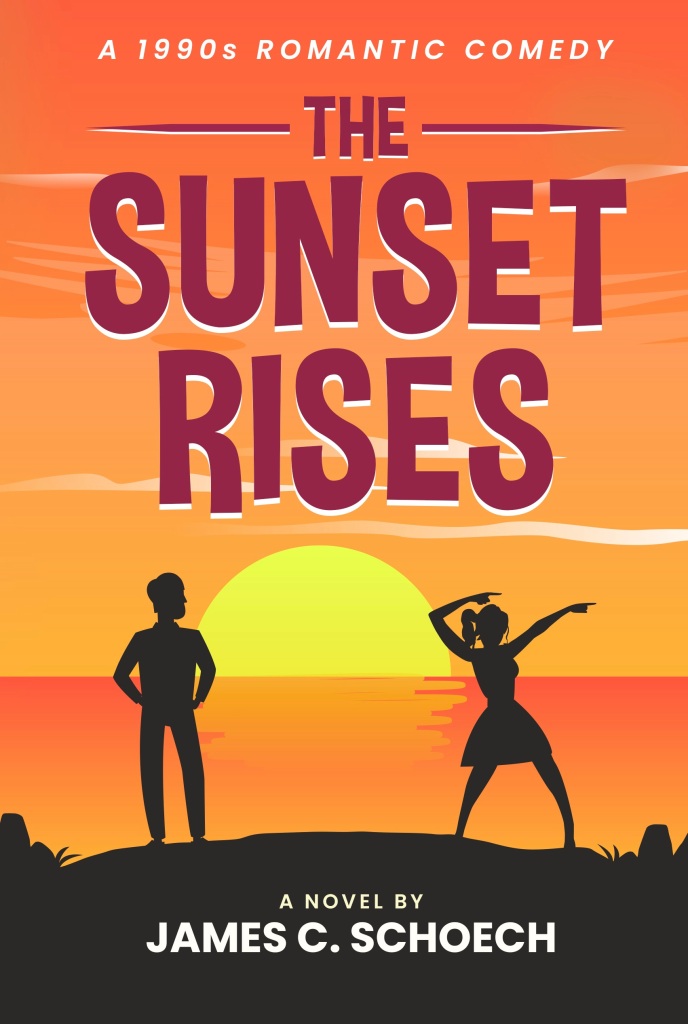
The Sunset Rises: A 1990s Romantic Comedy is now available on Amazon !