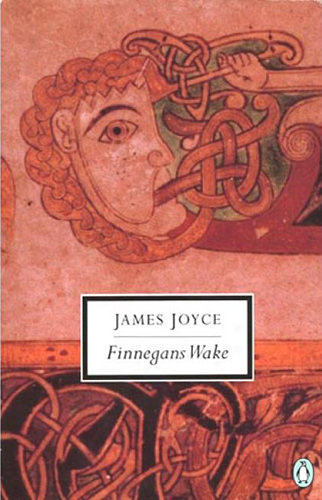
I might never know what James Joyce meant, but most communication is more basic than this.
Even though I can come across as easygoing, I don’t like to get corrected over nitpicky details.
I was at work on a Friday a few weeks ago, and I was late on a project. It wasn’t my fault I was late. The person responsible for the project is notoriously sloppy with details, so I had to doublecheck everything, and he was late sending me his numbers, and that put me in a bad position. I could either tell my boss that the other guy was slow (thus endangering the other guy’s job) or I could keep my mouth shut. My own job wasn’t in danger because my current boss understands I correct other people’s mistakes, which in the long-term makes his own bosses leave him alone.
Anyway, when I was talking to my boss, I said something like: “I’ll have everything done tomorrow.”
Before I could correct myself, my boss said, “You mean Monday.”
My boss was right. I had meant Monday, so I smiled and nodded.
I really wanted to say, “You know what I mean.”
But I didn’t. That kind of response can be misinterpreted. My boss and I get along, but I’ve seen a co-worker get fired for saying James Franco sucks, so I’m polite. Luckily, being polite is easy for me.
The thing is, when it’s Friday, and I say “tomorrow,” everybody knows what I mean, but almost everybody will correct me anyway. Very few people in our office work on Saturday. It wouldn’t make sense for us to work on Saturday. Sometimes we work really late during the week to avoid working on Saturday. Therefore, when I say “tomorrow,” the Monday should be implied.
I know that precision in language is important. I’ve read The Giver. I understand that I must be very deliberate with my words. But this was the conversational spoken word. Conversation is meant to be somewhat sloppy. To me, it’s the written word which should be so precise. If I had written an email to my boss, I would have written Monday. You don’t want to make mistakes in writing because you can think out your words more carefully and the written word lasts forever.
Maybe I should start saying “You know what I mean!” in these situations, but that could backfire. “You know what I mean!” sounds similar to “You know what I mean?” but the two have completely different meanings. You only say “You know what I mean?” if you’re pretty sure nobody knows what you’re talking about or if you’re rambling. That’s why I hesitate to say “You know what I mean!” Even with lots of inflection, “You know what I mean!” could be misinterpreted as “You know what I mean?” That would only make the situation worse.
I decided to try saying “You know what I mean!” (in a gentle way) the next time the situation came up. One evening I was talking to my wife about our oldest daughter (who wasn’t in the room) and I accidentally used our youngest daughter’s name. It was obvious that I had meant my oldest daughter. We had been talking about our oldest daughter, and it was a situation that could have involved only our oldest daughter, but when I said our youngest daughter’s name, my wife still corrected me.
“You mean__________,” she said, referring to our oldest daughter.
“You know what I mean,” I said gently.
“I was just making sure,” my wife said. “And you don’t need to get snippy about it.”
I thought, snippy? Maybe I had better not try saying “You know what I mean!” at work. I wouldn’t want to seem snippy, especially to my boss.
Yesterday was a Friday. My sloppy coworker was late on whatever it was he was supposed to have me check. I wasn’t mad or annoyed because he was actually putting more effort into it than he usually does. When I asked him if it was ready, he said, “I’ll have it for you tomorrow.”
Instead of correcting him, I patted him on the shoulder and said, “That’s okay. You can have it on Monday.”
I think I surprised him, not with my words, but by touching him. I hardly ever touch anybody. I don’t act familiar with people I don’t know well. I also delivered my response with a monotone voice, so he couldn’t tell if I was serious or not. Did he think I really thought he meant Saturday?
Either way, he knows I’m not coming into work on Saturday. Most importantly, I know I didn’t come across as snippy.
*****
What do you think? In what situations would would you want to say “You know what I mean!”? Does saying “You know what I mean!” come across as defensive? Is saying “You know what I mean!” worth the effort, or should I just leave it alone?

The struggling author finally received his payment. (image via Wikimedia)
It’s tough to make a living just by writing. Authors have been saying for years that it’s getting more and more difficult to make a living wage with the written word. The latest complaint has been from the Authors Guild, which shows that even award-winning literary authors have a tough time scraping by from their writing alone.
Some might react by thinking: “Suck it, writers! Everybody’s struggling.”
I’m not the type to say “Suck it!” to somebody, but I kind of understand. I’m in a profession which has nothing to do with writing, and I’m doing okay, but my family has had to cut a bunch of spending. Still, I’d like to help out professional writers.
And I’ve thought of several ways that regular people like me (and maybe you, unless you’re already a professional writer) can help out struggling authors:
-
QUIT WRITING BLOGS
If we’re writing blogs, we’re hurting professional writers in a bunch of different ways. All this time that we’re writing is taking away from all the books and magazines we should be reading instead. Every word I type is a word I’m not reading.
Plus, we bloggers are providing free content. When we read each other’s blogs, it keeps us from reading books and articles that authors get paid to write. We are inadvertently hurting the professionals by writing in our spare time. It would be better for the professionals if we just quit.
The thing is, I like writing blogs. Maybe I’m being selfish, but I don’t want to quit reading and writing blogs.
2. BUY NEWSPAPERS AND MAGAZINES
With the internet, I don’t have to buy newspapers and magazines anymore. Why would I? They clutter the house, and they’re overpriced. In the old days, I didn’t have a choice. I liked to read, and magazines always had the information/entertainment I wanted to read about. They were nice when they were necessary, but we don’t need them anymore.
I know that professional writers who worked for those magazines have taken a hit because those magazines now have to provide free content on their websites in order to compete with schmucks like me who write for free. I feel bad because my habit change has negatively impacted writers who are trying to make a living off of writing. I feel kind of bad about that.
The thing is, I like not having to buy newspapers and magazines anymore. Maybe I’m being selfish, but I probably won’t start buying magazines and newspapers again.
3. BUY MORE NEW BOOKS
When I go to the bookstore, I head straight for the bargain sections and the paperbacks. I’m a cheapskate. I want to support my local bookstore, but I can’t afford to spend $15.00 to $30.00 for new books. I know that writers don’t make much money off the bargain books and paperbacks, but at least they’re getting something.
When I’m on Amazon, I sometimes buy books from unpublished authors who are selling their e-books for $.99 up to $4.99. Some of the e-books are pretty good and are worth the time and money that I spend. Whenever I buy an e-book from an unpublished author, it means that I’m not spending money on something a professional writer wrote.
If everybody stopped buying e-books from unpublished writers, then maybe real professional authors would make more money.
The thing is, I’m on a budget and don’t want to buy new books at full cost. Maybe I’m selfish, but I probably won’t start buying new books at the book store.
4. STOP USING THE LIBRARY
When we go to the library, we borrow books at no personal cost (if you don’t count the taxes which fund the libraries). But if we read a book from the library, that’s less money going to the author who wrote the book (or the publishing company that published it). True, libraries purchase the books, but they only do it once, so when a bunch of people read one library book, the author gets screwed.
The thing is, I like libraries. Maybe I’m being selfish, but I probably won’t stop using libraries.
*****
I’d like to help professional writers. I’m certain you would too. But I don’t want to do what it takes to help them out, and I feel bad about it. Maybe somebody else could help out struggling professional writers, such as their publishing companies. Maybe the publishers could cut the writers some bigger checks. Maybe they could, but the publishers probably have their own reasons not to help out writers too.
*****
What do you think? What ways would you help or NOT help writers to make more money?
*****
Yeah, I know I won’t make much money off my e-book, yet I still try.
NOW ON SALE FOR ONLY 99 CENTS!!!
Crap Is NOT a Bad Word!: and Other Topics Polite People Don’t Discuss
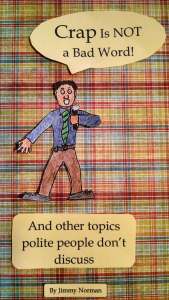
Now available on the Amazon Kindle!

Sometimes she doesn’t know when to stop. (image via wikimedia)
My daughter’s math teacher told her to shut up a few months ago, and I just found out about it now. At first, I was a bit concerned when my daughter gave me the short version. “Shut up” seemed like an inappropriate response to a student talking out of turn. “Please be quiet,” or “Would you please focus on your assignment?” seemed more professional. Students have always talked too much in class, especially math, and teachers need to handle that without resorting to “shut up.” At least that was my first reaction.
Then I asked my daughter for more details. In these situations, it’s always good to get more details. She said that the teacher was explaining something (she forgot what it was, she said), and several students were talking without permission, but it wasn’t her (yeah, right, I thought to myself). Out of frustration, the teacher said something like, “You guys are making my hair go gray.”
Then my daughter blurted out, “What hair?”
The class laughed. Her teacher told her to shut up, and everybody went back to work.
She claims he didn’t say “Shut up” in an angry way. His face wasn’t red, and spit wasn’t flying out of his mouth. He said it in a casual way and went about lecturing again. My daughter was just surprised that a teacher would say shut up to her.
I’m a little ticked at my daughter for a couple reasons. For one, my daughter broke my cardinal rule for in-school behavior: don’t be funny in the classroom. Nothing good (except immediate gratification from a laugh) comes from being funny in class. If you don’t try to be funny in class, you probably won’t get in trouble.
Plus, it was a hack joke, even for a teenager. I expect nothing less than original material from my daughters. Going after a male teacher’s baldness is too easy. I wouldn’t want a teacher to make fun of students’ pimples or weight issues or hygiene, so baldness should be off-limits. I asked my daughter if this teacher made fun of any kids like that, and she said no. In that case, she shouldn’t have gone for the bald joke.
I don’t remember many teachers telling students to shut up when I was in school, except an English teacher who’d get frustrated when kids talked during writing assignments. He’d say “Shut up!” whenever a student complained about writer’s block. I don’t remember if writer’s block was a term in the early 1980’s when I was in high school, but if students complained that they couldn’t think of anything to write, this teacher would say “Shut up.” I can’t say that “Shut up” cured my writers block, but the quiet classroom helped me concentrate on my writing in class.
I also heard a teacher call a kid an @sshole once. During a dress rehearsal for a musical in high school, my friend forgot his line. Instead of ad-libbing, my friend stood on stage silently. The other student-actors stood there too, waiting for my friend to remember his line. After a moment, my friend hit himself on the forehead in a symbolic gesture.
“You look like an @sshole!” my drama teacher shouted from the back of the auditorium.
Technically, I guess the teacher didn’t really call my friend an @sshole, but my friend WAS an @sshole, and he knew he was an @sshole, so everything was okay.
Drama teachers probably have to curse at kids to keep them in line. They have too many students running around all over the place, and there’s a show to put on, and the drama teacher gets fired if the performance isn’t any good. When there’s a performance (and a job) on the line, the teacher should be allowed to curse.
The same applies to coaches. High school coaches will say a lot of vile things to get their players fired up. “Shut up” might be mild for a football coach.
I’m surprised teachers don’t say “shut up” (or curse) more often. It’s probably not professional, but most professionals don’t have to stay locked in a room with kids all day. The door might not be locked, but it probably feels locked. When I was a student, the doors felt locked, so maybe teachers feel the same way, except they get paid.
I think my daughter is proud that the teacher told her to shut up. She’s a good student and probably has a reputation of being a goody-two-shoes (outdated term). Getting told to shut up by a math teacher probably gives her a little street cred (updated term). If I remember correctly, it’s good to have a little bit of street credibility so that you don’t get messed with too much. Street credibility is good, but I hope my daughter doesn’t try anything else crazy to get it. And she’d better not get herself called an @sshole.
*****
What do you think? Should teachers say “Shut up!” to students? What are some other things that teachers have said to you? If you’re a teacher, what do you say to students to keep them in line?

(image via wikimedia)
It’s easy for fans to be mad at George R.R. Martin. Last week the Game of Thrones author announced that he won’t be able meet the January, 2016 deadline for his long-awaited 6th book in the Song of Ice and Fire series, The Winds of Winter.
Some readers are angry with George R.R. Martin, claiming that he is taking too long with these books. It’s been several years since the last novel, he’s working on other projects, his blog posts are long when he should be writing books instead, and the HBO series has caught up with his books. In other words, fans are getting restless.
I understand. I don’t read the Song of Ice and Fire series, but I empathize with frustrated fans. When I was a kid, I got depressed after I saw The Empire Strikes Back because there was a cliffhanger and I knew I’d have to wait three years for the next movie. That was a crappy feeling, so it has to be even worse for Game of Thrones fans when The Winds of Winter deadline keeps getting pushed back.
On the other hand, the books might be a lot better if George R.R. Martin takes his time. When George Lucas met his three-year deadline with Return of the Jedi, he gave us Ewoks. Maybe if Lucas had waited an extra year, he might have come up with something better. Fans will be pissed if the White Walkers are defeated not by dragons and Valyrian steel, but by tiny furry huggable creatures. I’m not into gratuitous violence, but I’d kind of like to see what Ramsey Bolton would do to an Ewok.
If George R.R. Martin passes before he finishes A Song of Ice and Fire (and I really hope that doesn’t happen), the first thing that some readers will think is “Now I’ll never find out what happens next! What a rip-off!” They might feel guilty for thinking it, but it’ll be tough not to think it.
Maybe George R.R. Martin doesn’t want to finish Game of Thrones. Every time he falls behind, it gets him a lot of attention, and a bunch of fans remind him how they can’t wait to read his next book. That probably feels great. Once he’s done with the series, that’s it. His readers will be exhausted, and a bunch of them will be angry at how he ended the series.
No matter how he ends it, somebody will be angry. It’s impossible to finish a series like Game of Thrones without making some readers mad. Maybe he thinks he’d be better off by never finishing the whole series.
I can’t criticize George R.R. Martin without coming across as a hypocrite. I complain when James Patterson writes too many books. I can’t then gripe that Martin takes too much time. I mean, I could, but it wouldn’t look good. I believe there’s an in-between point where an author can write books without going too quickly or going too slowly, but I might not be the right guy to make that point.
I wonder, if James Patterson starts missing deadlines, would anybody care? Would readers flip out if they had to wait five years between Alex Cross books? We might never know.
*****
What do you think? What’s worse? Taking too long to finish books or rushing too quickly? Did J.K. Rowling finish the Harry Potter series too quickly? Should Suzanne Collins have taken longer to write Mockinjay? Did Harper Lee take too long to write Go Set a Watchman? What other books do you think authors rushed?
*****
Here are a couple short books to entertain you while you wait for The Winds of Winter or the next season of Game of Thrones!

Now only 99 cents each on the Amazon Kindle!
It might not be polite to self-promote too much, but if I don’t do it, nobody else will.
Getting your mouth washed out with soap is a lot worse than it sounds. Even though it happened to me a few times when I was a kid, I don’t have the words to describe it. It was just pretty bad.
It started when I said the word crap in front of my mom. When she told me not to say crap, I said it again. Then she warned me that if I said crap one more time, she’d wash my mouth out with soap. I weighed my options. How bad could soap be? I liked saying the word crap. So I got in my mom’s face and said the word crap, and she dragged me to the bathroom and shoved a lathery bar of soap into my mouth. After I sputtered and gagged and spit, I vowed that I would never say the word crap again, at least not in front of my mom.
A lot of other words got me in trouble too. I got my mouth washed out for saying Hoover Dam. I probably shouldn’t have whispered “Hoover” and then shouted “DAM!!!!” I got my mouth washed out with soap for saying shih tzu. I probably shouldn’t have shouted “SH*T!” and whispered the zhu. Now that I think about it, I probably deserved getting my mouth washed out with soap.
I promised myself that nobody would ever find out that my mom had soaped my mouth. It wasn’t a punishment you could brag about. A kid could brag about getting beaten by a dad’s belt. Getting beaten with a belt showed how tough you were. But getting my mouth washed out, I kept that to myself. I couldn’t tell that to anybody. What kind of kid allows his mom to stuff a bar of soap into his mouth? Only a sissy kid, and I couldn’t let anybody think I was a sissy. So I kept quiet about it.
Soap-in-the-mouth is a specialized punishment because it’s used only when a kid says something wrong. I never got my mouth washed out for anything I actually did. When I egged a bunch of teachers’ houses, I had to clean up the messes and apologize. When I got caught holding my friends’ drug-related paraphernalia, I got grounded and threatened with counseling. When I got caught changing a grade on my report card, my dad beat me with the belt.
I hated getting my mouth washed out with soap, but I wasn’t stupid. I learned my lesson. I stopped saying the words that got me punished. I grew up to be polite. I said “please” and “thank you” a lot. I spoke in a soft tone of voice. I chose my words carefully. As I got older, I chose my topics of conversation carefully as well.
*****
The above passage is an excerpt from my new e-book
Crap Is NOT a Bad Word!: and Other Topics Polite People Don’t Discuss .
Now for sale on Amazon!!
Now available on the Amazon Kindle!

(image via Wikimedia)
The adverb has an undeservedly bad reputation, I believe. The adverb is a part of speech, so it has to have an important role in grammar and sentence structure. I learned that in school. Yet, famous authors often malign the adverb and say its usage hurts writing. Stephen King has said: “I believe the road to hell is paved with adverbs,…” When the Modern Master of Horror equates a kind of word with eternal damnation, you have to take that seriously.
I just finished reading On Writing by Stephen King. It seems that every writer says that every writer should read it, so if I’m going to be a writer, I thought I’d better read it. I’m not going to review the book because you can get a review of it anywhere. I’ve criticized King recently about how sometimes he doesn’t follow his own writing advice, and he admits this in On Writing.
He also says that he notices too many adverbs in his early books. He says his writing is much tighter now that he doesn’t use adverbs as much.
Maybe that’s true, but the thing is, I like his older books more than his newer stuff. Last week, I read Joyland just to see if his newer, tighter writing made his book any better. I didn’t count adverbs in the whole book. I’m not that kind of blogger. I have nothing against a blogger who reads an entire book counting adverbs. That type of information and analysis might be interesting. It’s too much work for me, though. I read the book just to enjoy it.
Joyland was okay, but it felt like a bunch of other Stephen King books. His protagonists tend to sound alike. I felt like I had read sections of it before. If this sounds like a review, I don’t mean it to. I’m getting to a larger point.
I started reading The Shining again. You can’t go wrong reading The Shining again. It’s not one of my books to cure reader’s block, but it’s still good. I noticed that Stephen King used a lot of –ly adverbs in The Shining. Here are a few examples, all within a few pages of each other.
All of these sentences are towards the end of “Chapter Ten- Hallorann.” The parenthesis are mine to show who/what the pronouns refer to:
“This time they all laughed, even Danny, although he was not completely sure what the joke was,…”
The word completely probably wasn’t necessary. Then again, the word probably wasn’t necessary in my previous sentence either.
“It (the main room) had cleared greatly during the half hour they’d spent in the kitchen.”
The word greatly was unnecessary.
“The nuns who had been sitting by the fire were gone, and the fire itself was down to a bed of comfortably glowing coals.”
The word comfortably does describe the degree of glowing, but it might not have been the best adverb to use, and I’m not passionate enough to come up with a better one.
“He (Halloran) turned to the Torrances as she (Sally, a young maid) strolled away, backside twitching pertly.”
Okay, I didn’t make that up. Stephen King actually wrote backside twitching pertly. I may never become a successful writer, but I don’t think I have written a serious sentence that said anything like backside twitching pertly.
Stephen King says he cringes (or something like that) when he reads his older writing. Maybe “backside twitching pertly” is cringe-worthy, but this was written in the 1970’s. I think backsides twitched pertly back then. I’m not sure what backsides do nowadays because I don’t usually write about backsides. I think they sway a little bit. I usually don’t write about situations where backsides twitch or sway. Maybe it happens in real life, but I don’t write about that very often.
That’s okay. The Shining is still The Shining, and I’ll think it’s great no matter what.
*****
Thank you for reading this far. If you liked this article about Stephen King and adverbs, you’ll probably enjoy these ebooks on Amazon. They don’t cost much, and they help to keep the blog going. Thanks again!
Now only 99 cents each on the Amazon Kindle!

If any author could publish 365 different books in one year, it would be James Patterson. (image via wikimedia)
James Patterson published a lot of books last year. I’m not sure how many because I got confused when I went to his website and lost count. But James Patterson hasn’t published any new books yet in 2016. I’m not sure what the hold up is. I just published a new book yesterday on Amazon (Crap Is NOT a Bad Word!: and Other Topics Polite People Don’t Discuss). If I already have a book out, then James Patterson should have three or four done by now.
Just so you know, I don’t mention James Patterson in my new book.
James Patterson has a lot of help publishing lots of books, including a slew of co-authors. I’m not being judgmental; that’s just the way it is. On the other hand, I work a full-time job that has nothing to do with writing, and I do all of the writing myself. I get about 15-30 minutes to write each weekday and maybe a couple hours each Saturday and Sunday.
I’m not complaining. I chose to get employed in a field which has nothing to do with writing, and James Patterson chose to do whatever it took to write books, get an agent, find a publisher, and become successful. I’m sure it wasn’t easy for him when he started. I bet it’s pretty easy for him now, though.
James Patterson’s first book of 2016 comes out on January 25. I’m not going to announce the title of his book because then I’d be giving him free advertising. That wouldn’t make sense. Here I am trying to give my own book free advertising and instead I’m publicizing James Patterson’s new book which hasn’t even comes out yet. That would make me look stupid.
Anyway, I probably won’t be able to get another book out by January 25. Maybe I could, but it wouldn’t be any good. Still, it would be an accomplishment to stay one book ahead of James Patterson this year.
Patterson’s second book of 2016 is due out March 14. I could probably have another short e-book out before then, but then his next book comes out on March 21. That’s two books in one month. Even if I took some time off of work, I couldn’t publish three books in three months. If I hired some writers to do my work for me, I might be able to do it, but I don’t get paid enough at my job to hire writers for my e-books.
Even if I did have enough money, my wife wouldn’t let me do it. She wants me to write my own books until they make enough money for me to hire other authors to write my books for me. But that might take a while. That’s okay. I’m content writing my own stuff.
At any rate, maybe I can’t compare my e-book with James Patterson’s real books. My e-book is just an e-book, so maybe it doesn’t even count. James Patterson has a real publisher who actually prints out his books on paper. It can be an expensive process, so I don’t do it. Maybe I should start that whole process again of finding a literary agent and a publisher (I tried and gave up in the 1990’s).
Here’s another problem. Amazon listed my publication date as December 31, 2015. That irked me a little bit. I made sure that it wasn’t December 31 in any part of the world when I began putting in my book information on Amazon. Still, I’m listed as a 2015 book.
Anyway, my new ebook is out. It’s not an actual book, and Amazon says it wasn’t published in 2016, but I don’t care. In my mind… I’ve published more books than James Patterson in 2016!!!
At least for a couple weeks.
Here it is! The book that James Patterson doesn’t want you to read (that’s an obviously untrue statement, but it sounded great in my head).
Now on sale! Only 99 cents!!
Crap Is NOT a Bad Word!: and Other Topics Polite People Don’t Discuss
Now available on the Amazon Kindle!

This might not be the best moment to make a New Year’s resolution. (image via wikimedia)
New Year’s resolutions have never been a big deal to me. It’s never made sense to wait until a new year to fix a character flaw or change a bad habit. If I decided to make a change, I’d do it right when I thought of it and not wait for the beginning of a new year.
New Year’s Eve might not be the best time to make these decisions anyway. The people who make New Year’s Resolutions are often drunk on New Year’s Eve and hungover on New Year’s Day, and if you’re going to commit to changes in your lifestyle, you want to be in the best frame of mind when you make these decisions.
I’m not a killjoy when it comes to the new year. I love brand new calendars.
A couple years ago, I was watching a football game on New Year’s Eve when a wide receiver made a great catch and the announcer kept talking about the football player’s athleticism. The announcer kept repeating the word athleticism, and it was getting on my nerves.
“ ‘Athleticism’s’ not a word!” I yelled at the television. “It’s ‘athletic ability!’ I hate it when people make up new words. We have enough words!”
“That’s it!” my wife declared, storming in from another room. “I’ve had it with you yelling at the television all the time. They can’t hear you inside the television! Do you understand that? They… can’t… hear… you!!!!”
I was stunned into silence.
“It’s New Year’s Eve,” my wife said. “I want your New Year’s resolution to be to quit yelling at the television.”
I thought for a moment. “Does that mean I don’t have to try to lose weight this year?”
“Yes!” the wife agreed. “Just stop talking back to the television.”
“Okay,” I said. “My New Year’s resolution this year is to stop talking to, yelling at, or making comments to the television.”
The next morning was New Year’s Day, and I was watching a parade. I dislike televised parades, but my daughters loved them, so I got up and found my wife in the kitchen.
“Those stupid New Year’s Day parades are on,” I said to my wife. “I hate those stupid New Year’s Day parades.”
That afternoon as I was watching football games, my favorite team blew a fourth quarter lead. Instead of yelling at the television, I found my wife reading in another room.
“Those losers found another way to blow a game,” I complained to my wife. “I swear I’m going to stop watching them.”
That evening as I was watching another game, I got angry at all the commercials ruining the flow of the game.
Instead of screaming at the television, I discovered my wife in the attic organizing boxes.
“These commercials are ruining the game!” I ranted. “I know the NFL needs to make money, but you don’t have to run 5 minutes of ads every time somebody kicks a ball. It makes the game unwatchable!”
I went back upstairs to fume at the television. A few minutes later, I overheard my oldest daughter talking to my wife in the kitchen. I’m a pretty good eavesdropper, even during football season.
“What’s wrong?” I heard my daughter ask my wife.
“I can’t take it, him bugging me like this all the time,” my wife complained. “And I have to wait 364 more days before I can ask him to stop.”
Armed with this information, I kept ranting to my wife for a week or so and then stopped.
A couple days after I stopped bugging her, I started yelling at the television again just to see what my wife would do, and she didn’t say anything. Good for her, I thought. Since then, I’ve cut back on yelling at the television because I don’t want to do stuff that gets on my wife’s nerves. Every once in awhile, I slip up and rant, especially during football season, but overall, I’m much more relaxed now. And my wife has never asked me to make another New Year’s Resolution.
*****
What New Year’s resolution has backfired on you? Do you even believe in New Year’s resolutions? What New Year’s resolution would you like to try, even if it’s not officially a New Year’s resolution?
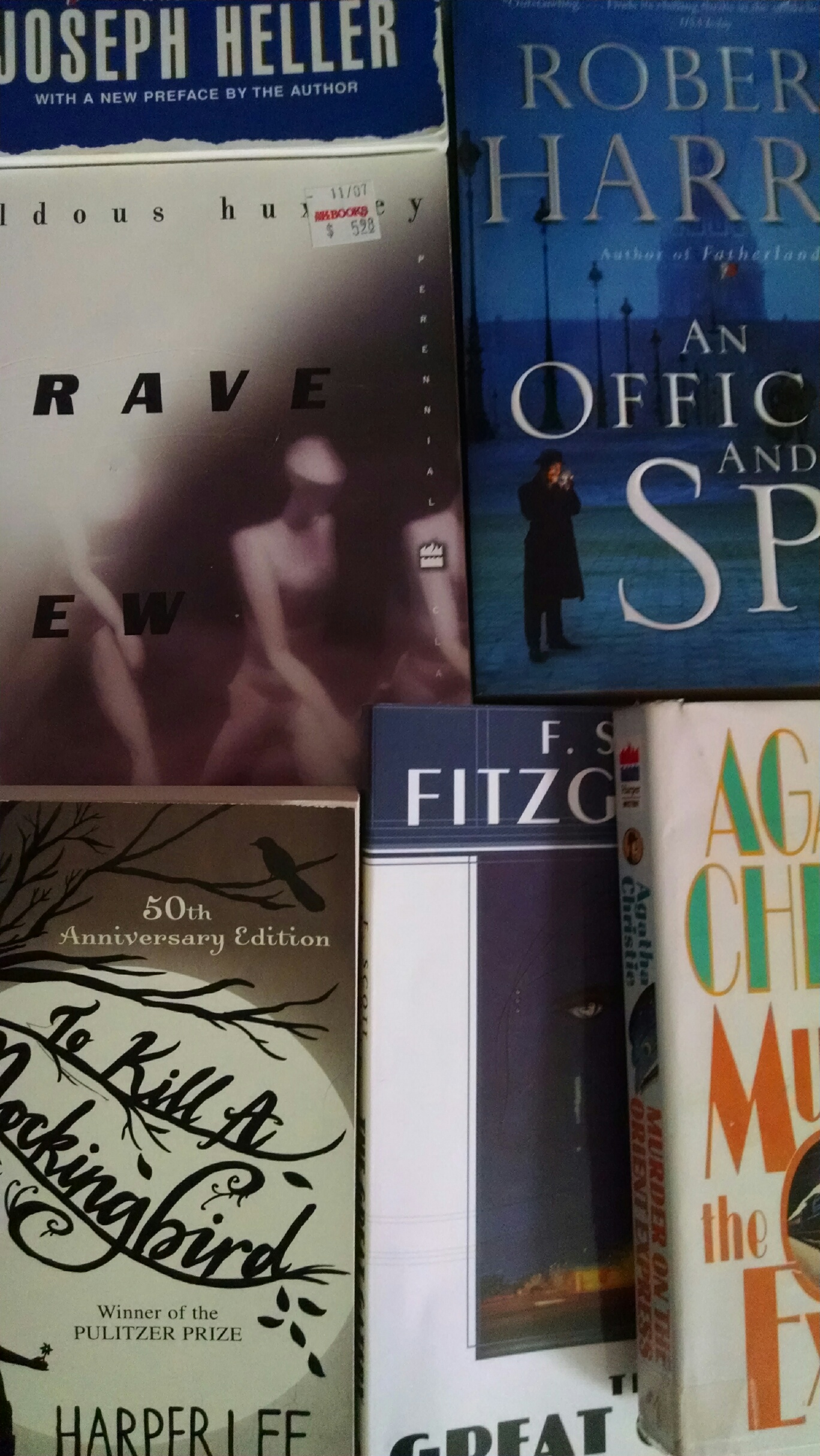
These are all good books, but I’ve read them, and I’m not in the mood to read them again.
I have a little bit of extra time this week, so I’d like to read a book, maybe two, but I don’t want to waste my time with a book that isn’t any good. I went to the book store a couple days ago and walked out with nothing, not because I’m a cheapskate (Actually, I am a cheapskate, but that wasn’t the reason I walked out with nothing), but because I wasn’t sure I wanted to commit myself to any of the books I looked at.
I don’t have reader’s block. Reader’s block is when nothing interests me. This is a little different. I think I’m getting too hyper-critical. I’m getting annoyed at bad dialogue in novels. I’m losing interest in long paragraphs with lots of description. I get suspicious that every minor subplot is filler.
I’ve always been a little critical of books and movies, but I’m getting worse, not better. It’s good that I have high standards, but it’s bad when nothing meets them.
I don’t really want to read a recently-published book. I’d read one of my own sure-thing books, but I save those for when I have reader’s block, and I don’t have reader’s block right now. Maybe it’s time to read somebody else’s sure-thing.
If you want to make suggestions, I’m open to them. I’m open to just about any genre, except maybe romance (unless it’s humorous). There are a few kinds of books, however, that I won’t read anymore:
- No series. I don’t have enough time to read a series, even if it’s good.
- No books over 500 pages. I can be flexible, but if it’s over 500 pages, it has to be self-contained and no filler.
- Authors I won’t read anymore (because I’ve read three or more of their books already): Stephen King, John Grisham, Tom Clancy, Lee Child, Lawrence Block, Donald Westlake, Dennis LeHane, Amy Tan, Elmore Leonard, James Elroy, etc. There are others, but I can’t think of them right now.
- Authors I won’t read anymore (for other various reasons):
- James Patterson (doesn’t write his own books)
- Sue Grafton (alphabet series is a horrible idea)
- Janet Evanovich (terrible alliteration in her titles)
- Harper Lee (long-lost manuscripts discovered in attics/basements are always suspicious)
- Brad Thor (obnoxious name, even if it’s real)
- Celebrity author whose name I don’t want to reveal (yawned in my face at a book signing)
*****
When I get reader’s block and I need a sure thing novel, here are the books I can always count on. These aren’t the perfect books, and I don’t want to build them up too much, but I always enjoy them, no matter how many times I read them. They might be considered mindless. They’re not literary fiction. I have to be in the right mood to read most literary fiction, and I’m definitely not in the right mood now.
I would read one of these right now, but like I said, I’m saving them for my next bout with reader’s block. If I were going to recommend any books (and I normally don’t do that because I don’t want to get judged by the books I recommend), then I’d recommend one of these.
The Thin Man by Dashiell Hammet
Marathon Man by William Goldman
The Godfather by Mario Puzo
*****
What good books do you recommend? What books do you reread when you get the chance? What authors do you no longer read?
*****
If you’re looking for something different to read, here are two books from Dysfunctional Literacy!!
Now only 99 cents each on the Amazon Kindle!

If your rant doesn’t offend at least half your friends, then it isn’t epic! (image via wikimedia)
When my wife said a few weeks ago that she quit Facebook, I knew it wasn’t going to last long.
I didn’t want to say that to her face. After all, I didn’t want to seem negative. If I’d said my wife couldn’t stay off social media, I might have been accused of not supporting my wife. You can support somebody and still not believe they are going to be successful. In fact, that’s when a person needs support the most.
My wife still continued reading Facebook, even after she said she had “quit.” That was a bad sign. To me, quitting means you stop participating in an activity altogether. By reading Facebook, she was still using social media. In my mind, she had no chance.
Even though she had “quit” social media, my wife still talked to me about the political discussions on Facebook that were going on. She would show me stupid things that other people wrote and told me why they were stupid. She didn’t need to tell me. Even when I agreed with the political position of the stupid comment, I still knew why the comment was stupid.
I disagree with my wife on a lot of political issues. Fortunately, our lifestyle values are in sync. We just disagree about how much government should get involved. If you frame the discussions like that, you can have reasonable disagreements. But if you let the political get personal, then it gets messy.
One evening this past week, I could hear the furious tapping of fingers on the keyboard from the den. I knew it was my wife. My oldest daughter can type quickly too, but there is no anger when she pounds the keyboard, even when she’s angry about her writing. I peeked into the den and saw a giant block of writing that filled the computer screen. I coughed as I approached my wife from behind, but she didn’t say anything.
“You can separate that into smaller paragraphs, you know,” I said, pointing at the screen.
“Leave me alone,” she said.
I understood. I hate being interrupted when I write, so I left.
I warned my daughters in the living room. One was watching television, and the other was on her tablet. “Your mother is composing a rant. You probably should get your homework done before she’s finished.”
45 minutes later, my wife came into the bedroom where I was reading On Writing by Stephen King. I’d never read it, but every writer says that every writer should read it. I was finishing the section where Stephen King writes about what inspired the idea for Carrie.
“Do you want to read my rant?” my wife asked, but it wasn’t a question.
“Did you break it up into paragraphs?”
“Yes.”
“Have you posted it yet?”
“Proofread it first.”
When I sat down at the computer, I noticed her word count was over 2,000 words. She had probably done all of that in just over an hour.
“You could write for James Patterson,” I said, impressed.
It was a political rant, though, so I won’t get into the details. I disagreed with most of it, but that wasn’t my issue. I disagree with most political writing. I don’t care what other people think about politics anymore, but they don’t care what I think either, so we’re even.
My wife used too many words in her epic rant. She made a bunch of ad hominem attacks. She assumed evil intentions for normal political behavior. She stereotyped a bunch of people, even though she’s against stereotyping.
“This is good,” I said. “But you might want to wait a few hours before you post it.”
“Nobody waits on Facebook,” my wife said. After I left, she posted it.
An hour later, my wife gave me her phone so that I could read the aftermath. A blogger I’d never heard of published the rant, and we got a kick out of that. My wife also suggested I publish her rant here on Dysfunctional Literacy, but I don’t even publish my own political rants, and I usually agree with myself. A bunch of people commented on her rant on Facebook, and she got a lot of negative feedback too.
Some guy who lives 1200 miles away said he was going to drive down here and kick my wife’s ass. I was concerned, but my wife said the guy drinks too much and that if he actually tried to drive down here, he probably wouldn’t make it. Despite all the vitriol aimed at her, she seemed relaxed as she watched a fitness competition later that night. Few things are more satisfying than an epic rant.
“You’re not going to respond to any of this?” I asked after I had scrolled through the comments thread of her rant.
“The ranter should never respond to comments,” she said. “It dilutes the rant.”
Yesterday, my wife ran a 5K, and a bunch of people who had argued with my wife on Facebook were there. They posted pictures of themselves embracing and smiling, and everybody seemed to be enjoying the runners’ camaraderie. Nobody mentioned the politics. If they did, I couldn’t tell. The guy who lives 1200 miles away wasn’t there.
My wife is back on social media again. I think it’s going to be a long political season. We’ll see how many times she quits social media before the political season is over.
*****
What do you think? Should a ranter respond to comments? When a friend offends you in a rant, how long does it take before you forgive/forget? How long should you wait before posting a rant?
*****
If you’re too polite to rant (or even if you rant on a regular basis), then you’ll probably enjoy…
Only 99 cents on Amazon!