Maintain eye contact, and control your gestures. (image via wikimedia)
You don’t have to be an introvert to hate speaking in public. Even extroverts, who can energize themselves with hours of endless conversations, get terrified of speaking in front of a large group. Fear of public speaking might seem irrational, but nobody likes being over-scrutinized, and if you’re giving a speech with a bunch of people staring at you, it can feel scrutinizing.
There’s a lot of advice about giving speeches/presentations, but most of it is vague. An introvert like me appreciates concrete, specific advice. Stuff like “Be yourself” is worthless because there’s no way to just be yourself. People always tell me to lighten up or to have more energy, but then when I try stuff like that, I come across as insincere. When I get advice, I want concrete advice. I want strategies where I either do something or don’t do something.
It was my own fault that I had to make a presentation last week. The previous week, I had decided to speak like Donald Trump during a meeting at work and I talked myself right into giving this presentation. I have to admit, it felt good to act assertively and pretend that I knew everything. I’m fairly competent at my job, better at it than a lot of my coworkers, so it makes sense that I would give the presentation. But I’m a quiet guy who would rather mock the person in the spotlight than be in the spotlight.
When it comes to public speaking, I have a few built-in disadvantages. I have a monotone voice that puts people to sleep (except when I talk like Donald Trump). When I try to add inflection, I sound phony. I also gesture too much. However, I have some built-in advantages. I’m usually aware of my surroundings, so I can gauge my audience’s reactions. I’ve also sat through enough bad presentations to know what mistakes NOT to make. Even though I’m not a natural gifted speaker, I knew enough to go through a few basic steps to prepare myself for a meltdown-proof presentation.
Practice the speech the night before.
It took a lot of work and preparation to do this. I wrote the speech out ahead of time, put the basics on note cards (yes, I still use them), and practiced before I went to bed. I slept pretty well that night.
Do not start the speech with any variation of “GOOD MORNING, VIETNAM!!!!”
That movie came out almost 30 years ago, and I’ve seen people still begin presentations like that. Only Robin Williams could get away that, and I’m pretty sure even he knew it was annoying.
Also, do not start with “Good morning. I can’t hear you.” If people don’t want to say “Good morning” in unison to you, don’t worry about it. I didn’t even start with good morning in my presentation. I was nervous (never admit to the audience that you’re nervous) and it would have sounded insincere.
Instead, I said “I’m Jimmy from the ____________department, and I think we have a way to make our professional lives a lot easier.”
As an opening sentence, it’s pretty stale, but I had my video ready (which I’ll discuss later). If Moby Dick can start with “Call me Ishmael,” I can start with “I’m Jimmy.”
Keep it short.
The audience appreciates short. An audience will forgive a bad presentation if it’s short. An audience will hate you if you take too long, even if you’re a gifted speaker (which I’m not). If the speech is too short, and the audience keeps asking questions, that’s the audience’s fault for asking questions. You did your job by keeping the speech short.
Avoid saying things like “Umm,” “Uhh,” “Uhh, okay,” or “Alright.”
Instead, say nothing. It’s okay to pause occasionally. The reason I volunteered was because Ron (the usual presenter) reads from the powerpoint and then says “Uhhh, okay” after he’s done. I practiced speaking without the powerpoint, and I paused whenever I had to think. Awkward silence is better than saying a “Uhhh, okay.”
Try to save questions from the audience until after the speech.
Random questions can slow down the speech, even if they’re good for clarification. The only exception is if a really powerful/important person asks. During my presentation, one of my boss’s bosses raised his hand, and I said: “Normally I don’t take questions until I’m done, but you have the power to fire me, so I’ll make an exception.”
It was a tense moment, but he laughed, so everybody else laughed, and I kept my job. Plus, I answered his question to his satisfaction. It took me a moment to regain my thoughts, but I stood still and used it as a dramatic pause. I didn’t say “Uhhhh,” or “Where was I?”
Use technology.
It’s the 21st century, so you usually don’t have to rely on yourself to get your message across anymore. Power-points, videos, and cool graphics can make you look more competent than you really are. Technology can cover a lot of your flaws, but only if you use it properly.
Check technology ahead of time.
If possible, get there before your audience does and make sure everything works. It’s better to take care of technology issues before the audience is there. If something goes wrong during the presentation, have a back up plan so you can talk while somebody else fixes the problem.
If possible, start with a funny video.
I’m not funny in speech-like situations, but I’m a decent gauge of humor. I started off with a quick humorous 90 second video that illustrated a problem similar to the one I was addressing. The audience laughed, and I led in with my introduction. It was about three minutes before the first person yawned. For me, that was pretty good.
Stand away from the podium, stage, or power-point screen and walk around if you are allowed.
I walked around the conference room while I spoke, making direct eye contact. When I made eye contact, attendees put their phones away, even the millennials. Plus, walking kept me from reading the power-point. If you are standing to the side or the back, nobody notices if you are checking your notes. If they notice, they don’t care because (from their point-of-view) at least you’re not making eye contact with you. Most audience members hate making eye contact. I do it anyway. If I’m uncomfortable speaking, I want the audience uncomfortable too. Plus, it keeps them from falling asleep.
*****
Just so you know, the presentation went well. I kept it to about 15 minutes, even with questions. I think I covered about 8-10 minutes of information in 15, and that’s a pretty good time-info ratio. Ron, who usually does the presentations, said I should have stood in front of the audience more, and I responded to him by saying, “Uhhh, okay,” just as he does every time he finishes reading something from a power-point. If moving around was the worst thing I did, I’m fine with that.
*****
I know there’s a lot more to giving a speech than what I’ve listed, but this is the guide that helped me get out of a bind. What advice do you have for somebody who is about to make an important speech?
*****
I wrote a story. I read it to my class. And then a bunch of weird stuff happened.

Only 99 cents on the Amazon Kindle!

It’s a best seller and a Pulitzer Prize winner. Somebody out there HAS to hate this book.
Reading a current best-seller list is like scanning the television guide; we might not watch/read everything, but it’s good to know what’s new. Even though the new best-selling novels are too expensive to buy right now, the high prices won’t last forever, and I like to plan ahead. By reading the March 2016 best-sellers list, I can see what I’ll want to read in March 2017.
- All the Light We Cannot See by Anthony Doerr-
I’m surprised this novel doesn’t get more negative reviews. It’s a #1 best seller, and it’s won (or received) the Pulitzer Prize for Fiction 2015. When a novel hits #1 or wins a Pulitzer, a bunch of contrarians start griping about how it’s overrated. This novel is both. How can it NOT be considered overrated? Where are the contrarians?
Maybe the book doesn’t deserve any negative reviews, but that’s not the point. No matter how great a book is, the contrarians must come out once it reaches a certain point of success.
Contrarians, I’m disappointed in you.
2. A Girl’s Guide to Moving On by Debbie Macomber-
This is a best-selling novel written by a best-selling author, but it sounds like a blog title. I read a lot of blogs, and I’m sure I’ve seen that title before. I’ve written blog titles like that, except for the word girl or the words moving on. I’m not a girl, but I’ve been told that I write like one. I’m not sure what that means.
Obviously, nobody agrees with me about the bloggish title of this novel because the book is #2 on the best sellers list. Congratulations, book with a blog title!!
3. The Girl on the Train by Paula Hawkins-
Here is proof that success brings out the contrarians. The Girl on the Train has been a best seller for months, but almost everybody I know says it’s not that good. Maybe they say that because it’s not that good, or maybe they say that because their expectations were so high for a book that’s been on the best seller list for so long.
People I know keep saying it’s overrated, but it keeps selling. I wish I could write a book that was overrated.
4. The Nightingale by Kristin Hannah-
Here’s the second novel on this list to be set during World War II. I’d write a novel set during World War II too, but then I’d have to do research, and I’d probably mess something up. In my book, partisan fighters would tweet out Nazi troop movements, or POWs would escape while German soldiers were staring at their phones.
In my memory, people have been staring at their phones all my life. I’ve only been staring at my phone for five years, but I swear I have memories of me staring at my phone in elementary school (in 1971). I’d better not write a novel set during World War II.
5. Go Set a Watchman by Harper Lee-
Harper Lee passed away last month, but her rough draft is still a best seller. It may even remain on the best seller list longer than The Girl on the Train. Maybe this is morbid of me, but it’s kind of too bad that Harper Lee didn’t publish her rough draft earlier when she could have enjoyed the success that it’s having. I mean, I guess it’s good that her estate will still make a lot of money off it, but maybe it would have been better if it had been discovered when…
Never mind. It’s probably morbid of me.
6. Cometh the Hour by Jeffrey Archer-
This is book 6 of a 7 book Clifton Chronicles series. The blurb mentions a bunch of characters, so it sounds like you have to read the first five books to understand the sixth book. Maybe the series is pretty good. It probably is, but I don’t read a book series that goes over three books anymore, and if I do, I don’t start until the author is completely finished. When book 7 of the Clifton Chronicles cometh, I might read book 1.
7. Wedding Cake Murder by Joanne Fluke-
This is a food murder book. I think food murder is a horrible idea for a book series. I thought Sue Grafton’s alphabet mystery series was a horrible idea, but this is worse. There are already 19 food murder books by this author (and I don’t want to make any bad puns with the author’s last name). I don’t care how many successful food murder books this author writes, I still think it’s a horrible idea. I’m never going to change my mind. I’m open-minded about many topics, but food murder books is not one of them. I cannot change my mind on this.
I need to apologize to Sue Grafton.
8. My Name Is Lucy Barton by Elizabeth Strout-
This book is a bad role model for students. My two daughters have been told by their English teachers not to start off their compositions with “My name is…” Now a best-selling book title starts with “My Name Is… How do I explain this to my daughters? Maybe I should tell them to title their essays “My Name Is _________” and see how their teachers respond. I hate it when famous authors use writing techniques that our English teachers told us not to use.
On the other hand, I like titles that are complete sentences.
9. Brotherhood in Death by J. D. Robb-
J.D. Robb sounds like a guy, but she’s a woman. Evelyn Waugh sounds like a woman, but he was a guy. Robert Galbraith sounds like a guy, but she’s J.K. Rowling, who also sounds like a guy but is really a woman. I know that gender shouldn’t matter when a reader is selecting a book, but c’mon. An author shouldn’t try to deceive his/her readers like that. If a guy wants to read a book written by a guy, he should have that choice without looking up an author’s name on the internet to see if he or she is cheating.
10. NYPD Red 4 by James Patterson and MARSHALL KARP-
I’m pretty sure MARSHALL KARP did most of the writing, and the other author will get most of the money, so I’m trying to help out MARSHALL KARP as much as I can. I’m not going to read NYPD Red 4 by MARSHALL KARP because I don’t like the scam that the other author is pulling, but maybe MARSHALL KARP can start publishing his own novels soon so that MARSHALL KARP can start getting credit for what he writes.
*****
These are the top ten best selling novels so far in March. Which one are you most likely to read? Is a Pulitzer Prize winning novel automatically overrated? Do you have memories of staring at your phone before staring at phones was possible?
*****
Here’s the reason why I like a book title that is a complete sentence.
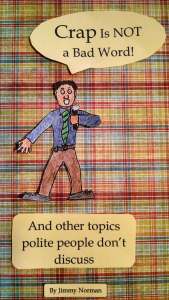
Now only 99 cents on Amazon!

You don’t have to read a book written by Donald Trump to learn how to talk like Donald Trump.
This week I saw a bunch of clips of Donald Trump talking. I wasn’t trying to see them, but they were unavoidable. I was in an environment with lots of televisions, and all of them were in various stages of Donald Trump. I had to admit, Trump could work a crowd. Even though I’m a quiet guy, I almost admire his brash performances, and I wondered if I could use a little of that bravado in my own life.
This doesn’t mean I’ll vote for Donald Trump. I rarely tell people whom I’ll vote for. I understand why people like him, and I understand why people hate him too. Don’t get me wrong; I’m not wishy-washy about Donald Trump. I couldn’t talk like Donald Trump if I were wishy-washy. I have strong feelings about him, but this isn’t that kind of blog.
At first, I thought speaking like Donald Trump would be difficult because I’m a quiet guy, and I usually speak in a deliberate way. If anything, I speak like President Obama, with lots of “Uuuuhhs” and “Uuummms.” I’ve never said “Let me be clear” or “Let me be frank,” but I say stuff like “Does that make sense to you?” Nobody has ever compared me to President Obama, and I’m pretty sure I’m unelectable.
My first rule is to never speak like Donald Trump to my wife. If I did, she’d probably divorce me, and she’d have grounds. Any judge would decide that “speaking like Donald Trump” is worse than any irreconcilable difference, and I’d lose everything, including visitation rights.
I decided to try a bit of Donald Trump at a morning meeting at work. I was the oldest one there, but I was also the quietest. I probably should speak more in meetings, but I prefer one-on-one conversations where I can gauge reactions better. When there’s a bunch of people, my mind can’t process as quickly because I see everything else around me. If a guy is picking his nose while I’m talking, all I see is the guy picking his nose, and it scrambles my thoughts.
Eight of us sat at a long rectangular table in a bare room with no windows. The boss at the head of the table was a woman in her early 30’s. A millenial from a prestigious university sat to my right, and a millenial from another prestigious university sat across from me. There were a few other people there, but none of them mattered, as far as this conversation was concerned. I would never say/think that somebody didn’t matter. Everybody matters (and I don’t mean that in a political way that could offend certain demographic groups).
Anyway, the meeting was going nowhere. Our department had to make a presentation, and nobody agreed on anything. The two millenials were having a repetitive disagreement, each one repeating “What I’m saying is that….” And “What I mean is that…” I despise repetitive arguments in meetings. I’ve wasted months of my life listening to repetitive arguments during meetings.
This was the time to speak up. It was time for Donald Trump to intervene.
“Both of you are awesome (that was a lie),” I said, patting the millenial next to me on his shoulder.
(Just so you know, if it’s in parenthesis, I didn’t really say it.)
I continued. “You guys are actually trying to figure this out instead of staring at your phones (I would have preferred them staring at their phones). That’s great (it was annoying because they didn’t know what they were talking about).”
Everybody stared at me. One woman was actually open-mouthed.
“I’ve been here a long time. I’ve been here through five company presidents and 17 bosses.” I nodded to my current boss. “You’re the best boss I’ve had (the jury is still out on that). You’re great (she’s okay). You’ll actually listen to what we say (I wasn’t so sure at the time). That’s why I’ll tell you what we should do.”
I can’t tell you what my plan was, so I guess that makes me like Donald Trump too. If my bosses found out I had a blog, I could get fired, so I have to be careful about what I write. At any rate, I explained what to do, and my boss liked it. I’m not a genius. I just have enough experience to know what has worked and what hasn’t worked, and I combined the what has worked but has been forgotten and I dropped all the stuff that hasn’t worked but people still keep trying. If that doesn’t make sense when you’re reading it, it makes sense in my brain.
When I was done explaining, there was a moment of silence.
“We have to deal with the _______ department,” the millenial coworker next to me said, now staring at his phone.
“Those guys love me (they barely know me),” I said. “We get along great (true, but that was because we hardly ever talked). I can have them give us their report just like that (maybe, but I wasn’t sure). It will be so fast, it’ll make your head swim.”
“Spin,” the millenial said.
“What?” I said.
“It’s ‘spin, it’ll make your head spin,’” he said, still staring at his phone.
“I’m doing your work for you,” I said. “If the guy doing your work for you says it’s ‘make your head swim,’ then it’s ‘make your head swim.’”
Then I paused. “And get off your phone. It’s rude.”
The millenial shrugged and put his phone down.
“Ron always does the presentations,” my boss said.
“Ron is great, but he’s not here,” I said. “I don’t think he needs to feel rushed right before the big show.” Looking back, I probably should have pushed the presentation on Ron because he doesn’t mind doing it, but he reads from the powerpoints, and I can’t stand that.
“You’ll do the presentation?” my boss said.
I knew what everybody was thinking. The dry heave. Everybody had heard about the dry heave. 15 years ago, I’d had to speak in front of a large group, and I dry heaved right before it. Luckily, only a few people saw it, and I gave a decent presentation, but I still had a reputation after that. I was good for research, organizing, and proofreading, but keep me away from a crowd.
“I didn’t dry heave (that was a lie),” I announced to the group. “I had a stomach virus that day (also a lie). And I kept everything down (that was because I’d been so nervous that I hadn’t eaten anything for 12 hours before). And I still nailed the presentation (it was okay). The guy who spread the dry heave rumor got let go a year later (true but irrelevent), and I’m still here. Do you think I’d still be here if I dry heaved?”
The answer was yes, because I had actually dry heaved, but there was no video footage of the event, and all the witnesses had moved on. As far as I’m concerned, if there’s no video, then it didn’t really happen.
As I walked out of the conference room, I said to my boss, “We need a helicopter.”
I said “we” because I’m not the owner, and even though I was talking like Donald Trump, I couldn’t be exactly like Donald Trump. I know I can’t have my own helicopter. But the company should have one.
“Why?” she asked.
“Traffic is horrible,” I said. “It would be easier to get to all the good restaurants with a helicopter.”
“You eat lunch in your office,” she said. Technically, we weren’t supposed to do that, but I never left crumbs, so the powers-that-be leave me alone about it.
“If we had a helicopter, I wouldn’t have to eat lunch in my office,” I said.
“You’re crazy,” my boss said. It’s probably not good for my boss to think I’m crazy, so I let the conversation end there.
So now I have a presentation on Monday. I can do it, but it’s been a long time, and there’s a lot on the line. My boss and several of her bosses will be watching. Donald Trump doesn’t have bosses, so speaking like him might not help. The last time I did a presentation, the powers-that-be decided not to have me do presentations anymore. After all, I had dry heaved. A lot of decisions (including my job security) will be made because of my presentaion. It’s a lot of pressure. It’s been a while since I’ve had to handle a lot of pressure.
I think I’ll call in sick.
*****
Purchase these books on Amazon! They’re cheap, and they’re great!

Yeah, my zipper is down, but why are you looking at it? (image via wikimedia)
Today was a good day until I realized my zipper was down. It was right after lunch, and I was still wired after a couple late morning cups of coffee. A bunch of co-workers had gathered into an office, and everybody was talking politics. Usually I stay out of these conversations because they can go bad very quickly, but I made a risky humorous comment about one of the presidential candidates, and everybody laughed, including people who liked that particular candidate. I was feeling pretty good afterward until I walked past a mirror and noticed a gap in my pants.
What the hell?
I didn’t say “What the hell?” but it was a “What the hell?” moment. It’s best to keep quiet during a “What the hell?” moment. If you say “What the hell?” out loud, everybody will notice, but if you keep quiet, it’s possible to escape with dignity. At that point, there was nothing I could do anyway. Dignity was out of the question.
Everybody who could have noticed had probably already noticed, so I simply fixed the problem right there and moved on. But I was ticked off, and I had good reason to be. First of all, nobody had told me about the zipper during the political discussion in the office. I know everybody in the office saw it. They couldn’t have helped but see it. I had been standing up front for everybody to see.
I can understand why no women pointed out my zipper. It would have been an awkward moment. Plus, an obnoxious guy might have said: “Why are you looking at his zipper?” No woman wants to have that conversation. But guys should bail other guys out. I believe in same-gender bailouts. A guy should pretend to not see a woman’s wardrobe malfunction (and vice-versa), but guys should rescue other guys.
A few years ago, I told another co-worker about his open fly. I mumbled my warning to him as I passed him in a lobby, and he swung his briefcase in front of him and quickly turned a corner. When I saw him a few minutes later, he gave me a nod. I like to think that I saved his reputation that day. I’m kind of ticked off that nobody paid it forward for me today. I got shafted on the pay it forward.
Pay it forward is such a crappy concept because it relies on other people reciprocating a good deed (instead of doing something just because it’s right). If my co-workers can’t tell me that my fly is down, then they can’t be trusted with the concept of pay it forward. Maybe I should intentionally walk around at work with my zipper down just to see who tells me. Then I know whom I can trust. But that can backfire. If nobody tells me, then I’ll have the reputation at work as the guy who walks around with his zipper down. That might be my reputation already, and I just don’t know it.
I’ve had other bad malfunctions in my life, and they haven’t always involved the wardrobe. In high school when I asked a girl to prom, I had something hanging out of my nostril and didn’t know it until our conversation was over; the girl didn’t say anything to me about my nose malfunction, and she said no to the prom date. I think she told her friends because several girls smirked at me the next day. About a decade ago, I had broccoli stuck in my teeth for about an hour after lunch. Broccoli in the teeth is gross, so that’s worse than a zipper. Luckily, I’m a quiet guy, so I don’t talk much, and only a few people would have noticed the food malfunction, but that’s still worse than a zipper.
I’m also ticked off because now I think my co-workers weren’t laughing at my political quip. They were laughing at my zipper. It bugs me that my sophisticated commentary was ruined by a low-brow malfunction. Then again, maybe my comment wasn’t as bipartisanly funny as I thought it was. Maybe it was actually biased, and the only thing that saved me was my zipper. Perhaps my zipper saved my office from becoming politically fractured. I’ve worked in a politically fractured office before, and it’s not fun. People usually get fired, and if you’re on the wrong side politically, you’d better get your resume ready. Maybe my undone zipper saved jobs.
Even if that’s true, I’m not sure how I could have forgotten to take care of my zipper. It’s usually automatic. It’s like walking out of my house without shoes. I’ve never walked out of my house without shoes. I’ve never lost my keys or my wallet or my phone either. I’m a man of routine, and one of those routines involves pulling up the zipper whenever I put on pants. If I start forgetting my zipper, I don’t want to know what’s next. The zipper is fundamental.
I don’t think I need to worry about a declining mental state just because I forgot my zipper, though. I have a lot on my mind. My job keeps me busy, I have a family to take care of, and I try to keep up with reading, writing, and watching TV too. It’s a lot to keep track of. With so much on my mind, I’m lucky it’s just my zipper that I forgot.
Even so, I really hope this was a one-time deal. And if it’s not, I hope somebody tells me next time.
*****
How would you tell somebody that his zipper was down? What other malfunctions could cause an awkward situation? How many times should a person pay it forward without being being paid forward before giving up?
*****
After more than ten years of blogging, I’ve finally written a novel.
A grammar-obsessed English teacher falls in ‘luuuvvv’ but discovers how chaotic and dangerous ‘luuuvvv’ can be.

The Sunset Rises: A 1990s Romantic Comedy is now available on Amazon and from the trunk of my car at various local bookstores… until parking lot security kicks me out. Buy it now while supplies last!
A sideways title always makes your cover stand out from the crowd.
Nobody complains about how digital books are destroying the publishing industry anymore. At least, if people still say it, I don’t hear about it. I haven’t noticed anybody in a long time complain that ebooks are killing paper. I haven’t heard anybody complain about the demise of old stores like Borders or Walden’s or B. Dalton Book Sellers. Everybody seems to have ereaders of some sort, even the traditionalists who a few years ago claimed they would never read a book from a screen.
Since digital reading is more accepted than it was a few years ago, the best way to judge book sales (to me) would be the combined ebook and print best seller lists. I like to read best seller lists, even if I don’t always read best sellers. It’s good to keep up with trends so that when I don’t follow them, I can brag that I read what I want and not what’s on a list.
Here are the top selling books (ebook and print fiction) so far for February, according to the New York Times:
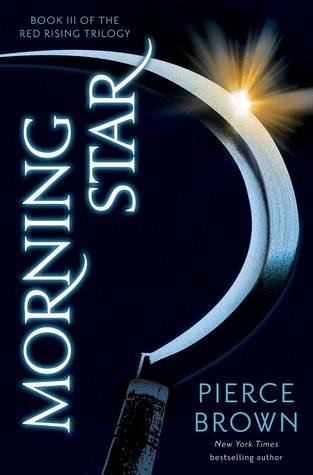
- Morning Star by Pierce Brown-
It’s Book 3 in a dystopian trilogy, so it already sounds kind of familiar. Dystopian future? Trilogy? Is the trilogy automatic in a dystopian future novel now? What if an author proclaimed: “I can tell my dystopian future story in ONE book?”
The publishers probably wouldn’t go for it. But I might read it. There has to be a market for self-contained dystopian future novels.
2. Find Her by Lisa Gardner-
From the title, I guessed that this was about a female (maybe a child) who has been kidnapped. Then I read the blurb and found out that the victim has been kidnapped twice. That’s a lot to give up in a blurb, so I’m guessing there’s a whole lot more than just a simple kidnapping. Maybe she wasn’t even kidnapped the second time? Maybe she’s got multiple personalities? Maybe I need to read the book to find out what happened?
3. Me Before You by Jojo Moyes-
The covers get mocked because they all look the same, but Moyes’s books sell. I’m a 50-year-old guy, so I’m probably not in Moyes’s target audience anyway, so my opinion of her book covers doesn’t matter. Actually, I don’t have anything against her book covers. I’m impressed that she can get away with recycling the same cover repeatedly.
4. Brotherhood in Death by JD Robb-
According to the blurb, the main character gets conked on the back of the head at the beginning. I’ve been conked on the back of the head before, and it’s no joke. In fact, it’s kind of traumatic. I’m not sure I want to read this book and relive that experience. I hope the author interviewed conked-on-the-head victims because it’s not something you just get over.
The detective’s name in this book is Eve Dallas. If you need to name a character, just throw in a city as a last name.
5. NYPD Red by James Patterson and some other guy-
The some other guy probably did most of the writing, so maybe I should know his name, but James Patterson has a lot of “some other guys.” “Some other guys” deserve more credit than they usually get. I’m a “some other guy” where I work (which has nothing to do with writing or publishing) because I’m good at getting other people promoted when they get credit for what I do. Maybe somebody someday will get fired for what I do (which hasn’t happened yet, but it could).
I should show more respect to those “some other guys” who help James Patterson write his books.
6. The Choice by Nicholas Sparks-
It wouldn’t be a best seller list without Nicholas Sparks. The movie version of The Choice was released a few weeks ago, but my wife hasn’t mentioned it, which is good because I’ve sat through enough movies based on Nicholas Sparks books. If I don’t have to go see it, then the movie doesn’t exist as far as I’m concerned, and I’m not about to ask my wife about it. A lot of people enjoy Nicholas Sparks books, and he seems to write them himself, so good for him.
7. Breakdown by Johnathon Kellerman-
This is one of many in the Alex Delaware series. If you need to name a character and you can’t think of a good city, then use a state as a last name instead.
Maybe JD Robb and Johnathon Kellerman can work together on an Eve Dallas meets Alex Delaware mystery/thriller.
I should have named myself after a geographical location. I like Seattle. I should have named myself Jimmy Seattle.
8. The Nightingale by Kristin Hannah-
A couple readers whom I know swear that this is a great book, and they don’t swear very often, so when they swear this is a great book, I take them seriously. A book about two sisters doesn’t sound like my kind of book, but it’s set around World War II, and it’s tough to mess up a book set around World War II. I mean, it COULD happen, but this book is supposed to be pretty good.
9. The Girl on the Train by Paula Hawkins-
This one has turned polarizing. Most readers claim to be disappointed in it, but a lot of people are still reading it. That’s true staying power. Usually, people have to say it’s a really good book in order for it to remain a best seller for so long, but I haven’t met anybody who says this is a really good book.
10. The Wolves by Alex Berenson-
It sounds like a good spy novel with espionage stuff between the U.S. and Iran. A problem with spy novels is that they’re often tied to specific current events and that makes these books feel outdated or irrelevent a few years later. A spy novel about the Cold War might not feel dated because it was such a long-term huge event with major repercussions that the world still feels, but a book about the U.S. and Iran might seem dated in a few years, so if I read this book, I’ll read it soon.
*****
There we go. These are the best selling fiction books so far for February, 2016. Which of the listed books have you read or are going to read? If you could name yourself after a geographical location, what place would you use?
*****
Looking back, I should have used a sideways title on this cover. And I should have changed my name to Jimmy Seattle.
Now available on the Amazon Kindle!

Atticus Finch had many fine qualities, but the ability to speed-talk in rapid-fire, witty dialogue was not one of them. (image via wikimedia)
It could be a great idea or a really bad idea. Hollywood writer Aaron Sorkin (famous for stuff like The West Wing, The Social Network, and much more) is writing a screenplay for a Broadway version of Harper Lee’s novel To Kill a Mockingbird, set to open sometime in 2017-2018. Some guy I’ve never heard of is helping him, but Sorkin is getting most of the attention.
A Sorkin-Broadway production of To Kill a Mockingbird might be a bad idea. If I were an actor, the one role I wouldn’t want to play would be Atticus Finch, because I wouldn’t want to be compared to Gregory Peck. And if I were a script writer, the one novel I wouldn’t want to touch would be To Kill a Mockingbird, because I wouldn’t want to be compared to Truman Capote.
We won’t know if it’s a great idea or a bad idea until the screenplay is written, and even then, critics will still probably disagree about whether the script is good or not. Sorkin scripts can be a bit polarizing.
Sorkin has a reputation for writing great dialogue, but some critics claim that he writes clever dialogue. The dialogue isn’t necessarily great, detractors say, because most of his characters talk the same way, with speed, wit, and lots of self-importance. I understand that. To me, it sometimes feels like Sorkin is showing off with his dialogue rather than writing characters. Nobody I know talks like a Sorkin character. In fact, where I work, people who talk like Aaron Sorkin characters would get fired.
Sorkin dialogue is easy to spot. When I watched the movie Moneyball, I could tell within a few minutes that Aaron Sorkin had written it. It made sense that Aaron Sorkin would write the movie version of Moneyball. Moneyball by Michael Lewis was a numbers-crunching book. Audiences don’t want to sit through a numbers-crunching movie. Nobody wants that, not even number-crunchers.
Anyway, a few minutes into the movie, a character in Moneyball said something fast and witty, and I asked my wife, “Did Aaron Sorkin write this movie?”
Sure enough, my wife confirmed that he had, and all the number crunching in the movie was done in fast and witty style. I still would have watched it even if I had known Sorkin had written it. I don’t hate his scripts or anything. But he has a distinct writing style that could conflict with the mood and tone of To Kill A Mockingbird.
Sorkin also has a reputation for repeating certain lines and certain schtick. I don’t need to chronicle Sorkin’s tendencies. Others have done a much better job (like here in this Sorkinisms video) than I could ever do.
I’m also concerned about the children in To Kill a Mockingbird, and not in a political “Let’s do this for… the children!” kind of way. There are a lot of kids roles in To Kill a Mockingbird, and Hollywood writers are notoriously bad at writing kids.
Hollywood likes to write witty kids. I know a lot of kids, and none of them (even the witty fast-talkers) talk the way Hollywood kids talk. I’ve stopped watching some popular television shows because the kids are written so poorly. The shows have other issues, but I like to blame the kids. If Sorkin’s version of To Kill a Mockingbird is poorly received, he should blame the kids. I mean, he himself shouldn’t blame the kids. That would make him look bad. He should hire somebody else to blame the kids so that it doesn’t look like he’s doing it.
Sorkin shouldn’t have to change much in his screenplay anyway. The novel To Kill a Mockingbird has pretty good dialogue. He might want to shorten some of the sentences in the dialogue, but he shouldn’t have to resort to any of his tricks (characters forgetting names, characters correcting each other’s grammar, characters slapping each other on the back of the head). He will have to condense a lot of scenes. If anything, his talents might be wasted on To Kill a Mockingbird.
Maybe he should write a screenplay for another American classic that needs it more, like The Catcher in the Rye. That needs a damn lot of improvement. In fact, it needs to be improved like hell. Too much damn whining in that damn book. Too much damn whining like hell.
*****
What do you think? What other beloved classic novels would you like to see performed on stage? Does Aaron Sorkin write great dialogue, clever dialogue, or both? What television shows or movies have child actors/actresses ruined?

One of the easiest jobs in the publishing industry might be book cover designer for Jojo Moyes.
The best seller list for paperbacks is often more interesting than the hardcover fiction list because the paperback novels seem to change more frequently. Hardcover lists are dominated by new books that have been heavily promoted by publishing companies. The current paperback list is a combination of last year’s best sellers and older books that have been discovered or are being turned into movies.
I like paperbacks because they’re cheaper, and they are lighter and easier to carry around in public. Even though I like paperbacks, I’m still picky about what I read, so I have to make split-second decisions based on just a little bit of information about each book.
Below are the best selling paperback novels so far in February, 2016:

I think I could have designed a cover like this.
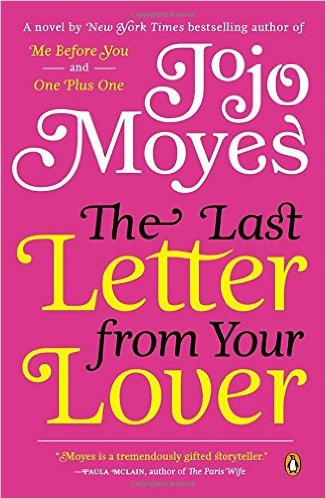
I hope making covers like this is more difficult than it looks.
1. Me Before You by JoJo Moyes- I’ve never read a Jojo Moyes book, but all the covers look alike, with pretty much the same letter fonts and solid backgrounds. That must be a great job, being the cover artist/designer for Jojo Moyes. Jojo Moyes writes a book, and all you do is choose a color for the font and a color for the background, and then you go home and goof off until Moyes writes another book.
2. The Revenant by Michael Punke.- Maybe I’d read this book, but the movie stars Leonardo DiCaprio, and I don’t want to picture his face while I’m reading the book. I have nothing against Leo DiCaprio, except that I think that he’s been miscast in almost every movie he’s been in, and so he’s probably been miscast in this role, and I don’t want to see a miscast actor’s face while I’m reading a book.
3. The Choice by Nicholas Sparks- Ugh, another Nicholas Sparks book turned into a movie. I really hope my wife doesn’t want to see it.
4. The Martian– by Andy Weir- Maybe I’d see Matt Damon’s face when I’m reading this, but at least he hasn’t been miscast as often as Leo DiCaprio. Still, I like to read books made into movies before they’ve actually been made into the movies. That way I can picture the characters my own way before the movie ruins everything.
5. Brooklyn by Colm Toibin- I’ve never been to Brooklyn, and I don’t have any desire to go (no offense, Brooklyn, but there are a bunch of other places I want to see first), so I might read this book just to make up for not going. Maybe I’ll see the movie instead.
6. My Brilliant Friend by Elena Ferrante- This is Book One in a series that is now up to four books, which means I’ll probably never read it because I don’t read book series anymore. If a story can’t be told in three books, I usually don’t read it. Plus, I already have a brilliant friend. My brilliant friend is probably more brilliant that Elena Ferrante’s brilliant friend, but I don’t know for sure, so maybe I should read this book to find out.
7. A Man Called Ove by Fredrick Backman- When I first saw this book, I thought the title had a typo. If a title makes you look twice, it’s a good title.
8. The Alchemist by Paul Coelho- My wife bought this book a few months ago, but she hasn’t read it yet. I keep telling her to download free samples instead of buying new books, but she still impulse buys books. Maybe The Alchemist is good, but I won’t read it until my wife does. Then again, maybe I should read it for her just to make sure we get our money’s worth.
9. A Little Life by Hanya Yanagihara- Here’s a novel that’s won (or almost won) a bunch of awards and lots and lots of praise. Despite it’s title, it’s not so little. I’m sure that was done on purpose. I probably don’t read enough award-winning novels, but this one sounds kind of intense, so I’ll have to be in a certain mood to read it, and I’m hardly ever in that certain mood.
10. Room by Emma Donoghue- I like one-syllable book titles. You don’t see one-syllable book titles very often. I think the publishing world needs more books with one-syllable titles. I read Room a couple years ago, but not because it had a one-syllable title. If you haven’t read it but are interested, you’ll probably know within the first few pages if you’ll enjoy it or not.
+++++
Out of all the above books, the one I’m most likely to read is The Martian. I like science fiction, and I’m pretty sure I can visualize the main character without picturing Matt Damon. I’ll just make sure to buy an older copy that doesn’t have Matt Damon’s face on the cover.
+++++
What do you think? Which book on this list are you most likely to read? What books have been ruined for you by miscasting of characters? Should I read The Alchemist, or should I wait until my wife reads it? Is designing a Jojo Moyes book cover more difficult than I think it is?
+++++
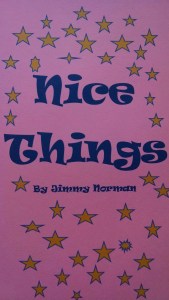
Maybe I shouldn’t complain about another author’s book covers when mine aren’t so great either.
Only 99 cents on the Amazon Kindle!

(image via wikimedia)
Somebody famous died a few days ago, but it was a celebrity I had never heard of before. The television news ran a two-minute segment on this celebrity’s achievements and lamented how this celebrity had died too young. A bunch of bloggers wrote tributes. This celebrity’s name trended on Twitter for a few hours. People who (probably) never had met the celebrity seemed sad.
I don’t know. I have never felt an emotional connection with celebrities. I’ve emotionally bonded with stuffed animals, sock puppets, and even members of my family. But I’ve never felt connected with a celebrity, not so much that it affected me when that celebrity died. When a celebrity dies, I say (or think) “That sucks.” And then I go on with my day. I’ve never felt like writing a tribute to that celebrity on my blog, tweeting about the celebrity, or going to that celebrity’s funeral.
I have nothing against the tribute to dead celebrities. I read other bloggers’ tributes if I’m interested in the dead celebrity. Sometimes I’ll watch the tribute to a dead celebrity on the television news. Maybe I’d write a tribute if the right celebrity died (“right” isn’t the correct word, but you know what I mean, I hope), but it takes me too long to gather my thoughts. By the time I’d finish writing the tribute, the period of social media mourning would be over and nobody would read my tribute.
That might be a bad reason to not write a tribute, but I hate writing stuff that nobody reads. My first year of blogging (maybe more) was filled with writing stuff that nobody read. That was a lousy feeling. I’d spend hours writing long posts that nobody would read and then I’d think, “Why did I spend so much time on that?”
I’ve never written a tribute to a dead celebrity, but I’ve never written a tribute to my deceased relatives either. Several of my deceased relatives deserve a tribute. Maybe all of them do. Maybe instead of writing a tribute to a dead celebrity whom I’ve never met, I should write a tribute to relatives who have had an impact on my life. Fewer people would read a tribute to a relative than a tribute to a celebrity. Page views matter, but my blog numbers aren’t big enough that the difference would be all that much.
There have only been a few times when I’ve felt anything when a celebrity died. I was in ninth grade when John Lennon got shot. That was a big deal, and we talked about it at school, but I was too young to be passionate enough about John Lennon to cry. The most common reaction was: “Now The Beatles will never reunite!” Then we blamed Yoko Ono some more for breaking up The Beatles. That seems kind of shallow, but what else would you expect from ninth-graders?
A few years ago, two celebrities died on the same day, and one of them received far more attention than the other. It was weird, hearing fans of the lesser-known celebrity complaining about the lack of media attention because she had passed on the same day somebody more famous died. I’m pretty sure the semi-ignored dead celebrity didn’t care.
If you don’t like the recently deceased celebrity, the next few days after the celebrity’s death can be brutal. If you hate the dead musician’s songs, the tunes will be stuck in your head. If you didn’t like the celebrity’s movies, friends/co-workers will be reciting quotes. If you despised the deceased politician, newscasters will proclaim how wonderful the politician was, despite doing horrible things that would get normal people like us arrested. We can’t say that we dislike the recently deceased celebrity; that would be rude. We must restrain ourselves for a while, at least one week or until the next celebrity dies, whichever happens second.
I can see why some people connect with celebrities. Celebrities (while they are alive) often say that they love us (at concerts, award ceremonies, or even book signings), but I doubt their sincerity. Celebrities usually leave a few minutes after they tell us they love us. If a woman ever told me that she loved me but then left me forever a few minutes later, I don’t think I’d believe she really loved me. Even during the most gullible phases of my life, I don’t think I’d have believed her. I can’t write a tribute to somebody who says he/she loves me but doesn’t.
Maybe I’m wrong, but it seems like more celebrities than ever are dying. It’s probably because it’s easier to become a celebrity. Maybe that’s why I had never heard of the dead celebrity from a few days ago. There are so many celebrities that a normal person can’t keep track of them anymore.
I’ve met only two celebrities face-to-face. One of them hit on my wife, and the other one yawned in my face. I don’t think I’ll write a tribute to either of them, even if I outlive them, which I might not. If I have the opportunity to write a tribute to them, though, I hope it’s not for a long, long time.
*****
What do you think? Have you ever written a tribute to a deceased celebrity? Which celebrity have you emotionally connected with?

Like Gone Girl a few years ago, this book will not go away.
I’d really like to read a lot more new books, but hardcovers are too expensive and the new books are almost always checked out from my local libraries. Still, I try to keep up with what’s current, even if I can’t read the books right way. It’s important for a book blogger to keep up with what’s hot. Plus, it’s fun to form an opinion about books before I read them.
With that in mind, here are the top ten best selling hardcover books (fiction) so far for January, 2016, according to the New York Times. The commentary is mine.
Star Wars: The Force Awakens by Alan Dean Foster
You can’t get away from Star Wars right now. It’s everywhere, even at the top of the New York Times Best Seller List. I haven’t seen the new Star Wars, but I don’t have to. I saw the original when it came out (before it was called A New Hope), bought the movie adaptation, had the comic books, movie posters, and 1970’s science fiction magazines with tons of Star Wars photos and articles. I have pictures of me standing next to storm troopers and R2D2. I’ve done my Star Wars time.
I’m not sure if the novelization of The Force Awakens is any good, but I know Alan Dean Foster has written some other good science fiction books.
90% chance I watch the movie sometime in my life/ 1% chance I ever read the book.
The Girl on the Train by Paula Hawkins
It’s supposed to be a lot like Gone Girl, but it’s British, and the plot is different. Maybe in a couple years, there will be a lot of books that will be referred to as “This year’s Girl on the Train.” Still, I read Gone Girl and liked it, and making something British usually improves it, so maybe The Girl on the Train will be worth reading later.
50% chance I’ll read The Girl on the Train.
All the Light We Cannot See by Anthony Doerr
This is one of two books in the top ten set during or around World War II. If you’re not sure when to set your novel, set it during World War II. If I ever teach a writing class, that’s what I’ll tell my students.
It’s World War II, so there’s a 20% chance I’ll try the book, but not this year.
Rogue Lawyer by John Grisham
John Grisham has written another lawyer book, but this time, the lawyer has gone rogue. I don’t think Grisham has ever written about a lawyer who has gone rogue before. Good for him.
I’ve already read a bunch of John Grisham books, so there’s less than a 5% chance I’ll read this book.
The Nightingale by Kristin Hannah
Another book set in World War II, this time focusing on two sisters. Again, you can’t go wrong with a book set in World War II.
World War II gives this novel a 20% chance with me, but it’s about sisters and I’m a man (and I’m probably sexist too), so that knocks this book down to less than 10%.
See Me by Nicholas Sparks
I’ve never read a Nicholas Sparks book, but I’ve been forced to sit through a couple movies based on his books. They made me cry, and I don’t like to cry when I read books, especially if I’m reading them in public. If a man cries while reading a book in public, the likelihood of him getting conked on the head skyrockets. I don’t like crying in public, and I really hate getting conked on the head.
0%. I know I will not read this book (but I might have to sit through the movie if it’s made into one).
Cross Justice by James Patterson
It’s an Alex Cross book, and the word Cross is in the title. I wonder if there’s a character named Justice in the book too.
0%
The Bazaar of Bad Dreams by Stephen King
Here’s a collection of short stories, and they’re probably pretty good, if you haven’t read too much Stephen King already. I’m disappointed King used the word Bad in his book title. I know alliteration is important, but using Bad is worse than using an –ly adverb.
I always say I won’t read the next Stephen King book, and then I’m wrong half the time. I can’t help it. 50%
Go Set a Watchman by Harper Lee
This was probably 2015’s most talked about book, and it’s still selling. I don’t hear many people talking about it anymore, though. Yet it still sells.
I say I won’t read it on principal, but I can ignore my principals if I get to read it for free. 20%
Fates and Furies by Lauren Groff
It’s described as a marriage depicted from both points of view. I’m married, but I’m not sure I want to read a novel about it. I have kids, and I don’t read novels about child rearing either.
This book is a wildcard. If I’m in the right mood, I’ll try it. 30%.
*****
What do you think? Have you read any of the books currently on the top ten best seller list? If not, which one would you most likely read? Which book on this list do you know you will never read?
*****
For more insight and wisdom(?), read…
Now only 99 cents on Amazon!

I’m not sure what JK Rowling was saying here, but it probably made the news. (image via Wikimedia)
JK Rowling was at the top of a weekly entertainment website today, with a headline about something she said or tweeted. She doesn’t have any new books coming out this week or anything. I’m not sure exactly what she was talking/tweeting about, but I know she said or tweeted something. Every time I go to the book section of that weekly entertainment site, the headline is something about JK Rowling.
I don’t blame the website. Book news is usually boring. The person in charge of the book section of an entertainment website has a tough job. There aren’t many book announcements or book covers or book controversies to keep people riveted and get clicks. There are maybe four authors who are click-bait material (JK Rowling, Stephen King, George RR Martin, and… and… ugh… James Pppppatterson). Out of those, only one is truly photogenic (sorry guys).
If I ran a prominent book site, I’d have to write up a bunch of JK Rowling stories too. It’s kind of like television news. The local news has to find a good murder, and political reporters have to find a sex scandal or quote Donald Trump. Everything else requires work.
One JK Rowling story was about Stephen King complimenting JK Rowling’s Robert Galbraith series. That was nice but boring. I like Stephen King, but I don’t trust his book recommendations. I read The Passage by Justin Cronin a few years ago because King recommended it in a magazine column, and I was disappointed in the book. It made me wonder if King had actually read it. Now I wonder if he actually read the Robert Galbraith books.
If Stephen King had blasted the Robert Galbraith books, THAT would have been interesting. Man, I would have loved to read about that. A literary feud between JK Rowling and Stephen King is just what book blogs need to bring their numbers up. I know Jonathon Franzen tries to stir things up by making controversial statements, but he only riles up small groups of people.
If Stephen King and JK Rowling got into it, readers would automatically take sides and start insulting each other. I already know whose side I’d take, and I don’t even know what the argument is about.
Covering JK Rowling news is pretty easy. All you need to do is follow her on Twitter. Maybe I’m wrong, but I don’t think reporting a tweet as news is really reporting news.
I guess with Twitter, reporters don’t have to do any hard journalism anymore. In the old days, reporters would hound celebrities, bribe their families and friends, and if they were desperate, reporters would just make stuff up. Now journalists only need to read Twitter, and they can report a tweet as news. I know journalists still hound celebrities, and bribe family members, and make stuff up, but journalists don’t HAVE to do that anymore. I guess only the good journalists do that now.
Even if journalists stalked famous authors like they do other celebrities, authors probably aren’t much fun. Famous actors/actresses, singers, and other performers are glamorous and do glamorous things in their off-time like party crazy and have affairs. Famous authors used to do that too.
Back in the old days, famous authors drank, had affairs, and had public fights with each other. That would have been great in the internet age. But back in the old days, authors were celebrities because there were no movies or televisions, or internet, so there weren’t as many opportunities to become a celebrity. Writers had a good gig. They might die broke, but they lived as celebrities.
Now, we rarely hear about authors doing any of that crazy stuff. It sounds like all authors do is give speeches and write. If JK Rowling started getting drunk in public, having affairs, and getting into fights, it would make the news. But just about any other writer doing that would get ignored, unless it was George R.R. Martin.
If George R.R. Martin started having affairs, a bunch of Game of Thrones fans would freak out. They might be scared that Martin’s mistress would get him too excited.
You wouldn’t want to be the mistress who got George R.R. Martin too excited before he finishes Game of Thrones. That mistress would be vilified worse than Yoko Ono. It’s one thing to break up The Beatles; at least they finished all their songs. But to be the mistress who killed Game of Thrones? I don’t even want to think about it.
It hasn’t happened yet, and hopefully it won’t. But I can guarantee you, if something bad happens to George R.R. Martin before he finishes Game of Thrones, JK Rowling will have something to say about it, and it will get reported.
*****
What do you think? Is getting George R.R. Martin too excited worse than breaking up The Beatles? What famous author would you like to hear about every day? Is reporting a tweet really reporting news?