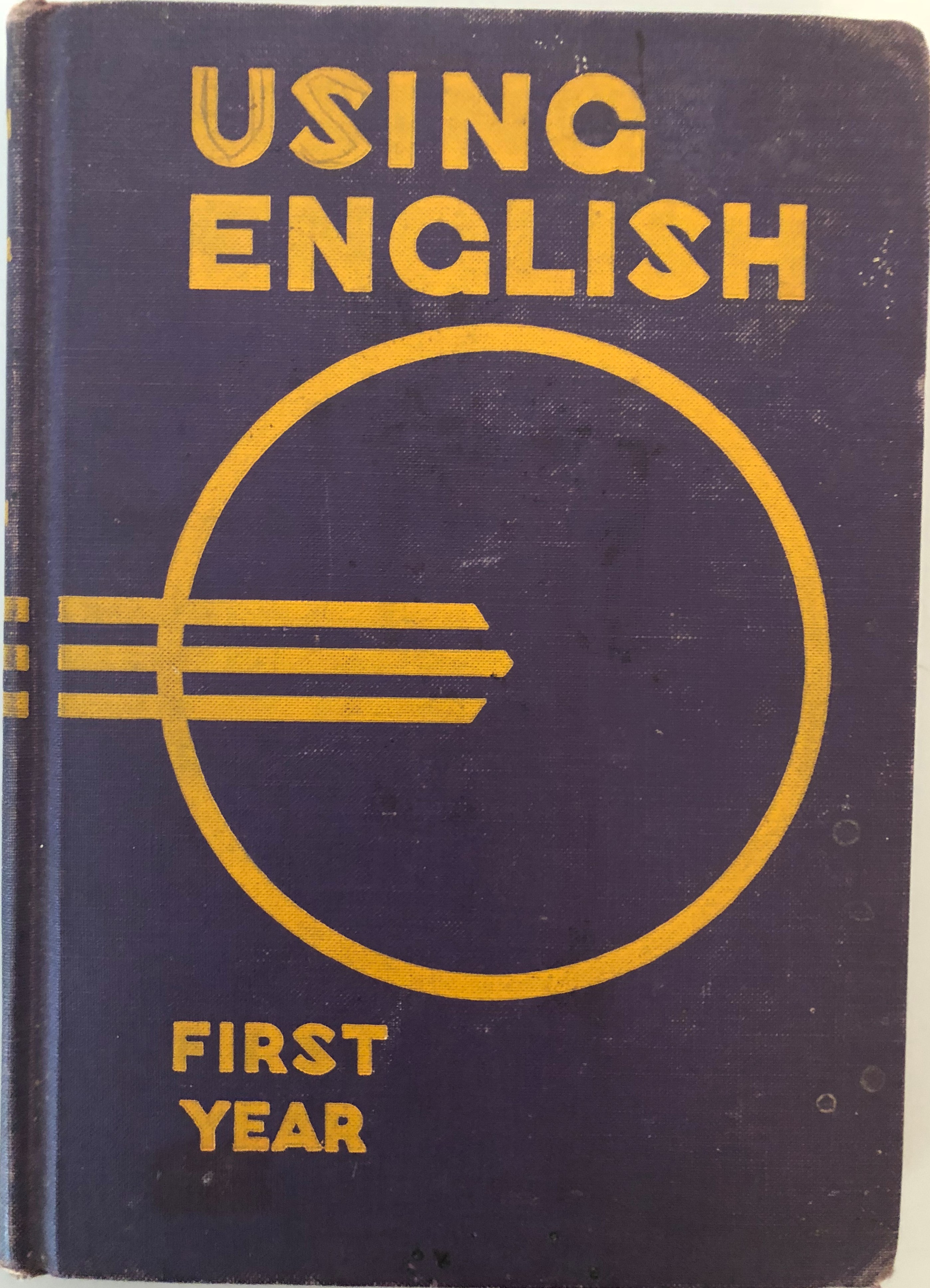
If you think this cover is drab, wait until you see the pages.
Old books are awesome! When I was going through a bunch of stuff in my closets a few months ago, I found this old grammar book from the 1930s. I actually got excited about it.
If I had found a grammar book from 1983, I wouldn’t have cared because it probably would have brought back accurate memories of school. Unlike some people my age, I’m not nostalgic about my childhood. It was good (especially when I hear about other people’s tales about growing up), but adulthood is way better.
Finding a 1930s textbook is great because I’m not the one who had to suffer through it. Some other poor fool (I mean that in a nice way) had to endure this book decades ago. If I choose to skim this book, I won’t get penalized in any way.
So let’s take a few minutes and peruse this ye olde book of Depression era English. There’s a lot to learn from this book, and most of it has nothing to do with grammar.

(image via wikimedia)
Some authors can sell books based on reputation. Some authors brand themselves as funny, or intellectual, or rebellious. The occasional author even wants to be known as crazy.
The short version (you can read a longer version here) is that a few years ago an author tried to personally confront a reviewer who left a nasty review. This author was called a stalker, and now the author has written a book about it.
The book (which is set for release in a few months) is called Kathleen Hale Is a Crazy Stalker by… you’ll never guess… Kathleen Hale. It takes some craziness to put your own name in the title of your book, especially if you’re not a celebrity. Or maybe it’s arrogance.
If the author hadn’t referenced the “crazy” controversy in book title, her book of essays might not have received immediate negative publicity. But of course, the author would put the crazy in her book title. What’s the point of being crazy if you can’t put it in the title?
This craziness got so much attention that some online book reviewers are pressuring the publishing company to cancel the book.
I don’t like online mob outrage. Even if I think the author is a horrible person (I’m not saying she is), I don’t agree with going after the publisher. If online outrage mobs can shut down books I don’t care about, there’ll come a time when they shut down a book I actually want to read. I’m not saying publishing companies shouldn’t exercise good judgement (whatever that is); I just don’t think outrage mobs should be the major factor.
As far as controversies go, this one’s pretty mellow. I mean, nobody got hurt or arrested. Yeah, stalking isn’t ideal, but Hale wasn’t following the reviewer around step-by-step, peeking through windows, or harassing her at a public restaurant.
I’m not a stalker apologist, so back off!
I don’t even know how much of the author’s story is true. If there’s no unedited, unspliced video, I don’t completely believe anybody’s versions or interpretations of events anymore. I don’t know who has exaggerated what. Maybe Hale exaggerated how crazy the reviewer was acting online. Maybe the author was exaggerating her own stalking behavior to get attention. Maybe the author was really the reviewer and the whole thing is a set up. Uugh.
Ever since James Frey apologized and cried on Oprah years ago, I distrust writers who talk about how crazy they are. Writers have a talent for embellishing, and books are a great opportunity to lie. The motive is there too; crazy stories sell. The only possible drawback is risk, and I don’t think lying about craziness is that risky.
All James Frey had to do after the Oprah debacle was change to his name to Pittacus Lore and write YA fiction. If Kathleen Hale turns out to be lying, she can just say, “At least I’m not a stalker” and write a fantasy series under another name.
If you’re not sure about Hale’s writing ability, she has already written about the experience here. Even if you don’t believe that the story is true, you can at least get a feel for her writing style.
To me, writing style is more important than 100% truth when it comes to a memoir. I almost expect writers to embellish a little (or a lot). If an author can embellish (a little bit) in an interesting way, then maybe I’ll read the book. But I cannot tolerate under any circumstances a poorly written lie. If you’re going to lie, write it well.
*****
What do you think? Do you believe this author really stalked a book reviewer? How far would you go to get attention for your book? Would you buy a book written by a stalker?

(image via Wikimedia)
This is one of those issues where some people will choose a side based on politics and stick with it, no matter what facts come out later. I usually avoid such sensitive topics, but this subject matter involves writing, so I want to be familiar with it, even if I don’t form an opinion yet.
A prominent university in the United States is having a seminar for faculty in February about grading standards. The university’s webpage with the names of the seminar and sessions has gotten some minor media attention, even though the page doesn’t provide many details.
Let’s start with the title of the entire seminar:
Grading Ain’t Just Grading- Rethinking Writing Assessment Ecologies Towards Antiracist Ends
First of all, putting the word ain’t in the title probably triggers the grammar Nazis, but I’m sure that was the point. If you’re going to trigger somebody, trigger a Nazi. Since there statistically aren’t any Nazis in the United States, trigger a grammar Nazi. I have to admit, I kind of like grammar Nazis (and you can read about that here).
“Rethinking writing assessments” is okay because educators should always rethink how they do things. It doesn’t mean they need to constantly change, but it’s okay to rethink.
And then there’s “toward antiracist ends.” Here’s where things get potentially controversial, and maybe the university wants it that way. After all, it’s combined one of the most polarizing topics (race) with one of the most boring (grading standards).
Then there’s one of the sessions:
“Plenary Session: The Language Standards That Kill Our Students: Grading Ain’t Just Grading
This plenary will argue against the use of conventional standards in college courses that grade student writing by single standards. (The presenter) will discuss the ways that White language supremacy is perpetuated in college classrooms despite the better intentions of faculty, particularly through the practices of grading writing.”
Grading writing is difficult because there’s no objective way to do it (except with grammar… kind of). Using the term “White language supremacy” makes me think the facilitator is looking to be controversial. I might be wrong, but I’m guessing the session is in danger of focusing more on the White than the actual grading.
I’ve heard the argument that the current (White… with a capital W) language standards put certain demographic groups at a disadvantage. Maybe that’s true. There is a place for that discussion, and college is an ideal place for these conversations. On the other hand, a student looking for a good/job needs to use those language standards, and it would be irresponsible for a university to deviate from those standards (if that’s the university’s intention).
Higher education in the United States isn’t cheap. If students graduate with a bunch of debt and can’t get a job (and it seems sometimes college makes their prospects worse), then the only people who have benefited from the education are the universities (who got paid) and the government (who can profit off the debt or use it as a political tool).
Maybe I’m making too much of this. All I have to form my opinion is what I’ve read on the university’s own website. The seminar hasn’t even happened yet. Maybe there will be some honest discussions among the faculty and they can figure out how to help struggling students without messing with language standards.
I’m all for helping students. When I was in college, I worked 20-30 hours a week, took a little debt, got a decent job after I graduated, and paid off that debt in two years (The good news is that I never had to walk 20 miles uphill in the snow both ways). I missed most of the partying and the protesting in college, but at least I put myself in a position to be a young professional with no debt.
Now I’m in my 50s and grouchy and see some of today’s colleges as institutions that make their students unemployable. Maybe that’s too harsh, but seminars like this seem to confirm my opinion. But I admit I could be wrong.
Normally people wouldn’t care about discussions about grading standards at a university. Seminars like that are probably really boring. Throw race into it, though, and everything changes, and people take their predictable sides. As a writer, I’m more interested in how the faculty wants to change their grading process. Unfortunately, most people will want to focus on the other stuff.
Here’s my cop-out analysis. I’m not going to form my opinion until I know more (if I ever do). Maybe the university will release a transcript or video of the sessions. Until that happens (or I learn more), I’m done.

(image via wikimedia)
When it comes to money, writers hardly ever get good news. The Authors Guild (whatever that is) just released its most recent survey of author earnings , and to be blunt, the money sucks.
The simple version is that famous authors are earning more money than ever, and the rest are earning less. Most authors can’t make a living off of their writing alone. If you want to be a writer, you probably shouldn’t do it for the money.
The Authors Guild puts some of the blame on self-publishing independent authors for flooding the market with more books. Yeah, that’s true. There are lots of self-published books available now. On the other hand, nobody is forcing readers to choose self-published books over traditional books. I’ve purchased a few self-published books, partially to support independent authors, and partially to stick it to the establishment.
The rich and famous authors don’t get hurt by independent authors. Authors like James Patterson, Stephen King, and Michelle Obama are doing just fine with book sales. It’s the authors that nobody has heard of that struggle making enough money.
Streaming services like Netflix are also cutting into the average person’s reading time. Television shows are now designed to be binge watched, and that takes time, especially when there are more and more shows getting put out on more and more outlets. When I was a kid, there were only three television networks (PBS didn’t count) and no internet or video games, so reading was a good way to pass spare time. For some people today, there is no spare time for reading.
I’m not complaining. Even without money, there are benefits to writing. As famous author Elizabeth Gilbert once said, “Writing is f*cking great!” At the time, she was criticized for the comment because she was already a rich author; of course she thought writing was “f*cking great.” Nobody cared that she said f*cking. F*cking doesn’t have the shock value that it used to have.
I agreed with Elizabeth Gilbert, even though I’ve made almost no money from writing. And I’ll get to why in a moment.
The Authors Guild president James Gleick got a bit melodramatic about the income inequality when he said, “When you impoverish a nation’s authors, you impoverish its readers.”
Impoverished? As a reader, I don’t feel impoverished. There are more books out there than ever. And that’s not going to change, unless the grid gets shut down. And if the grid shuts down and society collapses, then the lack of reading material will be the least of my worries. Except for survival manuals. Survival manuals will be the most valuable books out there.
As long as there is an audience (and the grid is working), writers won’t stop writing. Writers will write, even when they’re broke. I figured out years ago that I wouldn’t make a living off my writing. Instead of depressing me, it’s freed up my writing.
Since I’ll never be published by a major company, I have the freedom to openly mock James Patterson’s books, even writing the occasional James Patterson joke. People might not laugh at my Best James Patterson Jokes Ever, but I have the freedom to write the jokes.
Since I’ll never be represented by a literary agency, I can openly ask the question: Is Stephen King a hack? I’ve asked the question several times, and I seem to change my mind each time. Stephen King fans might threaten violence, but they don’t usually follow through with it.
Don’t get me wrong; I love it when people buy my books. Yeah, they’re cheap (and they’re pretty good, I think!) and I don’t make much from them, but it’s still a blast to see it happen.
Besides, money is just one currency. Time, health, and freedom are all important in their own ways. I need money, but it doesn’t have to come from writing, so I make my income with a job that has nothing to do with writing. When I’m done with my job for the day, I have the freedom to write what I want.
Some writers choose the other path, and I respect that. But it’s tough. There are a lot of writers out there, probably more than ever. And every time one writers quits out of despair, two more are there to take his/her place.
Because of the odds and the numbers involved, I’ve dropped out of the rat race of writing. I still write because the opportunity is there, and it’s fun. When I write, I can express myself with thoughts and sentences that I can’t put together when I talk. And even if I become impoverished (I hope that doesn’t happen), I’ll still think… you know it what I’m about to say… writing is f*cking great!
Last month Broadway opened a new stage version of To Kill A Mockingbird with a script written by Hollywood writer Aaron Sorkin (famous for stuff like The West Wing, The Social Network, and much more).
I originally thought a Sorkin-Broadway production of To Kill a Mockingbird would be a bad idea. If I were an actor, the one role I wouldn’t want to play would be Atticus Finch, because I wouldn’t want to be compared to Gregory Peck. And if I were a script writer, the one novel I wouldn’t want to touch would be To Kill a Mockingbird, because I wouldn’t want to be compared to Truman Capote.
Right now, Hollywood actor Jeff Daniels is Atticus Finch, and I can see that working alright on stage. Daniels has a lot of charisma, but he can come across as really pompous in The Newsroom, and a pompous Atticus Finch might backfire. After Jeff Daniels, I don’t know who else could do it. Who would want to be compared to both Gregory Peck and Jeff Daniels?
It’s kind of ironic that Aaron Sorkin is the author to rewrite To Kill a Mockingbird. To Kill a Mockingbird is one of the most universally loved novels in the United States (according to a PBS poll ), and Aaron Sorkin’s writing can be a bit polarizing.
Sorkin has a reputation for writing great dialogue, but some critics claim that he writes clever dialogue. The dialogue isn’t necessarily great, detractors say, because most of his characters talk the same way, with speed, wit, and lots of self-importance.
I understand that. To me, it sometimes feels like Sorkin is showing off with his dialogue rather than writing characters. Nobody I know talks like a Sorkin character. In fact, where I work, people who talk like Aaron Sorkin characters would get fired.
Sorkin dialogue is easy to spot because he has certain tendencies. I don’t need to chronicle them. Others have done a much better job (like here in this Sorkinisms video) than I could ever do.
I don’t blame Sorkin for wanting to write a Broadway screenplay. But why To Kill a Mockingbird? I mean, I like the book and the movie was okay, but I never heard of a demand for a new To Kill a Mockingbird, even one with an Aaron Sorkin screenplay. It seems really unoriginal.
The only thing I know about Broadway in the last few years is Hamilton. I have a teenage daughter who is into theater, and all I heard about for two years was Hamilton, Hamilton, and more Hamilton. I’m not a huge fan of Hamilton (especially after hearing the soundtrack nonstop for several months), but at least it was original.
My daughter knows about To Kill A Mockingbird, but she has no interest in it. From her point of view, it’s already old. Maybe this new version is pretty good. Maybe it’s even great. I know attendance for To Kill a Mockingbird has been pretty good (I think even record-breaking), but I wonder how long that will last. We’ll know more in a few months/years.
As a writer, I appreciate how Broadway audiences are often aware of who wrote the plays. Movie audiences hardly ever know who wrote the movie, and music lovers often don’t know who really wrote the songs. But this Broadway version of To Kill a Mockingbird? Everybody knows that Aaron Sorkin wrote it. That has to be a great feeling for a writer (unless the play is a dud).
Maybe Sorkin could write another script from another American classic, one that hasn’t already been turned into an iconic movie, like The Catcher in the Rye. That book needs a damn lot of improvement. In fact, The Catcher in the Rye needs to be improved like hell. Too much damn whining in that damn book. Too much damn whining like hell.
*****
What do you think? What other beloved classic novels would you like to see performed on stage? Does Aaron Sorkin write great dialogue, clever dialogue, or both?

Becoming by Michelle Obama is only the second nonfiction selection that I’ve begun reading for a Literary Glance. Both books (the other was Fire and Fury by Michael Wolff) have been political, and I usually stay away from political figures on my blog, but Becoming was one of the top selling books of 2018, so I couldn’t ignore it.
Plus, my wife bought a copy, so it’s been in my house for the last few weeks. To be honest, I didn’t want to read it. I have nothing against Michelle Obama, but I’m not intrigued by her at all. I guess that makes my review fair because I didn’t start off with any love or malice for her.
Former President Obama put Becoming at the top of his 2018 reading list, but I’m not sure he has a lot of credibility here. Even if you believe Barack Obama was the greatest president ever, I don’t think you can trust him on this issue.
But you can trust me! I’ve actually read part of Becoming. And now I’m going to tell you what I think about it.
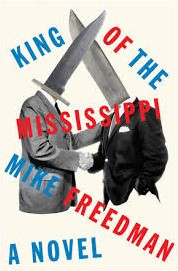
You can’t buy this book yet, but I’d love to party with these guys!
Self-promotion can be tough for independent authors. It’s so difficult that even extrovert authors who are comfortable with self-promotion might not be successful. So many writers are publishing stuff now that it’s difficult for many of them to stand out. Sometimes it feels like there are more writers than readers out there.
I recently wrote a blog post about deceptive self-promotion strategies that an independent author used in order to get a book deal. Some readers might think that the lying self-promoting author was clever, but I’d prefer cleverness that doesn’t require deception. I don’t want to pretend to be a publishing company or pretend to be a hot chick that likes my book.
Today I’m focusing on a different author who used a different strategy to sell books. I actually like what the independent author in this article has done so far. He’s written a historical novel set in the city of Houston, and a local Houston book store (not a chain) threw a preorder party for him.
The author and the store built up so much interest in the novel that it already has 300 preorders for a July publishing date. 300 pre-orders for an independent author in one location isn’t horrible. And the author doesn’t even live in Houston!
I have no idea of what happened at the party. As an introvert, I don’t like parties. But if I absolutely had to throw a party, I’d throw a pre-order party for my book (or somebody else’s). Maybe the book store hired a bunch of dancers and then got a bunch of patrons drunk. I know people who’ll purchase anything when they’re drunk, including book preorders.
I wouldn’t want loud music at a preorder party, but loud music is almost necessary for a party. And a fight. Every good party has to have a fight. If a preorder book party is too quiet, I’d pay a friend of mine (who knows how to fight) to loudly proclaim, “Stephen King is a hack!”
When you have a party filled with book lovers, calling Stephen King a hack will tick somebody off enough to at least cause a loud argument. I don’t really want violence at a preorder party. One loud argument will do.
Maybe I’d throw a preorder party, but I’m a little skeptical about the concept of pre-orders. As a reader, I never pre-order books. I don’t trust authors (traditional, famous, or indie) to write a book that matches the hype. When it came to my friends who self-published, I didn’t preorder. I bought their books, but I didn’t preorder.
Some authors might offer preorders to estimate how many copies to print or to get money up front. As an author, I think the independent writer should have some financial stake in the publishing. If you’re using somebody else’s money, you might get sloppy because you don’t have much to lose (except reputation).
Using somebody else’s money also means that they might think they have some control over what you write or how to spend the money. If I’m using my money, I have complete control (unless my wife says otherwise). Besides, I’m not going to do anything stupid when my family’s finances are at stake. At least, I won’t intentionally do anything stupid.
I probably shouldn’t admit that I’m not a fan of preorders. Now I might be accused of hypocrisy if I decide to offer preorders for my next book. Technically, I wouldn’t be a hypocrite because I’ve never said I was opposed to the principal of preorders; I just said I was skeptical. You can be skeptical of something and still try it. I’ve never told other authors not to do it. So if I offer pre-orders and somebody calls me a hypocrite, I’ll tell him/her to go screw off.
Next week, I’ll explain how telling potential book buyers to screw off is a great self-promotion technique. It probably isn’t, but I’d respect it more than lying.
*****
What do you think? Would you preorder from an author you’re not familiar with? If you’re an author, have you taken advantage of pre-orders?

If this isn’t a fake smile, nothing is. (image via wikimedia)
I can’t speak for all introverts, but I’m much more comfortable writing blog posts than I am making videos. When I talk, my voice sometimes seems to lack emotion. I feel emotion, I promise you, I do. Sometimes I’m even having fun, but other people can’t tell.
Last month I wrote a blog post (with a video) about how much I enjoy solitude. Right now, solitude isn’t an option, so I’m trying to improve my interactions with others. My interactions are rarely negative, but sometimes people think I’m more boring than I really am because of my voice.
Maybe I’m not as monotone as I’ve claimed in the past, but my voice lacks enthusiasm, and when you make presentations, you’re supposed to sound enthusiastic. If I try to sound enthusiastic, it can sound forced and fake, and audiences don’t like fake.
I’ve been practicing different ways to speak in my videos, and I think I’ve discovered a way to add inflection without sounding fake. Unfortunately, even if this technique works, I don’t think I can sustain it.
Some authors believe you should do whatever it takes to get book sales. I understand what they mean, but I believe in limits.
Last week I wrote a post about how I’m reluctant to tell my friends about my blog and books because I don’t want them to feel obligated to read or buy my stuff. From what I’ve seen, a lot of independent authors use their friends for an initial boost in book sales. If I’m not willing to do that (yet), then I need to find other ways to promote my books, ways that I’m comfortable with.
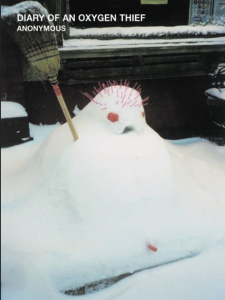
The book Diary of an Oxygen Thief by some guy named Anonymous took a few years to sell enough books to attract a major publishing company, and I keep seeing this novel every time I go to the local B&M Bookseller. Even though this novel was originally published independently (and I usually root for indie authors), this particular novel bothers me. From my perspective, this author lied and got a book deal out of it.
You can read more details here , including some strategies that are NOT lying. Remember, I’m not reviewing the content of the book. I’m reviewing the process the author went through to sell enough copies of his book to get noticed.
- Anonymous.
Yeah, the author called himself Anonymous. This was before Anonymous the hacker (I think), but there have been earlier versions of Anonymous authors. Anonymous wrote a controversial diary(?) called Go Ask Alice back in the 1970s. Another Anonymous back in the 1990s (who turned out to be a journalist named Joe Klein) wrote the book Primary Colors about a presidential campaign that mirrored the Clinton’s 1992 run.
Anonymous is the pen name authors sometimes use when they write stuff so controversial that they don’t want to attach a name to it. It’s a gimmick because the stories usually aren’t true but the author wants to pretend they’re true.
- Vulgarity
The cover of Diary of an Oxygen Thief has a snowman with a carrot in a provocative place. The cover ticks me off, not because it’s vulgar, but because I came up with that idea back in 1973, and I’m sure somebody else came up with it before me as well.
I was eight, and we’d just gone through a blizzard, and some friends and I had just built a snowman. We put a baseball cap on it, and used buttons for eyes and a carrot for a nose. In a moment of genius, I moved the carrot to a lower spot and pointed it out to everybody.
Nobody seemed offended, so I went inside and brought my older brother out. He nodded his approval, went inside the house, and came back out with a bigger carrot. If I’d had foresight, I would have photographed the snowman and used it for one of my ebook covers decades later.
- Lying
Anonymous made about 1,000 copies and got a few of them inside a local book store. Once copies of his book were distributed in small bookstores, the anonymous author supposedly pretended to be a publishing company to get his book into Barnes & Noble. I don’t like lying. But book publishers can be unethical too, so maybe it’s okay for an author to lie by pretending to be a publisher whom everybody assumes would be unethical anyway.
- Lying again
Anonymous also pretended to be a hot chick in an online dating service and mentioned the book in “her” profile as a book that she loved. Yeah, it’s clever, but it’s also dishonest, and I feel bad for all the lonely guys who bought this book thinking they had a chance with a hot chick who liked books.
I’ve never been a lonely guy, but I’m a writer, so I’m empathetic and would never intentionally put a lonely guy through that experience. I guess Anonymous is NOT empathetic. I too thought of posing as a hot chick to get people to read my blog and buy my books a few years ago. I could have done it and chose not to.
Over time, Diary of an Oxygen Thief sold enough copies to get a publishing company’s attention, and eventually Anonymous got a book deal. It’s great that Anonymous no longer has to pretend to be a publishing company and a hot chick. On the other hand, I don’t think he ever got punished for pretending to be a publishing company or a hot chick.
As an aspiring author, I’m torn about this Anonymous. I like to read success stories, but I don’t like to see bad behavior rewarded. His success teaches writers bad lessons, like lying to Barnes & Noble and giving lonely guys false hope is justified. I’m a little uncomfortable with that. Some aspiring authors see that as cleverness that should be rewarded. I see it as bad behavior that should be punished (I don’t mean mob justice; I just won’t buy the book).
At least the cover reminds me of the lesson my older brother taught me decades ago (I just wish I could apply this to publishing): When you’re building a snowman, use the biggest carrot.
*****
What do you think? Are Anonymous’s promotion techniques unethical? Should authors be rewarded for dishonest self-promotion behavior?

(image via wikimedia)
Phone calls early in a potential relationship can be stressful. During a phone call, the only communication is verbal. If two people are next to each other saying nothing for a long time, they can still enjoy each other’s company, but that can’t happen during a phone call. When you’re on the phone, you have to talk.
Phone calls are tough for introverts and shy people because talking for an extended time isn’t natural to us. An introvert talking to an extrovert can work out okay because an extrovert might take charge of the conversation. Two introverts sharing a call can be disastrous.
Jenny wasn’t shy, but I still didn’t want to answer her call (you can read more about her here). She was cute and had great cleavage, but she still had a thing for her ex-boyfriend and had been so aggressive with me in her apartment that I was pretty sure she had issues. Even in my twenties, I knew to stay away from women with certain issues.
Some guys would have thought I was crazy for not taking advantage of the Jenny situation. I’m not really better than the guys who would have taken advantage. I’m not a saint. I just think ahead. I know short term fun with a woman with certain issues can lead to long-term problems.
Anyway, Jenny was prettier than I was handsome, and she had great cleavage. The thing is, cleavage usually doesn’t matter to me that much, but hers was fascinating. It probably deserves its own “Awkward Moments in Dating” episode.
I knew Jenny was going to call. I’d told her at the end of our date that I was going to call her even though I’d been sure I wasn’t going to. It was a douche thing to do (“Douche” was a term in the 1990s), and I prided myself on avoiding douche moves when I was dating. But yeah, I lied to her.
When my phone rang on a Saturday afternoon (we didn’t have caller ID back then) a week after our date, I was pretty sure it was her.
“This is Jimmy,” I said. I like to announce myself when I answer the phone. It’s an easy assertive move, even for an introvert.
“Hey, Jimmy. This is Jenny,” she said. I don’t remember if those were her exact words, but I remember that I could tell she was nervous. How could a woman like Jenny be nervous? Normally, I’d be the nervous one.
“How are you?” I asked.
“Fine,” she said, and that was it. I wondered how she didn’t have anything other than “fine” to say. She was the one initiating the phone call.
“I had a good time last week,” I said, leaving out her Garth Brooks obsession, her ex-boyfriend, and the snot running out of my nose from the overly spicy food at her ex’s restaurant. “I… um… probably should have called you this week.”
Ugh. I probably shouldn’t have acknowledged that I was supposed to have called.
So I added, “There was a lot of stuff going on this week.” That was a lie.
“That happens,” she said. She knew I was lying.
The short sentences threw me off. The Jenny I’d gone out with would have talked right over me and told me everything about her past week, whether I was interested or not. This was like a robotic Jenny. I didn’t know how to talk to robotic Jenny.
“So what’s going on?” I finally asked.
“I know it’s late,” she said, “but do you want to do something tonight?”
I was surprised she asked, considering what a disaster this conversation was. Maybe her ex-boyfriend was working, I thought.
Oh man,” I said with fake exasperation. “I already have plans.”
I wasn’t lying, but the plans were lame. I was going to a sports bar with a bunch of friends to watch some football games. They would have mocked me if they’d known I was turning down a date with Jenny just to hang out with them. I made sure never to tell them about the phone call.
I didn’t even explain to Jenny what my plan for the night was.
“Maybe another night,” she said. We both knew there would be no other night. She actually sounded disappointed.
I was accustomed to being on the receiving end of phone call rejection. Suddenly, I understood how all those high school girls and college women (the first couple years) had felt when they turned me down. There was a little bit of guilt, but what else was I supposed to do? Go out with her just because she had great cleavage?
I should have told her that I thought she still had a thing for her ex-boyfriend. That would have explained why I was reluctant to go out with her again. She should also have known not to take other guys to that restaurant again. I couldn’t urge myself to tell her not to be too forward with a guy on a first date, especially if the date hadn’t gone that well. Looking back, maybe I should have told her.
Maybe it was easier to lie because I knew I’d never see her again. It’s easy to lie to strangers. Sometimes I do that just because it’s more interesting than telling the truth and there’s no real consequence for it. If a stranger catches me in a lie, who cares? Again, this was before the internet and social media. Back then, Jenny couldn’t get on social media and tell thousands of followers what a jerk I was.
People get mad today when a man or woman in a relationship ends it with a text. I kind of understand delivering bad news with a text. It’s wrong, but I understand it. Breaking up with Jenny over the phone was really uncomfortable, and we weren’t even officially dating.
*****
The dating saga with Jenny is over, but Awkward Moments in Dating will continue next week with a brutal tale of high school rejection (and I was on the receiving end this time)!
In the meantime, you can start Awkward Moments in Dating from the beginning!


 Dysfunctional Literacy