 “Who are the motherf***ers that gave me a one-star rating?”
I admit, that was my first reaction when I saw the one-star reviews for my ebook. I’m not proud of my initial reaction. I’m not proud of the one-stars either.
I didn’t even know about the one-star ratings until a few days ago. I haven’t written any ebooks in a few years, so I’d stopped paying attention to the Amazon stuff. The last time I’d checked (I don’t remember when that was), I’d had a whopping two five-star reviews. That was pretty okay, I thought, everything considered.
I’m a lone wolf blogger/writer. I don’t tell anybody I know (except family members) about my ebooks or my blog because I don’t want them to feel like they have to read or buy my stuff. I know my friends would, but they might not really want to, and I don’t want to put them in that position. I’ve had a couple friends in the past that kept trying to sell stuff to me, and I know how that affects friendships, even if you try not to let it.
Don’t get me wrong; I know my ebooks have flaws. I did everything myself, so there are little mistakes that I didn’t catch. Some portions might feel like a rough draft (but not like a James Patterson rough draft). I made my own covers, so my ebooks look amateurish. I know all that. But one-star seems harsh. Five-stars is probably too generous. Three or four stars, I can understand. But one star? It seems a little extreme.
I would have been more upset if this had happened when my ebook came out, but it’s been over four years, so it doesn’t matter as much now. It probably doesn’t matter at all.
The thing is, I’ve never left a one star-rating for a book. I usually read the free sample online (or the first few pages in a bookstore/library), and if the book doesn’t appeal to me, I don’t buy it.
I’ve never even left a one-star review for James Patterson books. I make fun of James Patterson books on my blog, but I’ve never gone to his website or Amazon or any online review site. To me, it’s rude to one-star a book, even if you bought it because there’s nothing the author can do once a reader has made the purchase.
I can see giving a one-star to a hotel or a restaurant if the service was truly horrible and the management shrugs you off. I’ve had bad service before, but management is usually cooperative, so I don’t lash out online in that situation.
If I read a book sample and then buy the book and get mad at it, I can’t one-star the book. The book was at least good enough to get me to commit. If it drops off at the end, then the book deserves maybe three-stars, two-stars at the worst. What is the author going go do, rewrite it just to make me happy?
Even when I criticize published authors, I give examples of what I think about the writing. I write blog posts where I analyze the writing from bestselling novels, but I support my negative comments with examples of the author’s writing.
My one-star raters didn’t even leave helpful reviews. One didn’t leave any review at all. One just left a bizarre snarky comment with an image of a dictionary excerpt. Neither one-star were from verified purchases either, so I don’t know if they actually read the book.
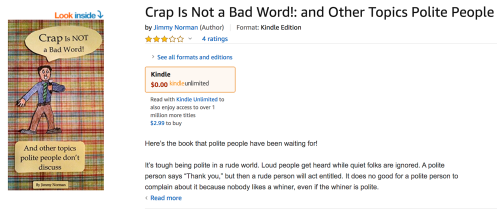
Some authors might think that I shouldn’t respond to the reviews, that I’m being petty by having any negative reaction at all. Technically, I’m not responding to the reviews; I’m talking about the reviews. You can talk about something without responding to it. I’m not posting the reviews. I’m not going to Amazon to defend my book. My only true response to my one-star raters was:
“Who are the motherf***ers that gave me a one-star rating?”
*****
What do you think? Have you ever left a one-star review for a book? If you did, did you leave constructive comments? Under what circumstances would you one-star a book?

(image via wikimedia)
Even before the abbreviated horror struck, I liked my social distance. I’ve always despised people getting too close for stuff like the inappropriate hug or the power touching. In the old days when men shook hands, I always set out to crush the other guy, not out of dominance, but to discourage him from other shaking hands with me again. After all, you never knew where the other guy’s hands had been.
Back then, I ate Doritos and drank coffee at the same time to ward off others who would get too close; if they caught a whiff of my bad breath, that was their fault for getting too close. Social distancing has always been my thing.
Now I’ve lost my job because of the abbreviated horror. Fortunately, I’m a cheapskate bastard who saved money, so we have a few months before we need to start worrying. My wife used to gripe at me for being a cheapskate bastard (who do you think came up with the term “cheapskate bastard”?), but now she understands. Now she’s glad. Because of my cheapskate bastard qualities, she feels safe in a time of uncertainty.
Today I have to go to the grocery store. My wife doesn’t want me to go because of the abbreviated horror. We live in a major city, and people by the dozens have died. As of this writing, actually, a dozen people have died in a city of close to a million. But we are in hiding because soon we shall be like those other cities; at least that’s what the people say. My wife wants me to order the groceries online for curbside service, but whenever we order, the store claims they are out of certain items. I do not believe the store, and I want to see for myself.
I walk through the store entrance at 7:10, just minutes after the store has opened. As I scan the storefront, I see more masks than there had been days ago. Most of the masks are using squares and rectangles from shirts or scarves or bandanas to cover their mouths and noses, and their eyes appear tiny and filled with fear.
The masks cower from me, despite my social distancing. I can feel the fear emanating from them, almost begging the abbreviated horror to strike them. Fear makes them weak, I think, and I want to tell the masks that I do not want them near me either. Stay on your yellow X, and I’ll stay on mine.
I keep my mouth shut, though. I breathe through my nose. I constantly wipe the shopping cart handlebar. I don’t have to be a mask to be safe.
An elderly mask couple sees me from the opposite end of the canned goods aisle, and they slowly back away into the meats. I don’t mind elderly masks. They were supposed to have done their grocery shopping yesterday, but a lot of them have bad memories, so I don’t mind them at all. If I were elderly, I’d be a mask too.
As I reach for pasta sauce, a mask darts next to me to grab a similar jar. He’s a short guy with a professional rectangle strapped around his mouth and nose. He accidentally brushes against me and then jumps back to his cart.
“Back off, mask,” I say, even though it’s too late. That’s what I get for not paying attention to my surroundings. Usually I keep my head on a swivel to watch out for violators, but I had just gotten lazy.
“I Mzz Zzurrzzy,” the mask says.
“It’s alright,” I say, knowing that if the situation had been reversed, the mask would have freaked out.
I don’t trust the masks. I was always taught that face coverings are for people who are hiding something. Too many people were quick to agree to wear the squares and rectangles after the government “suggested” it. I wouldn’t mind so much if the masks kept to themselves, but they’re always the ones who violate the social distance. We skins might be a little arrogant, but we’re not hiding anything.
Despite the pervasive fear (not from me), the rest of the grocery shopping is uneventful. The paper product section is actually half-stocked, and I smile as I push my cart past because i don’t need anything from it. Even better, the store has the items that curbside pickup had said were unavailable. Never trust curbside.
I’m almost to the checkout line when an eyelash gets stuck in my eye. You know the feeling. It stings. I try to blink it out, but it burrows into my right eyeball like a fire ant. I double blink. I triple blink, but the lash is like a razors point, stabbing, stabbing, stabbing, the cursed stabbing. All I have to do is reach with my finger and pull the lid up. That’s all I have to do. but I don’t dare.
My blinking has caught the attention of the masks. They stare, wondering why I am making faces at them.
At this point I don’t care. The eyelash is ripping my eyeball apart. I can’t even see. If I continue walking, I’ll probably stumble and cause a disturbance, and some mask will stroke out from fear. I turn away from everybody so that I can pull my my eyelid up.
“EEEzzz tuchzzzing zzzizzz zzzaezzz!” a mask screams.
“No, I’m not,” I turn, my face still squinched.
Several masks pop out from the aisles. They’re pointing at me and yelling, “EEEzzz tuchzzzing zzzizzz zzzaezzz!”
A store manager slowly approaches, gray store shirt and matching gray mask. “ZZZut zzzaarrr zzzthayzzzz zzayzzzzthingzzzzz, zerrrzzzz?” he asks me. Last week he hadn’t been wearing a mask, so he doesn’t understand them yet. Anybody wearing a mask can speak mask, but not everybody wearing a mask understands them.
“They say I’m touching my face,” I say, still blinking. “I have a renegade eyelash.”
The manager apologizes and says that I can’t touch my face inside the store. By this time, tears are streaming down my cheeks, and I feel a tingling in my nose. I need to sniffle. I can’t allow a stream of mucus to dribble out of my nose. I can’t let the masks think I’m infected.
The manager hands me a gray square. Trusting that it’s clean, I rub my eye, and the stinging goes away. The shrieking of the masks gets even more shrill, however, and the manager looks at me disappointedly. I was supposed to have wrapped the square around my face.
I’m tempted to give the square back to the store manager, but it’s now dirty and I don’t want him to think I’m rude. He was just trying to help me out, I think. If I use the square but don’t wear it, I’ll look ungrateful. Reluctantly, I wrap the square around my face.
A skin walking ten feet behind me stage whispers, “Pussy!”
It’s just this time, I tell myself. At least the other masks have finally shut up.
As I stand in line and scan for social distance violators, I feel tense. I look into eyes of each mask who trudges by. The skins seem to silently mock me as they stroll past, and I turn my gaze to the floor. I finally understand the fear. It’s not the abbreviated horror I’m scared of. I just don’t want anybody I know seeing me wear this stupid square.
With all the crazy stuff going on right now ( I probably don’t have to list the crazy stuff), authors of new books are thinking about holding off on their release dates until things get back to normal.
This makes sense. Book stores are closed. Sales of new books have plummeted. If I were an author of a book with a release date this month, I’d think about moving it back too.
But from a book reader’s point-of-view, does anybody care?
I don’t mean to sound uncaring or snide or unsympathetic. I feel for authors in who have to decide when to publish their books. For some authors, their books might be their only opportunities to make enough money to live on. Most of these authors won’t make much long-term money from any individual book, so they need every sale they can get.
Then again, some authors might need money right now, even if it’s not as much as they could get with a delayed release. For some authors, this could be a really important, life-changing decision.
But then I looked at the Publisher’s Weekly page that lists books being delayed. I didn’t recognize (yet) many of the books being postponed. One exception was the author Eric Van Lustbader (I was in junior high when he published his first book) who is delaying the release of his latest novel The Nemesis Manifesto.
No offense to Eric Lustbader. He’s had a really good run, but are there any Eric Lustbader fans that scream “NOOOOOOooooo!” when they hear that his newest book is being postponed for three months?
Chicken Soup for the Soul books are also being delayed, but those will probably be okay, no matter when they’re released. If an author has a Chicken Soup for the Pandemic Stricken Soul, this actually might be the time to release it. Authors all over the world are probably writing their COVID-19 books now. By the time the books are released, everybody will be tired of the topic.
I don’t think there are many authors that readers crave. Maybe the public would clamor for a new Stephen King book and get mad if he delayed a new novel, but there are already a bunch of Stephen King books out there. James Patterson sells more copies of books than any other author today, but if he delayed a book (or stopped writing altogether), I don’t think anybody would care, except for his coauthors.
This slowdown of book sales isn’t necessarily bad for every writer. Unknown authors about to have a book published can move forward with hopes of getting their books on a bestseller list, even if the book doesn’t sell many copies. There isn’t an asterisk for books that are bestsellers due to COVID-19. And bragging rights are forever.
Lazy authors could blame this situation when postponing completion of their late expected novels. George R.R. Martin blew his opportunity to blame plummeting new book sales when he announced that he’s using the quarantine to force himself to finish Winds of Winter (which should have been finished five years ago). He also could have claimed to have contracted COVID-19 and then used that as an excuse to not write. All the fans who have been angry with him would suddenly become more sympathetic.
Authors of non-fiction, especially those who write about current events, are in a difficult spot. If a journalist (or a Washington insider) has written an outrage book about Donald Trump and has to wait a month, the current outrage in the current book will have been replaced by a new outrage in a month. Any international situation that authors have researched and written about is going to look completely different in three months. Nonfiction authors could write update chapters, but they will probably make the rest of the books outdated. Aaaarrrgh!
Authors might be desperate for book sales, but there is a last resort; they can publish their books on toilet paper. At least that way their books would sell.
*****
What do you think? Should authors delay the release of their latest books. Do any of these delays matter to you? Would you read a book that was written on toilet paper?

Blindside by James Patterson and some coauthor is the 12th rough draft in a series of rough drafts about some detective named Michael Bennett. I don’t know the difference between Michael Bennett and Alex Cross, another James Patterson creation who has a bunch of rough drafts written about him. I think one of them is black.
I hope there are other differences. Race is kind of shallow for a defining characteristic. Maybe one of the characters is an alcoholic. Maybe one of them is a womanizer. Maybe one of them is a moral person torn by being immersed in an immoral culture.
Alex Cross has a last name that can be used in book titles, like Cross My Heart and Cross Fire, with unused potential unused titles are Cross To Bear, Cross Examine, or Cross Wire. It’s tough to put the last name Bennett in a book title in a meaningful way.
I refer to James Patterson books as rough drafts because every rough draft of his that I’ve read has been sloppily written. Yeah, my own writing can be sloppy too, but I have a blog, and he writes a bestselling novel every month, so he should have higher standards. I don’t even teach a masterclass!
The first page of Patterson’s newest rough draft Blindside is a typical example of his rough drafts. In this first page of Blindside, Michael Bennett tries to describe a murder scene, but he sounds like somebody who’s never really been to a murder scene.
Just so you know, I’ve never been to a murder scene either, but I’ve never written and published a murder scene. I’m not saying you have to have been at a murder scene to write one, but you should be able to pretend better than what Bennett/Patterson/coauthor has done (My comments are in parenthesis.):
I did everything I could to distract Lucille Evans from noticing the bloody footprint (Why? We find out on the next page that somebody she loves has been murdered. Why would she care about a bloody footstep when there’s a corpse of a loved one in the next room?). A responding officer had tracked the blood into the hallway. One look at the scene inside and the veteran needed to run into the street (street? He ran into the street?). I didn’t blame him one bit (you might not blame him for being grossed out, but you might want to tell him not to run into the street).
The forensics people (vague term) were in the small (lazy adjective), two-bedroom apartment on the third floor of this building (what else would it be?) on 146th Street near Willis Avenue (oh yeah, I know that place) in the Bronx. The scene was so horrendous (lazy adjective) that the local detectives had called me to help even though it wasn’t technically considered part of Manhattan North Homicide’s usual territory. Two of the local detective had lost it (“lost it” Haha!). It happens. It’s happened to me over the years. I lost it once at the scene of a murdered girl. Her stepfather had bashed her head in for crying because she was hungry. She reminded me of my own Shawna, staring up through blood spatters. When I heard her stepfather in the other room, talking with detectives, I snapped (“Snapped” is different from “losing it”. “Snapped” is getting violent. “Losing it” is throwing up. Michael said he had “lost it” but he had really “snapped.” ). It almost felt like another being (lazy writing) possessed me (How does it “almost feel like he had been possessed?). I burst into the room, ready to kill (the room was ready to kill?). Only the fact that my partner at the time, Gail Nodding, was as tough as nails (lazy writing) and shoved me out the back door had kept me from killing the creep (poorly written sentence that would have been easy to fix).
Ugh. This is a rough draft. It’s not even a good rough draft. A good editor (or coauthor) should have had the guts to tell James Patterson to clean up this draft. Yeah, I know, everybody wants to keep his or her job, and telling James Patterson to “be better!!” might make you unemployed.
James Patterson probably has written some decent books, but I’ve never read them. I’ve never excerpted a James Patterson novel and thought, “This might actually be a good book.” I’ve glanced at numerous James Patterson books, and all of them, including Blindside, feel like rough drafts.
At this point, the only Blindside would be if James Patterson puts out a well-written book again.
*****
What do you think? Is this excerpt from Blindside really well-written and I don’t recognize it? Has James Patterson actually written any good books? How would you fix a James Patterson rough draft?

(image via wikimedia)
With all the crazy stuff going on in the world, a lot of businesses in the United States are shutting down (temporarily, I hope). Luckily, there are some exceptions, usually known as essential businesses, and bookstores want to be thought of as essential.
From what I’ve seen so far, a few of the book stores in my area are open, but they’re doing online sales and/or are letting limited numbers of customers into the store at a time. I haven’t heard any declaration about whether or not bookstores are considered as essential, but I haven’t heard about any mayors/governors/presidents threatening to shut them down either.
If given the choice, I’d rather go into a book store than order online. I’m both a browser and a germaphobe, but my browsing instincts are stronger, even now. I want to go into the book store. If I browse, I’ll buy more stuff, so it’s in the book store’s interest to let me in. And if there’s anybody you should let into a store, it’s a germaphobe.
I’m glad that I still (kind of) have access to book stores, but the question still remains… are book stores really essential?
I’m biased because I read a lot, but I’ll try to act objective.
First of all, we need real books so that we have an alternative to the screens. With so much of our lives conducted online now, that’s a lot of time that our human eyes are staring at those computer screens, laptop screens, and phone screens. That’s way too much time.
We need books just to give our eyes a rest. A lot of my non-blogging work is now being done online, and I’m already tired of staring at screens all the time. If I have to stare at a screen to read books as well, I’ll probably stop reading books.
We also need bookstores more than ever because the libraries have shut down. I understand this because libraries aren’t always clean; you never know who has touched those old grimy books, and you don’t know who has been wandering around the library. A lot of people wander the libraries, and a lot of those wanderers aren’t really sanitary, and they’re not really interested in books. If the book store is limiting customers, you don’t have to worry about the unsanitary wanderers messing things up.
Plus, book stores are necessary for civilization to flourish. Every new bit of knowledge or insight needs a stable way to be stored, and nothing is more secure than a book. Once a book has been dispersed among the public, it’s almost impossible to take it back. With worldwide internet access, you can get information out more quickly than you can with books, but information channelled through the internet can also be shut down more quickly too (by governments, servers, platforms, etc…).
The situation doesn’t need to be that diabolical in nature either. If the electricity goes out long enough to run out of battery storage, where are you going to get your information/entertainment?
If you believe in conspiracies (and I’m not saying that I do), one major step to controlling people is to limit their book supply. Today’s cancel culture can ban only a small percentage of books, and that’s only when normal people agree to it. If the powers-that-be shut down the libraries and close the book stores, they will have succeeded at doing what other control freaks have failed at… (that thought sounded better in my head than it looks on the screen).
Going one step further, the powers-that-be could then shut down internet service (or limit it), and then the supply of knowledge will be completely controlled by a tiny few. Conspiracy theorists are concerned about a one-government world (I would say “globalist government” but a lot of theorists don’t believe Earth is a globe) censoring the internet. If the book stores get shut down, this globalist government will have complete control over the flow of information.
And going even another step further… (deep breath)…okay… that’s enough for now.
Here’s a simpler reason. I need books. That’s why a book store should be considered an essential business.
*****
What do you think? Should book stores be considered essential? What would you do without book stores and libraries?

This is just a picture. The real trailer is at the end of the post.
It takes a lot to be the worst book trailer ever. I haven’t seen every book trailer ever, I admit that, but I’ve seen enough of them to know that they always suck.
Book trailers don’t have to suck, but most of them make the same mistakes. First of all, book trailers shouldn’t put the author into the book trailer unless the writer oozes cool (statistically impossible), is already famous (which means he/she probably isn’t really the writer), a sexy woman with great cleavage (who cares if she really wrote the book!), or is already a famous writer (which means fans know he is an ugly slob). Otherwise, don’t let the author talk about the book in the video. In fact, it’s even better to pretend the book doesn’t have an author.
Yeah, I have made a few book trailers that suck. That was kind of the point. I made book trailers that suck because even authors with infinite resources make book trailers that suck (so I didn’t feel bad that mine sucked too), and now I have the best proof ever.
I know this is a comic book trailer, but it still counts as a book because book stores sells comic books (usually under the “graphic novel” euphemism). Plus, this trailer was put out by Marvel Entertainment. Marvel Entertainment has almost unlimited resources, and if they can’t make a good book trailer, nobody can.
I grew up loving Marvel Comics. Marvel Comics were awesome in the 1970s when I began collecting them. Yeah, not all of them held up over time. Yeah, a lot of comic books that I enjoyed as a kid turned out to be kind of stupid as an adult. But nothing that I read back then looks as bad as what’s promoted in the trailer below.
This trailer has bad cheesy music that even I wouldn’t have used. The author looks like he could have been my older brother, except my older brother is way cooler than this guy. The trailer almost makes me not want to read any comic books ever again, but instead I just won’t read this particular comic. I have never down-voted a video before, but I almost did here (I value my principles more than I despise this trailer).
If you follow comic books, you probably already know about this comic book trailer. It has one of the worst ratios in YouTube history. I sometimes take unpopular opinions just to try it, but even I can’t justify this trailer. Stan Lee couldn’t justify this. If you don’t know anything about comics, that’s okay. You can still tell that this comic book trailer sucks.
So here it, the WORST BOOK TRAILER EVER!!!
What do you think? Is this truly the worst book trailer ever? If not, what book trailer is worse? Which book trailers come close?

The Mirror & The Light by Hilary Mantel starts off with Anne Boleyn getting beheaded. That’s not a spoiler because it’s on the first page and it’s in the history books too. Even though I’m from the United States, I have cable television, Netflix, and YouTube, and I think I’ve seen Anne Boleyn get her head chopped off several times. British actresses seem to yearn to play royal historical figures who get beheaded.
Americans like reading British novels because they (the books) don’t need to be translated. Yeah, some of the British slang is different, but we Americans can usually figure it out. French and Russian books (and books from most other countries too… I don’t want to leave anybody out) are okay, except they’re written in other languages and have to be translated. Translations usually get messed up, so I (and other Americans) prefer reading British novels.
British historical novels are the best because they don’t have crazy slang, and members of British royalty are always getting their heads chopped off. That’s one thing we don’t do in the United States. We have our death penalty and high murder rates, but we don’t publicly decapitate our political prisoners.
When reading English historical fiction, it helps to not be knowledgeable about British history. Most of my English history comes from the movies Braveheart and The Patriot (I’m kidding!), Bernard Cornwell books, and Princess Di documentaries that my wife watches (Meghan Markle is probably lucky that she’s still alive… but it’s still early). The bad news is that I’m ignorant about British history; the good news is that the stories in British historical fiction will be fresh if I continue reading.
Anyway, The Mirror & The Light is the third book of a trilogy, and it’s probably pretty good because the first two novels were bestsellers and won a bunch of awards. Now that the third book is completed, I can safely read the first two books. I don’t read trilogies until they’re completed because I hate waiting for the next book. Now I can read the entire trilogy, but should I?
Let’s start with the first page of The Mirror & The Light:
Once the queen’s head is severed, he walks away. A sharp pang of appetite reminds him that it is time for a second breakfast, or perhaps an early dinner. The morning’s circumstances are new and there are no rules to guide us. The witnesses, who have knelt for the passing of the soul, stand up and put on their hats. Under the hats, their faces are stunned.
NO! Not the present-tense! This scene specifically takes place in May, 1536. This scene is time specific. Present-tense works best (in my opinion) when the scene or story revolves around a human experience that is not time specific. To me, this is a misuse of the present-tense. But that might just be me, so as an experiment, I rewrote that first paragraph but put it in the past-tense.
Once the queen’s head was severed, he walked away. A sharp pang of appetite reminded him that it was time for a second breakfast, or perhaps an early dinner. The morning’s circumstances were new and there were no rules to guide them. The witnesses, who had knelt for the passing of the soul, stood up and put on their hats. Under the hats, their faces were stunned.
I don’t know. Does the tense change matter all that much? Maybe the present-tense makes things sound more urgent or dramatic, but it’s the principal that bothers me. Maybe I’m just a tense snob.
I might read this trilogy. It’s finished, and I’m unfamiliar enough with the time period for the story to be fresh. But it’s written in the present-tense. It’s a story from the 16th century written in the present-tense. I don’t think I can read three books of a 16th century story written in the present-tense, even if the third book starts off with a beheading.
*****
What do you think? Should present-tense be used when writing historical fiction that takes place in the 16th century? Will you read books in a trilogy before the trilogy is completed?

“Oh no, this is one of those books,” I thought when I saw the cover of House of Earth and Blood by Sarah J. Maas.
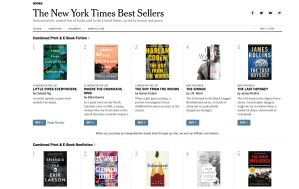
Maybe a guy my age shouldn’t review books like this. I know this book wasn’t meant for me. I know House of Earth and Blood is meant for somebody, though, because it’s #1 on the New York Times Bestseller List in Hardcover Fiction. It might not stay #1 for long, but the author Sarah Maas has a lot of fans buying her book, enough to make her book #1 for a week.
Then I read what House of Earth and Blood is about (which I’m not going to explain because you can get that anywhere), and I again thought “oh no, it’s one of those books,” a hodgepodge of mixed up magical creatures like shifters, witches, sprites, water beasts, nymphs, wraiths, vampyrs, dragons, and a bunch of stuff that a guy my age has difficulty keeping up with.
Yes, I was already biased against this book before I started reading it. I admit it. But maybe, just maybe, House of Earth and Blood isn’t really an “oh no, it’s one of those books” books after all.
Maybe House of Earth and Blood is really well-written and deserves to be #1. Yeah, no book “deserves” to be #1, but you know what I mean; maybe it actually is a good book. A genre can be meant for somebody who is not me (Or not I) and still be a solid, well-written book. But is House of Earth and Blood well-written?
Let’s take a look at the first page:
There was a wolf at the gallery door.
That’s not a bad first sentence.
Which meant it must be Thursday, which meant Bryce had to be really gods-damned tired if she relied on Danika’s comings and goings to figure out what day it was.
“Gods-damned tired”? Okay, the author establishes more than one god in this fictional realm but does it with profanity in the second sentence. And the sentence isn’t really a sentence; it’s a string of dependent clauses without an independent clause. Profanity in the second sentence I can deal with, but a run-on sentence fragment is a bit much.
The heavy metal door to Griffin Antiquities thudded with the impact of the wolf’s fist- a fist that Bryce knew ended in metallic-purple painted nails in dire need of a manicure. A heartbeat later, a female voice barked, half-muffled through the steel, “Open the Hel up, B. It’s hot as shit out here!”
Ugh. So “Hel” is spelled with one “l,” and fecal matter is very hot in this realm.
Yeah, this is an “oh no, it’s one of those books” again. The dialogue sounds like elementary school kids learning to cuss for the first time. Maybe I’m old, but I prefer fantasy (and this applies to any genre) that doesn’t rely on profanity.
I’ve read a little further in this book, and the language doesn’t get any better. I’m not a prude; I wrote Best Porn Jokes Ever! And none of my porn jokes required profanity.
In case you haven’t figured it out, House of Earth and Blood isn’t for me. The good news is that the author made it obvious after one page. I didn’t get suckered into reading a book that I thought I’d like only to get sucker punched later. House of Earth and Blood isn’t for me, but it’s obviously meant for somebody.
I used to like this genre, so I was going to compare House of Earth and Fire to the fantasy and sword&sorcery novels that I read decades ago, but I can guess how House of Earth and Blood fans would react when they saw the title of my favorite fantasy novel from decades ago:
“Oh no, it’s one of those books.”

When it comes to book buying, I might be more easily tricked than the average reader. I’ve bought books based on misleadingly positive book reviews from famous authors and regretted it. I’ve bought books because they had won awards or were book club recommendations and then realized later that I’d been suckered.
The worst was when I spent $1.00 for a kindle copy of Ernest Hemingway’s Six-Word Story. I should have known it was a scam when the free sample had only one word in it. Losing one dollar for five more words isn’t so bad, but when I realized the Six-Word Story was public domain, I felt stupid. No more manipulation, I thought.
Book publishers have every right to manipulate potential readers into buying their books. It’s up to us potential readers to recognize the manipulation and not fall for it. Book manipulation is bad behavior, and I dislike rewarding bad behavior. With that in mind, here are four common tricks that publishers use to manipulate people to spend money on their books:
1. Stir up (fake?) controversy/publicity
I can’t always prove that the controversy or publicity is fake. When critics badgered American Dirt author Jeanine Cummins for writing a book about Mexican immigrants even though she isn’t herself Mexican, book sales went up again, and weeks later the novel is still a bestseller. The controversy made me curious enough to read a sample of the the novel, and it’s not very good. Still, the controversy worked on me.
Now I wonder… was this controversy faked to sell more books? Maybe not, but publishers made sure the comments made by social media trolls that nobody had heard of got a ton of publicity. Enough people despise social media troublemakers to support the book, even if they don’t read it.
If you’re buying a book because it’s controversial, you’re probably falling for a trick.
2. Make it support a person/cause
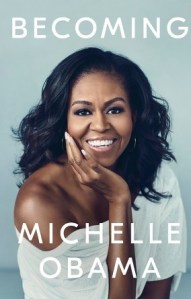
I’m not saying Michelle Obama manipulated readers; it was probably her publisher who tricked us.
Sometimes a book has a greater purpose than itself, but it usually doesn’t. That greater purpose, when you look at it, is often fake. When Michelle Obama wrote Becoming, my wife bought it just to support her, and then she never read the book.
Michelle Obama lives on Martha’s Vineyard and is wealthier than my family will ever be, so I didn’t see the need to support her. On the other hand, I don’t want Michelle Obama’s support either, so we’re even (except my wife has never bought any of my books).
At any rate, somewhere along the way, buying the book become a mission for millions(?) of readers. My wife even received a copy of Becoming from a friend simply because the friend knew she liked Michelle Obama. My wife didn’t read that copy either.
If you’re buying a book to support a cause/rich person/celebrity, then you’re probably falling for a trick.
3. Let’s bash Donald Trump (or the politician of your choice)

If you want to write a bestseller, he’s your topic.
A lot of people despise President Trump. He brings a lot of it on himself, but book publishers use this animosity against him to sell a bunch of garbage books.
Over the last few years book publishers have pawned off books like Fear by Bob Woodward and that one tell-all book written by a porn star and that bald lawyer who just got sent to prison. These books immediately hit the best sellers list, and then they’re outdated two weeks later when the new outrage has made all the previous outrages irrelevant. If I need an anti-Trump fix, I can get it for free in a bunch of places, and the outrage is usually current.
It’s not just Trump either. When Barack Obama was president, a bunch of writers/publishers profited off of garbage anti-Obama books as well. It was the same trick, just with a different audience. Those books also promised to give readers new insights that would bring down a presidency, but they were obsolete within a month.
If you’re buying a book because you despise a current president/politician, you’re probably falling for a trick.
4. It’s the next…!

I’ve never written a best selling novel, but I’ve read a few of them, so I’m an expert.
A few years ago a bunch of women-in-distress novels (usually written by women) were called “The next Gone Girl.” Gone Girl had been a huge bestseller, so a bunch of books like The Girl on the Train and The Woman in the Window, rode its coattails. Some books even had blurbs from Gillian Flynn, author of Gone Girl, on the covers of books just above the title.
If they’re going to compare a new novel to Gone Girl, it was cool to have the author praise the book (and then remind readers that the praise comes from the author of Gone Girl). Even though I liked Gone Girl, I’ve never actively looked for a book that was the next Gone Girl. I’ve already read Gone Girl. Why would I want to read the next Gone Girl when I’ve already read it?
Right now a bunch of fantasy readers are looking for books similar to A Game of Thrones, and I can understand that because the book version of the series isn’t finished (and the television show fizzled). Fans are dissatisfied and want something that has a sense of completion. Since A Game of Thrones might not get finished, book publishers can publicize something that’s already written as “The previous Game of Thrones… but it’s already completed!”
If you’re buying a book because it’s the next… something, you’re probably falling for a trick.
*****
When you’re looking for a good book, these are some tricks that publishers might use on you. I used to fall for the tricks. I might still fall for other tricks, but I don’t fall for these anymore.
What do you think? What other tricks do publishers use to manipulate readers into buying their books?

(image via wikimedia)
As an introvert, my biggest complaint about the coronavirus is that the scare isn’t working. I see people out in public wherever I go. Colleagues whom I try to avoid still track me down for unnecessary conversations. My family still wants to air travel to a destination I don’t want to go to for a vacation during Spring Break.
I was kind of hoping for a quick harmless panic, where people would stay away from each other for a while, but the coronavirus doesn’t seem to be scaring people, despite the BREAKING NEWS of each new potential victim.
You have to be careful with international scares like the coronavirus because you don’t know how seriously you should take them until it’s too late. You don’t want to just make lame jokes about it, and then realize it is horrible and that you’re just made lame jokes about thousands of horrible deaths.
On the other hand, you don’t want to lock yourself inside the house and become a hermit until the scare is over, but… well, maybe you do… NOT because you’re scared but because you like it.
The great thing about an international scare from an introvert’s point of view is that nobody wants to talk because talking might lead to spreading of the disease, and we introverts get left alone. Even if the health officials claim that the new virus isn’t contagious like that, this is no time to trust officials.
One reason a coronavirus panic isn’t spreading is that the name is too long. Panic spreaders prefer contagions that have shorter names like bird flu or swine flu or Ebola. Five syllables is two too many for an international scare. You can’t even use it when you’re losing an argument.
If you get mad and have to say something hurtful or vicious, it’s pointless to yell: “I hope you get Coronavirus and die!!”
The word coronavirus takes too long to say. Plus, coronavirus doesn’t have the same urgency as something like cancer. Ebola, swine flu, even Sars, all sound more menacing than coronavirus. But nothing is more threatening than cancer. If I’m going to be scared of something, it would be cancer. And when it comes to scary afflictions, almost nothing beats cancer.
Three different people over the last ten years have told me that they hoped I’d get cancer and die! One of those people then got cancer. And then he died. I don’t know how I feel about that. I would never wish cancer on somebody, even if that person had the audacity to disagree with me about politics and wish cancer on me.
I wouldn’t wish coronavirus either, but it’s more difficult to say. If I wished coronavirus on somebody, I’d probably stutter and mess it up.
To be fair, this coronavirus has scared some people out of traveling. Book conferences are being cancelled (I mention that because I’m a book blogger). Introvert authors are probably glad that the conferences are called off because now they don’t have to go out in public so they can just stay home and write. But maybe the panic will still come. Maybe it’s too early to make the call.
I’m not saying that introverts should be glad about a potential coronavirus panic. As far as I know, we introverts didn’t cause the panic that makes people want to avoid each other. I hope it’s not an introvert behind the scare. It would be a passive-aggressive move to create an international scare just to avoid human contact, but passive-aggressive introverts are kind of dangerous. Hopefully no introvert would be that diabolical.
If the panic already exists, however, we introverts would be fools not to take advantage of it.
*****
Here’s the romantic comedy you can read and listen to…