
American Dirt by Jeanine Cummins was meant to be an important novel. The cover features a reviewer’s comment that calls American Dirt “A Grapes of Wrath for our times.” That’s a big deal. American Dirt became an Oprah’s Book Club selection. Sandra Cisneros has praised this book. Even prolific horror author Stephen King even gave advanced accolades for the novel.
I should mention that American Dirt has become a bit controversial (you can read more about it here) because the author is not of Mexican heritage and allegedly gets a bunch of details about immigration wrong. Some critics say that because the author is not of Mexican descent and hasn’t experienced that particular immigration experience that she had no business writing the book in the first place.
This type of thing has been an issue for a while. A few years ago publishing companies started hiring sensitivity readers to double check stuff for writers who were writing about experiences they hadn’t experienced. I guess at the very least, the sensitivity readers for American Dirt didn’t do a good job.
Anyway, I’m more interested in Jeanine Cumming’s writing in American Dirt. Is this book really any good Did this novel deserve the hype? What makes other people think this writing is so great?
When Stephen King praised American Dirt, he wrote,”I defy anyone to read the first seven pages and not finish it.”
I enjoy defying Stephen King, so I’ve done exactly what he defied me to do. I read the first seven pages of American Dirt and decided not to finish it.
The first scene (or the first seven pages) depicts a boy Luca and his mother hiding in a bathtub listening to their family get massacred outside. It’s meant to be an emotional scene. It was probably a difficult scene to write because it’s from the boy’s point of view and the semi-stream of consciousness for an eight year-old boy makes the scene plod a bit.
Plus, the author is not an eight year-old boy (and has never been an eight year-old boy) and (according to today’s online mob critics) has no business trying to tell the story of an eight year-old boy. It’s not the author’s story to tell.
I’m kidding.
Like I said earlier, I’m more interested in the author’s writing style. Here’s a sample of what I mean (the parenthesis are my commentary):
The clatter of gunfire outside continues, joined by an odor of charcoal and burning meat. Papi Is grilling carne asada out there and Luca’s favorite chicken drumsticks. He likes them only a tiny bit blackened (misplaced detail), the crispy tang of the skins (misplaced detail). His mother pulls her head up long enough to look him in the eye. She puts her hands on both of his face and tries to cover his ears (she’d probably hold him still and cover his mouth). Outside, the gunfire slows. It ceases and then returns in short bursts, mirroring, Luca thinks, the sporadic and wild rhythm of his heart (would he really think that?). In between the racket, Luca can still hear the radio, a woman’s voice announcing Le Mejor 100.1 FM Acapulco! followed by Banda MS singing about how happy they are to be in love. Someone shoots the radio (I guess someone doesn’t like Banda MS), and there’s laughter (nobody in that group likes Banda MS?). Men’s voices. Two or three, Luca can’t tell. Hard bootsteps on Abuela’s patio.
This scene might have worked better from an adult’s point-of-view, especially with the “…mirroring, Luca thinks, the sporadic and wild rhythm of his heart” kind of insights that literary authors feel like they have to put into important books.
But I could be wrong. Editors, and Oprah, and Sandra Cisneros, and Stephen King disagree. I thought the first seven pages were a little sloppy. The story could have been gripping, but the author’s style (and her cultural misappropriation… haha) got in the way. An important novel really should be written more carefully than that.
American Dirt isn’t the only highly publicized novel that I didn’t finish. Two decades ago, I actually got angry at the following novel, but it wasn’t because of cultural misappropriation. As much as I hate admitting this, it was for a much dumber reason.
Literary Glance: The Corrections by Jonathan Franzen
When The Corrections came out in 2001, I didn’t want to read it because I thought the author Jonathan Franzen came across as a prick. He looked like a prick in his publicity photos. To be fair, a lot of authors look pretentious in their publicity photos, but Franzen came across even worse than most. Plus, he was going through a literary feud with Oprah Winfrey that didn’t make him look good. Even people who despised Oprah Winfrey thought Franzen came across like a prick during their feud.
I admit, most of my anti-Franzen attitude was my own bitterness. Every unsuccessful writer should be allowed to go through a bitter stage, and 2001-2003 was mine. I had just given up on writing after ten years of several projects, one coming kind of close to getting published (“kind of close to” probably meant “never had a chance of,” but I was at least told I was “kind of close”) and I was bitter that some guy like Franzen who wasn’t much older than me was getting published, getting publicized, and then almost winning a Pulitzer, while I had nothing to show for my own efforts. I tried reading The Corrections just so that I could be justified in hating it.

Not every book is important. Some are MUST-READ novels. Must-read novels are more important than important novels because readers are manipulated into thinking that something will be missing from their lives if they don’t read these must-read books.
I have heard (truism alert!) that people regret what they haven’t done more than what they have done. I’m not sure this applies to books. There are a lot of must-read books that I’m glad I haven’t read.
The Literary Rants: Must-Read Novels
There are only two legitimate reasons for a book to be a “must-read.” You fail a class if you don’t read it. Or you get fired from a job for not reading it. I don’t have to worry about failing classes anymore, and I don’t have to read books for my job (I have to read stuff that’s worse than most books), so there are no must-read books anymore.
I understand that using the term must-read is hyperbole. I have nothing against a little hyperbole. And I usually don’t like it when people take hyperbole literally. During the political season, politicians use hyperbole, and then other politicians accuse each other of lying when they were using hyperbole.
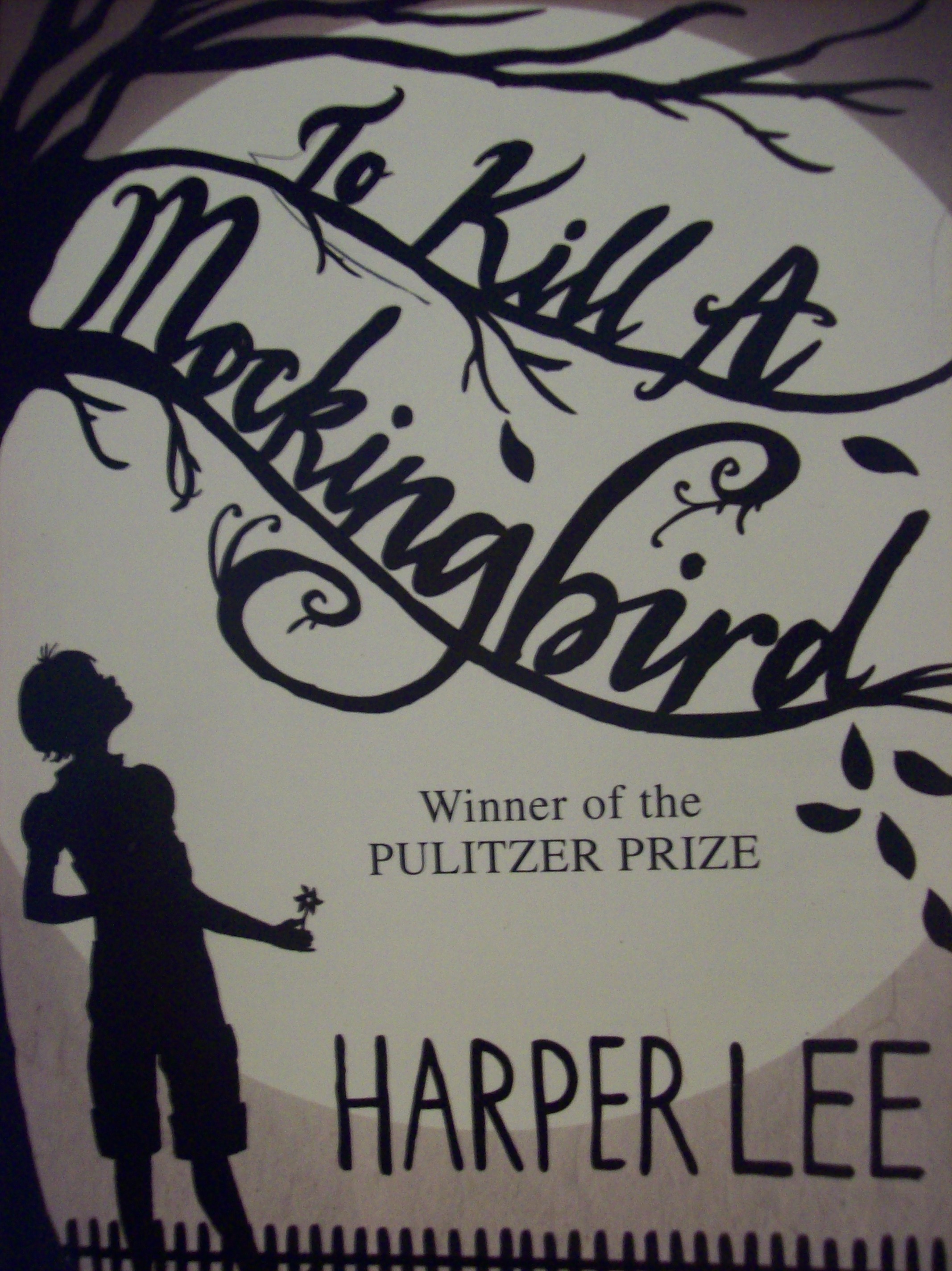
What do you think? Does American Dirt sound like an important novel, a must-read novel, or neither? Should fiction authors write only about cultures and events that they have experienced? Have you read the first seven pages of American Dirt, and if so, are you willing to defy Stephen King?

Even James Patterson hasn’t read all of these books.
This is a legitimate question (I think), and it’s bothered me for years. James Patterson puts out at least one book a month, most of them with a coauthor. Most of the books have bad dialogue, no sense of setting, huge plot holes, and one-page chapters.
By most standards of writing, James Patterson’s books are filled with bad writing. Despite all of this, every Patterson novel becomes a best seller. He even teaches a masterclass about how to write fiction, and I think people pay money for it.
This shouldn’t happen. James Patterson should be shamed for writing so many books (I usually call them “rough drafts”), and publishers should be shamed for releasing these rough drafts to the public.
I don’t even believe in shame tactics. I think shame tactics are used by people with weak arguments. But if I were to ever use a shame tactic (and I won’t), it would be on James Patterson and his book publishers (but NOT on the people who buy his books).
Somewhere along the way, there should be a hiccup in James Patterson’s book sales. At least one of his books should bomb, but they never do. Why is that?
Why do so many people read James Patterson books?
I think I finally have the answer. And I explain it in the video below.
I don’t want to bash James Patterson all the time because that can get old. He’s not the only author who might be scamming readers. Here’s an author who struck it big with a debut novel a couple years ago but turned out to be (in my opinion) kind of shady.
Famous Author Lifestyle Strategy: Lie about Having Cancer
When The Woman in the Window by AJ Finn came out last year, I was immediately suspicious of it. The novel was promoted as “the next Gone Girl.” A bunch of other extra promotion was going into the novel, way too much for a first time author. The final straw was Stephen King calling the book “unputdownable.” I’d been burned by King’s overly positive reviews of mediocre fiction in the past, and I knew something was going on.
Then in an interview, I discovered that AJ Finn’s real name was Dan Mallory and that he’d actually worked as an executive editor for the publishing company that was putting out the book. No wonder The Woman in the Window was getting so much publicity, I thought, nepotism. Journalists didn’t seem to see anything wrong with that. I understood; if journalists voice their concerns, they won’t get future interviews.
Despite all the super-hype for a first time novelist (I’m always suspicious of super-hype), I felt I needed to read at least an excerpt of The Woman in the Window. Maybe the novel really was that unputdownable. It happens, though I can’t think of an example offhand. Usually a novel that is that unputdownable takes a while to get noticed. Still, I decided to read the first few chapters (without spending any money).

Writing too much about James Patterson or the author who lied about having cancer or other authors who lied/cheated to get book deals can get negative. I don’t want to be negative all the time. Even though writers can get frustrated by aspects of publishing, now is a great time to be a writer.
5 Reasons Why It’s Great To Be A Writer Today!
It’s easy for most writers to be negative. It’s tough to make enough money to earn a living. We’re never satisfied with what we’ve written. No matter how many people read and respond to our work, it’s never enough. But even with these challenges, it’s better to be a writer today than it’s ever been.
1. Writing is physically easier than it’s ever been.
Authors used to have to physically hold a pencil or a pen and physically write out each word on a sheet of paper. Even worse, back in the really old days, writers had to dip quills into ink and then got beaten by monks if they made a mistake.
I’m not sure that ever really happened because there’s no ancient video footage of monks beating writers who made mistakes. If there’s no video footage of an event, I’m skeptical that it ever happened. Then again, back in the 1970s I saw nuns rap student knuckles with rulers, so if nuns in the 1970s were doing that, I’m pretty sure in the really old days monks did much worse to young writers who made errors on their parchments. After all, nothing inspires perfection like the threat of violence.

What do you think? Why do you think so many people read James Patterson books? Do you think James Patterson is scamming readers? If lying about cancer is bad, what kind of a lie is okay for a writer to tell the public?
*****
After more than ten years of blogging, I’ve finally written a novel.
A grammar-obsessed English teacher falls in ‘luuuvvv’ but discovers how chaotic and dangerous ‘luuuvvv’ can really be.

The Sunset Rises: A 1990s Romantic Comedy is now available on Amazon and from the trunk of my car at various local bookstores… until parking lot security kicks me out. Buy it now while supplies last!

I haven’t read any bestselling fiction from 2019 yet. Maybe a book blogger shouldn’t admit something like that. I’m supposed to keep up with all the novels and all the latest publishing trends, but books take a long time to read, and publishing companies keep churning out stuff faster than readers can read them.
Sometimes I think I should have chosen to be a movie vlogger instead. They have it easy. They can watch a movie in two hours and be an expert. If a movie weekend is slow, movie vloggers can even critique trailers. I’ve seen 20 minute videos critiquing two-minute movie trailers. I haven’t watched any of them; I have just seen that these videos exist.
Anyway, book reviewers have to finish entire books, and that takes time. We can’t even critique book trailers because every book trailer sucks, so it’s pointless to critique them.. Even trailers for great books suck.
If I decide to read a bestselling novel from 2019, it would be Where the Crawdads Sing by Delia Owens. You don’t have to convince me. I’ve already convinced myself. For one, it sold more copies than any other book in 2019. It sold more ebooks and more audiobooks, at least according to Publishers Weekly ( read more here )… if you trust them.
Don’t get me wrong; I don’t read books just because a lot of other people read them. But when a book sells that many copies, a book blogger probably should look into it.
I read Michelle Obama’s Becoming because it was so popular, but also because my wife had two copies and never got around to reading it. I figured since we had spent our own money on it, one of us ought to read it. My wife hasn’t even bought one copy of Where the Crawdads Sing, but it still outsold Becoming, so there’s that.
Early in 2019, I reviewed the first chapter of Where the Crawdads Sing. I read the free sample on my e-reader and wrote about how well-written the setting was. Then I compared it to the setting in a James Patterson book. Maybe that wasn’t a good approach. Every author looks good when compared to James Patterson, except maybe James Patterson’s coauthors.
One reason I don’t read current bestsellers is that they’re overpriced and they’re always checked out at the library (I guess that’s two reasons). Now that the book is older, it will be more available and paperbacks or secondhand copies will be easier to find. Being a cheapskate is no longer a reason.
That does it! I’ve convinced myself. I will find a way to read Where the Crawdads Sing without spending a bunch of money.
Here’s what I thought about Where the Crawdads Sing when I read the first chapter last year.
Where the Crawdads Sing by Delia Owens- A Lesson on How to Write Setting
Setting can be tough for an author. If you write too much, you can make the reader bored. If you don’t write enough, the story can feel incomplete.
Getting the setting wrong can ruin a book for a reader. My teenage daughter complains that too many pages in classic literature are devoted to descriptions of place. She already knows what all that stuff looks like, she says. I remind her that the internet didn’t exist when classic literature was written, so stuff had to be described. Back then, literature was relatively new. There were places, people, and ideas that had never been put into words before. A lot was new.
When it comes to words and ideas, not so much is new today. Almost everything has been described. It’s difficult to come up with new was to say the same thing. But it’s lazy to not try. I respect any current author who tries.
It was easy to persuade me to read Where the Crawdads Sing, but other novels might be more difficult. Here’s a novel that could have appealed to me, except it… it… it… didn’t. I’m not sure anybody could persuade me to read it now.
Why Should I Read This? Ulysses by James Joyce
I should have known from the cover that this book wasn’t about Roman mythology.
When it comes to reading classic literature, there are a lot of challenges. The writing style from novels published generations ago can confuse today’s readers. Some of the books have lots of references that today’s readers don’t understand. And a lot of those classic novels are just too long for our short attention spans. Any one of those challenges can deter people like me from trying a book. But when a novel is challenging on every level, I know I’m screwed.
The worst of all of these classic novels might be Ulysses by James Joyce. I don’t know if Ulysses really is the worst of all the tough classic novels because I haven’t read most of the tough classic novels. I’ve been told it’s not fair to judge a book that you haven’t read, but I disagree. You can judge most books within a few pages, if you can make it that far. I’ve read the first few pages of Ulysses, and I know I don’t want to read it anymore.
I’ve never heard anybody say that they actually liked Ulysses. Supposedly, Vladimir Nabokov said it was brilliant, but he wrote Lolita, so he’s a literary author and his opinion doesn’t count. Besides, I’ve never seen video of Nabokov saying Ulysses was brilliant, so I don’t necessarily believe that he said it.

Yeah, yeah, I know everybody is tired of A Game of Thrones. The television series is over, Season 8 was a disastrous letdown, and everybody is emotionally done with it. Even fans of the books are pretty sure that the author George R.R. Martin will never finish writing his own series. He’s too busy blogging, going to fan conventions, and writing histories of his fictional world. Still, maybe there’s a case for reading the books.
Why Should I Read This? A Game of Thrones by George R.R. Martin
At least Ned Stark doesn’t have to read all seven books to find out what happens to him.
No matter what time of year it is, people who watch Game of Thrones like to talk about Game of Thrones. It can be annoying to the innocent bystanders who don’t watch it. Even worse are the book snobs who have read the books and watch the show. The book snobs have had an advantage for years because they’ve known what was going to happen on the show and would like to sprinkle spoiler hints just to piss off the rest of us who haven’t read the books.
Just so you know, I have nothing against book snobs. I was a book snob when the Lord of the Rings movies came out. And I’m still a comic book snob when it comes to superhero movies. I’ve bored many non-comic book readers about how the movies are different from the original comic books. I’ve lost friendships over it, and I don’t even have many friends. So being a book snob isn’t necessarily meant as a negative.
As much as I respect them, it’s fun to annoy the book snobs by calling the book series A Game of Thrones. A Game of Thrones is the name of the first book, the book snobs keep telling me. The name of the entire series is A Song of Ice and Fire. The book snobs are right, but they don’t need to remind me every time I mention the Game of Thrones books. Everybody knows what I mean. If I say A Song of Ice and Fire, a bunch of people who know about the Game of Thrones TV show but don’t give a crap about the books won’t know what I’m talking about.
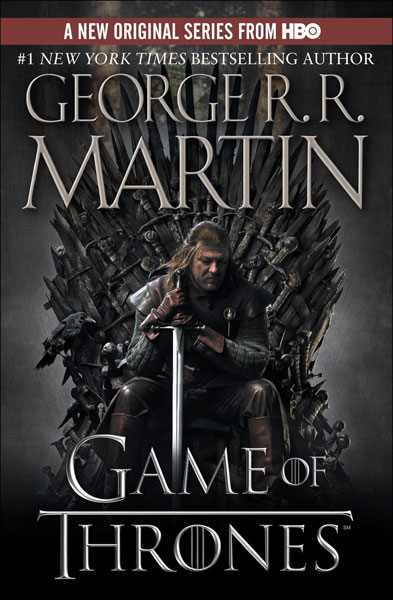
What do you think? What books have you vowed to never read? What bestselling novels from 2019 are worth reading? Is anything from 2020 any good? Does anybody want to persuade me to NOT read Where the Crawdads Sing?

(image via wikimedia)
The Romance Writers of America announced recently that it is cancelling its 2020 Rita Contest because of some really convoluted controversy. I tried to read about it. I really did, but it’s very complicated and it gave me a headache.
The short version (I think) is that one RWA Ethics chairperson was removed (or fired) because of a complaint against her for allegedly harassing(?)/talking about another author for something that author had written over twenty years ago. Then the fired RWA chairperson (who claims to be from a marginalized group) went to social media and a Twitter outrage mob forced a couple other people to either resign or get fired, and now everybody is angry and filing ethics charges against each other.
You can find more information about the topic here . It’s a lot to take in. On one hand, I respect a blogger who puts all those sources together in one blog post. On the other hand, it’s too much for me to keep track of. Go ahead if you want. This blogger put a lot of work into details.
Just so you know, I don’t have any stakes in this issue. I’m not a romance author. I don’t read romance novels. I’ll never win a contest for any of my writing. I don’t belong to a marginalized group (unless being left-handed counts).
In fact, some guy who claimed to belong to a marginalized group once told me that I can’t have an opinion about these kinds of issues involving people from marginalized groups because I’m not marginalized, but I know he can’t stop me from having an opinion so I ignored him because he doesn’t speak for everybody who considers themselves marginalized. I figured that since our backgrounds were different, we could trade perceptions (without arguing) to figure things out, but he wasn’t interested.
That’s okay. I’m still interested in how people who disagree with me think. Just don’t try to get me fired… and please don’t send an outrage mob at me.
Even though I’m not a romance author, I feel sympathy for the romance authors who aren’t involved. Most of them probably just want to write romance novels and enjoy some camaraderie with other authors. Instead, they see bickering over stuff that could have been avoided with a little diplomacy.
As far as who is to blame, I don’t know. There’s always stuff that the average person doesn’t know in these situations. It’s probably one of those conflicts where both sides are right in some way, but both sides distrust each other, so nothing will ever be able to get worked out. No matter how much is written, I’ll never know which side broke the trust first.
One of the problems in situations like this is that stuff that was (thought to be) acceptable in the past isn’t acceptable anymore, and people have a tough time adjusting. A couple years ago I ran into a problem where I wrote the phrase “I hit like a girl” a few times and got called out for it on my own blog. So I asked the question…
Is This Phrase Sexist?
Every once in a while, I tell people that I hit like a girl. I don’t say it often, but it comes up occasionally in conversation or in my writing. I’ve never given the phrase a second thought. I just thought it was a simple expression that explains that I’m not a good fighter.
I’ve been told several times recently that I shouldn’t say that I hit like a girl, that the phrase is sexist. A woman at work told me that it was an inappropriate thing to say. I apologized and made a mental note be very careful about what I say around her from now on. A couple commenters on this blog claim that it was a phrase that I should not use. I’ve even been told that women can hit just as hard as men.
At first, I was surprised I was getting criticism for saying/writing that I hit like a girl. I mean, I’ve written some objectionable stuff on this blog. I’ve written about adult situations. I’ve written about vulgar language and have even used some profanity. I’ve suggested that James Patterson might be a hack (as outrageous as that claim might be). I’ve even written porn jokes, and nobody complained that the porn jokes were sexist. They just said the porn jokes were stupid.
I understand why people would think it’s sexist to say “I hit like a girl.” They think I’m making fun of girls, and I’m saying that the way girls hit is inferior to the way boys hit. I agree that some women can hit just as hard as some men.

Some content creators don’t want to face accusations on social media. One way to avoid this is to simply not publish anything that might be controversial. Here is an author who self-banned her own book after she received outrage criticism over her portrayal of a character.
Author Self-Bans Book Because Of Outrage Mob
She looks ticked off. I’d be ticked off too if an outrage mob attacked my book.
To be honest, I wouldn’t have been interested in this book without the outrage mob. First of all, I don’t like YA fiction because there are always too many kids in the books. I don’t usually like reading books from the kid’s point-of-view. It’s okay occasionally, but I’m in my early 50s, and it would probably be kind of weird if I liked YA fiction too much.
Plus, this book is fantasy. Man, I have read way too much fantasy in my life. I’m so bored by fantasy that when I watch Game of Thrones, I enjoy the political intrigue but I yawn when I see dragons and ice zombies.
As much as I don’t like YA fantasy, I truly despise outrage mobs. They react too quickly and too forcefully to stuff and don’t give people time to process information. Even if the outrage mob is right about a specific point (they usually aren’t), they act so obnoxious that they ruin any point they had.
Just so you know, I’m referring to an unpublished book called Blood Heir by Amelie Wen-Zhao. The author has decided not to publish her book after an outrage mob attacked her for a variety of reasons. I’m not going into those reasons, but you can find them here and here . These two articles (especially the second one) explain the situation better than I could. You can also go to Twitter and look up Blood Heir, but I don’t recommend that. Twitter, ugh.

Critics today often use current standards to judge people or art from generations ago. It happens a lot, but this one caught my attention because it involves a prominent American book series that hadn’t been thought of as controversial before.
Is Little House on the Prairie Racist?
(image via wikimedia)
This is one of those topics where it’s not really necessary to have an opinion, but people will anyway. Last week the American Library Association changed the name of its children’s literature award from the Laura Ingalls Wilder award to the Children’s Literature Legacy award. That by itself might not seem like a big deal. I read a lot of books, and I had never heard of (or don’t remember hearing about) the Laura Ingalls Wilder award before. Under most circumstances, most people wouldn’t care what the name of the award is.
Then people found out that the award name was changed because of some stuff in the Little House on the Prairie books that is considered racist.
RACIST?
Did you say RACIST?
Did you say The Little House on the Prairie books are RACIST?
AW, CRAP!! That means everybody has to have an opinion!! Look out!!!!
Before everybody starts taking their predictable sides, let’s try to get some of the facts… and then we can take our predictable sides.
The Laura Ingalls Wilder award was first given out in 1954 to Laura Ingalls Wilder, which is kind of cool, I guess, to win an award that was named after you. This also shows that in 1954 the Little House on the Prairie books weren’t considered racist. Or it might mean that racism wasn’t an issue that the ALA paid attention to. Or it might mean that the ALA was an organization filled with racist librarians. Racist librarians are the most dangerous racists because they control the books. Plus, I always hear that it’s those quiet people you have to watch out for, and that includes quiet librarian racists.

*****
What do you think? Can issues like these get settled with diplomacy, or do these conflicts need to escalate until people get fired and books get boycotted? If you choose to NOT have an opinion, are you then part of the problem for not being involved? Or if you choose to be vocal about your opinion, are you part of the problem by escalating a conflict that could have been solved with tact and diplomacy? Are you a fan of false binaries, or do you think false binaries cause unnecessary arguing?

Stephen King might think this is a stupid question. (image via wikimedia)
Stephen King isn’t dead. As far as I know, he’s alive and well, and I hope he stays that way for a long time. This isn’t meant to be a morbid post.
But I’m curious, will anything weird happen when Stephen King dies? Will he have a ghost? Would his ghost haunt fictional sections of Maine for all eternity? Would his ghost be a demonic clown luring little kids into gutters? Or would King’s spirit tempt writers into using too many –ly adverbs in their prose?
Or maybe nothing will happen. Maybe people will just write quick social media posts about him and get on with their lives. And if King did come back as a ghost, maybe nobody would notice; there’s a lot of stuff going on right now that’s much weirder than Stephen King’s ghost popping up.
Even though Stephen King sometimes writes about evil spirits, a lot of people who read his books probably don’t believe in that stuff. I’m mildly interested because I think a ghost lived in my house when I was kid. It was an old guy staring into my bedroom from the hallway (great, a weirdo ghost, but at least he wasn’t staring into my older sister’s room. Actually, I don’t know which would be worse.).
I kept my mouth shut because I thought it was probably my imagination. Then decades later my mom mentioned how she thought we’d had a ghost in that house, and we compared stories. She couldn’t tell what it was, but it would hover in the hallway near my room. My room. It had to be my room.
I don’t know why I started wondering what Stephen King’s ghost would be like. It doesn’t make for a long blog post, but I’d rather write about it while he’s still alive. Anyway, I don’t want to come across as morbid, so here’s some other stuff I’ve written about Stephen King… while he’s still alive… and will be for many many more years to come.
Thank You, Stephen King!
(image via wikipedia)
A few weeks ago, a friend of my wife came over unannounced and uninvited with her family. Any visitors we get are because of my wife. I don’t have friends, so nobody comes over to see me. My wife has lots of friends, and sometimes we end up entertaining families of people whom I barely know. Most of the time I don’t mind, but I don’t like it when the visitors are unannounced and uninvited.
In this case, the family had a teenage son who, according to his parents, is addicted to video games and hates to read. He’s capable of reading, my wife’s friend said, but he won’t do it unless it’s a school assignment.
“At least he completes his school assignments,” I said to my wife’s friend.
“Yeah,” the son said to his mom, but she gave him a dirty look.
I could sympathize with the kid because he reminded me of a bunch of friends I had in high school (a time in my life when I actually had friends).
My high school friends weren’t functionally illiterate. They were dysfunctionally literate. They knew how to read but chose not to. If they were going to read, it would be a smut book like Massage Parlor by Jennifer Sills or a parody book like Bored of the Rings. If my high school friends had had internet and cell phones and they wouldn’t have read even those books. With the internet, teenage boys don’t need smut books anymore.
.jpg)
Even though Stephen King is a prolific writer and has written some iconic novels, he admits some of his writing isn’t as good as it could have been. When I reread one of his best-known horror novels The Shining, I saw what he meant.
Bad Sentences in Classic Literature: The Shining by Stephen King
(image via wikipedia)
The Shining by Stephen King might not be a classic yet, but it probably will be. It was written in the 1970s, and people still read it today and it’s still relevent, so I’m guessing that people will still read it 50 years from now.
Even though The Shining is a great book, it has some bad writing in it. At least, by Stephen King’s standards, there are some bad sentences. In his book On Writing, Stephen King maligns the adverb with one of the all-time most famous quotes about writing: “I believe the road to hell is paved with adverbs,…”
When the Modern Master of Horror equates a part of speech with eternal damnation, you have to take that seriously.

Stephen King weighs in on a lot of political issues nowadays. Even if he ticks off a bunch of people and they stop reading his books, he still will have a massive audience, so there’s not much for him to lose. A few years ago, he wrote a quick ebook essay about guns, and I thought about reading it. Usually I don’t bother with celebrities and their opinions, but I give Stephen King credit for his unique perspective on this issue.
On Stephen King and his Essay about Guns
Even though Stephen King’s essay “Guns” is about gun control, my essay about Stephen King’s essay is not (about gun control). (Photo credit: Wikipedia)
Stephen King wrote a 25 page essay about gun control, put it on the Amazon Kindle, and now it’s a top ten Amazon Kindle bestseller. I’m not going to read a 25 page essay about gun control (that may be more a reflection on me than Stephen King). I can barely read the 2nd Amendment without seeing the yellow dots of sleep.
25 pages isn’t long for an essay about gun control. I bet any gun control legislation that is passed (or proposed) will be way over 25 pages long (and probably filled with a bunch of stuff that has nothing to do with guns). If it’s any consolation, I won’t read that either.
I usually get annoyed at celebrities who spout off about politics, but I don’t get annoyed at authors who write about political issues. That’s what writers should do. If there’s one group of celebrity that should talk (or write) about politics, it’s authors. I may not always agree with the ideas of other writers, but their views are probably better thought out than those of most celebrities (like actors, singers, musicians, or athletes).
In fact, I hope other famous authors start writing about gun control too. Maybe Tom Clancy can write a response, except he’d probably make it a 1,000 pages long with way too much filler.

*****
What do you think? What would Stephen King’s ghost be like? Would his ghost be any different from the average ghost? Or do you think ghosts don’t exist and all that supernatural stuff is a crock?
Nobody I know hates All the Light We Cannot See by Anthony Doerr. It won the Pulitzer Prize for Fiction a few years ago and was a best seller for a long time. Usually, there’s a large group of people who hate whatever book wins the Pulitzer Prize for Fiction.
For example, a lot of readers despised Empire Falls or were bored by The Goldfinch or thought A Visit from the Goon Squad was all over the place (there weren’t even any goons in it!). But statistically very few people think All the Light We Cannot See sucks.
All the Light We Cannot See reminds me a little bit of To Kill a Mockingbird. Nobody that I know of hates this book either. We had to read a lot of books in school, and almost all of them were hated by a majority of students most of the time. A Separate Peace was okay, but a bunch of my friends hated it. The Odyssey was despised, even though it was Greek mythology.
Every book we were forced to read was hated to some extent, except To Kill a Mockingbird. Nobody said To Kill a Mockingbird sucked. At worst, somebody might have said it was overrated, but nobody said it sucked.
The same applies to All the Light We Cannot See. Nobody says it sucks. More importantly (from my point of view), I finished reading All the Light We Cannot See. That’s saying something about the book. I start a bunch of books but rarely finish them. I finished All the Light We Cannot See and kind of liked it.
Whenever there’s a popular book that I really like, I try to analyze it (without overkilling it) and figure out a formula (something more than “it doesn’t suck). If we use All the Light We Cannot See as a guide, here’s how to write an award-winning (and maybe even a best selling) novel:
1. The Setting
First of all, it’s set in World War II. That’s going to appeal to a lot of readers. Everybody knows World War II. This story could have taken place in some form during just about any modern war, but everybody is interested in World War II. Even though World War II was a dangerous time period, it’s a very safe setting if you want a book with wide appeal.
2. Sympathetic characters
One of the main characters is a blind girl. The blind girl elicits sympathy from the reader. The other main character is an orphan boy. Everybody sympathizes with the orphan boy. It’s almost not fair to the reader to have a blind girl and an orphan boy as main characters. It’s author cheating. You’d have to be a heartless bastard of a reader not to sympathize with a blind girl and orphan boy. I don’t want to be a bastard reader, so I sympathized with them.
3. The villain
As if the dangers of the war aren’t bad enough, there’s also a Nazi gem collector who is looking for one of the main characters. This antagonist felt a bit out of place, like a stereotyped villain from an Indiana Jones movie suddenly thrown into literary fiction, but this didn’t stop me from reading. That NAZI villain probably made the book more interesting for a lot of readers.
4. Short Chapters
This book also has really short chapters. And the chapters almost always switch characters. Sometimes the shortness of the chapter is a little distracting. But I still kept reading.
There are so many short chapters that are so short that it almost reminds me of a James Patterson book. The big difference though is that short chapters in All the Light we Cannot See don’t suck.
5. Limited stream of consciousness
Most literary fiction authors use really long stream of consciousness sentences somewhere throughout the book. It’s almost mandatory for literary authors to overuse stream of consciousness. To me, most of those seem like the author is trying way too hard to show off, and I roll my eyes at a lot of them. This book had a few instances like that, but not so many that I rolled my eyes.
There was only one chapter where I rolled my eyes. It’s the chapter “White City” on page 364, and as soon as the situation was set up, I thought, “Oh, c’mon, are you really going to have a scene like this?” And, yes, there really was a scene like this. Not that it was a poorly written scene. It’s just that every war novel or movie has to have a scene like this. To be fair, it did kind of matter later in the book, but it was still trite.
Looking back, the author of All the Light We Cannot See made a lot of safe choices. The setting was safe, the characters overly-sympathetic, the villain stereotyped, and the chapters were James Patterson short. Plus, there was just enough stream-of-consciousness to justify this novel’s classification as literary fiction. If you are determined to write an award-winning book with wide appeal, this is probably a decent template to follow.
Despite these minor criticisms, I’d probably recommend All the Light You Cannot See to just about anybody who likes to read fiction. It’s literary fiction that doesn’t often feel like literary fiction, and to me, that’s the best kind of literary fiction.

(image via NPR)
With the end of 2019 approaching, top ten lists of the year are all over the place. Book blogs have put out their lists of best books of the year. Entertainment websites have published their top movies of the year. Music websites have told us their picks for the best songs or artists of the year.
I treat these lists skeptically (I bet the writers are being paid off most of the time), but I read them anyway. I haven’t read the Best Books of 2019 (I’m too cheap to buy most new books), and I haven’t seen the Best Movies of 2019 (well, maybe I’ve seen two or three of them), and I haven’t listened to the Best Music of 2019 (I’ve aged out of new music), but I like to read the lists.
If you are into the top ten lists or the Best of lists, here’s your one-stop blog post for all the best of 2019!
The Best Books (by Genre) of 2019- Goodreads
The Best Music of 2019- Rolling Stone
The Best Technology Products of 2019- PC Reviews
The Best Cars of 2019- Car and Driver
The Best Movies of 2019- Indie Wire
The Best Television Shows of 2016- Esquire
The Best YouTube Channels of 2019- Digital Trends
The Best Video Games of 2019- Vulture
The Best Fast Food Restaurants of 2019- QSR
The Best Scientific Discoveries of 2019- Digit
The Best New Words of 2019- Merriam Webster
The Best Memes of 2019- Popbuzz
What do you think? What other categories should be included in The Best of Everything 2019?

Putting profanity in a book title is lame, no matter what genre it is. A few years ago, some guy I’d never heard of wrote a bestselling book called Sh*t My Dad Says. This was lame because the author’s dad said all the funny stuff and the author got the bestselling book.
On the other hand, if the dad had written the book and called Sh*t I Say, then it probably wouldn’t have sold as well. If you say sh*t, it’s better to say somebody else said it. If the sh*t is funny, you still get credit, but if the profanity backfires, you can blame somebody else.
I’m not a prude about profanity. I put profanity in my own blog posts. I even put it in a few of my blog titles. When I use profanity, I even spell it out. I don’t replace any letters with an asterisk to hide what I’m saying.
Anybody who reads my blog Dysfunctional Literacy knows that f*ck means fuck. Even kids who aren’t supposed to say fuck know that f*ck means fuck. The only people who don’t know that f*ck means fuck are the people who don’t know what fuck means, so using f*ck is meaningless.
Anyway, I can understand why an unknown author would put bad words in a book title because a struggling author has to do something shocking to get attention. It’s still lame, though. The worst is when a celebrity puts profanity in a book title, like when celebrity film writer Kevin Smith put out a book called Tough Sh*t. Kevin Smith proved himself to be selfish when he used Sh*t in his book title because he’s diluting the shock value of profanity, thereby stealing from lesser known authors who might need it.
Now a bunch of self-help books are resorting to the use of bad words in titles. Just this week in a brick and mortar book store, I saw the following titles:
F*ck Feelings by Michael I Bennet and Sarah Bennet
F*ck Love by Michael I Bennet and Sarah Bennet
Stop Doing That Sh*t by Gary John Bishop
Unfu*k Yourself by Gary John Bishop
Find Your F*cking Happy by Monica Sweeney
Get Your Sh*t Together by Sarah Knight
Calm the F*ck Down by Sarah Knight
How to Stop Feeling Like Sh*t by Andrea Owen
Self-help books haven’t always been like this. When I was a kid in the 1970s, the big self-help book was I’m Okay, You’re Okay by Thomas A. Harris. Even at my young age, I knew that was a lie. I figured I might be okay, but I knew most other people weren’t, and the book title was lying. I refuse to read books that lie in the title. but at least there was no profanity in the title.
That’s why I refuse to read You Are a Badass by Jen Sincero. A true badass isn’t going to read the book because a true badass doesn’t need any advice that might (but probably isn’t) in the book. A true badass would see the title You Are a Badass and think, yes I am, and keep walking. The title is lying and also uses profanity. I can’t trust the author now. And her last name is Sincero.
The Subtle Art of Not Giving a F*ck by Mark Manson also a lie because the author obviously gives a fuck. If the author truly didn’t give a fuck, he wouldn’t have censored the title. Maybe it’s the publisher who didn’t want fuck fully spelled out, but in that case, an author who truly didn’t give a fuck would have found a publisher who didn’t a fuck. Either way, the title is a lie.
A few years ago, I wrote my own book called Crap Is NOT a Bad Word! I meant it as a joke because I’m always complaining about profanity in book titles and then I wrote a book with profanity in the book title, except I claim it really isn’t profanity. I even convinced myself that crap isn’t really a bad word. I convinced myself so convincingly that I still get mad when I think of the times I was punished for saying crap.
Even though I wrote Crap Is NOT a Bad Word! several years ago, I think it’s still relevant, and I spell out all the bad words in the book. There are a lot of bad words, but it’s not really a self-help book, except maybe for polite people.
Anyway, if you’re going to put profanity in your self-help book title, go all out. I don’t trust self-help gurus who are desperate enough to put profanity in their book titles. And I really don’t trust self-help gurus who lie and use profanity in their titles.
*****
Sometimes I’ll ask a question in a blog title and answer it, but this time I have no answer. I’m curious. Why do so many self-help books today have bad words in their titles? What do you think?

Comic books are easier to review than novels for several reasons. Comic books are shorter. The reviewer can show more pictures and make the review more appealing visually. The comic reviewer can also critique words and art, giving the reviewer more to work with.
Despite all this, I rarely review a comic book on my blog. Comic books don’t have the universal appeal of most bestselling novels. Plus, comic book readers would rather read a comic book themselves than waste their time reading a comic book review.
Comic books based on classic novels are a little different, though, at least for me. When I was a kid, my dad had a small collection of Classics Illustrated from the 1940s and 1950s, and I read a bunch of these over and over, and then when I was a teenager I started reading the classic novels. Without the background and context of the Classics Illustrated comic books, I might not have understood much of what was going on in these classic novels. With the help of these classic comics and a little persistence, I finished most classic novels that I started.
One of those difficult novels was Frankenstein by Mary Shelley. Frankenstein is a perfect novel for a classic comic. There’s enough interesting stuff going on in the book to make for interesting illustrations, and the words in the book are difficult so that most average readers struggle with the book.
Without further ado, here’s my review of my very own copy (which originally belonged to my dad) of Classics Illustrated #26: Frankenstein by Mary Shelley.

(image via wikimedia)
According to Merriam-Webster Dictionary, the word they is 2019’s Word of the Year. At first glance, they might seem like a stupid choice. The word they has been around for generations as a third-person plural pronoun. Yet, curiosity over the word they has skyrocketed this year, with a 300% increase in hits on 2019 the dictionary’s website.
One reason for the Interest In they is that they is now considered a gender-neutral pronoun. People who don’t want to be labeled as he or she can choose they as their pronoun of choice. I’ll admit, I don’t get the whole nonbinary or gender neutral thing, so I won’t judge that, but I have a strong opinion about the word they. I don’t think they should be messed with, and here’s why.
It’s pretty simple. They is a commonly-used plural pronoun and shouldn’t be used in the singular form because it messes up subject-verb agreement. All my life I was taught to use present-tense verb forms in sentences like “They are going to the movie.”
If people use they as a singular pronoun, then a writer/speaker referring to a person who identifies as gender-neutral will write/speak “They is going to the movie.”
That’s going to lead to a lot of confusion, especially among English teachers. Grammar NAZIs will flip out too. Regular NAZIs don’t have a high tolerance for people who claim to be gender-neutral (I don’t know any regular NAZIs, so I’m just speculating about that), but the grammar NAZIs (who are often very tolerant about alternative lifestyles) will also resent the change in language.
Merriam-Webster should know this. When I was a kid, dictionaries reluctantly accepted any changes in the English Language. We tried to make up words and rule changes all the time, and the dictionary (and our teachers) would never go along with it. If we had tried to change the meaning of they, we would have been held back a grade, humiliated in front of our peers, and beaten up after school.
I’m not saying we should go back to that. I don’t wish that on anybody. But now the dictionary seems to be accepting change without thinking about the consequences.
Subject-verb agreement is the foundation of sentence structure in the English. If you mess with it, everything else collapses. Language fractures, people can’t communicate, and then people start genociding each other (Yeah, genocide probably isn’t a verb, but you know what I mean. If a person who claims to be gender-neutral can make they singular, then I can turn genocide into a verb).
The most disappointing part of this is that the dictionary should know better. Young people have always had stupid ideas, many of which were worse than using they as a singular pronoun. Young people are supposed to have new (and usually stupid) ideas. The older generations are then supposed to postpone the implementation of those bad ideas until the young people get old enough to realize how stupid their old ideas were.
In this case, Merriam-Webster has abdicated its responsibility as the wise (but cranky) mentor. Instead, the dictionary has encouraged confusion and future madness by enabling youngsters to use they as a singular pronoun.
This conflict isn’t even necessary. Most people don’t care if somebody identifies as gender-neutral. There are countless potential letter combinations that could be used as a gender neutral pronoun, preferably one that hasn’t already been established as a third-person plural pronoun, like they has been. There is enough confusion in this world already.
And we don’t need dictionaries to make things worse.


 Dysfunctional Literacy