
This story takes place before faces were on milk cartons. And who thought it was a good idea to do this? Why would you traumatize kids while they’re drinking milk? (image via wikimedia)
My memory isn’t always the most accurate, but I’m pretty sure this happened when I was in sixth grade. I had a lot of friends in sixth grade, and this story took place in elementary school, and sixth grade back in 1977 was the final grade in elementary school. This story couldn’t have happened without a bunch of friends around me egging me on. I had friends in seventh grade too, but that was junior high, and there’s no way this happened in junior high.
The whole thing started when a kid named Kevin sat down with a tray stacked with pint-sized milk cartons from the food line. It was nearing the end of lunch time in the school cafeteria, and everyone except me was done eating. I have a fast metabolism, so I ate a lot. If a school gave me 30 minutes to eat, I ate for 30 minutes. I’ve always been like that.
“They’re giving these away,” Kevin said. “They expire tomorrow.” He showed us the expiration date on one of the cartons.
I’d taken only one milk earlier, and I was still eating, so I asked, “Do they have any left?”
“Yeah!” he said excitedly, maybe too excitedly.
A bunch of us got up from the table and rushed to the food line. I don’t know why everybody was excited about free milk. I guess it was because it was free. “Free” makes everything better to a kid. Most of my friends threw away the milk they got in line every day. Now they wanted more free milk just because it was there.
The cafeteria ladies gave it to us too. We asked them to stock our trays with free almost-expired milk, and they did. They piled the free milk on our trays. They didn’t even ask us why we wanted so much free milk. That’s okay. We wouldn’t have had a reason.
And just so you know, they were all cafeteria ladies. At least they were female and old. Back In 1977, no man would work in our school cafeteria. The men might clean the school, and they definitely did the maintenance and outside stuff, but no men worked in the cafeteria in 1977. At least not where I lived. So we called them cafeteria ladies. And everybody liked it just fine.
Actually, I’m pretty sure not everybody liked it just fine, but I’m getting older, and I’d better start talking like I’m getting older. It gives the story more of a nostalgic feel.
Looking back (another nostalgic detail), you can learn a lot about bureaucracy from this. The cafeteria ladies ordered too much stuff, gave most of it away on the final day, and then they ordered too much stuff again because on paper they had run out of it on the last day; that or they adjusted the next order. Either way, nobody would get in trouble for ordering too much stuff. It would all look good on paper. And if the bureaucracy plays funny numbers with milk, they’ll play funny numbers with anything.
But I don’t do math. I tell stories. And some of them are even true, like this one.
So a bunch of us boys (no girls were involved with this part of the story) sat at our lunch table with a bunch of full pint-sized milk cartons and maybe ten minutes to do something with them. We all looked at each other like, what now? I thought we were going to stack them. And then knock them down. That’s what we should have done, built a giant leaning tower of milk cartons and then knocked it down right before the dismissal bell.
When it comes to hundreds of almost-expired milk cartons, there are a lot of bad ideas that kids can get. And my brain was just starting to get fired up.
Then Kevin started it. This wasn’t my idea, I promise. I had a bunch of bad ideas, but this wasn’t one of them.
“”Hey, Jimmy,” Kevin said to me. “You gonna drink your milks?”
“Some of them,” I said. I hadn’t even counted all my milks yet, but I was going to drink at least one of them. I didn’t want to be too wasteful. Even back in 1977, there was talk about how humans were too wasteful. If I remember correctly, back in 1977 everything was supposed to have been dead by 1999 because of human wastefulness, so sometimes I get skeptical when I hear people talk about the end of the world. I remember acid rain, ozone layer depletion, overpopulation, and destruction of the Amazon Rain forest. We humans were supposed to have destroyed the world by 1999.
The thing is, whenever I mention to doomsayers that we’ve lived an extra 20 years and act like it’s great news, doomsayers get sour (even more-so than normal) and push the date back. I think now they say we have 12 years, but I’ve lost track. If we’re still alive in 12 years, they’ll probably get mad.
“I bet I can drink more milks than you,” Kevin said.
Kevin was shorter than I was and kind of pudgy, but he couldn’t put down food like I could. Or milk.
“No, you can’t,” I said. I didn’t mean it in an argumentative way. It was factual. From anecdotal data that I had witnessed myself, I knew that I could drink more milks than Kevin. Yeah, there was ego involved too, but I knew he was factually wrong.
“You skinny stick,” he said. “”There’s no way you can drink as much milk as me.”
You can imagine the circular argument that followed. And there was only one way to resolve this kind of dispute. And I’ll get to it in the next episode.
To be continued in The Legend of the Almost-Expired Milk!

The Nickel Boys by Colson Whitehead is kind of noteworthy because it’s Whitehead’s second Pulitzer Prize winning novel. Winning two Pulitzers is a pretty decent accomplishment. If you write one Pulitzer Prize winning book (his first was The Underground Railroad in 2017), anything you write after that will get publicized. If you win two Pulitzer Prizes, you’re at great risk of being treated like a literary deity.
I actually feel a little bad for Colson Whitehead because a lot of literary people are going to start freaking out around him. Whenever he says something slightly clever, they will laugh hysterically. Whenever he says something slightly insightful, his audience will grunt in unified agreement. It’s not Whitehead’s fault that people act like this. It’s not Whitehead’s fault that he’s written two Pulitzer Prize winning novels.
The good news for Colson Whitehead is that most people still don’t know what he looks like. He’s not like Stephen King or J.K. Rowling; outside of a few snooty literary circles, he can go anywhere he wants without being disturbed.
I still wonder, though, what does it take to get Pulitzer to notice your book (other than having won one already)? What does it take to win a Pulitzer? Since I’m just reading a free sample (I’m a cheap bastard during the abbreviated horror), I decided to focus just on the beginning of The Nickel Boys. I wanted to see what would make The Nickel Boys look like a Pulitzer Prize for Fiction.
The prologue focuses on the history of a villainous boy’s school. It’s an evil place, almost unrealistically evil, but that’s okay because unrealistically evil things happen in real life. After the villainous Nickel school is established, chapter one starts with a boy named Ellwood (who was briefly mentioned as an adult in the prologue):
So here’s the first paragraph of Chapter 1, which starts providing details about Elwood:
Elwood received the best gift of his life on Christmas Day 1962, even if the ideas it put in his head were his undoing. Martin Luther King at Zion Hill was the only album he owned and it never left the turntable. His grandmother Harriet had a few gospel records, which she only played when the world discovered a new mean way to work on her, and Elwood wasn’t allowed to listen to the Motown groups or popular songs like that on account of their licentious nature. The rest of his presents that year were clothes- a new red sweater, socks-and he certainly wore those out, but nothing endured such good and constant use as the record. Every scratch and pop it gathered over the months was a mark of his enlightenment, tracking each time he entered into a new understanding of the reverend’s words. The crackle of the truth.
Yeah, this paragraph is solid, but it’s nothing noteworthy by itself. This chapter establishes Elwood as a sympathetic young man but with some issues. The readers know something bad is going to happen, especially after the foreshadowing of the first sentence and the prologue setting up the villainous boys’ school. I’m also guessing the readers will see Elwood later in the book as an adult dealing with the trauma from the time at Nickel, probably searching (and finding) other boys from the school.
I foresee trauma, lots and lots of trauma. Hopefully, The Nickel Boys won’t be melotraumatic. Trauma is bad, but melo-traumatic is really bad.
The Nickel Boys so far doesn’t read like literary fiction. A lot of literary authors seem to try too hard by writing overly complicated sentences and overusing stream-of-consciousness. Colson Whitehead hasn’t done this yet. It might happen. I think the Pulitzer committee requires a certain amount of stream-of-consciousness in a novel before it can be considered, so it must be in there somewhere.
The Nickel Boys doesn’t have any obvious gimmicks right away. Most Pulitzer Prize winning novels have a unique gimmick or a set of gimmicks that enhance (from the judges’ points of view) the story. By gimmick, I mean overdone literary device. Last year’s Pulitzer Prize winner The Overstory was told from the perspective of trees. It was interesting but still a gimmick. The gimmick in the novel Less was a loser whose name was… ugh… I’m not even getting into it. A Visit from the Goon Squad flipped points-of-view and verb tenses throughout each chapter. The Brief Wondrous Life of Oscar Wao inundated the reader with pop culture references (that are probably outdated now).
The Nickel Boys doesn’t seem to have any gimmicks yet. That doesn’t mean it won’t have any later on. That’s good because obvious gimmicks are annoying, and they’re even worse when awards committees fall for them. Hopefully the novel doesn’t get melotraumatic. I hate melo-trauma. But so far it’s at least good enough to keep reading. It feels like a normal book. That’s good because if I ever meet Colson Whitehead, I want to act like he’s a normal person.
*****
What do you think? Have you read The Nickel Boys? What qualities made it a Pulitzer-winning book? How bad will literature fanboys freak out around Colson Whitehead now that he’s been awarded two Pulitzer Prizes for fiction?
A few years ago, I wrote a letter to my past teenage self. Writing the letter wasn’t a big deal. After I wrote it, though, I decided to send it to myself in the past. What happened next was kind of surprising.
Whenever something weird happens to me, people don’t believe me, probably because I come across as such an average guy. Maybe writing about a bizarre incident like this isn’t enough. Maybe I have to tell it in order for people to believe me. So I tell the story in the video below (but you can read along with the transcript too):
*****
What do you think? Have you ever written a letter to your past or future self? What do you think your past or future self would say to your present self?

I hope I didn’t give the answer away with this picture.
There are a lot of good reasons to read a mystery novel. The books are usually short, and they’re almost always self-contained. Most mysteries follow a formula that the audience is comfortable with. Plus, most mysteries deal with murder, and nothing is more interesting than a good murder, as long as it doesn’t involve you or anybody you know.
Figuring out the BEST MYSTERY NOVEL EVER!! should be difficult because so many mysteries are so similar and everybody’s BEST EVER!! criteria is different. Despite various sub-genres (the whodunit, the hardboiled, the “think like a killer to catch a killer”), once you’ve read a couple within each category, you’ve read them all.
A BEST MYSTERY NOVEL EVER!! should be a unique book. It should combine all elements (except for the “think like a killer to catch a killer” because most of those suck). It should be both a hardboiled detective story and a whodunit. It should be so good that it can’t be copied (though it might have been tried). And that book is The Thin Man by Dashiell Hammett.
Here are three reasons why The Thin Man by Dashiell Hammett is the BEST MYSTERY NOVEL EVER!!
1. NICK AND NORA
The Thin Man has Nick and Nora Charles. Some mystery fans think of Nick and Nora as the first husband-and-wife detective duo, but it’s not quite like that in the book. Maybe by 1930s standards, Nora was considered part of the sleuthing team, but by today’s criteria, she is just kind of a nuisance at times. At least she had the right to vote.
Still, the male-female aspect to sleuthing has been copied many times (or perhaps done better as an actual male-female detective duo). Nick and Nora (deservedly or not) are considered the first. I understand the movie plays on this a little more than the book does, but I’ll still use this as a reason.
2. HARDBOILED SARCASM
The sarcasm in this book makes it stand out a lot. The Thin Man was written almost 100 years ago, but with its heavy sarcasm, it feels like it came out much more recently than that. The dialogue in the book is so good, that almost entire scenes were used in the movie version of The Thin Man.
Every script writer should read this novel (alright, maybe that’s a little presumptuous on my part), just to see how dialogue should be written. Scenes with four or five characters are easy to follow. Even scenes with long paragraphs of dialogue exposition have one-liners that make it dangerous to skim because you might miss something.
3. IT’S THE ONLY ONE
Once you’re done reading The Thin Man, that’s it. There are no other Nick Charles mysteries. Yeah, you have the movie sequels, but they don’t count. Yeah, I think The Thin Man movie is better than the book in some ways, but I still like the book a lot, enough to think it’s the BEST MYSTERY NOVEL EVER!!
DISCLAIMER
The Thin Man is far from being a perfect book. There is a lot of exposition through dialogue (that bugs other readers more than it bugs me because I love the dialogue). Since the reader never feels like Nick or Nora’s lives are in danger, the book isn’t very suspenseful. There are also a couple scenes that don’t seem to belong in the book (you’ll probably know them when you read them).
But The Thin Man is so great in other areas that its strengths far overwhelm its weaknesses. I could be biased because of the movie. I think The Thin Man is almost a perfect movie for its time. Maybe my love for the movie makes me think more fondly of the book than it deserves. Maybe.
MYSTERIES THAT AREN’T QUITE BEST EVER!
Murder on the Orient Express by Agatha Christie-
Readers who know a lot more about the genre might consider this one as BEST EVER! It’s probably more famous than The Thin Man, and it’s considered the ultimate whodunit (or is Death on the Nile considered the ultimate whodunit?).
Maybe with Hercule Poirot, Agatha Christie wrote the BEST MURDER MYSTERY SERIES EVER (if you call it a series), but once you’re done with one book, there are more to read, and in some ways they are interchangeable.
A Study in Scarlet– by Sir Arthur Conan Doyle
How could this NOT be the BEST MYSTERY NOVEL EVER? It’s SHERLOCK flippin’ HOLMES!! The greatest detective of all time in his first and maybe greatest novel of all. Plus, the guy who played Iron Man plays Sherlock Holmes. The guy who played Iron Man will never play Nick Charles (though I’d rather see him do it than Johnny Depp).
Sherlock Holmes may be the BEST FICTIONAL DETECTIVE EVER!!, but none of the novels stand out enough to be the BEST EVER. There’s only one Nick Charles novel, and there are a bunch of Sherlock Holmes stories. And again, if you don’t think that’s a good standard in which to judge BEST MYSTERY EVER!!, I understand. I get it.
I, the Jury by Mickey Spillane-
Mickey Spillane could churn out novels in a way that John Sandford and Janet Evanovich can only dream about, and I, the Jury is the most famous one. Again, once you’ve read a few Mickey Spillane novels, you’ve read most of them.
The Silence of the Lambs by Thomas Harris-
I’m almost joking about this, but not quite. This is a novel that benefited a lot from its movie. The Silence of the Lambs inspired countless novels and movies about female protagonists hunting and getting hunted by serial killers. The novel itself isn’t BEST EVER!!, but it’s probably the most influential serial killer mystery of the last couple generations.
*****
Alright, enough about my opinions! What book do you think is the BEST MYSTERY NOVEL EVER!!?

(image via wikimedia)
Students who are missing out on prom this year because of the abbreviated horror shouldn’t feel too bad. The abbreviated horror has caused a lot of things to be canceled, and prom is probably the least important of them all. Maybe it’s important to a few high school seniors. And it’s important to the formal clothing rental business.
But to normal high school students? Prom is just an expensive date, if you can even get a date.
I went to my prom. Yeah, it was over 35 years ago. I wrote about it last year as a blog serial, but it took a while to finish. Now it’s completed. It’s not a pretty story. It’s kind of awkward. But most of my dating experiences were awkward.
Now that I think about it, I wouldn’t have minded if our prom had been canceled by an abbreviated horror.
Awkward Moments in Dating: Prom

(image via wikimedia)
When it comes to me and dating, high school was the worst. At that point in my life, it seemed like I had peaked in first grade when I’d had two girlfriends at the same time and they’d fought over me and I thought it was cool. In 7th grade, I got hit on by a 9th grade girl, and that could have been a dating milestone, but my mom put a stop to that. At the time I was ticked off, but now I know my mom did the right thing.
Then I started getting weird growth spurts. I became really uncoordinated. My clothes never fit right. I spent all my time and money on comic books (it was cool in elementary school but not in junior high). My face broke out, and 1980s dermatology usually made complexions worse. Once I started wearing glasses, my transformation to nerd was complete.
The good news is that I wasn’t one of those lonely, angry, near-suicidal misfits who are often depicted in movies, TV, or books. I wasn’t picked on. I was tall and could talk sports, and I could almost fit in with every group (except jocks). I had friends, and I had my share of fun (or an introvert’s version of fun). But I didn’t date.
I knew in high school that girls weren’t interested in me. It was a lousy feeling knowing that certain things weren’t going to happen, and even in the 1980s teenagers were bombarded with sexual messages in music and television/movies. It’s gotten worse since then, I know, but the sexual messages were still out there.
It was frustrating, but unintentional abstinence prepares you for adulthood better than things coming too easily. When you know certain things aren’t going to happen, you’re better prepared to deal with those situations as an adult. I later made some good decisions as an adult because of my high school (in)experience. I know some guys who were smooth in high school who then made horrible life decisions as adults because certain situations with females had been too easy for them.
Here’s my point. The prom was coming up in a few weeks, and I was hanging out with a bunch of guys at a restaurant on a Saturday night. If a guy was planning on getting a date to prom, there was still time. Nobody had that sense of desperation or urgency yet.
Proms back then were set up to be awkward. If a guy didn’t have a girlfriend already, he was still expected to attend with a girl, probably one he’d never been out with before. Today, kids seem to go to prom in groups, and that takes the pressure off. But in the early 1980s, guys were expected to have dates. I mean, it was okay to go with a bunch of friends, but that was a last resort, and it was seen as lame.
I liked my chances of getting a date. My status had improved a lot my senior year. Our school had just finished its musical. I’d had a decent part (not the lead) and had stolen a scene (with the director’s permission). My grades were good. I’d been accepted into a Prestigious University (and hadn’t found out yet that I couldn’t get enough financial aid and scholarship money to attend). The acne was clearing up most of the time. I was fitting in better than I ever had in school.
Anyway, a bunch of senior guys who couldn’t get senior girls to go with them were asking out sophomore girls, but I wasn’t going to do that. I knew sophomore girls who would go if I asked. A sophomore girl would almost always go with a senior guy to prom, unless the senior guy was really detestable. I wasn’t that undateable. I was going to ask out a senior, and I already knew whom.
Once the guys at the restaurant that Saturday night started talking about prom, I felt I needed to join in. And I made a rookie mistake. Every teenager knows not to make this mistake. Even a gullible naïve guy like me knew not to make this mistake, and I did it anyway.
And I’ll tell you about it in the next episode (and the link is posted below).
*****
To be continued in Awkward Moments in Dating: Prom Strategy.
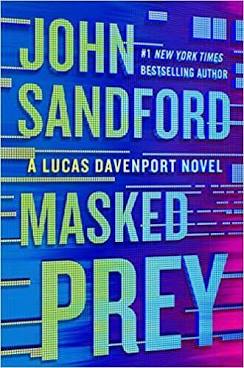
Masked Prey by John Sandford starts off with two teens sexting each other. It might not be the best way to start a book. It kind of makes the author, not the characters, come across as a pervert.
John Sanford is an old guy; at least he’s older than I am, and he probably shouldn’t be writing a scene with teenagers sexting each other. I’m not saying he shouldn’t be allowed to do it. I’m just saying it’s not a good idea. He probably could have made the characters a little older… just because.
I haven’t been a fan of John Sanford’s books for a while. I thought the old Prey series got tired in the late 1990s, but people keep buying his books, so he keeps writing them. I think Masked Prey is his 30th Prey book. I quit reading after Lettuce Prey because I couldn’t stomach a serial killer who was targeting religious vegetarians. Plus, all of Sandford’s characters talk like tough guys, even the women. I don’t mind tough talk in fictional characters, but somebody should talk like a normal person.
I have to warn you that this excerpt from Masked Prey might be seen as perverted. Hey, I can’t help it if Sanford chose to put this scene on the first page of his new book.
Despite the teen sexting, I feel compelled to post this excerpt to demonstrate really bad writing, and most of that has nothing to do with the sexting (my comments are in parenthesis):
Audrey Coil and Blake Winston had been sexting each other for weeks. Winston’s penis (at least his last name isn’t Coil), of which Coil had seen perhaps seven or eight iPhone views in a variety of penile moods (awkward phrase in a poorly-worded sentence) was not clearly different than the penises of a dozen other classmates that Coil had seen (Coil was a penis expert, I guess), circulated through the smartphones operated by girls in their final year at The Claridge School (another awkward phrase in an awkward sentence in a really awkward scene)- a school with a capital-T in “The,” so it wasn’t some Claridge School, (shouldn’t that comma be a semicolon or even a full colon?)it was The Claridge School of Reston, Virginia (how did editors let this sentence get through?).
And Coil suspected that images of her breasts wouldn’t exactly be breaking news among the selected males of The Claridge School’s senior class. She was correct in that (awkward phrase). Neither Coil nor Winston was a virgin, having dispensed with that handicap in the fifth form (awkward phrase), known in less snotty schools as eleventh grade. They hadn’t yet fully engaged with each other, but were edging toward it (by sexting… for weeks?)… though, not yet.
All of that was neither here nor there (a high school senior wouldn’t talk/think “neither here nor there””… that’s an old man getting lazy writing about a high school senior). Right now, Coil’s main preoccupation wasn’t with Winston’s junk (that term was more popular ten years ago), but with his totally erect (like…”totally” erect) Nikon Z6 camera.
This scene wouldn’t have been much better if a young author had written this, but Sandford’s age makes this a lot worse. I’d expect a young writer, probably a male, to think it’s funny using the name Coil for a female character staring at male appendage pictures. Reading old people writing about teens is like listening to kids use profanity for the first time; they know the words but not the context and the inflection is always wrong. Anyway, this scene feels off.
I normally would try to ignore a bestselling novel with such a stupid (and maybe perverted) beginning, but Masked Prey has been pretty successful. Even though a lot of authors are postponing releases of their books because of temporary store closures, Sandford went ahead with his, and it’s seemed to pay off. The reviews are mixed, but the sales good. It probably didn’t hurt that the word “mask” was in the title. I’m guessing there’s a 75% chance Sandford changed the title within the last two months to cash in on the current situation.
If you want to read an old guy write about high school seniors sexting, then Masked Prey might be the book for you. If not, at least you have 29 other Prey mystery novels to choose from.
*****
What do you think? Was this a well-written scene? Was this the best way to start off a best-seller? Am I a prude? Is it possible that I am a prude AND John Sandford is a pervert? Or are neither true?
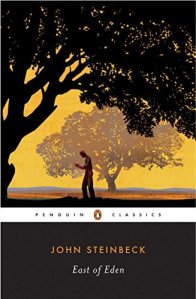
Even though I’ve read a lot of books, I’ve never read East of Eden by John Steinbeck. I’d always been aware of the book while growing up. In high school, we read Of Mice and Men by John Steinbeck, and it was okay, but it didn’t lead me to search for more John Steinbeck books. I knew of of an old movie called East of Eden with James Dean (and some other famous people too), but I never saw the movie. I’ve never seen a classic comic book of East of Eden either.
East of Eden has been laying around my house recently because my daughter had to read it last year in a high school English class. I hated admitting to her that I had never read it. Since I wasn’t familiar with East of Eden, I expected my daughter to hate it. Students hate every book they’re forced to read, except for maybe To Kill a Mockingbird. When I was in school, nobody hated To Kill a Mockingbird. At least nobody admitted that they hated it.
To my surprise, my daughter enthusiastically enjoyed East of Eden. I was stunned! She said it reminded her of a soap opera, only for smart people. Her one complaint was that the descriptions were too long, especially at the beginning.
After finally getting around to reading the first few pages of East of Eden, I already know I’m going to continue this book, despite a few long descriptions. Like my daughter, I’m not a fan of long descriptions. I like dialogue and story progression. Still, I thought descriptions like this on the first page were pretty good:
From both sides of the valley little streams slipped out of the hill canyons and fell into the bed of the Salinas River. In the winter of wet years the streams ran full-freshet, and they swelled the river until sometimes it raged and boiled, bank full, and then it was a destroyer. The river tore the edges of the farm lands and washed whole acres down; it toppled barns and houses into itself, to go floating and bobbing away. It trapped cows and pigs and sheep and drowned them in its muddy brown water and carried them to the sea.
And that wasn’t even the entire paragraph. It carried over to the next page, and let me tell you, it was awesome!
I do have one minor complaint (of course). Every once in a while, there’s an observation that doesn’t ring true to me. Here’s an example at the beginning of subchapter 2 of Chapter 2:
When a child first catches adults out- when it first walks into his grave little head that adults do not have divine intelligence, that their judgements are not always wise, their thinking true, their sentences just- his world falls into a panic desolation. The gods are fallen and all safety gone. And there is one sure thing about the fall of gods: they do not fall a little; they crash and shatter or sink deeply into green muck. It is a tedious job to build them up again; they never quite shine. And the child’s world is never quite whole again. It is an aching kind of growing.
This whole paragraph is what I call literary nonsense. It’s well-written and sounds profound, and maybe it’s true in some situations, but it’s not universal (and its written in a way to make it sound universal). For example, my worldview wasn’t shattered when I realized my dad was full of crap. I was relieved. As a kid, I was kind of intimidated by my dad, so I felt somewhat vindicated when I realized he was just as flawed, maybe even more flawed, maybe even way more flawed, than was (or am).
Yeah, Steinbeck’s observation was literary nonsense, but stuff like that doesn’t make me stop reading the book. I’m not going to proclaim:
“When a reader first catches a famous literary author out- when it first walks into his/her grave little head that literary authors do not have divine intelligence, that their judgements are not always wise, their thinking true, their sentences just- his/her world falls into a panic desolation.”
That’s a little strong. My world is not a panic desolation just because John Steinbeck makes an occasional nonsense observation. It’s just, “John Steinbeck is full of crap like everybody else.”
But I’ll still finish reading East of Eden. It’s like a soap opera for smart people.
*****
What do you think? Have you read East of Eden? Do you like long descriptions? Is your world a panic desolation? I really hope your world is not a panic desolation.
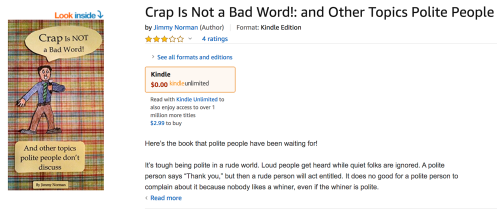 “Who are the motherf***ers that gave me a one-star rating?”
I admit, that was my first reaction when I saw the one-star reviews for my ebook. I’m not proud of my initial reaction. I’m not proud of the one-stars either.
I didn’t even know about the one-star ratings until a few days ago. I haven’t written any ebooks in a few years, so I’d stopped paying attention to the Amazon stuff. The last time I’d checked (I don’t remember when that was), I’d had a whopping two five-star reviews. That was pretty okay, I thought, everything considered.
I’m a lone wolf blogger/writer. I don’t tell anybody I know (except family members) about my ebooks or my blog because I don’t want them to feel like they have to read or buy my stuff. I know my friends would, but they might not really want to, and I don’t want to put them in that position. I’ve had a couple friends in the past that kept trying to sell stuff to me, and I know how that affects friendships, even if you try not to let it.
Don’t get me wrong; I know my ebooks have flaws. I did everything myself, so there are little mistakes that I didn’t catch. Some portions might feel like a rough draft (but not like a James Patterson rough draft). I made my own covers, so my ebooks look amateurish. I know all that. But one-star seems harsh. Five-stars is probably too generous. Three or four stars, I can understand. But one star? It seems a little extreme.
I would have been more upset if this had happened when my ebook came out, but it’s been over four years, so it doesn’t matter as much now. It probably doesn’t matter at all.
The thing is, I’ve never left a one star-rating for a book. I usually read the free sample online (or the first few pages in a bookstore/library), and if the book doesn’t appeal to me, I don’t buy it.
I’ve never even left a one-star review for James Patterson books. I make fun of James Patterson books on my blog, but I’ve never gone to his website or Amazon or any online review site. To me, it’s rude to one-star a book, even if you bought it because there’s nothing the author can do once a reader has made the purchase.
I can see giving a one-star to a hotel or a restaurant if the service was truly horrible and the management shrugs you off. I’ve had bad service before, but management is usually cooperative, so I don’t lash out online in that situation.
If I read a book sample and then buy the book and get mad at it, I can’t one-star the book. The book was at least good enough to get me to commit. If it drops off at the end, then the book deserves maybe three-stars, two-stars at the worst. What is the author going go do, rewrite it just to make me happy?
Even when I criticize published authors, I give examples of what I think about the writing. I write blog posts where I analyze the writing from bestselling novels, but I support my negative comments with examples of the author’s writing.
My one-star raters didn’t even leave helpful reviews. One didn’t leave any review at all. One just left a bizarre snarky comment with an image of a dictionary excerpt. Neither one-star were from verified purchases either, so I don’t know if they actually read the book.
Some authors might think that I shouldn’t respond to the reviews, that I’m being petty by having any negative reaction at all. Technically, I’m not responding to the reviews; I’m talking about the reviews. You can talk about something without responding to it. I’m not posting the reviews. I’m not going to Amazon to defend my book. My only true response to my one-star raters was:
“Who are the motherf***ers that gave me a one-star rating?”
*****
What do you think? Have you ever left a one-star review for a book? If you did, did you leave constructive comments? Under what circumstances would you one-star a book?

(image via wikimedia)
Even before the abbreviated horror struck, I liked my social distance. I’ve always despised people getting too close for stuff like the inappropriate hug or the power touching. In the old days when men shook hands, I always set out to crush the other guy, not out of dominance, but to discourage him from other shaking hands with me again. After all, you never knew where the other guy’s hands had been.
Back then, I ate Doritos and drank coffee at the same time to ward off others who would get too close; if they caught a whiff of my bad breath, that was their fault for getting too close. Social distancing has always been my thing.
Now I’ve lost my job because of the abbreviated horror. Fortunately, I’m a cheapskate bastard who saved money, so we have a few months before we need to start worrying. My wife used to gripe at me for being a cheapskate bastard (who do you think came up with the term “cheapskate bastard”?), but now she understands. Now she’s glad. Because of my cheapskate bastard qualities, she feels safe in a time of uncertainty.
Today I have to go to the grocery store. My wife doesn’t want me to go because of the abbreviated horror. We live in a major city, and people by the dozens have died. As of this writing, actually, a dozen people have died in a city of close to a million. But we are in hiding because soon we shall be like those other cities; at least that’s what the people say. My wife wants me to order the groceries online for curbside service, but whenever we order, the store claims they are out of certain items. I do not believe the store, and I want to see for myself.
I walk through the store entrance at 7:10, just minutes after the store has opened. As I scan the storefront, I see more masks than there had been days ago. Most of the masks are using squares and rectangles from shirts or scarves or bandanas to cover their mouths and noses, and their eyes appear tiny and filled with fear.
The masks cower from me, despite my social distancing. I can feel the fear emanating from them, almost begging the abbreviated horror to strike them. Fear makes them weak, I think, and I want to tell the masks that I do not want them near me either. Stay on your yellow X, and I’ll stay on mine.
I keep my mouth shut, though. I breathe through my nose. I constantly wipe the shopping cart handlebar. I don’t have to be a mask to be safe.
An elderly mask couple sees me from the opposite end of the canned goods aisle, and they slowly back away into the meats. I don’t mind elderly masks. They were supposed to have done their grocery shopping yesterday, but a lot of them have bad memories, so I don’t mind them at all. If I were elderly, I’d be a mask too.
As I reach for pasta sauce, a mask darts next to me to grab a similar jar. He’s a short guy with a professional rectangle strapped around his mouth and nose. He accidentally brushes against me and then jumps back to his cart.
“Back off, mask,” I say, even though it’s too late. That’s what I get for not paying attention to my surroundings. Usually I keep my head on a swivel to watch out for violators, but I had just gotten lazy.
“I Mzz Zzurrzzy,” the mask says.
“It’s alright,” I say, knowing that if the situation had been reversed, the mask would have freaked out.
I don’t trust the masks. I was always taught that face coverings are for people who are hiding something. Too many people were quick to agree to wear the squares and rectangles after the government “suggested” it. I wouldn’t mind so much if the masks kept to themselves, but they’re always the ones who violate the social distance. We skins might be a little arrogant, but we’re not hiding anything.
Despite the pervasive fear (not from me), the rest of the grocery shopping is uneventful. The paper product section is actually half-stocked, and I smile as I push my cart past because i don’t need anything from it. Even better, the store has the items that curbside pickup had said were unavailable. Never trust curbside.
I’m almost to the checkout line when an eyelash gets stuck in my eye. You know the feeling. It stings. I try to blink it out, but it burrows into my right eyeball like a fire ant. I double blink. I triple blink, but the lash is like a razors point, stabbing, stabbing, stabbing, the cursed stabbing. All I have to do is reach with my finger and pull the lid up. That’s all I have to do. but I don’t dare.
My blinking has caught the attention of the masks. They stare, wondering why I am making faces at them.
At this point I don’t care. The eyelash is ripping my eyeball apart. I can’t even see. If I continue walking, I’ll probably stumble and cause a disturbance, and some mask will stroke out from fear. I turn away from everybody so that I can pull my my eyelid up.
“EEEzzz tuchzzzing zzzizzz zzzaezzz!” a mask screams.
“No, I’m not,” I turn, my face still squinched.
Several masks pop out from the aisles. They’re pointing at me and yelling, “EEEzzz tuchzzzing zzzizzz zzzaezzz!”
A store manager slowly approaches, gray store shirt and matching gray mask. “ZZZut zzzaarrr zzzthayzzzz zzayzzzzthingzzzzz, zerrrzzzz?” he asks me. Last week he hadn’t been wearing a mask, so he doesn’t understand them yet. Anybody wearing a mask can speak mask, but not everybody wearing a mask understands them.
“They say I’m touching my face,” I say, still blinking. “I have a renegade eyelash.”
The manager apologizes and says that I can’t touch my face inside the store. By this time, tears are streaming down my cheeks, and I feel a tingling in my nose. I need to sniffle. I can’t allow a stream of mucus to dribble out of my nose. I can’t let the masks think I’m infected.
The manager hands me a gray square. Trusting that it’s clean, I rub my eye, and the stinging goes away. The shrieking of the masks gets even more shrill, however, and the manager looks at me disappointedly. I was supposed to have wrapped the square around my face.
I’m tempted to give the square back to the store manager, but it’s now dirty and I don’t want him to think I’m rude. He was just trying to help me out, I think. If I use the square but don’t wear it, I’ll look ungrateful. Reluctantly, I wrap the square around my face.
A skin walking ten feet behind me stage whispers, “Pussy!”
It’s just this time, I tell myself. At least the other masks have finally shut up.
As I stand in line and scan for social distance violators, I feel tense. I look into eyes of each mask who trudges by. The skins seem to silently mock me as they stroll past, and I turn my gaze to the floor. I finally understand the fear. It’s not the abbreviated horror I’m scared of. I just don’t want anybody I know seeing me wear this stupid square.
With all the crazy stuff going on right now ( I probably don’t have to list the crazy stuff), authors of new books are thinking about holding off on their release dates until things get back to normal.
This makes sense. Book stores are closed. Sales of new books have plummeted. If I were an author of a book with a release date this month, I’d think about moving it back too.
But from a book reader’s point-of-view, does anybody care?
I don’t mean to sound uncaring or snide or unsympathetic. I feel for authors in who have to decide when to publish their books. For some authors, their books might be their only opportunities to make enough money to live on. Most of these authors won’t make much long-term money from any individual book, so they need every sale they can get.
Then again, some authors might need money right now, even if it’s not as much as they could get with a delayed release. For some authors, this could be a really important, life-changing decision.
But then I looked at the Publisher’s Weekly page that lists books being delayed. I didn’t recognize (yet) many of the books being postponed. One exception was the author Eric Van Lustbader (I was in junior high when he published his first book) who is delaying the release of his latest novel The Nemesis Manifesto.
No offense to Eric Lustbader. He’s had a really good run, but are there any Eric Lustbader fans that scream “NOOOOOOooooo!” when they hear that his newest book is being postponed for three months?
Chicken Soup for the Soul books are also being delayed, but those will probably be okay, no matter when they’re released. If an author has a Chicken Soup for the Pandemic Stricken Soul, this actually might be the time to release it. Authors all over the world are probably writing their COVID-19 books now. By the time the books are released, everybody will be tired of the topic.
I don’t think there are many authors that readers crave. Maybe the public would clamor for a new Stephen King book and get mad if he delayed a new novel, but there are already a bunch of Stephen King books out there. James Patterson sells more copies of books than any other author today, but if he delayed a book (or stopped writing altogether), I don’t think anybody would care, except for his coauthors.
This slowdown of book sales isn’t necessarily bad for every writer. Unknown authors about to have a book published can move forward with hopes of getting their books on a bestseller list, even if the book doesn’t sell many copies. There isn’t an asterisk for books that are bestsellers due to COVID-19. And bragging rights are forever.
Lazy authors could blame this situation when postponing completion of their late expected novels. George R.R. Martin blew his opportunity to blame plummeting new book sales when he announced that he’s using the quarantine to force himself to finish Winds of Winter (which should have been finished five years ago). He also could have claimed to have contracted COVID-19 and then used that as an excuse to not write. All the fans who have been angry with him would suddenly become more sympathetic.
Authors of non-fiction, especially those who write about current events, are in a difficult spot. If a journalist (or a Washington insider) has written an outrage book about Donald Trump and has to wait a month, the current outrage in the current book will have been replaced by a new outrage in a month. Any international situation that authors have researched and written about is going to look completely different in three months. Nonfiction authors could write update chapters, but they will probably make the rest of the books outdated. Aaaarrrgh!
Authors might be desperate for book sales, but there is a last resort; they can publish their books on toilet paper. At least that way their books would sell.
*****
What do you think? Should authors delay the release of their latest books. Do any of these delays matter to you? Would you read a book that was written on toilet paper?


 Dysfunctional Literacy