
Neither of them look like us. (image via wikimedia)
I met my wife in a bookstore in late November of 1994. It was a Saturday night, I was in my late 20s, and I was supposed to meet a woman I had talked to a couple times on the phone.
This might sound weird, but before online dating, singles could meet through personal ads in the newspaper. Some of these personals were more like prostitution solicitations, so I stayed away from those, but the city I lived in had a weekly newspaper for professionals, and its personals were legitimate.
I had heard about these personals through a woman I had dated for a short time. After this particular woman found out I was a cheapskate, she ended things quickly, so I wrote an ad about myself, and a few women responded (I might write about them another time).
Since the women contacting me weren’t working out, I responded to an ad written by a woman who claimed to be “attractive.” I don’t remember exactly what else it said anymore, but the personal was very well-written, and I thought a self-proclaimed attractive woman who could write well couldn’t be too bad for a date.
Oddly enough, our phone call wasn’t the awkward part. Her name was Heather, and we had an easy, pleasant conversation, so we agreed to meet at a bookstore. Back in 1994, there were a lot of bookstores, so we decided on a local bookstore in the semi-artsy part of the city.
While I was waiting at the periodical stand by the bookstore entrance, I noticed an attractive dark-haired woman flipping through a magazine. She kind of met the description Heather had given me (dark-haired, attractive), but Heather had said she’d be wearing a black jacket, and this woman was wearing a red sweater.
I couldn’t just talk to this woman. If she wasn’t Heather and Heather walked in while I was talking to this other woman, it wouldn’t be a good start. So I kept my mouth shut and waited for a black jacket.
After a few minutes the woman in the red sweater wandered off, but I hung around the magazine stand for another fifteen minutes. I was pretty sure I was being stood up when the woman in the red sweater returned.
We made brief eye contact, and I smiled because I thought maybe she was Heather after all, but she looked down, and I thought, that’s not Heather, so I hightailed it out of the bookstore. The woman probably believed I was some creepy guy with a leer, I thought.
Not ready to return home, I wandered into the neighboring music shop (this was back when people still bought CDs in stores). I browsed through the new releases and found myself in the reggae/ska section. When I looked up, I saw the dark-haired woman gazing at me from across the bin. Then she turned and strolled to the R&B section. I thought maybe I should talk to her, but I had no idea what I’d say.
Since there were no new ska releases, I decided I’d at least buy a book and I returned to the bookstore. After a few minutes, I picked out the new Tom Clancy novel (I was in my 20s, okay?) and found myself standing in line next to the dark-haired woman, holding a Toni Morrison novel. I glanced at how she looked in her jeans, and of course, that’s when she noticed me.
I had to talk to her. This was the third time running into her. We were in a line. There was no escape in a line. It was talk or be shamed.
“I promise I’m not stalking you,” I said.
“You don’t look like the type who listens to ska,” she said.
I was wearing a plain brown sweater and nondescript jeans. “I used to dress like I listened to ska, back in college. You like ska?”
“No,” she said. “It’s okay.”
“I would say that you look like the type to read a Toni Morrison book,” I said, “but I don’t know what that would mean.”
She smiled and didn’t lecture me, so I took that as a good sign.
“You know what goes good with a book?” she said. “Ice cream.”
“In this weather?” I said, and then I mentally kicked myself. “I mean, I feel like ice cream too. Maybe I’ll see you there.”
“Or maybe we could just go together.”
At that point, I knew. Maybe I should have figured it out earlier, but a blind first meeting like this was high-stress.
“I could have sworn you said you’d be wearing a black jacket,” I said.
“I said red sweater.”
I didn’t want to argue with her about that right then. I was just glad that neither of us were getting stood up. We never did agree on what she had said over the phone, though. Neither of us had recorded the phone conversation, so we couldn’t go back for the proof.
When I found out later that she actually had a black jacket in her car, I figured that she’d had said black jacket, but I didn’t want to press the point. Maybe she had said black jacket on purpose and then worn the red sweater in case she wanted to bail out. If that were the case, a single woman couldn’t admit that to a single guy. Single women can’t reveal their little tricks; otherwise, the tricks wouldn’t work.
Plus, I don’t want to think my future wife started off the relationship by being dishonest. Either way, the story isn’t over. When it comes to my wife, this was just the first awkward moment in our relationship.

The Autobiography of Malcolm X as Told to Alex Haley is a great book. I liked it a lot. That’s the short version of my book review.
Plus, I finished it. If I finish reading a book, I consider it a very good book. In fact, I’ve finished The Autobiography of Malcolm X twice and have read portions of the book several times. That makes it twice as great as most books that I’ve finished reading.
I don’t finish reading many books anymore. I usually read a few pages and think, “This isn’t very good” or “I think I’ve read several books like this already.” Every once in a while I read a few pages and realize I’ve already read the same book before. At least I still recognize when I’m reading a book I’ve already read before.
With all the crazy stuff going on, it’s good to read a book about a time that was even crazier in a lot of ways. I occasionally need to remind myself that times have always been crazy. Craziness is nothing new.
Crazy times or not, The Autobiography of Malcolm X is a great book, so here is my spoiler-free (I think) review:
*****
The accompanying video has been temporarily removed.
Now that I think about it, the video kind of sucked. I think I’ll just permanently remove it.
But I still really like The Autobiography of Malcolm X as told to Alex Haley.

They’re wearing masks for the Spanish Flu (1918), but they’re not social distancing. Losers. (image via wikimedia)
I didn’t publish this blog post when I wrote it in early March, 2020. A week earlier I had written about how much I’d appreciate a quiet Coronavirus panic because everybody would leave me alone (It was called An Introvert’s Thoughts On The Coronavirus (and other international scares) .
A few days later a real panic happened, people started dying because of COVID-19 (maybe), and I figured then wasn’t the time for a second humorous COVID-19 post.
Maybe I was wrong. Maybe that would have been the perfect time to write a second humorous post about COVID-19.
*****
I MADE FUN OF THE CORONAVIRUS, AND THEN I GOT SICK
(originally almost published in early March , 2020)
I should have known this would happen.
Last week I wrote a blog post making fun of the possible Coronavirus panic. I wasn’t making fun of Coronavirus. I know it can harm people. I was making fun of the panic. There are a lot of things more deadly than Coronavirus out there, and nobody is panicking.
So when I felt cold symptoms hit me a few days ago, I kept my mouth shut. I didn’t want anybody saying “Coronavirus” to me. It’s not Coronavirus. Whenever somebody coughs or sneezes, a bunch of co-workers jokingly say “Coronavirus.” But they’re not joking. They’re secretly wondering, “Could he be the host that will infect us all?”
Just so you know, I don’t have Coronavirus. It’s a cold. I get these twice a year. I know how the symptoms of a cold affect me.
When I went to the local pharmacy to get a decongestant, the good kind, the one you have to sign for, the one you can make meth out of, the pharmacist gave me a list of free shots that she could give me. Free shots? Nowadays, I’m suspicious of anything that’s free.
What’s that conventional wisdom about consumerism? When you have to pay for something, you’re the customer; when you get something for free, you’re the product. I don’t want to be a pharmaceutical product by getting free shots. Who concocted this free vaccine. Bill Gates? The government? The same government run by that president everybody claims to hate? And I’m supposed to accept free vaccinations? I’d ask for a list of what’s in the vaccinations, but I wouldn’t understand any of it.
Anyway, I noticed that all the cleaning products had been cleaned out of the store/pharmacy. I guess everybody feels like cleaning houses when they’re Coronavirus panicking. I have a cold, and I don’t feel like doing anything. My wife probably wishes that I’d get Coronavirus panic too just so that I’d clean the house more. I do my share, but I’m not going to clean out a store shelf.
Hand sanitizer was gone too, but there was still plenty of soap. People are panicking enough to keep their hands clean, but they’re lazy about their methods. Hand sanitizer is for chumps. I believe in soap-and-water, and I’ll sing “Happy Birthday.” I might even sing it three times. Happy Birthday is a good song.
I mean it. “Happy Birthday” is musically more complicated than most stuff I hear on the radio today, and there’s no innuendo or double entendres in the lyrics. I know Marilyn Monroe almost ruined it on JFK’s birthday, but that’s what you get when you mix the perverts of Hollywood and the perverts of Washington D.C.
Toilet paper was also gone. I don’t want to know.
Even though hand sanitizer and toilet paper were bought out, there was plenty of cold medication, even the benign stuff that you don’t have to sign for. I don’t know if regular cold medication will help with Coronavirus, but I’d rather have it and not need it than need it and not have it. Maybe panickers have the same attitude about hand sanitizer, except I don’t want hand sanitizer. It feels greasy and unclean. I think it’s a trick.
Some conspiracy theorists claim that Coronavirus is a hoax to sell hand sanitizer. I don’t know because too many other businesses are taking a hit with the cancellation of travel and lack of major events. I don’t think Big Hand Sanitation has that kind of clout.
My family still plans to travel over Spring Break. We might even get cheaper rates because of the Coronavirus panic. I should be okay by then. I don’t want to still have this cold when I get on the airplane and then have to explain to everybody that it’s just a cold. It’s not Coronavirus!!
If I don’t write another blog post, however, then you’ll know that something bad happened, something that indicates that I should have panicked more seriously. I know that this just a cold, however. I’ve taken my decongestant, those meth-lite red pills and I’ve had a few cups of coffee, that meth-lite dark liquid, and I’m feeling a lot better. I know this is just a cold.
I really hope this is just a cold.
*****
UPDATE-
It was just a cold. We didn’t go anywhere for Spring Break. We haven’t gone anywhere for the summer either. The cheapskate in me is glad we saved the money. The introvert in me was glad not to have to talk to strangers.
What do you think? Should I have published this in early March? Should writers ever hold back In these situations?

(image via wikimedia)
I didn’t obsess over the ghost as much as some people might have. Don’t get me wrong; the ghost still ruined my night whenever it showed up. I felt weird with some strange old guy with a night cap staring at me while I was in bed.
Not being able to talk about made it worse. Even back then, I knew adults weren’t going to listen to a 5th grade kid who complained about a ghost. In order to talk about the ghost, I felt that I needed some proof. Before I could prove it to others, though, I needed to prove it to myself.
I decided to conduct a ghost experiment. This had nothing to do with science, which was good because science was my weak subject in school. Even though I liked science fiction and reading in general, I’ve struggled to retain anything I learned in any science class throughout my life.
My science experiments in class were always a disaster. I swear I could measure chemicals precisely and still cause an explosion. Some students were scared to be my lab partner. A few brave peers liked being my partner because something crazy always happened. I think there’s something chemically wrong with me.
Even today, I can’t boost a car battery without causing sparks. I’ve had experts watch me attach the booster cables properly, and the battery still sparks. Nobody can figure it out. Maybe the ghost knew about my baffling spark power and I just haven’t thought of that until now.
Anyway, I knew that my ghost experiment required something measurable, predictable, and repeatable. I probably couldn’t measure a ghost, but maybe I could predict it and repeat it.
The key was my hound dog, who always stayed in my room at night. She followed me everywhere, including to the bathroom in the middle of the night. Whenever the ghost showed up in my doorway, though, the hound dog would be gone.
“Where do you go?” I’d ask her the next morning. “Did that ghost scare you off?”
I’ve always talked to dogs like they’re rational humans. I’ve never used high-pitched voices for pet mumbo-jumbo. I just say stuff like, “It’s good to see you again, you fine beast.” Sometimes I sing to pets, though. I never sing to humans.
“Do you leave before the ghost gets here?” I’d ask. “Or do you run when the ghost shows up?”
“I really hope the ghost isn’t your former owner,” I said to her once. I didn’t like that idea, so I’ve never repeated it until now.
The problem was that all this ghost-to-dog activity would happen when I was asleep. Nowadays, I could set up a camera every night and watch what had happened, but back in the 1970s, that wasn’t possible for a family like mine to do. And even if it had been, I would have had to confess that I thought there was a ghost in our house.
Still, I had my plan. If I knew for sure that the ghost scared off my dog, then I could at least be confident that something supernatural natural was going on.
A lot happened over the next couple years while I conducted my ghost experiment. My older brother graduated high school and moved out of the house to go to college. My dad was trying to quit drinking, and work was keeping him from being home, but when he was home, his mood could still be unpredictable. My older sister was getting into trouble all the time, so there was constant arguing until she ran away. Then, it was kind of quiet most of the time, but we were worried about where she was, and that was tense. This was the 1970s; you heard stories about runaway girls getting murdered, but you didn’t have an internet to make it so obvious.
It wasn’t the ghost possessing my family to cause all the turmoil, I was certain. Things had been crazy before we’d moved into this house. If anything, my family’s loud conflicts had probably kept the ghost from hanging out with us more often.
After a couple years, I was pretty sure we had a a ghost. The ghost had shown up 14 times in two years, and my dog had disappeared each time. The only other time when my dog had left the room was once to barf in the hallway, and then she’d cowered in a corner because (we think) a previous owner had beaten her for stuff like that.
That was a good dog. Today I have a dog who pukes indiscriminately. And a cat who pukes exclusively on hard-to-clean fabrics and then looks at me defiantly afterward. That cat and my hound dog’s previous owner probably deserve each other.
At any rate, I had my evidence. It would never stand up in court. It might not even convince my family and friends. But it convinced me. By that time, I was in 7th grade, and I knew I had a ghost in my house. I knew it. Unfortunately, I still knew nobody would believe me.
To be continued!
Or you can start at the beginning with Childhood Ghost Story- The Prologue .
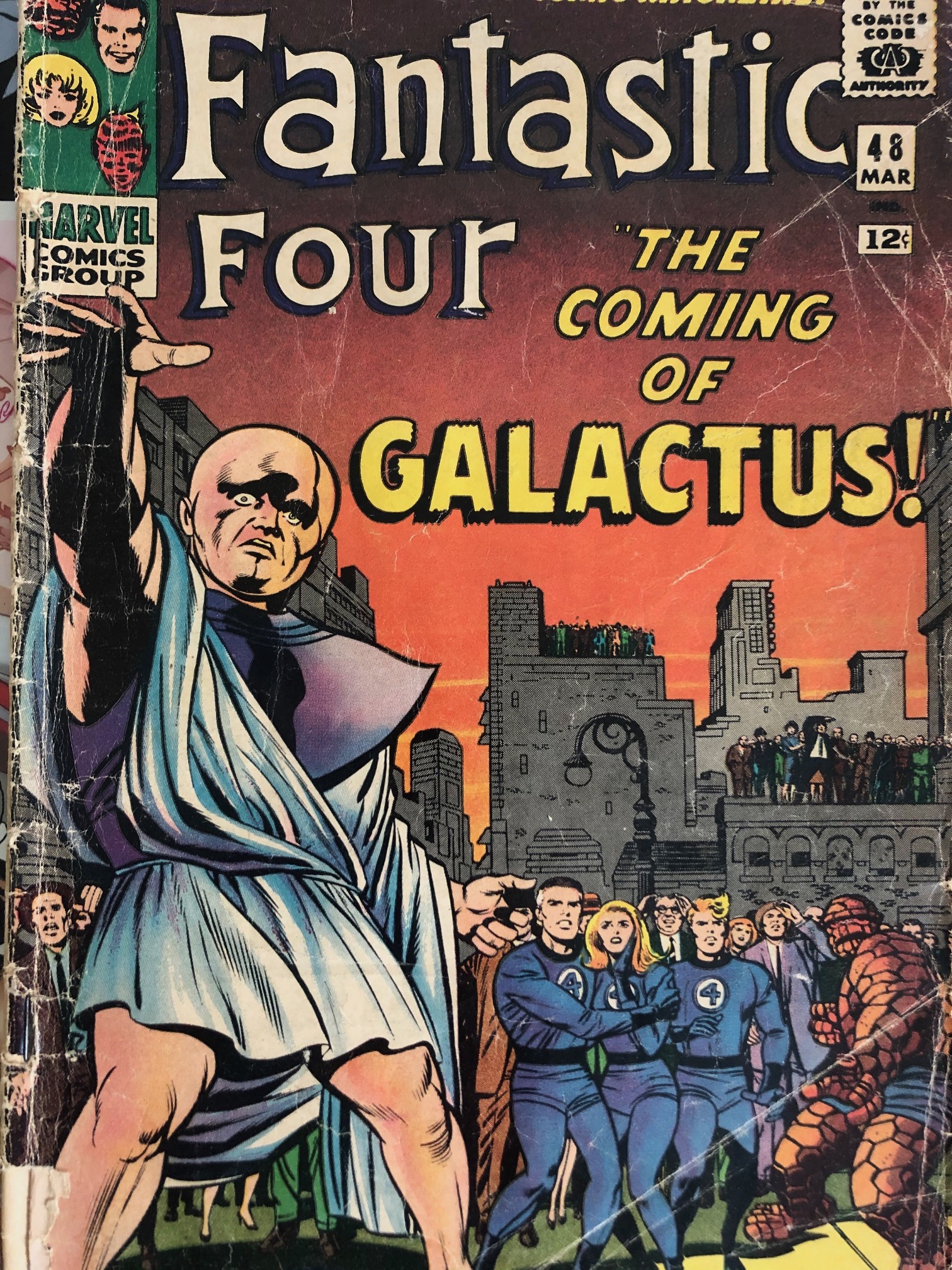
I should have learned my lesson from this comic book.
I learned a lot of stuff from comic books as a kid, I think. I picked up an above average vocabulary by reading a ton of cheesy dialogue written by Stan Lee. I learned the basic plots of a bunch of classic novels by reading Classics Illustrated comic books. I improved my writing skills by using some of the tricks I saw in comic book exposition and dialogue.
But the video below, (which was meant to merely be an old comic book review) inadvertently tells the story of a lesson I should have learned but didn’t.
Just so you know, I blame me, not the comic book, for me NOT learning the lesson.
Stay tuned until the end for the shock ending.

They’ll make you beg for the vaccine, but they won’t know the side-effects until you do.
Conspiracy theorists are all over COVID-19, and who can blame us? The government tells us to social distance and wear masks, but government officials constantly break their own rules. The media tell us COVID-19 is a life-or-death crisis, but they still frame their stories in immature ways to pit groups of people against each other.
Of course, conspiracy theorists are going to be obsessed over COVID-19. I don’t want to be a conspiracy theorist (I’m just a novice), but the government and media are forcing normal people like us into it.
Just to be clear, I’m not convinced about any of the following theories. I’m just interested in them. Each one COULD be true, but I need more information before I know for sure, and I might never know for sure.
With that said, here are the top ten COVID-19 conspiracy theories:
10. Massive Kill-off
COVID-19 is a government-controlled massive kill-off of old people and others considered to be drains on the financial system. States like New York and New Jersey put sick patients into closed environments like nursing homes and then blamed public behavior when COVID-19 cases skyrocketed in their states.
At the time, very few news outlets mentioned the government actions; it was too much fun blaming obnoxious New Yorkers.
9. Big City Bailouts
Most major U.S. cities have huge pension issues that are destroying long-term city budgets. By using COVID-19 to shut down everything, cities can wreck their economies, blame COVID-19, and demand federal bailouts that will be so bloated that they’ll cover for the pensions too.
Of course, the current politicians will probably steal that money as well.
8. Trade War with China
Some politicians are using the “China virus” to create more resentment against China and build American support for a tough trade war. Maybe the virus came from China. Or maybe it didn’t. Maybe the the spread was intentional. Or maybe it wasn’t. Either way, it’s a great reason to start a trade war.
7. Permanent Underclass
The U.S., like every other country, has a large underclass. Unlike most countries, if you follow a certain template, you can get out of that underclass and be productive. The COVID-19 lockdowns have destroyed that template, making it extremely difficult to get out of that underclass, which means more people are reliant upon government.
6. Election Interference
Because of COVID-19, politicians want to make sudden changes in the election process such as changing voting dates or enacting massive mail-in votes. No matter what changes are (or aren’t) made, somebody is going to distrust the results. And that might be the whole point.
5. Conflict Misdirection
Much like the election process arguments, the mask vs. non-mask is one of the dumbest public debates I’ve seen, both in topic and intensity, and it didn’t have to be that way. Government officials botched the explanation for the masks and then went full-authoritarian and tried to apply one-size-fits-all rules for everybody.
While people argue over this and other stupid stuff, government scammers get away with a bunch of other stuff we don’t notice
4. Invasive Testing Tolerance
The COVID-19 nostril test is an obnoxious invasive test. Is it necessary? I don’t know. Is it accurate? I don’t know. But a lot of people accept it, which means they’ll accept other invasive tests/procedures, like vaccines (that are rushed out before long-term side-effects can be known).
3. Pharmaceutical Profits
Pharmaceutical companies are rushing to find a vaccine for COVID-19, and whoever comes up with one (or convinces the government/public that it’s come up with one) will make a ton of money. Which politicians are the successful companies connected to? Which politician’s family-members work with those pharmaceutical companies? Which politicians get mad when asked these questions?
2. Herd Control
The lockdowns have made a lot of people really nervous and maybe even desperate. People without jobs have lost all their savings. Business owners have lost everything, even though they followed all the rules. Desperate people can be easily controlled… with a paycheck. And the government can then make that paycheck depend on certain terms and conditions. With that comes… government control.
1. Pre-test for Upcoming Schemes
The government lockdown is a test of the American people to see how much we’ll accept without pushback. Lockdowns. Prodding. Masks/goggles. Social distancing. Now the powers-that-be have a good idea of who will be compliant and who will resist. They know who will tattle on others. Now that they know all this, the government (or the powers-that-be) can move on to the next phase of their plan.
As far as conspiracy theories go, these are just the beginning. Are these theories valid? My parents grew up with the constant threat of polio, which killed people in higher rates and crippled people who survived. Government reaction to polio wasn’t this drastic or polarizing (from what they say).
Maybe the current government reaction has saved lives. Maybe, but the government is also acting very sneaky. And hiding stuff. And changing stories. And acting immature. And acting draconian. Put all of that together, and of course you’re going to have conspiracy theorists.
Oh yeah, just so you know, the moon landings were fake.
*****
What do you think? What is your favorite COVID-19 conspiracy theory? Which theories work together well? Which theories contradict each other?
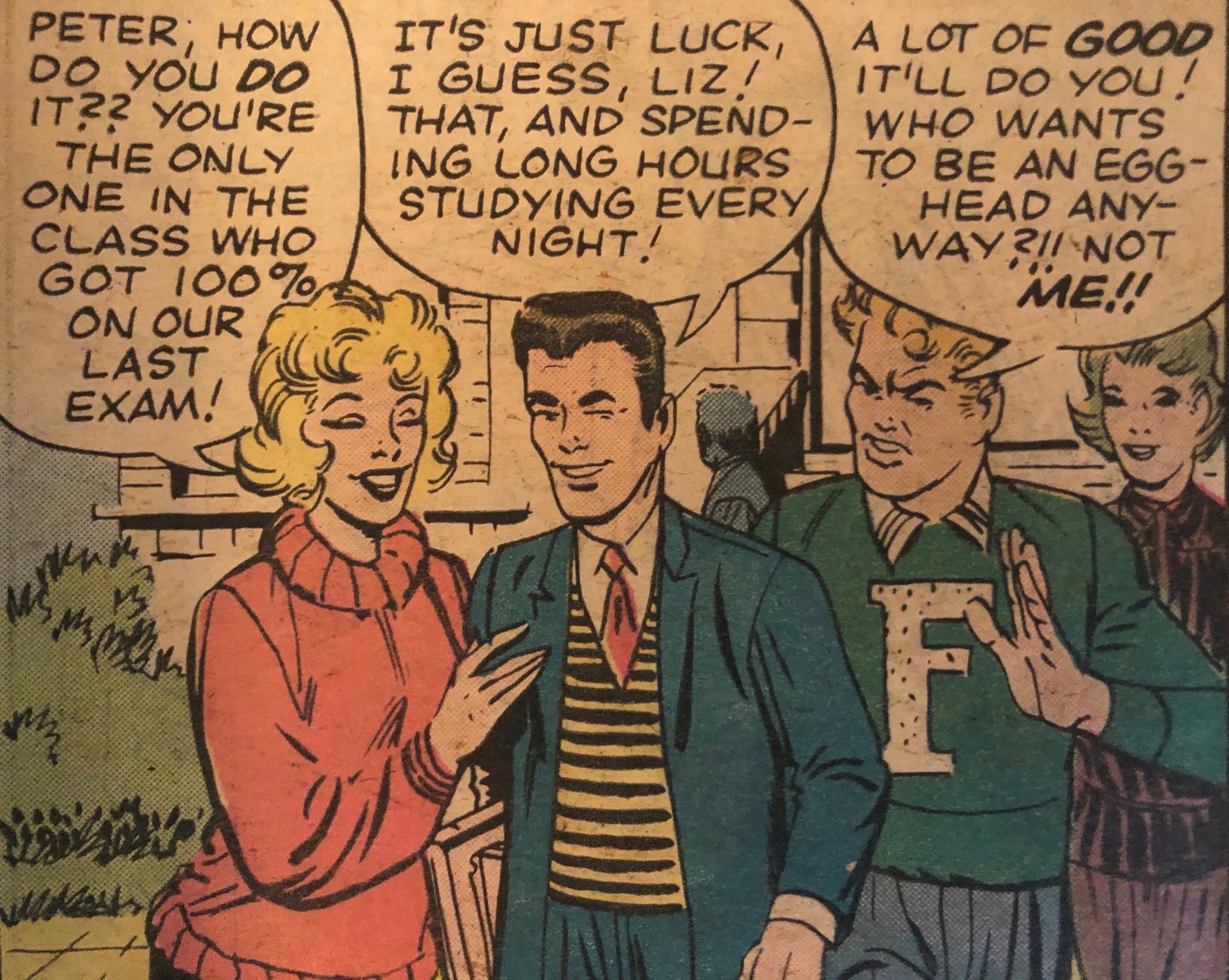
In real life, the unattainable girl might have talked to the nerdy guy, but she wouldn’t have gotten that close to him.
Tenth grade was probably when I hit peak nerdiness. My glasses were thick. Jeans my length cost too much, so my pants always looked like floods. No shirt size seemed to fit right either. I had noticeable acne, and the medication back in the early 1980s wasn’t effective (at least not for me).
Years later, I became better at hiding my nerdiness. I eventually swapped out my glasses for contact lenses. I cut my hair in a non-nerd style. I upgraded my wardrobe and found clothes that fit. My acne went away. But all of that took time, and none of that happened in tenth grade.
Despite being a nerdy guy, I didn’t get picked on in high school. I was always expecting it because of a few things that had happened in junior high that I hadn’t handled properly (those are stories for another time). In high school, there were a couple times where some guy said something to me and I said something back and the other guy didn’t do anything about it, so it all ended.
Because I was a nerd, though, I knew I had no chance with most of the girls in my high school. I could still talk around them. I didn’t freeze up too much or become anti-social, but I knew I had no chance.
Unfortunately, the 1980s had way too many movies where the nerdy guy got the previously unattainable girl. I knew those movies were wish fulfillment fantasies of nerdy writers (though I probably wasn’t aware of the term “wish fulfillment). I knew none of the nerds in my school had any chance with any of the unattainable girls. Understanding that relationship made things easier for me. I felt bad for guys who thought they had a chance.
My favorite unattainable girl was a cheerleader who sat next to me in Mr. Fay-gun’s English class. It was tough to concentrate in there because that cheerleader had really nice legs. The cheerleader’s name was Denise, and almost every day she either wore her cheer outfit or some shorts. Either way, her legs were right there.
I really wasn’t thinking anything that weird for a tenth grader. I simply admired her legs. They were nice.
The cheerleader stereotype in movies and TV is that they’re evil and manipulating, but the cheerleaders at our school were pleasant to everybody and maybe too sensitive. It really bugged them if we didn’t cheer loudly enough, but since most of us actually liked our cheerleaders, we’d fake enthusiasm at the pep rallies just so that they wouldn’t get upset. Maybe they were manipulating us after all.
Denise didn’t fit the cheerleader stereotype either. She was smart. Her boyfriend wasn’t an athlete (but he was a senior). She was nice most of the time. And she didn’t say ditzy stupid stuff. I was more likely to say stupid stuff than she was.
Every guy in school had a crush on Denise at some point in high school. I was lucky because I got mine over with. My delusional stage (where I thought I had a shot at her so I’d freeze whenever I had the chance to talk to her) lasted only a few days. When I realized she was unattainable, I calmed down around her and could speak freely. But I never got tired at looking at her legs.
Denise was the only person at school who called me James instead of Jimmy. She didn’t ask if I wanted be called James, and I never told her to stop or asked her why she did it. It was either really arrogant or incredibly cool of her.
She also stole material from me. Not pencils or papers or homework (or my heart). She stole my lines. Every once in a while, I would whisper something funny to her during class, and then she would repeat it more loudly to her friends who sat on the other side of her. Her friends would laugh which made me feel pretty good, but I don’t think I ever got credit for my work. Copyright infringement wasn’t an issue for me in tenth grade because at least I knew my material was pretty good. And maybe Denise’s delivery was better than mine.
The reason I mention Denise (other than that she had great legs) is because one day I wrote something in English class that was so awesome that even she couldn’t steal it from me.
And I promise that I’m getting to it.
*****
To be continued in Long Story: The Sick Teacher .
Or you can start at the beginning at Long Story: Teachers With Unfortunate Last Names .
The original version of this story appeared in Dysfunctional Literacy on November 25, 2012.

I borrowed this book, The Power of Bad (with a fairly long subtitle) by John Tierney and Roy F. Baumesiter, from the library a few months ago right before the city shut everything down. I didn’t know the city/country was going to shut everything down. I didn’t know a bunch of crazy stuff was about to happen when I checked this book out.
The short version of my book review is that I read the whole thing. I hardly ever read entire books anymore.
The slightly longer review is in my video below. I include a few sample sample pages and explain why I appreciate this book more than I do most other books.
Despite a few flaws, The Power of Bad (with a fairly long subtitle) is worth reading. It’s not bad. And here’s why.
(image via wikimedia)
Looking back, I probably should have told my parents about the old man ghost in our house. They might have believed me. My family went to church every Sunday, so we believed in certain aspects of an afterlife. Having a ghost, especially if you could show proof, could be seen as a sign that that there’s more to our lives than what we see. An atheist family might tell a kid to shut up about ghosts, but a religious family shouldn’t.
I didn’t connect my ghost sighting with spirituality back then. I had other things to think about. My dad had quit drinking but was still going through some really bad mood swings, and I didn’t want to piss him off by whining about a ghost and risk him thinking I was a sissy. My mom had to deal with my dad’s temper and bad moods, so I didn’t want to put that ghost stuff on her either.
Maybe I could have told my older brother and sister, but they had their own issues. If I were going to bring up the ghost, I wanted proof. But first, I had to convince myself.
Anyway, back to the story. The old man ghost had disappeared from my bedroom door at around 5:00 in the morning. Maybe he’d had sympathy for me because, I swear, I was about to pee in my bed, I’d been holding it so long. I had only an hour before I had to get up, so I went to the bathroom, came back, and saw that the hound dog had returned to her normal spot on my bed.
“Where did you go?” I whispered while I pet her. I really did ask her that question. She didn’t answer back. No dog has ever answered back, but I still talk to them.
“You could have helped me, you know,” I said, but I don’t know how she could have helped, besides barking or howling. That would have woken the entire family and ticked off my dad. And she couldn’t really bite a ghost. I wouldn’t want her to.
If not for my hound dog, I would have believed that the ghost had been my imagination. But my dog disappearing the same time as the ghost showing up? No way. That was too much of a coincidence.
That morning I kept my mouth shut. My mom yelled at me for getting up late. I kept dropping stuff and running into other family members in our small crowded house (with one bathroom). When I turned around sharply in the kitchen and plowed into my dad (he was a big guy with a belly), he yelled at me to get out of his way. And then he yelled at my older sister for something, and he forgot about me. I don’t think my older brother got yelled at. He was good as I normally was of staying out of the way.
School was fine. In fifth grade, I could be tired and still do okay at school. I’d think about the ghost a little bit and then get back to work, or think about the ghost a little bit and talk to my friends. But I didn’t mention the ghost to anybody.
The short version (since this is a blog serial) is that life with a ghost almost became a routine. The ghost would show up maybe once every few weeks, sometime between 2:00 or 3:00 in the morning, and then he’d hang until about 5:00. At some point (this was more than 40 years ago, so I don’t know how long it took), I came up with a few rules that made it easier to coexist (before I knew what the word coexist meant) with the ghost.
1. Don’t tell anybody about the ghost.
Talking about the ghost wasn’t going to help me. All my friends and family would think I was crazy or a sissy if I said there was a ghost. If I said there was a ghost, I would have to offer proof, and all I had was my hound dog who was never around when the ghost showed up. And I was pretty sure that the ghost wasn’t my hound dog playing a trick on me.
2. Don’t walk through the ghost.
I wasn’t scared of the ghost, but I was afraid to walk through the ghost. I didn’t know how the ghost would react, if the ghost would retaliate or possess me. I didn’t want to get possessed by an old man ghost. Besides, the ghost seemed content to stare at me, and he never left his spot by the door. And if I had to go to the bathroom really bad, I’d wait it out until 5:00.
3. Don’t talk to the ghost.
I had no interest in trying to communicate with the ghost. I didn’t care why he was there. I figured if he had something to say, he’d find a way to tell me. Maybe he was just there to tell me that ghosts were real, and that would be enough for me to figure the rest out.
I would talk to myself. I’d talk to my dog. But I wouldn’t talk to my ghost.
4. Don’t stare at the ghost.
Obsessing over the ghost wasn’t going to help. If I noticed him there, I’d close my eyes and at least try to rest. Facing him down didn’t do me any good. I didn’t think he could leave his spot. He could have approached me or attacked me at any time, and he hadn’t, so either he wasn’t interested or he couldn’t. As long as I didn’t violate his space, he wouldn’t violate mine.
Whatever it was, a ghost or a trick of the light, I figured out a way to live without going insane. I knew, however, that there was more to life than just coexisting with the ghost by myself. There was at least one more crucial step:
Could I prove that the ghost was real?
To be continued in Childhood Ghost Story: Proof of Supernatural!
In the meantime, you can start at the beginning at Childhood Ghost Story- The Prologue .

(image via wikimedia)
There’s no easy way to say this; I once dated a woman who wanted to watch men pee in the public bathroom.
To be fair, it wasn’t her life-long goal, and it wasn’t the first thing she’d ever said to me. It happened after we’d been going out for a while, and she was meeting a couple of my friends for the first time.
To set the stage, my girlfriend’s name was Danielle, and this particular date was at a college football game (I’d graduated a few years earlier) with my friend Kirk and his girlfriend Linda, who were also in their mid-20s. Even though Danielle had never attended college, she was wearing a university jacket and had big intellectual glasses to impress my professional friends.
I didn’t really care, but she wanted my friends to think she was smart. She had even brought a copy of Sense and Sensibility to use as a conversation starter.
Things had been going smoothly. The game was entertaining. At some point, Kirk and I had started complaining about the communal troughs in men’s rooms at the stadium. That’s when Danielle had blurted out:
“I’ve never seen a guy pee before!”
Luckily, nobody sitting around us in our section seemed to be listening. The other team was backed up on their own end zone, and the defense had almost scored a safety, so everybody around us was cheering and yelling so that the quarterback couldn’t call an audible. This made it tough for us to talk, but nobody could eavesdrop. I really didn’t want anybody to eavesdrop.
Danielle then turned to me. “Have you ever seen a woman pee?”
I rubbed my palm against my forehead. Danielle was really attractive and had an engaging personality (that combination made my friends wonder why she went out with me), but there was some crazy stuff going on in her life, and that had led to some erratic behavior. I could usually deal with weird stuff in private. It was the public craziness that I tried to avoid.
“I’ve heard you a couple times,” I said reluctantly. “I wasn’t trying to, I promise.”
Danielle placed her hand on my knee. “I know I can’t watch you pee because you get stage fright,” she said. “But I really want to see a bunch of guys pee into a tub. And we’ve already paid for our tickets.”
This was back in the 1990s, when some old stadiums had men’s rooms with the communal pee trough. If you don’t know what that is, it was just a long tub where guys who didn’t want to wait for an open stall would stand and relieve themselves shoulder-to-shoulder. Communal pee troughs were a really bad idea, but we still used them.
“Admission to a football game does not guarantee women entry into the men’s room,” I said. “Especially you.”
“I can look like a guy,” Danielle said.
Kirk (sitting to my right) stared, open mouthed. “I don’t think so.”
Danielle began tying her hair up. “Give me your cap,” she said to Kirk.
Kirk handed it over, looking to his girlfriend for permission, but Linda was staring at Danielle too. Danielle then replaced her thick glasses with my dark sunglasses, and put my windbreaker over her college jacket to give her a bulkier, less feminine look.
I glanced at Danielle’s jaw line and neck; both definitely belonged to a woman.
“Look down and hunch your shoulders,” I told her. That was her only hope. She put her hands into my jacket’s pockets, raised her shoulders, and put her head down. If nobody paid attention, maybe nobody would notice she wasn’t a man. But she’d probably need more help.
Then she turned to me and announced in a loud fake deep voice:
“I need to take a leak!”
I really didn’t want to take my girlfriend to a public men’s room, but now Danielle had committed. I had to back her play. It was my responsibility as a boyfriend.
“I do too,” I said, even though I got stage fright at communals.
“So do I,” Kirk said. I didn’t know if he was supporting me as a friend or if he just wanted to see what was about to happen.
“I’ve never seen three men go to the bathroom together,” Linda said. “What are you going to talk about in there?”
Before anybody could answer, I turned to Danielle.
“You gonna read that in the men’s room?” I asked, pointing to my copy of Sense and Sensibility.
Danielle cleared her throat and continued with her fake voice, “This piece of shit?” Then she gave the book to Linda.
“Men are allowed to read Jane Austen books,” Linda said.
“Not when I’m taking a leak!”
“You probably shouldn’t call any Jane Austen book a piece of shit,” I muttered to Danielle as we got up.
“I took drama in high school,” Danielle said. She attempted a male strut past me in our row. “I’m staying in character.”
As Danielle squeezed past Kirk, he checked out her tight jeans, even though she was now a man.
“I’ll walk close behind her,” I said. “You go in front.” Once Kirk was in place, it was like a Danielle sandwich, but not in a vulgar way. And that’s how we walked to the men’s room, Kirk in front, Danielle close behind and looking down, and me in the rear (again, not in a vulgar way).
As we entered the bathroom and got in line for the community urinal, we got hit by an intense fecal smell, but Danielle didn’t say anything. All we could see were the backs of a line of guys hunching with their hands in front of them. Men in front of us filled in the gaps as they finished relieving themselves. Kirk whistled as he strolled to a gap but stopped when he got a couple dirty looks from other guys. That was a good play on Kirk’s part, distracting other men who might notice Danielle.
A few seconds later, another hole in the line opened up, and Danielle took her place, two spaces from the left end of the trough line. She hunched her shoulders and pretended to play with her zipper. I really hoped she didn’t stay there long. I really hoped she would take a quick peek, glance both directions, get the visual she wanted (whatever it was), and leave before anybody noticed. Most guys are aware of the presence of others urinating around them, but they don’t want to make eye contact or look like they’re trying to make eye contact.
Danielle was lingering. A hole opened up a couple spaces to her right. I hesitated. A guy behind me cleared his throat. I knew I wasn’t going to do anything functional right then, but I had to go through the motions, so I took the spot. I thought about fake sneezing and leaving the line to wash my hands. But I didn’t have to.
Danielle did the unexpected. She screamed.
It was quick, and it was high-pitched. Even worse, it obviously came from a woman. Every guy in the men’s room knew there was a woman in the communal pee trough.
*****
To be continued (in its original format) in my blog serial… The Literary Girlfriend: Interesting.
The original version of this story appeared on Dysfunctional Literacy as “The Literary Girlfriend: Embarrassing Public Behavior” on September 3, 2013.


 Dysfunctional Literacy