
I bought The Sword of Shannara when I was in 7th grade and knew right away it was a rip-off of The Lord of the Rings. That doesn’t mean it was bad.
The Sword of Shannara was actually okay for a rip-off. At the time, it was a self-contained novel. The author wrapped everything up in one book. At least, I thought he did.
Somewhere along the way, the author wrote a bunch more Sword of Shannara books, and somebody who was not me (or I) bought them. Over the next 43 years, the author Terry Brooks made a bunch of money from his Tolkien rip-offs.
The writer side of me is interested in what Terry Brooks has to say about being an author. The reader part of me thinks… RIP OFF!!
****
I wrote Sword (of Shannara) with no expectations. It was a first novel, so I didn’t know if I could get published, I didn’t know if anyone would read it, I didn’t know anything. So when it was successful, this led automatically to thinking about what I could do next, because there at least was a future here. I wrote a sequel, and then I decided to make it a trilogy, because even then, trilogies were in, and then I wanted to wrap the whole thing up.
Read more at… As the Shannara Saga Ends, Terry Brooks Looks Back…and Forward.
*****
On a side note, George R.R. Martin might look at Terry Brooks and think “43 years? That gives me 20 more years to finish Game of Thrones.”
*****
What do you think? Are rip-offs inherently bad? What is your favorite rip-off?
*****
The 1990s… a decade when kids still played outside without supervision and an average guy could approach an attractive woman without being called a creep on the internet.

The Sunset Rises: A 1990s Romantic Comedy is now available on Amazon and from the trunk of my car at various local bookstores… until parking lot security kicks me out. Buy it now while supplies last!


Years ago, a friend of mine was reading It by Stephen King while I was reading The Novel by James Michener.
My friend had never seen (or heard of) The Novel before, so he was curious.
“What are you reading?” my friend asked.
“The Novel,” I said.
“Is it any good?” he asked.
“I don’t know. I haven’t read It yet.”
“What do you think of it so far?”
“I just told you. I’ve never even started It.”
“You just told me you’ve been reading It,” he said, perplexed.
“No, I’m reading The Novel,” I said.
“That’s what I meant, The Novel,” he said. “Is it any good?”
“I don’t know. I was going to ask you if It was any good.”
My friend stopped talking to me about books. Now we just talk about the easy stuff, like religion and politics.

I wasn’t looking for something to criticize while reading The Underground Railroad by Colson Whitehead, I promise. I’m not a Grammar Nazi. This just caught my attention, and if I can’t mention this on my blog, then where can I mention it?
The protagonist Cora and another slave Caesar had just eluded some slave catchers and found refuge with an abolitionist. Unfortunately, their friend Lovey had been recaptured. In this scene, the abolitionist explained the rumors of what had happened since they escaped.
*****
Cora and Caesar drank greedily from the pitcher Fletcher offered them. The host was unhappy to see the extra passenger, but so many things had gone wrong from the very start.
The shopkeeper caught them up. First, Lover’s mother, Jeer, noticed her daughter’s absence and left their cabin to make a quiet search. The boys liked Lovey, and Lovey liked the boys. One of the bosses stopped Jeer and got the story from her.
Cora and Caesar looked at each other. Their six-hour lead had been a fantasy. the patrollers had been deep in the hunt the whole time.
By midmorning, Fletcher said, every spare hand in the county and from all around enlisted in the search. Terrence’s reward was unprecedented. Advertisements were posted at every public place. The worst sort of scoundrels took up the chase (p.62 in my copy).
*****
Maybe I’m wrong, but when I read that, I thought that the exposition needed past perfect tense instead of simple past tense. Maybe, just maybe, the second paragraph should have said:
The shopkeeper caught them up. First, Lover’s mother, Jeer, had noticed her daughter’s absence and left their cabin to make a quiet search. The boys liked Lovey, and Lovey liked the boys. One of the bosses had stopped Jeer and gotten the story from her.
And then the fourth paragraph in the excerpt could have said:
By midmorning, Fletcher said, every spare hand in the county and from all around had enlisted in the search. Terrence’s reward was unprecedented. Advertisements had been posted at every public place. The worst sort of scoundrels had taken up the chase.
It’s not that big a deal either way. Or maybe it is a big deal. This book won a Pulitzer Prize for Fiction. It’s not exactly a flimsy paperback bestseller.
What do you think? Should past perfect have been used in that situation? Does it even matter? Is this something that only a Grammar Nazi would care about?
I promise, I’m not a Grammar Nazi!

Short stories should be more popular than they are. They’re short, so they don’t take long to read. The writing tends to be more efficient than the writing in novels, so readers don’t feel like they’ve wasted their time with filler.
When I feel like reading but I don’t have a lot of time, I’ll sometimes grab an O. Henry short story. Critics today might call his stories too hokey. His characters spoke in unrealistically long and complicated sentences. The stories make references to stuff that doesn’t exist anymore.
O. Henry’s characters weren’t all that bright, but they used big words and spoke in long sentences. My question is… is this actually good dialogue? Here’s an excerpt from the short story “The Ransom of Mack.”
*****
One evening Mack spoke up and asked me if I was much apprised in the habits and policies of women folks.
“Why, yes,” says I, in a tone of voice; “I know ’em from Alfred to Omaha. The feminine nature and similitude,” says I, “is as plain to my sight as the Rocky Mountains is to a blue-eyed burro. I’m onto all their little sidesteps and punctual discrepancies.”
“I tell you, Andy,” says Mack with a kind of sigh. “I never had the least amount of intersection with their predispositions. Maybe I might have had a proneness in respect to their vicinity, but I never took the time. I made my own living since I was fourteen; and I never seemed to get my ratiocinations equipped with sentiments usually depicted toward the sect. I sometimes wish I had,” says old Mack.
“They’re an adverse study,” says I, “and adapted to points of view. Although they vary in rationale, I have found ’em quite often obviously differing from each other in divergencies of contrast.”
“It seems to me,” goes on Mack, “that a man had better take ’em in and secure his inspirations of the sect when he’s young and so preordained. I let my chance go by; and I guess I’m too old now to go hopping into the curriculum.”
*****
The dialogue remains like this throughout the rest of the story. In fact, almost all of O. Henry’s characters spoke like this in almost every story that he wrote (that I’ve read).
I mean, I kind of like this dialogue, but reading too much of it at one time can give me a headache.
But enough about me! What do you think? Do you like O. Henry’s style of dialogue? Would too much of it at one time get old? Most importantly, are the men’s observations about women accurate?
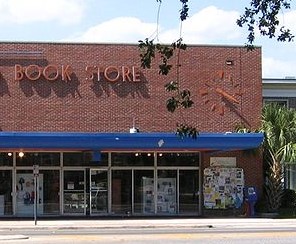
A few years ago I sold most of my books. At the time, it made sense. They were taking up too much space, and I wasn’t going to read most of them again. I was enjoying my main branch library and was reading (sampling) more books than I could ever purchase. I could even read/sample books on a bunch of different electronic devices.
Now all of the libraries in my area are only doing curbside. Curbside is great for grocery stores or food pickups, but it sucks for books.
Browsing for books is just as much fun as reading the books. When it comes to curbside, I can browse the libraries online, but I’m trying to cut down on screen usage. Too much of my life is spent staring at screens. My left eye has started to twitch when I stare at the screens for too long.
I don’t want my eyes to keep twitching. It’s a weird feeling, and it can’t be good for me. I’m no optometrist, but I’m pretty sure twitchy eyes are bad.
My eye doesn’t twitch when I read a book. So now I’m back to the book stores again. I guess it’s okay to spend a little money on books in order to get rid of an eye twitch. It’s a fair trade-off.
Unfortunately, I’ve purchased a couple books that I haven’t liked all that much. That’s the problem with buying books. Fortunately, there’s a yard library box in the next neighborhood, so I might exchange books there. Somebody in the area will like the books I’ve recently purchased but don’t like. Maybe the yard box will have some books that I’m interested in too.
I also want more books just in case the grid goes down. For a long time, I believed the grid would never really go down because there’s too much money involved. Now I believe that whoever controls the grid is more interested in power than money. The grid controller could shut everything down just to exert power. If that happens, I want real copies of my favorite books.
Maybe the grid will never go down. Maybe the libraries will open up again. I don’t know. But no matter what happens, I want my books. And I want to read without twitchy eyes.
*****
Enough about me! What do you think? How have your book reading or book buying habits changed in the last year? Do your eyes get twitchy when you stare at a screen too long?

It’s easy to mock The Atlantic for its really long articles, but it’s even easier when The Atlantic hires a known plagiarist and then seems shocked by the results.
What was the shocking part?
The plagiarist didn’t plagiarize!
Instead, the plagiarist made stuff up.
The short version is that The Atlantic hired a writer who had been caught plagiarizing a few years ago. I’m not bringing this story up to bash the magazine or even to bash the writer. It just demonstrates the unethical tactics writers sometimes use to get themselves published.
The long version is below.
*****
Editor’s Note: After The Atlantic published this article, new information emerged that raised serious concerns about its accuracy, and about the credibility of the author, Ruth Shalit Barrett.
We have decided to retract this article. We cannot attest to the trustworthiness and credibility of the author, and therefore we cannot attest to the veracity of the article.
We draw a distinction between retraction and removal. We believe that scrubbing the article from the internet would not meet our standards for transparency, and we believe it is important to preserve access to the article for the historical record. We have decided to take down the online version but to make available a PDF of the article as it appears in our November 2020 issue.
Read more here at Niche Sports Are No Longer an Ivy League Admissions Plan.
*****
Again, I’m not trying to bash anybody here, but this situation brings up interesting questions. Should The Atlantic have hired a known plagiarist? Should The Atlantic have hidden the plagiarist’s name in the byline? Should The Atlantic have done a better job checking up on the plagiarist’s work?
Should I even refer to the plagiarist as “the plagiarist?
*****
Enough with the questions! What do you think? What is worse, making up details in journalism or plagiarizing? How far would you be willing to go to get your writing published?
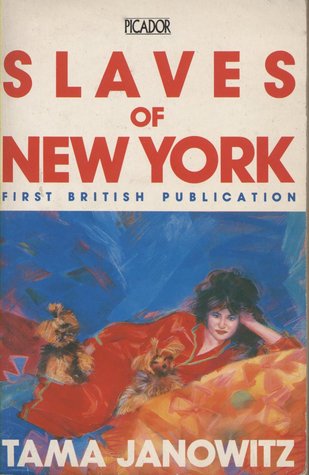
Back in the 1980s, Tama Janowicz was a (kind of) famous author in a group of young New York writers called the Literary Brat Pack. If you’re not aware of the 1980s, the Brat Pack was a group of actors/actresses who starred in a bunch of lightweight Hollywood comedies and dramas. They were nice looking and young.
The Literary Brat Pack were relatively young and nice looking… for writers.
Tama Janowicz had just published a book of short stories called Slaves of New York, and professors and students in my writing and literature classes talked about how great it was. It didn’t seem to be in my genre, but I wanted to see what was so great about it, so I began reading the first story, and this is what I saw:
*****
Modern Saint #271
After I became a prostitute, I had to deal with penises of every imaginable shape and size.
*****
What!? This acclaimed literary author was writing about dicks? It wasn’t just the first sentence either. The first couple paragraphs were about dicks. That kind of ticked me off. The esteemed Tama Janowicz had to resort to writing about dicks on the first page of her literary masterpiece.
This was my first moment of disillusionment with the literary world. What was I going to do if I wanted to become a well-known literary figure? Write about puss…? Never mind!
I went to another story just to see if it was any good. It was okay but nothing special. There were a couple student peers in my fiction writing class that had just as much talent but would never be successful like her.
At the time I wondered how a writer like her could become so acclaimed. Back then, it was really tough to research this stuff, and frankly, I didn’t care enough to do it. I just wondered for a moment and moved on.
Now I’ve had the chance to read about Tama Janowicz’s background. Her mom was a literature professor. She grew up in New York City. She hung out with Andy Warhol.
How would Tama Janawicz NOT have been successful it in the New York publishing scene? If you want to be a successful author, have a literature professor parent, grow up with New York connections, and (if you’re female) write about dicks on your first page. Also, write about drugs and depravity. Lots of depravity.
I might not be talented enough to become a successful literary writer, but it’s good to understand the formula.
*****
Enough about me! What do you think? Should a famous author resort to writing about dicks on the first page? What’s a bigger sign of desperation, putting profanity in a book title or writing about dicks in the first paragraph?

When the movie version of The Natural came out in the 1980s, I thought Robert Redford was miscast, even though I hadn’t read the book. Back then, I probably didn’t even know The Natural was a book.
At some point I found out that The Natural wasn’t just any book. It had been a highly acclaimed book. It had even received a Pulitzer Prize for Fiction in 1952.
In the 1980s, Robert Redford was considered an aging stud, but he was still a stud. The Roy Hobbs character should have been played by an actor who wasn’t such a stud. The book doesn’t describe the younger Roy Hobbs much, except as “white faced, long-boned boy” and that second part doesn’t quite fit Robert Redford. I didn’t need that description, though, to know that Roy Hobbs shouldn’t have looked like a stud.
Roy Hobbs (in the book) has lots of self-doubt, and Robert Redford never looks like he lacks confidence. Even when his characters state that they lack confidence, they seem self-assured. That’s the movie producer’s/director’s fault, not Robert Redford’s.
And it’s not the book’s fault either. I usually don’t blame books for the faults of movies (unless I’m in a bad mood and want to pile on an author whom I dislike).
The Natural by Bernard Malamud (I guess I should mention the author’s name) is one of those books where readers will know within a few pages whether or not they’ll like it. It definitely reads like literary fiction from the 1950s. There’s a lot of overwriting(?) in older literature that feels awkward by today’s standards, and sometimes it seems like authors tried too hard to be wordy. Here’s an example from page 6 (in my paperback copy):
*****
After a troublesome shave in which he twice drew blood he used one thin towel to dry his hands, face, and neck, clean his razor and wipe up the wet of his toothbrush so as not to have to ask for another and this way keep the bill down.
*****
I’m not going to rewrite this sentence in a way that I like better. This was the style that 1950s literary fiction was expected to be written in, and I’m not a fan of it.
All that means is that I have no chance of winning a Pulitzer Prize for Fiction in the 1950s. And I might not finish reading this book.
*****
Enough about me! What do you think? Was Robert Redford miscast in The Natural? What other famous actors/actresses have been miscast in movies based on famous novels? Do you like/appreciate the kind of sentence that I excerpted?
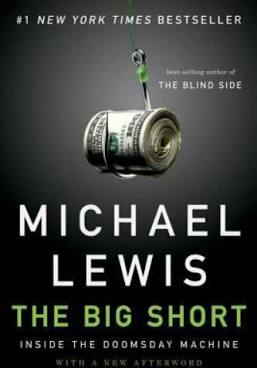
I admit I didn’t understand everything in The Big Short. This includes both the book by Michael Lewis and the movie. A lot of people pretend to understand, but I’m pretty sure they don’t.
Even though Michael Lewis is a good enough writer to make names and numbers interesting, I can’t always follow all the names and numbers when there are a lot of them. The movie had an advantage because the producers hired a bunch of attractive actors/actresses, wrote them some witty lines, and added music and graphics.
The audience reaction to a book/movie like The Big Short is often something like “How could they NOT see what was coming?”
According to the article linked below, something similar might (or might not) be happening again, and if it does happen again, most people won’t see it until it’s too late. But it will probably make for another cool book and another cool movie, and the audiences can again wonder how (statistically) nobody saw this coming.
*****
After months of living with the coronavirus pandemic, American citizens are well aware of the toll it has taken on the economy: broken supply chains, record unemployment, failing small businesses. All of these factors are serious and could mire the United States in a deep, prolonged recession. But there’s another threat to the economy, too. It lurks on the balance sheets of the big banks, and it could be cataclysmic. Imagine if, in addition to all the uncertainty surrounding the pandemic, you woke up one morning to find that the financial sector had collapsed.
You may think that such a crisis is unlikely, with memories of the 2008 crash still so fresh. But banks learned few lessons from that calamity, and new laws intended to keep them from taking on too much risk have failed to do so. As a result, we could be on the precipice of another crash, one different from 2008 less in kind than in degree. This one could be worse.
Read more here at Will the Banks Collapse?
*****
What do you think? Can you follow all the numbers in stuff like The Big Short or the linked article from The Atlantic? If so, does an article like the one linked above pose legitimate concerns, or does it simply promote baseless fear? When does expressing legitimate concern turn into fear mongering?

When struggling writers need advice about writing, they often turn to the book On Writing by Stephen King. That makes sense. Stephen King is one of the most successful American authors of the last 50 years, and every aspiring writer has heard of Stephen King’s most famous quotes:
“…the road to Hell is paved with adverbs…”
“The scariest moment is just before you start.”
“Kill your darlings.”
A lot of Stephen King’s writing quotes come from On Writing. But here’s a revealing quote from On Writing that I never see mentioned:
*****
I used to tell interviewers that I wrote every day except for Christmas, the Fourth of July, and my birthday. That was a lie. I told them that because if you agree to an interview you have to say something, and it plays better if it’s something at least half-clever (p.153)
*****
“Half-clever” is okay, but I prefer something truthful. Even though I’m not a fan of outright lying, King’s justification is more interesting than his admission.
If Stephen King was concerned about saying something “half-clever” in an interview, what would he do when he’s writing an entire advice book about writing?
Now I’m wondering how much of his On Writing book is bogus. After all, he had to write something.
Years ago, Stephen King used to do book reviews for a weekly entertainment magazine, and I was pretty sure that he hadn’t read the books he was reviewing. I’m not accusing him of writing fake reviews. I just wondered because I’d read some of the books he reviewed and it seemed like we had read two completely different books.
But if you write reviews for a weekly entertainment magazine, you have to write something.
I guess that’s the best advice you can give to a writer. You have to write something, and it plays better if it’s something at least half-clever.
*****
Enough about me. What do you think? Does this admission to lying mean that maybe Stephen King has lied about other things? Was Stephen King’s lie at least “half clever”? What do you think about Stephen King’s book On Writing?


 Dysfunctional Literacy