
Maybe journalists aren’t really writers anymore, but the journalist involved in this story DOES work for The New Yorker. Or maybe… he DID work for The New Yorker.
*****
A top US legal analyst has been suspended by New Yorker magazine after he exposed himself on a Zoom call.
Jeffrey Toobin, 60, also a prominent CNN commentator, has been in demand as the US election campaign intensifies.
The incident, first reported by Vice News, happened during an election simulation involving the New Yorker and WNYC radio last week.
Read more here (if you’re not already too disgusted) at New Yorker’s Jeffrey Toobin exposes himself in Zoom call.
*****
I know a lot of internet commenters are making fun of this guy, but I feel for him a little bit. He’s probably really addicted to pornography, and people think porn is funny (in a gross way). I’ve made fun of pornography in the past. I even wrote Best Porn Jokes Ever!
But porn is actually disgusting. When I was younger, I got tricked into believing it is a benign vice, and I allowed myself to believe it. Then I realized that a bunch of the women in porn die really young and have really bad problems.
Now I know that watching porn makes men weak and creates relationship problems which then leads to broken families (or no families), which leads to more vulnerable women who are desperate enough to do porn.
On a lighter side, this type of behavior gives writers a bad name, especially when we need a quiet, dark, secure place with a computer/laptop. I do some of my best writing at night after everybody else in my family has gone to sleep. Sometimes my wife jokes that I’m not really writing. She has even accused me of “not writing” instead of writing.
I’m really writing. I can prove it. I keep the door open when I’m writing. If the door is closed, it’s unlocked. And I don’t look at porn anymore, so I’m safe during conference calls.
As far as the journalist for The New Yorker goes, he’ll never be invited to another Zoom call, and that’s not such a bad thing. Maybe I shouldn’t feel for him after all. Ugh. Zoom calls.
*****
Enough about me! What do you think? If this guy worked for you, would you fire him? Even more important, should men be pressured to stop watching porn?
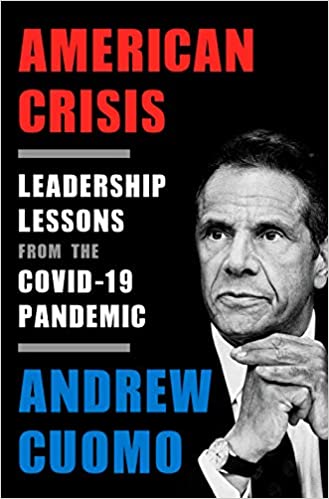
I don’t know who to root for in this situation. I’m not a fan of protesters or politicians who write books.
*****
A silver casket was wheeled to the front of a Brooklyn nursing home Sunday — and 6,500 copies of the cover of Gov. Andrew Cuomo’s new book were dumped into it in protest of his COVID-19 policies.
Read more here at Casket outside Brooklyn nursing home filled with 6,500 covers of Cuomo’s book .
*****
This is a tough one. I’m not a fan of protesters (even when I agree with them on the issues) because they tend to get really loud and they block people from going to where they want or need to go. As I’ve said many times, social injustice is bad, but I need to get to work.
On the other hand, I don’t like politicians who write books while they’re in office. It seems unethical, and it’s probably a form of (maybe) legal money laundering.
I have to admit, putting book covers in a casket is creative, if also morbid. If I were an author and saw 6500 protesters with my book, I’d think, “Yes! My book just sold 6500 copies!”
But then when I realized that the protesters had only my book covers, I’d think, “Aw, man, those protesters just ripped me off!”
If you’re going to rip anybody off, though, rip off a politician.
*****
Enough about me! What do you think? Which group of people would you usually root for, the protesters or the politicians? Should politicians be allowed to publish books while they’re in office?
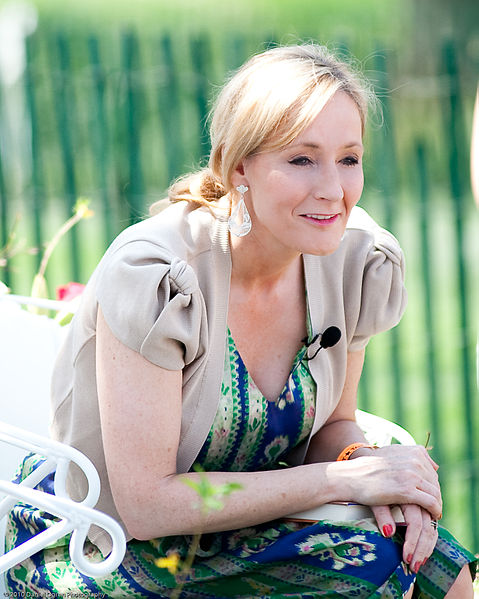
Is there anything lazier for an author to do than sign an open letter?
It all started because of this:
****
J.K. Rowling’s views on social identity continue to ignite controversy on both sides of the Atlantic Ocean. After the September release of her most recent novel, Troubled Blood, fifth in the detective series that she writes under the pseudonym of Robert Galbraith, the conflict between those in the literary world who agree with her views and those who oppose them has intensified, due to Rowling’s perpetuating in her fiction what many consider to be negative myths and stereotypes about transgender people.
*****
Read more here (if you dare) at Rowling’s Views Ignite War of Words in US, UK Literary Worlds.
But here’s a synopsis. J.K. gets attacked on social media (who HASN’T gotten attacked on social media?).
Then a group of British authors signs an open letter defending her.
Then another group of British authors sign an open letter against J.K. Rowling’s viewpoints.
And then a group of American authors signs a second open letter disagreeing with J.K. Rowling (because the British letter wasn’t good enough, I guess), and several famous authors like Stephen King, Neil Gaiman, and John Green signed that one.
Do you want more details? Seriously?
First of all, I’d never attach my name to an open letter if somebody else wrote it. Even though I’m officially unpublished, I have pride in my thoughts, too much to associate my name with somebody else’s words.
If I feel strongly enough to write about a topic, I’ll write about it myself. I’m not going to outsource my writing and put my name on it. That’s lazy.
Plus, I don’t think I’d even write an open letter. The open letter concept is kind of conceited. I think it used to be called an editorial or opinion piece, except the writer is arrogant enough to shape it as a letter and make it public.
Either write a direct letter or write an opinion piece. Or do both and keep them separate.
What issue were the authors arguing about? Aw, I got myself so worked up about open letters that I forgot about what they were arguing about. Stupid open letters.
*****
Enough about me! What do you think? Would you ever write an open letter? More importantly, would you ever sign somebody else’s open letter?

The Underground Railroad by Colson Whitehead is a tough book to check out from the public library. The waiting time is long, and even before the lockdowns began, borrowers rarely returned it.
I finally had enough, so I bought a cheap copy at a used book store last week. I haven’t finished reading it, but I can already tell why it received a Pulitzer Prize for Fiction in 2016.
1. Emotional setting.
Setting is huge in a lot of Pulitzers. This one is set in the South before the Civil War, and slavery is a huge emotional topic in the United States. Some people get angry that slavery existed in the United States, and others get angry that they didn’t get to profit from it. Either way, people get emotional.
Write about an emotional/pivotal time period in the United States, and you have an advantage over other writers.
2. Sympathetic main character
The main character in The Underground Railroad is a slave who decides to flee, even though it comes with a price. Everybody sympathizes with a slave. Even descendants of slave owners sympathize with slaves. You have to be a dick of a reader not to sympathize with a slave who escapes.
The Underground Railroad probably wouldn’t have received a Pulitzer if it had been told from the slaveowner’s point-of-view. Not unless he/she was a really sympathetic slaveowner.
3. Traumatic experiences
The Pulitzer judges love traumatic experiences, but don’t overdo it. Don’t get too graphic or extreme. To be fair, I haven’t read much of The Underground Railroad yet, so I don’t know how traumatic the experiences will be, but a book about slavery has to have trauma.
Readers will actually get angry if a book about slavery doesn’t have a little bit of trauma. It would almost be like false advertising.
4. One cool idea.
According to every history book I’ve read, The Underground Railroad wasn’t really a railroad and it wasn’t physically underground. Colson Whitehead’s cool idea for The Underground Railroad was to take that metaphor of an underground railroad and make it literal.
That’s all it takes: one cool idea. I just hope no lazy high school students take a history test after reading the novel.
Using these devices don’t guarantee a writer a Pulitzer, especially if a bunch of other authors do the same thing. Plus, not every Pulitzer uses the same elements. All The Light We Cannot See by Anthony Doerr uses a similar formula, and I’m guessing The Sympathizer by Viet Thanh Nguyen does as well (I could be wrong).
Other Pulitzers, like A Visit from the Goon Squad by Jennifer Egan or Less (Ugh… Less) by some author whose name I don’t want to look up, use different strategies, so there is more than one way to write a Pulitzer Prize winning novel.
But if your goal is to win a Pulitzer Prize for Fiction (that’s not my goal, by the way), these four elements provide a good start.
*****
What do you think? What does it take to win a Pulitzer Prize for Fiction? What did you think of The Underground Railroad?

If I hadn’t seen the movie first, I wouldn’t have finished reading No Country for Old Men by Cormac McCarthy.
My problem with No Country for Old Men is that the author doesn’t use quotation marks in dialogue. I would have noticed that within the first few pages and thought, “Ugh, stupid literary gimmick” and would have tossed the book aside.
I’m not a fan of literary gimmicks. They usually don’t add anything to writing and are often an author’s way of showing off.
Fortunately, I saw the movie No Country for Old Men first. I liked it but thought it had some holes in the plot. I later heard that the novel explains most of the stuff that the movie doesn’t. Plus, the book is short.
The copy that I bought came out after the movie. You can tell because of the giant circle that says ACADEMY AWARD WINNER BEST PICTURE. I used to buy books that came out before the movie so that my literary friends knew that the movie had nothing to do with my interest in a book.
Now I don’t really have literary friends anymore, so I’ll buy whatever copy of a book is cheapest (as long as it hasn’t been sneezed on).
The book was good. A lot of the dialogue in the book was taken word-for-word for the movie. I don’t blame the script writers for using the same dialogue. It was good dialogue.
But the author didn’t use quotation marks. That’s just annoying.
*****
What do you think? What did you think of No Country for Old Men? What literary gimmicks do you find annoying?
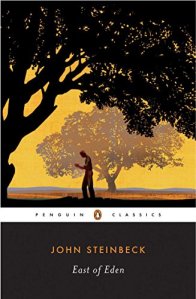
I’d recommend East of Eden by John Steinbeck. I liked it. That’s my book review. I liked it. But the ending sucked.
I finished reading East of Eden a couple months ago and immediately thought that the ending sucked, but I didn’t want to say anything about it right away. I wanted to think about it a little bit. After all, it’s a famous John Steinbeck novel. I want to treat it with respect.
When I read the first page of a current best selling novel and can tell it sucks, I know that I don’t need to wait. I don’t even have to explain why I don’t need to wait. In fact, I can proclaim that a recent bestseller sucks without reading it. Do you know all those new books that just came out this month? Yeah, most of them suck. Oh yeah, those award-winning novels probably suck too.
I’m not being bitter or cynical. I’m saving you precious time.
At any rate, the end of East of Eden sucks for a couple reasons.
1. It was predictable.
Maybe East of Eden wasn’t predictable in the 1920s. Maybe plot twists (I won’t reveal what they are) were new in the 1920s. It’s not John Steinbeck’s faulty that shocking plot twists in 1920 are predictable in 2020.
2. It felt rushed.
Most of East of Eden moved deliberately. The descriptions were plentiful without being out of control. And then the last 50 pages, it was event, event, and then event. The descriptions were gone. Maybe John Steinbeck got tired of being deliberate. Maybe Steinbeck had a deadline to meet. Maybe he thought of a new idea for a novel.
Don’t get me wrong. I’d still recommend East of Eden. The book itself doesn’t suck. Maybe the ending is better than I think it is. I just don’t think the ending holds up with the remainder of the novel.
*****
What do you think? Did the ending of East of Eden suck, or am I overstating it? What other great novels have endings that suck?
*****
After more than ten years of blogging, I’ve finally written a novel.
A grammar-obsessed English teacher falls in ‘luuuvvv’ but discovers how chaotic and dangerous ‘luuuvvv’ can really be.

The Sunset Rises: A 1990s Romantic Comedy is now available on Amazon and from the trunk of my car at various local bookstores… until parking lot security kicks me out. Buy it now while supplies last!

Even though this might be the most boring title I’ve ever written, the topic itself is kind of interesting.
*****
The Department of Justice this week filed suit against Stephanie Winston Wolkoff, a former friend of first lady Melania Trump, alleging that she violated a nondisclosure agreement by publishing a tell-all book, Melania and Me: The Rise and Fall of My Friendship with The First Lady.
Continue reading at DoJ Sues Author of Melania Trump Tell-All.
*****
I don’t know the real (unreported) details of this situation. Did the author really violate a nondisclosure agreement? Was this book a blatant, shallow money-grab? I don’t know.
When I met my wife, she had just finished working for a local politician who has since become somewhat of a famous public figure.
My wife has a lot of old dirt of about this politician. It’s more about bad personal behavior than corruption, but it would still make for an entertaining book.
My wife would never write that book. She’d see it as a violation of trust, even if she personally despises that politician. I agree with her, but I also agree from a practical standpoint. If she wrote that book, there’s a good chance she’d get hurt in a bad car accident or “commit suicide” (if you know what I mean).
I don’t want any of those things to happen to my wife. Even if retaliation weren’t an issue, I wouldn’t want my wife to write that book.
What do you think? In what situation would you violate a nondisclosure agreement to write a book? Would disliking a person be enough? A hint of corruption? Lots of corruption?
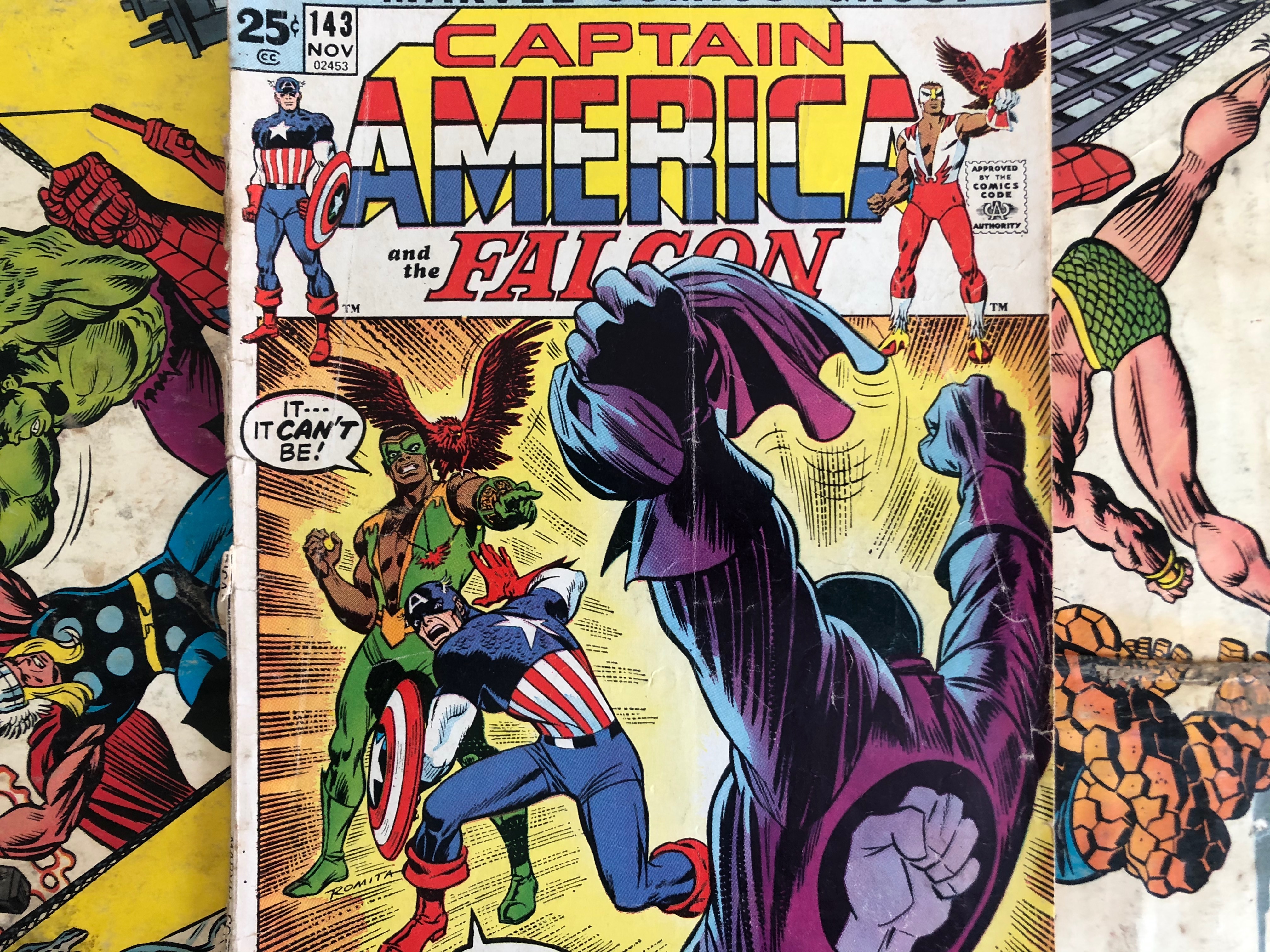
Politics and race relations are two things I don’t want to talk about , but sometimes that stuff just gets right up in your face.
I was going through my old beat up comic books, and I found this issue of Captain America and The Falcon from 1971. Sure enough, it’s about race relations and politics. All that’s left out is religion and abortion.
Even though things seem crazy today, reading stuff from the past reminds me that things have always been crazy. Maybe we weren’t inundated with the craziness as much because we didn’t have access to social media and 24-hour news/commentary/fear mongering, so we didn’t see it as much if we weren’t looking for it.
When you read stuff from the past, however, you can see that, yeah, things have always been weird.
Here’s a quick video review of a comic book from 1971.

The American Library Association just put out its top 100 banned and challenged books of the last decade, and I have to admit, 100 is a lot of books.
It’s tough to keep track of 100 books; you can read this (ALA Releases List of Top 100 Most Banned and Challenged Books) if you’d like to try.
I don’t really care what the ALA thinks about these books right now. Most libraries are closed. When libraries reopen, then maybe I’ll care what the ALA thinks.
Lists of banned or challenged books are useless anyway because the list by itself doesn’t provide context. The list doesn’t say whether the book was removed from a public library, school library, or simply challenged. The list doesn’t explain why the book was banned or challenged in the first place.
Years ago when I needed to keep an audience’s attention in an earlier career, I learned quickly that the best numbers to use were 3 and 5. I know Top 10 Lists are popular, but when you’re talking about ideas or concepts, anything greater than 3 is pushing it.
Explaining each of 100 books could give a reader a headache (at least it would give me a headache), so I’ve chosen five books from the list and am defending the ban/challenge for each one.
With that in mind, here are the Top 5 Books That Should Be Banned or Challenged (and why):
The Hate U Give by Angie Thomas
No school library should accept a book with a misspelling in the title. The public education system has enough problems without allowing books with glaring mistakes. When students see that such an obvious mistake is acceptable, they think that it’s okay not to proofread their own work too. How did this mistake make it past the editors anyway?
Go The F*** To Sleep by Adam Mansbach
Profanity in book titles is a sign of author desperation, but putting profanity in a children’s book title is despicable. Why would a library want to put out a children’s book with profanity in the title? That’s just poor judgement on librarians all over the country. Maybe the ALA should get banned for poor judgement.
Lolita by Vladimir Nabokov
This is the gateway book for perverts. Yeah, it’s billed as literary fiction with its fancy words and so-called deep thoughts. I don’t care how smart the narrator pervert is; he’s still a pervert. Plus, the title is named after the victim, implying that the fault lies with the underage girl instead of the pervert old man. If they changed the title to The Pervert Old Man, I might be less likely to ban this book.
The Catcher in the Rye by J.D. Salinger
Holden Caulfield is a whiner, and he says hell and damn a lot. I don’t mind him saying hell and damn. Those are mild terms. It’s the whining I can’t take. If you’re going to ban a classic American novel, ban the whiner. He’s a bad role model for today’s youth. Tom Sawyer, a true fictional American hero, had it way worse than Holden Caulfield, and you never saw Tom Sawyer whine (though maybe he cried in his pillow every night when Mark Twain wasn’t looking).
1984 by George Orwell
This is a very misleading, confusing novel. I lived through 1984, and 1984 was nothing like it’s described in this book. I’m surprised that history teachers haven’t condemned this book for its historical inaccuracy. The fact that this book is taught in school curriculum shows how far the public school education has fallen. If it’s any consolation, 2001, A Space Odyssey is just as bad.
It’s not easy deciding to ban or challenge books. I don’t want to force my opinions onto other people, but we live in a period where if we don’t get involved then we’re accused of being part of the problem, so here are my opinions.
I don’t know. Maybe the people who say I should get involved would be better off leaving me alone.
*****
What do you think? What books do you think should be banned or challenged? What are some good reasons for banning or challenging books?
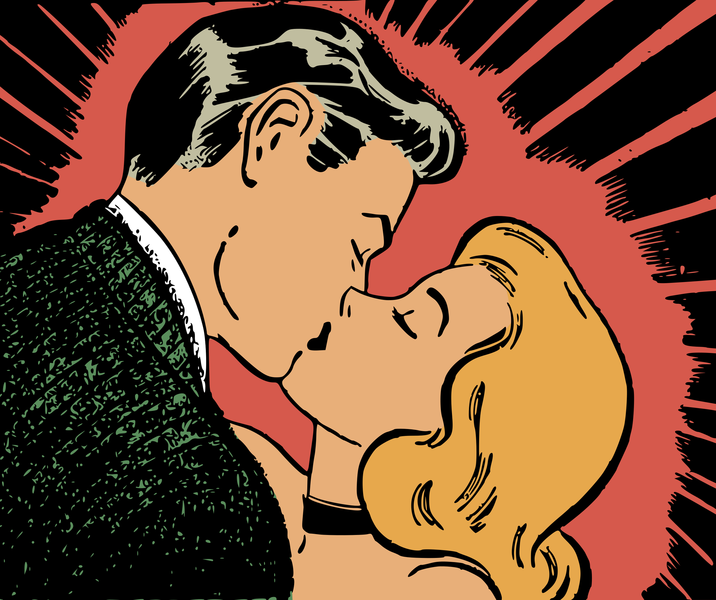
According to The Rules, women weren’t supposed to do this on the first date. (image via wikimedia)
My wife Heather called me two hours after we’d finished our ice cream. I was surprised because I had just met her that evening and didn’t know that we would get married in a couple years. I was also surprised because she had mentioned reading a book called The Rules, which was a huge dating bestseller in the 1990s.
We had talked about The Rules during one of our initial phone conversations before we met in person (you can get more info here at Awkward Moments in Dating: I Met My Wife and Didn’t Know It ). The Rules suggested that women return to some dating traditions that had been declining since the 1960s (ugh… the 1960s) and 1970s (ugh… the 1970s).
One of The Rules was that the woman wasn’t supposed to call the man back for three days. I could understand that. Calling too early made a woman look too eager.
I didn’t have Heather’s phone number. I didn’t trust women’s phone numbers anyway. When I was In college, a couple women (not at the same time) had given me pizza-delivery phone numbers. I had even recognized one of the numbers when the college girl gave it to me. I had almost said to her “Your name is Dominoes?” But I didn’t want the girl to know that I’d memorized pizza delivery numbers.
Anyway, I think one of The Rules was that the woman wasn’t supposed to give out her phone number to strange guys. I don’t know; that might have been one of my own rules. I’ve always thought women should have the phone numbers, if possible. Yeah, a female friend of mine back then was a stalker, but that was more legally acceptable back in the 1990s.
Since Heather and I had met on a Saturday, I wasn’t expecting her to call back until Tuesday. I was hoping she would call. I was expecting her to call, not because I was a hotshot but because I hadn’t gotten any negative vibes from her while we had been hanging out.
When she called me late that Saturday night, I was surprised.
“You broke The Rules,” I said.
“I know.” She didn’t sound concerned.
“The authors would be very disappointed in you.”
“I don’t think they’ll find out,” she said.
“I won’t tell them, ” I said. “Unless they ask. I won’t lie about it.”
“So… what did you think?”
“About what? The ice cream was pretty good.”
“No,” she said. “About me.”
“I think you’re breaking a rule again.” She paused, so I thought that I’d better lay of The Rules references for a while.
“I had an idea,” she said. “I think I want to see The Lion King tomorrow night.”
The Lion King had just come out a few weeks earlier and had a good reputation, even back then. It wasn’t considered a classic yet, but almost everybody liked it. I enjoy cartoons, but I despise musicals, so I knew I’d get fidgety during the songs. I have to admit, though, I had liked one song in Alladin a couple years earlier.
Both of us were silent. I had heard somewhere that sometimes women leave hints for guys to suggest that the woman is interested but the man has to take the initiative. I wondered if this had been such a hint. I didn’t have much time to overthink it. I decided to act like she had just left me a hint.
“I just had an idea,” I said. “There’s this movie that came out a few weeks ago, The Lion King, I think. Do you want to go see it with me tomorrow night?”
“Sure,” she said. “We can even call it a date.”
“Tomorrow is Sunday,” I said. “The Rules say you should hold out for a Saturday night date.”
“I wanted to see The Lion King tomorrow night.”
“You don’t follow rules very well, do you?”
“I want to see the movie,” she said. “I was going to go, whether or not you asked me.”
“Do you want to get something to eat too?”
“No, just the movie. We’ll keep it short.”
Good, I thought. I didn’t like eating on a first date. The ice cream earlier that evening had been acceptable only because ice cream usually doesn’t stick to your teeth.
Unfortunately, I wasn’t a fan of the Sunday date, even without The Rules. I’d have to work on Monday, and my job was stressful, so I usually used Sunday nights to get everything ready for the week and psych myself up. As Heather and I were talking, part of me was thinking about whether or not it was a good idea to go to a movie on a Sunday night.
I didn’t care if it was breaking one of The Rules. It was breaking one of my rules.
Then again, you don’t meet your wife for the first time every day. If you do, you either have a lot of personalities or a lot of wives. Looking back, I’m glad I asked her to go see The Lion King, and I’m glad she said yes.
But the story isn’t over yet.
To be continued (for at least 25 years, hopefully more)!
*****
Enough about me! If you’re married (or about to be), what did you do on your first date?


 Dysfunctional Literacy
