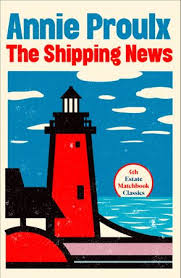
When I bought The Shipping News by Annie Proulx a few weeks ago, I ripped the Kevin Spacey movie cover off because I didn’t want to associate Kevin Spacey with the main character. I’ve never seen the movie version of The Shipping News, so I had the chance to read this book without visualizing Hollywood actors/actresses.
Though the ripped cover strategy was a bit controversial, it seems to have worked. My imagination does NOT picture Kevin Spacey as the main character Quoyle. Also, I haven’t read anything about the book to affect my expectations. All that I know is that several people I respect recommend The Shipping News, and that it won a Pulitzer Prize for Fiction, and that the movie sucked (from what I’ve heard).
I like The Shipping News so far. I’ll keep reading it, but I’m a little frustrated by it. The writing is good, but I’m more interested in the minor characters than the main character Quoyle. This is one of those novels where things happen to a seemingly bland character. That would be fine if the main character felt real. I feel like Quoyle is a caricature of a passive character and all the potentially interesting secondary characters are two-dimensional.
The characters seem to exist only to help Quoyle or torment him. And some of them seem more like caricatures than real people. There’s the extremely nice black couple that befriends Quoyle, but the book never explains anything about them. Why would they go out of their way to become friends with Quoyle and then just leave? Are they just that nice? Or was the wife using Quoyle as a character study?
Then there’s the evil slutty wife who becomes the mother of his two daughters. Instead of developing her character, she’s just the abusive, slutty wife. And then she dies. Yeah, there might be women like her, but this was a chance to delve into an interesting character, and the author didn’t do it.
The boss at the local newspaper was a bossy caricature in a Lou Grant kind of way (that’s how I pictured him), but that was again two-dimensional. As far as two-dimensional characters go, they’re very well-written. I’d rather read a novel with well-written two-dimensional characters than one with poorly-written two-dimensional characters.
At least the situations are interesting as well. As a writer, I enjoyed the sequences at the local newspaper, and I’m guessing that there’ll be more (since the novel is called… The Shipping News).
I can see why I didn’t get very far when I read this book in the 1990s. That might have been a reflection of me as reader more than the book itself (I was reading Tom Clancy novels back then, alright?). At least in the mid-1990s, I didn’t know who Kevin Spacey was.
*****
Enough about me! What do you think? What famous actors have ruined fictional characters for you? What did you think of The Shipping News (without spoiling it for me).

People might think book and publishing news is boring, but they just don’t know where to look. As bad as 2020 might have been for a lot of people, it was a great year for weird news about books and publishing. Even before the pandemic hit the publishing industry, weird/interesting stuff was going on.
*****
1. In January, Romance Writers of America cancelled its 2020 writing contest because of a giant argument over sexual harassment charges. When every other writers conference/convention had to later cancel because of COVID-19, RWA activists bragged that they didn’t need a pandemic ; they were perfectly capable of cancelling themselves without it.
2. In February, indie author and former Baltimore mayor Catherine Pugh got sentenced to three years in prison for using her position to sell her Healthy Holly children’s books to the city. Despite this, desperate Indie authors throughout the country are still planning to run for local office to boost their own book sales.
3. George R.R. Martin once again postponed The Winds of Winter but also released a bunch of spoilers, strengthening readers’ beliefs that Martin will never actually finish writing the series A Song of Ice and Fire. After years of waiting, Game of Thrones fans finally admitted that winter is never coming and George R.R. Martin knows nothing… about how to finish his series.
4. Jeffrey Toobin, a famous journalist/author and CNN political analyst, exposed himself (and maybe did some other stuff) during a Zoom conference call. Toobin, in his defense, claimed that he thought the other Zoom participants couldn’t see him, but he was soon fired anyway. That feeling of not being watched while on camera, according to psychologists, comes from being a political analyst on CNN.
5. The Atlantic, a reputable magazine known for longwinded, disorganized, over-written articles that leave readers dazed and confused, hired a known plagiarist who then shocked The Atlantic, not by plagiarizing, but by completely making up stuff. The Atlantic is leaving the article up on its website for public record, but the longwinded, disorganized, overwritten explanation of why they kept it up left many readers dazed and confused.
6. Author Ernest Cline wrote a sequel to Ready Player One, and almost everybody hated it. Because it felt rushed with plot holes and bad writing, many readers felt the book should have been called Not Quite Ready Player Two.
7. The novel The Nickel Boys won the 2020 Pulitzer Prize for Fiction, making author Colson Whitehead only the fourth author (along with William Faulkner, JohnUpdike, and Booth Tarkington) to win the Pulitzer Prize for Fiction twice. Even more impressive, he is the first African American author to win the Pulitzer Prize for Fiction twice.
Wait a minute! Who the heck is Booth Tarkington?
8. Former President Obama wrote a 700+ page memoir, and it’s only part one, with part two allegedly coming out soon. Unfortunately for former President Obama, Colson Whitehead has already become the first African American author to win the Pulitzer Prize for Fiction twice.
9. The family/estate of famous dead author Roald Dahl apologized for controversial statements that the author made back in the 1970s. Fans of the author said they weren’t wild about the controversy but it wasn’t really a BFD.
10. New York Mayor Andrew Cuomo wrote a book called American Crisis: (with a nonsense subtitle). Protestors dumped a casket filled with book covers in front of a nursing home in response to Cuomo’s policies that (might have) led to deaths of thousands of elderly New Yorkers. The stunt went over general public’s heads, so the protesters resorted to leaving one-star reviews for the book on Amazon, just like everybody else.
I kind of feel sorry for 2020. Yeah, it was a bad year for a lot of people, but it wasn’t 2020’s fault. Most of the bad stuff that happened in 2020 was building up before 2020 even started. Even though 2020 is over, I’m not worried. There will always be weird/interesting book and publishing news if you look hard enough.
*****
Enough about me! What do you think? What were other weird things that happened with books and publishing in 2020?

It’s no surprise that bookcases at public locations like hotel lobbies are for decoration only. But what about bookcases behind famous broadcasters on television? Or a co-worker on an internet meeting?
I don’t know if a full bookcase in the background makes a famous person or a co-worker in a meeting appear more intelligent. I’m partial to the bare bland wall. People with bare bland walls behind them are confident enough to not care about how others think about them. Or they’re paranoid about being conked on the head from behind. Nobody can sneak up behind you with a bare bland wall background.
*****
In a place like Washington—small, interconnected, erudite, gossipy—being well-read can create certain advantages. So, too, can seeming well-read. The “Washington bookshelf” is almost a phenomenon in itself, whether in a hotel library, at a think tank office or on the walls behind the cocktail bar at a Georgetown house.
And, as with nearly any other demand of busy people and organizations, it can be conjured up wholesale, for a fee.
And then later in the article…
In 2020, of course, everything changed for Books by the Foot around the same time everything changed for everyone else… When workplaces went remote and suddenly Zoom allowed co-workers new glimpses into one another’s homes, what New York Times writer Amanda Hess dubbed the “credibility bookcase” became the hot-ticket item. (“For a certain class of people, the home must function not only as a pandemic hunkering nest but also be optimized for presentation to the outside world,” she wrote.) And while Roberts makes an effort not to infer too much about his clients or ask too many questions about their intent, he did notice a very telling micro-trendin orders he was getting from all across the United States.
Read more at Washington’s Secret to the Perfect Zoom Bookshelf? Buy It Wholesale.
*****
So that’s what it’s called, the “credibility bookcase.” I had a credibility bookcase back in the 1990s and didn’t even know it. If only I had thought of a way to profit from this idea back then. Some people might have read this article and gotten mad at co-workers or famous people for pretending to be readers. I read this article and got mad that I didn’t think of how to profit from this scam first!
I even mentioned the credibility bookcase in a blog serial romantic comedy that I wrote a few years ago, only I didn’t know it was called a credibility bookcase. Here is a quick excerpt from my blog serial romantic comedy “The Literary Girlfriend”:
*****
When we reached the living room, Danielle stopped and faced me. “Have you read all of these?” she asked, pointing to my bookshelf.
“Yes, of course,” I said. I had read a few of the books completely, but I had at least glanced through all of them. I had read enough about each book to hold a quick conversation before I’d need to change the subject.
“You’ve read Moby Dick?” she said.
“Yes. I didn’t enjoy it, but I read it.”
“You’ve read…” She squinted at a large volume at the top of the shelf. “You’ve read The Brothers K… The Brothers K….”
“I don’t know how to pronounce it either,” I said. “When I get to those long Russian names, I just change them to Smith and Jones in my head.”
“I like books,” Danielle said. “But I didn’t go to school… college.”
For more about the credibility bookcase and the romance that followed, read The Literary Girlfriend: The End of the Story?.
*****
The difference between me and most credibility bookcase owners is that I had read a little bit from each book, just enough to make me dangerous (or sound fake smart).
But enough about me! What do you think? Does having a credibility bookcase make you look smarter? Have you ever looked at the books on somebody else’s credibility bookcase? Do you know how to pronounce The Brothers K…?
When it comes to the BEST BOOKS OF 2020, the only certainty is that I haven’t read any of them all the way through. I’ve read free online samples of a few of them, but I’m too much of a cheapskate to buy a hardcopy when there are plenty of older (and probably better) books that I can get.
To me, there’s no benefit to reading a book just because it’s new. In twenty years, the book will still be there (most likely). In twenty years, you’ll know if the book was actually good or just a fad. And most important, in twenty years, the book will be cheaper.
Still, it’s the end of the year, and doing a BEST BOOKS OF 2020 list is almost a requirement for a book blogger. Since I haven’t read all (or any) of the books that came out in 2020, I have to rely on those who have (claimed to have) read the books.
With that in mind, here are several lists of BEST BOOKS OF 2020 from websites with people who have (allegedly) read all of the books.
Here is one set of best overall books from Entertainment Weekly. Entertainment Weekly? Entertainment Weekly talks about books?
THE BEST OF THE BEST
- The Glass Hotel by Emily St. John Mandel
- Transcendent Kingdom by Yaa Gyasi
- Homeland Elegies by Ayad Akhtar
- Leave the World Behind by Rumaan Alam
- Memorial by Bryan Washington
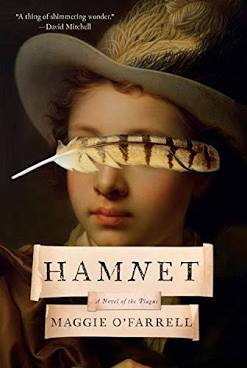
- Hamnet by Maggie O’Farrell
- Deacon King Kong by James McBride
- Daddy by Emma Cline
- Red Comet by Heather Clark
- A Burning by Megha Majumdar
You can read more at The Biggest and Best Books of the Year.
*****
NPR has a variety of lists to choose from, so I chose the first ten listed in the Mystery/Thriller genre. Reading the list to yourself in a pretentious, monotone NPR voice is optional.
- A Shadow Intelligence by Oliver Harris
- Sisters by Daisy Johnson
- The Searcher by Tana French
- Leave The World Behind by Rumaan Alam
- The Only Good Indians by Stephen Graham Jones
- Mexican Gothic by Silvia Moreno-Garcia
- Blackwood by Michael Farris Smith
- Lakewood by Megan Giddings
- Piranesi by Susanna Clarke
- Survivor Song by Paul Trembly
Read more at NPR’s Best Books of 2020.
Publisher’s Weekly lists its best books by genre in sets of twenty, but I don’t make lists greater than ten items, so here are the first ten Books of 2020 in the Fiction category:
- The Abstainer by Ian McGuire
- Beheld by TaraShea Nesbit
- Bluebeard’s First Wife by Ha Seong-nan
- The Butterfly Lampshade by Aimee Bender
- The Cold Millions by Jess Walter
- Crooked Hallelujah by Kelli Jo Ford
- The Dominant Animal by Kathryn Scanlan
- Fiebre Tropical by Juliana Delgado Lopera
- Hamnet by Maggie O’Farrell
- Homeland Elegies by Ayad Akhtar
Read more at Best Books 2020: Publisher’s Weekly.
*****
What do you think? How many of these books have you actually read? Which ones have you even heard of? How old is a book before you usually get around to reading it? What other best book lists of 2020 do you know about?
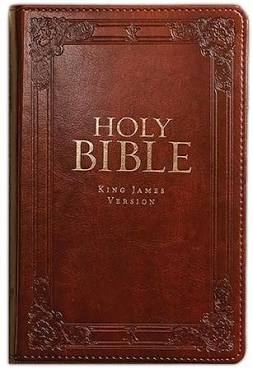
I’m giving my daughter a brand new copy of The Holy Bible for Christmas. It’s not her only gift. She’s going to get a pretty good haul this Christmas, but I like The Holy Bible as a Christmas gift. It seems to fit. It’s better as a Christmas gift than one for her birthday or Valentine’s Day or Halloween or the Fourth of July.
I’ve been reading an older copy of The Holy Bible that originally belonged to my wife’s grandmother. I’m not giving my daughter that copy yet (it’s probably not mine to give anyway). I don’t think my daughter’s ready for that copy yet.
I’m pretty sure my daughter won’t actually read her own copy of The Holy Bible for a while. She’s 18, and we’re not exactly church-going folk. She might never read it. She might glance at it and then put it aside when I’m not looking and then misplace it.
That’s why I didn’t buy her an expensive copy of The Holy Bible. This copy of The Holy Bible was relatively cheap for a book. It wasn’t much more expensive than an elaborate greeting card that plays corny music. I don’t think it’s a good idea if The Holy Bible plays corny music when you open it. That might take away the seriousness of some of the messages.
Reading the entire Holy Bible can be a slog. I don’t blame God for that. A bunch of humans have rewritten and retranslated it over a couple thousand years. I don’t even blame people for thinking that The Holy Bible is a slog, but it’s not as bad as some literary fiction. I figured that if I could get through three pages of Finnegans Wake, then I can read The Holy Bible. At least, I think I got through three pages of Finnegans Wake. It might have just been a long two.
I don’t think you have to read the entire Holy Bible for it to be useful. I think some Books are better than others. I’m not going to rank the books in a TOP TEN BOOKS in THE HOLY BIBLE as potential clickbait, though I’m sure somebody has done that. I don’t want to get spammed by somebody upset that I didn’t rank Malachi in my top five.
Malachi is awesome, alright?? It just didn’t quite make the cut!
If I had to choose a favorite book in The Holy Bible, I’d pick Matthew. Matthew has a bunch of good stuff about Jesus and his teachings, and you can’t go wrong reading about Jesus, unless you really don’t believe in God so much that you get angry at people for believing. If that’s the case, maybe Genesis or Revelations would be better.
I don’t even care if people believe in Jesus. I don’t care if people believe Jesus was the Son of God, or if Jesus was a prophet, or if Jesus never even existed. His teachings are pretty cool. If everybody followed his basic guidelines, people would get along a lot better and a lot of social problems wouldn’t exist.
I’m not saying that a brand new copy of The Holy Bible is a perfect gift for everybody. A hotel owner probably doesn’t need one (or maybe the hotel owner could use a bunch of them). But I think it’s a good gift for my daughter in our current situation. It might be a good stocking stuffer. And it’s a lot better than giving my daughter a copy of Finnegans Wake.
*****
Oh yeah, just so you know, my daughter doesn’t read this blog.
It’s tough to reminisce about famous authors after they die. With famous singers/musicians, you can listen to your favorite songs in a few minutes. You can watch a famous actor’s/actress’s best movies within a few hours. You can curse a famous politician’s worst policies in a few seconds.
But a famous author? It takes days to read a good book by a famous author; at least it does for me.
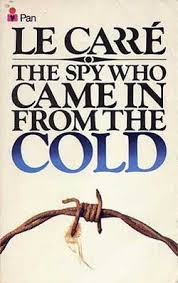
When I heard that famous author John LeCarre died, I thought, “He’s a pretty good author, but I’m not going to read any of his books just because he died.” Maybe that sounds crass on my part.
To be fair, last March (I think), I read John LeCarre’s most famous novel The Spy Who Came In From The Cold because I was almost desperate. The lockdown had shutdown all the bookstores and libraries in my area, and I was stuck with my own personal library. An older relative had given me several LeCarre novels back when I was in high school in the 1980s, but I had never read them all the way.
Back then, the current bestselling spy novels were much faster paced and more exciting, so I had a tough time sticking with LeCarre. I kept the books, though, because gifts always remind me of the person who gave them to me. The older relative who gave me the books is a pretty good guy.
I liked The Spy Who Came in from the Cold when I read it a few months ago. I actually finished it. It was good. Since I haven’t read any outlandish spy novel in decades, I appreciated this slower paced espionage novel more than I had in high school.
I wonder, though, how much a high school kid today would understand the book. Even though I hadn’t read much of the book in high school, I’d understood what I’d read. I understood most of the Cold War references because the Cold War was still going on (though it was in a different phase).
The Cold War culture in The Spy Who Came in from the Cold is different from the pandemic post-terrorism culture we have right now, but despite that, LeCarre’s books are probably more relevant than the spy novels that I was reading in the 1980s and 1990s. Most of that stuff relied on specific current events within a certain time period and feel dated today.
The Spy Who Came in from the Cold didn’t feel dated, even though it was published in the early 1960s. Some of the twists might seem predictable today, but I don’t hold that against the book. It’s not a book’s fault if other books copy/follow a similar formula.
I’m glad I kept that old copy of The Spy Who Came in from the Cold. I might even read Tinker Tailor Soldier Spy. If I read it, though, it will be because I want to read it and not because John LeCarre just died.
*****
What do you think? Do you read books after an author dies? What is your favorite John LeCarre novel?
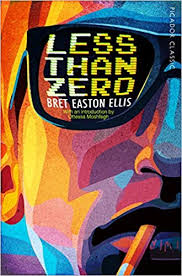
Out of the three most famous authors in the literary Brat Pack of the 1980s, Less Than Zero author Bret Easton Ellis seemed to me to be the strongest writer. He didn’t use an obvious gimmick like Tama Janowicz (starting off a book with a paragraph about dicks) or Jay McIerney (writing in the 2nd person present tense). He also focused on youthful Los Angelos debauchery instead of youthful New York debauchery.
I was a college student when Less Than Zero came out, and I had no interest in reading it because I was already a college student and wasn’t interested in the literary debauchery of other college students, especially students from elite colleges. I went to a state school and for the most part had to pay my way. I didn’t want to read about privileged students.
Now that I’m in my 50s, I’m really not interested in college debauchery, unless it’s funny.
Anyway, at the time, I wondered how young authors like those in the Literary Brat Pack managed to get published. Who in the literary world would have wanted to read their novels?
Ellis had an advantage over other writers my age because his writing instructor was famous writer Joe McGinnis who probably helped Ellis get a book deal. My writing instructor in college was a guy who once brought in a somewhat known literary author of the 1980s to speak, but I don’t think the author really knew my writing instructor.
Don’t get me wrong. If Joe McGinnis had been my writing instructor, I still never would have gotten a book deal, so I’m not complaining; I’m just pointing it out.
In this early scene from Less Than Zero, the narrator Clay has returned to Los Angelos on Christmas break from his first semester in college and is going to a high school friend’s Christmas party:
*****
There are two Christmas trees, one in the living room and one in the den and both have twinkling dark-red lights coloring them. There are people at the party from high school, most of whom I haven’t seen since graduation and they all stand next to the two huge trees. Trent, a male model I know, is there.
“Hey, Clay,” Trent says, a red-and-green-plaid scarf wrapped around his neck.
“Trent,” I say.
“How are you, babes?”
“Great. Trent, this is Daniel. Daniel, this is Trent.”
Trent offers his hand and Daniel smiles and adjusts his sunglasses and lightly shakes it.
“Hey, Daniel,” Trent says. “Where do you go to school?”
“With Clay,” Daniel says. “Where do you go?”
“UCLA or as the Orientals call it, UCRA.” Trent imitates an old Japanese man, eyes slit, front teeth stuck out in parody, and then laughs drunkenly.
“I go to the University of Spoiled Children,” Blair says, still grinning, running her fingers through her long blond hair.
“Where?” asks Daniel.
“USC,” she says.
“Oh yeah,” he says. “That’s right.”
Blair and Trent laugh and she grabs his arm to balance herself for a moment. “Or Jew SC,” she says, almost gasping.
“Or Jew CLA,” Trent says, still laughing.
*****
From the parts I’ve read, I don’t see anything special about Less Than Zero.
I think it’s interesting that out of all the characters, only the narrator doesn’t participate in the bigoted comments. Maybe Clay is a decent guy. Maybe the narrator needs to be portrayed as sympathetic to the reader before engaging later in the debauchery that’s sure to take place. Maybe the author was afraid to let Clay participate in the conversation because he didn’t want readers thinking the author himself was the narrator and a bigot. What a wuss!
As a side note, I don’t know what they were teaching in elite writing classes back in the 1980s, but I noticed three missing commas and at least one misplaced modifier in that excerpt. I would point them out, but then I might be accused of being a Grammar Nazi. I don’t think literary authors from elite universities like being corrected by unpublished bloggers from state schools.
*****
But enough about me! What do you think? Was there anything special about Less Than Zero that made it worthy of literary attention?
When you like a song, you want to sing it, no matter what genre it is. This has caused a problem with rap because a lot of rap artists put the N-word that almost rhymes with trigger in their lyrics.
These artists say that the N-word that almost rhymes with trigger puts authenticity into their lyrics. Unfortunately, that means certain people can’t sing/rap the lyrics.
After all, other certain people don’t like certain people saying the N-word that almost rhymes with trigger. Certain people who care what other certain people think will edit themselves while singing rap lyrics or not sing them at all (unless there are no other certain people around).
If the N-word that almost rhymes with trigger stops certain people from singing rap, I’m all for it. Most certain people sound stupid rapping. But I’m a problem solver, not a complainer. If my young adult daughter likes rap, and it seems to be marketed to every sub-demographic within her age group, then she should be able to say the lyrics without getting lectured/fired/cancelled.
A few weeks ago, I took a couple paragraphs from Mark Twain’s classic novel The Adventures of Huckleberry Finn and replaced the N-words that actually rhyme with trigger with the term Nice Guys (read more at Adventures of Huckleberry Finn by Mark Twain: Replacing the N-Words with Another N-Word).
Nice Guys has a positive connotation. It starts with the letter N. It has two syllables. The second syllable begins with the G sound. It seemed like Nice Guys would be a great replacement for the N-word that actually rhymes with trigger.
When I thought about trying this experiment with a song, the first example I thought of was “Nice Guys in Paris” by JayZ and Kanye West. This seemed like a great choice because almost everybody knows who JayZ and Kanye West are. Plus, the song has Nice Guys in the title. A song that has Nice Guys in the title would surely have a ton of Nice Guy usages in the lyrics, right?
No. “Nice Guys in Paris” rarely uses the term Nice Guys. At least, it doesn’t use Nice Guys enough to conduct the experiment.
So I delved into the past and thought of “Damn, It Feels Good to be a Gangsta” by the Geto Boys. Every guy in a certain group of people likes “Damn, It Feels Good To be a Gangsta” because of the movie Office Space. Yeah, there’s a lot of profanity in the song, but it still evokes strong positive vibes in guys of a certain group of people.
So here’s how “Damn, It Feels Good To be a Gangsta” looks/sounds with Nice Guys instead of the N-word that almost rhymes with trigger.
*****
Damn it feels good to be a gangsta
A real gangsta-ass Nice Guy plays his cards right
A real gangsta-ass Nice Guy never runs his f***ing mouth
‘Cause real gangsta-ass Nice Guys don’t start fights
And Nice Guys always gotta high cap
Showing all his boys how he shot ’em
But real gangsta-ass Nice Guys don’t flex nuts
‘Cause real gangsta-ass Nice Guys know they got ’em
And everything’s cool in the mind of a gangsta
‘Cause gangsta-ass Nice Guys think deep
Up three-sixty-five ayo 24/7
‘Cause real gangsta-ass Nice Guys don’t sleep
If you don’t know the song, here’s an edited version from Office Space.
And if you prefer the original version…
*****
What do you think? Is the term Nice Guys a good replacement for the N-Word that almost rhymes with trigger. Should certain people feel comfortable singing “Damn, It Feels Good To Be a Gangsta” using the term Nice Guys?

Famous author Roald Dahl is known for books like The BFG and Charlie and the Chocolate Factory. But even though Dahl died decades ago, his family has recently apologized for some comments Dahl made in several interviews over the years.
Unfortunately, the apology was not accepted gracefully.
*****
The family of children’s book author Roald Dahl has issued a belated apology for his history of anti-Semitism.
“The Dahl family and the Roald Dahl Story Company deeply apologise for the lasting and understandable hurt caused by some of Roald Dahl’s statements,” read the comment on the official Dahl website.
The apology comes three decades after the British author’s death in 1990. Over his nearly 50-year career, Dahl wrote such classic children’s books as Matilda, James and the Giant Peach, and The BFG.
He also made some anti-Semitic comments.
In one example, in 1983 Dahl reportedly told Britain’s New Statesman magazine that “there is a trait in the Jewish character that does provoke animosity. … Even a stinker like Hitler didn’t just pick on them for no reason.”
Read more at Roald Dahl’s Family Apologizes For His Anti-Semitic Comments.
*****
What? THAT’s the quote that Dahl’s family is apologizing for? I was a kid growing up in 1973, and I heard stuff that was way worse than that back then. Back in 1973, there were people whose biggest complaint about Hitler was that he started a two-front war. At least Dahl called Hitler a stinker.
I don’t believe in apologizing for somebody else’s behavior or words, even if I’m associated with that person. I might acknowledge the bad behavior and say that I don’t agree with it or condone it, but I won’t apologize for it.
I’m not a fan of people who apologize for the behavior of others, but even worse are people who can’t accept apologies.
*****
The group (Campaign Against Antisemitism) added that the apology was “encouraging,” but that it’s “a shame that the estate has seen fit mere to apologise for Dahl’s antisemitism rather than to use its substantial means to do anything about it.”
“This apology should have happened long ago — and it is of concern that it has happened so quietly now,” said Marie van der Zyl, president of the Board of Deputies of British Jews. Dahl’s “abhorrent antisemitic prejudices were no secret and have tarnished his legacy.”
*****
When it comes to apologies, my philosophy is that you either accept the apology or don’t. When somebody offers me a sincere apology, I accept it. I don’t complain about how long it took and then tell the offender to give me money.
If the apology isn’t sincere, I might ask a bunch of questions like “What exactly are you apologizing for?” I don’t accuse the apologizer of being insincere. I just ask specific questions and see how defensive the apologizer gets.
But enough about me! What do you think? Do you apologize for the behavior of other people? Do Dahl’s comments “tarnish his legacy,” or is that just how some people felt back then? What famous authors have said or done stuff that tarnish their legacies?
I know! I know I should have known better! Clicking on an internet list is like making eye contact with a kiosk salesperson at the mall; you just don’t do it.
But I did, so it’s too late. A weekly entertainment site posted a list of 20 of the Best Book Adaptations of All Time. I should have known not to read it. The title said “… OF ALL TIME.” Nothing good comes from a title like that.
According to that recent clickbait list, here are the best book-to-movie adaptations OF ALL TIME!!!!
*****
- Emma by Jane Austen
- Team of Rivals: The Political Genius of Abraham Lincoln by Doris Kearns Goodwin (Lincoln the movie)
- Room by Emma Donaghue
- The Princess Diaries by Meg Cabot
- One Flew Over the Cuckoo’s Nest by Ken Kesey
- I, Tina by Tina Turner (What’s Love Got To Do with It? the movie)
- The Age of Innocence by Edith Wharton
- Little Women by Louise May Alcott (‘m not sure which movie version was the best)
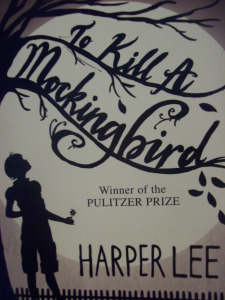
- To Kill a Mockingbird by Harper Lee (and Truman Capote)
- Le Transperencig… whatever (Snowpiercer the movie)
- The Nanny Diaries by Emma McLaughlin and Nicola Kraus
- Tinker Tailor Soldier Spy by John LeCarre
- Poldark by Winston Graham
- It’s Kind of a Funny Story by Ned Vizzini
- Outlander by Dians Gabaldon
- The Mazerunner by James Dashner
- The Call of the Wild by Jack London
- Normal People by Sally Rooney
- The Color Purple by Alice Walker
- Atonement by Ian McEwan
Read the list and the reasoning behind each choice (if you care) at 20 of the best book adaptations of all time.
*****
At first, I thought this list was devised to get people arguing. The list creator makes some obviously bad choices, such as over-representing recent books and movies, which causes readers (suckers like me) to react. Making a good list would be counter-productive because nobody would respond to a good list.
A better list (in my opinion) would include classics such as The Wizard of Oz by Frank Baum, The Godfather by Mario Puzo, Gone with the Wind by Margaret Mitchell, or The Autobiography of Malcolm X by Malcolm X and Alex Haley. But a good list probably doesn’t start much conversation.
Then again, maybe the list was to promote book sales for authors that the weekly entertainment site writer likes (or is tied to). The weekly entertainment site can’t make much/any money from increased sales of The Wizard of Oz. But it can maybe give The Princess Diaries a slight boost, and then the entertainment site can promote that author’s new novel, get a couple high profile interviews, and maybe even receive a little incentive (kickback) from the book publishers.
I’m not making any accusations. I’m just wondering. Maybe it’s a possibility. Maybe I’m overthinking it. Maybe the creators of this list simply have limited historical perspective. Maybe….
AAAaaaarrrrgh! This is what I get for clicking on an internet list!