I just realized that six books in my Dr. Seuss collection are considered racist. I’m sure everybody knows what I’m talking about. Even people who don’t read books know about the Dr. Seuss situation, but just in case you don’t know…
*****
Dr. Seuss Enterprises is addressing the racist and insensitive illustrations that pop up across the works of late children’s author Theodor Geisel, otherwise known as Dr. Seuss.
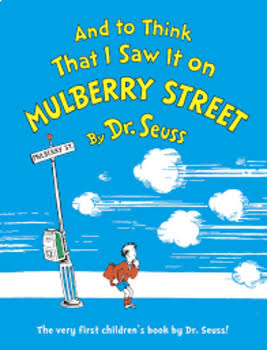
The company announced on Tuesday, which would’ve been Seuss’ 117th birthday, that six titles will be discontinued: And to Think That I Saw It on Mulberry Street, If I Ran the Zoo, McElligot’s Pool, On Beyond Zebra!, Scrambled Eggs Super!, and The Cat’s Quizzer.
“These books portray people in ways that are hurtful and wrong,” a statement, published to the official Dr. Seuss website, reads. “Ceasing sales of these books is only part of our commitment and our broader plan to ensure Dr. Seuss Enterprises’ catalog represents and supports all communities and families.”
Read more at Six Dr. Seuss books won’t be published anymore due to racist and insensitive imagery.
*****
I didn’t mean to buy six racist Dr. Seuss books. I didn’t even know these books were racist when I bought them almost two decades ago. All I thought was, cool, a bunch of Dr. Seuss books for sale really cheap; what a great deal!
When I read the books with my daughter back then, I noticed a couple of the controversial images and didn’t think much of them except that they probably would have been edited out if the books had been published twenty years ago.
Now that I realize I have all six books that will no longer be published, I wonder, what should I do with them? I could sell them and get a great price. Since they’ve been banned, their prices have skyracketed. Yes, I spelled it “skyracketed” on purpose. It’s a combination of skyrocket and racket, which I think is appropriate to this situation. I don’t want to be involved in a skyracket.
I could burn the books, but I still like them. If somebody else wants to burn his/her books, more power to that person. But I like a couple of these books a lot, and I burn only books that I don’t like. I don’t burn books that other people don’t like.
If race were the only prism or perspective in which I viewed the world, then maybe I’d get rid of or burn the books. But race is merely one out of millions of perspectives. The people who see things primarily in terms of race miss out on a lot of other stuff, and I’m not going to limit myself because of their narrow-mindedness.
The people who see things mostly by race might be able to limit me in some minor ways (like banning books they find offensive), but I’m not going to cooperate with them on this issue.
Besides, And To Think That I Saw It on Mulberry Street is a damn good book. In fact, it’s f***ing awesome. I’d even call it f@cking awesome, but that might be an inappropriate way to talk about a children’s book, even if it’s deemed as racist.
I’m going to keep my six racist Dr. Seuss books. I think I’ll stop calling them racist too. I’ll just call them controversial. Or maybe I won’t call them anything at all. And no, you can’t have them.
Now that I think about it, I believe I’ve got The Song of the South somewhere in my VHS collection.
I first noticed authors’ bad publicity photos in the 1980s when I was reading the book jackets of literary fiction. The author poses were unnatural. Most authors looked pompous. Even back then, I didn’t want to read literature written by pompous authors.
I thought maybe literary authors were meant to look pompous to separate them from the common person who also takes bad pictures. Maybe it was done to keep famous authors in their places: if famous authors took good pictures, their egos would get too huge.
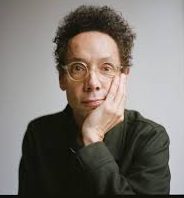
The above Malcolm Gladwell photo is a good example of a bad publicity photo. I don’t want to make fun of Malcolm Gladwell. I’ve read a few of his books. His books were great for the airport back in the days when I actually went to airports. I don’t read his books anymore because I don’t go to airports anymore, but I still respect the guy.
The thing is, Malcolm Gladwell has taken decent pictures. He even looks like a normal guy in most of them. He probably got talked into releasing those bad publicity photos. He was probably told that those bad publicity photos were actually good.
People lie about the quality of photos others take. Years ago, my co-workers tried to convince me that my ID photo was a good picture. We had been standing in line for annual IDs, and when I finally had my picture taken, I asked the photographer if I could see it before I moved on.
My mistake had been that I had smiled when the photographer told me to. My smile is asymmetrical, so I look drunk even though I’m sober. Even so, I still smiled when the photographer asked because I have been programmed to be polite.
The photographer hesitated but agreed to show me the picture. There was a line behind me; he had a deadline and probably wanted to get through as many of us as quickly as possible, but he let me get behind his equipment (I don’t remember enough of it to describe it), and I saw my face with my eyes half-closed and a lopsided smile. Yes, I looked drunk.
“I can’t walk around with this for a year,” I said to the photographer. “Can I do a retake?”
The photographer scanned the crowd behind me. “I really can’t do that,” he said.
“It won’t take long,” I countered. I usually don’t like to impose, but I didn’t want to walk around for a year with a picture of me looking drunk.
The photographer said, “The picture’s fine.”
“Then your standards are too low for you to be a professional photographer.”
Some guy in the line behind me shouted, “What’s the problem, Jimmy?”
“I’m trying to get a retake,” I said in a stage voice. “I took a bad picture.”
“Let me see,” a nosy female co-worker said. Without permission, she walked up behind the photographer’s equipment and checked the picture.
“This is a good picture,” she exclaimed.
“Your vision is bad,” I said.
Some other guy came up and said, “What’s wrong with it?
“I look sober when I’m drunk,” I said. “I mean, drunk when I’m sober.” I get my words mixed up when I’m annoyed.
All of a sudden, there was a crowd around the equipment, and nobody agreed with me about the quality of the picture. Either my co-workers had bad judgement or they disliked me or I always look drunk. The photographer was breathing heavily and turning slightly red.
“You might as well let me do a retake,” I said to him. The photographer shook his head but agreed.
This second time, I kept a frozen serious stare. I didn’t smile. I didn’t speak. I kept my face in a perfectly symmetrical position, and the picture turned out great. My co-workers seemed disappointed.
I don’t know if Malcolm Gladwell knows he takes some bad pictures. I don’t know if he’s surrounded by publicists and peers who lie to him. I don’t know if it bugs him when he takes a bad picture, but if it does, I completely understand. At least my bad ID photos only lasted a year.
If you’re a famous author, your bad picture lasts forever, or at least until people stop reading your books.
*****
What do you think? Why do so many famous authors have bad publicity photos? What do you have to do to take a decent picture?
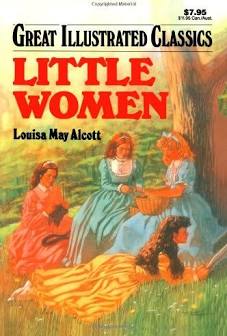
No, of course men don’t read Little Women by Louisa May Alcott.
That’s it! This is why you’re not supposed to directly answer a question at the beginning of a blog post; the blog posts are too short.
Besides, the real question should be: WHY don’t men read Little Women?
The answer to that question is a bit more complicated. Little Women has the words little and women in the title. Men don’t read books with the word little. Men don’t like the word little. If you don’t know why men don’t like the word little, don’t ask. I don’t want to be the one who explains it to you.
Men also won’t read a book called Big Women either, but that’s for a completely unrelated reason.
No offense, but men don’t want to read a book about women. I remember a study that showed women would read books about men, but men wouldn’t read books about women. Maybe the study was about reading habits of boys and girls instead of the habits of men and women, but the results would probably be similar. Or maybe my memory is playing tricks on me.
Some men claim to have read Little Women, but most of them are lying, probably because they want women to think highly of them. Maybe a few men were forced to read Little Women in a class, but they shouldn’t have complied. Reading Little Women harms a man’s ability to function appropriately with others. It isn’t healthy for men to read Little Women.
I think I saw a study about how unhealthy it was for men to read Little Women, but now the internet has vanished the study. At least the internet didn’t “debunk” the study; they just went ahead and vanished it. Or maybe I just made up that study. If you’re offended by a study that suggests reading Little Women harms men, I can also make up a study that says it doesn’t. Then you can choose which of my possibly fake memories you can agree with.
I think everybody would agree that most men would read a book called Big Men, except for men who claim to have read Little Women. Despite what people think about men, Big Men wouldn’t need car chases and explosions and random violence. That’s not what being a Big Man is all about.
A Big Man lives in a world of temptations and addictions but resists/defeats them. A Big Man resists the temptation of promiscuous sex because he understands the long-term consequences of irresponsible behavior. A Big Man doesn’t cheat on his wife because he knows how it would affect his wife (plus there’s that vow in front of God thing). A Big Man doesn’t waste time on idle self-destructive behaviors like playing video games or watching porn.
Big Men would be about a group of men who face these temptations; sometimes they resist and sometimes they screw up, but in the end most of the immature guys turn into Big Men.
Big Men would be so awesome that even women would want to read it. Maybe Little Women is that awesome already, but I’ll never find out for sure. I’m a man, so I can’t read it.
*****
What do you think? Do you know any men who have (claimed to have) read Little Women? How awesome would the novel Big Men be?
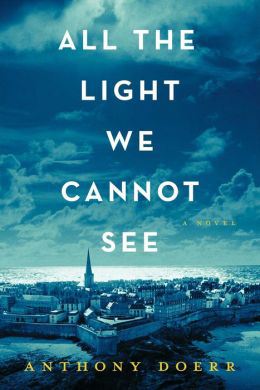
All The Light We Cannot See by Anthony Doerr came out in 2014, and it was pretty successful. The novel won a Pulitzer Prize for Fiction, and it was a bestseller for a long time. I even finished reading it. It was pretty good.
2014 was a few years ago, and Doerr finally has a new novel coming out. Some authors use a book’s success to write new books as quickly as possible to cash in while their names are hot. I appreciate Anthony Doerr for taking his time
When you write a Pulitzer Prize winning novel, it’s tough to do a follow up because readers expect something great, maybe even something similar. Or maybe it’s easy to do a follow up because you know a bunch of people will buy it. Actually, I wouldn’t know because I’ve never written a Pulitzer Prize winning novel, so I’m just speculating.
Maybe Pulitzer Prize winning authors don’t give a crap.
*****
Anthony Doerr fans can appreciate a substantial plot. His most recent novel, 2014’s All the Light We Cannot See, explored the destruction and trauma wreaked on Europe by World War II and German occupation through two competing story lines: one about a blind girl forced to flee with her family from Paris to the Brittany coast, the other about an orphaned boy who enters a military academy and becomes a tracker for the Resistance. The effort won him legions of new fans and the Pulitzer Prize, and now the author returns six years later with another Herculean effort.
EW is exclusively announcing that Doerr’s next novel is Cloud Cuckoo Land, which spans three different narratives and thousands of years: the 1453 siege of Constantinople, following characters Anna and Omeir as they navigate life on opposite sides of the city’s wall; present-day Idaho as teenage Seymour and elderly Zeno experience an attack on a local public library; and far into the future, as Konstance barrels on a spaceship towards an exoplanet. All three timelines have a connection, of course, but we’ll let you read the book for that. The novel won’t hit shelves until Sept. 28, but in addition to the book’s cover (above), we have an excerpt to give you a taste — read on for more of Cloud Cuckoo Land.
Read more at First look Anthony Doerr’s new novel Cloud Cuckoo Land | EW.com.
*****
I don’t know about you, but I’m purposely not reading the excerpt yet. If I like the excerpt, I don’t want to wait until September to read the whole thing. If I don’t like it, then I look like a jerk for criticizing a book that’s not out yet.
I don’t like the title Cloud Cuckoo Land. It sounds like a children’s book. I feel comfortable judging a title before the book comes out. Maybe we’re not supposed to judge a book by its cover, but judging the title is okay. I’m not even judging the book yet, so back off!
Again, I appreciate an author who lets seven years go by between books. Time doesn’t guarantee quality, but I like the odds. Maybe come up with a better title, though. Cloud Cuckoo Land? Ugh.
*****
Enough about me! What do you think? How long should authors take to finish a book? What do you think of the title Cloud Cuckoo Land?

If you read classic literature, you’re well aware of dystopian futures. Whether it’s Brave New World by Aldous Huxley, 1984 by George Orwell, or Fahrenheit 451 by Ray Bradbury, there’s a lot of ways that the future could go wrong. But what happens when society today goes wrong?
It doesn’t matter what you think about Covet-19 or the Coroner Virus, its effects have created a dystopian society. If you’re reading this blog post, I don’t have to tell you what’s dystopian about today. But even though we live in a weird dystopian future, it doesn’t bother me as much as I thought it would. If you keep your cool, there are ways to thrive in this dystopian future.
- Be grateful.
As far as dystopian futures go, this one isn’t that bad. War is way worse than face smotherings and anti-social distancing. I like anti-social distancing. I also don’t mind face smotherings because now I don’t have to worry about bad breath or food in my teeth. Plus, the face smothering hides the lack of symmetry in our faces, so the common person becomes more attractive.
When I was a kid, my dad got sent to another continent to fight and kill people he didn’t know. Looking back, that was a pretty bad situation. He came back from war as the Great Santini, traumatized and alcoholic. He would have been alcoholic anyway, but war trauma didn’t help. I can still get annoyed by strict travel restrictions and idea cancelling, but I’ll take face smotherings over war any day.
2. Don’t make yourself a target.
The government can’t enforce much. The government can’t even enforce traffic laws. I live in a major city where drivers speed with impunity. Last week I almost got hit by a school bus running a red light. The government built the roads, hands out drivers licenses, sends out car registrations, and they still can’t enforce squat.
But the government CAN target individuals. If you’re too obvious about noncompliance, the government can get you. So don’t scream about dystopian societies. Don’t get into people’s faces. And for God’s sake, don’t storm capitol buildings.
Just live your life. Be productive. Raise your family. And treat dystopian rules like traffic laws: don’t be the fastest driver.
3. Turn off the screens.
Mass media is pushing this dystopian future, whether it’s television or radio or tech companies. And people have always fallen for mass media techniques. How many times have people throughout history gotten fired up for war by government and mass media? And don’t forget sugary cereal.
Just a couple generations ago, parents were persuaded by television screens to feed their kids sugar for breakfast. Even with what we know about diabetes, parents today still feed their kids sugar for breakfast. Even supposedly high IQ parents do this. Mass media can be really persuasive if you’re not paranoid about their tricks… ahem.. I mean, techniques.
If you can’t turn off mass media, at least choose wisely. Stay away from anything with advertising. Be wary of entertainers with promo codes. And don’t watch the news. The news today is designed to cause an emotional reaction. It’s not to inform. So read the news. Reading the news is better for your brain anyway, and it’s easier to avoid/spot the propaganda. And read my blog. And read my ebooks. I’m kidding… kind of.
4. Stay away from corporations… as much as possible.
Corporations are enforcing the rules that government can’t enforce, and the corporations are in turn probably getting rewarded by the government. Just avoid the corporations as much as possible. Buy from local farmers markets instead of going to corporate grocery stores, and eat at or local restaurants instead of fast food chains.
You can’t avoid the corporations completely (or maybe at all), so don’t stress over it. You don’t have to go full Amish, though maybe that’s not a bad idea. The less you rely on corporations, the less dystopian you can be.
Obviously, this isn’t everything you can do to live in a dystopian future. And my advice is kind of vague. But I hope this helps. And it’s way better than reading 1984 or Brave New World and complaining that those guys had it good.
*****
What do you think? What other advice do you have for living in a dystopian future? How does our dystopian future compare to dystopian futures in literature?
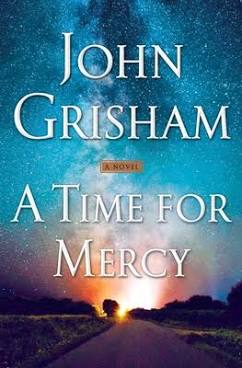
A Time for Mercy by John Grisham is being branded as the third Jake Brigance book. Who the heck is Jake Brigance? Oh yeah, Jake Brigance was the lawyer in Grisham’s early bestseller A Time to Kill.
I was never a fan of A Time To Kill. I’ve always thought (and you can read more at A Time To Kill vs. To Kill A Mockingbird) that A Time to Kill was successful only because it was released right after The Firm hit it big.
Whether or not you think A Time to Kill was any good, A Time for Mercy might be even worse. I say “might be” because I at least finished A Time to Kill when I read it in the 1990s. At the time, I didn’t care about cliches and one-dimensional characters, and even if I did, John Grisham was a new writer who had succeeded because of grit (if you believed those 1990s stories about Grisham), so his flaws could be overlooked.
Now Grisham is an old man writer. He should know better. Here’s an excerpt from that old man writer’s new novel:
*****
Stuart was a sloppy, violent drunk. His pale Irish skin turned red, his cheeks were crimson, and his eyes glowed with a whiskey-lit fire that she had seen too many times. At thirty-four, he was graying and balding and tried to cover it up with a bad comb-over, which after a night of bar-hopping left long strands of hair hanging below his ears. His face had no cuts or bruises, perhaps a good sign, perhaps not. He liked to fight in the honky-tonks, and after a rough night he usually licked his wounds and went straight to bed. But if there had been no fights he often came home looking for a brawl.
‘The hell you doin’ up?” he snarled as he tried to close the door behind him.
As calmly as possible, Josie said, “Just waitin’ on you, dear. You okay?”
“I don’t need you to wait on me. What time is it, two in the morning?”
*****
It all goes down from here.
Stuart beats the hell out of Josie in an overly violent scene, and then kids get involved, and there’s even an unnecessary sexual reference thrown in about a teen girl. I know that Stuart has to be set up as irredeemable character, but the bad comb-over (redundant) is one step too far. Since this book takes place in 1991, a balding mullet still would have been fashionable to a guy like Stuart. At any rate, this guy seems too despicable, even for a character in a bestselling thriller.
And “Irish skin”? C’mon! I know bestselling authors have to rely on stereotypes, but that’s just lazy!
I also know “C’mon! That’s just lazy!” is not an acceptable legal argument, but it’s fine on a literary blog.
After reading a few pages of A Time for Mercy, it became A Time To Stop Reading because of all the lazy stereotyping. C’mon!
*****
Enough about me! What do you think? Could this scene have been written without the lazy stereotyping? What was the last good John Grisham novel? Is “C’mon!” an acceptable argument on a literary blog?
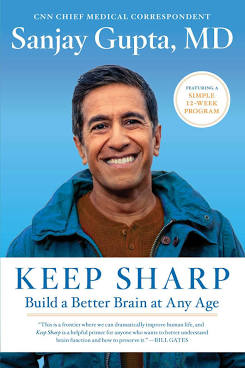
Keep Sharp:Build a Better Brain at Any Age by Sanjay Gupta might appeal to a bunch of people my age because we’re concerned about dementia and Alzheimers and stuff like that. Whenever I forget something, I wonder if it’s age or if it’s because I have too much information in my head already. At any rate, this is a good idea for a book.
I’m not convinced that Sanjay Gupta is the ideal author for this book, though. Yeah, Gupta is a medical analyst on CNN, but to me being on TV gives him less credibility. It’s kind of like Bill O’Reilly and his history books; the topics he chooses are interesting, but I’m not going to read his books. TV personalities are too smug to be trusted.
My other problem with Sanjay Gupta is that his paragraphs are too long. I have nothing against long paragraphs if there’s a reason for the paragraphs to be long. Gupta’s long paragraphs are rambling with ideas that could easily be split. Maybe this isn’t the best writing style for a book called Keep Sharp.
Here’s one example:
*****
The list of twenty-four questions that follows will help you assess your risk factors for brain decline. These are mostly all modifiable risk factors, so don’t panic if you answer yes to many of these questions. This is not meant to frighten you. (Remember: I don’t believe that scare tactics work.) Some of these questions correlate with highly reversible symptoms of cognitive decline. Chronic sleep deprivation, for example, can lead to a staggering amount of memory loss that can appear like the onset of dementia. Sleeping well is one of the easiest and most effective ways to improve all of your brain functions, as well as your ability to learn and remember new knowledge (it improves every system in the body). I underestimated the value of sleep for too long, taking great pride in my ability to function on a lack of it. Take it from me: That was a mistake. Luckily, this can be remedied with proper diagnosis and simply going to bed earlier and putting away your electronic devices and your to-do list. Some queries may seem unrelated, such as your level of education. For reasons I’ll explain in this book, multiple studies now show that higher education might have protective effects in cognitive decline but not necessarily at slowing the decline once memory loss has started. In other words, people with more years of formal education (e.g., more college attendance and advanced degrees) or greater literacy have a lower risk of dementia than those with fewer years of formal education, but that doesn’t matter as much if you start to develop dementia in the first place.
*****
An author who writes about brains should know that the average reader prefers shorter paragraphs. Here’s a more readable version. At least, it was easier for me to read.
*****
The list of twenty-four questions that follows will help you assess your risk factors for brain decline. These are mostly all modifiable risk factors, so don’t panic if you answer yes to many of these questions. This is not meant to frighten you. (Remember: I don’t believe that scare tactics work.). Some of these questions correlate with highly reversible symptoms of cognitive decline.
Chronic sleep deprivation, for example, can lead to a staggering amount of memory loss that can appear like the onset of dementia. Sleeping well is one of the easiest and most effective ways to improve all of your brain functions, as well as your ability to learn and remember new knowledge (it improves every system in the body). I underestimated the value of sleep for too long, taking great pride in my ability to function on a lack of it. Take it from me: That was a mistake. Luckily, this can be remedied with proper diagnosis and simply going to bed earlier and putting away your electronic devices and your to-do list.
Some queries may seem unrelated, such as your level of education. For reasons I’ll explain in this book, multiple studies now show that higher education might have protective effects in cognitive decline but not necessarily at slowing the decline once memory loss has started. In other words, people with more years of formal education (e.g., more college attendance and advanced degrees) or greater literacy have a lower risk of dementia than those with fewer years of formal education, but that doesn’t matter as much if you start to develop dementia in the first place.
*****
What do you think? Which version is easier to read? Should a book about preserving your brain be easy to read? Is Sanjay Gupta more credible than other medical professionals who aren’t on television?

Famous author Glennon Doyle has made a ton of money off of her latest book Untamed, but maybe she should have left some stuff out of it. In her chapter Tick Marks, she reveals how she rigged her senior Homecoming election.
*****
(the set up)
I am now a girl who, even when she’s forty-four years old, can roll her eyes and mention, offhandedly, well, I was on the Homecoming Court. Others will roll their eyes, too (high school!), but they will also register: Ah. You were Golden. Golden is decided early, and it sticks, somehow, even when we are grown and know so much better, so much more. Once Golden, always Golden.
(a few paragraphs later)
I rigged an election trying to be Golden. I spent sixteen years with my head in a toilet trying to be light. I drank myself numb for a decade, trying to be pleasant. I’ve giggled at and slept with assholes, trying to be untouchable. I’ve held my tongue so hard I tasted blood, trying to be gentle. I’ve spent thousands on potions and poisons, trying to be youthful. I have denied myself for decades trying to be pure.
*****
Stay Golden, Glennon Doyle, stay Golden.
But even if she is Golden, we know how sacred our elections are, especially in these days of foreign interference and fake ballots. We can’t have fake personalities too. If Glennon Doyle thinks that she can simply admit that she faked her personality and be forgiven for her homecoming election scheme, then she’s got another think comin…
No, I’m kidding. Nobody cares about high school.
I’m pretty sure faking your personality isn’t considered a form of election rigging. If it were, every politician who claims to care about his/her constituents more than his/her kickbacks would get thrown out. Glennon Doyle’s place in homecoming history is secure.
And who even mentions homecoming after age nineteen? I know I’m not the target demographic for Glennon Doyle books, but I hope most of her readers don’t care much about what happened to them in high school, except maybe if they go to their class reunions.
If Glennon Doyle goes to her high school reunion and mentions homecoming, her former classmates might still think of her as a Golden One. Or they might just think she’s crazy. But I don’t think they’ll care enough about homecoming to impeach her.
*****
Enough about me! What do you think? When did you start getting over high school social trauma? Or were you one of the Golden Ones? Do the Golden Ones even think of themselves as the Golden Ones? Is Glennon Doyle Golden or crazy? Have you even read Untamed by Glennon Doyle?
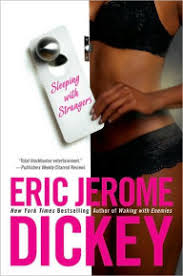
I read a lot, but I’m not familiar with every writer out there, so when I heard/read that author Eric Jerome Dickey died last week, I wondered… what kind of stuff did he write?
*****
Bestselling author Eric Jerome Dickey, whose novels depicted romance, erotica and suspense from the Black perspective, including Milk in My Coffee, Sleeping with Strangers and Friends and Lovers, has died. He was 59.
He died in Los Angeles on Jan. 3 after a long illness, his longtime publicist confirmed Tuesday.
His publisher, Dutton, an imprint of Penguin Random House, referred to the popular writer as “an iconic author and friend” on social media.
Read more at Popular Author Eric Jerome Dickey Dies After Long Illness. He Was 59.
*****
Other book sites refer to Eric Jerome Dickey’s books not as erotica, but as erotic… ahem… thrillers. It’s not unusual for me to be unfamiliar with popular authors, but I usually have some basic knowledge of genres, and I know almost nothing about the erotic… ahem… thriller genre.
So I have a few questions. When you’re reading an erotic… ahem… thriller, what’s more important, the thriller/mystery/suspense or the eroticism? Do readers skip through the mystery to get to the erotica? Or do readers skip through the erotica to get to the mystery/suspense? Or are they both equally great?
Is the erotic thriller supposed to be a step above straight up erotica? Do people who read erotic… ahem… thrillers look down upon those who read erotica? Or is vice-versa?
To be fair, this Dickey author found a genre and seemed to have been pretty successful in it. Those are the dream accomplishments for a lot of authors, finding their niches and their audiences. Good job, Eric Jerome Dickey!
I don’t know what an erotic… ahem… thriller is, and I’m not going to start reading them, but I respect a guy who finds his/her own genre.
*****
Enough about me! What do you think? What’s more important in an erotic thriller, the eroticism or the mystery/suspense/thriller? What genres/sub-genres are you unfamiliar with?

A prequel/sequel to The Great Gatsby by F. Scott Fitzgerald is such a bad idea that I’m glad I didn’t think of it first. Unfortunately, this is what happens when a famous creative work hits public domain.
*****
Every year, as we leave one behind and enter another, a new batch of literary works enter the public domain. That means the copyrights, which protect books from replication and adaptation for a certain number of years depending on when those books were published, expire, allowing creators to adapt or reimagine these works for free without dealing with the original authors’ estates. “And all of the works are free for anyone to use, reuse, build upon for anyone — without paying a fee,” Duke University law professor Jennifer Jenkins explained to NPR. Now that we’re in 2021, copyrights for books published in 1925 are lifting, including ones on F. Scott Fitzgerald’s The Great Gatsby.
It’s no coincidence that author Michael Farris Smith is publishing Nick, a Great Gatsby prequel novel about Nick Carraway, a few days from now. According to Time, new additions of the original novel are being printed with fresh introductions by author Min Jin Lee and culture critic Wesley Morris, and January will also bring an illustrated edition from Black Dog & Leventhal.
For more, read ‘The Great Gatsby’ and other works from 1925 are now public domain.
*****
Just so you know, the article’s use of the word additions instead of editions was the article’s mistake, not mine. Maybe it’s been fixed by now.
To be fair, the novel Nick by Michael Harris Smith might be a decent novel. It might be well-written. Maybe the good reviews are sincere and NOT pre-written. But no matter how good it is (and it probably isn’t very good at all), the book will be about a wealthy guy who just happens to be named Nick Carraway.
It’s not THAT Nick Carraway, if you know what I mean.
When authors who are not Sir Conan Arthur Doyle write Sherlock Holmes stories, they’re just writing stories about some high IQ drug addict who happens to be named Sherlock Holmes. When authors who are not Alexandre Dumas write stories about the Three Musketeers, they’re writing stories about three pawns of the old royal social hierarchy who just happen to be named Athos, Porthos, and Aramis (and maybe D’Artagnan too).
When authors who are not Bram Stoker write stories about Dracula, they are writing about some guy with funny looking teeth who just happens to be named… aw, you get the idea.
Authors write these books because there’s a market for them. That’s fine. I’m not angry at these authors or at the readers who buy the books. I’ll just point it out and do my own thing. I promise, I will never write a sequel to The Great Gatsby. I will not call it Carraway or Jay or The Formerly Great Gatsby or The Once and Future Great Gatsby.
But look out when The Catcher in the Rye becomes public domain! That damn Holden Caulfield kid whines like hell. Damn whiner.
*****
But enough about me! What do you think? Should authors mess with public domain characters just because they can? Which famous character would you like to mess with?