Maybe Lewis Carroll wasn’t high when he wrote Alice in Wonderland, but I know some people who were high when they saw the movie. (image via Wikimedia)
After we finished reading “Jabberwocky” one day in my ninth grade English class (“reading” is the wrong word; “staring” might be more accurate), our class’s goofball burnout asked loudly, “Was that dude on drugs when he wrote this?”
My over-sensitive English teacher seemed shocked by the question and quickly responded, “No. People didn’t take drugs back then.”
The thing is, I believed her at the time. A few years later, I learned about opium (not first hand).
I feel gullible for believing my ninth grade English teacher, but I’ve been gullible most of my life. It took several writers conferences where literary agents claimed they would get back to me about my manuscripts to figure out that I was too gullible. Gullibility is not a good characteristic for a writer to have.
Despite what my over-sensitive English teacher claimed, people did take drugs in the 1800s. Opium was a medicine of choice, and Lewis Carroll possibly suffered from migraines. If Carroll had migraines and partook of a bit of opium for relief (or just for the heck of it), then maybe, just maybe, Alice’s Adventures in Wonderland and Through the Looking-Glass were inspired by more than imagination.
To me, it doesn’t matter. It’s not like opium, cocaine, and marijuana are performance enhancing drugs when it comes to writing. From my (friends’) experiences, taking certain brain altering substances can limit creativity rather than enhance it. It usually slowed down my (friends’) thought activity. Some of my (friends’) hallucinations were cool, but nothing to write about.
To unimaginative people, an act of creativity seems drug inspired. Giant living playing cards. A grinning cat that turns invisible. Tweedle Dee and Tweedle Dum. Jabberwocky. No normal person could come up with that stuff without hallucinogenic encouragement. But creative folk can do that (in their sleep or) while completely awake and alert.
Some creative people resort to drugs. Aaron Sorkin has a reputation for cranking (crank.. haha) out a lot of material while he’s under the influence of something other than alcohol. Maybe one morning he cleared his mind, read his dialogue, and said, “I know these characters are witty, but they talk so fast that I can’t understand a word they’re saying. Plus, they’re kind of pompous.”
And maybe, just maybe, Lewis Carroll recovered one morning from his dazed and confused night of opium-inspired writing, stared at his parchment, and exclaimed, “What the hell is a vorpal?”
If Lewis Carroll wrote anything while under the influence, it probably wasn’t “Jabberwocky” because “Jabberwocky” was a poem, a tightly designed poem. If “Jabberwocky” had been written in free-verse, then I could have believed Carroll had been hallucinating, but it’s tough to write rhyme with a consistent rhythm and be nonsensical at the same time. It was a calculating mind that composed this nonsense. Unfortunately, my over-sensitive English teacher seemed too afraid of the drugs topic to state this to the class.
*****
Alice in Wonderland and Literary Girlfriends
One evening my literary girlfriend in college invited me to her apartment to watch the movie Alice in Wonderland with her, and I thought Alice in Wonderland was code for “spend the night and have lots of fun.”
When we actually began watching the movie, I thought, “This isn’t as much fun as I was hoping for.”
It might have worked out okay, but then Tweedledee and Tweedledum showed up in the movie, and I exclaimed: “My ninth grade English teacher told us that they were in Through the Looking Glass, not Alice in Wonderland. I always knew she was a dumb broad.”
Literary girlfriends have a unique look of contempt when guys say something stupid. First of all, I knew that Hollywood (and Disney) changed stuff in movies back then, so that made my comment pretty stupid. Secondly, I should never have said “dumb broad.” My ninth grade English teacher was very smart (if over-sensitive), but in college I hadn’t yet honed my tightly crafted sense of humor, so I could come across as crass (when I wasn’t coming across as lame), and I was promptly kicked out of my literary girlfriend’s apartment.
Fortunately, she was forgiving (or desperate), and she took me back the next day. Unfortunately, she broke up with me two weeks later to go out with one of her (former) professors.
Professors. What a scam. I could have become a professor.
*****
Other Children’s Authors Who Might be Accused of Writing While in an Altered State
Frank Baum- The Wizard of Oz series/ Lots of crazy stuff, spread out over 14 books.
Crockett Johnson- Harold and the Purple Crayon books/ A magic crayon and purple? It has to be drug related.
Margaret Mahy- Down the Back of the Chair/ Reading this makes me wonder what Margaret Mahy really hides in the back of her chair.
Roald Dahl- The BFG/ I don’t even know what this book is about; I just like saying “BFG!”
Shel Silverstein- Uncle Shelby’s A-B-Z Book/ Look at a picture of him. Plus, his name is Shel. Poor guy never had a chance.

Has Mark Zuckerberg ever fired an employee for writing something stupid on Facebook? (Photo credit: Wikipedia)
The great thing about the internet from a literacy point of view is that more people than ever are writing. The problem is that a lot of these people writing aren’t truly writers. They’re talkers, using writing as a tool. Talkers are charming and personable, so when they say something tacky, people laugh and forgive it.
But when a charming talker tweets a tacky comment or puts it on Facebook or email, it can be seen by countless people who don’t know how personable and charming the charming talker really is. Then the charming talker ends up getting fired, losing friends, or has to make embarrassing, insincere apologies.
“Best Writing Tips Ever! The Internet Edition” is a tool for charming talkers (or anybody else) who want/need to write on the internet (email, Facebook, Twitter, etc.) but don’t want to lose friends or get fired for it. “Best Writing Tips Ever!” is not about grammar or punctuation. Once you have mastered writing on the internet without getting fired, then you can worry about the grammar and punctuation.
But until then, concentrate on these rules.
- Don’t write too much online.
Yeah, that can take the fun out of writing, but the less writing you put on the internet, the less stupid stuff that can get traced back to you. If you do have to write, short responses are great. My e-mails, texts, and Facebook entries are filled with “Yes,” “No,” and “I’ll get back you later.”
Short responses keep you from keyboarding snide remarks that can come back to haunt you. If you say “This job sucks,” to a co-worker, you can always deny it if the boss comes down on you. If you write “This job sucks” in an email, tweet, or Facebook entry, there is no plausible deniability. Saying somebody hacked into your account doesn’t work anymore, even if somebody did hack into your account.
- Avoid writing about personal problems.
Don’t get me wrong; I love reading about other people’s problems. But if you choose to write about it publicly, a lot of people who aren’t really your friends are going to read it. You’re basically providing free entertainment to readers you don’t know. And if the readers do know you, it can lead to awkward situations later.
The possibility of having an awkward situation will not stop acquaintances (or employers) from reading about your personal problems (and making comments behind your back). The only way to stop this is to not write about your personal problems. If you absolutely need to write about your problems, don’t publish (or send) what you wrote.
- Do not admit to personal vices.
Vices are really fun. Whether it’s getting drunk, getting high, hanging out with strippers (helping them through college), tearing up property during a protest, it’s best if you don’t brag about it. If you do write about your vices, make it sound fictional.
- Leave job related issues at work
Writing is a blast, but getting paid is way better. If I ever criticize my boss or employer or anybody who is giving me money, I do it behind the scenes so that it can’t get traced back to me. I’m not going to put it in an e-mail, or a tweet, or on Facebook.
And the few times I absolutely have to take a stand (it happens!), I am very careful about what I write. At the very least, that means deleting a lot of adjectives.
- Don’t write jokes that aren’t funny.
Yeah, I know this whole blog is filled with jokes that aren’t funny. I get it. At least when I write a bunch of lame, tasteless jokes, I’ll title it something like BEST LAME, TASTELESS, OFFENSIVE PORN JOKES EVER! You know what to expect from me, there’s a context to the lame jokes, and I don’t attach them to my name, or my employer, or anybody who knows me.
- Don’t write when you are emotional.
It’s okay to write stuff when you’re angry, or sad, or exhilarated, or in any other extreme emotion. But you’d be better off waiting until you’re in the right frame of mind before you actually publish it. Extremely emotional tweets can be very entertaining, but most people don’t write emotional stuff to entertain; they write extremely emotional stuff to vent.
Venting should be done in private. Then when you’re calm, go over it (delete all the adjectives and insults), and then… maybe… think about publishing it.
- Stay away from writing utensils or apparatuseseses when you are drunk (or in a similar condition).
When you’re drunk (or in a similar condition), you don’t have control over your faculties (or is it “facilities”?), so obviously you shouldn’t be writing. The problem is that people who aren’t in control of their faculties often don’t realize they aren’t in control of their faculties. I once wrote (what I thought was) an awesome joke when I wasn’t in control of my faculties and the next morning realized it said something like: “Lkomp gmbpg ju tyggdew bjklr!”
One commenter said it was the best joke I had ever written.
- Do not write when you are in a hurry (unless you’re going to get fired or a bad grade for having nothing).
Always take a moment to think through your writing before you publish it. I once had a writing instructor say that a writer should leave a rough draft alone for six months before proofreading it. Unfortunately, I did that with my tweets, and got stuck with a bunch of 140 character “LeBron James chokes” jokes that are out of date.
Still, if you’re tweeting or texting, at least look them over closely before you send them. Think about the appropriateness of what you wrote and make sure the automatic spell check didn’t mess anything up.
- Do not multi-task while writing.
Some activities can be multi-tasked, and others can’t. I can fold my laundry and watch football at the same time. But there are at least three things you shouldn’t multi-task during: driving, reading legal documents, and writing.
Writing while doing something else can lead to disastrous mistakes. Yeah, it might just be a missing word, but it could also mean sending the wrong message (“My job sucks!”) to the wrong people (your employers). And that’s way worse than using the wrong form of “their” or “two.”
*****
Some people may complain that following my advice will lead to really boring writing on the internet. That would happen only if everybody followed my advice. The world is full of people who don’t follow advice, no matter how wise it is, so there will always be people who write entertaining stuff (and get fired for it).
Just make sure it doesn’t happen to you.

Show some respect! This was once state-of-the-art technology. (Photo credit: Wikipedia)
Technology is supposed to make our lives easier, but it doesn’t always work out that way. Technology changes so quickly that anything we learn will be outdated in a couple years. Back in the old days, when we learned something new, it stayed relevant for a decade or two.
A Best Technology Joke Ever is an anecdote that makes fun of the changes in our lives because of technology without getting too technical. You don’t have to be an expert on the latest gadgets to appreciate a Best Technology Joke Ever! The following anecdotes might not be the funniest technology jokes ever, but since anybody can understand them, these are some of the Best Technology Jokes Ever!
*****
GOD GETS ADDICTED TO FACEBOOK AND TWITTER
It was the new millennium, and as God looked over humanity, He was again saddened and disappointed by what He saw. Humans had developed almost miraculous technology and yet were misusing it for their base desires. Men used technology for porn. Women used the technology for gossip. Criminals used the technology to help themselves steal and murder. Very little productive was being done with these wonderful tools that God had allowed/helped humans to discover.
And so God decided to step in.
First, God created an account on Facebook and friended everybody. When He was rejected by most Facebook users, God was stunned.
“Who would dare not to friend God?” God asked with indignation, tempted to set the world on fire.
But instead, God upgraded His Facebook page.
He put up photos of Adam and Eve with the apple, Moses parting the Red Sea, and Jesus walking on water. These pictures created a huge stir on the internet, as image experts closely examined the pictures for signs of image editing or anachronisms (God had made Moses take off his watch), but the photos were authentic, and people throughout the world began to believe that this particular Facebook page truly belonged to God.
And soon God had more friends than anybody else on Facebook, and God was happy.
Next, God went on Twitter. It was sometimes difficult to keep His good word to 140 characters, but He was God and the Twitter technology showed remarkable flexibility when God wrote too much. God used Twitter to shame individuals of their sins. He publically warned men (and women) not to cheat, not to watch porn (at least not at work), not to discuss politics where food was being served, and of course not to steal, murder, and the usual stuff.
Humans did not stop committing acts of sin, but the number of acts of sin decreased greatly.
Atheists, however, refused to believe that this was the work of God. It had to be a hacker with enough resources to check individual internet usage and deduce who was sinning and how. No amount of evidence was enough to prove to them that God existed and had gotten addicted to Facebook and Twitter.
“Prove that you’re God,” the skeptics demanded to God. “Perform a miracle for us.”
“Is nothing enough for you?” God scoffed. “I have just used Facebook and Twitter in a positive way to do good in the world. If that’s not a miracle, I don’t know what is.”
*****
TECHNOLOGY AND PERFECT ATTENDANCE
A corporate manager made a grand announcement to his department during a (mandatory) working lunch.
“I’ve got great news,” the department manager said to his employees. “For the first time in the history of this corporation, a division has had perfect attendance for the entire year. And that’s us!”
There was much cheering and high-fiving from the employees.
A cynical employee muttered to his co-worker, “I bet you there’s a ‘but’ after this.”
“As proud as I am of this department,” the manager continued, “I think we can do even better.”
“That counts as a ‘but’ to me,” said the cynical employee.
“Our department is undergoing a couple changes that will make us even more efficient,” the manager declared.
“I bet none of the changes will be a raise in our salaries,” said the cynical employee.
“This department has just purchased new software that will make us even more productive,” announced the manager.
“More boring training sessions and a lot more additional paperwork,” muttered the cynical employee.
“And unfortunately,” announced the manager, “a new firewall has been added so that none of you can access any social networking sites or any… other… um… adult… um… sites… on your office computers.”
There was an audible groan, but nobody argued.
“There goes our perfect attendance,” the cynical employee said. “The only reason we come to work every day was for the Facebook and free porn.”
*****
COP BUSTS TEXTING DRIVER
Several states had made text messaging while driving a crime, so a police officer who needed to meet his quota sat in his squad car on a busy street watching for violators. He noticed an SUV speeding with a bunch of screaming teenagers jumping up and down without seat belts on in the back seat while the driver was texting with one hand on the steering wheel.
After he had pulled her over, the police officer said, “Ma’am, you were speeding. You have several kids in the back jumping and screaming without seat belts on. Why in the world were you texting at a time like this?”
“They couldn’t hear me yelling at them,” the driver said, exasperated. “So I was texting them to sit down and shut up.”

These cheerleaders may be gorgeous, but from where I’m sitting in the stadium, they could be hairy guys in skirts, and I wouldn’t be able to tell. (Photo credit: Wikipedia)
Since I wear glasses and read a lot of books, people assume I don’t like football, and I can understand why they think that. Football fans paint their bodies in team colors, get drunk, shout profane slogans, destroy property, and I don’t do any of that. But I understand why football is awesome and what makes it the most popular sport in the United States.
A lot of my friends (who also wear glasses and read a lot of books) hate football and don’t understand its appeal. With football season here (or approaching), I’m probably going to have to explain football’s merits again very soon, so this is my practice.
*****
Here’s why Americans love football more than any other sport:
1. Most football games are played on the weekend.
A lot of sporting events are played on week nights, and that can be tough on potential viewers/spectators. Most football games are played on Saturdays (college) or Sundays (NFL), making it very easy for most potential viewers/spectators. Fans can get sloppy drunk on a Saturday night (or Sunday afternoon) and still be fine on Monday morning (or Monday afternoon).
That’s very thoughtful of football.
2. Almost every game is meaningful.
This explains why football fans get really obsessed. Teams only play one game a week for a few months out of the entire year. College football teams play a 12 game season. NFL teams play a 16 game season (only eight home games). That means each game is important, and each game can be turned into a major event. For football fans, every weekend from September to February is a holiday weekend.
Unfortunately for football fans, some actual holidays don’t feel like holidays because there isn’t a football game on.
3. The football isn’t round.
Most sports require a round ball, but the football has a weird shape. This might not seem important, but it makes football unpredictable in ways that other sports aren’t. The football can be thrown with a beautiful spiral that can be accurate even in a fierce wind. The football, however, bounces or rolls in an ugly unpredictable way when it’s dropped or fumbled.
I love watching Tom Brady (or Aaron Rodgers or any other quarterback) throw a 50 yard touchdown pass. I also love watching Tom Brady (or any other quarterback) chase a fumbled football that keeps bouncing in different directions. Everybody looks funny while chasing a rolling bouncing football, even Tom Brady.
4. Football requires more sets of skills than any other sport.
A successful football team needs a bunch of big lugs on the (offensive and defensive) line, some strong fast athletes at the skill positions, and then a couple really smart guys (hopefully the coaches and quarterbacks) to run everything. This means that there is an element of the game to appeal to every kind of sports fan.
- If you like violence, then you can watch the skill position guys get tackled or the linemen pound each other.
- If you like speed, you can watch the receivers getting open or the running backs flying through the holes in the line.
- If you like strategy, you can analyze the play calling.
No other sport requires so many different skill sets, and all must work together for a football team to be successful.
Football is like the United States. In order for the United States to function and prosper, people of all religions, races, genders (and any other demographic groups that I can’t think of off hand) must share a common set of values (I’m not getting into what those values are or should be). For a football team to succeed, athletes of various talents, sizes, and strengths must work together in a way that no other team sport requires. Football is a unique sport for a unique country.
USA! USA! USA!
5. Football has the best music!
Football music is rousing and can motivate me to do anything (except exercise). If I’m having a rough morning, I can turn on NFL Network before I leave home, hear a few notes of football music that get stuck in my head, and I can walk into work in slow motion with my chin held high. Nobody messes with a guy who walks into work in slow motion (though some people will call the cops).
6. I can read during a football game.
This reason doesn’t appeal to many football fans, and I’ll never admit this outside of Dysfunctional Literacy. Football is the one major sport where I can read a book and still keep up with the game. If I try to read during any other sporting event, I’ll stop paying attention to the game (which isn’t necessarily bad).
There’s about a 20-30 second time period between each play during a football game, and that’s enough time for me to read a little bit and then glance back up in time to catch the next play. If the book is really good, I may miss a few plays, but I can always rewind. If the game is really good, I may get stuck on the same page for a couple hours, but that’s okay too.
Reading a book is best done at home. As socially awkward as I may be, I have never taken a book to a football game. Even I know that is a bad idea. However, with today’s technology, I can read a book on my phone (or other device) and everybody around me assumes I’m either checking scores or watching porn, and everybody at the game is fine with that.
*****
If I get into a discussion about football with one of my non-football friends, I think I’ll shorten these explanations a little bit.

Most authors would be afraid to put the word “sleep” in a book title, but not Stephen King! (Photo credit: Wikipedia)
Sequels aren’t always a good idea. For every Godfather II or Spider-Man 2, there’s a (Godfather III or Spider-Man 3), Jaws 2, Caddyshack 2, or Ghostbusters 2. But now that Stephen King is ready to publish a sequel to his novel The Shining (information and synopsis for Dr. Sleep found here ), it leaves potential readers like me wondering…. Why?
It’s been around 35 years since The Shining was published, and as great as (I think) it was, I’ve never heard anybody say, “You know, The Shining really needs a sequel.”
When you write a sequel to a much loved classic, a lot of things can go right (make tons and tons of money), but a lot can go wrong too (great idea goes stale).
Reasons to Write a Sequel to The Shining
- Because Stephen King wants to.
Who is going to tell Stephen King not to write a sequel to The Shining? Editors (if he has any)? Publishers? Readers? If Stephen King wants to write his own version of the phone book, there are a few million people who would buy it because Stephen King wrote it.
Yeah, phone book references are probably outdated.
- Because there were unanswered questions in The Shining.
A good/great horror book always has unanswered questions about the supernatural, and The Shining is a great example. I don’t like spoilers, so I’m not going to list the unanswered questions I have, but a great sequel could build on what The Shining left unexplained.
- Because it’s going to make a lot of money.
This reason needs no explanation.
Reasons NOT to write a sequel to The Shining
- It’s been too long since The Shining.
There’s an old rule in literature that I just made up that says if you take 35 years to write a sequel, then the sequel probably won’t be very good. Unfortunately, I can’t think of too many examples of this to prove (or disprove) my point. Most sequels that were written 35 years after the original were written by another author and that’s the reason why those sequels aren’t very good.
- The unanswered questions are best left unanswered.
There were some unanswered questions in The Shining, but the answers Stephen King provides in Dr. Sleep might be disappointing. The Matrix is a good example of this. The Matrix is considered a great movie, but the sequels tried to explain too much, and confused fans had to write really long explanations of what they thought the movies meant. I got confused when I watched the 2nd and 3rd movies, and I became even more confused when I read the really long explanations.
Cool fight scenes and cool horror books shouldn’t have complicated explanations. Hopefully Dr. Sleep won’t have a long, complicated (boring) explanation.
- Dr. Sleep might not be anywhere near as good as The Shining.
The Shining is awesome. But (in my opinion) Stephen King hasn’t written an awesome book in decades. That doesn’t mean he isn’t capable of writing an awesome book, but I haven’t seen the proof of it recently.
A sequel to The Shining should have to be awesome before it gets published.
WARNING SIGNS!!!!
I haven’t read Dr. Sleep (it hasn’t come out yet), but from what I’ve read about it, I’ve got a couple concerns.
- The title Dr. Sleep
The Shining was a cool title for a book. It was mysterious, and it took a while for the reader to have an idea what it meant. Dr. Sleep is not very mysterious (and I’m not sure it’s a cool title either). Unless King throws a major curve ball (cliché! I know!), every reader knows what Dr. Sleep is referring to.
It’s also risky to put the word “sleep” in your book title. If the book is long and plodding, snarky critics will have a wonderful time making “sleep” references to your bestseller. If an author puts the word “sleep” in a book title, the book had better be exciting.
A couple decades ago I made a comment that Stephen King’s novel Insomnia cured mine, and all I got was the silent stare. I learned then never to tell a Stephen King joke during a football game.
A few days later I learned to never tell an Insomnia joke to somebody who really likes Stephen King books. Yeesh, it was worse than talking politics.
- Character name: Abra
Meaningful names are signs of lazy writing, especially when the name is obvious (or ironic). Abra? Sometimes you just have to roll your eyes and say (in exasperated fashion), “C’mon!”
*****
Stephen King has sold more book titles than I’ve sold book copies, so maybe I have no business questioning him or his sequel. I don’t know. Most sports fans have never thrown a football but have no problem criticizing/questioning NFL quarterbacks (or college, high school, or pee wee league quarterbacks).
But if there’s anybody in this world who can handle criticism (that he’ll never know about anyway), it’s Stephen King.
*****
I really hope this sequel is awesome, but I’m prepared for it not to be!

(Photo credit: Wikipedia)
We Americans may be guilty of using too many natural resources, consuming too much food, and exporting a corrupt culture throughout the world, but at least we have a sense of humor about it. A BEST AMERICAN JOKE EVER! can poke fun of the unique foibles of the United States without offending Americans enough to send out the drones . The following anecdotes might not be the funniest American jokes ever, but since they can be appreciated by Americans, non-Americans, and even anti-Americans, these are some of the BEST AMERICAN JOKES EVER!
*****
DOESN’T ANYONE SPEAK ENGLISH AROUND HERE?
A hotel clerk in a country that was NOT the United States was getting tired of the steady stream of Americans who could speak only English.
“I remember years ago when Americans would at least try to speak our language,” the hotel clerk said to the other hotel employees. “The Americans would usually mess it up, and we would laugh at them behind their backs, but at least they tried.”
An American tourist staying at the hotel then came to the desk to lodge a complaint. Of course, he spoke in English.
“Nobody speaks English around here,” the outraged American said to the clerk. “The maid can’t understand me when I proposition her. The television stations are all in your weird language. You’re the only one here who speaks English worth a damn.”
The hotel clerk rolled his eyes and said slowly, “Where I’m from, the person who is visiting learns his host country’s language.”
“And where I’m from,” the American said, “the guy who’s spending all the money gets to choose what language is spoken.”
*****
A UNITED STATES vs. EUROPEAN UNION JOKE
A Greek guy walked into a bar and ordered a drink. Unfortunately, the Greek guy was broke, and the bartender knew it, but the bartender served him anyway because he didn’t want the Greek to throw a fit and start a riot.
Then an American guy, tired after a day of protecting huddled masses yearning to breathe free, making the world safe for democracy, and maybe (according to some) engaging in a few illegal wars, entered the bar and ordered a drink.
Unfortunately, the America guy was broke, and the bartender knew it, but after a quick discussion, he served the American.
When the Greek heard that the American guy was broke, he started laughing.
“What are you laughing at?” the American said. Normally, he’d be ready to fight, except now he was too tired and spread too thin to care that much.
“I think it’s funny that you’re broke,” the Greek said.
“You’re broke too,” the American said, puzzled.
“Yes, we’re both broke,” the Greek responded, “but you work a lot harder than I do.”
*****
TERRORIST MAGAZINE HIRES AMERICAN WRITER
A major terrorist publication was looking to hire a new American editor after a U.S. drone had killed its previous hire. A U.S. citizen trying to make it big in the writing profession (without having to spend all his time blogging, tweeting, and Facebooking) agreed to interview for the position, and he traveled to a terrorist stronghold to explain how he would make changes to increase the terrorist magazine’s circulation.
“First of all,” the American interviewee said, “we need to change the focus of our feature columns. Articles about guns and mass destruction only appeal to a small segment of the population. If you want to attract a greater percentage of impressionable males, you need articles about porn flicks and strippers.”
The (temporary, though he didn’t know it) terrorist leader agreed with the American’s suggestions, and soon the American was hired. When the American editor told his parents about his new job, they were concerned.
“If you’re successful,” his parents said, “the U.S. government will send drones out to kill you too.”
“That’s why I’m having the magazine focus on strippers and porn,” the new American editor replied. “Even more potential terrorists will read my magazine, and nobody in the U.S. government will want to kill me.”

Rumor has it that Mark Twain tried to make duck face for this photograph, but he mistimed his facial expression. (Photo credit: Wikipedia)
It makes sense that there’s video footage of Mark Twain (even though I didn’t know about it until a couple days ago). He was friends with Thomas Edison, and Nikola Tesla, and if you put those three together, anything is possible.
The video (found at the Internet Archive… I promise you won’t get Rick rolled!) is a little over a minute long, but I despise spoilers, so I won’t tell you what happens in it. However, I don’t mind telling you what doesn’t happen.
- Mark Twain doesn’t get whacked in the crotch.
- Mark Twain doesn’t play air guitar in his underwear.
- Mark Twain doesn’t go face to face with the camera and pucker his lips.
- There aren’t any cats jumping crazily out of nowhere to mess things up.
- There aren’t any creepy looking girls climbing out of wells and crawling toward the viewers.
By today’s standards, the video footage is kind of dull, but it’s Mark Twain!
*****
The video reminds me that Mark Twain used to hang out with Nikola Tesla and Thomas Edison (but not at the same time… I don’t think). Hanging out with Edison, Twain, and Tesla at the same time would have been cool (and impossible), but I would have been the odd man out. I probably would have needed Twain to explain everything that Edison and Tesla were saying, and I would have been the guinea pig (once Twain got tired of the gig) in Tesla’s experiments.
The only contribution I could have made to their conversations would have been something like:
“I’ve got a bad feeling about this. Don’t hit that switch yet. I said don’t hit that… AAAaaarrrrgh! I TOLD YOU NOT TO HIT THAT SWITCH YET!”
I don’t think the other three guys would have been interested in what I had to say.
*****
My grandfather’s favorite author was Mark Twain, and one of the few books I kept when I got rid of most of my collection is a 1953 edition of The Adventures of Tom Sawyer that used to belong to him. It’s kind of beat up, but I think it’s cool that my grandfather used to read that copy before I was born. At least I think it was his. If I’m wrong about that, I don’t want to know.
I’m pretty sure that my grandfather didn’t get to see this video, unless it could have been viewed at a Mark Twain museum decades ago. I live in a time when I can move my fingers on a screen and watch a video of Mark Twain. Twain, Tesla, and Edison probably would have thought that was impressive.
*****
One thing (out of many) that I respect about Mark Twain was that he wrote two books about kids (Tom Sawyer and Huckleberry Finn) without making me cringe. I’m not a fan of kids that are supposed to be (or think they’re) cool, but Tom Sawyer is probably the the coolest fictional kid ever, way cooler than Holden Caulfield. I respect O. Henry a lot too, but I despised that kid in “The Ransom of Red Chief,” and that was just a short story (yes, I know we’re supposed to despise the kid). In reality, no kid is cool (they just think they are), but Tom Sawyer is as close to cool as a kid can get.
It probably takes a cool guy to write about a cool kid, so I’m guessing that Mark Twain was a cool guy, and I’m glad there’s video footage of him.
Man, I hope this footage doesn’t turn out to be a hoax.
Related articles
- Mark Twain Looking Pretty Cool in a Silent Film From 1909 (theatlantic.com)
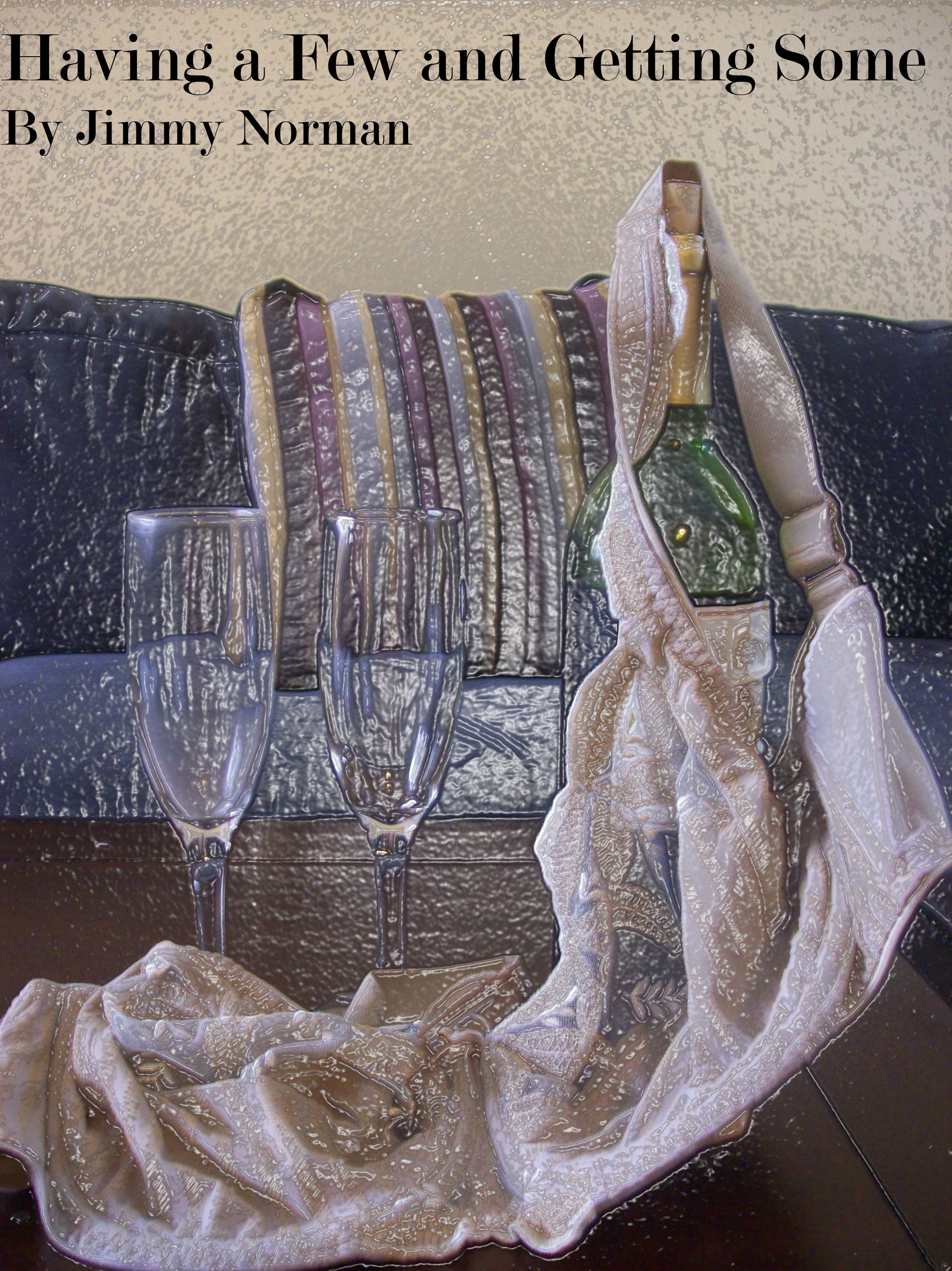
The good thing about a book called Having a Few and Getting Some is that everybody should know right away what it’s about.
I don’t know if I should be ashamed or proud of Having a Few and Getting Some (my e-book), but here is an excerpt:
*****
Chapter One
Theory vs. Application
When I turned 16, my dad got me an older woman for my birthday.
By “older woman,” I mean she was just a few years older than me, and she was really nice looking. Her name was Meg. At least, she told me her name was Meg. She had long, flowing dark hair, and she smelled really good. My dad told me I had three hours to do whatever I wanted to do with Meg, and then he left us alone in the house.
A few days later, my dad stormed into my bedroom, furious. He had found out that I had asked Meg to drive me to the comic book store. I hadn’t gotten my driver’s license yet, and I was a couple weeks’ behind on the new comics, and my parents were tired of driving me, and it had been my birthday, that was what I had wanted to do.
“Do you know how much money I spent on her?” my dad yelled. “If all you wanted to do was drive to the comic book store, I could have done that myself.”
“Yeah,” I answered. “But you wouldn’t have dressed like Wonder Woman and fooled around with me in the comic book stacks.”
*****
No, my dad didn’t really get me an older woman for my birthday.
I tell this story because it always gets people’s attention. I’m a nondescript guy with a slow, dull voice. I don’t have any charisma. I’m probably more intelligent than most people, but it doesn’t always do much good because people don’t listen to me when I talk. I can discuss politics, sports, religion, science, history, and comic books, but nobody cares what I have to say… until I tell them about my older woman.
*****
My First Beer
When I was fifteen, my dad gave me a six-pack of beer and told me to drink it in my room.
“I know teenagers drink nowadays,” he said. “So I’d rather you did it here where I know you can’t get into any trouble.”
I’d never had beer before. My friends went to parties, but I collected comic books, and guys who bought comics didn’t get invited to parties where kids drank beer. I figured this was my chance to learn how to be a cool kid, so I downed a bunch of the beer at one time and felt my first buzz.
Then I threw up in my bedroom.
Then I threw up in the hallway.
Then I threw up in the bathroom (missing the toilet).
To my credit, I started cleaning up my messes myself. My dad stepped out (of the living room, I think).
He took one look at the mess in the hallway and said, “The next time I give you some beer, drink it at someone else’s house.”
*****
My dad didn’t get me beer for my birthday either.
Like I mentioned, people think I’m a boring guy, and I usually don’t give them much reason to believe otherwise. I don’t like talking in large groups. I don’t talk to others until I’m really comfortable around them, and that can take a while, so there’s no reason for anybody to think I’m that interesting. I get along with almost everybody, so there’s no reason for anybody to hate me either. I’m not that interesting, and I’m not hated. I’m a person that inspires no emotional reaction at all.
*****
Who Would It Be?
It’s a question that makes most (heterosexual) men uncomfortable: If your life depended on having an intimate physical experience with another guy, who would that guy be? Most men would stammer and hesitate and then reluctantly name someone who would punch him out if he ever found out about it.
I wouldn’t hesitate. The guy’s name is Craig (I’ve forgotten his last name). I was a sophomore in high school, and he was a senior (that’s not the reason). He had a symmetrical face, perfect teeth, and a surfer’s tan (that’s still not the reason). He also had a rare charisma and the ability to tell spellbinding stories that held the attention of every student in my high school. He transcended cliques. Jocks, nerds, burnouts, band geeks, hoodlums, preppies (Craig was a preppy), it didn’t matter. When Craig performed his stories, everybody else became mesmerized. Whether it was the classroom, the cafeteria, a basement party, the fast food parking lot, none of that mattered.
Craig’s dad was in the air force, so he had moved around a lot before settling into our own semi-military town. Craig was a new kid, so his story telling was a novelty. But I’ve always been critical of books and movies (maybe too much so), and after listening to dozens of his anecdotes, I realized something.
All of Craig’s stories were the same. There was a party in some weird location, somebody threw up, and Craig always got some. These stories were the opposite of my own life because I threw up a lot and never got any. Craig’s stories always involved kids who didn’t go to our school (his relatives, friends, and students from his previous schools), so nobody could check his veracity.
WARNING: When you’re in high school, never declare that you want to check another guy’s veracity. I almost got punched out for that. Just say “truthfulness” instead.
When I suggested to others that Craig was making up stories, some other guy said, “You’re just jealous because he’s getting some and you’re not.”
That ended the argument.
It was true. Craig got a lot (I was never involved), and I never got any (except for the older woman, but that never happened, so she didn’t count, even though an alarmingly high number of people believed the story). But despite the similar formula in each of Craig’s anecdotes, the stories never got old (except for me). And this made me admire Craig even more. I probably learned more from Craig than anybody else I’ve ever met.
Here’s that one all-important lesson I learned from Craig: if you’re a (boring) guy and you need to hold a crowd’s attention, all you have to do is talk about having a few and getting some.
*****
END OF EXCERPT!!!
If you like Having a Few and Getting Some so far, it’s available on the Amazon Kindle for $2.99. I think the sample that Amazon provides you goes further into the book, so if you’re not sure if you want to buy this or not, you can still read more for free.
Hey, I always take advantage of the samples, so you should too.

Gore Vidal: “Half of the American people have never read a newspaper. Half never voted for president. One hopes it is the same half.” Oh yeah? Well, you… you suck! (Photo credit: Wikipedia)
I could never be a literary writer because my prose isn’t very good and my insult repertoire is too limited. When somebody impugns my character, I choose one of three responses:
“You suck.”
“(Derogatory term) you!”
“Your mom _____ ______ ______ last night.”
That’s pretty much all you need to get through life.
*****
Gore Vidal died last night/week/month/year/decade (depending on when you read this). He was a little before my time. I read Lincoln, not because Gore Vidal wrote it, but because I went through a phase where I was fascinated by Abraham Lincoln (but not fascinated enough to write stories about him hunting vampires or to write an alternate history where he gets impeached), so I’m not a Gore Vidal expert, and this is not a tribute.
Gore Vidal liked to insult people, and some of his fans find that endearing. Gore Vidal might not fit in anymore in this era of anti-bullying, but he wasn’t the only author of his time (or earlier times) to be like that. Famous authors used to be known for their put downs, and a lot of their insults got a bit personal.
For example, Vidal supposedly said/wrote this about Ernest Hemingway: “What other culture could have produced someone like Hemingway and not seen the joke?”
My writing instructors would have said that was not constructive criticism.
Gore Vidal allegedly said/wrote this about Truman Capote: “He’s a full-fledged housewife from Kansas with all the prejudices.”
I know a few housewives from Kansas, and all of them could come up with a better insult than that.
That’s just it; a lot of literary insults really aren’t that good. Their insults might be clever (maybe), but their snootiness and condescension makes them ineffective to the average (non-literary) person.
Dorothy Parker was another writer (before Gore Vidal’s time) famous for her insults. Since I wasn’t around then, I don’t know if her targets deserved her nasty remarks. Dorothy Parker might have been the wrong chick to start playing the dozens with, or she might have been a literary bully who needed sensitivity training.
When Dorothy Parker (allegedly) insulted Katherine Hepburn by saying, “She runs the gamut of emotions from A to B,” had Katherine Hepburn done or said something to Dorothy Parker first?
Another problem with classic literary insults is that we rarely get to hear the comeback. When Dorothy Parker insulted Atlas Shrugged (“This is not a novel to be tossed aside lightly. It should be thrown with great force.”), what was Ayn Rand’s response? Whatever it was, it probably wasn’t a sound bite.
When Dorothy Parker called her husband “queer as a billy goat,” did her husband respond by boycotting Chick-Fil-A?
Even with the internet, it’s difficult to find answers to these questions.
EASY COMEBACKS FOR CLASSIC LITERARY INSULTS
Earlier I mentioned my limited repertoire of three comebacks. They’re not creative, but the weapons in my crude limited rhetorical arsenal can be effective, and I’ll apply them to a few of the more well-known classic literary insults.
Oscar Wilde : “He has no enemies, but is intensely disliked by his friends.”
Comeback: “Go (derogatory term) yourself, and get a haircut while you’re at it.”
Mark Twain (about a Henry James book): “Once you put it down, you simply can’t pick it up.”
Comeback: “You suck, and so does Tom Sawyer, Detective.”
Dorothy Parker: “And there was that wholesale libel on a Yale prom. If all the girls attending it were laid end to end, I wouldn’t be at all surprised.”
Comeback: “Oh yeah? I saw your mom at the Yale prom.”
*****
You have to be careful when mentioning an adversary’s mother. When I was in high school, I described my previous night’s sexual exploits with my adversary’s mother and thought I had won the insult exchange because of the sudden silence of the crowd. I then learned that my adversary’s mother had died in some tragic fashion a couple years earlier.
Sometimes you’re better off just saying “(Derogatory term) you!” and walking off.
*****
Just so you know, I hardly ever really talk to people like that (maybe once every ten years or so).

The revolutionaries are happy now, but let’s see what happens when they realize that nobody is buying their e-books. (Photo credit: sweejak)
I don’t trust revolutions. Yes, I’m benefitting from the results of the American Revolution, but I’m glad I wasn’t around when it happened. Revolutions usually lead to piles of innocent dead people and a tyrant that’s worse than the authority figure the revolution is replacing. I don’t mind change, but usually revolutions bring too much change too quickly.
Scottish author Denise Mina says that the publishing industry is going through a “revolution” because e-books are bringing such quick changes to the literary world. This author of the award winning book The End of the Wasp Season (I’d never heard of this book or the award it won) calls the growth of e-books a “revolution” because the working class will use digital novels to overcome the shackles that the publishing industry has always placed on them (almost all of that was paraphrased).
So, the revolution is that anybody can publish an e-book (including we “working class” folk). That’s great! But the bad news that comes with this is that anybody (even “working class” folk) can publish an e-book.
There will be (or already is?) a glut of e-books. So many people are writing e-books (or will write e-books) that there might be more writers than readers. And readers are very important to writers.
All of this is kind of deep for me. I work at a job that has little to do with reading and writing, so I don’t have time to think about all the implications of the revolutionary stuff that’s going on, even though it will affect what/how I read and write.
My only question in all of this is: when I write my e-book, will anybody (other than my mom) buy my book?
From what I understand, most e-books don’t get purchased (or read) much, except by Mom. That’s a lot of pressure to put on Mom. I feel sorry for the mom with five or more kids. They’re all going to write e-books, and she’ll have to spend all her time (and money) reading them. If each kid writes two or three books a year, she’ll never have time to catch up on the latest Janet Evanovich tale, Incredible Infinity (okay, I made that one up!).
FULL DISCLOSURE TIME
I’m writing an e-book. My mom says she is going to buy it. This is one of the few times in my life when I (kind of but not really) wish that I had been raised in an alternative lifestyle kind of family. That way I could have had two moms, and that might have doubled my e-book sales.
My wife has read parts of my soon-to-be e-book and has major issues with it. That’s the problem with marrying a literary girlfriend; she can’t just read something and say, “You used the wrong ‘it’s’ here.” She has to explain how my characters are one-dimensional, the motivations are lacking, and my humor is lame.
Yeah, I know all that, but I still want to know if she’ll buy my e-book.
EPILOGUE
Maybe I shouldn’t make fun of Janet Evanovich’s book titles. I’ve never read Explosive Eighteen, but the title just doesn’t sound right to me. Authors are supposed to read their words aloud to see if they sound the way the author meant for them to sound (probably a poor way for me to say that, which is ironic). I don’t always read everything I write aloud, but did Janet Evanovich ever read this book title out loud? Explosive Eighteen? That doesn’t sound good to me at all. It might look good on a cover, but Egg-splosive Ay-Teen?
Maybe a guy who is about to publish an e-book (that only Mom might buy) shouldn’t make fun of some other author’s (real) bestselling book title.