
The dictionary is a wonderful resource to study the history of profanity. But beware! The root “dic” means “to speak,” not “male body part.” (Photo credit: Wikipedia)
Even though I don’t use profanity much when I speak (and I almost never use it on Dysfunctional Literacy), I have nothing against inappropriate language.
When I was a kid, my older brother had a copy of George Carlin’s album with his “Seven Words you can’t say on Television” routine. The forbidden words (sh*t, f*ck, c***s*cker, c*nt (without an apostrophe), motherf*cker, p*ss, and t*ts were remarkably similar to the words I wasn’t allowed to say at home (but it was alright to play them on an album for the whole family to hear).
At the time, I didn’t care about etymology. I didn’t even know what some of the cuss words meant. All I knew was that they were funny and I couldn’t say them without getting my mouth washed out with soap.
Getting your mouth washed out with soap is worse than it sounds, so I didn’t say these words as frequently as I wanted to.
George Carlin left out a lot of bad words. There are racial, ethnic, gender, and sexual preference slurs that are pretty bad, and I would have gotten my mouth washed out if I had ever used them too. I don’t mind profanity, but I despise slurs, so I think George Carlin was wise to leave those out.
CUSS WORD ETYMOLOGY
The cool thing about dictionaries nowadays is that some of them have cuss words in them. Looking up dirty words in the dictionary would have been fun when I was a kid, but our public school reference books didn’t carry the good stuff. We could get a laugh out of “fart” (explosion between the legs) and “masturbate” (I don’t remember the dictionary’s definition, but it was pretty funny), but the hard core profanity was nowhere to be found.
Now you can look up cuss words online and get the etymology along with the definitions. Man, if we had had online dictionaries in school, I would have gotten myself in a lot of trouble.
All of the following word origins and histories were found in the Merriam Webster Dictionary Online . The sample sentences that I provide below were NOT found in the Merriam Webster Online Dictionary.
THE HISTORY OF PROFANITY: THE GOOD STUFF (I left out the definitions because everybody knows what they are)
F*ck-
F*ck is from the Dutch word fokken which means “to breed (usually cattle)”, and from the Swedish word fókka which means” to copulate” (first known use was in the early 1500s)
Sample: The cattle are fokken in the fields again.
*****
Sh*t-
Sh*t was from the Old English word scite and the Old English scītan which mean “to defecate.” (first known use was in the early-to-mid 1500s)
Sample: I just stepped in a bunch of fokken cattle scite.
*****
C*ck-
C*ck was from the Middle English word cok (adult male chicken; well, this explains the phrase “choking the chicken.”) and from the Old English cocc (first known use was before the 12th century).
Sample- When the farm boy was done with his chores, he played with his big, strutting cocc.
*****
P*ss-
P*ss was from the Middle English/ Anglo-French word pisser, which was from the Vulgar Latin word pissiare (first known use was in the 14th century).
I don’t have a sample sentence. I also don’t know what “Vulgar Latin” is, but if it had been offered in high school, I might have taken it.
*****
T*t-
T*t was from the Middle English and Old English word teat (first known use was before the 12th century)
Sample- I have nothing except the scene in the movie Witness.
The Harrison Ford character and an Amish guy are milking a cow. The Amish guy says, “You’ve never had your hands on a teat before?”
The Harrison Ford character says, “Not one this big.”
The Amish guy laughs (so does the audience).
I really don’t like it when people quote movie lines, but this was the best I could come up with.
WHAT MAKES A WORD VULGAR?
Why is it okay to say “defecation” but not “sh*t”? Why is it proper to say “copulate” or “fornicate” but not “f*ck”? Why is it tactful to say “male appendage” instead of “d*ck” or “pr*ck” or “c*ck”? I almost feel sorry for the male appendage because there’s almost no way to mention it without offending somebody.
It’s all about the syllables.
If you’re going to refer to a socially sensitive body part or bodily function, you have to use a word with more than one syllable. “F*ck,” “sh*t,” “c*ck, and almost every other good cuss word has a root word that is only one syllable. “Fornicate,” “defecate,” and “appendage” all have several syllables. Yes, “motherf*cker has four syllables, but the root word is “f*ck,” and any word with “f*ck” is going to be considered a cuss word. The same principal applies to “sh*thead,” or “sh*tty,” or “sh*tfaced” or “pieceofsh*t.”
It’s tough to sound profane when the root word is more than one syllable. When I cracked my head against the cabinet and shouted “Defecation!” I didn’t feel any better.
When I called my high school nemesis a fornicator of his mother, everybody looked at me funny. And then I got punched out for talking weird.
BLAME (or thank) THE PRUDES
It’s because of prudes that words are considered vulgar at all. If it weren’t for prudes, everybody could walk around naked in public yelling “F*ck!” all the time and nobody would care. But yelling “F*ck!” all the time would get old quickly (and I don’t want to see most people naked).
Even though I’m not a prude (I wrote Best Porn Jokes Ever! so I can’t be a prude), I agree that some words should not be spoken publically. Some words should not be spoken by kids until they’re adults. Kids should have something to look forward to, and freedom of profane expression is awesome when you’ve been getting your mouth washed out with soap for 18 years. I just realized that my mom wasn’t a prude when she was washing out my mouth; she was guaranteeing that I would appreciate profanity when I was an adult.
Profanity has its place. It can be a useful stress reliever if the words are used sparingly. Spout your curse words too frequently, and they lose their power. The prudes understand this (I don’t know if they really do; it just makes me sound credible).
So the next time you crack your head against a cabinet, and the only relief from the pain comes from screaming “F*ck!” really loud, thank a prude.

Determining the “best mystery ever” can be difficult because so many mysteries are so similar. Despite various sub-genres (the whodunit, the hardboiled, the “think like a killer to catch a serial killer”), once you’ve read a couple within each category, you’ve read them all.
But a BEST MYSTERY EVER should be a unique book. It should combine all elements (except for the “think like a killer to catch a killer” because those suck). It should be both a hardboiled detective story and a whodunit. It should be so good that it can’t be copied (though it might have been tried). And that book is The Thin Man by Dashiell Hammet.
NICK AND NORA
The Thin Man is known for Nick and Nora Charles, the first (that I know about) husband-and-wife detective duo. Maybe by 1930s standards, Nora was considered part of the sleuthing team, but by today’s criteria, she just looks pretty (even though she “has hair on her chest”), says funny things, and is kind of a nuisance at times. At least she had the right to vote back then.
Still, the male-female aspect to sleuthing has been copied many times (or perhaps done better as an actual male-female detective duo). Nick and Nora (deservedly or not) are considered the first.
HARDBOILED SARCASM
This book was written almost 80 years ago, but with its heavy sarcasm, it feels like it came out much more recently than that. The dialogue in the book is so good, that almost entire scenes were used in the movie version of The Thin Man. Every script writer should read this novel, just to see how dialogue should be written. Scenes with four or five characters are easy to follow. Even scenes with long paragraphs of dialogue exposition have one-liners that make it dangerous to skim because you might miss something.
DISCLAIMER
The Thin Man is far from being a perfect book. There is a lot of exposition through dialogue (that bugs other readers more than it bugs me because I love the dialogue). Since the reader never feels like Nick or Nora’s life is in danger (even when there’s a gun pointed at them), the book isn’t very suspenseful. There are also a couple scenes that don’t seem to belong in the book (you’ll probably know them when you read them).
But The Thin Man is so great in other areas that its strengths far overwhelm its weaknesses.
MOVIE vs. NOVEL
The Thin Man movie is almost perfect. The book isn’t perfect. Therefore, I have to choose the movie.
MYSTERIES THAT AREN’T QUITE BEST EVER!
Murder on the Orient Express by Agatha Christie-
Readers that know a lot more about the genre will probably consider this one as BEST EVER! It’s probably more famous than The Thin Man, and it’s considered the ultimate whodunit (or is Death on the Nile considered the ultimate whodunit?).
Maybe with Hercule Poirot, Agatha Christie wrote the BEST MURDER MYSTERY SERIES EVER (if you call it a series), but once you’re done with one book, there are more to read, and in some ways they are interchangeable.
Once you’re done reading The Thin Man, that’s it. The movie sequels don’t count.
A Study in Scarlet– by Sir Arthur Conan Doyle
How could this NOT be the BEST MYSTERY NOVEL EVER? It’s SHERLOCK flippin’ HOLMES!! The greatest detective of all time in his first and maybe greatest novel of all. Plus, the guy who played Iron Man plays Sherlock Holmes. The guy who played Iron Man will never play Nick Charles (though I’d rather see him do it than Johnny Depp).
Sherlock Holmes may be the BEST FICTIONAL DETECTIVE EVER, but none of the novels stand out enough to be the BEST EVER. There’s only one Nick Charles novel, and there are a bunch of Sherlock Holmes stories.
I, the Jury by Mickey Spillane-
Mickey Spillane could churn out novels in a way that John Sandford and Janet Evanovich can only dream about, and I, the Jury is the most famous one. Again, once you’ve read a few Mickey Spillane novels, you’ve read most of them.
The Silence of the Lambs by Thomas Harris-
I’m almost joking about this, but not quite. This is a novel that benefited a lot from its movie. How many novels and movies about female protagonists hunting/getting hunted by serial killers did this novel/movie inspire? The novel itself isn’t BEST EVER, but it’s probably the most influential serial killer mystery of the last couple generations.
*****
THE THIN MAN SEQUELS
Hollywood has been criticized recently for running out of ideas, but that is nothing new. When The Thin Man was a successful movie, Hollywood made a bunch of sequels using The Thin Man in the title, even though the thin man was one of the murder victims (I hope that’s not a spoiler). So by saying The Thin Man Returns, the movie makers were saying that a dead guy (not Nick Charles) comes back. And the dead guy didn’t come back. So back in the 1930s, Hollywood was out of ideas and willing to mislead the public about it. Nothing has changed.
Related articles
- The Thin Man. Best 100 Mysteries of All Time (bookshopblog.com)
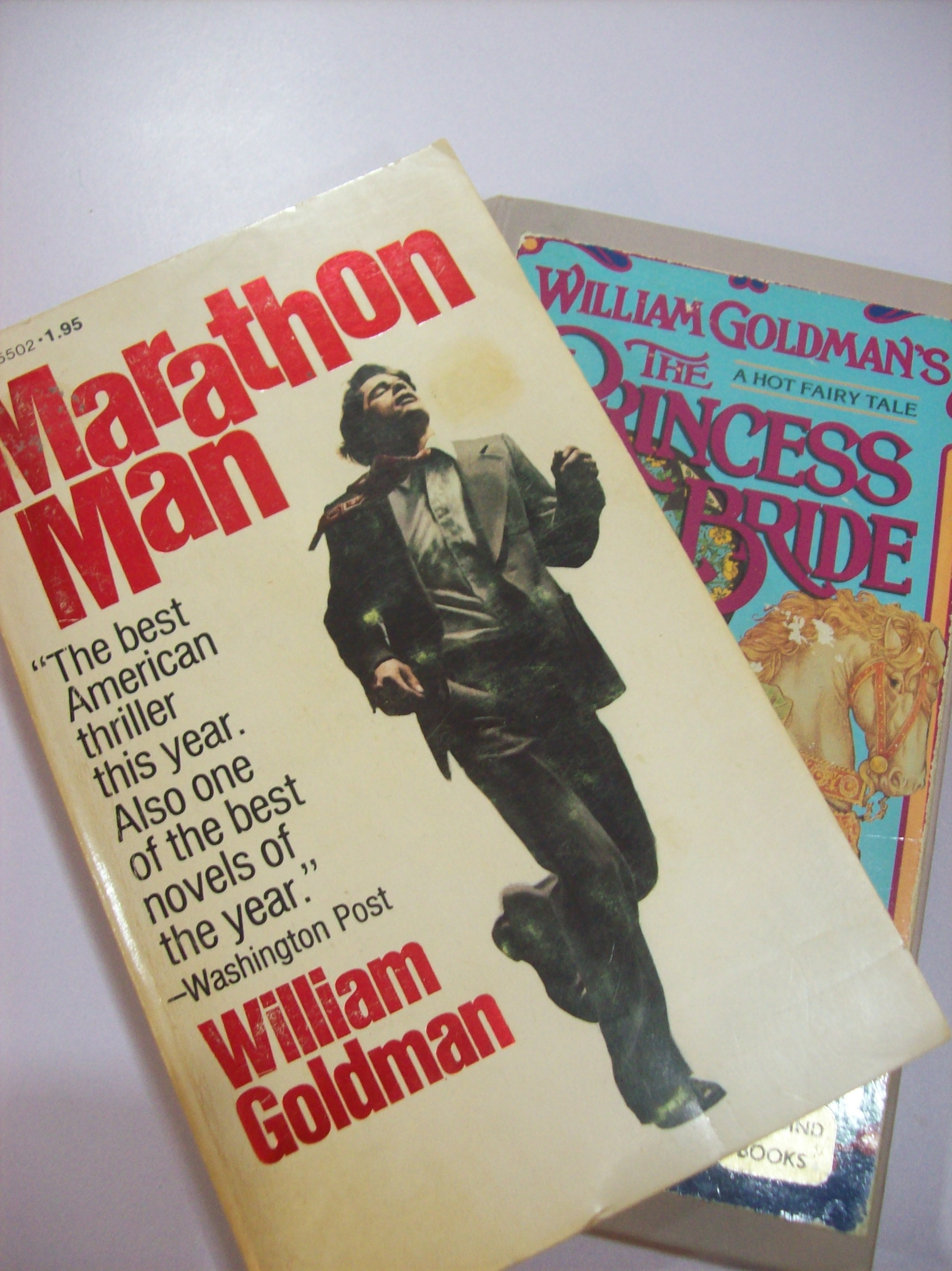
Some people quote one-liners from their favorite movies; others collect the crusty, old books that those movies are based on.
2012 is the 25th anniversary of The Princess Bride movie (and any other movie that came out in 1987), and I’m not sure how to celebrate. Dressing up in costume seems outdated. Quoting one-liners from the movie would just get me strange looks. So I’ll do what I do best, engage in a bit of literary combat, pitting two of William Goldman’s most successful books (and their respective movies) against each other.
PRINCESS BRIDE: NOVEL vs. MOVIE
The Princess Bride (the movie) has a weird fan base (the fans themselves aren’t necessarily weird; it’s the composition of the fans that is a bit bizarre). From my experience (no other data to back this up), people who don’t otherwise care for fantasy enjoy The Princess Bride, but people who like fantasy don’t care for The Princess Bride.
I saw the movie with my literary girlfriend in college, and she loved it (we didn’t dress up in costumes back then). I didn’t care for it, and back then, I couldn’t figure out why. Now (from what I remember) I think it’s because the characters seemed like they were in on the joke. I don’t like comedies (a lot of stuff with Will Ferrell or Ben Stiller) where characters seem like they’re in on the joke. But since my literary girlfriend liked the movie a lot, I pretended to like it a lot as well.
I’m pretty sure my literary girlfriend pretended to like other stuff that I liked a lot, so I guess it was a trade-off.
The Princess Bride has a bunch of one-liners that guys who quote movies love to say. I say “guys” because I’ve never met a woman who quotes movie one-liners. Even though I get annoyed when people quote movie one-liners, I used to have a bunch of friends who did it. Now I don’t have any friends that quote movie one-liners (and I don’t have very many friends anymore either), but I get less annoyed than I used to.
Here are a few one-liners that I got tired of movie quoters quoting:
1. “As you wish.”
2. “Inconceivable!”
3. “Inconceivable!” was also followed by “I don’t think you know what that word means.”
4. “Turns out your friend here is only mostly dead. See, mostly dead is still slightly alive.”
The Princess Bride the book has a lot of great lines too, but I don’t remember them because I’ve never had any friends who went around quoting one-liners from novels. I’m not sure any of my friends who saw the movie ever read the book.
The novel is clever (with a lot of self-awareness that annoys me when it’s in a movie), but the focus is different. I don’t do synopsises (or synopses), but if you’re interested in the book publishing process (as it was in the 1970s), then you’ll find the first section of The Princess Bride interesting. It also helps if you are a bit familiar with Marathon Man.
I liked (but didn’t love) The Princess Bride novel. I was almost ambivalent about the movie. Therefore, the winner is The Princess Bride the novel.
MARATHON MAN: MOVIE vs. NOVEL
The movie doesn’t hold up well because the tone and the music and almost everything about it are very 1970s, and that 1970s feel can ruin a movie for people who aren’t used to it. The movie ending is a lot different, and I’ve changed my mind a few times about which version I like better.
Marathon Man has only one quote that movie quoters quote, but that one quote is very memorable.
“Is it safe?”
Unlike the one-liners from The Princess Bride, there are real life situations where saying “Is it safe?” (with a thick fake German accent) is appropriate, and people think it’s funny even if they have no frame of reference.
For example, when a co-worker walks out of the office bathroom holding a newspaper, asking “Is it safe?” will always draw some laughs. Unfortunately, some co-workers then feel alienated or self-conscious. The lesson is that if you’re not holding a newspaper, you can always blame the guy before you; when you’re holding a newspaper, you’re busted.
Marathon Man the novel holds up much better than Marathon Man the movie. Plus, it’s a short entertaining read without 1970s taint.
MARATHON MAN vs. THE PRINCESS BRIDE
The Movies: I’d still rather watch Marathon Man than The Princess Bride, but nobody celebrates the anniversary of Marathon Man the movie. I also think “Is it safe?” beats any one-liner from The Princess Bride, but if you have to choose, go with the one that’s more pop culturally relevant. And that’s The Princess Bride.
The Novels: Marathon Man is one of my all time favorite thrillers. It’s short. There are scenes with emotional impact. The ending isn’t a let down. When I get reader’s block, I know I can turn to Marathon Man. The Princess Bride is a good, clever novel and deserves to be read, but you probably have to be in a certain mood to appreciate it. Therefore, the novel to choose is Marathon Man.
*****
It was easier when I celebrated the 25th anniversary of Predator. All I did was flex my biceps a few times.
Related articles
- Inconceivable! How ‘The Princess Bride’ almost didn’t get made (marquee.blogs.cnn.com)
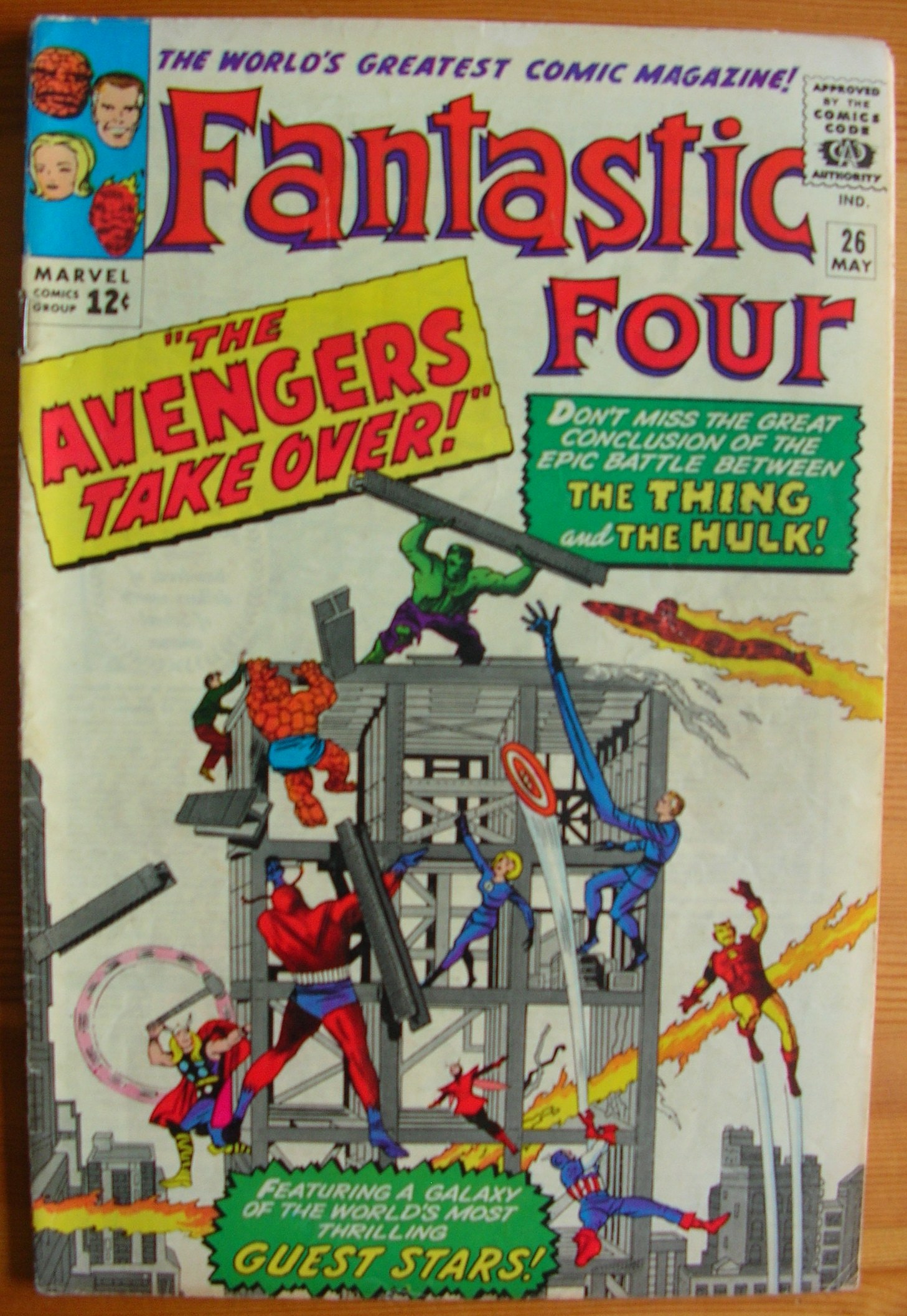
It’s not the Avengers or the Fantastic Four that ticked off the Incredible Hulk; it was the small living space in those pricey New York high rises.
Choosing the best comic book ever wasn’t as difficult as people might think. The best comic book ever must have four things; great art, great story, social relevance, and… aw, who am I kidding? People read comic books for two reasons: fight scenes and hot chicks in skimpy outfits. Unfortunately, when I was a kid, comic book women were cartoonish and proportionally unimpressive, so all we had were the fight scenes.
And Fantastic Four #26 had the best fight scene ever. Therefore, Fantastic Four #26 is the BEST COMIC BOOK EVER!
Before Fantastic Four #26, comic book fight scenes weren’t very long. They usually went on for only a couple panels and weren’t imaginative (except for some early Batman comic books). But then Fantastic Four #26 came along, and the comic world changed for the better. Yes, comics could have plots. But even better, the fight scenes could take up pages and pages. And the comic book universe is better for it.
A comic book fight scene has to have a compelling match up, and Fantastic Four #26, pitted the Fantastic Four and the Avengers against the Incredible Hulk. Almost all great comic book fight scenes involve the Incredible Hulk.
The Incredible Hulk is the superhero version of cheese; by himself he’s kind of boring, but he makes everything else better. A fight between the Thing and the Hulk is pretty cool. A fight between the Fantastic Four and the Hulk is even better. A brawl between Hulk and the Avengers is about as good as it gets. But the Fantastic Four vs. Hulk vs. the Avengers? I tear up (as in weeping) just thinking about it!
This fight scene was so great that it took two issues to resolve. The fight started in Fantastic Four #25 as a slug-fest between the Thing and the Hulk (don’t ask what started it; it doesn’t matter). Of course, the fight got out of control. And the next thing you know, both the Fantastic and the Avengers got involved.
A great comic book fight scene isn’t just characters hitting each other. Even I’d get bored with that. This fight scene in Fantastic Four (#25 and) #26 went everywhere. They fought in the streets, on the river, on a bridge, on a boat, in the sewer, on top of buildings, on top of cars, inside a bus. It was like a tour of the city with lots of property damage.
Just as Fantastic Four #26 was an all-issue fight scene, The Avengers movie (I can’t get myself to write Marvel’s Avengers) was almost an all-movie fight scene. That’s what made The Avengers movie so great. Most super hero movies waste the first half with a (boring) origin story. The Avengers’ origin was a bunch of fight scenes. I almost cried as I watched it.
Without Fantastic Four #26, the all-issue fight scene might never have been invented. And without an all-issue fight scene in a comic book, an all-movie fight scene like The Avengers might never have been made.
COMICS THAT AREN’T QUITE BEST EVER!
Action Comics #1- The first appearance of Superman. The most expensive comic (and most sought out comic) ever! The one comic everybody hopes to find in their attic! The one comic book that started the whole super-hero craze!
How can this NOT be the BEST COMIC BOOK EVER?
Try reading Action Comics #1 just for the heck of it. 8 pages out of 64 are Superman, and the rest are of characters that nobody has ever heard of before (and there’s a reason for that). Chuck Dawson never got his own comic book. And if he did, they didn’t survive the World War II paper drives.
*****
Detective Comics #27- The first appearance of Batman, the COOLEST SUPER HERO EVER!! Yeah, this could be thought of as the BEST COMIC BOOK EVER for the same reasons as Action Comics #1 (I wouldn’t mind finding this in my attic either).
Unfortunately, it has the same problems as Action Comics #1 as well.
*****
The Dark Knight Returns- This 1980s series was pretty awesome and influential, but it was a four-issue series, so it can’t count as a single issue comic book.
*****
Avengers #4- The first Silver Age appearance of Captain America (if you don’t know what that means, then you’re probably a normal person). It also has a great fight scene, but the issue is interrupted by a weird two-page subplot involving some lettuce-headed alien.
A lettuce-headed alien disqualifies a comic book from being BEST EVER!
If the lettuce-headed alien shows up in Marvel’s Avengers II (Ugh, I can’t believe I just wrote that), then I’ll reconsider.
*****
Real fights aren’t as cool as comic books (or movies) make them look. The last time I was in a fight, all I saw was the guy’s fist, and then I felt a blinding flash of pain. I didn’t get a chance to make a threat about conquering the world before I got punched out. I didn’t even get in a good quip. I wouldn’t have made a good super-hero or a good super-villain. I wouldn’t have even made a good henchman. Luckily, nobody drew the fight and put it in a comic book (or filmed it and put it on the internet).
My fight definitely would not have provided material for the BEST COMIC BOOK EVER!
*****
The true story of a writer’s one moment of high school glory!!

Only 99 cents on the Amazon Kindle!
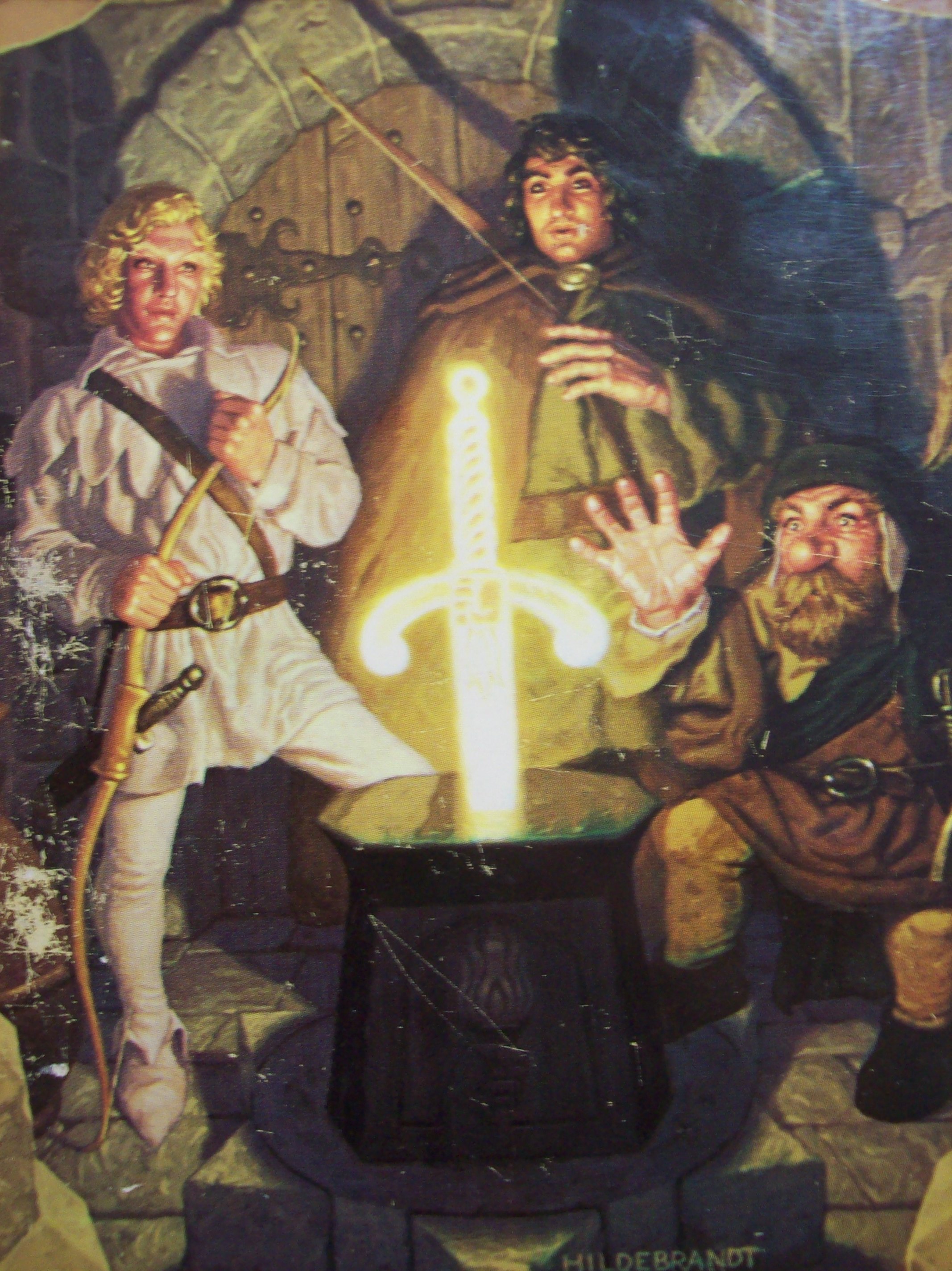
This is either a Lord of the Rings rip-off, or Merlin is a lot tinier than I imagined him.
With 2012 being the 75th anniversary of The Hobbit and Peter Jackson’s movie (or trilogy) coming out soon, there are certain to be a rip-off or two. And rip-offs might not be a bad thing. When you’re done reading The Hobbit and The Lord of the Rings (or done watching the movies), that’s it. There isn’t another Tolkien book or trilogy that’s the same thing.
JRR Tolkien also wrote The Silmarillion, but it’s more like a history/mythology book than a rousing story, and if I want to read about mythology or history, I’ll read about real mythology or history.
That’s just how I am now. When I heard that George R. R. Martin’s A Song of Ice and Fire (also known as Game of Thrones) series was loosely based on the War of the Roses, I decided to read about the War of the Roses instead of the Ice and Fire series. Now I know more about English history, and I didn’t waste weeks upon weeks keeping up with a convoluted series that might not ever get finished.
WHAT IS A LORD OF THE RINGS RIP-OFF?
A book (or series) has to be more than fantasy to be a Hobbit/Lord of the Rings rip-off. It has to be fantasy, but it also has to have a quest, usually for some all-powerful object that must either be mastered or destroyed. Various fantasy critters (elves, dwarves, trolls, along with authors’ creations like hobbits and orcs) have to be involved (like a fantasy version of an old Benetton ad).
A lot of fantasy looks like a Hobbit/Lord of the Rings rip-off, but isn’t. Both The Lord of the Rings and The Hobbit are about quests that require a journey through the fantasy land (in this case Middle Earth). Most fantasy stories have a journey of some kind, but that’s part of the genre. Alice journeyed through Wonderland. Dorothy journeyed through Oz. John Carter journeyed through Mars. And all of these were written before The Hobbit/Lord of the Rings.
The whole point of fantasy is to create another world and then exploring it. Writing a fantasy without a journey is like traveling to an exotic location and then staying in the hotel room all day to watch football (which I’ve done, and my wife was not happy).
BOOKS THAT AREN’T RIP-OFFS
Bored of the Rings– by National Lampoon
A parody is not the same thing as a rip-off, so this 1969 book does not count. Bored of the Rings is a really thin book, so people who won’t read Lord of the Rings can still laugh at Bored of the Rings. And they do. Bored of the Rings made me curious about what a dildo was (at the time, I didn’t understand why everybody laughed when I said the name Dildo Bugger).
In the 1970s, I couldn’t go see National Lampoon’s Animal House (cable television hadn’t been invented or hadn’t reached us yet), but I could read Bored of the Rings. Bored of the Rings was cool to people who hated Lord of the Rings. Other boys in junior high who read Lord of the Rings were getting swirlies in the public school boys room, and I was left alone simply because I had passed around my copy of Bored of the Rings.
Thank you, National Lampoon.
*****
A Song of Ice and Fire (series also known as Game of Thrones)- by George R. R. Martin
Yes, the story can meander (like Lord of the Rings does occasionally). Yes, the production values of the HBO series look pretty good. But this fantasy is a sub-genre of fantasy called sword and sorcery. Sword and sorcery is more about the blood and guts (and scantily clad women with no morals) than it is about the quest.
Conan the Barbarian stories (by Robert E. Howard) are probably the best in the sword and sorcery genre. They’re short. They get to the point. They’re well written. A Song of Ice and Fire may be well written (that’s debatable), but it’s not short, and it hasn’t gotten to the point yet (if it has one). I’ll be surprised if George R. R. Martin ever finishes the series.
It’s not a Lord of the Rings rip-off, and even if it were, it wouldn’t be the best one.
BOOKS THAT ARE RIP-OFFS (in my opinion)
Lord Foul’s Bane (trilogy)- by Stephen Donaldson
This came out at the time (late 1970s-early 1980s) a lot of the forgotten Lord of the Rings rip-offs came out. It has a lot of similarities (quest to Mount Thunder, powerful ring, trilogy), so (in my mind), it’s a rip-off. The trilogy starts off on Earth, and the guy wakes up in a fantasy land, so it’s also a rip-off of John Carter (or Alice in Wonderland) too.
Even as a kid (or young adult), the names in Lord Foul’s Bane kind of annoyed me: Lord Foul, Thomas Covenant, Drool. The author could have used a pen name like Stephen Hammeronthehead with the way he overdid the names. I read these in the early-to-mid 1980s, and I don’t remember a thing except thinking, “This is rip-off” and “These names are annoying.”
That’s okay. I’ve been told my writing style is annoying too. And I haven’t even written a trilogy yet.
AND THE BEST RIP-OFF IS…

Okay, this is definitely not a King Arthur book.
The Sword of Shannara– by Terry Brooks
It has the quest. It has a Dildo… er… Bilbo/Frodo type character (Shea). It has a source of power that must be reckoned with (a sword). It even has a Gandalf-like figure (Allanon). A friend of mine in a 12-step program laughed when he read this book, saying something like, “Allanon’s trying to save the world. Typical Allanon.” I think you have to be in a 12-step program to get it.
Back in the 1970s, the Brothers Hildebrandt used to paint popular illustrations of scenes from Lord of the Rings (these made awesome calendars!). The Sword of Shannara is such a great rip-off that the Brothers Hildebrandt painted illustrations for this book too.
If you can look at a random series of Brothers Hildebrandt paintings and determine which ones are from Lord of the Rings and which ones are from Sword of Shannara, your reward is a swirly from a bunch of high school guys in the boys restroom.
The Sword of Shannara isn’t bad. Today’s readers who are unfamiliar with Tolkien’s influence probably prefer it over The Hobbit/Lord of the Rings (I’m not condoning such an attitude). The Sword of Shannara is such a great rip-off that the author is still writing Shannara books nearly 40 years later. Let’s see if people are reading A Song of Fire and Ice 40 years from now.
When people start celebrating 75 years of The Sword of Shannara, I’m really going to feel old.
Related articles
- The Hobbit 75th birthday celebrated worldwide (telegraph.co.uk)

If you wanted to watch porn a couple generations ago, you never would have found a place this nice to do it. (Photo credit: Wikipedia)
I caught a guy watching porn in the public library a few days ago. I didn’t mean to. I was minding my own business, wandering through the nonfiction section of the library, when I spotted a naked female butt on a library computer screen. Maybe I shouldn’t have looked at another person’s screen, but it was a female butt. Unfortunately, some other body parts showed up, and I could tell that I had missed the dialogue.
I accidentally made eye contact with the guy watching the porn, and he nodded. Normally, I’m a fan of the nod of acknowledgement. I usually respond to a nod of acknowledgement with a nod of my own because I’m a polite guy and the nod of acknowledgement keeps me from having to talk to people I don’t want to talk to.
But a guy who’s watching porn in the library gets no nod of acknowledgement from me. Instead, I gave him the grimace of disgust and a prolonged “Duuuude” as I shook my head and passed by.
I didn’t report the guy. His pants were pulled up. His hands were where I could see them. The volume was muted. There weren’t any kids around. I didn’t know what my library’s filter policies were (I guess I do now), but even if porn is allowed in a public library, no self-respecting guy is going to watch it there.
Self-respecting. Yeah, I know.
A couple generations ago, if a guy wanted to watch porn, he had to go to a “theater” in a rundown neighborhood and hope that nobody (who wasn’t in that neighborhood to watch porn too) saw him. If I had been an adult back then, I probably never would have watched porn because my sense of shame would have overcome my desire to see porn. With the internet, it’s pretty much shame-free porn available at all times. Whether or not that’s good is a debate for another blog.
The idea of watching porn in a public library is still baffling to me and has undermined my confidence in the U.S. judicial system. Despite Associate Justice Potter Stewart’s quote (“I know it when I see it”) about hardcore smut, pornography is easy to define. It involves a few body parts and a few actions with those body parts. If these actions and body parts are combined in any way, it’s pornography. It shouldn’t have been difficult for judges to figure this stuff out.
Potter Stewart got a lot of grief over his quote, but his perspective is understandable. I’m sure he could have defined pornography if he had wanted to, but to do so, he would have had to use a bunch of graphic terms that were considered improper back in the 1950s and 60s. And back then, you simply didn’t do that, unless you were a deviant (and I use that term without judging). Unfortunately, pornography/obscenity laws got muddled, and somehow “freedom of expression” got involved.
I like porn (and I’m no constitutional scholar), but even I know that the “freedom of expression” argument is bogus.
Nobody watches (or makes) porn for the freedom of expression. Listening to pornographers talk about freedom of expression is like hearing high school students brag about how they convinced the substitute teacher to let them go to lunch 30 minutes early.
The pornographers (or their lawyers) that came up with the “freedom of expression” argument decades ago probably couldn’t believe it actually worked!
I don’t blame the pornographers for trying the “freedom of expression” angle to mainstream porn. I expect deviants (and again, I’m not judging) to try everything to justify their behavior (or mainstream it). I blame the judges who fell for that argument. Judges are expected to know better.
Despite what pornography aficionados might think, the computer and internet were not invented to make porn more accessible. I’m not sure what they were invented for (I used to know), but it wasn’t for readily available porn.
And believe it or not, libraries have computers and internet access primarily for research purposes, and not for porn. Nobody watches porn for research. There’s nothing to learn from porn. Every scene ends the same way… kind of. There are really three kinds of scenes. Two of them end the same way, and the other ends a slightly different manner, but once you’ve watched one porn scene from each category, then you’ve learned everything you’re going to learn from porn, and no more research is necessary.
But there was no way that guy watching porn at the library was doing research. He was too creepy to be doing research. It makes me wish that Justice Potter Stewart really had defined pornography. Maybe that would have set up a chain of events leading to libraries filtering out porn. Even if I’m wrong about that, his definition probably would have been fun to read.

The problem with sock puppets is that you often don’t know whom that hand belongs to or where that hand has been. (Photo credit: Wikipedia)
The world is full of people who get rewarded for being fakes. LeBron James fake falls during NBA games, and his opponents get called for personal fouls. Women who get paid a lot of money in certain entertainment industries have fake body parts. Reality shows use fake conflict to draw in viewers. And on the internet, authors create fake identities (sometimes called “sock puppets”) to say great things about themselves and their own writing.
But authors who create fake sock puppet identities to brag about themselves better not get caught.
British author R.J. Ellory (of whom I had not heard before this controversy arose) has admitted to creating fake identities to write positive reviews for his books. Even worse, he wrote fake negative reviews for books written by his competitors (more information here). Unfortunately for him, he got busted before he admitted to it, and now he’s being rewarded with mockery and a bunch of 1-star reviews on Amazon for his own books.
Despite the outrage directed at Ellory, I don’t have a huge problem with sock puppets. One of the reasons to go online is to be kind of deceptive, to take on a personality that you don’t have (or can’t get away with) in real life, to say things you can’t normally say (without losing friends or getting fired).
If I wanted to tell lame jokes to people I actually know, I would, but I don’t want to. Instead, I do it on the internet. So creating an online identity that doesn’t quite match my real personality makes sense.
But writing fake book reviews?
THE SOCK PUPPET RULES
Sometimes it’s okay for authors to write a fake 5-star review of their own books. A first time self-published author who writes a book that nobody reads should be allowed to fake one (and only one) 5-star review. Every self-published book should have one 5-star review, just for the effort it takes to put the book out there. A self-published book looks lonely with no reviews, and even one (fake) positive review can change the way a book appears on Amazon (or any other online book store). So the one-time sock puppet has its purpose.
But sock puppet identities can be taken too far. An author shouldn’t need to create more than one sock puppet identity. And a sock puppet shouldn’t be used to harm other people. And that’s what R.J. Ellory did wrong. He should have just written one fake positive review for each of his own books. And he should have left other authors alone.
PAYING FOR FAKE REVIEWS
John Locke, a guy who (probably) has written (too) many e-books (for them to be any good) admits that he has paid others to write positive reviews for his digital books. That sounds like a waste of money (even if the high number of fake 5-star reviews encouraged people to purchase his books). He could have at least been (dis)honest enough to write his own fake reviews and save himself some cash.
Then again, he might have been smart to not write the fake reviews himself. A problem with writing your own reviews is that you have to be careful not to use the same writing style or repeat the same errors in your reviews. If you write “This book was grate!” in several reviews, even the most gullible of potential readers may notice. If you accidentally write, “My book was great!” then you’re really screwed. I’m tempted to write my own fake review, but I’d probably accidentally put thoughts in parentheses or write a lame joke to give it all away.
THE ONE TIME IT’S OKAY TO SOCK PUPPET A NEGATIVE REVIEW
Leaving a 1-star review for other authors seems tacky, but it’s justified if the (victimized) author is a jerk. For example, a couple years ago, my wife got hit on by a (kind of) celebrity author at a book signing. The photo of the event shows the semi-celebrity author leering at my wife with his hand near an inappropriate location with my wife appearing a bit uncomfortable. In this instance, a 1-star review would be justified, even if the celebrity author’s book was good (which it wasn’t).
The only reason I didn’t leave a 1-star review was because the celebrity author has good taste in women.
OH GOD, NOT A PETITION!
The worst part of this sock puppet controversy (not REALLY the worst part) is that authors have begun a petition to demand an end to deceptive online reviews. A petition? Egads, petitions are more annoying than sock puppet identities. I’d write a fake 1-star review of The Bible before I’d sign a petition calling for an end to fake 1-star reviews.
God, when I mention writing a 1-star review of The Bible, you know that I really wouldn’t do it, right? Right?
Hello?
REAL REVIEWS BY REAL PEOPLE vs. FAKE REVIEWS BY FAKE PEOPLE
Fake online reviews don’t bother me because I don’t trust real reviews anymore. I stopped relying on book reviews when Stephen King wrote a positive review of Justin Cronin’s novel The Passage a couple year’s ago. After being sorely disappointed in it, I vowed never to trust a book review again, even ones written by real people. I also vowed to 1-star every book Stephen King has ever written (yes, every single one of them!), but then I saw the thousands of 5-stars (even for the books that didn’t deserve them) he has, and I realized that my attempt at vengeance would be pointless.
But the outrage I feel remains. If I can’t trust a book review by Stephen King, whose book review can I trust?
Related articles
- Are RJ Ellory’s faked reviews the tip of the iceberg? (telegraph.co.uk)
*****
Sock puppet or not, you could be the first to review The Writing Prompt!
Now available on the Amazon Kindle!

Maybe Lewis Carroll wasn’t high when he wrote Alice in Wonderland, but I know some people who were high when they saw the movie. (image via Wikimedia)
After we finished reading “Jabberwocky” one day in my ninth grade English class (“reading” is the wrong word; “staring” might be more accurate), our class’s goofball burnout asked loudly, “Was that dude on drugs when he wrote this?”
My over-sensitive English teacher seemed shocked by the question and quickly responded, “No. People didn’t take drugs back then.”
The thing is, I believed her at the time. A few years later, I learned about opium (not first hand).
I feel gullible for believing my ninth grade English teacher, but I’ve been gullible most of my life. It took several writers conferences where literary agents claimed they would get back to me about my manuscripts to figure out that I was too gullible. Gullibility is not a good characteristic for a writer to have.
Despite what my over-sensitive English teacher claimed, people did take drugs in the 1800s. Opium was a medicine of choice, and Lewis Carroll possibly suffered from migraines. If Carroll had migraines and partook of a bit of opium for relief (or just for the heck of it), then maybe, just maybe, Alice’s Adventures in Wonderland and Through the Looking-Glass were inspired by more than imagination.
To me, it doesn’t matter. It’s not like opium, cocaine, and marijuana are performance enhancing drugs when it comes to writing. From my (friends’) experiences, taking certain brain altering substances can limit creativity rather than enhance it. It usually slowed down my (friends’) thought activity. Some of my (friends’) hallucinations were cool, but nothing to write about.
To unimaginative people, an act of creativity seems drug inspired. Giant living playing cards. A grinning cat that turns invisible. Tweedle Dee and Tweedle Dum. Jabberwocky. No normal person could come up with that stuff without hallucinogenic encouragement. But creative folk can do that (in their sleep or) while completely awake and alert.
Some creative people resort to drugs. Aaron Sorkin has a reputation for cranking (crank.. haha) out a lot of material while he’s under the influence of something other than alcohol. Maybe one morning he cleared his mind, read his dialogue, and said, “I know these characters are witty, but they talk so fast that I can’t understand a word they’re saying. Plus, they’re kind of pompous.”
And maybe, just maybe, Lewis Carroll recovered one morning from his dazed and confused night of opium-inspired writing, stared at his parchment, and exclaimed, “What the hell is a vorpal?”
If Lewis Carroll wrote anything while under the influence, it probably wasn’t “Jabberwocky” because “Jabberwocky” was a poem, a tightly designed poem. If “Jabberwocky” had been written in free-verse, then I could have believed Carroll had been hallucinating, but it’s tough to write rhyme with a consistent rhythm and be nonsensical at the same time. It was a calculating mind that composed this nonsense. Unfortunately, my over-sensitive English teacher seemed too afraid of the drugs topic to state this to the class.
*****
Alice in Wonderland and Literary Girlfriends
One evening my literary girlfriend in college invited me to her apartment to watch the movie Alice in Wonderland with her, and I thought Alice in Wonderland was code for “spend the night and have lots of fun.”
When we actually began watching the movie, I thought, “This isn’t as much fun as I was hoping for.”
It might have worked out okay, but then Tweedledee and Tweedledum showed up in the movie, and I exclaimed: “My ninth grade English teacher told us that they were in Through the Looking Glass, not Alice in Wonderland. I always knew she was a dumb broad.”
Literary girlfriends have a unique look of contempt when guys say something stupid. First of all, I knew that Hollywood (and Disney) changed stuff in movies back then, so that made my comment pretty stupid. Secondly, I should never have said “dumb broad.” My ninth grade English teacher was very smart (if over-sensitive), but in college I hadn’t yet honed my tightly crafted sense of humor, so I could come across as crass (when I wasn’t coming across as lame), and I was promptly kicked out of my literary girlfriend’s apartment.
Fortunately, she was forgiving (or desperate), and she took me back the next day. Unfortunately, she broke up with me two weeks later to go out with one of her (former) professors.
Professors. What a scam. I could have become a professor.
*****
Other Children’s Authors Who Might be Accused of Writing While in an Altered State
Frank Baum- The Wizard of Oz series/ Lots of crazy stuff, spread out over 14 books.
Crockett Johnson- Harold and the Purple Crayon books/ A magic crayon and purple? It has to be drug related.
Margaret Mahy- Down the Back of the Chair/ Reading this makes me wonder what Margaret Mahy really hides in the back of her chair.
Roald Dahl- The BFG/ I don’t even know what this book is about; I just like saying “BFG!”
Shel Silverstein- Uncle Shelby’s A-B-Z Book/ Look at a picture of him. Plus, his name is Shel. Poor guy never had a chance.

Has Mark Zuckerberg ever fired an employee for writing something stupid on Facebook? (Photo credit: Wikipedia)
The great thing about the internet from a literacy point of view is that more people than ever are writing. The problem is that a lot of these people writing aren’t truly writers. They’re talkers, using writing as a tool. Talkers are charming and personable, so when they say something tacky, people laugh and forgive it.
But when a charming talker tweets a tacky comment or puts it on Facebook or email, it can be seen by countless people who don’t know how personable and charming the charming talker really is. Then the charming talker ends up getting fired, losing friends, or has to make embarrassing, insincere apologies.
“Best Writing Tips Ever! The Internet Edition” is a tool for charming talkers (or anybody else) who want/need to write on the internet (email, Facebook, Twitter, etc.) but don’t want to lose friends or get fired for it. “Best Writing Tips Ever!” is not about grammar or punctuation. Once you have mastered writing on the internet without getting fired, then you can worry about the grammar and punctuation.
But until then, concentrate on these rules.
- Don’t write too much online.
Yeah, that can take the fun out of writing, but the less writing you put on the internet, the less stupid stuff that can get traced back to you. If you do have to write, short responses are great. My e-mails, texts, and Facebook entries are filled with “Yes,” “No,” and “I’ll get back you later.”
Short responses keep you from keyboarding snide remarks that can come back to haunt you. If you say “This job sucks,” to a co-worker, you can always deny it if the boss comes down on you. If you write “This job sucks” in an email, tweet, or Facebook entry, there is no plausible deniability. Saying somebody hacked into your account doesn’t work anymore, even if somebody did hack into your account.
- Avoid writing about personal problems.
Don’t get me wrong; I love reading about other people’s problems. But if you choose to write about it publicly, a lot of people who aren’t really your friends are going to read it. You’re basically providing free entertainment to readers you don’t know. And if the readers do know you, it can lead to awkward situations later.
The possibility of having an awkward situation will not stop acquaintances (or employers) from reading about your personal problems (and making comments behind your back). The only way to stop this is to not write about your personal problems. If you absolutely need to write about your problems, don’t publish (or send) what you wrote.
- Do not admit to personal vices.
Vices are really fun. Whether it’s getting drunk, getting high, hanging out with strippers (helping them through college), tearing up property during a protest, it’s best if you don’t brag about it. If you do write about your vices, make it sound fictional.
- Leave job related issues at work
Writing is a blast, but getting paid is way better. If I ever criticize my boss or employer or anybody who is giving me money, I do it behind the scenes so that it can’t get traced back to me. I’m not going to put it in an e-mail, or a tweet, or on Facebook.
And the few times I absolutely have to take a stand (it happens!), I am very careful about what I write. At the very least, that means deleting a lot of adjectives.
- Don’t write jokes that aren’t funny.
Yeah, I know this whole blog is filled with jokes that aren’t funny. I get it. At least when I write a bunch of lame, tasteless jokes, I’ll title it something like BEST LAME, TASTELESS, OFFENSIVE PORN JOKES EVER! You know what to expect from me, there’s a context to the lame jokes, and I don’t attach them to my name, or my employer, or anybody who knows me.
- Don’t write when you are emotional.
It’s okay to write stuff when you’re angry, or sad, or exhilarated, or in any other extreme emotion. But you’d be better off waiting until you’re in the right frame of mind before you actually publish it. Extremely emotional tweets can be very entertaining, but most people don’t write emotional stuff to entertain; they write extremely emotional stuff to vent.
Venting should be done in private. Then when you’re calm, go over it (delete all the adjectives and insults), and then… maybe… think about publishing it.
- Stay away from writing utensils or apparatuseseses when you are drunk (or in a similar condition).
When you’re drunk (or in a similar condition), you don’t have control over your faculties (or is it “facilities”?), so obviously you shouldn’t be writing. The problem is that people who aren’t in control of their faculties often don’t realize they aren’t in control of their faculties. I once wrote (what I thought was) an awesome joke when I wasn’t in control of my faculties and the next morning realized it said something like: “Lkomp gmbpg ju tyggdew bjklr!”
One commenter said it was the best joke I had ever written.
- Do not write when you are in a hurry (unless you’re going to get fired or a bad grade for having nothing).
Always take a moment to think through your writing before you publish it. I once had a writing instructor say that a writer should leave a rough draft alone for six months before proofreading it. Unfortunately, I did that with my tweets, and got stuck with a bunch of 140 character “LeBron James chokes” jokes that are out of date.
Still, if you’re tweeting or texting, at least look them over closely before you send them. Think about the appropriateness of what you wrote and make sure the automatic spell check didn’t mess anything up.
- Do not multi-task while writing.
Some activities can be multi-tasked, and others can’t. I can fold my laundry and watch football at the same time. But there are at least three things you shouldn’t multi-task during: driving, reading legal documents, and writing.
Writing while doing something else can lead to disastrous mistakes. Yeah, it might just be a missing word, but it could also mean sending the wrong message (“My job sucks!”) to the wrong people (your employers). And that’s way worse than using the wrong form of “their” or “two.”
*****
Some people may complain that following my advice will lead to really boring writing on the internet. That would happen only if everybody followed my advice. The world is full of people who don’t follow advice, no matter how wise it is, so there will always be people who write entertaining stuff (and get fired for it).
Just make sure it doesn’t happen to you.

Show some respect! This was once state-of-the-art technology. (Photo credit: Wikipedia)
Technology is supposed to make our lives easier, but it doesn’t always work out that way. Technology changes so quickly that anything we learn will be outdated in a couple years. Back in the old days, when we learned something new, it stayed relevant for a decade or two.
A Best Technology Joke Ever is an anecdote that makes fun of the changes in our lives because of technology without getting too technical. You don’t have to be an expert on the latest gadgets to appreciate a Best Technology Joke Ever! The following anecdotes might not be the funniest technology jokes ever, but since anybody can understand them, these are some of the Best Technology Jokes Ever!
*****
GOD GETS ADDICTED TO FACEBOOK AND TWITTER
It was the new millennium, and as God looked over humanity, He was again saddened and disappointed by what He saw. Humans had developed almost miraculous technology and yet were misusing it for their base desires. Men used technology for porn. Women used the technology for gossip. Criminals used the technology to help themselves steal and murder. Very little productive was being done with these wonderful tools that God had allowed/helped humans to discover.
And so God decided to step in.
First, God created an account on Facebook and friended everybody. When He was rejected by most Facebook users, God was stunned.
“Who would dare not to friend God?” God asked with indignation, tempted to set the world on fire.
But instead, God upgraded His Facebook page.
He put up photos of Adam and Eve with the apple, Moses parting the Red Sea, and Jesus walking on water. These pictures created a huge stir on the internet, as image experts closely examined the pictures for signs of image editing or anachronisms (God had made Moses take off his watch), but the photos were authentic, and people throughout the world began to believe that this particular Facebook page truly belonged to God.
And soon God had more friends than anybody else on Facebook, and God was happy.
Next, God went on Twitter. It was sometimes difficult to keep His good word to 140 characters, but He was God and the Twitter technology showed remarkable flexibility when God wrote too much. God used Twitter to shame individuals of their sins. He publically warned men (and women) not to cheat, not to watch porn (at least not at work), not to discuss politics where food was being served, and of course not to steal, murder, and the usual stuff.
Humans did not stop committing acts of sin, but the number of acts of sin decreased greatly.
Atheists, however, refused to believe that this was the work of God. It had to be a hacker with enough resources to check individual internet usage and deduce who was sinning and how. No amount of evidence was enough to prove to them that God existed and had gotten addicted to Facebook and Twitter.
“Prove that you’re God,” the skeptics demanded to God. “Perform a miracle for us.”
“Is nothing enough for you?” God scoffed. “I have just used Facebook and Twitter in a positive way to do good in the world. If that’s not a miracle, I don’t know what is.”
*****
TECHNOLOGY AND PERFECT ATTENDANCE
A corporate manager made a grand announcement to his department during a (mandatory) working lunch.
“I’ve got great news,” the department manager said to his employees. “For the first time in the history of this corporation, a division has had perfect attendance for the entire year. And that’s us!”
There was much cheering and high-fiving from the employees.
A cynical employee muttered to his co-worker, “I bet you there’s a ‘but’ after this.”
“As proud as I am of this department,” the manager continued, “I think we can do even better.”
“That counts as a ‘but’ to me,” said the cynical employee.
“Our department is undergoing a couple changes that will make us even more efficient,” the manager declared.
“I bet none of the changes will be a raise in our salaries,” said the cynical employee.
“This department has just purchased new software that will make us even more productive,” announced the manager.
“More boring training sessions and a lot more additional paperwork,” muttered the cynical employee.
“And unfortunately,” announced the manager, “a new firewall has been added so that none of you can access any social networking sites or any… other… um… adult… um… sites… on your office computers.”
There was an audible groan, but nobody argued.
“There goes our perfect attendance,” the cynical employee said. “The only reason we come to work every day was for the Facebook and free porn.”
*****
COP BUSTS TEXTING DRIVER
Several states had made text messaging while driving a crime, so a police officer who needed to meet his quota sat in his squad car on a busy street watching for violators. He noticed an SUV speeding with a bunch of screaming teenagers jumping up and down without seat belts on in the back seat while the driver was texting with one hand on the steering wheel.
After he had pulled her over, the police officer said, “Ma’am, you were speeding. You have several kids in the back jumping and screaming without seat belts on. Why in the world were you texting at a time like this?”
“They couldn’t hear me yelling at them,” the driver said, exasperated. “So I was texting them to sit down and shut up.”


 Dysfunctional Literacy