To some, there’s nothing special about going back to school, not even a Back-to-School Special. (image via wikimedia)
Nobody likes going back to school. Students don’t like it. Teachers don’t like going back to school either, and teachers are the ones who are paid to be there. Parents might be glad that school is starting up again, but they don’t have to go every day, so their opinions don’t count.
Even though school can be unpleasant, there are ways to make it easier for everybody involved.
For students, school is a great place to learn diplomacy. A clever student quickly learns what to say and what NOT to say in certain situations with authority figures.
“Can I Use The Bathroom?” and Other Public School Memories
ADVICE TO STUDENTS: When you ask for permission to use the restroom, don’t carry a book with you.
My daughter told me this week that she asked her teacher, “Can I go to the bathroom?”
Her teacher said, “I don’t know. Can you?”
Some things never change. 40 years ago, we asked the same question, and our teachers gave the same response. I’m sure 40 years before that, students and teachers did the same thing. I’m sure nothing will change 40 years from now.
One side of me knows that precision in language is important, but another part knows that a teacher has to be kind of a jerk to use the “I don’t know, can you?” response. This isn’t being judgmental. If anybody deserves to be a jerk without being judged, it’s a teacher. I’m sure teachers at some point became tired of explaining the difference between “may” and “can” every time a kid asked to use the can, so this was a short, snide, and sweet way to do it.
Teachers can feel just as negative about school as students do. If teachers feel down or depressed about their teaching experiences, they need to remember that their emotions aren’t abnormal. Even famous author J.R.R. Tolkien got depressed when he was teaching. Tolkien’s exhaustion and depression can be an inspiration to teachers everywhere!
*****
The Famous Author Who Said Teaching Was “Exhausting and Depressing”
If you’re exhausted and depressed by teaching, write a famous book.
I don’t know much about the personal lives of authors whose books I’ve read. I think Stephen King was hit by a car once. I think Charles Bukowski drank a little bit. I believe James Patterson (whose books I don’t read) has a bunch of co-authors, so he might have a lot of spare time, but I don’t know what he does with it. The point is, I just read the books (and samples of the books). I don’t know anything about the authors.
Yesterday I found out the JRR Tolkien (author of The Hobbit and The Lord of the Rings) taught at several colleges while he wrote. I think I might have known that at some point in my life, but I found out again yesterday. An old colleague of his found an old letter that Tolkien had written to him, and in this letter Tolkien said that teaching was “exhausting and depressing.”

*****
If you’re a parent, you’re not safe from being stressed out by school either. You never really know what’s going on with your children at school when you’re not there to watch over them. They might lie about what’s going on or not say anything at all about what they’re going through. You know things are bad when they even lie about what their assignments are at school.
My Daughter Lied In Her Memoir
(image via wikimedia)
“I’m sorry for your loss,” my oldest daughter’s English teacher said to me after I introduced myself to her during Literacy Night at the local junior high. The teacher seemed earnest, and her statement caught me off guard.
“Thank you,” I said hesitantly, out of politeness, as I thought: what loss?
I glanced at my daughter and noticed that her face was reddening, and she looked around the hallway at other parents and students wandering around the classroom.
I felt that asking about my loss would lead to an uncomfortable moment, and I do whatever is possible to avoid uncomfortable moments, so I moved on to another topic. My daughter’s grades were good, the teacher said, she was a wonderful writer, and she talked a little too much in class. That sounded about right, but I was curious about the loss I had suffered.

*****
Since nobody has yet figured out how to manipulate time, nothing can save students/teachers/parents from the upcoming school year. Yes, we can use strategies to make it better, but it’s coming whether we’re ready or not. It’s not all bad news, though. If you’re truly dreading school, just remember: be patient and wait… because the school year will always come to an end.
*****
What do you think? What are your favorite school memories? What were your least favorite experiences in school? What can you do to make this new school year special?

Being president means critics over-analyze the books you read. (image via wikimedia)
Everybody needs a vacation, especially presidents. Supporters of President Obama are glad he’s on vacation because he works hard and they want him energized for his final months in office. Critics are glad he’s on vacation because that means he’s not signing executive orders or making speeches on television.
And when it comes to presidents, everything can be polarizing, even the books they read. Just as President Obama’s vacation was starting, the White House released his vacation reading list, which included the following books:
All That Is by James Salter
All The Light We Cannot See by Anthony Doerr
The Sixth Extinction by Elizabeth Kolbert
The Lowland by Jhumpa Lahiri
Between the World and Me by Ta-Nehisi Coates
Washington: A Life by Ron Chernow
At first glance, this list is impressive. Several award-winning books, some literary fiction, and nothing written by James Patterson. Some critics have complained that it’s unlikely for President Obama to read that many time-consuming books during a brief vacation. Maybe, but that’s not the point of a vacation reading list. You choose six books, just in case five of them suck.
President Obama is the president, after all. If he doesn’t want to read all six books, he doesn’t have to, just like President Bush 41 didn’t have to eat broccoli because he didn’t like broccoli and he was the President of the United States.
Even if President Obama claims later to have read all of the books, I might not believe him. Politicians often claim to be experts on stuff they haven’t read, but that stuff is usually legislation, not books. I don’t mean to pick on President Obama. I’m also not convinced President Bush 43 really painted the pictures that he’s claimed he’s painted. I simply don’t trust politicians, regardless of political party.
Maybe, just maybe, these books are on President Obama’s reading list because he’s expected to read literary stuff. President Obama is an Ivy Leaguer, and Ivy Leaguers can’t be seen reading Stephen King or John Grisham. Those novels don’t look presidential. But if the White House has released a list of books that President Obama won’t really read, then it makes him look pretentious. I expect any president to have flaws, but literary pretention seems to be an unnecessary one.
Here’s the problem. Every March, the White House makes a big deal about President Obama’s NCAA March Madness brackets. It’s kind of fun to compare the president’s results with the rest of the nation (even though a president should maybe have much more important things to do). President Obama seems to know a lot about college basketball.
What does this have to do with his reading list?
I know hundreds of people who fill out NCAA March Madness brackets, and I know know a few people who read literary fiction regularly, even on vacation. In my experience, however, there is no overlap. People who are serious about their NCAA brackets are not interested in literary fiction or Pulitzer Prize-winning books. They might be married to somebody who likes literature, but there is no direct overlap. Therefore, President Obama is (probably) being pretentious with his reading list.
Maybe the First Lady is reading from this book list. Maybe the Obama daughters are. But it’s probably not the president. He might glance at the books, maybe thumb through a few pages, but he’s not reading them. Not if he’s serious about those NCAA brackets. It’s a completely different mindset.
There is the possibility that President Obama doesn’t fill out his own NCAA brackets. Maybe he devours literature on a regular basis but doesn’t let anybody know because it would cut into his cool persona. Maybe his aides fill out his brackets for him while the president catches up on award-winning literary fiction. Maybe, but I doubt it.
Therefore, until I hear from the White House that President Obama does NOT complete his own March Madness brackets, I’m afraid I have to conclude that our president is a literary pretender. And that’s okay with me, as long as he’s not reading anything by James Patterson.
*****
What do you think? Have you read any of the books on President Obama’s reading list? What was on your own summer reading list? Do you fill out NCAA basketball brackets every year? Is it possible to seriously fill out NCAA March Madness brackets AND read lots of literary award-winning books?
*****
Nice Things didn’t make President Obama’s summer reading list, but there’s always next year!
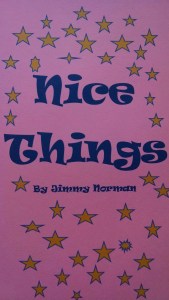
Now available on the Amazon Kindle!

Don’t let them fool you. They struggle with grammar just like the rest of us. (image via wikimedia)
English grammar can be tough. Even people who enjoy reading and writing have a difficult time getting all the rules right. When I was in college, I got careless with a composition and messed up a bunch of “its” and “it’s.” My writing instructor admonished me, saying I couldn’t be successful in a writing profession by making basic mistakes.
At the time, I knew the rules, but I also knew I had a tendency to get careless, so I ended up going into a profession that has nothing to do with writing. It’s my fault I didn’t choose a writing profession. But almost everybody struggles with grammar, so if I blame grammar for my problems, almost everybody will agree with me.
Below are five perfectly good, rational reasons that explain why English grammar is difficult. Any errors in grammar are unintentional and not meant to be ironic.
#1- The rules are nitpicky.
English grammar has some really strict rules. Don’t split infinitives. Don’t end a sentence with a preposition. Be careful to use “who” as a subject pronoun and “whom” as an object pronoun (I had to look that one up). A bunch of words sound the same but are spelled differently, or a bunch of words are spelled the same but have different meanings, or a bunch of different words can have the similar meanings but different connotations. And I haven’t even gotten to verb tenses yet.
Grammar might have been more productive in high school if the focus had been on the basics, like when to say “she and I” instead of “her and me.” That’s important. Split infinitives and prepositions at the end of sentences? Maybe not as important. But I’m not an expert.
#2- People don’t like to get corrected.
I don’t know if there is a good way to correct grammar, but there are a lot of annoying ways to do it. I think teachers are taught to answer the question “Can I go to the bathroom?” with “I don’t know, can you?”
When I was a student, this led to many unnecessary classroom confrontations between kids who wanted to leave class and teachers who wanted their students to speak properly. All a kid had to do was to rephrase the question (usually with an eye roll) as “May I please go to the bathroom?” The “please” was sometimes optional.
But some kids were too stubborn to do that and simply returned to their desks. Those were the kids who just wanted to hang out in the hallway for a few minutes and didn’t really need to use the facilities. To me, hanging out in the hallway was worth rephrasing the question, and I threw in the “please” without being prompted.
The good news is that I know the difference between “can” and “may.” The bad news is that the teachers who did this were so annoying (from our point of view), we probably ignored everything else they tried to teach us for the rest of the class period, such as the difference between “its” and “it’s.”
#3- Most people don’t use correct grammar most of the time.
A big problem with grammar is that most people don’t use it in their everyday conversations. We say “ain’t” and “got” and a bunch of phrases that send English teachers to early retirements (but hopefully not early graves). As a public school student years ago, I worked hard for 45 minutes a day on grammar that I wouldn’t use for the other 16 hours I was awake.
The cool people (or the people who I thought were cool at the time) didn’t speak properly, so there was little incentive to practice outside of school what I was learning in English class. And that was (and is) a problem. If people concentrated all the time on speaking correctly, then people would get better at speaking correctly. But that would take effort, and most people don’t want to put that much effort into something that we think should be effortless.
#4- There are so many exceptions in spelling and pronunciation.
I like rules. I’m a rule follower and a law abiding citizen. As much as I like rules, however, I believe the rules should be consistent. If rules aren’t consistent, then people won’t follow them. That’s how it works with child-rearing; that’s also how it works with spelling. The more inconsistencies there are with a rule in spelling/pronunciation, the less likely people are to get it right.
As a kid, I learned the “I before e except after c” rule from a Charlie Brown special on television, but even that rule is inconsistent. That taught me not to trust any spelling rule, and now I have trust issues in all facets of my life. Even spell-check is no guarantee that a writer has the correct word. If a computer can’t figure out if a word in context is spelled correctly, then how can a mere human figure it out?
#5- “Grammar” is not spelled the way it sounds.
People pronounce the word “grammar” as “gram-mer.” It’s spelled as if it’s pronounced “gram-marrrrr (like a pirate).” If grammar is going to have strict rules, it should at least follow basic spelling and pronunciation guidelines. It’s almost like a politician who writes a law and then exempts politicians (or government officials) from their own rules. The word “grammar” should not be exempt from its own rules.
And as long as “grammar” is spelled like it is, people will struggle with grammar.
*****
What do you think? What makes English grammar so difficult? What rules have you always struggled with. If you don’t struggle with the rules of grammar, what is your secret?
*****
An English teacher obsessed with grammar meets a woman who pretends to read classic literature. And thus begins the whirlwind romance of the 1990s!

The Sunset Rises: A 1990s Romantic Comedy is now available on Amazon and from the trunk of my car at various local bookstores… until parking lot security kicks me out. Buy it now while supplies last!

I keep telling myself, it’s not Harper Lee’s fault, it’s not Harper Lee’s fault! (image via wikimedia)
“That ending sucks!” my oldest daughter exclaimed, slamming the book shut.
She had just finished reading The Giver by Lois Lowry. It’s required for her next year, and my daughter wanted to get a head start. I told her it was okay to read ahead as long as she didn’t spoil anything for other students and she’d still read it again when it was time to do it at school. But now she’s mad at the book.
According to my daughter, The Giver starts slowly, builds up tension, and then has an unclear ending. Supposedly, the movie has a more defined ending (I cheated and looked it up), but the book was published 20 years ago, and the movie is new, so that means for two decades, students have probably been getting mad at the ending. Readers were expecting some kind of resolution and instead got something unclear and maybe open-ended. Unclear and open-ended is a bad combination. My daughter is fairly calm. If she got mad at the ending, she’s not the only one.
Even though I’m supposedly even-tempered, I can get angry at books too. It doesn’t happen very often. If I don’t enjoy a book, I’ll quit reading it before I get angry at it. I only get mad on certain occasions.
Go Set A Watchman– by Harper Lee
When Go Set A Watchman was announced, I was pretty sure it was a scam. The circumstances had scam written all over it. I didn’t get mad until the book became a best seller before it was even released. Philosophically, I’m opposed to books becoming best sellers before they’re released, but as long as pre-orders exist (and I’m not opposed to pre-orders), then there’s the possibility of unpublished books becoming best sellers.
Anyway, I believe that Go Set A Watchman was sold to the public as a sequel when it was really a rough draft that was never meant to be read by the public. Six months ago, I thought that was the case, but I don’t like forming opinions right away. Now that Go Set A Watchman has come out, enough people have read it for me to form an opinion.
It looks to me like Go Set A Watchman was a dishonest money grab, and even if disappointed readers return it and get their money back, not enough customers will do that to cut into the publisher’s profits. I don’t like it when bad behavior gets rewarded, and a bunch of people in the publishing industry made a lot of money by misrepresenting what Go Set A Watchman was.
Go Set A Watchman has a cool cover, though. I hope the artist got paid. It’s not the artist’s fault that the book was a scam.
Streets of Laredo– by Larry McMurtry
I’m a Lonesome Dove fan. True, I don’t like the western genre. I’ve only read a couple Louis L’Amour books, and I’ve only seen a couple John Wayne movies. Despite my bias, I think Lonesome Dove is great. But the sequel Streets of Laredo almost ruins it. Most of the time, I don’t let a great book’s sequel affect my opinion of the great book, but this MIGHT be the exception.
Even though lots of violent stuff happened in Lonesome Dove, there was a charm to the book. Streets of Laredo was supposed to be the sequel, so I was expecting a novel similar in tone, but it felt to me like it was just characters with similar names in a completely different western universe, violent without the witty narrative. Horrible things happened to characters I liked from Lonesome Dove, but it didn’t seem seem to have been written as carefully, so I felt like the author was being disrespectful.
If it had been a stand alone novel, I might not have gotten mad at it. I finished Streets of Laredo just to see what happened (I would have been better off not knowing), but I still got mad at it, and I haven’t read any more McMurtry books since.
Streets of Laredo isn’t a horrible book. If I hadn’t read Lonesome Dove first, I might not have even gotten mad at it.
The Awakening– by Kate Chopin
When I read this (required in a literature course), I thought the ending (SPOILER! SPOILER! SPOILER!) was a cop-out. This was supposed to be an early feminist novel, and the protagonist drowns herself? What kind of feminist does that? When I expressed my thoughts in class, everybody thought I was joking and laughed, so I kept my mouth shut the rest of class, until I figured out why the rest of the class didn’t take me seriously.
Looking back, I made the right decision. I should have been outraged at the repression of women in 19th century southern culture, and instead I was incensed that the author copped out by having the main character kill herself. I guess my priorities were messed up. But still, at the time, it made me mad.
Zoo- by James Patterson
Actually, it’s anything by James Patterson. 10 books a year? 13 books a year? C’mon! Patterson should just turn himself into a publishing company. Nobody can write that many books, even with a bunch of co-authors.
Maybe James Patterson was cloned, and there are 10 James Pattersons, each writing one book a year. That, I could deal with. But anyway, I can’t read any James Patterson books because they make me mad (and I don’t like being mad over stuff like that)
*****
Getting angry at a book isn’t necessarily bad; it shows you care enough to get mad. My daughter was interested enough in The Giver to care about the ending. I enjoyed Lonesome Dove so much that I cared that Streets of Laredo seemed to destroy everything it had built. I care about honesty and integrity so much that I’m angry at the financial success of Go Set A Watchman. And James Patterson? I admit, I’m just jealous.
BOOKS THAT SHOULD MAKE ME MAD BUT DON’T
50 Shades of Grey– A lot of people hate these books, but I’m ambivalent. I like the idea of an obscure writer getting rich from publishing a sex book.
*****
A special thanks to blogger The Antipodean Reader for giving me the idea for “Books That Make Readers Angry” a few weeks ago! Thank you!
*****
What do you think? What books have made you angry? Was Go Set A Watchman a scam or a sequel? What books do you think should make you mad but don’t?
*****
New from Dysfunctional Literacy!
Even if you get angry at books sometimes, nobody can get mad at Nice Things.
Now available on the Amazon Kindle!

It’s inexpensive, not cheap.
The problem with giving away stuff for free is that it can’t last forever. At some point, you have to start charging for it. So now is the time that you can get Nice Things cheap (instead of free) on Amazon. Cheap isn’t as good as free, but cheap isn’t bad either.
Nice Things is now $2.99 instead of free. Maybe $2.99 isn’t “cheap,” but Amazon suggested that I charge more. I mean, nobody from Amazon called me and told me to charge more. Amazon has an algorithm that suggests prices to authors to maximize profits.
The algorithm sounds impersonal, but the alternative would be for Amazon to hire a bunch of people to read all the e-books that get submitted and then tell the authors how much to charge. That would be an inefficient way to suggest pricing to authors. Amazon is probably better off with its algorithm.
I have no problem with the concept of maximizing profits, but since I’m not established at all as an author, I wanted to take the less expensive route. I thought about charging even less than $2.99, but Nice Things has a sex scene in it. I’ve written only one sex scene in my life, and this is it. I might not ever write another one.
If Nice Things has the only adult scene I’ll ever write, then I should charge at least $2.99 for it. Cheap sex is okay, but I don’t want it to be too cheap. Stuff like that can ruin a writer’s reputation.
I had a lot of fun writing Nice Things, even the parts that weren’t the adult scene. I know there are a lot of books out there to read, but if you like Dysfunctional Literacy, you’ll probably like Nice Things too.
So here it is!
*****
New from Dysfunctional Literacy!
If you absolutely must do something morally wrong, just pretend that you’re doing Nice Things.
Now available on the Amazon Kindle!

If you’re going to criticize Stephen King, don’t use any adverbs to do it. (image via Wikimedia)
When it comes to writing, I expect Stephen King to know what he’s talking about. He’s published more books than just about anyone (except maybe James Patterson), and almost everything he writes turns into a best-seller. He could rewrite the phone book, and it would be a best-seller. His collection of short stories Different Seasons is still one of my favorite books ever.
Stephen King has written a lot of advice about writing that I agree with. He doesn’t like adverbs ( “The road to hell is paved with adverbs.”), and I can understand why, though I think the adverb gets criticized too much.
He also says that writers need to read a lot (“If you want to be a writer, you must do two things above all others: read a lot and write a lot.”), which makes a lot of sense. But there’s one Stephen king statement about writing that is absolutely wrong.
“The scariest moment is always just before you start.”
I don’t know. I just finished writing something, and I was a lot more scared after I was finished with it than I was when I started. Beginning a project is fun, with lots of optimism and initial excitement, but finishing a writing project is scary.
So many bad things from a writer’s point of view can happen after you finish something. Your writing can be ignored. Commenters can tell you that you suck. The worst is when nobody reads your work, but commenters still tell you that you suck.
20 years ago when I was involved with several writers groups (this was before blogging was invented), the most nerve-wracking part of the week was when my writing was about to be critiqued. Feedback can be brutal. It’s scary. To me, it’s the scariest part of the process.
When I say the “scariest” part, I don’t mean that I’m frightened. I’m not “scared” when I publish something on Dysfunctional Literacy. I don’t quiver with fear in the middle of the night. I don’t scream at sudden noises. I just mean that I’m tense about it. I think that’s what Stephen King means about “scariest” too, and I don’t want to quibble with him about word choice, especially since he’s an accomplished writer.
Maybe Stephen King really does get scared just before he starts. Maybe he doesn’t care about feedback or sales anymore. After all, he’s accomplished more than any author could ever expect to. He could stop right now, never write another word, and he still would be considered one of the most prolific U.S. authors ever. Maybe that’s what Stephen King is scared of, that moment when he’s ready to start and then he can’t think of anything. For a writer like Stephen King, not being able to think of anything would be the worst thing to happen. That would be the scariest moment, the time when you’re not sure if you can think of anything to write.
But I don’t believe that applies to most writers. I think the scariest moment is feedback.
Maybe I’m wrong. Maybe I have no business telling Stephen King that he’s wrong about anything, especially writing. Maybe I’m the only aspiring writer who thinks finishing is the scariest part. Maybe I’m way off on this and am too narrow-minded to see it.
Or maybe I’m right, and Stephen King is wrong. Stephen King writes about a lot of stuff. He writes his opinion about movies, other books, and even political issues like gun control. If Stephen King is wrong in his own field of expertise, what else is he wrong about?
When you’ve been proven wrong once, that’s it; you’re completely discredited in everything else for the rest of your life.
Just so you know, I was kidding in the previous sentence, but sometimes people can’t tell when I’m being sarcastic. My monotone voice carries over into my writing sometimes.
*****
What do you think? What is the scariest moment in the writing process? Is it the moment just before you start? Or is it when you finish/publish? Or do you think another moment in writing is the scariest? When a person has been proven wrong once, is that person’s opinions about everything else discredited forever? Do other people sometimes think you’re being serious when you’re really being sarcastic?
*****
Reading this story in front of my tenth grade English class was far scarier than any part of writing it.

Only 99 cents on the Amazon Kindle!
For free? This kind of opportunity doesn’t happen very often.
Everybody likes nice things. Nice things are better than mediocre things or bad things. The problem with nice things, though, is that they usually cost a lot of money. Sometimes you can get nice things on discount, but it’s not very often that you can get nice things for free.
Today is that day.
Right now Nice Things is free on Amazon. I can give it away for free only for a couple days, so if you don’t want to pay for it, you might want to get it soon.
I’ve been working on Nice Things for a while but haven’t been talking about it much. I thought that if I talked about it, that might keep me from working on it, so I figured it was better if I just wrote the darn thing and didn’t tell anybody until I actually clicked “publish.”
It has its flaws, and I’m aware of some of them. I’m sure there are some typos and missing words and things that don’t make sense, but hopefully my fool for an editor corrected most of the mistakes. If not, I’m going to feel kind of stupid.
I had a lot of fun writing Nice Things, but I’ve read it so many times I have no idea how good it is or how much it sucks. I’m also a little nervous because some of what I wrote could be taken the wrong way. That’s why it might be a good idea for you to get it free. But if you miss this chance, don’t worry. When it’s no longer free, you’ll still be able to get Nice Things for cheap on Amazon.
*****
What about you? Have you ever spent so much time writing something that you no longer trusted your judgement? What is the worst mistake you’ve left in your writing?
*****
It might be good. It might suck. Either way, for the next couple days, it’s free!
Now available on the Amazon Kindle!

You’re better off doing this in the safety of your own home. (image via wikimedia)
Reading in public can be dangerous. Somebody can sneak up behind you and conk you on the head while you’re distracted. You can get plowed into by walkers, runners, bicyclists, or even cars. If you’re reading a James Patterson novel in public, a crazy bald guy might start ranting in your face about how you’re feeding into a scam.
If that was you reading the James Patterson book in the airport over the weekend, I apologize for my bad behavior.
With new technology (well, to a guy my age, it’s relatively new), it’s easier than ever to read in public. We don’t have to lug books around anymore. We can carry our libraries on our phone. We might be reading texts or social media, but it’s still reading. We might even be tempted to write in public. But doing so can be risky, so if we’re determined to read (and write) in public, let’s make sure to follow these basic rules and do it safely.
1. Be stationary.
Sit or stand when you’re reading. This might sound like I’m lecturing, but it’s more than a safety issue. The world loves seeing pedestrians stumble in public, and if you trip over while reading, somebody else with a smart phone will capture it and put it on the internet for the world to mock you. Plus, the person who takes the video gets the hits and the glory. The reader/stumbler gets the mockery. If I’m ever involved with a viral video of a guy stumbling in public, I want to be the one taking/posting the video, not the guy falling down.
So whenever I read in public, I sit or I stand still.
2. Put your back up against a wall or obstacle.
When we’re reading, we don’t pay attention to our surroundings, and that’s when we readers can get conked on the head. I’ve been conked on the head before. It hurts. I don’t want to get conked on the head ever again. Even if getting conked didn’t hurt, it might still knock you out and all your stuff can get stolen, including the book/tablet you’re reading.
To be fair, I wasn’t reading when I got conked on the head, but reading in public with my back vulnerable greatly increases the likelihood of getting conked on the head.
3. Look up a lot.
No matter how caught up you are in your book (or whatever you’re reading), be aware of your surroundings. You might be in your own little utopia while you’re on reading, but in the meantime you are still surrounded by a very dangerous world filled with creeps who prey upon the oblivious. If these creeps know that you’re looking up frequently, they’re less likely to sneak up on you. True, the creep will probably just find another reader lost in oblivion, but you’re still making the creep work harder by looking up.
4. Keep an angry expression on your face.
I don’t like people talking to me while I’m reading, so if I look mad, people are less likely to approach me. Plus, I’m less likely to get conked on the head if the potential predator thinks I’m in a fighting mood. If you’re reading a humorous book, laugh really loudly so everybody around you thinks that you’re nuts. Maybe curse a little bit too, just for the heck of it. Predators like easy victims. They’ll pass over a guy or girl who looks angry/crazy when reading, and they’ll search for easier prey.
5. Don’t read in the car.
You should never read in the car, not even at red lights. Put that book or phone away while you’re driving. Your brain needs a moment to adjust when you go from reading mode to driving mode. It’s too easy to accelerate before your brain has had a chance to process what’s in front of you if you’ve been reading at a red light. When you’re in your car, you are moments away from an injury at any given second. Don’t be the cause of your own accident.
*****
Before technology existed, I used to be self-conscious about reading books in public. I didn’t mind strangers seeing me read a book in public (like a restaurant or movie theater), but there was always a chance of running into somebody I knew. Getting caught reading a book in public was an admission of being anti-social. It was like admitting you didn’t have friends. It was like admitting nobody liked you. It was like admitting you hid from your personal problems behind the pages of a book (which is better than some other vices people use to hide from their problems).
Today, if I’m reading, nobody can tell I’m reading a book. From an outsider’s point of view, I could be checking messages or social media. I can appear to be a popular guy while I’m actually remaining my anti-social self. With phones and tablets, all social stigmas of reading in public have disappeared. But I still don’t want to get conked on the head.
*****
What tips do you have for reading safely in public? Have you ever been conked on the head? Has anybody ever started a conversation with you about what you’re reading in public?

Because it’s called Great Expectations, everybody’s expectations of it are too… high.
It’s probably pretty arrogant to put together a BEST BOOK EVER list of any kind. For one thing, nobody has read every book ever published, so it’s impossible to know which one is the best. One of the books that an expert hasn’t read might be the best ever. Great Expectations is one example of a book that gets mentioned as BEST EVER, but a bunch of books that never got published could be better and nobody would know because nobody has read them. To be fair, any BEST BOOKS EVER list should say something like BEST BOOKS EVER THAT HAVE BEEN PUBLISHED AND READ BY A SIGNIFICANT NUMBER OF PEOPLE.
But I don’t think anybody will click on a website with a title like that.
The purpose of a BEST BOOKS EVER list is to promote polite discussions about books and literature. There shouldn’t be any insults or shouting matches between people who disagree over which books are BEST BOOKS EVER. Insults and shouting matches should be reserved for discussions about politics, sports, and religion.
Discussing BEST BOOKS EVER isn’t about being right or wrong. It’s about learning about books, and if we can learn about unfamiliar books without having to actually read them, that’s even better.
Since there are too many books out there to contemplate, it’s best to organize BEST BOOKS EVER contestants into genres and take it from there. That way, War of the Worlds doesn’t get compared to War and Peace. The problem with categorizing BEST BOOKS EVER by genre is that there are too many genres to do at one time. Therefore, I’ll start with a few basic categories, genres that I’m familiar with.
BEST SCIENCE FICTION NOVEL EVER!!!

If the Robot Apocalypse ever happens, it’s not Asimov’s fault; at least he wrote some rules.
*****
BEST MYSTERY NOVEL EVER!!!!
The Thin Man by Dashiell Hammett

Even if this isn’t the BEST MYSTERY EVER, there has never been another mystery novel quite like it.
*****
BEST LORD OF THE RINGS / HOBBIT RIP-OFF EVER!!
The Sword of Shanarra by Terry Brooks

I’m not an expert on fantasy, but I’ve read enough Lord of the Rings rip-offs to know what I’m talking about.
*****
BEST YA NOVEL EVER!!

Even if Patrick Swayze hadn’t been in the movie, The Outsiders would still qualify for BEST EVER status.
*****
THE BEST CHILDREN’S BOOK EVER!!!!
Uncle Shelby’s A, B, Z Book by Shel Silverstein

Parents let their kids sit with this guy?
*****
BEST COMIC BOOK EVER!!

If you disagree with this selection, HULK WILL SMASH, and it’s not even his comic book.
*****
And the best way to end a BEST BOOK EVER list is to have a WORST EVER selection, just for the heck of it.
THE WORST BOOK IDEA EVER!!

This might not be the WORST BOOK EVER, but it’s still a pretty bad idea for a book. (image via wikimedia)
++++
When you write about BEST BOOKS EVER, something is going to get left out, including favorite novels and entire genres. I’m just one guy with a full-time job and a family, so I can’t read every book that I want to read. Therefore, I’m open to any suggestions about other genres that I’m not familiar with and books that I completely whiffed on.
Here are some genres I haven’t gotten to yet:
Best Romantic Novel Ever!!
Best Classic Novel Ever!!
Best Humorous Novel Ever!!
Best Spy Novel Ever!!!
Best Short Story Ever!!
Stay tuned for BEST BOOKS EVER BY GENRE, PART TWO, coming out in… maybe three years, at the rate I’m going.
++++
What genres are you an expert in? What selections do you disagree (or agree with)? Is there a book that you think truly can be a BEST BOOK EVER? Have you ever insulted anybody else while discussing a book? Have you ever insulted anybody else while discussing politics, sports, or religion? Would you click on a website with the title BEST EVER BOOKS THAT HAVE BEEN PUBLISHED AND READ BY A SIGNIFICANT NUMBER OF PEOPLE?
*****
It’s about more than just crap.
It’s about other stuff too.
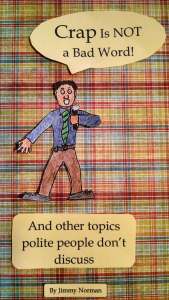
Now available on Amazon!

I should have known from the cover that this book wasn’t about Roman mythology.
When it comes to reading classic literature, there are a lot of challenges. The writing style from novels published generations ago can confuse today’s readers. Some of the books have lots of references that today’s readers don’t understand. And a lot of those classic novels are just too long for our short attention spans. Any one of those challenges can deter people like me from trying a book. But when a novel is challenging on every level, I know I’m screwed.
The worst of all of these classic novels might be Ulysses by James Joyce. I don’t know if Ulysses really is the worst of all the tough classic novels because I haven’t read most of the tough classic novels. I’ve been told it’s not fair to judge a book that you haven’t read, but I disagree. You can judge most books within a few pages, if you can make it that far. I’ve read the first few pages of Ulysses, and I know I don’t want to read it anymore.
I’ve never heard anybody say that they actually liked Ulysses. Supposedly, Vladimir Nabokov said it was brilliant, but he wrote Lolita, so he’s a literary author and his opinion doesn’t count. Besides, I’ve never seen video of Nabokov saying Ulysses was brilliant, so I don’t necessarily believe that he said it.
On the other hand, I can find normal people who claim they enjoyed Moby Dick or War and Peace. I might not believe those people who say they liked Moby Dick or War and Peace or Great Expectations, but they say it. But nobody has ever said that they liked reading Ulysses. The best anybody will say is that they appreciate Ulysses.
Appreciating is different from enjoying. I don’t mind appreciating a brilliant painting or a brilliant sculpture because I can move on quickly to another piece of art that I actually like (but probably isn’t brilliant). I can’t just appreciate a novel like Ulysses because it takes a really long time to appreciate it, and I don’t have that kind of time to learn how to appreciate it. After all, I have a full-time job, and I’m married with kids. If somebody wants to confuse me with an obscure painting, I don’t mind looking at it, but I’m not going to read a 700 page novel just to appreciate it.
Even if I successfully completed Ulysses, I couldn’t brag about reading it. I mean, I could, but very few people would know enough about literature to be impressed. If I read something long and difficult, I want everybody in my social group to know about it. Everybody knows Moby Dick and War and Peace, and most people are even aware of Atlas Shrugged. If you read those novels (or claim to), everybody is impressed. But Ulysses? This might be the most difficult chore of them all, and nobody would care. If people aren’t impressed, then it’s probably not worth the time.
Ulysses even has a misleading title. I had high hopes for Ulysses when I was teenager, believing it was the Roman version of The Odyssey. I had read The Odyssey in junior high, and I was hoping for a more updated version, but I soon learned that updated versions are sometimes too updated. When I first tried reading it, I didn’t get far enough in Ulysses to “get” that it kind of was an updated version of The Odyssey. I just thought the author had written a really long book with an intentionally misleading title to fool readers into believing they were reading about Greek and Roman mythology.
A few months later, I bought Atlas Shrugged. After that, I stopped buying books about Greek/Roman mythology, unless they were written by Bullfinch. Bullfinch had flaws, but at least I knew what I was buying.
One good thing about Ulysses is that it was originally written in English, so I don’t have to slog through a translation. So many of the difficult classics were written in French or Russian, and a lot of the nuances of a novel can’t really be translated. People who read Les Miserables in French will get a lot more out of it than somebody who reads a translation, unless the person reading the French version can’t read French. Maybe Ulysses is better when it’s translated into another language.
Another good thing about Ulysses is that it isn’t as bad as Finnegans Wake. At least I can understand Ulysses when I read it slowly. I have to mouth the words and hold my finger underneath each word as I go, but I can understand it. Finnegans Wake, I have no chance. I think James Joyce liked to confuse readers on purpose. You know you have it made as an author when you can intentionally confuse your readers, and people will still buy your books and critics call you brilliant. If I try to confuse my readers, I’m told my writing is incoherent (and they’re probably right).
I’m told James Joyce wrote some good short stories. Maybe it’s better to read James Joyce short stories because, even if they’re confusing, they’ll be short.
It takes a lot to get me to change my mind. I’m pretty sure I’ll never read Ulysses, no matter what anybody says. Call me stubborn, call me closed-minded. But I still enjoy reading opinions that are different from mine. If you disagree with me, I won’t tell you to shut up or call you stupid or try to get you fired from your job. Every once in a while, I actually change my mind because somebody who disagrees with me persuades me. But I’m pretty sure I can’t be convinced to read Ulysses by James Joyce.
*****
But enough about me. What do you think? Is there any good reason for a guy like me to read Ulysses? What other books would you refuse to read? What other novels have you given up on? Other than Finnegans Wake, are there any novels even more challenging than Ulysses? Have you ever been persuaded by somebody with whom you originally disagreed? Have you ever gotten somebody fired for disagreeing with you?
*****
Here are two books that are the opposite of Ulysses!!