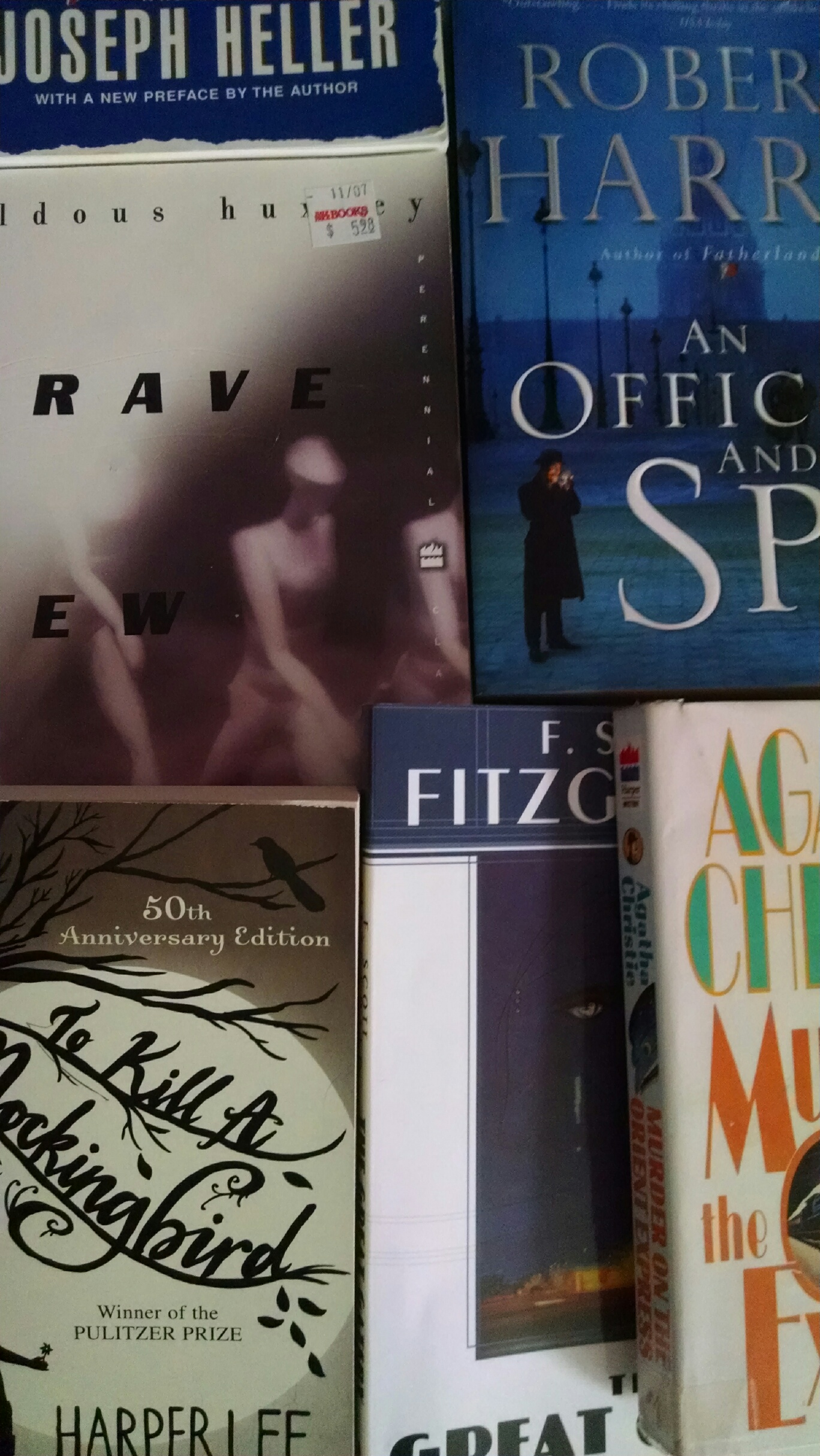
These are all good books, but I’ve read them, and I’m not in the mood to read them again.
I have a little bit of extra time this week, so I’d like to read a book, maybe two, but I don’t want to waste my time with a book that isn’t any good. I went to the book store a couple days ago and walked out with nothing, not because I’m a cheapskate (Actually, I am a cheapskate, but that wasn’t the reason I walked out with nothing), but because I wasn’t sure I wanted to commit myself to any of the books I looked at.
I don’t have reader’s block. Reader’s block is when nothing interests me. This is a little different. I think I’m getting too hyper-critical. I’m getting annoyed at bad dialogue in novels. I’m losing interest in long paragraphs with lots of description. I get suspicious that every minor subplot is filler.
I’ve always been a little critical of books and movies, but I’m getting worse, not better. It’s good that I have high standards, but it’s bad when nothing meets them.
I don’t really want to read a recently-published book. I’d read one of my own sure-thing books, but I save those for when I have reader’s block, and I don’t have reader’s block right now. Maybe it’s time to read somebody else’s sure-thing.
If you want to make suggestions, I’m open to them. I’m open to just about any genre, except maybe romance (unless it’s humorous). There are a few kinds of books, however, that I won’t read anymore:
- No series. I don’t have enough time to read a series, even if it’s good.
- No books over 500 pages. I can be flexible, but if it’s over 500 pages, it has to be self-contained and no filler.
- Authors I won’t read anymore (because I’ve read three or more of their books already): Stephen King, John Grisham, Tom Clancy, Lee Child, Lawrence Block, Donald Westlake, Dennis LeHane, Amy Tan, Elmore Leonard, James Elroy, etc. There are others, but I can’t think of them right now.
- Authors I won’t read anymore (for other various reasons):
- James Patterson (doesn’t write his own books)
- Sue Grafton (alphabet series is a horrible idea)
- Janet Evanovich (terrible alliteration in her titles)
- Harper Lee (long-lost manuscripts discovered in attics/basements are always suspicious)
- Brad Thor (obnoxious name, even if it’s real)
- Celebrity author whose name I don’t want to reveal (yawned in my face at a book signing)
*****
When I get reader’s block and I need a sure thing novel, here are the books I can always count on. These aren’t the perfect books, and I don’t want to build them up too much, but I always enjoy them, no matter how many times I read them. They might be considered mindless. They’re not literary fiction. I have to be in the right mood to read most literary fiction, and I’m definitely not in the right mood now.
I would read one of these right now, but like I said, I’m saving them for my next bout with reader’s block. If I were going to recommend any books (and I normally don’t do that because I don’t want to get judged by the books I recommend), then I’d recommend one of these.
The Thin Man by Dashiell Hammet
Marathon Man by William Goldman
The Godfather by Mario Puzo
*****
What good books do you recommend? What books do you reread when you get the chance? What authors do you no longer read?
*****
If you’re looking for something different to read, here are two books from Dysfunctional Literacy!!

Now only 99 cents each on the Amazon Kindle!

If your rant doesn’t offend at least half your friends, then it isn’t epic! (image via wikimedia)
When my wife said a few weeks ago that she quit Facebook, I knew it wasn’t going to last long.
I didn’t want to say that to her face. After all, I didn’t want to seem negative. If I’d said my wife couldn’t stay off social media, I might have been accused of not supporting my wife. You can support somebody and still not believe they are going to be successful. In fact, that’s when a person needs support the most.
My wife still continued reading Facebook, even after she said she had “quit.” That was a bad sign. To me, quitting means you stop participating in an activity altogether. By reading Facebook, she was still using social media. In my mind, she had no chance.
Even though she had “quit” social media, my wife still talked to me about the political discussions on Facebook that were going on. She would show me stupid things that other people wrote and told me why they were stupid. She didn’t need to tell me. Even when I agreed with the political position of the stupid comment, I still knew why the comment was stupid.
I disagree with my wife on a lot of political issues. Fortunately, our lifestyle values are in sync. We just disagree about how much government should get involved. If you frame the discussions like that, you can have reasonable disagreements. But if you let the political get personal, then it gets messy.
One evening this past week, I could hear the furious tapping of fingers on the keyboard from the den. I knew it was my wife. My oldest daughter can type quickly too, but there is no anger when she pounds the keyboard, even when she’s angry about her writing. I peeked into the den and saw a giant block of writing that filled the computer screen. I coughed as I approached my wife from behind, but she didn’t say anything.
“You can separate that into smaller paragraphs, you know,” I said, pointing at the screen.
“Leave me alone,” she said.
I understood. I hate being interrupted when I write, so I left.
I warned my daughters in the living room. One was watching television, and the other was on her tablet. “Your mother is composing a rant. You probably should get your homework done before she’s finished.”
45 minutes later, my wife came into the bedroom where I was reading On Writing by Stephen King. I’d never read it, but every writer says that every writer should read it. I was finishing the section where Stephen King writes about what inspired the idea for Carrie.
“Do you want to read my rant?” my wife asked, but it wasn’t a question.
“Did you break it up into paragraphs?”
“Yes.”
“Have you posted it yet?”
“Proofread it first.”
When I sat down at the computer, I noticed her word count was over 2,000 words. She had probably done all of that in just over an hour.
“You could write for James Patterson,” I said, impressed.
It was a political rant, though, so I won’t get into the details. I disagreed with most of it, but that wasn’t my issue. I disagree with most political writing. I don’t care what other people think about politics anymore, but they don’t care what I think either, so we’re even.
My wife used too many words in her epic rant. She made a bunch of ad hominem attacks. She assumed evil intentions for normal political behavior. She stereotyped a bunch of people, even though she’s against stereotyping.
“This is good,” I said. “But you might want to wait a few hours before you post it.”
“Nobody waits on Facebook,” my wife said. After I left, she posted it.
An hour later, my wife gave me her phone so that I could read the aftermath. A blogger I’d never heard of published the rant, and we got a kick out of that. My wife also suggested I publish her rant here on Dysfunctional Literacy, but I don’t even publish my own political rants, and I usually agree with myself. A bunch of people commented on her rant on Facebook, and she got a lot of negative feedback too.
Some guy who lives 1200 miles away said he was going to drive down here and kick my wife’s ass. I was concerned, but my wife said the guy drinks too much and that if he actually tried to drive down here, he probably wouldn’t make it. Despite all the vitriol aimed at her, she seemed relaxed as she watched a fitness competition later that night. Few things are more satisfying than an epic rant.
“You’re not going to respond to any of this?” I asked after I had scrolled through the comments thread of her rant.
“The ranter should never respond to comments,” she said. “It dilutes the rant.”
Yesterday, my wife ran a 5K, and a bunch of people who had argued with my wife on Facebook were there. They posted pictures of themselves embracing and smiling, and everybody seemed to be enjoying the runners’ camaraderie. Nobody mentioned the politics. If they did, I couldn’t tell. The guy who lives 1200 miles away wasn’t there.
My wife is back on social media again. I think it’s going to be a long political season. We’ll see how many times she quits social media before the political season is over.
*****
What do you think? Should a ranter respond to comments? When a friend offends you in a rant, how long does it take before you forgive/forget? How long should you wait before posting a rant?
*****
If you’re too polite to rant (or even if you rant on a regular basis), then you’ll probably enjoy…
Only 99 cents on Amazon!

This old ad would probably be considered to be in poor taste today. (image via wikimedia)
Back when I was a kid, almost everybody I knew smoked. My parents smoked, and my friends’ parents smoked. My brothers smoked, my friends’ brothers/sisters smoked, and even a couple of my friends got started in their early teen years.
Things have changed. Now, nobody in my family smokes. The relatives who had smoked when I was a kid either have either quit or… you know.
Yesterday my youngest daughter asked me for permission to use her own phone to look up what a lit cigarette looks like. She said she didn’t know how yellow/orange the lit end of the cigarette would be, and she wanted to get the color exactly right for a poster she was making for a school project. I thought it was strange that she asked me for permission, but she said she didn’t want me to think she was interested in smoking.
My daughter had just finished reading The Outsiders by S.E. Hinton, and she thought it was weird that all the characters in the book smoked cigarettes. I told her a generation ago, smoking was normal, but my daughters thought I was exaggerating. I’m not a huge believer in teachable moments, but I still gave them my speech about how things used to be:
When I was a kid, the cool people smoked. Every restaurant had a huge smoking section and a tiny non-smoking section, usually by the restrooms. Even non-smokers would ask to be seated in the smoking section because they wanted to be in the cool section (or they didn’t want to be next to the restrooms). Supposedly, conversations were more interesting in the smoking section. That implied that smokers were more interesting than non-smokers.
That made sense to me. I’ve always been told that I’m boring, and I’ve always been a non-smoker. Maybe I should have smoked to become more interesting. I knew drinking made people more interesting, but I didn’t want to get into drunken fights or wreck my car just to be interesting. But smoking? You could look more interesting simply by holding a cigarette.
I once tried to be cool by holding a cigarette as if I were going to smoke it, but it backfired. As soon as I held it, somebody lit it, and when you’re holding a lit cigarette, all the smokers around you will notice if you’re not smoking it. An unsmoked lit cigarette is a wasted cigarette, and smokers won’t allow that, even if it’s not their cigarette.
In high school, a bunch of teachers would run to the parking lot between classes to have a smoke. Boys would run to the bathrooms to have a smoke. I’m not sure if girls ran to the bathroom for a smoke because I never went inside the girls bathroom, but I knew a bunch of girls who smoked, and they always ran to the bathrooms between classes.
Instead of cupholders, movie theater seats had ash trays on the armrests. We used to put our drinks on our laps or underneath our seats. Theater floors were thick with layers of goo because of all the spilled drinks. Shoes would make squishy sounds whenever we walked to our seats. Now that smoking has been banned in theaters, the floors are cleaner, but people in the audience talk more. At least smoking made them quiet.
Since everybody smoked, everybody’s houses smelled like stale secondhand smoke, and kids had to play outside to avoid getting sick. That’s right. Kids in the past HAD to play outside, not because there was no cable television or no internet or no video games; it was too nauseating to stay in the house all day.
Smoking was so addictive that smokers didn’t give up their rights to smoke in public without a fight. When anti-smoking crusaders finally began making headway in anti-smoking legislation, smokers started calling them Nazis. You know somebody has lost an argument when they call the opposing group “Nazis.”
Anti-smoking crusaders weren’t anything like real Nazis. Anti-smoking crusaders just didn’t want you smoking where they are forced to breathe it. A real Nazi would tell you not to smoke, then arrest you and your family (or maybe kill you and your family), and then take everything you own, and then smoke all your cigarettes.
I can’t explain nicotine addiction or what it does. My own addiction is caffeine. If I had to quit caffeine, I’d be grumpy too. I’m glad that there’s no second-hand coffee, but my coffee breath can be pretty bad. I hope the coffee Nazis don’t try to ban coffee just because of coffee breath. I despise the use of the word “Nazi,” but I’d probably use it if anybody tried to ban coffee. Lack of caffeine would make me that desperate.
I’m glad that a book assigned in school could inspire a history lesson about smoking. It’s important for this younger generation to understand what things used to be like. Kids today are lucky that they don’t have to put with so many smokers around them. Or maybe I’m wrong. Maybe kids are unlucky because they are missing out on the opportunity to have so much “fun” smoking.
*****
What do you think? Which is worse, secondhand smoke or coffee breath? Is it worse to be a smoker or an anti-smoking Nazi? Should anybody other than a Nazi ever be called a Nazi? Do smokers really have more interesting conversations, or was that just a myth?
*****
For more “Old Things That Are Tough To Explain,” go to Old Things That Are Tough To Explain: The Home Page.
*****
Even though I don’t touch cigarettes, I was accused of smoking other stuff while writing these two books.
Now available on the Amazon Kindle!

(image via Wikimedia)
Writing habits can explain a lot about your personality. Take the quiz below, keep track of the points as you go, and see what kind of writer (and human being) you really are!
A. When a commenter on your blog tells you that you suck, what do you do?
- Feel bad that the commenter didn’t like your writing.
- Feel proud that somebody cared enough to tell you that you sucked.
- You enjoy comments, but they don’t have any effect on you.
- Get mad and leave a “You suck!” comment on the commenter’s blog.
*****
B. When you get writer’s block, what do you do?
- Stare at the screen until you fall asleep.
- Write “I don’t know what to write” until you think of what to write
- Shrug your shoulders and go do something unrelated to writing.
- Throw a loud, profane fit.
*****
C. When your spouse/significant other tells you that you spend too much writing, what do you do?
- Pretend you don’t hear what your spouse/significant other is saying.
- Say in a soothing voice, “You’re more important to me than my writing, but let’s discuss this when I’m done.”
- Immediately quit writing and spend time with your family.
- Push your spouse/significant other out of the den and soundproof the room the next day.
*****
D. During revisions, you notice a lazy metaphor in your writing. You-
- Add a couple words to the metaphor so that it’s not so lazy.
- Stress yourself out trying to think of a completely new and different metaphor.
- Keep the metaphor as it is and hope nobody notices.
- Drop the metaphor and go completely literal.
*****
E. A friend asks you about your latest writing project. You-
- Tell your friend that you never discuss your projects until the projects are finished.
- Tell your friend just a little bit about your project to be polite.
- Change the subject.
- Tell your friend everything about your writing project until your friend’s eyes glaze over.
*****
F. What kind of book do you think damages the publishing industry the most?
- Any book written by a “celebrity.”
- Any book series written by a new author who hasn’t proven he/she can sustain a book series.
- Any book written by James Patterson.
- Any book not written by you.
*****
G. While reading bestselling novels, what typically goes through your head?
- You nitpick over every plot hole and every poorly-written sentence.
- You look for ideas and writing techniques that you can use in your own writing.
- You’re just reading a bestseller for fun; it has nothing to do with your own writing.
- You wonder how that piece of junk ever became a bestseller.
*****
H. A friend of yours reads your novel and gives honest criticisms. What is your reaction?
- You appreciate the feedback, but you argue about the criticisms you disagree with.
- You listen intently to the criticism, and actually make a few changes because of it.
- You’re stunned that somebody actually finished your novel.
- You’re offended that your friend didn’t think your novel was perfect, and you end the friendship.
*****
I. What do you think about Ernest Hemingway’s famous quote?- “There is nothing to writing. All you do is sit at a typewriter and bleed.”
- It perfectly explains what you go through during the writing process.
- Hemingway exaggerates a little bit, but you understand what he means.
- You’re a little baffled by the quote because you actually enjoy writing.
- Hemingway, Shmemingway, that lush doesn’t know what he’s talking about.
*****
J. A friend gives you a copy of On Writing by Stephen King. What is your first thought?
- You’re grateful, but you already have five copies.
- You’re excited because you’ve always wanted to read this.
- You wonder why your friend thinks you need advice with your writing.
- You think Stephen King is a hack who doesn’t even follow his own advice anymore.
*****
SCORE
10-19 Points- You should be a writer because you’re insightful and the world needs to read your observations.
20-29 Points- You should be a writer because you care about the art and everything you write will be well-crafted.
29-35 Points- You should be a writer because you’re creative and can make up your own rules while still making sense.
36-40 Points- You should be a writer because you’re too curmudgeonly to do anything that requires interactions with real people.
*****
How did you do? What did the quiz tell you about your writing habits? Do you normally take quizzes when there is no real grade involved?

(image via wikimedia)
This might be a self-indulgent post. If you think so, I’ll understand. Still, it’s tough to resist. I noticed last week that my post about introverts was my 499th blog entry. I also realized that my 50th birthday was on the day that I normally publish something on my blog. If I kept to my normal schedule, I would publish Dysfunctional Literacy’s 500th post on my 50th birthday.
So here it is, my 500th post on my 50th birthday.
My 50th birthday feels kind of weird. My daughters keep saying the word “fifty” around me. A few months ago, I thought about having a Nifty Fifty party, but I don’t like parties, and I would have felt uncomfortable being the center of attention at my own party. I didn’t want to spend my 50th birthday feeling uncomfortable. If my wife wants to have a party for her own Nifty Fifty (which won’t be for a while), I wouldn’t mind throwing her a party because I wouldn’t have to be the center of attention.
I didn’t know if I should do anything outlandish for my 500th blog entry either. Maybe I should have done a BEST OF DYSFUNCTIONAL LITERACY 500th POST CELEBRATION. But that might have come across as obnoxious. Some of my posts are obnoxious, but I didn’t want my 500th post to be obnoxious. If I get to 1,000 posts, I’ll do something obnoxious. I might even throw a party.
Just so you know, it didn’t take me 50 years to write 500 posts. I started blogging just under five years ago. I’m not sure how long it takes most bloggers to reach 500 posts. Right now my goal is to write at least one post per week, but sometimes I’ll get two if I think of an extra idea. At one point, I was writing three posts, but I was really grouchy around the house trying to keep up with my writing, so my wife told me to cut back. I can write one post each week without getting grouchy. It’s not that I get grouchy when I write. I get grouchy when I write and get interrupted, and with my family, there are almost always interruptions.
500 posts seems like a lot to me. I can’t even remember what most of them were about. It’s probably a bad sign that I can’t remember most of what I wrote. Either I have a bad memory, or most of my writing is forgettable. I’m not sure which is worse.
I wonder if it’s normal for writers to forget what they’ve written. Has Stephen King forgotten about some of his early short stories? Has James Patterson ever forgotten a novel that somebody else wrote for him? That would be great, to make lots of money from a book that you forgot somebody else wrote for you.
Maybe it’s not a big deal to not remember everything I wrote. I don’t remember every day of my life either. I would like to remember something from every day of my life, but the human brain probably isn’t capable of that. My daughters keep journals where they write their favorite and least favorite event of each day. I hope they keep those journals. They started writing those journals a couple years ago, so they won’t be able to recall every day from their early childhoods, but at least they will have decent records of their teenage years. Those journals would be great for them to have when they’re 50. I hope I’m around to see it, but that would make me about…
Uh, never mind. I’m pretty sure I can make it, but I don’t want to plan that far ahead. I don’t even know what I’m going to write about next week.
*****
What do you think? Do you remember everything you have written? At what number of posts would you do an obnoxious BEST OF… for your blog? What’s a good alternative to throwing a party if you don’t like being at parties?

If you read during the holidays, prepare to be interrupted. (image via wikimedia)
The holiday season can be a frustrating time for introverts, especially for those of us who like to read. Even if we introverts have time off from work, we often have to use that time for extra chores/errands, or traveling, or spending time at other people’s homes.That leaves little quiet time for reading, and that can be frustrating.
Holidays shouldn’t be frustrating. We introverts need our quiet time, and here’s how to read during holidays without causing conflict or putting ourselves in danger:
- READING IN PUBLIC
Reading is almost essential for holiday traveling because traveling is really boring. However, reading in public places such as airports or bus stations (or even the mall) can be risky because you leave yourself vulnerable to getting conked on the head or having your stuff stolen (or both). It’s easy for evil-doers to sneak up on you while you’re reading in public, so if you absolutely HAVE to read in public….
a. Put your back up against a barrier like a wall or window. Lean against a wall if you’re standing. Sit in a chair that’s against a wall or a window. This way, nobody will sneak up on you.
b. Put your stuff behind your feet if you can’t hold all of it. Keep your legs connected to your possessions so that you’ll feel them if somebody tries to swipe your stuff accidentally.
c. Look up while you’re reading and make eye contact. Give the nod of acknowledgement and then continue reading safely. Even when you’re reading, you need to be aware of your surroundings. If you’re not aware, at least act like you’re aware.
d. Don’t read while you’re walking. You can trip or walk into other people (that usually ticks them off), or you might also get conked on the head.
2. READING WITH FAMILY AND FRIENDS
There’s a stigma attached to reading in public or at social gatherings. It’s okay to watch television, listen to music, or get drunk (to a certain degree), but people will look at you weird if you read. With smart phones, it’s a little easier to get away with it, but you still have to do so in small (or short) doses or else others will think that you’re a tech tool.
Normally, I don’t mind if others think I’m a tool, but during the holidays, I try to get along with others, especially my family, so here are a few tips to enjoying yourself without offending most reasonable people:
a. Read while others are watching TV. People watching TV usually don’t care if somebody else is reading, but be ready to get talked to during commercials.
b. Read if others start talking about politics. If the discussion gets heated, say you’re looking up information on your phone, then read the book of your choice. Let others get worked up into a political froth while you relax and read.
c. Read in an isolated location. Nobody can disturb you or complain about you if they can’t see you. Tell others you need to go out for a smoke (even if you don’t smoke), and they’ll leave you alone unless they smoke. Then you might have to put up with talking AND smoking, so be careful.
3. WHEN NOT TO READ!!!
a. Do NOT read when guests/family arrive or leave.
b. Do NOT read at the meal table while others are eating.
c. Do NOT read while the host is doing work that you can help out with. Help out the host (unless you are the host, but if you’re the host then you probably won’t have time to read). If you help out with the holiday chores, then you have the right to read later.
d. Do NOT read while your kids are acting up. Its okay to read if somebody else’s kids are acting up.
e. Do NOT read while opening presents. If somebody gives you a book, then you may read it while others are opening gifts.
4. GREAT RESULT OF READING IN PUBLIC
Sometimes reading in public or at a gathering can lead to a discussion about books. That in itself is a great reason to read at a gathering. Most conversations are meaningless (which is okay). But a conversation about books is almost always better than conversations about any other topic. It’s better than talking about politics, religion, abortion, television, celebrities, and most sports, but NOT football. Football is the best topic during the holidays, even if you’re reading a book.
5. HORRIBLE RESULT OF READING IN PUBLIC
Sometimes an extrovert stranger will want to talk about books. True, it’s nice to run into others who like to read, but I don’t like talking to people I don’t know and will never see again. I reserve my social energy for my friends (the few I have), family, and co-workers. The last time an extrovert started talking to me about books, I told him my “legal drugs” had just kicked in.
That ended the conversation. Most people, even extroverts, will leave you alone if they think you’re on “legal” drugs.
*****
These rules work for me, but they might not work for you. What tips do you have for reading during the holidays (or any time you’re in public)? If you’re an extrovert, what reading tips do you have for the holidays?
*****
For more Introvert Guides…
The Introvert’s Guide To Protesting
The Introvert’s Guide To Talking Politics
The Introvert’s Guide To Dating
The Introvert’s Guide to Partying
The Introvert’s Guide To Saying No
And here are two books from Dysfunctional Literacy, perfect for reading clandestinely during any any social gathering.
Now only 99 cents each on the Amazon Kindle!

(image via wikimedia)
“That’s it!” my wife announced, shaking her phone in my face. “I’ve had it with these idiots.”
I already knew who those “idiots” were. They were her friends on Facebook. Some of them are her actual friends, and others are only connected through her Facebook network. My wife has been getting into a lot of arguments lately. The political season is heating up, and friends who would never think of talking politics in person are bringing stuff up on Facebook.
When political stuff comes up in my life, I change the subject or leave, but my wife isn’t like that. She’ll speak out. She won’t back down. And if somebody throws a policial insult at her, she’ll insult that person right back. But the exchanges on her social network had gotten too heated even for her.
My social media habits are different from my wife’s. She usually posts family stuff and neighborhood stuff, and everything was usually okay as long as it didn’t get political. Me, I just blog, and read blogs, and occasionally put something on Twitter. I don’t do anything else because there isn’t any time. I have a job where I’d get fired if I blogged or tweeted there. So when I find time at home, I blog, and it’s fun. It doesn’t stress me out at all.
But my wife started to stress out, so she quit.
At first, I was glad my wife quit social media. My wife was more relaxed. She wasn’t showing me endless threads of political debate that always started off bad and always got worse. She was content with laughing at the antics of reality housewives on cable. Then a few nights ago, she burst into my den while I was writing.
“You should quit social media too,” she said.
“Don’t talk to me now,” I said abruptly. I think I was writing something about Stephen King, and she messed up my thoughts.
Then I realized I was talking to my wife.
“I mean, maybe now isn’t the time to talk about that,” I said more gently.
Later on that night when my wife brought up the subject again, I said: “I don’t get into arguments like you do. I just write and have fun.”
“You could have fun with me,” she said.
“I can have fun blogging AND have fun with you,” I said.
“You’d rather have fun blogging than have fun with me?” she said. “What if you had to choose?”
I didn’t think that was fair. If I absolutely had to choose between having fun with blogging or having fun with my wife, I’d choose my wife (of course!). But I didn’t want to make that choice. Writing is fun, especially when you know a few people are going to read what you write. 20 years ago, I quit writing because there was no way to get anybody to read anything without joining writers groups, and that meant I had to talk to people when I just wanted to write. With the internet and blogging, I feel like I almost have a responsibility to myself to keep writing. I really didn’t want to have to make this choice between my wife and blogging. I couldn’t believe my wife was putting me in this position.
Then my youngest daughter bailed me out.
“Dammit!” I heard her shout from her bedroom. This was unusual. I’d never heard my youngest daughter shout profanity before. She’d quoted profanity uttered by other people, but I hadn’t heard her actually use it. I wasn’t sure whether I should yell at her or find out what was going on first. I decided that I could always yell at her later.
“What’s wrong,” I asked,as my wife and I slowly opened her bedroom door. I expected to hear that my daughter was frustrated over homework or maybe mad at the chores list that my wife had given her.
“I just lost two followers on Instagram,” she said. “And I don’t know what I did wrong!”
“When you cuss over lost followers, it might be time to quit social media,” I said to my daughter.
Then I looked at my wife.
“I think you’ve been talking to the wrong addict,” I said.
Now that I’ve had a chance to think about it, I realize that my wife was kidding when she asked me to choose between her and social media. At least I’m pretty sure she was kidding. Sometimes I feel like I don’t know my wife that well.
*****
What do you think? What would make you quit social media? What are other warning signs that it’s time to quit (or at least take a vacation)?

(image via Wikimedia)
A few weeks ago, a friend of my wife came over unannounced and uninvited with her family. Any visitors we get are because of my wife. I don’t have friends, so nobody comes over to see me. My wife has lots of friends, and sometimes we end up entertaining families of people whom I barely know. Most of the time I don’t mind, but I don’t like it when the visitors are unannounced and uninvited.
In this case, the family had a teenage son who, according to his parents, is addicted to video games and hates to read. He’s capable of reading, my wife’s friend said, but he won’t do it unless it’s a school assignment.
“At least he completes his school assignments,” I said to my wife’s friend.
“Yeah,” the son said to his mom, but she gave him a dirty look.
I could sympathize with the kid because he reminded me of a bunch of friends I had in high school (a time in my life when I actually had friends).
My high school friends weren’t functionally illiterate. They were dysfunctionally literate. They knew how to read but chose not to. If they were going to read, it would be a smut book like Massage Parlor by Jennifer Sills or a parody book like Bored of the Rings. If my high school friends had had internet and cell phones and they wouldn’t have read even those books. With the internet, teenage boys don’t need smut books anymore.
Anyway, my friends didn’t understand why I read real books. Back then, I read the classics. I read best-selling novels. My friends, they didn’t get it. From their point(s)-of-view, they had better things to do, like hang out, play video games, drink, and smoke, and chase girls. To them, I was wasting my time reading because it kept me from doing all those other things that were fun to them.
“Dude, why do you waste so much time reading books?” they’d ask me.
I’m not sure any of my friends used the word “dude,” but it’s in my memory.
One day in my junior year of high school, I got tired of being razzed for reading.
“Here,” I said. “Try this.” I handed one of my friends a beat up copy of Different Seasons by Stephen King.
“This is long,” my friend said.
“It’s a bunch of short stories,” I explained. I started him with the second story, “The Body,” which later became the movie Stand by Me.
“This is long too,” my friend said, flipping through the pages.
“Just read a few pages and see if you like it.”
Once I got them started, all my friends liked Different Seasons. Even though it had mature content, it was the first book that my friends read that wasn’t considered dirty. One friend exclaimed that reading “The Body” was like watching a movie in his mind. At least for one book, he understood why I read so much.
Another friend read a bunch of Stephen Kings like The Shining, and The Stand. He could even tell a good Stephen King book from a mediocre one. He thought that Christine sucked.
In college, I had a roommate who didn’t like to read. You would think college would be filled with guys who like to read, but I guess the stereotypes in Animal House were correct after all. My roommate got drunk a lot and chased women (most of whom were drunk). Even my drunk roommate liked Different Seasons when he read it. He still preferred getting drunk, but at least he understood why I read a lot.
Anyway, I gave my wife’s friend’s kid my copy of Different Seasons and told him to start reading “The Body.” He didn’t have anything else to do. His parents weren’t letting him use his phone, and he wasn’t interested in the football game on tv, so he was captively screwed, and he began reading the book. Maybe he was just being polite. If that was the case, I was impressed that he was at least pretending.
When the family left (and I was glad because my wife’s friend was kind of annoying), I told the kid he could keep the book, and he thanked me. Again, maybe he was just being polite.
I’d like to say that this kid finished Different Seasons and that now he reads a bunch of books on his own. Maybe he does, but I’ll probably never know.
My wife’s friend complained to her today that Different Seasons had a bunch of stuff that was inappropriate for a kid her son’s age. She was disturbed that I’d given her son that book without her permission. She was upset about it.
“His video games are probably worse than anything in that book,” I told my wife. “Plus, he has cable and the internet.”
“That’s what I said,” my wife exclaimed. “And now she’s mad at me too.”
It looks like I just busted up one of my wife’s friendships, with the help of Stephen King. I didn’t like my wife’s friend anyway. And I didn’t like her unannounced, uninvited visits. Now I don’t have to worry about my wife’s friend doing that again. And for that, thank you Stephen King.
I don’t have many friends, but maybe Stephen King can be my friend some day.
*****
What book got you (or somebody you know) to start reading? What author would you like to thank, and why? What author do you think would be a cool friend to have?
*****
Stephen King has written a lot of great stories, but he’s never written anything like this!
Now only 99 cents each on the Amazon Kindle!

(image via wikimedia)
When I told my wife a few days ago that she snores, she said without hesitation: “No, I don’t.”
I wasn’t surprised. Snoring denial seems pretty common. When I told my college roommate 30 years ago that he snored, he denied it. I too initially denied snoring when my wife accused me of it ten years ago. After she kicked me out of the bedroom, I decided to get myself checked out. Now I have a CPAP, which takes getting used to, but my wife and I are back in the same room again. I admit now that I snore, but I was initially a denier.
I don’t know how snoring deniers know whether or not we/they snore. We’re asleep when we snore. In my wife’s case, she snores lightly, like a purr. It’s endearing, but it might lead to heavier snoring. Her purring could be a gateway snore that will later lead to health problems, and I don’t want her to risk that.
At the same time, I didn’t want to get into a repetitive argument with my wife over snoring. After all, we live in the new millenium where we no longer have to argue forever about things that are easily proven true or false. That night in bed when she started breathing heavily and making light snorting noises, I grabbed my phone and videoed her. After a few seconds, I had irrefutable proof that my wife snored. There was no way she could argue with me now.
To be clear, I don’t normally have a need to win arguments. If I’m wrong about something, I’ll usually admit it. But I hate knowing that I’m right when somebody else thinks I’m wrong. I can live with it, but it bugs me. Plus, I didn’t want my wife to think I was lying about a simple matter as snoring. And with the phone, I had my proof.
When I began to show my wife the video on my phone, she stopped it and said: “That’s an invasion of my privacy.”
“I’m not putting it on the internet,” I said. “Just watch it. It’s proof that you snore.”
“Delete it,” she demanded.
“Just watch it,” I said.
“Delete it.”
I knew then there was no way my wife was going to watch herself snore. I could play it on the computer or on the television, but that would only make her mad, and I’d have to sleep on the couch, and that would have defeated the purpose of me wearing a CPAP. Plus, there would be no way for me to monitor her snoring, so I decided to concede.
Still, my wife doesn’t believe me when I tell her that she snores. She thinks I’m lying. Maybe she thinks I want revenge for having to wear a CPAP. Whatever the reason, she thinks she doesn’t snore. I’d understand if she said that she was surprised that she snores. But she said I was wrong, and she said it with lots of confidence.
“Snoring isn’t a character flaw,” I told my wife. “There’s no good reason to deny it.”
“I don’t like false accusations,” my wife said. “And reading in the middle of the night is a character flaw. That’s worse than snoring.”
Ugh, I thought. Sometimes I read in the middle of the night, and my wife claims the light from my phone wakes her up. It’s not the light that wakes her up; it’s her own snoring. When I leave the bedroom to read in another room, she claims my movement wakes her up too. If I switch positions in bed, that wakes up my wife as well, she says. I know she wakes up because the snoring makes her a light sleeper.
“There’s no reason to get defensive about snoring,” I said. “It’s just what your body does. It’s like denying that you sneeze or denying that your farts stink.”
“My farts don’t stink,” my wife said.
My daughters laughed at that, and then they stared at their phones, pretending that nothing had happened. I knew the discussion was over for the time being. When an argument degenerates into whether or not farts smell, it’s time to stop. But I’ll see that my wife gets her snoring checked out. It’s not that I have to be proven right. It’s a health issue.
*****
What do you think? Should I give up trying to convince my wife that she snores? Is it wrong to video snoring spouses while they sleep? Is it really a character flaw to read in bed?
*****
When I was a kid, I was punished for saying the word crap. Looking back, it kind of ticks me off because now I know…
And here is the true story of my one moment of high school glory!
Now only 99 cents each on the Amazon Kindle!
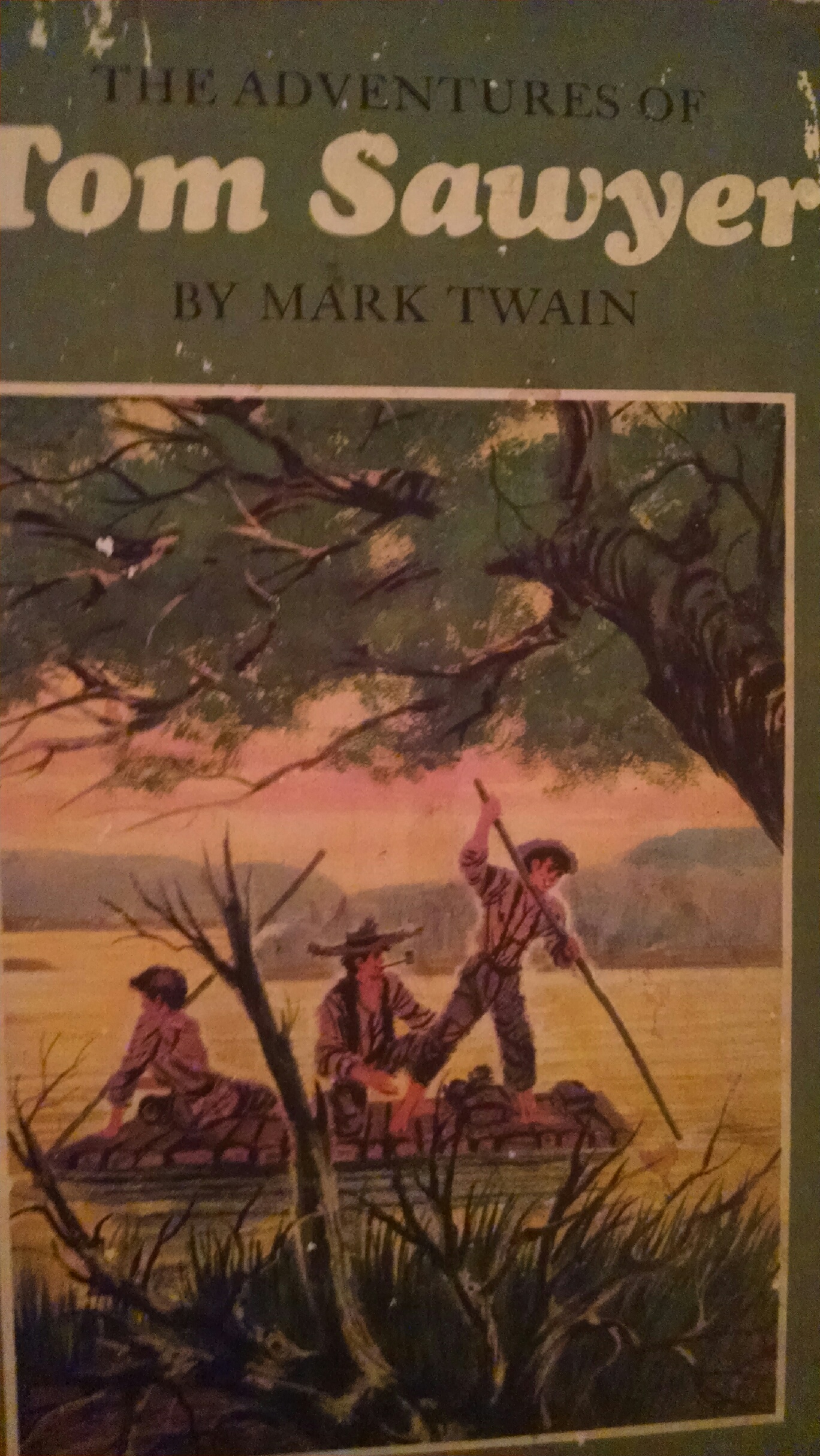
This might be beat up, but it’s been in my family for generations.
I don’t keep many books anymore. Up until a few years ago, though, I used to be a book hoarder. I was proud of my collection. But then my wife and I had kids, other stuff accumulated in our house, we started moving around a lot, and books became digitized.
With all that was going on, it was more convenient and practical to sell or give away most of my books. I don’t miss them. But there are a few books that I kept, and I’m glad I did. Each book that I kept has a story behind it, and those stories are more important than the stories in the actual books.
Book With Sentimental Value- The Adventures of Tom Sawyer by Mark Twain (pictured above)
Tom Sawyer isn’t my favorite book ever, but I like it, and this copy was originally owned by my grandparents. My grandmother gave this to my grandpa as a gift in the 1950’s, and then she gave it to me (I think) in the 1970’s when my grandfather wasn’t really reading that much anymore. I didn’t understand everything that was going on (I do now, but I won’t get into the details), but I knew enough to keep that book. I still have it. I’ll give it (or my wife will give it) to one of my daughters.
Another Book With Sentimental Value- The Foundation Trilogy by Isaac Asimov

I don’t think I was meant to own this copy.
My dad owned this copy, and it’s also beat up. I like this book too (I think I like beat up books), but I’m not sure I was meant to have it. I think it was on my dad’s bookshelf when I was a teenager, and I never put it back. It took me a long time to read (it’s three books, and I think I got bored for a while in the second book, but I’m not sure). Anyway, when I see this book, I think of my dad, and sometimes I even read a section or two.
The Books I’d Keep If I Still Had Them- The Wizard of Oz (and the other books in the series) by Frank Baum
I didn’t give these away on purpose. When I was growing up, my family had a complete hardbound collection of the entire Wizard of Oz series. I read them all (or most of them). My older brothers and sister read them before I did. My mom lent them to each of my siblings to read to their kids, and somewhere along the way, the books disappeared.
Everybody in my family claims that they gave the books back to my mom, but she doesn’t have them and doesn’t know which of her kids/grandkids had them last. I feel cheated because I didn’t have them for my own daughters. People think the youngest child in a family gets spoiled, but in this case I got screwed over.
The Book That I Know I Still Have But Can’t Find- The Godfather by Mario Puzo
I bought this beat up paperback at an obscure used book store back in the late 1970s. Everybody talked about The Godfather movies, but I couldn’t see them because I was too young, and cable/internet didn’t exist back then. So I read the book. And it was great. 40 years later, I still occasionally read this book.
Whenever I get reader’s block, I pull out this copy of The Godfather. It has magical powers. It cures reader’s block. I’ll be really pissed off if I don’t find it soon.
The Book I Wish I Still Had- The Chocolate War by Robert Cormier
First of all, The Chocolate War might be one of the worst titles for a book. It’s a YA novel about boys written for boys, but the title probably turned off a bunch of teenagers who might have appreciated it if not for the bad title. I received a copy of The Chocolate War as a Christmas present when I was maybe 11 or 12. I thought the title was stupid then (I hope I didn’t say that to the relative who gave it to me), and I didn’t read it for a long time.
It was years before I finally read it. I don’t remember why I read it after waiting so long. All I remember is that when I read it, I thought: This is surprisingly good. I don’t know what happened to the original copy I own.
My Own Book That I Want To Pass Down- My Book About Me by Dr. Seuss

I filled out the entire book and never put my picture on the cover.
My mom gave this back to me a decade ago. I had forgotten all about it. I think I was 4 when my I completed it, and now I’m glad my mom kept it (Thanks, Mom!). Both of my daughters have their own now, and I’m keeping their copies until they’re adults.
The only problem with My Book About Me is that the short story that I wrote in the back of the book isn’t very good. And it needs a lot of revising and editing. What was I thinking when I wrote it?
*****
Books with sentimental value are great. While reading the books, you can be entertained and bring back fond memories at the same time. What books have sentimental value to you? What books will you always keep? What is the story behind them? What book has magical powers for you?
*****
These two books from Dysfunctional Literacy will always have some sentimental value to me… because I wrote them.
Now only 99 cents each on the Amazon Kindle!


 Dysfunctional Literacy