
(image via wikimedia)
As far as “old things” go, this one is fairly recent. Usually the old things that are tough to explain (like researching without the internet) can go back a couple decades. Sometimes stuff (like smoking cigarettes in restaurants and movie theaters) goes back a couple generations. But kids today don’t realize that just a few years ago, maybe as recently as 2011, Donald Trump was considered a pop culture icon. Maybe people are trying to forget, but I think it’s important to remember the past, no matter how weird it might seem.
Don’t get me wrong. I’m no Donald Trump fan. I disliked Donald Trump before everybody else did, and it’s not even political. The simple version is that I’m a polite person, and Donald Trump has always come across as kind of rude.
For example, I always thought Trump was rude in his Larry King interviews on CNN. Once he even complained about Larry King’s bad breath. I laughed when it happened, but I still thought Trump was a dick . To be fair, Trump was just demonstrating how he would get an edge in negotiations, but still. I don’t want to negotiate with somebody who tells me I have bad breath. I’ve been offended by a lot of bad breath in my life, but I’ve never publicly shamed a person for it. I know Donald Trump respected Larry King. At the time Larry King had already had more wives than Trump could even dream about.
Complaining about bad breath in a negotiation is bad behavior, and Larry King rewarded Trump’s bad behavior with a bunch more interviews. That’s what media institutions did for over 20 years, rewarded Trump’s bad behavior.
Trump made a cameo appearance in the movie Home Alone 2, but that appearance didn’t really add anything to the movie. If anything, it kept an actual actor from having a job. Some struggling actor could have played a mogul hotel owner and never got his opportunity. I don’t blame Donald Trump. What is he supposed to do? When you get offered a cameo appearance in a Home Alone movie, you take it. I blame Hollywood. I blame Hollywood for a lot of things, especially for making a lot of crappy movies.
When Trump made a cameo appearance on the soap opera Days of Our Lives in 2005, everybody made a big deal about it and claimed that Trump was great. He was great at being Trump, I guess, which is all the soap opera people wanted. I have to give Trump credit. He’s better at being Donald Trump than any of his impersonators. Most of his impersonators suck. And why do we even need a Trump impersonator? We can watch Donald Trump whenever we want! I can understand Elvis impersonators because he’s not around anymore. But there’s a lot of Donald Trump.
Being on Days of our Lives wasn’t enough for the fawning public. An actress from Days of Our Lives even bragged about how she flirted with Donald Trump . And the audience cheered. And the hosts encouraged this flirting, even saying that Trump was “cute.” To me, a “cute” Donald Trump has always been tough to explain. It actually kind of turns my stomach a little bit. But as a man, I’m not attracted to the same things that a lot of women are attracted to.
Today, no woman will admit she flirted with Donald Trump, at least not with pride. Women will always deny that they were attracted to Donald Trump, but the evidence is right there. Who am I supposed to believe, women who deny ever being attracted to Donald Trump, or the grainy video evidence?
Everybody could tell what kind of president Donald Trump would be by watching his television show The Apprentice. The highlight of every episode was watching Donald Trump fire some obnoxious go-getter. “You’re fired!” was even a popular catch phrase for a while. Now the same people who loved “You’re fired!” are freaking out when Trump fires somebody in the government.
When I tell my daughters that Donald Trump was once beloved by the public, they don’t believe me. They think that everybody has always hated Trump. I know, I know, not everybody hates Donald Trump; he did get 47% of the vote, but you know what I mean. You don’t need to fact check me. “Everybody hates Trump” is hyperbole, and you shouldn’t fact check hyperbole. Donald Trump speaks hyperbole (when precise language might be a little helpful), and then journalists fact check him, which is funny because journalists went to college and should understand what hyperbole is (maybe colleges don’t teach hyperbole anymore). I don’t know what’s worse, speaking hyperbole too often or fact-checking hyperbole.
The people who protest Donald Trump are some of the same people who told us how wonderful he was during the 1990s and 2000s. I don’t mean they are the EXACT same people, but they are the same institutions. The Apprentice was on NBC, and NBC hates him now. Larry King was on CNN, and CNN hates him now. Donald Trump made a bunch of cameo appearances in Hollywood movies and television shows, and Hollywood hates him now.
This makes me wonder, who is right? Was the media from 1990-2011 right? Was the media from 2011-now right? Were they both right? Were they both wrong? I don’t know if I’ll ever figure that out. But I know that a short time ago Donald Trump was a pop culture icon, and that is a very tough thing to explain.
*****
For more “Old Things That Are Tough To Explain,” go to Old Things That Are Tough To Explain: The Home Page.
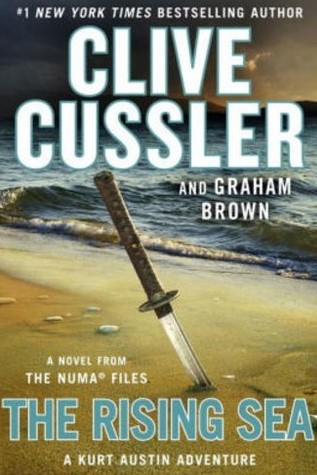
The Rising Sea by Clive Cussler and Graham Brown is the #1 book in hardcover fiction this week. Before I noticed this, I didn’t even know Clive Cussler was still alive. I mean, Clive Cussler wrote Raise the Titanic over 40 years ago. I remember reading it in one day, not because I was a fast reader or that it was spellbinding; it had a bunch of nautical/ship information that bored me, so I skimmed over a bunch of stuff.
Some kinds of details bore me so much that I skip over them. Whenever I read a naval book, I get bored at all the information about the water and the ships and stuff like that. This kind of makes sense. Whenever I go out into open waters, I curl into a fetal position until the waves of nausea subside (when we return to land), so maybe that’s reflected in my reading. I can’t stand naval stuff.
The first scene in The Rising Sea takes place in feudal Japan, and the battle scene details were kind of sketchy. I was interested enough to read the entire scene, but it was pretty standard for a battle scene set up. Then came the first chapter, set in present day on a ship, and I curled up into a fetal position until I decided to stop reading the book. Maybe The Rising Sea is really good, but I can’t tell.
Reading nautical stuff must not bother many other readers because Clive Cussler keeps selling books. I guess other readers love it, but it puts me to sleep. I think every reader has something that puts him/her to sleep. For some, it’s technical/scientific details. For others, it might be physical descriptions of scenery. It could be almost anything. For me, it’s stuff about the sea. The open water is my Kryptonite, in books and in real life.
Even though Clive Cussler was listed as an author of The Rising Sea, I wasn’t sure that he was still alive. Sometimes authors publish stuff after they’re dead, or other authors write under the famous name. I hesitated to look it up. I always feel kind of morbid when I look that kind of thing up, but I’m glad he’s still alive and writing books.
I’d never heard of the other author Graham Brown before. I mean no offense. I’m pretty sure Graham Brown has never heard of me either. There are a bunch of Graham Browns out there, but this one seems to be a technical expert and teacher and now he’s a coauthor. That’s cool. Clive Cussler probably writes the sea stuff that puts me in the fetal position, and Graham Brown might write everything else. Maybe he wrote that opening scene in feudal Japan.
Clive Cussler is a cool name for an author, though. It’s a manly name. Clive sounds like a tough guy’s name, and Cussler sounds like a guy who swears a lot. When I was a kid, Cussler’s main character was always Dirk Pitt. I also thought Dirk Pitt was a cool name. Clive Cussler and Dirk Pitt. That was a manly author/protagonist tandem. I was a kid named Jimmy with a boring last name. I could merely dream about having a name as manly as Dirk Pitt.
But a name like Dirk Pitt carries responsibility. As a kid, all I did was sit around and read books. If I had been named Dirk Pitt, I would have had to raise sunken ships and risk my life at sea without curling up into the fetal position. If I had been named Dirk Pitt, it would have been a misleading name.
Yeah, Dirk Pitt is a cool name, but I’m not sure who the main character is in The Rising Sea. It says “A Kurt Austin Adventure” on the cover, but I didn’t read far enough to meet Kurt Austin. Kurt Austin is an okay name, but it’s no Dirk Pitt. I’ve read enough Clive Cussler and Dirk Pitt (and have had enough nauseous experiences in open water) to know these books aren’t for me. I probably won’t finish reading The Rising Sea, but I’m glad Clive Cussler is still alive.
*****
What do you think? Which name is cooler, Clive Cussler or Dirk Pitt? What kind of book details put you to sleep? What is your Kryptonite of books?

(image via wikimedia)
When you date somebody at work, there’s a good chance it’s going to cause problems. As soon as coworkers find out about the relationship, there’s going to be gossip. If the relationship goes sour, there’s going to be friction. And if you date a boss, there’s a good chance somebody will get fired.
________ wasn’t the boss, but she was a boss. You didn’t mess with her. I mean, you didn’t mess with her at work. At any rate, she was pissed off at me because I told her that her name didn’t fit her (You can find out more starting here ), and everybody knew she was pissed at me. Because of that, I was on the receiving end of some office talk.
This went on for about a week. For a while, I was pretty sure I was going to get fired. I never got called into an office for any reprimands, but I was pretty sure it was coming. They wouldn’t fire _______ for the interoffice dating, even though she was the superior. If I got called in, I wasn’t even going to pretend to have been intimidated into dating her. I was going to go with the “just friends” approach. Technically, we hadn’t gotten much further than friends anyway. We had been about to go a lot further, but I had messed it up with the name incident. I wasn’t sure the “just friends” would work, but I wasn’t going to blame her.
After a week or so, I started to relax. I hadn’t been talked to, and if it hadn’t happened yet, I didn’t think it was going to. I hardly ever even saw ________ anymore. When we had run into each other, I tried to be polite, but she’d just glance away. It wasn’t exactly a cold shoulder because she had plausible deniability. She could always claim she hadn’t seen me.
One morning as I walked into the lobby, the first thing I noticed was that it was crowded and that _______ was there and that she had already noticed me. She did the quick glance away, and I pretended that I hadn’t seen it. I cursed myself for not getting to work earlier when I could have avoided her.
And then I tripped.
I didn’t fall, but it was a noticeable stumble. I recovered my balance but then knocked a styrofoam cup of coffee off a couch armrest. It spilled on the carpet, and everybody in the lobby had seen it happen. The carpet wasn’t that nice or anything, but it had at least been clean. I could tell from the way the coworkers were looking at me that they thought it was my coffee. They thought that I had just seen the boss (the one whom I had allegedly been dating and had allegedly insulted), and they thought that I had seen her and gotten flustered and then tripped and then spilled my coffee. Most of them didn’t know I could be clumsy under normal conditions. Even though _______ and I had been out a couple times, I wasn’t sure if she understood that either.
“Doh!” I said, in a reflex Homer Simpson imitation. This was back in the early 1990s, and Homer Simpson humor was still seen as new. It hadn’t gotten old yet, and everybody recognized the reference, even if they never watched The Simpsons. A few people laughed.
__________ grinned at me as I picked up the cup and looked around for a paper towel. I thought about using my shirt sleeve. Of all the times for me to stumble and knock over coffee, it had to be in front of her.
“That twig get you again?” she said. She bent down with a couple napkins, and I wondered where she had gotten them so quickly.
“I hate that twig,” I said. “And why would somebody leave coffee on the armrest?”
“That was mine,” she said, extending the last syllable with guilt.
“Well, in that case it’s alright,” I said, understanding why she had the napkins. I started soaking the napkin in the carpet. “I’m sorry I knocked it over.”
“It was office coffee.”
“Ha! Then I did you a favor.”
We talked for about a minute, but I don’t remember much of what else we said. I was just glad she wasn’t accusing me of saying she had an ugly name.
“The janitor can do this,” she said as she stood up.
“The janitor didn’t knock it over,” I said. I was probably making the stain worse, but at least I wasn’t gawking.
“Well, I owe you another favor,” she said. “Maybe one day I’ll pay you back.” She touched my shoulder and walked away. I continued dabbing helplessly until a custodian showed up and I sheepishly thanked her.
And that was it. After that, the office weirdness stopped. All the awkward silences I got from entering a room were the normal awkward silences. All it had taken was one positive interaction to clear up the air. Nobody ever gave us funny looks when we were together. We never talked about what had (almost) happened. Instead, we had a bunch of appropriately friendly conversations about business matters. _________ was promoted and moved to another office a few months later, but it had nothing to do with us. As far as office dating goes, it could have ended a lot worse, but there were a few awkward moments in there.
I’m sorry this story wasn’t more dramatic. That’s how life is. Sometimes it’s just awkward.
This isn’t the only time that clumsiness has affected my dating life. If you’re disappointed in this episode, here’s a clumsy moment I wrote about a few years ago . But I’ve had much worse moments, I promise. I’m just building up to them.
*****
Begin another awkward dating experience with Awkward Moments in Dating: The Ex-Boyfriend.
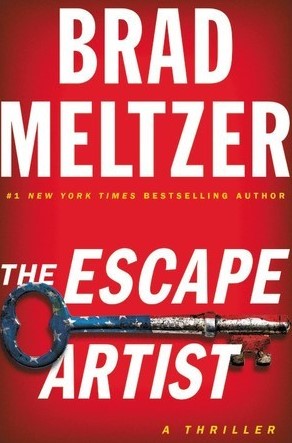
You might have heard about The Escape Artist by Brad Meltzer even if you’ve never heard of The Escape Artist by Brad Meltzer.
Over the weekend a headline from a New York Times book review ( Is Your Plane About to Crash? Write a Farewell Note and Eat It ) made a bunch of news aggregators. It’s kind of a morbid headline, and hopefully nobody will need the information, but the headline was a bit misleading because the article was more about current bestsellers and author profiles (including Brad Meltzer) than the note-eating itself.
Typical New York Times misleading headline clickbait tactic.
Anyway, that little note-eating tidbit/factoid is mentioned in an early scene from The Escape Artist, and it’s gotten a lot of publicity. Even without that fun fact, The Escape Artist has a heckuva good start. I won’t go into the details because a certain New York Times book reviewer might have revealed too much already, but if you like suspense/mystery thrillers, this could be a good one.
As good as the opening chapters are (you know I’m going to complain about something), there is some distracting exposition dialogue. Almost every author suffers from bad exposition dialogue. It’s tough to avoid. Authors have to get a lot of information to their readers quickly and want to do it in an interesting way.
In this scene, the protagonist Jim “Zig” Zigararowski, a U.S. military mortician(?), is prying information from an old FBI agent friend Waggs (who is probably going to get killed in the book soon… I’m just guessing, so it’s not really a spoiler). This dialogue sets up the old friendship, but also clumsily gives background information to the reader:
‘Ziggy, I love you, but do you have any idea why, when the corpses come in, you’re the one who gets all the facial injuries?”
“What’re you talking about?”
“Don’t play modest. If a soldier gets shot in the chest, they get assigned to any mortician. But when someone takes three bullets to the face, why does that body always go to you?”
“Because I can sculpt. I’m good with the clay.”
“It’s more than talent. Last year, when that marine was hit by ISIS rocket fire, every mortician said it should be closed casket- that you should wrap him in gauze. You were the only one stubborn enough to spend fourteen straight hours wiring together his shattered jaw, then smoothing it over with clay and makeup, just so you could give his parents far more ease than they ever should’ve expected at their son’s funeral. But y’know what that makes you?”
“Someone who’s proud to serve his country?”
“I love my country too. I’m talking about your job, Zig. When you take these horrors-lost hands, lost faces, lost lips- you make them more palatable, y’know what that makes you?” Before Zig could answer, Waggs blurted, “A master liar. That’s what every mortician sells, Zig. Lies. You do it for the right reasons- you’re trying to help people through their hardest times. But every day, to hide these horrors, you need to be a first-class liar. And you’re far too good at it.”
Zig went to say something, but nothing came out. Closing his eyes, he turned his back to the body.
All this information is most likely important to the reader, but that dialogue wasn’t very good. I don’t think the author (or the editors) read it out loud. It sounds clunky, and people don’t usually talk in long, clunky paragraphs.
If I had written this (and I’m just a blogger), I would have put the background information in Zig’s thoughts while Waggs was speaking to him. Waggs would mention how the soldiers with the facial injuries go to him and that triggers Zig’s thoughts about the effort he puts into his work and what that makes him. To me, it would have been more believable.
Don’t get me wrong. The first couple chapters of The Escape Artist are still really good, borderline great! I don’t know what the rest of the book is like, but I’m interested enough and the pacing is good enough to keep reading.
I have to tell you, though, if I’m on a plane and I see people starting to eat paper, I’m going to get really nervous.

(image via wikimedia)
I never put much thought into the word butthurt. Butthurt is kind of recent. I never said it as a kid. I’d never even heard of it until recently, and if I’d never heard of butthurt when I was a kid, then it must not have been a thing.
But butthurt is a word now. I’ve heard adults and kids say it. I can’t believe adults say the word butthurt, but I guess it’s been around long enough for opinions to have been formed about it.
I overheard somebody at work respond to the word butthurt by saying that butthurt was homophobic. I wanted to eavesdrop, but conversation just shut down after that. I didn’t even have to enter the room to kill the discussion myself (I have that talent). Nobody in the room asked why butthurt was homophobic. Instead, I eavesdropped on uncomfortable silence. Nobody at work, including me, wants to be homophobic. Even the guy who said butthurt got shut down by the accusation of homophobia.
Even though I don’t want to be homophobic, I don’t want to be a chump either. I don’t want to limit my vocabulary just because somebody has made up a reason to be offended. If a word is offensive, there has to be a logic behind it. Emotion alone shouldn’t make a term offensive.
Since I can’t get fired from my own blog, I’m going to try to figure out butthurt. I always thought (when I thought about it, which just started maybe a couple days ago) that butthurt meant a person had a stick up his/her butt, that he/she was cranky or whiny.
Having a stick up your butt would hurt. A stick is rough and can break skin, and a jagged edged stick could shred the skin in the sensitive area pretty bad. I don’t have to experience that to know it. I have imagination. A person with a stick up his/her butt would be sore, grouchy, and in a bad mood (at the very least).
I t makes sense to me that butthurt is just a shorter version of stick up his/her butt. Or maybe it means that the butthurt person had just been spanked. Either way, being accused of being butthurt wouldn’t have been meant as homophobic.
I don’t know. Maybe it’s homophobic to think that butthurt is homophobic. Why would somebody assume that only a certain group of people would be butthurt? Anybody is capable of having a hurt butt.
It’s not the first time I’ve disagreed with others about a word’s offensiveness. I don’t think crap should be a bad word. I don’t think the phrase “throw like a girl” is sexist. I don’t think hell is a bad word either because it’s a place, and a lot of people don’t believe in it anyway.
I’ve never used butthurt because it’s kind of crude and if I’m going to be crude, I use the classics. But nobody over the age of 16 should say butthurt. I think it’s okay for kids to say it because the word butt is okay and hurt is okay. It wouldn’t make sense to forbid a kid from saying butthurt when those two words are okay by themselves. Besides, you have to give kids something they can say.
Butthurt might not be a bad word, but it sounds stupid when an adult says it. There’s a local sports talk show host who uses the term for anybody who disagrees with him. For one thing, I don’t think anybody cares enough about his opinion to get emotionally worked up to the butthurt stage, so I stopped listening to him.
To be fair, it wasn’t just butthurt. He did/said a bunch of immature stuff (shocking for a sports talk host, I know). I’m not boycotting him because he says the word. I’m not calling all his sponsors and demand they stop advertising on his show. I’m not telling him not to say butthurt. I’m not plugging my ears, screaming really loudly, and rolling on the floor in a fetal position (doing all three simultaneously is kind of tough). I just stopped listening. And now I’m writing about butthurt.
The sports talk show host probably wouldn’t care that he lost this one listener. He’d just say that I was butthurt.
*****
What do you think? Is butthurt a bad word? If so, what am I missing?

It’s been three weeks since the last weekly ranking, and not much has changed. Three new books are in the top ten, with one prolific (in his own mind?) author making his usual return, a foodie mystery, and a bunch of longstanding bestsellers that refuse to leave the top ten.
When will readers stop buying these books?
When I ask that question (When will readers stop buying these books?), I don’t mean that readers should NOT be buying these books. I’m simply surprised that some of these novels have been on the bestsellers list for so long. When I started this rankings a few months ago, I expected more fluctuation. I thought it would be more difficult to keep up with all the new novels entering and exiting the top ten, but that’s not the case. I can’t even do a weekly top ten because too many top tens would look too much like each other.
Below are the best-selling hardcover fiction novels for the second week of March, 2018, according to the New York Times :
1. The Great Alone by Kristin Hannah-
A family in the 1970s tries to start their lives over in Alaska. Guessing from the title, they probably don’t make a lot of friends.
2. Fifty Fifty by James Patterson and Candice Fox-
James Patterson and Candice Fox also wrote a book called Never Never, which describes my relationship with James Patterson novels. If this book drops out of the top ten quickly, Patterson will probably replace it with his next book next week/month/tomorrow.
3. The Woman in the Window by A.J. Finn-
The author was an executive editor (whatever that means) for William Morrow (the company that published The Woman in the Window), so this book had a bunch of built-in advantages going in. A part of me sees that as a cynical way to publish, but an ex-girlfriend once told me, “You’ve got to take advantage of your advantages.” She’s probably right.
4. An American Marriage by Tayari Jones-
Oprah selected this for her book club, so this book will remain in the top ten for a while. I don’t mean that it doesn’t deserve it. I just mean that Oprah’s influence will help it. I don’t want to imply anything bad about Oprah or her influence. She might be president one day.
5. Little Fires Everywhere by Celeste Ng-
Reese Witherspoon has this on her book club. I didn’t know Reese Witherspoon had a book club. Why doesn’t the book cover have a giant R on it? Or would it be a W?
6. Raspberry Danish Murder by Joanne Fluke-
Ha ha! Foodie mysteries!
7. Before We Were Yours by Lisa Wingate-
The perfect case for NOT judging a book by its title! Despite the cheesy title, Before We Were Yours remains in the top ten, week after week.
8. Still Me by JoJo Moyes-
Still Me is still in the top ten after several weeks. It must be the original book cover.
9. The Hush by John Hart-
This is a new entry to the top ten. After reading the vague title and the vague synopsis, I still know almost nothing about The Hush. And that’s not necessarily bad. A reader shouldn’t know much about a book called The Hush until after he/she reads it.
10. Origin by Dan Brown-
When Tom Hanks plays your main character, you expect your novel to be a bestseller for a while. Tom Hanks could start his own book club, name Origins as his first pick (which would probably keep this book in the top ten for a few more weeks), and then he can star in the movie.
*****
And there’s your top ten bestsellers list for mid-March. How long can The Great Alone stay at #1? How many James Patterson books can make it into the top ten in March? Find out the answers to those questions (and much more) next week/month!
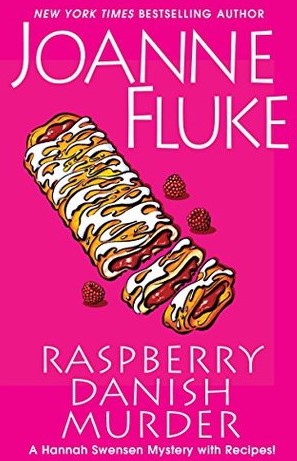
Some people call this foodie fiction. Others call it a culinary crime novel. Either way, Raspberry Danish Murder by Joanne Fluke debuted #6 on the New York Times Bestseller list (hardcover fiction), so I decided to see what this kind of novel is all about.
The food mystery might be a neat sub-genre, but I’m not interested in food prep all that much. I don’t watch cooking shows, I don’t care about cooking competitions, and when I go out to eat, I care more about quantity than quality. If I kept reading a book like Raspberry Danish Murder, I’d skim over all the food details, and I’d probably miss the point of the book.
There is an old precedent for culinary crime. Back in the 1970s, my dad made spaghetti based on some cooking tips he learned from the movie The Godfather. Very few books/movies are as violent as The Godfather, even non-culinary crime novels. Anyway, I’m pretty sure that the point of watching The Godfather was NOT to get tips about making spaghetti. My father didn’t cook often, but he made a darn good spaghetti, thanks to The Godfather.
Raspberry Danish Murder has some recipes too, but they’re more complicated than The Godfather’s spaghetti. I don’t think I can make the raspberry danish based on the recipe after Chapter One. There are a lot of steps involved and a couple ingredients that aren’t in my kitchen cabinets. There are some precise measurements, and things have to be cut a certain way, and there are a bunch of added notes that looked like more steps to me. If a recipe involves more than three steps, I lose interest and the smoke detectors go off. You know, there are some things than an average person is better off buying rather than baking. I’ll leave the raspberry danish to the professionals.
Maybe this kind of book would be more interesting to me if I cooked or had aspirations of baking. And I can’t be the only potential reader who likes mysteries but has no interest in recipes.
Plus, there aren’t too many countries where food mysteries would be appealing. If you lived in a country where food was scarce and you saw a book like Raspberry Danish Murder, you might get mad that other countries have so much food that authors can write frivolous food murder mysteries. In some countries, murdering for food might be so common that you would wonder what the big deal was about; of course people would murder each other over a danish.
Keeping all that in mind, here are some other sub-mystery genres that might be more interesting to me and other readers:
- Fitness murders: A fitness instructor solves murders, with exercise/diet tips between chapters
- Automobile murders: A mechanic solves murders, with important car maintenance tips between chapters.
- Contractor murders: A home repair guru solves murders, with home repair tips between chapters.
- Musician murders: A music teacher solves murders, with tips about instrument basics between chapters.
- Book blogger murders: A book blogger solves murders, with reviews of classics and other public domain novels between chapters.
Without the food, Raspberry Danish Murder is kind of bland. There are a bunch of characters and some of the dialogue is unnecessary. It’s tough for me to complain too much about this though because I’m not the intended audience. If you are already familiar with the characters, and they feel like old friends, and you’re actually going to follow the recipe directions, then maybe this book is great! I’m not the best judge.
I mean, I don’t mind recipes, and I’m sure the Danish is tasty, but when it comes to mysteries, I prefer plot more than the pastries.
*****
What do you think? What’s more important, the murder mystery or the recipes? What subgenre would be more interesting to you than foodie fiction?

(image via wikimedia)
Some kid who isn’t my daughter tried to make fun of my baldness the other day, and I told him to stick it. In the past, I might have been a little self-deprecating about his comments. This time, however, I made fun of that coiffed punk. I made fun of him for the time he wastes staring at himself in the mirror. I mocked him for the amount of money he spends on hair products. I mocked him for the time he wastes searching for these hair products and getting his hair styled.
I like being bald. Being bald is easy, and it frees up my mind for other things. Once a week I spend (maybe) ten minutes with a clipper at a ½’ setting, and if I make a mistake nobody notices. I don’t need to check my hair in the mirror. Now I can use mirrors for important issues, like hair in the nostrils/ears and food in my teeth.
I first noticed my receding hairline when I was 28. It was a demoralizing moment, I admit. I was strolling through a convenience store with mirrors on the upper walls when I noticed thinning hair at the top of my head. I had never seen my head at that angle. Before that moment, I thought I’d had a full head of hair and I was proud of it. I spent money and time on it, not because of vanity but because it was a rare positive physical attribute. I’m not the most attractive guy or the richest guy or powerful guy or charismatic guy, so I needed my hair to make myself look like a reasonable catch. Without my hair, all I had were my height, intelligence, and impeccable hygiene.
The best part of being bald is that I don’t have to worry about bad haircuts anymore. My first bad haircut happened when I was three and my mom dropped us off at a barber shop that was next to a liquor store. I was the youngest and the last of the three boys in our family to get a cut, and when the barber was done, I had an unevenly chopped diagonal bowl cut (bowl haircuts were hideous enough, but unevenly chopped and diagonal?), and my brothers had instant entertainment. When she picked us up, my mom didn’t want to complain to a bunch of drunks with scissors, so we left and never went back.
When I was 14, I walked into a place called The Barber Shoppe. I figured the barber had to know what he was doing because the word shop was spelled out in a fancy way. In the middle of the haircut, the guy’s girlfriend burst into the shoppe, cussed him out, and broke up with him right there in front of me. When she stormed out, the barber gave me a sheepish look, told me he’d be right back, and ran out. I heard them arguing out on the sidewalk (that had to be a scene!), and I sat there for at least 15 minutes with the towel wrapped around my shoulders and the back of my neck itching. I could have just walked out, but the cut obviously wasn’t done. It would have looked funny.
The guy apologized when he came back in, but I didn’t ask him if he got his girlfriend back. I thought it was impolite to ask about those kinds of personal matters, even if it was his (ex) girlfriend’s fault that I knew about their problems. I’ve always wondered what happened to them. It shall remain one of the great mysteries of my life.
After that, I was always paranoid something bad would happen while I was getting a haircut, and bad stuff kept happening, even when I was an adult. One barber fell down as he cut my hair (nobody got hurt). One female stylist flirted with me while she was working on my hair, and her boyfriend tried to fight me in the parking lot afterward (even though I hadn’t flirted back).
Another stylist started off by saying I had a perfectly shaped head. At first, I thought he was flirting, and I was kind of flattered. A few visits later, that stylist suggested clippers because I might like the clean look. He knew he was going to lose me as a customer, but the guy was popular. He’s still around, running a bunch of places so he never needed my business anyway. What a stud.
Don’t get me wrong; I could grow my hair back if I wanted. The receding hairline would be obvious, but bald wouldn’t be my defining characteristic. I grow my hair occasionally just to prove that I can, but the way it grows back now is a problem. With my receding hairline, I grow only on the sides, which gives my head a triangular look. Nobody compliments a man for his perfectly shaped triangle head. A round, ball head gets compliments, but triangles don’t.
I mean, I could grow my hair back without the triangle, but not without buying hair products and spending a bunch of time in front of the mirror. If I did that, I wouldn’t be any better than the kid I just mocked. And that would defeat the whole purpose of being bald.
*****
What do you think? If you’re a guy, what else do you like about being bald? Even if you’re not a bald guy, what has been your worst hair experience?
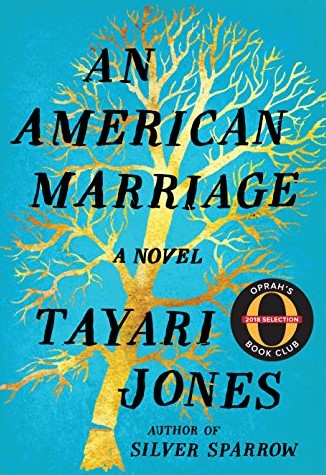
Here’s the good part about being chosen for Oprah’s Book Club. The book cover gets the Oprah label, the novel becomes an automatic bestseller, and the author gets to make a bunch of TV appearances (which is great unless the author is really shy, in which case the Oprah pick could cause problems).
The bad part is that once Oprah picks a novel for her book club, then Oprah often becomes the topic instead of the book. That’s not fair to the author. It’s not the author’s fault that Oprah picked his/her novel.
When Oprah picked The Corrections by Jonathon Franzen, Oprah became the topic. Part of that was because Franzen acts like a prick sometimes, but still. When A Million Little Pieces by James Frey was chosen by Oprah, she became the topic . Yeah, Frey’s memoir turned out to be maybe fiction, but that’s okay because now he writes YA lit under a new name, Pittacus Lore, so everything worked out okay.
A couple weeks ago the novel An American Marriage by Tayari Jones got selected by Oprah Winfrey for her book club, and the book reached #2 last week on the New York Times Bestseller List for hardcover fiction. An American Marriage is pretty good so far (I’ve read only a chapter). I can see why Oprah Winfrey selected it (and I don’t mean that in a sarcastic way). It starts off with some background information, including several cultural references from the 1970s and 1980s. In the first few pages the narrator references Good Times (1970s) and A Different World (1980s).
I haven’t seen Oprah referenced yet, but she could be mentioned later. Oprah was starting to become popular in the 1980s. She wasn’t iconic yet. She wasn’t giving away cars yet, but everybody knew who she was. I knew who she was, and I never watched her show. If I remember correctly, in the 1980s Morton Downey Jr. and Geraldo Rivera had the big talk shows, but Morton got too crazy, Geraldo got hit with a chair during a brawl (plus, Al Capone’s vault was empty), and Oprah stepped in with a more dignified show. It got weepy and sappy sometimes, but nobody got hit with chairs.
I was wondering, though, if an author referenced Oprah Winfrey in a novel, would it be unethical for Oprah to choose that book for her book club? I’ve written about a bunch of stuff that happened in the 1990s, and I’ve mentioned Oprah, so it could happen with an actual novelist. If a literary author wrote an Oprah reference in his/her novel and Oprah loved the novel, it might put Oprah in an awkward position.
If I ever wrote anything that got me invited on Oprah’s show/network, I’d feel funny about it. This is even without all my nervousness. I’d probably panic and dry heave, which would be embarrassing, but even without that, I’d feel funny. I used to mock Oprah’s show at its peak. I especially made fun of those episodes where she gave away free stuff.
“What a bunch of freeloaders,” I’d scoff at the audience’s cheering whenever they got free stuff.
Just so you know, I was aware of these freeloaders only because of my wife. My wife loves Oprah, watches her network, subscribes to the magazines, and takes Oprah philosophy very seriously. I can mock Oprah only in certain situations and moods (which means rarely). Years ago my wife tried to schedule Oprah tickets for one of those freeloader episodes, and I gently made fun of her her for it.
“If you truly loved Oprah,” I said, “you wouldn’t care which episode you got tickets for.”
She said that somebody was going to get that free stuff so it might as well be her.
That is how civilizations collapse, I thought, but it was okay as long as Oprah was giving her own stuff away.
Don’t get me wrong; if Oprah gave me free stuff, I’d take it. And I’d thank her for it. And I’d probably stop mocking her for giving stuff away, just out of politeness. If you accept free stuff, you shouldn’t make fun of that person anymore. I’d just find a new target. I can always get back to James Patterson. That guy writes way too many books.
Maybe one day Oprah will pick a James Patterson book for her Book of the Month Club. My head would probably explode.
Dang it! I really was going to write about An American Marriage. I was. I mean it. But when Oprah picks a book for her Oprah’s Book Club, Oprah often becomes the topic.
 Before the internet came around, Sunday newspapers were the best! I don’t just mean that the Sunday newspaper was better than other newspapers. I mean Sunday newspapers were the best! They were better than television. They were better than movies. They were better than most relationships. Even hyperbole doesn’t do Sunday newspapers justice.
The Sunday newspaper was giant, and you could sling that wrapped paper over your shoulder like you were Santa Clause. Once you took that newspaper out of its wrapping and started reading it, it would be impossible to put back. It was like trying to fold a baby and stuff it back into its mom. It just doesn’t work. But why would you want to? The Sunday newspaper was awesome!
The Sunday comic strips were the best. They had more panels and were in color. If you were a cheapskate, you could collect them and use them as wrapping paper for gifts if necessary. During birthdays and Christmases in the 1970s and 80s, everybody knew which gifts were from me because of the colorful comic strips. I even cut and taped the comic strip wrapping paper so that you could read the strips while the gift was wrapped.
Sunday mornings were the best mornings, better even than Saturday! Before going to church, I could spread out that giant paper, drink my coffee, and read the paper section-by-section. I had an order. Headlines, sports, comics, opinion, entertainment, living, and then whatever. Every section was 2-5 times larger than normal, so the whole paper might take a couple hours to read. I could drink a lot of coffee in two hours.
I usually felt pretty good after reading the Sunday paper because I took my time and drank a lot of coffee. But that coffee sometimes struck when I was at church. If I had to get up in the middle of the service to use the restroom, I’d get dirty looks. I could have sneaked out during communion without many people noticing, but that kind of defeated the purpose of going to church. So I usually waited it out and prayed for a short sermon. I think everybody prays for a short sermon, even if they don’t drink a lot of coffee before church.
My best friend in high school hated to read, but he could look at the Sunday entertainment section and memorize the entire week of television programming, even with the cable channels included. That Sunday paper kept my friend from getting “tested.” No kid wanted to get “tested,” even if he/she needed it. I’m sure my friend’s parents were thinking about having him tested, but that entertainment section proved to them that he could read just fine. Thank you, Sunday entertainment section!
One of my letters to the editor got published in the opinion section of a Sunday paper 25 years ago, and I was so proud that I kept the whole section. It’s yellow now (cheap newsprint) but still intact. Looking back, I sounded like a crank. I think every letter written to the editor sounds like it was written by a crank. To their credit, the newspaper editors didn’t change anything, so all that crankiness was mine. Now that particular newspaper no longer exists, but I have a blog, and I still sound cranky when I write.
Even though the Sunday newspaper still exists, it’s not such a big deal anymore. People might still look for coupons or inserts. People might still read the giant comic strips in color. The multi-paged opinion section might have some interesting viewpoints. The internet has all that stuff now. You can find your own coupons. You can choose which comic strips to read. The internet is filled with plenty of opinions.
With the internet, every day is Sunday. There’s nothing special about the internet on Sunday. Maybe the internet should do something special on Sunday just to bring back that feeling. Maybe the internet should go black&white for every day except Sunday. It’s too late for that, though. Everybody has been spoiled by all-color internet every day of the week.
Since the internet has replaced the newspaper, the internet should think of a way to make Sundays cool again. Don’t get me wrong. I think it’s cool that every day can feel like Sunday. Maybe we could just turn off part of the internet for six days and use it only on Sunday. That would make the Sunday internet special. Nobody would want to shut down the internet every day, but it would demonstrate how awesome the Sunday newspaper was, because that is kind of hard to explain.
*****
What do you think? What was your favorite part of the Sunday newspaper? What else can be done to make Sunday an awesome day?
*****
For more “Old Things That Are Tough To Explain,” go to Old Things That Are Tough To Explain: The Home Page.


 Dysfunctional Literacy