
(image via wikimedia)
First of all, I don’t think Brad Thor is a real name. I’ve always been very clear about that on this blog. I know people have first names for last names sometimes, and I don’t really have a problem with that, but Thor is too cool of a last name. If I met a guy named Jake Hulk or Todd Studd, I’d say those names were fake too.
Secondly, I try to avoid political stuff because it can be so divisive. Yes, politics is everywhere, but we need some unifiers that can always bring people together. Sports, movies, and music can be great unifiers, but political injections can ruin these. The same is true with books. Books can be unifiers too, especially for smart people who like to read. Maybe saying “smart” is biased, but I don’t know too many intellectually-challenged people who like to read a lot. It could happen, I admit, but I don’t see it.
Brad Thor, author of a bunch of military-thriller novels, announced last week that he was thinking about running against President Donald Trump in the 2020 Republican primary. This didn’t get reported a lot on the news. Donald Trump hasn’t tweeted about it (he has other things to deal with first, I guess). Maybe political wonks aren’t taking this seriously (they didn’t take Donald Trump seriously either).
I’m not going to delve into the reasons Thor might run (because that gets political), but since he’s a writer, and I comment about books/writing, I thought I should mention it. I promise I won’t take sides, though. I have my own strong opinions, but I’ll respect readers (who don’t care about my political views) by keeping my opinions to myself.
The best part of Brad Thor’s campaign would be the opposition research (if his opposition feels like he’s worth it). For years I’ve been telling the world that Brad Thor is not really Brad Thor’s real name. I have no proof of this. All evidence that I’ve seen indicates that Brad Thor is Brad Thor’s real name. It’s supposedly not a pen name, but I don’t believe that.
Brad Thor is too cool of a name to be real. It’s so cool that it’s almost like one of those fake joke names like Anita Dick or Eric Shawn. Nobody really gets named Anita Dick or Eric Shawn, unless the parents are intentionally being jerks. Nobody really gets named Brad Thor either. It’s too cool a name, and no parents are that cool.
I wouldn’t mind if Brad Thor just came out and admitted that Brad Thor was a pseudonym. I respect a good pseudonym. I just resent the arrogance of pretending that his cool fake name is real. And now it looks like Brad Thor might make the mistake of running for president.
Running for president is no game. Somebody will find out what Brad Thor’s real name is. And then Brad Thor will have to shamefully admit that he’s been lying all this time about his cool name. Lying about a cool name might not be the worst thing a public figure can do. It might not be worse than using taxpayer money to hire prostitutes or covering up a break-in, but it could be a political career killer. It’s so bad that I can’t offhand think of anybody who’s tried it.
Normally I would say that running for president is a great way to sell more books. But when you have a cool name like Brad Thor, you shouldn’t need to run for president to sell books.

Okay, this probably doesn’t surprise anybody. Last week Game of Thrones author George R.R. Martin announced on his blog that The Winds of Winter won’t be ready for publication in 2018. Instead, he’s putting out some history book called Fire and Blood about the Targaryen kings.
Are you serious? Fire & F***ing Blood?? Nobody cares about that! The world wants The Winds of Winter!!!!
I don’t even read the Song of Ice and Fire books, and this ticks me off. It’s been several years since the last Games of Thrones novel, Martin is working on a bunch of projects, his blog posts are long when he should be writing The Winds of Winter instead, and the HBO series has caught up with his books. In other words, finish A Game of Thrones!
I don’t even want to know what the book fanatics are feeling. Like I said, I don’t read the Song of Ice and Fire series, but I empathize with the frustrated fans. When I was a kid, I got depressed after I saw The Empire Strikes Back because there was a cliffhanger and I knew I’d have to wait three years for the next movie. That was a crappy feeling, so it has to be even worse for Game of Thrones fans when The Winds of Winter deadline keeps getting pushed back.
On the other hand, the books might be a lot better if George R.R. Martin takes his time. When George Lucas met his three-year deadline with Return of the Jedi, he gave us Ewoks. Maybe if Lucas had waited an extra year, he might have come up with something better. Fans will be pissed if the White Walkers are defeated not by dragons and Valyrian steel, but by tiny furry huggable creatures.
It wouldn’t be so bad if Martin was devoting all his time to The Winds of Winter, but he isn’t. George R.R. Martin spends a lot of time writing stuff that isn’t A Song of Ice and Fire. He writes Dunk and Egg stories. He writes histories of his fantasy world. To me, those are things he should write AFTER he’s done with A Song of Ice and Fire. Dunk and Egg stories are okay, but I want to know what happens in Westeros. And I really don’t give a flip about Targaryen kings.
If George R.R. Martin passes before he finishes A Song of Ice and Fire (and I really hope that doesn’t happen), the first thing that some readers will think is “Now I’ll never find out what happens next! What a rip-off!” They might feel guilty for thinking it, but it’ll be tough not to think it.
Maybe George R.R. Martin doesn’t want to finish Game of Thrones. Every time he falls behind, it gets him a lot of attention, and a bunch of fans remind him how they can’t wait to read his next book. That probably feels great. Once he’s done with the series, that’s it. His readers will be exhausted, and a bunch of them will be angry at how he ended the series.
No matter how Martin ends the series, somebody will be angry. It’s impossible to finish a series like Game of Thrones without making some readers mad. Maybe he thinks he’d be better off by never finishing the whole series. But I don’t care what Martin thinks; waiting forever for a book series that will never be completed is way worse than waiting three years for a trilogy that ends with Ewoks.
*****
What do you think? Is seven years between books too long? Should Martin spend his time writing anything he wants (like 900 page history books about Westeros)? Or should his first priority be Game of Thrones/Song of Ice and Fire?

Titling a film noir parody Noir seems kind of lazy. Titles are the best part of some film noir movies. I mean, film noir titles are short: Notorious. The Big Sleep. Double Indemnity. Rebecca. Shadow of a Doubt. A book title can’t get any shorter than Noir. Except maybe It or The. It wasn’t film noir. I’ve never seen a book titled The. I’m sure somebody has written it, but I haven’t seen it. M might be the best film noir title ever because it’s only one letter.
The title Noir is just kind of obvious. It hits the reader over the head with what the book will be about. There isn’t much subtlety in the title Noir. Then again, the cover makes it kind of obvious too. I guess the title doesn’t matter when you have a cover like that. With a cover like that, the book didn’t need a title. No title would be even shorter than a short title.
The problem with Noir, once you actually start reading it, is that it sounds more like a Christopher Moore novel than noir. To some, that’s not a problem. That’s not really a problem for me either, except Moore’s writing style is the opposite of noir. Noir should have short, choppy sentences with slightly tacky descriptions and short direct dialogue. Instead, a lot of the sentences (including the dialogue) are long and meandering.
The first example is the first sentence in the book:
I did not scream when I came in the back door of Sal’s Saloon, where I work, to find Sal himself lying there on the floor of the stockroom, the color of blue ruin, fluids leaking from his various holes and puddling on the ground, including a little spot of blood by his head.
That’s not a noir sentence. I know I’m not a noir writer, but I’ve read a few books that were turned into movies that are considered film noir, and that sentence didn’t feel like film noir. I tried to split the sentences in a way that a hard-boiled detective author might write it:
I did not scream when I came in the back door of Sal’s Saloon. There was Sal himself, lying there on the floor of the stockroom, the color of blue ruin, fluids leaking from his various holes and puddling on the ground, including a little spot of blood by his head.
Yes, I left out the fact that the narrator works at the saloon, but that becomes obvious without it ever being stated.
The next scene is when the femme fatale is introduced in Chapter 1:
She had the kind of legs that kept her butt from resting on her shoes- a size-eight dame in a size-six dress and every mug in the joint was rooting for the two sizes to make a break for it as they watched her wiggle in the door and shimmy onto the barstool with her back to the door.
To me, that long sentence is a bit confusing. Noir should be short but make the same point:
She had the kind of legs that kept her butt from resting on her shoes. She was a size-eight dame in a size-six dress, and every mug in the joint was rooting for the two sizes to make a break for it as they watched her wiggle onto the barstool with her back to the door.
I split the sentences and dropped an unnecessary prepositional phrase, and now it sounds like noir (to me) and not like an author writing a parody of noir. Maybe everybody else disagrees with me, but I’d rather read a parody that sounds like the real thing than a parody that’s obviously written as a parody.
Maybe it’s arrogant of me to rewrite the sentences of bestselling authors, but I don’t like to point out problems without offering possible solutions. Maybe Moore’s writing style here isn’t really a problem. Maybe my solution just makes it worse. Even though I tampered with the sentences, I’ll still keep reading Noir. I like Noir, even if it doesn’t really feel like noir.
First of all, BOOKS YOU MUST READ lists are kind of arrogant because the list makers are assuming that they know what’s best for everybody. As far as I’m concerned, the only books you MUST read are those that are assigned in school (if you want a good grade) and books that are assigned for your job (if you want to get paid). Other than that, there are no BOOKS YOU MUST READ.
Sometimes out of curiosity I’ll read a BOOKS YOU MUST READ list just to see what’s on it. If I’m really contrarian that day, I’ll look at all the BOOKS YOU MUST READ that I haven’t read and feel like I’m a rebel. I must read all these books, and yet I know I never will.
Even better than a BOOKS YOU MUST READ list is this 21 Books You Don’t Have To Read list. I like the approach this list takes. Here are 21 books that we’ve been lectured to read for a long time, and the list not only tells us we DON’T have to read these books (not that we need their permission), but then there are alternatives for the books that we no longer have to read.
Another benefit of this list is that it’s not a gallery. Most websites would have put each of the 21 entries on a separate page, forcing the readers to click each page and allowing the website to collect cheap hits. I despise galleries, and I stop reading whenever I see them. I want my lists where I can scroll up and down with ease. I don’t try to collect cheap hits on my own blog, so I don’t want to reward another website’s bad behavior by giving them cheap multiple hits when they could have easily put everything on one page.
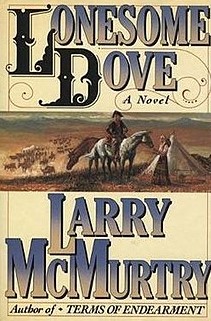
I don’t agree with everything on the list (Who would?), but at least I agree with the approach. For example, the first book on the list is Lonesome Dove by Larry McMurtry. Lonesome Dove is on a bunch of BOOKS YOU MUST READ lists. I like Lonesome Dove a lot, but I wouldn’t call it a MUST READ. I mean, if I ever made a MUST READ lists, it might have Lonesome Dove, but I don’t do MUST READ lists.
The complaint about Lonesome Dove from the lister is “…that the cowboy mythos, with its rigid masculine emotional landscape, glorification of guns and destruction, and misogynistic gender roles, is a major factor in the degradation of America.”
What? I mean, I’m not even sure what that criticism means, and the lister doesn’t explain it. Instead, the lister gives The Mountain Lion by Jean Stafford as the alternative because “It’s a wicked, brilliant, dark book set largely on a ranch in Colorado, but it acts in many ways as a strong rebuttal to all the old toxic western stereotypes we all need to explode.”
The way this critic judges books is different from the way I judge books. My complaint about Lonesome Dove is that it’s unnecessarily slow at the beginning and the sequels suck. When a critic starts writing about “misogynistic gender roles” and “old toxic western stereotypes,” I think a book’s agenda might be more important than the book’s quality to the critic. To me, a good book is a good book, but agenda fiction almost always sucks. The Mountain Lion by might be a good book. I’ll probably never know because this critic just turned me off from it.
Luckily, each book gets a different critic, and most don’t seem driven by agendas. My only other criticism is that some of the novels haven’t appeared on any BOOKS YOU MUST READ lists that I’ve seen. For example, I’ve never seen Good-bye to All That by Robert Graves or Franny and Zooey by J.D. Salinger on any BOOKS YOU MUST READ lists. Maybe I haven’t read enough BOOKS YOU MUST READ lists to have an opinion.
At any rate, this article is a great idea. I wish I had thought of it first.
*****
What do you think? What book have you seen on BOOKS YOU MUST READ that don’t belong? What book would you replace it with?

When I heard that the novel Less by Andrew Sean Greer had won the 2018 Pulitzer Prize for Fiction, I thought I’d better read it. To be honest, I had never heard of Less. I knew nothing about it. But I had a feeling. I wondered if the main character of the novel would be named Les or Less. I usually don’t like book titles that are just a character’s name, but I try to stay open-minded about these things.
“Please don’t be about a guy named Less,” I said to myself as I glanced at the book cover.
“Please don’t be about a guy named Less,” I said to myself as I opened the book to the first page.
“Please don’t be about a guy named Less,” I said to myself as I began to read the first sentence:
From where I sit, the story of Arthur Less is not so bad.
Aaaaargh! It’s about a guy named Less!!!
Look at him, seated primly on the hotel lobby’s plush round sofa, blue suit and white shirt, legs knee-crossed so that one polished loafer hangs free of its heel. The pose of a young man.
AAAaaarrrrgh! And the narrator has a condescending tone about Arthur Less.
His slim shadow is, in fact, still that of his younger self, but at nearly fifty he is like those bronze statues in public parks that, despite one lucky knee rubbed raw by schoolchildren, discolor beautifully until they match the trees. So has Arthur Less, once pink and gold with youth, faded like the sofa he sits on, tapping one finger on his knee and staring at the grandfather clock.
Aaaaargh!!! And this Arthur Less is a loser! What a hack move!
I don’t mind authors making hack moves. Sometimes an author has to use a gimmick or make a hack move to get a book published. But this hack move just won this author a Pulitzer Prize. I mean, the television show WKRP in Cincinatti used the same joke with its character Les Nessman back in the 1970s.
“I believe you can tell a lot about a man’s character from his name,” some braggadocios dude would say while introducing himself.
The audience would then laugh while the camera close up focussed on Les Nessman’s face… because his name was Les. It was okay for a 70s TV show to use hacky jokes because they have to come up with 25 weeks of material in one year, plus it was the 1970s. But this novel Less won a Pulitzer Prize for Fiction.
The worst part of Less is that this loser Arthur Less has still sold more copies of his books than I have. I can’t even call Less a loser. Of course, I’m fairly successful in a field that has nothing to do with writing, but it still irks me. And I’m not calling Arthur Less a loser because of his book sales or his last name. It’s because the narrator speaks so condescendingly of Arthur Less.
Maybe the rest of the novel is better. Maybe Arthur Less meets a protégé named Moore who changes his life. Maybe the author’s condescending tone eventually changes. Maybe Arthur Less finds some value in his life that a condescending narrator wouldn’t understand. I hope so.
I have to admit, Less has a pretty cool book cover. If I judged books by their covers, I’d buy Less without a second thought. But as a writer who respects Pulitzer Prize for Fiction winners, I expect more from a book than a cool cover, not Less. AAArrrrgh!!!

These weekly rankings seem to be going monthly, but at least there are a bunch of new books on the top ten list. One James Patterson book has been replaced by another James Patterson book. We have a couple other authors who have been writing books since I was a kid (but they still haven’t “written” as many books as James Patterson). And then we have a few books that absolutely refuse to leave the bestsellers list. Are those books THAT good? Or is there something else going on?
1. I’ve Got My Eyes on You by Mary Higgins Clark-
Wow, that’s a creepy title! If certain guys used that title and put themselves on the cover, they’d get arrested. But it’s not a creepy guy who came up with that title. It’s Mary Higgins Clark, and she’s been writing books since I was a kid.
2. The Female Persuasion by Meg Wolitzer-
When I told my wife I was reading The Female Persuasion, she said, “Me too.”
3. The Disappeared by C.J. Box-
The disappeared what? There should be a noun after the word disappeared. I hate it when adjectives are used as nouns!
4. Red Alert by James Patterson and Marshall Carp-
Last month James Patterson’s Fifty-Fifty was in the top ten. This month it’s Red Alert. What James Patterson book will make it next month?
5. The Great Alone by Kristin Hannah-
Aaaarrrgh! Another adjective being used as a noun! English teachers all around the country are saying: “You write your bestselling novels first, and then you can use adjectives as nouns.”
6. Little Fires Everywhere by Celeste Ng-
This book seems perfect for a Reese Witherspoon produced limited television series. Hopefully the series can keep the novel’s good story but cut down some of the unnecessarily long sentences.
7. Before We Were Yours by Lisa Wingate-
Before We Were Yours has to be one of the most misleading book titles ever! It sounds like hokey melodrama that would disappear after two weeks, but it’s been a bestseller since… well, it’s been a long time!
8. Accidental Heroes by Danielle Steel-
Danielle Steel is another author who’s been writing bestselling novels since I was a kid. Last month, Clive Cussler was the author who has been writing novels since I was a kid. Who’s next to put out a new book, Harold Robbins?
9. The Woman in the Window by A.J. Finn-
This first novel from a debut author started off at number 1 in January and has been in the top ten ever since. But is he really a first-time author if he’s an executive editor for the publishing company that put out the book?
10. Varina by Charles Frazier-
Varina is the wife of Jefferson Davis, President of the Confederate States, and Varina is told from her point of view. Even if Varina is any good, I’m not sure that a book told from the point of view of a Confederate will stay in the top ten for long in today’s political climate.
*****
I have to admit, this is a decent variety of books, with some literary, some thrillers, some romance, but I still have lingering questions. Who keeps buying James Patterson books as soon as they get published? And when did it become acceptable to use adjectives as nouns in book titles?

The Female Persuasion by Meg Wolitzer doesn’t have the best opening sentence in the world. I don’t think it’s even that good of a sentence. It’s not a convoluted mess like the first sentence in the novel Sweetbitter last year, but this one is still kind of bland:
Greer Kadetsky met Faith Frank in October 2006 at Ryland College, where Faith had come to deliver the Edmund and Wilhelmina Ryland Memorial Lecture; and though that night the chapel was full of students, some of them boiling over with loudmouthed commentary, it seemed astonishing but true that out of everyone there, Greer was the one to interest Faith.
It isn’t the longest or most confusing opening sentence I’ve read. It just feels like a sentence where an author is going through the motions. Two characters meet on a vague date in a certain location, the narrator pokes a little fun at most of the people in the setting, and then claims something was astonishing before the reader has a chance to judge anything.
I mean, it’s not horrible. I just thought, “This is the opening?” It feels like a rough draft opening sentence. Maybe it is the rough draft opening sentence; maybe Meg Wolitzer is an author that editors don’t bother.
Maybe it’s wrong to be overly critical of an opening sentence, but if you’re going to be critical of a sentence, it should be the first one. That’s where the author tries to pull in the reader, and I have to say, this sentence didn’t draw me in.
I know, I know, I’ve never gotten a publishing deal, so maybe I shouldn’t criticize a successful author, but at least I admit that I could be wrong. Maybe this is a great opening sentence, and I’m just not literary enough to see it. This could be why I never have gotten a publishing deal; I don’t know what a good opening sentence is.
Just so you know, I don’t stop reading books just because of a bland opening sentence. I’ll usually give a book at least a couple pages. And I’m glad I did. A few pages later, the author swerved into what might be the best idea in recent memory:
She watched the girls standing with heads tilted and elbows jutted, pushing in earrings, and the boys aerosolizing themselves with a body spray called Stadium, which seemed to be half pine sap, half A1 sauce.
I agree with the narrator that Stadium sucks, but A1 sauce is great. I’d buy a deodorant/aerosole made out of A1 sauce. Even better, I’ll just use my A1 sauce as deodorant. How did I not think of this earlier? No man would ever make fun of A1 sauce. I don’t know what ingredients go into Stadium (the ingredients in fictional deodorants can be difficult to track down), but I guarantee you A1 sauce is not one of them. If A1 steak sauce were part of Stadium’s scent, Stadium would be awesome. But it isn’t, and Stadium sucks.
Even though the opening sentence in The Female Persuasion is kind of lame, the author makes up for it with the idea of steak sauce deodorant. Meg Wolitzer is genius. I might keep reading The Female Persuasion just to see what other ideas she has.
*****
What do you think? Is the opening sentence of The Female Persuasion kind of bland, or am I way off? Would you buy a deodorant made (even partially) of A1 sauce?

(image via wikimedia)
This isn’t a political post. Yes, Amazon and President Trump will be mentioned, but this isn’t really about the policy wonk stuff. Even though I try to stay out of politics, I have to write about this because Amazon sells a lot of books and anything that affects Amazon can affect my book reading. I wrote about Amazon a few years ago when the Obama Justice Department sued Apple and several book publishers for colluding to keep ebook prices unnecessarily high. When Amazon was handing out refunds a couple summers ago, it wasn’t because of Amazon’s practices; it was because other publishers had sold ebooks for too high a price.
This whole thing with the U.S. government and Amazon started with a tweet last week where Trump claimed that Amazon was ripping off the USPS with its package delivery deal. Trump claims that Amazon has an overly favorable deal with the U.S. Postal Service and that this deal hurts the USPS. Amazon claims that the deal actually helps the USPS. Who is right? It’s tough to tell because the details aren’t public. Even if the details were available to me, they’d probably be tough for a guy like me to interpret, so that wouldn’t help me much.
The USPS is losing money, but supposedly it’s because of the benefits it’s required to offer its employees. A lot of companies lose money over benefits. Benefits don’t really seem to benefit anybody anymore, except maybe the insurance companies, but that’s for a different kind of blogger to break down. Anyway, Amazon’s deal with the USPS seems to have increased business for USPS (at least in package deliveries), but Trump might be suggesting that the USPS negotiate a better deal. Trump likes to brag about negotiating deals. I bet Trump would love to negotiate a deal with Jeff Bezos. He might even suggest that Jeff Bezos has bad breath (You’ll only think that was funny if you’ve seen this video ).
Some of this has to be personal. Jeff Bezos owns the Washington Post, and the Washington Post is one of the newspapers that government leakers leak to, and Trump hates government leaks, so this appears as though Trump could be attacking a newspaper he doesn’t like by going after Amazon. Amazon also has weird stuff going on that has nothing to do with the Washington Post, like droid deliveries, weird Alexa laughs, buying Whole Foods, and pursuing global domination. I mean, the Amazon Kindle changed my life, but there’s still some weird stuff going on with Bezos.
Trump and Bezos have a lot in common. Trump fires a lot of people, and Amazon warehouses have really high employee turnover. Trump has funny hair, but if Bezos grew his out, it would probably look funny too. Both have more money than the average person can keep track of. Trump is a rich guy who became President of the United States during his first ever political campaign. Jeff Bezos is a rich guy who might own the world without ever having to run a political campaign.
I feel bad for people who hate both Trump and Amazon. A lot of people despise Amazon because it’s on the verge of becoming a monopoly and maybe has used a bunch of questionable business practices. A lot of people despise Donald Trump because… yeah, I don’t feel like writing a paragraph that long. At any rate, if you despise rich people just for the sake of despising rich people, it would be tough to choose who to root for here.
Those publishing companies and brick & mortar stores who hate Amazon now have an ally in Trump, but they probably don’t want to seem too enthusiastic about it. I’m sure B&M Booksellers would love to see Trump stick it to Amazon, but if they come out in support of Trump, then a bunch of Trump haters will start boycotting B&M Booksellers, and those Trump boycotters can get serious. If B&M Booksellers are rooting for Trump to knock Amazon down a peg or two, they’d better root for that very quietly.
This whole Trump vs. Amazon thing is complicated for an average guy like me. Even if I had access to all the details, I still might not be able to figure it out. Still, I like trying, and I have plenty of time to learn more. I’m pretty sure that as long as Trump is president and Bezos runs Amazon, this conflict isn’t going to end any time soon.
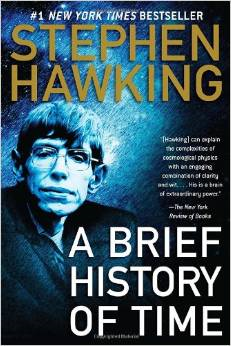
Stephen Hawking died recently, and sales of his book A Brief History of Time have skyrocketed. Stephen Hawking is a science guy, and I’m not, so I don’t write about him much. But I’m a book nerd, and there’s one aspect of Stephen Hawking’s book that the average Hawking fan might not know about.
A Brief History of Time might be one of the most unread bestselling books out there.
It’s not me saying that. It’s The Hawking Index , which was inspired by Stephen Hawking’s book A Brief History of Time, a book that a lot of people buy but very few really read. The Hawking Index (or the professor who figured it out) measures highlighted text in the Amazon Kindle and how far into the book that the last highlighted text is. Then it matches the number of highlighted text with the page numbers and… I’m going to stop there. If I go into more details, you might stop reading. I don’t want people to stop reading my article about people who stop reading A Brief History of Time.
I never bought A Brief History of Time. I like history, and I like brief books, but I remember scanning the first couple pages years ago and thinking, “This is really boring (or too smart for me).” I don’t care how short the book is; if it’s boring (or too smart for me), I don’t buy it. Unfortunately, I didn’t get included in the Hawking Index because I didn’t even buy the book that inspired the index of books that people don’t finish. Too bad there’s no way to track people who didn’t even buy the book before not finishing it.
It’s not really an insult to mention The Hawking Index so soon after Stephen Hawking’s death. It’s not an insult at all! Millions of people bought Hawking’s books. That’s awesome!! If millions of people bought my books and didn’t read them, I’d just be glad they bought my books. I’d rather have millions of people buy my books and not finish them then have very few people buy my books.
As an avid book reader, I proudly admit that I don’t finish most books that I start. Life is short, books take a while to read, so I want to enjoy everything I peruse. I check out lots of books from the library, and I read samples from the Amazon Kindle, so it doesn’t cost anything to not finish a book, except a little time. I feel burned when I buy a book and don’t finish it. That happens when a book starts off great, reels me in, and then sucker punches me with a plummet in quality after I purchase it. I hate that!!
When The Hawking Index was first revealed a few years ago, it didn’t make much news. Data collection wasn’t seen as a big deal back then. People knew about it but shrugged it off. It was just seen as the price we paid for free apps and convenience. Now people are starting to freak out over data collection, when they previously hadn’t cared. If people are reminded how their reading habits can be tracked through Amazon, will they care more now than they did four years ago?
Maybe readers will suddenly find this index intrusive. This could be a great reason to read a real book, instead of the digital version. If you buy a book and never read it, nobody would know. I mean, maybe there are enough hidden government cameras to track all of our reading habits, but that would take a lot of surveillance (and a lot of FISA warrants… if those even matter anymore).
Whenever a celebrity passes, fans grieve in different ways. Some will write tributes on blogs and Twitter. Fans of singers will listen to songs, and fans of actors will watch movies. In the case of Stephen Hawking, a lot of people bought his book A Brief History of Time. Yeah, a lot of people bought it, but that doesn’t mean many people will read it.

I knew the guy in bed with her was dead from the opening sentence. I mean, the author hadn’t yet established that there was a guy in bed with her in the first sentence, but I knew he was dead. I hadn’t read the book jacket. I hadn’t read any reviews. This was a cold reading of The Flight Attendant by Chris Bohjalian, and I still knew the guy was dead.
I don’t think it’s a spoiler to say the guy is dead if you find that out in the first chapter of a book. Now, if the guy turns out to be alive, and the dead body was a twin or a woman or a replica, then that would be a spoiler, but saying that the protagonist’s one-night stand is dead in the morning of the first chapter… that’s not really a spoiler.
What happens after the protagonist discovers the dead body is interesting enough. She’s a flight attendant (which explains the book title) staying overnight in the UAE and knows she won’t be treated well by the police there if she’s caught with the dead body, even if she was set up. So there is a tense moment as The Flight Attendant decides what to do. The book isn’t bad just because the reader knows there’s a dead body in the bed.
When I later read the book jacket, I saw that the blurb was just a brief summary of the first chapter I had already read. That kind of ticked me off. I could have just read the book jacket and started the book on Chapter 2. Aaaaarrrrgh!!!!! I guess this is what I get for cold reading a book.
The Flight Attendant started off last week at #2 on the bestsellers list for hardcover fiction, but it has already dropped to #14. I don’t know how long it will stay in the bestseller’s list, so I wanted to mention it while it was still around. I actually think The Flight Attendant is better written and more interesting than some of the other thrillers that have been hanging around the top ten for a while.
For example, the first chapter of The Flight Attendant is more interesting than the first couple chapters of The Woman in the Window, which has been in the top ten since January. The Woman in the Window had a lot more hype and a lot of backing from its publishing company (one of their editors wrote the book), so the industry might have incentive to keep that book in the top ten for a while… if things work like that.
I’m not really intrigued by the world of flight attendants though. That could be a problem for a book called The Flight Attendant. Maybe The Flight Attendant should have a different title. The Binge Drinker. The Blackout Artist. The Dead Body Next To Me. I’d read a book called The Dead Body Next To Me. The only problem is that all the readers would know that the dead body next to the protagonist in the morning was dead. I’d hate to be reading a book called The Dead Body Next To Me and then be surprised that the body next to the protagonist was dead.
I’d feel pretty stupid if I did that.


 Dysfunctional Literacy