
Using a picture of women in bikinis for an article that isn’t about women in bikinis is probably cheating. (Photo credit: Wikipedia)
There are a lot of ways for writers to cheat. We can plagiarize. We can write a bunch of fake 5-star reviews for our own books. We can set up multiple user names and have long conversations on our blogs to make our blogs seem busier than they really are. We can purchase copies of our own books to improve sales rank. I’ve thought about using all of those tactics (except for plagiarism… I have my pride).
The good thing about cheating at writing is that nobody knows what most writers look like. John Locke (a kind of prolific ebook author) paid people to write 5-star reviews for his books, but if I saw him on the streets I wouldn’t recognize him. Even if I did recognize him, I wouldn’t do anything to him. I’m a writer. I might write a harshly worded blog post about him, but I wouldn’t physically do anything to him. If John Locke had cheated at poker like he cheated at writing, he would have to fear for his safety. Writers usually aren’t violent (though we can write great fight scenes). Poker players are.
If you have to choose between cheating at poker or cheating at writing, cheat at writing.
I write this because I’ve just done something that might be considered cheating (but hopefully nobody will pick a fight with me over this).
A few months ago I wrote a serial narrative (it was a true story with a couple composite characters and a couple composite scenes and a little exaggeration… but not much) called “Long Story.” It was a story about a story I wrote in high school. Writing a story about a story is probably a bad idea. But I’ve had a lot of bad ideas when it comes to Dysfunctional Literacy. I tried a thing called Dysfunctional Grammar, and it… never mind. The point is, I took my serial “Long Story,” made a few changes (deblogified it), and have released it as an ebook called The Writing Prompt.
I don’t know if it’s considered cheating to write a story on a blog, and then self-publish it under a different name as an ebook. If it’s cheating, I’m trying to be honest about it. Maybe I’m plagiarizing myself. Whether it’s cheating or not, I promise not to review my own books (“They’re f***ing awesome!!!”), and I promise not to buy a bunch of them to improve sales rank.
What I’ve done isn’t unheard of. A lot of syndicated writers republish their work in different formats. Malcolm Gladwell published a book called What the Dog Saw that simply reprinted a bunch of his articles (many of which can be found for free online) from The New Yorker. The paperback book cost me $16.99 (which is expensive for a paperback, but it’s high quality paper.) The Writing Prompt is only 99 cents (but it is a lot shorter and maybe not nearly as insightful, and there’s no paper involved).
Even novels used to be published as serials in newspapers back in the old days (way before my time). The Three Musketeers (one of my all-time favorite books) was originally published as a serial in French newspapers, and I don’t think anybody accused Alexander Dumas of cheating. If anybody did, there was probably a good sword fight duel afterward to settle the matter.
I don’t care if people read “Long Story” on my free blog instead of paying 99 cents for The Writing Prompt. I’d rather people read my stuff for free than not read it at all. All of the jokes in my ebook Best Brand New Jokes Ever! are also on this blog, but they’re scattered all over the place and you have to read a lot of bad jokes (as in poorly written and not funny) to get to the ones that actually work (there are a few where I got it right, and those are the jokes I chose for the ebook).
If this is cheating, then I guess I cheat when I write. But I don’t cheat when I play poker.
CHEATING RECAP
- Plagiarism (really bad)
- Paying people to write 5-star reviews (pretty bad)
- Reviewing your own books under different names-sock puppeting (pretty bad)
- Using pictures of women in bikinis for stories that have nothing to do with women in bikinis (bad)
- Buying your own books to improve sales rank (bad)
- Taking your own blog material and releasing it as ebooks with different names (bad?)
What other ways are there to cheat in writing? I could probably use a few more new ideas.

Does Moby Dick suck, or do we just not “get it”? (Photo credit: Wikipedia)
The local library on Saturday morning was usually noisy with screaming kids running around and a homeless guy talking to himself, but it had quieted down once Danielle started acting up. Danielle was a walking distraction (even when she wasn’t walking). Her red t-shirt was too tight and showed curves that shirts weren’t supposed to show. Her faded cut-off jeans went up too high. When she fake coughed and sneezed and ate chips too loudly, it contradicted her angelic face. I had avoided talking to her (for a lot of bad reasons), but she had just cornered me in the back of the biography shelves.
“So, are you gonna talk to me or what?” she asked, one hand holding a book, the other hand on a hip.
“Hi, Danielle,” I said, flustered again. “I was going to, but I wasn’t sure if that was you or not.”
“Well, now you know.” She took a step closer.
“Your hair is different today,” I said, and it was true. It looked wet and clumped around her face and neck. “You don’t quite look like you.”
She brushed a strand of hair out of her eyes. “I just said ‘fuck it’ this morning.” Then a mom and her daughter walked by. “Sorry,” Danielle muttered to them, but the mom just looked the other way.
“I like the look,” I said. “I just wasn’t sure that was you. I’m kind of surprised to see you here.” Geez, I hoped she didn’t take that the wrong way.
“It’s your fault that I’m here,” Danielle said. “I saw all those books in your apartment, and it reminded me that I used to like to read. Until I started to hate it.”
I was going to ask her what made her hate reading, but instead she said, “Whatcha got?”
I showed her the Tom Clancy book (I forget which one it was… this was back in 1992).
“That’s big,” she said.
“It’s just military stuff,” I said. Then Danielle saw the photo of Tom Clancy on the back cover.
“He looks like a dick,” she said.
“Every author looks like a dick when they pose for book covers,” I said. “Even Anne Rice probably looks like a dick.”
“Who?” she asked. Then I pointed to the novel Danielle was holding.
“A friend of mine said I’d like this.” Danielle showed me her copy of Interview with the Vampire by Anne Rice. “But I think it sucks.”
Danielle slid the novel onto the top of the biography section. I wondered how long it would take for the librarians to find Interview with the Vampire in the G shelf of the biographies. I was going to say something, but when she lifted her arm, her shirt shifted up and exposed her navel. When a hot chick in a tight t-shirt exposes her navel, she can put a library book back wherever she wants.
“I’m done,” Danielle said. “Are you ready to check out? I’ll walk with you.”
“Sure,” I said as we left the nonfiction section. I saw her bag of corn chips on the table. “Did you want to get that?”
“Thanks,” she said. I watched her walk from behind, half expecting a bit of her cheeks to hang from the cut-offs, but they didn’t go that high. When Danielle got to the table, she poured the remaining chip pieces into her mouth. Then she flicked the bag back to its original spot. When she saw me staring at her, her eyes widened and she swallowed hard.
“I’m sorry, did you want some?” she asked.
“I thought you might want to throw that away.” I pointed to the bag she’d left on the table.
“That’s what they’re here for,” Danielle said, eyeing the three librarians sitting and talking to each other at the checkout counter.
“They work hard,” I said, and then it registered that three librarians were just sitting there talking to each other. “I’m sure they work hard most of the time.” We stood and stared at the librarians for a few more seconds while they talked. “I’m sure at some point today they’ll work hard. You still shouldn’t litter.”
“Okay, officer,” she said, and jogged back to throw the bag away. I turned and watched her jog. Most of the library watched her jog. When she returned she asked, “Is my record clean, officer?”
“Yes, but I’ll be watching you.” That was true because I liked watching her (hopefully that didn’t sound creepy).
Danielle brushed her arm against mine and set a slow pace as we continued to the checkout desk.
“So, how much of the vampire book did you read?” I asked.
“Enough to know it sucks.”
“When I was in college, a girlfriend broke up with me because of that book,” I said.
“Why? Did you tell her it sucked?”
“I told her it was a woman’s book.”
“That’s why she broke up with you?”
“There were other issues, but that’s what started the argument that escalated to a breakup.” I knew it was a bad idea to talk about a previous girlfriend to a woman I was really attracted to, so I tried to think of a way to change the subject.
“Did you think the book sucked?” Danielle asked, doing my work for me.
“No. I didn’t like it, but it didn’t suck.”
“That’s what ‘sucks’ means; you don’t like it.”
“No, ‘sucks’ means there’s nothing good about it at all. The book can be good, but I don’t appreciate it. That’s different from sucking.”
“No, if it sucks, you don’t like it. It doesn’t matter what other people think.”
“Yes, it does matter. ‘Sucking’ should be universal. If everybody hates it, then it sucks. If it has artistic merit, then it can’t suck.”
“No,” Danielle said. “If I don’t like something, it sucks. If you don’t like something, it sucks.”
“What if you think it sucks, and I don’t think it sucks?”
“Then we argue about whether or not it sucks.”
“Let’s ask the librarians here,” I said, nodding to the three women behind the counter. I gave the closest one my library card.
Another librarian stamped an index card and slipped it into the Tom Clany book. As she handed me the book, she said, “Young man, I’d think you’d do very well for yourself if you just agreed with this young lady, whatever it is you’re arguing about.”
“See?” Danielle said. “Interview with a Vampire sucks.”
“Wait a minute,” the librarian said. “I didn’t know you were talking about Interview with the Vampire. That’s one of my favorite books.”
“See?” I said. “How can Interview with the Vampire suck if it’s a librarian’s favorite book?”
“The librarian said you’re supposed to agree with me,” Danielle stage whispered, barely moving her lips.
I paused. Danielle had just won the argument. “I’m sorry,” I said to the librarian. “Interview with the Vampire sucks.”
“That’s okay, young man. Tom Clancy sucks even more.”
Danielle shrugged her shoulders. “I wouldn’t know.”
As we walked out, Danielle hogged the sidewalk, taking the middle and brushing her arm against mine again. The polite part of me wanted to yield ground to her and walk on the sidewalk, but I also liked the feel of her arm against mine.
“So… What are you doing today?” she asked.
“Reading this,” I said, “and watching football.”
“That sounds… fun.”
After a pause, I asked, “What are you doing?”
“No plans,” she said.
As soon as we reached the parking lot, she stepped in front of me and held out her hand. “It was good to see you again. I’m glad we agree about what sucks now.” Then she gave me a firm quick handshake.
“It was great talking to you,” I said. I tried to think of something else, but my mind was blank. Our earlier silence might have been awkward, but I didn’t want the conversation to end. I was afraid that Danielle would walk to her car, and I would forever be angry at myself for not being smooth.
But Danielle stood her ground, facing me and not moving. She didn’t really look at me though. She instead shifted her eyes from the parking lot to the library building to the trees. If I were going to get to my car, I’d have to walk around her on the grass. Kirk’s voice was in my head screaming, “She’s gift-wrapped herself for you. What more do you want?”
I spoke slowly. “I was wondering… would you… like to do something tonight… maybe dinner?”
“Yes,” Danielle said. “That sounds like fun. I’ll pick you up at 6:00.”
“Don’t you want my phone number?” I asked.
“I know where you live.”
As she turned to her car, she called out, “And wear something like you did that day you gave me my panties back.” A couple people walking by did double-takes at that. “I like a guy who dresses professional.”
“Okay,” I said, watching her walk away. I probably shouldn’t have just stood there watching her, but I couldn’t help it. I was frozen by the moment, processing what had just happened. I was going to have dinner with the hot chick in a clingy t-shirt.
That is, if she decided to show up.
*****
To be continued in… The Literary Girlfriend: Origin Story.
And to read “The Literary Girlfriend” from the beginning, start here.
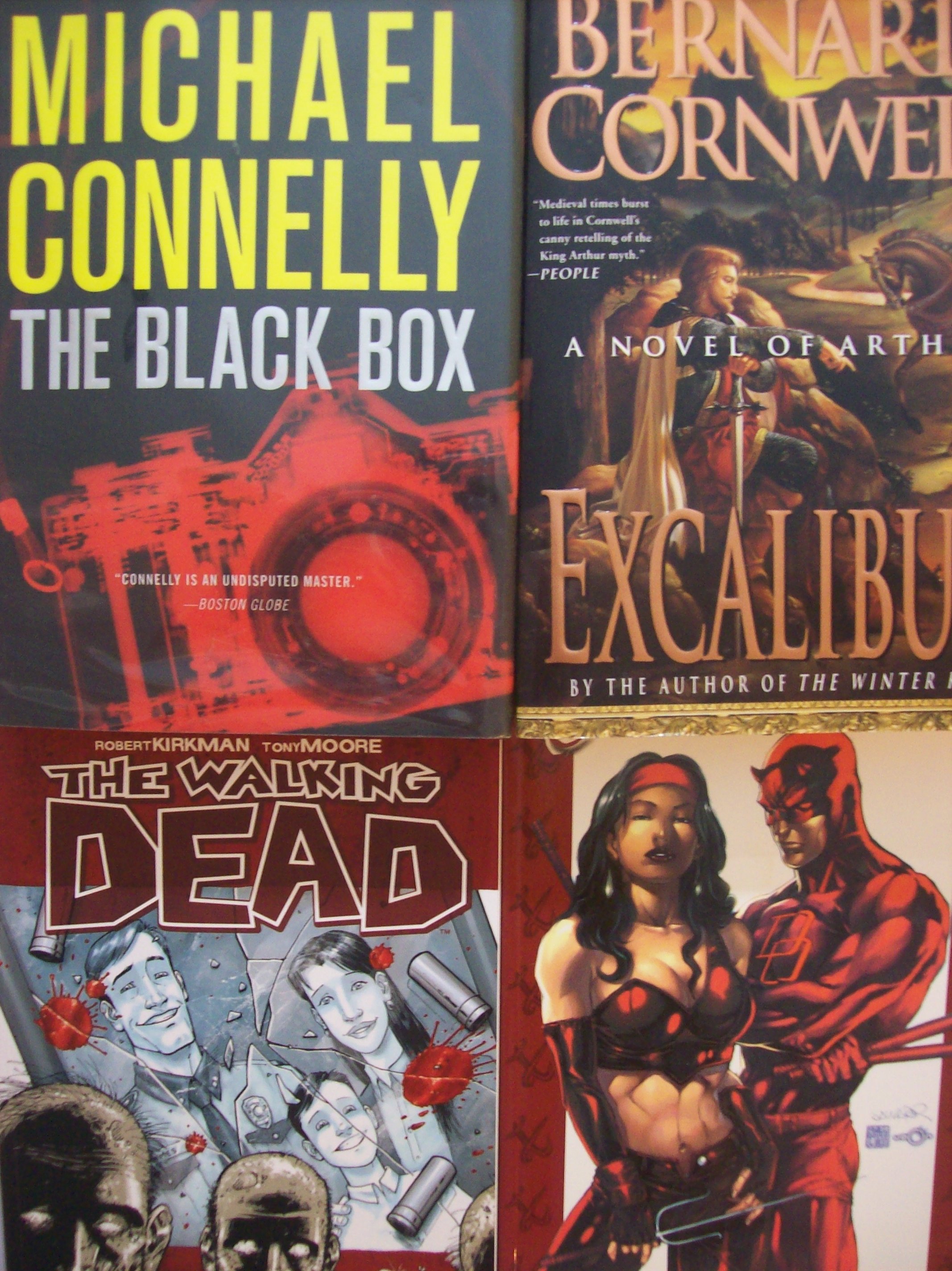
These probably aren’t on the 10 All-Time Greatest Books list, but, you know, they’re okay.
A prominent entertainment website has a 10 All-Time Greatest Books list, and I’m purposefully not going to read it. A few years ago I would have read this list. I would have nodded thoughtfully at the choices I agreed with and raged at the books that didn’t deserve to be on the list. I might have even tried to read the books on the list that I hadn’t read. Okay, I probably would have just bought the books, put them on my shelf, and then lied to my intellectual friends about reading them.
It’s kind of weird that I don’t want to read this 10 All-Time Greatest Books list. I read books. I read top ten lists. A couple decades ago, I had a book filled with top ten lists (I think it was called The Book of Lists). I’ll read a book of top ten lists, but I won’t read a 10 All-Time Greatest Books list.
It might be because I’m getting older. Whoever put the list together probably knows less about the books than I do. Yeah, they might have read all the books, but I doubt it. The older I get, the more realize that there are too many pretenders in this world (I should know because I’ve been one of them).
It just seems like an entertainment website isn’t the correct place to devise this list. This was designed to get hits, promote the site, get some arguments on the forum, but it probably wasn’t designed to get any insight. The experts who have the knowledge to put together a 10 All-Time Greatest Books list would probably refuse to do it just because of the futility. Measuring the “all-time greatest” of every book is too wide, too subjective, and a serious bibliophile probably wouldn’t try. Besides, who’s really read every single book of all time?
I’m not against all top ten lists when it comes to literature. If the entertainment website had broken the books down by genre, I might have been interested. I might have read a Top Ten Science Fiction Book list or a Top Ten Mystery list, or a Top Ten Books in The Bible list. Those could be interesting. Genres have common traits. Lumping all books together is pointless because all they have in common are words. Books don’t even have pages in common anymore.
The NFL Network has a show devoted to Top Ten lists, and I watch it when the topic is interesting. I watched the Top Ten Super Bowls episode. I watched the Top Ten Coaches show. I didn’t watch the Top Ten Left-handed Quarterbacks episode (I’m not making that category up). That shows that even the NFL Network can push things too far.
When I discuss an article, I usually provide a link, but I’m not providing a link this time because I didn’t read the article. Like I said, I’m not going to read the10 All-Time Greatest Books list. I’m just going to write about it.
*****
A couple days ago a morning news show ran a segment about a 10 All-Time Greatest Movies list, and I changed the channel. Again, genres of movies would help, but I don’t want to see that on a morning news show. The cable channel that usually runs NCIS all day was showing an episode of Burn Notice instead. I’d rather watch Burn Notice than hear about the10 all-time greatest movies. And I’d rather write about how I’m not going to read the 10 All-Time Greatest Books list than read the 10 All-Time Greatest Books list.
Do I have a point, or am I just turning into an old man?

Eating chips in the public library? That’s very bad library behavior! (Fritos) (Photo credit: Wikipedia)
Even though I lived in a somewhat affluent section of the city, the local public library put up with bad behavior. Kids ran freely like it was an indoor playground, while parents read or talked. A homeless guy wandered around the shelves and mumbled (but he did leave everybody else alone). I overheard loud political discussions that were so obnoxious that I despised everybody who participated, even the person I agreed with. The librarians were polite, but I felt they were irritated at me which didn’t make sense to me because I always behaved myself.
My local library’s best quality was that they kept a bunch of recent hardcover best sellers. I bought a lot of books, but I hated buying new hard covers because they were expensive, and they had no “showing off” value after a couple years. My old hard cover of The Complete William Shakespeare cost me a couple bucks at a used book store, but it was the book that got the most comments when I had visitors. The Complete William Shakespeare had excellent “show off” value.
The new books were in the center of the library, and I had picked out a Tom Clancy novel (this was 1992, and I hadn’t gotten tired of him yet) when I heard a loud hacking cough from the reading section. As I scanned the library for the cougher, I spotted a hot chick that looked like Danielle. Most of the rectangular tables in the reading area were empty (most library-goers preferred the couches and rocking chairs), so she stood out.
Whoever it was had dark hair, but it was matted down that morning, and a book was blocking her face. I really hoped it wasn’t my imagination because I didn’t want to become one of those obsessed guys. To make sure it was (or wasn’t) her, I moved to the nonfiction aisles, lurking behind the biographies to get a better side glance.
If it wasn’t Danielle, it looked a lot like her, the brown skin, dark hair past her shoulders, slightly inappropriate clothes. This time her red t-shirt seemed a size too small, her sleeves tight up to her shoulders. I couldn’t even tell how far her faded cut-off jeans went up while she was sitting down. But her hair threw me off. This hot chick’s hair was wet and clung to her face and neck, and it was tough to get a clear look at her features. It could have been Danielle, or it could have been a woman that looked a lot like her.
After I inched closer, I saw this hot chick was reading a hardcover of Interview with the Vampire by Anne Rice. As she read, her eyes would dart around the library and then return to the book for a few seconds and then they would roam again. Then her glance went straight in my direction. We made eye contact, and then she looked down instantly. Holy crap! It really was Danielle. At least, now I was pretty sure.
I didn’t know if she’d recognize me or even remember me. I wanted to talk to her, to at least say hello, but I wasn’t sure how to introduce myself again. If she didn’t remember me, what was I supposed to say: “I’m the guy who had your underwear for a month”? I’d already used that line before in the apartment parking lot. I was pretty sure a guy wasn’t supposed to use the same line twice on the same woman. Plus, I’d really feel stupid (or look like a pervert) if this woman turned out not to be Danielle.
I wasn’t even sure Danielle would want to talk to me. She had been friendly enough a couple weeks ago, but she might have thought I was just a creepy single guy who lived alone in a two-bedroom apartment filled with books. If she danced at Nero’s (if she had been telling the truth about that), she was used to creepy guys talking to her (and probably touching her too). She probably didn’t want to talk to another creepy guy who had (inadvertently) kept her underwear for a few weeks.
I moved to the back of the biography aisle where she couldn’t see me, and I stopped pretending to look for books. I knew I should just go talk to her. This was lame. I was being lame. I knew it. There was no excuse for it. I was self-aware enough to know why I was being lame, but that didn’t change the fact that this was inexcusably lame behavior on my part.
Then I heard the loud crinkling of a bag popping open, followed by crunching. There was a rhythm to the crunch. Crunch-one-two-three, crunch-one two-three. This was a deliberately loud crunching of the chips. This was a type of crunch designed to annoy somebody who didn’t like noises, which is usually everybody in the library (except for screaming kids and the homeless guy).
Since I wanted to be sneaky, I slipped my Tom Clancy book into an empty space on the biography shelf (because I drop stuff and dropping a Tom Clancy book was too risky). I slid forward a few steps down the row, and my suspicions were right. Danielle had a small bag of corn chips on the library table. Her eyes seemed completely focused on her book as she used her free hand to steadily place corn chip after corn chip into her mouth.
Crunch-one-two-three, crunch-one-two-three.
Then Danielle put a hand between her chest and collar bone and coughed, really loudly. It was a series of extended horse coughs like the one that had gotten my attention earlier. I’d heard old men clearing out phlegm make less noise than her. I could have sworn that in her coughs I heard the words “talk to me” a couple times as she blew chip particles (I think) into her fist. But adults didn’t do that. I hadn’t heard anybody do the cough-talk in years.
I probably should have rushed to her to see if she was alright, but she was obviously being overdramatic. The librarians looked like they wanted to shush her, but how do you shush somebody who’s just coughing? The homeless guy had stopped talking to himself. Even the screaming kids were silent, watching a hot chick in a tight red t-shirt cough chips into her fist.
Once she was done, she took a deep breath and said, “I’m okay, everybody.” And then she went back to reading her book.
I tip-toed back a couple steps to think things out. Danielle was making a scene, and it’s tough for a quiet guy like me to talk to a loud person in a quiet public place, especially if it’s a hot chick. I was always nervous around Danielle anyway. If I decided to talk to her now, we’d have an audience. But the show wasn’t over.
Next, Danielle sneezed really loudly. It was a long extended “AAAAAACHOOOOOOOOOO!” kind of sneeze that brought the library to another standstill.
“Whew,” Danielle said. “I don’t know where that came from.” She waved at the librarians and picked up her book.
Amazing! Danielle was amazingly cheerful for somebody going through sneezing and coughing fits. After a half-minute or so, I took a few steps forward to get another glimpse of her, but she was gone. The bag of chips was still on the table and her chair hadn’t been pushed back in, but she was gone. Alarmed, I leaned forward to could get a better view of the entire library. Danielle wasn’t at the checkout desk. She wasn’t in the reference section. She wasn’t in the fiction section. I didn’t think there had been enough time for her to exit yet. I hoped she hadn’t left. I started to panic a little. If she’d left, then I’d blown a chance to talk to her, and this had probably been my last chance. What were the odds I’d ever run into her again? Dumb. Dumb. Dumb.
I turned around to grab my Tom Clancy book off the shelf, and there was Danielle, one hand holding her own book, one hand on her hip, chest out, stomach in, unblinking eyes aimed right at me.
“So,” Danielle said. “Are you gonna talk to me or what?”
*****
To be continued in… The Literary Girlfriend: The Meaning of Sucks.
And if you want to read “The Literary Girlfriend” from the beginning, start here.

The three basic genres (not in order): fiction, nonfiction, and football
Vacation time (for me) means selecting which books to read while I’m waiting because there’s a lot of waiting during vacations. There’s waiting in the airport, waiting on the airplane (in between naps), and there’s waiting in the hotels, tourist traps and traffic jams. For as long as I can remember (including childhood), I’ve packed two books for these waits, one fiction and one nonfiction. I’ve always known that one part of my brain likes fiction, and when I get tired I can use another part of my brain for nonfiction while the fiction side of my brain rests.
All my life I’ve either had an innate understanding of my brain, or I’ve had a really short attention span.
An article in The Atlantic examines the differences between fiction and nonfiction, but I have to warn you; it’s kind of boring. The article is not something to read in the airport (unless you want to fall asleep on the airplane). At least it’s boring to me, but I have a short attention span. I don’t think these kinds of articles were written for people who have a short attention span. Despite having a short attention span, I understood the point of the article (even if I thought it was boring).
According to the article, fiction is spiritual reading, and nonfiction is carnal reading. Talk about loaded words. Fiction is considered spiritual, and I get that. It’s not the word I’d choose, but I understand what they mean. When you read fiction, you put yourself into another person’s mind. You have empathy for people that aren’t you (and people that probably don’t exist). You think about their problems and how you would handle their situations. You put yourself in another place and time, and if you’re lucky, you see the pictures in your head and can tune out everything around you.
And if you’re really lucky, nobody sneaks up behind you and conks you on the head while you’re reading (and tuned out). I have a thing about being conked on the head while I’m reading. That’s more likely to happen if I’m reading fiction.
I was surprised that nonfiction would get the term carnal applied to it. When I think of carnal, I think of Fifty Shades of Grey (not that I’ve read it). When I think of carnal, I don’t think of Wheat Belly, Lose the Wheat, Lose the Weight , and Find your Path back to Health (15 word title, which isn’t that long for nonfiction).
Supposedly, (according to the article) people who read fiction are more empathetic than people who read more nonfiction (or don’t read fiction at all). I haven’t seen the studies. I don’t always trust these kinds of studies (especially if they’re funded by somebody with an agenda, which is almost everybody, but I don’t know who has an agenda for fiction over nonfiction other than fiction writers). Being able to get into the minds of various characters helps fiction readers see and understand the points of view of others. Readers might not get by just reading nonfiction.
All I know is that if somebody interrupts me while I’m reading fiction, I’m NOT very empathetic because they’ve disrupted my concentration when I’m in somebody else’s entertaining world. That ticks me off. If they interrupt me while I’m reading nonfiction, I usually don’t care because I’m just reading information. If I’m reading fiction and watching football at the same time, do… not… disturb!
Since I have a short attention span, carnal and spiritual don’t seem to be the best words to use to describe the categories of literature. To a guy like me, nonfiction might be practical reading, and fiction would be fun. Again, neither term is completely accurate. Both terms have positive connotations. I’ve replaced two loaded words (carnal and spiritual) with two other loaded words, but at least my two loaded words are loaded in the same direction, and I know what the two loaded words mean.
Loaded. Haha!
*****
Switching from fiction to nonfiction is easy today with so many electronic devices for reading. For example, my phone can store as many fiction and nonfiction selections as I want (keeping me both spiritual and carnal). And with longer airport lines this summer, I don’t think I could carry enough books to keep me occupied. Now all I need is my phone and a small dose of a certain (legal) drug, and I’m ready to travel and stay entertained at the same time.
Just don’t interrupt me while I’m reading fiction because I might not be empathetic.
*****
So what do you think? Does reading fiction make you more empathetic? Are these studies bogus, or do they have merit? Is carnal the right word to describe nonfiction? Which do you prefer: fiction or nonfiction? Should I let my subscription to The Atlantic lapse? If so, what should I replace it with?
That’s probably too many questions, but this is what happens when you’re a guy with a short attention span.

If there’s a time of year when it’s great for a young guy to NOT have a girlfriend, it’s football season. (Photo credit: Wikipedia)
This is the part of the story that some authors (and readers) might be tempted to skip. Nothing really happens in this part. Danielle (the hot chick in the clingy t-shirt) doesn’t make an appearance in this episode. I think about her a little. I mention her to some friends. But as far as plot goes, nothing happens.
Some authors say that if a scene doesn’t move the plot, skip it. I don’t always agree. Sometimes the author needs to establish a character’s state of being or state of mind. And this segment shows my state of being when I was 25 over 20 years ago. This is the kind of stuff that happened when nothing much was happening in my life.
Plus I need to introduce a couple people that affect the story later on.
*****
I was at a college football game with my friend Kirk and his girlfriend Linda on a Saturday afternoon. We weren’t in college anymore, and the two teams playing weren’t very good, but the tickets were cheap, and it was a cloudy breezy day, so it was a perfect time for a pale guy like me to be outside. The stadium wasn’t crowded, so spectators were spread out all over the place, and it was easy to find three empty spots near the sidelines. Kirk sat between Linda and me, which made sense because I had only met her a couple times.
During the game, I told Kirk about meeting Danielle in the laundry room, how we had shared a dryer, how she had left panties in my laundry, and how she (for some reason) came up to my apartment to retrieve them. I shouldn’t have told him about Danielle. Nothing good comes from an unintentionally celibate guy (like me) telling a charmingly loud guy (like Kirk) about a hot chick in a clingy t-shirt when nothing happened.
“Let me get this straight,” Kirk said. “She left her panties in your laundry. She invited herself to your apartment. And she followed you to your bedroom. And you didn’t sleep with her? ”
“That’s a fairly accurate summary,” I admitted.
“She gift-wrapped herself for you,” Kirk said, putting his finished beer underneath his seat. “What more do you need? Her getting on her knees and…”
“Kirk, stop it,” Linda finally said and then leaned forward to talk to me. “She asked you to share your dryer with her?”
“Yeah.”
“That’s weird,” she said. “And I can’t believe she went up to your apartment. A woman shouldn’t take chances like that. She probably thought you were harmless, but still…”
I sat back and grimaced. Harmless.
“What’s weird about asking him to share a dryer?” Kirk asked his girlfriend. “If you were in a hurry, and that was the only dryer, what would you do?”
“Let the clothes stay wet and come back later.”
“What if you had to wear them right then?”
“She wasn’t wearing a bra in public,” Linda said. “That’s weird too.”
“That only happened once,” I said in Danielle’s defense. “The second time she came down, she was wearing one.”
“But why would she go to Jimmy’s apartment?” Kirk asked Linda.
“I don’t know,” Linda said. “I wouldn’t have put myself in that situation.”
“That’s because you’re sensible,” Kirk said with a hint of sarcasm, and then turned to me. “She still lives with her parents.” That was one reason Linda wouldn’t spend the night with Kirk yet, and he rolled his eyes a little. He really wanted her to spend the night with him. She was blonde, and he couldn’t resist blondes.
Linda whispered something in Kirk’s ear (I have no idea what she said), and he shut up for a minute or two.
“Alright,” Kirk finally said, getting up. “I gotta use the bathroom.” As we both got up so he could get to the aisle, he asked, “You want a soda?”
“Yeah, thanks.” Kirk had many faults, but I knew he’d wash his hands after using the facilities.
“I was asking Linda,” Kirk said, shaking his head as he passed me.
Even with a gap between us, Linda shifted her knees away from me. That was unnecessary. It wasn’t like I was going to proposition her. She was my friend’s girlfriend. A woman that liked Kirk wasn’t going to be interested in me anyway, even if the woman was smart and educated. I knew that. I took her shifting of the knees as an insult, so I didn’t even attempt conversation, which was fine because I wanted to watch the game.
The home team had a 3rd and 1 near midfield, but instead of running the ball, the quarterback faked a handoff, stood in the pocket, and overthrew the tight end who was wide open 30 yards downfield. The crowd booed. The tight end pitched his helmet onto a bench and yelled, probably at the quarterback, who was shaking his head a few yards away.
“Why did we throw the ball like that?” Linda asked.
I pretended not to hear for a second or two before I faced her. “The defense put everybody on the line of scrimmage to stop a running play, so our tight end was able to run out there uncovered. We should have gotten a touchdown out of that.”
Linda smiled at me, but her knees didn’t move, so we sat there and pretended to watch as the home team punted. I actually watched. I think Linda pretended.
When Kirk sat back down and handed each of us a soda, the score was still the same, but the other team had the ball around midfield. I expected Kirk to ask what had happened.
“Nurse your drink,” Kirk said. “This place has communals.”
I grunted as I sipped my soft drink instead of gulping it. If the stadium had communals, I probably wouldn’t use any facilities until we left the game.
“What did you say?” Linda asked.
Kirk turned to me. “You wanna tell her what a communal is? If she gets grossed out, I want her blame you, not me.”
I leaned forward. “It’s a long metal tub where guys stand shoulder to shoulder and relieve themselves.”
“What’s so bad about that?” Linda asked.
“Stage fright,” Kirk said. “Him, not me.”
“I’m not explaining stage fright to her,” I said to Kirk.
But Linda wasn’t interested. She gripped her soda cup and stared at the game.
Kirk leaned in my direction and talked quietly. “Hey, next time some braless chick comes to your apartment, ask her if she wants a drink.”
I was still thinking about how to explain stage fright (if I ever needed to), so it took a moment to realize what Kirk was talking about. Linda didn’t seem to be paying attention anymore.
“You need some good wine,” Kirk continued in a hushed voice. “Wine is like a condom. You don’t always need it, but it’s good to have around. Then you tell her to sit down and relax.”
“I don’t drink.”
“Braless chicks do,” Kirk said. “If you don’t get your act together, you’re always gonna be stuck with the skinny chicks who read a lot.”
“I like skinny chicks who read a lot,” I said.
“I’m a skinny chick who reads a lot,” Linda said. I guess she was paying attention after all.
“You’re not…” Kirk cleared his throat and raised his voice before Linda could respond. “You’re better than skinny.”
“I’d like to read right now,” she said. “I should have brought a book.”
“You don’t bring books to football games,” Kirk said. “Just like I don’t take a radio to the art exhibits.”
“Art exhibits,” I said, with a short laugh. I might have been single, but it was fall, and I could watch a football game whenever I felt like it. Now that Kirk was back, he could deal with the uninterested girlfriend. Football season was a great time to be single.
*****
Despite my bravado, it sucked to be single at 25, even during football season, especially with a friend in a relationship. Even though Kirk was in a weird relationship, I was jealous. I was pretty sure that Kirk was never going to have his intimate moment with Linda. Kirk took Linda’s resistance as a challenge, and I think Linda was just seeing how long Kirk would go out with her before giving her the ultimatum. It was a bizarre reason to have a relationship, to see whose will would break first. But in a few days I was going to get into my own weird relationship. I just didn’t know it yet.
*****
To be continued in… The Literary Girlfriend: Bad Library Behavior and Danielle makes her dramatic return!!
To read “The Literary Girlfriend” from the beginning, start here.

Even James Franco would probably say the answer is “No.” (Photo credit: Wikipedia)
Until a couple days ago, I didn’t know that James Franco wrote books. I just thought he was a nice looking actor who starred in Spider-Man and Oz movies. But now he wants to crowd source one of his books (a short story collection titled Palo Alto) into several movies.
If James Franco can get $500,000 in the next 30 days (I don’t know when the 30 days started), he can start production. I kind of understand why James Franco has to get $500,000 from other people (it’s explained here and here if you really want to know), but I’m not foolish enough to question James Franco. He’s James Franco.
Contributors who give $5,000 can get a speaking part (probably just one line) in one of the movies. That’s an intriguing idea. I’d like to have a speaking role in a James Franco Palo Alto movie. I’m not really a James Franco fan, but it would be kind of neat to have a speaking part in one of his movies, even if the movie sucks (which is a possibility).
I might not fit into a James Franco Palo Alto movie though. Most of his characters (from the parts I’ve read) are high school students, and I was a high school student in 1980 (James Franco was two at the time, and I hadn’t heard of him yet). Plus, I have a monotone voice. I could probably put the audience to sleep with my one line. I’d at least make them yawn. I could be the guy that made people fall asleep in a James Franco Palo Alto movie. I’m not sure that would be something to brag about.
The other problem is I don’t have $5,000 (I do have $5,000, but there’s no way that my wife will let me spend it on this, unless she gets the speaking part, but she’s already been fondled by one celebrity, so I definitely don’t want James Franco getting anywhere near her).
But there’s a solution to this. If James Franco can crowd source his movie, I want to crowd source my speaking part in his movie. I would set up a Paypal button, but that would make me a hypocrite because when kids stand on the street asking for donations (usually for their football or baseball teams), I say no because they’re not really working for their donations. If they’re washing cars or selling cookies, I’ll gladly donate (if I’m in a good mood).
So if you’d like to donate to my crowd sourcing speaking part, just buy a copy of my ebook Having a Few and Getting Some on the Amazon Kindle. That way you actually get something for your donation (and I don’t like washing cars or selling cookies). If I can sell 10,000 copies in 30 days (again, I don’t know when the 30 days started), then I’ll give $5,000 to James Franco’s movie, and I can have a speaking part in a movie that might (suck or) never get made.
And you can be proud (or ashamed) of making a contribution to James Franco’s latest creative endeavor.
*****
Palo Alto by James Franco
A Book Review
If you think of this book as an elaborate practical joke, you might appreciate it. I think struggling writers (by that I mean writers who are struggling to get published) will (or already do) hate this book and resent that it got published by Simon & Schuster at all. I was feeling those emotions myself, but when I started thinking of it as a practical joke (on whom, I’m not sure), it was kind of entertaining.
After all, practical jokes are more entertaining when you’re in on the joke instead of being the victim. Now that I’m pretty sure this “James Franco-author ” thing is a practical joke, I kind of enjoy it.
James Franco (or whoever is playing the joke on James Franco, if that’s what’s going on) needs to be careful about these Palo Alto movies though. What works as a book doesn’t always work as a movie. Then again, sometimes what doesn’t work as a book does work as a movie. But it probably won’t work if I have a speaking part.

Jonah Lehrer, swearing to the audience and media that he isn’t the NSA leaker . (Photo credit: Knight Foundation)
Before Jonah Lehrer signed a new book deal with Simon & Schuster, I had nothing against him. I didn’t care that he had to resign from The New Yorker for allegedly recycling stuff in his articles. I didn’t care that two of his books (Imagine and How We Decide) were pulled from circulation because of plagiarism. I didn’t read his books, I wasn’t interested in his books, and I didn’t give him a second thought (except maybe “That’s what you get”) when he was punished for his literary transgressions.
But it’s been less than a year and he’s already gotten a book deal, and that ticks me off. It probably shouldn’t. If Simon & Schuster wants to take a financial risk on a plagiarist, that’s their gamble. I’m not going to buy the book, but Jonah Lehrer isn’t buying my books either, so I guess that evens out.
Part of Lehrer’s new book (titled The Book of Love) is about Jonah’s emotions as he got caught plagiarizing. According to a short excerpt, he threw up a little. That doesn’t seem too dramatic, and it’s a little gross. Maybe if he streaked a baseball game out of guilt, I’d read about that. But I’m not really interested in the thought processes of a plagiarist, especially if it leads to throwing up. If I want to read about someone’s guilt, I’ll read “The Tell-Tale Heart.” It’s short, and the guilty guy didn’t get a book deal afterward.
I don’t care if a plagiarist gets more books published after he (or she) gets caught plagiarizing, but a year seems too short to be a good punishment. I’m a fan of punishment. Rehabilitation is okay, but sometimes rehabilitation is tough to measure because you can’t always tell what’s in a person’s heart. But a punishment is concrete. It can be measured. After a punishment, you know that even if an apology is insincere, the offender has still served his time. A punishment can be proven. I’m a concrete kind of guy. That’s why I like punishments (as long as I’m not on the receiving end of one).
There’s only one way to punish an author, and that’s to not let him/her publish. If all the publishers agreed not to publish a plagiarist’s book for ten years, that would be worse than a ten-year prison sentence (maybe not, but it would still be pretty bad). Ten years where nobody would read any of the plagiarist’s words. Ten year’s where the plagiarist would have to self-publish his own books and write his own 5-star reviews (like the rest of us).
I’m not an unforgiving guy. If I see Jonah Lehrer on the street, I’m not going to scream “PLAGIARIST!!” and chase him down with a mob carrying stones and pitchforks. If Jonah Lehrer does a book signing, I’m not going to picket the bookstore. I’m just not going to read a Jonah Lehrer book for at least ten years.
****
How can plagiarized books get published with today’s technology? My kids in public school write essays that are run through a website that checks for signs of plagiarism. In reality, nobody really cares if my daughter copied her essay about One Direction from a 1D website, but her paper still got checked. I thought at first from her spelling and sentence structure that she wrote her own paper, and then I read the fansite and I wasn’t so sure. Fan websites have lots of spelling and sentence structure errors. All this shows is that my daughter’s public school checks for plagiarism more closely than some publishing companies do.
I’ll be honest, though. If my kids ever get caught plagiarizing, I’ll probably still read their books, even before their ten years of punishment are up.
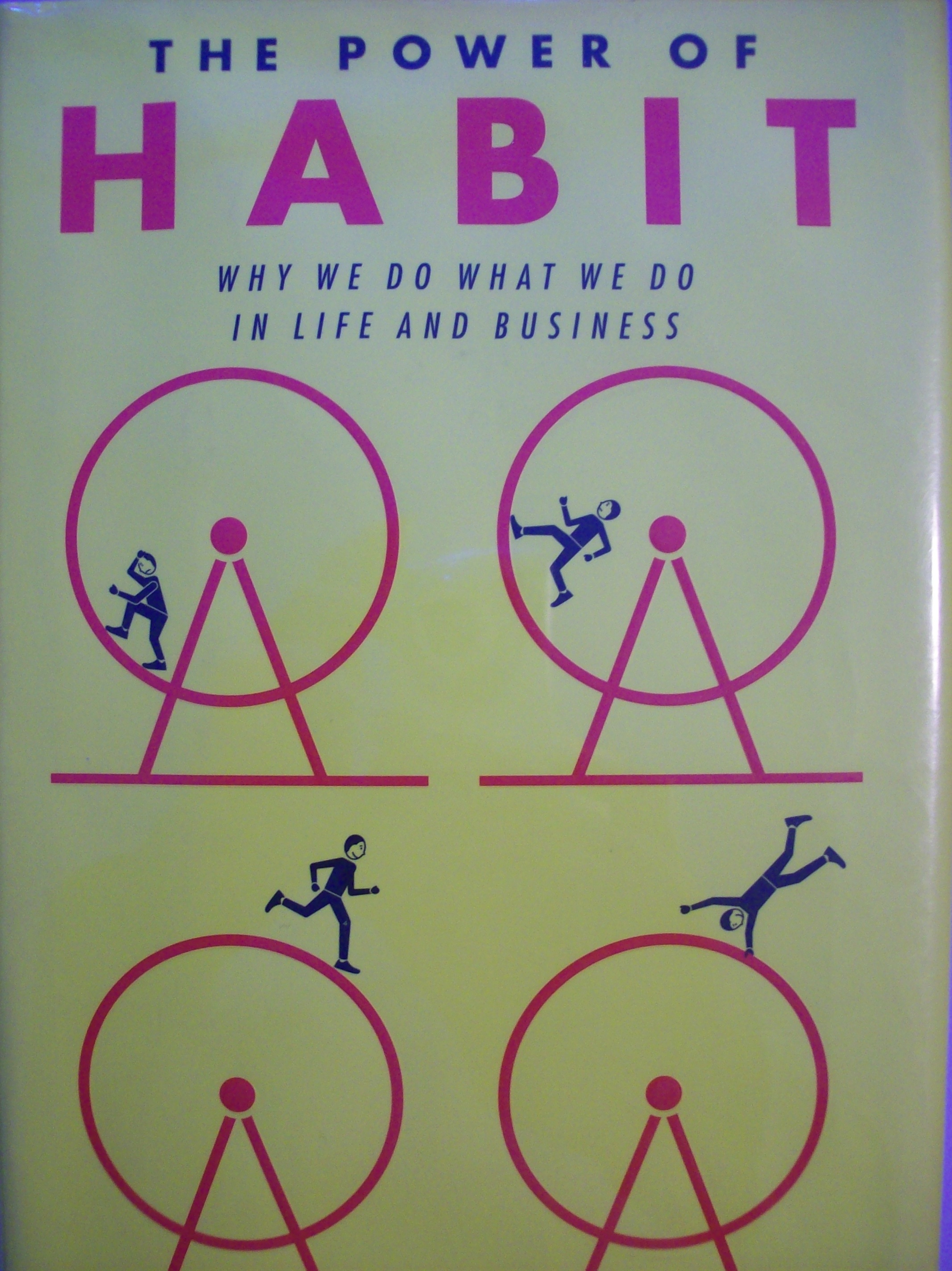
If the title were shorter, we might not have to squint to see it.
One of the first books I reviewed for Dysfunctional Literacy was The Murder of the Century: The Gilded Age Crime that Scandalized a City & Sparked the Tabloid Wars by Paul Collins. The title is kind of long. I couldn’t remember the whole thing so I simply referred to the book as The Murder of the Century: (with a really long subtitle). That, I could remember.
The Murder of the Century (with a really long subtitle) was a pretty good book, and I said in my review that I would probably read Paul Collins’s next book.
It’s been two years, and Paul Collins has written another book. This one is titled Duel with the Devil: The True Story of How Alexander Hamilton and Aaron Burr Teamed Up to Take on America’s First Sensational Murder Mystery. Paul Collins likes long book titles.
While author Paul Collins might take long titles to the extreme, nonfiction books seem to have long titles nowadays. Here are a few titles from nonfiction books I’ve read in the last couple years:
Quiet: The Power of Introverts in a World that Can’t Stop Talking by Susan Cain (12 words)
The Power of Habit: Why We Do What We Do in Life and Business by Charles Duhigg (pictured above at 14 words)
Unbroken: A World War II Story of Survival, Resilience, and Redemption by Laura Hillenbrand (a relatively short 11 words)
My Greek Drama: Life, Love, and One Woman’s Olympic Effort to Bring Glory to Her Country by Gianna Angelopoulos (I haven’t read this one, but I couldn’t resist a 16 word title)
Even without the titles of Paul Collins’s books, these nonfiction titles average over 10 words. I have a tough time saying more than 10 words in one breath, but I should probably work out more.
Compare this to a list of fictional book titles (as in titles of real books in the fiction section, not fake book titles):
Gone Girl by Gillian Flynn
Something Prey by John Sandford
12th of Never by James Patterson and Somebody Else
Fiction titles need to be short. Otherwise, the title risks containing spoilers. It’s bad enough that book blurbs and book reviews can contain spoilers; we don’t need them in titles as well.
If Gone Girl were nonfiction, its title might be: Gone Girl: How a Wife’s Mysterious Disappearance Led to (Spoiler, Spoiler, and yet another Spoiler).
See? It doesn’t work for fiction.
The good thing about having a really long book title is that the author doesn’t have to explain what the book is about. For example, here is a fictional conversation between author Paul Collins and a potential customer at a book store.
*****
Customer (who asks this question despite the giant sign with the title of the book on it): “What’s your book called?”
Paul Collins (reading from the sign because he can’t remember the title of his own book): “Duel with the Devil: The True Story of How Alexander Hamilton and Aaron Burr Teamed Up to Take on America’s First Sensational Murder Mystery.”
Customer: “Really? What’s it about?”
Paul Collins: “The time that Alexander Hamilton and Aaron Burr teamed up to take on America’s first sensational murder mystery.”
Customer (after a pause): “That’s good enough for me!”
*****
I don’t remember nonfiction books having long titles when I was a kid. I’m Okay, You’re Okay was a huge best-seller decades ago (when I was a kid), and just from those four words I knew I didn’t want to read it. Then again, my memory can be pretty bad sometimes. I just looked up this book (I did research!) and discovered the title is I’m Okay, You’re Okay: A Practical Guide to Transactional Analysis.
Now I really don’t want to read it. I don’t know what “transactional analysis” is, but I’m pretty sure that I’m not going to be “okay” with it.
The point is, long nonfiction book titles don’t seem to be new. But Paul Collins is probably taking it to a new level.
*****
DISCLAIMER: Despite my gentle mockery, I’ll probably read Duel with the Devil: The True Story of How Alexander Hamilton and Aaron Burr Teamed Up to Take on America’s First Sensational Murder Mystery. I figure I’m halfway done just by getting through the title.
Related articles
- “Duel With the Devil”: Murder in Old New York (salon.com)

There’s nothing wrong with reaching for the stars, but you might want to do it in your spare time. (Photo credit: Wikipedia)
With graduation season comes lots of rambling speeches and lots of advice. Most of the advice that I’ve heard (from snippets on television and videos) is pretty bad. “Reach for the stars” is bad advice. “Find a job that you love” is bad advice. The problem with this advice is that it’s coming from people who probably shouldn’t give advice to college or high school graduates.
Colleges should make a guy like me their graduation speaker (except I’m not a good public speaker. They should get a guy LIKE me who is NOT me). I’m not a celebrity or any kind of famous person. I’m just a moderately successful guy that nobody has heard of. I’ve held the same kind of job for 25 years. I’ve (somehow) stayed employed through several recessions. I’m married with kids.
From a graduate’s point of view, I’m a boring guy with a boring life. But I’m also the person that most graduates will become (or should hope to become).
Most college graduates will not become famous or super wealthy. They will become like me. And they should go out into the world with aspirations to become like me (that sounds really arrogant, but I hope this makes sense).
So if I were to give a graduation speech (and I won’t, but if I did), it would be a short speech with lots of (hopefully) amusing anecdotes and one piece of (maybe really bad) advice:
- Be content with having a job that sucks.
This can be taken the wrong way, so I’ll try to explain my bad advice.
Too many famous people (whose names I won’t mention because they’re already rich and famous and get mentioned too often anyway) advise students/listeners/viewers that we should strive to find a job that we love.
I disagree. Trying to find a job that we love (or “reaching for the stars”) leads to disappointment, disillusionment, and bitterness (I couldn’t think of another “dis” word).
Instead, find a job that pays you enough to do the stuff that you love… in your spare time.
I love reading, writing, and watching football (and spending time with my family, of course), but few jobs will pay me to do all three. The “reading” jobs would require me to read a bunch of boring stuff that would make me hate reading. The “writing” jobs would require me to write a bunch of boring stuff that would make me hate writing. The “spending time with family jobs” would… I’d better stop right there.
Everything I love to do requires somebody else to do a job that sucks. If I go to a restaurant, a bunch of people have to do jobs that suck in order for me to enjoy myself. If I take my family to the mall, a bunch of people have to do jobs that suck in order for us to enjoy ourselves.
In fact, most jobs suck (even the ones that require a college education), but most jobs are important.
This notion that we must find a job that we love is self-destructive. Somebody has to do the jobs that suck. If everybody did only the jobs they loved, then nobody would do the jobs that sucked, and there’d be a lot of trash outside because waste management jobs suck.
So that’s my bad advice to graduates: find a good job that sucks, and then do the stuff you love in your spare time.
*****
I don’t remember many of the speeches from my graduation ceremonies. The graduation speakers weren’t famous, they had monotone voices, and my mind was on other things. The only thing I remember is that our high school valedictorian started off his speech with a bad (almost offensive) joke that nobody laughed at, and his face turned red, and it threw him off for his entire speech. I had never seen him flustered before. Our valedictorian was a likable guy, and I felt bad for him.
I’m sure somebody suggested to my school’s valedictorian that he start his speech with a joke. That was bad advice.
What other bad advice can we give to today’s graduates?


 Dysfunctional Literacy