She wrote in her profile that she loves reading Kurt Vonnegut books and taking walks on the beach, but guys only looked at her picture.
I have nothing against online dating. If online dating had been around when I was single, I would have taken advantage of it. Back in the 1990s, we had the personals in the back of the newspaper. The personals were great because if I messed up a date (which I usually did), nobody I knew would find out about it later. I had some interesting experiences with the personals (maybe not as interesting as the girlfriend I met in an apartment laundry room, but still pretty interesting).
Sometimes introverted readers can feel left out of the dating scene, but a couple of literary websites (not Dysfunctional Literacy) have their own personals section (here and here for examples). Potential daters take profile pictures while they’re holding books, and they can try to match up with readers of similar tastes. I’m a bit jealous. I never had literary personals, but I dated several women who liked to read. Dating somebody who likes to read because you’re the kind of person who also likes to read sounds great in theory. But I’ve lived through this. It doesn’t usually work. Here’s why:
1. Reading is not usually a date activity.
Reading is different from a lot of hobbies. If two people like biking, they might enjoy biking together on a date. Reading is not a social activity. For some, it’s what they do because they don’t like hanging around people. For others, it’s what they do when there’s nothing else to do. Either way, reading is something people do when they’re not being social. Most people don’t read together on a date. They might stare at their own phones on a date, but they won’t actually read books on their dates. Even I didn’t do that.
2. Reading is not (usually) a shared experience.
Even if a couple wants to try reading together on a date, this can be a negative experience. Every reader goes at his/her own pace. When a group watches a movie, everybody shares the experience at the same time. When a couple goes to dinner, the two people share the same experience at the same time.
Reading is different. Unless a couple is listening to an audio, the couple will read at different pace. One person wants quiet. The other person wants background noise. One makes comments about the book. The other wants the commenter to shut up. Readers might want to discuss the book after they’re done (or at scheduled intervals during the reading process), but most readers don’t want ongoing discussions (“Did you catch the typo on page 45?”) and interruptions (“You wanna see my book mark?”).
3. Book tastes are different.
Just because two people like to read doesn’t mean they like to read the same books. One of my literary girlfriends in college read Susan Sontag while I was reading a Mickey Spillane book. She made several contemptuous remarks about the quality of literature I had chosen (in my defense, I think I had just finished reading The Prairie by James Fenimore Cooper for an American Lit class, and I just needed an easy book with a high body count).
Women who read Susan Sontag look down upon guys who read Mickey Spillane, and I don’t like snide comments about the books I choose. You can make fun of my face, or make fun of my car, or make fun of my mom, but don’t make fun of the books I read.
4. A jerk who reads can be as bad as a jerk who doesn’t read.
Studies may show that people who read fiction are more empathetic than people who don’t read fiction, but those studies may themselves be fiction (I don’t always trust studies, even if I want to believe them). Some of the most obnoxious people I’ve met are book store cashiers, but to be fair, I’ve never seen a book cashier actually read a book. It might be like the fast food employee who won’t touch the food they cook. I’ve met a lot of jerks who read books. I might even be one of the jerks who reads books.
5. Readers can lie like everybody else.
Dating websites are known for untruthful profiles. There’s probably just as much lying on the literary personals as there is on an average site (no proof whatsoever to back up my baseless assertion). After all, readers tend to be decent writers, and writers embellish. Therefore, it makes sense that there would be some lying (or embellishing) on the literary dating site. I hope the profiles are at least well-written. I hate being lied to by illiterates. I really hate falling for the lies told (or written) by illiterates.
*****
I like to read. My wife likes to read. We very rarely talk to each other about what we read (but we do talk about other things). That might be why our literary relationship works. I might be (and probably am) wrong about reading and dating (I’m married to my wife, but I’m not married to my opinion of literary online dating). For my five reasons it can go wrong, there may be ten reasons why it’s great.
I just hope (right or wrong) I don’t have to go through that literary dating experience again. Thankfully, it’s for others to decide if it works or not.

The first thing Danielle said in the morning was, “Coffee.”
It had been a great night with some rough moments. Danielle took up 3/4ths of the bed and had hogged all the sheets. I was a light sleeper so every time she had moved, I became alert. My paperback copy of Animal Farm had been ruined (don’t ask how), and I had a hangover-like headache even though I didn’t drink. I knew what had caused it, though, and I wasn’t complaining.
Danielle was in even worse shape. She didn’t budge. It might not have been from anything we’d done; she had spent Saturday night dancing at the club while I had been asleep, so I had simply been better rested. But still, I felt good about things. Even as I stumbled around the bedroom, tripping over her thick-heeled shoes, she didn’t move. After I had showered and returned to the bedroom to put on clothes, she was in the same position, but her eyes were open, barely. I could tell she was watching me.
That’s when she had said, “Coffee.” And she closed her eyes again.
I wasn’t a regular coffee drinker, so I had to run (or walk quickly) to a fast food place across the street from my apartment complex. It was a good time to think.
I really hoped that this hadn’t been a one-night stand. I’ve always been against the one-night-stand. I had several friends who were proponents of the one-nighter. They appreciated the lack of attachment that went with it. I wasn’t morally superior in my distaste for the one-nighter; I just thought it was impractical. It took time and effort (and maybe incredible luck) to find a woman who would spend the night and do more than rest her head on my shoulder. To me, it was stupid to start the whole process over and over again. In college, I’d had several debates about this (not in any classes, though), but I don’t think the arguments changed anybody’s minds.
When I returned to the bedroom with two large coffees, Danielle was still in bed, curled facing the door. I sat on the edge of the bed and gave her one coffee. She propped herself up, took the coffee, sipped it, set it down on the side table, and gestured for my other coffee. I gave that to her, and she sipped that one too and kept it. Then she said, “Give me an hour.”
I lamely pointed at the second coffee. “But that was… I was going to…okay.”
I decided it would be easier just to go back to the fast food place. So I left, bought two more coffees, and plotted out the rest of the hour. It was late morning, and the sports station was running pre-football analysis. I tried to read the newspaper (this was in the early 1990s), grumbled about a few things, and made breakfast when the coffees kicked in. I could have bought breakfast from the fast food place, but I liked mine better, and the smell of eggs and bacon and toast might wake Danielle up more quickly than something greasy in a bag. By the time I had finished cooking, the hour had passed, so I knocked lightly and opened my bedroom door.
Danielle sat up and rubbed her temple. “That was my first book report in bed,” she said.
I noticed she was wearing my Johnny Quest t-shirt, a rare Johnny Quest t-shirt. I had mixed feelings about this. I was elated that she was wearing my t-shirt. She looked a lot better in it than I did, especially with the contrast of her brown skin against the white fabric of the shirt, but I was a bit uncomfortable with her going through my dresser like that already. I hadn’t had time to evacuate some stuff that I didn’t want her to see.
“If I remember, you started it,” I said.
She fell sideways onto her pillow and buried her head into it.
I sat down next to her again. “I hate to mention this,” I said, “but you failed your book report, the factual part, at least.”
Danielle remained on her side but lifted her legs onto my lap. “That wasn’t fair. You asked at a bad time,” she said, which was true.
“You asked me about Animal Farm at a bad time,” I said, which was also true.
“Just wait until tonight,” she said, and pulled herself back up, resting her feet on my lap.
Yes! There would be a tonight! I wasn’t sure what Danielle and I had, but it wasn’t a one-night stand. An emotional burden had been lifted, but now I wasn’t sure about how to handle the rest of the day. I didn’t want to seem needy by asking if she was going to hang around all day, but I didn’t want to seem callous by asking her when she was going to leave.
“You have plans today?” I asked.
“The game starts at 12:00,” she said. Our local football team had an away game, and she was a fan, maybe more so than me. “There’s a sports bar I know about. They have lots of TVs, and the foods supposed to be good… if you want to go.”
“Yeah,” I said. We still had a couple hours. “I made some breakfast.” I stroked Danielle’s leg a little bit and left.
Sure enough, Danielle joined me in the kitchen. Even though her hair was a tangled mess that flopped over part of her face, I could still see red eyes and the hint of crust in her nose. Crust? It was our first morning together, and I had noticed what she would think of as an imperfection. I thought her nose crust was endearing. I wondered if she made loud noises when she went to the bathroom. That wouldn’t be so endearing. Then I wondered if we were taking things too quickly. If we were, it was too late to change that now.
I had expected Danielle to compliment me on a breakfast masterpiece. Instead, she inspected the plate I gave her.
“Have roaches been on this?” Danielle asked.
“I pulled these from the middle,” I said. I figured if roaches were in my cabinet, only the top dishes would affected.
“What about these?” she said, holding the silverware. I squeezed some dish soap on them and ran them through hot water and gave them back.
“I can’t move into a place with roaches,” she said as she ate standing up. “I’ll get somebody to come out tomorrow.”
Move in?
“The owners say they’re going to deal with the roaches,” I said. “They don’t want me to call anybody.”
“What are they gonna do?” she said. “They’re not gonna throw us out,” she said.
Us?
“They might hold my security deposit,” I said.
“So?” she said. “Threaten to sue them. We pay a lot to live here. There shouldn’t be roaches.”
We?
A part of me wanted to argue with her about whether or not I/we should call my/our own independent exterminator, but I was locked in on something even more important. Just a few minutes ago, I had been worried about Danielle being nothing more than a one-night stand. Now she was talking about moving in with me. I didn’t just have myself a literary girlfriend. I had myself a live-in literary girlfriend, and I wasn’t sure if I even had a choice in the matter.
*****
To be continued in… The Literary Girlfriend: Keys to the Relationship.
And to read “The Literary Girlfriend” from the beginning, start here.
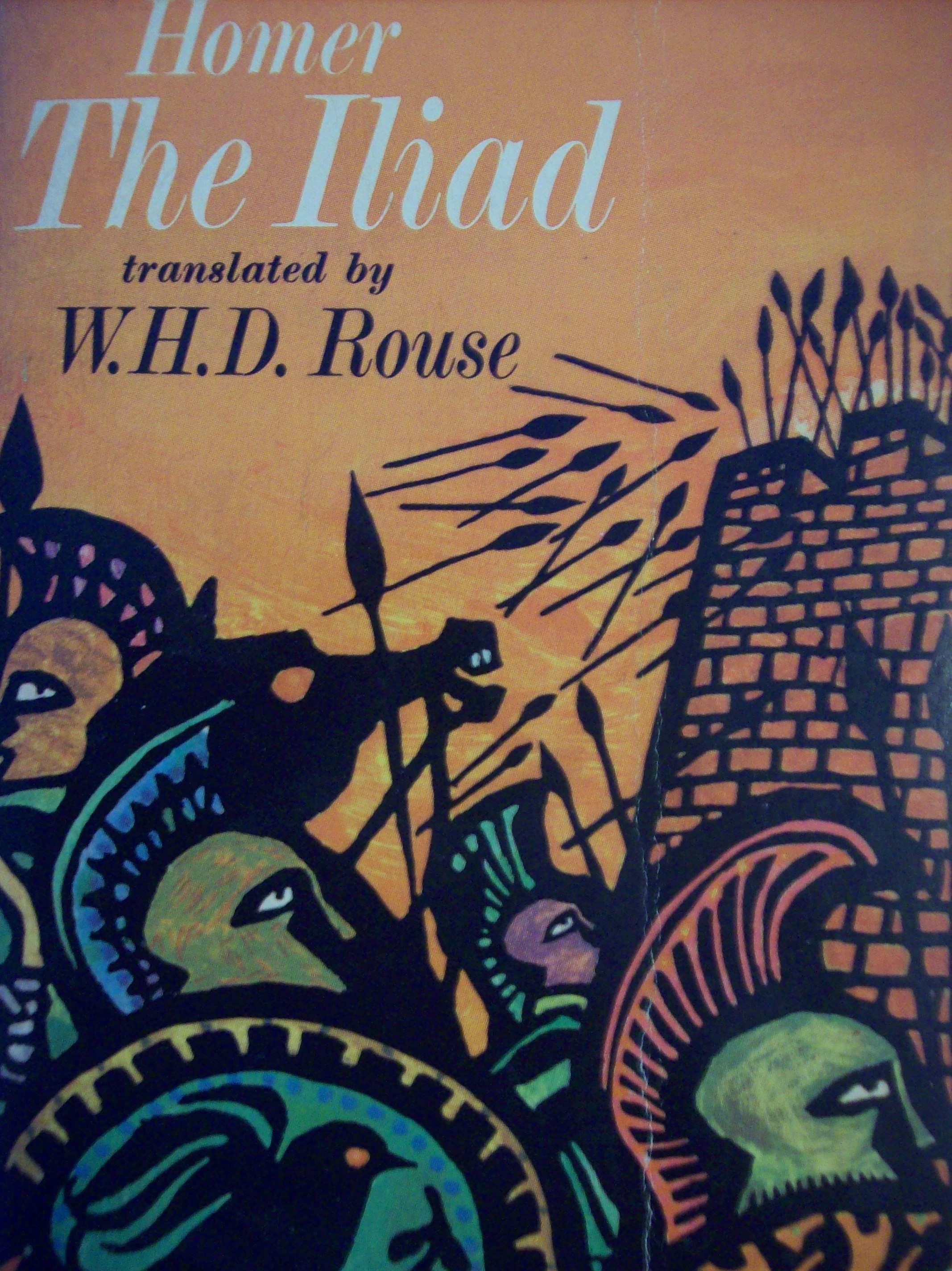
I read this once (voluntarily). I don’t think I could do it again.
As I get older, I find myself getting more patient in some areas and less patient in others. I don’t get as angry in traffic jams as I used to. I am much better at avoiding pointless political arguing (I pretend to be tolerant of others’ ideas, but I’m not; I just don’t argue). But I’m becoming less patient with books. I find myself putting down books that I would have finished (or actually did finish) 30 years ago. I don’t know if I’m losing the ability to concentrate or if I’m just losing interest.
To give you an idea what I’m talking about, below are three books that I’ve tried reading recently and failed:
A Clockwork Orange– by Anthony Burgess
I was looking forward to reading this. I haven’t seen the movie in 30 years, and I only remember a few scenes. I was really interested in the story, and I started to read the novel, and… and… Nadsat? I have to learn Nadsat?
I appreciate the time that the author put in to create a new slang language, but I don’t have the energy to figure it out. I don’t even pay attention to text lingo. I still type out “Haha” instead of LOL (and I actually will laugh out loud sometimes). Maybe 30 years ago, I would have had the patience to figure out the Nadsat, but I don’t even feel like learning real languages people around me speak.
30 years ago, I probably could have read A Clockwork Orange, but not anymore.
*****
The Brothers Karamazov– by Fydor Dostoyevsky
War and Peace by Leo Tolstoy
I know this includes two books, but I count them as one because I have the same problems with both of them.
I must have some old guy’s reading impairment when it comes to long Russian names. Sometimes the letters in long Russian names start to move around, and it gives me a headache. For all I know, the word “dyslexia” could have come from a Russian name except it’s not long enough. I’m not making fun of long Russian names; I’m making fun of my inability to read them anymore.
25 years ago I almost read The Brothers Karamazov. It was work, but I nearly finished it (I read it too slowly and then academic stuff got in the way). 25 years ago I read Crime and Punishment. It was easier than The Brothers Karamazov, and I finished it. 20 years ago I almost read War and Peace. I would have finished War and Peace if it hadn’t been over 500 pages long.
500 pages has almost always been my limit. After 500 pages, I’m ready for the story to be over. I’ve read some of Leo Tolstoy’s short stories (and they’re actually short). I can get through Russian names when there are only two or three of them and the story is short. But I can’t get through over 500 pages with dozens of Russian names.
There was a time when I could have read long Russian novels with lots of Russian names. 25 years ago, I almost did it. But now? I’m pretty sure I can’t read a long Russian novel anymore.
*****
The Iliad by Homer… if he really existed
I’ve read two versions of The Iliad. The first was a prose translation that I read for fun (in 6th grade… yet I didn’t get beat up by my peers). To be honest, I wouldn’t have understood it if I hadn’t been familiar with the old Classics Illustrated comic book. The second version was a translation in verse that I had to read in college. I read it… only because my grade depended on it. But I did it.
The problem with The Iliad is that there’s too much killing. I normally don’t have a problem with killing in literature (I read sword & sorcery after all). But in The Iliad, it’s page after page of who slew whom and who got slain by whom (though whom usually got the worst of the deal). It’s overkill. Take out all the who-killed-whom (Homer and his editor probably argued about that all the time, but it’s clear Homer never saw his editor’s point of view), and maybe I’d read it again.
There was a time when I could read The Iliad in verse. I know because I did it. But I looked at that translation recently, and I don’t think I could read it again.
******
I know that as we get older our tastes change, but I wasn’t expecting my tolerance for literature to decline like this. I thought it would get easier (to an extent) as I aged. I also figure I’m not the only one going through this. If you’re going through the same thing, what books (or kinds of books) can’t you read anymore?

The book report is NOT about Atlas Shrugged. I promise!
Danielle had mentioned that she wanted to take a bath, and she had said it so nonchalantly that it didn’t feel awkward. I was hoping for an invitation, but I knew not to ask. Things seemed to be going my way, and I didn’t want to blow it by saying something smarmy. Sometimes in romance, it’s best to play not to lose.
“The guest bathroom is cleaner,” I said, and pointed to the bathroom down the hall.
But Danielle was looking past me. “We have company.”
I turned and saw two roaches on the wall behind me. Big roaches, not thick enough to be outside roaches, but large enough to have been well-fed. Ugh, I was out of bug spray.
“You gonna use a shoe this time?” Danielle suggested.
I looked around the room and felt myself gritting my teeth. “My shoes are in the bedroom.” I glanced at the thick black heels Danielle was wearing.
“No,” she said.
I grabbed a hardcover copy of Atlas Shrugged from my bookshelf.
“That’s more like it,” Danielle said.
I slammed Atlas Shrugged against the wall with such a thud I worried about the pictures hanging from my neighbor’s wall. The book left two splotches, but I didn’t see any bodies drop. I checked the back and saw two roach corpses stuck to the book jacket.
“Now they’ll never find out who John Galt was,” I said.
“I hope you’re not keeping the book,” Danielle said.
I slid the book jacket off and threw it in the waste basket. Then I slipped the book back onto the shelf. I pointed to the title on the binding.
“Have you ever read Atlas Shrugged?” Danielle asked.
“Nope.”
Danielle shrugged and grabbed a hardcover of War and Peace and tucked it under her arm. More likely it was for roaches than enlightenment.
As she reached down for the bag, I asked, “Can I get your jacket?”
“Thank you,” she said. Danielle pulled it off and handed it to me, but all I saw was clingy blue t-shirt, and I concentrated on her badass leather jacket instead. I was pretty sure she was back to no bra, but I didn’t want to get busted like I had in the laundry room. I believed I had the right to check out Danielle’s bra status. She had chosen to come to my apartment braless in a tight t-shirt (if she was indeed bra-less). If I stared at her, that would be her fault. But I didn’t. When I played not to lose, I went all out.
“Nice jacket,” I said. Then I pointed to the bathroom. “All I’ve got is regular soap and shampoo in there.”
“I always bring my bubbles with me,” she said, nodding toward the gym bag.
Then she gave me a quick kiss, not like the playful one she had granted me earlier. She told me she was going to take about a half hour. She asked me to bring her the iced tea (which I did). She told me to wait for her in the bedroom. And she told me not to fall asleep this time.
Then she took her gym bag and War and Peace and closed the guest bathroom door, leaving me to myself and my thoughts.
BEGINNING OF LONG INTERNAL MONOLOGUE!!
I’ve never done well with uncertainty. I wasn’t sure what kind of boundaries that Danielle and I had with each other. If a woman is taking a bubble bath in a guy’s apartment and tells him to stay awake in the bedroom, the guy can probably expect that great things will happen after the bath. But Danielle and I still had communication issues. We got along pretty well, but we hadn’t figured each other out yet. The worst mistake I could make was to expect what I thought was about to happen when she was planning on something different.
Maybe Danielle didn’t want to do what I thought we were going to do. She might have just been really tired and wanted to sleep next to a guy she trusted. It had happened once in college, and it had been torture, and that college girl had been nothing like Danielle. Cuddling with Danielle without the possibility of doing what I thought we were going to do would be a nightmare. I’d go through with it and pretend to enjoy it, but it would be tough. Cuddling. Whatever happened, I prayed it would not be cuddling.
And if Danielle planned on more than just cuddling, I had another issue to deal with. There had been a few times in my adult life when I turned down what I thought was about to happen, and I always knew the next morning that I had made the right choice. Now I wasn’t so sure. Danielle and I had been on only one date. If she was already prepared to do what I thought we were about to do, then maybe she had already done what we were about to do with a bunch of other people after only one date. Women who did what she did for a living (dancing at clubs) had reputations. Even though Danielle dressed provocatively and made scenes in public, I didn’t get the sense that she was really the type that I was worried about. But like I say, people can rationalize anything. I knew I might have been talking myself into a very bad situation.
Danielle was going to be done with her bath soon (hopefully). So I made a decision. I knew that if I had the opportunity to do what I thought we were going to do and I turned it down, I would regret it, maybe forever. I knew that. So I decided if things worked out the way I thought they were going to work out, I wouldn’t do anything to stop it. I felt a lot better after thinking about this.
END OF INTERNAL MONOLOGUE!
Lying in bed waiting for a hot chick to finish her bubble bath can feel like an eternity. I didn’t want to just sit there and wait. I had already hung up her jacket (wooden hanger), drank the iced tea, cleaned up roach splotches, and used the bathroom. I decided what to wear in bed (t-shirt/shorts combo so I didn’t seem like I was expecting anything). After that, my options were limited. I wanted to do (or appear like I was doing) something productive. And what did I always do while I was waiting? I read a book.
The Conan book I had been reading earlier was entertaining, but it was difficult to explain Conan’s appeal to a woman unfamiliar with the sword & sorcery genre. I decided instead on something thin but classic. I grabbed my paperback edition of Animal Farm. I propped up my pillow and turned on my reading lamp.
(After what seemed like a long wait) Danielle waltzed into the bedroom wearing a white t-shirt that barely went past her thighs. This was a mixed-signal sender. If she had slinked into the room with lingerie and crawled on all fours onto the bed, I would have known what to do. If she had walked in with pink pajamas, I would have groaned at the horror of all-night cuddling, but I would have at least known. The long white t-shirt could go either way. If there was nothing underneath it, I was gold, but there was no polite way to find out if there was anything underneath. And I was the guy who had owned her panties for a month.
Danielle dived onto the bed, demonstrating again that she was definitely bra-less. That was a good sign. She tucked herself underneath the sheets and slid next to me but didn’t brush up. There was a distinct border between us. That was a bad sign.
“So,” she said. “Did you want a minute to finish the chapter?”
Ugh! I couldn’t believe I still had the book open. That was a bad sign on my part. I slammed the book shut.
“I’m done.” But I was too cautious to close the gap between us.
“What are you reading?” she asked slowly.
I showed her the cover, but I could feel our energy slipping away. She had been revved up, but we were losing momentum, and I couldn’t get myself to take the initiative. Playing to lose was backfiring on me.
“Are you really reading this, or are you pretending?” she asked.
I couldn’t believe we were talking about this. “I’ve actually read this before, but I was fake reading when you came in.”
Danielle moved just a little closer and made direct eye contact. “I don’t believe you,” she said slowly. “I don’t think you’ve ever read this book before.”
“I have,” I said.
“I think you’re lying to me,” she said very quietly.
“I’m not,” I said, puzzled.
“I hate it when guys lie to me,” she whispered. “Prove to me that you’re telling the truth.”
“How?” I asked.
She giggled and slid a hand underneath my shirt and against my stomach. “Tell me what it’s about.”
Then she moved her hand just a little bit. I’d read Animal Farm several times. I really had. I was almost an expert. But I swear at that moment, I couldn’t remember a thing.
*****
To be continued in… The Literary Girlfriend: Book Report Grades.
And to read “The Literary Girlfriend” from the beginning, start here.
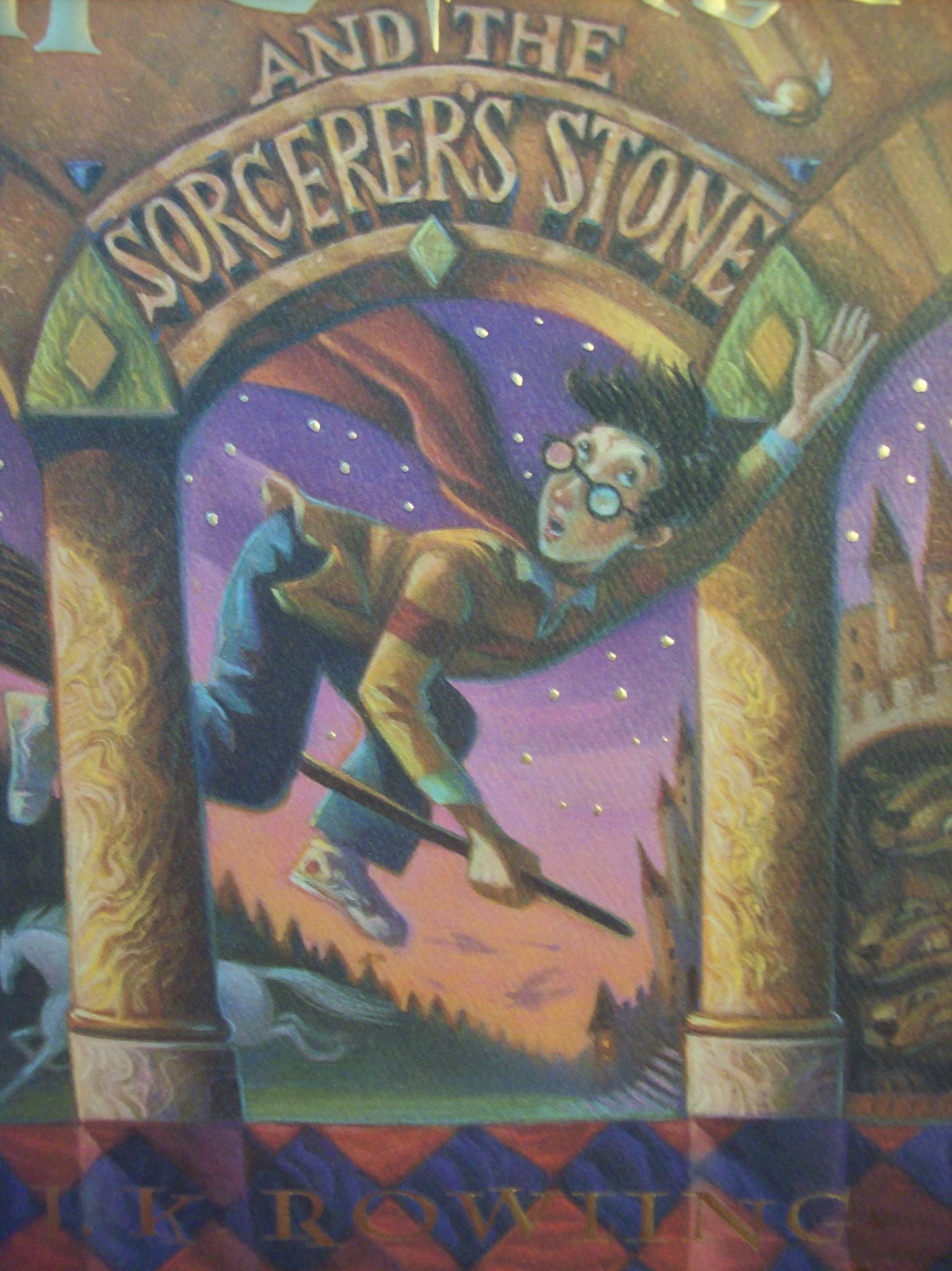
It’s easy to forget that J.K. Rowling was an unknown author when she wrote this.
Literary news doesn’t usually get covered by the mainstream media. If one author cheats on his/her spouse, it doesn’t make news. If an author has a wardrobe malfunction at an awards ceremony, nobody reports it. To most people, the literary world is kind of (or very) boring. Occasionally, an author will get caught plagiarizing. Sometimes two authors get in a public spat (like Philip Roth and Elizabeth Gilbert over whether or not writing is torture). But literary figures don’t normally catch the general public’s interest.
When unknown author Robert Galbraith got outed as J.K. Rowling’s pseudonym last week, that made the news. Outlets that usually ignore literary stuff reported the revelation. It helps that everybody knows J.K. Rowling is the author of the Harry Potter books. It also helps that she’s attractive. But while it’s nice that a literary figure can make news, there might be a down side (but not for J.K. Rowling).
There are a lot of unknown mystery authors (I don’t know how many, but I’m pretty sure it’s a lot) who have their own mystery series. However, there is a limited number of potential mystery genre readers out there. All those readers grabbing Galbraith/Rowling’s The Cuckoo’s Calling will now read one fewer book by somebody else, and one of those fewer books could be a mystery novel by an unknown author. If I were one of those unknown mystery authors, I might be kind of ticked off.
I’m not saying it’s not fair. There’s no such thing as fair in the publishing business. I’m just saying I’d be frustrated, especially if I didn’t think The Cuckoo’s Calling deserved so much attention (based on quality).
This just shows how difficult it is for an unknown author to get book sales. The Cuckoo’s Calling sold around 1500 copies before Galbraith/Rowling got outed. That’s not bad for an unknown author, but an author can’t live off of that. Even a J.K. Rowling book doesn’t sell unless everybody knows it’s a J.K. Rowling book.
Some of these unknown authors were probably selling more books in their debut novels than Robert Galbraith. If I were one of those unknown mystery authors who had outsold Robert Galbraith before he/she was outed, I’d be proud. I’d brag about it. I’d tell all my friends (and anybody who would pretend to listen) that I had outsold J.K. Rowling’s book before everybody found out it was J.K. Rowling’s book.
That’s just me. I’m an unknown, but I don’t write mysteries (not yet), and I didn’t outsell Robert Galbraith (not even with my non-mysteries) before he got outed.
*****
Other authors might try to see if they can get outed with their own pseudonyms. Maybe Stephen King can write a romantic comedy under a different name and see if anybody catches him. Maybe Tom Clancy can write a 100 page story horror/fantasy. Maybe James Patterson can write a… a… never mind; that guy already tries to write in every genre. Still, it would be interesting to see what they could do to get more media attention.
But please, no wardrobe malfunctions.

WARNING- Danielle sometimes cursed too much. I’m not sure if cursing too much is a character flaw, but it was something that I (and others) noticed. This is a problem because I don’t put much profanity in my writing. It’s just not my style. But Danielle (at times) used inappropriate language, and it’s tough for a writer who doesn’t use profanity much to write dialogue for a person who does.
I could have toned down her profanity, but that would have changed her character and maybe even the story. So I decided that in this scene (where she over-curses), I’ll go ahead and put in what she said because that’s what she was like. So if you don’t like cursing, then you might not want to read this. Or maybe you can close your eyes a couple times.
*****
It didn’t take me as long to fall asleep as I thought it would. Even though the date with Danielle had gone better than I expected with the promise of a second one (she said she was coming back), I knew to keep my expectations low. I didn’t have her phone number. She worked nights at a topless club. With her hair pulled back and the thick glasses and the drab but appropriate clothes, she had appeared like an ultra-cute version of the type of woman I was used to dating (especially when she carried my paperback copy of Sense and Sensibility with her).
But Danielle was nothing like a typical literary girlfriend. She was also the hot chick who ran around braless in clingy t-shirts. I probably wouldn’t see her for a few days… weeks? She would come see me when it fit her schedule, not mine. I tidied up my apartment. I made plans to update my wardrobe. I even thought about buying some liquor (even though she didn’t drink on the date, I guessed that she did drink). I had to be ready, and once I understood the nature of this new potential relationship(?), my mind was at ease.
The Tom Clancy book was too big to read in bed (I liked to lay on my back holding the book over my face), so I grabbed a Robert E. Howard Conan paperback and read a barbarian short story. Robert E. Howard Conan stories are always good and to the point, and I was sleepy before I had finished it (“Rogues in the House”). It was probably a little before midnight.
Saturday nights in my apartment complex could be loud. The complex sprawled through a city block near the suburbs and was considered to be in a nice part of town, but it was still an apartment complex. Loud parties, domestic fights, car alarms going off, dogs barking, cats hissing at each other, there were a lot of distractions. I was a light sleeper, so anything outside my second story window could wake me up. I had a fan that blocked out a lot of it, but on Saturday nights, sometimes even a fan couldn’t help.
I woke up at around 2:30 AM to somebody pounding on one of my neighbor’s doors. God, I thought, it must have been some domestic dispute because there was a constant racket and a woman yelling. Whoever it was kept yelling “Fuck! Fuck!” over and over and followed this with more door pounding. Then there was one last “Fuck!” and silence.
I laughed because some guy had just pissed off his girlfriend and I could tell that his life was going to become miserable. I started to relax and close my eyes again when I heard just outside my window, “Goddammit, Jimmy!”
That got my attention. Slowly, the dots started to connect. My name was Jimmy. A woman was yelling my name outside my window. There had been pounding on a door. A woman who used profanity had pounded on the door. I knew a woman who used profanity and pounded on doors. No, I thought, this couldn’t be…
I flipped my legs out of bed and opened the window.
“Danielle?”
“What the fuck, Jimmy?”
“Danielle?” I said again.
Once again, I almost didn’t recognize her. The sidewalk was well lit, but I was staring down at her from the second floor, and she had changed her look again. Her hair was over her shoulders. She had a black leather jacket on, tight jeans, and it looked like she had thick black heels. I felt a moment of pride. My literary girlfriend was a badass.
“What are you doing?” she said. She wasn’t yelling anymore, but her voice still carried. “Open the goddamn door!”
My pride took a hit, and I knew I had to connect more dots. “What are you doing here?” I asked.
“I told you I was coming back!” she said. Her voice was still a little loud.
“When?” I asked. I remembered what she had said to me when she left. “You didn’t tell me when you were going to come back.”
“I meant tonight!”
“You didn’t say tonight,” I said.
“What else would I mean?”
“You should have said tonight,” I said lamely. Maybe this wasn’t the time and place to argue.
“Open the fu… Let me in, Jimmy!”
“I’m going to the front,” I said. “Just… quiet down.” I knew instantly that was the wrong thing to say, and I braced myself.
“DON’T TELL ME TO BE QUIET!!”
I didn’t bother closing the window because I didn’t want her to interpret that as rudeness. I threw some shorts on, grabbed a robe, and rushed to the door. Danielle was already storming up the steps.
“I didn’t know you meant tonight,” I said before she could steamroll me.
“I know. I know,” she said quickly as she brushed past me into my apartment with a black gym bag and her purse.
My hairy neighbor had stepped out onto his balcony and was watching. “Everything alright?” he asked.
“Yeah, I think we’ll be okay,” I said. “It was just a misunderstanding.”
“Is that… that… the same…?” My neighbor couldn’t seem to find the right words.
“It’s her,” I said. I didn’t want my neighbor to think I was cheating on the girlfriend that he thought was cute.
Danielle peeked her head out. “Hi,” she said cheerfully to my neighbor. “I’m sorry about all the noise.” Then she turned to me. “Somebody fell asleep and locked me out.” Then she darted back into the apartment.
“I didn’t know you were…” I turned to my neighbor. “I didn’t know she was coming back tonight.”
“You need to talk to her,” my neighbor said.
I went back inside and shut the door. Danielle stood in the middle of the living room, hands down but balled up, eyes red and unblinking. The shoes added a couple inches, but with her stance she seemed almost Amazonian. The leather jacket was open, and her t-shirt underneath was too small, and I could see a bit of flat belly. I knew this was a bad time to look.
“You shouldn’t wake up the neighborhood like that,” I said as I locked the door. Now that we were inside, I was more comfortable with the idea of a loud conflict.
“No, no, I’m sorry,” she said. She put a hand up to her temple and shook her head. The other hand loosened up too.
“You should have called,” I said cautiously.
“I didn’t have your phone number,” she said. “I didn’t think I’d need it.” She sat down on the same couch that she thought was disgusting. “I can’t believe I’m such a…”
I was surprised again by her change in temperament, and I didn’t know what to do, so I walked to the kitchen. “Can I get you something to drink? I have soda or flavored iced tea.”
“You don’t have any…?” She probably wanted a strong drink, but I guess she changed her mind. “Iced tea is good.”
A moment later she was with me in the kitchen. She wore too much perfume, but it was a good choice, and I was back in the frame of mind where I liked her standing close to me. “I’m not like that all the time,” she said.
“It’s okay.” It wasn’t, but what else was I going to say?
“I was sure about you when I went to work,” Danielle said. “But then I started to think maybe I wasn’t right about you. And then I got here, and I expected you to be waiting for me. But all the lights were off, and you didn’t answer the door. I thought you were blowing me off, Jimmy.”
The idea of her thinking I would blow her off made me smile.
“Don’t laugh at me,” she said, but there wasn’t any anger in her voice.
“I thought there was a 50/50 chance I’d never see you again after the library,” I said.
Danielle hesitated and then said, “And you cared about that… about me.”
“Yeah, of course!” I said. “And you cared enough to get mad when you thought I blew you off.”
“We both care,” she said softly and exhaled. “You know what I need?”
I had several answers. A hug? A stiff drink? A spanking? But I kept my mouth shut.
“A bath,” she said. “Do you mind if I take a bath?”
*****
To be continued in… The Literary Girlfriend: Book Report.
And to read “The Literary Girlfriend” from the beginning, start here.
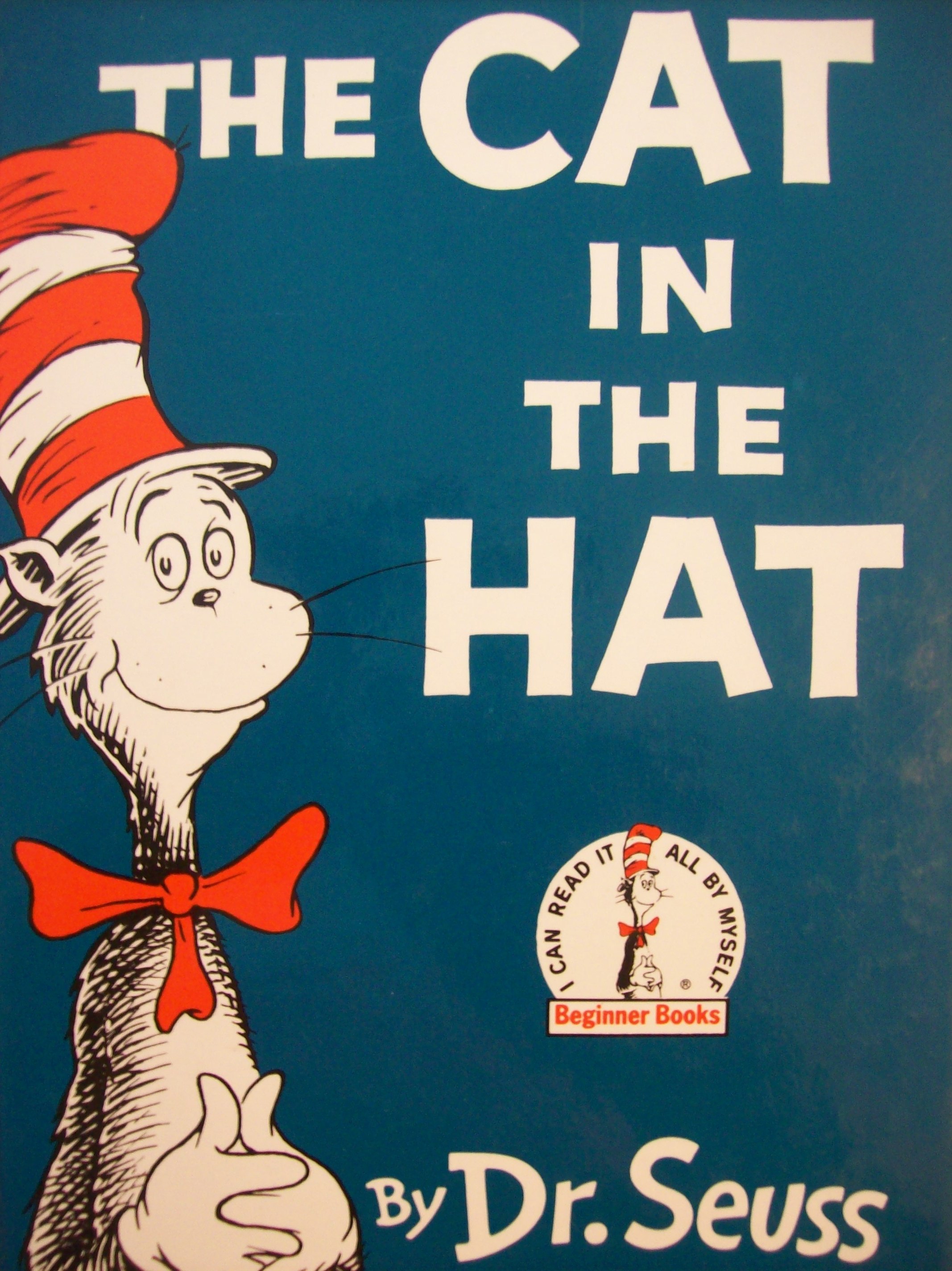
Was the parental role stereotype in The Cat in the Hat egalitarian or ongoing? Please excuse me while I look up the word “egalitarian.”
Sometimes I like to take a boring topic and see if I can make it interesting. I’ve written about book machines, and the Justice Department suing Apple, and a movie based on a poorly-written book by a celebrity author. Those were all dull topics that I chose to write about. But now I think I’ve met my match.
Last night I stumbled upon an abstract from a study called… wait for it…
I mean… uh… are you serious?
Something like this doesn’t give me a lot to work with. The study was conducted by people who are probably a lot smarter than I am, and I don’t like to make fun of people who are smarter than I am, so mockery of a silly study (that I might not understand) is out of the question.
First of all, I was surprised that I’d have to pay in order to read the actual study. Charging money to read a research study is antiquated (if they can use “egalitarian,” I can use “antiquated.”)
Do people really pay money to read studies anymore? I’m not familiar with how research works (because I usually avoid it), but I wouldn’t pay anything to read a study about egalitarian parental roles. In fact, I’d have to get paid a lot to read anything with the word “egalitarian” in it. People don’t have to pay much (if anything) for content anymore. Even a lot of porn is free. If people aren’t willing (or don’t need to) pay for porn, they won’t pay to read a study about egalitarian stereotypes in children’s picture books.
I probably shouldn’t have written a sentence that has both “children’s books” and “porn” in it. I hope the government agencies that monitor internet content take context into consideration.
Also, reading a children’s book to find parental role stereotypes just seems weird. The best children’s books are the ones that are too crazy to have gender roles. The Cat in The Hat had a mom, but she was just a nice pair of legs. Oh the Places You Go had a kid. Where the Wild Things Are had a mom who was in only a couple pages of the story. Harold and the Purple Crayon had a kid with a magic crayon.
If a children’s book has a bunch of human characters, then it probably (with a few exceptions) isn’t a good children’s book. A good children’s book usually has a bunch of animals/creatures walking around naked (but it’s okay because their gender doesn’t really matter). Parental involvement usually doesn’t affect the quality of children’s book (except maybe to make it less interesting).
When I was a kid, I read a lot of children’s books with animals/creatures walking around naked in public, and I have never once walked around naked in public. My older brother once ran around naked in public, but he got arrested for it and he never did it again. The weird thing is, I don’t think my older brother liked reading children’s books when he was a kid. Maybe if he had read more books with naked animals/creatures walking around, he would never have run around naked in public. That would be an interesting study.
The researchers might have been interested in how parental role stereotypes in children’s books influence the kids that read them (or vice-versa?). The summary suggested that even though gender roles changed during the 2000s, parental roles in children’s books stayed the same. To me, that’s good. There is plenty of time to mess with a kid’s gender identity. They don’t need to do it with children’s books.
*****
Writers often don’t have a choice about their topics. Students have to write about whatever their teachers tell them to. Employees have to write about whatever their bosses tell them to. But I chose to write about egalitarian gender stereotypes in children’s books, even though it’s a dull topic that I know nothing about.
Can anybody beat this? What is the most boring topic that you have ever voluntarily written about?

Rage Against the Machine: If they feel “rage” right now, wait until they find out there’s a paper jam in their book machine! (Photo credit: Wikipedia)
Book stores sometimes sell stuff that isn’t really book related. Book stores sell music. Book stores sell coffee and pastries. Book stores sell toys. I guess all of these items can be related to reading if you try (especially coffee), but now a book store will offer a non-book item that is truly book related… an Espresso Book Machine!
Books-A-Million is going to place a book machine in two of its stores. At first I thought a book machine would be redundant in a book store. It would be like a Redbox outside a video store; what was the point (except to put the video store out of business)? But the book machine isn’t a kiosk that sells books. It’s a machine that prints books.
Customers could print books that the store doesn’t carry. Customers could also print out their own self-published books. That sounds like a great idea (and it might be), but I foresee a couple potential problems (and maybe Books-A-Million foresees this too because they’re trying this in only two stores).
None of the articles I read about this topic (here’s one) made it clear if the book machine maker would provide a full-time employee (or several part-time employees) to run the machines, but they might want to. A self-serve book machine could be disastrous. If it’s anything like a copy machine (I’m guessing a book machine is more complicated), there could be two major problems:
1. Paper will always jam.
2. People can’t follow written instructions.
I have way too much first-hand knowledge about this. Almost everybody where I work has a college degree, but a shockingly high number of these college graduates can’t read instructions to copy front/back, collate, and staple packets. Most of my peers that CAN do this (it took me awhile too, so I’m not mocking them) can’t figure out the instructions that light up during a paper jam. Maybe most of them can follow basic instructions when they’re in a relaxed state of mind, but when there’s a line at the copy machine, and everybody has a deadline, and the copy machine jams, then tempers flare and minds get muddled, and curses are uttered, and nobody can figure out if the jam is in 1A, 1B, 1C, 4E, or 6D, or all of the above.
If college graduates can’t get make a stapled packet out of a copy machine, I’m not sure self-publishing authors will be able to get a book that satisfies them from a book machine. The cover will come out wrong. The line spacing will be messed up. The page breaks will be inconsistent. The dedication and the Table of Contents will end up on the same page. A lot of the mistakes will be the customer’s fault, but we’ll still blame the “f***ing machines.”
When in doubt, always blame the machine.
*****
I respect that Books-A-Million is putting a book machine in only two stores. That’s the way changes should be made, incrementally. They have an idea, and instead of ramming this idea through all their stores, they’ll try it in a couple places and see how it works. If it’s successful, I’m sure they’ll add book machines in other locations. If the book machine is a disaster, then only two stores have been affected.
There have been too many times recently when a sweeping change has been forced on everybody without actually seeing if the change is good first. It happens with government a lot. It happens with my job… a lot (though my current boss seems to be more of an incremental changer rather than a sweeping changer, so things are looking up).
I’d like to see this book machine in action. And if there’s a book machine near me, I may go check it out. Copy machines (and maybe book machines) are a great source of free entertainment, as long as I’m not the one making the copies.
Conventional wisdom says that a guy has less than a minute to make a good first impression with a woman, and if he fails, he has no shot. I’m proof that conventional wisdom is a crock. I rarely make a good first impression. If I ever made a good first impression on a date, it was by accident. My dating game plan (before I got married) was to get through the early awkward moments of the first date without bungling it too badly. I wasn’t a good starter, but I was a pretty good finisher (I don’t mean that as a double entendre).
The first part of my date with Danielle had gone pretty well (for me). I had handled her sports car. I had gotten through dinner without any gaffes or food issues. The uncomfortable silences were rare. Danielle was doing her part (which was encouraging), but I knew I had to finish strong.
*****
We were about to leave the restaurant when Danielle grabbed the checkbook and counted the bills I had put inside. I thought she was going to take some of it (I tend to over-tip), but instead she said, “Throw in another twenty.”
“I already left a good tip,” I whispered, probably too defensively. “”Another twenty is way too much.”
“I told the waiter you were a great tipper,” Danielle said.
“Oh,” I said, understanding. Now her earlier conversation with the waiter made sense. I placed another twenty inside the book and put it on the table. As we left, I said, “You should have told me earlier. I would have gone along with it.”
The waiter and hostess thanked us as we left, and we smiled, and then Danielle talked.
“I wasn’t sure. I thought you might be too cheap to tip.”
“Why would you think I’m cheap?”
“Your furniture. Your car. Some of your clothes.” Danielle lifted a finger for each reason.
“My car’s not cheap,” I replied.
“You could buy a lot nicer car than that,” she said. “And your furniture is disgusting.”
“I’m not cheap,” I said. “I just don’t care about stuff like that. I like to read.”
“You need to care about stuff like that,” Danielle said, “But at least I know you’re not cheap.”
Danielle said she wanted to take a walk, so I drove her to a giant fountain next to one of the city’s skyscrapers. It was just before 9:00, the drunks wouldn’t be out yet, and the teenage fights probably wouldn’t start for another hour or so. The October air was cool, and Danielle walked close to me. She put her arm around my waist, so I put mine over her shoulder, and it felt natural.
“What’s your favorite book?” she asked. I thought it was an odd question for a walk in a city park, but I went with it.
“A Tale of Two Cities,” I said, too quickly.
“That is such bullshit,” she said, but she said it sweetly.
“Okay,” I admitted. “Honestly, that’s a tough question. It all depends on what mood I’m in.”
“If you were stuck on an island with only one book…”
“Ugh! Not that scenario!” I said. I took an exaggerated breath. “The Godfather.”
“That’s a movie,” Danielle said, frustrated. “Quit fu…”
“It was a book before it was a movie,” I said before she could over-curse. “I promise. And it’s pretty good. Whenever I’m bored of reading, that’s what I turn to.”
“And you’ve read it,” she said.
“Several times. What’s your favorite book?” I asked.
“Sense and Sensibility by Jane Austen!” she proclaimed.
“But you haven’t even…” Then I stopped. I couldn’t believe that I had walked right into that trap.
“If you can pretend that you’ve read books that you’ve never read, then so can I,” she said proudly. “I think I’m going to do that.”
“Be careful,” I warned. “I’ve gotten busted before, and it can be embarrassing.”
“None of my friends would know… or care,” Danielle said.
Then she stopped walking, faced me, and put her hands on my shoulders.
“But I bet you have friends who could figure it out,” she stated.
“I wouldn’t give you up,” I said.
Danielle’s voice got softer.
“But you’d be lying. And I hate it when guys lie,” she said, and she slid her arms around the back of my neck. The front of her body brushed up against mine. It wasn’t quite a hug, but it was close. Still, this was a first for us, and my brain got muddled.
“I wouldn’t be lying to you,” I stammered. “I… I would be lying for you.”
“You’d lie for me?” she whispered and stood on her toes so that my nose almost touched her forehead, and she looked up.
“Only if you wanted me to,” I said. “Because… you hate it when guys lie.”
“Just when they lie to me. But if you lie for me? That’s…” Her voice trailed off. We were face-to-face. Her eyelids started to close. I could feel her lips on mine even though we hadn’t touched yet.
I leaned forward, but then she swung lightly to the side and released her embrace. I almost lost my balance.
“We need to go,” she said quietly. I could barely hear her. She grinned, and I could have sworn she licked her lip a little bit. “I have to get to work.”
I couldn’t believe I’d stepped into another of her traps so quickly.
As I drove her back to my apartment, I wasn’t sure what to do. She had set me up and then withdrawn, and that confused me. Even more puzzling, she kept chatting afterward as if nothing had happened. We talked about movies and music and television, but we didn’t talk about anything substantive. I kept reminding myself it was just a first date.
When we returned to my apartment, my neighbor was outside sitting on his balcony with two friends. All three guys were kind of overweight and hairy, but they were friendly and we got along for apartment neighbors. Still, I didn’t want them watching me say goodnight to Danielle. Awkward moments are bad enough when they’re in private. I didn’t want semi-strangers watching this. If all I got was a distant handshake or a brush off, it would have been humiliating.
I felt self-conscious for the first time that night. Danielle and I were facing each other, and I wasn’t sure what to do. The handshake? The fake hug? A quick kiss? I already got burned once on the kiss. I felt I could get away with a hug but if she stepped back or rushed it in front of the neighbors, I would feel like a doof, and I would look like a doof, and I knew that I shouldn’t have cared about looking like a doof in front of people I hardly knew, but….
Danielle grabbed my tie, pulled me to her, and kissed me on the lips. It was a quick kiss, but there was a little juice behind it. Then she pushed me back and flipped my tie over my shoulder.
“I’m coming back,” she said as she got into her car. The tie had dropped from my right shoulder, and it was crooked, but I left it there. As she drove off, my heart was still beating quickly, and I thought, there’s no way I’m sleeping tonight.
I walked up the steps to my apartment, my mind in a daze. I’ve never liked uncertainty, and I had no idea when she was coming back. It could be the next day, the next week, it could be when I was at work, and I didn’t have her phone number.
My mind was sorting this out when one of the guys on the neighbor’s balcony said, “Your girlfriend’s cute.”
“She’s not my…” Then I paused and said, “Yeah. Thanks.”
Danielle wasn’t literary, and she wasn’t my girlfriend, but if she could pretend that she was literary, then I could pretend she was my girlfriend. People can rationalize anything. As far as justifying unethical actions goes, saying she was my girlfriend was kind of minor. And at that point, I was feeling optimistic.
*****
To be continued in… The Literary Girlfriend: Over-Cursing.
And to read “The Literary Girlfriend” from the beginning, start here.

In my years of dating women who liked to read books, I’d never gone out with anybody who took a book with her on a first date. Now I was on my first outing with Danielle, a woman who had made it clear that she didn’t read books, and she was bringing my copy of Sense and Sensibility with her. Of course, she had just announced to me that she was quite literary. With her thick black glasses on and her hair pulled back (plus she was finally wearing a socially acceptable outfit), she looked like she might read.
We left my apartment in a hurry because she had to work that night. Danielle did her usual thing, hogging the sidewalk and forcing me to either walk on the grass or cling to the edge and allow our sides to brush. I chose to cling to the sidewalk because I liked brushing up against her.
It was a quiet walk. Danielle usually initiated a lot of conversation, but now she wasn’t saying anything. It felt weird. After all the other conversations we’d had in bizarre situations, this was the first time she didn’t say much. I always had a tough time maintaining conversations anyway, so having a silent Danielle started to stress me out. I’d had my share of awkward, disastrous dates. I really didn’t want this to be one of them.
When we reached the covered parking for apartment residents, Danielle stopped.
“This is yours?” she said, looking at my car like it was a roach on the wall.
“What’s wrong?” I asked. My car wasn’t fancy, but it was reliable and paid for.
“We can do better,” she said. She took my hand and led me halfway across the parking lot. My mind locked in on that she was holding my hand. I didn’t care that we weren’t talking; she was holding my hand. We stopped in front of a black sports car.
“What do you think?” she asked.
“Nice,” I said. I remembered the car she had driven a few weeks ago when I had given her panties back to her. “Didn’t this used to be red?”
“I switched cars,” she said and handed me the keys. “You wanna drive?”
I stood holding the keys while she went to the passenger side. “I kind of feel funny driving somebody else’s car,” I said.
“You’ll like it.” She sounded so confident.
I got in, but it was kind of cramped, and even when I shifted the seat back, I felt scrunched and I had to tilt my head. Then I saw that it was a manual transmission.
“Are you surprised that I can drive a stick?” she asked.
There was no way to answer that without sounding either vulgar or genderist, so I just started the car.
I stalled out a couple times backing out. Danielle didn’t laugh, but I could tell she was amused by my frustration. I finally figured out her clutch on the third try and got us out of the parking lot smoothly after that.
She told me the name of the Italian place she wanted to go to (and I agreed, of course). When I took the side streets, Danielle told me it would be faster to take the freeway, but I knew that on Saturday evenings a couple of the exit ramps we’d need would get backed up, and the side streets wouldn’t take much longer. Danielle said it was her car so she should decide how to get there, but I said that I was driving so the decision was mine. We got stopped at a few red lights, and Danielle huffed every time, but I could tell she didn’t really mean it. We agreed on the radio station, and that was important. And both of us liked driving with the windows down.
When we got to the restaurant, we were told there would be a 15 minute wait.
“Should have taken the freeway,” Danielle said in a sing-song voice.
“It wouldn’t have been much faster,” I said in the same tone, but with more masculinity.
We sat side-by-side on one of the loungers in the front waiting area with other customers, (a couple families and a few couples that looked like they were on their own first dates). A few minutes into the wait, Danielle got up and strolled past the hostess into the dining area. Danielle talked to a waiter, the waiter talked to the hostess, and a minute later, we were getting seated.
A couple people ahead of us looked pissed (I would have been too), but Danielle said, “We’re meeting some friends inside,” and they seemed to accept her explanation.
I almost asked Danielle what she had said to the waiter, but I figured she was Danielle. Whatever she had said wouldn’t have worked for me if I ever tried it.
During dinner I expected lulls in our conversation, but we didn’t have many. We talked about football for a long time. We were fans of the home football team, which was underperforming but still had a shot at the playoffs. I thought the players we had were overrated. She thought our coaches were overrated. Luckily, we both hated Dallas and Buffalo (this was in the early 1990s when both teams were relevant). Nothing helps a potential relationship like a common enemy.
Danielle ate more than any woman I had ever seen. She devoured her pasta, made her salad disappear almost instantly, and took almost all the bread. I really liked that bread. She chewed with her mouth closed, and she didn’t talk when she ate. She only talked when she took a break from eating. Even better, she didn’t ask questions while I was chewing. She asked the waiter for more bread and then let me have most of it. I appreciated that.
“So,” Danielle said, leaning forward after we’d finished the meal. “You’ve never read Sense and Sensibility.” This was the book she had picked up from my apartment. She pulled it out of her purse/bag/big thing she carried with her.
I looked down at my side of the table. “No, I haven’t.”
“But you have it on your book shelf. Are you ever going to read it?”
“Probably not.”
“Then why do you keep it on your book shelf?”
I paused. “So people think that I’ve read it.”
“What do you know about it?”
“The main character is named Emma, I think, and…”
Danielle flipped through the pages. “I don’t see anybody named Emma.”
“That’s because Jane Austen wrote a book called Emma,” I said slowly. “I think Emma is in that one.”
“Do you read at all?” Danielle asked.
I nodded.
“How do I know if you’ve read a book or not?” she asked.
“If it’s on my book shelf in the living room, I probably haven’t read it. If it’s in my second bedroom, I’ve either read it or I’m getting to it.”
“The second bedroom,” she said. “The mystery bedroom. Maybe I’ll see it sometime.”
“You really don’t want to,” I said.
“I could make you show me if I really wanted to.” She smiled and raised her eyebrows a couple times.
I don’t remember what we talked about after that, but it was an easygoing conversation. I kept reminding myself that her job was to make guys feel comfortable around her, so I didn’t want to make too big a deal over this, but it still felt good. Danielle was the kind of woman who could choose any guy she wanted, and for some reason I seemed to be her choice.
But the date wasn’t over yet.
*****
To be continued in… The Literary Girlfriend: First Date, Part 2.
And to read “The Literary Girlfriend” from the beginning, start here.