
(image via wikimedia)
Ass is often thought of as a bad word, but maybe it shouldn’t be. It has only three letters, while most bad words (like the s-word and the f-word and the d-word) have four. Plus, the word ass has two main definitions, while most bad words have only one general meaning.
When I was a kid, I thought I could get away with saying the word ass in front of my mom because everybody knew it meant donkey. But I got my mouth washed out with soap anyway. I didn’t think that was fair. Was my mom a mind reader? How could she tell if I meant buttocks or donkey when I said the word ass?
I knew that ass could mean donkey and that it could also mean buttocks (those were the words the dictionaries used in their definitions), but I could never see the connection between buttocks and donkey. I mean, I didn’t lose any sleep over it, but I gave it some thought.
It’s not unusual in English for a word to have multiple meanings. It’s unusual for a word in English NOT to. But very few vulgar words in English have non-vulgar multiple meanings. So how did this happen? After a little research from a couple dictionaries, I discovered that the multiple meanings came from multiple original languages.
For example, the donkey version of ass comes from Latin asinus which means an African mammal, the ancestor of the donkey. The Old English version is assa, and the old Irish version is asan. The first known use of ass is before the 12th century.
The buttocks version of ass comes from the German and Old Norse word ars which meant buttocks. Arse is a cool word, so cool that Middle English adapted it (ars), and somewhere along the way, arse became ass. Arse is way cooler than ass, but I probably would have gotten in trouble for saying it.
Back when I was a kid, I swore (in a non-profane way) that I saw an old Bugs Bunny cartoon that used the word jackass, but my parents didn’t believe me. How could ass be a bad word if jack-ass was in a Bugs Bunny cartoon? I thought my logic was infallible (Infallible wasn’t part of my vocabulary back then), except we couldn’t record TV programming back then and that cartoon never came back on again. At moments like that, I felt like the world was against me.
Just so you know, that cartoon exists. I found a portion of it on YouTube, so I feel vindicated. I recently bragged to my mom that the Bugs Bunny cartoon with the word jack-ass wasn’t my imagination and it wasn’t a lie, but she didn’t know what I was talking about. Getting punished for saying the word ass leaves more of an impression on a kid than it does a parent.
I’m still not sure that ass should be a bad word. If anything, butt should be a bad word because it has four letters and its only meaning is rear end. It has no alternative definitions to give a wise-ass kid coverage. If you call somebody a butt-face, everybody knows what you mean. There is no ambiguity.
I’m a believer in context, but not everybody else is. If you’re worried about getting punished for saying ass, don’t do it. If you must say something like ass, say arse and pretend you’re a pirate. You can get away with almost anything if you’re pretending to be a pirate.
*****
What do you think? Should ass be considered a bad word? Have you ever been punished for saying the word ass?
*****
After more than ten years of blogging, I’ve finally written a novel.
A grammar-obsessed English teacher falls in ‘luuuvvv’ but discovers how chaotic and dangerous ‘luuuvvv’ can be.

The Sunset Rises: A 1990s Romantic Comedy is now available on Amazon and from the trunk of my car at various local bookstores… until parking lot security kicks me out. Buy it now while supplies last!
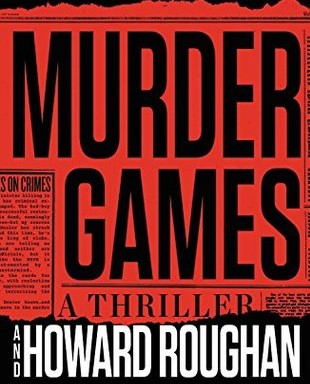
Nobody takes fictional serial killers seriously anymore. At least, some authors don’t. Take Murder Games by James Patterson and Howard Roughan as an example. It starts off with a prologue from an alleged serial killer’s point-of-view:
So you want to be a serial killer…
Sure you can go around just shooting people, bang-bang, but I’ve found that guns, while sometimes the right tool for the job, often leave me unsatisfied.
“Bang bang?” How can I take a serial killer seriously when he says “bang bang” in his introduction? Maybe this guy really isn’t a serial killer and is instead just showing off for the reader. The narrator of this scene might be unreliable, and I wouldn’t know until the end of the book. But as an introduction, I can’t take this serial killer seriously.
To be clear, I got tired of serial killers back in the mid-1990s. In he early 1990s, serial killers were fresh. Silence of the Lambs was a best-selling novel before it became a cinema blockbuster. After that, a bunch of serial killer novels came out, and the whole thing got old for me. Then vampires came along, and serial killers got taken down a peg or two. Now it’s zombies.
Anyway, serial killers still seem stale to me. Maybe they’re new again and I’m too out of it to know. It doesn’t matter because this serial killer in Murder Games has a lousy nickname:
But lately people have taken to calling me The Dealer, which I happen to like, so I’ve taken to it as well. There’s a nice ring to it. The Dealer. Clean. Authoritative. Quite proprietary, too, given my methods. I’d trademark it too, if I could.
I mean, the best serial killers, the ones whom people tend to remember, always have manage to have a good moniker, the kind that seems to suit them perfectly. Otherwise, what’s the point?
The Dealer. If that’s not the worst serial killer name ever, it has to be close. Jack the Ripper, now that was a serial killer name. Then there’s the Boston Strangler. Even Hannibal Lechter is a cool name. But now we’ve resorted to some loser called The Dealer.
The Dealer is definitely not a first-string serial killer, and here’s why. A ripper rips his victims. A strangler strangles his victims. But what does a dealer do? He gives out cards. Or he hangs out on a corner looking for customers.
The Dealer sounds like a third-rate super villain in a fill-in issue when the regular comic book artist/writer gets sick. It’s the loser of a villain Spider-Man beats up in that issue when he’s lost his powers but fights crime anyway.
The worst part is that The Dealer is satisfied with his name. No self-respecting serial killer would appreciate that name. Yes, he’s called The Dealer because he leaves a playing card on his victims, but another serial killer has already used the card trick. That serial killer was named… the Joker.
The Joker is a much cooler serial killer name than the Dealer. You have to take the Joker seriously because you see the irony in the name. But the Dealer? That just gives serial killers a lame reputation.
When I was in high school, we had a gang called The Vipers, and everybody was afraid of them until they graffitied a bunch of stuff as the Vippers. (“The Vippers wuz here!” “The Vippers kick ass.”) Once the school started calling The Vipers The Vippers, their reputation was done. Even the nerds laughed at The Vippers. Even when the nerds were getting beat up by The Vipers, they laughed at The Vippers.
Don’t get me wrong, this was a 1970s gang in a town filled with pale guys who had necks of red. Our gangs didn’t kill people. But being called The Vippers almost drove them to murder. Instead, I think they all dropped out and got jobs.
You know serial killers are overdone in fiction when a name like The Dealer is considered acceptable.
Of course, I haven’t read the whole book. Maybe The Dealer really is a crappy inept serial killer who deserves having a crappy name. If that’s the case, then the joke is on me.
But either way, I almost feel sorry for fictional serial killers. Nobody takes them seriously anymore.
*****
What do you think? Are fictional serial killers stale yet? Is The Dealer a cool name for a serial killer? Long live the Vippers!!!
Last week, I mentioned reader’s block to some colleagues. When they looked at me puzzled, I remembered, oh yeah, not everybody knows what reader’s block is.

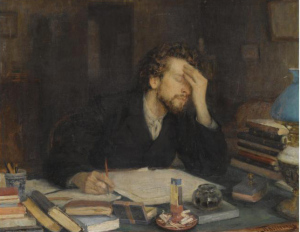
 The author completely lost his train of thought as soon as he put his manuscript on the writer’s block. (image via wikimedia)
Most people don’t understand how frustrating reader’s block and writer’s block can be. When I have reader’s block, I can waste an entire day wandering down aisles of book stores looking for something interesting to read. When I have writer’s block, I just stare like I’ve witnessed something traumatic.
A co-worker of mine doesn’t even believe that reader’s block exists. He thinks it’s something that I made up. In this day and age, I can’t believe I work with a reader’s block denier, but that’s the world we live in. After he loudly proclaimed that reader’s block was all in my head (which kind of proved my point), he admitted that he doesn’t read books. Typical denier, I thought. Maybe it was my fault for trying to explain reader’s…
View original post 873 more words

(image via wikimedia)
25 years ago, if you wanted anybody to read your writing and give you a free honest critique, you had to join a writer’s group. There were no blogs for writers to get feedback. Literary agents rarely sent anything except a form rejection letter. Publishers didn’t send anything back at all. Family members always loved what you wrote (or pretended to).
It was tough finding a good writer’s group after I had graduated from college, and I had to suffer through a few disasters before I found the right fit. This was before the internet, so I had to search through the ads of newspapers, looking for a writer putting a group together. I went to book shows and writer’s conventions, trying to make connections. I’m an introvert. I was horrible at making connections. I was always jealous of extrovert authors. Authors who could talk without effort, they had it made.
Back then, if I had wanted to publish an independent book, I’d have to use my own money to make copies and sell them from the trunk of my car in parking lots. I couldn’t just write an ebook like The Writing Prompt and put it up on the internet.
No, 25 years ago, if you were an aspiring author with no connections, you had to suffer through the writer’s group experience.
One of the first nightmare writer’s groups I tried met in the back of a book store. I learned about it in the want ads of a local newspaper. I lived in a major city at the time, and there were bookstores (and aspiring writers) all over the place. This bookstore belonged to a franchise that no longer exists and the store took up way too much space in a plaza that also no longer exists. The lot is for a condominium/townhome complex now.
The book store put us near the back (wise decision) close to the children’s book section (stupid decision). We were meeting for the first time. There were close to 30 of us sitting around rectangular fold out tables. All of us had brought a manuscript, and volunteers had five minutes to read and then five minutes to listen to feedback. That meant maybe nine or ten of us would get a chance to read. That wasn’t bad because I hadn’t expected a large group and I was suddenly feeling shy about my work-in-progress.
The group leader was a middle-aged balding gentleman who explained the writing group procedures. The meeting would last two hours. Each volunteer would get five minutes to read and five minutes for feedback. If a reader went over five minutes, the extra time would be deducted from the feedback time. Listeners were asked not to leave during a reading. We also agreed not to interrupt the reading. All questions and clarifications would have to wait for the feedback and discussion time.
I hadn’t expected the group to be this large, and the routine was new to me. Earlier groups that I had joined through university connections were around six people. I thought maybe this writer’s mob could break up into four or five groups, but I was too quiet to interject and the group leader asked for volunteers to read. I was new to this and figured the group leader would know what he is doing. I’ve learned since then that hardly anybody knows what they’re doing.
It was about 7:00 on a weeknight. The book store wasn’t crowded, but there were several customers lurking around, staring at this collection of misfit writers. I won’t get into a person-by-person description of all the aspiring writers, but we had to have looked like a bunch of misfits.
The group leader chose volunteers, and everything went smoothly at first. One woman wrote about a traumatic experience in 1st person, and we weren’t sure if it was a true story so that was uncomfortable. Some writers had deep thoughts, and I wondered how my fictional piece about a fake psychic who got coerced into solving a murder to save his business would fit in.
I was so wrapped up in how others would respond to my dopey detective story excerpt that I had a tough time paying attention. Even though I’m a good reader, I’m not the best listener. My mind wanders, even when I’m paying attention. I tried listening to other writers’ stories, but I didn’t pay attention enough to give good feedback. I fake smiled a lot. I didn’t really contribute to the discussions. I was turning into a writer’s group failure.
We had been in the writer’s group session for about an hour when it happened, the moment of horror. The writer was a young guy, younger than me with a full beard. That’s all I remember, except for what he read. I don’t remember the exact words. We didn’t provide each other copies of each other’s material. But I remember what his story was about.
It was a sex scene.
And it was graphic.
And the guy used blunt words. He used the f-word, the a-word, the c-word (both of them), and the p-word (both of them).
And the male character talked dirty during the scene.
And the male character who talked dirty used vile language about his female partner. He called her the b-word, the c-word, and probably a few others that I blocked out of my memory.
And the guy reading the vile sex scene yelled out his words. He yelled out all the f-words, the c-words, and every p-word and c-word you can think of with a fiery passion.
And he was doing this in public, in a book store, next to the children’s section.
I knew this was going to get really uncomfortable.
*****
To be continued in… Writer’s Group Horror Story: The Book Store !

Dean Koontz has been writing books since I was a kid, and his latest bestseller is The Silent Corner. A long time ago, I saw somebody describe Dean Koontz as “the poor man’s Stephen King.” If I had been Dean Koontz, that would have ticked me off. Even if it had been meant as a compliment, it still would have ticked me off.
Calling a writer a “poor man’s” version of another writer doesn’t make much sense because their books cost the same. If you’re poor, you can afford to buy a Stephen King book just as much as you can afford a Dean Koontz book. Stephen King might make more money from his writing than Dean Koontz does, but both of them make way more than the average writer, who makes almost nothing. If Dean Koontz is a poor man’s Stephen King, I wouldn’t mind being a poor man’s Dean Koontz.
Both tend to write in the same genre, though neither really stick to one genre anymore. From what I’ve read, both have interesting ideas and can move a story along, and both can somehow mangle a sentence in a minor way. I’ve demonstrated this with several Stephen King books in the past, but today I’m focusing on Dean Koontz.
The Silent Corner has an interesting plot (but I usually don’t discuss plots in a Literary Glance), and the author moves slowly at the beginning, but not slowly enough to make it boring. The chapters are relatively short, but not James Patterson short. Here’s a sample of the deliberate pace near the beginning of Chapter 7:
While Gwyn took the finished muffins out of the oven and put the pan on the drainboard to cool, the ticking of the wall clock seemed to grow louder. During the past month, timepieces of all kinds had periodically tormented Jane. Now and then she thought she could hear her wristwatch ticking faintly; it became so aggravating that she took it off and put it away in the car’s glove box or, if she was in a motel, carried it across the room to bury it under the cushion of an armchair until she needed it. If time was running out for her, she didn’t want to be insistently reminded of that fact.
That’s what I mean about moving the story at a deliberate pace. There’s a little bit of movement or conversation, and then there’s description or some introspection. Sometimes there’s a bit of wordiness that maybe an editor could clean up.
If time was running out for her, she didn’t want to be insistently reminded of that fact.
That could be:
If time was running out for her, she didn’t want to be insistently reminded of it.
Yeah, it’s just a couple words, but to me, using the word it instead of that fact makes the sentence smoother.
And later on in the chapter:
Staring into her coffee cup as though her future might be read in the patterns of reflected light made by the ceiling fixture, Jane said, “…
This was one of those sentences that I had to read twice, even before Jane got to her dialogue. Maybe it would have been better as:
Staring deeply into the reflected light in her coffee cup, Jane said, “…
I’ve tried staring at reflections in my coffee cup made from ceiling fixtures, and I get nothing. Every time. The least productive time in any given day is when I try to stare into the reflections made in my coffee cup. Most of the time, I can’t even see a reflection. Maybe I’m making my coffee too dark.
Or maybe there’s something wrong with me. Maybe I’m the only person who can’t see a reflection in my coffee cup. Even if I could, I wouldn’t try to read my future in it. I’ve heard of reading the future from the lines in the palm of my hand, but I’ve never heard of reading them from the reflections in my coffee cup. But now I’m thinking too much about staring at reflections in my coffee cup.
I’m going to buy a thermos.
*****
What do you think? Is Dean Koontz anything like Stephen King? Have you ever stared at the reflection in your coffee cup? If you have, what did you see?

Man, I hope my wife reads this novel!
The book is The Essex Serpent by Sarah Perry, and the opening scene is in London. This is important because my wife wants to go to London for vacation, but I don’t. I have nothing against London. It’s just that we live in the United States so a London vacation would be really, really expensive, and I’m trying to keep costs down. A London vacation would be better in a few years after our two daughters have moved out and it would just be for two of us, not four.
Plus, my wife prefers bright, sunny locations, beaches with an occasional mountain just for the fun of it. I’m not sure London fits that. London has many fine qualities, but it’s not known for sunny beaches. I could be wrong. Maybe I’ve been misled. And this description from Chapter 1 seems to support my view:
One o’clock on a dreary day and the time ball dropped at the Greenwich Observatory. There was ice on the prime meridian, and ice on the rigging of the broad-beamed barges down on the busy Thames. Skippers marked the time and tide, and set their oxblood sails against the northeast wind; a freight of iron was bound for Whitechapel foundry, where bells tolled fifty against the anvil as if time was running out. Time was being served behind the walls of Newgate jail, and wasted by philosophers in cafes on the Strand; it was lost by those who wished the past present. Oranges and lemons rang the chimes of St. Clements, and Westminster’s division bell was dumb.
Dreary? Ice? Barges on the river? My family can see all that where we live for free. Maybe not the ice, at least not right now. But my wife definitely doesn’t want to pay a lot of money to see dreary stuff. Maybe London is dreary only on a bad day, but it isn’t known for being sunny and bright. So if reading this book keeps my wife from planning a London vacation, I’m all for it.
If the previous paragraph doesn’t dissuade her, there’s more:
At Euston Square and Paddington the Underground stations received their passengers, who poured in like so much raw material going down to be milled and processed and turned out of molds. In a circle Line Carriage, westbound, fitful lights showed The Times had nothing happy to report, and in the aisle a bag spilled damaged fruit. There was the scent of rain on raincoats, and among the passengers, sunk in his upturned collar, Dr. Luke Garrett was reciting the parts of the human heart.
As much as I appreciate the author’s skill, this probably doesn’t belong in a travel brochure. Which is why my wife should read this book.
Plus, my wife might actually enjoy The Essex Serpent, and that is important because I should take my wife’s feelings into consideration. This book seems to have a sympathetic female character, and my wife likes stories with sympathetic female characters. She watches a lot of television and movies about sympathetic female characters, so she’d probably like this. She’d rather read about sympathetic female characters than antiheroes who act like jerks when they’re not saving the world.
Also, The Essex Serpent has a cool cover. That can’t be said about many books. And the novel itself seems to be well-written, and that doesn’t always happen nowadays either. Being well-written should be important for an award-winning novel, like The Essex Serpent.
The best part, though, is that my wife probably won’t want to go to London after reading this book. She might want to go to Essex instead of London, though. That would probably be too expensive for us too. But at least I’d be able to read a good book about it along the way.
Some little kid that I didn’t know in a store today said that I walked funny. He was too young to know good manners and too young to know if an adult walks funny or not, so I didn’t tell him that his face looked funny too and he was stuck with it.
That wouldn’t have been polite of me. It had been a long time since I’d been told that I walked funny, and I hadn’t even been reading on my phone.
 Don’t read while you walk, or this could happen to you. (image via Wikimedia)
Even though I sometimes read in public, I rarely walk while I read. To me, it’s common sense. The world is a dangerous place, and I could easily walk in front of a moving bus while I’m reading, or I could get conked on the head by a mugger. I always knew reading and walking at the same time was a bad idea, but now I’ve discovered that it’s even worse than I originally thought.
According to a study reported in USA Today, people who read or text while walking don’t walk normally. They develop a weird stride, almost like they’re drunk. That explains why people who stare at their phones while walking (I call them phone tools when I’m feeling judgmental) run into stuff and fall down. Even when they’re not falling down, they’re…
View original post 775 more words

I might not have ever watched Seinfeld if I had seen this cover first. (image via wikimedia)
My daughter told me to shut up about Seinfeld. Those were her exact words:
“Shut up about Seinfeld!”
My daughter and a bunch of her friends had been binge-watching the television show Friends on Netflix and were talking about it within my ear range. I thought, Friends? Friends? People are still talking about Friends? After my daughter’s own friends had left, I went on a rant about Seinfeld and how Seinfeld deserved to be watched instead of Friends. Just so you know, it didn’t start off as a rant.
It just irked me that these teenagers had watched Friends instead of Seinfeld. Twenty years ago, the two shows had been broadcast on Thursday nights, and Friends had kind of piggybacked on Seinfeld’s success. Friends was okay. It did really well after Seinfeld was done, but it was no Seinfeld.
And I wasn’t trying to disparage Friends with my rant by any means. But the more I tried to explain how awesome Seinfeld was, the less attention my daughter gave me. She nodded and said “uh huh” occasionally, but she stared at her phone the whole time.
And then she told me to shut up about Seinfeld.
I didn’t care that she said “Shut up” to me. So much of “Shut up” is context and there was nobody else around when she said it. She’s never said shut up to me with other people around. But she had told me to shut up… about Seinfeld!
My daughter is a lot like me. When somebody tells me how great a book is and that I MUST READ IT, I automatically won’t want to read it and I will try to find reasons to not like it if I do read it. It’s a character flaw that my daughter inherited, but with television shows and movies instead of books. As soon as I started praising Seinfeld, she didn’t want to watch it.
This was my fault. I should have just strategically begun watching Seinfeld when she just happened to be around. She would have noticed Seinfeld on her own, but she wouldn’t have been forced to watch it. It would have happened naturally. She would have eventually gotten into it. Instead, I have ruined Seinfeld for her. I should have known better. I’m old enough to know better.
Maybe in a few years, she will forget my enthusiasm and discover Seinfeld on her own. That’s what it takes sometimes. A couple decades ago, I praised Buffy, The Vampire Slayer to some friends during Season One, and they laughed at me for watching what they thought had to be a stupid show. A year or two later, they were raving about it to me after they had discovered Buffy for themselves. Neither of them had any memory of me telling them about the show. The important thing was that they had discovered it.
I don’t understand why I’d care if anybody watches Seinfeld. I wasn’t in it. I didn’t write any of the episodes. I had nothing to do with the show except watch it. I didn’t even know about it for a season or two. I can’t even brag that I was one of the early viewers who “discovered” Seinfeld before it became popular. I was just an average schmuck who liked the show.
“Alright,” I said to my daughter. “I won’t talk about Seinfeld anymore.”
“Thank you,” she said.
“You probably shouldn’t tell me to shut up,” I said.
“I know. I’m sorry.”
“I know what you meant, but don’t do that around other people. They might not understand.”
“I know.”
“Definitely don’t tell your mom to shut up. It doesn’t matter what the context is.”
Of course, that’s when my wife walked into the living room. “What are you talking about?” she asked.
Both my daughter and I spoke at the same time: “Nothing.”
Yeah, I’m pretty sure my daughter will like Seinfeld if she ever watches it.

Even though the latest Janet Evanovich book is titled Dangerous Minds, there doesn’t seem to be anything dangerous yet. The mystery (I think) is about an island disappearing, and the two protagonists Riley Moon and Emerson Knight so far are wise cracking with each other, so we haven’t gotten to the dangerous part yet. But I’m counting on a dangerous part. It’s in the title
Despite its title, maybe this book isn’t meant to be suspenseful. Maybe it’s meant to be something else. Here’s a conversation between the two main characters in Chapter One:
Riley smacked her forehead. “You couldn’t possibly be confusing your life with the movie Cast Away, could you? And if you are, Tom Hanks worked for FedEx, not UPS.”
Emerson stopped flipping. “That explains a lot. I always thought it was weird that Tom Hanks would just randomly show up at my front door and give me a package.”
“You’re a very strange man.”
“My Match.com profile says I have a quirky sense of humor.”
“You have a Match.com profile?”
“Actually, no,” Emerson said. “I just have a quirky sense of humor.”
Riley stared at him for a couple beats thinking it was a good thing he had great abs because he wasn’t going to get far with the quirky humor.
I think the author was trying to make a point that Emerson Knight was quirky.
I’ve never heard a man call himself quirky before. Maybe it’s happened. I haven’t heard every single word every male has uttered, but from my own experience, men don’t refer to themselves as quirky.
I don’t trust people who call themselves quirky or weird or strange. Usually, people who call themselves weird or strange are trying too hard. If somebody else calls you weird or strange, then you’ve probably done something to earn it. If you have to say it about yourself, then maybe you just wish it’s true. Cities like Austin, TX (“Keep Austin weird”) and Portland, OR (“Keep Portland weird”) both want to stay weird, and I’ve been to both, but I know of other cities that are weird too and don’t brag about it.
I’ve never heard anybody say they want to keep a city quirky.
If quirky isn’t on an annoying word list, it should be. Maybe it’s not as bad as moist or slacks, but it’s right up there. If you walk around saying “Quirky, quirky, quirky” over and over, you’d probably get punched out or arrested.
And if you walked around in public in quirky moist slacks, you probably wouldn’t last long either.
Maybe I’m wrong about quirky being an annoying word. I think share is an annoying word too, but nobody seems to agree with me. Whenever I hear the word share, I’m reminded of a boss a long time ago who told us to “shay-air” ideas with each other. I cringed whenever I heard “shay-air,” and now I cringe whenever I hear “share.” I don’t cringe when I hear quirky, but I almost do.
Dangerous Minds was a movie with Michelle Pfeiffer about 20 years ago. But that’s alright. You can’t copyright a title. I could write my own book and call it Dangerous Minds. Dangerous is a good word. Dangerous implies scary. You don’t want to mess with somebody who has a dangerous mind. But nobody would buy a book called Quirky Minds. I don’t think even quirky people would buy a book called Quirky Minds.
Maybe I’m wrong. Feel free to try it and see. After all, I can’t copyright the title.
*****
What do you think? Have you ever heard a male refer to himself as quirky? Would you buy a book called Quirky Minds?
The problem with 4th of July stories is that something really bad usually happens in them. If you tell a story about the 4th and nobody gets hurt or there’s no property damage, then the audience ends up disappointed. Keeping that in mind, here’s the 4th of July story that I wrote last year.
 (image via wikimedia)
The 4th of July is a weird holiday. Not everybody gets the day off. We don’t exchange gifts. We don’t eat a big feast. We might go to a parade, but we pretty much don’t do anything until it gets dark, and then we watch a giant fireworks display.
Back in 1976 when the United States turned 200 years old, I lived in a rural area where we’d have to drive about 20 miles to see the county’s lame fireworks show. In our community a lot of us were pale and had necks of red, and people with necks of red don’t like watching somebody they don’t know (like an outside entity hired by a community leader) shoot off fireworks, no matter how impressive the display is. Most people with necks of red would rather control the fireworks themselves, even if it’s just a bunch of firecrackers…
View original post 1,159 more words


 Dysfunctional Literacy