My youngest daughter doesn’t understand why Harry Potter and the Sorcerer’s Stone is such a big deal. She’s reading it now, and so far she thinks it’s overrated. I’ve told her that the whole Harry Potter thing was new to people 15-20 years ago, but my daughter has been surrounded by Harry Potter stuff (books and movies) her whole life. It seems stale because she was raised with it.
Even though Harry Potter and the Sorcerer’s Stone was a landmark blockbuster, it still has its flaws. At the very least, it has a few “bad” sentences in it. But I’m not going to mention that to my daughter.

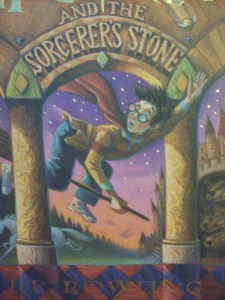 Even award-winning, record-breaking debut novels can have bad sentences.
Maybe Harry Potter and the Sorcerer’s Stone isn’t a classic novel yet, but it probably will be. It’s been over 15 years since it was published, and people are still reading it. Most books are forgotten months after they were published. I’m betting the Harry Potter books will continue to be read for several generations, so I’ll go ahead and call it a classic now. If I’m wrong, 50 years from now people can come back and mock me for it.
Whether it’s a classic or not, Harry Potter and the Sorcerer’s Stone has some bad sentences in it. It’s easy for for me to spot bad sentences because I’ve written a lot of them in my time. If my English teachers would have red-marked my paper for writing something similar, then it’s a bad sentence. If my writing group peers…
View original post 719 more words

When I picked up Paradise Valley by C.J. Box, I didn’t realize it was a serial killer novel. Seriously, from the cover, Paradise Valley doesn’t look like a serial killer novel. Usually there’s a bloody weapon or a terrified woman on the cover of a serial killer novel, but the image here is almost peaceful.
It was my fault that I didn’t know Paradise Valley was a serial killer book. I usually read the book jacket before I grab a book, but since this was a bestseller on the library’s New Arrivals shelf, I snatched it before an old lady next to me could get to it (I don’t mean old lady in a derogatory way. It’s just her most noticeable characteristic. To her, I’d probably be the bald guy, or the awkward guy, or that guy who looks like a serial killer).
Anyway, she gave me a dirty look when I picked it off the shelf, and I would have asked her if she was interested in it, but she had a cart. Once a library book goes into a cart, it’s not coming out.
I saw several James Patterson books in that cart, so I knew the old lady was more concerned with quantity than quality. The next time I go to the library, I’ll pretend to slide a copy of Finnegans Wake from the bestsellers shelf and suggest it to the old lady. If she’s going to give me a dirty look anyway, I might as well give her a reason.
Looking back, I should have given her Paradise Valley. I’m not saying it’s bad or anything. It’s just a serial killer book. I’ve read so many serial killer novels that most of them seem generic now. At least in Paradise Valley, the detective already knows who the killer is and is trying to set a trap, so we didn’t get the typical shock and horror and piecing together of clues. The reader doesn’t have to go through all that learning curve stuff again.
Amazon calls Paradise Valley Book 4 in the Highway Quartet, but some reviewers are calling it book 3 in a trilogy, so I’ll go with what Amazon says. Either way, it’s not the first book in the series, but it didn’t take long to figure out what has been going on, even though I hadn’t read the previous books. It’s often frustrating trying to read the 4th book in a series first. Then again, if you can read the 4th book and understand what’s going on right away, why would you read the first three books?
The serial killer’s name in Paradise Valley is the Lizard King, and it makes sense once it’s explained. The Lizard King isn’t the worst serial killer name ever. James Patterson made up a serial killer called The Dealer. That was pretty bad. I think The Dealer should have been the official end of serial killers. I’m not for limiting free expression, but if I could limit free expression in any one area, I’d probably say no more serial killer novels, at least for a few years.
I mean, as far as free expression goes, hate speech is bad, and some people want to limit that, but you can argue about who determines what hate speech really is. Reasonable people can disagree about what actually makes hate speech and what its boundaries are. But more serial killer novels? If we say no more serial killer novels, is anybody really going to be outraged?
If it happens, it’s not C.J. Box’s fault that serial killer novels would get banned. Paradise Valley just happened to be the book that caught my attention, that certain book that was at the wrong place at the wrong time. I’d blame James Patterson and The Dealer. When you need a literary scapegoat, always blame James Patterson.
*****
Before you read another book that you’re not sure about, check out Dysfunctional Book Reviews!
Writers tend to despise rules. That kind of independence is what inspires us to express ourselves, and we use words instead of voices or music or visuals (or property destruction) to make our point.
The rules about writing below aren’t necessarily rules; maybe they’re more like tips or guidelines, but whatever they are, they help a busy but lazy guy like me get some form of writing done almost every day.
 If I’m going to write every day, I’m definitely not going to use one of these! (Photo credit: Wikipedia)
In every writer’s class I’ve taken and every writer’s group I’ve been in, there was always somebody who said that the most important rule to writing was to “write every day.” I’m usually pretty good at following rules, but this one has always been stated with such pomposity that I’ve wanted to argue, except I’m a quiet person who doesn’t like to make scenes, so I’ve always kept my mouth shut.
Writing every day is a great rule if you’re a full-time writer, but I have a full-time job that has nothing to do with writing, and I have a family, so it’s not easy to simply “write every day.” Life is stressful, and trying to write every day (when I tried it) made it even worse. In order to write…
View original post 751 more words
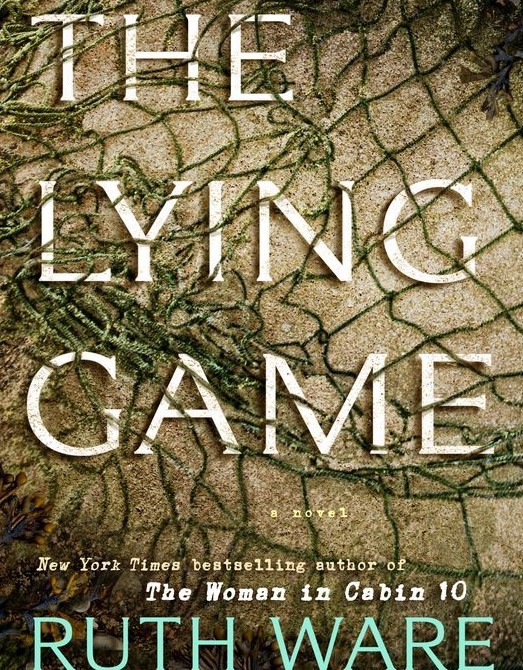
I was going to start off by saying that The Lying Game by Ruth Ware has a stupid title. But then I thought maybe stupid is a harsh word. As an aspiring author, I should be more precise and diplomatic with my word choice.
Maybe it’s better to say that The Lying Game is not the best book title in the world. To be fair, I’m not sure what the best book title in the world is, but The Lying Game is probably not it.
First of all, the word game is overused in book titles nowadays. Just offhand, I can think of The Hunger Games, Ender’s Game, Game of Thrones, The Most Dangerous Game, and The Westing Game. Even James Patterson is cashing in on the word game with Murder Games. The word game always implies something deadly in fiction. Book authors are supposed to be masters of the written word. They could at least use a thesaurus and come up with an original word.
Plus, this lying game in The Lying Game was made up (from what I’ve read) by a few teenage girls. The female characters would lie to people and see if their lies were believed or not. This sounds like something teenage girls would do. I’ve never been a teenage girl, but I’m a dad with two of them.
Plus, when I was a teenage boy, I dealt with a lot of teenage girls, and this lying game sounds like something girls might do, but they probably wouldn’t call it a lying game. That’s too obvious. Girls would make a code word or code phrase for a lying game. If an adult hears girls talking about a lying game, the adult knows what’s going on, and girls who are lying as a form of entertainment would probably be more clever than that.
Since I’ve never been a teenage girl, the code phrase that I would have used would be different from what teen girls would use. I was a chess club type nerd boy in school, so I would have come up with something stupid like The Polygraph Society. Then I would have lost every challenge because I’ve always been a crappy liar. I was a crappy chess player too.
It sounds like the characters in The Lying Game did something as teenagers that is coming back to haunt them as adults. It’s one of those books that’s told in a bunch of flashbacks while the character’s thinking. So far, there’s only been one narrator, and I’m not sure how reliable she is. It seems like I’ve read a lot of books structured like this recently, so I’m tempted to skip to the last couple chapters just to see what the big deal is. 20 years ago, I would have considered that as cheating, but I’m older now without as much time left (I don’t mean that in a cryptic way; I’m busy with a job and a family… and pets. If it weren’t for the damn pets….).
I know I have to be careful when I’m critical of books. An author like Ruth Ware is making a bunch of money and millions of people are reading her books, while I have a blog and a couple ebooks that a few people maybe have read. So there’s a good chance that I’m wrong about all of this. Maybe there’s no good synonym for the word game in the thesaurus. Maybe somebody Ruth Ware knows actually played a lying game and called it a lying game.
I would ask my daughters what code phrase they would use for a lying game, but I don’t want to give them ideas that can be used against me. I think they have enough of those already.
*****
What do you think? Is The Lying Game a good title? If you’ve ever been a teenage girl, what code name would you come up with for a lying game?
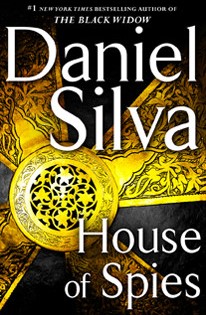
House of Spies by Daniel Silva so far has lots of thinking and planning in it. In the first couple chapters, characters think a lot. They think about their lives, their careers, and their relationships, and that’s usually done while sitting at an office, walking down a street, or eating a meal. That’s a lot of my life too, the planning and thinking about things, not the espionage.
I’m not criticizing House of Spies for having think/planning in it! I promise. I still like it.
The planning and thinking (that I’m NOT complaining about) is interrupted by a terrorist attack that is written differently than most fictional violent scenes:
The venerable Garrick Theatre had seen world wars, a cold war, a depression, and the abdication of a king. But never had it witnessed anything like what occurred at 8:20 that evening, when five ISIS terrorists burst into the theatre and began firing into the crowd. More than a hundred would perish during the first thirty seconds of the assault, and another hundred would die in the terrible five minutes that followed, as the terrorists moved methodically through the theatre, row by row, seat by seat. Some two hundred fortunate souls managed to escape through the side and rear exits, along with the entire cast of the production and stagehands. Many would never work in the theatre again.
The rest of the terrorist scene is as methodical as the terrorists’ technique. The author goes scene by scene, place by place, to describe how the terrorists hit several locations simultaneously. It’s well-written. It’s also kind of unemotional.
Murder/killing scenes are tough to get right because authors sometimes get melodramatic. In this scene from House of Spies, the reader doesn’t know any of the victims. We just learn that several hundred people get murdered at one time. Other authors would often include anecdotes about individual victims, to give the reader a sense of the fear, helplessness, sorrow, or pain. Some authors will devote entire chapters to make an irrelevant character feel real, jut to casually kill off that character and never mention him/her again. But this scene is clinical. The reader feels almost nothing. But the reader knows that the massacre was thought out. And planned.
Popular spy books and popular spy movies are often opposites. A spy movie has lots of action with just a little bit of thinking/plotting, enough to give the audience a slight reason for all the action (and sex). The planning/plotting doesn’t even have to make sense, as long as the action (and sex) is cool. A spy book should be plotting/planning with a little bit of action/sex to keep readers from falling asleep.
For example, most James Bond movies don’t look anything like the books they’re based on, except for From Russia with Love (and maybe a couple others). The Jason Bourne movies might be closer to the books, but the books were almost as stupid as the movies. At least, I thought the books were stupid when I read them. And I read them when I was in high school. If I thought a book was stupid in high school, it was either really stupid or it went over my head. I don’t think the Bourne books go over anybody’s head. But I still liked reading them.
If you like your spy novels with lots of action, House of Spies might not be for you, at least not from what I’ve read so far. If you like to read about characters thinking, this is great. I don’t mind thinking in my espionage books. Some great spy novels have lots of thinking in them, and that makes sense. A spy who doesn’t think or plan will end up dead. Even I know that, and I’m not a spy.
So I’m not complaining about all the thinking and planning! I’m going to keep reading House of Spies, maybe just because of all the thinking and planning.
House of Spies follows another Silva novel The Black Widow, with the same main character, so I might have to go back and read The Black Widow first. I just might go to the book store, or I might buy it on my Kindle, or I might not read it at all. No matter what I choose, I’ll think about it first. And plan.
When I went to Chipotle today, the paper bag essay was written in Pig Latin. 40 years ago, I was pretty fluent in Pig Latin, so once I started translating the essay, I realized the paper bag essay was just about how high quality Chipotle food is.
I went into a rant (my rants are relatively tame) in front of my daughters about how Chipotle paper bag essays used to be written by literary authors and how Pig Latin must be what you do when you can’t get a literary author to write a paper bag essay. My oldest daughter reminded me that I used to complain about the literary authors who wrote the paper bag essays.
She is right, and now I’m embarrassed. I wish I had a paper bag to put over my head.
 It’s tough to read an essay like this, but at least nobody can watch you eat. (image via wikimedia)
First of all, I don’t want to seem like I’m giving Chipotle free advertising. I don’t have anything against the fast food chain; I’m just not that kind of blog. Besides, Chipotle doesn’t give me free advertising, so why should I help them out?
Anyway, Chipotle is printing short essays from several prominent authors (like Jonathan Franzen and Joyce carol Oates) on the chain’s paper bags and cups. The Cultivating Thought paper bag essay isn’t a bad idea, but it would have been more useful 10 years ago before smart phones and tablets. Still, I guess it’s better late than never.
Literature in restaurants isn’t a new idea. Ernest Hemingway supposedly wrote his six-word story on a napkin in a public place, but it probably wasn’t at Chipotle. His tale, “For…
View original post 956 more words

The Late Show by Michael Connelly is a very easy read so far, and I don’t mean that as an insult. My brain hasn’t stumbled on much in the book yet (and my brain stumbles a lot), and I appreciate that.
Mysteries must be difficult to write. The author has to include a bunch of gory crime details, plus make characters, including a bunch of potential suspects, interesting. A lot of mysteries have a tough time finding the right combination of dialogue and exposition. Readers don’t like long paragraphs filled with technical information. But putting all that technical stuff in dialogue makes the conversation sound stilted.
For example, here’s a sample passage where police officers and detectives are discussing a victim:
Another patrol officer was standing in front of the curtain for treatment bay 4 and Ballard and Jenkins proceeded directly toward him. He had three hash marks on his sleeves- fifteen years on the department- and Ballard knew him well.
“Smitty, the doc in there?” Ballard asked.
Officer Melvin Smith looked up from his phone, where he had been composing a text.
“Ballard, Jenkins, how’s it hanging?” Smith said. Then: “Nah, she’s alone. They’re about to take her up to the OR. Fractured skull, brain swelling. They said they need to open her head up to relieve the pressure.”
“I know the feeling,” Jenkins said.
“So she’s not talking?” Ballard asked.
“Not anymore,” Smith said. “They sedated her and I overheard them talking about inducing a coma till the swelling goes down. Hey, how’s Lola, Ballard? Haven’t seen her in a while.”
“Lola’s good,” Ballard said. “Did you guys find her, or was it a call?”
“It was a hot shot,” Smith said. “Somebody must have called it in but they were GOA when we got there. The vic was just lying there alone in the parking lot. We thought she was dead when we first rolled up.”
A couple things were noteworthy about this excerpt. First of all, Jenkins did a good job in not responding to the question “How’s it hanging?” You have to be careful when answering that. The standard acceptable response is “It hangs well” or “It’s well hung,” but you have to be careful who you say that around. If you say “It’s well hung” in front of the wrong person, you can get fired or sued.
You probably shouldn’t say “How’s it hanging?” anymore either, but the guy who asked it has been in the department for 15 years and that kind of banter might have been acceptable 15 years ago.
Since Ballard is female, she probably has a harassment claim ready from that question if she wants to make one. That’s okay. Most guys can’t answer the question “How’s it hanging?” without lying or exaggerating.
Jenkins ruins the good will with his ‘I know the feeling’ comment, but I’ll stop there.
Anyway, my English teachers would have had some punctuation disagreements with the editors of this book. In this excerpt alone, I found three compound sentences without commas. At least, in my version of the book, these sentences have no commas.
Another patrol officer was standing in front of the curtain for treatment bay 4 and Ballard and Jenkins proceeded directly toward him.
There should have a comma separating the two actions in the sentence to make:
Another patrol officer was standing in front of the curtain for treatment bay 4, and Ballard and Jenkins proceeded directly toward him.
Here are two more compound sentences (I think) that don’t have commas.
They sedated her and I overheard them talking about inducing a coma till the swelling goes down.
Somebody must have called it in but they were GOA when we got there.
Both of these sentences should have commas, I think. I’m not complaining that these sentences don’t have commas. I really don’t care, except I would have gotten red-marked in school for not using commas in these sentences, and I thought putting a comma between two independent clauses in a compound sentence was universal. I didn’t know there were exceptions. Are there exceptions that my teachers forgot? I don’t expect my teachers to have known everything, but this is pretty big. If compound sentences don’t need commas, my whole worldview changes. If compound sentences don’t need commas, then I wonder what else has been a lie.
Besides that, The Late Show by Michael Connelly seems like it will be a pretty good book.
Since it’s now the beginning of August, my daughters are starting to realize it’s almost time to go back to school. They could ignore the back-to-school advertising in July, but they can’t ignore it anymore. Now my daughters are grumbling that they only have three more weeks of vacation left.
Only three weeks of vacation?
When they’re older and out of school and have careers (hopefully), three weeks of vacation will seem glorious… if they ever get three weeks of vacation.
 To some, there’s nothing special about going back to school, not even a Back-to-School Special. (image via wikimedia)
Nobody likes going back to school. Students don’t like it. Teachers don’t like going back to school either, and teachers are the ones who are paid to be there. Parents might be glad that school is starting up again, but they don’t have to go every day, so their opinions don’t count.
Even though school can be unpleasant, there are ways to make it easier for everybody involved.
For students, school is a great place to learn diplomacy. A clever student quickly learns what to say and what NOT to say in certain situations with authority figures.
“Can I Use The Bathroom?” and Other Public School Memories
ADVICE TO STUDENTS: When you ask for permission to use the restroom, don’t carry a book with you.
My daughter told me this week that…

View original post 697 more words

(image via wikimedia)
Every once in a while, I tell people that I hit like a girl. I don’t say it often, but it comes up occasionally in conversation or in my writing. I’ve never given the phrase a second thought. I just thought it was a simple expression that explains that I’m not a good fighter.
I’ve been told several times recently that I shouldn’t say that I hit like a girl, that the phrase is sexist. A woman at work told me that it was an inappropriate thing to say. I apologized and made a mental note be very careful about what I say around her from now on. A couple commenters on this blog claim that it was a phrase that I should not use. I’ve even been told that women can hit just as hard as men.
At first, I was surprised I was getting criticism for saying/writing that I hit like a girl. I mean, I’ve written some objectionable stuff on this blog. I’ve written about adult situations. I’ve written about vulgar language and have even used some profanity. I’ve suggested that James Patterson might be a hack (as outrageous as that claim might be). I’ve even written porn jokes, and nobody complained that the porn jokes were sexist. They just said the porn jokes were stupid.
I understand why people would think it’s sexist to say “I hit like a girl.” They think I’m making fun of girls, and I’m saying that the way girls hit is inferior to the way boys hit. I agree that some women can hit just as hard as some men.
I wouldn’t want to get hit by a female MMA fighter. If I got into a brawl with a female MMA fighter, I’d lose because I hit like a girl and she wouldn’t. Female MMA fighters are trained to hit like men (but I guess that would be a sexist statement too. I just keep on digging).
When a man is accused of being sexist, one of two extreme reactions usually happen. The man might curl up into the fetal position, begging for forgiveness for being a man and contributing to the oppressive patriarchy. Or the man might tense up and declare that he’s not sexist and the woman is stupid for calling him that. You usually don’t get too much in between.
When women are called sexist, they sometimes say that women can’t be sexist because we live in a patriarchy where women don’t have enough power to be sexist. And a sexist man would say that logic demonstrates why women shouldn’t be given power.
Being an ineffectual (ineffective?) fighter has shaped my personality. Since I know I’d probably lose most fights, I learned to be diplomatic. I could talk myself out of most conflicts (and I don’t even like talking, so that’s an accomplishment). I’m a pretty good problem solver. Since I’m also good at conflict resolution, I didn’t get angry when commenters criticized me for using a (possibly) sexist phrase.
Saying I hit like a girl doesn’t mean that I throw a punch the same way that a girl throws a punch. The phrase is a simile. A simile isn’t meant to be taken literally. And I don’t care what people say about equality, a guy should never get into a physical altercation with a female. If a girl starts a fight with a guy, the guy should step back defensively and protect himself without harming the female. When a guy fights a girl, most men are disgusted with the guy.
Like I said, similes shouldn’t be taken literally. When my daughter wrote in a story that she ran like a cheetah, I didn’t claim that she couldn’t run 65 miles an hour and she definitely didn’t run on four legs. I DID criticize her for using a cliché, however. Run like a cheetah is so easy that I told her to think of a more creative way to express how fast she ran.
Then again, the phrase I hit like a girl is a cliché as well. I’m not mad that I used a (possibly) sexist phrase. I’m too old to care too much about that stuff anymore. But I take pride in my writing, and I shouldn’t have used such a hack expression. This blog has high standards. What was I thinking?
When I was growing up, it was no big deal to say a guy hit like a girl. The guy might want to fight after he was accused of hitting like a girl, just to prove that he didn’t hit like a girl. But nobody said the phrase was sexist. Then again, we said a lot of stuff back then that we wouldn’t say today. I don’t want to repeat the kind of things we said back in the 1970s because it was pretty bad. If you think saying “he hits like a girl” is sexist, you’d be horrified by some of the other stuff that we said. But I’m probably not going to write about that.
Famous authors like J.K. Rowling and Stephen King have been tweeting a bunch of anti-Trump stuff recently, and now some people who support President Donald Trump claim they’ll never read any more books by those authors again. It works both ways. Authors who tweet out pro-Trump stuff get threats of boycotts too (but I don’t remember who those authors are because maybe they’re not as famous or maybe my memory is bad. It’s a good thing I’m not a journalist).
Anyway, these authors are rich and established, so they probably don’t care, but as an aspiring author, I don’t want to get into topics that can turn potential readers off, especially if that polarizing topic isn’t what my blog is about. I need all the readers I can get. Plus, nobody really cares what I think anyway.
 If you see this look on the interviewer’s face, you might want to change the topic. (image via wikimedia)
When it comes to writing, the topic is everything. I’d rather read a poorly-written piece about an interesting topic than a well-crafted selection about something boring. I’m pretty sure most readers agree with me. I don’t have any statistics to back me up on this, but if I repeat myself loudly enough (“Most readers agree with me!!”), my assertions will eventually become accepted as truth (except I have a quiet voice so nobody will hear me).
If an author delves into a bad topic, the author can phrase things carefully and revise heavily before publishing. But when an author talks about a bad topic, he can get into trouble just like anybody else.
Last week, famous author John Grisham got into trouble for talking about child pornography in an interview. Child pornography…
View original post 660 more words