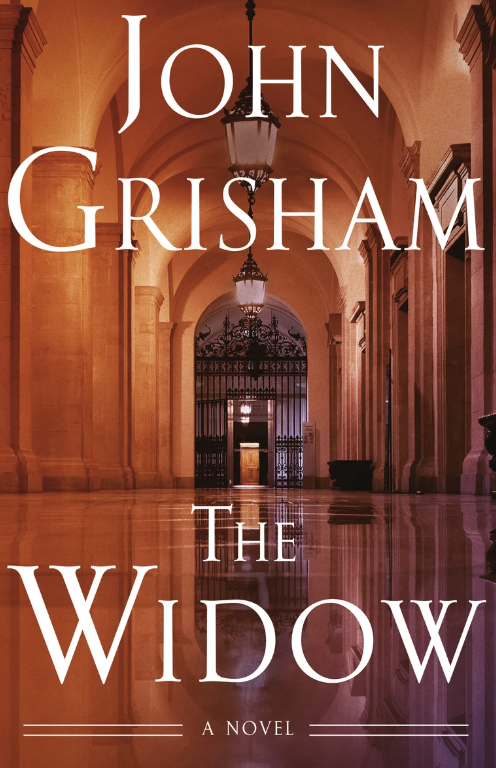
The Widow isn’t the first book by John Grisham that I’ve stopped reading. Over the last several decades, I’ve stopped reading several of John Grisham’s books. His books aren’t bad. It’s just that after the first few pages I often feel like I’ve already read something similar before.
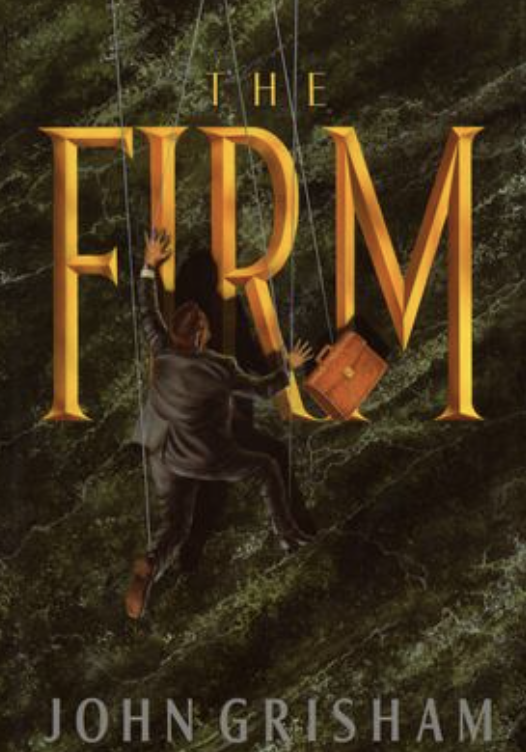
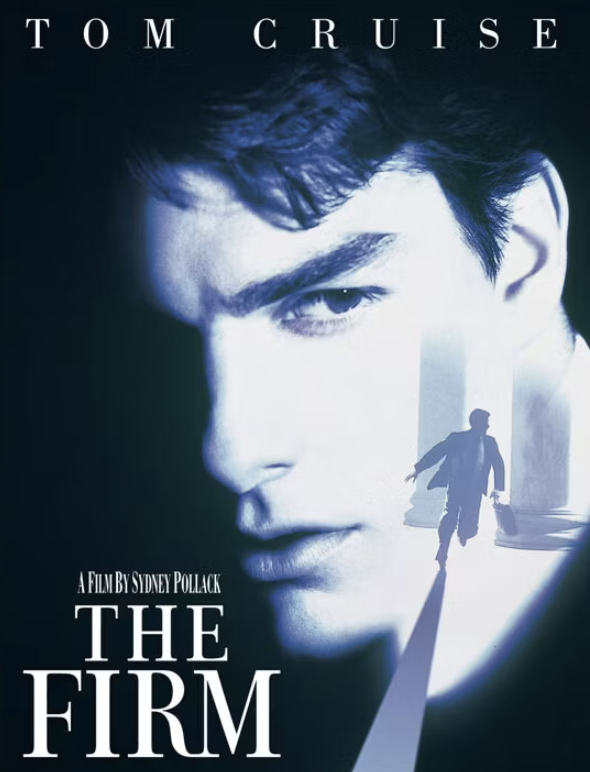
John Grisham has been writing legal thrillers since the early 1990s (maybe even before that) when he broke out with the bestselling novel The Firm. I was at a bookstore when some random guy told me about The Firm, so I went ahead and tried it (I actually bought it new!). I don’t remember what that guy looked like. It might have been John Grisham himself (it wasn’t).
When the movie The Firm came out a few years later, some critics said the ending of the movie was better than the ending of the book, but I’m not a lawyer, so I don’t know if that’s true. I mean, to me, the movie ending made more sense, but it could have all been fake legal mumbo-jumbo, and I wouldn’t have known.
That’s the thing about about writing about your specialty/professional; you can make up a bunch of stuff and only a few people would know if what you’ve written was accurate. Back in the 1990s and early 2000s when Tom Clancy was writing 1000 page military thrillers, half of the pages in each book seemed like techno gibberish. I half-suspected that he was making up most of the military techno stuff, so I just skimmed those parts. I do the same with legal thrillers.
If I had known that legal thrillers were going to become such a thing, I might have gone to law school back in the 1980s. Instead, I became a teacher. Education ‘thrillers’ don’t exist. I mean, a teacher could try writing a teacher-by-day sleuth-by-night novel, but I’m not going to do it. Everybody has too much experience with schools for readers to be intrigued. Every schmuck in the potential reading audience has had to spend too much time in school as a kid, and most don’t want to read about that crap. Besides, an ‘education thriller’ would probably be sympathetic to the teacher, and right now everybody wants to blame the schools. Even I want to blame the schools, but that’s just because I’m both a parent and a former teacher. I’m torn.
An education ‘thriller’ about a teacher who sucks could be interesting, but that might be used against an author who has vindictive former students. And then the ‘education thriller’ would become a ‘legal thriller’ in the author’s real life. I’ll just stick to reading novels.
Oh yeah! Let’s get back to The Widow.
The first chapter of The Widow seems kind of standard. The lawyer protagonist (I don’t remember his name) meets his client, a widow, who… never mind, you can get a summary anywhere. The protagonist lawyer says “trust me” a lot to the widow and then shows signs of engaging in unethical (maybe illegal) behavior, so the reader suspects he’s the type of lawyer that makes you want to use the internet instead of getting a real lawyer.
EXCERPT
******
Occasionally there was a break in the misery when an aging client needed some estate work, like an updated last will and testament. These were almost always uncomplicated matters that any first-year law student could handle, regardless of how somber Simon tried to make them. For only $250, he could write, or “draft” as he preferred to say, a three-page simple will, print it on heavy gold bond paper, get it notarized by his “staff,” and convey the impression that the client was “executing” something profound.
The truth was half of them didn’t even need a will, regardless of how simple, though no lawyer in the history of American jurisprudence had ever said so to a paying client. It was also true that the $250 fee was a rip-off because the internet was filled with free simple wills that were just as binding. It was also true that Mr. Latch would hardly touch the will. Matilda, his secretary, filled in the blanks and printed the important documents.
*****
Oh yeah! This excerpt reminded me that I need to take care of a couple simple legal matters. They’re not necessarily wills, but they’re will-adjacent, and I’m not sure how much of the internet I can trust with stuff like this. I know that the internet shows you how to do a lot of stuff for yourself, but I also know that the internet doesn’t always tell the truth.
Sometimes the internet thinks it’s telling the truth but just gets stuff wrong unintentionally. When it comes to a will or other legal documents, I’m not sure I want to trust the internet. If the internet gets something wrong, then I can’t blame the internet because I chose to use it rather than a trained professional. If the trained professional messes it up, the trained professional usually fixes it for free (hopefully the damage isn’t irreparable).

I’m not sure how much of this semi-legal stuff I’ll do myself. I might just pay the $250 rip-off fee for peace of mind. I can get impatient and make tiny (but damaging) mistakes. Heck, I can make glaring mistakes too.
I probably won’t finish reading The Widow, but it’s not John Grisham’s fault. I’ve already read plenty of legal thrillers, usually where an innocent person has been accused of murder. I’m sure The Widow gets more complicated than that. But sometimes I feel like I’ve read newer books before even though I haven’t read these newer books before.
*****
Still, thank you, John Grisham, for reminding me of some stuff that I need to do! I might even read further just to see if there are any other legal matters that I need to take care of soon.
For more Dysfunctional reviews of John Grisham novels, see…
More Stereotypes in Fiction! A Time for Mercy by John Grisham
Literary Glance: The Rooster Bar by John Grisham
Literary Glance: Camino Island by John Grisham
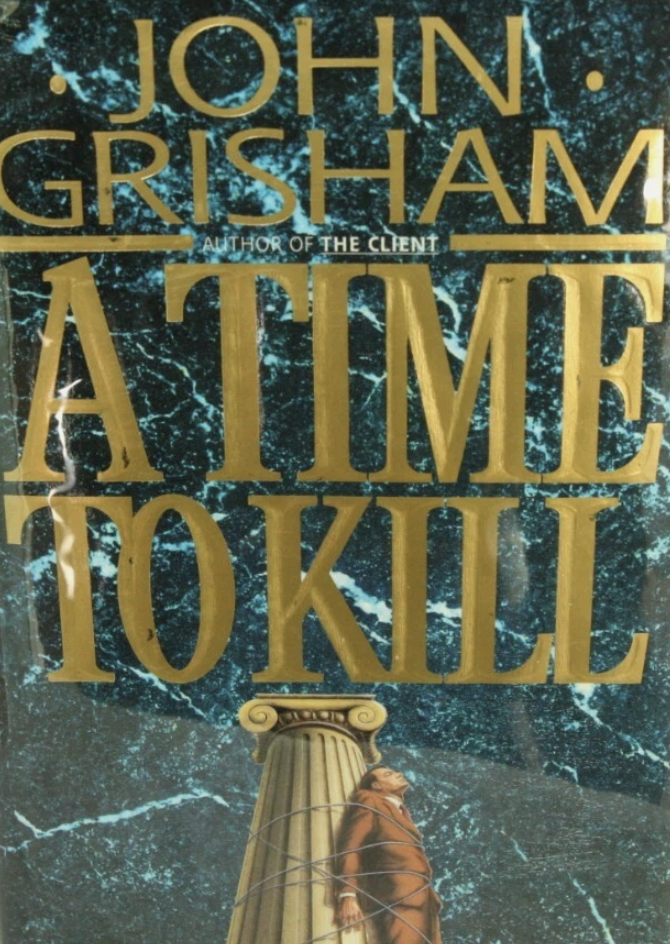
A Time To Kill vs. To Kill A Mockingbird
*****
And here’s my ONE novel!
It’s the oldest story in the world, 1990s style!
Man meets woman; man falls in “luuuvvv” with woman; man gets thwacked upside the head by reality!
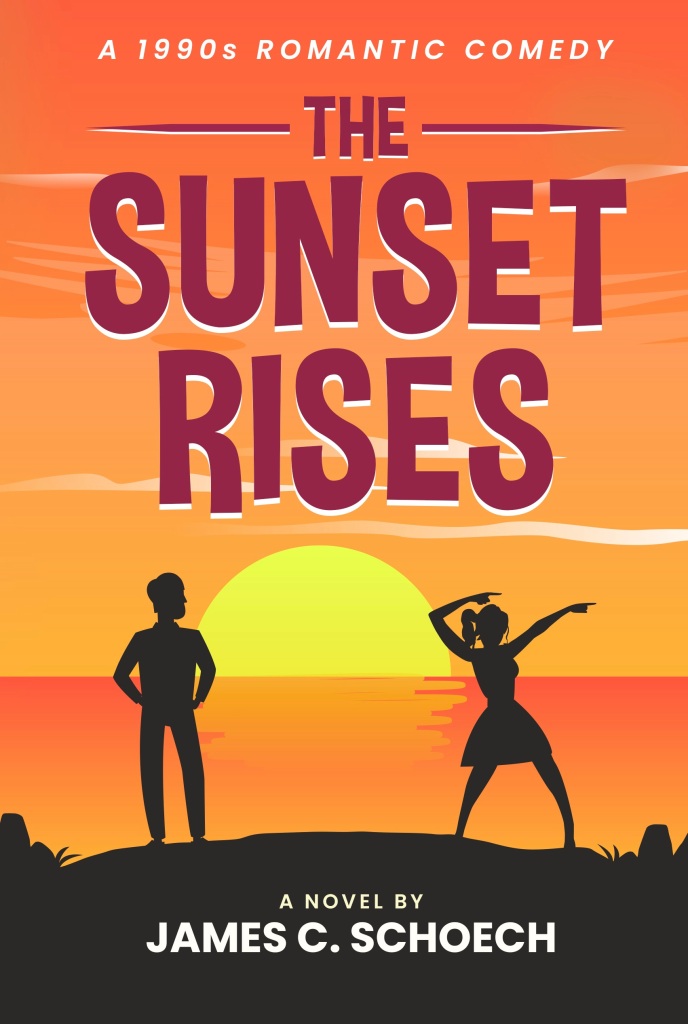
The Sunset Rises: A 1990s Romantic Comedy is now available on Amazon and from the trunk of my car!
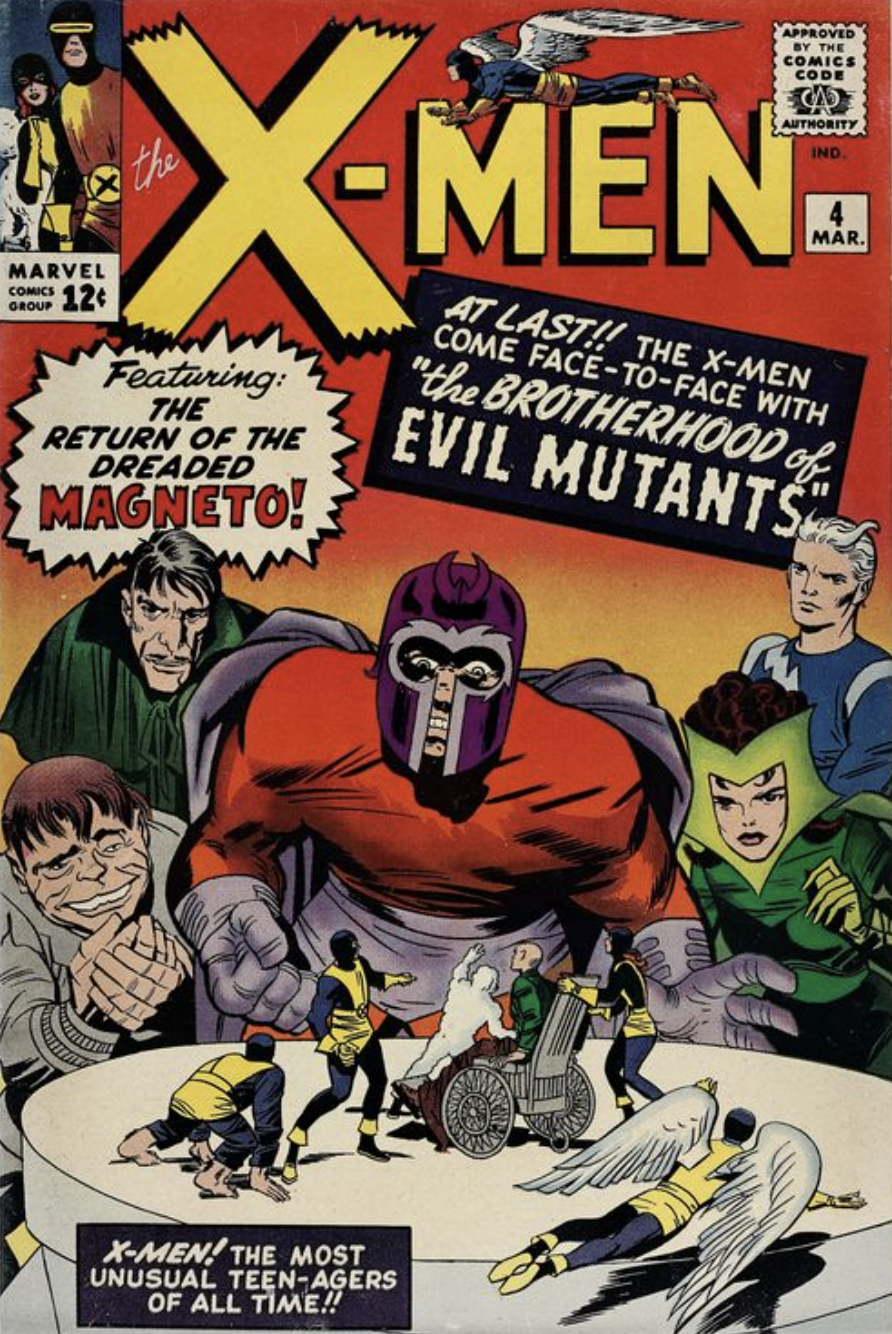
The pronunciation debate has long been settled. I know that. As soon as the X-Men movies started getting released 25 years ago, everybody just says Mag-NEAT-o, but it hasn’t always been that way.
Back in the 1970s, comic book collectors argued about the correct pronunciation of Magneto, the X-Men’s most powerful individual villain. I’ve always said “Mag-NETT-o” because he has the power of mag-NETT-ism. Most other collectors said “Mag-NEAT-o” because they’re stoop… because of the spelling (I thought). Since ‘Magneto’ has only one ‘t’ before the ‘o,’ they believed that the ‘e’ should have the long ‘eeeeeee’ sound. This is the only time that I’ve seen normal people care about English pronunciation rules.
I thought MagNEEEEETo sounded stupid, almost childish. Besides, his power was of magNETTism, not magNEEEEEETism. There is no such thing as a magNEEEEET, I thought.
And then I found out that I was wrong. There is such a thing as a ‘magneeeeeto.’ It’s even spelled as ‘magneto.’ Aaarrgh!
According to Merriam-Webster (if you trust it), a magneto is a “an alternator with permanent magnets used to generate current for the ignition in an internal combustion engine.”
The first known usage of ‘magneto’ (if you believe Merriam-Webster) was in 1877, long before Jack Kirby and Stan Lee came up with the name. The existence of this magneto thing and its established (if you believe it) pronunciation kind of hurts my argument.
Magneto the villain has never called himself an alternator. He calls himself the Master of Magnetism. Maybe Jack Kirby and Stan Lee should have just put a double t in his name.
Magnetto.
That would have settled it! You’re not getting Mag-NEEEEET-o from that, motherfu… ahem, excuse me. I get carried away with this stuff sometimes.
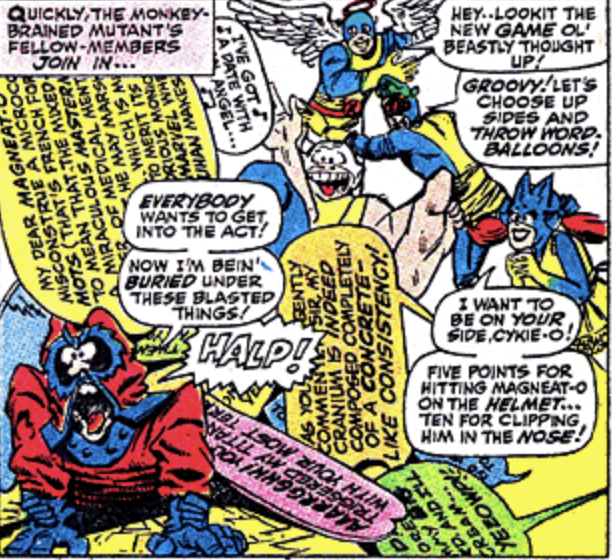
I don’t blame the people who are mispronouncing ‘Magneto’. I’m not blaming myself if I’m wrong either. Instead, I blame Marvel Comics. In fact, I blame corporations (and politicians… and the Ivy League ) in general. They’re always trying to split us and make us argue over stupid stuff so that we don’t notice all of their financial crimes until it’s too late. And I fell for it with this Mag-NEEET-o crap. That’s okay. I haven’t bought a new comic book for its full price since 1996.
I know my pronunciation of Magneto is already a lost cause. The X-Men movies say Mag-NEEET-o. X-Men writer Chris Claremont says Mag-NEEEEET-o. They’re wrong, but I can’t prove it, so I still lose the argument. Even so, I’m taking my stand on this hill. Don’t get me wrong; I’m not going to die on this hill. I’ll abandon this hill if it comes to violence. But I’ll stand on it as long as there’s nothing important at stake.
Just don’t get me started on The Submar-EEEEEN-er.
*****
Here are more comic book blog posts!
How Classic Comic Books Led Me To Classic Literature!
Why The Fantastic Four was once The World’s Greatest Comic Book Magazine!
Jack Kirby: The True Creator of the Marvel Universe?
Comic Book Nerd Book Review-Jack Kirby & Stan Lee: Stuf’ Said by… by…
*****
And here’s my ONE novel!
It’s the oldest story in the world, 1990s style!
Man meets woman; man falls in “luuuvvv” with woman; man gets thwacked upside the head by reality!
The Sunset Rises: A 1990s Romantic Comedy is now available on Amazon and from the trunk of my car!
As much as I like my older brother’s unfinished, unpublished Dummo Mouse comic strips from 1983, I don’t think he (or his character Shmitty Cat) is correct about the original definition of the word ‘smorgasborg.’ Or maybe that was part of the joke.
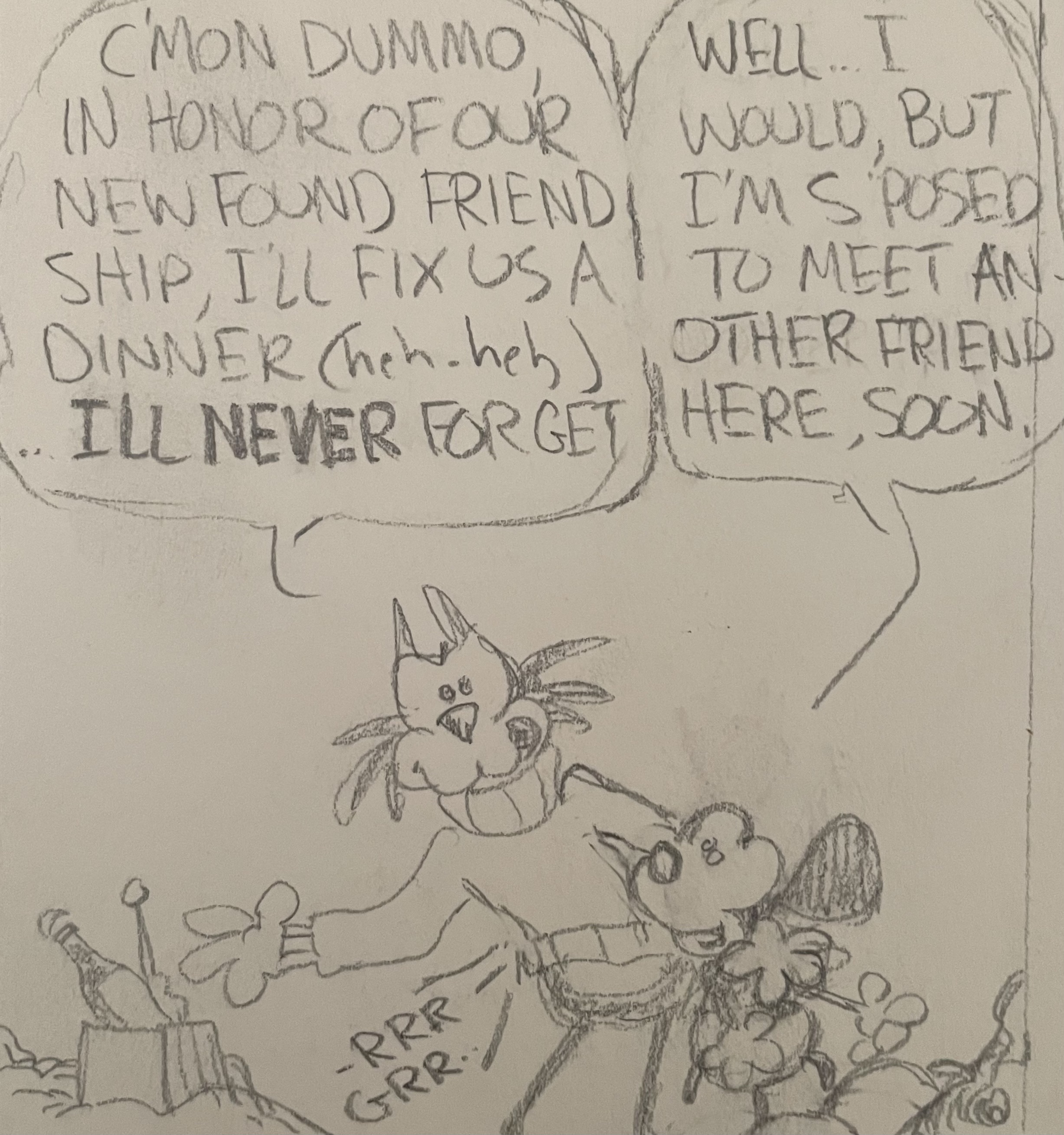
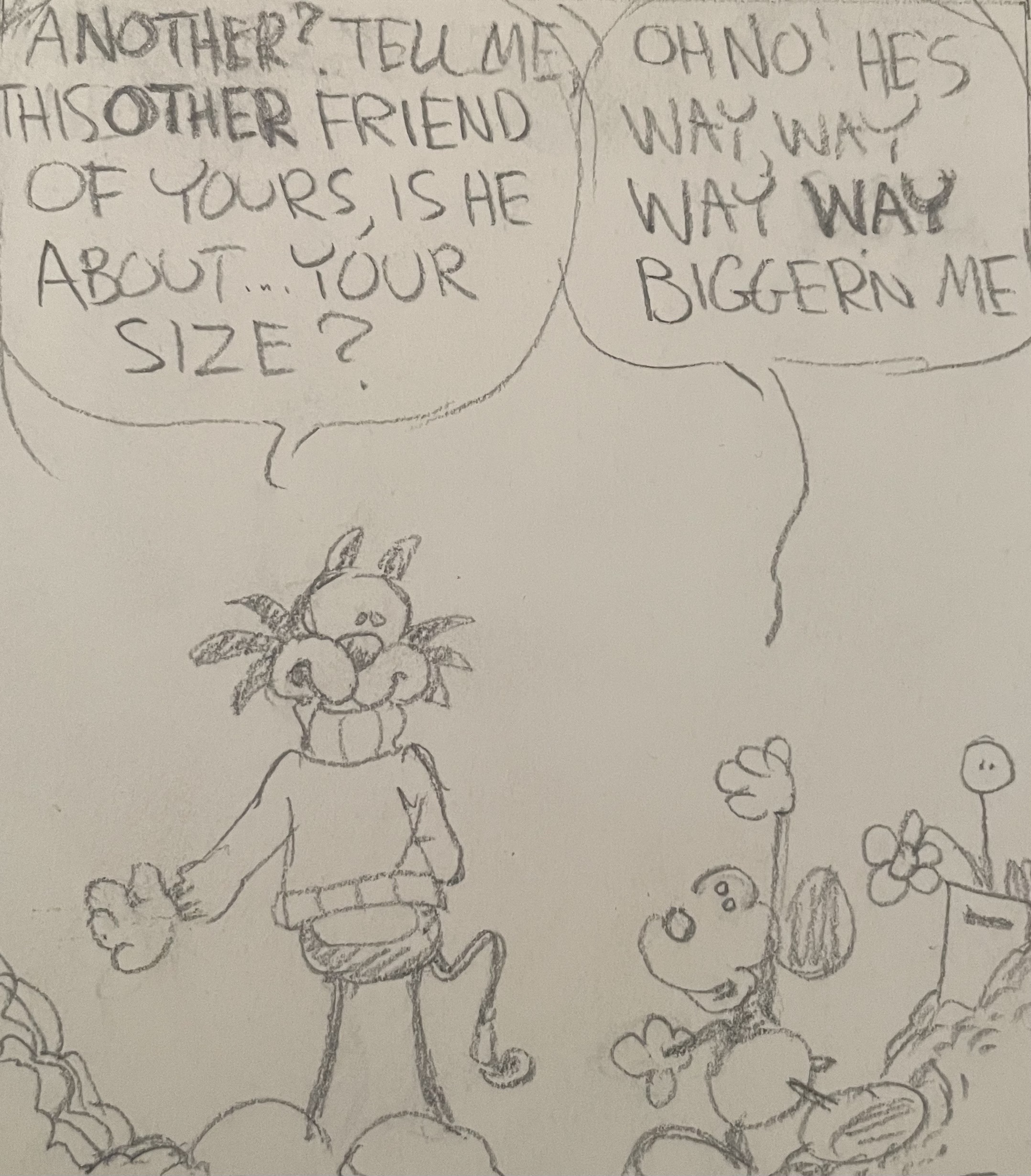
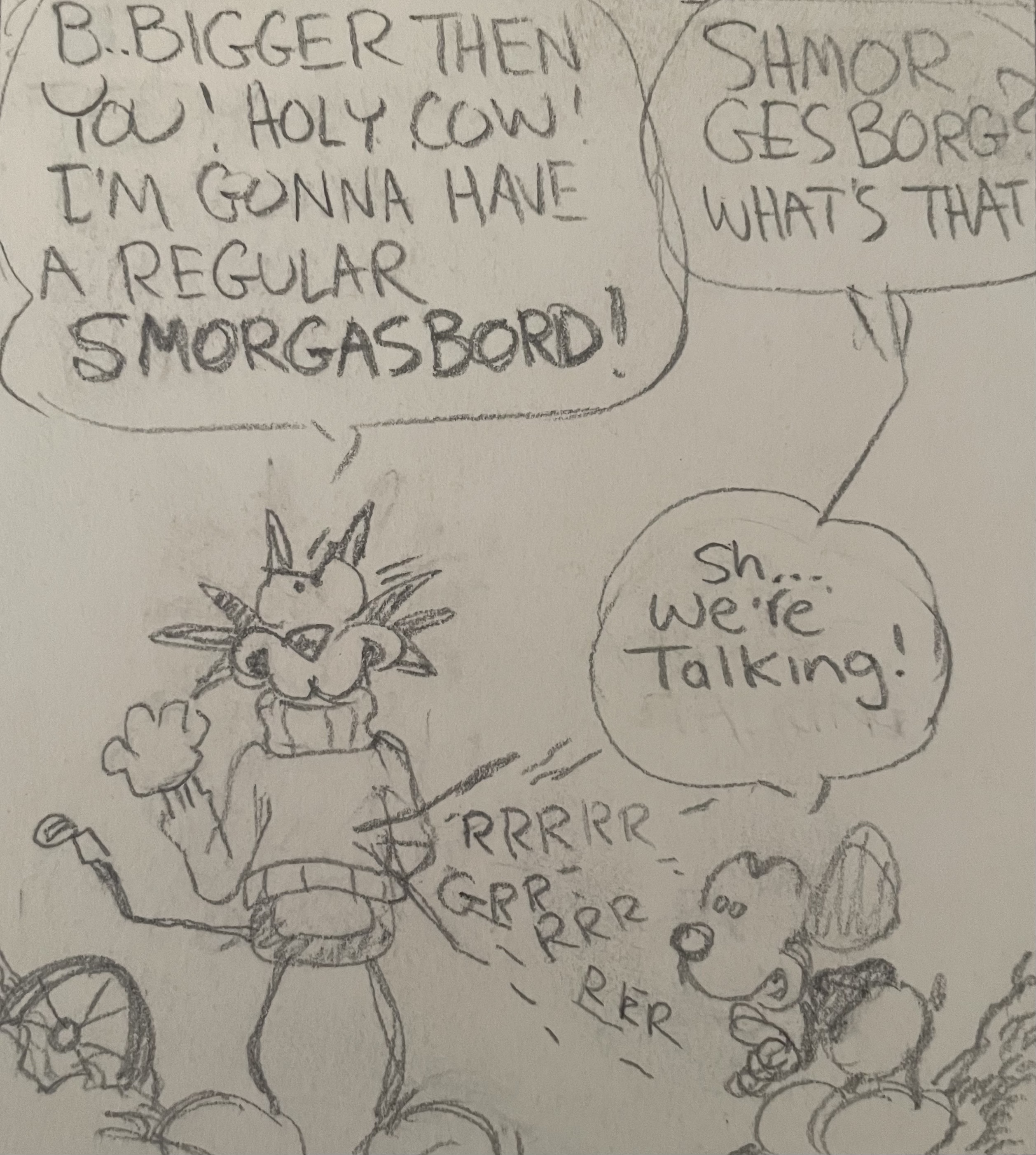
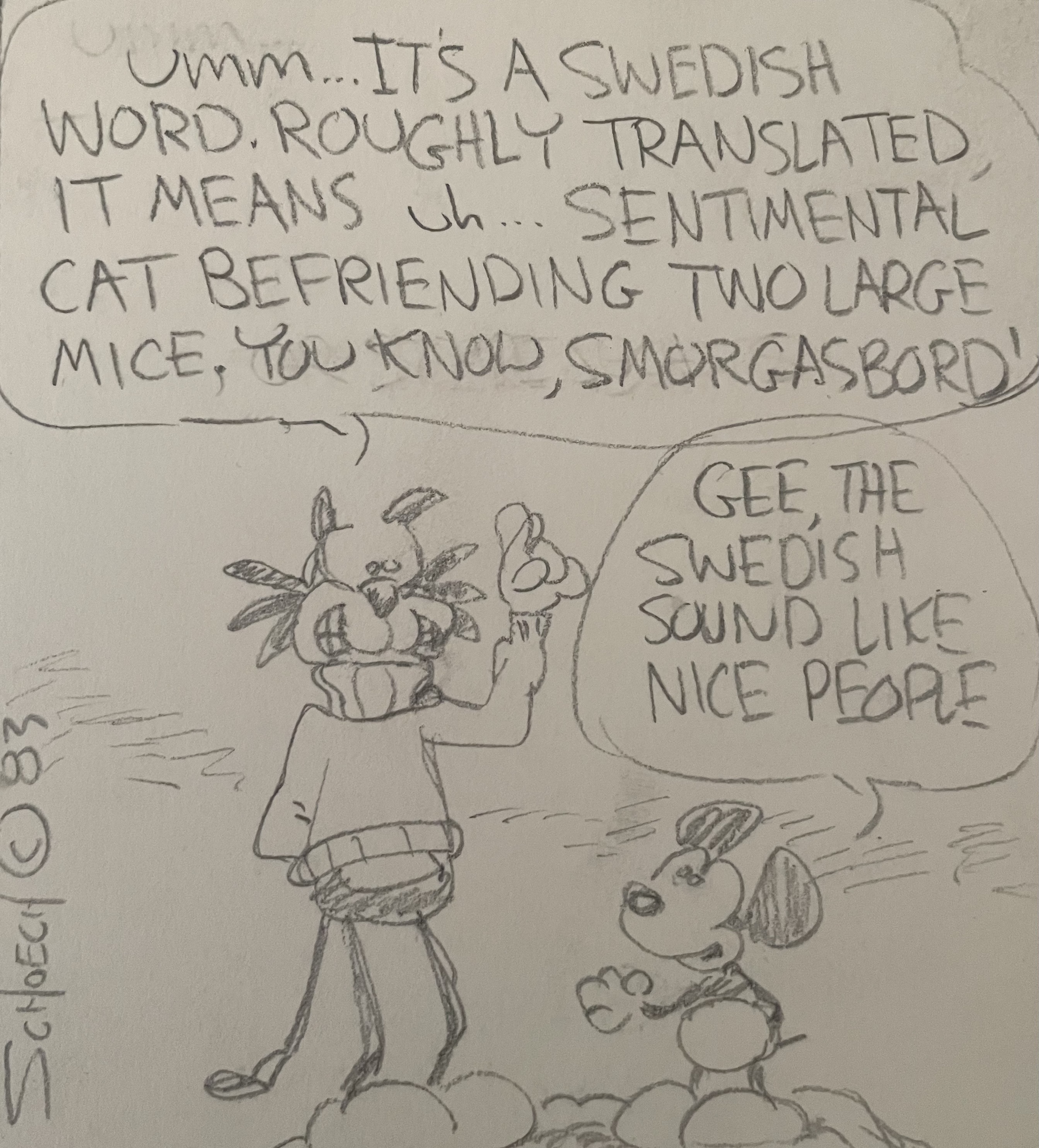
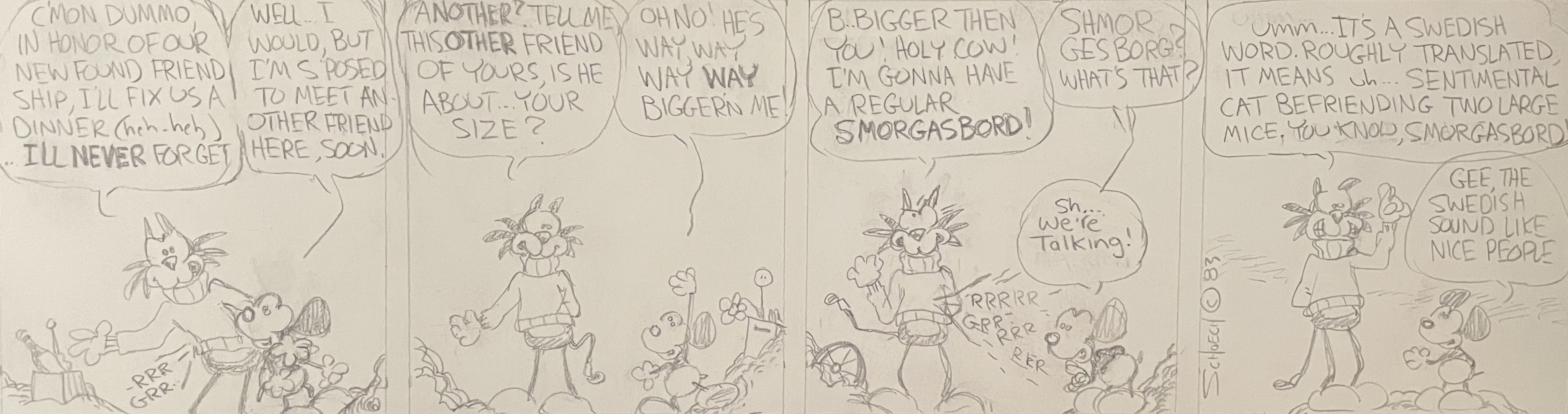
For more of my older brother’s completed comic strips see Sunday Funnies and Calloway the Castaway.
*****
It’s the oldest story in the world, 1990s style!
Man meets woman; man falls in “luuuvvv” with woman; man gets thwacked by reality!
The Sunset Rises: A 1990s Romantic Comedy is now available on Amazon and from the trunk of my car!
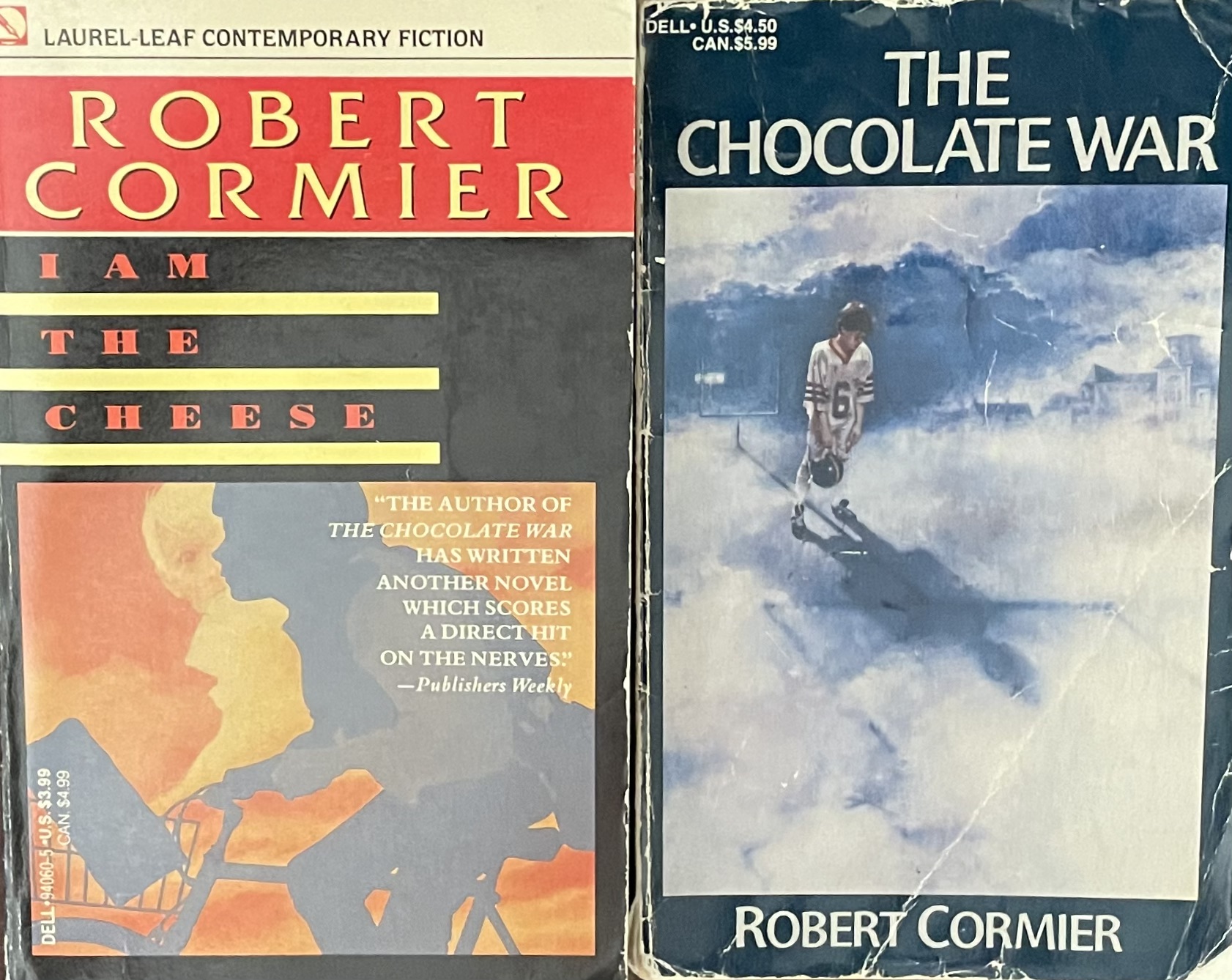
Robert Cormier was a pretty good author in the 1970s, especially for Young Adult fiction, but I don’t know of anybody else who has read a Robert Cormier book (I’m sure they’re out there.). The Young Adult fiction genre didn’t really exist when Cormier was writing his books. At least, it didn’t get its own section in book stores and libraries. There were a few books that were written for teenagers (a lot of people think of author Judy Blume), but they were usually in the children’s books section, and most teenagers, even those who read books, didn’t want to be seen looking at the kid’s books.
When I was growing up, boys I knew would read westerns by Louis L’Amour or adventure/spy novels by Alistair MaClean or fantasy like the Lord of the Rings or The Narnia books. I remember girls reading stuff like Sybil by Flora Rheta Schreiber and Don’t Ask Alice by Anonymous (now known as the alleged fraud Beatrice Sparks) and romance novels, but I didn’t know anybody who had read a Robert Cormier book.
I didn’t read any Robert Cormier books either until I was an adult. Even when I received two of these books The Chocolate War and I Am The Cheese as a combined Christmas gift back in the 1970s, I didn’t read them right away. I hope I at least acted enthusiastic, but I probably went straight to Rock ‘em Sock ‘em Robots (I think I’m mixing up my nostalgic memories). I liked to read, but I wasn’t interested in books about boys my age or teenagers. I preferred books written about adults. Adults lived more interesting lives than kids did (at least in the books I read, they did).
Also, I didn’t like the titles The Chocolate War and I Am the Cheese. I know now that these titles make sense after you read the books, but they didn’t appeal to me when I was a kid, and I still don’t care for the titles now that I’m … slightly older. I’ve always judged books by their titles instead of their covers, and sometimes I’m right, but I definitely misjudged these two. I would try to think of possible better titles, but it’s probably a little late now.
I didn’t get around to reading The Chocolate War until I took a children’s literature class in college back in the late 1980s, and I was surprised by how good it was (the book, not the class). I’ve reread The Chocolate War a couple times since (it’s a quick read!). It’s entertaining, and it has one of the best classroom scenes ever written (in my opinion) where a hated teacher bullies a kid mercilessly and then berates the other students in the class for letting it happen. That scene might not hold up today because kids are much more likely to talk back to teachers, even when teachers don’t deserve it.
Even so, it was a great scene. Not many authors can write a great classroom scene. That’s my book review for The Chocolate War.
I found a copy of I am the Cheese when I was digging through yet another box of books (I keep finding books!). I read it pretty quickly, not because it’s short (though that helped), but because it was interesting. I liked it, so I finished it (that’s my book review for I Am the Cheese). I Am the Cheese reminded me of one of Dennis Lehane’s book from the 1990s, but I’m not going to say which one because associating the two books could potentially ruin the endings of both books.
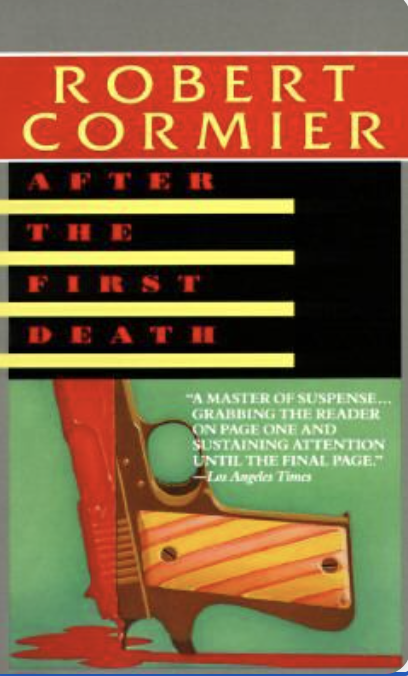
Not all of Robert Cormier’s book titles were bad. After the First Death is a pretty good title, but I don’t remember anything about it. Fade is also a good title, and it was a good book too, but there was a scene that got it banned from some libraries. I understand why the book was banned. That scene was unnecessary. Just think of the things that you would see if you were invisible, and… yeah, it was something like that.
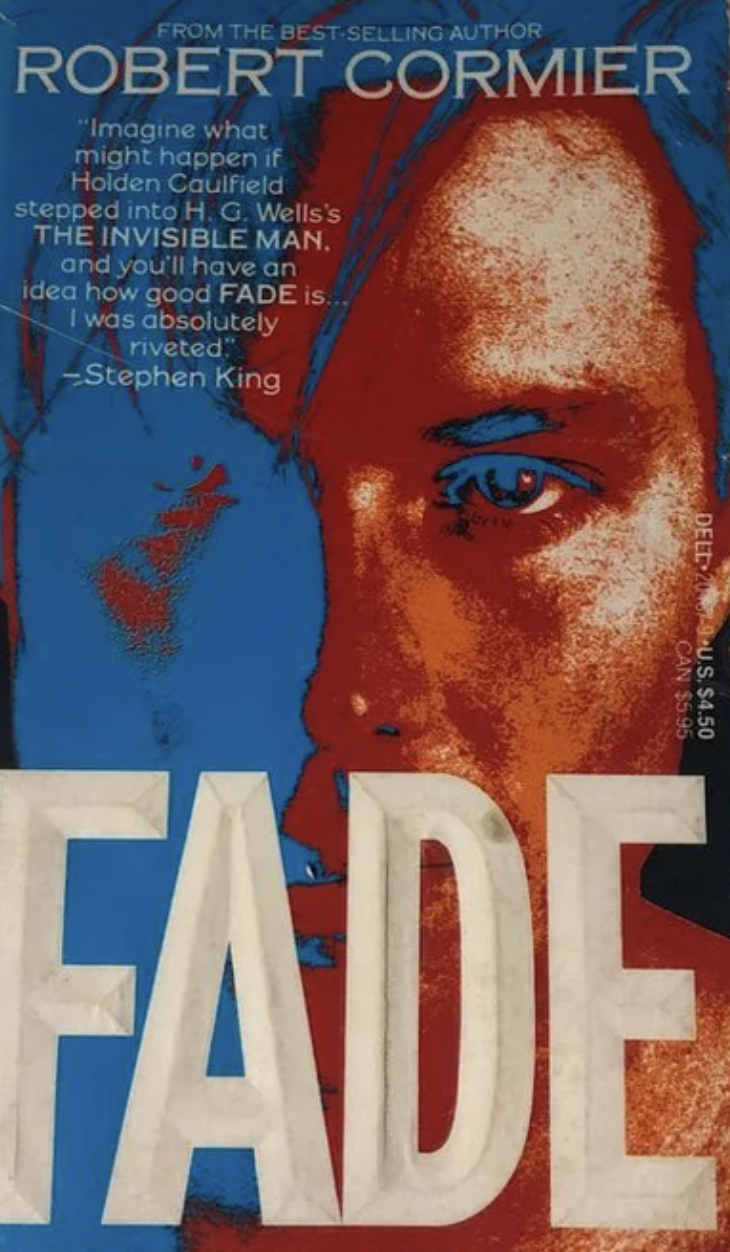
Whenever I read a Robert Cormier book, I think that most adults could read it and get into it. I’m not sure if I could say the same thing for today’s YA fiction, most of which gives me a headache because the writing seems childish. To be fair, a lot of stuff gives me headaches nowadays. I should probably get that checked out. But reading Robert Cormier books has not given me any headaches. Just for that, I’m a fan.
*****
It’s the oldest story in the world, 1990s style!
Man meets woman; man falls in “luuuvvv” with woman; man gets sucker-punched by reality!
The Sunset Rises: A 1990s Romantic Comedy is now available on Amazon !
Here’s some more “What was the deal with…?”:
What was the deal with… Slaves of New York by Tama Janowicz?
What was the deal with… Less Than Zero by Bret Easton Ellis?
What was the deal with…? From Russia With Love by Ian Fleming
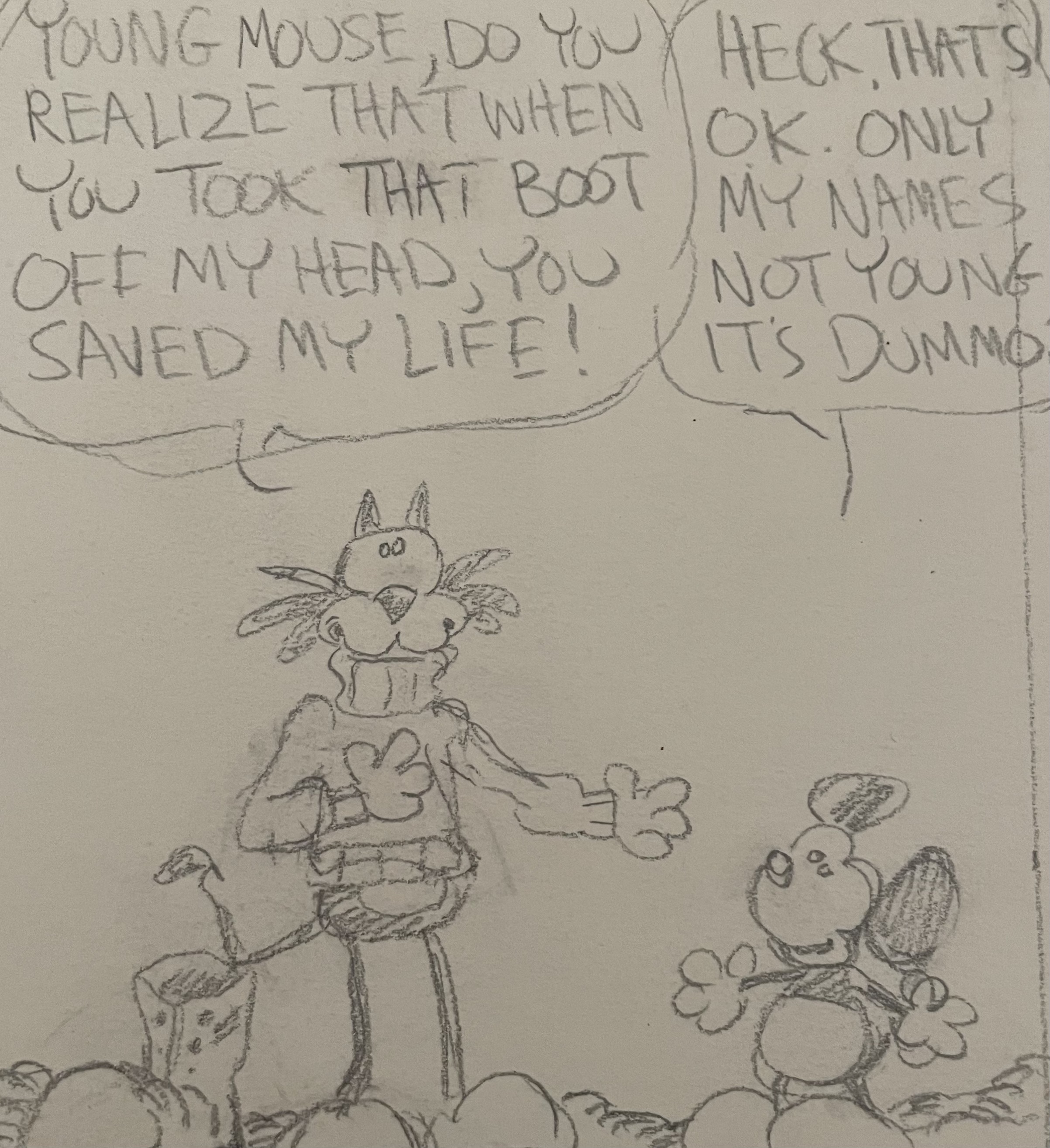
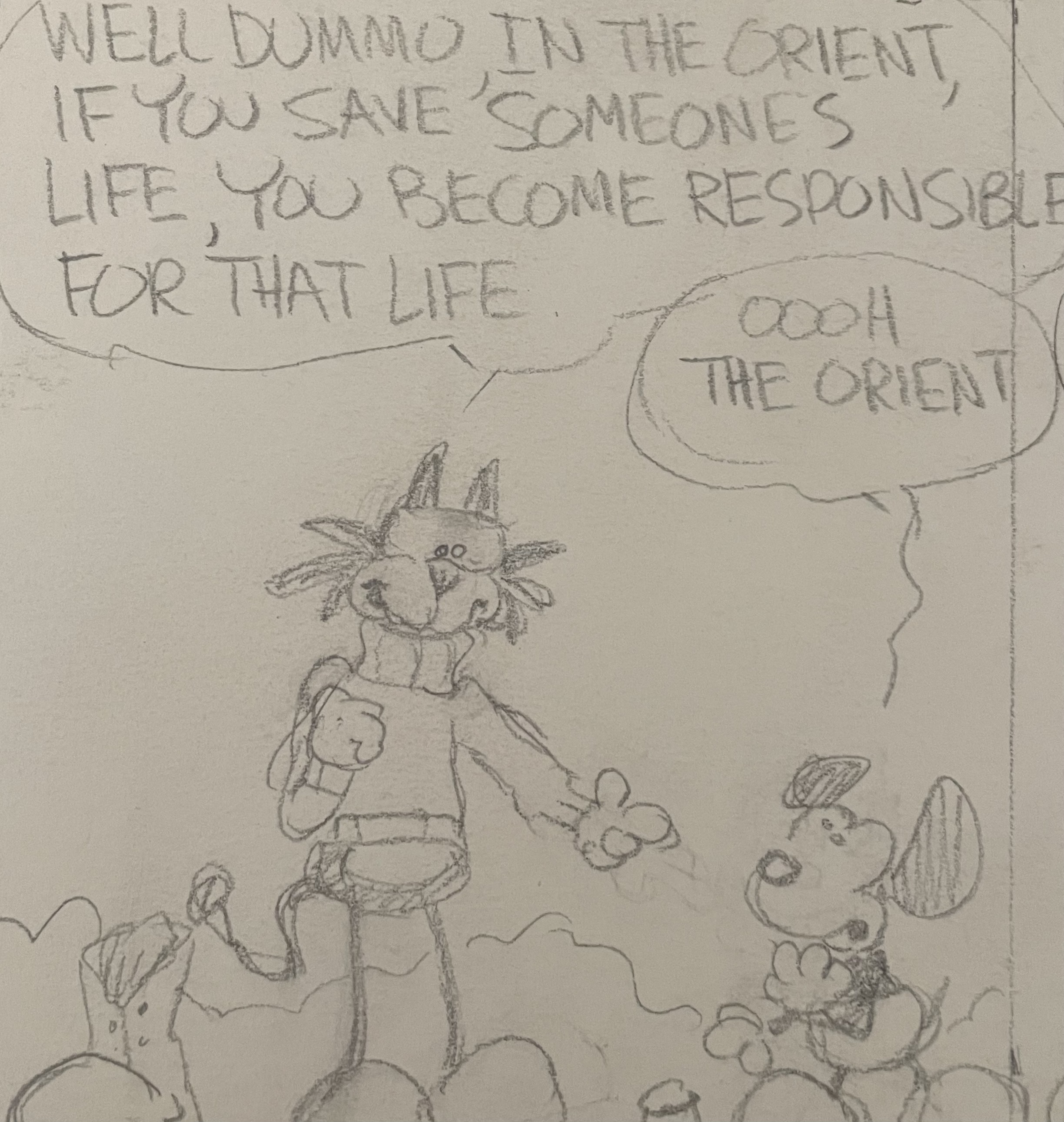
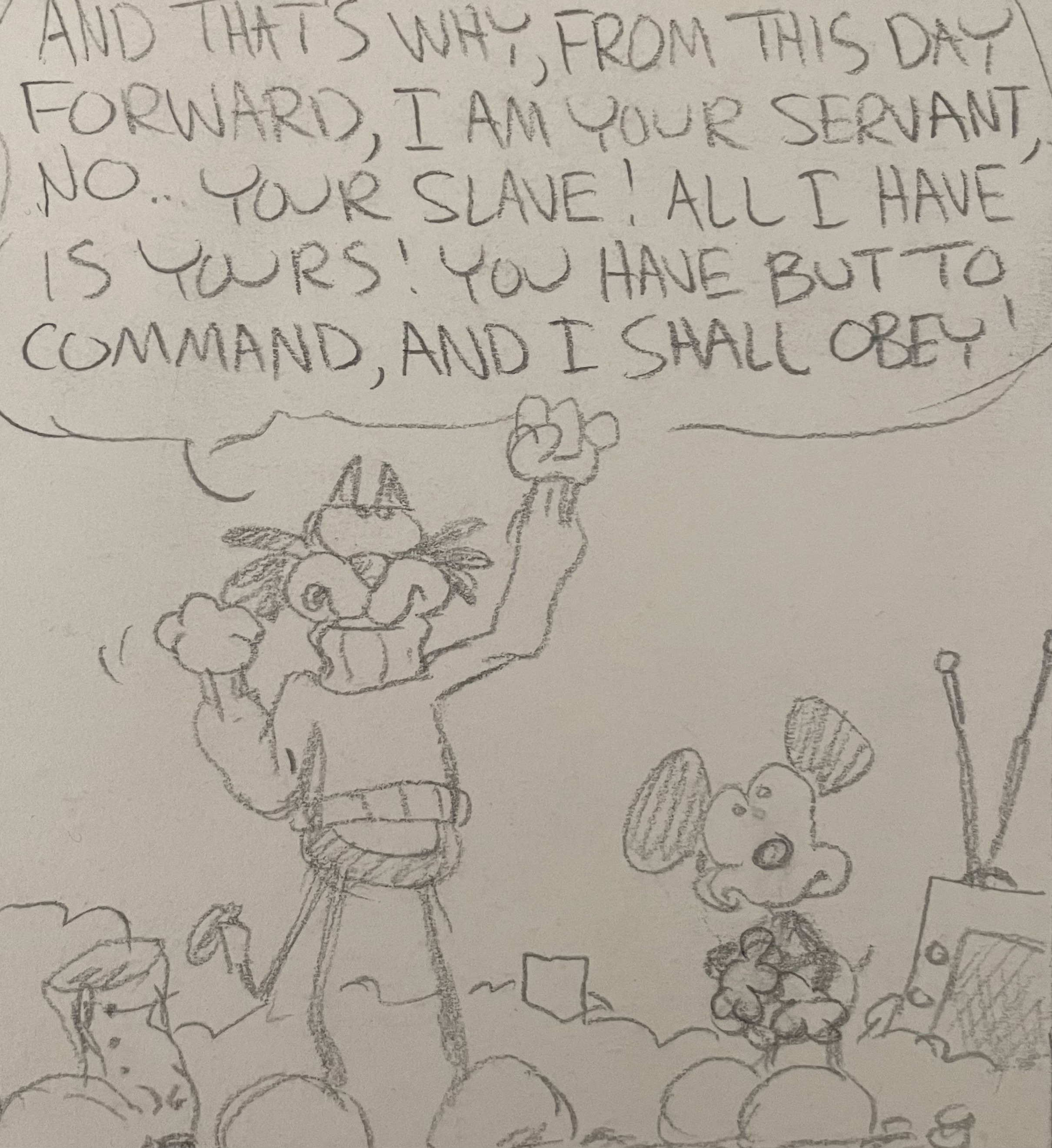
Here’s another 1983 episode of Dummo Mouse that my older brother didn’t finish. This strip is just one of a bunch of pencil-only Dummo Mouse rough drafts that he never inked. He had several reasons for not finishing. At first, life got in the way. My older brother got married and had kids, and his work load increased. Then he started messing around with other creative ideas.
When I asked my older brother when he was going to finish inking Dummo Mouse back in the mid-1980s, he said he’d do it after he worked on his newest idea (he had some good ideas!). Then he said he’d get around to it. Then he started getting mad at me for mentioning it (maybe asking twice a day was too much). Then he told me to ink them myself (he knows I’d never try that).
I don’t think he’s going to ink these unfinished strips. If anything, George R. R. Martin is more likely to finish writing The Winds of Winter than my older brother is of inking the rest of his Dummo Mouse comic strips. I’d kind of like both of them to finish, though.
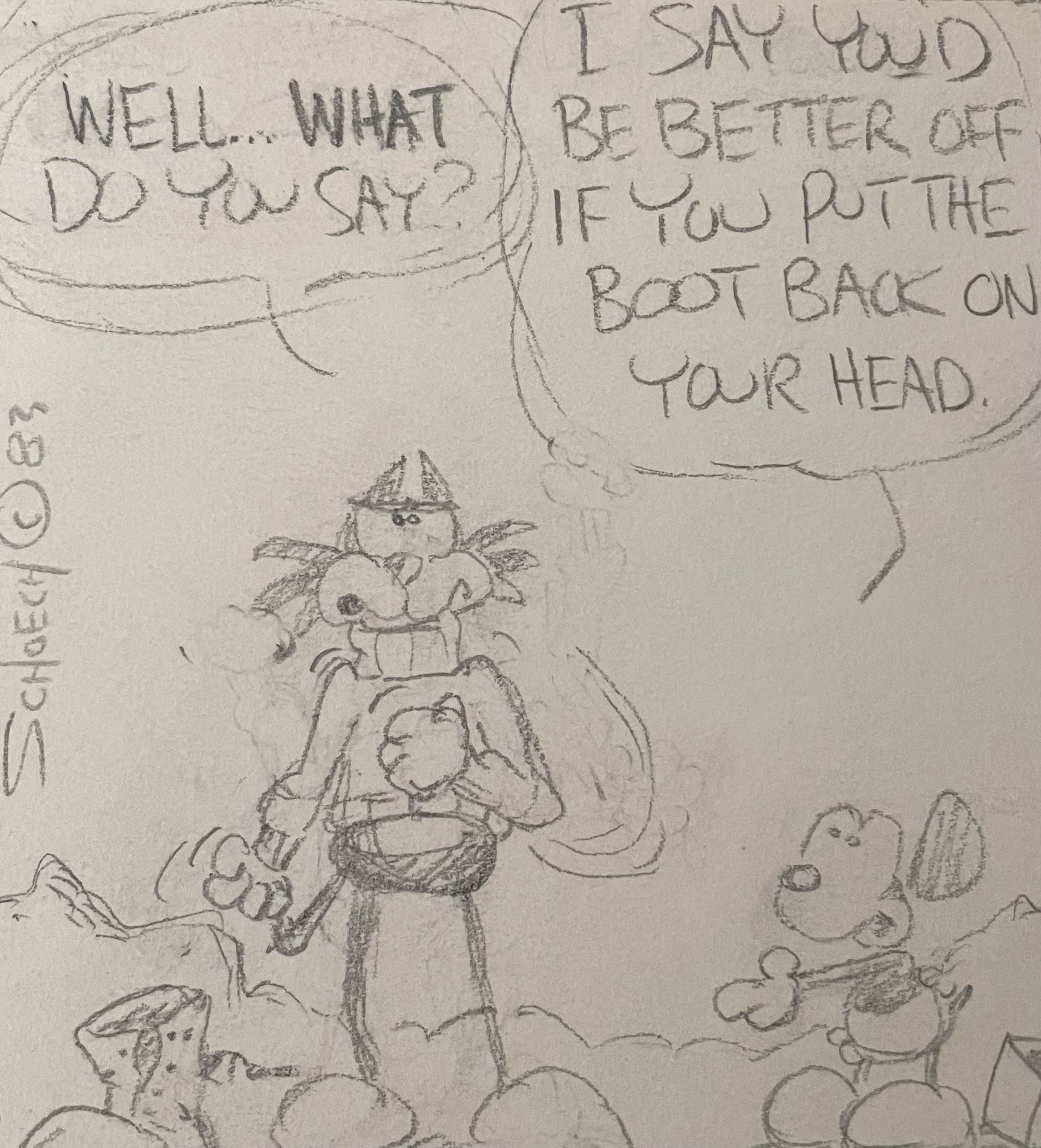
For more of my older brother’s completed comic strips see Sunday Funnies and Calloway the Castaway.
*****
It’s the oldest story in the world, 1990s style!
Man meets woman; man falls in “luuuvvv” with woman; man gets coldcocked by reality!
The Sunset Rises: A 1990s Romantic Comedy is now available on Amazon and from the trunk of my car!
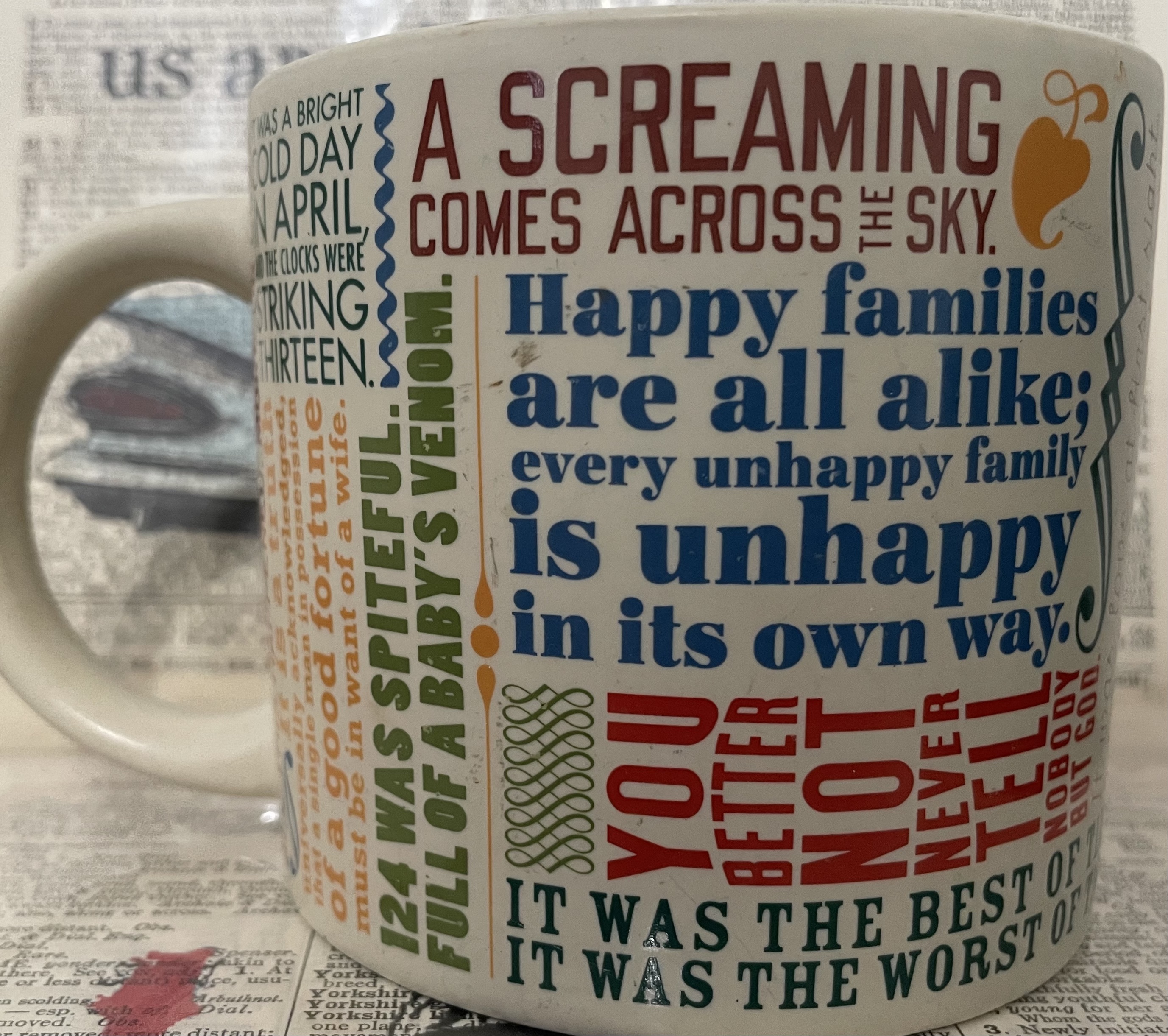
It was easier than I thought it would be choosing the BEST SENTENCE EVER! The mistake that most book snobs make when debating about the BEST SENTENCE EVER is that they argue about well-written sentences from great literary works, but all that does is get a bunch of literary eggheads to start quote-testing each other for clout.
To me, the BEST SENTENCE EVER should have a practical value. It should be something that is understandable to the common person. It should be a sentence that doesn’t require the context of a masterpiece written decades/centuries ago.
Keep that in mind as I compare my BEST SENTENCE EVER with those of other literary eggheads from 2014.
THE BEST SENTENCE EVER RANT!!!!! (2014)
Some guys from a literary magazine have devised a list of the ten best sentences ever. I don’t like this list because I’m pretty sure the judges haven’t read every sentence ever written. Their selections are limited to famous literary authors like Ernest Hemingway and F. Scott Fitzgerald and Jane Austen. These might be some of the best authors ever, but that doesn’t mean that one of them wrote the best sentence ever. There’s a chance that some unknown schmuck has written a really great sentence and we’d never know it because it’s in some book that the judges never read.
Maybe the best sentence ever was written on a blog or on Wikipedia or on Twitter (very unlikely). Maybe James Patterson has written the best sentence ever, and the judges never read anything by James Patterson. Maybe one of James Patterson’s co-authors has written the best sentence ever, but nobody wants James Patterson to take credit for it, so nobody has called the real best sentence ever “the best sentence ever!”
I think the best sentence ever is “You suck!”
“You suck!” is short, but it packs a punch. Ernest Hemingway might not ever have written “You suck,” but he’d know what it means, and he might have wished that he had written it first.
And “You suck!” is the perfect way to end any rant.
When James Patterson decides to write two books a month instead of one, you can say to him: “You suck!”
When some guy wants to print out every page of Wikipedia and call it art, you can say to that guy: “You suck!”
When some literary judge chooses a convoluted sentence by F. Scott Fitzgerald as the best ever, you can say to that judge: “You suck!” or “That sentence sucks!”
Now, I’m not the kind of person who says “You suck!” to other people, so maybe I’m a hypocrite, but “You suck!” is still the best sentence ever, even if I never say it.
UPDATE (2025)
I say “You suck!” much more frequently than I did in 2014. I usually say it to inanimate objects when they’re actively working against me, but I have to be careful if there are other people around. A few weeks ago, I said “You suck” to a can of beans in a crowded grocery store (it was the wrong can of beans). I had to clarify to other people jostling through the aisle that I was talking to the can of beans and not to them. Those people around me might have sucked, but I wasn’t 100% certain, and I didn’t want to throw around false accusations.
Fortunately, nobody took it personally. Even the can of beans didn’t seem to mind. I’m too old to get punched out for blurting out “You suck!” in public.
I still think “You suck!” can be considered one of the best sentences ever. It’s not the fault of “You suck!” if I misuse it in public and get punched out.
Here’s where you can find the original “You suck!” rant (and much more!): The Literary Rants (2014)
*****
It’s the oldest story in the world, 1990s style!
Man meets woman; man falls in “luuuvvv” with woman; man gets shlobberknocked by reality!
The Sunset Rises: A 1990s Romantic Comedy is now available on Amazon !
Most of my older brother’s remaining Dummo Mouse strips from 1983 made it only to the pencil stage, so this week’s strip is an experiment to see how pencils-only translate to a blog. If it’s too light for you to see, then… I don’t know. I see these panels just fine, but I’m on a desk top right now. If you’re on a laptop or a phone, it might be different.
If you want more context for this strip, (why is there a boot on Shmitty Cat’s head?), read this first.
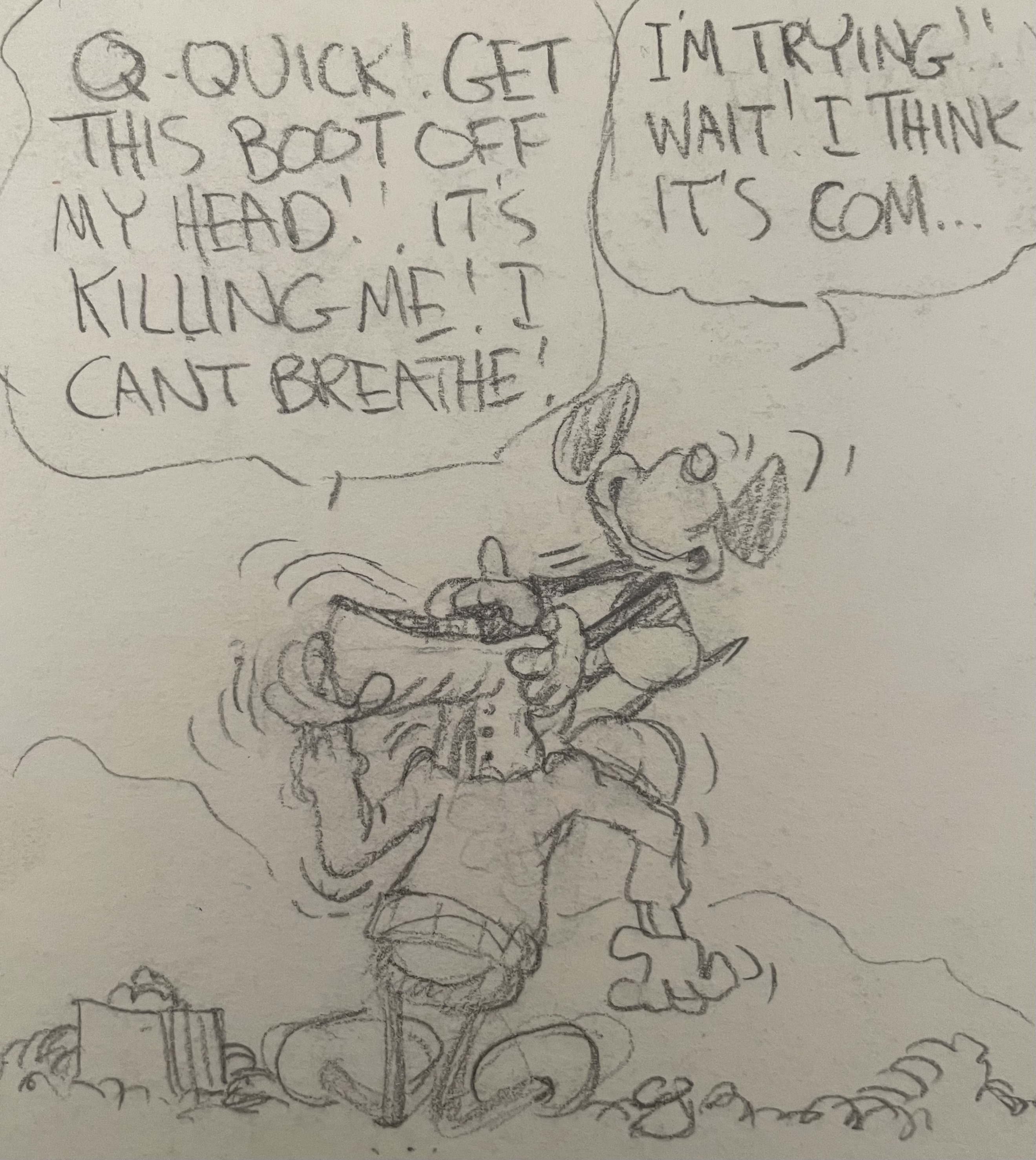
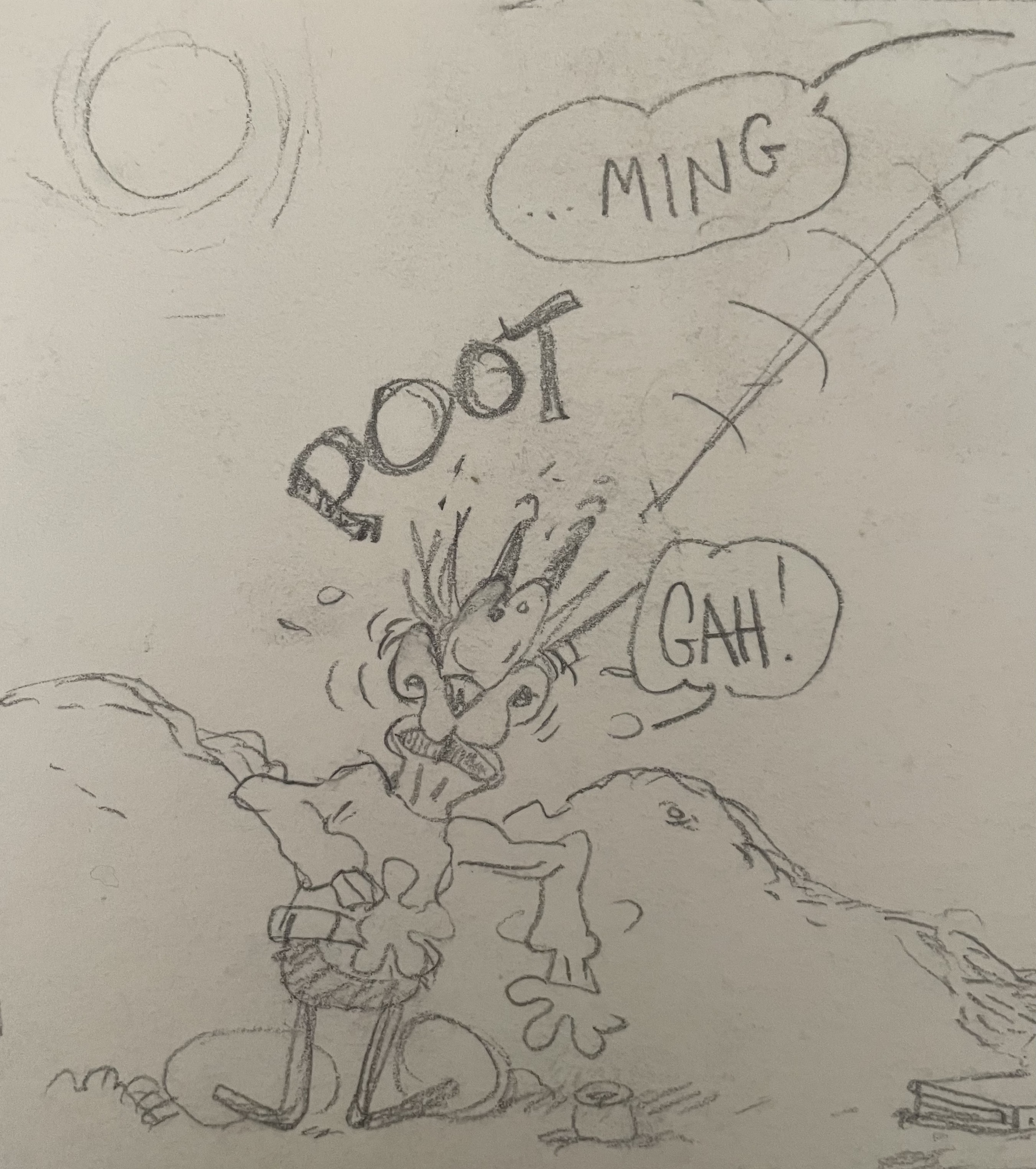
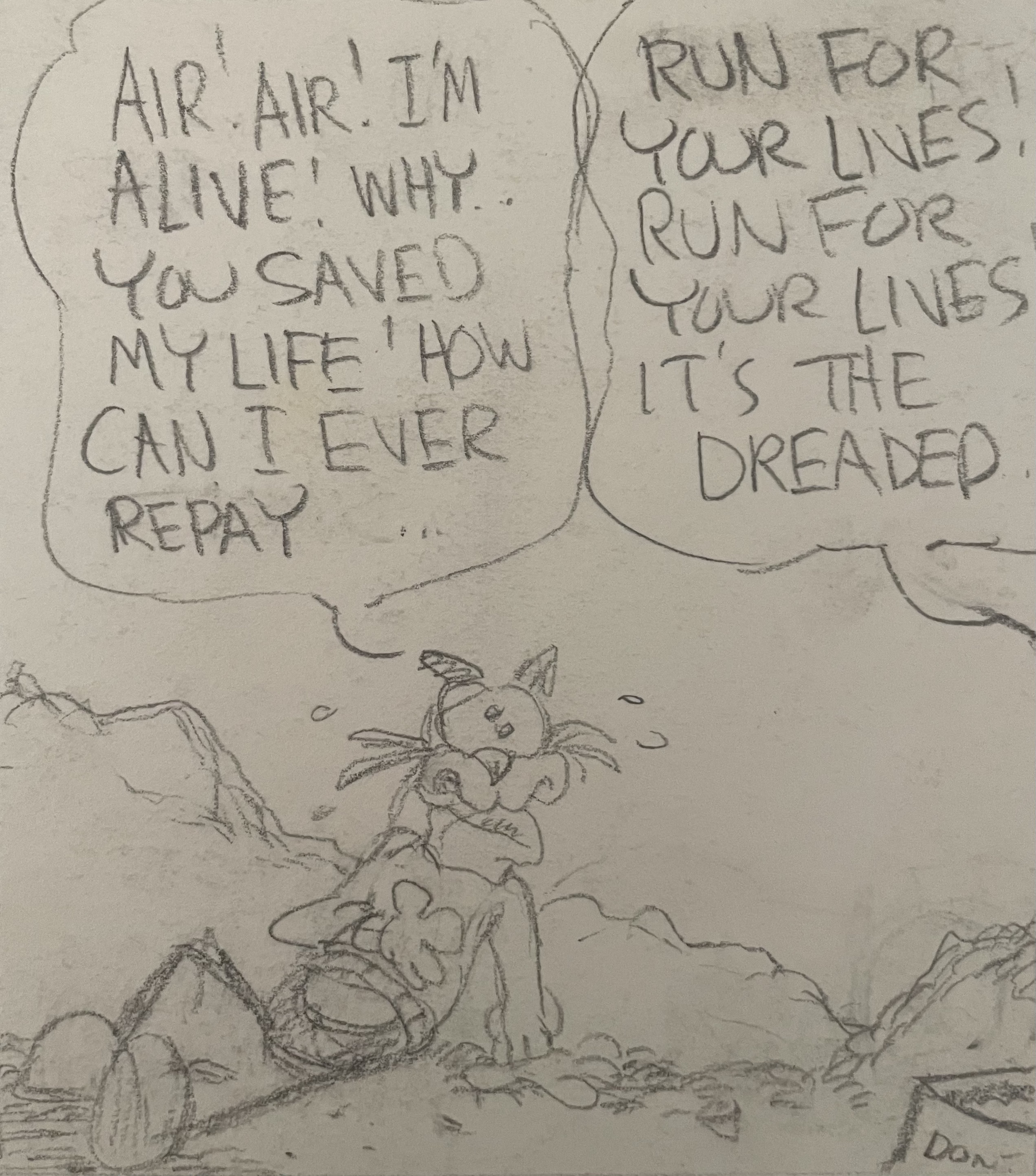
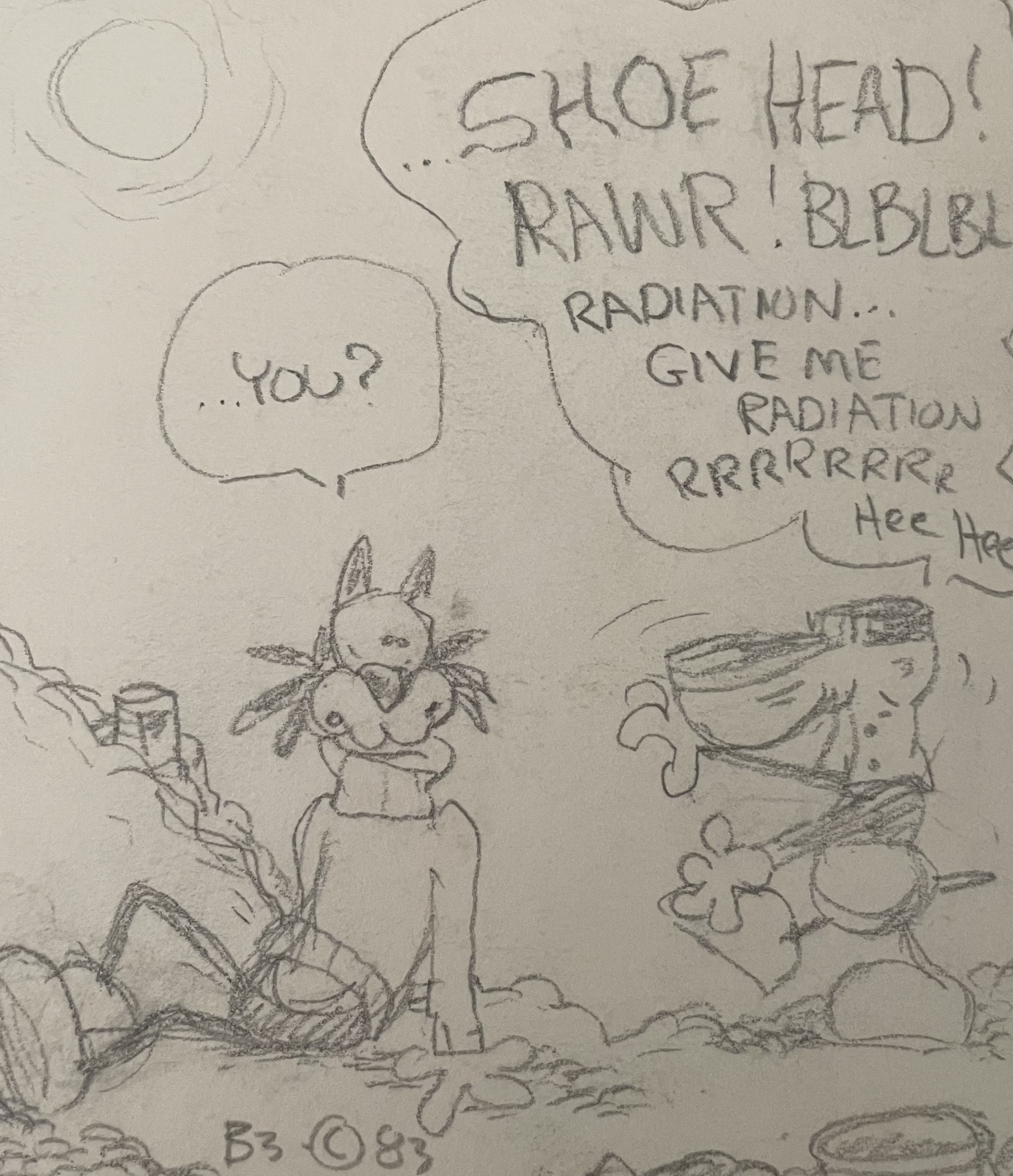
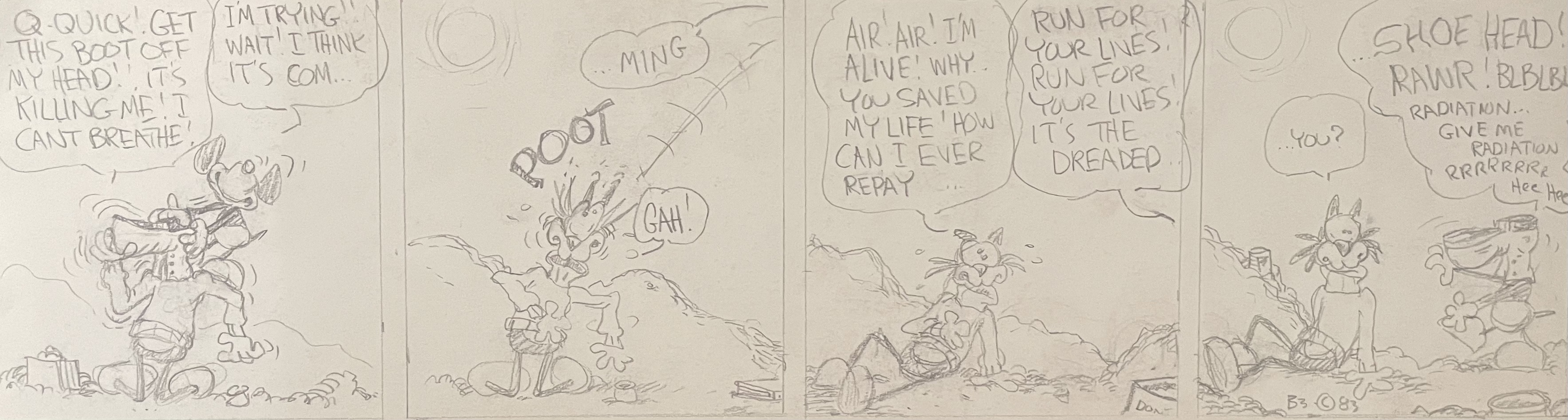
For more of my older brother’s comic strips see Sunday Funnies and Calloway the Castaway.
*****
It’s the oldest story in the world, 1990s style!
Man meets woman; man falls in “luuuvvv” with woman; man gets slammed by reality!
The Sunset Rises: A 1990s Romantic Comedy is now available on Amazon and from the trunk of my car!
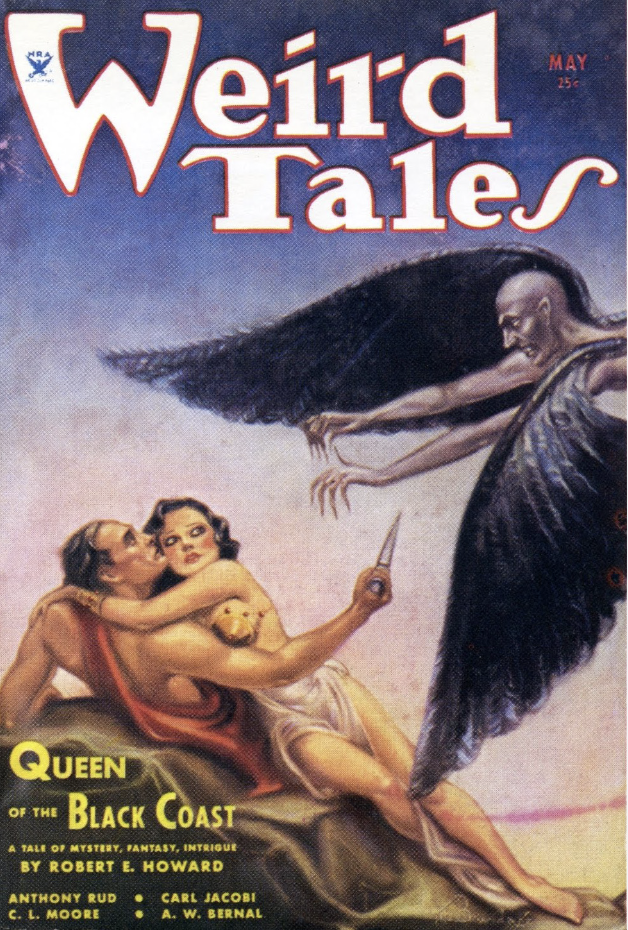
Conan the Barbarian (or Conan the Cimmerian, the Warrior, the Wanderer, the Adventurer, the Destroyer…) is public domain now, so a bunch of authors/artists who are not Robert E. Howard are writing/drawing their own Conan stories/comic books, and they all suck. I mean, the stories and comics suck (I might be using the word ‘suck’ too loosely), not necessarily the authors/artists. A few decades ago, a writer named Karl Edward Wagner wrote a couple Conan novels, and they sucked, but Karl Edward Wagner didn’t suck. Another famous author Robert Jordan also wrote a bunch of Conan novels, and he didn’t suck either (but his Conan novels did).
Robert E. Howard’s original Conan stories appeared in the pulp magazine Weird Tales in the early 1930s. Back in the 1970s (when I first became aware of Conan), you couldn’t buy those pulps, so if you wanted to read Conan short stories, you almost had to buy books with fake Conan stories too. Authors like L. Sprague deCamp and Lin Carter, who were putting together the old Conan stories short story collections, would add their own Conan stories to the books (with permission from the Robert E. Howard estate). You didn’t have to read the L. Sprague deCamp short stories, but you had to had to buy them if you wanted to read Robert E. Howard Conan.
Now, there are books only with Robert E. Howard versions of Robert E. Howard stuff, and that’s what a lot of Conan fans want.
Some people like these fake Conan books/stories/comics, and that’s fine for them. I don’t want to ruin anybody else’s enjoyment. I just think of the good fake Conan stories as good stories about a random barbarian who happens to be named Conan. It’s not THE Conan.
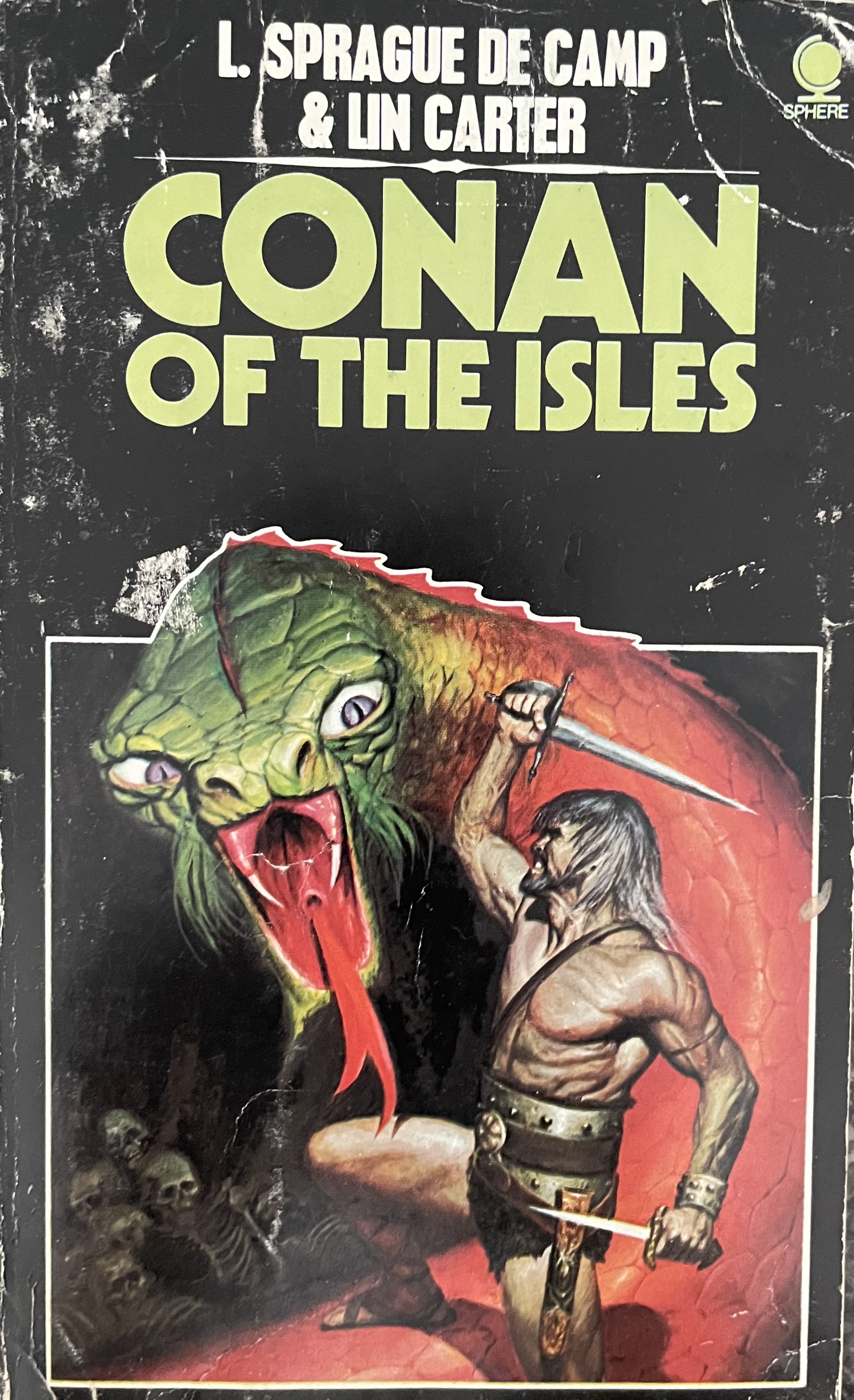
To me, there’s only one good Conan author, and that’s Robert E. Howard. I’m not going to get too much into his background because you can get that anywhere, and on this blog I like to focus on my opinions and my own writing when I get around to it (I guess I’m kind of selfish). Yeah, Robert E. Howard killed himself in 1936, and that’s not really something to brag about, but he knew how to write a good sword&sorcery story. Some people even give credit to Robert E. Howard for creating the sword &sorcery sub-genre. I’m not sure that Robert E. Howard created it, but he definitely perfected it.
It’s tough to get the right balance of all the elements in a good Conan story. The problem with most fake Conan authors is that they can’t get that right mix of everything (action, horror, politics, sex, violence, magic… I’m probably leaving something out) in sword&sorcery and Conan stories. Too many fake Conan authors focus almost exclusively on the sorcery elements while Robert E. Howard stories usually combined on human vs. human conflict with minor sorcery side elements.
Sometimes the sorcery/monster elements were added just so the stories could get into magazines like Weird Tales. For example, the Conan short story “The Phoenix on the Sword” was originally written as a Kull story called “By This Axe I Rule.” The Kull story got rejected by Weird Tales because it was a straight medieval type tale with no sorcery, monsters, or anything weird. Rather than send the story to other pulp magazines, Howard rewrote it as a his first Conan story, threw in some unnecessary horror/sorcery elements, and got it published. That’s how Robert E. Howard rolled. I like the Kull story better, though.
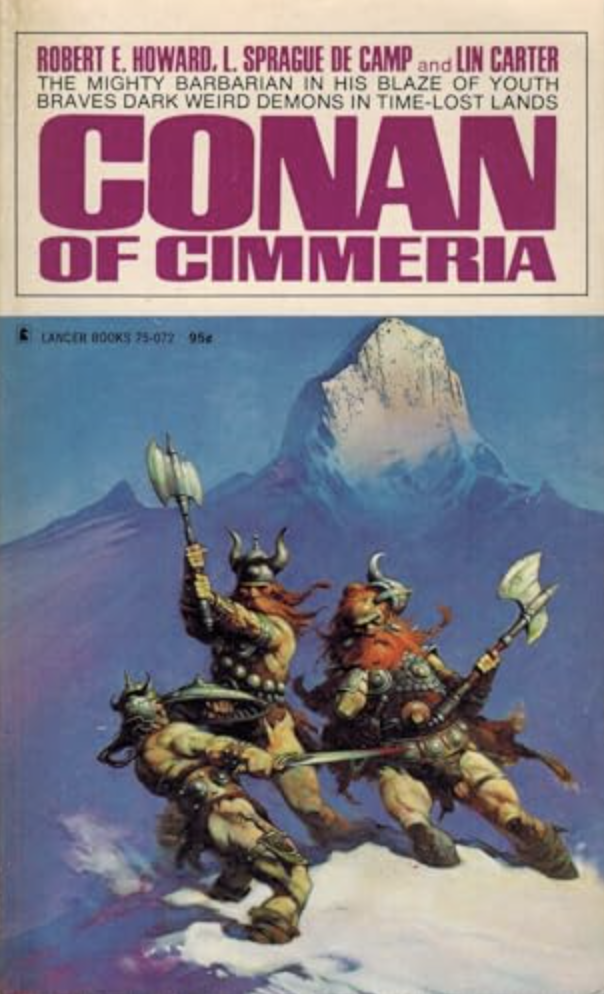
Even with all the new stuff out there now, if I feel like reading a Conan story, I’ll just reread one of Robert E. Howard’s good Conan stories. Sometimes I’ll read one of his non-Conan stories just for the heck of it.
BEST CONAN STORIES (not necessarily in order)
Red Nails
Beyond the Black River
People of the Black Circle
Tower of the Elephant
WORST CONAN STORIES (even Robert E. Howard can have a bad day)
The Frost Giant’s Daughter (it’s not a bad story, but it… uh… puts Conan in a really bad light)
Jewels of Gwalahar (way too much clumsy exposition)
The Vail of Lost Women (also doesn’t present Conan favorably… plus, it’s just not a good story)
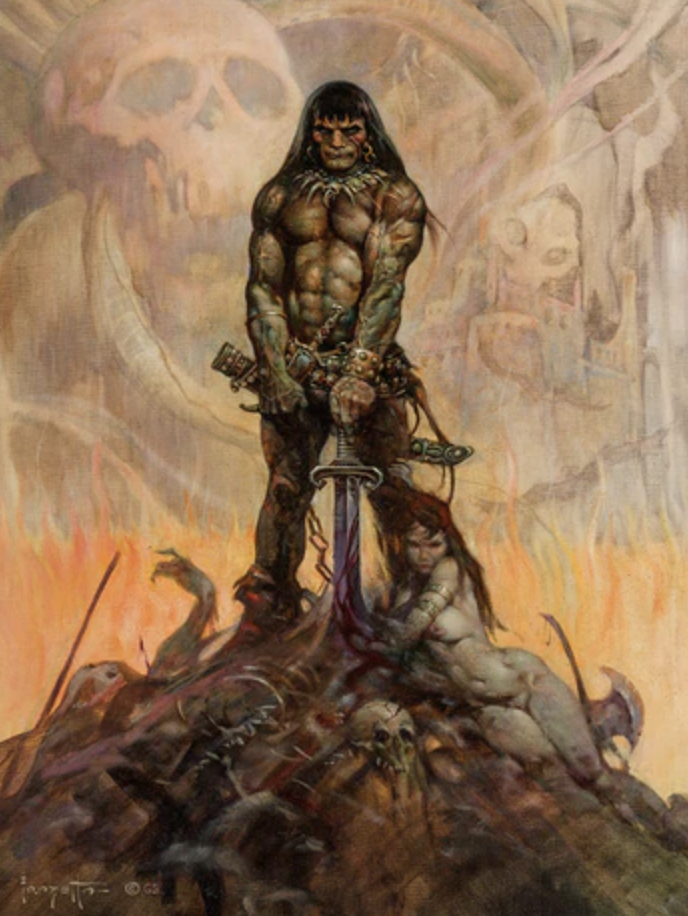
There are several formulaic Conan stories, but they’re not bad if you don’t read them all at once.
BEST NON-CONAN ROBERT E. HOWARD STORIES
The Shadow of the Vulture (with the only literary appearance of the true Red Sonya)
The Dark Man
Sons of the White Wolf
Night of Kings
Worms of the Earth
There are a lot of other good Robert E. Howard short stories, but this is a decent start, and I’m sure a lot of Robert E. Howard fans will disagree with me about best and worst stories. That’s great! Just don’t insult me because you disagree with my opinions. That would be stoopid. Some book readers take their opinions way too seriously.
Since more people are writing Conan stories, more people are probably reading Conan stories (I hope that I’m not making up that cause-effect relationship). At any rate, Howard’s Conan stories are much easier to find now than they were in the 1970s when I first started reading them, and I’m glad for that. With Conan going public domain, there’s going to be (and already is) a lot of new Conan of Cimmeria stuff being published, which is fine, but for me, I’ll just stick with Robert E. Howard.
In case you can’t tell, I’m a Robert E. Howard fan. Here are a few other posts that I’ve written about him.
The Famous Author Who Thought His Stories Were Junk
Robert E. Howard’s Letter to Two Nerds in the 1930s
What Dead Author Should A.I. Steal From? How about… Robert E. Howard!
My one and only novel (mentioned below) even has a Robert E. Howard reference.
****
It’s the oldest story in the world, 1990s style!
Man meets woman; man falls in “luuuvvv” with woman; man gets blindsided by reality!
The Sunset Rises: A 1990s Romantic Comedy is now available on Amazon and from the trunk of my car!
Please excuse this contrast between ink and regular pencil in today’s comic strip. From what I can find from old boxes, it seems like my older brother never got around to inking the rest of these never-before-seen Dummo Mouse episodes from the early 1980s. In fact, the rest of the comic strips are in pencil only, so next week we’ll see how pencil by itself looks on a blog post. Until then…
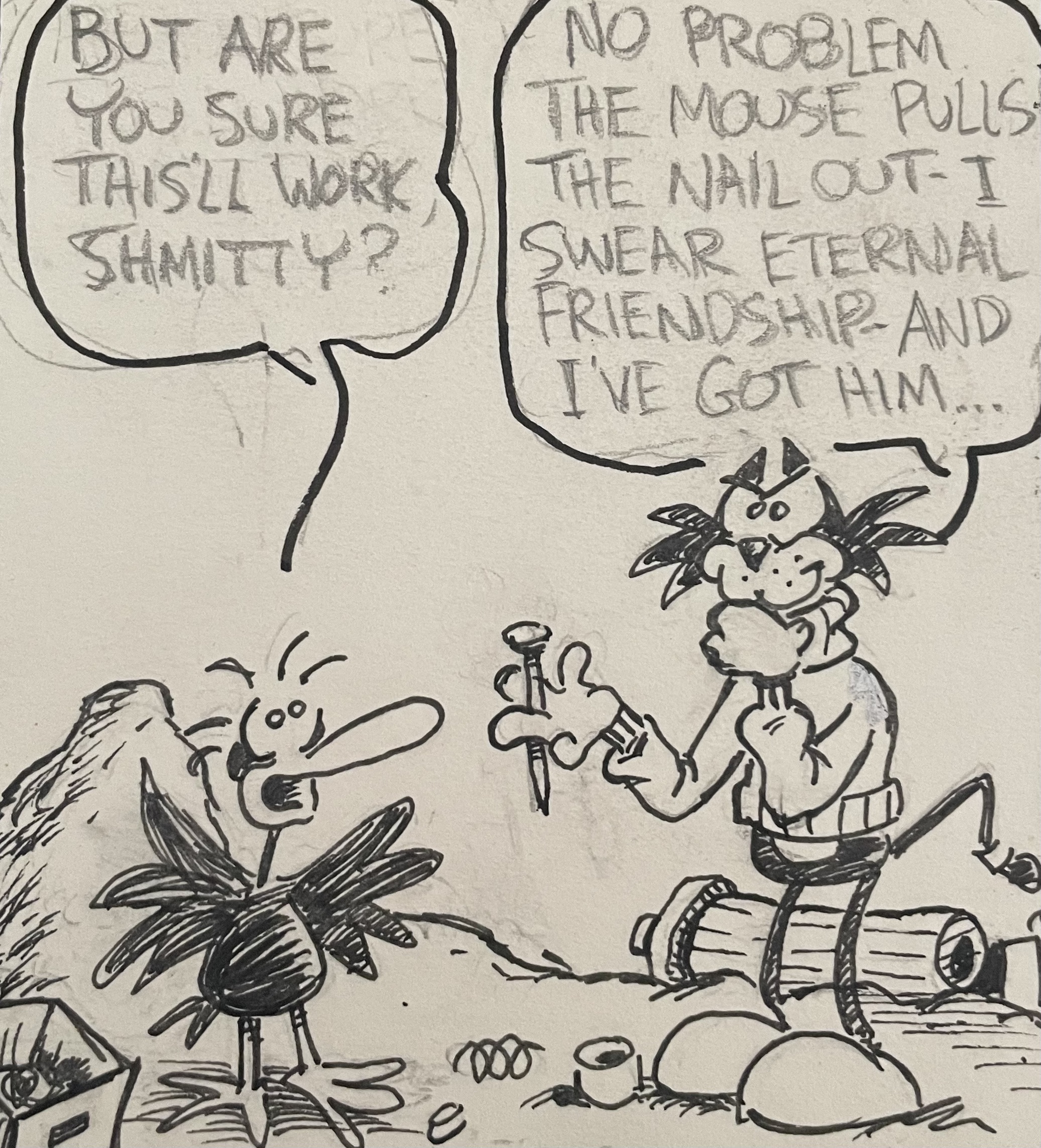
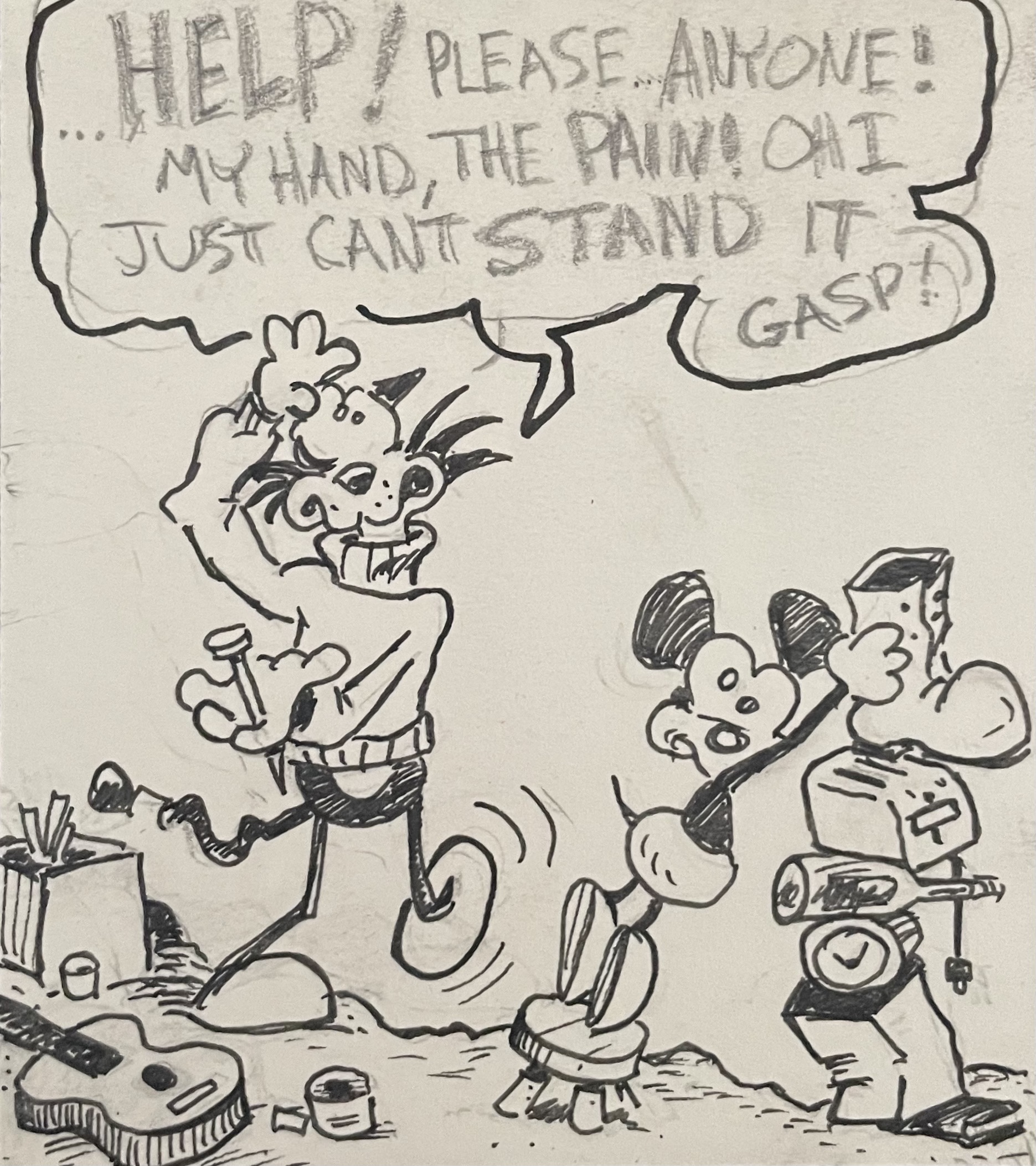
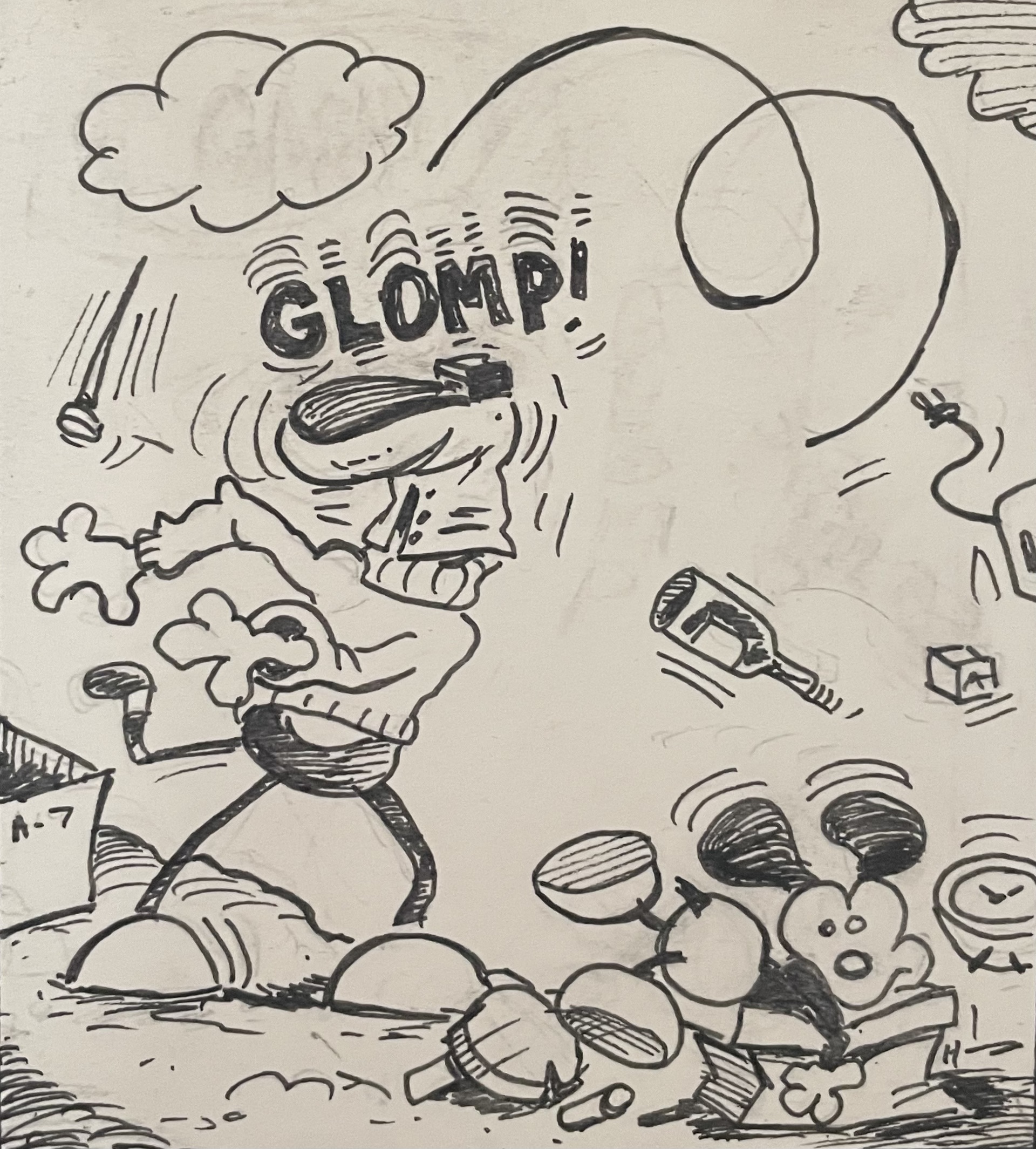
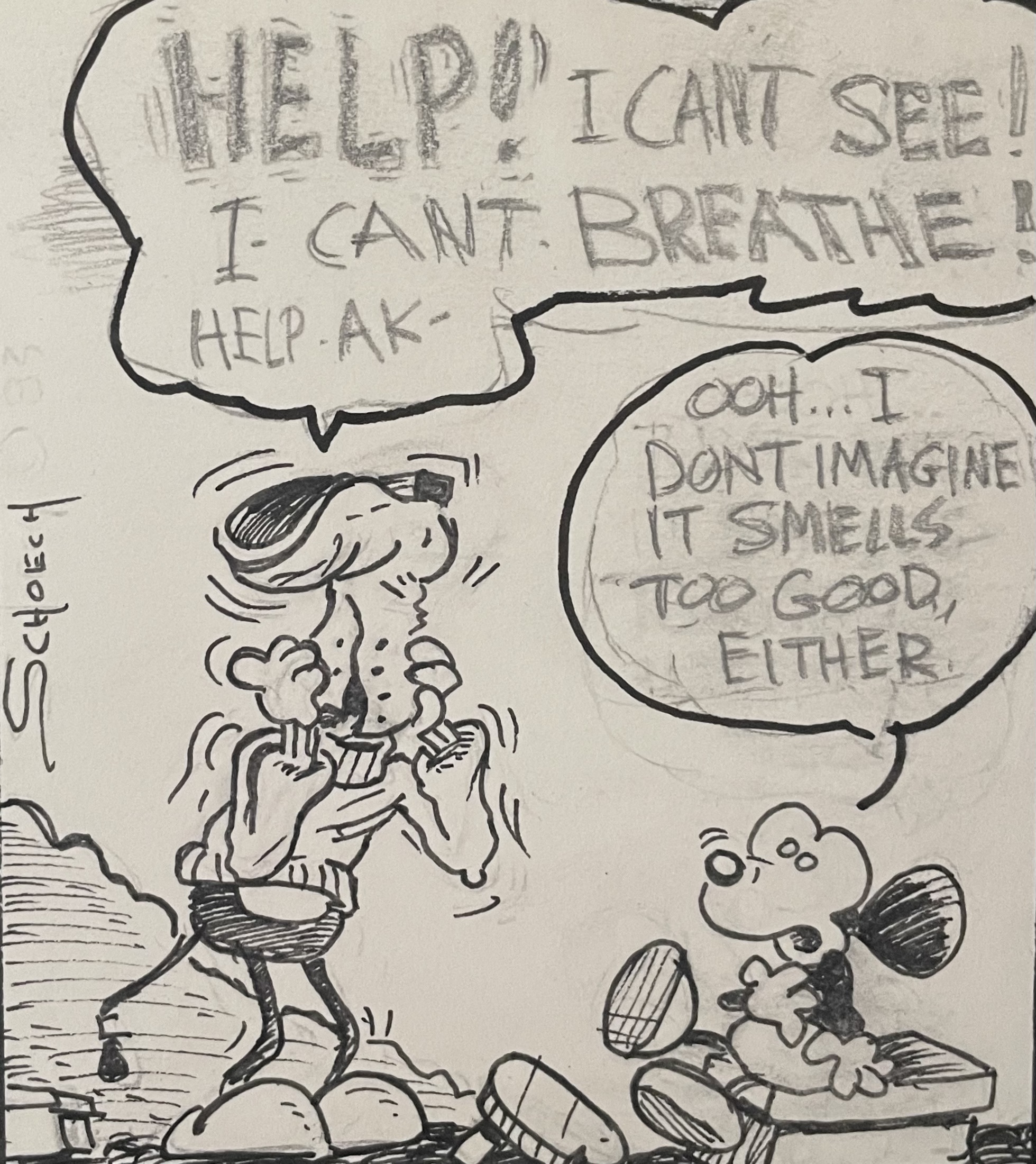
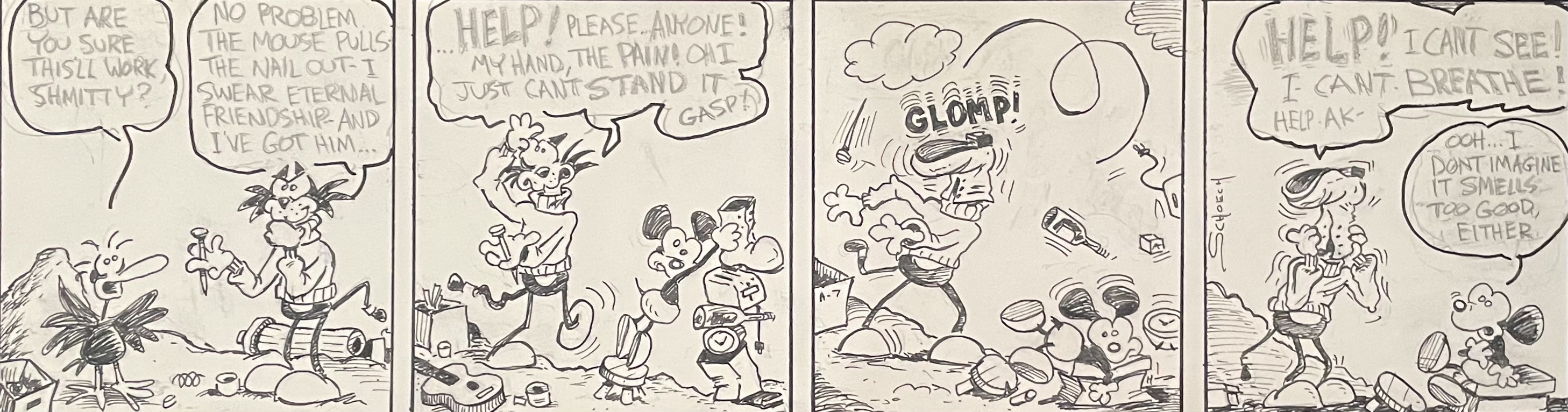
For more of my older brother’s comic strips see Sunday Funnies and Calloway the Castaway.
*****
It’s the oldest story in the world, 1990s style!
Man meets woman; man falls in “luuuvvv” with woman; man gets blindsided by reality!
The Sunset Rises: A 1990s Romantic Comedy is now available on Amazon and from the trunk of my car!
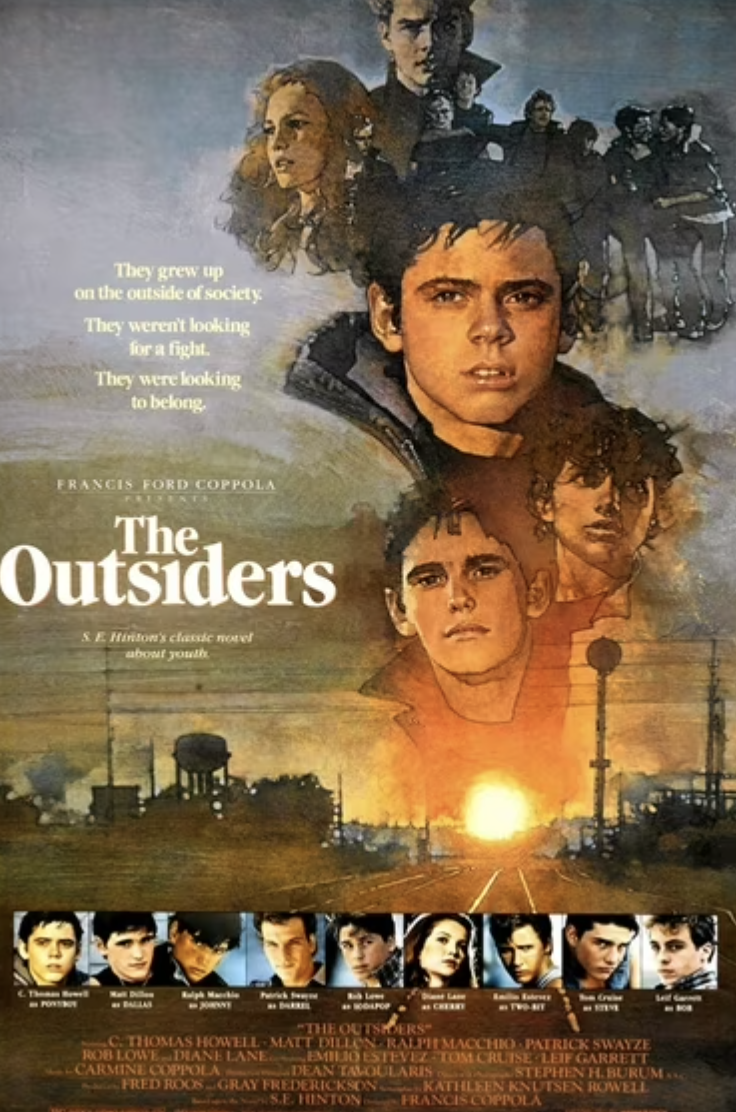
Years ago when I was still teaching, my 8th grade English classes would read The Outsiders by S.E. Hinton (Did S.E. Hinton really write The Outsiders by herself?), and at the end of the unit we’d watch the 1983 movie with Patrick Swayze, Diane Lane, Tom Cruise, and a bunch of other 1980s actors.
At the end of my 6th period (it was one of THOSE kinds of classes), one of the more disruptive boys (he actually was disruptive) made a lewd comment about Cherry Valance, the only significant female character in the book/movie.
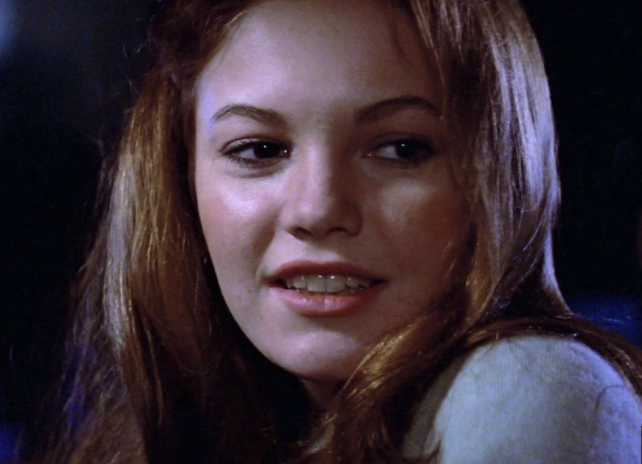
Cherry had been portrayed by actress Diane Lane, and she was one of those actresses that a lot of guys in the 1980s thought was good looking. Yeah, she was a hot chick from a teenage guy’s point of view (I might have to be careful talking about stuff like that), even in those late 1950s early 1960s outfits.
I could have ignored the comment. I ignored a lot of comments back then. Teachers survive by ignoring a lot of comments. But I didn’t want to ignore this one. His comment had been loud enough for me to hear, and if a teacher gets a reputation for allowing too much stuff in his/her classroom, then bad stuff happens later. The challenge is finding an effective response for this kind of thing. Maybe I could have lectured the guy who made the lewd comment, but it wouldn’t have done any good. Lectures usually make the original comment funnier.
Instead of a lecture, I said, “Ew, you have a crush on Superman’s mom.”
The kid looked perplexed.
“Cherry was Superman’s mom in that Superman vs. Batman movie.”
Several kids snickered because they knew what I was talking about.

The kid pulled out his phone (phones were ‘allowed’ in school at the time) and verified the information. His jaw dropped in horror. ‘Horror’ might be a strong word. To me, Diane Lane still had it going on. I mean, if I had the chance, I’d still…
Anyway, the kid retracted his lewd statement by repeating “No! No! No!” several times, and the rest of the class laughed at him. I always remember that moment fondly because after that, the kid toned down his behavior a little. He still caused problems, but it was more good-natured than malicious, so we got along. It always helps if you get along with the students.
Plus, whenever I see Diane Lane in Superman vs. Batman, I think, “Yeah, I’d still….”
Never mind.
*****
For more Challenges in Teaching, see
Challenges in Teaching: Feeling Mediocre and
Challenges in Teaching: Getting Students To Pronounce My Name Correctly .
And here’s my one and only novel:
If you’re an average guy and a hot chick shows interest in you, WATCH OUT!!!
The Sunset Rises: A 1990s Romantic Comedy is now available on Amazon and from the trunk of my car!