
How could you NOT want him to show up in your dreams?
I had a dream with Scott Baio in it last night. It wasn’t “that” kind of dream, if you know what I mean. I wouldn’t even call it a Scott Baio dream because I don’t remember enough to say how much Scott Baio was in it. All I can tell you is that somebody in the dream said something funny to Scott Baio, and I woke up laughing.
I don’t know if it was a joke or an insult, but whatever it was, it was pretty funny because my wife said I laughed out loud in my sleep, and I rarely laugh out loud, even when I’m awake.
This isn’t the first time I’ve had a Scott Baio dream. Scott Baio first appeared in one of my dreams in 1991 or 1992. Maybe “appeared” isn’t the right word. He was mentioned. I clearly remember a friend of mine named Kirk in my dream saying “I always thought Scott Baio was underrated.”
That’s when I woke up, perplexed. Why was my friend Kirk talking about Scott Baio? Kirk was real, and I knew Kirk pretty well, and he’d never mentioned Scott Baio before. The next time I saw Kirk, I asked him if he thought Scott Baio was underrated. He sneered at me and said, “Scott Baio, that m***********?”
A few years later, Scott Baio invited me to a party, and I bragged to my friends that I was going to Scott Baio’s party, but I woke up before I got there. That kind of sucked because I bet Scott Baio could throw a wild party.
A few years after that, I was cohosting a variety show with Scott Baio, and I made it on onstage and delivered my first lines without dry heaving. Our first guest was some guy named Johnny Chode, and when I introduced him, the audience roared. Maybe it was my delivery that got the positive reaction.
That was actually a pretty good dream. I was a little disappointed when I woke up. It felt good to speak in front of a large audience without dry heaving. Thank you for that, Scott Baio.
A couple summers ago, I saw Scott Baio giving a speech at the Republican National Convention. I turned to my wife and asked, “Am I in the middle of a Scott Baio dream?”
She said something with the word nightmare, and I went into the other room. I don’t like political conventions, even if my buddy Scott Baio is speaking.
I don’t know why Scott Baio keeps turning up in my dreams. I stopped watching Happy Days before he became a regular. I never watched Joanie Loves Chachi. The kids in Charles in Charge were annoying. I have no connection to him that I know of.
I could understand if other famous people were in my dreams. I’m surprised Stan Lee has never shown up. I’ve read so many comic books that Stan Lee owes me a moment or two. Tom Hanks, Homer Simpson, the sax player from Madness, I could understand if they showed up in my dreams from time to time. But Scott Baio?
I believe that dreams can have meaning, but I’m not the kind of guy who can figure it out. I can barely decipher basic poetry. When I read “The Road Not Taken” by Robert Frost, I just say “Get a map.” My wife has a theory about my Scott Baio dream, but I don’t believe I’m repressing anything. I don’t deny that I repress stuff, but not that. I don’t have any problem with what my wife claims I’m repressing, so I wouldn’t repress it.
This might end up being one of the great mysteries of my life. I’m pretty sure I’ll never meet Scott Baio, and even if I did, he wouldn’t know why he’s in my dream. Maybe I’m in Scott Baio’s dreams, and he doesn’t know who I am. He might wake up once every few years wondering who that awkward quiet guy is, but I doubt it. He doesn’t care who I am. He’s probably just mad that he woke up before he could interview Johnny Chode.
*****
What do you think? Am I the only one who has random Scott Baio dreams? If not, who is your version of Scott Baio?
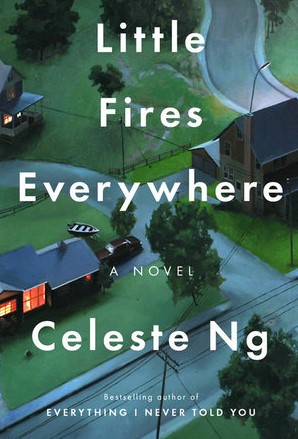
Little Fires Everywhere by Celeste Ng is a pretty good book so far.
That’s it. That could be my entire my review. I mean, I’ve read only a couple chapters so far, but I haven’t found much to complain about, which is unusual for me. Some people think I read books with the intent of finding something wrong with them, but that’s not true. I want to enjoy books, but sometimes I notice stuff that other readers might not, and since I don’t get paid to write and these famous bestselling authors do, I get ticked off when I see well-paid famous authors take shortcuts that amateurs aren’t allowed to get away with.
Anyway, back to my review. It feels like Celeste Ng is a real writer. At least, I haven’t noticed any cheap shortcuts yet (and I promise I’m not trying to find them). A couple really long paragraphs stood out as warning signs in the first few pages. There were a few teenage characters, but they weren’t exceedingly annoying or precocious or overly witty, as some authors like to write. They sounded like normal teenagers. Several characters (who aren’t the teenagers) have been introduced or mentioned, and they’re easy to keep track of.
If there’s anything to complain about, it’s long paragraphs. They make my eyes hurt, and the length might be unnecessary. Here’s a long paragraph from the beginning of Chapter 2:
Shaker Heights was like that. There were rules, many rules about what you could and could not do, as Mia and Pearl began to learn as they settled into their new home. They learned to write their new address: 18434 Winslow Road Up, those two little letters ensuring that their mail ended up in their apartment, and not with Mr. Yang downstairs. They learned that the little strip of grass between sidewalk and street was called a tree lawn- because of the young Norway maple, one per house, that graced it- and that garbage cans were not dragged there on Friday mornings but instead left at the rear of the house, to avoid the unsightly spectacle of trash cans cluttering the curb. Large motor scooters, each piloted by a man in an orange work suit, zipped down each driveway to collect the garbage in the privacy of the backyard, ferrying it to the larger truck idling out in the street, and for months Mia would remember their first Friday on Winslow Road, the fright she’d had when the scooter, like a revved-up flame-colored golf cart, shot past the kitchen window with engine roaring. They got used to it eventually, just as they got used to the detached garage- stationed well at the back of the house, again to preserve the view of the street- and learned to carry an umbrella to keep them dry as they ran from car to house on rainy days. Later, when Mr. Yang went away for two weeks in July, to visit his mother in Hong Kong, they learned that an unmowed lawn would result in a polite but stern letter from the city, noting that their grass was over six inches tall and that if the situation was not rectified, the city would mow the grass- and charge them a hundred dollars- in three days. There were many rules to be learned.
By my standards, that’s a long paragraph. It could probably be chopped up and not lose any artistic value. But for some reason, it didn’t bother me much (except for hurting my eyes). Maybe it didn’t bother me because I started reading Little Fires Everywhere right after I’d gotten ticked off at a James Patterson book. James Patterson can make just about every book that’s not his look good.
To be honest, I’ve never heard of Celeste Ng before, and I don’t like admitting this because I read a lot and I blog about books. I like Ng’s writing. I’m still not quite sure what the book is about, but since I like Ng’s writing style, I’ll probably keep reading and find out.
*****
What do you think? Was that long paragraph from Little Fires Everywhere too much? Did it hurt anybody else’s eyes? Or was that just me?

(image via wikimedia)
First of all, I never said my date’s name was ugly. I’m not sure how I phrased it, but I know I didn’t say the word ugly. This whole thing happened about 25 years ago, so I don’t remember everything exactly as it happened, but I know I’m not the type of person who would use the word ugly to describe a woman’s name.
This awkward moment happened in my coworker’s living room on a weekend evening. We probably shouldn’t have been dating ( you can get more details here ), but we were. I’m not the kind of blogger who gets into really personal details, so I’m not going to describe play-by-play what we were doing in her living room, but we were probably about to go to her bedroom as long as I didn’t do/say anything stupid. At least, I was 80% sure we were getting there.
There were a lot of positive signs, and I wanted to say her name at the right moment. I was preparing myself for it, making sure the time was right. When a guy says the woman’s name in this situation, he has to make sure the time and tone are right. The time was right, but when I opened my mouth, nothing happened. I hesitated at a moment when a guy shouldn’t hesitate.
“What’s wrong?” my female coworker date asked, and that was bad because you don’t want your potential partner to think anything is wrong in this situation.
“Nothing,” I said, but that never works. Even if there’s nothing, a guy has to say something, even if it’s a lie, and I should have just lied.
“I was going to say your name,” I said.
“And you forgot it?” she said, and her face moved away from mine.
“No, no, no,” I said quickly. And then I said her name. I even repeated her name several times.
“So what was the problem?”
I paused before saying this, but I had the feeling she had a strong BSometer, so I said, “I have a difficult time saying your name.”
“Why?” she asked. “It’s only two syllables.”
“Uhhh, because it doesn’t fit you.”
This is where everything deteriorated.
I’m not sure what happened next. It happened so quickly. I talked too fast, and she talked even faster so that I could barely keep up with her thoughts and reasoning. I think I said that her name didn’t do her justice, that she was beautiful but her name was kind of plain. Maybe I said common instead of plain. Somehow, this coworker female managed to turn plain or common into ugly. I don’t like it when people rephrase what I say in a negative way. I have a tough enough time defending my exact words. It’s impossible to defend somebody else’s misinterpretation of my words.
I don’t want to say what this woman’s name was. I’ve known several women with this name, and I don’t want to hurt anybody’s feelings (or piss them off either). I think this name __________is drab. It’s plain and common and boring. The __________ that I was dating was a unique woman with a couple distinct features that men either loved or disliked. I liked __________’s features a lot. I thought she was interesting, funny, and I was lucky to be going out with her. I didn’t think I was lucky; I knew I was lucky.
“I don’t understand what’s ugly about my name,” she said.
“It’s not ugly,” I reiterated. “I never said ugly.”
Even when I convinced her that I never said the word ugly, the passion was already lost. The best I could try to do was salvage the evening so that the romantic moment could happen another night. But __________ got quiet, she sat apart from me on the couch, and she didn’t laugh at my attempts at humor (which were probably clumsy), and I reluctantly left an hour later.
Ouch, that was embarrassing, I thought, but I wasn’t surprised because it wasn’t the first time I’d blown a romantic opportunity. But at least this had been a private moment between only the two of us. Private awkward moments are salvageable because nobody else knows about them. I was pretty sure __________ would keep this to herself because she didn’t want anybody to know we were dating.
I should have known __________ wouldn’t see things quite the same way.
*****
To be continued in… Awkward Moments in Dating: The Public Argument!
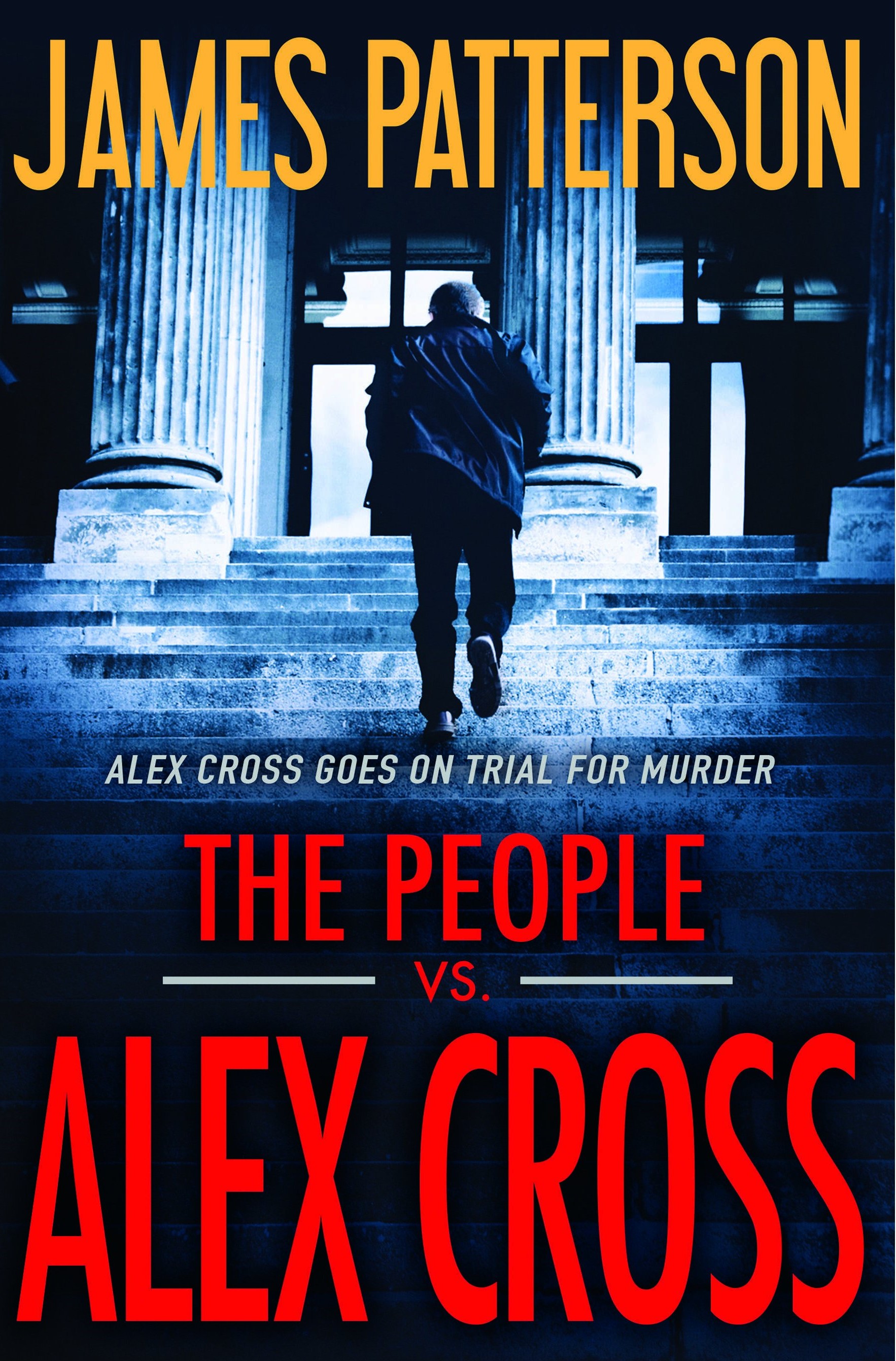
At first glance, The People vs. Alex Cross by James Patterson is just James Patterson being James Patterson. The chapters are short, and there are 114 of them. Descriptions are basic. All the characters talk the same way. Everybody is a smart ass. If you like that kind of writing (and lots of people do because these books always sell like crazy), then this book won’t bother you.
But it bothers me. I don’t want to go into another James Patterson rant and repeat stuff that I’ve already said here and here and here . I prefer that each of my rants be somewhat original, but I can’t help myself sometimes. .
I probably shouldn’t keep reading James Patterson books because I always know how I’m going to react and I’m rarely wrong. At the same time, I can’t just ignore James Patterson. He’s too relevant. He writes 10-15 books a year. Bookstores have sections just for James Patterson. He’s almost a genre. You can’t ignore an author who is almost his own genre.
What bugs me is that The People vs. Alex Cross seems like it’s written by an author who feels contempt for his readers (and that’s not good for a genre). It feels like James Patterson knows that he can write anything and it will sell. Here’s an excerpt/description that shows what I’m talking about (with my comments in parenthesis):
Anita Marley, my attorney, was also there, waiting at the curb.
Tall and athletically built(of course), with auburn hair, freckled skin, and sharp emerald eyes (of course), Marley had once played volleyball (of course) for and studied acting at the University of Texas (of course); she later graduated near the top of her law school class at Rice (of course). She was classy (of course), brassy (of course), and hilarious (of course, but…she’s not sassy?), as well as certifiably badass in the courtroom (of course), which was why we’d hired her.
Marley opened my door.
“I do the talking from here on out, Alex,” she said in a commanding drawl (of course, because everybody from Texas has a drawl, especially students near the top of their law class at Rice) just as the roar of accusation and ridicule hit me, far worse than what I’d been subjected to at home.
That was pretty bad, even by James Patterson’s standards. He has to know that’s crappy writing. I know that’s crappy writing, and I write for a free on a blog that maybe a few people read. James Patterson has written decent stuff before, so he knows he’s writing crap, and if he knows he’s writing crap and he still publishes it, then it shows he doesn’t care.
Maybe I shouldn’t worry about James Patterson so much (I’m not losing sleep over it). I can ignore his books. If he stopped writing, it wouldn’t affect my chances of becoming a successful author. But it’s frustrating (or annoying) to see an extraordinarily successful author getting away with writing that amateurs wouldn’t even put on their own blogs (except to use it as an example of bad writing).
She was classy and brassy, and hilarious, as well as certifiably badass in the courtroom, which was why we’d hired her.
Ugh.
*****
What do you think? Is that really bad writing, or am I overreacting?

(image via wikimedia)
Sue Grafton was an author I made fun of a little but respected a lot. To be honest, I always thought her alphabet series was a bad idea, and that some of her books spent too much time on personal details of the protagonist’s daily routines. Maybe I’m not a big fan of the alphabet mystery novels, but I respect what Sue Grafton did.
Sue Grafton wrote a mystery for almost every letter of the alphabet (A is for Alibi all the way to Y is for Yesterday), and every alphabet book was a best seller (I think). She didn’t use co-authors. She didn’t skip letters of the alphabet (unless you count “Z”) just because they were inconvenient. She found a popular formula and stuck with it for 25 books. She probably wasn’t feeling well when she wrote some of those books, and she finished them anyway.
That’s what a stud author does. I’m in awe. Even if I’ve read only a couple of her books, I’m in awe. A lot of readers are going to miss her.
Having said that, I hope nobody else tries to write that final alphabet book. I wouldn’t be surprised if the publishing company (whoever it is) tries to make some money off the author’s name and characters. With one more letter left, I’m sure some aspiring author would want to finish off the series. But doing that is an even worse idea than the alphabet series itself, and Grafton’s family seems to have no interest in that.
I rarely feel any emotional connection with celebrities, even celebrity authors. I’ve emotionally bonded with stuffed animals, sock puppets, and even members of my family. But I’ve never felt connected with a celebrity, not so much that it affected me when that celebrity died. When a celebrity dies, I say (or think) “That sucks.” And then I go on with my day. I’ve never felt like writing anything about a celebrity on my blog, tweeting about the celebrity, or going to that celebrity’s funeral.
I was in ninth grade when John Lennon got shot. That was a big deal, and we talked about it at school, but I was too young to be passionate enough about John Lennon to cry. The most common reaction was: “Now The Beatles will never reunite!” Then we blamed Yoko Ono some more for breaking up The Beatles. That seems kind of shallow, but what else would you expect from ninth-graders? Besides, you’re never too young or too old to blame Yoko Ono. That was as close as I’ve gotten to caring about a celebrity’s passing.
But I keep thinking about Sue Grafton. Even though I don’t read Sue Grafton books on a regular basis, I like her. I like the idea of her, taking a silly idea and making a ton of money off of it and building a loyal fan base.
I’ve met only two celebrities face-to-face. One of them hit on my wife, and the other one yawned in my face. I don’t think I’ll write anything else about them, unless I decide to provide more details about my wife getting hit on. Neither of those celebrities accomplished what Sue Grafton has, 25 alphabet books and fans who will buy/read every single one of them.
I kind of wish that I’d met her.

Artemis by Andy Weir was doomed to get some bad reviews. A few years ago, the author came out of nowhere to write a blockbuster first novel The Martian which was turned into a successful movie. Critics love success stories, but they often hate the follow-up effort. When you come out of nowhere and write a blockbuster, a certain percentage of critics will hate the second effort, no matter what.
I haven’t read all of Artemis yet (that’s why this is called a Literary Glance), but I see a warning sign in the first few pages. The protagonist Jazz Bashara and a character named Bob are running somewhere in lunar gravity on the moon outside the city of Artemis with “a hundred kilograms of gear on.” Supposedly, they’re in a life or death situation and exerting themselves mightily. Despite this exertion, they’re carrying on an almost normal conversation:
Bob ran beside me. His voice came over the radio: “Let me connect my tanks to your suit!”
“That’ll just get you killed too.”
“The leak’s huge,” he puffed. “I can see gas escaping your tanks.”
“Thanks for the pep talk.”
“I’m the EVA master here,” Bob said. “Stop right now and let me connect!”
“Negative.” I kept running. “There was a pop right before the leak alarm. Metal fatigue. Got to be the valve assembly. If you cross-connect you’ll puncture your line on a jagged edge.”
“I’m willing to take that risk!”
“I’m not willing to let you,” I said. “Trust me on this, Bob. I know metal.”
After a couple paragraphs the dialogue continues.
“You’re going too fast! If you trip you could crack your faceplate!”
“Better than sucking vacuum,” I said. “I’ve got maybe ten seconds.”
“I’m way behind you,” he said. “Don’t wait for me.”
I only realized how fast I was going when the triangular plates of Conrad filled my view. They were growing very quickly.
“Shit!”
Yeah, that last line of dialogue was the only part I found believable.
I’m told that I get nitpicky when I read. I call it nitprickety because I’m a prick and nitpicky at the same time. Even so, I think the conversation in this scene is very unrealistic.
To prove my point, I tried to have this same conversation while I was running for my life. I’m not in great condition, but I’m not bad. I wasn’t wearing a ton of gear like Jazz and Bob. I was just wearing my normal wardrobe. I tried it, running for my life, full sprint, reciting the dialogue.
It wasn’t easy. I had a hard enough time running for my life, even without trying the conversation. When my friend trailing behind me tried to convince me to stop running, the best I could say (between wheezing breaths) was:
“Shut up… you dick… “ I wanted to mention that I was running for my life, but I couldn’t do it. I couldn’t mention the leak alarm, or metal fatigue or the valve assembly.
I couldn’t even finish a complete sentence (Is “Shut up, you dick,” a complete sentence?), not even for the sake of literature. Either Artemis has unrealistic dialogue, or I need to start running for my life more often.
Artemis might be a good book, but I have to start up my cardio workouts again before I can judge it fairly.

(image via wikimedia)
This might be one of those questions that doesn’t have a definitive answer. How the heck do you judge the beauty of a word?
First of all, beauty is subjective, especially when it comes to sounds. Most people can agree to some extent about what looks good/bad, smells good/bad, or feels good/bad. But sounds can be polarizing. Try getting a bunch of listeners to agree on the quality of a single tune or song, and everybody’s opinion will be different.
The idea of a beauty contest for words might seem strange, but Reader’s Digest published an article about a survey determining the most beautiful word in English. According to the article, the survey chose people from non-English speaking countries and asked which word was the most beautiful. And in case you haven’t read the Reader’s Digest article yet (it’s making the rounds on several news sites), the most beautiful word in the English language is…
Mother.
To me, mother is a cop-out. Don’t get me wrong. Everybody loves the concept of the word mother. But mother is not the most beautiful sounding word. It has -muh in it, like mud. It has an -er in it, one of the most common sounds in English. Mother. It’s okay. I don’t hate the word mother. But most beautiful? That’s cheating.
Maybe asking people who probably aren’t native English speakers isn’t the best approach. They haven’t been exposed to enough/any words. They might be more likely to go for the safe answer. When I’m unfamiliar with a topic and I’m asked a question, I usually go for the safe answer. For example:
Who will win the Super Bowl this year?
The New England Patriots.
What is the stock market going to do?
Keep going up with occasional dips.
What’s the most beautiful word in German?
There isn’t one. Hahahaha!
(I can say that because my ancestors were German.)
Of course, non-native English speakers should participate in the survey, but it shouldn’t be exclusive to them. Everybody should be included. Don’t worry, I’m not offended that anybody got left out. I just think the sample was chosen incorrectly.
Plus, the survey had only 70 word choices, and that seems limiting for a survey. I’ve never counted every single word in the English language, but I think the number 70 seems a bit small. Maybe the people being surveyed could have chosen from the words they already knew.
One possibility for the most beautiful word in English is melodious. It sounds good, and the meaning kind of matches its sound. I didn’t put much thought into this, though, so I’m sure there are better choices.
Schlock is my favorite word because it sounds vulgar (it isn’t) and it describes most of what I read and write.
Share is my least favorite word because I don’t like sharing and a former boss used to tell us to “shay-air” ideas so she could take credit for the best ones.
Moist and slacks are supposedly the most annoying words in English, and nobody likes moist slacks. Moist slacks can be really annoying. And they’re probably not beautiful.
*****
Rating words is fun to do, but I’m only one person. What do you think is the most beautiful word in English?

(image via wikimedia)
Before the internet existed, it was tough to get free objective opinions about your writing. There weren’t any websites or blogs, and even if you made a cool video, there wasn’t any YouTube to post it on. If you were a writer without an agent, you had to find a writer’s group and hope all the other writers in the group were serious too.
But you didn’t want anybody in your group who was too serious.
At the time I was writing a humorous novel about a fake psychic who got coerced into solving a serial killer mystery. This was in the early 1990s before the cable TV show about a psychic detective, so if there were similarities between my book and the TV show, my book was ten years first. Anyway, my book was never published, though an agent once told me it was close, but I don’t think his definition of “close” matched mine.
This writing group was a good one. I’d had complaints about a bunch of previous groups, but this one was ideal. All the group members were serious. There were eight of us. We met once a week in the living room of the group leader’s house. We critiqued two group members’ manuscripts each week, so we weren’t bogged down with reading. The comments that we wrote and discussed were always respectful and well thought out. Nobody said “This sucked!” even if the manuscript was rough. We always knew the manuscripts were going to be rough. We had full-time jobs that had nothing to do with writing.
Unfortunately, a woman had to drop out of the group (which was too bad because she was a good writer and a perceptive reader), and her replacement was a blunt guy who didn’t say much.
The previous month I had brought in a scene that the group critics had claimed was brilliant. It showed my fake psychic in action, asking a potential client a bunch of leading questions and then choosing which answer to follow through with. This is a technique that psychics use (I’ve had it done to me when I wasn’t aware of how it worked), and the scene went through the protagonist’s thoughts as he manipulated his client’s emotions and swindled him (but in the protagonist’s defense, the client left with some emotional burdens lifted).
One critic called it a perfect scene. Another critic (the perceptive one who had just left) said she wished she could write something like that. Another reader said it was one of the best scenes he had ever read. I left the meeting feeling elated. Maybe I got too cocky.
In this particular session a month later, I brought in a scene with a bunch of characters, some of whom would become victims and others who would become suspects. There was a lot of dialogue. I tried to write a little bit of banter for each character to make all of them stand out in some way.
Even though this scene wasn’t nearly as well-received, most of the critics tried to be gentle with their comments. We prided ourselves on how we approached criticism. We usually started off with the premise of “If this were my writing….” That way, we kept absolutes out of the discussion. Everything was a matter of opinion.
“Maybe I’d tone down the attempt at humor,” one group member said.
“Some of the characters sound alike,”’ another one said. “Not all of them should be witty.”
Then came the blunt guy. He was new to the group. He wasn’t used to our style of critiques. He hadn’t been a member the previous month and hadn’t seen my “perfect” scene. This was his first exposure to my writing.
“You’re not funny,” he said to me, rolling up his copy of my manuscript. “There was nothing humorous in this. The protagonist isn’t funny. His wife isn’t funny. None of the minor characters are funny. Was this supposed to be funny?”
Then he tossed my manuscript onto the coffee table in front of him.
“There wasn’t one goddam thing about this that was any good.”
I don’t think the g-d bomb had ever been used in that writer’s group before. Everybody was stunned.
Nobody else knew how to respond, so the smart ass in our group said, “Other than that, Mr. Lincoln, how was the play?”
I seethed. It was humiliating. I could feel my face burning purple, but I couldn’t respond to the blunt guy, not right then. There was nothing I could do but take it. But then I saw my opportunity. At the end of the meeting, the blunt guy handed us a chapter of his novel. I had never read his stuff before, but the quality of it wouldn’t matter to me, not anymore. I would find a way to massacre it. I would have my revenge. And I knew it was going to be sweet.
*****
To be continued in Writer’s Group Horror Story: The Loudmouth Novice !
Reader’s block is psychological. I know it is, and here’s a recent example.
Last week, I had a B&M Booksellers gift card and an empty schedule, and I wandered through the book store mindlessly. Two weeks earlier when I had no gift card and no time, everything caught my interest. The pressure that comes with extra spare time can cause reader’s block if you’re not prepared.
The good news is that I’ve had reader’s block before. A few years ago, I wrote a post about how to defeat reader’s block, so I went to my own blog and read it (I hope that doesn’t sound self-congratulatory). Some of the book references in my old post are dated, but the strategies still work. I used tips # 1 and 5, and now I’m set with books for the next few weeks.
Unfortunately, I have to get back to my regular busy schedule soon. These books that I now want to read might last a long time.

 When I was a kid, this was the only way I could read Moby Dick without getting reader’s block. Who am I kidding? It’s still the only way. (Photo credit: Wikipedia)
Reader’s block doesn’t get the respect that writer’s block does. People (especially writers and artists) can sympathize with writer’s block because a writer is creating something, and creating something can be difficult. Reader’s block gets less sympathy because all a reader needs to do to read is read. Complaining about reader’s block is like being the kid with all the toys in his room griping about being bored.
Reader’s block can be frustrating and deserves to be taken (just a little) seriously. Yes, reading is more passive than writing, but it still takes mental activity. Reading requires concentration and a willingness to get through difficult exposition/narration (hopefully with a payoff).
“Block” can happen with even the most passive of…
View original post 676 more words
Since I’m an introvert, I don’t really want to go to a couple Christmas social gatherings that are coming up this week. Parties are okay, but there are other things that I want/need to do. I know, I know, it would be poor manners not to go, especially since others took the time to invite me. I like the people who will be at the gatherings; I just don’t like parties.
A few months ago, I wrote out some guidelines for situations like this. I might not always want to go to parties, but if I attend them anyway, I know what I need to do in order to have a good time.
 Somebody in this picture isn’t having fun. (image via wikimedia)
Partying does not come naturally to a lot of introverts. Getting wild and crazy in public seems easy for an extrovert, but staying in a loud, crowded environment for a long period of time can be a burden to an introvert. I should know. I’m an introvert, and I despise parties and social gatherings.
Since I don’t want to become a recluse, I’ve had to develop a game plan for parties. It’s taken time, but I can now manage going to parties without getting bored or stressed out. Keep in mind that I began developing these strategies decades ago. Things have changed since then, especially technology.
When I started going to social gatherings, it was considered weird or rude to read a book, magazine, newspaper or anything while you were at a party. If you stood alone, you were a…
View original post 732 more words


 Dysfunctional Literacy