
I have to admit, City of Endless Night by Douglas Preston and Lincoln Child has a pretty cool title. I don’t often judge a book by its cover, but sometimes the title can be an indication of the quality of a book. At least, it’s a better indication than the cover.
I’ve never read a Preston & Child book, but I know that their books are mysteries, so with the title City of Endless Night I expected something different, almost poetic in the prose. Instead, I opened the book to discover a typical Law & Order episode where in the first scene a couple stupid kids unwittingly stumble onto a crime scene.
The second scene is the homicide detective getting a rundown of the victim with the ME, all in dialogue. And then the reporters show up, and the detective inwardly complains about what a high profile case this will be. Then we get the introduction of the familiar FBI agent who has been assigned to the case. The only deviation is that there is hardly any conflict between the detective and agent because they know each other from previous books, and the pain-in-the-neck reporters are no longer important (at least not in this scene).
This isn’t exactly a bad start to a mystery. It’s just a formulaic start. If I hadn’t already read a bunch of other books that started this way, I’d probably keep going. The victim is a decapitated college girl, and lots of readers will want to find out who killed and decapitated the college girl. Maybe there’ll be some other lurid details.
I’m not sure how a seemingly pedestrian mystery is going to connect with a cool title like City of Endless Night. If anything, this book is the opposite of another novel I started reading recently, Robicheaux by James Lee Burke. The title Robicheaux itself is kind of boring (I’m not a fan of character name book titles), but Burke’s writing is very interesting. I don’t know if it’s better to have a seemingly generic mystery with an interesting title or an interesting book with a boring title.
Anyway, City of Endless Night is the 17th(?) book in the Pendergast detective series (starting with Relic in 1995), and it presents me with a challenge. I know these two authors Douglas Preston and Lincoln Child are supposed to be very good writers. I know they have written lots and lots of books together. I haven’t read any of their novels before, but they have a good reputation. City of Endless Night is their new book and current best seller, and I’ve just started it.
But this is a time constraint issue. Authors who have written lots of novels usually have written novels much better than their current releases. Should I read Preston and Child’s current book because that’s the best seller right now?
Or should I find their most critically acclaimed book and read that instead?
Maybe I could do both. But I have a family and a full time job, so I can’t read everything that I want to read. City of Endless Night is okay, but I’ve read a bunch of mysteries in my lifetime, and this one doesn’t seem to be unique, despite the relationship between the two protagonists. If I’m going to read a novel by these authors, I’d rather read their best effort, which isn’t necessarily their latest effort. In other words, I might read a book written by Preston & Child, but it probably won’t be City of Endless Night.
*****
What do you think? Do you go for an author’s current best seller, or do you choose that author’s best book? If you’re a fan of Douglas Preston and Lincoln Child, what is their best novel?

(image via wikimedia)
I dreaded going back to work the Monday after my awkward date. I didn’t think my coworker with the bland name would make a big deal about our mishap (you can start reading about it here ) because she was higher up in the company than me and had more to lose. I figured she would just pretend the whole thing had never happened. Maybe she would stick me with an unpopular project, but I didn’t think she would try to get me fired or anything like that.
The next Monday, _________ (remember, I don’t want to use her real name) and her friends left for lunch without me. They worked on a different floor, so there would have been no way for me to know they had left, and we didn’t have cell phones back then, so I couldn’t call, but I wouldn’t have anyway. I figured she needed a few days to let the effects of my perceived insult wear off and maybe we could work things out. On Wednesday that week, I ran into ___________ (unplanned on my part), and our banter seemed to be back, so I was invited to the group lunch the next day.
At first, I thought that was a good sign. We ate at a crowded restaurant, and five of us were squeezed around a square table for four. I like a quiet spacious place when I eat, so I felt a little uncomfortable with the elbow collisions and the butts brushing against the back of my head as people kept bumping behind me. Despite all the noise, I made a couple humorous comments with my monotone delivery, and my coworkers laughed.
Everything seemed back to normal when __________ said: “I still don’t understand what’s wrong with my name.”
I pretended I didn’t hear. I didn’t want to take the bait.
“Who said there was something wrong with your name?” a male in our group asked.
“Jimmy,” _______ said. “He said he didn’t like my name.” She said it with a thin smile and direct eye contact right at me.
“I didn’t say I didn’t like your name,” I explained, the exasperation from Saturday night returning. “I just said it didn’t fit you.”
“Your name is beautiful,” a red-headed female coworker said to _________, but I could tell she was lying. Nobody would say ___________ was a beautiful name. Maybe it has meaning. Maybe it has tradition. Maybe it’s somewhat standard in some cultures, but it’s not beautiful. Nobody would say __________ was a beautiful name except to get on __________’s good side. But I couldn’t say that, at least not with ________ there.
“There’s nothing wrong with your name,” I said. “I never said the word wrong.” There she was, rephrasing me again.
“Your name is Jimmy,” she said. “That’s juvenile, but I don’t say bad things about it.”
“Jimmy is a nickname for James, and James is Biblical,” I said.
“Maybe I’m not a Christian,” she said.
Crap, crap, crap. I never should have brought up religion. I had no idea what _____________’s religious affiliation was (or if she even had one), and we had never discussed it, and I wasn’t sure if it was ever going to be discussed, but if it were going to be discussed, this wasn’t the way to start it. We were at the curiosity stage of our dating, and we weren’t serious enough to delve into religion yet.
Thankfully, I didn’t say, “Nobody’s perfect.” I’m not that dense.
Instead I said, “Neither am I. Kind of.”
I wasn’t going to church at the time, but nobody else knew that, so my comment probably made no sense to them. I was hoping we’d talk about something less personal than __________’s name or religion, something like weather or sports. I would have even talked politics. Any other topic would have been better than discussing ___________’s name.
“I like my name,” she said.
I was starting to really hate her name. I was embarrassed that we were having this disagreement in front of coworkers. I don’t like conflict; public conflict is even worse, but the absolute worst is arguing in front of people you know. I was taught not to do that. Growing up, my family presented a united front in public, but once our front doors were closed, we’d destroy the house.
“Hold on,” the redhead said excitedly. “Are you two dating?”
“No,” I said. If this got out, it would be worse than arguing in public.
“That’s really cool,” the red head said, ignoring me. She turned to ___________. “Why didn’t you tell me?”
“Can we talk about this later?” ___________ said.
The red head laughed. “Leave Jimmy alone about your name,” she said, reaching out to touch my wrist. “He was complimenting you, in his own way.”
“Finally, somebody understands me,” I said. “But we’re not dating.”
“Right,” the redhead barely said before changing the subject.
The redhead didn’t fool me. I knew she would remember that __________ and I were dating, and I knew we were going to hear about it again. And I knew nothing good would come from this.
To be continued in Awkward Moments in Dating: Office Talk.
Or you can start at the beginning at Awkward Moments in Dating.

(image via wikimedia)
Famous author Ursula Le Guin wasn’t really on my radar until she died last week. It’s been a few years since I’ve read any of her books, but that doesn’t take away from her accomplishments. A lot of people read her books, and that’s not going to stop any time soon.
A few weeks ago Sue Grafton (another famous author but in a different genre) died, and I felt compelled to write something partially because I used to make fun of her alphabet series. I’ve never written about Ursula Le Guin before, mostly because she hasn’t written much recently, and a lot of my commentary is about current/recent books. I was not a voracious reader of her books either. I read the Earthsea Trilogy and The Dispossessed when I was in high school, but that was about it for me. But I know a lot readers who love her writing.
My daughter read A Wizard of Earthsea a couple summers ago for her summer reading list. Like any other kid, she griped about having a summer reading list, but she enjoyed the books once she started them. She had to read one book each from several genres, and she chose A Wizard of Earthsea for science fiction/fantasy over Ender’s Game and a Harry Potter book. I was glad she chose A Wizard of Earthsea. She said it started slowly but got better. I said that’s how most great novels are.
That has to be a great feeling for an author, knowing that people are reading your books 50 years after you’ve written them. At least, I hope it’s a great feeling. I hope it’s not depressing (“I wrote that book 50 years ago?”)
I still have a fondness for fantasy from the 1960s and 1970s. Too many fantasy novels nowadays are too darn long. Most popular fantasy from my youth were short novels, less than 250 pages. The Michael Moorcock books (Moorcock… Haha!! what a great last name.), the Kane books by Karl Edward Wagner, The Fritz Leiber short stories, the Conan series, even the Conan stories not written by Robert E. Howard. When I feel like reading fantasy, I usually go back to these relatively short fantasy stories.
Back in the 1970s, everybody who read fantasy started with The Lord of the Rings. Once you were done with The Lord of the Rings, you would go to the Narnia books, and the Earthsea books, and then maybe the Foundation books (if you could stand science fiction). But the Earthsea trilogy was one of the big three trilogies series of my time.
One reason people still read A Wizard of Earthsea is that good fantasy can stay relevant more than a lot of genres. Science fiction can seem silly when the technology is preposterous. When you write a book like 2001: A Space Odyssey, and then 2001 comes and goes, people might stop reading the book and call you a hack for getting everything wrong. The lesson there is that if you’re writing science fiction, don’t put a date in your title. But fantasy authors don’t have to worry about technology or current events making their books irrelevant.
Maybe it’s selfish, but I’d like to write something that will be relevant decades after I write it. I’m not looking for immortality or anything like that. I’d probably rather write something that has staying power than write something that made me a lot of money. But Ursula Le Guin did both. If I were the type of person who got jealous over stuff like that, I’d be jealous of Ursula Le Guin.
*****
What do you think? What’s your favorite Ursula Le Guin story (or poem)? Would you rather make a ton of money writing, or write something that stays relevant for a really long time?
That’s it! I really was trying not to rant for a while. There’s a lot of stuff going on in my life, and I’m enjoying my current routine of reading books and reacting to them on my blog. That’s usually enough to keep me going.
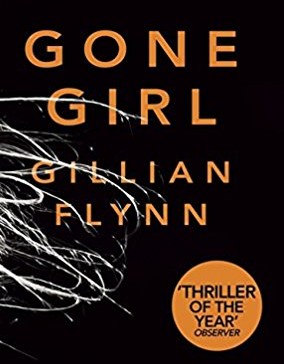
But then the two novels The Wife Between Us and The Woman in the Window came out within a couple weeks of each other. Both books are getting compared to Gone Girl and The Girl on the Train. Both books are said to have lots of unexpected twists. Both have received hyperbolic positive reviews. And both start with an intro where the narrator is watching a female in the distance.
It’s not necessarily the fault of the authors that The Wife Between Us and The Woman in the Window seem so similar. These things happen. It could be coincidental, but it does seem strange.
I also thought it was kind of odd that a novel like The Woman in the Window written by unknown author A.J. Finn would skyrocket to the top spot in its first week. It’s almost like the system was rigged to help this book out, but I know things don’t really work like that.
I mean, the author who writes as A.J. Finn actually works for the publishing company that bought his book (you can read more about that here), but I’m sure that didn’t have anything to do with his novel starting off at the top of the bestsellers list. I know word of mouth about a book’s high quality can travel really quickly.
I’m guessing that The Woman in the Window and The Wife Between Us won’t be the last books to get compared to Gone Girl or The Girl on the Train either. If we already have two at the top of the bestsellers list in one month, then publishers aren’t going to stop.
If I had a choice of my book being compared to Gone Girl or The Girl on the Train, I’d say Gone Girl. I don’t think The Girl on the Train was even the next Gone Girl. I didn’t think The Girl on the Train was anything like Gone Girl. If I had written a novel that were about to get compared to Gone Girl and The Girl on the Train, I’d probably ask the reviewers and publicists not to mention The Girl on the Train; just compare my book to Gone Girl please, I’d say.
It’s not that The Girl on the Train was bad or anything; I just liked Gone Girl a lot more. I don’t know if reviewers listen to author requests, though.
The more I think about it, the more I wonder: Why even try to be subtle? I’m just going to title my latest book The Next Gone Girl. I’m allowed to do that. You can’t copyright a title, even if it is Gone Girl. I just have to make sure my novel has some originality. I’m not sure what the book will be about yet. The protagonist will be female. There will be a frame up or a scam of some kind. And there will be twists and shocking turns.
I can’t promise that the twists and shocking turns will make sense, but they’ll be there.
When I publish the book, I won’t even have to convince reviewers/publicists to use the phrase “the next Gone Girl.” I’ll have cut out the middle man.
We already know that comparing The Woman in the Window and The Wife Between Us to Gone Girl and The Girl on the Train has paid off because both new novels are bestsellers. Let’s see. In a few years, will any novels be called the next The Woman in the Window or the next The Wife Between Us? We’ll eventually find out.
And if I’m really lucky, maybe the publishing business will hype up books by calling them the next The Next Gone Girl.
*****
What do you think? How many books can be compared to Gone Girl or The Girl on the Train before the reading public gets tired of them? What book would you like your writing to be compared to?
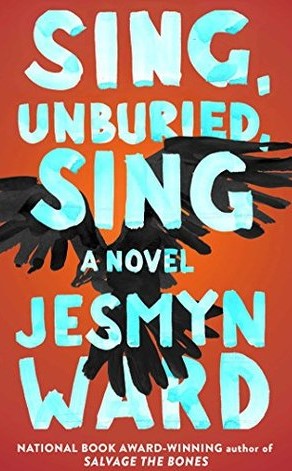
Sing, Unburied, Sing by Jesmyn Ward has one of the most memorable scenes I’ve read in a long time. It’s memorable in an uncomfortable way, like the worship scene in American Gods by Neil Gaiman, the pie-eating contest in “The Body” by Stephen King, or the dentist scene in Marathon Man by William Goldman.
I don’t know how much of Sing, Unburied, Sing I’ll remember after I’m done reading it. I forget about most books that I read. I enjoy reading, even if I don’t finish everything. Even when I don’t remember many of the details of a book after I’ve read it, I still enjoyed the process. I think I read so much that the details from new books push out the details from the old books. That’s not necessarily bad. That means I can reread the books that I liked the most and they seem new the second (or third) time.
The same thing happens to me with movies and TV shows, so it’s not a reading issue. It’s a priority issue. I remember to pay the bills. I remember most birthdays. I remember what day of the week it is. I’m pretty good at ignoring clocks and then randomly guessing what the time is. So I think my mind is working okay. I just don’t always remember many details from the books I’ve read.
I’m pretty sure I’ll remember this scene from Sing, Unburied, Sing. The narrator is a kid helping his grandfather skin and gut a goat while they talk. I won’t put all the details here (because I’m not that kind of a blogger):
Pop and I enter the shed. Pop ties the goat to a post he’s driven into the floor, and it barks at him.
“Who you know got all they animals out in the open?” Pop says. And Pop is right. Nobody in Bois has their animals out in the open in fields, or in front of their property.
The goat shakes its head from side to side, pulls back. Tries to shrug the rope. Pop straddles it, puts his arm under the jaw.
“The big Joseph,” I say. I want to look out the shed when I say it, over my shoulder at the cold, bright green day, but I make myself stare at Pop, at the goat with its neck being raised to die. Pop snorts. I hadn’t wanted to say his name. Big Joseph is my White grandpa, Pop my Black one. I’ve lived with Pop since I was born; I’ve seen my White Grandpa twice. Big Joseph is round and tall and looks nothing like Pop. He don’t even look like Michael, my father, who is lean and smudged with tattoos. He picked them up like souvenirs from wannabe artists in Bois and on the water when he worked offshore and in prison.
After that, things get really bad for the goat. And I imagine the characters in the novel will struggle a little bit too. This is literature, after all. If this scene doesn’t seem that impressive, I’ve left the memorable part out. Some people don’t like to read that kind of thing, so I don’t want to surprise them. This is usually a family-friendly blog.
I haven’t read much further into Sing, Unburied, Sing yet (that’s why this is called a Literary Glance). I don’t know how the rest of the book goes. But no matter what happens in this novel, no matter how the author builds up the story and wraps everything up, I’ll always remember the goat skinning scene.
*****
What do you think? Am I the only one who forgets the details of most books? What scenes from novels do you find memorable?

January best-selling fiction is usually an interesting mix of the previous year’s bestsellers and new books that have been hyped on book blogs since December. If you’re stuck inside the house because of bad weather (or any other reason), it might be a good time to catch up on reading. Anybody can binge watch a show. It takes true brainpower to binge read a good book (or two) in one day (or weekend).
Below are the best-selling hardcover fiction novels for the third week of January 2018, according to the New York Times:
- The Woman in the Window by A.J. Finn
It’s the new Gone Girl. It’s the new The Girl on the Train. Stephen King calls it unputdownable. I put it down. One of us is wrong.
- The Wife Between Us by Greer Hendricks and Sarah Pekkanen
It’s also the new Gone Girl. It’s also the new The Girl on the Train. Stephen King did not call it unputdownable.
- Origin by Dan Brown
This has NOT been compared to Gone Girl or The Girl on the Train. Instead, it’s compared to The DaVinci Code. That’s okay because Dan Brown wrote The DaVinci Code too.
- The Rooster Bar by John Grisham
It’s another sleazy lawyer novel from John Grisham. Every time John Grisham writes a sleazy lawyer novel, thousands of readers are glad they didn’t go to law school.
- Little Fires Everywhere by Celeste Ng
Good book so far, but long paragraphs can hurt my eyes. Some authors really should ease up on the long paragraphs.
- Sing, Unburied, Sing by Jesmyn Ward
Once you read the goat skinning scene, there’s no turning back!
- The Immortalists by Chloe Benjamin
Psychics, they always cause trouble, especially when kids are involved. This book probably has the most interesting premise of all the novels on this week’s list.
- Before We Were Yours by Lisa Wingate
The title is really cheesy, but the novel isn’t, at least not so far.
- Robicheaux by James Lee Burke
Titles that are just the character’s name seem lazy, even if the author is James Lee Burke. I mean, Dracula and Frankenstein and Emma and Tom Sawyer were okay, but Robicheaux?
- The People vs. Alex Cross by James Patterson
This is typical James Patterson. It’s over 100 chapters. Lots of dialogue where all the characters talk the same way. And one of my favorite descriptions in recent memory…
She was classy and brassy, and hilarious, as well as certifiably badass in the courtroom, which was why we’d hired her.
Sigh. What would we do without James Patterson?
*****
It’s not always possible to read every bestseller, but it doesn’t hurt to be familiar with them. Out of all the books on this list, I’d probably rank them (from what I’ve read, and I’ve read at least a little bit of each book) in this order:
- The Immortalists
- Before We Were Yours
- Sing, Unburied, Sing
- Little Fires Everywhere
- Robicheaux
- Origin
- The Rooster Bar
- The Woman in the Window
- The Wife Between Us
- The People vs. Alex Cross
*****
What do you think? How would you rank these novels (even if you haven’t read them)?

(image via wikimedia)
When you’re a married man, there are a lot of things you shouldn’t say to your wife. At least, you don’t say certain things if you want a happy relationship. Since I’ve been married to the same woman for over 20 years, I think I have a pretty good feel for what to say and what not to say, but even I will slip up sometimes. And when I slip up, I slip up badly.
Last Saturday, there were a lot of house chores, more so than normal. I had created my own list of Saturday activities, but I didn’t write them down. That was my first mistake. From my wife’s point of view, if all my future chores aren’t listed on paper or in a text/email, then they don’t exist. Storing the chores in my brain doesn’t count.
I knew my wife had a list, and I was doing a good job of mixing my list with hers. I changed out lightbulbs (wife’s list), cleaned out some gross stuff in the refrigerator (wife’s list), raked leaves from my neighbor’s trees off my lawn (my list), destroyed a giant ant hill (my list), cleaned out kitty litter boxes (my daughters’ list, but I didn’t feel like interrupting while they were actually doing homework), throw out unnecessary stuff in the closets (wife’s list), cleaning out the gunk from the washing machine (wife’s list), and fixing the garage door (my list).
While I was cleaning out the gunk, my wife asked me to dust off a couple high spots in the house. I was a little annoyed because I’d been really productive but I was getting tired, and I wanted to get to the fun stuff for the weekend. I was ready to call it quits and enjoy the rest of the weekend. All I had to do was keep my mouth shut, get a couple more things done, and disappear for a while.
Instead, I said, “Honey, did you get any of those chores done that I asked you to do?”
She looked at me perplexed. “What chores?”
“Exactly.”
At the time, I thought I was being clever, but it’s better to keep that kind of cleverness to yourself. My wife got pissed, and instead of enjoying my Saturday afternoon I had to console an angry wife.
I should have known better. When I’m tired of doing chores, l usually let my wife know ahead of time. Maybe I’ll tell her I’m tired before I’m actually tired. If I wait until I’m tired to tell her I’m tired, then I might not have the energy or focus to say it correctly.
This is nothing new to me. When I feel it’s almost time to relax for a while, I take a dramatic deep breath and say, “Whew, we’ve gotten a lot done (I give her credit too). I’m going to do this and this (make sure they’re actual chores) and take a break.”
Even if my wife has more stuff for me to do, she probably won’t pile it on, especially if she’s seen me accomplish a lot already.
Of course, things might be easier if I just wrote out my chore list ahead of time and made sure my wife saw it. But men usually don’t write lists. Men write lists as frequently as we ask for directions. We might get mocked for that, but we still get things done and we usually find our way around (even without current technology).
Husbands, if you’re feeling really bold, write your wife a chores list. But whatever you do, don’t call it a To Do List. Men don’t write To Do Lists. We do chores, so call it the Chores List or the List of Chores. At any rate, if you write your wife a chores list, let me know how it goes.
I bet you’ll have a very interesting story to tell.

The Woman in the Window by A.J. Finn has a lot of advantages over other books right now. First of all, reviewers/publicists are going out of their way to compare this novel to Gone Girl and The Girl on the Train. Maybe this makes sense. All three titles mention females and suggest that the protagonist or central character will be a female. All three books are mystery/thrillers.
If enough reviewers/publicists compare a novel to Gone Girl or The Girl on the Train, then that book is guaranteed to start off as a bestseller. It might not stay there for long, but it will start there.
Next, Stephen King has called the book unputdownable. I’m not sure unputdownable is a word, but it’s a positive fake word, and having a positive new fake word created by Stephen King to describe your book is a great start.
Stephen King is not the only famous author to write something nice. The publishers of The Woman in the Window have gotten a bunch of big name authors to hype this book.
According to the book cover, Gillian Flynn calls The Woman in the Window “Astounding. Thrilling. Amazing.”
Ruth Ware writes: “Hitchcock would have snapped up the rights in a heartbeat.”
Louise Penny writes: A tour de force. A twisting, twisted odyssey inside one woman’s mind, her illusions, delusions, reality. An absolutely gripping thriller.”
I could give more examples, but I think I’ve made my point, and I don’t want to be accused of overkill.
I started reading The Woman in the Window before I was aware of the hype (I just grab the new books and go; I don’t even read the book jackets anymore), and when I saw all the reviews later, I was a bit surprised. Astounding? Gripping? Unputdownable?
I’m not sure The Woman in the Window is unputdownable. It’s alright. There’s a lot of name dropping about old movies and references to stuff I don’t know much about. I get the film noir references, but home décor is not my thing. When I read The Woman in the Window, I thought it was trying too hard to pay homage to film noir. I thought a little more subtlety would have been better.
But I guess I was wrong. Whose opinion are you going to listen to? Mine? Or Stephen King, Gillian Flynn, and Ruth Ware’s?
I have to give author A.J. Finn credit; it’s tough for a male author to write from a female character’s point of view without messing something up, but from what I’ve read so far the author is doing a good job.
I wouldn’t have known that A.J. Finn was a dude if I hadn’t accidentally stumbled upon that information. I don’t think he writes anything that obviously gives away his gender. Anna Fox, the central character, never scratches herself while watching old movies, and she doesn’t train her dog how to fetch beers from the fridge.
I’m glad I started reading The Woman in the Window before I was aware of the hype. If I had seen all the reviews ahead of time, I would have naturally had a negative bias against it. That’s just how I am. I admit it. Maybe the twists and turns that reviewers talk about make the novel better in the middle and end than at the beginning. But Stephen King called it unputdownable.
That’s okay. The Woman in the Window is still going to make a ton of money, even if I don’t think it’s quite astounding, gripping, and unputdownable so far.
*****
What do you think? Have you read The Woman in the Window? Is it truly unputdownable? If a book is super-hyped, are you more likely or less likely to read it?

(image via wikimedia)
“I’m sorry about what happened,” the writer’s group leader said to me at the end of the group meeting. My excerpt had just been ridiculed and tossed aside by the new guy in our group. He had cursed at it and said there was nothing worthwhile about what I had written ( you can get more details here ). It would have been different if I had known the guy or was familiar with his writing. But the blunt guy was new. He hadn’t earned the right to insult my prose yet.
Ed, the group leader, was a sincere white-haired guy in his late 50s, and he lived in a small house in the old, maintained part of the city with a wife 20 years younger. I’m not sure what he had done before he retired, but he was a decent writer and a good critic and his wife was nice-looking, so I always listened to his advice.
Ed spoke quietly, like me, but I could always hear him the first time he said anything. “He’s not used to critiquing the way we do.”
I knew what Ed was talking about. The new blunt guy was from a local university’s prestigious writing program, where students butchered each other’s work in groups. Our writing group intentionally approached criticism more gently. It allowed me to experiment more, knowing that nobody would just say “You suck.”
I understood why the blunt guy had said what he’d said (it was how he had been taught), but I was still pissed. I really wanted to massacre the blunt guy’s manuscript. He had just given us an excerpt from his novel for the next writer’s group meeting, and we had the week to read it and make perceptive comments. I really wanted to be negative. I hoped that the excerpt wasn’t any good. I hoped that it sucked so that I’d have every reason to criticize it, mock it, cast it aside just like he had done with mine. I mean, I knew this wasn’t the right approach, but I was in my 20s, so I give myself a little slack when I look back on this.
A few days after the writer’s group debacle, I had calmed down and I found some spare time over the weekend to look over the blunt guy’s excerpt. It was okay, but really boring. It seemed like the blunt guy was putting together a legal thriller, but there was nothing exciting about it. The main character was a lawyer, and he talked to other lawyers, and there was a bunch of legal jargon I didn’t understand, and everybody talked the same way, except one guy used a lot of profanity, and the main character saw everybody else as incompetent and never seemed to make mistakes.
I could tell that the writer’s group would gently pan this excerpt, and I felt a little sympathy for the blunt guy, so I decided to ease up and set aside my plan for revenge. It wouldn’t be necessary to criticize his writing if everybody else did as well. I didn’t want to gang up on him.
The next week’s meeting began peacefully enough. The blunt guy read a portion of his excerpt out loud. He read it dramatically, even though there wasn’t much drama in the excerpt. He emphasized the profane character’s extreme language, and he used a quiet whispery voice for the one female lawyer character. I suppressed a yawn and prepared my criticism.
There were eight of us in the group, so the blunt guy had to listen to seven critiques, but I was one of the last to offer my opinion, and the other participants, including Ed, had said the same stuff that I was thinking, and I didn’t want to repeat what everybody else had said. The blunt guy wasn’t happy about the criticism (nobody is ever happy about it), and he frowned and nodded while they talked. By the time my turn came, I had decided to go easy on him.
“I don’t have much new to offer,” I said. “You could probably take it easy on the legal jargon.”
“They’re lawyers,” the blunt guy snapped. “That’s how they talk.”
First of all, the blunt guy wasn’t supposed to respond to criticism until everybody had spoken. Secondly, this guy was being a dick to me again.
“But I’m not a lawyer,” I said, trying not to get sucked into a stupid confrontation, “so I don’t understand everything the characters are talking about.”
“That’s not my problem,” he said.
“It is if you’re trying to sell this book, and readers don’t understand it.”
“You don’t understand it,” he said. “You’re not every reader.”
“I think a lot of potential readers would have a tough time with this.”
“I don’t care what you think.”
That was it. I could feel the back of my ears getting purple again. My hands shook as I clutched his manuscript. I wanted to be diplomatic, but I was running out of tactful responses. I knew I was going to respond in one off three ways:
- “Why are you in a writer’s group if you don’t care what we think?”
- “Okay, Then I’m done with my critique.”
or my personal favorite…
- “Your story sucks, and you have bad breath too.”
I knew I was going to use one of those three responses, but I wasn’t sure which.
*****
To be continued! In the meantime, here are two books that my writer’s group never saw.
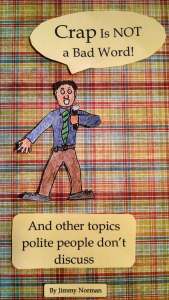

Now only 99 cents each on the Amazon Kindle!
 At first, I wasn’t going to write about Fire and Fury by Michael Wolff. I figured there’s already enough stuff about this book out there, so the world doesn’t need me piling on.
Besides, it’s dangerous to talk about politics nowadays, much less write about it. The topic of Fire and Fury came up at work last week, and that led to an argument between a Trump supporter and a Trump hater. It went from politics, and then started to get into generalities about who was a racist and who was a globalist, and then it started to get personal. The whole thing was pointless because these exchanges never change anybody’s mind, so I reluctantly stepped in:
“C’mon, guys!” I said, trying to fake some positivity. “It doesn’t matter who you vote for. Both of you have the same values. You raise your families the same way. Both of you work hard and are honest. You even cheer for the same football team. The only thing you disagree about is what the government should do about stuff.”
The coworkers looked at me funny, probably because I’m known as the monotone quiet guy. Then one coworker told me to mind my own business and the other one called me a f***ing eavesdropper, and that was that. Their argument was over. They were united against a common enemy, me.
I don’t like being the common enemy, but I guess it’s okay because the coworkers forgot their disagreement. This is how politics can poison relationships if people approach these discussions the wrong way. And that’s why I was reluctant to mention this book on my blog.
But I can’t ignore a book that gets so much attention. Fire and Fury got a lot of hype before it came out, so much that it was guaranteed to be a bestseller. I wish I could get that much hype for one of my books. Maybe I should write about Donald Trump. But if everybody wrote about Donald Trump, then none of the books would be bestsellers. It would be a Ponzi scheme of Trump books; only the first Trump books would make money, and by the time I finished mine, it would be too late.
The main criticism of Fire and Fury is that the information presented is contradictory and interviewees are saying it’s inaccurate. I don’t know much about that because I’ve read only the first couple chapters. From my point of view, this feels like a book that was written too quickly. Even if I wasn’t nitprickety, I’d think it felt rushed.
For example, in Prologue: Ailes and Bannon, a lot of sentences are loaded with interrupters that disrupt the flow of the prose:
Now, however reluctantly, Ailes understood that, at least for the moment, he was passing the right-wing torch to Bannon. It was a torch that burned bright with ironies. Ailes’s Fox News, with its $1.5 billion in annual profits, had dominated Republican politics for two decades. Now Bannon’s Breitbart News, with its mere $1.5 million in annual profits, was claiming that role. For thirty years, Ailes- until recently the single most powerful person in conservative politics- had humored and tolerated Donald Trump, but in the end Bannon and Breitbart had elected him.
I wonder if anybody took the time to read the words out loud to hear how all these sentences sound together. If you take out the interrupters, I don’t think much meaning is lost and the sentences would have a better rhythm. That’s an editing dispute that reasonable people can disagree about.
However, there are writing errors in this book that are obvious mistakes:
In early August, less than a month after Ailes had been ousted from Fox News, Trump asked his old friend to take over the management of his calamitous campaign. Ailes, knowing Trump’s disinclination to take advice, or even listen to it, turned it down. This was the job Bannon a week later.
What? I want to know what the verb in that last sentence was supposed to be.
Supposedly, this wasn’t the only outright error in Fire and Fury. In a couple places the L in the word public is missing (making it pubic). That looks like the kind of mistake that’s done on purpose.
I admit, I make plenty of mistakes on my blog. I’ve left out words. I’ve used words incorrectly. But I don’t get paid. And I also don’t have an editor. And nobody expects me to write books that can embarrass a presidency. I just embarrass myself.
Maybe Michael Wolff doesn’t care if there are errors in his book. Maybe he’s the type of person who doesn’t care when others say he is careless and factually incorrect. That makes sense; the author who is accused of being careless and factually incorrect has written a book portraying a president who is accused of being careless and factually incorrect. In other words, Fire and Fury is just another day of media and politics. I’m gonna go back to reading fiction.



 Dysfunctional Literacy