(image via wikimedia)
The Romance Writers of America announced recently that it is cancelling its 2020 Rita Contest because of some really convoluted controversy. I tried to read about it. I really did, but it’s very complicated and it gave me a headache.
The short version (I think) is that one RWA Ethics chairperson was removed (or fired) because of a complaint against her for allegedly harassing(?)/talking about another author for something that author had written over twenty years ago. Then the fired RWA chairperson (who claims to be from a marginalized group) went to social media and a Twitter outrage mob forced a couple other people to either resign or get fired, and now everybody is angry and filing ethics charges against each other.
You can find more information about the topic here . It’s a lot to take in. On one hand, I respect a blogger who puts all those sources together in one blog post. On the other hand, it’s too much for me to keep track of. Go ahead if you want. This blogger put a lot of work into details.
Just so you know, I don’t have any stakes in this issue. I’m not a romance author. I don’t read romance novels. I’ll never win a contest for any of my writing. I don’t belong to a marginalized group (unless being left-handed counts).
In fact, some guy who claimed to belong to a marginalized group once told me that I can’t have an opinion about these kinds of issues involving people from marginalized groups because I’m not marginalized, but I know he can’t stop me from having an opinion so I ignored him because he doesn’t speak for everybody who considers themselves marginalized. I figured that since our backgrounds were different, we could trade perceptions (without arguing) to figure things out, but he wasn’t interested.
That’s okay. I’m still interested in how people who disagree with me think. Just don’t try to get me fired… and please don’t send an outrage mob at me.
Even though I’m not a romance author, I feel sympathy for the romance authors who aren’t involved. Most of them probably just want to write romance novels and enjoy some camaraderie with other authors. Instead, they see bickering over stuff that could have been avoided with a little diplomacy.
As far as who is to blame, I don’t know. There’s always stuff that the average person doesn’t know in these situations. It’s probably one of those conflicts where both sides are right in some way, but both sides distrust each other, so nothing will ever be able to get worked out. No matter how much is written, I’ll never know which side broke the trust first.
One of the problems in situations like this is that stuff that was (thought to be) acceptable in the past isn’t acceptable anymore, and people have a tough time adjusting. A couple years ago I ran into a problem where I wrote the phrase “I hit like a girl” a few times and got called out for it on my own blog. So I asked the question…
Is This Phrase Sexist?
Every once in a while, I tell people that I hit like a girl. I don’t say it often, but it comes up occasionally in conversation or in my writing. I’ve never given the phrase a second thought. I just thought it was a simple expression that explains that I’m not a good fighter.
I’ve been told several times recently that I shouldn’t say that I hit like a girl, that the phrase is sexist. A woman at work told me that it was an inappropriate thing to say. I apologized and made a mental note be very careful about what I say around her from now on. A couple commenters on this blog claim that it was a phrase that I should not use. I’ve even been told that women can hit just as hard as men.
At first, I was surprised I was getting criticism for saying/writing that I hit like a girl. I mean, I’ve written some objectionable stuff on this blog. I’ve written about adult situations. I’ve written about vulgar language and have even used some profanity. I’ve suggested that James Patterson might be a hack (as outrageous as that claim might be). I’ve even written porn jokes, and nobody complained that the porn jokes were sexist. They just said the porn jokes were stupid.
I understand why people would think it’s sexist to say “I hit like a girl.” They think I’m making fun of girls, and I’m saying that the way girls hit is inferior to the way boys hit. I agree that some women can hit just as hard as some men.

Some content creators don’t want to face accusations on social media. One way to avoid this is to simply not publish anything that might be controversial. Here is an author who self-banned her own book after she received outrage criticism over her portrayal of a character.
Author Self-Bans Book Because Of Outrage Mob
She looks ticked off. I’d be ticked off too if an outrage mob attacked my book.
To be honest, I wouldn’t have been interested in this book without the outrage mob. First of all, I don’t like YA fiction because there are always too many kids in the books. I don’t usually like reading books from the kid’s point-of-view. It’s okay occasionally, but I’m in my early 50s, and it would probably be kind of weird if I liked YA fiction too much.
Plus, this book is fantasy. Man, I have read way too much fantasy in my life. I’m so bored by fantasy that when I watch Game of Thrones, I enjoy the political intrigue but I yawn when I see dragons and ice zombies.
As much as I don’t like YA fantasy, I truly despise outrage mobs. They react too quickly and too forcefully to stuff and don’t give people time to process information. Even if the outrage mob is right about a specific point (they usually aren’t), they act so obnoxious that they ruin any point they had.
Just so you know, I’m referring to an unpublished book called Blood Heir by Amelie Wen-Zhao. The author has decided not to publish her book after an outrage mob attacked her for a variety of reasons. I’m not going into those reasons, but you can find them here and here . These two articles (especially the second one) explain the situation better than I could. You can also go to Twitter and look up Blood Heir, but I don’t recommend that. Twitter, ugh.

Critics today often use current standards to judge people or art from generations ago. It happens a lot, but this one caught my attention because it involves a prominent American book series that hadn’t been thought of as controversial before.
Is Little House on the Prairie Racist?
(image via wikimedia)
This is one of those topics where it’s not really necessary to have an opinion, but people will anyway. Last week the American Library Association changed the name of its children’s literature award from the Laura Ingalls Wilder award to the Children’s Literature Legacy award. That by itself might not seem like a big deal. I read a lot of books, and I had never heard of (or don’t remember hearing about) the Laura Ingalls Wilder award before. Under most circumstances, most people wouldn’t care what the name of the award is.
Then people found out that the award name was changed because of some stuff in the Little House on the Prairie books that is considered racist.
RACIST?
Did you say RACIST?
Did you say The Little House on the Prairie books are RACIST?
AW, CRAP!! That means everybody has to have an opinion!! Look out!!!!
Before everybody starts taking their predictable sides, let’s try to get some of the facts… and then we can take our predictable sides.
The Laura Ingalls Wilder award was first given out in 1954 to Laura Ingalls Wilder, which is kind of cool, I guess, to win an award that was named after you. This also shows that in 1954 the Little House on the Prairie books weren’t considered racist. Or it might mean that racism wasn’t an issue that the ALA paid attention to. Or it might mean that the ALA was an organization filled with racist librarians. Racist librarians are the most dangerous racists because they control the books. Plus, I always hear that it’s those quiet people you have to watch out for, and that includes quiet librarian racists.

*****
What do you think? Can issues like these get settled with diplomacy, or do these conflicts need to escalate until people get fired and books get boycotted? If you choose to NOT have an opinion, are you then part of the problem for not being involved? Or if you choose to be vocal about your opinion, are you part of the problem by escalating a conflict that could have been solved with tact and diplomacy? Are you a fan of false binaries, or do you think false binaries cause unnecessary arguing?

Stephen King might think this is a stupid question. (image via wikimedia)
Stephen King isn’t dead. As far as I know, he’s alive and well, and I hope he stays that way for a long time. This isn’t meant to be a morbid post.
But I’m curious, will anything weird happen when Stephen King dies? Will he have a ghost? Would his ghost haunt fictional sections of Maine for all eternity? Would his ghost be a demonic clown luring little kids into gutters? Or would King’s spirit tempt writers into using too many –ly adverbs in their prose?
Or maybe nothing will happen. Maybe people will just write quick social media posts about him and get on with their lives. And if King did come back as a ghost, maybe nobody would notice; there’s a lot of stuff going on right now that’s much weirder than Stephen King’s ghost popping up.
Even though Stephen King sometimes writes about evil spirits, a lot of people who read his books probably don’t believe in that stuff. I’m mildly interested because I think a ghost lived in my house when I was kid. It was an old guy staring into my bedroom from the hallway (great, a weirdo ghost, but at least he wasn’t staring into my older sister’s room. Actually, I don’t know which would be worse.).
I kept my mouth shut because I thought it was probably my imagination. Then decades later my mom mentioned how she thought we’d had a ghost in that house, and we compared stories. She couldn’t tell what it was, but it would hover in the hallway near my room. My room. It had to be my room.
I don’t know why I started wondering what Stephen King’s ghost would be like. It doesn’t make for a long blog post, but I’d rather write about it while he’s still alive. Anyway, I don’t want to come across as morbid, so here’s some other stuff I’ve written about Stephen King… while he’s still alive… and will be for many many more years to come.
Thank You, Stephen King!
(image via wikipedia)
A few weeks ago, a friend of my wife came over unannounced and uninvited with her family. Any visitors we get are because of my wife. I don’t have friends, so nobody comes over to see me. My wife has lots of friends, and sometimes we end up entertaining families of people whom I barely know. Most of the time I don’t mind, but I don’t like it when the visitors are unannounced and uninvited.
In this case, the family had a teenage son who, according to his parents, is addicted to video games and hates to read. He’s capable of reading, my wife’s friend said, but he won’t do it unless it’s a school assignment.
“At least he completes his school assignments,” I said to my wife’s friend.
“Yeah,” the son said to his mom, but she gave him a dirty look.
I could sympathize with the kid because he reminded me of a bunch of friends I had in high school (a time in my life when I actually had friends).
My high school friends weren’t functionally illiterate. They were dysfunctionally literate. They knew how to read but chose not to. If they were going to read, it would be a smut book like Massage Parlor by Jennifer Sills or a parody book like Bored of the Rings. If my high school friends had had internet and cell phones and they wouldn’t have read even those books. With the internet, teenage boys don’t need smut books anymore.

Even though Stephen King is a prolific writer and has written some iconic novels, he admits some of his writing isn’t as good as it could have been. When I reread one of his best-known horror novels The Shining, I saw what he meant.
Bad Sentences in Classic Literature: The Shining by Stephen King
(image via wikipedia)
The Shining by Stephen King might not be a classic yet, but it probably will be. It was written in the 1970s, and people still read it today and it’s still relevent, so I’m guessing that people will still read it 50 years from now.
Even though The Shining is a great book, it has some bad writing in it. At least, by Stephen King’s standards, there are some bad sentences. In his book On Writing, Stephen King maligns the adverb with one of the all-time most famous quotes about writing: “I believe the road to hell is paved with adverbs,…”
When the Modern Master of Horror equates a part of speech with eternal damnation, you have to take that seriously.

Stephen King weighs in on a lot of political issues nowadays. Even if he ticks off a bunch of people and they stop reading his books, he still will have a massive audience, so there’s not much for him to lose. A few years ago, he wrote a quick ebook essay about guns, and I thought about reading it. Usually I don’t bother with celebrities and their opinions, but I give Stephen King credit for his unique perspective on this issue.
On Stephen King and his Essay about Guns
Even though Stephen King’s essay “Guns” is about gun control, my essay about Stephen King’s essay is not (about gun control). (Photo credit: Wikipedia)
Stephen King wrote a 25 page essay about gun control, put it on the Amazon Kindle, and now it’s a top ten Amazon Kindle bestseller. I’m not going to read a 25 page essay about gun control (that may be more a reflection on me than Stephen King). I can barely read the 2nd Amendment without seeing the yellow dots of sleep.
25 pages isn’t long for an essay about gun control. I bet any gun control legislation that is passed (or proposed) will be way over 25 pages long (and probably filled with a bunch of stuff that has nothing to do with guns). If it’s any consolation, I won’t read that either.
I usually get annoyed at celebrities who spout off about politics, but I don’t get annoyed at authors who write about political issues. That’s what writers should do. If there’s one group of celebrity that should talk (or write) about politics, it’s authors. I may not always agree with the ideas of other writers, but their views are probably better thought out than those of most celebrities (like actors, singers, musicians, or athletes).
In fact, I hope other famous authors start writing about gun control too. Maybe Tom Clancy can write a response, except he’d probably make it a 1,000 pages long with way too much filler.

*****
What do you think? What would Stephen King’s ghost be like? Would his ghost be any different from the average ghost? Or do you think ghosts don’t exist and all that supernatural stuff is a crock?
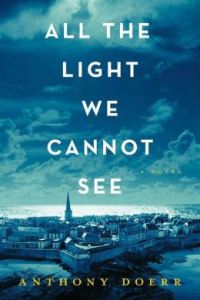
Nobody I know hates All the Light We Cannot See by Anthony Doerr. It won the Pulitzer Prize for Fiction a few years ago and was a best seller for a long time. Usually, there’s a large group of people who hate whatever book wins the Pulitzer Prize for Fiction.
For example, a lot of readers despised Empire Falls or were bored by The Goldfinch or thought A Visit from the Goon Squad was all over the place (there weren’t even any goons in it!). But statistically very few people think All the Light We Cannot See sucks.
All the Light We Cannot See reminds me a little bit of To Kill a Mockingbird. Nobody that I know of hates this book either. We had to read a lot of books in school, and almost all of them were hated by a majority of students most of the time. A Separate Peace was okay, but a bunch of my friends hated it. The Odyssey was despised, even though it was Greek mythology.
Every book we were forced to read was hated to some extent, except To Kill a Mockingbird. Nobody said To Kill a Mockingbird sucked. At worst, somebody might have said it was overrated, but nobody said it sucked.
The same applies to All the Light We Cannot See. Nobody says it sucks. More importantly (from my point of view), I finished reading All the Light We Cannot See. That’s saying something about the book. I start a bunch of books but rarely finish them. I finished All the Light We Cannot See and kind of liked it.
Whenever there’s a popular book that I really like, I try to analyze it (without overkilling it) and figure out a formula (something more than “it doesn’t suck). If we use All the Light We Cannot See as a guide, here’s how to write an award-winning (and maybe even a best selling) novel:
1. The Setting
First of all, it’s set in World War II. That’s going to appeal to a lot of readers. Everybody knows World War II. This story could have taken place in some form during just about any modern war, but everybody is interested in World War II. Even though World War II was a dangerous time period, it’s a very safe setting if you want a book with wide appeal.
2. Sympathetic characters
One of the main characters is a blind girl. The blind girl elicits sympathy from the reader. The other main character is an orphan boy. Everybody sympathizes with the orphan boy. It’s almost not fair to the reader to have a blind girl and an orphan boy as main characters. It’s author cheating. You’d have to be a heartless bastard of a reader not to sympathize with a blind girl and orphan boy. I don’t want to be a bastard reader, so I sympathized with them.
3. The villain
As if the dangers of the war aren’t bad enough, there’s also a Nazi gem collector who is looking for one of the main characters. This antagonist felt a bit out of place, like a stereotyped villain from an Indiana Jones movie suddenly thrown into literary fiction, but this didn’t stop me from reading. That NAZI villain probably made the book more interesting for a lot of readers.
4. Short Chapters
This book also has really short chapters. And the chapters almost always switch characters. Sometimes the shortness of the chapter is a little distracting. But I still kept reading.
There are so many short chapters that are so short that it almost reminds me of a James Patterson book. The big difference though is that short chapters in All the Light we Cannot See don’t suck.
5. Limited stream of consciousness
Most literary fiction authors use really long stream of consciousness sentences somewhere throughout the book. It’s almost mandatory for literary authors to overuse stream of consciousness. To me, most of those seem like the author is trying way too hard to show off, and I roll my eyes at a lot of them. This book had a few instances like that, but not so many that I rolled my eyes.
There was only one chapter where I rolled my eyes. It’s the chapter “White City” on page 364, and as soon as the situation was set up, I thought, “Oh, c’mon, are you really going to have a scene like this?” And, yes, there really was a scene like this. Not that it was a poorly written scene. It’s just that every war novel or movie has to have a scene like this. To be fair, it did kind of matter later in the book, but it was still trite.
Looking back, the author of All the Light We Cannot See made a lot of safe choices. The setting was safe, the characters overly-sympathetic, the villain stereotyped, and the chapters were James Patterson short. Plus, there was just enough stream-of-consciousness to justify this novel’s classification as literary fiction. If you are determined to write an award-winning book with wide appeal, this is probably a decent template to follow.
Despite these minor criticisms, I’d probably recommend All the Light You Cannot See to just about anybody who likes to read fiction. It’s literary fiction that doesn’t often feel like literary fiction, and to me, that’s the best kind of literary fiction.

(image via NPR)
With the end of 2019 approaching, top ten lists of the year are all over the place. Book blogs have put out their lists of best books of the year. Entertainment websites have published their top movies of the year. Music websites have told us their picks for the best songs or artists of the year.
I treat these lists skeptically (I bet the writers are being paid off most of the time), but I read them anyway. I haven’t read the Best Books of 2019 (I’m too cheap to buy most new books), and I haven’t seen the Best Movies of 2019 (well, maybe I’ve seen two or three of them), and I haven’t listened to the Best Music of 2019 (I’ve aged out of new music), but I like to read the lists.
If you are into the top ten lists or the Best of lists, here’s your one-stop blog post for all the best of 2019!
The Best Books (by Genre) of 2019- Goodreads
The Best Music of 2019- Rolling Stone
The Best Technology Products of 2019- PC Reviews
The Best Cars of 2019- Car and Driver
The Best Movies of 2019- Indie Wire
The Best Television Shows of 2016- Esquire
The Best YouTube Channels of 2019- Digital Trends
The Best Video Games of 2019- Vulture
The Best Fast Food Restaurants of 2019- QSR
The Best Scientific Discoveries of 2019- Digit
The Best New Words of 2019- Merriam Webster
The Best Memes of 2019- Popbuzz
What do you think? What other categories should be included in The Best of Everything 2019?

Putting profanity in a book title is lame, no matter what genre it is. A few years ago, some guy I’d never heard of wrote a bestselling book called Sh*t My Dad Says. This was lame because the author’s dad said all the funny stuff and the author got the bestselling book.
On the other hand, if the dad had written the book and called Sh*t I Say, then it probably wouldn’t have sold as well. If you say sh*t, it’s better to say somebody else said it. If the sh*t is funny, you still get credit, but if the profanity backfires, you can blame somebody else.
I’m not a prude about profanity. I put profanity in my own blog posts. I even put it in a few of my blog titles. When I use profanity, I even spell it out. I don’t replace any letters with an asterisk to hide what I’m saying.
Anybody who reads my blog Dysfunctional Literacy knows that f*ck means fuck. Even kids who aren’t supposed to say fuck know that f*ck means fuck. The only people who don’t know that f*ck means fuck are the people who don’t know what fuck means, so using f*ck is meaningless.
Anyway, I can understand why an unknown author would put bad words in a book title because a struggling author has to do something shocking to get attention. It’s still lame, though. The worst is when a celebrity puts profanity in a book title, like when celebrity film writer Kevin Smith put out a book called Tough Sh*t. Kevin Smith proved himself to be selfish when he used Sh*t in his book title because he’s diluting the shock value of profanity, thereby stealing from lesser known authors who might need it.
Now a bunch of self-help books are resorting to the use of bad words in titles. Just this week in a brick and mortar book store, I saw the following titles:
F*ck Feelings by Michael I Bennet and Sarah Bennet
F*ck Love by Michael I Bennet and Sarah Bennet
Stop Doing That Sh*t by Gary John Bishop
Unfu*k Yourself by Gary John Bishop
Find Your F*cking Happy by Monica Sweeney
Get Your Sh*t Together by Sarah Knight
Calm the F*ck Down by Sarah Knight
How to Stop Feeling Like Sh*t by Andrea Owen
Self-help books haven’t always been like this. When I was a kid in the 1970s, the big self-help book was I’m Okay, You’re Okay by Thomas A. Harris. Even at my young age, I knew that was a lie. I figured I might be okay, but I knew most other people weren’t, and the book title was lying. I refuse to read books that lie in the title. but at least there was no profanity in the title.
That’s why I refuse to read You Are a Badass by Jen Sincero. A true badass isn’t going to read the book because a true badass doesn’t need any advice that might (but probably isn’t) in the book. A true badass would see the title You Are a Badass and think, yes I am, and keep walking. The title is lying and also uses profanity. I can’t trust the author now. And her last name is Sincero.
The Subtle Art of Not Giving a F*ck by Mark Manson also a lie because the author obviously gives a fuck. If the author truly didn’t give a fuck, he wouldn’t have censored the title. Maybe it’s the publisher who didn’t want fuck fully spelled out, but in that case, an author who truly didn’t give a fuck would have found a publisher who didn’t a fuck. Either way, the title is a lie.
A few years ago, I wrote my own book called Crap Is NOT a Bad Word! I meant it as a joke because I’m always complaining about profanity in book titles and then I wrote a book with profanity in the book title, except I claim it really isn’t profanity. I even convinced myself that crap isn’t really a bad word. I convinced myself so convincingly that I still get mad when I think of the times I was punished for saying crap.
Even though I wrote Crap Is NOT a Bad Word! several years ago, I think it’s still relevant, and I spell out all the bad words in the book. There are a lot of bad words, but it’s not really a self-help book, except maybe for polite people.
Anyway, if you’re going to put profanity in your self-help book title, go all out. I don’t trust self-help gurus who are desperate enough to put profanity in their book titles. And I really don’t trust self-help gurus who lie and use profanity in their titles.
*****
Sometimes I’ll ask a question in a blog title and answer it, but this time I have no answer. I’m curious. Why do so many self-help books today have bad words in their titles? What do you think?

Comic books are easier to review than novels for several reasons. Comic books are shorter. The reviewer can show more pictures and make the review more appealing visually. The comic reviewer can also critique words and art, giving the reviewer more to work with.
Despite all this, I rarely review a comic book on my blog. Comic books don’t have the universal appeal of most bestselling novels. Plus, comic book readers would rather read a comic book themselves than waste their time reading a comic book review.
Comic books based on classic novels are a little different, though, at least for me. When I was a kid, my dad had a small collection of Classics Illustrated from the 1940s and 1950s, and I read a bunch of these over and over, and then when I was a teenager I started reading the classic novels. Without the background and context of the Classics Illustrated comic books, I might not have understood much of what was going on in these classic novels. With the help of these classic comics and a little persistence, I finished most classic novels that I started.
One of those difficult novels was Frankenstein by Mary Shelley. Frankenstein is a perfect novel for a classic comic. There’s enough interesting stuff going on in the book to make for interesting illustrations, and the words in the book are difficult so that most average readers struggle with the book.
Without further ado, here’s my review of my very own copy (which originally belonged to my dad) of Classics Illustrated #26: Frankenstein by Mary Shelley.

(image via wikimedia)
According to Merriam-Webster Dictionary, the word they is 2019’s Word of the Year. At first glance, they might seem like a stupid choice. The word they has been around for generations as a third-person plural pronoun. Yet, curiosity over the word they has skyrocketed this year, with a 300% increase in hits on 2019 the dictionary’s website.
One reason for the Interest In they is that they is now considered a gender-neutral pronoun. People who don’t want to be labeled as he or she can choose they as their pronoun of choice. I’ll admit, I don’t get the whole nonbinary or gender neutral thing, so I won’t judge that, but I have a strong opinion about the word they. I don’t think they should be messed with, and here’s why.
It’s pretty simple. They is a commonly-used plural pronoun and shouldn’t be used in the singular form because it messes up subject-verb agreement. All my life I was taught to use present-tense verb forms in sentences like “They are going to the movie.”
If people use they as a singular pronoun, then a writer/speaker referring to a person who identifies as gender-neutral will write/speak “They is going to the movie.”
That’s going to lead to a lot of confusion, especially among English teachers. Grammar NAZIs will flip out too. Regular NAZIs don’t have a high tolerance for people who claim to be gender-neutral (I don’t know any regular NAZIs, so I’m just speculating about that), but the grammar NAZIs (who are often very tolerant about alternative lifestyles) will also resent the change in language.
Merriam-Webster should know this. When I was a kid, dictionaries reluctantly accepted any changes in the English Language. We tried to make up words and rule changes all the time, and the dictionary (and our teachers) would never go along with it. If we had tried to change the meaning of they, we would have been held back a grade, humiliated in front of our peers, and beaten up after school.
I’m not saying we should go back to that. I don’t wish that on anybody. But now the dictionary seems to be accepting change without thinking about the consequences.
Subject-verb agreement is the foundation of sentence structure in the English. If you mess with it, everything else collapses. Language fractures, people can’t communicate, and then people start genociding each other (Yeah, genocide probably isn’t a verb, but you know what I mean. If a person who claims to be gender-neutral can make they singular, then I can turn genocide into a verb).
The most disappointing part of this is that the dictionary should know better. Young people have always had stupid ideas, many of which were worse than using they as a singular pronoun. Young people are supposed to have new (and usually stupid) ideas. The older generations are then supposed to postpone the implementation of those bad ideas until the young people get old enough to realize how stupid their old ideas were.
In this case, Merriam-Webster has abdicated its responsibility as the wise (but cranky) mentor. Instead, the dictionary has encouraged confusion and future madness by enabling youngsters to use they as a singular pronoun.
This conflict isn’t even necessary. Most people don’t care if somebody identifies as gender-neutral. There are countless potential letter combinations that could be used as a gender neutral pronoun, preferably one that hasn’t already been established as a third-person plural pronoun, like they has been. There is enough confusion in this world already.
And we don’t need dictionaries to make things worse.

I don’t read many political books anymore, for reasons I’ll explain later. I also don’t finish many books that I read, for reasons that I’ve explained in other blog posts. Despite my current reading habits, however, I read most of A Generation of Sociopaths: How the Baby Boomers Betrayed America by Bruce Cannon Gibney.
I initially noticed this book because of the author’s name, Bruce Cannon Gibney. Cannon? The guy’s middle name is Cannon? For a long time. I thought Brad Thor was the coolest author name a guy could come up with. Then I saw Bruce Cannon Gibney.
Now I’m wondering, how can a guy get lucky enough to have a middle name like Cannon? I’d love a middle name like Cannon. Even Brad Thor is probably jealous of the middle name Cannon.
If Brad Thor had a cool middle name, you know he’d use it on is book covers. Cannon is such a cool name, though, that it needs something less impressive like Gibney to bring the guy back down to earth. With a last name like Gibney (my last name isn’t impressive either, so I have no room to mock), Bruce is lucky his parents middle named him Cannon.
I admit, I’m jealous of Bruce Cannon Gibney’s middle name, and I’m not an envious person.
Oh yeah, I have a book review here too.
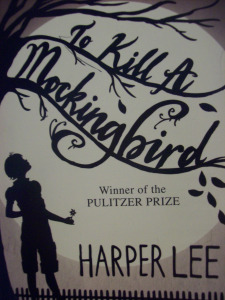
For decades, this book had no sequel, and everybody was better off for it.
Sequels have a bad reputation, and they probably deserve it. Even though almost everybody agrees there are too many sequels, especially for movies, sequels keep getting made, and they often keep making money. Maybe the problem isn’t so bad in literature, but there are still some examples of unnecessary sequels to popular books.
To be fair, sequels not written by the original author don’t count. It’s not fair to blame Margaret Mitchell for a bad sequel to Gone with the Wind. It’s not fair to blame Mario Puzo for a bad sequel to The Godfather. It’s really not fair to blame Truman Capote for a bad sequel to To Kill a Mockingbird (but I’ll get to that later).
Having established that, here are five great (or popular) novels that have unnecessary sequels:
Popular Novel-The Shining by Stephen King
Unnecessary Sequel- Dr. Sleep by Stephen King
Stephen King fans probably disagree with me about this, but they’re more biased than I am because they’re Stephen King fans and I’m just a guy who used to read Stephen King books. I liked The Shining a lot, but decades later I had no interest in Dr. Sleep. Looking back, The Shining might not even be as good as I remembered it. Some of the writing in The Shining was pretty bad, but I didn’t recognize bad writing back then when I first read it.
When I finished reading The Shining, I wanted more Stephen King, and I got more Stephen King with The Stand. Then I got even more Stephen King with It, and I stopped reading Stephen King.
Even at my peak of Stephen King interest, I didn’t care about what happened to the kid at the end of The Shining. I barely even remember the kid’s name. I’m not saying Dr. Sleep is a lousy book (I haven’t read it). I’m just saying that nobody ever clamored for a sequel, and that makes the sequel unnecessary.
Popular Novel- To Kill a Mockingbird by Harper Lee
Unnecessary Sequel- Go Set a Watchman by Harper Lee
Go Set a Watchman is fairly despised because it was promoted as a sequel or companion novel when it was really just a rough draft that was stashed away in an attic. I don’t blame the book publishers for selling it as a sequel. I blame book buyers for falling for the trick. I’m as gullible as a guy can be, and even I knew this sequel was a scam.
Almost everybody knew Go Set a Watchman was a scam, and it still sold a lot of copies. If the publishing companies are open about how they rip off the public and the public still falls for it, the book publishers will never stop.
Go Set a Watchman might also validate those who believe that Truman Capote actually wrote To Kill a Mockingbird. I used to joke about that just to tick people off, (I’m not like that anymore), but now I wonder. The quality of writing in the two manuscripts is so different that it’s almost like they were written by… two… different… people. Maybe I shouldn’t even count Go Set a Watchman as a sequel to To Kill a Mockingbird, but the publishers put Harper Lee’s name on the cover of both books, so I had no choice..
Popular Novel- Lonesome Dove by Larry McMurtry
Unnecessary Sequel- The Streets of Laredo by Larry McMurtry
I’ll admit, it’s been decades since I’ve read The Streets of Laredo. I don’t remember much because I tried to forget it as soon as I was done. As far as I’m concerned, The Streets of Laredo never happened. It was never written. It was never alive for me.
The Streets of Laredo isn’t just an unnecessary sequel; it’s a bad sequel, and it’s a bad sequel for several reasons. It takes beloved characters from Lonesome Dove and ruins them. In some ways, The Streets of Laredo make the events in Lonesome Dove irrelevant. I actually got angry at The Streets of Laredo because of the way the characters were treated.
Some might say that it’s a sign of a great author that readers get mad when the characters get mistreated. Yes, Lonesome Dove was a great novel that treated its characters, even when horrible stuff happened to them, with respect. The Streets of Laredo was downright disrespectful. And it was unnecessary.
Popular Novel- The Adventures of Tom Sawyer by Mark Twain
Unnecessary Sequel- Tom Sawyer, Detective by Mark Twain
I’m a fan of The Adventures of Tom Sawyer. It isn’t my favorite book ever, but I respect the character. Tom Sawyer hated school. He protected Becky. He spoke up for an innocent man even when it put his own life in danger. He figured out a way to get other kids paint the fence for him.
Tom Sawyer, Detective might be okay, but nobody asked for it. I read the first few pages, and it was okay, but I didn’t finish it. Mark Twain wrote Tom Sawyer, Detective decades after Tom Sawyer, and maybe he wanted to recapture former glory or maybe he needed a quick bestseller.
Or maybe Mark Twain was ahead of his time with Tom Sawyer, Detective and nobody has recognized that because nobody read the book. That would have been frustrating, to have written a detective novel ahead of its time, but so few people read it that it was never even discovered in the time it was meant for. Maybe I’ll try reading it again, just to make sure it wasn’t (or was) ahead of its time.
Popular Novel- Olive Kitteridge by Elizabeth Strout
Unnecessary Sequel- Olive, Again by Elizabeth Strout
Olive Kitteridge won a Pulitzer Prize in 2008, so it must be a great novel, but I’m not sure because I’ve never read it because I didn’t care who Olive Kitteridge was/is. I’ve never even heard anyone talk about Olive Kitteridge.
It’s not the only recent (from my point of view) Pulitzer that doesn’t get talked about. I’ve never seen anybody read Tinkers either or Less. Readers, however, passionately argued about A Visit from the Goon Squad. Readers also argued about The Brief Wondrous Life of Oscar Wao, and then the author made it worse by getting accused of sexually harassing women (though he MIGHT just be an awkward guy who doesn’t know how to interact with females).
In its favor, Olive Kitteridge won an Emmy in 2015, but it was for Limited Series, so the interest in Olive Kitteridge is limited (limited is their word, not mine!)
If Cormac McCarthy wrote a sequel to The Road, I’d understand it. I’d be skeptical, but I’d understand it. Readers love The Road. People still read The Road. The Road is still relevant. But I don’t want a sequel for The Road either. If there’s no sequel for The Road, then a sequel for Olive Kitteridge is also unnecessary.
*****
But enough about me! What do you think? I’m sure there are a bunch of popular novels that I missed. Maybe you even disagree with some of my choices. Either way, leave a comment below!

Don’t ask what he’s doing. (image via wikimedia)
On Masturbation might not be the best title for a book. A book title is supposed to make a potential reader want to start turning pages, but few topics turn off readers more than masturbation. I’m not going to read a book called On Masturbation, no matter who wrote it. I’ll read anything else by Mark Twain. I’ll even read Tom Sawyer Detective if I have to. But I refuse to read a book called On Masturbation.
On Masturbation was originally a speech called “Some Thoughts on the Science of Onanism.” That might be a better title, except the word Onanism is a reference to a Biblical figure named Onan, and a lot of people don’t read the Bible anymore, so too many potential readers didn’t know what Twain was talking about.
In case you didn’t know (I didn’t know either), Onan was a masturbator whom God struck down. This demonstrates how times have changed. When I was a kid, the story was a guy would go blind if he gratified himself too much or we’d grow hair on the palm of our hand (or both). Nobody told us we’d be struck down by God.
The good news for On Masturbation is that schools supposedly are teaching self-gratification in their curriculum now, even in elementary schools. That means if The Adventures of Huckleberry Finn gets banned from schools, it could easily be replaced by On Masturbation. Teachers could get their sex education and classic American literature done at the same time.
Some people see masturbation as a dirty word. I don’t know; it’s kind of long for a dirty word. You don’t see many vulgar words whose roots are three-syllables long. Masturbation might be considered the technical word, kind of like how fornicate is the technical word for fuck or defecate is the technical word for shit. There’s no monosyllabic word for masturbate (why is the word monosyllabic five syllables long?). Masturbate has a bunch of compound word euphemisms that end with off, like jack off, beat off, or whack off. It’s weird that so many euphemisms for masturbate are compound words when masturbation requires only one person.
I’m sure On Masturbation is a funny book. Supposedly it was one heck of a speech as well. It’s too bad that YouTube didn’t exist back in the 1800s because Mark Twain talking about onanism was probably awesome. Even so, I don’t want to carry that speech around with me, and I don’t want to be seen reading it, especially if the word MASTURBATION is in giant letters.
Masturbation might seem like a tasteless topic, but at least Twain gave his Onanism speech in Paris. The French are supposed to be a bunch of perverts, but I don’t know if that was true in the 1800s. If you’re going to give a speech about masturbation, tell it to a bunch of perverts in France. Don’t talk about masturbation to a bunch of school kids.
When I was a kid, if a teacher had talked about masturbation, the teacher would have disappeared and nobody would have asked questions. You just didn’t talk to kids about that. Even creepy guys in white vans didn’t talk about masturbation to kids, and now schools are supposed to teach it. If teachers start promoting masturbation, don’t be surprised if more teachers start driving white vans.
Even if schools teach masturbation, I don’t want to be seen reading a book called On Masturbation. Guys don’t want to talk about masturbation, even if it’s called onanism. Maybe schools should just refer to masturbation as onanism. Then teachers could teach it and kids wouldn’t even know what they’re talking about. That would make everybody happy, the perverts who want to teach onanism to kids and the parents who are horrified that perverts are teaching onanism to kids. The only people who wouldn’t be happy would be the kids at school, and their opinions won’t matter until they’re 18.
And by then they’ve usually figured out onanism on their own.
And then Mark Twain’s book might make more sense to them.
But I still don’t like the title.