The Mirror & The Light by Hilary Mantel starts off with Anne Boleyn getting beheaded. That’s not a spoiler because it’s on the first page and it’s in the history books too. Even though I’m from the United States, I have cable television, Netflix, and YouTube, and I think I’ve seen Anne Boleyn get her head chopped off several times. British actresses seem to yearn to play royal historical figures who get beheaded.
Americans like reading British novels because they (the books) don’t need to be translated. Yeah, some of the British slang is different, but we Americans can usually figure it out. French and Russian books (and books from most other countries too… I don’t want to leave anybody out) are okay, except they’re written in other languages and have to be translated. Translations usually get messed up, so I (and other Americans) prefer reading British novels.
British historical novels are the best because they don’t have crazy slang, and members of British royalty are always getting their heads chopped off. That’s one thing we don’t do in the United States. We have our death penalty and high murder rates, but we don’t publicly decapitate our political prisoners.
When reading English historical fiction, it helps to not be knowledgeable about British history. Most of my English history comes from the movies Braveheart and The Patriot (I’m kidding!), Bernard Cornwell books, and Princess Di documentaries that my wife watches (Meghan Markle is probably lucky that she’s still alive… but it’s still early). The bad news is that I’m ignorant about British history; the good news is that the stories in British historical fiction will be fresh if I continue reading.
Anyway, The Mirror & The Light is the third book of a trilogy, and it’s probably pretty good because the first two novels were bestsellers and won a bunch of awards. Now that the third book is completed, I can safely read the first two books. I don’t read trilogies until they’re completed because I hate waiting for the next book. Now I can read the entire trilogy, but should I?
Let’s start with the first page of The Mirror & The Light:
Once the queen’s head is severed, he walks away. A sharp pang of appetite reminds him that it is time for a second breakfast, or perhaps an early dinner. The morning’s circumstances are new and there are no rules to guide us. The witnesses, who have knelt for the passing of the soul, stand up and put on their hats. Under the hats, their faces are stunned.
NO! Not the present-tense! This scene specifically takes place in May, 1536. This scene is time specific. Present-tense works best (in my opinion) when the scene or story revolves around a human experience that is not time specific. To me, this is a misuse of the present-tense. But that might just be me, so as an experiment, I rewrote that first paragraph but put it in the past-tense.
Once the queen’s head was severed, he walked away. A sharp pang of appetite reminded him that it was time for a second breakfast, or perhaps an early dinner. The morning’s circumstances were new and there were no rules to guide them. The witnesses, who had knelt for the passing of the soul, stood up and put on their hats. Under the hats, their faces were stunned.
I don’t know. Does the tense change matter all that much? Maybe the present-tense makes things sound more urgent or dramatic, but it’s the principal that bothers me. Maybe I’m just a tense snob.
I might read this trilogy. It’s finished, and I’m unfamiliar enough with the time period for the story to be fresh. But it’s written in the present-tense. It’s a story from the 16th century written in the present-tense. I don’t think I can read three books of a 16th century story written in the present-tense, even if the third book starts off with a beheading.
*****
What do you think? Should present-tense be used when writing historical fiction that takes place in the 16th century? Will you read books in a trilogy before the trilogy is completed?

“Oh no, this is one of those books,” I thought when I saw the cover of House of Earth and Blood by Sarah J. Maas.
Maybe a guy my age shouldn’t review books like this. I know this book wasn’t meant for me. I know House of Earth and Blood is meant for somebody, though, because it’s #1 on the New York Times Bestseller List in Hardcover Fiction. It might not stay #1 for long, but the author Sarah Maas has a lot of fans buying her book, enough to make her book #1 for a week.
Then I read what House of Earth and Blood is about (which I’m not going to explain because you can get that anywhere), and I again thought “oh no, it’s one of those books,” a hodgepodge of mixed up magical creatures like shifters, witches, sprites, water beasts, nymphs, wraiths, vampyrs, dragons, and a bunch of stuff that a guy my age has difficulty keeping up with.
Yes, I was already biased against this book before I started reading it. I admit it. But maybe, just maybe, House of Earth and Blood isn’t really an “oh no, it’s one of those books” books after all.
Maybe House of Earth and Blood is really well-written and deserves to be #1. Yeah, no book “deserves” to be #1, but you know what I mean; maybe it actually is a good book. A genre can be meant for somebody who is not me (Or not I) and still be a solid, well-written book. But is House of Earth and Blood well-written?
Let’s take a look at the first page:
There was a wolf at the gallery door.
That’s not a bad first sentence.
Which meant it must be Thursday, which meant Bryce had to be really gods-damned tired if she relied on Danika’s comings and goings to figure out what day it was.
“Gods-damned tired”? Okay, the author establishes more than one god in this fictional realm but does it with profanity in the second sentence. And the sentence isn’t really a sentence; it’s a string of dependent clauses without an independent clause. Profanity in the second sentence I can deal with, but a run-on sentence fragment is a bit much.
The heavy metal door to Griffin Antiquities thudded with the impact of the wolf’s fist- a fist that Bryce knew ended in metallic-purple painted nails in dire need of a manicure. A heartbeat later, a female voice barked, half-muffled through the steel, “Open the Hel up, B. It’s hot as shit out here!”
Ugh. So “Hel” is spelled with one “l,” and fecal matter is very hot in this realm.
Yeah, this is an “oh no, it’s one of those books” again. The dialogue sounds like elementary school kids learning to cuss for the first time. Maybe I’m old, but I prefer fantasy (and this applies to any genre) that doesn’t rely on profanity.
I’ve read a little further in this book, and the language doesn’t get any better. I’m not a prude; I wrote Best Porn Jokes Ever! And none of my porn jokes required profanity.
In case you haven’t figured it out, House of Earth and Blood isn’t for me. The good news is that the author made it obvious after one page. I didn’t get suckered into reading a book that I thought I’d like only to get sucker punched later. House of Earth and Blood isn’t for me, but it’s obviously meant for somebody.
I used to like this genre, so I was going to compare House of Earth and Fire to the fantasy and sword&sorcery novels that I read decades ago, but I can guess how House of Earth and Blood fans would react when they saw the title of my favorite fantasy novel from decades ago:
“Oh no, it’s one of those books.”

When it comes to book buying, I might be more easily tricked than the average reader. I’ve bought books based on misleadingly positive book reviews from famous authors and regretted it. I’ve bought books because they had won awards or were book club recommendations and then realized later that I’d been suckered.
The worst was when I spent $1.00 for a kindle copy of Ernest Hemingway’s Six-Word Story. I should have known it was a scam when the free sample had only one word in it. Losing one dollar for five more words isn’t so bad, but when I realized the Six-Word Story was public domain, I felt stupid. No more manipulation, I thought.
Book publishers have every right to manipulate potential readers into buying their books. It’s up to us potential readers to recognize the manipulation and not fall for it. Book manipulation is bad behavior, and I dislike rewarding bad behavior. With that in mind, here are four common tricks that publishers use to manipulate people to spend money on their books:
1. Stir up (fake?) controversy/publicity
I can’t always prove that the controversy or publicity is fake. When critics badgered American Dirt author Jeanine Cummins for writing a book about Mexican immigrants even though she isn’t herself Mexican, book sales went up again, and weeks later the novel is still a bestseller. The controversy made me curious enough to read a sample of the the novel, and it’s not very good. Still, the controversy worked on me.
Now I wonder… was this controversy faked to sell more books? Maybe not, but publishers made sure the comments made by social media trolls that nobody had heard of got a ton of publicity. Enough people despise social media troublemakers to support the book, even if they don’t read it.
If you’re buying a book because it’s controversial, you’re probably falling for a trick.
2. Make it support a person/cause
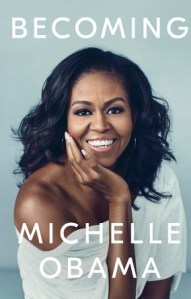
I’m not saying Michelle Obama manipulated readers; it was probably her publisher who tricked us.
Sometimes a book has a greater purpose than itself, but it usually doesn’t. That greater purpose, when you look at it, is often fake. When Michelle Obama wrote Becoming, my wife bought it just to support her, and then she never read the book.
Michelle Obama lives on Martha’s Vineyard and is wealthier than my family will ever be, so I didn’t see the need to support her. On the other hand, I don’t want Michelle Obama’s support either, so we’re even (except my wife has never bought any of my books).
At any rate, somewhere along the way, buying the book become a mission for millions(?) of readers. My wife even received a copy of Becoming from a friend simply because the friend knew she liked Michelle Obama. My wife didn’t read that copy either.
If you’re buying a book to support a cause/rich person/celebrity, then you’re probably falling for a trick.
3. Let’s bash Donald Trump (or the politician of your choice)

If you want to write a bestseller, he’s your topic.
A lot of people despise President Trump. He brings a lot of it on himself, but book publishers use this animosity against him to sell a bunch of garbage books.
Over the last few years book publishers have pawned off books like Fear by Bob Woodward and that one tell-all book written by a porn star and that bald lawyer who just got sent to prison. These books immediately hit the best sellers list, and then they’re outdated two weeks later when the new outrage has made all the previous outrages irrelevant. If I need an anti-Trump fix, I can get it for free in a bunch of places, and the outrage is usually current.
It’s not just Trump either. When Barack Obama was president, a bunch of writers/publishers profited off of garbage anti-Obama books as well. It was the same trick, just with a different audience. Those books also promised to give readers new insights that would bring down a presidency, but they were obsolete within a month.
If you’re buying a book because you despise a current president/politician, you’re probably falling for a trick.
4. It’s the next…!

I’ve never written a best selling novel, but I’ve read a few of them, so I’m an expert.
A few years ago a bunch of women-in-distress novels (usually written by women) were called “The next Gone Girl.” Gone Girl had been a huge bestseller, so a bunch of books like The Girl on the Train and The Woman in the Window, rode its coattails. Some books even had blurbs from Gillian Flynn, author of Gone Girl, on the covers of books just above the title.
If they’re going to compare a new novel to Gone Girl, it was cool to have the author praise the book (and then remind readers that the praise comes from the author of Gone Girl). Even though I liked Gone Girl, I’ve never actively looked for a book that was the next Gone Girl. I’ve already read Gone Girl. Why would I want to read the next Gone Girl when I’ve already read it?
Right now a bunch of fantasy readers are looking for books similar to A Game of Thrones, and I can understand that because the book version of the series isn’t finished (and the television show fizzled). Fans are dissatisfied and want something that has a sense of completion. Since A Game of Thrones might not get finished, book publishers can publicize something that’s already written as “The previous Game of Thrones… but it’s already completed!”
If you’re buying a book because it’s the next… something, you’re probably falling for a trick.
*****
When you’re looking for a good book, these are some tricks that publishers might use on you. I used to fall for the tricks. I might still fall for other tricks, but I don’t fall for these anymore.
What do you think? What other tricks do publishers use to manipulate readers into buying their books?

(image via wikimedia)
As an introvert, my biggest complaint about the coronavirus is that the scare isn’t working. I see people out in public wherever I go. Colleagues whom I try to avoid still track me down for unnecessary conversations. My family still wants to air travel to a destination I don’t want to go to for a vacation during Spring Break.
I was kind of hoping for a quick harmless panic, where people would stay away from each other for a while, but the coronavirus doesn’t seem to be scaring people, despite the BREAKING NEWS of each new potential victim.
You have to be careful with international scares like the coronavirus because you don’t know how seriously you should take them until it’s too late. You don’t want to just make lame jokes about it, and then realize it is horrible and that you’re just made lame jokes about thousands of horrible deaths.
On the other hand, you don’t want to lock yourself inside the house and become a hermit until the scare is over, but… well, maybe you do… NOT because you’re scared but because you like it.
The great thing about an international scare from an introvert’s point of view is that nobody wants to talk because talking might lead to spreading of the disease, and we introverts get left alone. Even if the health officials claim that the new virus isn’t contagious like that, this is no time to trust officials.
One reason a coronavirus panic isn’t spreading is that the name is too long. Panic spreaders prefer contagions that have shorter names like bird flu or swine flu or Ebola. Five syllables is two too many for an international scare. You can’t even use it when you’re losing an argument.
If you get mad and have to say something hurtful or vicious, it’s pointless to yell: “I hope you get Coronavirus and die!!”
The word coronavirus takes too long to say. Plus, coronavirus doesn’t have the same urgency as something like cancer. Ebola, swine flu, even Sars, all sound more menacing than coronavirus. But nothing is more threatening than cancer. If I’m going to be scared of something, it would be cancer. And when it comes to scary afflictions, almost nothing beats cancer.
Three different people over the last ten years have told me that they hoped I’d get cancer and die! One of those people then got cancer. And then he died. I don’t know how I feel about that. I would never wish cancer on somebody, even if that person had the audacity to disagree with me about politics and wish cancer on me.
I wouldn’t wish coronavirus either, but it’s more difficult to say. If I wished coronavirus on somebody, I’d probably stutter and mess it up.
To be fair, this coronavirus has scared some people out of traveling. Book conferences are being cancelled (I mention that because I’m a book blogger). Introvert authors are probably glad that the conferences are called off because now they don’t have to go out in public so they can just stay home and write. But maybe the panic will still come. Maybe it’s too early to make the call.
I’m not saying that introverts should be glad about a potential coronavirus panic. As far as I know, we introverts didn’t cause the panic that makes people want to avoid each other. I hope it’s not an introvert behind the scare. It would be a passive-aggressive move to create an international scare just to avoid human contact, but passive-aggressive introverts are kind of dangerous. Hopefully no introvert would be that diabolical.
If the panic already exists, however, we introverts would be fools not to take advantage of it.
*****
Here’s the romantic comedy you can read and listen to…

Things are tough for independent authors. We don’t have the connections to build a large enough audience to make a living from our book sales. People don’t take us seriously because we’re not attached to the publishing industry. If we talk too much about the challenges that face us, then we’re accused of whining.
And now we have this demoralizing incident (Read more here! )! The independent author of the Healthy Holly children’s book series just got sentenced to three years in prison because she used her position as mayor of Baltimore to make money from her books. Some people are celebrating her punishment, but this is a prime example of what our system does to crush the independent author.
First of all, this author took a lot of time and effort to build a base of potential buyers. Most authors work on their craft first, and then promote their works on social media. Unfortunately, there are so many of us who do the same thing that we drown each other out.
This author was more creative. She became mayor of Baltimore, a city already with a reputation of being corrupt, and used her position to force employees and entities within the government to buy and store her books. Don’t get me wrong; I’m against government corruption, but if you’re going to abuse government power to sell books, choose a city where corruption is the established norm. I’m shocked that people are shocked by this corruption. I think this is just a case of selective outrage.
As far as corruption goes, this is a fairly benign example. The only reason people (pretend to) care is that this is an indie author, and the publishing industry can’t have indie author success stories like hers. If too many indie authors can find ways to make money off their books, then the publishing industry’s facade of fake superiority falls apart. From the publishing industry’s perspective, this creative author had to be crushed.
If James Patterson (a publishing industry favorite) had pulled a stunt like this, everybody would have talked about how brilliant he was. I have no proof to back this up, but that writing masterclass of his looks suspicious. There’s the possibility that Patterson has swindled more money from talentless writers than Pugh has swindled from taxpayers.
If you’ve taken Patterson’s masterclass, I’m NOT talking about you. You have talent. It’s the other writers that I’m referring to.
Politicians misuse taxpayer money all the time. A lot of taxpayers seem to like having their money misspent because they keep electing the same politicians who keep misspending the money. Patterson’s scam is worse because he’s giving writers false hope. At least Pugh was up front in her dishonesty by being a politician.
Since I’m only a book blogger, I try to stay out of politics. I don’t care which political party this author belongs to or what demographic she claims first when she announces herself in public. I see her as an indie author first, so I feel the need to defend her. Yeah, she abused her power. Yeah, she probably had a moral obligation to focus more on Baltimore’s problems than her own writing career (that’s the bad part about being a public servant), but it’s tough being an indie author.
I understand she broke the law and we can’t overlook that, but she’s an indie author. Things are tough for us.

(image via wikimedia)
Writing about The Holy Bible without mentioning religion isn’t easy, but I’m going to try. People have disagreements about what Bible verses mean or whether The Bible should be taken literally or as a series of metaphors or something in between.
I’m not getting into that. I’m just mentioning that I’ve decided to read the whole thing. Despite going to church a lot when I was a kid, I never read The Bible that much. We’d get some verses in Sunday school or Bible study, but I never felt the urge to read the entire book from beginning to end.
The Bible is a long book; at least it is by my standards. It’s been translated, and I don’t trust translated books because it’s nearly impossible to capture the precise tones and meanings of different languages. Plus, when I was younger, I was always being assigned really long, difficult books, and I was never assigned The Bible. If I had been assigned The Bible in school, I probably would have read it, but teachers weren’t allowed to assign it.
I’ve read a children’s version of The Bible, but that probably doesn’t count. Children’s versions of The Bible are great for telling the stories, but they don’t necessarily get into the hardcore morality that the adult version of The Bible does. I want to read about that hardcore morality, even if it’s seen as controversial today.
I’ve listened to a lot of people talk about The Bible, criticize The Bible, and I’ve even seen some people making a lot of money off of The Bible. I don’t even know if these people have actually read The Bible. I know some book reviewers don’t really read the books they review, so that probably applies to people who talk about The Bible as well. How do I know that some guy who’s gotten rich from talking about The Bible has actually read it? Instead of listening to others talk about it, I’ll read it myself.
Sometimes I read books just because they’re so huge in our popular culture. Last year I read Michelle Obama’s book because everybody was talking about it. I read parts of a James Patterson/Bill Clinton book because it was a highly publicized book. I even read parts of A Game of Thrones. Now those books are done; nobody cares about them anymore.
But The Bible? The Bible will be around for a while. The Bible will be around long after Michelle Obama or James Patterson or even George R.R. Martin are gone. So I think I’ll read it.
*****
Here’s the copy of The Bible that I’m reading. In the video below, I explain the background behind this particular copy and why I’m reading it.
What do you think? Have you read the entire Bible? When you read it, do you go from beginning to end, or do you just read whatever section you feel like reading?

(image via wikimedia)
The screens might seem like a new problem, but they have have been around for generations. The first screen, the television set, was often called “The idiot box” because people would stare vacantly while watching shows that we make fun of today. This was back when there were only three television channels. When my family finally got cable in the early 1980s, my dad would sit on the couch and click the remote mindlessly and be uninterested in everything. The screens are not new.
Today we have more screens than ever. Families might have more than one television, more than one computer/laptop screen, more than one phone/tablet screen. Most families (except for the Amish) probably have more screens than family members.
Even though I’ve lived most of my life without so many screens, I have been addicted just like almost everyone else. I held out against the smart phone for a little bit, but once I could read literature on a screen, I was hooked. For a few years, I was reading most books on a tablet or my phone. I then started watching videos and, even worse, I began reading the comments underneath the videos. I constantly checked headlines from dozens of news sites, despite knowing that most of the news sites had the same stories.
My posture got bad (it had never been good anyway). My eyes started twitching. I stared at my phone at random moments, even when I had no reason to. Luckily, I was born without all this technology and I’ve lived without it all my life, so it was easy to create a template that helps me rule the technology… or at least lets me think I do.
1. Read actual books instead of digital.
This one’s first for me because I’m (kind of) a book blogger. For a time, I really liked reading books on my phone. But whether it was the brightness or the size of the screen or whatever, my eyes started twitching and my vision got worse.
That’s okay. I’ve spent most of my life reading actual books. I easily went back to reading actual books, and soon my eyes stopped twitching, and my vision has improved a little. I have the advantage of a big city downtown library that gives me access to more free books than the average reader can get to, but a lot of people have access to big city main branch libraries and don’t take advantage of them.
2. Set the timer.
Social media sites want us to stay on as long as possible. If I’m not careful, I can lose hours just to mindless screen jumping. To avoid this, I set the timer. Yeah, I use the alarm on my phone, so I’m using the tech I’m trying to minimize to minimize the time I spend on tech, but it makes sense to me when I’m not trying to explain it, and it works.
3. No screens one hour before bedtime.
Since screens can get me riled up, I turn off the computer and put the phones away at least one hour before I go to bed. This way, I can concentrate on what I’m doing the next day. And I’m calm when I go to bed. If I read, I read a book that I know won’t get me fired up. If I get too interested, I start working on math. Math has always put me to sleep quickly.
4. Establish at least one non-screen habit.
When I was a kid, I collected comic books, and that kept me from watching too much television. Now that I’m older (and newer comic books suck), comic books don’t work for me anymore. I like to write, but that means sitting in front of a screen.
Now I’m writing the old fashioned way, like I used to do before word processors and computers were household items. I handwrite most of my rough drafts until they’re almost ready. Then I type them up. Even though it takes longer this way, I can write without being dependent on a screen. Yes, I need a screen to get an audience, but I’d rather rely on a screen than go to an actual writer’s group.
Writer’s groups… Ugh.
5. Set up a phone landline.
I’m not saying the tech grid is going down (I’m not that kind of blogger… yet), but if it does and cell phones stop working, then we’ll need our landlines again. When I stopped using my landline years ago, I thought I was being slick by saving some money. Instead I’m flushing even more money down the drain with cell phones (that all of us use). There’s no need to carry a cell phone with me all the time in my own house when I have a phone hanging on my wall.
Some people seem to like relying on their screens. That’s okay, I guess, but If you want to control how you use your technology, at least you know there are easy steps you can take.
*****
Even though I don’t want to give up too much of my dependence to the screens, I’d rather have the screens than have to go to writer’s groups again. If you’re a writer, and you’ve never been to a writer’s group, I have some horror stories for you.
Writer’s Group Horror Story: The Vulgar Guy
(image via wikimedia)
25 years ago, if you wanted anybody to read your writing and give you a free honest critique, you had to join a writer’s group. There were no blogs for writers to get feedback. Literary agents rarely sent anything except a form rejection letter. Publishers didn’t send anything back at all. Family members always loved what you wrote (or pretended to).
It was tough finding a good writer’s group after I had graduated from college, and I had to suffer through a few disasters before I found the right fit. This was before the internet, so I had to search through the ads of newspapers, looking for a writer putting a group together. I went to book shows and writer’s conventions, trying to make connections. I’m an introvert. I was horrible at making connections. I was always jealous of extrovert authors. Authors who could talk without effort, they had it made.
Back then, if I had wanted to publish an independent book, I’d have to use my own money to make copies and sell them from the trunk of my car in parking lots. I couldn’t just write an ebook like The Writing Prompt and put it up on the internet.
No, 25 years ago, if you were an aspiring author with no connections, you had to suffer through the writer’s group experience.
One of the first nightmare writer’s groups I tried met in the back of a book store. I learned about it in the want ads of a local newspaper. I lived in a major city at the time, and there were bookstores (and aspiring writers) all over the place. This bookstore belonged to a franchise that no longer exists and the store took up way too much space in a plaza that also no longer exists. The lot is for a condominium/townhome complex now.

Technology is great (especially if you know how to control it), but you appreciate it even more when you’ve lived most of your life without it. And speaking of screens…
Old Things That Are Tough To Explain: You Could Only Watch it Once
“It won’t fast forward!” my youngest daughter complained as she waved the remote control at the television and dvr box.
“That’s because the show is live,” my oldest daughter said.
My youngest looked exasperated. She has been accustomed to watching recorded programs or videos uploaded on sites like YouTube. The concept of a television show being broadcast sometimes doesn’t make sense to her. She understands it, but she forgets every once in a while, and then she gets mad. I don’t know if she gets mad because she can’t fast-forward or because she forgot she can’t fast-forward.
“That’s stupid,” she said and flung the remote onto the couch.
When I was a kid, I told her, we didn’t even have remotes. You had to get up and change the channel. And that wasn’t even the worst of it. There was no VCR or DVR. If you really enjoyed a scene on TV, all you had was the memory of it. You couldn’t go back and rewatch it.
If somebody at home interrupted the show, or stood in front of the television, you couldn’t go back to see what you missed. If you disagreed with another viewer about something that happened or what a character said, you couldn’t go back and replay it to prove who was right. All you could do was argue.

What do you think? Do you spend too much of your time on a screen? What else can you do to control the power of the screens?
American Dirt by Jeanine Cummins was meant to be an important novel. The cover features a reviewer’s comment that calls American Dirt “A Grapes of Wrath for our times.” That’s a big deal. American Dirt became an Oprah’s Book Club selection. Sandra Cisneros has praised this book. Even prolific horror author Stephen King even gave advanced accolades for the novel.
I should mention that American Dirt has become a bit controversial (you can read more about it here) because the author is not of Mexican heritage and allegedly gets a bunch of details about immigration wrong. Some critics say that because the author is not of Mexican descent and hasn’t experienced that particular immigration experience that she had no business writing the book in the first place.
This type of thing has been an issue for a while. A few years ago publishing companies started hiring sensitivity readers to double check stuff for writers who were writing about experiences they hadn’t experienced. I guess at the very least, the sensitivity readers for American Dirt didn’t do a good job.
Anyway, I’m more interested in Jeanine Cumming’s writing in American Dirt. Is this book really any good Did this novel deserve the hype? What makes other people think this writing is so great?
When Stephen King praised American Dirt, he wrote,”I defy anyone to read the first seven pages and not finish it.”
I enjoy defying Stephen King, so I’ve done exactly what he defied me to do. I read the first seven pages of American Dirt and decided not to finish it.
The first scene (or the first seven pages) depicts a boy Luca and his mother hiding in a bathtub listening to their family get massacred outside. It’s meant to be an emotional scene. It was probably a difficult scene to write because it’s from the boy’s point of view and the semi-stream of consciousness for an eight year-old boy makes the scene plod a bit.
Plus, the author is not an eight year-old boy (and has never been an eight year-old boy) and (according to today’s online mob critics) has no business trying to tell the story of an eight year-old boy. It’s not the author’s story to tell.
I’m kidding.
Like I said earlier, I’m more interested in the author’s writing style. Here’s a sample of what I mean (the parenthesis are my commentary):
The clatter of gunfire outside continues, joined by an odor of charcoal and burning meat. Papi Is grilling carne asada out there and Luca’s favorite chicken drumsticks. He likes them only a tiny bit blackened (misplaced detail), the crispy tang of the skins (misplaced detail). His mother pulls her head up long enough to look him in the eye. She puts her hands on both of his face and tries to cover his ears (she’d probably hold him still and cover his mouth). Outside, the gunfire slows. It ceases and then returns in short bursts, mirroring, Luca thinks, the sporadic and wild rhythm of his heart (would he really think that?). In between the racket, Luca can still hear the radio, a woman’s voice announcing Le Mejor 100.1 FM Acapulco! followed by Banda MS singing about how happy they are to be in love. Someone shoots the radio (I guess someone doesn’t like Banda MS), and there’s laughter (nobody in that group likes Banda MS?). Men’s voices. Two or three, Luca can’t tell. Hard bootsteps on Abuela’s patio.
This scene might have worked better from an adult’s point-of-view, especially with the “…mirroring, Luca thinks, the sporadic and wild rhythm of his heart” kind of insights that literary authors feel like they have to put into important books.
But I could be wrong. Editors, and Oprah, and Sandra Cisneros, and Stephen King disagree. I thought the first seven pages were a little sloppy. The story could have been gripping, but the author’s style (and her cultural misappropriation… haha) got in the way. An important novel really should be written more carefully than that.
American Dirt isn’t the only highly publicized novel that I didn’t finish. Two decades ago, I actually got angry at the following novel, but it wasn’t because of cultural misappropriation. As much as I hate admitting this, it was for a much dumber reason.
Literary Glance: The Corrections by Jonathan Franzen
When The Corrections came out in 2001, I didn’t want to read it because I thought the author Jonathan Franzen came across as a prick. He looked like a prick in his publicity photos. To be fair, a lot of authors look pretentious in their publicity photos, but Franzen came across even worse than most. Plus, he was going through a literary feud with Oprah Winfrey that didn’t make him look good. Even people who despised Oprah Winfrey thought Franzen came across like a prick during their feud.
I admit, most of my anti-Franzen attitude was my own bitterness. Every unsuccessful writer should be allowed to go through a bitter stage, and 2001-2003 was mine. I had just given up on writing after ten years of several projects, one coming kind of close to getting published (“kind of close to” probably meant “never had a chance of,” but I was at least told I was “kind of close”) and I was bitter that some guy like Franzen who wasn’t much older than me was getting published, getting publicized, and then almost winning a Pulitzer, while I had nothing to show for my own efforts. I tried reading The Corrections just so that I could be justified in hating it.

Not every book is important. Some are MUST-READ novels. Must-read novels are more important than important novels because readers are manipulated into thinking that something will be missing from their lives if they don’t read these must-read books.
I have heard (truism alert!) that people regret what they haven’t done more than what they have done. I’m not sure this applies to books. There are a lot of must-read books that I’m glad I haven’t read.
The Literary Rants: Must-Read Novels
There are only two legitimate reasons for a book to be a “must-read.” You fail a class if you don’t read it. Or you get fired from a job for not reading it. I don’t have to worry about failing classes anymore, and I don’t have to read books for my job (I have to read stuff that’s worse than most books), so there are no must-read books anymore.
I understand that using the term must-read is hyperbole. I have nothing against a little hyperbole. And I usually don’t like it when people take hyperbole literally. During the political season, politicians use hyperbole, and then other politicians accuse each other of lying when they were using hyperbole.
What do you think? Does American Dirt sound like an important novel, a must-read novel, or neither? Should fiction authors write only about cultures and events that they have experienced? Have you read the first seven pages of American Dirt, and if so, are you willing to defy Stephen King?

Even James Patterson hasn’t read all of these books.
This is a legitimate question (I think), and it’s bothered me for years. James Patterson puts out at least one book a month, most of them with a coauthor. Most of the books have bad dialogue, no sense of setting, huge plot holes, and one-page chapters.
By most standards of writing, James Patterson’s books are filled with bad writing. Despite all of this, every Patterson novel becomes a best seller. He even teaches a masterclass about how to write fiction, and I think people pay money for it.
This shouldn’t happen. James Patterson should be shamed for writing so many books (I usually call them “rough drafts”), and publishers should be shamed for releasing these rough drafts to the public.
I don’t even believe in shame tactics. I think shame tactics are used by people with weak arguments. But if I were to ever use a shame tactic (and I won’t), it would be on James Patterson and his book publishers (but NOT on the people who buy his books).
Somewhere along the way, there should be a hiccup in James Patterson’s book sales. At least one of his books should bomb, but they never do. Why is that?
Why do so many people read James Patterson books?
I think I finally have the answer. And I explain it in the video below.
I don’t want to bash James Patterson all the time because that can get old. He’s not the only author who might be scamming readers. Here’s an author who struck it big with a debut novel a couple years ago but turned out to be (in my opinion) kind of shady.
Famous Author Lifestyle Strategy: Lie about Having Cancer
When The Woman in the Window by AJ Finn came out last year, I was immediately suspicious of it. The novel was promoted as “the next Gone Girl.” A bunch of other extra promotion was going into the novel, way too much for a first time author. The final straw was Stephen King calling the book “unputdownable.” I’d been burned by King’s overly positive reviews of mediocre fiction in the past, and I knew something was going on.
Then in an interview, I discovered that AJ Finn’s real name was Dan Mallory and that he’d actually worked as an executive editor for the publishing company that was putting out the book. No wonder The Woman in the Window was getting so much publicity, I thought, nepotism. Journalists didn’t seem to see anything wrong with that. I understood; if journalists voice their concerns, they won’t get future interviews.
Despite all the super-hype for a first time novelist (I’m always suspicious of super-hype), I felt I needed to read at least an excerpt of The Woman in the Window. Maybe the novel really was that unputdownable. It happens, though I can’t think of an example offhand. Usually a novel that is that unputdownable takes a while to get noticed. Still, I decided to read the first few chapters (without spending any money).

Writing too much about James Patterson or the author who lied about having cancer or other authors who lied/cheated to get book deals can get negative. I don’t want to be negative all the time. Even though writers can get frustrated by aspects of publishing, now is a great time to be a writer.
5 Reasons Why It’s Great To Be A Writer Today!
It’s easy for most writers to be negative. It’s tough to make enough money to earn a living. We’re never satisfied with what we’ve written. No matter how many people read and respond to our work, it’s never enough. But even with these challenges, it’s better to be a writer today than it’s ever been.
1. Writing is physically easier than it’s ever been.
Authors used to have to physically hold a pencil or a pen and physically write out each word on a sheet of paper. Even worse, back in the really old days, writers had to dip quills into ink and then got beaten by monks if they made a mistake.
I’m not sure that ever really happened because there’s no ancient video footage of monks beating writers who made mistakes. If there’s no video footage of an event, I’m skeptical that it ever happened. Then again, back in the 1970s I saw nuns rap student knuckles with rulers, so if nuns in the 1970s were doing that, I’m pretty sure in the really old days monks did much worse to young writers who made errors on their parchments. After all, nothing inspires perfection like the threat of violence.

What do you think? Why do you think so many people read James Patterson books? Do you think James Patterson is scamming readers? If lying about cancer is bad, what kind of a lie is okay for a writer to tell the public?
*****
After more than ten years of blogging, I’ve finally written a novel.
A grammar-obsessed English teacher falls in ‘luuuvvv’ but discovers how chaotic and dangerous ‘luuuvvv’ can really be.

The Sunset Rises: A 1990s Romantic Comedy is now available on Amazon and from the trunk of my car at various local bookstores… until parking lot security kicks me out. Buy it now while supplies last!

I haven’t read any bestselling fiction from 2019 yet. Maybe a book blogger shouldn’t admit something like that. I’m supposed to keep up with all the novels and all the latest publishing trends, but books take a long time to read, and publishing companies keep churning out stuff faster than readers can read them.
Sometimes I think I should have chosen to be a movie vlogger instead. They have it easy. They can watch a movie in two hours and be an expert. If a movie weekend is slow, movie vloggers can even critique trailers. I’ve seen 20 minute videos critiquing two-minute movie trailers. I haven’t watched any of them; I have just seen that these videos exist.
Anyway, book reviewers have to finish entire books, and that takes time. We can’t even critique book trailers because every book trailer sucks, so it’s pointless to critique them.. Even trailers for great books suck.
If I decide to read a bestselling novel from 2019, it would be Where the Crawdads Sing by Delia Owens. You don’t have to convince me. I’ve already convinced myself. For one, it sold more copies than any other book in 2019. It sold more ebooks and more audiobooks, at least according to Publishers Weekly ( read more here )… if you trust them.
Don’t get me wrong; I don’t read books just because a lot of other people read them. But when a book sells that many copies, a book blogger probably should look into it.
I read Michelle Obama’s Becoming because it was so popular, but also because my wife had two copies and never got around to reading it. I figured since we had spent our own money on it, one of us ought to read it. My wife hasn’t even bought one copy of Where the Crawdads Sing, but it still outsold Becoming, so there’s that.
Early in 2019, I reviewed the first chapter of Where the Crawdads Sing. I read the free sample on my e-reader and wrote about how well-written the setting was. Then I compared it to the setting in a James Patterson book. Maybe that wasn’t a good approach. Every author looks good when compared to James Patterson, except maybe James Patterson’s coauthors.
One reason I don’t read current bestsellers is that they’re overpriced and they’re always checked out at the library (I guess that’s two reasons). Now that the book is older, it will be more available and paperbacks or secondhand copies will be easier to find. Being a cheapskate is no longer a reason.
That does it! I’ve convinced myself. I will find a way to read Where the Crawdads Sing without spending a bunch of money.
Here’s what I thought about Where the Crawdads Sing when I read the first chapter last year.
Where the Crawdads Sing by Delia Owens- A Lesson on How to Write Setting
Setting can be tough for an author. If you write too much, you can make the reader bored. If you don’t write enough, the story can feel incomplete.
Getting the setting wrong can ruin a book for a reader. My teenage daughter complains that too many pages in classic literature are devoted to descriptions of place. She already knows what all that stuff looks like, she says. I remind her that the internet didn’t exist when classic literature was written, so stuff had to be described. Back then, literature was relatively new. There were places, people, and ideas that had never been put into words before. A lot was new.
When it comes to words and ideas, not so much is new today. Almost everything has been described. It’s difficult to come up with new was to say the same thing. But it’s lazy to not try. I respect any current author who tries.
It was easy to persuade me to read Where the Crawdads Sing, but other novels might be more difficult. Here’s a novel that could have appealed to me, except it… it… it… didn’t. I’m not sure anybody could persuade me to read it now.
Why Should I Read This? Ulysses by James Joyce
I should have known from the cover that this book wasn’t about Roman mythology.
When it comes to reading classic literature, there are a lot of challenges. The writing style from novels published generations ago can confuse today’s readers. Some of the books have lots of references that today’s readers don’t understand. And a lot of those classic novels are just too long for our short attention spans. Any one of those challenges can deter people like me from trying a book. But when a novel is challenging on every level, I know I’m screwed.
The worst of all of these classic novels might be Ulysses by James Joyce. I don’t know if Ulysses really is the worst of all the tough classic novels because I haven’t read most of the tough classic novels. I’ve been told it’s not fair to judge a book that you haven’t read, but I disagree. You can judge most books within a few pages, if you can make it that far. I’ve read the first few pages of Ulysses, and I know I don’t want to read it anymore.
I’ve never heard anybody say that they actually liked Ulysses. Supposedly, Vladimir Nabokov said it was brilliant, but he wrote Lolita, so he’s a literary author and his opinion doesn’t count. Besides, I’ve never seen video of Nabokov saying Ulysses was brilliant, so I don’t necessarily believe that he said it.

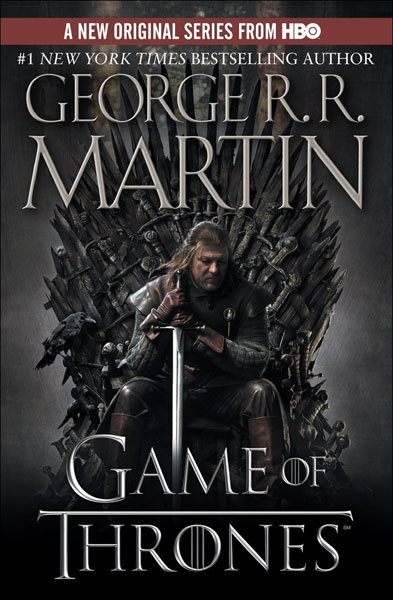
Yeah, yeah, I know everybody is tired of A Game of Thrones. The television series is over, Season 8 was a disastrous letdown, and everybody is emotionally done with it. Even fans of the books are pretty sure that the author George R.R. Martin will never finish writing his own series. He’s too busy blogging, going to fan conventions, and writing histories of his fictional world. Still, maybe there’s a case for reading the books.
Why Should I Read This? A Game of Thrones by George R.R. Martin
At least Ned Stark doesn’t have to read all seven books to find out what happens to him.
No matter what time of year it is, people who watch Game of Thrones like to talk about Game of Thrones. It can be annoying to the innocent bystanders who don’t watch it. Even worse are the book snobs who have read the books and watch the show. The book snobs have had an advantage for years because they’ve known what was going to happen on the show and would like to sprinkle spoiler hints just to piss off the rest of us who haven’t read the books.
Just so you know, I have nothing against book snobs. I was a book snob when the Lord of the Rings movies came out. And I’m still a comic book snob when it comes to superhero movies. I’ve bored many non-comic book readers about how the movies are different from the original comic books. I’ve lost friendships over it, and I don’t even have many friends. So being a book snob isn’t necessarily meant as a negative.
As much as I respect them, it’s fun to annoy the book snobs by calling the book series A Game of Thrones. A Game of Thrones is the name of the first book, the book snobs keep telling me. The name of the entire series is A Song of Ice and Fire. The book snobs are right, but they don’t need to remind me every time I mention the Game of Thrones books. Everybody knows what I mean. If I say A Song of Ice and Fire, a bunch of people who know about the Game of Thrones TV show but don’t give a crap about the books won’t know what I’m talking about.
What do you think? What books have you vowed to never read? What bestselling novels from 2019 are worth reading? Is anything from 2020 any good? Does anybody want to persuade me to NOT read Where the Crawdads Sing?