
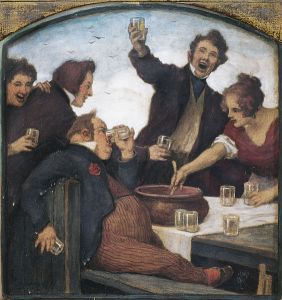
This would seem normal, except he’s by himself. (image via wikimedia)
I’ve always talked to myself when I write. I read my words out loud. I mutter profanity when I make mistakes. I tell myself how to edit and revise as I go. I’m probably not the only writer who does this.
Unfortunately, I also talk to myself when I’m not writing. I catch myself murmuring conversations when I’m at work or in my car or at the grocery store.
A co-worker once told me it’s okay if you talk to yourself as long as you don’t answer yourself back.
That’s my problem; I answer myself back and then I answer my answer back again too.
The good news is that I have taught myself to stop this bad habit, and it was easier than I thought it would be, except for a couple exceptions.
In the video link below, I explain how I learned to stop talking to myself. If you talk to yourself (or know someone who does), I hope you find it helpful:
IMPORTANT UPDATE!
The accompanying video has been temporarily removed.
Now that I think about it, the video kind of sucked. I think I’ll just permanently remove it.
Plus, I’m back to talking to myself, so the video is irrelevant anyway.

Backlash by Brad Thor! How can it NOT be an instant bestseller?
Brad Thor is probably the best name ever for a male military thriller author. Brad… Thor… Two first names, both one syllable, and a last name that’s the same as the Norse god of thunder. If I could exchange names with anybody, I’d take Brad Thor’s name.
With a name like Brad Thor, you can write whatever you want, as long it’s filled with masculinity. And Brad Thor usually delivers what his name suggests. When you read a Brad Thor novel, you know what you’re going to get: lots of action, bad dialogue, and the occasional awkwardly worded sentence.
Backlash by Brad Thoris pitched as the 19th book in the Scot Harvath series. 19th book? No character deserves 19 books, especially a guy named Scot Harvath. I mean, it has to be tough to come up with a fictional name cooler than Brad Thor. I think it’s an author’s responsibility to come up with a name cooler than his/her own, and Scot Harvath doesn’t cut it for an author named Brad Thor.
I know it’s tough to come up with a name cooler than Brad Thor, but Clive Cussler created Dirk Pitt, so it’s possible. The name Scot Harvath sounds like Brad Thor just gave up. If Scot Harvath were the author, I might buy 19 books with a character named Brad Thor, but not the other way around.
The quality of a Brad Thor book is important to a few people, I guess, and Backlash is okay so far. The writing is fast-paced with an awkward sentence popping up occasionally. Here’s a typical example of Thor’s writing from Backlash.
Chapter 2
Police Chief Tom Tullis had seen plenty of dead bodies over his career.
But this was a record for him at a single crime scene.
During the height of the summer, the popular resort town of Gilford could swell to as many as twenty thousand inhabitants. Off-season, like now, the number of full-time residents was only seventy-three hundred. Either way, four corpses were four too many.
Pulling out his cell phone, the tall, crew-cut-sporting cop texted his wife. They were supposed to meet for lunch. That was impossible now. He told her not to expect him for dinner either. It was going to be a late night.
This is what you get in Backlash. A bunch of simple sentences that could have been combined in more creative ways. A few awkward phrases that could have rewritten or deleted, and I have a few questions..
If Tom Tullis was police chief of a resort town, why has he seen so many dead bodies?
Do readers need to know Tom Tullis was “crew-cut-sporting cop”? Texting the wife that he’ll miss lunch and dinner seems calm for a resort town cop. Maybe I’m wrong, but a resort town cop might not be so casual about his text.
A more believable reaction would be something like this: “Holy crap! We have four dead bodies in my resort town! I moved here to get away from that crap! What the hell is going on?”
The rest of the chapter is just as matter-of-fact. Tullis handles this quadruple murder very methodically, even though it’s unheard of in his resort town. Maybe this Tom Tullis is a super cop, and I just haven’t read enough of the Scot Harvath books. There are 19 of them after all.
And why am I using numerals for 19 but Brad Thor spells out seventy-three hundred? It’s okay to write 7300. I’d rather read 7300 than seventy-three hundred.
I mean, I’d rather see the numeral 7300 than the words seventy-three hundred. I don’t want to read seventy-three hundred of anything, not even seventy-three hundred Brad Thor books.
Brad Thor is still a really cool name though.

(image via wikimedia)
Being around political junkies can be tough because they can get crazy about politics at any moment. You probably know what I’m talking about. During an election, every conversation can turn into a one-sided, long-winded lecture. If you dare disagree with a political junkie, the lecture can turn into an endless argument.
Even when the election is over, the junkie follows every news item and has an instant knee-jerk opinion. It never ends, especially with social media stirring things up.
Political junkies can be in a constant state of agitation, and it’s difficult for a non-junkie like me to keep an even frame of mind. When I tell political junkies that not everything is about politics, they tell me that I’m the problem because I don’t get involved enough.
I then tell the junkie that his/her behavior makes problems worse because of the endless arguments that make people furious, and people can’t solve problems when they’re angry. And then the friendship (or the pleasant work relationship) ends.
Political junkies usually aren’t interested in dialogue. They talk fast and interrupt immediately. Watch out when they say “We need to have an honest conservation…” because the political junkie’s definition of conversation probably isn’t the same as yours (unless you’re a political junkie).
I’m a non-confrontational guy, but I need to keep an even disposition when I’m with political junkies, especially at work. If you’re in the same position as I, here are some strategies you can use to help deal with a political junkie:
1. Avoid news in conversation.
Political Junkies love to have news channels on their televisions or phones. The constant updates and commentary gets their agitation up and makes them irritable and argumentative. Try to change the topic of conversation, if possible. Sports and reality shows are your best bets.
If you live with a political junkie, change the channel to a sports station (if they’re not arguing about politics on it) whenever you get the chance or an animal channel, preferably one with puppies and kittens.
2. Call every politician a dick.
Political junkies will idolize politicians from their own party and then vilify opposing politicians, even when all the politicians engage in the exact same behavior. I just call every politician a dick. It’s liberating. You don’t have to defend anybody’s behavior or stupid comments.
Plus, you don’t have to waste any energy thinking of clever responses. In today’s society, the word dick can apply to everyone. If the word dick offends you, you can find another term. Jerk is acceptable.
3. Wear headphones.
If the political junkie sees you wearing headphones, he/she will know that you will have to turn off the volume and remove your headphones before the conversation can begin. Plus, you can pretend that you don’t see or hear the political junkie. Since getting your attention will now take time and effort, the junkie will reduce the number of times she wants to start conversations with you.
You can even make the die-hard junkie wait by pretending that whatever you’re listening to is really important. Just raise your finger and nod your head while you make the junkie wait… and wait… and wait.
*****
What do you think? When I wrote this, I originally wanted to title this “5 Tips for Living with a Political Junkie,” but right now I can only think of these three. What nonviolent, non-confrontational tips do you have for dealing with political junkies?
I wasn’t a political junkie when I wrote the blog post below, but I was when the incident happened.
THE BEST POLITICAL INSULT EVER!!

She looked like a sweet old lady, but if you pissed her off, she’d rip you a new one. (image via wikimedia)
Experts may disagree about which U.S. political insult is the best ever, but everybody agrees that it hasn’t happened in the current election cycle. In fact, the rhetoric in the 2016 presidential campaign has been really lame. Hillary Clinton has called Republicans her enemies. Donald Trump has pretty much insulted everybody, and everybody else has insulted him back. Even so, nobody yet has had a good zinger that historians will remember.
To be fair, it’s been a few presidential campaigns since anybody’s had a really good political insult.
,_by_John_Trumbull.jpg)
It looks peaceful, but they probably said horrible things about each other. (image via wikimedia)
The 4th of July is a bit different from other United States holidays. Hardly any stores close, and most daily routines don’t change that much. Even so, it’s one of my favorite holidays, partially because of a childhood memory.
I’m over 50 years old now, and I don’t vividly remember many specific holiday moments. Between all of the Christmases and Thanksgivings and Easters that I’ve experienced, a lot of childhood holidays have blended in. One 4th of July memory stands out, however, and I’m going to retell the story now.
4th OF JULY STORY

Relax! This picture was created in 1902. It was okay for kids to fire off guns back then. (image via Wikipedia)
I was 10 when the United States turned 200 years old. It was a big deal back then, but at the time, the meaning of the 4th of July was lost on me. As an adult, I understand July 4th is the annual celebration of the signing and approval of the Declaration of Independence by the Continental Congress.
I understand how important the following sentence from The Declaration of Independence is:
“We hold these truths to be self-evident, that all men are created equal, that they are endowed by their Creator with certain unalienable Rights, that among these are Life, Liberty and the pursuit of Happiness.”
That one sentence had a bunch of concepts that were unique way back in 1776.
The Declaration of Independence is also known for John Hancock’s really big signature. As an adult, I appreciate how momentous the signing of that document was and how it began the process of liberating the colonies and forming one of the greatest nations in the world. I also appreciate John Hancock’s really big signature. Several jokes have been made about how a guy named John Hancock had a really big signature.
When I was a kid, I didn’t understand all this, including the John Hancock jokes. Back when I was 10, the 4th of July was about shooting off fireworks. And 1976 was a great year to shoot off fireworks.

(image via wikimedia)
Most of my writing is schlock. I admit it. That isn’t an insult to me or my writing. A lot of mainstream writing that I see today is schlock too.
Most recent novels are really light and have major flaws that could have been fixed with more time and effort. Major periodicals and click-bait websites have misspellings in their headlines and content that is poorly written. Most television shows and movies have bad dialogue and plot devices that don’t make any sense, but hardly anybody cares.
Schlock is a mediocre product that can get churned out in high quantities. Readers and viewers might not think of it as the word schlock, but they won’t care if you call it that.
James Patterson can write a bunch of schlock (or hire a bunch of writers to write it for him) because everybody knows he writes schlock. They might not call it schlock, but they know Patterson doesn’t write the highest quality of fiction out there. Nobody has ever gotten angry at me for criticizing James Patterson. Even his fans know he deserves it.
Fans of the show Game of Thrones, however, were furious with the writers after the final season because they, viewers, had high expectations. Game of Thrones wasn’t considered schlock, but the writers treated the final few seasons disrespectfully. You can treat schlock with a little disrespect, but not Game of Thrones. Once readers or viewers have high expectations for you, though, you’d better deliver.
The thing is, I like schlock. Life is easier if you like schlock because there’s always something to read or watch. When your expectations are too high, then you can’t enjoy much. But schlock, you can enjoy it, even if you know it’s not technically good. I might criticize schlock, I might not finish reading it, but I’m glad it’s out there. I’d rather have a glut of schlock than no schlock at all.
Even though I treat my writing with respect, and I put effort into it, I know most of it is schlock. I’m glad people like schlock. If people didn’t read schlock, then who else would read my writing?
Even though I’ve written a lot of schlock on my blog over the last few years, nobody has written as much schlock as James Patterson. Speaking of James Patterson…
MY DAUGHTER PUNCHED OUT JAMES PATTERSON!!

(image via wikimedia)
My daughter didn’t really punch out James Patterson. She punched out a life-sized cardboard figure of James Patterson. The James Patterson had been placed near the entrance of B&M Booksellers next to a table with several of Patterson’s new books (I don’t remember which books they were because he has so many of them at any given moment).
Even if my daughter doesn’t like James Patterson, it wasn’t her life-sized cardboard figure to punch out. It was the book store’s. And that’s what caused the problem (Read more here).

The cover says it’s “the only book you need to lead you to success.” That’s good enough for me!
If you’re going to read a self-help book like How To Win Friends & Influence People by Dale Carnegie , it’s better to read it when you don’t actually need self-help. When you read a self-help book from a position of strength, you’re less likely to be tricked into following bad advice that might be in the book. And if you actually need self-help, let somebody else try the advice first.
When I was a kid in the 1970s, the big self-help book was called I’m Okay-You’re Okay. That title rubbed me the wrong way because it implied that everybody was okay, and even then I knew a lot of people who weren’t okay. I wasn’t even sure I was okay. If I wasn’t okay, then I knew a bunch of people around me were really messed up, and telling everybody that they’re okay doesn’t do anybody any good (except the self-help author who gets rich giving out bad advice).
When I review a book, I usually start with the title, and How To Win Friends And Influence People is a little misleading. If I’m going to read a book about how to win something, it won’t be for friends. To me, friends are something that you either have or don’t have; you can’t win them. If I’m going to win something, I’d like to know how to win the lottery or maybe learn how to win at blackjack or how to win in court. Maybe I’m being too literal, but How To Win Friends And Influence People is a very literal book. There’s not a lot of figurative language in HTWFAIP.
Even though HTWFAIP was written in 1936, it might still have some relevant advice. The chapter that most interested me was “An Easy Way to Become a Great Conversationalist.” If there’s one thing I’m bad at, it’s talking to people I don’t know. To be fair, I’m bad at a lot of things, but making small talk is one my worst. I was looking forward to great insightful advice, and all I got was “Be a good listener.” That kind of ticked me off. I’m already a good listener.
I need advice to get me to the stage where people will talk to me enough so that I can demonstrate my great listening skills. After “Hi, how are you?” I’m accustomed to long awkward silences, especially if I’m talking to somebody else who is a great listener. Two great listeners put together alone in a room can make a bad conversation. When I was younger, I could have used a chapter about how to get the other person to start talking so that I can be a good listener. Instead, I had to figure it out for myself.
Back when HTWFAIP was first published, “be a good listener” was probably new advice. Maybe very few people thought that being a good listener was important back then. I don’t know. I wasn’t around. But maybe HTWFAIP seems irrelevant because the advice that was brand-new in 1936 has become so commonplace. Again, I don’t know. I haven’t read any pre-1936 self-help books. Maybe pre-1936 self-help books suggested that you talk loudly and shout over people to get them to do what you want. I’ve never read a self-help book that says shout people down, but it has to be in a lot of self-help books because I see people do it all the time.
One problem with HTWFAIP is that a lot of the references are old. There are a lot of traveling salesman stories and lots of references to companies that no longer exist. When I was a kid, traveling salesman stories usually ended up involving a farmer’s daughter. If a story was really good, it involved more than one daughter and maybe some of her friends. None of the traveling salesman anecdotes in HTWFAIP have any farmer’s daughters (or any kind of daughter) in them. Having at least one would have made the anecdotes more realistic to me.
I’m also concerned that most of the companies and businesses that are mentioned in HTWFAIP don’t exist anymore. I’m not sure what that means. Did they stop following the advice given in the book and then fail because of that? Or did they follow the advice in the book and still fail? Maybe the stories and testimonials given in the book were all lies. We know people lie in their books now. I’m pretty sure people lied in their books back then too. Maybe all of Carnegie’s anecdotes were fake too. I have no proof, but it makes me wonder.
Is HTWFAIP the best self-help book ever? Probably. Most of its advice is commonplace now. It reminds me of The Adventures of Tom Sawyer in that everybody knows the white picket fence trick, but they read the book anyway. HTWFAIP was the first of its kind (at least that’s what one of the many book covers says), and people still read (and argue about) it today. And at least it didn’t destroy a generation like I’m Okay, You’re Okay.
*****
What do you think? Is HTWFAIP the best self-help book ever? What self-help books have you read? Is “be a good listener” practical advice in the new millennium? Have you read I’m Okay, You’re Okay, and is it as bad as it sounds? If you’re reluctant to talk about self-help books, it’s okay. Having an opinion about a self-help book is not an admission that you really need help.
*****
And here’s the video version with a slightly different perspective.
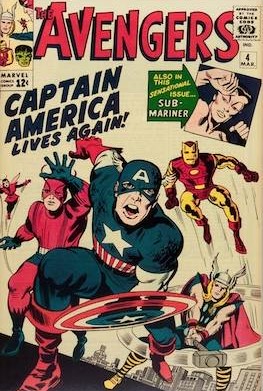
If you’re going to invest in comic books, you might start with this one.
When I announced to my friends a few years ago that I was going to sell my comic book collection, they warned me not to.
“That collection is worth money,” they said.
My friends were right. I’d started collecting when I was in elementary school in the early 1970s, and I didn’t stop until the glut of the early 1990s. If you’ve ever collected comic books, you probably know about the 90s glut that I’m talking about. If you haven’t collected comics, the details would bore you. At any rate, I had some relatively valuable comic books.
“Yeah,” I said. “That’s why I’m selling them. If they weren’t worth any money, I wouldn’t bother.”
One friend said, “Maybe your kids would want them.”
When I asked my daughter if she wanted my comics, she said, “NO!” She likes superhero movies and will wear the occasional Marvel t-shirt, but she has no interest in my comics.
My friends also said, “You’ve had them since you were a kid. How could you get rid of them?”
“Yes, I’ve had them since I was a kid,” I said. “But I’m not a kid anymore. And I can’t read all of them again.”
Plus, I’m using the money to get rid of some bad debt. I’m not whining about money, but I have some annoying debt to take care of. Some of it was from a bad decision I made years ago, and part of it is from circumstances that were out of my control. Either way, I have to deal with it.
The way I look at it, I’m using my childhood to get rid of debt and pay bills. I’ve heard of people who write letters to their younger selves, and I personally think that’s kind of impractical because if my past self read a letter from my present self, it could really mess up the time-continuum. But if I did write a letter to my childhood self (and I’m not saying I would), I’d say:
“Thanks for saving all these comics. Thanks for helping to pay off some bad debt.”
Or I’d say, “Thanks for saving all these comics, but you’re not getting laid for a long time.”
Despite what people might think, unintended abstinence caused by comic book reading isn’t so bad. I’ve never had to worry about surprise pregnancies or STDs or crazy girlfriends sending older brothers after me. When I got to college, I learned to hide the comic books, so potential girlfriends wouldn’t learn about the collection until it was too late, and by then I’d matured enough to not do anything too stupid with women.
Anyway, having a huge old comic collection was like having a stack of money in my closet while I have debt accumulating interest. Why would I keep money in my closet?
Nobody would say, “Don’t sell your money! It’s worth a lot of money!”
I know some people see comic books as an investment, but that works only for a small percentage of comics. People who buy comics as an investment only can get frustrated really quickly. A bunch of comic book investors learned that the hard way during the 1990s.
Years ago, I saw the Pawn Stars guy on television buy a bunch of worthless X-Men from the 1990s and then brag about how comics were a great investment. I laughed. It completely ruined Pawn Stars for me. If the Pawn Stores expert didn’t know 1990s X-Men were worthless, what else didn’t he know? Amateur.
It’s easier to sell a collection now than it ever has been. 25 years ago, there was no internet or ebay, so you had to go to a dealer who’d rip you off, and I understand the rip-off. Comic stores have to pay employees and overhead. That’s the good thing about selling online. I don’t have to pay much for fees, and I’m my only employee.
I’m not saying everybody my age should sell their childhood collections too. If everybody sold their collections, nobody would be buying, and we need buyers. If you have comics and you still like reading them, keep them. If you have family that you can pass them down to, keep them. I’m just saying in my situation, selling them is the way to go, and some people don’t understand that.
I look back fondly on my comic collecting days, even though I was really socially awkward at the time. I’m not sure if I was socially awkward because I read comic books or if I read comic books because I was socially awkward. I’m still socially awkward (but not as much), and I still have a soft spot for comic books, but I also like having a little more space in my house and a little less debt on my credit score. Thank you comic books!
*****
Here’s the video version of this blog post, with several examples of great comic books that I might or might NOT part with.
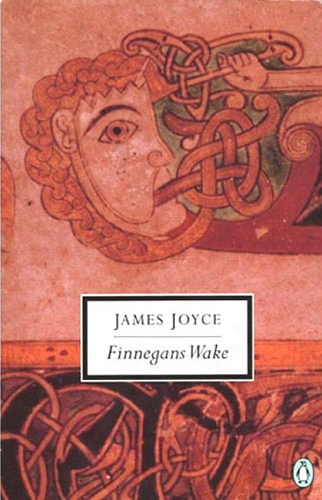
Even though I’m a pretty good reader, I have run across a bunch of books that made me feel stupid. I don’t mind admitting that. I’m usually open about my faults or gaps in my knowledge.
In the video below, I talk about three books that made me feel less than intelligent, and each book on this list made me feel stupid in a different way. One book didn’t make any sense to me. One made me wonder what the big deal about it was. And another triggered an emotional reaction that made me question my intelligence.
I’m considered a pretty good reader, so I can’t be the only person who feels this way about these books. Or maybe I am. Either way, I don’t like feeling stupid after reading a book, no matter what kind of stupidity it is.
What do you think? What books, if any, have made you feel stupid?
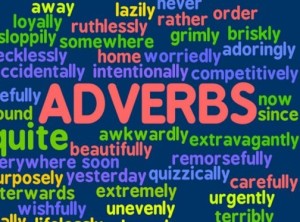
Adverbs can be sneaky little words, but that doesn’t mean we should get rid of them.
I have just decided to stop worrying about using too many adverbs in my writing. According to conventional wisdom, the adverb is a sign that your verbs and adjectives are weak. Instead of using adverbs, some writers proclaim, you should use stronger verbs and adjectives. The adverb is the bad boy of grammar, but I think it has an undeservedly bad reputation.
Famous authors often malign the adverb and say its usage hurts writing. For example, Stephen King’s most famous writing quote is:
“I believe the road to hell is paved with adverbs,…”
When the Modern Master of Horror equates a kind of word with eternal damnation, you have to take that seriously. On the other hand, Stephen King uses plenty of unnecessary adverbs in his own writing.
I like to use The Shining by Stephen King as a great example of adverb hypocrisy. The Shining is one of King’s most popular books, and it has a bunch of –ly adverbs in it (I have proof right here ). If a famous author (who says he doesn’t like adverbs) uses adverbs in one of his most famous books ever, then maybe the adverb isn’t so bad.
Mark Twain also had a famous quote about the most commonly used adverb, ‘very.’ I’m pretty sure very is the most commonly used adverb. I haven’t completed any statistical analyses to prove it, but I’m sure it’s true. If it isn’t, it has to be close. Anyway, here’s Twain’s famous quote about ‘very’:
“Substitute ‘damn’ every time you’re inclined to write ‘very’; your editor will delete it and the writing will be just as it should be.”
That’s decent advice unless you’re a student. Replacing every ‘very’ with ‘damn’ might make you sound like Holden Caulfield, but teachers like Holden Caulfield only when he’s a character in The Catcher in the Rye. Teachers don’t like Holden Caulfield in real life, and they don’t want students writing like him. Besides, if ‘very’ keeps getting replaced with ‘damn,’ then ‘damn’ will soon be hated by elitist writers, and I can’t have that. I like ‘damn.’ I like ‘damn’ very much.
I like Mark Twain too, but if you follow his advice you’d only be replacing an adverb with another adverb.
I like adverbs. The adverb is one of the parts of speech that I learned in school, and it’s not necessarily easy to learn. If every adverb ended with –ly (as some people believe), then learning adverbs wouldn’t be so bad. Unfortunately, adverbs can be sneaky. They can modify verbs, adjectives, and other adverbs. Adverbs can be almost anywhere in the sentence. Adverbs can even look like prepositions, and that’s really confusing if you don’t know what a preposition is.
I stressed myself out learning adverbs. I’ll be really ticked off if I went through all that for nothing. What’s the point of learning a part of speech if I’m not supposed to use it? I never hear math teachers explaining concepts and then telling students never to apply the knowledge. I understand adverbs. I understand the difference between ‘good’ and ‘well.’ I like applying knowledge in my personal life. It doesn’t make sense not to use adverbs.
Some authors say that adverbs keep writers from finding stronger verbs. Maybe, but so what? Not every verb has a synonym that demonstrates the degree of intensity that the author is describing. Some authors will then try too hard and apply a verb that doesn’t make sense in the sentence. I’d rather use a weak specific adverb than a verb that makes the sentence sound awkward. I believe writers can have the best of both worlds; use the stronger verb AND the adverb. Why do we have to choose?
I think the adverb is a made up issue that is meant to divide people. Stephen King is my proof. King, one of the most popular authors of my lifetime, has lobbied against using adverbs, but he uses them constantly. This is typical elitist behavior. He gets struggling aspiring authors to worry about adverbs and to develop strong feelings either for or against adverbs, and then struggling aspiring authors argue about adverbs, losing sight of the bigger picture (such as their families and their own creative projects), and then Stephen King keeps using adverbs in his own books, knowing that it really doesn’t matter (and he probably laughs at us novices for falling for his trick… but I have no proof of that).
I think people should stop arguing about adverbs. I mean, it’s not one of those divisive issues that breaks up families, but it makes writers doubt themselves. True, I believe in a little self-doubt, but look at today’s successful authors. Do you think James Patterson debates every adverb that he uses? Does John Grisham? Does Stephen King? No.
Don’t get me wrong. I’m not going to litter my writing with adverbs out of spite, but if I want to use an -ly word, I’ll use an -ly word. If authors like Stephen King truly despise adverbs, they can stop using adverbs in their own writing. And they can go first.

Classic literature is sometimes difficult to read because a lot of the books are filled with bad sentences. Despite what critics might think, a bad sentence doesn’t have profanity or adult content. A bad sentence is one that an English teacher would make corrections on if written by a student.
Here’s what I mean. When I was in school, my English teachers did a good job explaining grammar and sentence structure, but then they would assign classic novels where the authors broke the rules that had just been taught. If I tried to mimic the style of the authors I’d just read, my teachers would red-mark my paper. To simplify matters, I simply took these sentences that students were not allowed to write and called them bad sentences. Even if you don’t agree they are bad sentences, you probably understand what I mean. Maybe you even relate.
Bad sentences abound in all kinds of literature, but today I’ll focus on classic American literature. For example, Moby Dick by Herman Melville has a bunch of bad sentences, so many that I wrote an entire blog post about it several years ago. Out of all the examples, this one at the end of Chapter 24 “The Advocate” is one of my favorites:
“And, as for me, if, by any possibility, there be any as yet undiscovered prime thing in me; if I shall ever deserve any real repute in that small but high hushed world which I might not be unreasonably ambitious of; if hereafter I shall do anything that, upon the whole, a man might rather have done than to have undone; if, at my death, my executors, or more properly my creditors, find any precious MSS. in my desk, then here I prospectively ascribe all the honor and the glory to whaling; for a whale ship was my Yale College and my Harvard.”
Speaking of Yale and Harvard, if you’re taking your ACT or SAT writing, don’t write like Herman Melville.
Maybe the semicolon usage was correct back in 1850. Maybe it was a stylistic thing. I understand that, but it’s confusing to be taught one way to use semicolons in school and then see them used differently in classic literature. If I had used semicolons the way Melville used them in Moby Dick, I would have failed my English classes.
Here is a bad sentence from The Great Gatsby by F. Scott Fitzgerald (which I’ve written more about here), this one describing Jordan Baker:
“She was extended full length at her end of the divan, completely motionless and with her chin raised a little as if she were balancing something on it which was quite likely to fall.”
I get the impression that this was a rough draft sentence that Fitzgerald never went back to finish. She was balancing SOMETHING on her chin. The word “something” is kind of vague. If I had written that in college, my writing instructor would have demanded that I come up with another word for “something.” “Something” is what you write when you’re not sure what word you want to put in in its place. I kind of want to know what that something could have been. If I am going to write that a character has her chin raised like she were balancing something that was likely to fall, I should be able to think of something that could be balanced on a chin. A napkin? A cocktail glass? Several cocktail glasses? A book?
The sentences in The Scarlet Letter by Nathaniel Hawthorne aren’t as long and ponderous as those in some classic literature, but there are plenty of other issues. For example, in Chapter I, “The Prison Door,” Hawthorne starts the book with the following opener:
“A throng of bearded men, in sad colored garments, and gray, steeple-crowned hats, intermixed with women, some wearing hoods and others bareheaded, was assembled in front of a wooden edifice, the door of which was heavily timbered with oak, and studded with iron spikes.”
That’s the first sentence? That’s the hook? First of all, I lost track of what the sentence was even talking about. If you cut out all of the prepositional phrases and other interrupters, you have “A throng was assembled.” There are over 20 words between the subject and the verb. If I had ever written a sentence with 20 words between the subject and the verb, my English teacher would have red-lined it and pinned my essay on the Wall of Shame bulletin board.
And if I had used the phrase “sad colored garments,” my writers group peers would have criticized me for telling, not showing. “What colors are sad in the 1600s New England culture?” they would have demanded. And then the phrase “… the door of which…” is clumsy. Just say “… with a heavily-timbered oak door studded with spikes.”
Of course, these aren’t the only bad sentences in classic American literature, but the average reader can tolerate no more than three at one time. If you yearn for more bad sentences in classic literature, you can simply read classic literature. All of it is public domain, and none of the books are expensive, unless you choose to buy the expensive versions.
Bad sentences in classic literature aren’t necessarily bad. These sentences are written in a style that is rarely used in today’s novels and are part of what make classic literature unique. English teachers might like these bad sentences when they’re found in classic literature, but don’t try writing like this in your essays. If you do, you will be accused of writing… BAD SENTENCES!!


 Dysfunctional Literacy