In my final year of teaching, I promised other teachers that I wasn’t going to go full-hermit during retirement. I said that I might go hermit-adjacent, but I’d still keep somewhat socially active. Well, I think I’ve gone full-hermit. I don’t keep up with anybody on social media. Since most of my friends/family from the 1990s and 2000s have moved or have died, I’ve had to find a new circle of friends/acquaintances, and it’s a much smaller circle of friends/acquaintances. In other words, I have a very quiet life.
Don’t get me wrong. I like the quiet life, and I’m coming back to that in a couple paragraphs.
One of my post-retirement goals was to write/publish a novel, a goal that I’d had since I was in college. I finished the entire process at the beginning of 2024 when I officially self-published The Sunset Rises: A 1990s Romantic Comedy. When I was putting the final touches on my book, I knew that I’d have to come up with a new goal. I don’t like the idea of marketing my book, so I needed new goals that had nothing to do with writing:
I like my goals: working odd jobs and traveling to quiet places.
My post-teaching jobs haven’t been that odd. I’m not sticking my face into sewage or anything like that. I have worked part-time at several retail type jobs (not at the same time). I have used my education background for a few part-time jobs. I’ve also monetized a couple of my non-writing hobbies (but not to the point where my hobbies are stressful). None of those jobs by themselves are odd, but people seem to think the combination is odd, especially if you consider my writing; I’m not really making money off of it, but it’s part of what I do.
I’ve been doing the odd jobs consistently for the last few years. Now I’ve started focussing more on the quiet places. I’ve lived in a pretty big city for over 35 years, and it’s not very quiet. Even when you can find a spot surrounded by trees and chirping birds, you can still hear cars in the background (and usually voices too, often women yelling at their boyfriends/husbands over the phone. Why go to a quiet place just to yell at somebody on the phone? Haha!). I had to drive about 90 minutes to find a good spot where I didn’t hear cars in the background. Even then, I occasionally saw helicopters flying overhead. Don’t worry; they weren’t black, and I’m pretty sure they weren’t following me.
After 36 years, I’ve finally moved out of the city. Now I’ve found a town that’s not necessarily quiet (it’s quieter than the city), but it has easy access to lots of quiet places. The town is a decent size, so I can do the odd combination of jobs that I did in the city. Maybe I’ll even add another odd job. There’s always sewage.
Even though I’m keeping up with my blog, my current friends, co-workers, and employers don’t have to worry about me spilling secrets. I’m not the type who sits in my car and complains. I wait about twenty years after something happens to write about it. The exceptions are after a death because the person involved won’t care. If I do write about something, I change names and settings so that nobody (except me) gets associated with anything negative. The only real employment I’ve written about was my first school job in 1989, and I didn’t write about that until 2021. That’s 32 years. In that time, the school was torn down, rebuilt, and then renamed. It’s no longer called Hellhole Middle School. It still might be a hellhole, but I don’t know. A new building can only do so much.
Anyway, the tone on this blog might be changing because the structure of my life has changed. I’m not in a constant state of anxiety while stuck in one of the largest cities in the country. Now I’m in a smaller place and have found quiet places that are only a few minutes away. Even at the quiet places here, women yell at their boyfriends/husbands on the phone. I guess that’s universal.
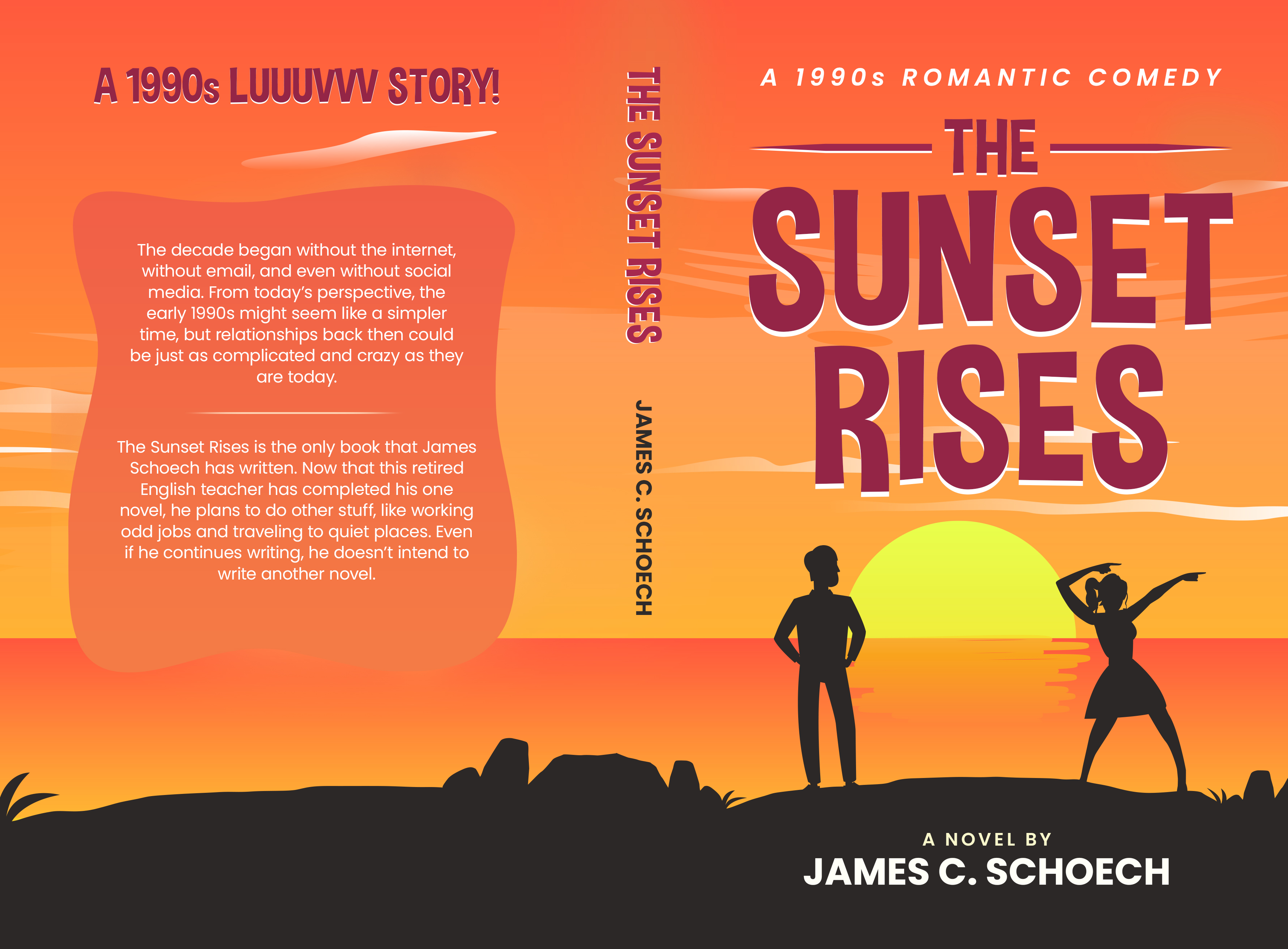
Here it is! The book that inspired me to work odd jobs and travel to quiet places! It’s now/still available on Amazon!
*****
For more somewhat related blog posts, see…
I Just Walked Into Another Crazy Situation! (Egads! This happened almost 5 years ago!)
University Library: Scooter (Egads! This happened 40 years ago!)
The Tale of the Almost-Expired Milk (Egads! This happened almost 50 years ago!))
Cartoon animal violence has always been kind of funny. Whether it was cat vs. mouse, duck vs. rabbit, road runner vs. coyote, or ant vs. aardvark, my childhood/adult years were filled with watching cartoon animals commit hilarious atrocities against each other on television. Cartoon animals in comic strips, however, usually weren’t quite so bloodthirsty. They were more likely to try non-violent but clever means to achieve their goals, or they might even have philosophical discussions (those were often kind of boring to me).
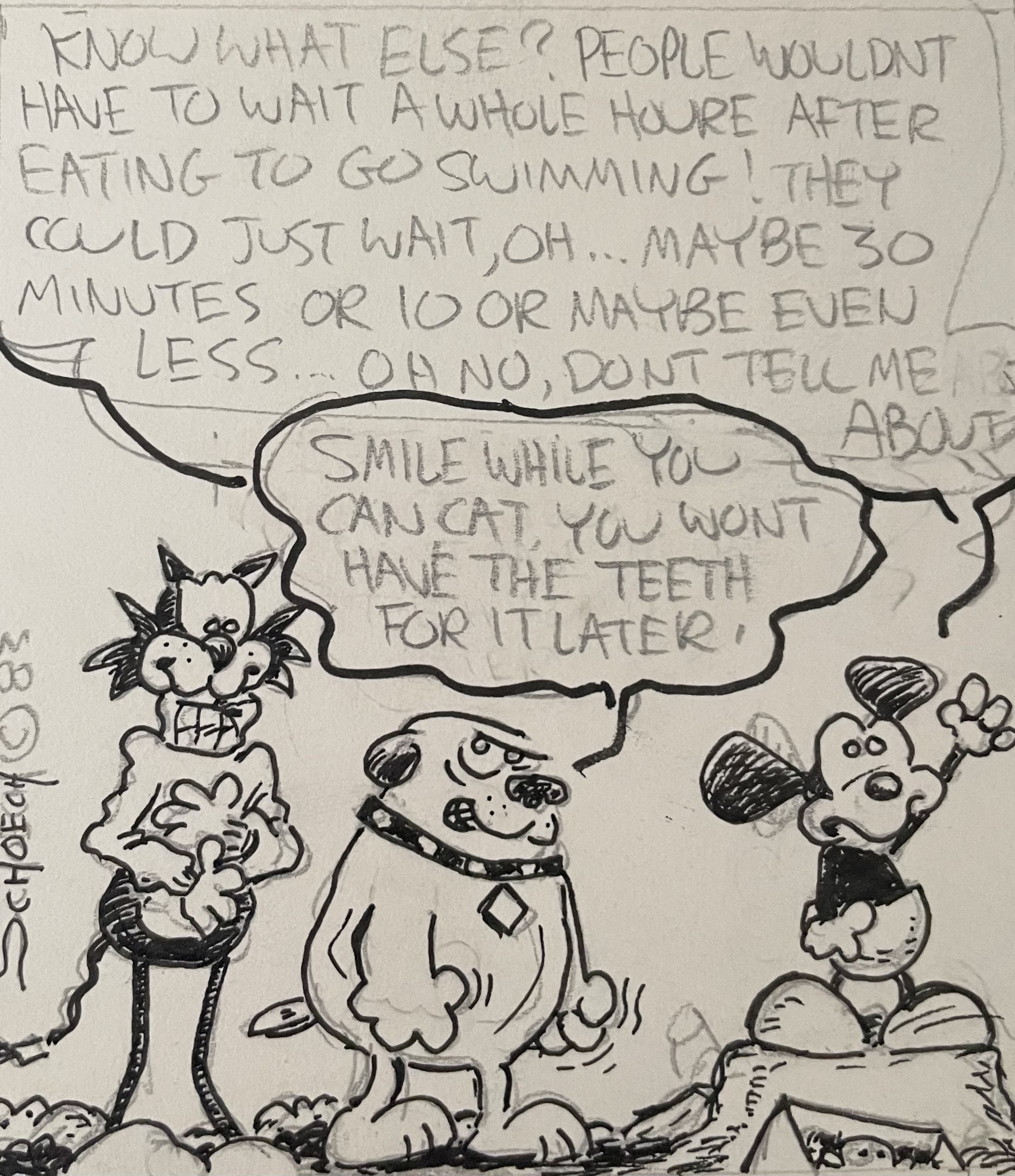
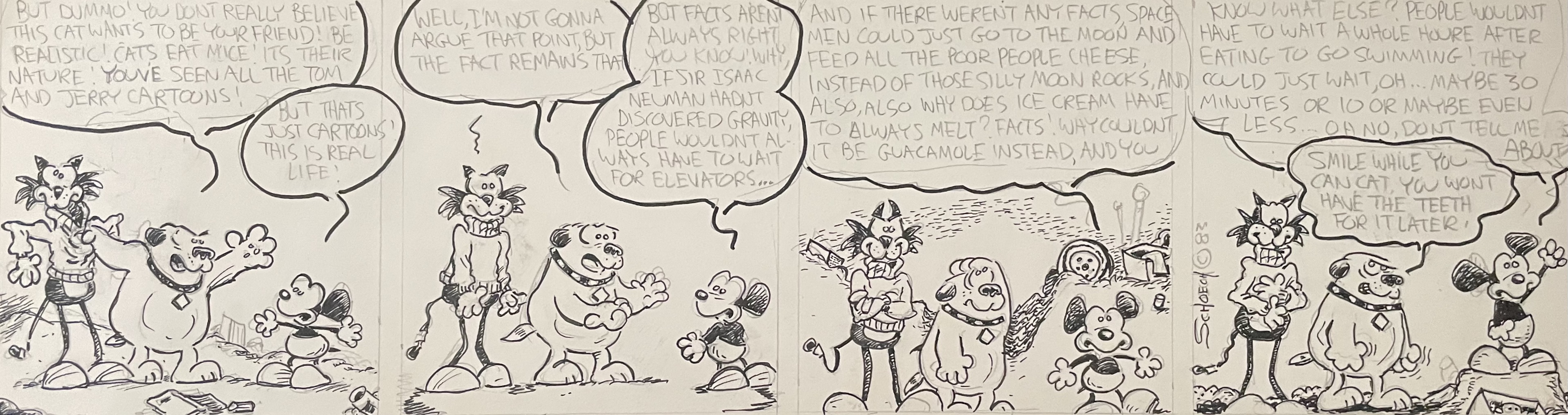
So when cartoon animal Shmitty Cat was plotting to eat cartoon animal Dummo Mouse in my older brother’s unfinished 1983 comic strip, my brother came up with a solution that was the best of both worlds.
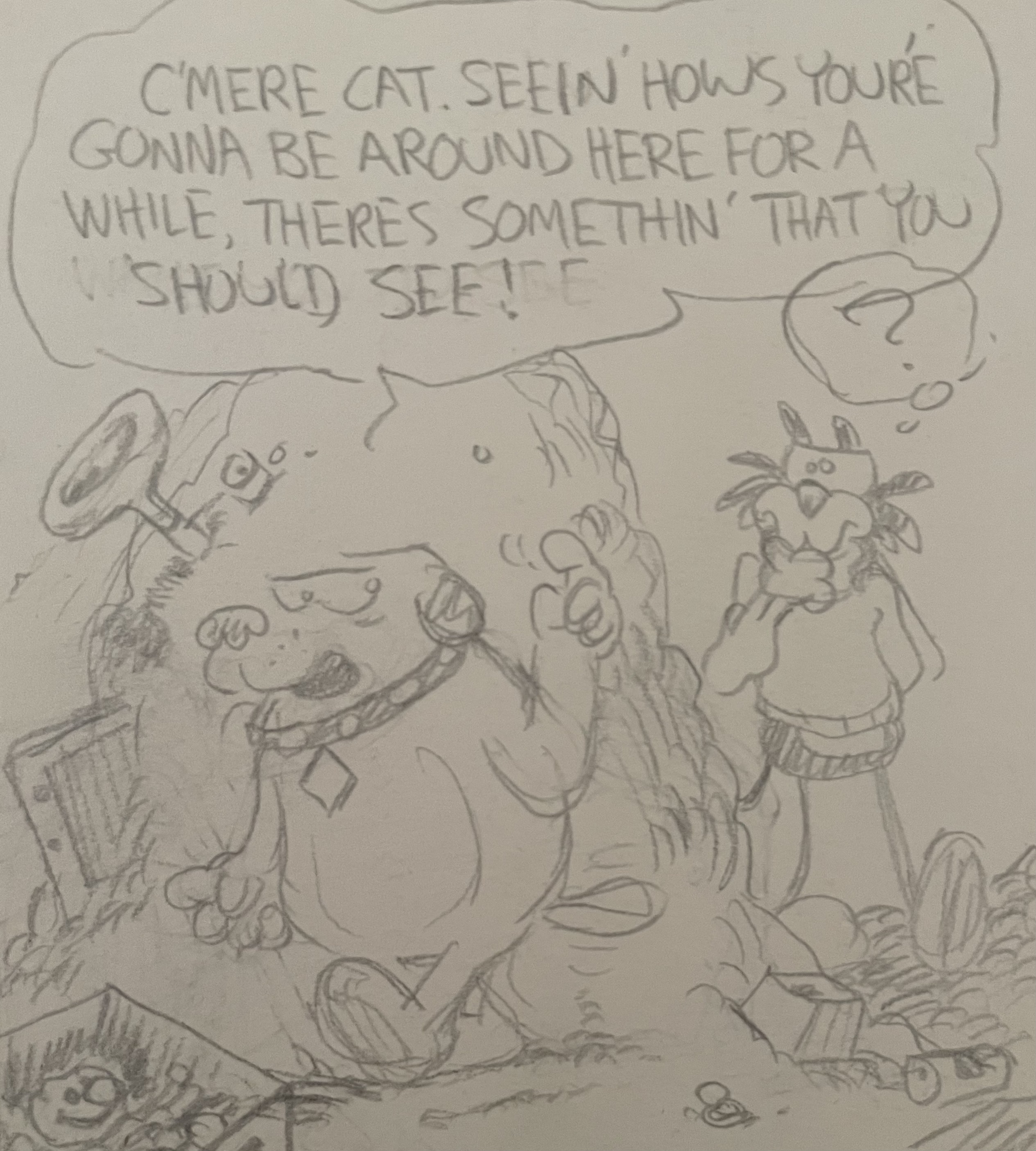
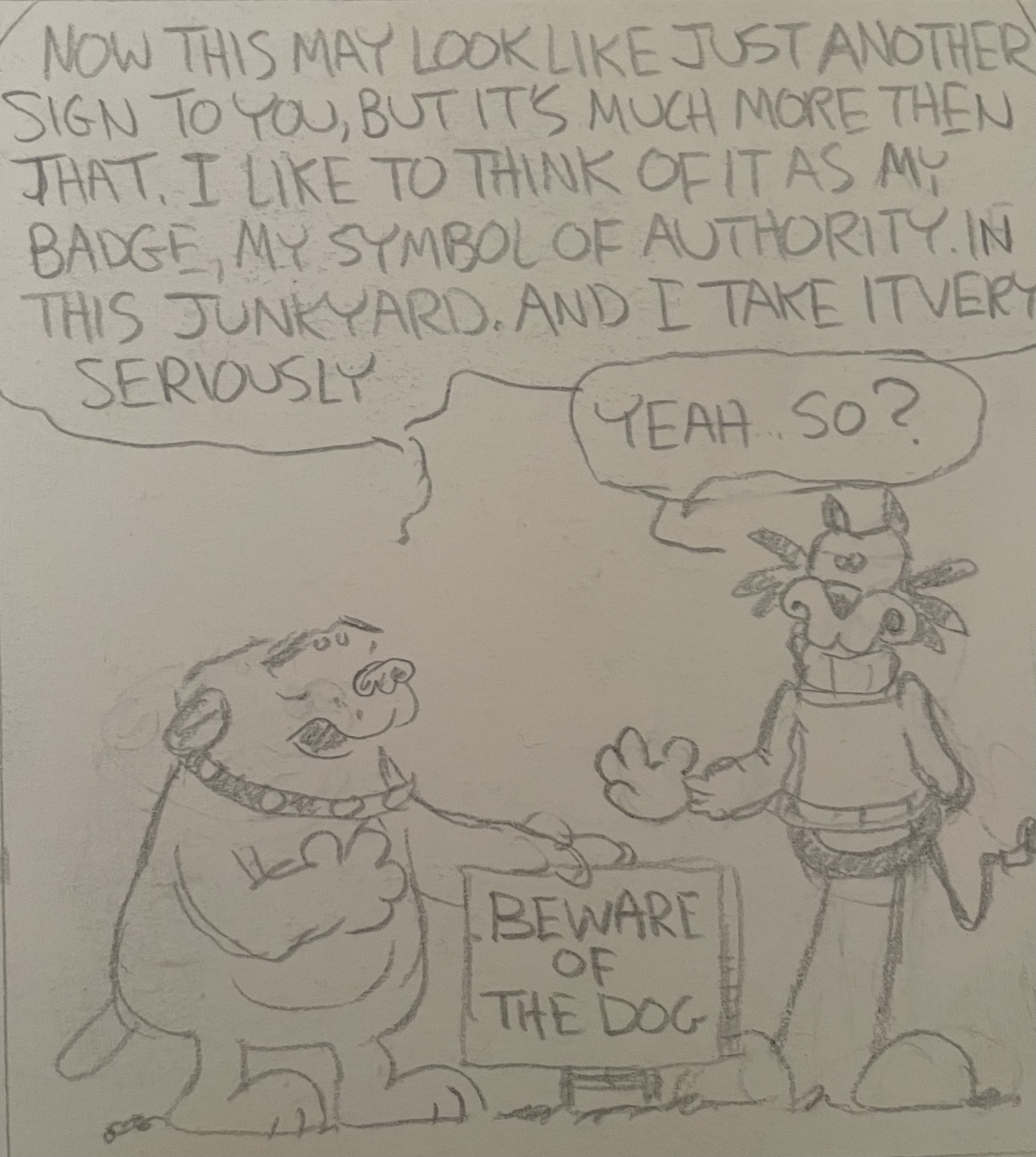
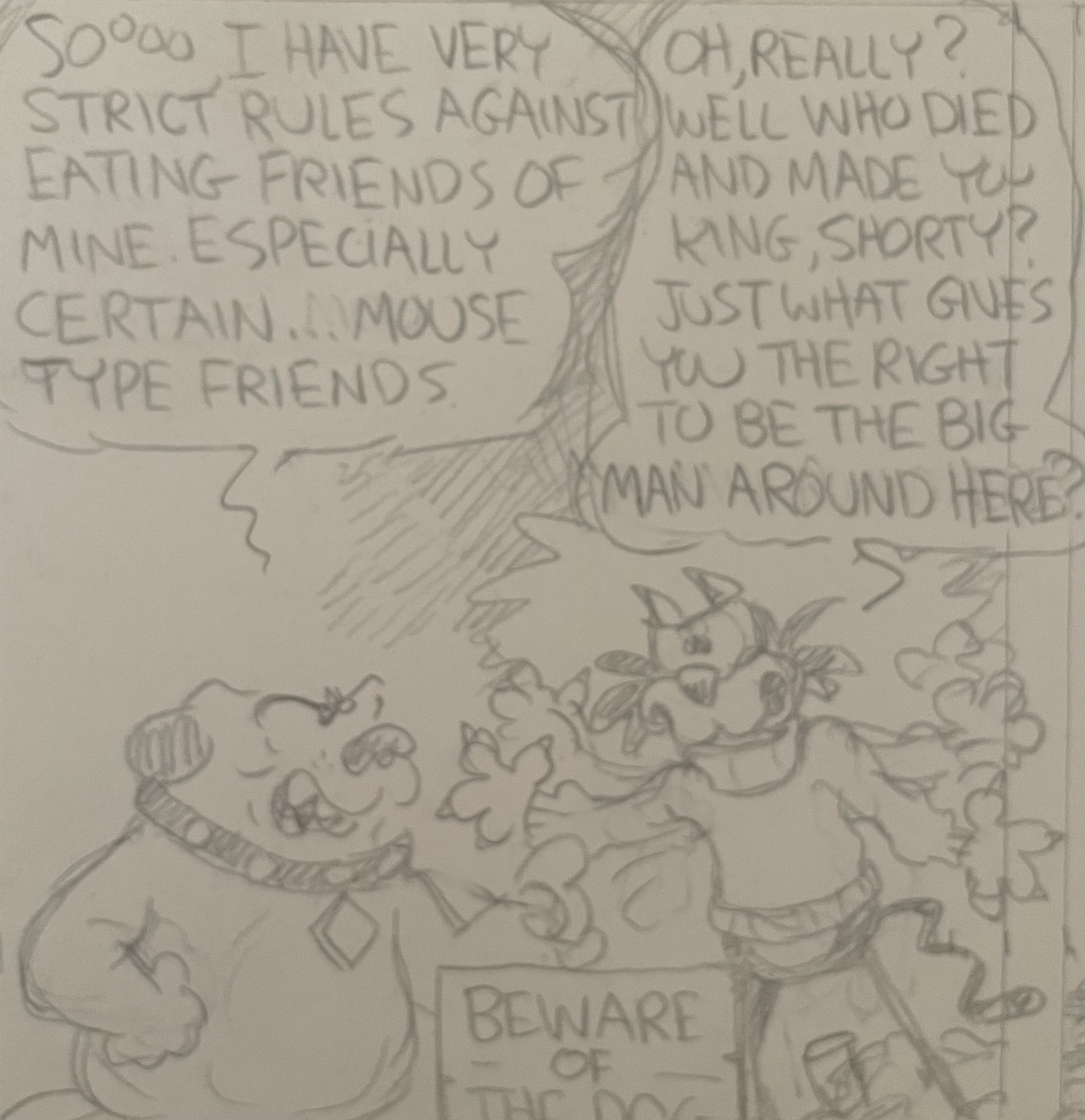
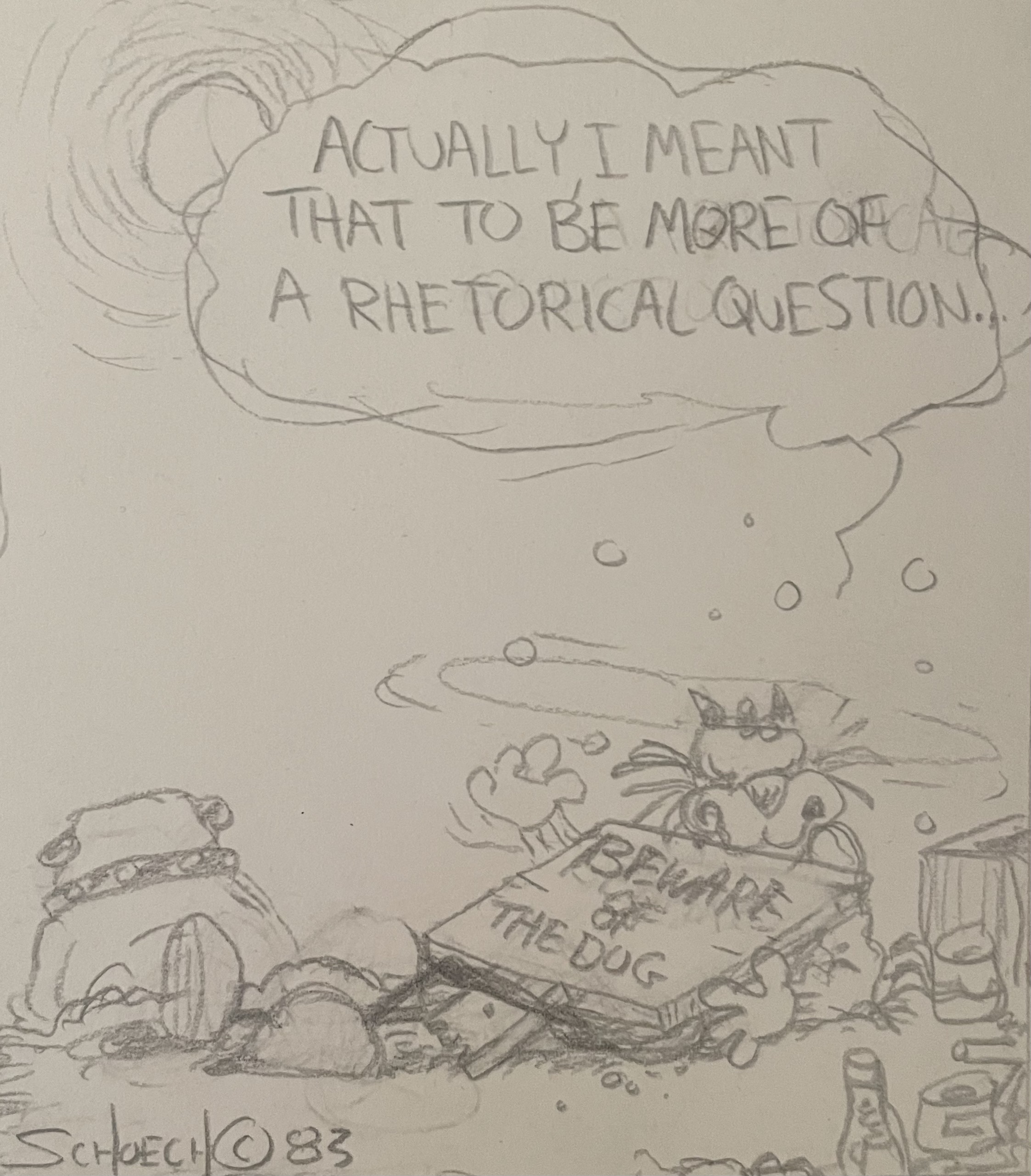
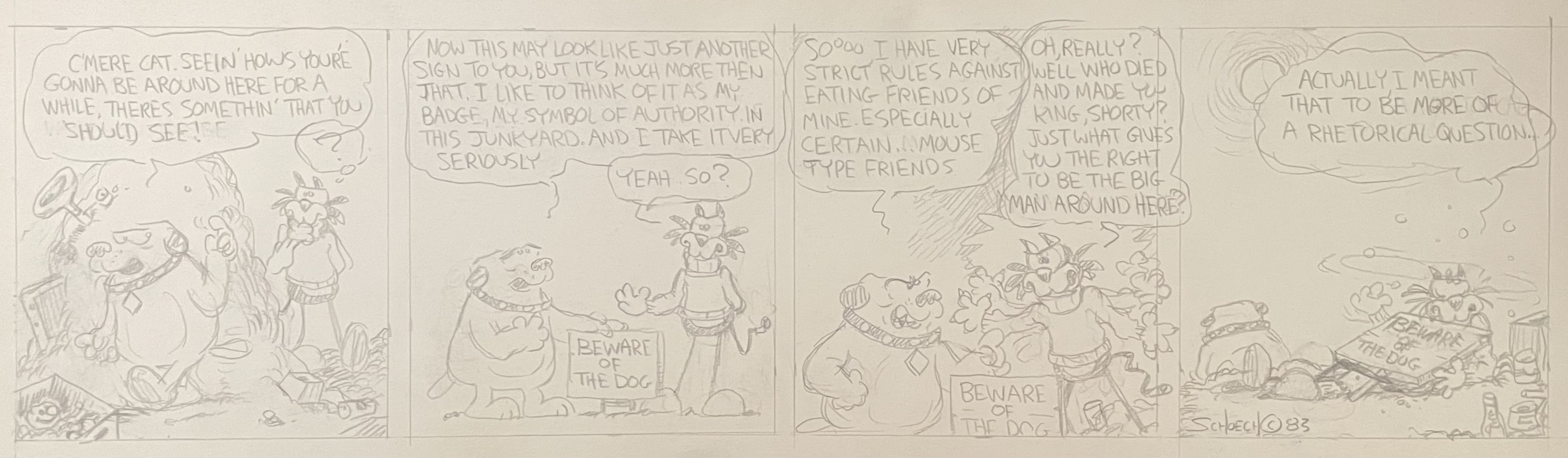
Here’s an early finished stand-alone version of the same strip: Comic Sunday: Dummo Mouse and Friend(s).
And you can find even more Dummo Mouse (finished and unfinished) here at Sunday Funnies.
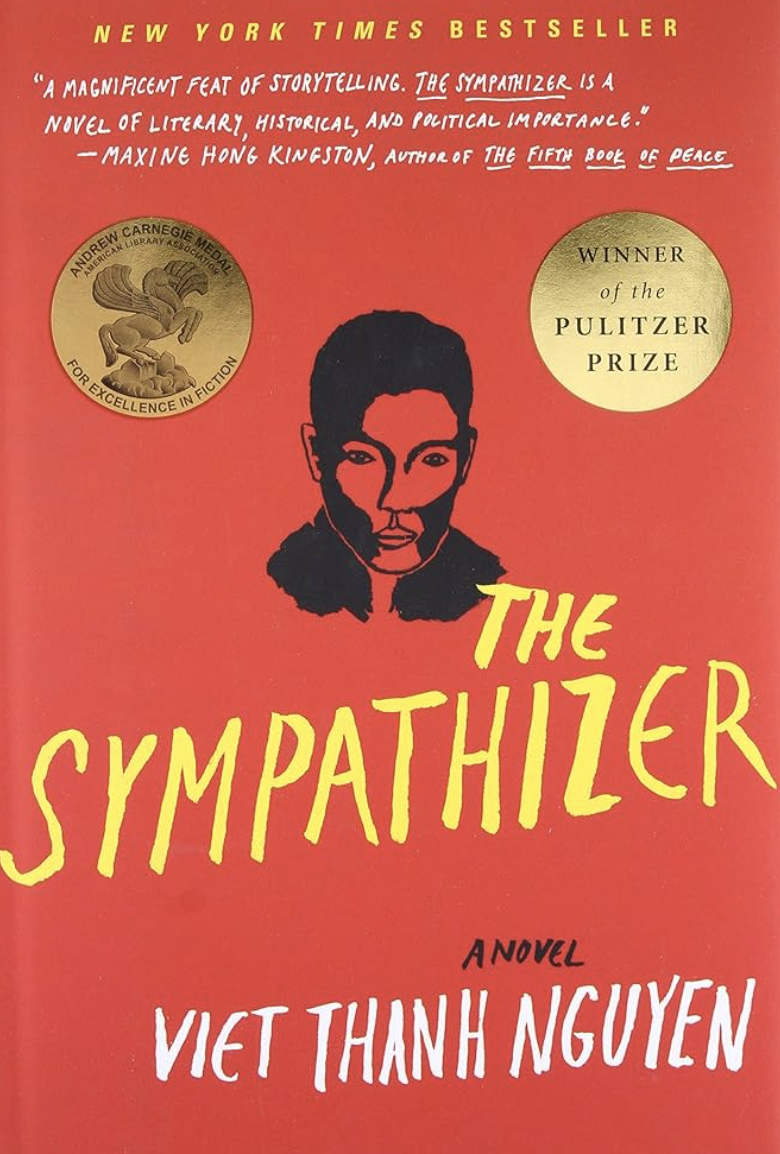
I’m about halfway through The Sympathizer by Viet Thanh Nguyen, and I’m pretty sure that I’ll finish it. For a novel that won the Pulitzer Prize for Fiction in 2015, it’s decent. I like it so far. However, I can’t read much of it at a time. The author does two things that bother me as a reader. He writes in block paragraphs. He doesn’t use quotation marks for dialogue. And he mixes the dialogue in the block paragraphs.
Maybe that’s three things. It depends on how you look at it. You can see it as an issue with block paragraphs and dialogue. Or you can see it as issues with block paragraphs, dialogue, and punctuation. Either way, I concede the point.
And either way, this combination gives me a headache. I’ve never enjoyed reading block paragraphs. The block paragraphs force me to concentrate more intensely, and then I get a headache. I’ve always had an issue with this, but it’s getting worse as I get older. Now I can read a book like this for only about ten minutes, and then I have to stop and read something else.
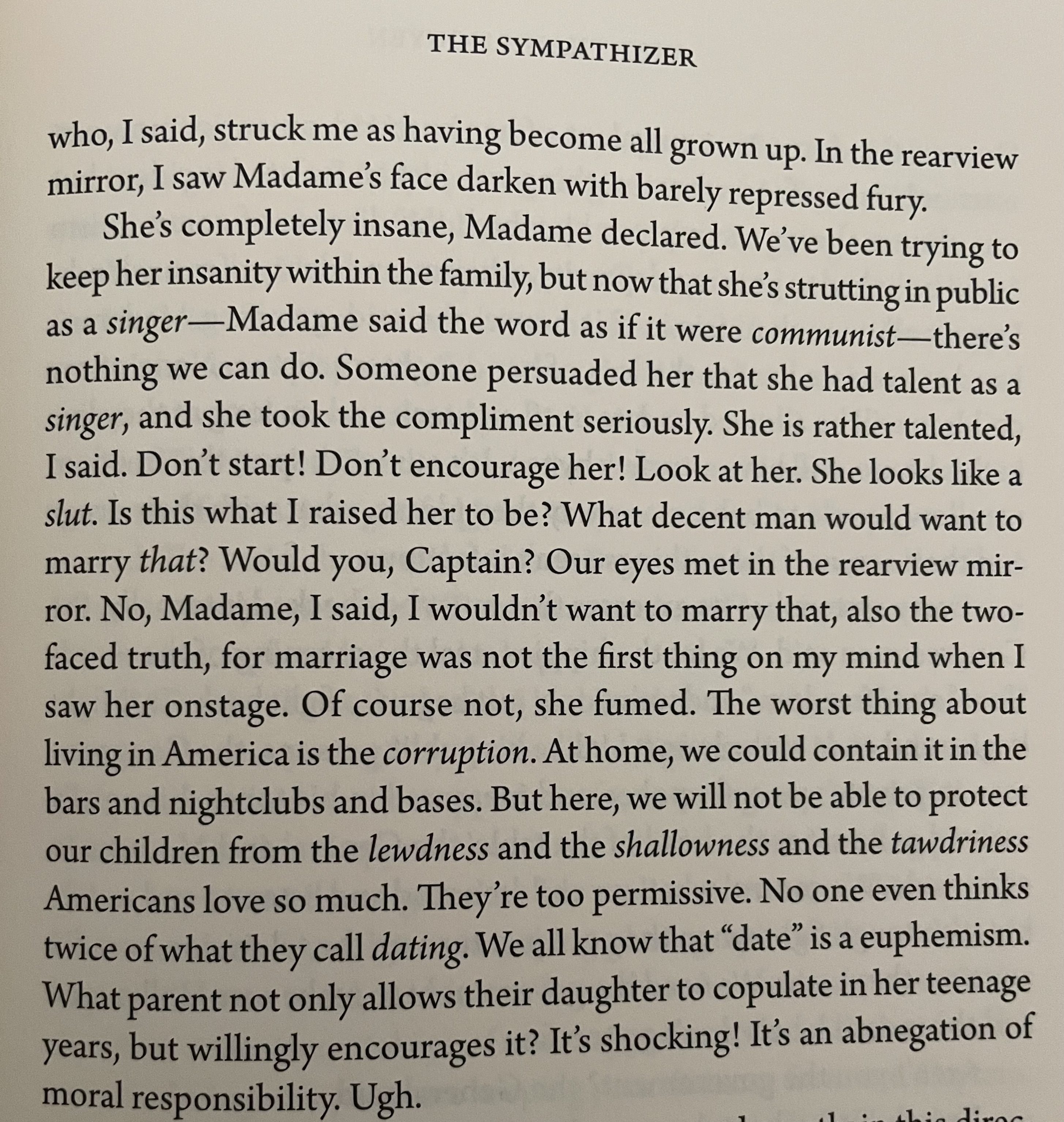
That’s okay. I like the story. The narrator is interesting but I’m not sure if he’s sympathetic (there’s probably a stoopid joke in there somewhere). The characters and the time period are also interesting. I’m going to finish this book despite the block paragraphs. I’ve been recovering by reading some comic books. Maybe I’ll review some of those too. Comic book reviews would be smarter to do in some ways because comic books don’t take as long to read as novels. But in some cases they’re more expensive than novels. Therefore. a good novel is usually a better value than a good graphic novel (that’s a topic for a different blog post).
Back to The Sympathizer. It’s a good story, but I don’t like the way it’s written. However, it’s the way the author wanted to write it (or maybe an editor suggested it), and the book was awarded a Pulitzer (and a bunch of other awards), so who am I to complain? I’m just a blogger. I’m statistically a nobody. Plus, I’ve said that I’m going to finish reading the book despite the way it’s written, so from the author’s point of view, there’s nothing negative about the ways it’s written, except that it gives me headaches, and nobody cares about that because I’m statistically a nobody.
Now that I’ve complained about block paragraphs, I have to be careful not to use them myself.
I think authors do weird unnecessary gimmicks to win awards or show off to their literary buddies. Almost every (that might be too strong) Pulitzer Prize for Fiction has some literary gimmicks that enhance (or detract from) the narrative. Some of the books don’t need the gimmicks. Some wouldn’t be noteworthy without them. I won’t say which Pulitzer Prize winning novels belong to which category because it’s been a while since I’ve thought about it. I’m still trying to figure out world peace and balance my budget.
Still, I think The Sympathizer would have been better off with the same text in shorter paragraphs with quotation marks for dialogue. At the very least, it wouldn’t have made the book worse.
Now I’m going to take some pain reliever and read some comic books.
*****
For more Dysfunctional Book Reviews about the Pulitzer Prize for Fiction, read…
How to Write an Award-Winning Novel starring… The Pulitzer Prize for Fiction
Pulitzer Prize for Fiction 2012 vs. the Oscars and the Heisman Trophy
Pulitzer Prize for Fiction, 2018-2008: A Review
*****
This book might not have been nominated for the Pulitzer Prize for Fiction, but it has a wide variety of paragraphs and (usually) uses punctuation marks correctly.
It’s the oldest story in the world, 1990s style!
Man meets woman; man falls in “luuuvvv” with woman; man gets blindsided by reality!
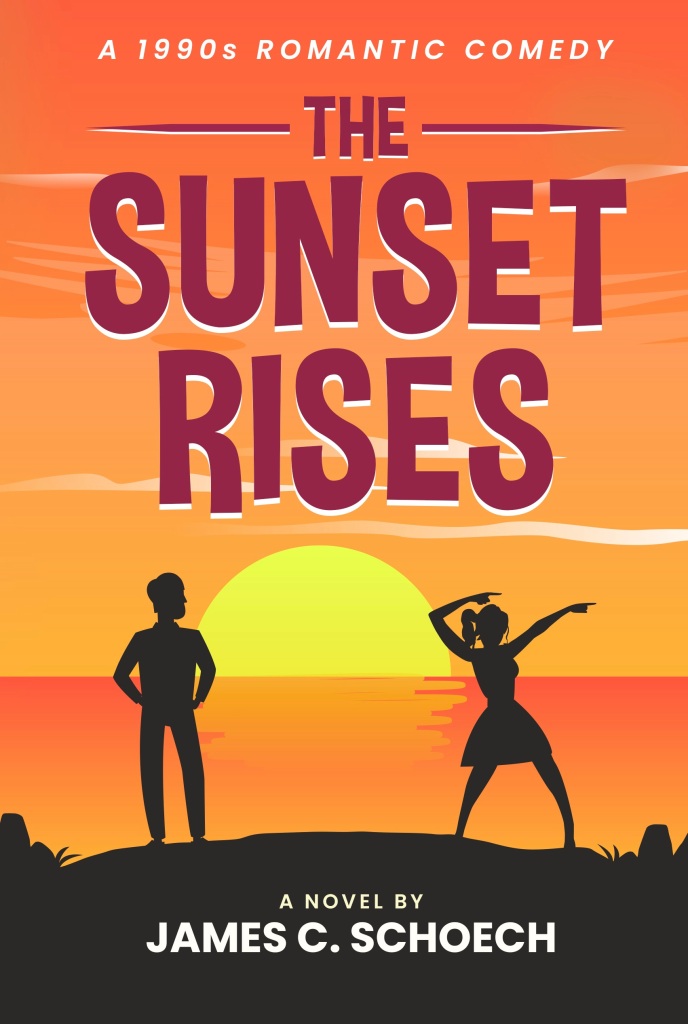
The Sunset Rises: A 1990s Romantic Comedy is now available on Amazon!
This episode might look a little weird because of the unfinished inks and the wordiness of each panel. My older brother and I read a lot of Silver Age Marvel Comics written by Stan Lee back in the 1960s and 1970s, so we were used to comic panels filled with word balloons and long paragraphs. Sometimes the word balloons took over the panels. Today’s comic book readers seem puzzled that people actually read everything on each panel in those comic books.
I’m puzzled that today’s readers think they’re getting value with comic books that take three minutes to read. That’s okay. They can enjoy their thing, and I’ll enjoy my things. I kind of like panels with lots of words (depending on the words, of course).
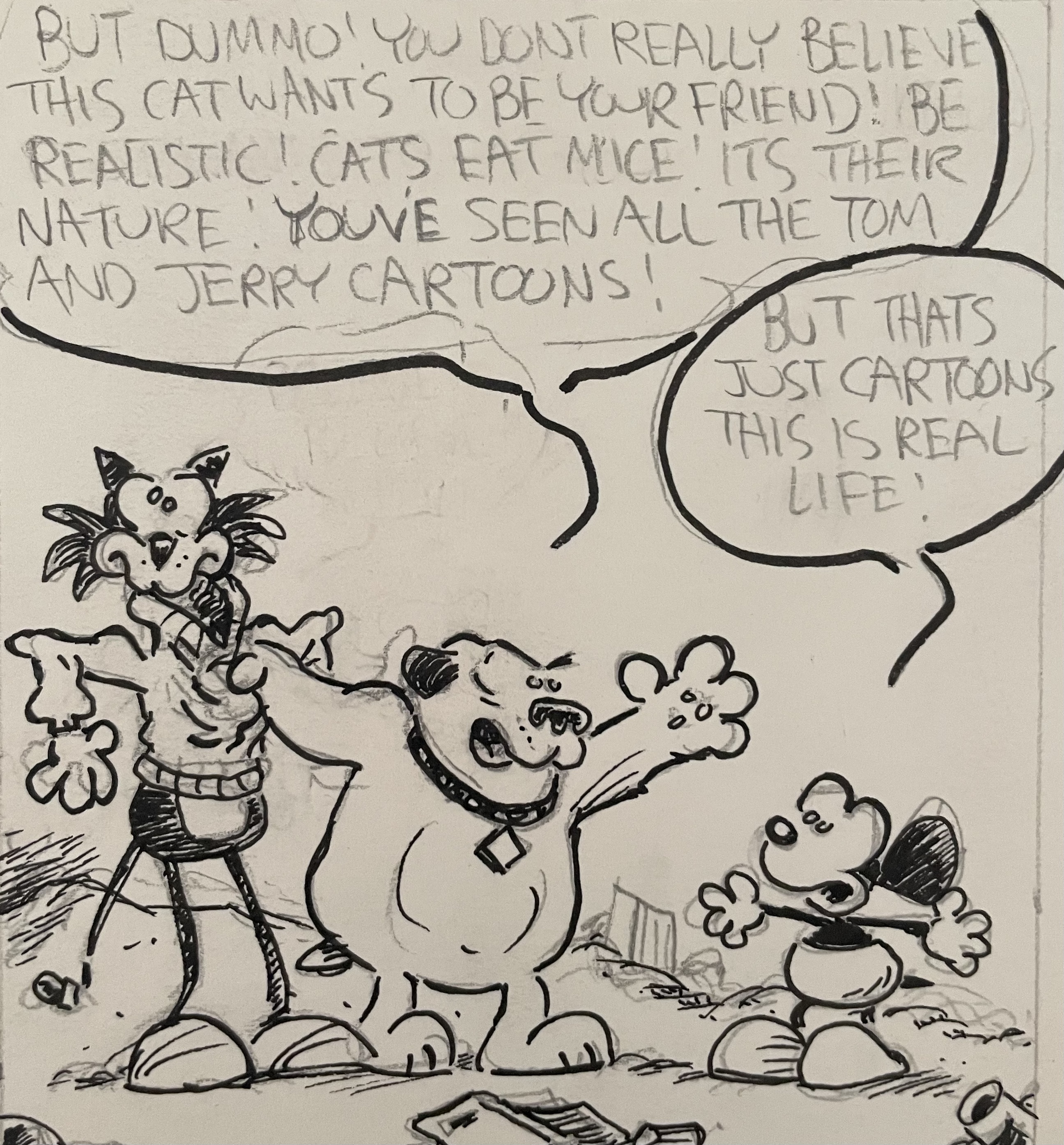
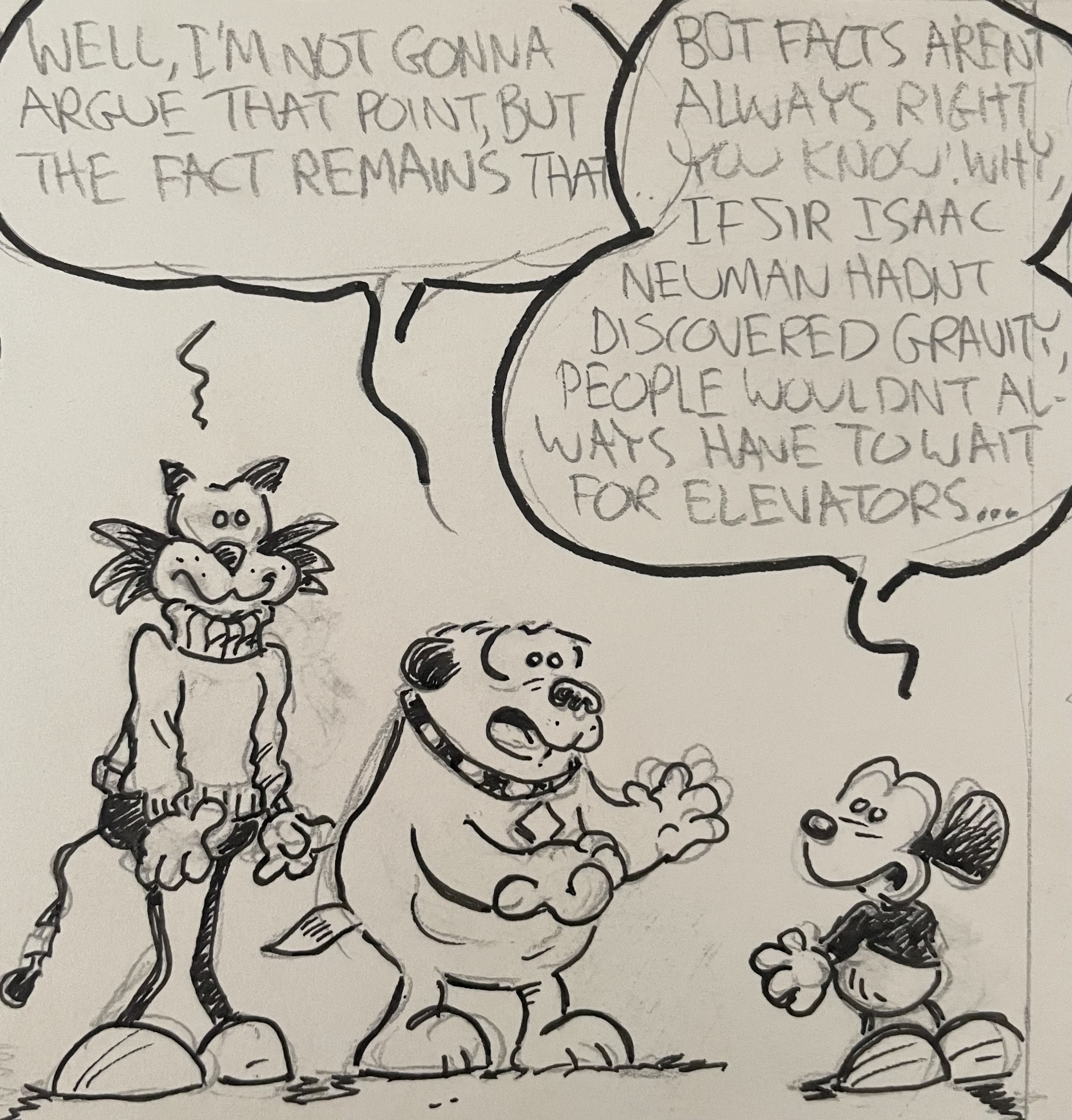
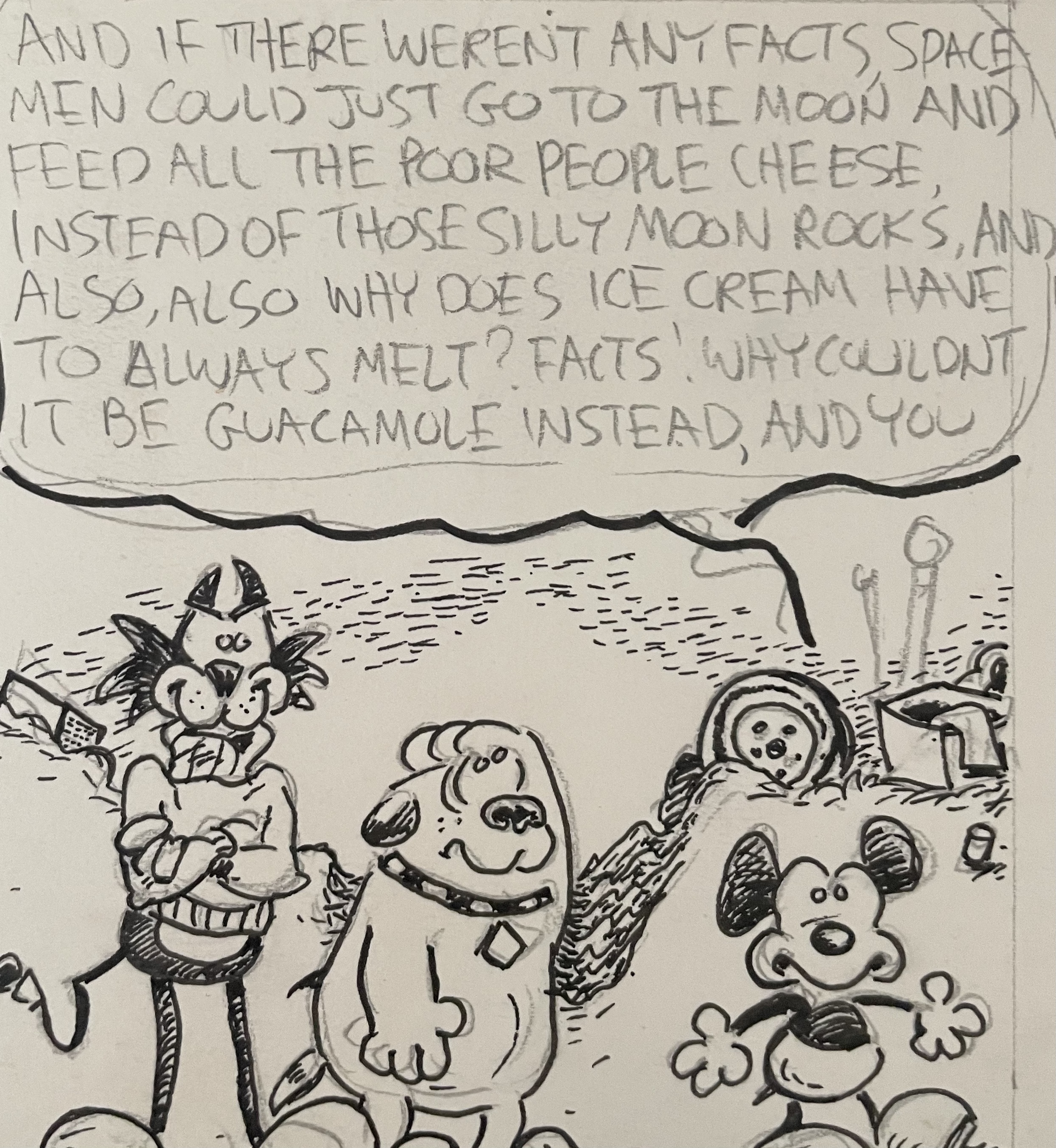
For more Dummo Mouse episodes (that maybe aren’t quite as wordy), see
Dummo Mouse and 1980s Star Trek Humor ,
Dummo Mouse and Friends: The Intro,
and Sunday Funnies: Dummo Mouse Rough Draft with Punctuation Errors.
SHORT ANSWER
No, listening to an audiobook isn’t the same thing as reading an actual book. But I also don’t think it matters that much.
LONGWINDED BLOG POST ANSWER
I’ve seen this READING vs. LISTENING argument on places like Twitter (twitter, haha) and Reddit (reddit, haha). I’ve heard this READING vs. LISTENING argument on podcasts and in real life (such a thing still exists). It sounds like some people who listen to audiobooks think that listening is the same thing as reading. It also sounds like some book readers look down upon “readers” (not really readers) who listen to books.
I’m not sure how much it matters. Listening to an audiobook isn’t the same as reading, but when I’m talking about books, I don’t care if other people have listened to or have read the book. I just like like hearing other people’s opinions about the book. I don’t think that reading the book makes me more of an expert on that book than the person who listened to it. In fact, the listener might have listened to the book more efficiently than I read it. I skim a lot. And I daydream.
Listening is still a skill, one that in some ways is just as important than reading. I should know because I’m a crappy listener. Don’t get me wrong. I DO listen to a couple podcasters/youtubers/whatever, but that’s during my listening time, which is cooking, cleaning, doing chores that aren’t loud. I might try listening to books during that time, especially if I get tired of the people that I listen to now.
There’s not necessarily any superiority to reading over listening when it comes to books. I’m not sure what the science says about it now. I’m not sure I even trust what the studies today would say anyway. I’ve read about how a lot of science today is sloppy because so much money is involved that experts/scientists are reluctant to critically review the work of their peers for fear of repercussions to their own studies/funding. I might have listened to some stuff about that on podcasts too, but my mind probably wandered.
Sometimes reading silently isn’t enough. Poetry, for example, is meant to be heard, so audiobooks of poetry make sense, even for hard-core readers. In school, works by William Shakespeare should be seen and heard, not just read silently. One of the worst things an English teacher can do is to force students to read Shakespeare’s plays silently. Even Elizabethan English folk didn’t have to do that.
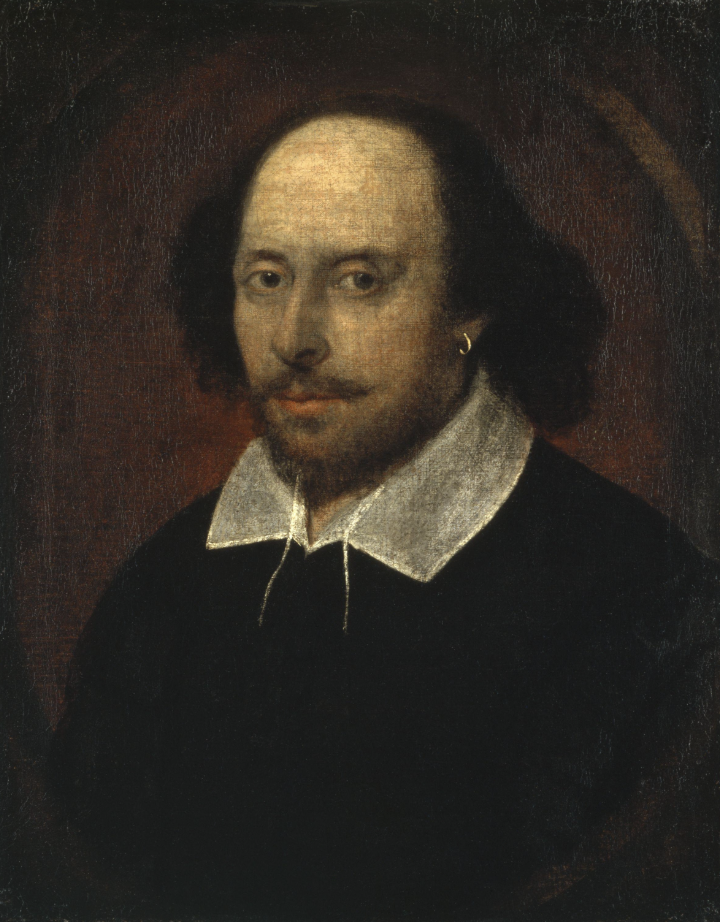
If a teacher is going to demonstrate Shakespeare’s influence on language and culture (if you believe that Shakespeare’s works were created by one person named William Shakespeare), then that teacher should show performances of Shakespeare’s plays. At the very least, students should HEAR the words, not just see them in print.
Now that I think about it, nobody says that they’ve read a podcast (at least I’ve never heard anybody say that). I mention podcasts because years ago I followed several bloggers who switched over to podcasting instead, and I lost interest in them. Their blogs took me three minutes to read, but their podcasts took 30 minutes (at least!) to listen to. If they had stuck to three minutes podcasts, I might have stuck around.
If somebody says he/she read a book on audio, though, I just frame it internally as he/she has read the book. I don’t question the difference between reading and listening. I don’t quiz the listener to see how much the listener retained. I wouldn’t want to be quizzed by the listener to see how much I retained.
That’s just me. Listening isn’t the same as reading, but they’re both pretty, so they don’t need to fight.
*****
There’s no audio version of my book. You should read it.
It’s the oldest story in the world, 1990s style!
Man meets woman; man falls in “luuuvvv” with woman; man gets blindsided by reality!
The Sunset Rises: A 1990s Romantic Comedy is now available on Amazon!
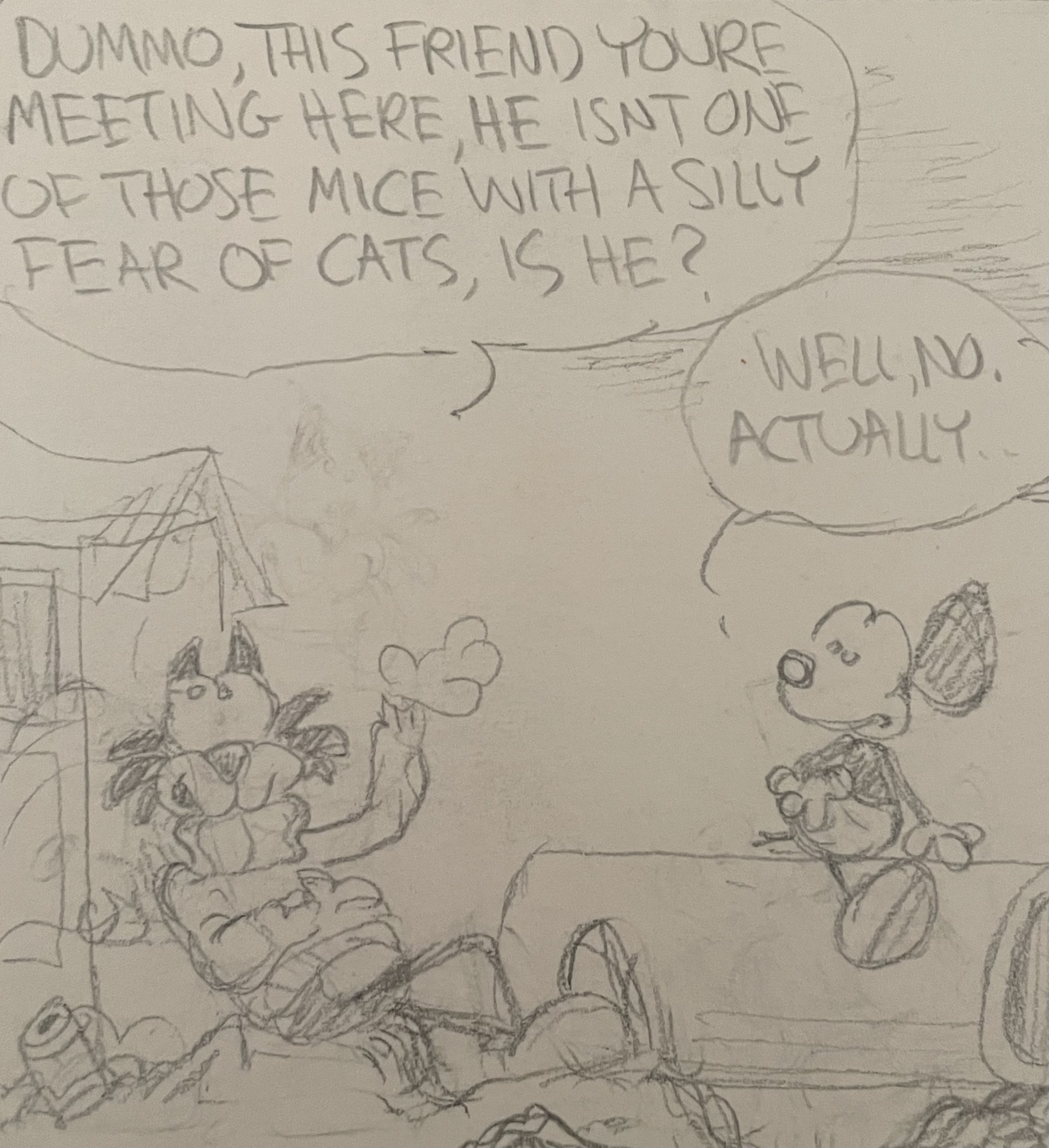
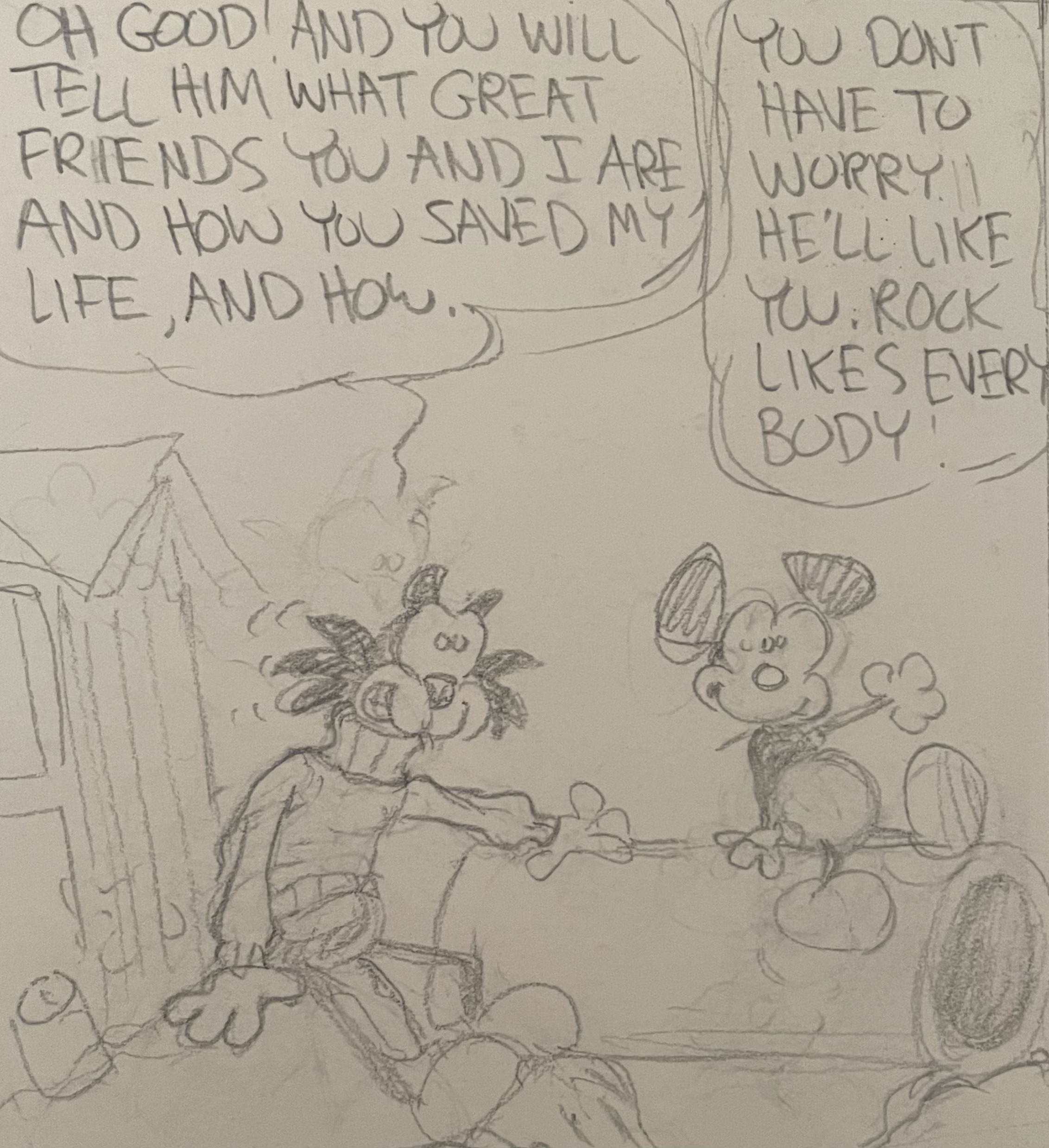
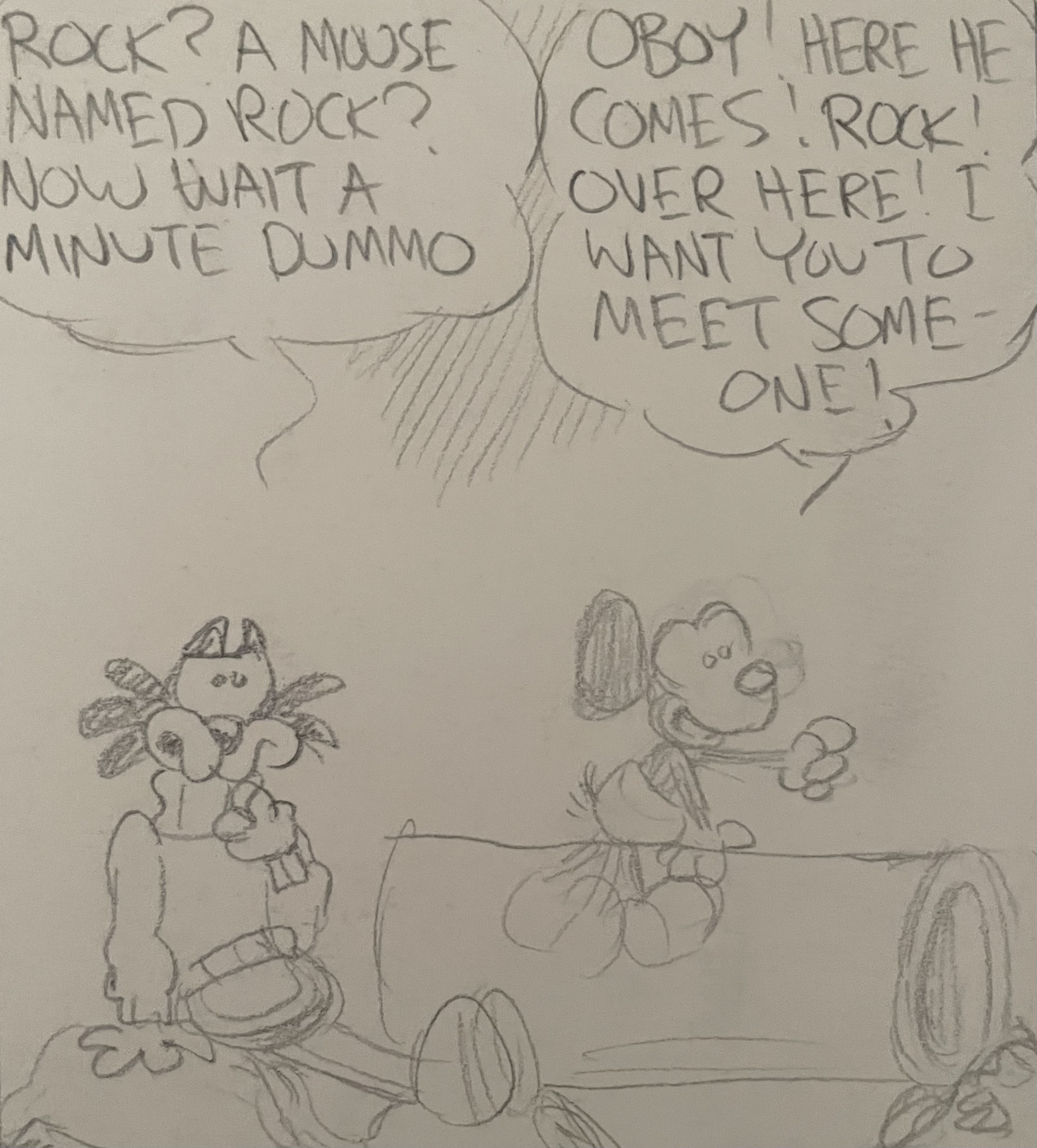
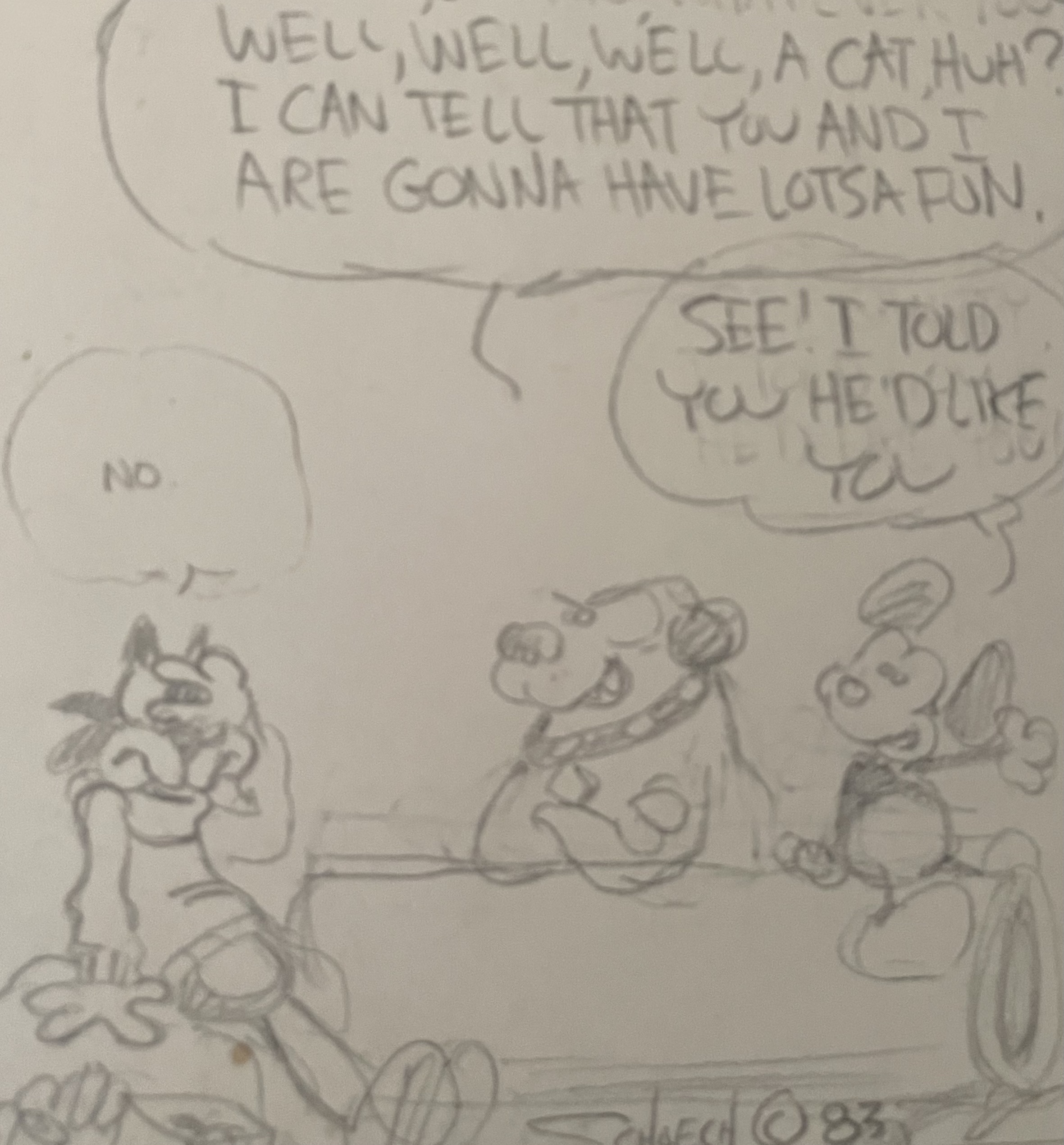
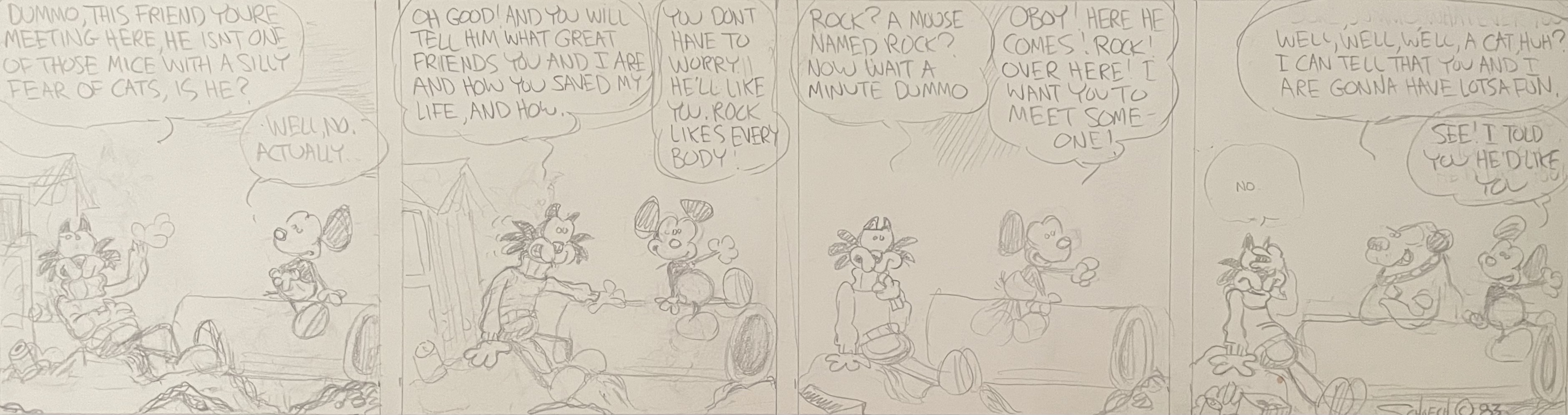
My older brother usually did pretty well with punctuation in his unpublished, unfinished 1983 comic strip Dummo Mouse. When I originally read this episode, I didn’t notice the punctuation errors in the first panel. Back in 1983, I was a junior in high school, and I was pretty good with grammar and punctuation even then, but I had no idea I was going to become an English teacher for 30 years, so I didn’t pay attention to these kinds of details. I just liked the pictures.
These mistakes below aren’t a big deal. They don’t affect the meaning at all, and this is just a rough draft anyway. If I tell my brother to look for errors in this strip, he’ll be able to find them without my help. It’s just that he was in his early twenties and… Aw shucks, I don’t need to defend him on this. I’m probably the jerk for noticing the errors and pointing them out.
For more Dummo Mouse (with no mention of grammar or punctuation), see Dummo Mouse and 1980s Star Trek Humor , Dummo Mouse and Friends: The Intro, and Sunday Funnies.
*****
It’s the oldest story in the world, 1990s style!
Man meets woman; man falls in “luuuvvv” with woman; man gets throttled by reality!
The Sunset Rises: A 1990s Romantic Comedy is now available on Amazon!
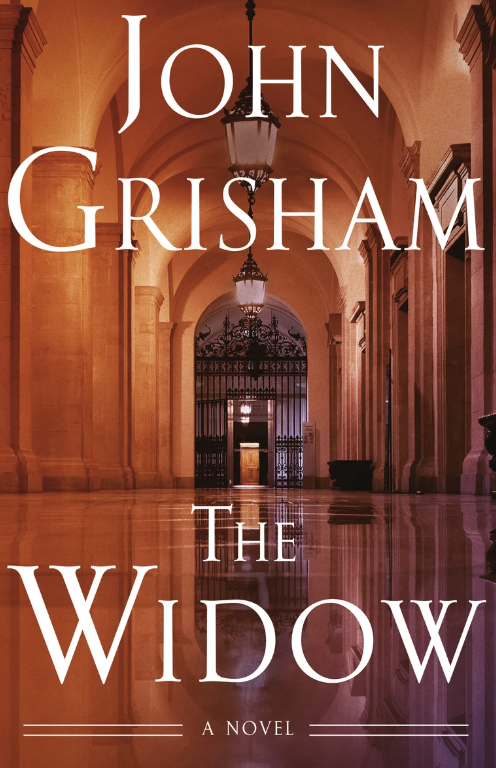
The Widow isn’t the first book by John Grisham that I’ve stopped reading. Over the last several decades, I’ve stopped reading several of John Grisham’s books. His books aren’t bad. It’s just that after the first few pages I often feel like I’ve already read something similar before.
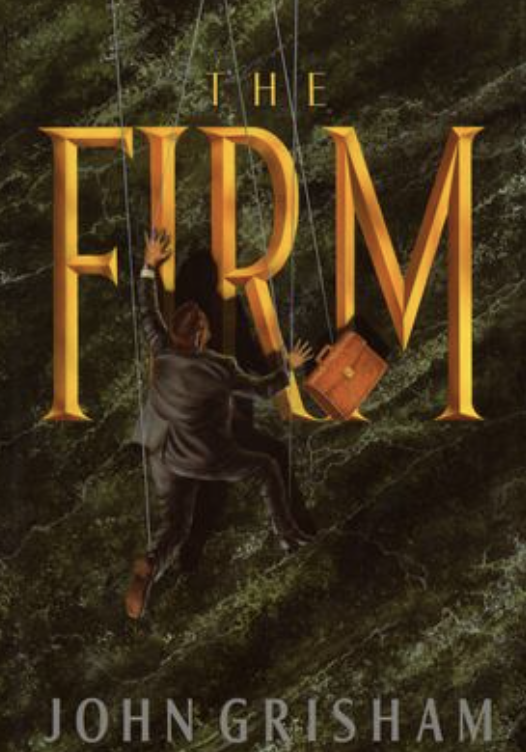
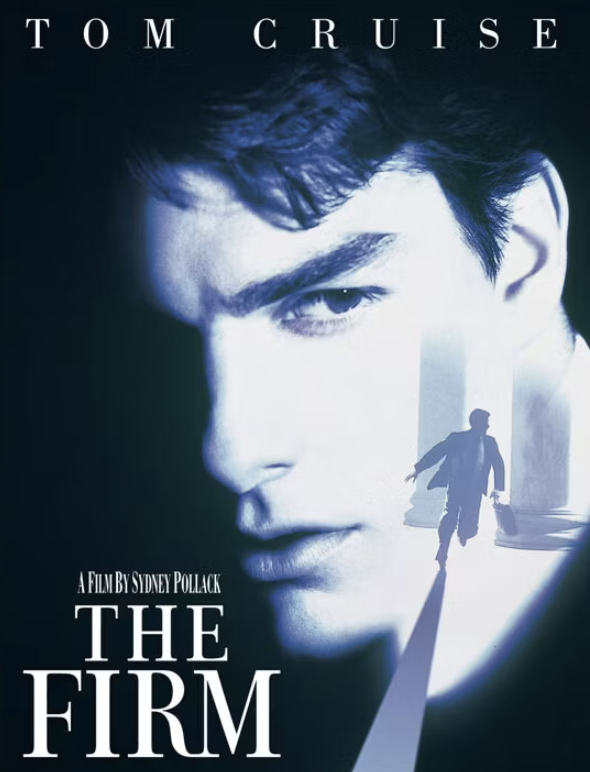
John Grisham has been writing legal thrillers since the early 1990s (maybe even before that) when he broke out with the bestselling novel The Firm. I was at a bookstore when some random guy told me about The Firm, so I went ahead and tried it (I actually bought it new!). I don’t remember what that guy looked like. It might have been John Grisham himself (it wasn’t).
When the movie The Firm came out a few years later, some critics said the ending of the movie was better than the ending of the book, but I’m not a lawyer, so I don’t know if that’s true. I mean, to me, the movie ending made more sense, but it could have all been fake legal mumbo-jumbo, and I wouldn’t have known.
That’s the thing about about writing about your specialty/professional; you can make up a bunch of stuff and only a few people would know if what you’ve written was accurate. Back in the 1990s and early 2000s when Tom Clancy was writing 1000 page military thrillers, half of the pages in each book seemed like techno gibberish. I half-suspected that he was making up most of the military techno stuff, so I just skimmed those parts. I do the same with legal thrillers.
If I had known that legal thrillers were going to become such a thing, I might have gone to law school back in the 1980s. Instead, I became a teacher. Education ‘thrillers’ don’t exist. I mean, a teacher could try writing a teacher-by-day sleuth-by-night novel, but I’m not going to do it. Everybody has too much experience with schools for readers to be intrigued. Every schmuck in the potential reading audience has had to spend too much time in school as a kid, and most don’t want to read about that crap. Besides, an ‘education thriller’ would probably be sympathetic to the teacher, and right now everybody wants to blame the schools. Even I want to blame the schools, but that’s just because I’m both a parent and a former teacher. I’m torn.
An education ‘thriller’ about a teacher who sucks could be interesting, but that might be used against an author who has vindictive former students. And then the ‘education thriller’ would become a ‘legal thriller’ in the author’s real life. I’ll just stick to reading novels.
Oh yeah! Let’s get back to The Widow.
The first chapter of The Widow seems kind of standard. The lawyer protagonist (I don’t remember his name) meets his client, a widow, who… never mind, you can get a summary anywhere. The protagonist lawyer says “trust me” a lot to the widow and then shows signs of engaging in unethical (maybe illegal) behavior, so the reader suspects he’s the type of lawyer that makes you want to use the internet instead of getting a real lawyer.
EXCERPT
******
Occasionally there was a break in the misery when an aging client needed some estate work, like an updated last will and testament. These were almost always uncomplicated matters that any first-year law student could handle, regardless of how somber Simon tried to make them. For only $250, he could write, or “draft” as he preferred to say, a three-page simple will, print it on heavy gold bond paper, get it notarized by his “staff,” and convey the impression that the client was “executing” something profound.
The truth was half of them didn’t even need a will, regardless of how simple, though no lawyer in the history of American jurisprudence had ever said so to a paying client. It was also true that the $250 fee was a rip-off because the internet was filled with free simple wills that were just as binding. It was also true that Mr. Latch would hardly touch the will. Matilda, his secretary, filled in the blanks and printed the important documents.
*****
Oh yeah! This excerpt reminded me that I need to take care of a couple simple legal matters. They’re not necessarily wills, but they’re will-adjacent, and I’m not sure how much of the internet I can trust with stuff like this. I know that the internet shows you how to do a lot of stuff for yourself, but I also know that the internet doesn’t always tell the truth.
Sometimes the internet thinks it’s telling the truth but just gets stuff wrong unintentionally. When it comes to a will or other legal documents, I’m not sure I want to trust the internet. If the internet gets something wrong, then I can’t blame the internet because I chose to use it rather than a trained professional. If the trained professional messes it up, the trained professional usually fixes it for free (hopefully the damage isn’t irreparable).

I’m not sure how much of this semi-legal stuff I’ll do myself. I might just pay the $250 rip-off fee for peace of mind. I can get impatient and make tiny (but damaging) mistakes. Heck, I can make glaring mistakes too.
I probably won’t finish reading The Widow, but it’s not John Grisham’s fault. I’ve already read plenty of legal thrillers, usually where an innocent person has been accused of murder. I’m sure The Widow gets more complicated than that. But sometimes I feel like I’ve read newer books before even though I haven’t read these newer books before.
*****
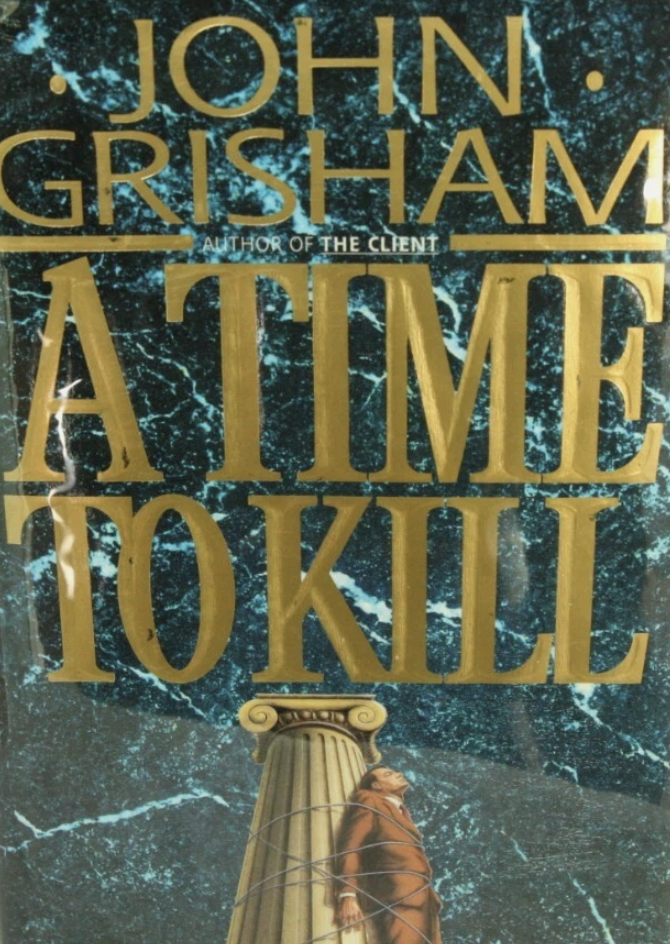
Still, thank you, John Grisham, for reminding me of some stuff that I need to do! I might even read further just to see if there are any other legal matters that I need to take care of soon.
For more Dysfunctional reviews of John Grisham novels, see…
More Stereotypes in Fiction! A Time for Mercy by John Grisham
Literary Glance: The Rooster Bar by John Grisham
Literary Glance: Camino Island by John Grisham
A Time To Kill vs. To Kill A Mockingbird
*****
And here’s my ONE novel!
It’s the oldest story in the world, 1990s style!
Man meets woman; man falls in “luuuvvv” with woman; man gets thwacked upside the head by reality!
The Sunset Rises: A 1990s Romantic Comedy is now available on Amazon and from the trunk of my car!
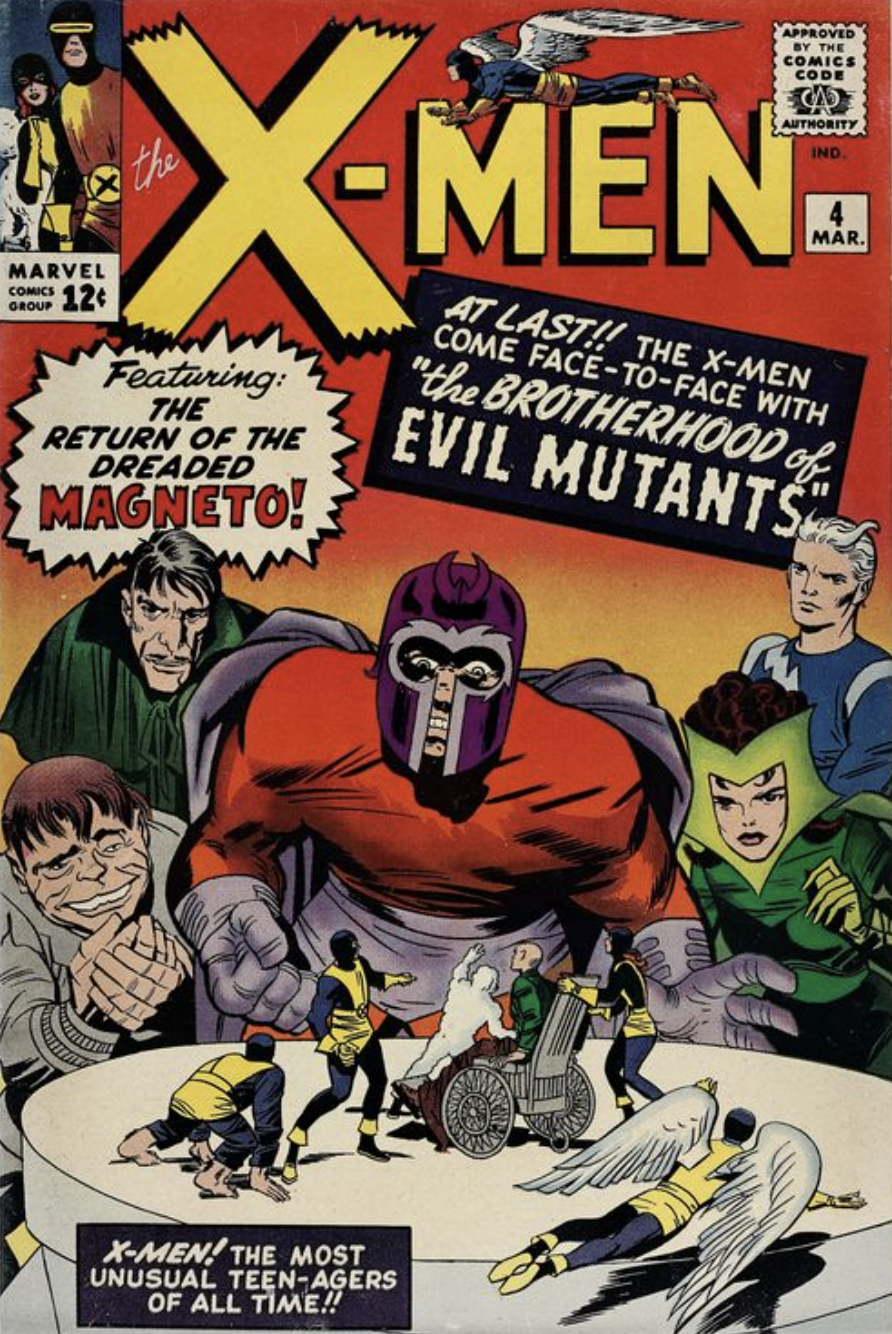
The pronunciation debate has long been settled. I know that. As soon as the X-Men movies started getting released 25 years ago, everybody just says Mag-NEAT-o, but it hasn’t always been that way.
Back in the 1970s, comic book collectors argued about the correct pronunciation of Magneto, the X-Men’s most powerful individual villain. I’ve always said “Mag-NETT-o” because he has the power of mag-NETT-ism. Most other collectors said “Mag-NEAT-o” because they’re stoop… because of the spelling (I thought). Since ‘Magneto’ has only one ‘t’ before the ‘o,’ they believed that the ‘e’ should have the long ‘eeeeeee’ sound. This is the only time that I’ve seen normal people care about English pronunciation rules.
I thought MagNEEEEETo sounded stupid, almost childish. Besides, his power was of magNETTism, not magNEEEEEETism. There is no such thing as a magNEEEEET, I thought.
And then I found out that I was wrong. There is such a thing as a ‘magneeeeeto.’ It’s even spelled as ‘magneto.’ Aaarrgh!
According to Merriam-Webster (if you trust it), a magneto is a “an alternator with permanent magnets used to generate current for the ignition in an internal combustion engine.”
The first known usage of ‘magneto’ (if you believe Merriam-Webster) was in 1877, long before Jack Kirby and Stan Lee came up with the name. The existence of this magneto thing and its established (if you believe it) pronunciation kind of hurts my argument.
Magneto the villain has never called himself an alternator. He calls himself the Master of Magnetism. Maybe Jack Kirby and Stan Lee should have just put a double t in his name.
Magnetto.
That would have settled it! You’re not getting Mag-NEEEEET-o from that, motherfu… ahem, excuse me. I get carried away with this stuff sometimes.
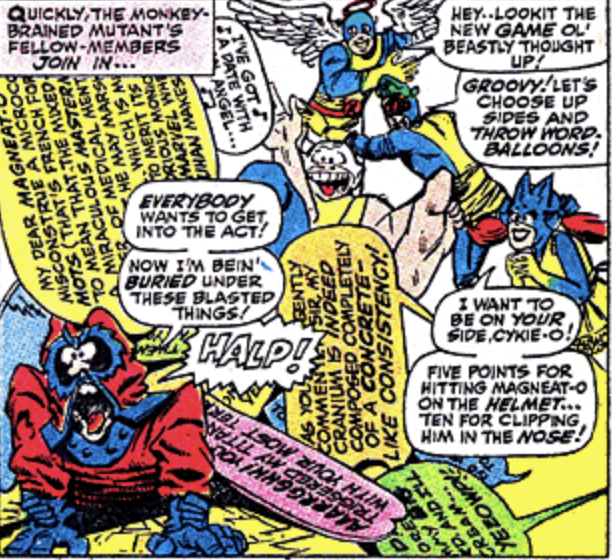
I don’t blame the people who are mispronouncing ‘Magneto’. I’m not blaming myself if I’m wrong either. Instead, I blame Marvel Comics. In fact, I blame corporations (and politicians… and the Ivy League ) in general. They’re always trying to split us and make us argue over stupid stuff so that we don’t notice all of their financial crimes until it’s too late. And I fell for it with this Mag-NEEET-o crap. That’s okay. I haven’t bought a new comic book for its full price since 1996.
I know my pronunciation of Magneto is already a lost cause. The X-Men movies say Mag-NEEET-o. X-Men writer Chris Claremont says Mag-NEEEEET-o. They’re wrong, but I can’t prove it, so I still lose the argument. Even so, I’m taking my stand on this hill. Don’t get me wrong; I’m not going to die on this hill. I’ll abandon this hill if it comes to violence. But I’ll stand on it as long as there’s nothing important at stake.
Just don’t get me started on The Submar-EEEEEN-er.
*****
Here are more comic book blog posts!
How Classic Comic Books Led Me To Classic Literature!
Why The Fantastic Four was once The World’s Greatest Comic Book Magazine!
Jack Kirby: The True Creator of the Marvel Universe?
Comic Book Nerd Book Review-Jack Kirby & Stan Lee: Stuf’ Said by… by…
*****
And here’s my ONE novel!
It’s the oldest story in the world, 1990s style!
Man meets woman; man falls in “luuuvvv” with woman; man gets thwacked upside the head by reality!
The Sunset Rises: A 1990s Romantic Comedy is now available on Amazon and from the trunk of my car!
As much as I like my older brother’s unfinished, unpublished Dummo Mouse comic strips from 1983, I don’t think he (or his character Shmitty Cat) is correct about the original definition of the word ‘smorgasborg.’ Or maybe that was part of the joke.
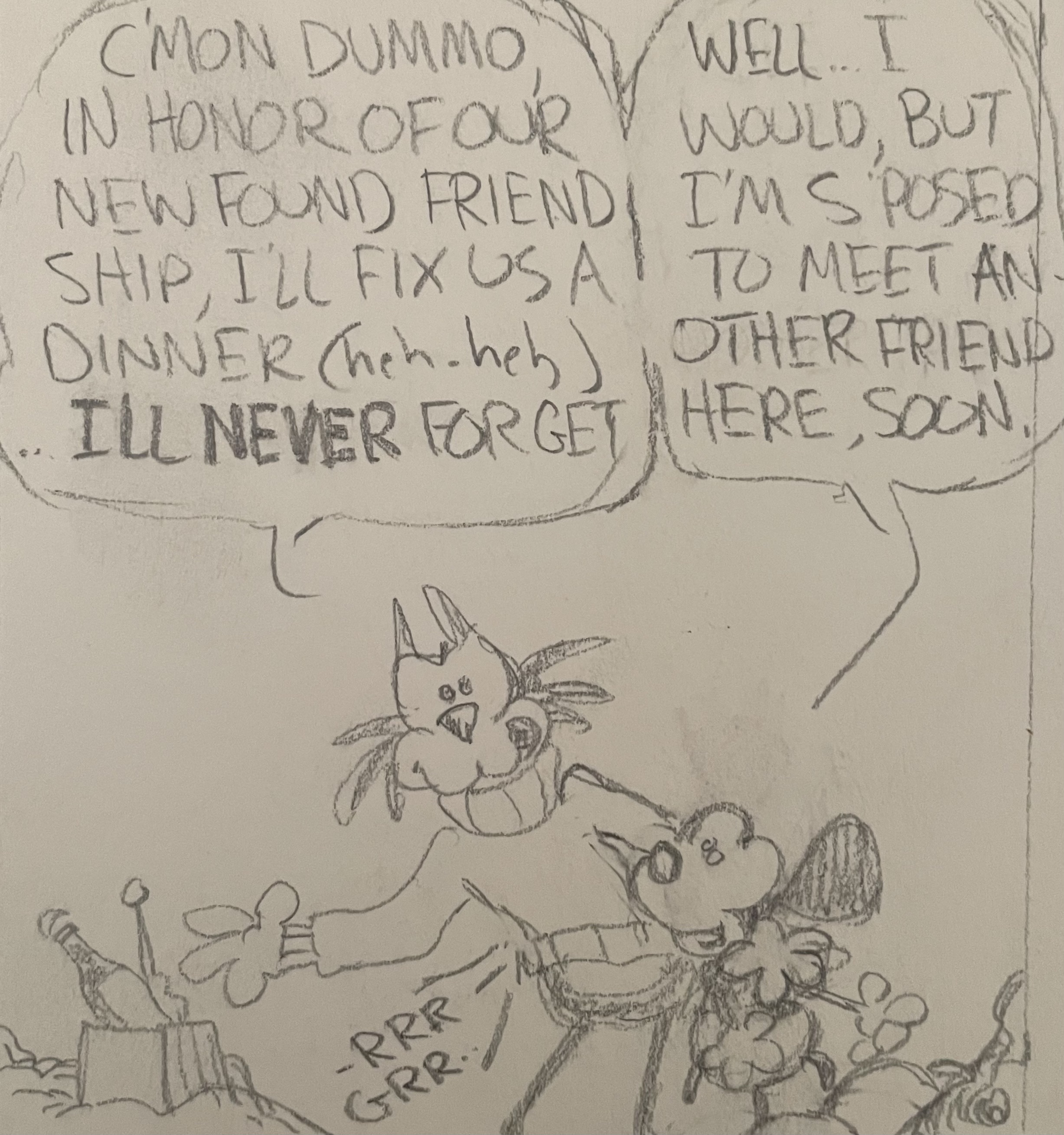
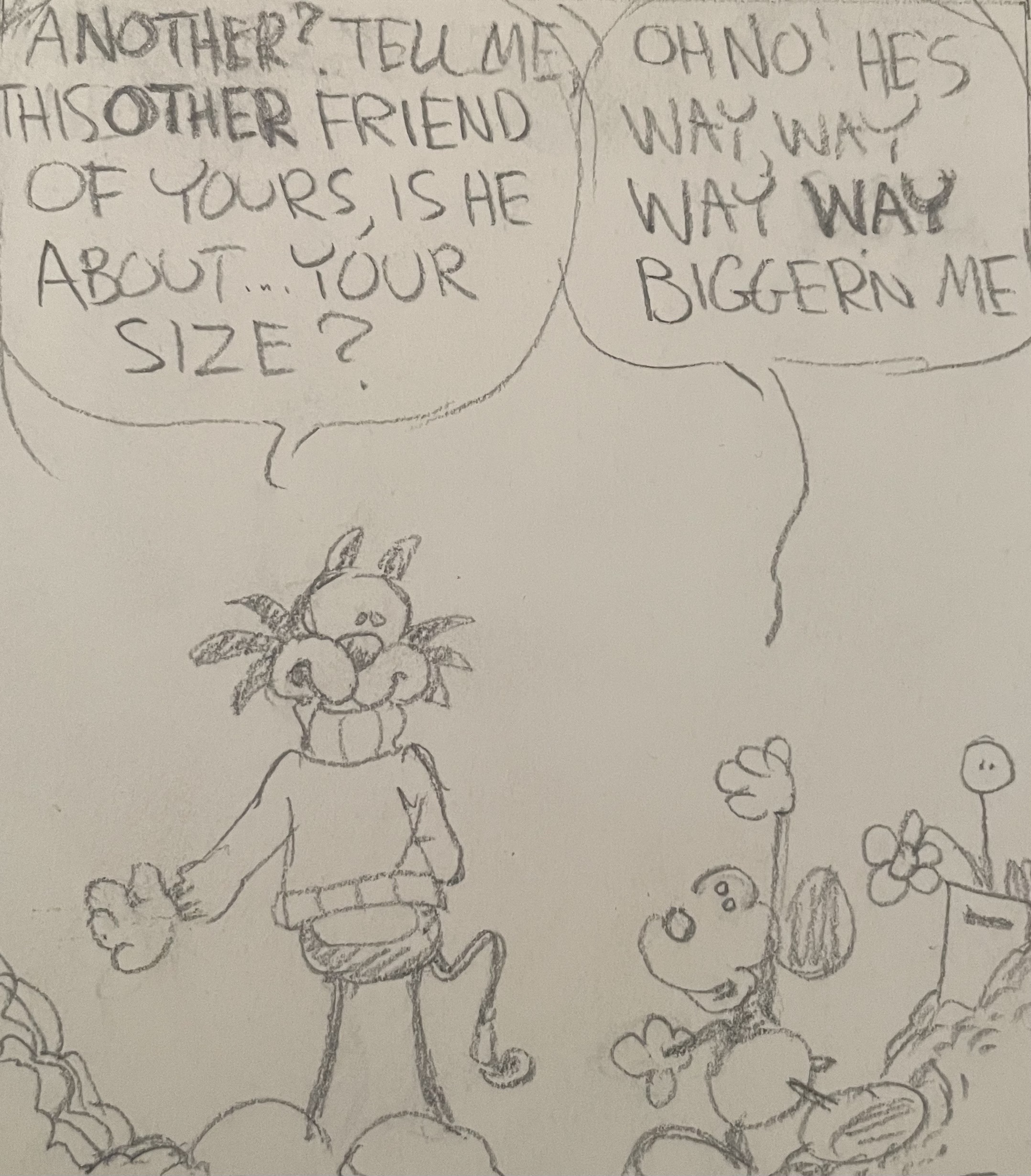
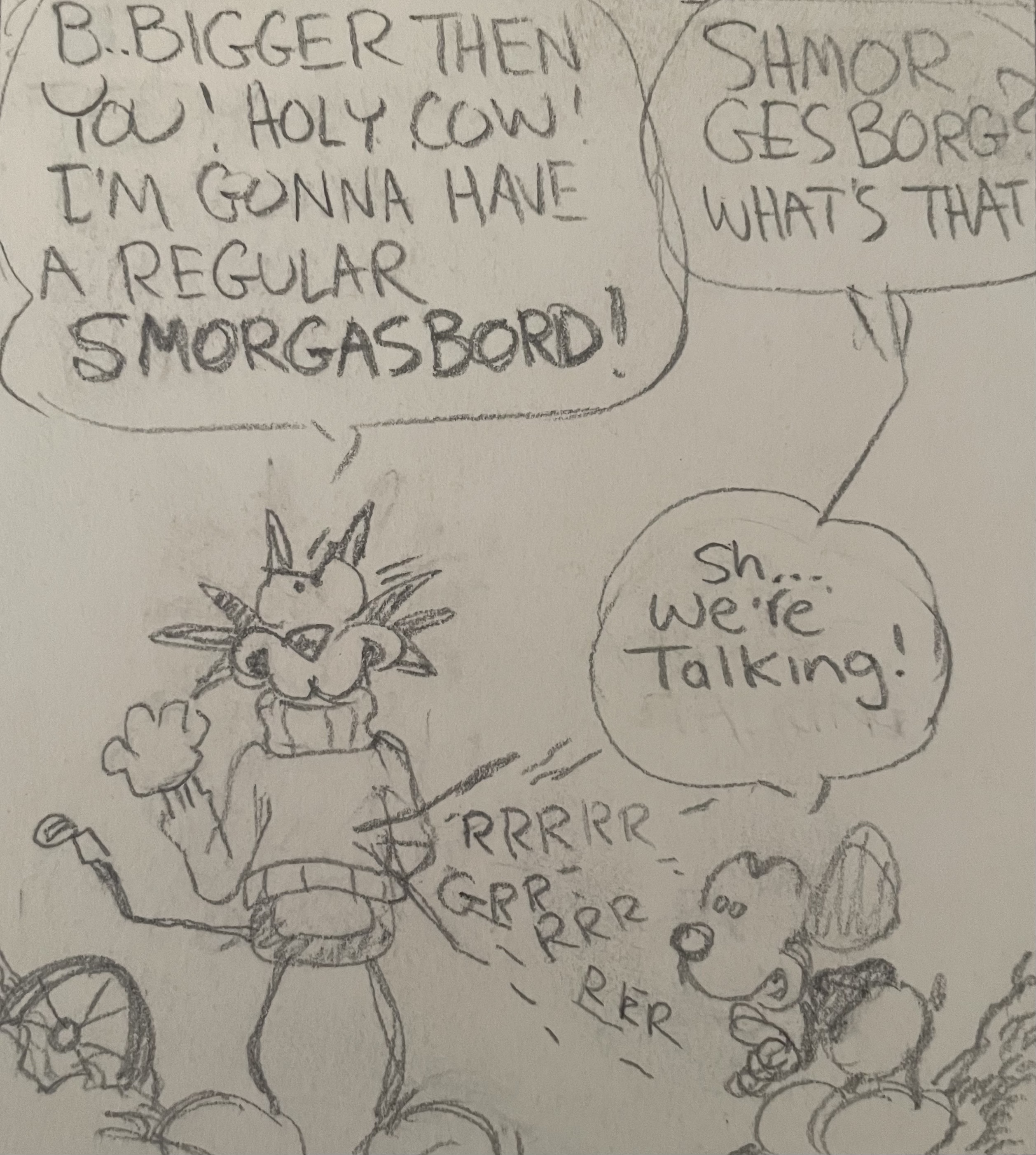
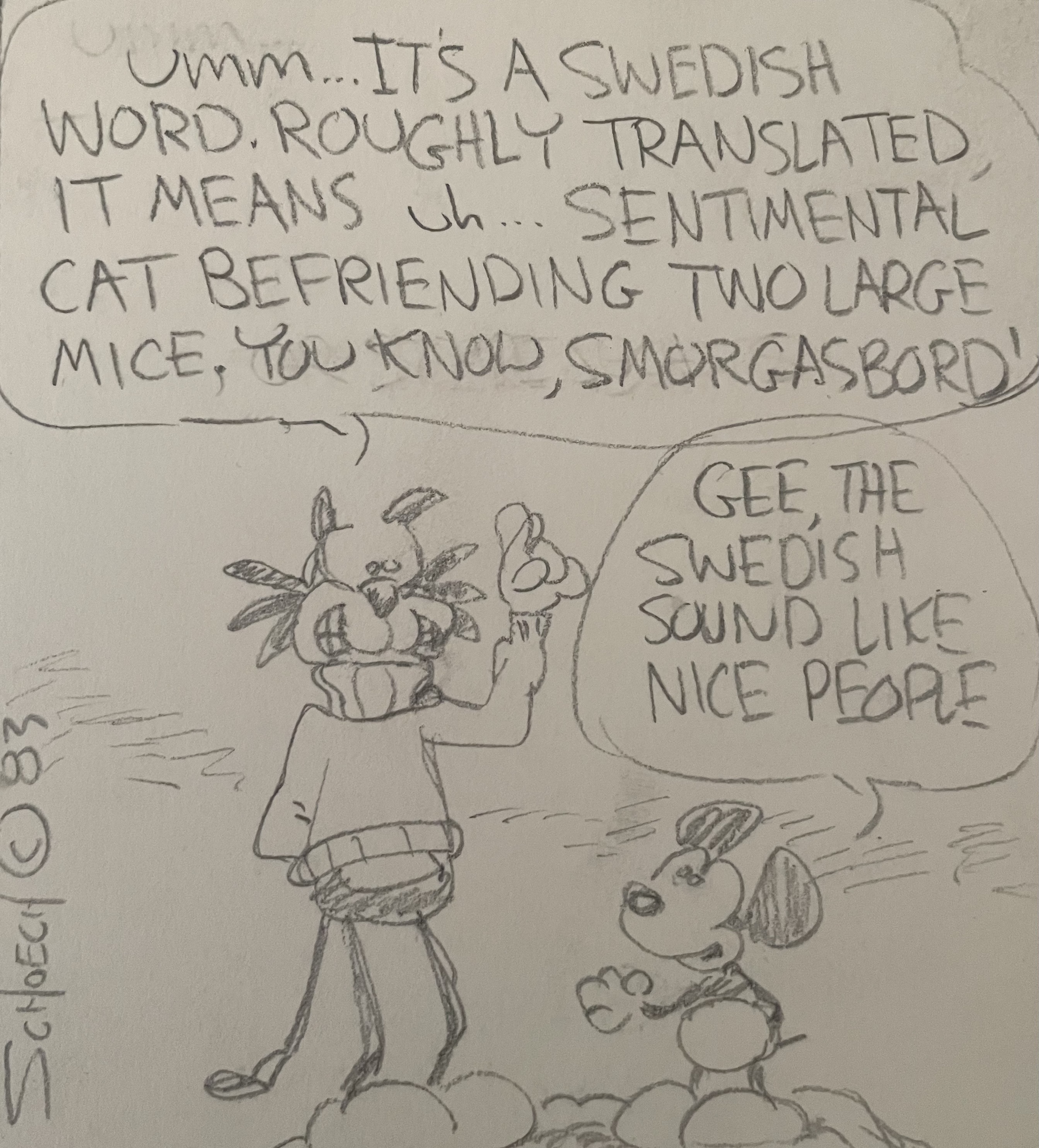
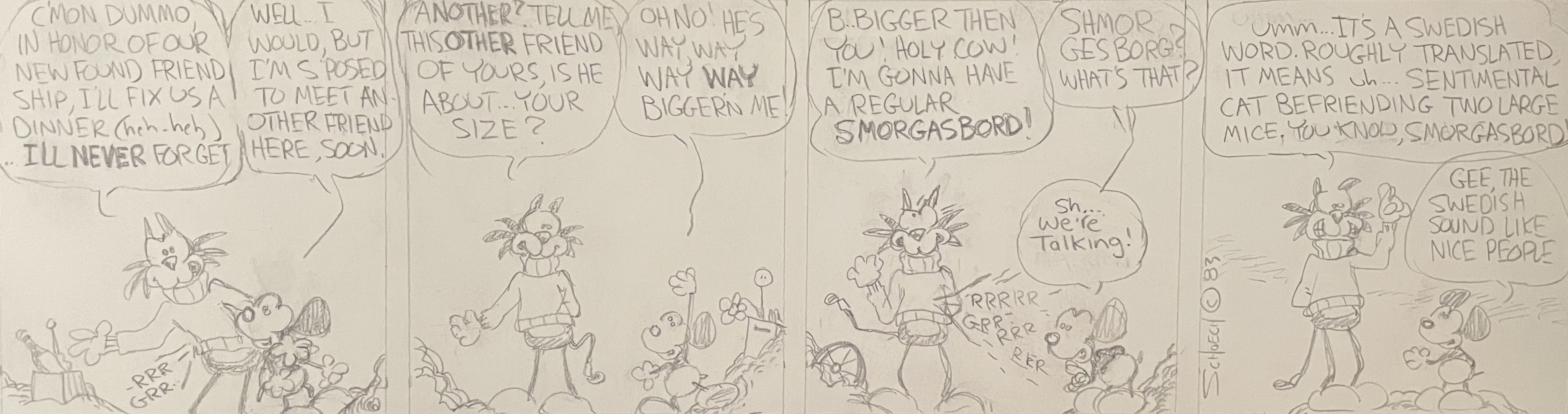
For more of my older brother’s completed comic strips see Sunday Funnies and Calloway the Castaway.
*****
It’s the oldest story in the world, 1990s style!
Man meets woman; man falls in “luuuvvv” with woman; man gets thwacked by reality!
The Sunset Rises: A 1990s Romantic Comedy is now available on Amazon and from the trunk of my car!
Robert Cormier was a pretty good author in the 1970s, especially for Young Adult fiction, but I don’t know of anybody else who has read a Robert Cormier book (I’m sure they’re out there.). The Young Adult fiction genre didn’t really exist when Cormier was writing his books. At least, it didn’t get its own section in book stores and libraries. There were a few books that were written for teenagers (a lot of people think of author Judy Blume), but they were usually in the children’s books section, and most teenagers, even those who read books, didn’t want to be seen looking at the kid’s books.
When I was growing up, boys I knew would read westerns by Louis L’Amour or adventure/spy novels by Alistair MaClean or fantasy like the Lord of the Rings or The Narnia books. I remember girls reading stuff like Sybil by Flora Rheta Schreiber and Don’t Ask Alice by Anonymous (now known as the alleged fraud Beatrice Sparks) and romance novels, but I didn’t know anybody who had read a Robert Cormier book.
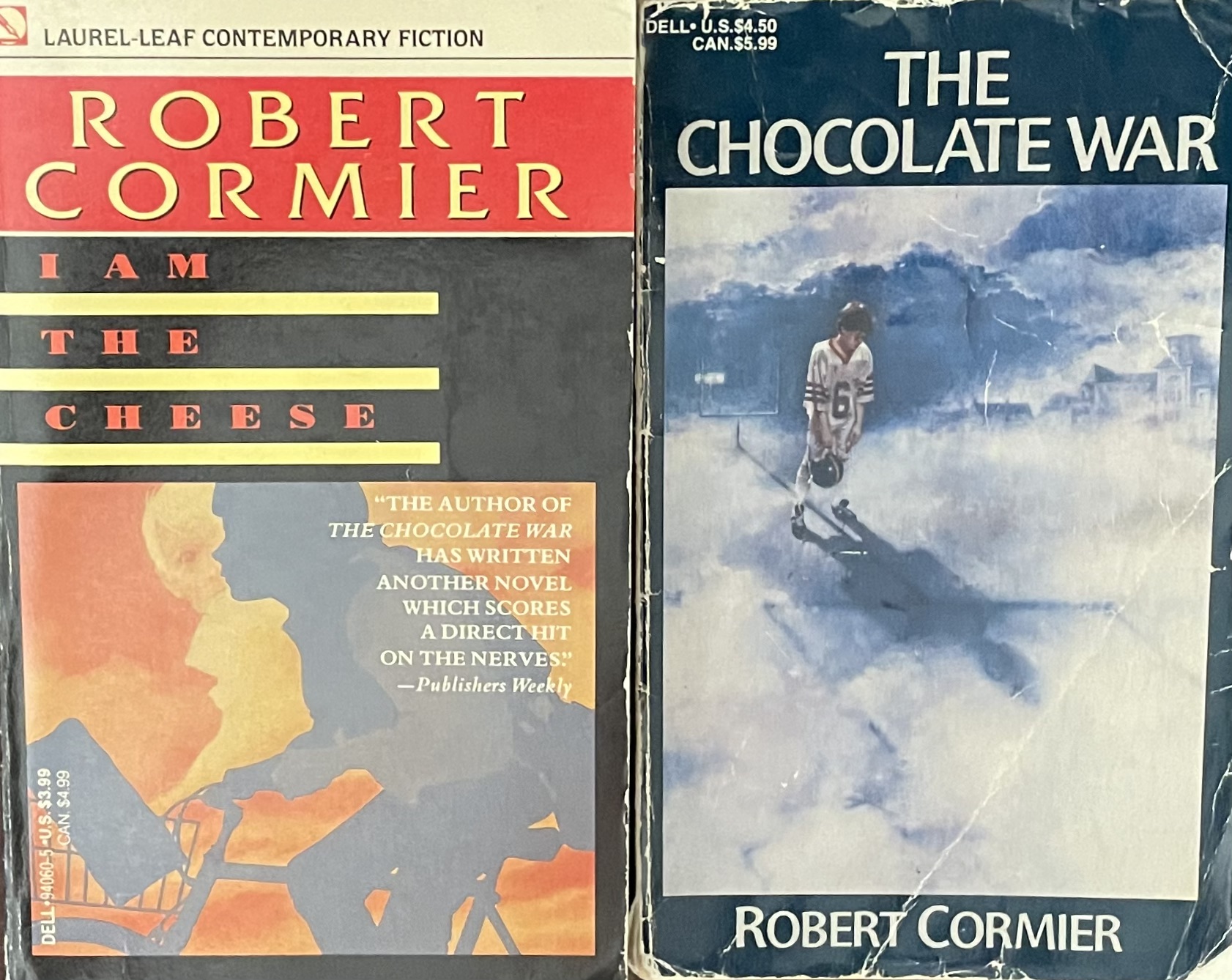
I didn’t read any Robert Cormier books either until I was an adult. Even when I received two of these books The Chocolate War and I Am The Cheese as a combined Christmas gift back in the 1970s, I didn’t read them right away. I hope I at least acted enthusiastic, but I probably went straight to Rock ‘em Sock ‘em Robots (I think I’m mixing up my nostalgic memories). I liked to read, but I wasn’t interested in books about boys my age or teenagers. I preferred books written about adults. Adults lived more interesting lives than kids did (at least in the books I read, they did).
Also, I didn’t like the titles The Chocolate War and I Am the Cheese. I know now that these titles make sense after you read the books, but they didn’t appeal to me when I was a kid, and I still don’t care for the titles now that I’m … slightly older. I’ve always judged books by their titles instead of their covers, and sometimes I’m right, but I definitely misjudged these two. I would try to think of possible better titles, but it’s probably a little late now.
I didn’t get around to reading The Chocolate War until I took a children’s literature class in college back in the late 1980s, and I was surprised by how good it was (the book, not the class). I’ve reread The Chocolate War a couple times since (it’s a quick read!). It’s entertaining, and it has one of the best classroom scenes ever written (in my opinion) where a hated teacher bullies a kid mercilessly and then berates the other students in the class for letting it happen. That scene might not hold up today because kids are much more likely to talk back to teachers, even when teachers don’t deserve it.
Even so, it was a great scene. Not many authors can write a great classroom scene. That’s my book review for The Chocolate War.
I found a copy of I am the Cheese when I was digging through yet another box of books (I keep finding books!). I read it pretty quickly, not because it’s short (though that helped), but because it was interesting. I liked it, so I finished it (that’s my book review for I Am the Cheese). I Am the Cheese reminded me of one of Dennis Lehane’s book from the 1990s, but I’m not going to say which one because associating the two books could potentially ruin the endings of both books.
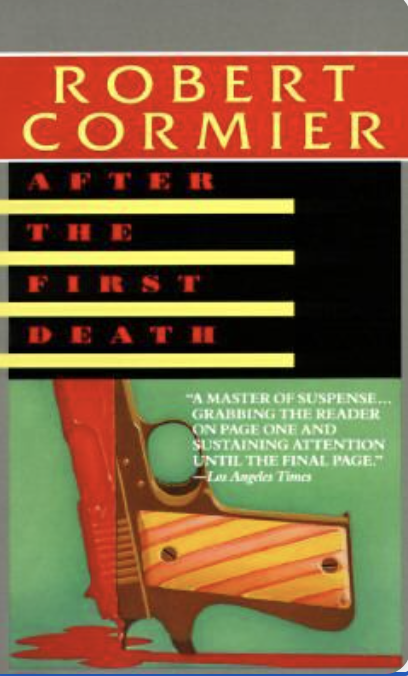
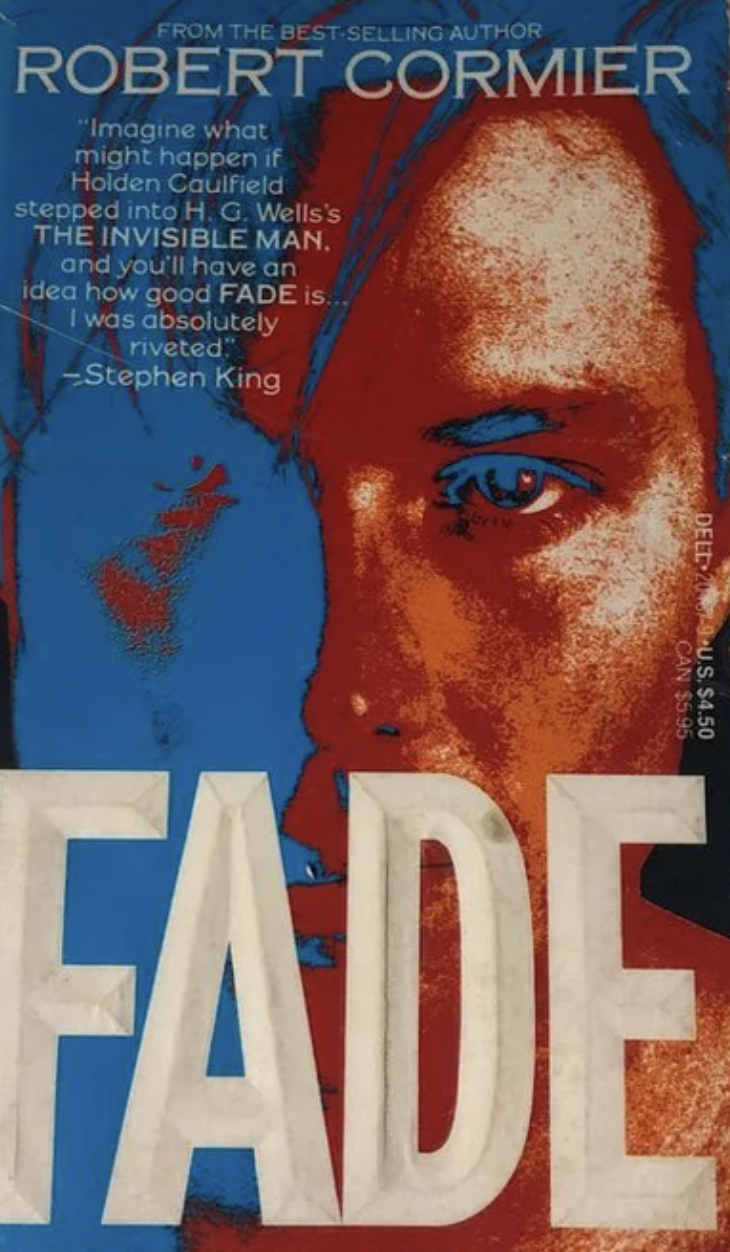
Not all of Robert Cormier’s book titles were bad. After the First Death is a pretty good title, but I don’t remember anything about it. Fade is also a good title, and it was a good book too, but there was a scene that got it banned from some libraries. I understand why the book was banned. That scene was unnecessary. Just think of the things that you would see if you were invisible, and… yeah, it was something like that.
Whenever I read a Robert Cormier book, I think that most adults could read it and get into it. I’m not sure if I could say the same thing for today’s YA fiction, most of which gives me a headache because the writing seems childish. To be fair, a lot of stuff gives me headaches nowadays. I should probably get that checked out. But reading Robert Cormier books has not given me any headaches. Just for that, I’m a fan.
*****
It’s the oldest story in the world, 1990s style!
Man meets woman; man falls in “luuuvvv” with woman; man gets sucker-punched by reality!
The Sunset Rises: A 1990s Romantic Comedy is now available on Amazon !
Here’s some more “What was the deal with…?”:
What was the deal with… Slaves of New York by Tama Janowicz?
What was the deal with… Less Than Zero by Bret Easton Ellis?
What was the deal with…? From Russia With Love by Ian Fleming


 Dysfunctional Literacy