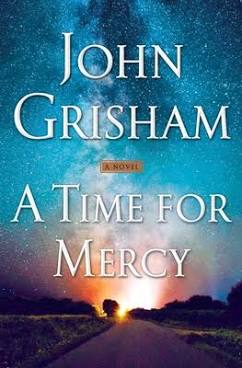
A Time for Mercy by John Grisham is being branded as the third Jake Brigance book. Who the heck is Jake Brigance? Oh yeah, Jake Brigance was the lawyer in Grisham’s early bestseller A Time to Kill.
I was never a fan of A Time To Kill. I’ve always thought (and you can read more at A Time To Kill vs. To Kill A Mockingbird) that A Time to Kill was successful only because it was released right after The Firm hit it big.
Whether or not you think A Time to Kill was any good, A Time for Mercy might be even worse. I say “might be” because I at least finished A Time to Kill when I read it in the 1990s. At the time, I didn’t care about cliches and one-dimensional characters, and even if I did, John Grisham was a new writer who had succeeded because of grit (if you believed those 1990s stories about Grisham), so his flaws could be overlooked.
Now Grisham is an old man writer. He should know better. Here’s an excerpt from that old man writer’s new novel:
*****
Stuart was a sloppy, violent drunk. His pale Irish skin turned red, his cheeks were crimson, and his eyes glowed with a whiskey-lit fire that she had seen too many times. At thirty-four, he was graying and balding and tried to cover it up with a bad comb-over, which after a night of bar-hopping left long strands of hair hanging below his ears. His face had no cuts or bruises, perhaps a good sign, perhaps not. He liked to fight in the honky-tonks, and after a rough night he usually licked his wounds and went straight to bed. But if there had been no fights he often came home looking for a brawl.
‘The hell you doin’ up?” he snarled as he tried to close the door behind him.
As calmly as possible, Josie said, “Just waitin’ on you, dear. You okay?”
“I don’t need you to wait on me. What time is it, two in the morning?”
*****
It all goes down from here.
Stuart beats the hell out of Josie in an overly violent scene, and then kids get involved, and there’s even an unnecessary sexual reference thrown in about a teen girl. I know that Stuart has to be set up as irredeemable character, but the bad comb-over (redundant) is one step too far. Since this book takes place in 1991, a balding mullet still would have been fashionable to a guy like Stuart. At any rate, this guy seems too despicable, even for a character in a bestselling thriller.
And “Irish skin”? C’mon! I know bestselling authors have to rely on stereotypes, but that’s just lazy!
I also know “C’mon! That’s just lazy!” is not an acceptable legal argument, but it’s fine on a literary blog.
After reading a few pages of A Time for Mercy, it became A Time To Stop Reading because of all the lazy stereotyping. C’mon!
*****
Enough about me! What do you think? Could this scene have been written without the lazy stereotyping? What was the last good John Grisham novel? Is “C’mon!” an acceptable argument on a literary blog?
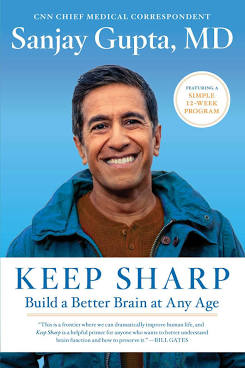
Keep Sharp:Build a Better Brain at Any Age by Sanjay Gupta might appeal to a bunch of people my age because we’re concerned about dementia and Alzheimers and stuff like that. Whenever I forget something, I wonder if it’s age or if it’s because I have too much information in my head already. At any rate, this is a good idea for a book.
I’m not convinced that Sanjay Gupta is the ideal author for this book, though. Yeah, Gupta is a medical analyst on CNN, but to me being on TV gives him less credibility. It’s kind of like Bill O’Reilly and his history books; the topics he chooses are interesting, but I’m not going to read his books. TV personalities are too smug to be trusted.
My other problem with Sanjay Gupta is that his paragraphs are too long. I have nothing against long paragraphs if there’s a reason for the paragraphs to be long. Gupta’s long paragraphs are rambling with ideas that could easily be split. Maybe this isn’t the best writing style for a book called Keep Sharp.
Here’s one example:
*****
The list of twenty-four questions that follows will help you assess your risk factors for brain decline. These are mostly all modifiable risk factors, so don’t panic if you answer yes to many of these questions. This is not meant to frighten you. (Remember: I don’t believe that scare tactics work.) Some of these questions correlate with highly reversible symptoms of cognitive decline. Chronic sleep deprivation, for example, can lead to a staggering amount of memory loss that can appear like the onset of dementia. Sleeping well is one of the easiest and most effective ways to improve all of your brain functions, as well as your ability to learn and remember new knowledge (it improves every system in the body). I underestimated the value of sleep for too long, taking great pride in my ability to function on a lack of it. Take it from me: That was a mistake. Luckily, this can be remedied with proper diagnosis and simply going to bed earlier and putting away your electronic devices and your to-do list. Some queries may seem unrelated, such as your level of education. For reasons I’ll explain in this book, multiple studies now show that higher education might have protective effects in cognitive decline but not necessarily at slowing the decline once memory loss has started. In other words, people with more years of formal education (e.g., more college attendance and advanced degrees) or greater literacy have a lower risk of dementia than those with fewer years of formal education, but that doesn’t matter as much if you start to develop dementia in the first place.
*****
An author who writes about brains should know that the average reader prefers shorter paragraphs. Here’s a more readable version. At least, it was easier for me to read.
*****
The list of twenty-four questions that follows will help you assess your risk factors for brain decline. These are mostly all modifiable risk factors, so don’t panic if you answer yes to many of these questions. This is not meant to frighten you. (Remember: I don’t believe that scare tactics work.). Some of these questions correlate with highly reversible symptoms of cognitive decline.
Chronic sleep deprivation, for example, can lead to a staggering amount of memory loss that can appear like the onset of dementia. Sleeping well is one of the easiest and most effective ways to improve all of your brain functions, as well as your ability to learn and remember new knowledge (it improves every system in the body). I underestimated the value of sleep for too long, taking great pride in my ability to function on a lack of it. Take it from me: That was a mistake. Luckily, this can be remedied with proper diagnosis and simply going to bed earlier and putting away your electronic devices and your to-do list.
Some queries may seem unrelated, such as your level of education. For reasons I’ll explain in this book, multiple studies now show that higher education might have protective effects in cognitive decline but not necessarily at slowing the decline once memory loss has started. In other words, people with more years of formal education (e.g., more college attendance and advanced degrees) or greater literacy have a lower risk of dementia than those with fewer years of formal education, but that doesn’t matter as much if you start to develop dementia in the first place.
*****
What do you think? Which version is easier to read? Should a book about preserving your brain be easy to read? Is Sanjay Gupta more credible than other medical professionals who aren’t on television?

Famous author Glennon Doyle has made a ton of money off of her latest book Untamed, but maybe she should have left some stuff out of it. In her chapter Tick Marks, she reveals how she rigged her senior Homecoming election.
*****
(the set up)
I am now a girl who, even when she’s forty-four years old, can roll her eyes and mention, offhandedly, well, I was on the Homecoming Court. Others will roll their eyes, too (high school!), but they will also register: Ah. You were Golden. Golden is decided early, and it sticks, somehow, even when we are grown and know so much better, so much more. Once Golden, always Golden.
(a few paragraphs later)
I rigged an election trying to be Golden. I spent sixteen years with my head in a toilet trying to be light. I drank myself numb for a decade, trying to be pleasant. I’ve giggled at and slept with assholes, trying to be untouchable. I’ve held my tongue so hard I tasted blood, trying to be gentle. I’ve spent thousands on potions and poisons, trying to be youthful. I have denied myself for decades trying to be pure.
*****
Stay Golden, Glennon Doyle, stay Golden.
But even if she is Golden, we know how sacred our elections are, especially in these days of foreign interference and fake ballots. We can’t have fake personalities too. If Glennon Doyle thinks that she can simply admit that she faked her personality and be forgiven for her homecoming election scheme, then she’s got another think comin…
No, I’m kidding. Nobody cares about high school.
I’m pretty sure faking your personality isn’t considered a form of election rigging. If it were, every politician who claims to care about his/her constituents more than his/her kickbacks would get thrown out. Glennon Doyle’s place in homecoming history is secure.
And who even mentions homecoming after age nineteen? I know I’m not the target demographic for Glennon Doyle books, but I hope most of her readers don’t care much about what happened to them in high school, except maybe if they go to their class reunions.
If Glennon Doyle goes to her high school reunion and mentions homecoming, her former classmates might still think of her as a Golden One. Or they might just think she’s crazy. But I don’t think they’ll care enough about homecoming to impeach her.
*****
Enough about me! What do you think? When did you start getting over high school social trauma? Or were you one of the Golden Ones? Do the Golden Ones even think of themselves as the Golden Ones? Is Glennon Doyle Golden or crazy? Have you even read Untamed by Glennon Doyle?
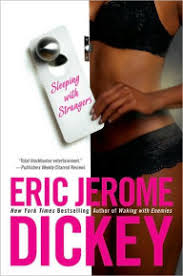
I read a lot, but I’m not familiar with every writer out there, so when I heard/read that author Eric Jerome Dickey died last week, I wondered… what kind of stuff did he write?
*****
Bestselling author Eric Jerome Dickey, whose novels depicted romance, erotica and suspense from the Black perspective, including Milk in My Coffee, Sleeping with Strangers and Friends and Lovers, has died. He was 59.
He died in Los Angeles on Jan. 3 after a long illness, his longtime publicist confirmed Tuesday.
His publisher, Dutton, an imprint of Penguin Random House, referred to the popular writer as “an iconic author and friend” on social media.
Read more at Popular Author Eric Jerome Dickey Dies After Long Illness. He Was 59.
*****
Other book sites refer to Eric Jerome Dickey’s books not as erotica, but as erotic… ahem… thrillers. It’s not unusual for me to be unfamiliar with popular authors, but I usually have some basic knowledge of genres, and I know almost nothing about the erotic… ahem… thriller genre.
So I have a few questions. When you’re reading an erotic… ahem… thriller, what’s more important, the thriller/mystery/suspense or the eroticism? Do readers skip through the mystery to get to the erotica? Or do readers skip through the erotica to get to the mystery/suspense? Or are they both equally great?
Is the erotic thriller supposed to be a step above straight up erotica? Do people who read erotic… ahem… thrillers look down upon those who read erotica? Or is vice-versa?
To be fair, this Dickey author found a genre and seemed to have been pretty successful in it. Those are the dream accomplishments for a lot of authors, finding their niches and their audiences. Good job, Eric Jerome Dickey!
I don’t know what an erotic… ahem… thriller is, and I’m not going to start reading them, but I respect a guy who finds his/her own genre.
*****
Enough about me! What do you think? What’s more important in an erotic thriller, the eroticism or the mystery/suspense/thriller? What genres/sub-genres are you unfamiliar with?

A prequel/sequel to The Great Gatsby by F. Scott Fitzgerald is such a bad idea that I’m glad I didn’t think of it first. Unfortunately, this is what happens when a famous creative work hits public domain.
*****
Every year, as we leave one behind and enter another, a new batch of literary works enter the public domain. That means the copyrights, which protect books from replication and adaptation for a certain number of years depending on when those books were published, expire, allowing creators to adapt or reimagine these works for free without dealing with the original authors’ estates. “And all of the works are free for anyone to use, reuse, build upon for anyone — without paying a fee,” Duke University law professor Jennifer Jenkins explained to NPR. Now that we’re in 2021, copyrights for books published in 1925 are lifting, including ones on F. Scott Fitzgerald’s The Great Gatsby.
It’s no coincidence that author Michael Farris Smith is publishing Nick, a Great Gatsby prequel novel about Nick Carraway, a few days from now. According to Time, new additions of the original novel are being printed with fresh introductions by author Min Jin Lee and culture critic Wesley Morris, and January will also bring an illustrated edition from Black Dog & Leventhal.
For more, read ‘The Great Gatsby’ and other works from 1925 are now public domain.
*****
Just so you know, the article’s use of the word additions instead of editions was the article’s mistake, not mine. Maybe it’s been fixed by now.
To be fair, the novel Nick by Michael Harris Smith might be a decent novel. It might be well-written. Maybe the good reviews are sincere and NOT pre-written. But no matter how good it is (and it probably isn’t very good at all), the book will be about a wealthy guy who just happens to be named Nick Carraway.
It’s not THAT Nick Carraway, if you know what I mean.
When authors who are not Sir Conan Arthur Doyle write Sherlock Holmes stories, they’re just writing stories about some high IQ drug addict who happens to be named Sherlock Holmes. When authors who are not Alexandre Dumas write stories about the Three Musketeers, they’re writing stories about three pawns of the old royal social hierarchy who just happen to be named Athos, Porthos, and Aramis (and maybe D’Artagnan too).
When authors who are not Bram Stoker write stories about Dracula, they are writing about some guy with funny looking teeth who just happens to be named… aw, you get the idea.
Authors write these books because there’s a market for them. That’s fine. I’m not angry at these authors or at the readers who buy the books. I’ll just point it out and do my own thing. I promise, I will never write a sequel to The Great Gatsby. I will not call it Carraway or Jay or The Formerly Great Gatsby or The Once and Future Great Gatsby.
But look out when The Catcher in the Rye becomes public domain! That damn Holden Caulfield kid whines like hell. Damn whiner.
*****
But enough about me! What do you think? Should authors mess with public domain characters just because they can? Which famous character would you like to mess with?
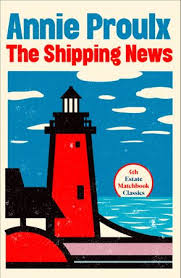
When I bought The Shipping News by Annie Proulx a few weeks ago, I ripped the Kevin Spacey movie cover off because I didn’t want to associate Kevin Spacey with the main character. I’ve never seen the movie version of The Shipping News, so I had the chance to read this book without visualizing Hollywood actors/actresses.
Though the ripped cover strategy was a bit controversial, it seems to have worked. My imagination does NOT picture Kevin Spacey as the main character Quoyle. Also, I haven’t read anything about the book to affect my expectations. All that I know is that several people I respect recommend The Shipping News, and that it won a Pulitzer Prize for Fiction, and that the movie sucked (from what I’ve heard).
I like The Shipping News so far. I’ll keep reading it, but I’m a little frustrated by it. The writing is good, but I’m more interested in the minor characters than the main character Quoyle. This is one of those novels where things happen to a seemingly bland character. That would be fine if the main character felt real. I feel like Quoyle is a caricature of a passive character and all the potentially interesting secondary characters are two-dimensional.
The characters seem to exist only to help Quoyle or torment him. And some of them seem more like caricatures than real people. There’s the extremely nice black couple that befriends Quoyle, but the book never explains anything about them. Why would they go out of their way to become friends with Quoyle and then just leave? Are they just that nice? Or was the wife using Quoyle as a character study?
Then there’s the evil slutty wife who becomes the mother of his two daughters. Instead of developing her character, she’s just the abusive, slutty wife. And then she dies. Yeah, there might be women like her, but this was a chance to delve into an interesting character, and the author didn’t do it.
The boss at the local newspaper was a bossy caricature in a Lou Grant kind of way (that’s how I pictured him), but that was again two-dimensional. As far as two-dimensional characters go, they’re very well-written. I’d rather read a novel with well-written two-dimensional characters than one with poorly-written two-dimensional characters.
At least the situations are interesting as well. As a writer, I enjoyed the sequences at the local newspaper, and I’m guessing that there’ll be more (since the novel is called… The Shipping News).
I can see why I didn’t get very far when I read this book in the 1990s. That might have been a reflection of me as reader more than the book itself (I was reading Tom Clancy novels back then, alright?). At least in the mid-1990s, I didn’t know who Kevin Spacey was.
*****
Enough about me! What do you think? What famous actors have ruined fictional characters for you? What did you think of The Shipping News (without spoiling it for me).

People might think book and publishing news is boring, but they just don’t know where to look. As bad as 2020 might have been for a lot of people, it was a great year for weird news about books and publishing. Even before the pandemic hit the publishing industry, weird/interesting stuff was going on.
*****
1. In January, Romance Writers of America cancelled its 2020 writing contest because of a giant argument over sexual harassment charges. When every other writers conference/convention had to later cancel because of COVID-19, RWA activists bragged that they didn’t need a pandemic ; they were perfectly capable of cancelling themselves without it.
2. In February, indie author and former Baltimore mayor Catherine Pugh got sentenced to three years in prison for using her position to sell her Healthy Holly children’s books to the city. Despite this, desperate Indie authors throughout the country are still planning to run for local office to boost their own book sales.
3. George R.R. Martin once again postponed The Winds of Winter but also released a bunch of spoilers, strengthening readers’ beliefs that Martin will never actually finish writing the series A Song of Ice and Fire. After years of waiting, Game of Thrones fans finally admitted that winter is never coming and George R.R. Martin knows nothing… about how to finish his series.
4. Jeffrey Toobin, a famous journalist/author and CNN political analyst, exposed himself (and maybe did some other stuff) during a Zoom conference call. Toobin, in his defense, claimed that he thought the other Zoom participants couldn’t see him, but he was soon fired anyway. That feeling of not being watched while on camera, according to psychologists, comes from being a political analyst on CNN.
5. The Atlantic, a reputable magazine known for longwinded, disorganized, over-written articles that leave readers dazed and confused, hired a known plagiarist who then shocked The Atlantic, not by plagiarizing, but by completely making up stuff. The Atlantic is leaving the article up on its website for public record, but the longwinded, disorganized, overwritten explanation of why they kept it up left many readers dazed and confused.
6. Author Ernest Cline wrote a sequel to Ready Player One, and almost everybody hated it. Because it felt rushed with plot holes and bad writing, many readers felt the book should have been called Not Quite Ready Player Two.
7. The novel The Nickel Boys won the 2020 Pulitzer Prize for Fiction, making author Colson Whitehead only the fourth author (along with William Faulkner, JohnUpdike, and Booth Tarkington) to win the Pulitzer Prize for Fiction twice. Even more impressive, he is the first African American author to win the Pulitzer Prize for Fiction twice.
Wait a minute! Who the heck is Booth Tarkington?
8. Former President Obama wrote a 700+ page memoir, and it’s only part one, with part two allegedly coming out soon. Unfortunately for former President Obama, Colson Whitehead has already become the first African American author to win the Pulitzer Prize for Fiction twice.
9. The family/estate of famous dead author Roald Dahl apologized for controversial statements that the author made back in the 1970s. Fans of the author said they weren’t wild about the controversy but it wasn’t really a BFD.
10. New York Mayor Andrew Cuomo wrote a book called American Crisis: (with a nonsense subtitle). Protestors dumped a casket filled with book covers in front of a nursing home in response to Cuomo’s policies that (might have) led to deaths of thousands of elderly New Yorkers. The stunt went over general public’s heads, so the protesters resorted to leaving one-star reviews for the book on Amazon, just like everybody else.
I kind of feel sorry for 2020. Yeah, it was a bad year for a lot of people, but it wasn’t 2020’s fault. Most of the bad stuff that happened in 2020 was building up before 2020 even started. Even though 2020 is over, I’m not worried. There will always be weird/interesting book and publishing news if you look hard enough.
*****
Enough about me! What do you think? What were other weird things that happened with books and publishing in 2020?

It’s no surprise that bookcases at public locations like hotel lobbies are for decoration only. But what about bookcases behind famous broadcasters on television? Or a co-worker on an internet meeting?
I don’t know if a full bookcase in the background makes a famous person or a co-worker in a meeting appear more intelligent. I’m partial to the bare bland wall. People with bare bland walls behind them are confident enough to not care about how others think about them. Or they’re paranoid about being conked on the head from behind. Nobody can sneak up behind you with a bare bland wall background.
*****
In a place like Washington—small, interconnected, erudite, gossipy—being well-read can create certain advantages. So, too, can seeming well-read. The “Washington bookshelf” is almost a phenomenon in itself, whether in a hotel library, at a think tank office or on the walls behind the cocktail bar at a Georgetown house.
And, as with nearly any other demand of busy people and organizations, it can be conjured up wholesale, for a fee.
And then later in the article…
In 2020, of course, everything changed for Books by the Foot around the same time everything changed for everyone else… When workplaces went remote and suddenly Zoom allowed co-workers new glimpses into one another’s homes, what New York Times writer Amanda Hess dubbed the “credibility bookcase” became the hot-ticket item. (“For a certain class of people, the home must function not only as a pandemic hunkering nest but also be optimized for presentation to the outside world,” she wrote.) And while Roberts makes an effort not to infer too much about his clients or ask too many questions about their intent, he did notice a very telling micro-trendin orders he was getting from all across the United States.
Read more at Washington’s Secret to the Perfect Zoom Bookshelf? Buy It Wholesale.
*****
So that’s what it’s called, the “credibility bookcase.” I had a credibility bookcase back in the 1990s and didn’t even know it. If only I had thought of a way to profit from this idea back then. Some people might have read this article and gotten mad at co-workers or famous people for pretending to be readers. I read this article and got mad that I didn’t think of how to profit from this scam first!
I even mentioned the credibility bookcase in a blog serial romantic comedy that I wrote a few years ago, only I didn’t know it was called a credibility bookcase. Here is a quick excerpt from my blog serial romantic comedy “The Literary Girlfriend”:
*****
When we reached the living room, Danielle stopped and faced me. “Have you read all of these?” she asked, pointing to my bookshelf.
“Yes, of course,” I said. I had read a few of the books completely, but I had at least glanced through all of them. I had read enough about each book to hold a quick conversation before I’d need to change the subject.
“You’ve read Moby Dick?” she said.
“Yes. I didn’t enjoy it, but I read it.”
“You’ve read…” She squinted at a large volume at the top of the shelf. “You’ve read The Brothers K… The Brothers K….”
“I don’t know how to pronounce it either,” I said. “When I get to those long Russian names, I just change them to Smith and Jones in my head.”
“I like books,” Danielle said. “But I didn’t go to school… college.”
For more about the credibility bookcase and the romance that followed, read The Literary Girlfriend: The End of the Story?.
*****
The difference between me and most credibility bookcase owners is that I had read a little bit from each book, just enough to make me dangerous (or sound fake smart).
But enough about me! What do you think? Does having a credibility bookcase make you look smarter? Have you ever looked at the books on somebody else’s credibility bookcase? Do you know how to pronounce The Brothers K…?
When it comes to the BEST BOOKS OF 2020, the only certainty is that I haven’t read any of them all the way through. I’ve read free online samples of a few of them, but I’m too much of a cheapskate to buy a hardcopy when there are plenty of older (and probably better) books that I can get.
To me, there’s no benefit to reading a book just because it’s new. In twenty years, the book will still be there (most likely). In twenty years, you’ll know if the book was actually good or just a fad. And most important, in twenty years, the book will be cheaper.
Still, it’s the end of the year, and doing a BEST BOOKS OF 2020 list is almost a requirement for a book blogger. Since I haven’t read all (or any) of the books that came out in 2020, I have to rely on those who have (claimed to have) read the books.
With that in mind, here are several lists of BEST BOOKS OF 2020 from websites with people who have (allegedly) read all of the books.
Here is one set of best overall books from Entertainment Weekly. Entertainment Weekly? Entertainment Weekly talks about books?
THE BEST OF THE BEST
- The Glass Hotel by Emily St. John Mandel
- Transcendent Kingdom by Yaa Gyasi
- Homeland Elegies by Ayad Akhtar
- Leave the World Behind by Rumaan Alam
- Memorial by Bryan Washington
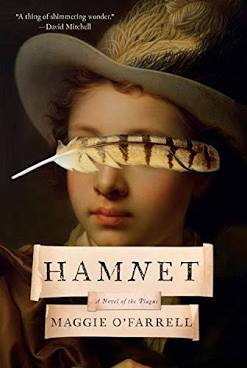
- Hamnet by Maggie O’Farrell
- Deacon King Kong by James McBride
- Daddy by Emma Cline
- Red Comet by Heather Clark
- A Burning by Megha Majumdar
You can read more at The Biggest and Best Books of the Year.
*****
NPR has a variety of lists to choose from, so I chose the first ten listed in the Mystery/Thriller genre. Reading the list to yourself in a pretentious, monotone NPR voice is optional.
- A Shadow Intelligence by Oliver Harris
- Sisters by Daisy Johnson
- The Searcher by Tana French
- Leave The World Behind by Rumaan Alam
- The Only Good Indians by Stephen Graham Jones
- Mexican Gothic by Silvia Moreno-Garcia
- Blackwood by Michael Farris Smith
- Lakewood by Megan Giddings
- Piranesi by Susanna Clarke
- Survivor Song by Paul Trembly
Read more at NPR’s Best Books of 2020.
Publisher’s Weekly lists its best books by genre in sets of twenty, but I don’t make lists greater than ten items, so here are the first ten Books of 2020 in the Fiction category:
- The Abstainer by Ian McGuire
- Beheld by TaraShea Nesbit
- Bluebeard’s First Wife by Ha Seong-nan
- The Butterfly Lampshade by Aimee Bender
- The Cold Millions by Jess Walter
- Crooked Hallelujah by Kelli Jo Ford
- The Dominant Animal by Kathryn Scanlan
- Fiebre Tropical by Juliana Delgado Lopera
- Hamnet by Maggie O’Farrell
- Homeland Elegies by Ayad Akhtar
Read more at Best Books 2020: Publisher’s Weekly.
*****
What do you think? How many of these books have you actually read? Which ones have you even heard of? How old is a book before you usually get around to reading it? What other best book lists of 2020 do you know about?
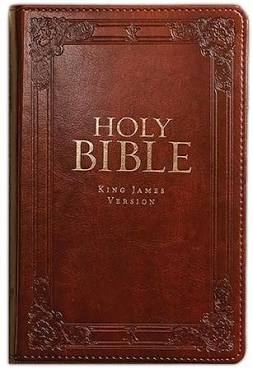
I’m giving my daughter a brand new copy of The Holy Bible for Christmas. It’s not her only gift. She’s going to get a pretty good haul this Christmas, but I like The Holy Bible as a Christmas gift. It seems to fit. It’s better as a Christmas gift than one for her birthday or Valentine’s Day or Halloween or the Fourth of July.
I’ve been reading an older copy of The Holy Bible that originally belonged to my wife’s grandmother. I’m not giving my daughter that copy yet (it’s probably not mine to give anyway). I don’t think my daughter’s ready for that copy yet.
I’m pretty sure my daughter won’t actually read her own copy of The Holy Bible for a while. She’s 18, and we’re not exactly church-going folk. She might never read it. She might glance at it and then put it aside when I’m not looking and then misplace it.
That’s why I didn’t buy her an expensive copy of The Holy Bible. This copy of The Holy Bible was relatively cheap for a book. It wasn’t much more expensive than an elaborate greeting card that plays corny music. I don’t think it’s a good idea if The Holy Bible plays corny music when you open it. That might take away the seriousness of some of the messages.
Reading the entire Holy Bible can be a slog. I don’t blame God for that. A bunch of humans have rewritten and retranslated it over a couple thousand years. I don’t even blame people for thinking that The Holy Bible is a slog, but it’s not as bad as some literary fiction. I figured that if I could get through three pages of Finnegans Wake, then I can read The Holy Bible. At least, I think I got through three pages of Finnegans Wake. It might have just been a long two.
I don’t think you have to read the entire Holy Bible for it to be useful. I think some Books are better than others. I’m not going to rank the books in a TOP TEN BOOKS in THE HOLY BIBLE as potential clickbait, though I’m sure somebody has done that. I don’t want to get spammed by somebody upset that I didn’t rank Malachi in my top five.
Malachi is awesome, alright?? It just didn’t quite make the cut!
If I had to choose a favorite book in The Holy Bible, I’d pick Matthew. Matthew has a bunch of good stuff about Jesus and his teachings, and you can’t go wrong reading about Jesus, unless you really don’t believe in God so much that you get angry at people for believing. If that’s the case, maybe Genesis or Revelations would be better.
I don’t even care if people believe in Jesus. I don’t care if people believe Jesus was the Son of God, or if Jesus was a prophet, or if Jesus never even existed. His teachings are pretty cool. If everybody followed his basic guidelines, people would get along a lot better and a lot of social problems wouldn’t exist.
I’m not saying that a brand new copy of The Holy Bible is a perfect gift for everybody. A hotel owner probably doesn’t need one (or maybe the hotel owner could use a bunch of them). But I think it’s a good gift for my daughter in our current situation. It might be a good stocking stuffer. And it’s a lot better than giving my daughter a copy of Finnegans Wake.
*****
Oh yeah, just so you know, my daughter doesn’t read this blog.


 Dysfunctional Literacy