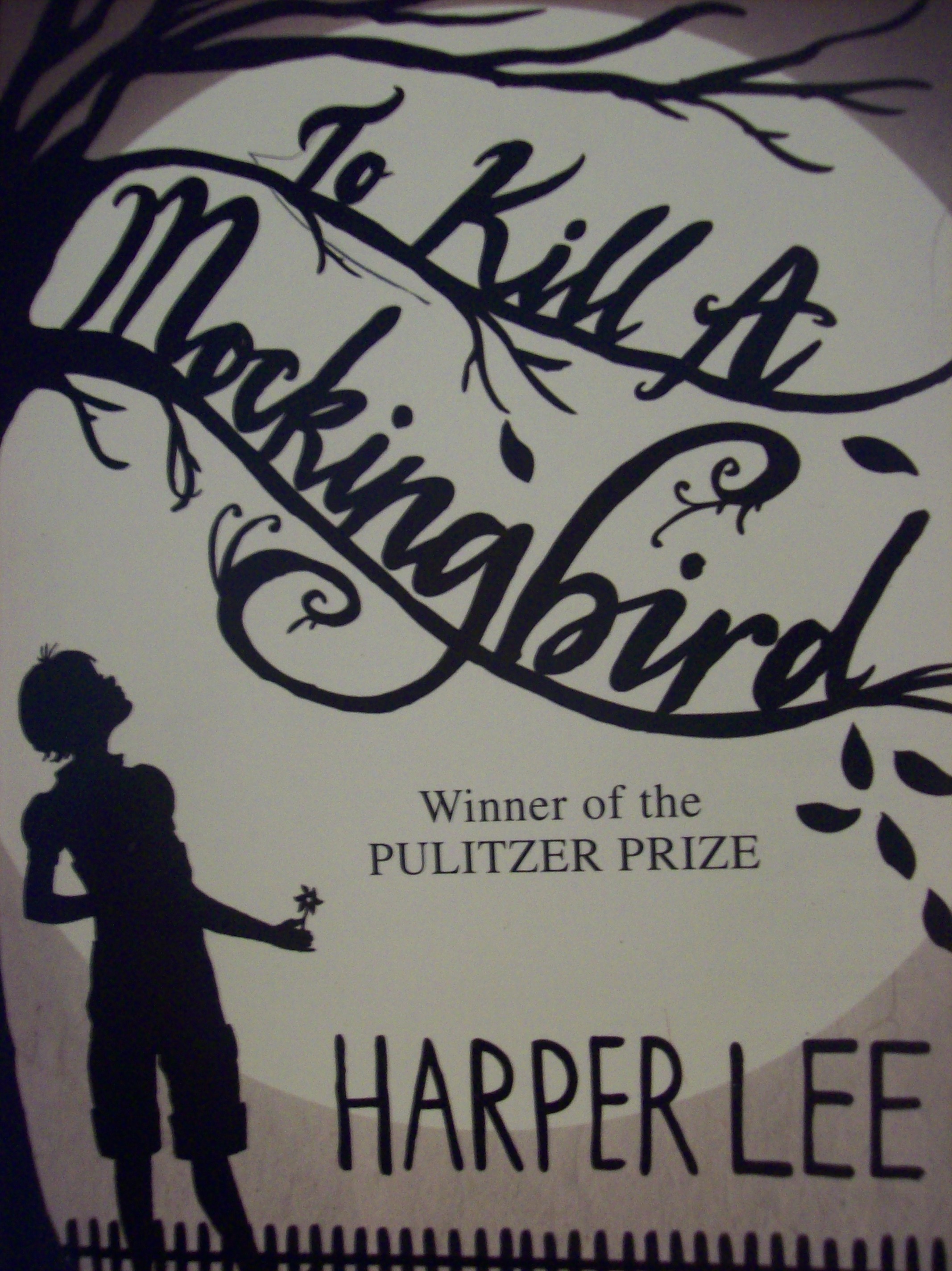
Maybe everybody should read this novel simply because Harper Lee never wrote a sequel and good behavior should be rewarded.
The AARP has been trying to sign me up since I was 25, which makes sense because I’ve always been an old man at heart. I like to wear mismatched clothes. I’ve always complained about kids (even when I was one). My left turn signal is consistently on when I don’t intend it to be. I’m an old man except I don’t talk about my medication (because I don’t take any) and I don’t check the obituaries every day to make sure my name’s not in it.
So I stumbled upon this reading list that AARP has about novels everybody should read before the age of 50. This list shouldn’t surprise me. When an organization is as monolithic as AARP, somebody is going to devise a reading list. It’s not the reading list that interests me (though I checked it out). It’s the idea that there are books that everybody should read.
The AARP thinks Lonesome Dove is a novel everybody should read. I read Lonesome Dove (probably when I was 25). I enjoyed it. But not everybody should read Lonesome Dove. It’s long. It’s slow in a few places. It has a really bad sequel (maybe not “bad” but “mediocre” at best). Yeah, maybe a great novel shouldn’t be punished for a disappointing sequel, but I think it should be taken into consideration.
To Kill a Mockingbird was the top book on the list. To Kill a Mockingbird is at the top of many reading lists. If there were a list for novels that were listed on reading lists, To Kill a Mockingbird would be at the top of that list too.
The thing I appreciate most about To Kill a Mockingbird is that Harper Lee never wrote a sequel. She’s lucky (and maybe the world is lucky) that To Kill a Mockingbird wasn’t originally published in 2013. If it had, Harper Lee would have been coerced into writing two sequels really quickly and calling the whole thing The Boo Radley Trilogy. I don’t think that would have been included in the AARP Must Read Novels List.
Even though I like To Kill a Mockingbird, I’m not sure everybody should read it. That’s not a complaint about To Kill a Mockingbird. It’s just that there really is no book that everybody needs to read, except maybe The Bible (just kidding! kind of… not really… a little).
There’s also the idea that everybody should read these books by the time they’re 50. Oh yeah? And what happens if I don’t? Will AARP shun me? I’m pretty sure the AARP’s standard for membership is the ability to pay, not my age or the books I’ve read. I’ve read most books on the list, but the ones I haven’t read (I won’t mention them), I won’t read. They’re just not for me.
That may be closed-minded of me, but I’m old enough to be closed-minded, and I’ve read enough books that I didn’t want to read in my lifetime, and I don’t have to do it anymore, and if I don’t want to read a certain book, nobody is going to make me, even if it’s on a reading list.
See? I’m going to make a great old man.
Now I’m going to go tell some kids to get off my lawn!
*****
The humor in my previous sentence is that the kids are actually on somebody else’s lawn, but I’m going to yell at them anyway.

The situation would have been less awkward if she had left socks in the dryer instead of these. (Photo credit: Wikipedia)
Sharing an apartment laundry room dryer with a hot chick in a clingy t-shirt was uncharted territory for me. I didn’t know the etiquette. I figured it was polite for me to wait for the hot chick to get her clothes out first, but women in this complex were notorious for letting their clothes sit for hours after the dryer had finished, and I didn’t want to wait around like a doofus for my own clothes in a dryer cycle that I had paid for.
Within a few minutes of lying down on my couch in my own apartment, I reached a decision. The dryer cycle went 40 minutes. I would return to the laundry room in 45 minutes. That would give the hot chick in a clingy t-shirt fair opportunity to retrieve her clothes first. If she hadn’t, then that was her fault, and I couldn’t be blamed for sifting (in an emotionally detached manner) through her garments.
When I returned to the apartment laundry room 45 minutes later as planned, the dryer was still rolling, and a large mother with a couple kids coloring the floor with crayons was giving me the evil eye. I felt the dryer door, and it was warm. The hot chick must have put quarters in for a second run. I reluctantly opened the dryer door because I really didn’t want to sift through the hot chick’s clothes, especially in front of witnesses, but I had no choice.
I pulled out a couple items slowly. They were both mine. Relieved, I peeked my head in, and sure enough, all the clothes seemed to be mine. The hot chick had already retrieved her clothes.
As far as I knew, the awkward moment was over!
I pulled out all my hot clothes and dropped them into my basket. As I ambled away, the mother quickly stuffed her clothes in, ready to milk about 30 minutes of free dryer cycle courtesy of me and the hot chick. She didn’t say thank you, and I didn’t care. My head hurt, my nose was runny, and I tried to keep my coughs from infecting my clean clothes. All I cared about was getting back to my apartment and sleeping the rest of the day.
The next morning, I grabbed what I needed from the basket, ironed what was wrinkled, and went to work. The following day was a Saturday, so I left the laundry basket alone (I had clean casual clothes, alright?). It was Sunday when I decided to hang everything up, and that’s when I saw them.
They were just sitting at the bottom of my laundry basket, like the three tiniest jelly beans that manage to find their way to the bottom of a candy jar. There were three of them, one white, one black, and one red. The hot chick had accidentally left her underwear with my clothes.
I picked up the undergarments (delicately and with the utmost respect) with the intention of returning them to the laundry room. I would just put them on the dryer, and when the hot chick noticed that she was missing them, the female clothing would be there.
Except… she probably had noticed that three days ago. Aaaarrrgh! I threw the tiny shreds of clothing onto my couch in frustration. The hot chick probably thought I had kept her underwear on purpose. She probably thought I was some weirdo fantasizing with her underwear!
I couldn’t even return the undergarments to the laundry room now. The hot chick would have given up on them. And if I placed them back on top of the dryer, the underwear would likely end up in the hands of some other weirdo, one who would do the things that the hot chick probably thought I was doing with them now.
I was determined to return the hot chick’s clothes. It was a matter of pride. I couldn’t have her thinking I was the kind of guy who would intentionally keep her undergarments.
I’d have to keep an eye out for the hot chick. I didn’t know where she lived, what hours she worked, or when she usually did her laundry. The apartment complex was spread out over almost an entire block, with several laundry rooms and parking lots and even a couple swimming pools. The hot chick could be anywhere.
So for about three weeks I was on the look- out.
During that few weeks, some other stuff happened. Football season started, so I spent Saturdays and Sundays hanging out at sports bars or at friends’ houses/apartments. I went on one disastrous date (short version is that she was a friend of a co-worker, and since the co-worker’s friend read a lot of books the co-worker thought we’d get along, and it should have had potential because the woman was pale with long straight hair and big glasses, but I during a conversation I confused Hamlet with Macbeth, and after a cross-examination, the woman figured out that I was an intellectual/literary pretender). My best friend proposed to his girlfriend, and she said yes, so I was going to be a best man in a wedding in a different state.
The point is that the hot chick’s underwear wasn’t the top priority in my life, but I was still looking for the hot chick in a clingy t-shirt, just in case.
Eventually, I saw her again. And of course, it led to an awkward moment.
*****
To be continued in The Literary Girlfriend: The Uncomfortable Conversation with the return of the soon-to-be-named hot chick.

The great thing about ebooks is that I can buy them without going to the bookstore (that’s not so great for the bookstores, I guess). The problem (besides bookstores going out of business) is that not every book I want to read or reread has been made into an ebook yet. Even though millions of books and novels have been made available electronically, even more millions (pure speculation on my part) of older books haven’t.
Most popular modern books are available electronically (read a more thorough explanation here). The classics are already available (often for free). The classics are well-known, and there’s a demand for them (and their copyrights have expired). But what about older books that people have forgotten?
There are a lot of issues (most of which I don’t fully understand) behind digitizing an old forgotten book. If the novel has been completely forgotten, then there’s no demand, and turning it into an ebook would be a waste of time and effort. If the authors of forgotten books are still alive, then their publishing contracts will say nothing about ebooks (because they hadn’t been invented yet), and there’s the potential for a legal fight about who (author or publisher) gets how much of the digital profit. The possible legal cost might not be worth the profit that might or might not happen by making the novel an ebook.
It can get complicated. For whatever reasons, there are a bunch of books that I read years ago that I would love to see made available as ebooks.
DISCLAIMER: I buy books from Amazon Kindle and haven’t tried the other services (like Nook and something else). If the following novels are indeed available, please let me know.
The Darkness and the Dawn by Thomas B. Costain
A lot of Costain’s novels are available as ebooks, but not this one. It’s a fairly simple story (that might be why it hasn’t made it into ebook form yet) about a Roman slave during the time of Attila the Hun’s invasion. I read this as a teenager and a couple times as a young adult. It’s sanitized historical fiction by today’s standards, but I’d still love to read it again, and it’s difficult (not impossible) to find.
*****
Bloodstone by Karl Edward Wagner
Besides Robert E. Howard’s Conan books, the Kane series is the best sword & sorcery of the 1960s and 1970s. If you don’t know what sword & sorcery is, think The Game of Thrones without all the soap opera crap. An anti-hero fighting monsters and sorcerers while seducing scantily clad women with no morals with lots of bloody sword battles in between. It takes a great writer to create a world and then kill almost everybody in it and still make the reader care what happens, but Karl Edward Wagner did that (for me anyway).
I had all the Kane books (including the short story anthologies) until about five years ago when I sold them. Ugh. I shouldn’t have done that.
*****
Massage Parlor II by Jennifer Sills
My first literary porn. Before I could get my hands on Penthouse Forum, I somehow got a copy of Massage Parlor II. And I took it to school. And I passed it around. And it never got picked up by a teacher. This was the kind of book that kept me from getting picked on during my teenage years. I was the kind of kid that should have been picked on at school (yeah, I know that nobody SHOULD get picked on, but you know what I mean).
I was quiet and I read a lot. But when you bring books like Massage Parlor II to school (and can also talk about football), it negates other potentially damaging traits (like reading a lot and wearing glasses and occasionally participating in classroom discussions).
*****
Cheesy historical novels like Arena and The King’s Cavalier published before 1960 (see above picture)
I lived near a used book store when I was a teen and bought a bunch of cheap paperbacks (that I wish I still had). Most of these were historical novels, usually about the Romans or Medieval times. These books are probably just as good as the cheesy historical novels that get published today, so it would be great to have them available. Authors like Samuel Shellabarger and Jay Scotland usually wrote historical page-turners, and I managed to keep a few of them, but I’d like to read more without having to deal with (sometimes shifty) booksellers (who send out books with missing pages or detached covers). Put these up for a few bucks as ebooks, and I’ve got a summer reading list.
*****
Of course, this list isn’t complete. Every book lover has an old yellow-paged out-of-print favorite that isn’t available electronically yet. What old novel would you like made into an ebook?

It takes more than a pair of cool sunglasses to create a new identity (or to hide an old one). (Photo credit: Wikipedia)
It’s been a couple months since I’ve written a (hopefully) original joke, so I’d better add some context to this.
When I was a kid, I don’t remember hearing about any teachers ever getting fired. If it happened, it must have been done secretly because I never heard any rumors or speculation. Old teachers left, and new teachers showed up, but we never wondered what happened to the previous year’s teachers or why they left.
Now it seems like once a year or so, some teacher gets fired for being a porn star before becoming a teacher. If that had happened when I was a kid, we probably wouldn’t have heard about that either because people just didn’t talk about that kind of thing publically.
I’m not sure how (or why) a porn star or starlet would want to make the transition from adult films to public education, but I guess it happens. Otherwise, it wouldn’t be in the news.
*****
A (kind of) young female teacher was stressed out at the end of a rough day. Students had misbehaved. Parents were calling and complaining, wondering why their children were failing. Hours and hours of paperwork had to be filled out. There wasn’t enough coffee or caffeine to get through everything. And this was just the first day of school!
After the last of the after-school meetings, the (kind of) old male principal called the young female teacher into his office and sat her down.
“There’s no easy way to say this,” the principal said. “It has come to my attention that before you started teaching, you performed in some… uh… adult films.”
“What?” the female teacher said, surprised. “How did you find out about that?”
“I found it while I… uh…I mean… uh… an anonymous source called the school and informed me, and I just confirmed it myself. Is this you?” The principal handed his smart phone to the female teacher.
“You don’t have to show me,” the teacher answered, not looking at the screen. “I admit, before I became an educator, I made some mistakes.”
“I could perhaps overlook your past indiscretions,” the principal said cautiously, “if you were willing to perform certain… services…. for me.”
Oh no, the (kind of) young female teacher thought. “And what… services… do you have in mind?” she asked, even though she already had an idea.
The principal leered. “I need you to do bus ramp duty every morning an hour before school and an hour after school every day.”
“What?” the young teacher said, imagining sweltering afternoons in the fall and freezing mornings in the winter.
“I need you to monitor the cafeteria during your lunch every day,” the principal continued.
“How could you?” the teacher asked, with visions of food fights and hundreds of kids chewing with their mouths open.
“And, I need you to use your planning period to cover our in-house suspension room,” the principal grinned.
The young teacher pictured dozens of students cursing and throwing stuff at her. She had heard enough.
“That’s it! I’m going back to adult movies,” she said, indignant. “At least in porn, they treat me like a professional.”

If you’re reading in public, you might not see some weird guy sneaking up behind you to conk you on the head. (Photo credit: Wikipedia)
Even though I like to read whenever I get the chance, I’ve always felt a bit uncomfortable doing so in public (like in a movie theater lobby or a restaurant). It was like wearing a sign declaring that I was loser(or loner), and I didn’t really want to be obvious about that part of my personality.
This is the great thing about technology like tablets and smart phones; I can read in public now, and instead of being the loner/loser who is reading a book in public, I am a guy with cool new technology checking updates and (maybe) watching porn.
Although reading in public is now more socially acceptable because of technology (people can’t tell that you’re reading a book in public), there are still a few reasons NOT to.
1. You can get conked on the head.
The world is a dangerous place. Criminals want to mug you. Drivers aren’t paying attention (because they’re reading too). Sidewalks have cracks in them. Bad things can happen when you’re in public and not paying attention.
If you absolutely must read in public (and I still do, despite what I write), make sure your back is protected. Lean up against a wall. Look up once every few seconds (even if you aren’t paying attention, you can still maintain the appearance of vigilance). And never, ever walk while you’re reading.
These rules also apply to anything technology related, like texting or gaming.
2. You still might look like a tool.
It used to be that people who read in public were considered losers or recluses or antisocial or socially inept. Now that we have tablets and smart phones, we can read in public and nobody knows what we’re doing.
However, people who spend too much time on their phones (or tablets) while in public are considered to be tools. This causes a bit of a dilemma. If you’re caught reading a book in public, you’re a loser. If you spend too much time playing with your pad in public, you’re a tool. Is it better to be a loser or a tool? Either way, reading too much in public can cause others (who don’t read very much) to see you in a negative way.
3. You get interrupted.
I dislike getting interrupted while I read. I dislike getting interrupted while I’m concentrating on anything. If I’m going to read in public, I choose something that I don’t have to concentrate on, so I don’t overreact when I’m inevitably interrupted.
There are numerous ways to get interrupted while reading in public. Somebody you know might start talking to you. Somebody you don’t know might start talking to you. Somebody you don’t know might conk you on the head. Somebody might ask you to take a picture of them. Somebody might call you on your phone while you’re reading on it (that can also happen in private). If you’re going to read in public, prepare to be interrupted.
If you absolutely must concentrate on something, you’d probably better not read it in public.
4. You might miss something interesting going on around you.
I’m not talking about beautiful sunrises or ocean views. Those are nice, but most of us will appreciate those when the opportunity comes around. I’m talking about stuff to video.
Just last month while I was reading in public, I missed out on seeing a minor car accident. It was minor, so nobody got hurt, but then the two drivers got into a very loud and very interesting argument. Somebody else nearby videoed the conflict, but I didn’t. If two people are arguing and threatening violence upon each other, the last thing I’d want to do is to turn myself into their common enemy.
Last week I missed a confrontation between a Labrador and an army of dive-bombing birds. If I hadn’t been reading in the park, I would have noticed it sooner and maybe have gotten some great animals vs. animal footage. Instead, all I got was a dog barking (seemingly) at nothing.
A few months ago I was reading in public while my daughter watched a cat stuck in a tree. If I had been paying attention, I would have captured a death defying leap from one tree to another, followed by a dazzling fall and miraculously safe recovery, with my family cheering in the background (to be later viewed by millions on YouTube). Instead, all I have is a cat fleeing from our obnoxious cheering.
Stupid reading in public!
As much as I love reading (I don’t care if I look like a tool anymore), I don’t want to get conked on the head, I don’t want to get interrupted , and I really don’t want to miss out on videoing cool stuff happening around me. So when you decide to read in public (even though you probably shouldn’t), just remember to keep your back to a wall, stay vigilant, be emotionally ready to get interrupted, and always have your camcorder ready to roll.
*****
And if you absolutely must read in public, it might as well be this!

Now available on Amazon!

Not THAT big question! Yeesh! We just met in a laundry room. (Photo credit: Wikipedia)
Under normal circumstances, I’m a polite guy. I open doors for women, whether they like it or not. I give women dibs on the newly opened checkout line in the grocery store (when I have the position to make that call). If a woman leaves her clothes in the laundry room dryer too long, I’ll leave the garments alone, even if that means a really long wait until she finally returns to retrieve them.
Yeah, I’ll wait. But before that happens, I’ll do whatever it takes to make sure I get to that dryer first.
*****
I had it timed perfectly. I returned to the apartment laundry room thirty minutes after the hot chick in the clingy t-shirt and I had started our washing machines. She had a slight head start because of my clumsiness. But I had an advantage. I knew that there was only one dryer that was working, and I was pretty sure the hot chick hadn’t noticed.
I stopped the washing machine in its spin cycle and checked my clothes. They were more damp than I liked but not soggy enough to leave them in. A good cycle in the dryer would take care of that. If not, I’d run a second cycle. As long as I pushed in the second set of quarters before the first cycle of drying stopped, I would be within my rights. It might be bad laundry room etiquette, but I was sick (with maybe the flu) and it wasn’t my fault there was only one working dryer.
I was putting quarters in the slots of the one working dryer when the hot chick came in. Even though she still wore the same clingy t-shirt with the local NFL team’s logo and really short shorts, she was wearing a bra this time. As soon as she saw me, she shook her head and said, “You in a hurry too?”
“Doctor’s appointment this morning,” I muttered, even though it wasn’t true. As punishment, my hand jerked and a quarter fell, rolling into the hot chick’s path as she walked past me. She stopped and let the quarter roll past her and behind the laundry room trash can. She raised her eyebrow at me and then strolled to her washer.
It took me way too long to find the quarter. I thought it had rolled behind the trash can, but it had somehow gotten under it, so I had to move it, but instead I bent my legs and tipped the trash can, but as I reached with my other hand to grab the quarter, the trash can slipped and the contents spilled to the floor.
“You’ve gotta be kidding me,” I groaned. Luckily, nothing disgusting had fallen out. There were just a couple plastic detergent bottles and some lint.
“Rough morning,” the hot chick said, walking her clothes to the nearest dryer, seemingly unaware that it was broken.
It wasn’t going to be her morning either once she realized that the other dryers weren’t working. And that’s where my dilemma came in.
Should I tell her that there was only one dryer? I felt like a jerk either way. If I told her, then she’d know that I’d rushed down here to claim the dryer before she could. If I didn’t tell her, then she might lose her quarters in the broken machine. Either way I’d be a jerk. But if I didn’t tell her, then she wouldn’t know I was a jerk.
I had finally pushed the quarter slots through and started the dryer when the hot chick cursed.
“Shit!” she said. “Shit!” she said several more times. Fortunately, she had noticed the “Out of Order” notice before she put her money in, but she still cursed. If anything, she over-cursed. At that point I had lived in the apartment complex for about two years, so I had witnessed numerous women utter lots of profanity. But I had never seen such a sudden shift in disposition in a woman before.
I was a bit uncomfortable. Unfortunately, she was between me and the exit, so I couldn’t leave the room without brushing up beside her and that would have been poorly timed.
“Did you know these dryers were broken?” she asked, hands on her hips, her eyes narrowed.
“They are?” I said. My performance was lame, even by my standards.
“I hate this laundry room,” she said. “I fu… I hate it.”
“Yeah,” I said. “As high as the rent is around here, you’d think we’d get better machines.”
“You’ve got the only good dryer in here,” she said, eyeing me. Then she took a deep breath. “Do you mind sharing it?”
I hadn’t thought of that. In fact, it seemed kind of rude for her to ask, especially since we had just met.
“I don’t know. Is that even legal in Texas?”
She had a quick silent laugh and rolled her eyes at the same time. “I’m sorry, but I’m really in a hurry.”
“Me too,” I said. “I’ve got a doctor’s appointment in less than an hour.” That was a lie, but it sounded good. I had a runny nose and a bad headache and probably had a fever too, but I hadn’t taken my temperature. I guess I could have if I really went to the doctor.
“Plus these dryers aren’t very good,” I added. “If you put your clothes in with mine, we’ll probably need to use a second cycle, and then I’ll be late for sure.”
The hot chick didn’t blink the whole time I had been talking. “Are you fu… Are you serious?” she asked.
“No, I’m not serious,” I said, even though I had been. “I’m sorry. I have a monotone voice, so people can’t tell when I’m joking and when I’m serious.”
“Jesus Christ,” she said. “I couldn’t believe that you wouldn’t… Wait a minute. Are you serious right now?” she asked.
“Yeah,” I said, opening the dryer door. “Go ahead and put your stuff in.”
“You’re voice really is monotone,” she said as she dumped her clothes in with mine.
It was the first time I had ever done laundry with a woman without buying her dinner first.
*****
To be continued in The Literary Girlfriend: An Awkward Moment with Women’s Underwear… And yes, the hot chick does get a name soon!

Stephen King, speaking about the effect of e-books on the publishing indust… Hey! That’s not Stephen King! C’mon, guys, that’s not funny. (Photo credit: Wikipedia)
Most of us book fanatics can come up with our own summer reading lists, but if you’re stumped with a bad case of reader’s block, then maybe Stephen King can help you out with his summer reading list. Or (if you don’t like his choices) he might make your reader’s block even worse.
Stephen King even wrote a schedule of when you should read each book on his list. He has a June list, and a July list, followed by an August list. I don’t know how serious he is about sticking to the schedule, though. What are we supposed to do if we finish his June list early? Can we start on his July list in June, or is that cheating?
Seriously, how many people write out a summer schedule for reading books? Maybe that’s the secret of Stephen King’s success, and I am a fool for mocking it.
Here are a few of his recommendations that stood out to me:
Buried Prey by John Sandford- I haven’t read Buried Prey, but I’ve read several of Sandford’s Prey books, but I’m not sure which ones because they were so similar (and it’s been about 15 years). The one thing I remember is that all of his characters talk like tough guys, even the women. That can be entertaining, but it can get old too.
The Fifth Witness by Michael Connelly- It’s okay. I don’t read a lot of legal thrillers, but I’d take this over a John Grisham book (except The Firm).
Robopocalypse by Daniel H. Wilson- Every once in a while, Stephen King whiffs with a book recommendation (like he did with The Passage by Justin Cronin a couple years ago), and this is one of them. This book had an interesting concept but was kind of bland. I really disagree with Stephen King on this one, not that he cares about my opinion.

Ladies and gentlemen, it’s the real Stephen King!! (Photo credit: Wikipedia)
Case Histories by Kate Atkinson- It’s weird when a title of a novel sounds like the author’s name. Kate Atkinson just published a novel called Life after Life, and I was going to publish a book of short stories called Life after Life where all the short stories were called “Life after Life,” but now I’m going to wait. Since Life after Life might be too painful for me to read, I may try Case Histories instead.
MY SUMMER READING LIST
First I’ll check the books that are in the New Releases section of the library. I’ll peruse the ones that have cool titles, interesting first pages, and good dialogue. I’ll make sure the books don’t have any yellow/brownish stains or nose debris pebbles sticking to the pages yet. I’ll check out a bunch of these new clean books. I’ll finish a few of these books and stop reading most after about 10-15 pages.
That’s how I’ll determine my summer reading list.
I guess this is yet another way that I’m not like Stephen King.

(Photo credit: Wikipedia)
According to a new study (whose validity I will neither defend nor refute), the use of e-readers inhibits reading comprehension when people read long or difficult text.
The short version is that in this study students who read the print version of difficult text understood it better than students who read the same difficult text on an e-reader. The long version with lots of analysis is here , but reading it on an e-reader might slightly decrease your comprehension of it.
My first (kind of selfish) reaction is, “So what?” I’m at an age where I no longer need to read longer or difficult text anymore. If reading on my phone (which I usually do now) inhibits my comprehension, that’s okay because I don’t need to comprehend most of what I read on my e-reader or phone anyway.
My other reaction is that maybe schools shouldn’t spend so much money on technology if we’re finding out it might hurt students’ reading comprehension. My kids go to a school district that is behind the curve when it comes to technology, and I’m okay with that. My kids get enough technology at home, but they don’t get a lot of math, science, and history at home, so I appreciate their schools for providing that. And if students perform better with actual books than they do with e-readers (I know, the jury is still out), then that’s great too.
There’s not enough information out there to conclude how technology affects reading comprehension yet, so a lot more of these studies would be a good thing. Book stores can sponsor studies that show e-readers inhibit comprehension. Technology companies can sponsor studies that demonstrate how e-readers improve reading comprehension. And then all of us adults who don’t need to comprehend what we read anymore can ignore the studies and read what we want however we want.
Kids, however, will still need to read what we want, when we want, and how we want. And they’d better like it!

All I wanted to do was to get this (and some other articles of clothing) clean. I swear I wasn’t looking for romance or trouble. (Photo credit: Wikipedia)
The literary girlfriend stereotype is that all of them are thin and pale, with long straight hair and big glasses. I’ll admit, my two literary girlfriends (not at the same time) in college fit that stereotype. That was okay because I was pale and skinny too, but I had short hair and contact lenses, so it didn’t feel like I was dating myself.
Maybe most literary girlfriends fit that description (I’ve never seen any empirical data to support or refute this), but I know of at least one literary girlfriend who shattered that stereotype.
*****
I was fumbling for quarters for the washing machine in the apartment complex laundry room when the door behind me opened. From a sideways glance, it looked like a hot chick had entered the facility, but I couldn’t tell for sure. I saw long dark hair and long tan legs, but I had learned from past experience that a corner glance hot chick could turn into a full view scary dude, so I played it cool and pulled quarters out of my pocket until the newcomer walked up beside me.
Once the newcomer’s laundry basket slammed in place on top of an empty machine, I turned for the mandatory but uncomfortable greeting. It got uncomfortable alright. A hot chick was indeed standing right next to me with a tiny basket not quite filled with… I knew it wouldn’t be a good idea to look.
The problem with looking at hot chicks is that it’s tough to be casual. I had to acknowledge her, but I didn’t want to look at her too long (actually, I did, but I knew I shouldn’t), so all I saw was long dark hair, brown (but not leathery) skin, a light colored clingy t-shirt, and lots of leg. And her eyes, whatever color they were, were directed straight at me.
“Hi,” she said, with perfect posture and her hands on her hips. Jeez, I was pretty sure she wasn’t wearing a bra, but I also knew my imagination could go crazy sometimes, so I forced my eyes up, up, up until I saw only her forehead.
“G’morning,” I muttered. I immediately looked away, mostly from shame at my own appearance. I was wearing torn shorts when I should have been hiding my skinny hairy legs. My bed head hair slanted to the left. My nose was runny, and I was the kind of guy who could have nasal drippage down to my upper lip and not know it. I was unshaven, not with the cool five o’clock shadow that made ladies swoon, but the kind of scraggly face that made people think I’d ask them for spare change. I could clean up nice when I needed to, but that was not my morning.
As I pulled the last quarter from my pocket, I involuntarily jerked and the coins fell from my hand. I promise, this wasn’t from being flustered. I’m naturally clumsy. I could drop stuff even when I wasn’t around hot chicks going braless in clingy t-shirts. I’ve dropped stuff while helping the elderly. This happened to be a poorly timed drop.
Two of the quarters bounced to my right where I could retrieve them, but the third and fourth rolled between the hot chick’s feet. There was no way I could reach for those coins. It was up to her.
If the hot chick noticed the quarters, she didn’t show it. Instead, she put her own quarters in the machine slot, picked up her basket, and dumped the clothes in. As I watched, I noticed definite movement going on underneath the clingy t-shirt. She was braless alright. I stood fascinated while she poured the detergent into the machine. Then she suddenly turned and faced me.
“So, how do you think we’re going to do this year?” she asked.
“Huh?” I said, looking back up to her forehead again.
“You know,” she said. And then I saw the logo on her clingy t-shirt. The logo was that of our local NFL team. Stupid me, I had noticed the clingy t-shirt but not the football team logo on it, and she had just busted me. This was indeed the ultimate bust.
The good news was that she had asked me a football question. “We’ll make the playoffs,” I said, “but we have to get past Buffalo to get to the Super Bowl.” Buffalo had just been to the Super Bowl two years in a row (as unlikely as that sounds now).
“Buffalo sucks,” she said.
“They don’t suck,” I said. “I hate ‘em, but they don’t suck.”
“Buffalo sucks.”
I wasn’t about to argue the meaning of the word “sucks” with a braless hot chick in a clingy football t-shirt. I was just happy she hadn’t called me a pervert.
“Okay, they suck,” I agreed. “But we still have to get past them.”
The hot chick nodded and turned to leave.
“Hey!” I said. It must have been with some authority because the hot chick stopped and turned.
I asked, “How do YOU think we’re gonna do this year?”
She smiled. “We’re gonna kick Buffalo’s ass.” Then she turned and left.
As she sauntered out, I made plans to shave, shower, and put on some flattering clothes for the dryer. The dryer! That’s when I remembered that two dryers were broken and only one was working. And she had already started her washing machine. And I still had to pick up quarters off the floor.
I suck, I thought.
I picked up my errant coins, slid them into the remaining slots, and stopped. Since the braless hot chick had a head start on her washing machine, I had to use the shortest settings possible. I put the machine on quick wash with cold water and figured I’d come back in thirty minutes.
Then I strategized.
If the hot chick put her clothes in the remaining dryer before me, I’d be stuck for the rest of the morning. Women were notorious for leaving their clothes in the dryer all day, and there was nothing a guy could do about it. If it were a man’s clothes, I’d take them out and set them neatly some place and no guy would care. But there was no way that I’d touch a woman’s clothes in that situation. I wasn’t going to be the guy in the apartment complex who was known for touching women’s clothes.
That meant I had to get that dryer before the hot chick. And it couldn’t be a tie either, because anything close to a tie went to the woman, whether she was a hot chick or not. My clothes had to be in the dryer before the hot chick even got back to the laundry room.
The hot chick was no longer a hot chick. She was now my opponent.
*****
To be continued in The Literary Girlfriend: The Big Question … and the hot chick actually gets a name.

When I was in college, the best kind of girlfriend to have was the literary girlfriend. Literary girlfriends liked to read, so dates were cheap. We could go to a poetry reading or hang out in the university library. The only problem with literary girlfriends was that they didn’t like football, so we always broke up in September.
But after I graduated from college and entered the professional world, literary girlfriends were difficult to find. So for two years I went without even a hint of a girlfriend. I think I was considered by my friends and family to be a lonely guy. It was kind of humiliating being known as the lonely guy. But all of that ended in the most unlikely of places.
*****
The low point of any week was doing laundry. My apartment complex’s laundry room was a few units away, so I had to stuff all my dirty clothes into one basket, carry them outside down a flight of stairs, walk past the outskirts of the parking lots past several other units, and then hope there were available washing machines.
Doing a quick empty-handed reconnaissance was useless. Even if washing machines were empty when I checked, by the time I had run back to my apartment, grabbed my basket, and returned to the laundry room, the machines would already be taken. No, I had to go with all the laundry the first time and hope for the best.
There was no perfect laundry day. Any day could bring competition. Families could be hanging out at 2:00 in the morning. Drunks could be lounging around at 2:00 in the afternoon. If there was an ideal time, one where the odds were pretty good you could wash and dry all your clothes without interference, it would be around 7:00 on a weekday morning. But I usually had to work.
The laundry room had six washing machines and three dryers, so this meant that a bunch of families tried to stuff two loads of wet clothes into one dryer and hope they could dry in one cycle. One day I walked into the laundry room when two mothers (I think they were mothers because there were a bunch of little kids standing around them) cursing and threatening each other because one had clothes that had just finished in the washer and the other was using up all three dryers for an extra cycle. I don’t like loud profane conflicts, so I turned around with my stack of clothes and went home.
The most awkward situation was when a load of clothes were finished in the dryer but the owner hadn’t picked them up yet. I didn’t want to be rude, but I didn’t want to be the victim of rudeness either. I soon learned simple laundry room etiquette. If the clothes belonged to a man, I took them out and placed them neatly on the laundry table. Guys didn’t care. Once a shirtless tattooed guy with a bunch of scars caught me taking his clothes out of the dryer, and I thought for sure I was going to get punched out or stabbed, but instead he sheepishly apologized to me.
From that point on, I was confident that men understood the importance of keeping the trains running on time in the laundry room. But if the clothes in the dryer belonged to a woman, I would rather wait than get cursed out by a loud profane mother.
One morning I called in sick to work because of a bad cold and decided to do my laundry since I was already miserable. I was 25. I was single living in a second floor apartment. All I wanted to do was get my laundry done for the week and go back to bed. Nobody else was in the laundry room when I got there, which was good because I felt so foul that I really didn’t want to be seen. I was in torn shorts (not the trendy kind) and a pitted white shirt. These clothes should have been in the laundry basket, but I didn’t care.
As I struggled past the row of dryers, I noticed that only one of them appeared to be working. One dryer had an official “Out of Order” sign from management. The other had a sheet of paper taped to the top with a handwritten note that said: “THIS PIECE OF SHIT ATE MY QUARTERS!!!!!!” I took that to mean that it wasn’t working properly.
The good news was that I was the only one in the laundry room, so I wouldn’t have to worry about somebody else grabbing a dryer. I dropped my basket and began stuffing the clothes into the washing machine. I reached into my pocket for quarters when I heard the door behind me open. Uh oh. Whoever had just entered was potential competition. The best thing to do was to avoid eye contact. Just concentrate on putting quarters into the machine and get out. Don’t look at the competition. Don’t look!
Of course, I looked.
*****
To be continued in… The Literary Girlfriend: The Ultimate Bust .