The first twist in this mystery is that the author is not really who he says he is.
Somebody who is not Raymond Chandler just wrote and published a Phillip Marlowe book. Phillip Marlowe books are/were usually written by Raymond Chandler. I never got around to reading any Raymond Chandler novels. I was more of a Dashiell Hammett and Mickey Spillane type when I was in my (brief) hardboiled detective phase. If I ever decide to read a Phillip Marlowe book, I’ll probably read one that’s written by Raymond Chandler and not one written by the new guy.
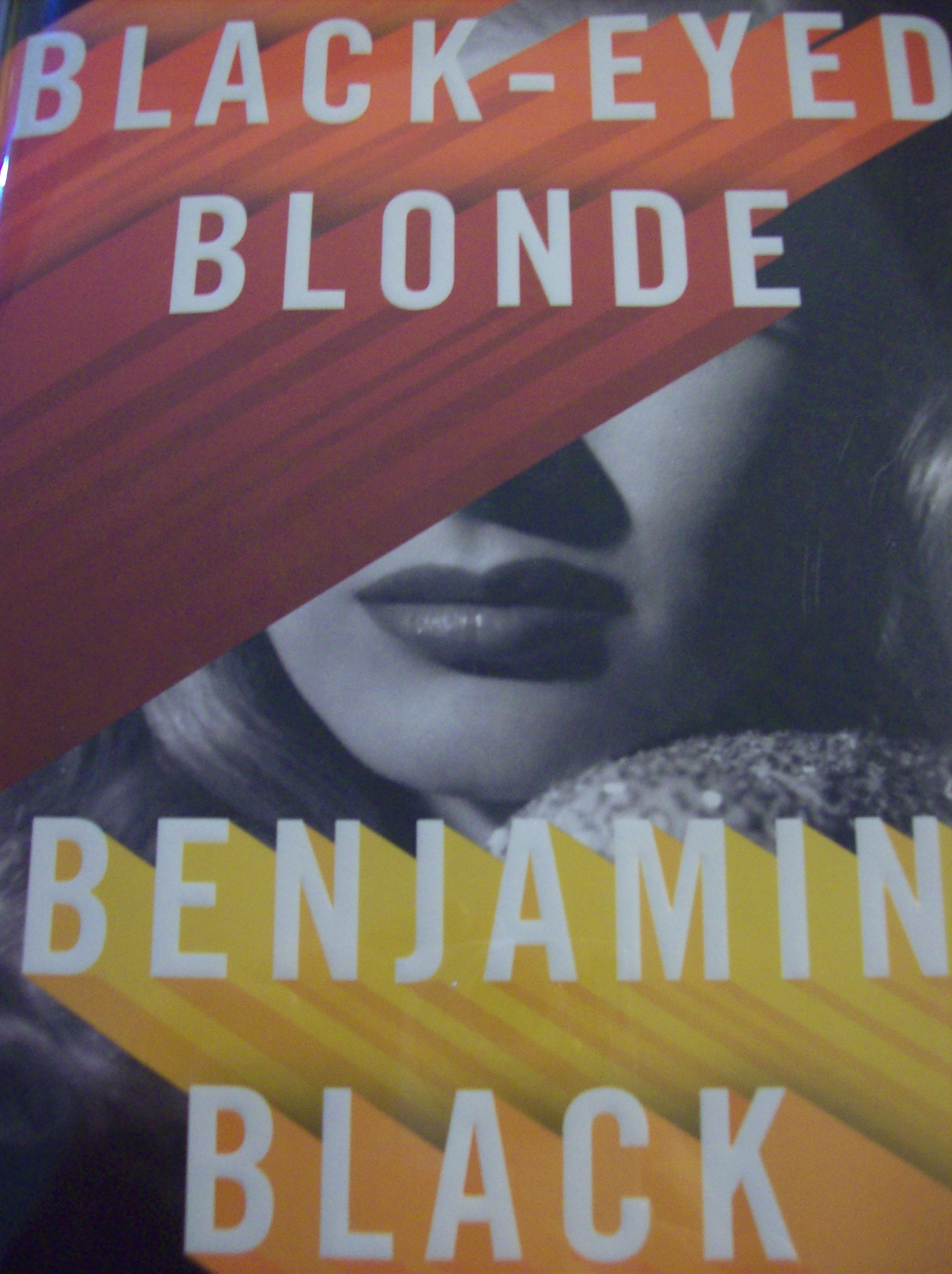
I checked out the new Phillip Marlowe book from the library, almost by accident. The reason I was attracted to The Black-Eyed Blonde by Benjamin Black in the first place was because of the title and the author’s name. You rarely see a book where the author and the title have the same word in both (unless the book is about the author). Maybe the word “black” isn’t really in the title; purists might say the word is “black-eyed” instead of black, but I don’t complain about near-rhymes in poetry, so I won’t complain about the difference between “black” and “black-eyed.” Sometimes I have odd reasons for selecting books.
But then I found out that Black isn’t really the author’s last name. His real name is John Banville, and he’s written some award-winning novels (Christine Falls and Holy Orders) that I’ve never heard of. So John Banville used a pen name to write a novel about a popular classic character that he didn’t create. Now I feel cheated, even though I didn’t spend any money on the book (unless you count my tax money that pays for the libraries).
But my outrage is nothing compared to what Raymond Chandler fans probably feel. When all the Raymond Chandler fans get mad and want to vilify whoever ruined a Phillip Marlowe novel, Benjamin Black will get all the grief instead of John Banville.
From what I’ve read about John Banville (not much), he has a decent reputation as an author. And writing a Phillip Marlowe novel is probably a good gig, as long as you know ahead of time some readers/critics are going to hate you no matter what. Benjamin Black (I keep getting confused) may have written an outstanding whodunnit, the best in decades, and it still wouldn’t matter to Raymond Chandler fans. Since it’s not Raymond Chandler, it will automatically suck. That’s not necessarily my opinion. I’m not a Raymond Chandler fan, so I have no biases, except I’m mad that the author’s last name isn’t really Black.
I don’t blame John Banville or Benjamin Black or the publishing company for wanting to write/publish a Phillip Marlowe book not written by Raymond Chandler. From their point of view, this is an opportunity to increase book sales and make lots of money. Even if the new Phillip Marlowe book isn’t very good, it will probably sell a few copies and maybe even lead to more sales of old books that Raymond Chandler actually wrote.
This isn’t the only time that a beloved character has been written by somebody other than the original author, but it doesn’t always work. A James Bond novel written by somebody other than Ian Fleming is just a book about a spy who happens to be named James Bond. A Godfather book written by anybody other than Mario Puzo is just a book about a bunch of gangsters who happen to have the last name Corleone. And a Phillip Marlowe mystery written by anybody other than Raymond Chandler is just a book about a detective who happens to be named Marlowe.
A book written by John Banville/Benjamin Black isn’t going to be automatically worse than a novel written by Raymond Chandler, but The Black-Eyed Blonde will probably be compared to The Big Sleep or The Long Goodbye. The Black-Eyed Blonde probably won’t be compared to Raymond Chandler’s worst book, (whatever it is); it will be compared to his best, and some people will hate Benjamin Black’s version, no matter what.
I don’t have a problem with this “hate it before I read it” attitude. I’m not one of those people who thinks everybody should be open to everything. When it comes to literature, readers should be closed-minded at times. There are too many books out there to keep up with, and being closed-minded brings an order to a chaotic publishing industry.
I’m not going to read the Phillip Marlowe novel that’s not written by Raymond Chandler, but I don’t have a problem with it. How about you? Would you read a book about your favorite character if it wasn’t written by the original author? Would you write a book about your favorite character, and which classic character would you write about? And if you do write a novel about a classic character, should you use your real name or a pen name?
DISCLAIMER:
Much of this post was plagiarized from something I wrote about six months ago, when I found out that a new Hercule Poirot novel was being written by Sophie Hannah, an author who is NOT Agatha Christie. If my self-plagiarism confused you, I apologize. If my self-plagiarism offends you, I probably won’t apologize because you might get offended too easily.

When people talk about me behind my back, I don’t care. I’m a quiet person, so I probably don’t get talked about that often, and even if I am being talked about, I’m not the kind of guy who’ll confront a person who talks about me, and I won’t yell stuff like, “If you have something to say about me, say it to my face!” I’d rather somebody say something bad about me behind my back than to say it to my face. If people talk about me behind my back, then I don’t have to deal with it. If they say it to my face, then I have to respond, and I usually don’t like responding to people to their face(s).
According to Kirk, Daniella was saying stuff about me to a group of women in the next room. We were at Jerome’s birthday party, and over a hundred people were in his house, and it was loud, and I was sitting watching a basketball game that I didn’t care about in a side room just so to get away from all the noise. If anybody else had been talking about me, I wouldn’t have cared, but Daniella was my girlfriend, and things seemed to have been different recently. She was acting more affectionate and didn’t seem to care about the money situation as much. I didn’t know what was going on with her. She said she was “feeling” me, and that’s a term that guys didn’t use back then (in the early 1990s), so I was a little confused.
I sighed after Kirk was done talking. “Do I really want to know what she’s saying?”
“Yeah, you do!” Kirk said. “Daniella’s been telling all the girls that…” He looked toward the other room where Daniella was still the center of attention. “She says… you’re a great… you’re the best…she’s ever… you know…”
Kirk looked around again and then shook his hips a little. The women around Daniella cackled loudly again, but it wasn’t at Kirk. “You know what I’m talking about.”
Kirk knew I was not comfortable having conversations about personal matters, so I just leaned forward in the sofa and pressed my fingers to my forehead. At least Daniella was saying something nice about me, even though it probably wasn’t true. Of all things, the double standard bothered me. If I had complimented her about the same thing that she was praising me for, everybody would have thought I was inappropriate and vulgar. I’d never even think about saying anything similar about Daniella. I thought it, but I didn’t say it. And I didn’t think she should say stuff like that about me, especially in public, especially around a bunch of my friends.
Plus, it was a lie, the idea of me being the best… I knew that wasn’t true. Then again, I had no frame of reference. I couldn’t really compare myself with other guys, or with her previous boyfriends. There really was no way to verify that what Daniella was saying was true or false. I couldn’t build a time machine and watch her with her ex-boyfriends. That would have been gross. And obsessive. And probably an invasion of privacy.
“At least she’s talking you up,” Kirk said. “I was worried about you when she watched all of us pee in the trough, but she’s a keeper.”
I really didn’t like Daniella talking about topics like that. A part of me was tempted to grab Daniella and shout at her “WHAT ARE YOU THINKING???!!!” but that was a good way to get a beer bottled shattered on my head. Plus, it would have been kind of abusive. She’d already had a couple (that I knew about) abusive boyfriends.
Instead, I got up, went into the next room, scooted myself next to her, and linked an arm to hers. The women around her looked me over and giggled. I could feel my ears turn red. I could barely talk to her over the music in the next room.
“Can we talk someplace quiet?” I said as loudly as I could without yelling.
“What?” Daniella shrieked directly in my ear. Then she grinned, took my hand, and walked me out the front door. Kirk nodded at me when we passed him. It was much quieter outside.
“I’ve heard that you’re spreading vicious rumors about me,” I said in sing-song voice after we stepped outside.
“I don’t know what you’re talking about,” she sing-songed back with her grin.
“You’re saying very… personal… things about me… us.”
“So?”
“It’s embarrassing.”
“Why? You’re a stud.”
I laughed. “You’re exaggerating, a lot.”
“No, I’m not. That’s how I feel about you.”
“But…I…”
Daniella stood in front of me with her hands on her hips. “You’re my man, and I can’t stand it when you put yourself down,” she said.
I stepped back. “It’s called self-deprecation.”
“I don’t care. Stop it.” She pointed at Kirk through the open front window. “He’s a piece of shit, and he never says anything bad about himself. And all my old boyfriends, they’re all pieces of shit, all of them.”
She moved forward and kept talking. “So, from now on, I want you to stop putting yourself down. I want you to walk around like you’ve got a big…”
“I know,” I said. “I heard about what you told everybody.”
“Good,” she said. The dispute was settled. “I want to dance.”
She grabbed my hand again and led me inside to the living room in the back of the house. The last time we’d danced was on New Year’s, and she’d worn a tight dress and rubbed herself all over me on the night club dance floor, while I’d clung to a beer bottle that I didn’t drink from and kept still with a blank expression on my face. In Jerome’s house, there was no techno and hardly any R&B. It was punk, new wave, and classic rock. The Ramones were singing about beating a brat with a baseball bat (this was back in the early 1990s when people still listened to The Ramones), and a bunch of guys in their 20s and early 30s were jumping around swinging their elbows. I could jump around and swing my elbows. Daniella ran onto the floor in front of me and jumped around swinging her elbows.
The key to being a bad dancer is to not care that you’re a bad dancer. That’s very logical, but self-consciousness is an irrational enemy that overcomes logic. Even as Daniella jumped around, I wondered if others around me noticed how clumsy I looked. Then Daniella pounced and stuffed her beret on top of my head. She shook her whole body, and her long, dark hair flew around in all directions. Nobody was going to think twice about my clumsy bouncing around while she was doing that. Then she started swinging her two fists together in a baseball bat motion, and a bunch of other guys started up too. There were about 30 of us on a living room floor jumping around pretending to swing baseball bats. I guess none of us liked kids.
When the next song came on (one I didn’t recognize), Daniella reached for the beret, but it fell and I caught it and gave it back. We started jumping around swinging elbows, and I was feeling good. I didn’t care if I looked stupid. At that moment, I was a stud with a hot girlfriend, and a bunch of guys were jealous of me. I could swing my elbows all I wanted, and nobody would care. I was starting to understand why people liked jumping around and swinging their elbows.
Then my elbow cracked against something hard. The jolt of pain shot up my arm, and I reflexively cradled my elbow and bent down. Even in my pain, I noticed that everybody was staring at the floor behind me. A woman curled on the floor, her hand over her face. Her boyfriend and a couple other guys knelt beside her, asking her questions and trying to get a look at her face. When she turned toward me, I saw blood cover her face. Her boyfriend got up to fight me, but Jerome and Kirk held him back.
“I’m sorry, I’m sorry,” I repeated all around me, while holding my elbow.
Even though Daniella’s head was down and her hair covered her face, I knew exactly what her expression was.
“I know it’s not funny,” Daniella said, trying to keep a straight face when she peeked up. “But I’ve seen a lot of fights, and I never saw anybody go down that fast.”
As we watched the woman being carted off, I said, “That’s why I don’t dance.”
“It was her fault,” Daniella said. “But I shouldn’t say that too loud.”
“I didn’t mean to…” I said to Daniella and anybody else who could hear me. The music kept playing, but nobody was jumping around anymore. “I didn’t know she was…”
“How’s your elbow?” Daniella grabbed my arm and twisted it in several directions. “Does that hurt?”
It hurt a lot, but I didn’t want to yank my arm away from her, so I used it to pull her closer. She took my arm and guided me to a dining room that was almost empty. We could speak softly there.
“The next time you get into a fight…” she said quietly.
“I’ll use my elbows, I know.”
Daniella laughed. “I’ve never had a boyfriend who finished my sentences.”
I thought about that. We were starting to do that a lot, and I’d never noticed it until she mentioned it.
“I would tell you what I think it means, but you’d get mad,” Daniella said. “I know you hate the word I’m thinking of.”
I didn’t know what she was talking about. Daniella hated the word “love,” but it didn’t bug me. I hated the word “share,” but I didn’t think it was the word Daniella was thinking of. What word was she talking about?
“Soul mates?” Daniella said with hesitation.
I cringed. I despised the term “soul mates.” I didn’t even know I despised”soul mates” until she’d said it.
“I knew it!” she said. “I knew you’d hate it. And if I knew you hated it before you told me you hated it, that means we’re…”
“Don’t say it,” I said. “I mean it.”
“Sssssoooouuuuuuulllllll mates,” she whispered.
I studied Daniella, with her thick, black glasses and her cheese-eating grin. Then she bear-hugged me tightly around the waist and pushed us against a wall. “I promise, I’ll never say that to you again.”
The way she’d bear-hugged me, the warmth of her body against mine, the way Jerome watched as us we thudded against his living room wall, I couldn’t believe how good I had it right then. I’d never had it this good. Even with my elbow still throbbing, it didn’t matter. The beret tilted down on Daniella’s head at a sharp angle, pushing hair over her face, almost covering her smile. Daniella was talking about me like I was stud, groping me in public. No girlfriend had ever done that before. I didn’t condone such behavior, but it was a great feeling. And even though I hated the word “soul mate,” and thought the whole idea was ridiculous, if I had to have a soul mate, I was a lucky guy to be emotionally or spiritually connected to hot chick who could act cool, recite dirty limericks, make everybody think she’d read classic literature when she hadn’t. Despite everything I knew about her, at that moment I believed we were going to be together for a while, and it was a great feeling.
This would have been a perfect place to end the story.
*****
To be continued in… The Literary Girlfriend: Proof of Relationship .
If you want to read “The Literary Girlfriend” from the beginning (it’s gotten kind of long), start here.
Even a great author can write an occasional bad sentence.
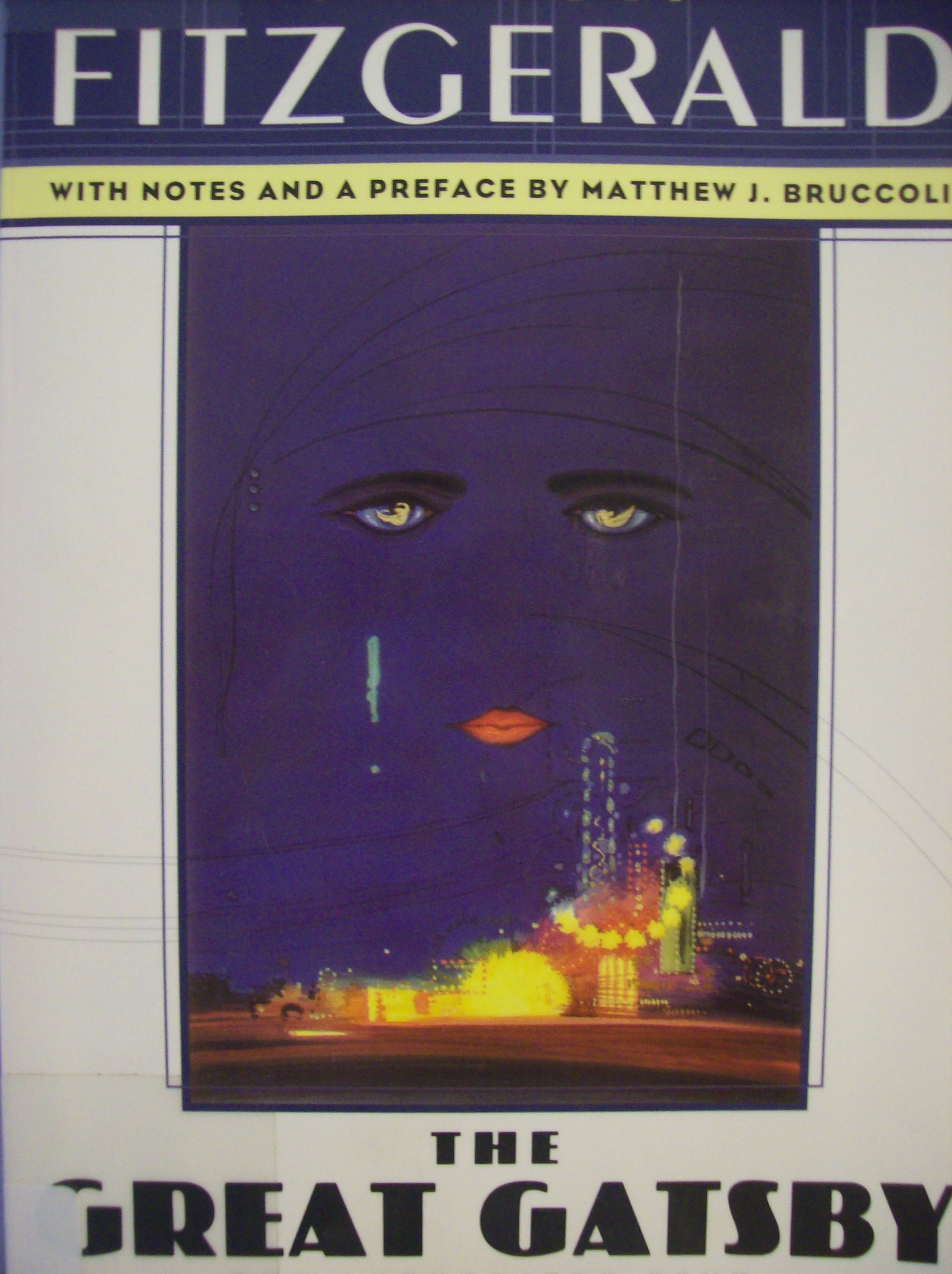
When I first read The Great Gatsby decades ago, I didn’t question anything about it. Everybody I knew who read books said it was a great book, so I assumed I was reading a great book. As far as I was concerned, if F. Scott Fitzgerald wrote it, if Hemingway or Steinbeck or Twain or Dickens wrote it, then whatever it was must have been great. I didn’t question these things. Who was I to question the writing of a great novelist?
I started reading The Great Gatsby a couple weeks ago, but I had to stop because of some of the sentences. I don’t know how critical to be of sentences in a great, influential book. I hesitate commenting on The Great Gatsby because I criticized Holden Caulfield last week, and I don’t want to come across as constantly nit-prickety. But at the same time, if anybody (or any book) can be criticized, it’s The Great Gatsby. It’s not like F. Scott Fitzgerald is going to have his feelings hurt.
I know I have my fair share of bad sentences in my own writing. You can probably find a few of them here at The Sunset Rises: A 1990s Romantic Comedy.
Whenever I edit anything I’ve written, I cringe at poor word choice, poor sentence structure, and stilted dialogue. But I have a time-consuming job that has nothing to do with writing. I have a family that I spend time with. I write when I get the chance. I don’t get all day to bang away at a keyboard, and I don’t get to hang out with cool, famous people at cafes at night and talk about the world (or talk about whatever cool, famous people talk about).
Heck, I don’t even have an editor. I am the editor. Being my own editor is like being my own lawyer, so I know what I am. But I don’t have much choice.
I promise, I wasn’t looking for sentences to criticize or complain about. I was just reading The Great Gatsby when I noticed the first bad sentence early on (p. 11 in my copy) when Tom Buchanan is introduced:
“Two shining, arrogant eyes had established dominance over his face and gave him the appearance of leaning aggressively forward.”
Why is that a bad sentence?
I could maybe understand explaining that Tom Buchanan had two eyes. It seems unnecessary because most people have two eyes, but that’s okay. It’s the “shining, arrogant eyes.” If I had written “shining, arrogant eyes” in college, my writing instructors would have explained to me that eyes cannot be shining or arrogant (maybe I could have gotten away with “shining” if the eyes were reflecting in the dark). There might be an arrogant expression on a person’s face, but eyes by themselves are not arrogant. And then to have two arrogant eyes? Maybe if Tom had had one arrogant eye when he had two eyes, that would have been worth mentioning. A person with one shining, arrogant eye and one dull, normal eye… now THAT’S someone worth describing.
After thinking about that bad sentence for a few minutes, I continued reading. Then a couple pages later , I ran into another bad sentence, this one describing Jordan Baker:
“She was extended full length at her end of the divan, completely motionless and with her chin raised a little as if she were balancing something on it which was quite likely to fall.”
Why is that a bad sentence?
I get the impression that this was a rough draft sentence that Fitzgerald never went back to finish. She was balancing SOMETHING on her chin. The word “something” is kind of vague. If I had written that in college, my writing instructor would have demanded that I come up with another word for “something.” “Something” is what you write when you’re not sure what word you want to put in in its place. I kind of want to know what that something could have been. If I am going to write that a character has her chin raised like she were balancing something that was likely to fall, I should be able to think of something that could be balanced on a chin. A napkin? A cocktail glass? Several cocktail glasses? A book?
If The Great Gatsby were 800 pages long, I could understand “something” being in the book. But The Great Gatsby is short. F. Scott Fitzgerald was a professional writer. When I was in college, I couldn’t use the word “something” without getting chewed out. If F. Scott Fitzgerald could get away with using the word “something” in a universally acclaimed work of literature, I at least want to point it out. And I want to know, what could have been balanced on her chin that was quite likely to fall?
Yes, I know I get bothered by trivial things. I can’t finish reading The Great Gatsby because Tom Buchanan has “two shining, arrogant eyes” and Jordan Baker raises her chin “a little as if she were balancing something on it which was quite likely to fall.” Maybe it’s because I’m getting older and grouchier. Maybe it’s because I’m writing more than ever, so I notice things that I wouldn’t have picked up on before. Either way, it’s probably a miracle that I finish reading any books at all. Before I read any further, I must know if these sentences are bad, or if I am a bad reader.
Am I being too critical? Was my college writing instructor too critical? Without his criticism, I never would have become this critical. Is The Great Gatsby such an awesome novel that it can no longer be criticized? Am I just a crank who uses any lame excuse to not finish a book?
While I ponder these questions, I’m going to balance a copy of The Great Gatsby on my chin. Despite it being such a small book, I believe it is quite likely to fall.
*****
Here are more Bad Sentences in Classic Literature!
Bad Sentences in Classic Literature: Jane Eyre
Bad Sentences in Classic Literature: Moby Dick
Bad Sentences in Classic Literature: The Great Gatsby
Bad Sentences in Classic Literature: The Scarlet Letter
Bad Sentences in Classic Literature: Harry Potter and the Sorcerer’s Stone
Bad Sentences in Classic Literature: Great Expectations
Bad Sentences in Classic Literature: Pride and Prejudice
*****
A grammar-obsessed English teacher falls in ‘luuuvvv’ but discovers how chaotic and dangerous ‘luuuvvv’ can be.
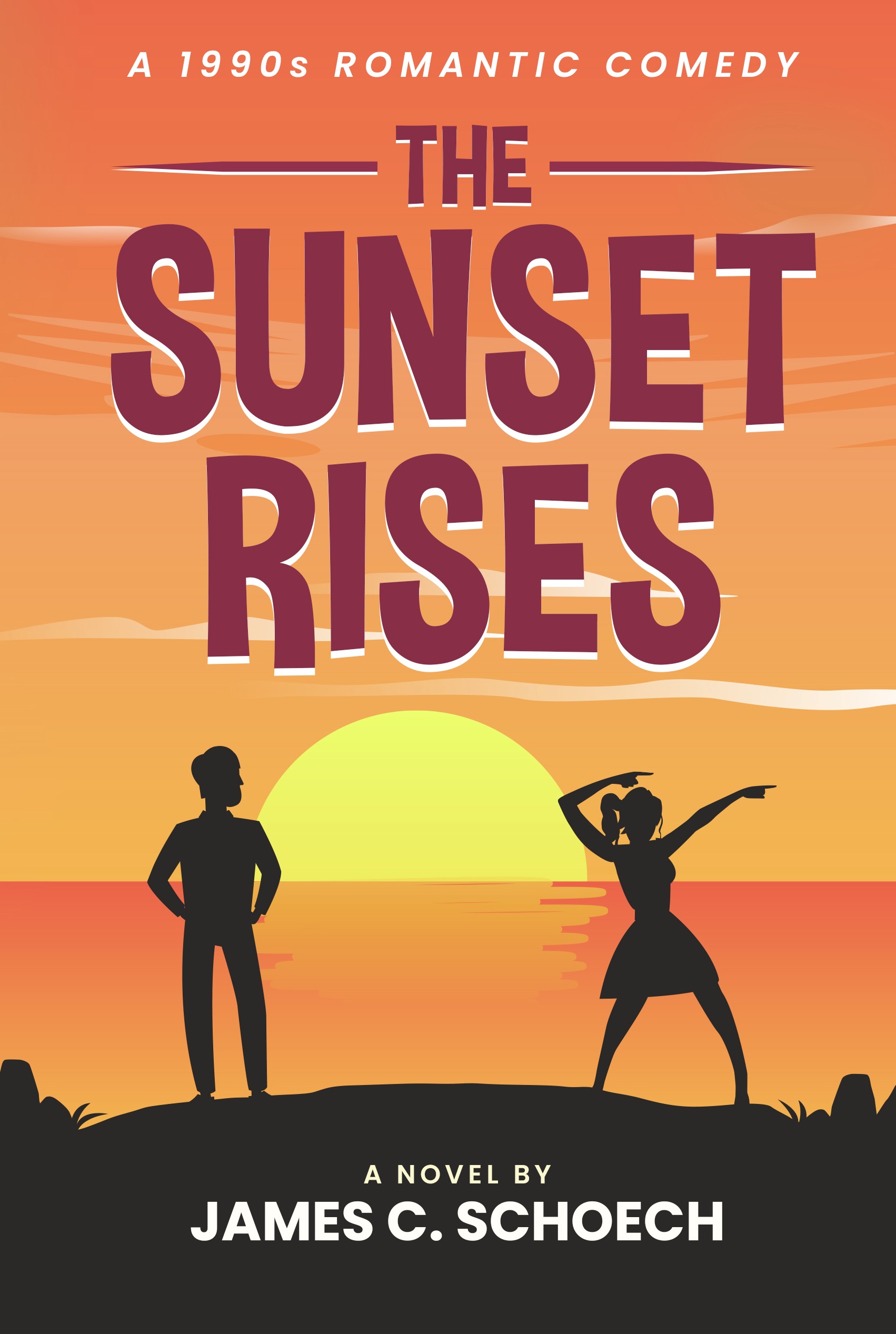
The Sunset Rises: A 1990s Romantic Comedy
Get a signed copy of my one and only novel The Sunset Rises: A 1990s Romantic Comedy. My handwriting is actually legible, but I’m left-handed, so I might smudge the signature. Free shipping!
$20.00
Or you can buy a copy here on Amazon!
Not sure? Read a sample chapter of The Sunset Rises: A 1990s Romantic Comedy.
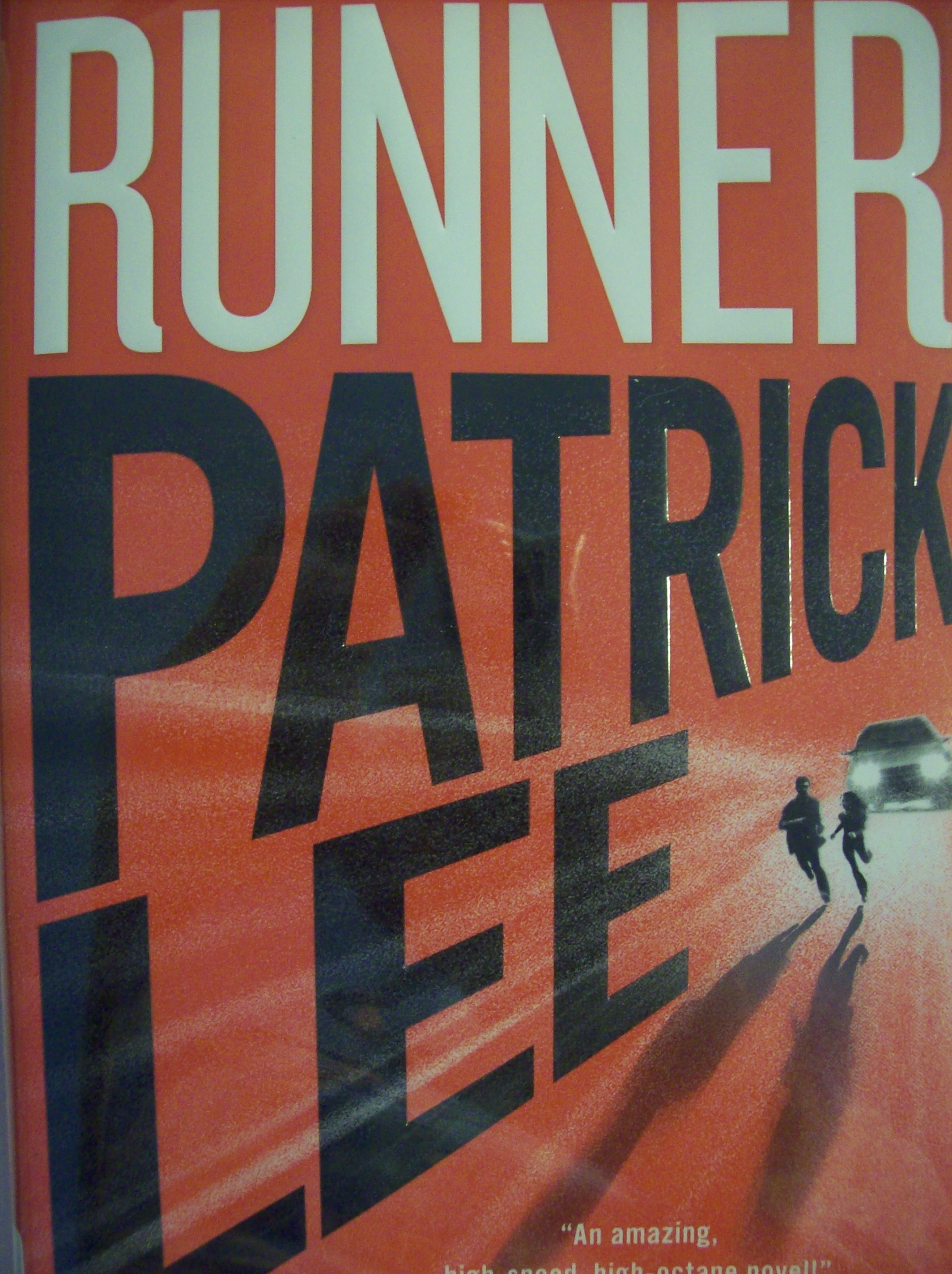
I liked this book, but I wish I could remember the author’s name.
I was just surprised by a book. I had read a sample of it a month ago and thought I knew what it was about. Then I saw a copy at the library and checked it out. The book went in a direction that I hadn’t foreseen. It wasn’t a great book, but if you like action-thriller novels, then you’d probably like this book.
Runner by Patrick Lee is a guy’s book. I hope it’s okay to call a book a guy’s book. Sometimes when I refer to certain novels as women’s books, women (not all) get mad at me and claim that it’s sexist to call a book a woman’s book. I’m not saying women’s books are inferior. I’m saying that most men wouldn’t enjoy reading most women’s books, and most women wouldn’t enjoy reading men’s books. I think a lot of men would like reading Runner, but most women wouldn’t. My wife understands that. She reads women’s books and doesn’t expect me to read them, and she doesn’t lecture me about centuries of repression when I start reading books with lots of explosions and high body counts. She also watches football. I can’t really ask for much more than that.
Runner was published in 2014, so there hasn’t been much time for other people to damage the library book that I borrowed. Somebody had already folded the top corners of pages as bookmarks, and that would have ticked me off if the book had been mine, but it was the library’s book, so that didn’t bother me. The book didn’t have any boogers or blood stains in it, so that made me happy. When a library book’s worst blemish is a few folded pages, then that’s a relatively clean library book. I was mildly surprised by that.
It’s rare that a book surprises me. If it’s a classic, I know most of the story because I read a bunch of Classics Illustrated comic books as a kid (some might call that cheating). If it’s a recent book, the book jackets usually give away too much information, and online reviewers sometimes reveal what the book jackets don’t. So anytime I get surprised by what happens in a book, I’m… surprised?
Runner went in a couple directions that I never would have predicted from the sample or the book jacket. And it worked. I don’t do spoilers, so I can’t tell you what surprised me. The pace was quick, but I knew that from the sample. There was a lot of cat-and-mouse stuff going on, but I knew that from the sample. The bad guys were powerful government people, and the protagonist was ex-military elite, and I knew that from the sample. There was a lot of action, explosion, a high body count, but I had guessed all those things from the sample as well.
I’m glad I didn’t know ahead of time what the book was really about. If I had known, I probably wouldn’t have read it because it sounds implausible, and I wasn’t in the frame of mind to read that kind of book. But I was enjoying it too much to stop. The turn of plot that surprised me wasn’t even on the book jacket summary. Book jackets usually give out way too much information, like movie previews. I wonder if the book publishers intentionally kept the plot of the novel off the book jacket because they believed it would have turned a lot of readers off. I’m glad they didn’t mention what the book was really about.
I wasn’t wild about the cover of Runner because the author’s name is in bigger letters than the title. I don’t know what it means when the author’s name is in bigger letters than the title. I had never heard of this author Patrick Lee before. Seeing his name in big letters didn’t help me remember his name any better. I still had to look at the book cover a few times to remember who wrote the book. I don’t like it that an author I’ve never heard of has his name in such huge letters on a book cover. It probably shouldn’t bother me, but it does. Maybe if his name were Stephen King, or John Grisham, or even (shudder) James Patterson, I could see why the publisher would put the author’s name in such big letters. But I’d never heard of this guy before. I should barely see his name on the cover.
On the negative side, about 2/3 of the way through the book, there was a really implausible escape. Action-thrillers always have implausible escapes, and this was right up there. It’s the kind of implausible escape that belongs in a Hollywood blockbuster, but I don’t like it when Hollywood blockbuster escapes are in the books I read. I think a book should be more believable than a movie, but maybe I expect too much from an action-thriller novel. I don’t mind implausible plots, but the escapes should be plausible. Something in action-thrillers should be plausible. But even with that highly implausible escape sequence, I still liked Runner. I liked it more than I thought it would, and that was a good surprise.
What books have you been surprised by? How much do you usually know about a book before you start reading it? Should action-thriller novels have implausible escapes? Am I wrong to care about how big the letters of an author’s name are on the cover? Is it sexist to call certain books “men’s books” and other books “women’s books”?
Daniella had a plan, but she wouldn’t tell me what the plan was.
That wasn’t fair, I thought. I’ve always had a philosophical problem with people who tell you they have a plan but then won’t tell you what it is. I understand not telling the plan if the reason is “a need to know basis, and you don’t need to know.” I get that, but Daniella never said that. She just grinned at me whenever I asked about her new plan.
Our original idea was to go to St. Luke’s Episcopal Church, establish ourselves as a couple, and then break up. Daniella would be the jilted girlfriend who had been betrayed, and some wealthy Episcopalian would take my place, marry her, and then Daniella would take all his money (probably through a messy divorce) and be financially stable the rest of her life.
What did I get out of this? I got to live in sin with Daniella for a few more weeks. It’s not that I wanted to break up with her. When she put on her thick, black glasses and spoke softly, I could completely fall for her like that, but then she’d loudly curse out a mom in public, and the illusion would shatter. I couldn’t live for long with someone who picked loud arguments in public. I’d get stressed out too much.
“Why did you change your mind about the plan?” I asked after I realized Daniella wouldn’t reveal her plan. She had ways of making me talk, but I couldn’t use her own tactics on her.
“Father Murdock,” Daniella said. “He made me understand how important marriage is.”
I was a bit skeptical.
Daniella continued. “He told me that if somebody isn’t ready to get married, it’s wrong to put pressure on him.”
I was tempted to laugh. Father Murdock thought he was talking about me.
“You listened to a priest?” I said.
“He’s right,” Daniella said. “Besides, marriage is years and years and years of work. I don’t want to waste years and years.”
“When did you talk to Father Murdock?” I couldn’t remember ever seeing Daniella talk to him after church. She was usually surrounded by women in the community center.
“I don’t know,” Daniella said. “Maybe when you were in the bathroom. He probably didn’t want to say anything about us while you were around. He disapproves of you.”
He disapproved of us living in sin, I thought, and he probably blamed that on me. It was tough to blame anything on Daniella when she was in librarian mode.
Once Daniella abandoned our original plan, her behavior changed. She hugged me a lot. She used her own money to pay for dinner at a couple nice restaurants. She started talking about buying a house or a condo together. Since I had used up all my savings paying her bills (and my brother’s debt), she would have to use her money as a down payment, and she was acting like she was okay with that. That really threw me off. But until she committed to using her own money, as far as I was concerned, it was just talk.
The whole idea of breaking up had been pushed aside just like that. It made me uncomfortable. When I had known we were going to break up, things were easy. I could be a little detached. I didn’t have to worry about her “crazy shit” behavior too much because the whole relationship (or whatever it was) would be short-term. As long as Daniella didn’t put me in a life-threatening situation, I was fine, but now she wasn’t talking short-term. When the relationship is no longer short-term, the “crazy shit” matters.
The shocker was when Daniella announced she was going to Jerome’s birthday party. Why was this a big deal? Jerome’s 30th celebration was on a Saturday, and Daniella never missed work on a Saturday night. Never! It was her biggest money maker. If it had been my birthday party, maybe I wouldn’t have been surprised, but this was Jerome. Daniella didn’t care about Jerome. Why would Daniella be so eager to go to Jerome’s birthday party, I thought. I wondered if she was trying to get close to Jerome. Maybe he was her next target. Maybe she was already seeing him behind my back. But no, then she wouldn’t go to the birthday party. Unless she was going to the birthday party to keep me from thinking that she was…
I was bring stupid. Daniella wasn’t the type to cheat. If she met another guy she liked, she’d break up with me clean. I was pretty sure that was how she would handle it. I’d come home from work one afternoon, and all the (stolen) furniture would be gone, and a note would be left on the kitchen counter. Daniella prided herself on being monogamous.
Jerome’s 30th birthday party was typical Jerome, with more than a hundred people moving around his three-story house. Food on the patio and in his kitchen and in his dining room, dancing in his high-ceilinged living room, kids running around in a couple game rooms upstairs. The place was packed, the music was loud, I had to yell to talk in most rooms, and I felt myself getting annoyed. I knew maybe ten people, and I never would have been invited if not for my best friend Kirk. The last time we’d come to a Jerome party together, Daniella had gotten me drunk without me knowing it, and I’d caused a scene. Now, I was getting annoyed, even without the help of booze. It was tough for me to relax around large groups of people.
To make things worse, Kirk’s ex-girlfriend Linda showed up, wearing a tight mini-skirt and walking in with a tall brute of a guy. She clung to the brute, kissed him hard in front of Kirk, and even danced slutty with him in Jerome’s living room. Linda had never acted like that when she’d dated Kirk. If she had, they might have still been dating, which was kind of the point, I guessed. Kirk was pissed, so I had to act pissed with him. It would have been wrong to act like I thought it was kind of funny, which it was, considering what Kirk had done immediately after their breakup.
“This is against the rules,” Kirk complained as we sat in a quieter side room watching a basketball game. Football season was over, so we weren’t really paying attention to the game. It was only basketball. “Jerome was my friend, not hers. She doesn’t get to show up to his parties anymore.”
“Did Jerome invite her?” I asked.
“He says he didn’t, but he’s too polite to ask her to leave. What made her think this was okay?”
I leaned forward to look over at Daniella, who was talking to a tight circle of women in the next room. They were all spellbound. Then they all started cackling. God knows what Daniella had said to them.
Mitchell, a guy I knew from previous Jerome parties, sat down next to me, head shaking. “Your girlfriend is telling dirty limericks and saying that Sylvia Plath wrote them,” he said. “A couple of those ditzes believe her.”
It was the beret, I thought. Daniella wore a beret, and now people who didn’t know better thought she was a poet, or an expert on poetry. I wondered if she had written her own limericks or gotten them out of a book. I hadn’t seen any limerick books around the apartment.
“Isn’t the term ’dirty limerick’ redundant?” I asked. “I thought limericks were supposed to be dirty. If the limerick isn’t dirty, then you call it a clean limerick.”
Mitchell scooted away. “Not this again.”
“It’s not like Frankenstein’s monster,” I said. “I knew I was right about Frankenstein’s monster. I’m not sure I’m right about the dirty limerick.”
“I hate basketball season,” Kirk said, trying to avoid another literary dispute. “I want to like it. I need something to get me to baseball season, but I just can’t get into it.”
The women in the other room cackled again. The high-pitched noise grated on Kirk’s nerves, but since his ex-girlfriend was acting slutty around another guy, everything pissed him off.
“Don’t you want to hear her limericks?” Kirk asked.
“I live with her,” I said.
“Dirty limericks,” Kirk said as he got up.” “I want to hear these.” I hoped he wasn’t using this as an excuse to talk to Linda. I wasn’t in the mood to be a witness to an uncomfortable situation.
After a minute or two of watching basketball (I didn’t hate it as much as Kirk did), Mitchell asked, “So you and that hot librarian are still going out.”
I nodded.
“How serious are you two?” I thought Mitchell might be infatuated with Daniella, even though she had called him a douchebag at the Halloween party a few months earlier. Jerome was infatuated with her too. Both of them were probably hoping she’d break up with me. Jerome would have a shot because he made a lot of money. Mitchell had no chance.
“She’s talking about buying a condo with me,” I said, wondering why I was talking to Mitchell about Daniella. “She says she feels me. I guess that’s good.”
Mitchell laughed. “If some broad told me that, I’d tell her to get lost. But your girlfriend’s different.”
He was right about that, but I couldn’t say anything. That was the problem with talking about Daniella. They saw a cute girl with the beret and the thick glasses and the poetry. They knew nothing about the topless dancing, the stolen furniture, the fights she picked, the plan to marry a rich guy and then take everything he had (even though the plan had apparently changed). I couldn’t tell anybody about that.
“You look like a guy who wants to get married, settle down,” Mitchell said. “If she feels you, if I was you, I’d feel her right back.”
The way he said it didn’t sound vulgar.
I noticed that the circle of women had gotten quiet. That was weird because Daniella was still there, but was speaking very softly. With the way all the women were hunched forward, it all looked conspiratorial. Once again, I wondered what she was talking about. She was a natural talker, but put her with a group of women, and she could get out of control.
A minute later, Kirk snuck back into our side room, whistling with a smirk.
“Jimmy,” Kirk said, his voice softer than usual, “you would not believe what Daniella is saying about you.”
*****
To be continued in… The Literary Girlfriend: A Perfect Place To End The Story .
If you want to read “The Literary Girlfriend” from the beginning (it’s gotten kind of long), start here.

It’s never good when you see one of these coming right at you! (image via wikimedia)
I have to admit to you before you read any further that I’ve never punched out Holden Caulfield. It’s just that sometimes I make up stories or exaggerate, and then I’m stunned when people actually believe me. I even wrote an ebook about that, but I’m not trying to pitch a book right now. I’m trying to make a point about The Catcher in the Rye by J.D. Salinger.
A friend of mine who doesn’t know anything about Dysfunctional Literacy is reading The Catcher in the Rye and really likes it. When he raves about it, I smile and nod. I don’t tell people not to enjoy the books they enjoy. I might write it in a blog, but I don’t tell it to their faces.
And I don’t really want to punch out Holden Caulfield. First of all, I’m not a violent person. I haven’t been in a fight in over 30 years. Secondly, I hit like a girl. I know girls who hit in a more manly fashion than I do. If you want to insult a man’s fighting ability, don’t say he hits like a girl; say he hits like Jimmy Norman. Thirdly, Holden Caulfield isn’t a real person. Even if I wanted to punch him out, I couldn’t because he doesn’t exist. The only thing dumber than trying to punch out a fictional character is trying to go on a date with one. I wanted to ask out Becky Thatcher when I was a kid, but I knew that Tom Sawyer would want to punch me out. I used to have a tough time distinguishing fiction from reality, but I’m better now.
The only reason I mention punching out Holden Caulfield is because he’s a whiner. I hear a lot of whining nowadays. I hear whining from younger co-workers (one of whom is my boss). I hear whining from my kids. I hear whining from parents who whine about their whining kids. Maybe I’m whining here, but I have a point.
I don’t know if people used to whine as much in the old days before my old days. But I don’t see much whining in old literature. I see everything else. I see greed, lust, betrayal, murder. Just about every negative characteristic around is portrayed somewhere in classic literature. But I don’t see much whining.
I think Holden Caulfield was the first literary whiner. I could be wrong. But Holden Caulfield whines a lot in The Catcher in the Rye, and a lot of readers sympathize with him. I never have. Even when I first read The Catcher in the Rye as a young adult (before there was a section in bookstores for Young Adults), I thought Holden Caulfield was a whiner. I even said it. Then people told me to shut up. I think one Holden Caulfield apologist even said “Shut up like hell.” Maybe he was being funny.
Just because Holden Caulfield says “hell” and “damn” all the time doesn’t make him cool. I said “hell” and “damn” when I was a kid, and nobody thought I was cool. I even said “sh**” and “f***” and “***hole” and “mother*******” and nobody thought I was cool. Now I say things like “heck” and “darn” and “dulgernet” and “dagnabbit,” and people think I’m just as uncool as when I said those other words. If people are going to think that I’m not cool, I might as well say things that aren’t cool.

Plus, this is one of the lamest book covers ever!
I wouldn’t want to try to punch out Tom Sawyer, or Huckleberry Fin, or Jim, or any other fictional character. They could all take me down. I wouldn’t want to fight D’Artagnan, or Ahab, or Oliver Twist, not even Ebenezer Scrooge (a cane is pretty good weapon). But I could take Holden Caulfield. I’m pretty sure of it. Anybody who spends that much effort whining has never learned how to fight. A guy who knows how to fight usually doesn’t whine. A guy who knows how to fight would rather punch you out than whine.
If I get the chance (I know he’s not real), I wouldn’t punch out Holden Caulfield, even if I got one free shot with a promise of no retribution. It’s just that maybe if The Catcher in the Rye had been universally panned, if readers had rejected Holden Caulfield as a whiner instead of embracing him, maybe there would be less whining in the world today. I’m not blaming all the world’s problems on Holden Caulfield; I’m just blaming all the whining on him. So if I HAD to punch out a literary character, absolutely had to or the world would end, then I’d punch out Holden Caulfield.
*****
Am I wrong? Is Holden Caulfield a whiner? What literary characters would you like to punch out (even if you wouldn’t really do it)? Is it wrong to use the phrase “punch out?” Am I being a bad role model for impressionable youth? Or is Holden Caulfield a bad role model for impressionable youth? Are youth impressionable anymore, or are they more impressionable than ever?
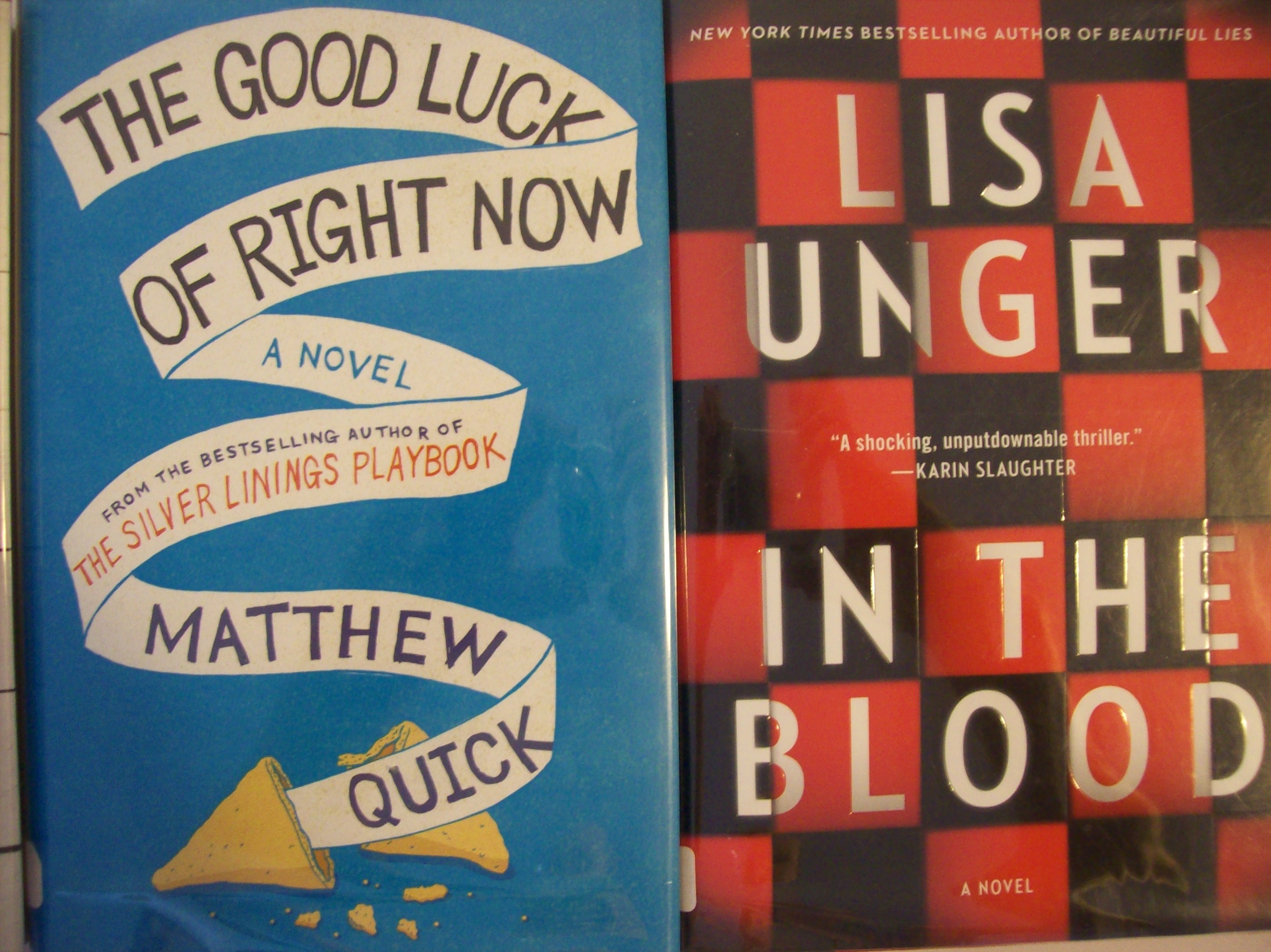
Just because I have a copy from the library doesn’t mean that I’ll finish it.
In the old days, it was difficult to read samples of books. If I tried to read the first few page of a novel in a book store, the clerk would clear his/her throat and say something snide like “This isn’t a library.” Sampling books at the library was easier, but the selection of newer books was kind of sparse. Consequently, if there was a new book that I wasn’t sure about, I pretty much had to buy it before I could decide if I wanted to read it.
Times have changed. Now I use an Amazon Kindle (or any other e-reader), and I sample each book for free before I (occasionally) purchase one. Life is much simpler now.
At the end of last year, I realized that I hadn’t read any books published in 2013. It’s tough to read books the year they’re published because that’s when the books are most expensive. But sample a book? It’s just as cheap (free!) to sample a new book as it is an older one. Now if I don’t read any books published in 2014, I will at least have read samples from books published in 2014. I figured that’s the least I can do since I have a blog about… you know, books.
RECENT BOOKS THAT I HAVE SAMPLED
The Counterfeit Agent– by Alex Berenson
The book starts off with a couple spy novel clichés, the seemingly heartless but beautiful female (possible antagonist) and the aging superspy who is losing some of his physical ability. Plus, the aging superspy proposes to his girlfriend. Uh oh. When a superspy tries to get married, bad things usually happen.
Apple Tree Yard– by Louise Doughty
A court scene and a murder set-up and a husband/wife situation. I can see why this one is a best-seller, but I don’t have much to say about it.
Caught– by Lisa Moore
A guy escapes from prison with help from a relative. I was interested in the details about how he escaped because it sounded kind of easy. I don’t think escaping from prison is easy, but I don’t know anything about Canadian prisons. Maybe Canadian prisons are easy to escape from.
Runner– by Patrick Lee
Another thriller with a one word title. The protagonist, who was running/jogging right before he rescues a teen girl, now will probably have to “run” instead of “jog” some more since the title is Runner. Jogger is probably not a good title for a thriller. The protagonist makes a critical mistake in the first few pages of the book. I like it when the protagonists screw up. Too many books have perfect action hero protagonists.
This Dark Road to Mercy– by Wiley Cash
Whew! It’s tough for an adult (especially one writing literary fiction) to write from a kid’s point of view. The entire time I read the sample, I thought, this sounds like an adult writing from a kid’s point of view.
In the Blood– Lisa Unger
From the dramatic title and the opening scene, I think I know where this book is going. But the main character is a college student, and the antagonist (I think) is a teenage boy, and I’m getting older and grouchy, and I don’t feel like reading about a college student and a super-intelligent/ maybe-evil teenage boy in a mystery/thriller.
The Good Luck of Right Now– by Matthew Quick
I like the author’s writing style, but this is a personal journey novel, and I’m not into those right now (because I’m getting older and grouchy). Plus, the Richard Gere thing seemed a bit overdone, and this was only in the first 30 pages.
Worthy Brown’s Daughter– by Phillip Margolin
For a legal thriller, there seems to be no moral ambiguity. The protagonist’s side is clear-cut right, and the villains are always wrong (so far). Plus, there’s a poorly done scene where a 15-year-old girl discovers her… yeah, that didn’t need to be in the book. At least it should have been written better.
BOOKS I DECIDED NOT TO SAMPLE
The Book of Jonah by Joshua Max Feldman
If you’re going to retell a historical or Biblical story in modern times, at least have the creativity to change the protagonist’s name. Even James Joyce changed the name of Odysseus when he retold the tale of The Odyssey in his novel Ulysses. The name Ulysses has nothing to do with The Odyssey, and I respect James Joyce for coming up with a completely unrelated name. And I appreciate my public school education which taught me that the name Ulysses has nothing to do with The Odyssey.
It’s this kind of knowledge that allowed me to start a blog like Dysfunctional Literacy.
Chance by Kem Nunn
The protagonist’s last name is Chance, and that’s all I need to know.
The Bat– by Jo Nesbo
The protagonist’s name is Harry Hole. I think this is supposed to be a serious crime novel. I refuse to read a serious crime novel with a protagonist who has a joke name. Is Andrew his middle name (Harry A. Hole)? If Harry Hole has a wife, I… I… I don’t know, maybe I SHOULD read a Harry Hole book.
I know that NOT reading/sampling a book because the character’s name is Harry Hole or Chance or Noah is a bad reason, but there are a lot of books out there to read/sample. I need to have standards.
*****
Hey, I might not finish any of these books this year, but I now know a lot more about books published this year than I did last year.
But enough about me! What books have you sampled? What books would you like to sample? Do you agree with the concept of sampling? Which books do you wish you had sampled instead of read? What books have you read that I sampled, and what do you think of these books?

“How do you kill yourself by putting your head in an oven?” Daniella asked once when we were just sitting around in the apartment. “Wouldn’t that hurt too much?” Daniella had started reading poetry a couple weeks earlier, including some Sylvia Plath. “Seriously, how could she keep her head still while her face was burning up? Jesus Christ, it would have been easier just to jump off a bridge.”
“Gas,” I said. “Oven.” I breathed in deeply.
Daniella processed the information and then snapped, “You didn’t have to say it like that!”
*****
Oops! I’m sorry, but I have to cut it here! This scene from The Literary Girlfriend appears (with some changes) in my novel The Sunset Rises. I’ll probably bring it back, though, once the novel is published. In case you can’t tell, I don’t like spoilers.
*****
To be continued in… The Literary Girlfriend: Feeling You .
*****
Blow is the book that this episode turned into!
It’s the oldest story in the world, 1990s style!
Man meets woman; man falls in “luuuvvv” with woman; man gets blindsided by reality!

I tried throwing that book on the right, but I pulled a muscle. (image via Wikimedia)
Last night I threw a book across the room. Actually, I threw two books across the room. I didn’t dislike the books. I just wanted to see what it was like to throw a book across the room. I had never done it before. There are lot of things I’ve never done before (and I probably won’t get to do a lot of stuff that I’d like to do), but I figured I could at least throw a book across the room.
The only reason I thought of throwing a book across the room is because a couple commenters on Dysfunctional Literacy have said they’ve done it when they didn’t like the books they were reading. It seems strange to throw a book across the room just because you don’t like it. If I don’t like a book, I just give it to somebody I don’t care for. But maybe that’s wrong, so I decided to try throwing a book across the room.
The first book I threw across the room was a thin paperback copy of World War Z by Max Brooks. I read it a few months ago. It was okay. That’s my book review, it was okay. My book reviews have gotten lazy recently, but at least I finished reading the book, which I don’t do often anymore. There’s no resale value in a paperback copy of World War Z, so it was a good copy to throw. The problem was that I have a ceiling fan in the room so I couldn’t put my full arm strength into my throw, and I throw like a girl, and the pages spread out when I threw the book, so the book didn’t go quite as far as I had hoped. I was aiming for an ottoman on the other side of the room, but it didn’t quite get there. It fell to the floor and scared my dog, who really wasn’t close enough to be scared. Maybe I should get a new dog, but I’m not going to throw my dog across the room.
The second book I threw was a hardback copy of The Columbia History of the World. I bought it decades ago when I was trying to pass myself off as an intellectual. Every once in a while, I would read a section, especially when a long historical fiction novel became popular. For example, every time Colleen McCullough wrote a new Rome book, I’d read about Rome in The Columbia History of the World and save a lot of time.
I haven’t read The Columbia History of the World in years, and it’s still in pretty good shape, so I knew it could take a good throw. I really had to be careful with the ceiling fan this time. The Columbia History of the World could take out the ceiling fan, even with one of my girlie throws. This heavier book led to a more accurate throw, and I actually hit the ottoman, but The Columbia History of the World bounced/rolled off and hit the floor. This time the dog barked, and my wife asked (yelled) from upstairs what was going on. I told her I was throwing books across the room, and she told me (nicely) to stop.
I’d kind of like to throw an unabridged copy of The Oxford Dictionary or even an unabridged Merriam-Webster, but I’d need two hands to throw it, and I’d probably hurt myself. Still, it would be entertaining. Since I don’t have my own copy, I’d have to use the library’s, and I’d probably get kicked out of the library for throwing an unabridged dictionary. The library would rather have a homeless guy talking to himself than a guy who throws unabridged dictionaries. The library would rather have guys who watch porn on library computers than a guy who throws an unabridged dictionary. It’s a safety issue. Nobody has ever been hurt by guys who watch porn on public library computers. The noise of an unabridged dictionary hitting the floor is probably pretty loud too. Librarians don’t like loud noises.
Now that I read (or read samples of) a lot of books on my phone, it’s really not a good idea to throw a book across the room. The paperback copy of World War Z that I threw across the room was less than 10 bucks. My phone cost a bit more than that. I’ve been tempted to throw my phone across the room a couple times, but never because of the book that I’m reading on it.
Now I don’t throw books across the room anymore. But at least I’ve done it. The next time I feel disappointed in a book, I will NOT throw it across the room. Some people talk about throwing something at the television when they get mad at it. Maybe I’ll try that next. But if I throw anything at my television set, it won’t be a book.

It’s no mystery why it’s a good idea to read some books more than once.
First of all, you don’t need a reason to read a book more than once. When I was a kid, reading a book was the only form of entertainment you could do twice. You could go to see a movie once in the theater, and the next weekend it would be gone forever, replaced by another movie. If you missed a television show, you waited six months for a rerun, and then that show was most likely gone forever. There was no cable, no internet, no tablets. But books? If you liked a book, you could read it as many times as you wanted. Sometimes we read a book more than once simply because we could.
But in these modern times, there are other reasons to read a book more than once. Even with so many other forms of entertainment, even when there are so many books out there that it’s impossible to read them all, sometimes it’s still better to reread a book that you’ve already read before.
SIX REASONS TO READ A BOOK MORE THAN ONCE
1. Every other book you try reading sucks
The Godfather by Mario Puzo
Sometimes you need a sure thing when you’re reading a book. Whether you’re waiting for good/bad news in a hospital or sitting at an airport, you want something that you know will get your mind off of whatever you don’t want your mind on. That is NOT the time to experiment with an unfamiliar book or author. There are times you need a sure thing, and The Godfather is my sure thing.
Yeah, the movies (the first two) are okay, but the book has so many sub-plots that you can randomly pick a page and find something interesting. It’s not a perfect book (a couple sub-plots are out of place and stupid), but it’s very readable. And I turn to it when I need to know that I’ll enjoy what I’m reading.
2. Just because you like it
The Three Musketeers by Alexandre Dumas
I read The Three Musketeers a couple times when I was in middle school. It might have been the first novel that I ever read twice, but I’m not sure. I liked it. That was the only reason I reread it. Just because… I liked it. It might be the best reason. But it’s not an interesting reason. The Three Musketeers is the only classic literature on my list. I have fond memories of the 1970s movies with Michael York as D’Artagnan and Raquel Welch as Constance, and those movies spurred me on to read the book. Even without the movies (and the Classics Illustrated comic), I would have loved this book.
3. To relive the experience
The Thin Man by Dashiell Hammett
I accidentally found this novel during a low point in my teen years (I won’t go into what was going on). This book was lying around the house (I don’t know who bought it), and I liked the title because people often commented that I was thin, and it wasn’t meant as a compliment. I realized as I read that the thin man was the murder victim, but I liked the mystery novel anyway. The Thin Man got me through a really bad weekend. I don’t want to relive that bad weekend by reading The Thin Man, but I like remembering the joy of an unexpected great book. That doesn’t happen very often.
4. To win a contest
The Lord of the Rings by J.R.R. Tolkien
When I was in ninth grade, I got into a reading contest with another kid to see who could read The Lord of the Rings the most times. I had read it three times, and he had read it four times, and every time I read it again, he’d read it again just to stay ahead of me. The fourth time I read it, I skipped The Fellowship of the Ring (I claimed to have read it over a weekend). And the fifth time, I just lied and carried The Two Towers with me while I read something else. It may have been the first time I had ever lied about reading a book that I hadn’t really read. But it wouldn’t be the last time.
I always vowed that if I ever got into another reading contest, it would involve a short book and not a trilogy.
To be honest, I might never read this again. I read it several times in junior high/high school. Back in the 1970s, the rip-offs hadn’t been written yet, so there was nothing else quite like it (as far as we knew). TLOTR was a trilogy to be savored. It was a trilogy before trilogies were common. It was a trilogy that made sense as a trilogy. It even had a prequel. Any youngster reading The Lord of the Rings might not see anything unique in it because it’s been copied so many times in so many exciting ways (from a youngster’s point of view).
Referring to people younger than me as “youngster” probably makes me sound older than I really am.
5. To avoid reading anything by James Patterson
James Patterson writes too many books, so any time you reread a book, it keeps you from buying a James Patterson book (or a book with written by somebody else with James Patterson’s name on it).
6. To find details you didn’t notice the first time
Some people read books a second time to catch details that they missed the first time. That’s a great reason to read a book more than once, but I’ve never done it. I usually don’t care if I missed details the first time I read a book. I might notice details the second time I read a book, but that’s never the reason I reread a book. I hope I’m not being disrespectful to people who reread books for this reason. It’s not a bad reason. It’s probably a better reason than trying to win a contest.
BONUS BOOK to read more than once
The Bible– by God
When God writes a book, it’s probably a good idea to read it. Maybe it’s a good idea to read it more than once. Any of the above reasons would be ideal for reading The Bible more than once. I would have included The Bible as the example for all six reasons, but it wouldn’t be fair to the other books. No human author can compete with God, not even James Patterson (I hope James Patterson isn’t thinking of writing his own version of The Bible, but I wouldn’t be surprised if he did.). So I hope God understands why I didn’t include The Bible as an example for any book that’s worth reading more than once.
*****
But enough about me! What books do you turn to when you need a sure thing? What books have you read more than once and why?