
How is it even possible to insult a genre? I’d like to try it! (image via Wikimedia)
Each new year brings its own new literary controversy. Two years ago, the Pulitzer Prize didn’t give an award for fiction. Last Year Philip Roth and Elizabeth Gilbert disagreed over whether writing was “torture” or “f*cking great.” This year, famous author Isabel Allende unintentionally offended a bunch of book readers by accidentally insulting the mystery novel genre.
In an interview with NPR, Allende made some (disparaging?) remarks about current mysteries, saying they’re “too gruesome, too violent, too dark; there’s no redemption there. And the characters are just awful. Bad people. Very entertaining, but really bad people.” Allende says that her own recently released mystery novel Ripper is different than the mysteries that she is referring to. After her interview, a bunch of mystery fans got mad, and Allende apologized. Even worse, Allende said her controversial comments were made in jest.
I don’t know why Allende would backtrack, except for public relations purposes. I’ve read a few mysteries from the last couple years, and I agree with Allende and almost all her points. Most of the novels were dark, and violent with really bad people involved. The only part I disagreed with Allende was where she said the novels were very entertaining.
I’m not a fan of the fake/forced apology, especially with famous authors. There was a time when famous authors were supposed to be controversial. Did Dorothy Parker ever apologize for the mean things she said about public figures of her time? Did Gore Vidal ever apologize for his mean-spirited insults? If these literary figures never apologized (and were celebrated for making mean-spirited comments), why should Allende apologize? Allende didn’t even insult anybody. At worst, she insulted a genre.
I didn’t even know genres could get insulted. I can understand not wanting to insult people (it still happens), but it should be okay to insult a genre. A genre can’t have its feelings hurt. Allende didn’t say mystery readers were bad people; she said the characters in the genre were bad people. Yeesh! If you can’t make negative comments about a genre, what can you make negative comments about?
If genre readers want to get offended by Allende’s comments, I’ll really give them something to be offended about. Every genre can get insulted and stereotyped. For example, science fiction is a bunch of spaceships blowing each other up. Literary fiction is a bunch of eggheads trying to impress us with vocabulary and sentence structure and really complicated metaphors. Fantasy is a bunch of elves and wizards and barbarians and buxom women with no clothes on. Romance is a bunch of housewife wishful thinking. I’d keep going, but… Hold on! I think I just got a phone call from my publicist.
Sometimes I think people aren’t really offended when they say they’re offended (but I can’t read minds, so I don’t know for sure). I think people claim to be offended when they disagree with somebody, and that by claiming they’re offended, they don’t have to explain why they disagree; all that matters is that they’re offended. It’s a cheap, lazy debate technique, and it stifles honest debate. And sometimes people apologize when they shouldn’t have to apologize.
I’d love to hear what’s so offensive about saying too many mysteries are gruesome or violent or dark. Unfortunately, I won’t get that explanation because Allende has already apologized, so the offended ones don’t have to explain why they’re offended. I think the burden of proof should be on the person who is offended. I know being offended is usually not a legal matter, but if people can’t logically explain why they’re offended, then I don’t think they have any business being offended.
Since Ripper is Allende’s first mystery novel, she is also being criticized for writing in a genre that she doesn’t understand. I don’t know, but I like to see authors try something new. Too many authors stick to the same genre and simply write the same book over and over. Even if the book Ripper sucks, at least Allende isn’t writing the same thing all the time.
*****
I have to admit, I didn’t know anything about Isabel Allende before I heard about this controversy. And it’s quite the controversy. A book store in Houston called Murder by the Book has even sent back twenty signed copies of Ripper over this. I would be offended by Murder by the Book’s overreaction, but I don’t get offended easily. In fact, I’m tempted to buy Ripper just to show my distaste for people who get offended too easily. The problem is that I don’t buy new books because they’re too expensive. Ugh. I hate it when my principles clash like that.
But enough about me! If you could accidentally offend any genre, which genre would it be? Is it wrong to offend a genre? Is it wrong to write a novel from a genre that you accidentally offended? Do you think people are offended too easily? And is asking too many questions at the end of a post offensive to you?

Even though there might be around 2014 books in this stash, I don’t see any 2014 books in it.
Last year, I didn’t read any books that were published in 2013. I probably shouldn’t admit that. Since I write a blog about books, people might expect me to keep up with all the current trends in the publishing world. That’s okay. I keep up with trends. I just don’t read the books.
It’s tough to read books the year they’re published. Hardcovers are expensive. New books get checked out from the library quickly. Having an e-reader helps because digital books are cheaper, but still, $12.00 for a new ebook is kind of pricey. This year, instead of ignoring the 2014 books, I’m taking advantage of free samples.
Because of free samples, I’ve begun reading several books published in 2014, but I haven’t finished any of them yet. That’s not a criticism. It’s tough to get me to pay my own money to purchase books anymore. If I spend more than $10.00 on a book, that means I’m confident I’ll like it a lot.
A book usually has to be original and interesting for me to purchase it. There have been a lot of murder mysteries published so far this year. Yeah, a lot of them are historical or in exotic locations or have weird twists, but a murder mystery is still a murder mystery and I’m kind of tired of murder mysteries. In January I said The Kept by James Scott was the “Best Book of 2014” (for a lot of bad reasons), but it’s kind of a murder mystery, so I probably won’t finish reading it.
Sometimes a writing quirk will keep me from reading a book. The Ascendant by Drew Chapman is an interesting book, and I may finish it if I find it for cheap, but the author had an awkward writing quirk. For example, early in the novel a character was described as “… brushing the few strands off his high, fifty-five–year-old forehead, a hint of annoyance seeping into his raspy, Brooklyn inflected voice.” To me, that’s an awkward method of telling the reader how old a character is and where he’s from. The author would have been better off just saying he character was 55 and from Brooklyn. Maybe that’s a silly reason for me not to continue reading a book, but the author used that technique several times in the first couple chapters.
Also, I know I’m not reading any James Patterson books in 2014, no matter how many he writes (or has written for him). I’ve mentioned James Patterson a lot recently. Maybe it seems as if I’m obsessed by him. I’m not. I don’t stalk him on social media. I don’t attack him in my blog titles. I don’t read any of his books and then complain about the number of books he writes (or has written for him). It’s just that when a guy writes 13 books in one year, he deserves to get made fun of a little bit. But I won’t read any of his (or his co-authors’) books.
Stephen King has two novels scheduled for release in 2014, and I probably won’t read those either. Every once in a while, I try reading a new Stephen King book, but I’m always disappointed. I’m not trying to bash Stephen King either. Stephen King is great for people who’ve never read Stephen King before, but after four or five books, it gets old.
Stephen King has a lot of loyal readers, though. The last time I almost got into a fight was about ten years ago when I told a guy reading a Stephen King book (I forget which one it was) that Stephen King was a hack. After a hostile exchange of words, the guy took a swing at me and missed and fell down. I was going to take a cheap shot at him while he was trying to get up, but I tripped over a stack of bundled newspapers. If you’re going to get into a physical altercation, pick on a book reader because we don’t know how to fight. Luckily, cell phones didn’t have cameras back then.
A bunch of celebrities will publish books this year, and I won’t read any of them, even if I can get them for free. I might listen to all the salacious details reported on the television shows when the books come out, but I won’t read the books. That takes time. Celebrities really don’t have much to offer a guy like me anymore. I don’t listen to new music anymore. I don’t watch many new movies or new television shows. I don’t care about celebrities anymore. And if a celebrity ever showed up at my house, the first thing I’d say is “GET OFF MY LAWN!!!”… even if he wasn’t on my lawn. That’s just the kind of person I’ve become.
*****
The one book from 2014 so far that I might pay full price to read is Foreign Gods, Inc by Okey Ndibe. It has an interesting (and unique) plot, and it’s well-written, and it’s kind of funny, I think. I would write a synopsis, but I don’t write those anymore (other reviewers do a way better job of that than I do). I’m pretty sure it’s a book I’ve never read before. Most books that I read nowadays are books that I’ve read before, even if I’ve never read them before (I hope that makes sense). I’m pretty sure I’ve never read a book like Foreign Gods, Inc. before. And if I’m going to read a 2014 book in 2014, I want it to be a book I’ve never read before.
But enough about me! What books from 2014 have you read? What books from 2014 do you want to read but haven’t? Or are you going to wait until 2015 to read book published in 2014?

Taking Daniella to church just so she could find a rich husband was probably a bad idea. For one thing, she was my girlfriend, and men don’t normally try to find rich husbands for their hot chick girlfriends. But I was out of money, and Daniella was going to break up with me soon anyway (she just wouldn’t admit it), and so I figured if she needed me to help her find a rich potential husband, she’d have a reason to stick around longer. When you’re living in sin with a hot chick, you try to live with her as long as you can.
Despite the possibilities ahead of her, Daniella had been reluctant to get moving that morning. I’d had to force her out of bed and coax her every step of the way to get her to church. It should have been the other way around. I wasn’t eager to get her married off, but it must have seemed like it. Daniella really wanted somebody to pay her bills (even though she made a ton of money dancing), but she wasn’t enthusiastic about church. Then again, if Daniella really hadn’t wanted to come to church that morning, she could have already sabotaged it in a bunch of different ways, and she’d chosen not to. She had just needed a little push.
As soon as Daniella noticed all the luxury sedans surrounding us in the St. Luke’s parking lot, she perked up a little bit. She didn’t say anything, but I knew she was calculating the value of each car. She saw families dressed up, men in suits, even little boys in suits more expensive than mine. When we approached the chapel, we could see the church and the St. Luke’s Community Center sprawled behind it. Most of the complex seemed to have been built in the last ten years.
“This church has some serious money,” Daniella whispered.
I extended my free hand upward. “Marry an Episcopalian, and all this shall be yours,” I said.
She watched a row of dark luxury sedans pull in and fill the parking gaps. I thought of my dull economy-sized sedan that I had parked in the back of the lot. I really hadn’t wanted to be noticed.
“You could afford a car like that,” Daniella said as a family of five stepped out of a shiny black sedan.”
“I used to be able to afford a car like that,” I said.
Daniella laughed once and squeezed my hand.
Our plan was to sit through a few services before introducing ourselves. Then after the church community had accepted us, we’d break up and Daniella would remain at the church, where a bunch of wealthy suitors would be ready to console her. The challenge was getting Daniella to endure an entire church service without fake sneezing or sighing loudly or stealing money from the offering plates. If she could resist, then she had a chance. Part of me thought we were aiming too high by attending St. Luke’s first. The wealthiest of Episcopalians were members here. A Secretary of Something in Washington D.C. was a regular attendee, and several prominent local politicians were members. Since I was Daniella’s practice husband (kind of), I thought maybe we would be better off using a smaller church before we tried the big time. But Daniella was in a hurry. I wasn’t paying all of her bills anymore, so time was money.
Daniella clutched my hand as we entered the church. There were three greeters, one for each set of doors, and we chose the middle. The greeter smiled and handed each of us a program.
“Good morning,” the greeter said.
I responded with a hearty “Good morning!”
Daniella brushed up closer to me and looked down. When we entered, Daniella veered straight for a back pew, but I gently tugged her hand. Church wasn’t high school, I had told her earlier; she wasn’t going to get called on. I guided us to a pew about two-thirds of the way to the front. When everybody filled in, we would blend right in. The church was still half-empty, so we slid our way to the center of the pew without having to move anybody or put our butts in a bunch of faces.
Once we sat down, I knelt for a moment, and Daniella grabbed a Bible. Then she glanced through the Prayer Book and the Hymnal. She spent most of the time on the Hymnal. She occasionally looked up to inspect the stain glass windows or the sculptured rafters, but she didn’t want to seem like a tourist or a newcomer. As the church started to fill up, I noticed middle aged couples and families. Parents kissed/hugged their kids as they ran off to a side hallway for Sunday school. I didn’t see any jeans or t-shirts. Even though we were dressed appropriately, several people looked at us, maybe because we were strangers, maybe because of Daniella. Even with her thick black glasses and conservative attire, she attracted stares.
When the organist started up, Daniella grabbed the Bible again and flipped through it. “I had a boyfriend named Malachi once,” she whispered. “He was a dick.”
Nobody had heard her, probably because of the overpowering organ music, and Daniella continued as she paged through the Bible. “Matthew was a dick. James was a…” Then she grinned at me. “I haven’t decided about you yet. Why don’t you go by James? You act more like a James then a Jimmy.”
This was coming from a Daniella who let herself be called Danielle for a long time even though she looked more like a Daniella.
“You can look like a name?” I said, even though I knew what she meant.
“You’re too serious and polite to be a Jimmy,” she said with hushed voice. “A James dresses up nice for church. A Jimmy wears his cap on backwards on a sunny day. You never wear your cap backward.”
Backwards caps were for kids, I thought, but I didn’t say anything.
“Jimmy, not James,” Daniella said. She was teasing me. “Jimmy, not James. Why Jimmy?”
There was a reason I was Jimmy instead of James, and it had nothing to do with the Bible, but the church was filling up, the organist was getting intense, and the choir and the acolytes and the lay readers and the priest were all gathering in the back. It was almost show time.
When the procession began, Daniella and I shared a hymnal. For me, the worst part of church was always the hymns. I couldn’t sing, and when I tried to sing, people around me had to stop. I’d even get dirty looks from other church goers when I tried to sing, so I had resorted to mouthing words. I was pretty good at looking like I was singing. I could fake sing with lots of emotion. During the first verse, Daniella was quiet too. We hadn’t discussed singing. I had forgotten that I didn’t sing. Maybe she was following my lead. Her lips didn’t move. She stared at the book. At least I pretended.
As the choir marched past us, the second verse began, and Daniella opened her mouth. I could hear her. She was really singing. Her voice was soft and on key, and… she actually sounded good. I stopped pretending and kind of watched her for a while. She read the words, hit the notes, and held them just as long as the choir did.
I couldn’t believe it! Daniella could sing! I hadn’t known Daniella could sing. And after I thought about it for a moment, I realized that everything would change. Our relationship (whatever it was) was going to end a lot sooner than I had previously thought it would.
*****
To be continued in… The Literary Girlfriend: Bad Behavior at Church .
If you want to read “The Literary Girlfriend” from the beginning (it’s gotten kind of long), start here.

When you write a lot of stuff, it’s difficult to remember everything you wrote. (image via Wikimedia)
Maybe it’s because I’m getting older and my memory is getting worse. Maybe it’s because I’ve kept a lot of stuff that I wrote from a long time ago. Maybe it’s because I’m writing more now than I used to. But every once in a while I find something that I forgot I wrote.
Sometimes when I discover something I forgot I wrote, I think excitedly, “Oh yeah, I remember this!” Sometimes, I flinch and think, “Yecchh, I remember this!”
A few days ago I stumbled upon a recent post that I don’t remember writing on Dysfunctional Literacy. When I read it, it was like reading it for the first time. I didn’t say “Yay!” or “Yecchhh!” It was like the writing wasn’t mine.
I don’t think the quality of writing affects my memory of what I wrote. I’ve written some real stinkers for Dysfunctional Literacy, especially in my first year of blogging, and I remember those just fine. This post that I forgot was just bland, I guess. The post was about an open letter. I think open letters are usually a waste of time, but this open letter was incredibly bland, which was too bad because it was signed by a bunch of famous authors (most of whom I’d never heard of). I thought if a bunch of authors were going to sign an open letter, maybe one of them should have written something in that letter to make it interesting. The open letter was bland. I guess my post about the open letter was bland too because I forgot I wrote about it.
A few years ago, I found some stuff that I wrote in college, a bunch of spirals and folders from the 1980s crammed into a milk crate. I remembered the short stories from a fiction class, but I have no clue about a literary analysis essay I wrote about a poet. The composition had my handwriting on it, but I don’t remember reading the poetry or writing the paper. Since I found the college stuff and have since misplaced it, I don’t even remember who the poet was anymore, which is surprising because according to my essay, he left quite an impression on me.
In high school I wrote a story called “Long Story.” I remembered this story very well because of how it met its end. I even wrote a serial about the story and what happened to it (called “Long Story”) for Dysfunctional Literacy. At the time (last year), it was pretty long for a blog story, but since then I’ve written (or am still currently writing) “The Literary Girlfriend,” which is now even longer than “Long Story.” At any rate, I rewrote “Long Story” for the blog and tried to recreate it as much as possible, with fewer punctuation errors. I remembered this story I wrote in high school more than I remembered the essay I wrote in college or the blog post I wrote a few months ago.
Sometimes I forget about stuff I haven’t even written yet. I started a Twitter account a couple months ago, and I keep forgetting to use it. I’ve written maybe 20 tweets, and I kind of remember them, even though none of the tweets are memorable. Some Twitter users have sent out over 100,000 tweets. If you write over 100,000 tweets, I’m pretty sure you’re going to forget some of them. I bet most of those tweets are pretty forgettable anyway. I’d worry about a person who wrote over 100,000 tweets and then could remember every single one of them.
I wonder if James Patterson remembers every single book he wrote. I’m not convinced James Patterson writes all the books that his name is on. A lot of his books are co-authored, and I don’t know how much time/effort he puts into his co-authored books anyway. Does James Patterson remember which books he actually wrote and which ones he didn’t? If James Patterson forgets about a book that he didn’t write but his name is on, did he really forget it? Can James Patterson list all of the books his name is on without a cheat sheet? You know an author has written too many books when you have to use mnemonic devices to recall all of them. When James Patterson dies, can his co-authors still put his name on their books?
I’m a little concerned that I don’t remember everything I’ve written. I’d understand it if other people forgot what I wrote. Our lives are busy, there’s a lot of stuff for our brains to juggle, so it make sense that readers would forget what they read after they read it. I forget a lot of stuff that I read. I probably save a lot of money by forgetting what I’ve read because I can reread old books instead of buying expensive new ones. But maybe I shouldn’t forget the stuff that I’ve written.
Am I the only person this has happened to? Have you ever completely forgotten about stuff that you’ve written?

The least he could do is try to stifle his yawn when I’m talking to him. (image via Wikimedia)
Even though I’m a decent writer, I’m not a very good talker. I ramble. I say “uh” when I try to find the right words. At least when I write, I can edit out all the “uhs” and my rambling, but when I talk, I don’t have time to edit. I just go on and on and on. In other words, I’m boring.
I’m an expert on boring. I’ve been told I’m a boring person. People aren’t usually that bold and tell me to my face (only a couple people have ever done that), but I can tell. My voice is monotone. I can belabor a topic. When I start talking, people around me start yawning (or try to suppress the yawn). The good part about being boring is that I can deal with boring aspects of my profession better than most, so my co-workers usually don’t question what I do very often because they don’t want to be bored. That’s great for my professional life, but it’s not helpful socially.
Since I’m aware that I’m boring, I consciously figure out ways not to put people to sleep. That’s an advantage I have over other boring people. A lot of boring people aren’t even aware of their dull nature. I’m not the most scintillating conversationalist, but I at least pick up on the non-verbal signals of those around me. I notice the yawns and see the glances at watches and cell phones. And I take those cues as unintended insults. So when I have to make small talk, I have four techniques that I use to try to hide the fact that I’m boring.
ASK QUESTIONS
People love talking or thinking about themselves. Whenever I see an acquaintance nodding off during a conversation, I ask a question. A question, even a stupid one, keeps people’s attention. “How are you today?” is a boring question, so I replace it with something topical like, “Did the traffic suck today, or what?” I also ask “What do you think about ____________ ?” questions. For example, I might ask:
“What do you think about the game?”
“What do you think about the president’s speech?”
“What do you think about tensions in the Middle East?”
That’s the good thing about questions. Once I ask a good question, I usually don’t have to say anything else. Nobody knows I’m boring.
Asking questions also makes people think that I’m interested in them. I’m not, but it helps if they think I am. People are more tolerant of a boring guy if they think the boring guy is interested in them.
KEEP IT SHORT
People have short attention spans, and it gets worse when you’re a naturally boring person.
When I start to lose somebody’s attention (and I’ve already asked my good question), I just say something like, “I’ve got to get something to drink,” and move on. That way I don’t have the chance to be boring.
Supposedly P.T. Barnum said: “Always leave them wanting more.”
P.T. Barnum wasn’t a boring guy. For me, it’s: “Leave them before they get bored.”
TALK ABOUT RELATIONSHIPS (or football)
In school, I was a borderline social outcast until I learned to start talking about football. Once I did, I became accepted by jocks, wannabe jocks, and nerds too. Well, I was always accepted by nerds because I was one, but that’s not the point. Even though I still wasn’t invited to the cool parties, I could show up without getting kicked out… as long as I talked about football (and NOT comic books or role playing games).
As I got older, I realized that not everybody talks about football. That’s where relationships come in. Everybody is interested in relationships, even people who aren’t in them. I don’t talk about my wife and kids because if you brag about how great things are, then people get bored, but if you talk about family squabbles, THAT’S really interesting stuff, but then the family gets mad, and it’s not worth the headache to be interesting. So I talk about relationships that I’m not involved with.
Reality shows are great for conversation because nobody likes anybody on reality shows (especially shows involving housewives), so you can say horrible things about these reality stars without any repercussions. I’m usually a season or two behind on most reality shows, so I can pretend to listen while the person I’m talking to catches me up. Talking about reality shows keeps me (and others) from talking about the relationships of people we know. I don’t talk about relationships of acquaintances or co-workers because that would be gossip, and gossip is bad (but very interesting).
TELL STORIES
Even people who are bored by tedious details will listen to stories. The great orators use narratives as metaphors for the points they’re trying to make. The stories are almost always lies, but the audience usually falls for it. Before I got married and had kids, I used to tell outrageous stories about my personal life (chronicled in my ebook Having a Few and Getting Some), and I was stunned by how many people actually believed my stories were true. I guess it’s tough to tell when a guy with a monotone voice is lying.
So basically, if you tell really short stories about relationships and ask a question every once in a while, then you probably won’t be boring. But since I’ve gotten married, I don’t tell outrageous stories about my personal life.
*****
Every once in a while, I check to see if I’m still a boring guy. I deviate from my own rules and just start talking about what I want to talk about. Sure enough, within seconds people around me start yawning. I just have to accept that I’m a boring guy when I talk. The best that I can do is follow my four tips and hope that nobody realizes I’m a boring guy. I guess it’s okay to be boring as long as nobody else knows about it.

When Daniella started asking me desperate questions about my financial status as soon as she woke up, I knew that she really didn’t want to go to church that morning. We were still in bed, and she put her hand over her mouth as she talked to me. I knew we had gum lying around somewhere, but I couldn’t find it without leaving the bed.
“You’re not getting a big promotion soon?” she asked, her other hand caressing the side of my leg. I was pretty sure it was just affection. There wasn’t enough time for it to lead to anything serious. It was a little after 9:30, and we needed to get ready for the 11:15 service.
“Nope,” I said. “Not for another six months, at least.”
“You don’t have any inheritance money? A rich grandfather? An uncle?”
I laughed. “My grandparents did alright, but my dad gave most of it to my brother.”
“The antique shop?” she said with disgust.
“Gambling debts. That was before the antique shop.”
“Your brother has issues,” Daniella said. She really didn’t want to go to church.
Our relationship hadn’t changed much since Daniella had found out that my savings was gone. I still paid the rent and food and cable and most of the regular monthly bills with my salary, but Daniella now made her own car payments, including insurance, which was the biggest hit. Daniella didn’t like using her own money for anything. She knew she only had a few more years where she could rely on dancing, so she left her stockpile alone as much as she could. I was sure the only reason she hadn’t dumped me was because I was going to help her find a rich husband. Despite her occasional lack of morals, Daniella was a long-term thinker.
A woman like Daniella couldn’t stroll unescorted into an Episcopal church and not be seen as a potential gold digger. Even with her thick black glasses, she was too attractive. Any man with money would be suspicious (but some wouldn’t care). With me along, she could establish her presence in the church, and when we broke up, I would be seen as the villain in the relationship. Daniella would be the victim, and a bunch (or a few) single rich guys would be around to swoop in and rescue her. That was the plan.
I made a pot of coffee, took Daniella a couple cups while she was still groaning in bed, and I started running the water for her bath. Once the tub water was at the right temperature, I made sure Daniella was sitting up and drinking the coffee. We had plenty of time to move slowly as long as Daniella kept moving. We hadn’t gone to sleep until about 4:00, but I’d had a nap while Daniella was dancing at Nero’s, so I was in better condition for church.
Because of Daniella’s late hours at Nero’s, the 11:15 service was the only one we could attend. Personally, that would have been my last choice. With the early services, the practical churchgoer knew that the service had to be over at a particular time. The late service, however, was for the lingerers. I had too many childhood memories of wasted Sunday afternoons at church, waiting for my parents to stop talking in the lobby after church had long been let out. At some point, Daniella was going to have to be a lingerer. She liked to talk, and she’d make connections, and I’d hang around and watch and admire her as she set up her post-break up contacts.
But thankfully, this first week, there would be no lingering. We’d act like any young professional couple trying out a church for the first time. We’d go in, worship, sign their visitor book, and get out without making eye contact. It would be a few weeks before we’d get around to lingering.
By 10:30, we were ready to leave. Daniella still had puffy eyes, but her glasses concealed that. Her dress concealed a lot too. I wore a suit that was usually reserved for presentations at work, but we looked good together. When I dressed up and Daniella went into librarian mode, we looked right together. People might stare at us, but only because young couples were sometimes rare at church.
Once we left the apartment, Daniella squirmed around more than normal. She had wanted me to drive her sports car to church, but I thought it was too flashy. It would make us stand out at a time when we just wanted to blend in, so we took my reliable sedan. Daniella had a thick book on her lap. At first, I thought it was a Jane Austen novel I hadn’t seen, but then I realized that it was a Bible.
“Why are you bringing that?” I asked.
“I thought we were supposed to,” she said.
“The church has plenty. There’ll be prayer books, hymnals, and Bibles.”
“Church has Bibles?” she said. “Don’t people steal them?”
I had never thought about stealing a Bible from church before. “Maybe the church buys them in bulk.”
“Should I leave it in the car?”
“Yeah, you don’t want to seem like you’re trying too hard,” I said. “Just act like you’ve been there before.”
“I remember saying that to you once,” she said.
There was no way I could respond to that, so I kept quiet and drove.
“I was kidding,” Daniella said, and put her hand on my knee. “Shit, I’m nervous. I say bad things when I get nervous. Shit! Shit!”
“It’s just church,” I said.
“I know! But I don’t like being judged.”
“I don’t think it will be like that,” I said. “Not at first, anyway. Nobody will even notice us.”
“I know, but… Shit!”
“If you keep saying ‘shit,’ they’ll notice us for sure.”
Daniella stopped talking for a moment, and then asked, “Do you think we’ll go to Hell for this?”
Daniella lied all the time, stole stuff, and had committed one extreme act of violence that I knew about, and she was worried about going to Hell for trying to snag a rich guy at church.
“I’m not sure about God, but I don’t have a problem with what you’re doing.” I knew enough of Daniella’s history, how her mom had squandered most of her money on guys who never contributed anything, how Daniella had grown up poor. At least, as far as I knew, Daniella had never been hit on by any of her mom’s boyfriends, but that was the only positive thing I knew about her childhood.
Maybe I was wrong for taking Daniella to church, but I didn’t want her relying on some guy she met at Nero’s. At least with a religious guy (or a guy who pretended to be religious), she had a chance. And maybe, a little religion would do her some good. Of course, I left that part out when I talked to her.
St. Luke’s didn’t look like much from the main thoroughfare, a chapel surrounded by a bunch of trees with a surprisingly large parking lot in front. When I had first passed by a couple years earlier, I had wondered why a small chapel would need a parking lot like that. But once I had walked past the chapel, I could see the main church behind it and the community center complex. It was a perfect symbol of the Episcopal church, lots of money that non-Episcopalians wouldn’t notice.
When we pulled into a parking spot, Daniella was still restless, but she wasn’t saying “Shit” anymore.
“Are you ready?” I asked. “You can say ‘shit’ a few more times before we go in.”
Daniella smiled and nodded. She was in character. She wasn’t going to say anything for a while.
“Good,” I said. I held her hand and squeezed it. “Let’s go find you a rich husband.”
*****
To be continued in… The Literary Girlfriend: Name Calling .
If you want to read “The Literary Girlfriend” from the beginning (it’s getting kind of long), start here.
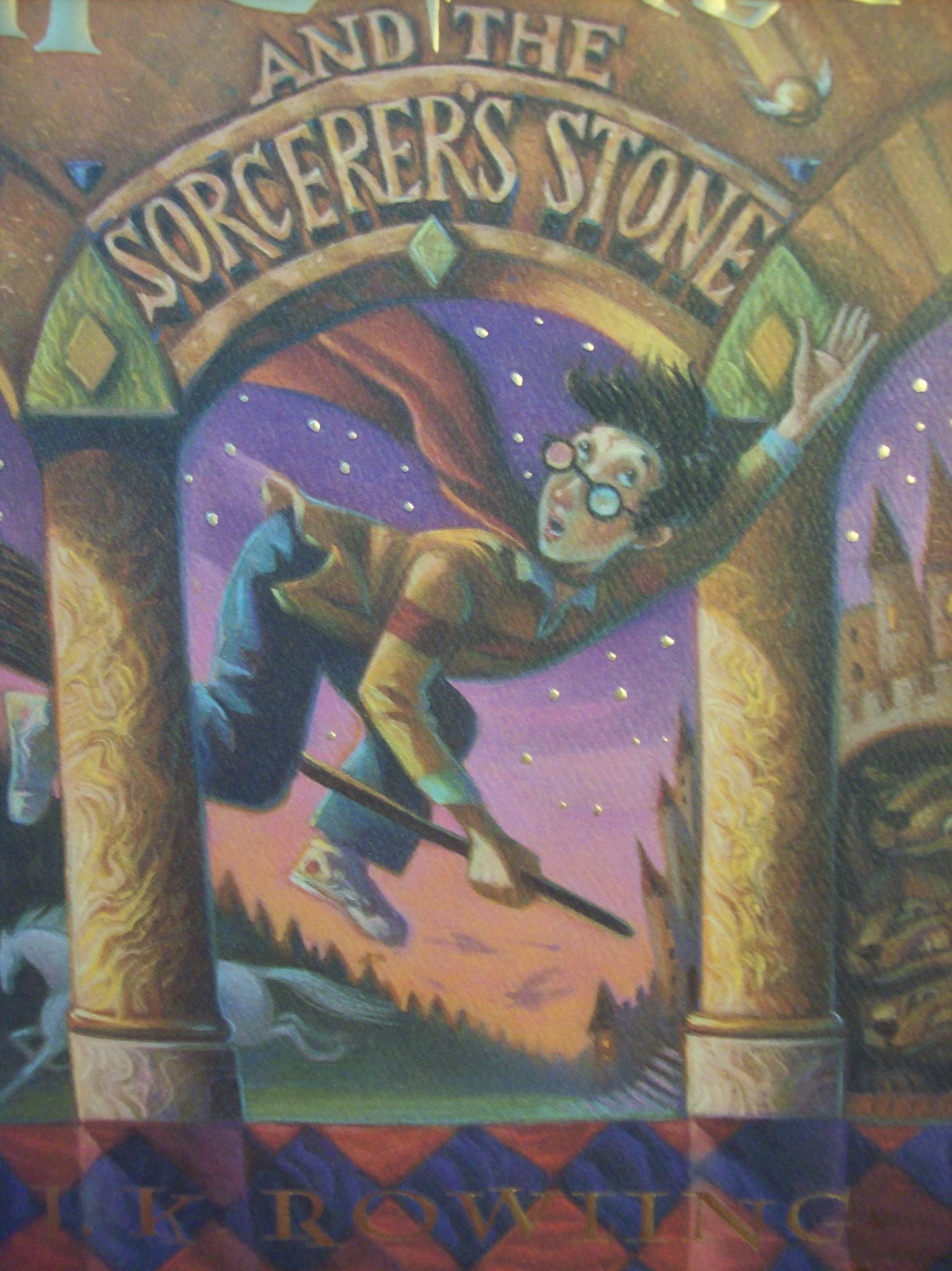
I might lend my copy to somebody else, or I might give it away, but I’ll never share it.
People can have different tastes in a lot of things, including books, music, movies, and even taste (as in food). I guess we can even have different tastes in words. A couple days ago I admitted that I couldn’t read Harry Potter and the Sorcerer’s Stone because of the name “Dumbledore.” “Dumbledore” annoyed me so much (and I was even reading silently) that I had to put the book down and never continue. I also admitted that I didn’t like the word share.
Dumbledore might have been a decent character. Dumbledore might have had redeeming qualities. I have no problem with Dumbledore, except for the sound of it.
But the word share? Share has no redeeming qualities. Everything about share sucks.
Over the years, I’ve come to hate the word share. In school it meant giving up something I owned for somebody else who probably didn’t deserve it. In my professional life, it means giving my coworkers the chance to get credit for my ideas.
I once had a boss who used to say share by extending the sound over two syllables (shay-air) in a nasally tone at brainstorming sessions. I cringed whenever she said “Shay-air,” and it didn’t help that I was usually the first person she called upon. I think she enjoyed watching me say “Uh…. Errr….,” with my face turning red whenever she asked me to “shay-air” what I was thinking.
I felt bad when this boss got demoted (or laterally moved), but I didn’t “shay-air” my sentiment with anybody else because she was unpopular and had added a bunch of unnecessary and counterproductive procedures to our jobs.
Now whenever I hear the word share, I hear shay-air, no matter how the word is uttered. It’s like the fingernails on the chalkboard (which might be a bad example because that has never bugged me).
Now that I think about it, I don’t even like the concept of sharing. I’d rather just tell somebody my idea than share it. I’d rather just let somebody borrow my stuff than share it. In some cases, I’d even give my stuff away before I share it. At the very least, I’d buy somebody the same thing that I have instead of sharing mine.
One of the very worst expressions ever is “Sharing is caring.” In my mind, all I hear is “Shay-air-ing is cay-air-ing.” Not only is this annoying, but the message is misleading, at least it is from my point of view. When I’ve shared stuff in the past, it wasn’t because I cared; it was because I wanted other people to quit bothering me. Now when I give my stuff away or I lend it out to others, that’s when I care.
Very few words have both an annoying concept AND an annoying sound. Because of this, the word share is in an annoying league of its own. Maybe it’s just me.
The only time share doesn’t bug me is if it’s somebody’s name. I have no problem with Cher. For some reason, I don’t hear it the same way when it’s used as a name. Even growing up in the 1970s listening to (or watching) Sonny and Cher, the name doesn’t bother me. Sonny doesn’t bother me either, and Sonny bothered a lot of people.
*****
If some of the previous few paragraphs look familiar, it’s because I plagiarized them… from myself. I just wanted to admit where I got my ideas so that I don’t get accused of plagiarism and get fired from my own blog and have all my posts yanked from Dysfunctional Literacy. I almost got myself fired from my own blog once (that stupid idea called “Dysfunctional Grammar”) and I don’t want it to happen again. It’s kind of embarrassing to almost get fired from your own blog, even when nobody else knows about it. So if you’re going to plagiarize on your blog, plagiarize from yourself and just admit it.

(image via Wikimedia)
When author J.K. Rowling says she made a mistake, it makes news. Supposedly, the author of the Harry Potter books claims she has second thoughts about how she ended the series, stating that maybe Hermoine and Ron shouldn’t have ended up together. This has started a firestorm of fans arguing, with some proclaiming that they knew all along that the couple was a mismatch and others saying… Actually, everybody I know who has read the series believes that the couple was a mismatch. This debate has been pretty much one-sided.
Personally, I don’t care. I’m one of the few people who hasn’t read any of the Harry Potter books or seen any of the movies. I started the first book but stopped after running across the name Dumbledore a few times. That name really annoys me. I don’t know why. It’s not rational (and I’m usually a rational person), but I knew I couldn’t finish a book with a name like Dumbledore being used constantly. I also don’t like the word “share.” I cringe whenever I hear the word “share.” If there’s a sentence in the Harry Potter series with both “share” and Dumbledore,” I don’t know what I would have done.
I couldn’t watch the movies either because if I can’t read the word “Dumbledore” silently, there was no way I could hear it constantly during a bunch of movies. So I don’t have a dog in this hunt. I don’t care if Hermoine ended up with Ron, or if she dumped him as soon as the credits rolled or when the reader put the book on the shelf. All I know is that a girl who looks like Hermoine doesn’t end up with a guy who looks like Ron unless the girl grew up poor and the guy has a lot of money (or is in a position of power).
J.K. Rowling says that the ending is a kind of “wish fulfilment.” She wrote the books. She can make up any ending she wants. But my theory (without any proof to back this up) is that she wrote the Harry Potter series too quickly. That was a lot of books with a lot of pages in a relatively short period of time. I understand, there was a lot of money to be made. But I bet if she had taken more time for each book, Rowling wouldn’t have these regrets. And if she really regrets it, she could just write another book and end it with Hermoine breaking Ron’s heart. That book would make a lot of money.
Even if J.K. Rowling botched the ending of the Harry Potter series, it was at worst a minor mistake. There have to be other authors who regret how they ended their books or series. For example, I wonder if Suzanne Collins has second thoughts about how she wrote Mockinjay. Those Hunger Games books came out even more quickly than the Harry Potter novels. And I thought Mockinjay was a borderline travesty that didn’t resemble the first two books (and I don’t just mean the plot. I also mean pacing, character development, and logic). I wouldn’t mind if she simply asked for a do-over and wrote a different Mockinjay. Maybe the movie version will make more sense.
I have regrets about my entire first six months of Dysfunctional Literacy. I’ve even gone back and deleted a bunch of posts under the category “Dysfunctional Grammar.” This idea was so embarrassingly bad that I don’t even want to explain what it was. The “Dysfunctional Grammar” posts were so stupid that I almost fired myself from my own blog. Luckily, I’ve seemed to find my voice/niche recently, but I’ve still left one example of “Dysfunctional Grammar” buried somewhere at the bottom of this blog just to remind myself. I can do that. But famous authors can’t go back and delete their regrettable words once they’ve been published and then hope that nobody notices. I guess that’s the advantage of being an unknown writer.
I had a writing teacher who said that once a rough draft is done, the writer should put it away for six months and then come back to it. The guy was kind of a hypocrite because he’d assign a composition and expect the final draft within a few days. To be fair, he explained the difference between reality and ideal situations, but still, six months would have helped. Then again, there were a couple assignments where six months wouldn’t have mattered. Six months wouldn’t have mattered with “Dysfunctional Grammar.” And when an author writes a prolifically successful series like Harry Potter, there might never be enough time to truly get every detail perfectly right.
But enough about me! What do you think, especially those of you who have actually read the Harry Potter books? Did J.K. Rowling make a mistake with her ending? What other authors should have second thoughts about the way they ended their books? Have you ever written something that you regretted or had second thoughts about?

Even though I was certain Daniella was capable of reading classic literature, I wasn’t sure where she should start. When she had her thick glasses on and held a Jane Austen book where everybody could see it, people who didn’t know her assumed she was educated. But all she really read was trashy romances. At some point, somebody would figure out that she was a literary fraud, and if she was going to snag a rich husband, she would have to delay that moment as long as possible.
Authors like Jane Austen or Charlotte Bronte might be worth reading, but they weren’t the authors to start with. Daniella needed something short, something that wouldn’t brand her as illiterate, but something that would hold her interest. Then it hit me. Poetry. Daniella could read poetry. But since money was now an issue and poetry was risky as far as taste was concerned, we decided to borrow some poetry from the local library.
I thought maybe Daniella would like reading some Sylvia Plath or Anne Sexton because both dealt with crazy shit in some way, and Daniella liked to complain (or brag) that there was always “crazy shit” going on in her life. I figured maybe Daniella could relate. And I wasn’t worried that she’d get depressed reading Sylvia Plath or Anne Sexton. Daniella wasn’t the type to stick her head in an oven; she was the type to smash a bottle over an ex-boyfriend’s head. As long as I wasn’t on the receiving end, I respected that.
The last time Daniella and I had been at this library, she had caused several mini-scenes, coughing loudly, eating corn chips, and strutting around in a really tight, thin t-shirt. On this Saturday afternoon, Daniella was much more mellow. She had on her thick black glasses, and her hair was pulled back, and her sweater-jeans outfit was nondescript. And the library was quiet too. It was crowded, but people wandered around the shelves without talking, and others sat at table and couches reading newspapers and magazines. The librarians didn’t even give us dirty looks when we walked in. I thought, maybe this would be uneventful after all.
But as soon as we found the poetry shelf, I regretted not driving to the main branch library downtown. Our local library’s poetry selection sucked. No Anne Sexton. And only one Sylvia Plath, a beat up copy of The Collected Poems. Daniella immediately reached for a thin booklet of Robert Frost poetry. Of course, she had gone for the tiniest paperback available.
“Should I wear a beret when I read these?” Daniella asked.
“You’re not ready to be pretentious yet,” I said.
I was about to suggest an anthology of poetry when some little kid went screaming across the library between the fiction and nonfiction sections making a “RRRaaaaaaarrrrrTTTTT!!” sound. We couldn’t even tell what that sound was meant to be. From my brief glimpse of him, I could see he was a boy, probably six or seven, with a bowl haircut. Still, he was too old to run in a library, and (this might not be fair, but) boys with bowl haircuts almost always misbehave.
Daniella rolled her eyes at the noise. Yes, she was annoyed at somebody else acting up in a public library.
I pulled out the copy of Sylvia Plath’s The Collected Poems and handed it to Daniella. Daniella flipped through the pages.
“This is almost 400 pages,” she said.
“It’s poetry,” I said. ‘You don’t have to read all of them. Just skip and choose.”
“This one doesn’t rhyme,” she said, stopping at a page.
“Poetry doesn’t have to rhyme,” I said. “There are other literary devices like metaphors and…”
Daniella slammed the book shut near my face.
“I was kidding,” she said flatly, and I couldn’t tell if she was serious, but she kept the book.
As she stepped out of the poetry row with her three books, the screaming boy plowed front first into Daniella, his head plummeting smack into her breasts. He was either very lucky, or he was a little pervert in the making.
“Motherfu…” Daniella said, and then she caught herself. “Mother. Where is your mother?” she asked sweetly. It probably sounded sincere to anyone who didn’t know her.
The boy pointed to the opposite side of the library, but I couldn’t see anybody. That wasn’t surprising.
“Young man, you shouldn’t run in the library,” Daniella said. Then she ruffled his hair and redirected him to the other side of the library.
“Nice recovery,” I said.
Daniella waited for me while I perused the row of new arrivals. John Grisham had a new book, but there was a booger on page 54, so I put it back. The new Stephen King book seemed clean, and I reached for a new Lawrence Block mystery when the boy screamed around the area again.
“And I even used my nice voice,” Daniella complained.
As the kid raced past us, Daniella stuck her foot out, and the boy stumbled and then splattered face first on the floor. He jumped up, looking around to see if anybody saw him, when Daniella grabbed him by the sleeve and pulled him to her. Leaning down so that they were face-to-face, she said something low but stern, and the boy’s eyes went wide and his jaw hung open. When Daniella released him, he walked stiff like a robot to the opposite side of the library. Daniella pushed her glasses back up and smiled.
“What did you say to him?” I asked.
“I told him not to run in the library.”
“Uh huh,” I said.
After a pause, she leaned close and whispered, “I told him if I caught him running again, I’d rip his tiny, little nuts off.”
I nodded. That was more like it. I figured it was time to leave before the boy’s mom found out what Daniella had said. Daniella had a history of being mean to moms of little kids.
When we reached the checkout with our books, Daniella whipped out her own library card. “This one’s on me.”
After a moment (what happens next makes more sense if you’ve read this first), the librarian cleared her throat and said, “I’m sorry, but according to our records, you owe $10.40 for Interview with the Vampire.”
“I turned that in,” Daniella said, moving into her debating stance, hands on hips, chest out. “A long time ago.”
“I’m sorry, we never got it,” the librarian said.
“But I know I…” her voice had an edge. Daniella was about to get righteous.
“Daniella, let me talk to you a minute,” I said, and started walking to the biography section. “Over here.”
Once we reached the biographies, I looked down at the floor and stage whispered. “You never turned that book back in.”
“Yes, I did!” she semi-hissed back.
“No, you reshelved it right here.” I pointed to an upper Gs shelf, and the book wasn’t there. “I saw you do it that day you… I asked you out.”
“I did? Why would…” Daniella swirled her tongue in her mouth as she thought. “Shit! You’re right. Why didn’t you say anything when I did it?”
“I… wasn’t thinking.” I remembered the tight t-shirt she had worn that day, and how when she’d reached for the top shelf that the bottom of the shirt had lifted and… I shook my head clear. “That book could be anywhere,” I said. “Seriously, I didn’t know you checked it out. I thought you just pulled it off a shelf before you saw me.”
“Can you believe I actually tried reading it?” Daniella said. “Shit, you want me to pay for it?”
“It’s only ten bucks,” I said casually. Inside, my stomach broiled. The whole point of coming to the library was to avoid spending money, and now we were going to have to pay for a lost book.
“I’ve seen you get pissed over ten bucks before,” Daniella said. “I’ll get it. Besides, we weren’t together yet.”
When we returned to the counter, the librarian said that they had three other copies of Interview with the Vampire that never got checked out anymore so the current fine would cover the book, and Daniella searched her purse/bag for change. It took a while. The time she spent fishing through her bag for $10.65 was probably longer than a $20.00 lap dance at Nero’s, but I kept that thought to myself. Finally, with much patience and no profanity, she found exact change.
“You paid your own library fine,” I said as we left. “Don’t you feel like a better person for it?”
“I can’t carry this book around when we go out,” Daniella said, lifting the 400 page volume up and down over her head like a barbell. “She has shorter books, right?”
“You don’t want to walk around with a Sylvia Plath book if you want to attract a stable rich guy,” I said. “It’s just good poetry to begin with.”
Daniella was actually going to start reading books, the kind she would be able to discuss if anybody asked her. Hopefully, she wouldn’t need to fake read anymore, at least not so much. The next step was to get Daniella to a place where she could meet the right kind of men with money. She’d never find the type of person she was looking for at Nero’s. If Daniella was going to find a naïve rich guy and manipulate him out of everything he had, there was one place where I could take her. She wasn’t going to like it. It was going to take some explaining. But I was confident that Daniella would understand that this was her best next step to achieving her diabolical goal.
Daniella would start going to church.
*****
To be continued in… The Literary Girlfriend: Finding Religion .
If you want to read “The Literary Girlfriend” from the beginning (it’s getting kind of long), start here.

Don’t read while you walk, or this could happen to you. (image via Wikimedia)
Even though I sometimes read in public, I rarely walk while I read. To me, it’s common sense. The world is a dangerous place, and I could easily walk in front of a moving bus while I’m reading, or I could get conked on the head by a mugger. I always knew reading and walking at the same time was a bad idea, but now I’ve discovered that it’s even worse than I originally thought.
According to a study reported in USA Today, people who read or text while walking don’t walk normally. They develop a weird stride, almost like they’re drunk. That explains why people who stare at their phones while walking (I call them phone tools when I’m feeling judgmental) run into stuff and fall down. Even when they’re not falling down, they’re in danger of falling down.
I don’t need to text or read in order to fall down while walking. I am capable of tripping over cracks in the sidewalk, twigs on the ground, loose shoe laces, or air. I’ve never tripped while running. Then again, I hate running, so I don’t do it much, but I’ve never tripped when I’ve been running. Maybe I should read or text while I run and see what happens.

Now on Amazon!
I was told at a very early age that I walked funny. Even before I hit puberty, I was told I walked funny. If people had started telling me during puberty that I walked funny, I would have had a logical explanation for them, but I don’t want to get into that now (I’m not that kind of blogger). I don’t have any memories of me reading while I learned to walk. I guess I was simply blessed with a unique stride.
I won’t read and walk because I don’t want to fall down. Most of my fears are kind of vague or abstract (something horrible happening to my family, that kind of thing), but I’m afraid of falling down. I’m the type of person who doesn’t laugh at the old lady who yells “I’ve fallen and I can’t get up!!” in the commercials. I have no problem mocking poorly-acted misfortune, but I can see myself being that person who has fallen down (just not the “lady” part). I’m the type who can fall down, and I’d yell “I’ve fallen, and I can’t get up,” and everybody around me would laugh. I’ve known people just a little older than me who have fallen down, and it messed them up for a long time. Falling down is no joke, even if it’s posted online. If reading and walking increases the chance of that happening to me, forget it.
I also don’t want to be one of those guys who falls down on YouTube. I don’t like providing free entertainment for people I don’t know. The only reason I write for free on Dysfunctional Literacy is because I like writing. I hate falling down, and I don’t want people getting free entertainment from me doing something that I hate doing. I don’t even want to get paid for falling down. It’s bad enough that I walk funny when I don’t even read, but I’m not going to walk funny and read and then fall down, and then give somebody else who recorded it a few million hits. That would tick me off.
If we walk like we’re drunk when we read and walk, does that mean we text like we’re drunk when we text and walk? That would really hurt my feelings. It would be embarrassing enough to fall into a hole while I was texting, but I’d really be ashamed if I left out an apostrophe in my text. I also hope I don’t read like I’m drunk. If I’m taking my life into my own hands while reading and walking at the same time, I at least want to remember what I read. Then again, I don’t remember much of what I read anyway, so walking probably wouldn’t affect my comprehension that much.
I can understand why people want to read/text while they walk. Walking can be boring sometimes. The mind can wander, and reading/texting is a productive way to pass time. But I don’t understand the text/read while driving mentality. Driving is way more dangerous than walking. I’d never read a book while driving (not even while sitting at a light), and I’d never write anything, so I don’t understand the drivers who would never read a book or write a letter while driving but would text while driving. Yeah, I know to them, texting is like talking and people talk on the phone (that’s kind of dangerous too), but texting isn’t talking at all, even if you use a phone for it. Texting is writing, and I’d never write while I’m driving. I wouldn’t even write while I’m walking.
Nobody tells me that I walk funny anymore. I probably still do, but I’m older, and maybe people my age are expected to walk funny now. Either that, or there are so many young people walking funny because they’re reading or texting that I don’t get noticed anymore. That’s very liberating, to know that I can walk as funny as I want now, and nobody will care. Thank you technology, and a special thank you to the youngsters who misuse it!
*****
If you’re going to read while you walk, you might as well read something light and easy.
Now only 99 cents on Amazon!


 Dysfunctional Literacy