
(image via wikimedia)
In some ways, it’s better to write an award-winning novel than to be a best-selling author. You might make more money with a best-seller, but in a few years your book could be forgotten, lost in the ash heap of other replaced best-sellers. On the other hand, if you win an award like the Pulitzer Prize, your book will be on that list forever. Even if your Pulitzer Prize winning novel isn’t read much after a few decades, the title will still be on the list. As long as there are literary critics, there will be a Pulitzer, and as long as there’s a Pulitzer, your book title and name will be on that list.
Reading a Pulitzer Prize winning novel isn’t always easy. In 7th grade I was forced to read The Yearling by Marjorie Rawlings. Yeesh! Does anybody read The Yearling anymore? Back then, I disliked it, and I haven’t gone back to see if I was wrong to dislike it. In 9th grade we were forced to read To Kill a Mockingbird, but at least nobody hated it. If kids hated it, they kept it to themselves. Even then, students knew it was wrong to hate that book.
As an adult, I read The Killer Angels by Michael Shaara because I went through a Civil War phase (without growing a long beard and dressing up in old musty uniforms). I read The Shipping News because everybody else in my writers group had read it (but I don’t remember a thing about it). I recently read The Road by Cormac McCarthy and The Brief Wondrous Life of Oscar Wao by Junot Diaz.
Writing a novel that’s considered for a Pulitzer Prize isn’t easy either. An author usually has to do more than just tell the story. An author has to use literary devices that catch readers’ and judges’ attention. If devices like symbolism and figurative language aren’t enough, authors then have to throw in some literary gimmicks too. A gimmick is a device that’s easy to do but doesn’t really add anything to the story.
For example, some Pulitzer Prize winning novels (The Road and The Brief Wondrous Life of Oscar Wao) don’t use quotation marks for dialogue. Maybe leaving out quotation marks makes dialogue more meaningful than dialogue with quotation marks, but I’m not sure. I’ve always used quotation marks with dialogue. That’s how I was taught, but I’ve never won a Pulitzer Prize.
The Road also used nameless characters like “the man” and “the boy” (I probably shouldn’t have put them in quotation marks since the book doesn’t use them at all). Plus, there was a double space between every paragraph, even the one sentence dialogue paragraphs that didn’t have any quotation marks. I don’t know if The Road would have won a Pulitzer if the characters had had names, or if the spaces between paragraphs were normal, or if the author had used quotation marks. It still probably would have been a good book.
The Brief Wondrous Life of Oscar Wao, along with no quotation marks, used several other literary gimmicks. The novel had really long sentences with lots of Spanish and Dominican slang thrown in too. The story was told out of order from several different characters’ points-of-view. Plus, there were lots of nerd culture references. Even though I’m a fan of nerd culture references, I thought there were way too many nerd culture references in this book. Even nerd writers for The Big Bang Theory probably think there were too many nerd culture references in TBWLOOW. I’m not saying you need to use nerd culture references to win a Pulitzer. You need to pick a topic and drown your novel in references, like Donna Tartt did with the topic of art in The Goldfinch.
But if you want to emulate a Pulitzer Prize winner for fiction that uses a ton of literary gimmicks, try A Visit from the Goon Squad by Jennifer Egan.
A Visit from the Goon Squad uses six literary gimmicks (that I noticed):
- Telling the story out of order.
- Switching points of view (3rdto 1st to 3rd…)
- Switching tenses in various segments (past to present to past…)
- a chapter of only power point/ flow charts (don’t use an e-reader for this book)
- lots of stream-of-consciousness
- And the worst gimmick ever… 2ndperson present tense! I call it the worst gimmick ever because I tried using it in a college writing class, got yelled at by my writing instructor for using it, and then two months later Bright Lights, Big City became a bestseller. Now I’m biased against 2nd person present tense.
At any rate, six literary gimmicks is a lot for one book. There were so many literary gimmicks, I expected the author to resort to the 1st person present tense narration death scene. I was wrong. Instead, she used the 2nd person present tense narration death scene. I hate being wrong.
Having so many literary gimmicks in one novel makes it look (to me) like the author is trying too hard. My writing instructor might have declared that using all these gimmicks took away from any merits A Visit from the Goon Squad had as a story. But he probably would have shut up once he realized the novel won a Pulitzer Prize for Fiction.
*****
What do you think? Is using so many gimmicks good story-telling, or is it trying too hard? What other literary gimmicks have you noticed in award-winning novels? How many literary gimmicks should an author be limited to? What literary gimmicks do you dislike the most? If you were limited to one literary gimmick, which one would it be? If you had a choice, would you rather write a bestselling selling novel or a major award winning novel?
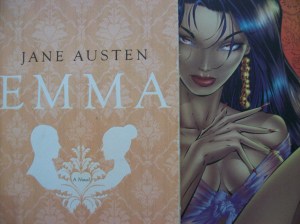
Sometimes it takes years or decades to realize that something wasn’t normal. Over 20 years ago, I dated a woman who wore big glasses and carried around a Jane Austen book just so people would think she was smart. Back then, I thought it was cute, not weird. This girlfriend did some other stuff that I knew was weird (like eating corn chips loudly at a public library), but at the time I never thought about writing about it.
Now when I think about it, I see this ex-girlfriend’s literary pretention as strange. In a lot of ways, I’m a literary fraud too, but at least I’ve tried to read some of the books that I (used to) carry around. It was this ex-girlfriend’s lack of trying that made it weird. About a year ago, I finished writing “The Literary Girlfriend,” my romantic comedy about this relationship. Originally, the blog version was going to be about 10 episodes, and then I was going to flesh it out and turn it into an ebook. By the time I was done a year later, the blog version was 60 episodes. And changing it into an ebook didn’t work out (that’s a whole other issue), so now I’m stuck with a blog serial.
If I had known it was going to take me a whole year, I might never had started writing the damn thing.
I mean “damn” in a good way.
I guess anybody who has been in a weird relationship has a romantic comedy in them somewhere, and a lot of relationships are weird. Not everybody has a war story in their experience, or an espionage story, or a murder mystery, but everybody has a romantic comedy. All you need is either a bad or a weird relationship experience, and everybody has at least one of those. Even now, my wife says our own relationship is weird. It’s not a 50 Shades kind of weird, but she agrees with me that it’s weird.
My wife has agreed to let me publish a story about us, but she says I have to charge money for it, even if it’s just a little bit, so none of my current project will be on this blog. That could be good or bad, and we’ll see how that turns out. Since I have to be careful while writing about my current relationship, this project is taking a while. I have more at stake than when I was writing about my former girlfriend. But when it’s done, my new project is going to be great. My wife’s in it. It had better be great.
I was surprised when my wife agreed to let me write about us. She didn’t read much of “The Literary Girlfriend” because she didn’t like the ex-girlfriend in the story. My wife had never met her, but I didn’t blame her for not liking her. Wives probably should dislike every ex-girlfriend a husband has. If it’s not already a code, it should be.
It was easy to write about this former girlfriend because I could portray her however I wanted without fear of repercussions. Writing about a current relationship, especially a spouse, is a bit more risky. The situation I’m writing about with my wife and me is still kind of going on (mostly resolved), and if my wife doesn’t like the way she’s portrayed, I could regret writing this ebook. My wife has a great sense of humor, and she says she trusts me and that she doesn’t need to approve anything, but that could be just like a wife/girlfriend saying she doesn’t want a present for Valentine’s Day. It’s not good for a man to be wrong about something like that.
The relationship with my ex-girlfriend 20 years ago stressed me out a lot, but now I think the situations that made me anxious then are kind of humorous. Time will do that to you. Looking back, I should have enjoyed that whole relationship more. In fact, that’s the one thing I kick myself over is that I didn’t enjoy it more. But I’ve learned from that experience. Now when I start to get stressed out, I just pretend that I’m 20 years in the future looking back finding humor in my current situations. 20 years from now, I don’t want to kick myself for not enjoying the parts of my life I should be enjoying right now. The good news is that I don’t get as anxious as I used to get. I guess that’s an unintended benefit of writing about a stressful part of my life as a romantic comedy.
But 20 years from now, I hope I’m not kicking myself for writing a romantic comedy about my wife and me.
*****
But enough about me! What weird relationship could you turn into a comedy? Have you ever dated somebody weird but you didn’t notice it at the time? Or did you notice it but didn’t care? Is it a good idea to write a comedy about a relationship while you’re still in it? If not, what is the right waiting period? Should I have my wife approve my romantic comedy about us before I publish it?
*****
Here it is! Read “The Literary Girlfriend,” the blog serial romantic comedy that made my wife dislike my ex-girlfriend even more!
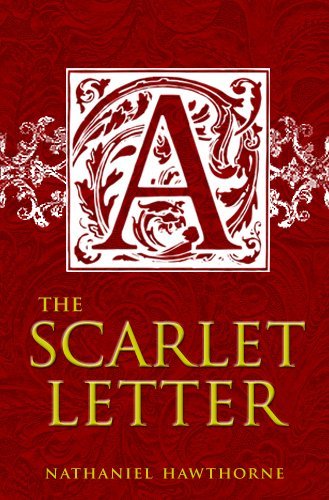
The Scarlet Letter by Nathaniel Hawthorne has a lot going for it as a classic novel. It’s relatively short, and most modern readers would rather read a short classic novel than a long one. The Scarlet Letter deals with an interesting subject matter, and the symbolism involved is stuff that a literal guy like me can understand. But like a lot of classic literature, the sentences can be tough to get through.
Different people have different standards for bad sentences. If a sentence would have gotten me red-marked for writing it back when I was a kid or lectured at by my writers groups as an adult, then I consider it a bad sentence.
‘Bad sentences’ are subjective to some extent, and I’m sure I could be criticized for my own ‘bad sentences’ in my novel The Sunset Rises: A 1990s Romantic Comedy . Yes, I leave myself open to criticism of my own writing, but even with that risk, I must continue.
The sentences in The Scarlet Letter aren’t as long and ponderous as those in some classic literature, but there are plenty of other issues. For example, in Chapter I, “The Prison Door,” Hawthorne starts the book with the following opener:
“A throng of bearded men, in sad colored garments, and gray, steeple-crowned hats, intermixed with women, some wearing hoods and others bareheaded, was assembled in front of a wooden edifice, the door of which was heavily timbered with oak, and studded with iron spikes.”
That’s the first sentence? That’s the hook? First of all, I lost track of what the sentence was even talking about. If you cut out all of the prepositional phrases and other interrupters, you have “A throng was assembled.” There are over 20 words between the subject and the verb. If I had ever written a sentence with 20 words between the subject and the verb, my English teacher would have red-lined it and pinned my essay on the Wall of Shame bulletin board.
And if I had used the phrase “sad colored garments,” my writers group peers would have criticized me for telling, not showing. “What colors are sad in the 1600s New England culture?” they would have demanded. And then the phrase “… the door of which…” is clumsy. Just say “… with a heavily-timbered oak door studded with spikes.”
At least that’s what my writers group peers would have suggested. I’d never dare to edit Nathaniel Hawthorne.
Long sentences aren’t always the cause of bad sentences. Sometimes Hawthorne can’t make up his mind what to say. For example, in the first paragraph of Chapter X:” The Leech and his Patient” Hawthorne writes:
“He now dug into the poor clergyman’s heart, like a miner searching for gold; or, rather, like a sexton delving into a grave, possibly in quest of a jewel that had been buried on the dead man’s bosom, but likely to find nothing save mortality and corruption.”
Every once in a while an author might put two similes in the same sentence. I respect that. But I’m not wild about authors changing their minds about a simile in mid-sentence. First, Old Roger Chillingworth was like a miner searching for gold, and then…No, he, old Roger Chillingworth, was NOT like a miner searching for gold after all. He was more like a sexton delving into a grave. Possibly this sexton was looking for a jewel buried on the dead man’s bosom. Or possibly not. Maybe the sexton was looking for something else on the dead man. We just don’t know.
Maybe this sentence wasn’t so bad. Maybe mid-sentence simile replacement is a widely respected literary device and I just don’t know about it. I know I have astonishing gaps in my knowledge. Maybe this is one of those gaps.
Hawthorne uses mid-sentence simile replacement several times in The Scarlet Letter. For example, at the beginning of Chapter XXI “The New England Holiday,” Hawthorne writes:
“It (Hester’s face) was like a mask; or, rather, like the frozen calmness of a dead woman’s features; owing this dreary resemblance to the fact that Hester was actually dead, in respect to any claim of sympathy, and had departed out of the world with which she still seemed to mingle.”
Maybe I’m wrong, but I think Hawthorne should have combined the two similes, maybe comparing her face to a mask of a dead woman. Also, use of the word “actually” is a misuse of the word, because in no way was she “actually” dead. She might have been near-death in social status. She might have been on the bottom rung of the social ladder, but she was not “actually” dead. And I wouldn’t have cared how many words Hawthorne used to explain how Hester was metaphorically dead if he hadn’t used the word “actually.”
That’s not true. I still would have thought he used too many words to make his point.
Maybe it’s not fair to judge classic literature by today’s standards, but I’ve struggled through a lot of classic novels, and I’m supposed to be one of the good readers. If I have to concentrate really hard to read something like The Scarlet Letter, then I feel for a struggling reader who is forced to get through a book like this for school. At least now we know specifically what makes a book like this tough to read for some people: 20 words between the subject and the verb, and mid-sentence simile replacements, and too many words to make a simple point.
And I don’t think these aren’t fake reasons for struggling. In my opinion, these are “actually” good reasons to think The Scarlet Letter has some bad sentences.
*****
What do you think? Are these sentences bad sentences? Or are these sentences actually good sentences but I’m too stupid to recognize them as good sentences? Is mid-sentence simile replacement a great writing technique that I simply don’t know about? What literary devices in classic novels do you usually notice? Is it fair to judge classic literature by today’s writing standards?
*****
Bad Sentences in Classic Literature: Jane Eyre
Bad Sentences in Classic Literature: Moby Dick
Bad Sentences in Classic Literature: The Great Gatsby
Bad Sentences in Classic Literature: Harry Potter and the Sorcerer’s Stone
Bad Sentences in Classic Literature: Great Expectations
Bad Sentences in Classic Literature: Pride and Prejudice
Bad Sentences in Classic Literature: Catch-22
Bad Sentences in Classic Literature: The Great Gatsby
*****
A grammar-obsessed English teacher falls in ‘luuuvvv’ but discovers how chaotic and dangerous ‘luuuvvv’ can be.
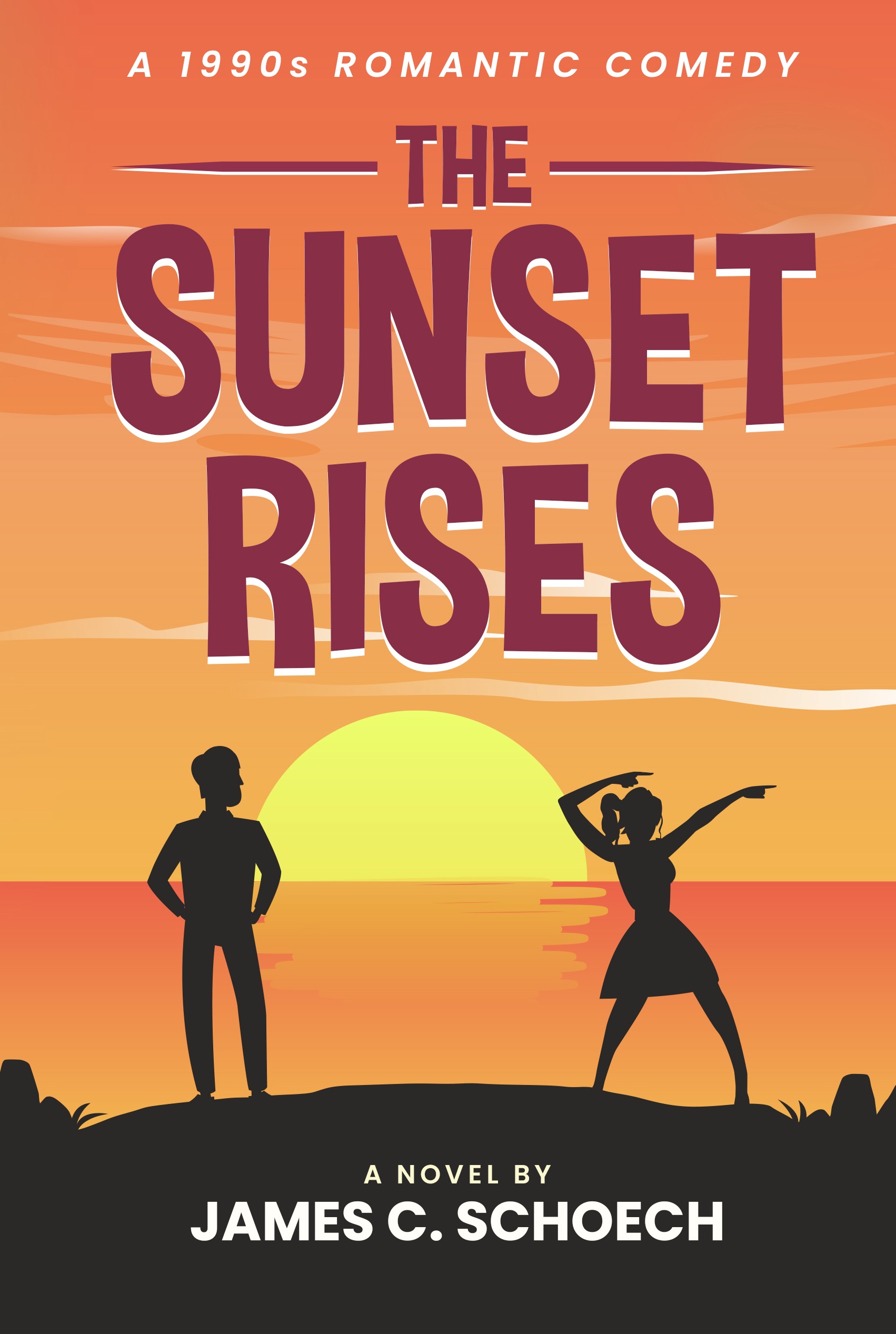
The Sunset Rises: A 1990s Romantic Comedy
Get a signed copy of my one and only novel, The Sunset Rises: A 1990s Romantic Comedy. My handwriting is actually legible, but I’m left-handed, so I might smudge the signature. Free delivery in the United States!
$20.00
Or you can buy a copy here on Amazon!
Not sure? Read a sample chapter of The Sunset Rises: A 1990s Romantic Comedy.

I might do a book reading, but I’m not singing or playing any musical instruments. (image via wikimedia)
Self-promotion is tough for me because I was raised to not call attention to myself. I was taught to stay quiet and that if I did something well, others would notice. Maybe that was true to some extent when I was growing up, but if those days ever existed, they’re over now. It seems today it’s more about promotion than actually having a good product. I’m not complaining. I can’t complain because I don’t even have a new finished product yet, but I need to start thinking about self-promotion.
The ebook that I’m currently writing might be the best, most mainstream story I’ve ever written. I won’t say what the title is because then it will sound like self-promotion and I’m not ready for that yet. Anyway, I’ve never seen this particular story told before, and if I take my time, I might even write it well. Unlike The Literary Girlfriend or The Writing Prompt, I’m not going to put any (or part) of it on Dysfunctional Literacy. It’s not going to be free. But I’m concerned that if I don’t put it on my blog Dysfunctional Literacy, then nobody will read it.
A lot of people know way more than I do about promotion. I could use my blog or Twitter for self-promotion, but a lot of authors already do that, and I’m not sure it’s effective most of the time. I think unpublished authors need something more. I think I’d better come up with new exciting ways to self-promote my new ebook before I’m done writing it. I already have a few ideas.
First, I’d like to get JK Rowling to say that she is me. That would be a great attention-getter. It worked for Robert Galbraith. Robert Galbraith’s first book didn’t become a best-seller until JK Rowling announced that she was he. That’s the kind of self-promotion I want. I’d love for JK Rowling to say she was the author of Dysfunctional Literacy and all my ebooks. My sales would skyrocket, and I wouldn’t have to do anything else.
I’ve even asked JK Rowling to claim that she is me. Not personally or face-to-face or anything like that. A few months ago, I wrote her and asked her to allow her lawyer or publicist to start telling people that she was me. But she hasn’t responded. She gets so much fan mail that maybe she hasn’t seen my message yet.
I’d go ahead and say that JK Rowling is me without her permission, but then I’d probably get sued, so I guess it’s a bad idea.
Maybe I could claim that my new book is really Harper Lee’s other lost manuscript. Yeah, she and her estate haven’t mentioned a second lost manuscript, but of course they wouldn’t do that, at least not until they found it. And I could claim to have just found it. Harper Lee was brilliant, pretending not to have written another book for over 50 years and then announcing that she’s suddenly found a manuscript that she thought she had lost decades ago. That’s publicity gold.
Her new book will be a best seller (I think it already is before it has even been released) without her having to do anything else. I’m jealous. Every misplaced manuscript that I’ve written sucks, and nobody cares when I find them. Her lost manuscript might actually be good. My manuscript that I can pretend is her second lost manuscript might not look anything like Harper Lee’s writing, but the publicity might help my book sales anyway.
Ugh, this is probably a bad idea too.
I could say that James Patterson co-wrote my new book. Some people would believe that. James Patterson can co-write anything. I even know a guy named James Patterson who agreed to type a word in my manuscript just so he could say he co-wrote it. I’d be willing to put JAMES PATTERSON in huge letters with everything else in a tiny font if I believed it would help book sales.
But the guy I know, his first name isn’t really James. His last name is Patterson, but there isn’t a James anywhere in his name. He doesn’t even have a James in his family. The guy has eight brothers, three generations of fathers, uncles, grandfathers, kids, grandkids, and not one of them is named James. A couple of them are named Pete. What kind of family has two Peters and no James? You could make a tongue-twister out of Peter Patterson, and they used the name anyway. If they’d had the foresight to name a kid James, they could make themselves rich.
Instead, I’ll have to think of another idea.
*****
What do you think? What self-promotional techniques have worked (or not worked) for you? What would you like to try? Do you have ideas but are reluctant to say what they are because somebody else might use them first?

(image via Wikimedia)
“Next month, I’m quitting my job and writing for a year,” a friend of mine said at a party.
He’s not really a friend. He’s the husband of a coworker of my wife. I hardly know the guy, but I don’t have a lot of friends, so I just say he’s my friend.
Anyway, his wife is going to support him while he sits around and writes a novel all day every day for a year. It’s been a dream of his all his life to be a writer, and for a year he gets to live his dream. He says maybe he’ll be successful and get to continue living his dream. He has a good job now, and he knows they won’t hold it for him, so after a year (if he’s not successful writing), he’ll have to start sending out resumes and get ready for interviews.
Of course, I’m jealous. I’d love to quit my job and simply write, but there’s no way my wife would go for it. I’d never ask her. My wife and I have the same philosophy: you never mess with guaranteed income.
But when my wife talked to my friend, she spent almost ten minutes telling him how much she admired him for following his passion. I kept my mouth shut. If I tried to quit my job and write for a year, she’d kick me out and change the locks. She expects me to work. I don’t blame her. I expect me to work too.
My friend doesn’t know about my blog or my ebooks. I could have given him some advice, told him how difficult it is to get income from just writing, especially if nobody knows who you are. But I hesitated. I don’t know how good of a writer he is. He’s a smart guy, so he might have out-of-this-world talent, and I don’t know. Also, he networks and might know people in publishing. I was tempted to ask him if he knew anybody in publishing, but then if I told him about my blog after I asked him about his contacts in publishing (if he had any), it might have looked like I was trying to leach off his connections.
Plus, he could have taken my advice the wrong way. He could have thought to himself, who the hell is this guy, just another schmuck who claims to have a blog? I didn’t want to come across as a know-it-all who doesn’t know that much, so I didn’t say anything. But I nodded with great enthusiasm as others encouraged him.
This experience could end badly for the married couple, I thought. The wife could end up resenting my friend’s year of writing if it’s unsuccessful by their standards. On the other hand, if my friend is successful, then he may divorce his wife, just as many famous people do once they make the transition from normal to famous. In either case, divorce is a strong possibility, and the children will be hurt the worst. They really should think about the children. Yeah, they don’t have any children, but still! You should always think of the children, even if you don’t have any.
As I stood there silently, I could have said something like “It’s good to follow your dreams,” but that sounds kind of trite and insincere. I’d rather say nothing than sound insincere. Maybe I should have spoken honestly to my friend about his chances of becoming a successful writer in one year. That’s what a true friend would do, I think. But I didn’t think it would have been wise for me to tell him not to quit his day job because his mind was already made up, and when that happens, it’s best to help the friend to succeed, rather than to second-guess himself. So instead of saying, “For God’s sake, don’t quit your day job,” I kept quiet and thought of some practical non-writing advice for him.
* Keep the house clean while his wife works.
* Do the grocery shopping.
*Avoid writing while his wife is home.
* Get up at the same time as his wife on her work days.
*Keep the porn use to 30 minutes or less a day. (I don’t condone watching porn when he’s supposed to be writing and his wife’s at work, but he’s 30, so it’s going to happen. And it’s better than watching it when she’s at home.)
*****
I know I preach about waiting six months to have an opinion, but I’m not being hypocritical here. It might sound like I have an opinion, but I don’t. This is merely my initial reaction. An initial reaction is not the same thing as an opinion. I’m still open-minded enough to change the course of my thoughts after an initial reaction. It’s tough to change an opinion. Unfortunately, I’ll have to wait a year to form an opinion about this.
*****
What do you think? Is it a good idea to quit a well-paying job to write for a year? Should I have implored him not to quit his job, or was I right to stay away from that issue? Should I give him my practical advice when I see him again next week? Would you quit your job to follow your dream if your spouse offered? Is it okay to have an opinion about this situation without knowing ahead of time what will happen?
*****
After more than ten years of blogging, I’ve finally written a novel.
A dishonest, grammar-obsessed English teacher falls in ‘luuuvvv’ with a woman who lies even more than he does.

The Sunset Rises: A 1990s Romantic Comedy is now available on Amazon and from the trunk of my car at various local bookstores… until parking lot security kicks me out. Buy it now while supplies last!
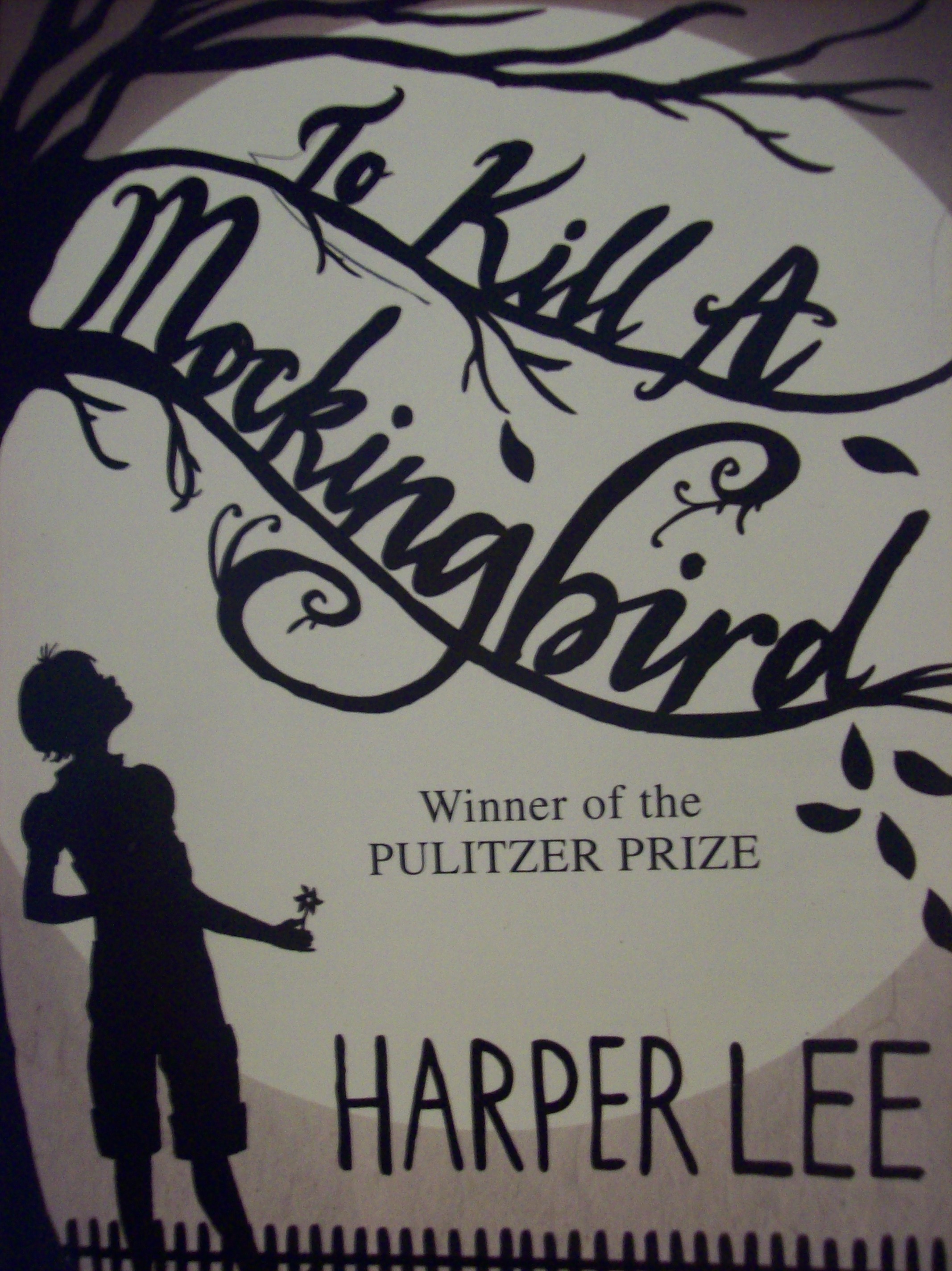
In 50 years, will the sequel also get a special commemorative edition?
To Kill a Mockingbird is one of the few extremely successful books that doesn’t get complained about too much. I’ve never heard anybody say he/she hated To Kill a Mockingbird. I’ve never heard anyone call it “a f***ing piece of sh**” or say they wasted precious hours of their lives reading it. The worst complaint I’ve heard is that it’s overrated. It probably is. No book can have as much acclaim as To Kill a Mockingbird does without being overrated, but I think that almost every bestseller or award-winning book is overrated. Once anything reaches a certain acclaimed status, it’s automatically overrated. But I’ve never heard anybody say that To Kill a Mockingbird sucks.
I’m pretty sure somebody’s going to hate the upcoming sequel. Just like book lovers are already ordering Harper Lee’s new novel ahead of time, there are others who already hate the idea of a sequel for To Kill a Mockingbird. Some even hate the title Go Set a Watchman. I believe in judging a book by its title, and I have no idea what Go Set a Watchman means, but I also had no idea what To Kill a Mockingbird meant either until I read it. To be honest, I might not have known what To Kill a Mockingbird meant until Gregory Peck as Atticus Finch explained it to Scout (and me). So it’s probably not fair to judge the title of the sequel yet.
I’ve found that when controversial things happen, it’s best to wait about six months to have an opinion. In six months, there’s usually been enough time to gather information about a given topic to have a well-informed opinion. In a little over six months, Go Set a Watchman will be released, and that will be the best time to think about having an opinion. A bunch of critics will have instant opinions about the sequel as soon as it gets released. Again, I will wait six months to have an opinion. I might even wait six months before I read the sequel. After I read the sequel, I might wait six months to have an opinion about it.
Sometimes, it’s best to have time to see what real effect a book or movie has on you. That’s why some critically panned books become classics and praised books are often forgotten after a few years. Yeah, it’s tough to wait six months to have an opinion. Lots of loud people form their opinions right away and start spouting off their opinions in really strong authoritative voices so that by the time six months is up, those of us who have taken our time in forming our opinions learn that our opinions don’t matter anymore.
One warning sign about Go Set a Watchman is that Harper Lee says she’s “happy as hell” that her sequel is finally being published. I’m happy that Harper is happy as hell, but a part of me wonders if “happy as hell” is code for “Please don’t let them publish this.” I don’t think I use “hell” to describe positive feelings. I “run like hell.” I get “mad as hell.” But I don’t think I’ve ever been “happy as hell.” When I think of happiness, hell is one of the last words I use as part of my simile. Maybe Harper Lee had just reread A Catcher in the Rye and was channeling her inner Holden Caulfield. Maybe “happy as hell” is code for somebody to write a sequel to A Catcher in the Rye.
Nobody really knows right now if Go Set a Watchman is any good. There’s a high probability it’ll be disappointing (I have nothing statistical or analytical to back up my claim), but even if the sequel is disappointing, it shouldn’t take anything away from To Kill a Mockingbird. All of those mediocre Corleone books didn’t diminish my love for The Godfather. That Scarlett sequel didn’t diminish Gone with the Wind at all. Dr. Sleep didn’t ruin The Shining for me. To me, the sequel is a no-lose situation. If it’s great, it’s another future classic to be enjoyed for generations. If it’s disappointing, in a few months we can pretend like it never happened. But for now, I have a good six months before I need to think about forming an opinion.
*****
What do you think? Are you looking forward to Go Set a Watchman, or are you dreading it? What other books should have a sequel written? What sequels shouldn’t have been written? Does “happy as hell” mean “really happy,” or is something sinister happening before our eyes? Is six months too long to form an opinion, or is it better to just instantly pick a side and defend it to the death?
*****
The Writing Prompt might never get a sequel, but if it does, I’ll be “happy as something better than hell.”
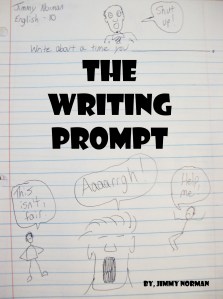
Now available on the Amazon Kindle!
A simple title and cover for such a complicated book.
Sometimes I want to read War and Peace by Leo Tolstoy, but every time I start reading it, I decide I don’t want to read it anymore. I think I should like it. It’s about war (unless the title is misleading), and I read war books. But if it’s about war, it seems to take a long time to get to the war. A novel titled War and Peace should start with the war and then get to the peace later. And that’s just my first complaint. When it comes to War and Peace, there are numerous reasons for a guy like me to not read it.
For one thing, War and Peace is really long. I don’t have the attention span for long books anymore. Also, those big, long books are heavy, and they hurt my neck, and when I download long books on my e-reader, it’s difficult for me to go back and flip pages to refresh my memory. I can do it, but it’s not as enjoyable as it is with a shorter, easier book.
To make matters worse, War and Peace is written in Russian. I don’t have anything against Russian. I just don’t understand the language, which means that I have to read a translated version of War and Peace. I don’t trust translations. A lot of an author’s voice and flowery prose (when I’m in the mood to appreciate it) can get messed up in a translation.
Plus, Russian names give me a headache. Again, I have nothing against Russian names, but some of them in War and Peace are long, and there are a lot of characters with long, similar names. Maybe it’s just a psychological thing with me. Maybe I’m just easily confused. At any rate, I have a tough time with the characters’ names in War and Peace.
Even though length and language are two decent reasons not to read a great novel, they might not be enough. If you think about it, War and Peace isn’t that long. When you compare War and Peace to a book series today like Game of Thrones, then War and Peace would be much shorter. And it’s been completed already. The reader doesn’t have to worry about the author dying before finishing the story. War and Peace is done. I’d rather read a long completed novel than an ongoing series that might not ever get finished.
Maybe the Russian names aren’t that bad either. Most people can figure out the names in Game of Thrones, and there are a lot of crazy names in that series. When I binge-watched Game of Thrones, I took the time to learn most of the names. If I can learn all (or most) of the names in Game of Thrones without reading the books, then I should be able to learn the names in War and Peace.
Plus, I’m pretty sure War and Peace is pretty good. It’s been translated into just about every language that literature can be translated into. That doesn’t happen arbitrarily. Sometimes classics are only classics because the academic types say they’re classics. I’m guessing that in the case of War and Peace, it’s a classic even without the help of literature professors. Maybe, just maybe, it’s worth the effort to read it.
Since War and Peace is public domain, anybody can rewrite it and Americanize all the Russian names. Maybe it would be a bastardization, but it might sell books. You could even call it a bastardization in the title. Leo Tolstoy’s War and Peace: The Bastardized American Version. I’d read a bastardized American version of War and Peace. I’d even write a bastardized version of War and Peace, except then I’d have to read then real version of it first.
War and Peace; The Bastardized American Version could be simple to write. Pierre Bezhukov could be renamed Peter Ryan. Prince Andrei Nikolayevich Bolkonsky would be renamed Prince Andy Brewer. The characters are still Russian, but the names would be much easier keep up with for guys like me. Every weapon from the early 19th century could be described with intricate detail. A bunch of ironically dismissive comments about the growing United States could be made by both French and Russian characters. It could be great.
If the modern author could keep the bastardized version to under 500 pages, I might be able to read it. But I wouldn’t be able to brag about it later. If I ever read War and Peace, I want to feel good about bragging about it later.
*****
What do you think? Is War and Peace worth reading? Can I brag about it if I finish reading it? What other classic novels would you like to read but probably won’t? Which translation of War and Peace is the best one? Does the translation even matter? Would you read the brand new Leo Tolstoy’s War and Peace: The Bastardized American Version?
*****
Thank you for reading this far. If you liked this blog post about War and Peace, you’ll probably enjoy these ebooks on Amazon. They don’t cost much, and they help to keep the blog going. Thanks again!
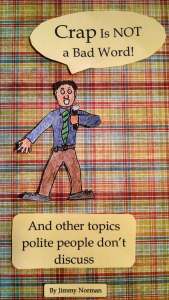

Now only 99 cents each on the Amazon Kindle!

(image via wikimedia)
As much as I love football, the worst part is the commercials. Nothing destroys the flow of the game like a series of commercials after kickoffs, turnovers, and short series punts, not to mention time-outs. And the worst game of all for commercials is the Super Bowl.
If the hype of the game itself has gotten out of control, the hype for Super Bowl commercials is even worse, with talk about how much time-slots cost, what stars are going to be in the ads, what new products are being introduced, etc..
Yeah, some of the commercials are funny, but the Super Bowl isn’t the time for funny. The Super Bowl is a serious game, and a funny creative commercial is still just a commercial that gets in the way of the game. And now I’ve just heard a news report (on a NEWS show) about a company promoting its Super Bowl commercials a week before the game. I won’t mention the product because they’ve already gotten enough free advertising (unless they want to pay me).
Since the hype for upcoming Super Bowl commercials has already begun, it’s the perfect time to present…
Let’s Talk Football: A Super Bowl Joke!!!
The Super Bowl to a hardcore football fan is like New Year’s Eve to a drunk: it’s annoying because that’s when the amateurs come out.
So when a hardcore football fan was invited to a Super Bowl party, he was actually dreading it because it would be packed with a bunch of amateurs (women and guys who didn’t really care about the football game) and all they’d do is talk about the commercials. Still, the hardcore football fan didn’t want to watch the big game by himself, so he decided to go.
And the party was worse than he thought it would be.
The amateurs cackled and guffawed at the commercials and talked really loudly about them during the game so that the hardcore football fan couldn’t hear the game commentary (If John Gruden’s not calling the game, the commentary doesn’t really matter, but still…).
During the halftime show, the hardcore football fan wanted to discuss the game, but everybody else was still ranking the commercials and talking about the teeny-bopper chick performing at the show.
When the third quarter resumed, the hardcore football fan tried to talk about the game some more, but the partiers were still discussing the teeny-bopper chick half-time performer and were still re-ranking the commercials after each new ad. The hardcore football fan had had enough (Using the phrase “had had enough” is grammatically correct in this situation).
The hardcore football fan couldn’t hear the game, and he was about to complain when the host approached him.
“I’m really sorry about this,” the host said, “but I’m going to have to ask you to leave.”
“What?” the hardcore football fan replied, exasperated even though he felt out of place. “But why?”
“Because people are complaining about you,” the host said. “Whenever you talk about the game, nobody else can hear the commercials.”
*****
This isn’t quite a true story, but I was told during a Super Bowl party a few years ago to shut up because other people couldn’t hear the commercials. This particularly offended me because these same people usually complained that I was too quiet (and I have a monotone voice).
Because of this, I’ll always be a little bitter towards Super Bowl commercials.
But enough about me! How do you watch the game? Do you like commercials better than the game? Ugh! What seemingly trivial event in your life has made you irrationally bitter?

(image via wikimedia)
Sometimes I think looking for books is more fun than actually reading them, but nobody in my family shares my passion for finding books that I might never even finish. So when I announced my intentions to go to the public library this morning, my wife was silent and my daughters groaned.
“You take too long,” my youngest said.
“Not true,” I proclaimed. Ever since my daughters put me on a timer a couple years ago, I’ve been able to get in and out of the library in under ten minutes.
“They don’t have any good books,” my oldest daughter said.
“Not true,” I countered. Our local library has almost as many good books as the book store, but the library atmosphere can’t compete with stores like Brick & Mortar Booksellers.
It was my fault my daughters didn’t want library books. I’d shown off too many blemishes in old books that I’d checked out in the past, green sticky substances that stuck pages together, red blotches that triggered the gag reflex, and brown stains that saturated several pages at a time. Grossing my daughters out with book blemishes was fun, but today I was to pay an expensive price.
Even though my wife didn’t want to go with me to the library, she asked me to check out a book for her, Not That Kind of Girl by Lena Dunham. I cringed. Checking out Lena Dunham‘s book was like purchasing feminine hygiene products. Plus, I’d heard that some strange things happened in her book, but maybe the strange things didn’t happen or if they did happen, they didn’t happen the way Dunham described them in the book.
If you want to make money writing about yourself, you probably have to do strange things or have strange things happen to you, and if they haven’t happened, then you have to pretend they happened. At any rate, I don’t know much about Lena Dunham, but I’d get her book if the library had it.
When I stepped into the library, I gave myself ten minutes and within my time limit found a spy novel, a biography, and an anthology of fantasy short stories. With my own personal goal accomplished, I checked the new releases in the nonfiction section for the Lena Dunham book, and it wasn’t there. When I turned to the check-out counter to ask about the book, I saw the cranky librarian on duty.
Don’t get me wrong; I like the cranky librarian. She can get through the entire check out process without saying a word. She snatches the library card from the patron’s outstretched hand, scans the card, and then slams it down on the counter (sometimes with a grunt). Some people find her rude, but I respect her.
When I asked the cranky librarian if they carried the Lena Dunham book, she snapped, “We don’t carry THAT book.”
“Oh, it was for my wife,” I said quickly.
I shouldn’t have sold out my wife like that. I don’t even know why I’d care whether the cranky librarian thought I’d want to read a Lena Dunham book. For all I know, Lena Dunham is proud that she wrote a THAT book, the kind that disgusts a cranky librarian. Then again, I don’t know the cranky librarian. Maybe to her, every book was THAT book. Maybe next time, I’d ask her about Pride and Prejudice or Emma and see her reaction. Nobody ever says anything negative about a Jane Austen book. If the cranky librarian called a Jane Austen book THAT book, then it was just the cranky librarian being cranky. Then her disgust for Lena Dunham’s book would be nothing special.
When I returned home with my three books, my wife and two daughters were putting on jackets and grabbing purses.
“We’re going to the bookstore,” my wife said. ‘You coming?”
I hugged my stack of books. “But I just got back from the… yeah, okay, sure.”
When we got to Brick & Mortar Booksellers, I told my daughters to stay out of the coffee shop. They weren’t allowed to buy overpriced drinks and brownies, even if it was their money, kind of. There was no need to remind them of my James Patterson policy. As soon as we entered the store, my wife pointed out the Lena Dunham book.
“Oh, good,” she said, pulling it from a shelf. “Hold this for me.”
I cringed. “Why don’t I carry your purse for you instead?”
“It’s just for a minute,” she said. But in matters like this, my wife has no sense of time.
She followed my daughters to the YA section, and I hunted the bargain bins for $6.99 hardcover overstocks with the Lena Dunham book stuck in my armpit. After a few minutes of staring at a bunch of mysteries and spy novels (most of them books I’d passed over at the library), my oldest daughter approached me with An Abundance of Katherines. John Green books are probably a little mature for her, but she’s already read The Fault in our Stars, so I figured she’d finish this one too.
“What?” I exclaimed at the price. “This is a paperback! How can a paperback cost this much? You could get it on your phone for half that.”
“It’s my money,” my daughter said.
“You’re right, you’re right,” I said. But I still thought charging as much as they did for a YA paperback was a scam.
A few minutes later, I saw my wife with two more books. I recognized the larger of the two, Guns, Germs and Steel by Jared Diamond. I inwardly groaned, but my groan wasn’t inward enough.
“What?” she asked. “It’s not any good?”
“We had that book for ten years,” I said. “I sold it last summer.” When we moved, I got rid of stacks of books I knew I’d never read again. “It’s interesting, kind of, but it gets bogged down in boring details.”
“You can say that about any nonfiction book,” my wife said.
Then I saw that she also was buying Cat’s Cradle by Kurt Vonnegut.
“We already have that,” I said with a sigh. Cat’s Cradle was in a hardbound book I owned that collected five Vonnegut novels. Yeah, it was a little heavy, but that’s what you get for five-books-in-one.
My wife rolled her eyes. “I don’t want to hurt my shoulders holding that thing,” she said. “Do you want me to hurt my shoulders?”
As we discussed the book situation, we found our youngest daughter sitting in a corner reading a book, Sisters, a graphic novel by Raina Telgemeier. “You going to buy that?” I asked.
She nodded and kept her eyes on the book.
“Let’s go pay,” I said.
When my wife saw the graphic novel, she said, “That’s just a comic book. She’ll finish that in 20 minutes.”
“I’ll read it,” I said. My oldest daughter would read it too when nobody was looking.
“She needs something more challenging.”
“I read comic books when I was a kid, and I turned out just fine,” I said. My logic was a bit flawed. I have turned into a literary pretender, but I’ll be proud if my daughter can get away with just pretending to read most of the classics too. It’s a useful skill.
As we walked to the check-out line, my wife stopped. “I’m not going to read all three of these,” she declared. “Which one should I get rid of?”
I was torn. Cat’s Cradle was the biggest waste because we already had it. I didn’t believe my wife would finish Guns, Germs, and Steel, and the Lena Dunham book was the most expensive book of the bunch. I wasn’t sure what to suggest.
“Put that one back,” she said, reaching for the Lena Dunham book in my armpit.
“You sure?” I said, trying to hide my relief.
“It’ll be cheaper in a few months.”
That’s one of the (many) reasons I love my wife; she is very practical. I felt a bit cheated, though, since all my cringing had been for nothing. And when we returned home, I was the only one who spent any time reading, when I was the only one who didn’t spent any money on books today. Strange.
*****
Geez, this was a lot longer that I originally intended!
Have you written something that went on much longer than you thought it would? If you’re writing about your life, how strange does it have to be? Is Lena Dunham’s book really THAT book, or was the cranky librarian just being cranky? What is the most non-strange thing you have ever written about?

(image via wikimedia)
Who knew that Mark Twain took a photograph while shirtless? I mean, Mark Twain is known for many things, such as writing classic literature like Tom Sawyer, Huckleberry Finn, A Connecticut Yankee in King Arthur’s Court, and The Prince and the Pauper. He was a satirist. He came up with a lot of great quotes. He hung out with Thomas Edison and Nikola Tesla, and there’s even early film footage of Mark Twain with his daughter.
But I just found out there’s a picture of Mark Twain shirtless. How have I lived almost 50 years without knowing that Mark Twain went shirtless? How can people NOT know about a shirtless Mark Twain?
I didn’t know that people back in the late 1800s ever went shirtless. I thought people back then were fully clothed at all times. Whenever I see a photo from the 1800s, I see layers and layers of clothes. Plus, taking photographs back then was a big deal. It wasn’t like today, where you could get your picture taken at any given moment. Back then, you had to make an effort to get your picture taken. In other words, Mark Twain had to deliberately take his shirt off before getting his picture taken. There was no way a photographer snapped that shirtless picture without Mark Twain’s permission.
And I’m pretty sure the photo is real. Photoshop and other technologies weren’t around in the 1800s to tinker with Twain’s torso. And if this photo had been tampered with recently, Twain would have a bunch of weird tattoos and a woman’s body, so I’m certain the photo is authentic.
Maybe Mark Twain was the first celebrity writer to go shirtless. Did Charles Dickens ever go shirtless? Did Edgar Allen Poe or O. Henry? I’ve seen Ernest Hemingway shirtless, but that was Hemingway being Hemingway, and other writers like Tennessee Williams and William Faulkner have taken pics without tops, but Twain was the first (I think) and the best.
Maybe a picture of Oscar Wilde shirtless will turn up. He had such cool hair that a shirtless Oscar Wilde would have had women throwing undergarments at him. That’s not sexist; I’ve seen women throw undergarments at shirtless guys before (yeah, it was in Las Vegas, but still…).
When I mention shirtless authors, I only mean male authors. It’s okay for a male like me to talk about male shirtless authors, but if I start talking about female shirtless authors, then I risk coming across as a pervert, and I don’t want to be thought of as that kind of blogger.
I thought Mark Twain looked pretty good in his shirtless picture. My opinion of Twain’s physique is probably irrelevant, so I showed my wife the shirtless Mark Twain to get her opinion.
She said: “Not bad for a writer.”
I know what she means. Even back then, writers must have had a sedentary lifestyle. If anything, it had to be worse. With no word processors, writing must have taken up a lot more time than it does now. I remember hand-writing all my stuff decades ago, and it was time-consuming, and it was a lot of sitting too. Somehow Mark Twain could write and still be kind of buff. I’m impressed.
It takes a lot of grit to take a picture shirtless. I haven’t done it in almost 30 years, when I posed with a weight lifter/bodybuilder. It didn’t take any guts for the bodybuilder to pose shirtless; he had a great body. Everything about him (that we could see) was bigger than me. The photo threw people off because I had a reputation as a serious guy and wasn’t the type to pose shirtless with a bodybuilder. If I had been known as a satirist, my peers would have understood, but I had a reputation as a serious guy. Twain was a known satirist, so his readers (hopefully) understood. My peers looked at the picture perplexed, and a couple people told me to start working out. One guy told me to get a tan.
What would Mark Twain do for satire if he were alive today? For some reason, I don’t think going shirtless would be enough for attention-grabbing satire. In this age of narcissistic selfie tweets, Twain might have to reveal much more than his chest. Maybe a known satirist could get away with it. If anybody else tweeted body parts lower than his stomach and called it satire, he’d be called a perv (and deserve it), but if Mark Twain had done it and called it satire, he could probably get away with it because everybody would already know he was a satirist.
Don’t get me wrong. I’m not condoning the Mark Twain body part tweet. I think it would be a bad idea. I’m just saying that if anybody could get away with it, it would be Mark Twain.
*****
What do you think? Which vintage authors would you like to see shirtless? Do you take pictures shirtless (women don’t need to answer; I’m not that kind of blogger.)? Could Mark Twain get away with the satirical body part tweet?


 Dysfunctional Literacy