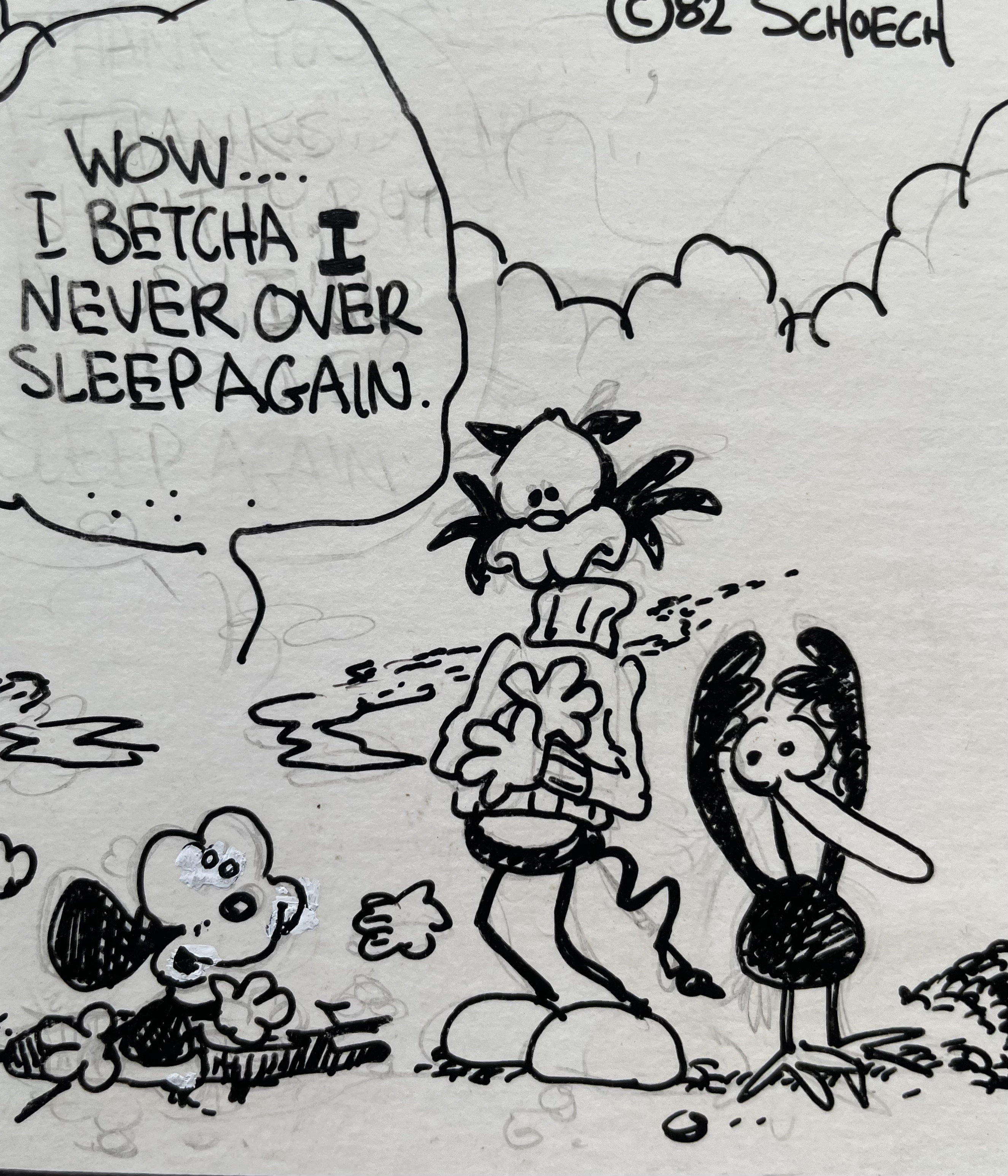
Like last weekend’s episode, today’s comic strip seems like a standard cat vs. mouse cartoon. But I’m telling you, things are going to change!



*****
For more Dummo Mouse, read Dummo Mouse and Friends: The Intro or Dummo Mouse and Friends: The Second Intro.
Or for a full-run of my older brother’s 1979 comic strip, start with The Lost Adventures of “Calloway the Castaway” Episode 1!
And come back next week for more Dummo Mouse and Friends!
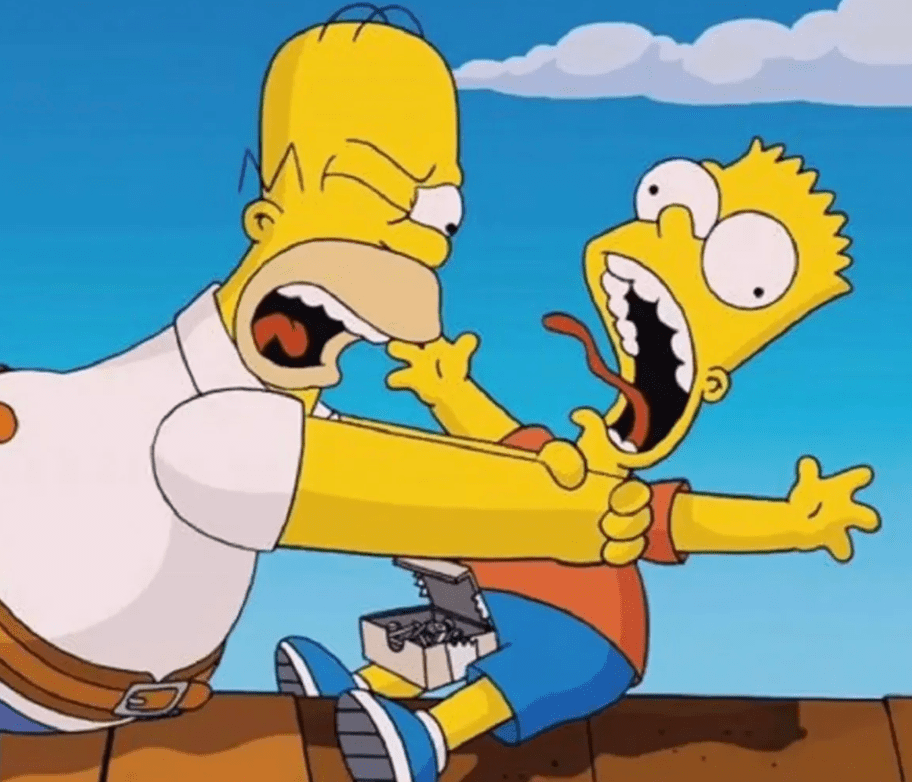
When I was growing up in the 1970s, it was considered okay to beat your kids in public. I’m not sure it was ‘okay.’ It might have been frowned upon, but bystanders rarely intervened. To me, it looked like it was okay because nobody ever did anything about parents who beat their children in front of a bunch of people. Everybody would just stand and watch.
When kids get smacked around in public now, it gets recorded and police seem to get involved (I have no statistics to back this up). In fact, I haven’t seen a good child beating in years. By ‘good,’ I don’t actually mean that it’s good. I guess I should choose my words more carefully.
In the mid to late 1970s, I saw a bunch of public child beatings that made an impression on me.
I saw a young mom beat the tar out of her son in a movie theater lobby. This was probably 1978 (I wasn’t keeping a diary of this stuff). After a minute or two of slapping, screaming, and punching, she dragged the kid out to the parking lot and beat him some more. My best friend was more entertained by the beating than he would be by the movie later on. He just munched on his popcorn, kept his eyes glued to the spectacle with a grin, and wondered out loud what the kid had done. After the movie, the beating was all he could talk about. He was almost proud of having been a witness.
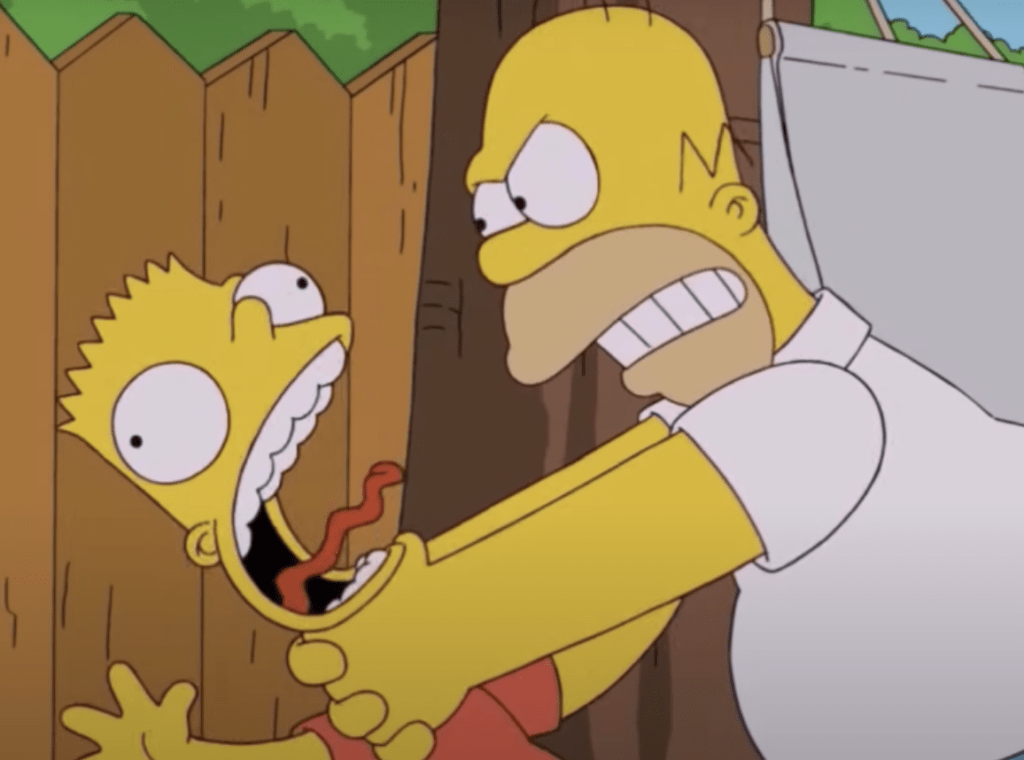
I saw a kid get beat down by his dad in a restaurant parking lot. The dad finished his beating by slamming the kid’s head against his car passenger window four or five times. At least, I think it was his dad. And I think it was his dad’s car. Maybe it was a random guy abusing a random kid and a random car. I don’t know. Nobody intervened. We just watched. I was just a kid and couldn’t have done anything, but my parents and a bunch of other adults just watched too. And then we went into the restaurant and ate. And nobody talked about it.
I saw parents beat their kids when I was a visitor in their homes. Thankfully, that didn’t happen often. That was always awkward, watching your friend get pelted by a mom or dad’s belt/strap while you’re trying to read a comic book or play a board game. What are you supposed to say to a friend after that?
“Wow! Your mom packs a mean swing!”
“I guess you just f***ed around and found out.”
“Your mom messed up the board. You want to start over?”
“You’d better put some ice on that.”
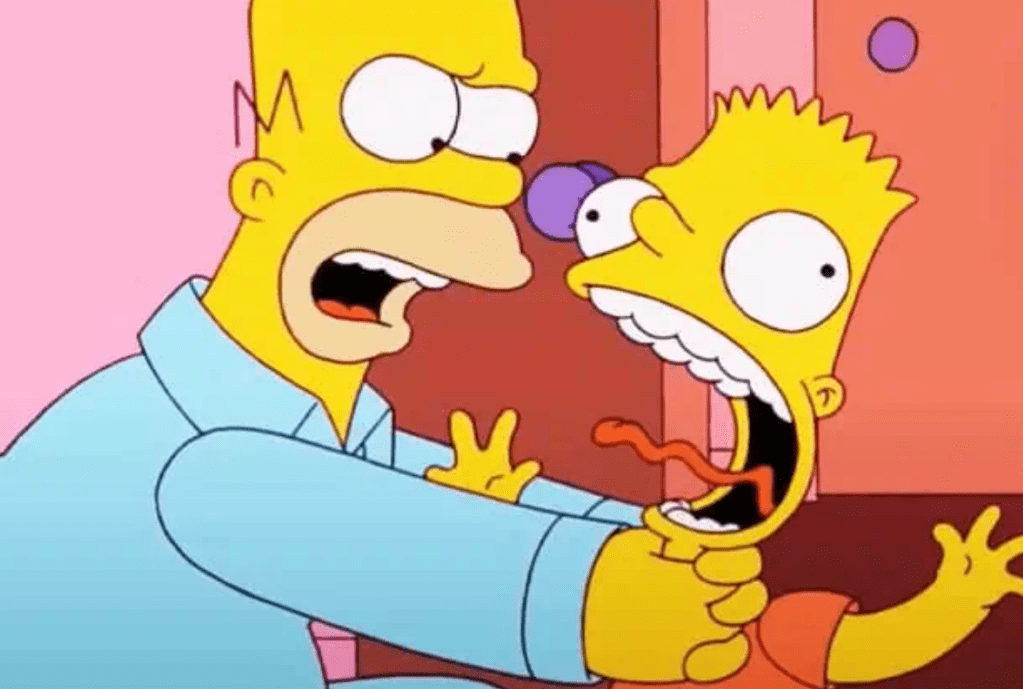
My own parents could get carried away with impulsive punishments, but I always knew I was safe when we had visitors. In fact, sometimes I invited friends over just to keep my parents on good behavior. At least my parents knew that some of their occasional impulse punishments were wrong. Public shame is an effective deterrent to some people. But a couple of my friends weren’t so fortunate.
A lot of what I saw would be considered child abuse today. Some of the stuff that happened to me would be considered child abuse today, but I don’t talk about it because I don’t want people looking at me like that. If you start talking about it, people look at you funny. I made that mistake once, so it’s better when you mention that you witnessed stuff rather than experiencing it. What I witnessed was worse anyway.
Nowadays, people seem more willing to talk about trauma than they were a few decades ago. Of course, when I was a kid, I couldn’t have cried in the car and then posted it on Tik-Tok. Social media didn’t exist. And if my dad had caught me crying in the car, he would have told me to stop or he’d give me a reason to cry. In fact, whenever I see a video of an adult crying about something in a car, my first impulse is to think, ‘What a lose….’ Aw, never mind. That’s just my upbringing. Maybe I should be more tolerant. Maybe I’m just jealous.
I’m glad people are more open about trauma than we were when I was growing up. A lot of adults stood around and watched (that still happens, but at least they record it, and the public/police reacts later), and people kept it to themselves (not so much anymore). I’m glad some aspects of abuse seem to be changing because a lot of the stuff that I witnessed when I was growing up is really tough to explain to people who weren’t there.
*****
And for more Old Things That Are Tough To Explain, see…
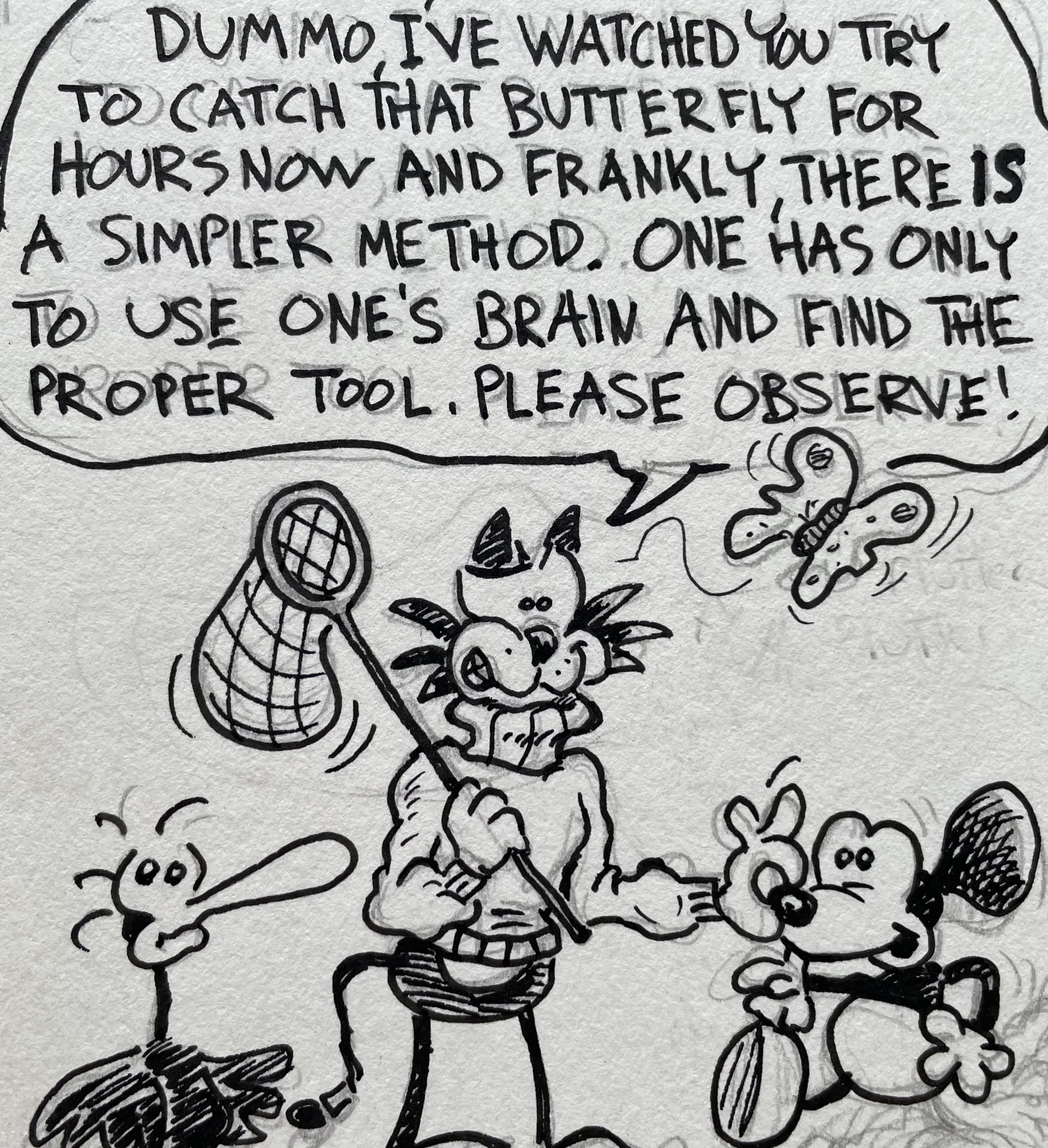
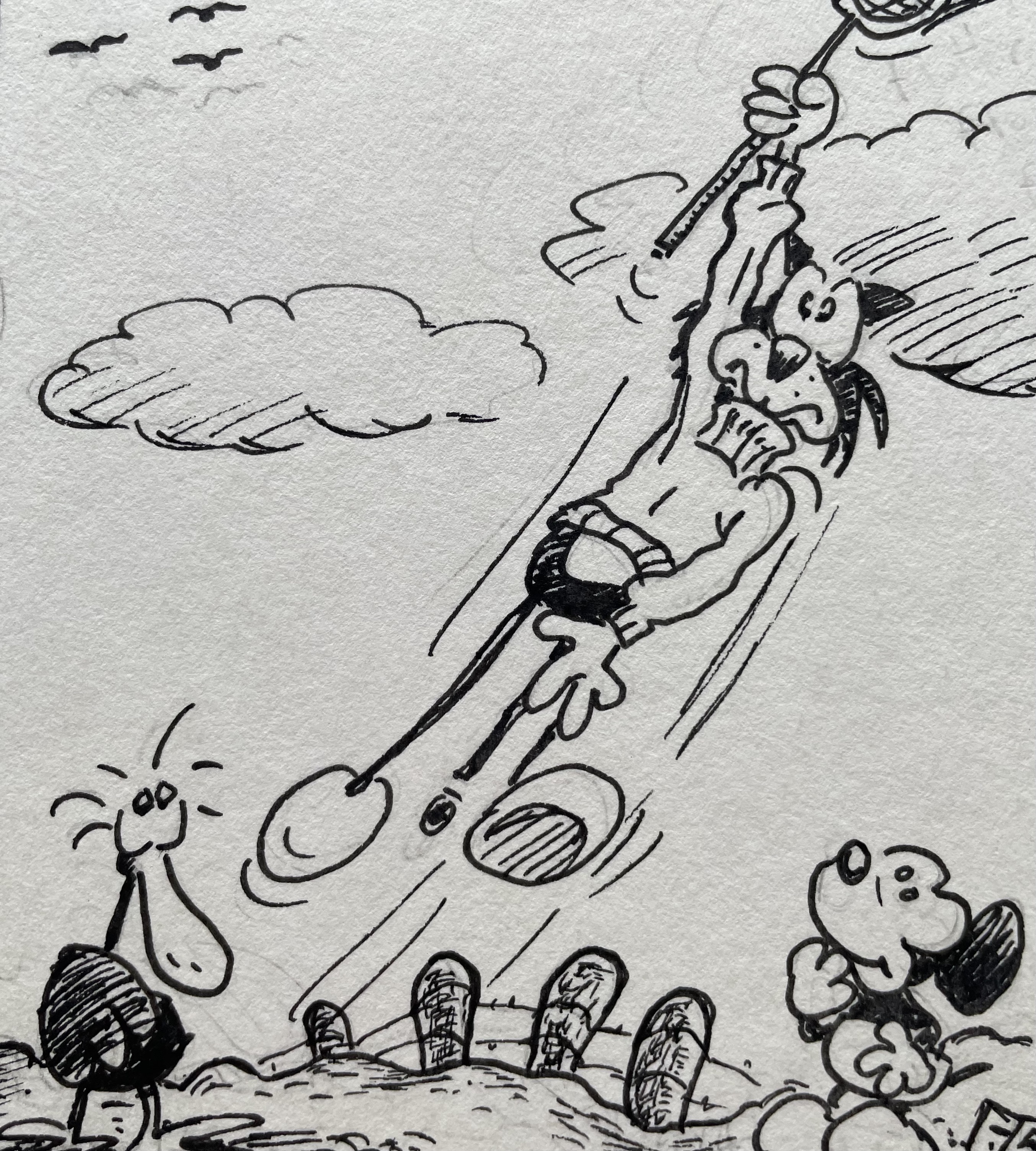
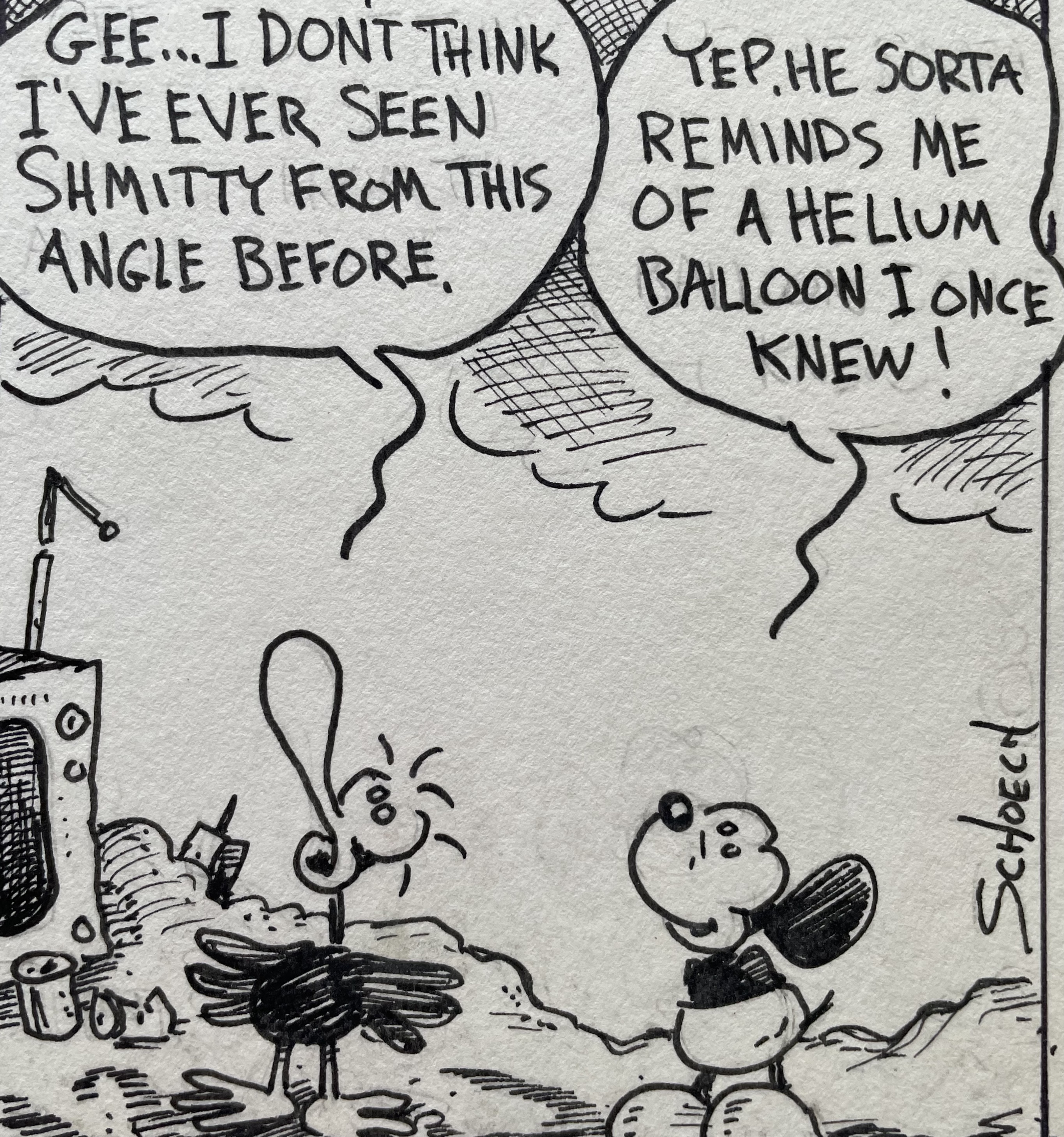
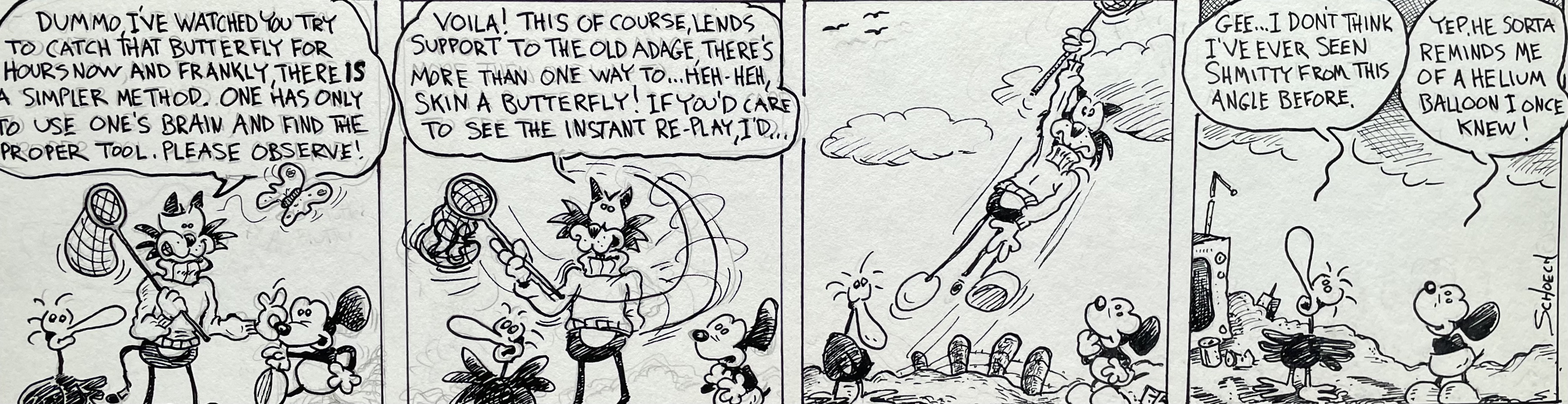
At first, it looked like my older brother’s Dummo Mouse comic strip from 1982 would be a typical cat vs. mouse comic strip, this time set in a junkyard. A few early comic strips like today’s might make it seem that way, but this one can be misleading. As we’ll see over the next few weeks, a cartoonist has to set things up before going all-out.

For more Dummo Mouse, read Dummo Mouse and Friends: The Intro or Dummo Mouse and Friends: The Second Intro.
Or for a full-run of my older brother’s 1979 comic strip, start with The Lost Adventures of “Calloway the Castaway” Episode 1!
And come back next week for more Dummo Mouse and Friends!
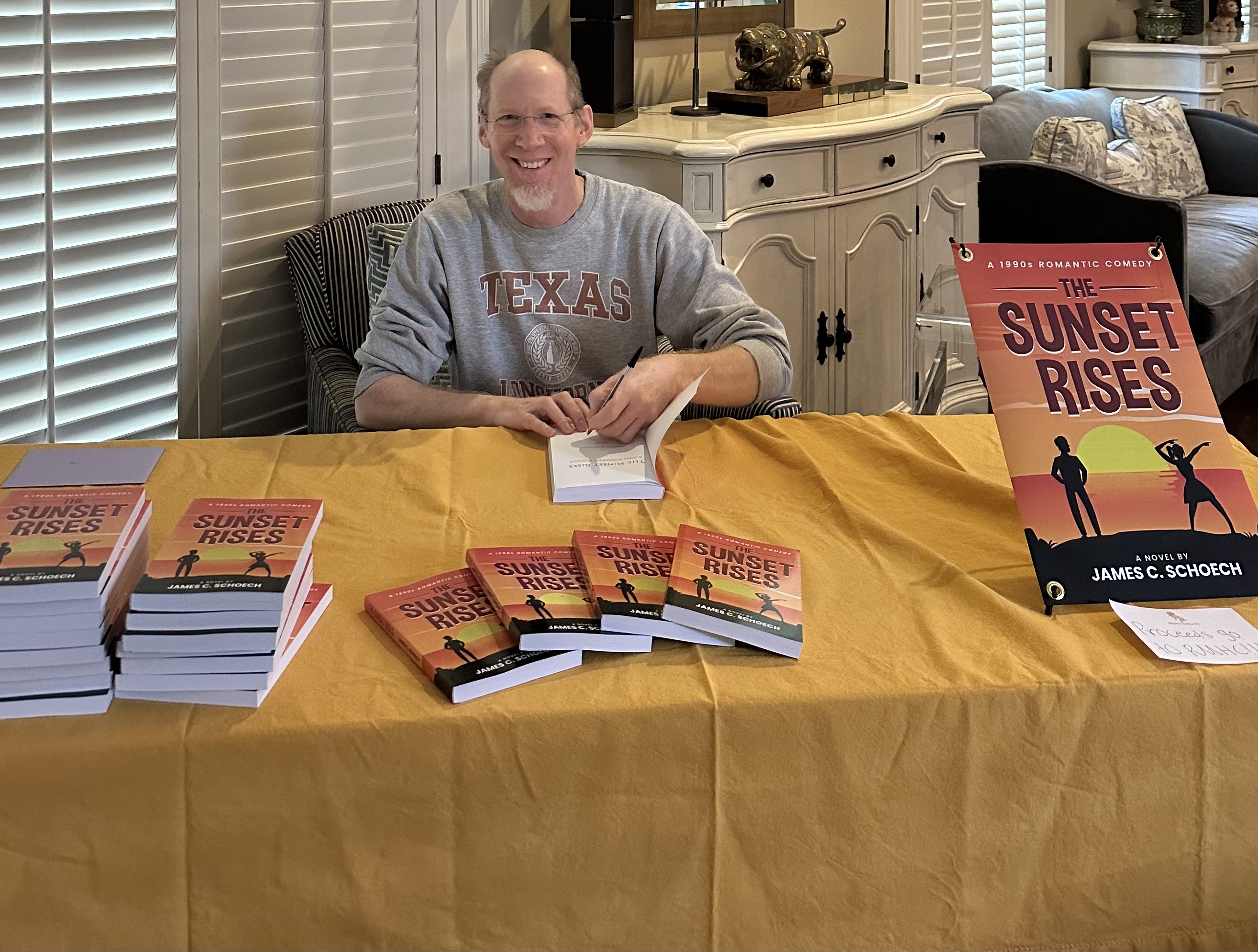
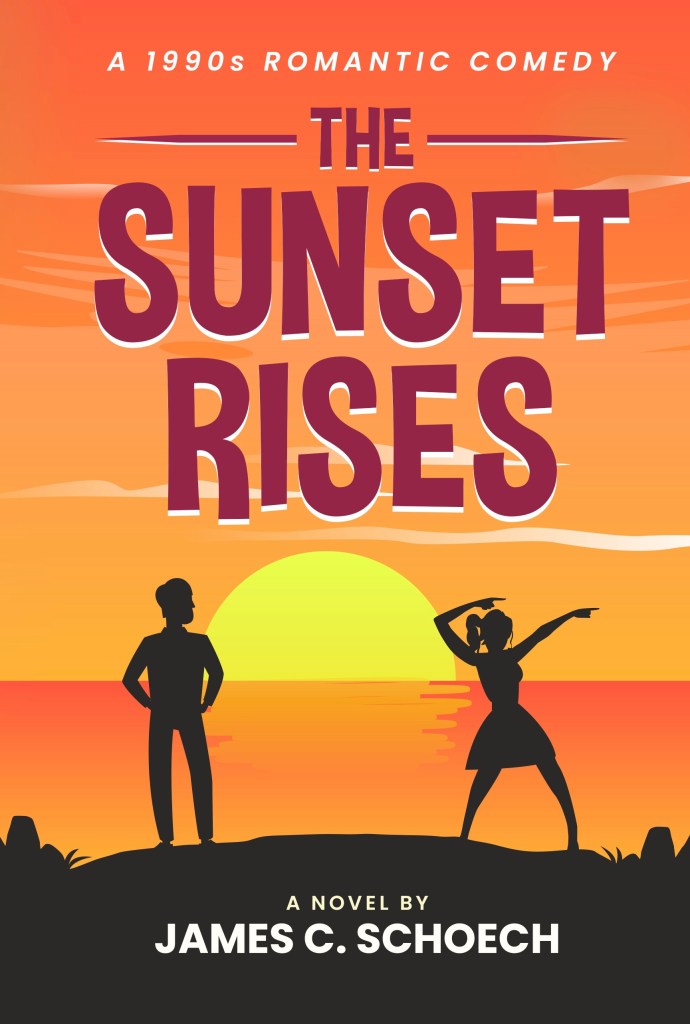
Even though I self-published my novel The Sunset Rises: A 1990s Romantic Comedy over a year ago, I’ve never done an official book signing. By ‘official,’ I mean going to a book store, arranging a table of my books (with the store’s permission), and sitting there for a set amount of time as customers walked by. I’ve kind of wanted to do one just to see what it’s like, but I’ve seen too many lonely, awkward book signings. I didn’t want to take the time and effort to set everything up only to have a lonely, awkward book signing.
I mean, I really wanted to avoid the lonely, awkward book signing.
There are two major problems with the lonely, awkward book signing. First, hardly anybody shows up (that’s the lonely part). Also, a lot of indie authors are kind of an awkward people (that’s the awkward part). I’m not insulting writers or indie authors; I’m just speaking for myself and some indie-authors that I’ve seen in the lonely, awkward situation. Even if the author isn’t awkward, the situation itself might seem awkward.
My college student daughter has been supportive of my book, even if she hasn’t finished reading it (that’s a separate issue). She’s known that I have wanted to do a book signing but also don’t want to have a lonely, awkward book signing. Even though my daughter has a lot of my personality, she’s not awkward, and she’s a very good organizer. Together, we came up with a way to do a ‘fake’ book signing that wouldn’t be lonely.
Awkward? I can’t do much about that.

I’m not sure who thought of what in this process. I think my daughter suggested that I try a book signing at one of her university events, especially one that a lot of fathers attend. I wanted fathers to be there because my book seems to appeal to that age group more than it does for college-aged women (who normally read romantic comedy novels).
Several of these family weekend events have fundraisers, so one of us thought of using the book as a way to donate to the event’s charity. In that way, people wouldn’t just be buying a book; they’d be donating to the charity (we’ll do anything for the children). And we made it clear that all the proceeds go to the charity.
Last weekend, we implemented our plan. We set up the book signing table (with permission) slightly out of the way in a high-traffic area within a weekend university event. My older brother, the cartoonist of the comic strips on this blog, was also there to fill in the gaps if my brain suddenly shut down during a conversation (it happens). He’s the talker in the family, the guy who won’t shut up. He’s even more capable of making normal situations awkward than I am, but it’s usually harmless and funny. He’s never gotten punched out for being awkward, so I consider that ‘harmless.’ He might have been threatened a couple times in his life for talking too much, though.
Anyway, he was at the table as well. He’s read the book twice (even I haven’t done that!), so he’s more of an expert than I am.

In 90 minutes, we sold 16 copies of the book and raised a decent/respectable amount of money for the charity that the event was fundraising for. We gave away 2 books, and 1 was stolen. I was actually proud that somebody stole my book. To be fair, it was just sitting on a random table, and somebody might have just taken it out of curiosity. The last copy was a backwards misprint, so I kept that one out of circulation. Those flawed first print variants can be worth a lot in 50 years.
At one point, a line actually formed. Most of the ‘customers’ asked questions about the book and the process. I tried to write more than just my name. I’ve been to a couple ‘official’ book signings, and the author just signed his/her name. It was a little impersonal. I understand that, though, because there were dozens, maybe hundreds, of people in line for the ‘real’ authors, so writing anything personal would have been nearly impossible.
After one hour, I was already tired of signing books and talking to people. It makes sense. If I can barely handle a five-minute birthday party, then a one-hour book signing is a stretch for me. I probably won’t do a real book signing. Even though I like my book, there probably won’t be a demand for a book signing, and I’m not going to force the issue.
I know how to handle future lonely awkward book signings that I run into at local book stores. In the past, I’ve avoided other authors’ lonely, awkward book signings (I’m not proud of that). Now I know to ask questions and have an actual conversation with the author. Normal people (if they exist) already know how to ask questions during a book signing without having experienced one before, but I guess that’s part of what makes me awkward.
From now on when I see an indie-author book signing, I’ll talk to the author and ask questions about the book, how the author gets his/her ideas, what the author plans to do next. I won’t talk about my own book (unless the topic of how to avoid lonely, awkward book signings comes up). The book signing is for the author. And even if I don’t purchase the book, the author will probably appreciate having had the conversation.
I’m not sure if our book signing last weekend was real or fake. It was real because I signed the books and put effort into it. It was ‘fake’ because it wasn’t at a book store and all the money went to charity (people weren’t really buying the book to buy the book). I’m not insulting the book signing. I think the ‘fake’ book signing was much more successful than any real book signing that I could have done. At the very least, we avoided the lonely, awkward book signing. We might have also accidentally discovered a book signing template that other indie authors (without a network) can use.
And hopefully the money that was raised will do some good!
Thank you, daughter! Thank you, brother! And thank you to everybody at the university who came out and supported the event!
HOW TO AVOID A LONELY, AWKWARD BOOK SIGNING: SHORT VERSION (maybe this should have been at the top of my post)
If you’re an indie-author, here’s how to avoid a lonely, awkward book signing:
* Choose a busy event or busy location.
* Sell the book cheap.
* Have a talker who attracts people and/or keeps conversations going.
* Donate the proceeds to charity.
And here’s how to get a signed copy from the trunk of my car.
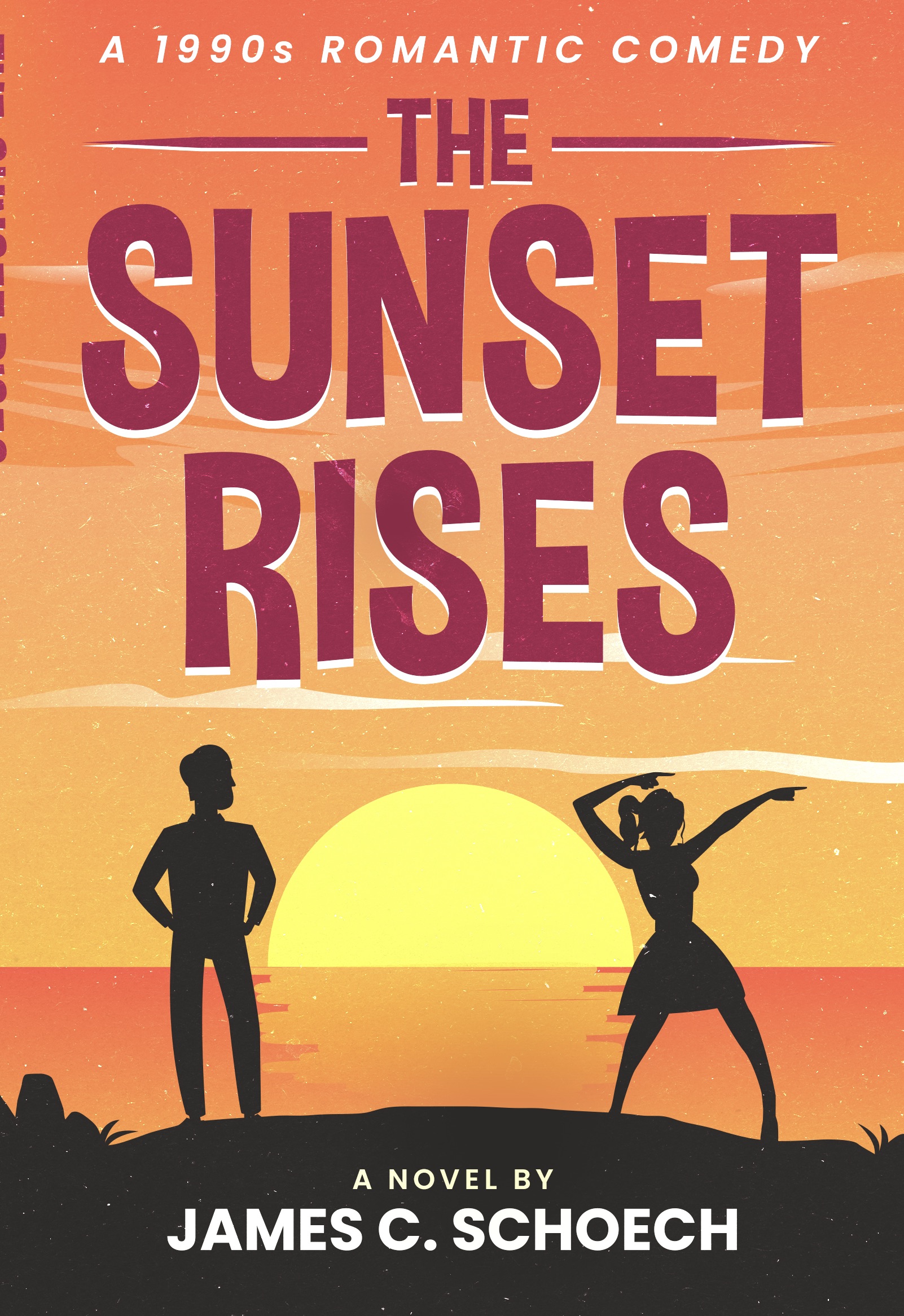
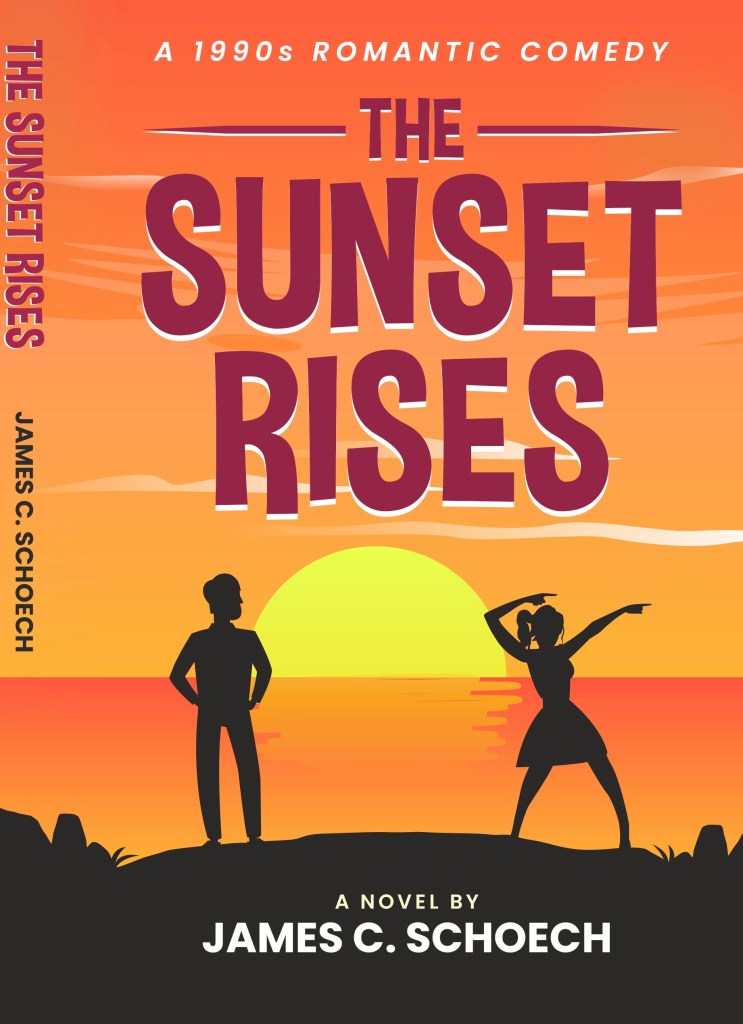
The Sunset Rises: A 1990s Romantic Comedy
Get a signed copy of my one and only novel, The Sunset Rises: A 1990s Romantic Comedy. Free delivery in the United States!
$10.00
For more about The Sunset Rises: A 1990s Romantic Comedy, see…
Aaarrrgh! I Found Mistakes in My Recently Published Book!
The Main Character Of My Novel Is Not A Simp!
The Evolution of a Book Cover- The Sunset Rises: A 1990s Romantic Comedy
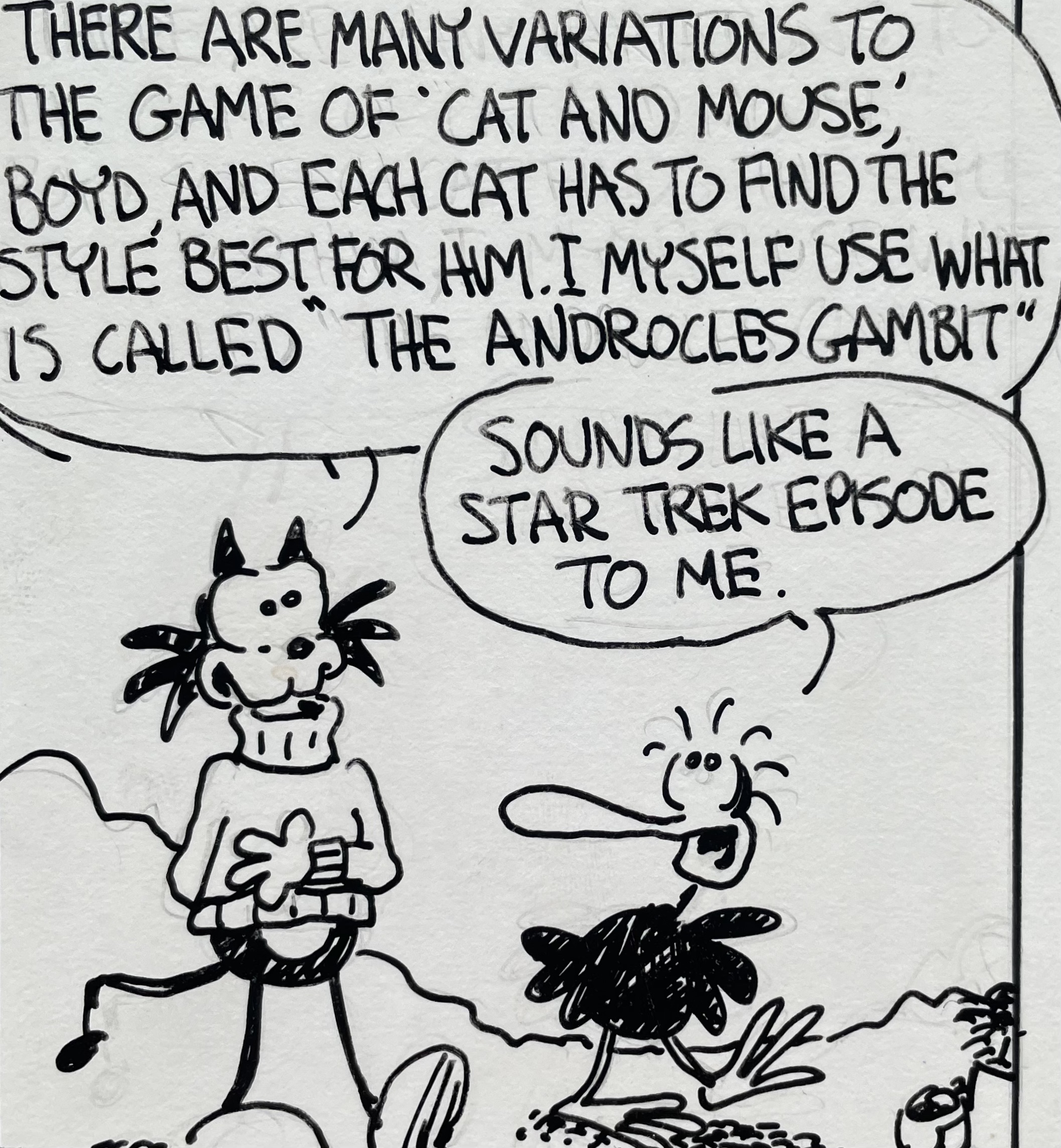
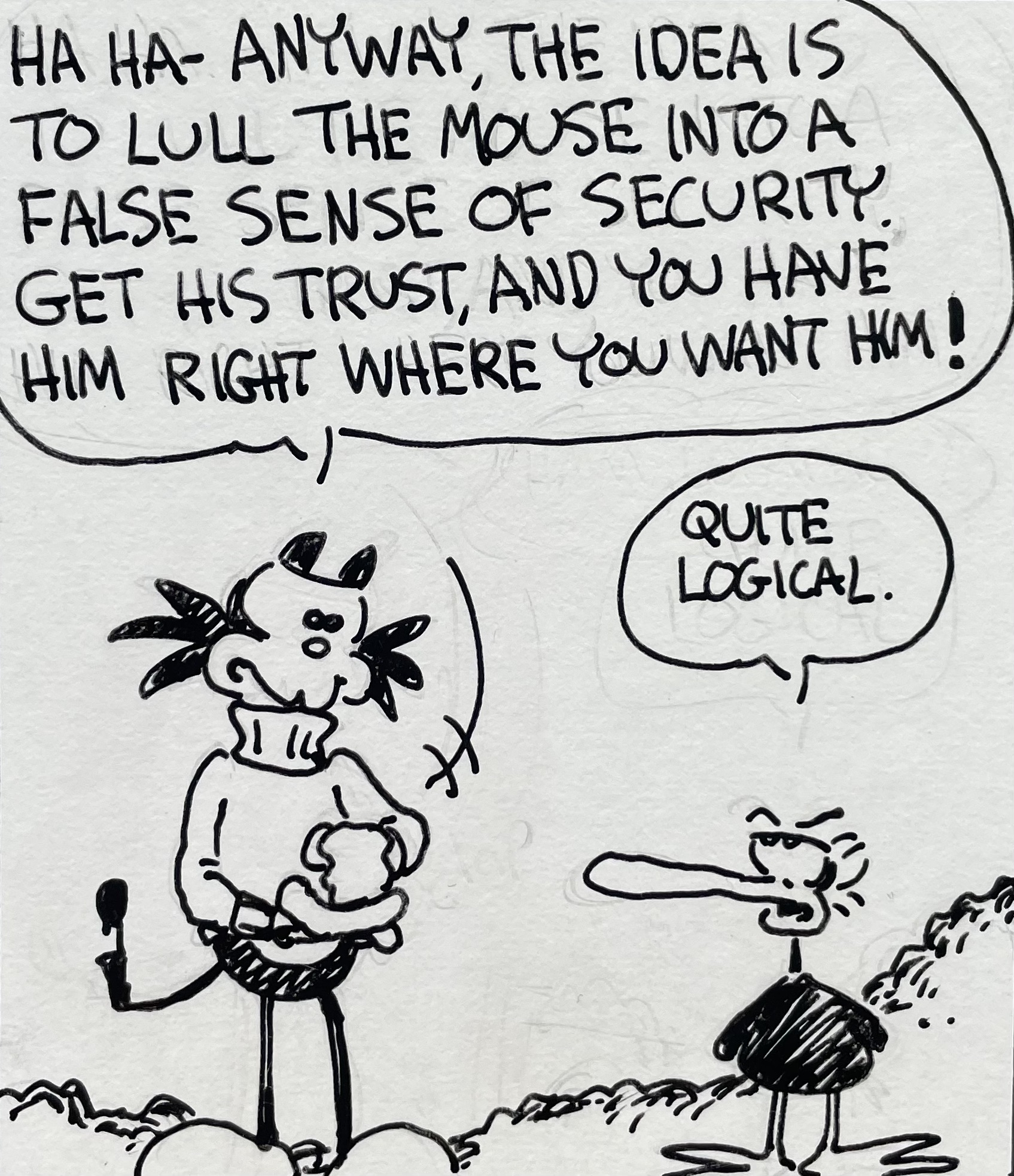
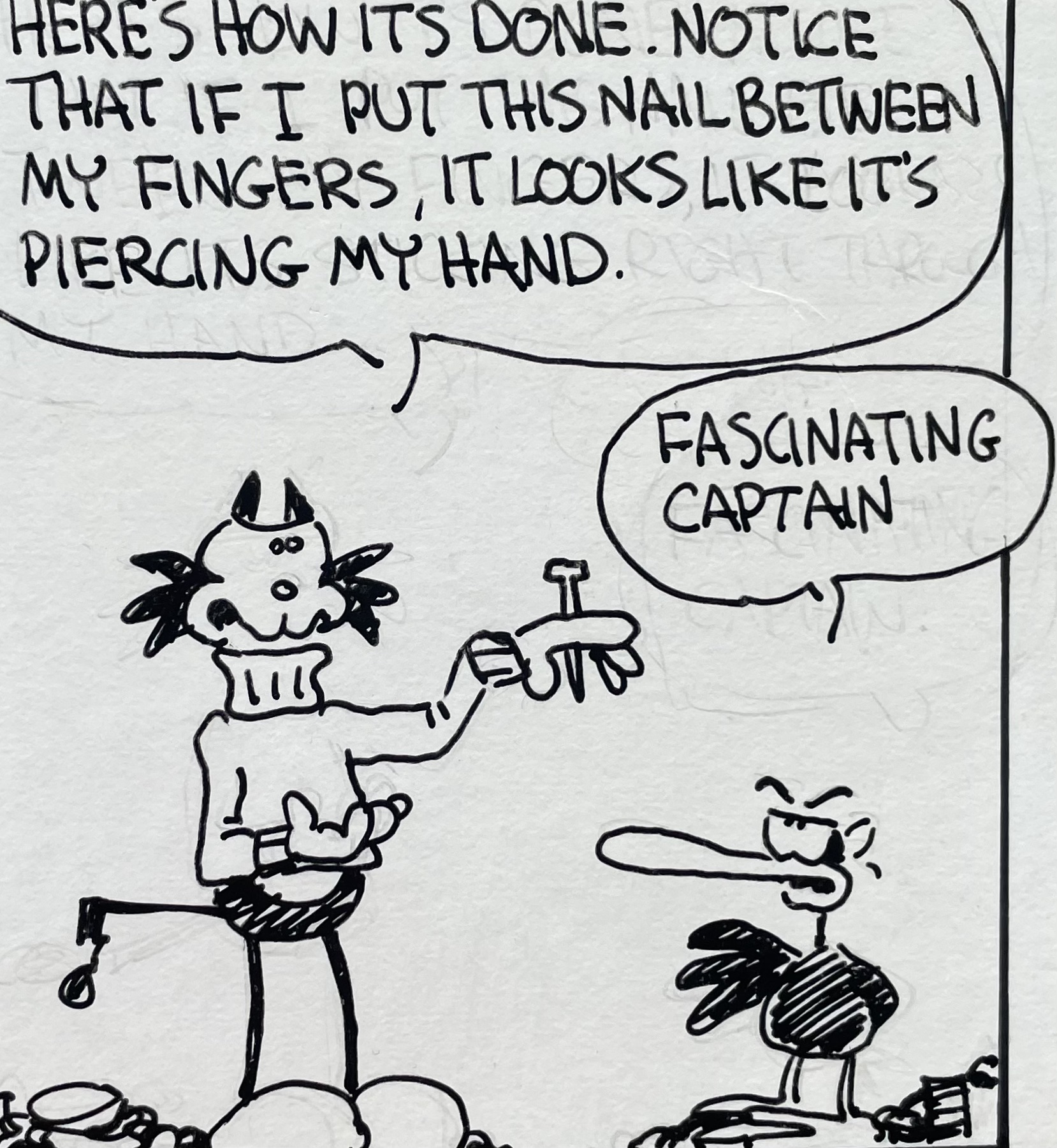
I’m not sure if the Star Trek humor in this Dummo Mouse comic strip that my older brother drew in the 1980s still holds up. Back in 1982, there was only the original Star Trek series with William Shatner and Leonard Nimoy from the 1960s, and maybe one Star Trek movie. The other series like The Next Generation were years (or decades) away. Still, almost everybody back then understood Star Trek references.
Nowadays? I’m not so sure.
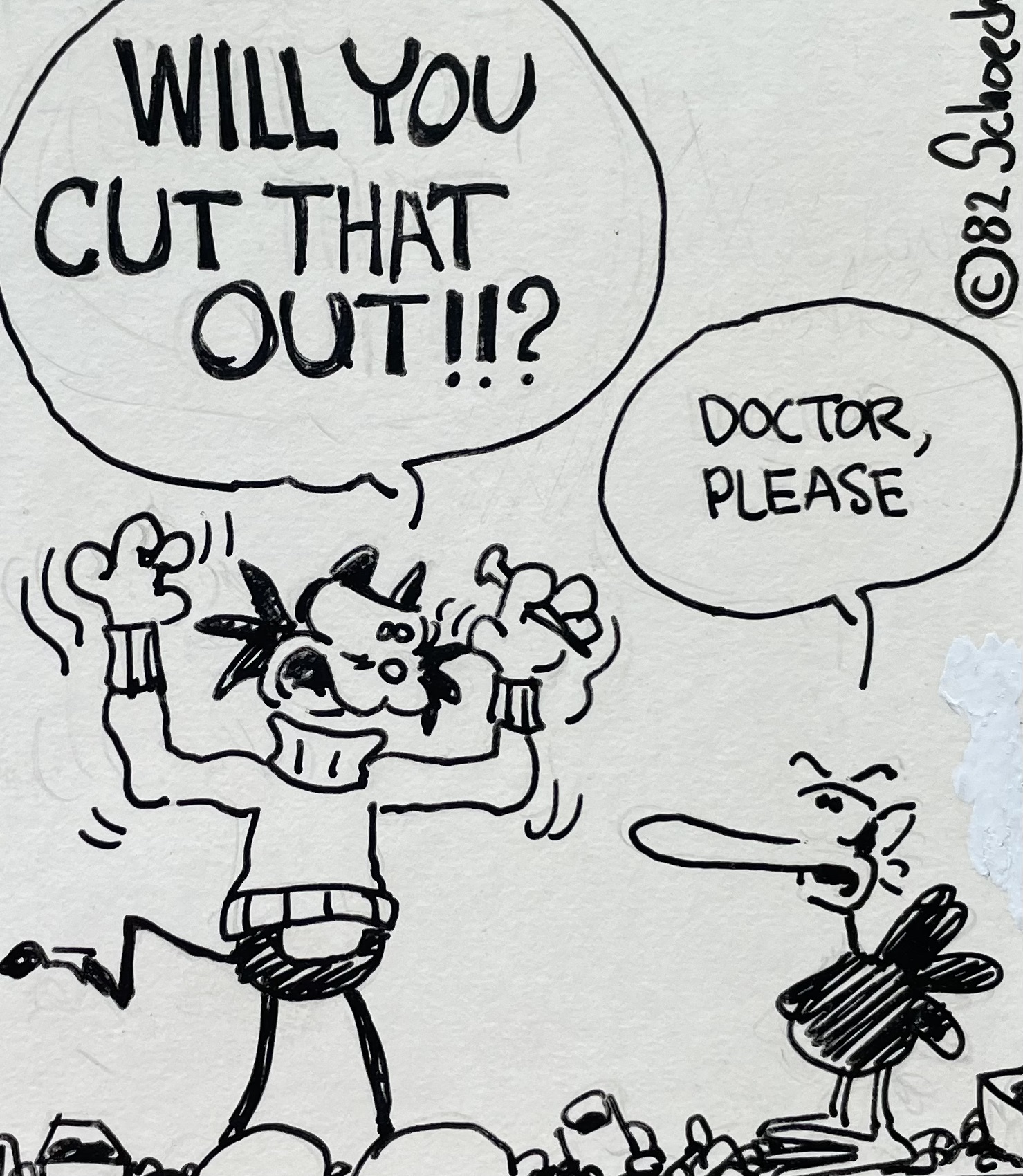
If you like your 1980s comic strips to NOT have Star Trek references, try Dummo Mouse and Friends: The Intro or Dummo Mouse and Friends: The Second Intro.
Or if you like a comic strip that’s somewhat like Star trek, start with The Lost Adventures of “Calloway the Castaway” Episode 1!
And come back next week for more Dummo Mouse and Friends!
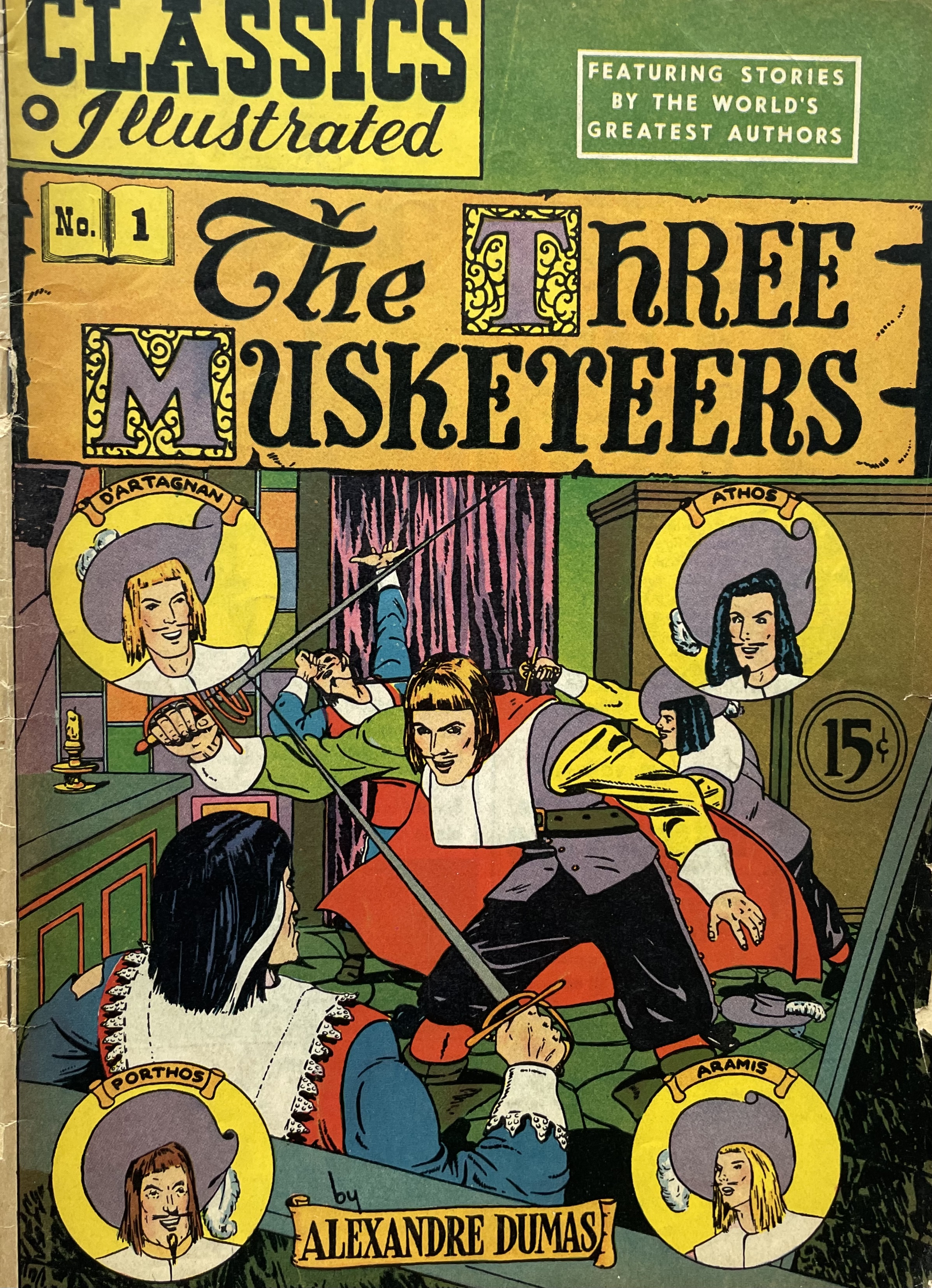
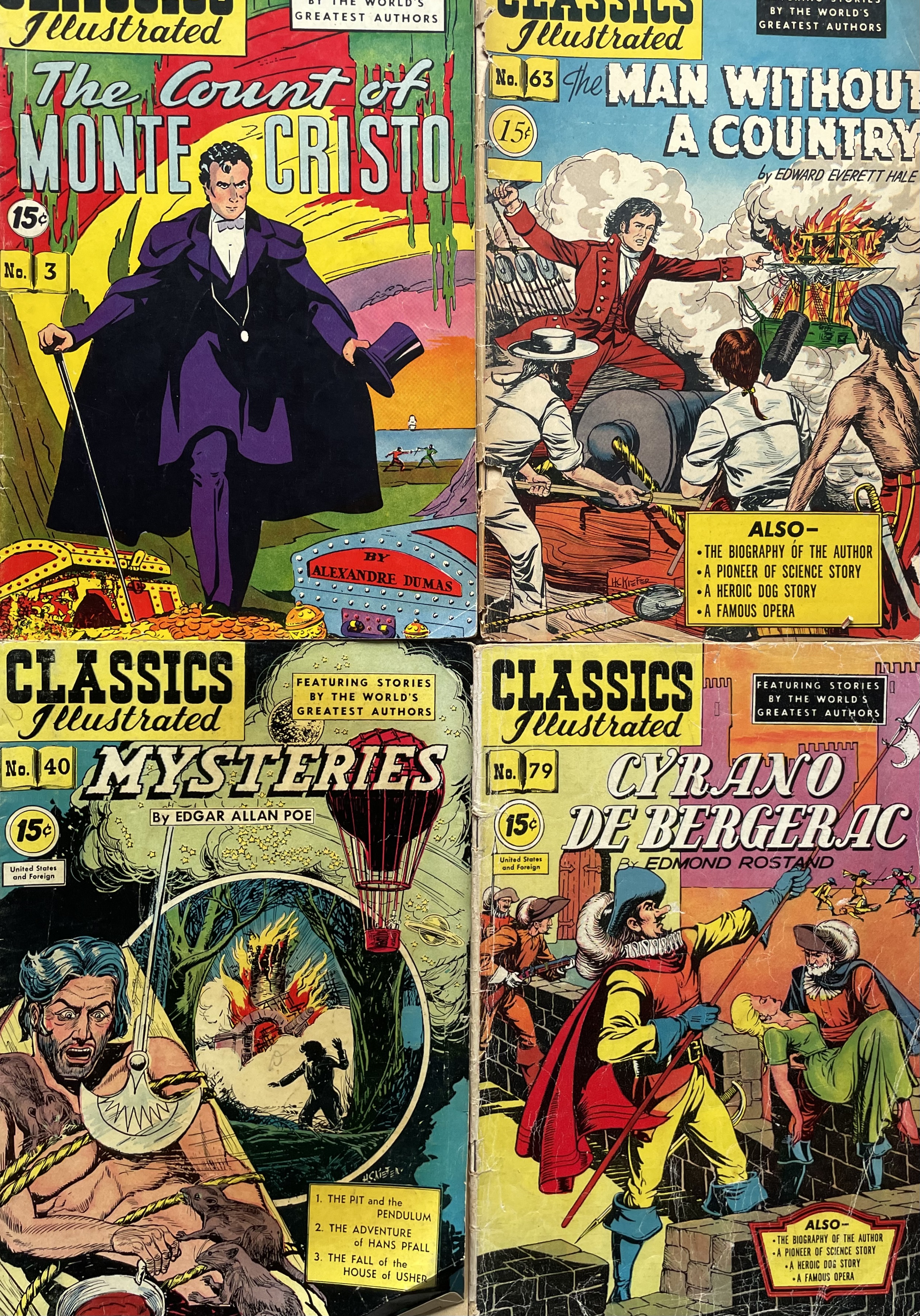
The Classics Illustrated comic book version of The Three Musketeers by Alexandre Dumas was probably my gateway comic book to the classic novels. I read this (above) comic book when I was about 6 or 7 years old. Somewhere around that time, the 1970s move adaptation of The Three Musketeers came out, and the combination of the comic book and the movie (with its sequel The Four Musketeers) made me almost obsessed with the story. This was pre-internet and pre-cable television, so there wasn’t much for resources except the local library or local bookstores (if you had them).
My family was loud and somewhat violent and had weird stuff going on (that I didn’t know was weird until I was an adult), but we always had a bunch of stuff to read around the house. My family had a subscription to the daily newspaper delivered to out front porch every morning. We had old hardback novels on book shelves. We had several magazine subscriptions. My older brother and I were both allowed to collect comic books. And my dad had even kept his small collection of Classics Illustrated comic books stored in a small cabinet in my parent’s bedroom.
There was also that… ‘secret’… magazine collection. But I didn’t find that until I was older.
Anyway, back to Classics Illustrated!
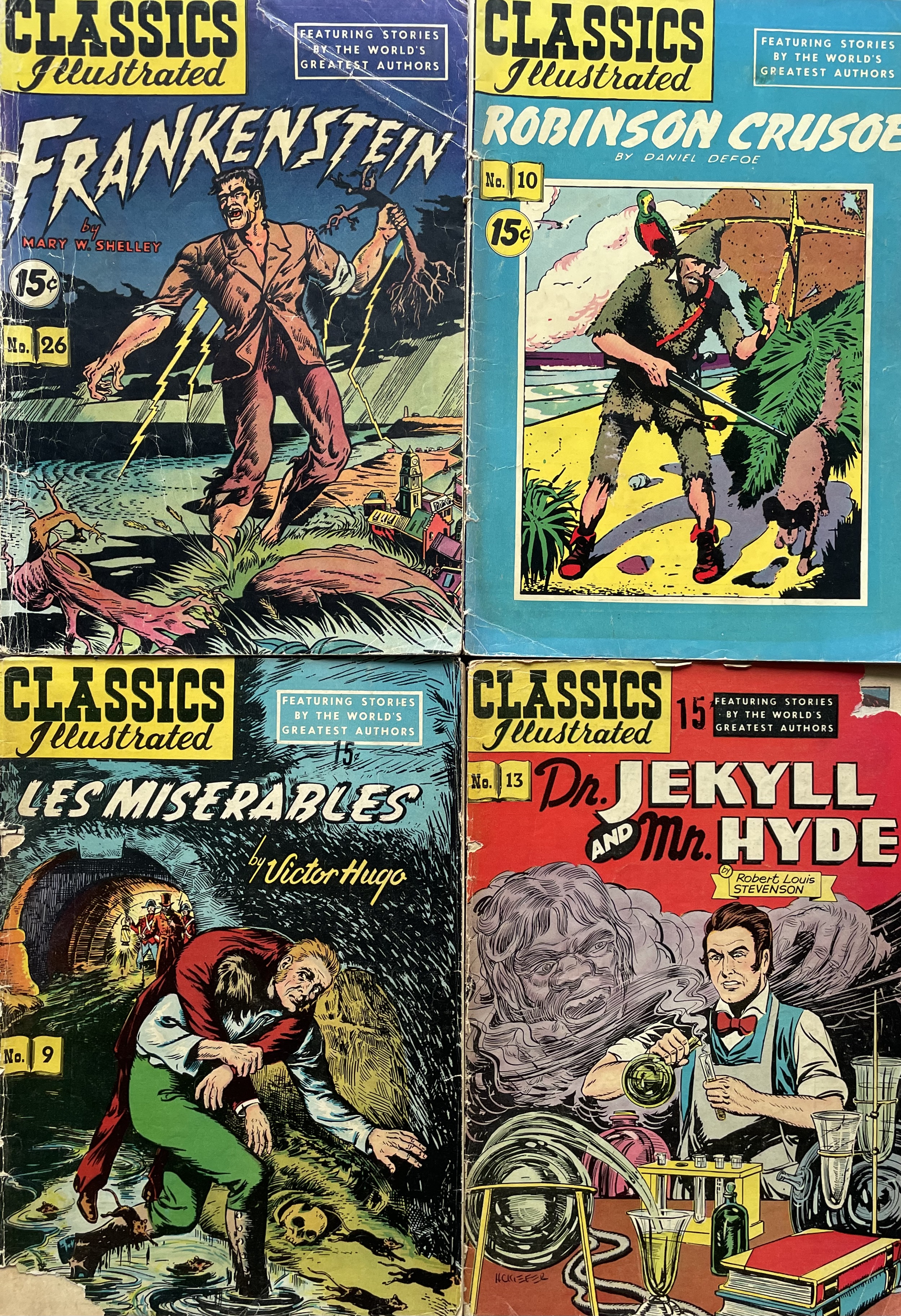
Even though I preferred Marvel Comics (or even the occasional DC), every once in a while I’d pull out those old crusty Classics Illustrated comic books and read a few at a time, especially during the summers. These comics were old, even by 1970s standards. It looks like the copies my dad kept were from a series that had started in 1947, so back then they were already around 30 years old. Keep in mind, the earliest Marvel Comics were from 1961, so any comic from the 1950s or even earlier was considered ancient by comic book standards (at least they were from the perspective of an elementary school kid).
When I was in 3rd or 4th grade, I somehow found a copy of an abridged adaptation of The Three Musketeers with some detailed illustrations. Since I’d seen the movie and read the comic book, I didn’t need the visual help of the pictures for my imagination, but they were still cool. I think I lent my original copy to somebody else and never got it back, and then I found a beat up copy years later as an adult at a used book store. Maybe it was a frivolous buy. I already knew how the novel ended.
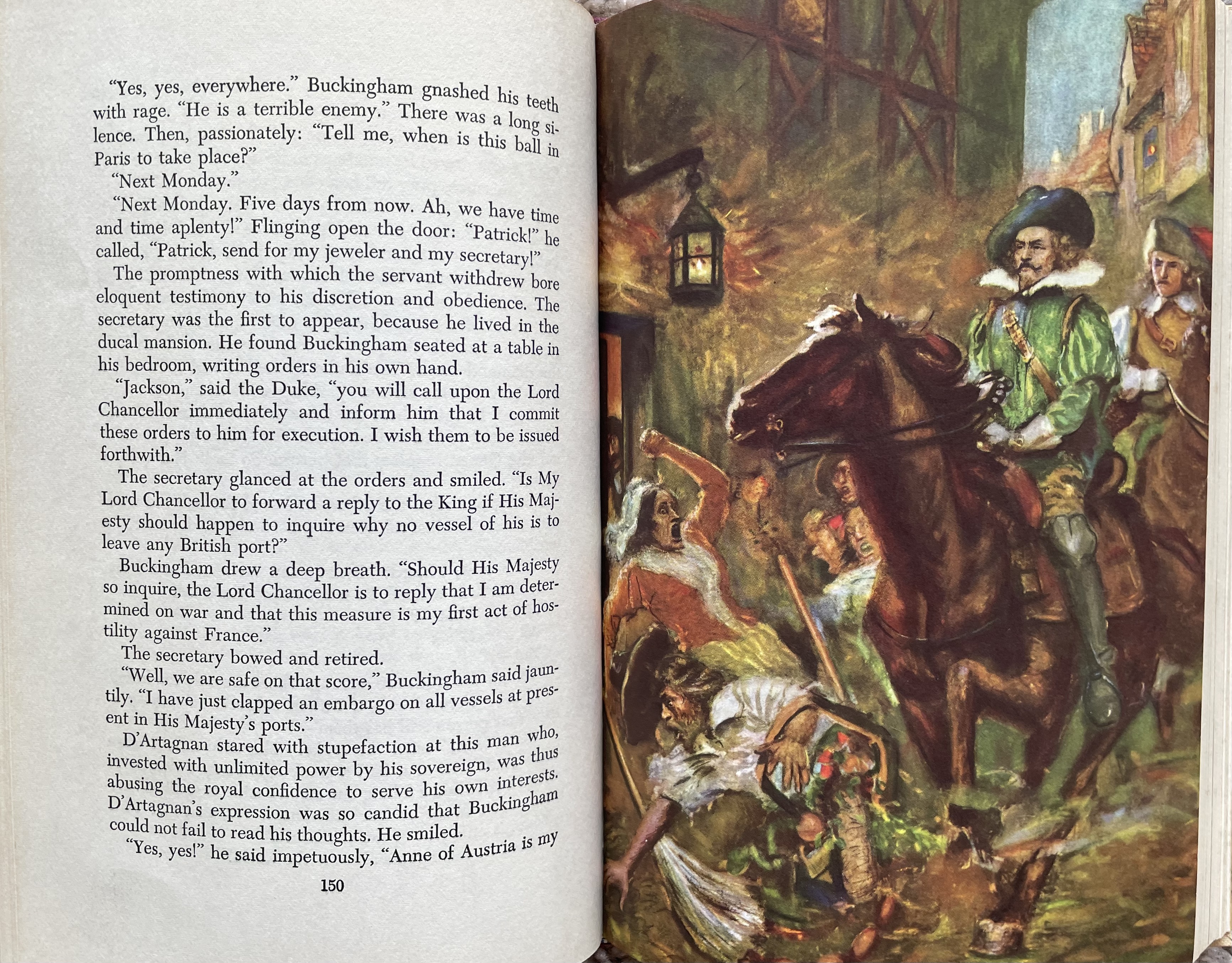
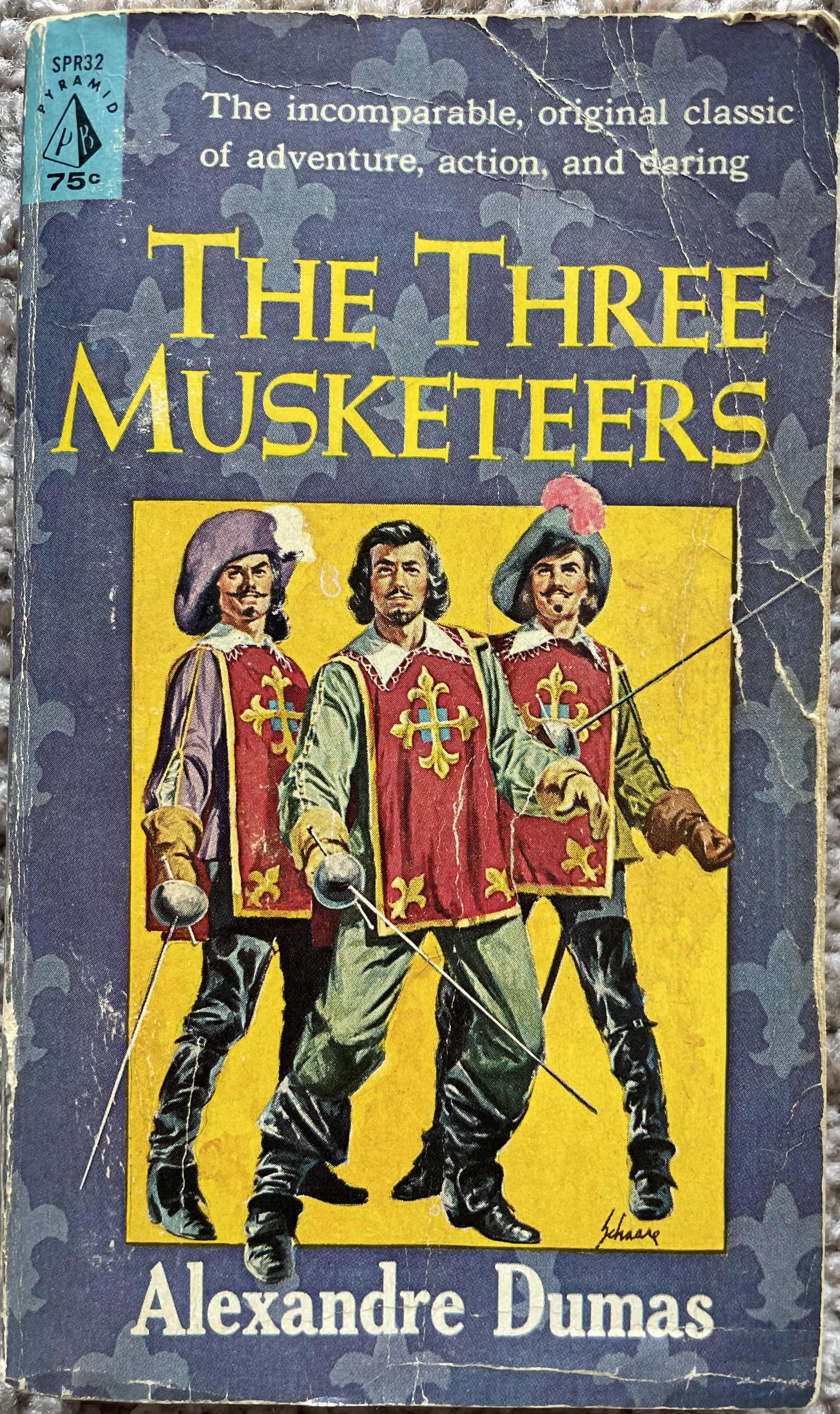
When I was in 8th grade, I found an old paperback copy of The Three Musketeers at the local thrift store in my hometown. The thrift store had a pretty decent used book collection for a dumpy store (now that I think about it, all used books stores back then were dumpy too), and I took up the challenge of reading an unabridged version with tiny print. The book itself actually wasn’t much of a challenge. The small print, however, might have ruined my eyesight. A few months later, I failed a vision test at school and had to get glasses. I blame books with small print like this copy of The Three Musketeers.
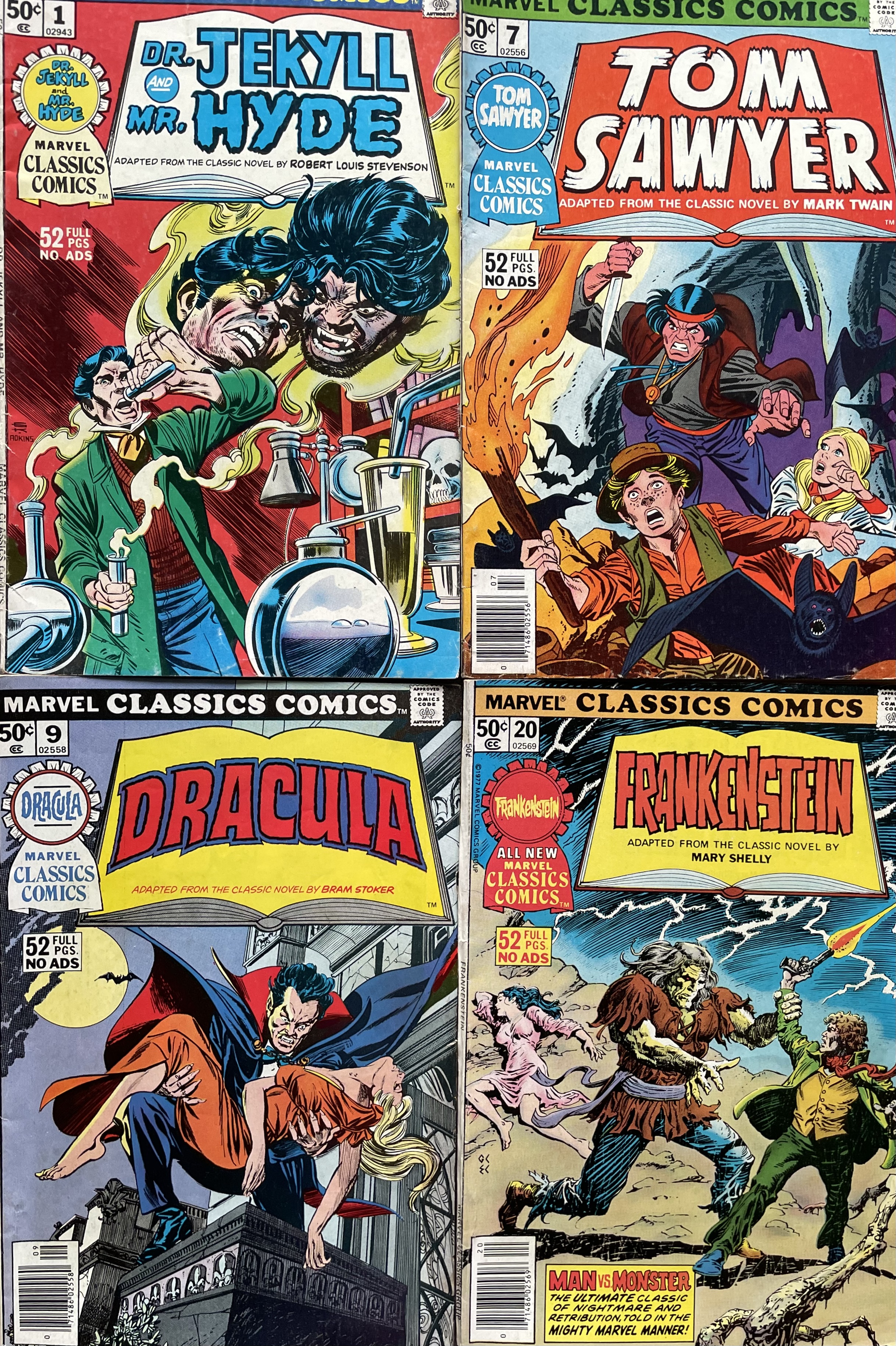
Marvel Comics started putting out their own version of classic comics in the 1970s, but I didn’t think they were as good. The art might technically have been better. The individual illustrations looked more realistic and more detailed than some of the crude (and maybe rushed) drawings in the old Classics Illustrated, but the stories in the old comics were clearer and had more details. If you read a Marvel Comics classic comic after reading an old Classics Illustrated, you knew that the Marvel version left out a lot of details.
The idea of comic books based on classic novels is kind of cool, but not every classic comic book is appealing enough to get young interested. Some classic novels have stories that aren’t visually appealing in comic book (or graphic novel) form, and very few artists can draw period pieces and then tell a story at the same time. Drawing a good classic comic book is probably more difficult than drawing a good superhero comic book. And it probably doesn’t pay as much.
I tended to read the adventure novels, and I’m still like that today. When I read, I don’t like anything too deep or too heavy, not in literary fiction and not in classics. War and Peace by Leo Tolstoy? Too many characters with confusing Russian names. Anything by Charles Dickens? Headache inducing! Moby Dick by Hermann Melville? Haha! Moby Dick!
I can read that stuff if I want to, but I don’t want to. And I don’t have to anymore. I’m not saying that I’d never have read classic literature on my own without these Classics Illustrated comic books, but I’m pretty sure I never would have read classic literature on my own without these Classics Illustrated comic books.
*****
Maybe in 50 years, there’ll be a classic comic book adaptation of The Sunset Rises: A 1990s Romantic Comedy!
*****
A grammar-obsessed English teacher falls in ‘luuuvvv’ but discovers how chaotic and dangerous ‘luuuvvv’ can be
Let’s get straight to the comic strip this week.
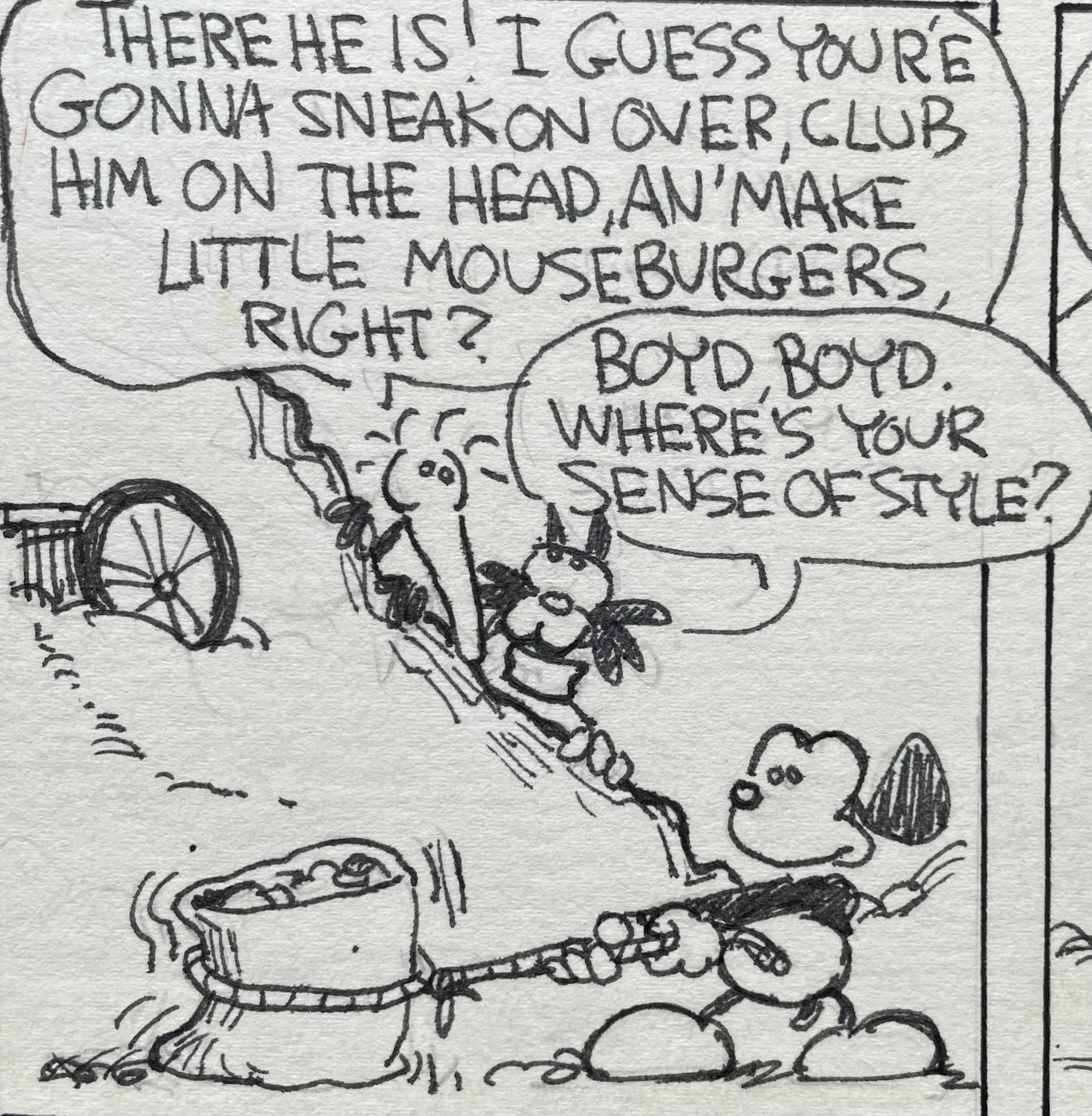

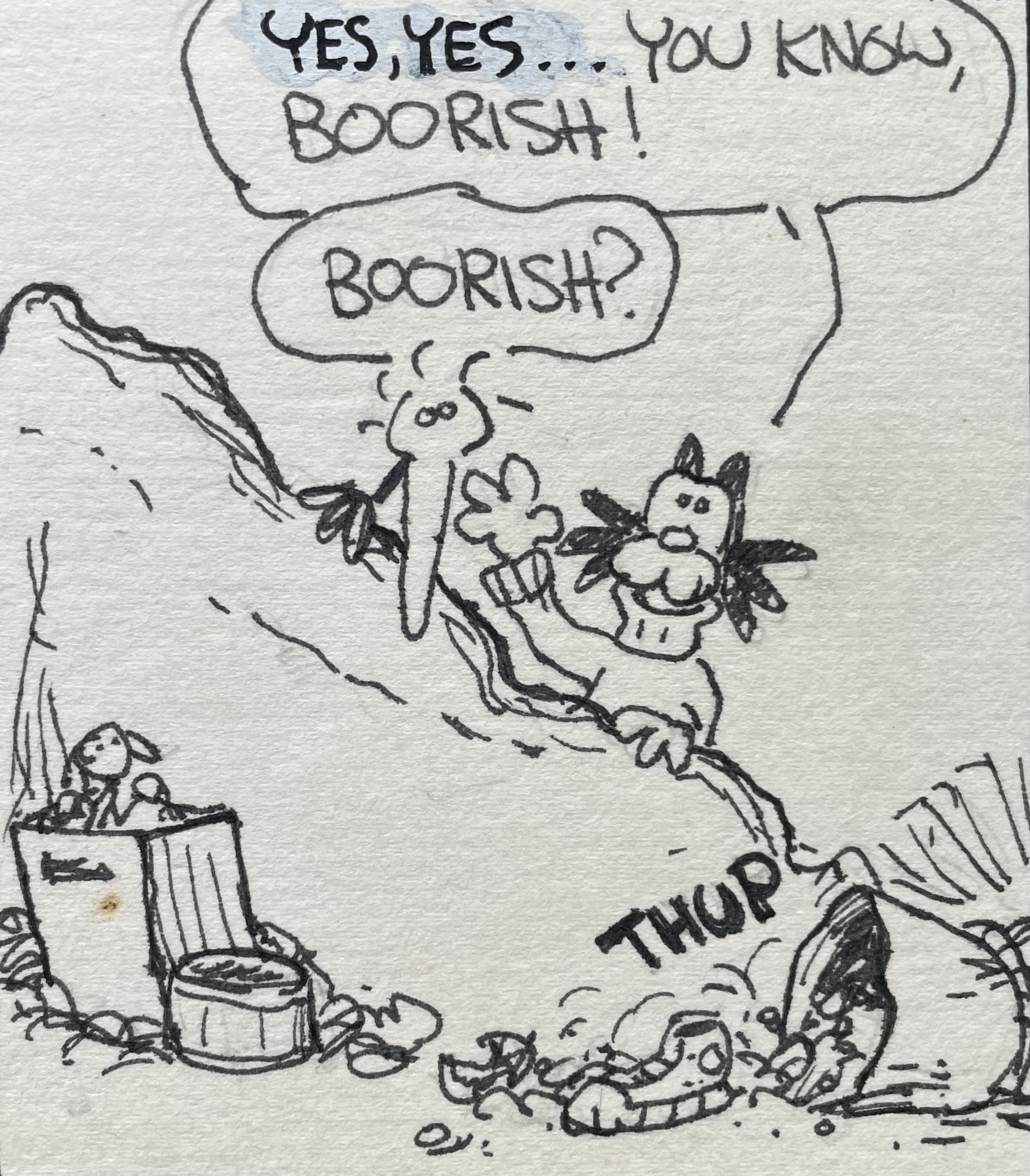


If you absolutely must have some exposition with your comic strip, try Dummo Mouse and Friends: The Intro or Dummo Mouse and Friends: The Second Intro.
Or you can read my older brother’s published comic strips, starting with The Lost Adventures of “Calloway the Castaway” Episode 1!
And come back next week for more Dummo Mouse and Friends!
This sounds stupid, but when I lived in Sewanee, Tennessee, we used to throw rocks at each other for fun. Maybe ‘fun’ isn’t the right word, but there was an adrenaline rush to it. I was somewhere between 5th and 7th grade, and if you don’t keep kids in that age group busy, they’re going to do something stupid.
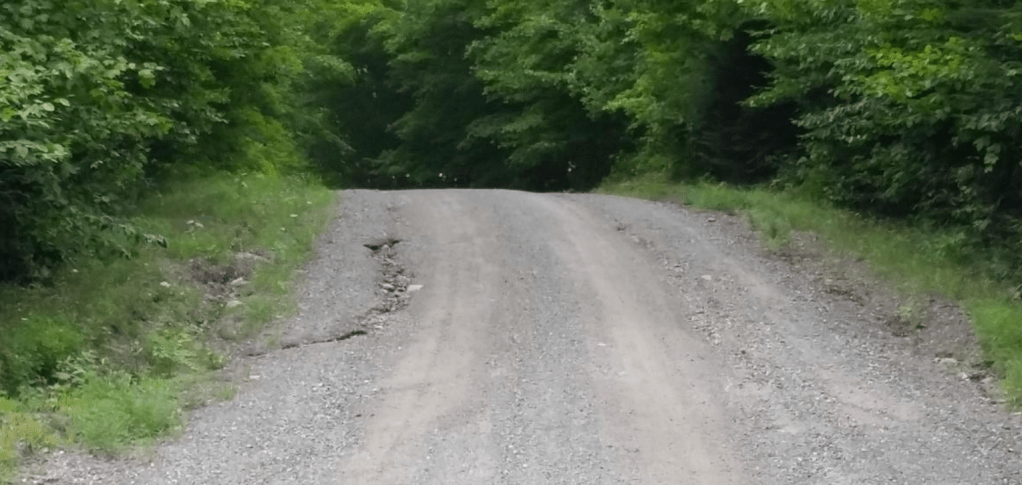
A lot of the streets in Sewanee weren’t paved, and so gravel was everywhere. You could go anywhere and find a rock. Back in the 1970s, there wasn’t much for unsupervised kids to do in the evenings after school or on weekends (except homework and chores), so we’d wander around the town and the surrounding wooded areas and throw rocks.
We threw rocks at each other when we were walking (or running) through Abbo’s Alley. We’d often be at opposite sides of the creek launching gravel or anything we found at each other. We weren’t throwing hard. It was more like lobbing. We didn’t really want to hurt each other. It was more for the challenge. Could we hit moving targets while not getting hit ourselves? It was like paintball but with a little more risk. Kids rarely got truly hurt, but pain avoidance was enough motivation to try to not get hit.
Even though we spent a lot of time in Abbo’s Alley, usually using it as a cut through to get from our neighborhood to the school or the store or the other side of town, it wasn’t the only wooded area in Sewanee.

Forests were everywhere. I could walk outside my house and within two minutes be in the woods walking down the side of the mountain. Some paths were obvious, but in a lot of places the trees were far enough apart that you could just walk freely in any direction. Once I ran out of rocks to throw, I could either find more rocks just laying around or I could keep wandering aimlessly.
I never truly got lost while wandering the side of the mountain. If I wasn’t sure where I was, I’d just walk up the mountain until I ran across a road or somebody’s backyard. From there, I could eventually figure things out. The views were entertaining enough, and you never knew when you were going to discover a small waterfall or stumble into a cave, so I didn’t need rocks most of the time.
Everyone’s favorite view was a place called Morgan’s Steep. It was a cliff at the edge of a small neighborhood (with big houses, I think) at the end of town. On the left side was a path of rock stairs that you could walk down and start wandering. You could wander to the right as well, but I remember a path. Some people loved staring at the valley from the edge of the rock cliff.
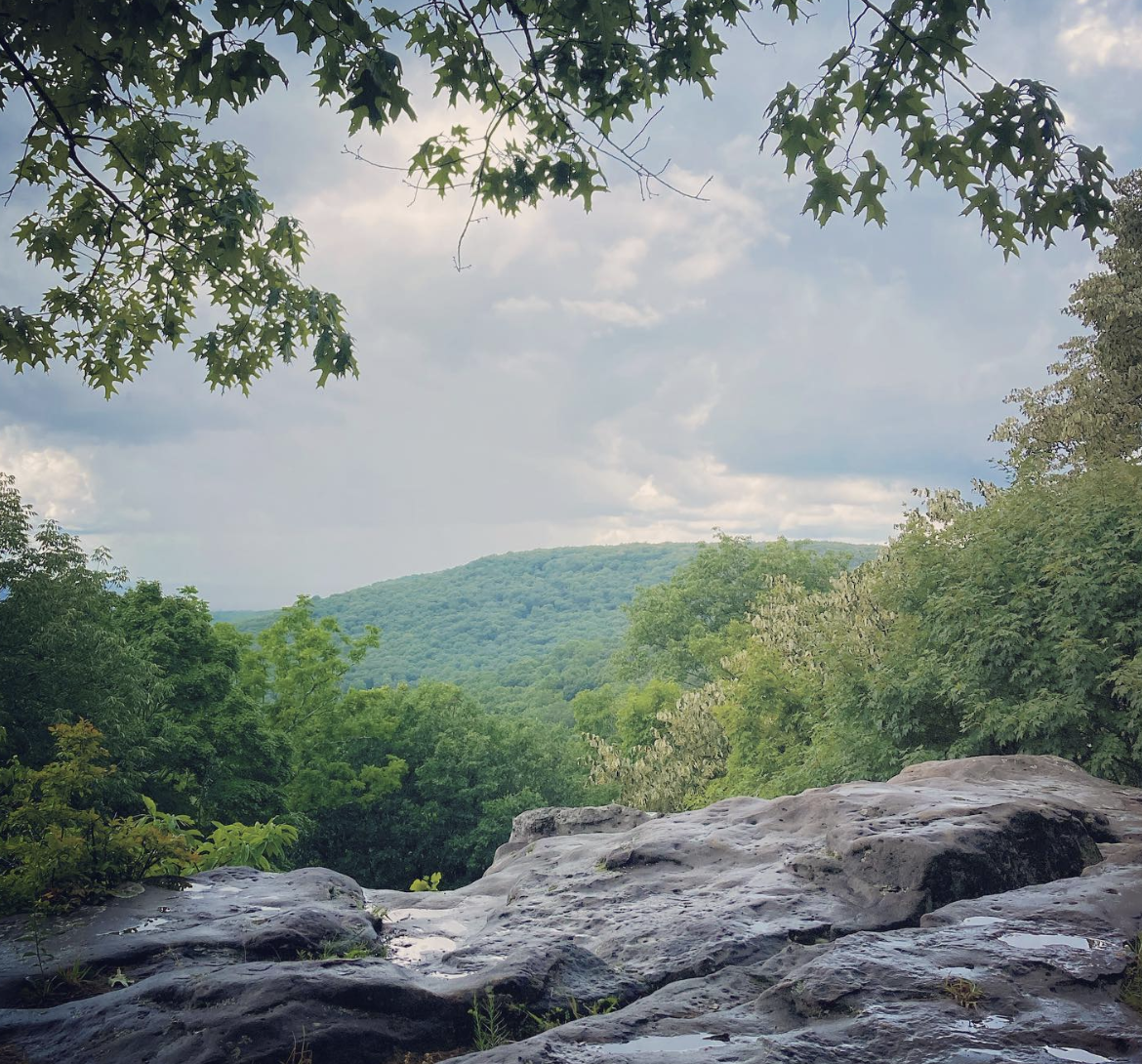
Some people liked to spit off of Morgan’s Steep. I liked to throw rocks off of it. Looking back, I hope I never hit anybody. I just thought it was fun throwing rocks.
Even though we were kind of stupid for throwing rocks at each other, we had unwritten rules. You didn’t throw rocks at little kids , and that was because they were helpless. You didn’t throw rocks at adults because they’d tell your parents. You didn’t throw rocks at teenagers because they’d beat the hell out of you and enjoy it.
I saw one kid my age throw a rock at a teenager, and it ended just like you’d think. Johnny hated a teenager (I think his name was Ronald, but I’m not sure), who had a couple mean yard dogs, and pegged Ronald pretty good on the head. Ronald was pissed and chased Johnny down and beat him to a pulp (almost) in his own front yard. Ronald was lucky that nobody else was home because Johnny had a couple older sisters that were meaner than Johnny, and that would have been a brawl for the ages if they’d seen Ronald beating Johnny like he was a redheaded step-child.
I can write something like that because I was a redheaded step-child.
Anyway, when Ronald finally got tired and left, Johnny hit him again with another rock and ran inside his house. At that point, Ronald couldn’t do much else, so he left. When I saw Johnny later (I don’t remember if it was that day or weeks later), he said that his dad (and his sisters) did worse to him all the time. That explained a few things about Johnny. We’ll come back to Johnny later.
Johnny’s older sisters were 13 and 15. The 13 year-old looked older than the 15 year-old and bragged that she could buy cigarettes by herself. That’s what a lot of the teenagers did; they stood around and smoked. I thought the teenagers were stupid for smoking all the time. The teenagers thought we kids were stupid for throwing rocks at each other.
Now a bunch of those cigarette smokers probably have health issues. But me? All that rock throwing and getting hit didn’t cause any long-term damage. I mean, sometimes my brain doesn’t click on all cylinders and my mind wanders all the time, but I don’t think that has anything to do with rocks hitting me upside the head.
Now that I think about it, I’m supposed to talk about dogs sometime in this story. Maybe I’ll get to that in the next episode. We’ll see.
To read this story from the beginning (where I at least talk about dogs a little bit), go to The Lost Dogs of Abbo’s Alley.
For more of my childhood stories that took place in Sewanee, see the following:
The Tale of the Almost-Expired Milk
Childhood Ghost Story- The Prologue (This one mentions one of the dogs that will be introduced later.)
4th of July Story: The Box of M-80s
Even better, here is my ONE novel! It’s called The Sunset Rises, A 1990s Romantic Comedy, and you can find it here on Amazon!!
Or you can get it below from the ‘trunk of my car.’
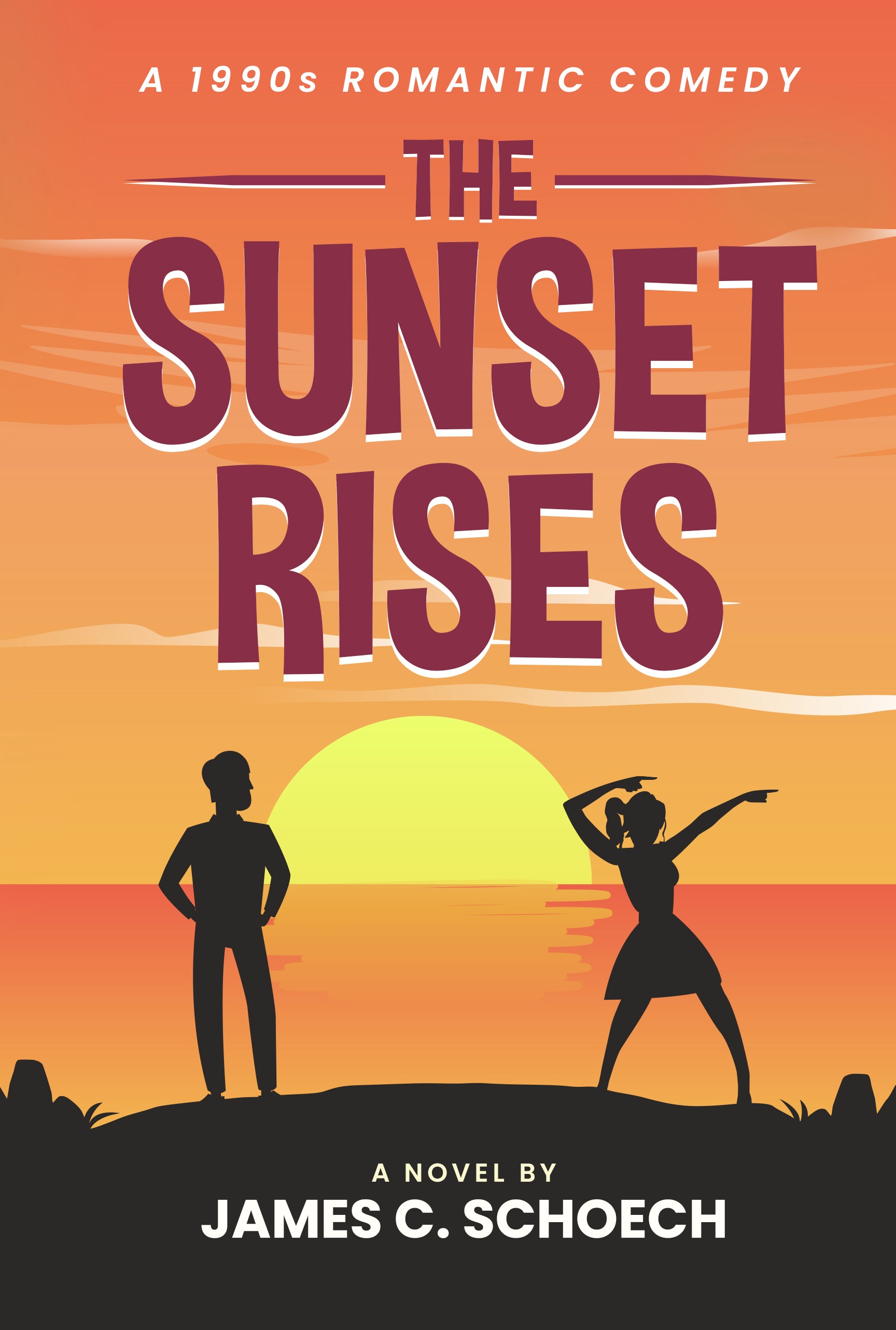
The Sunset Rises: A 1990s Romantic Comedy
Get a signed copy of my one and only novel, The Sunset Rises: A 1990s Romantic Comedy. Free delivery in the United States!
$10.00
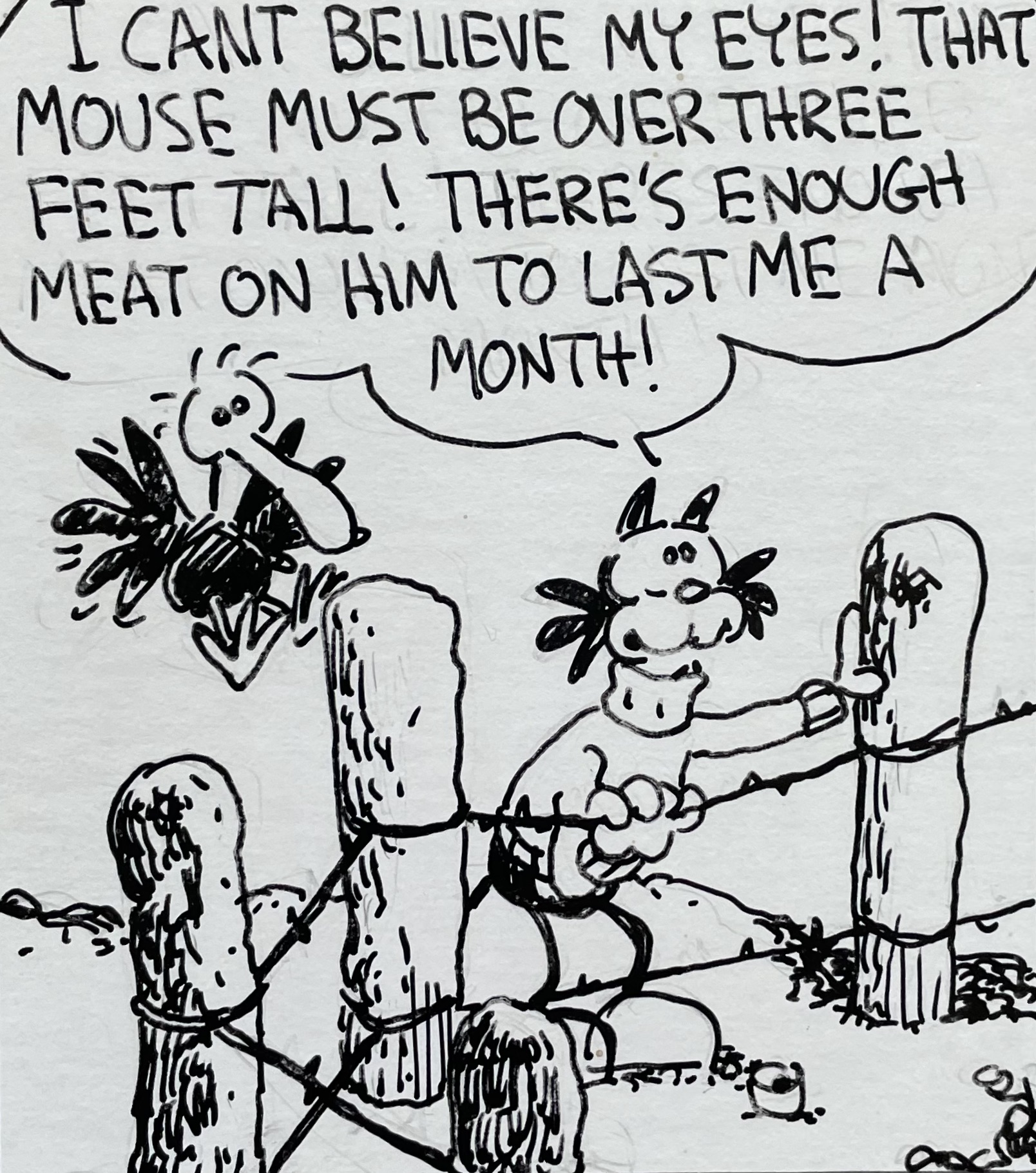
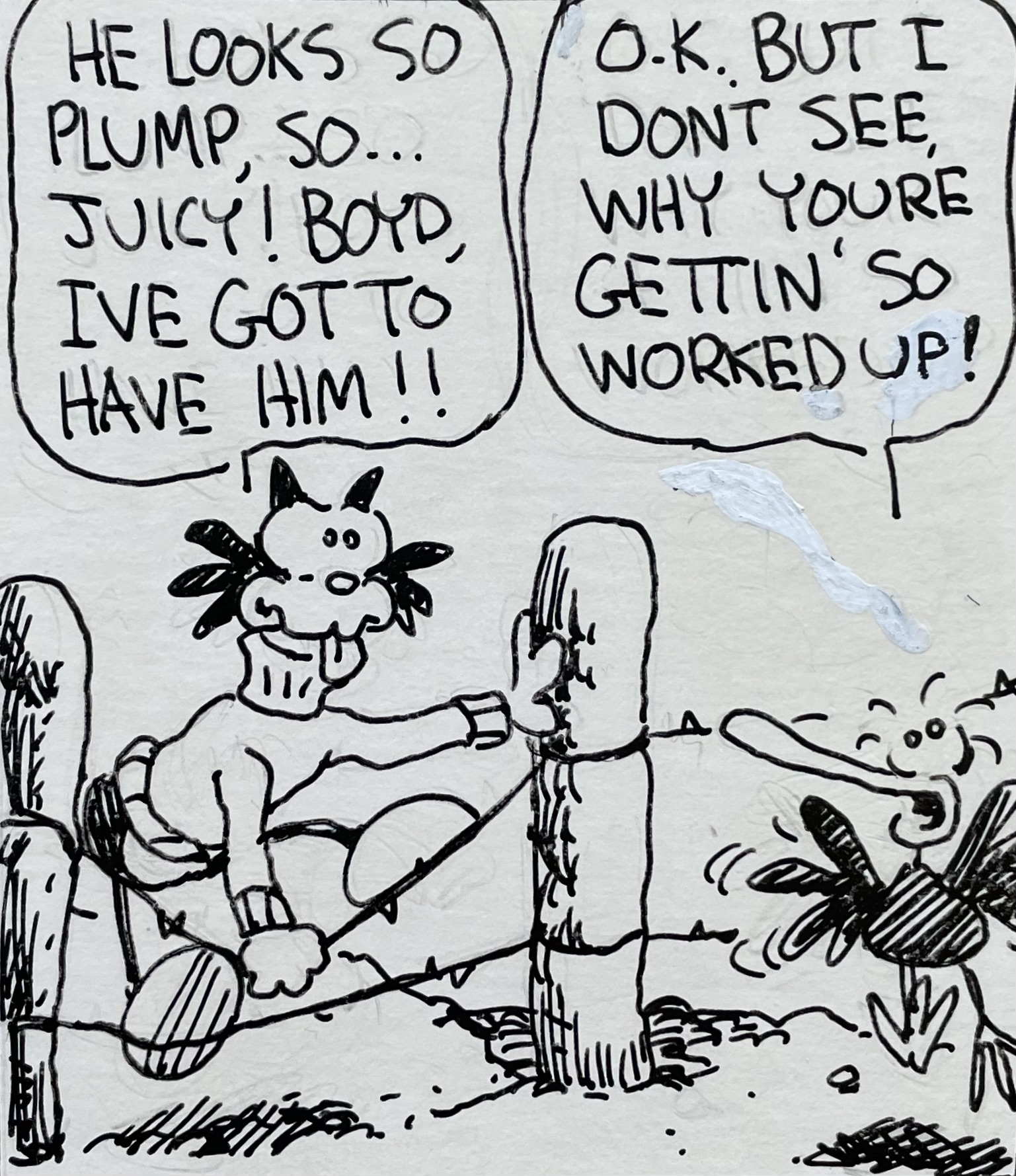
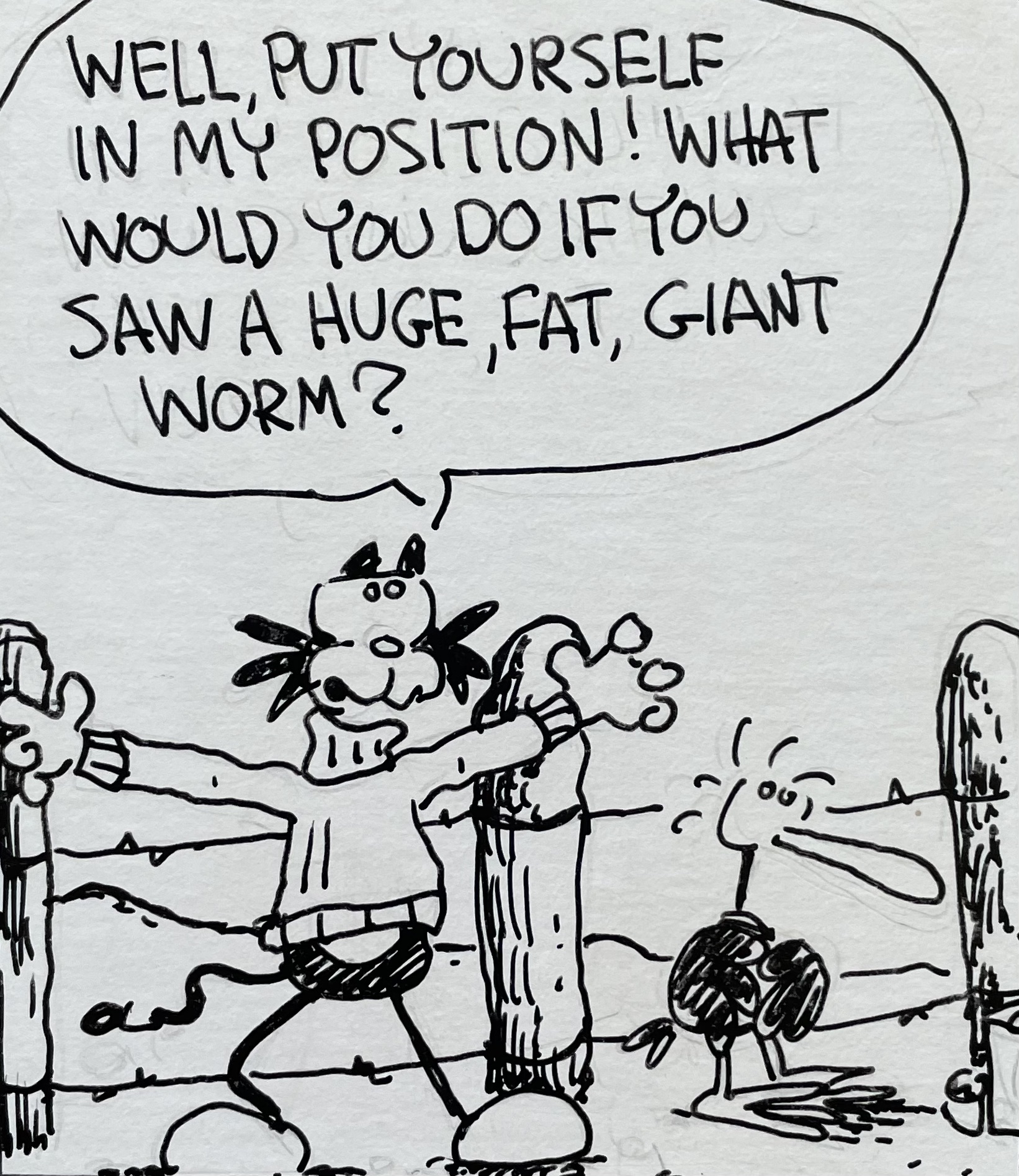
As much as I love reading these Dummo Mouse cartoons from 1982, I’m not sure how my older brother would have maintained this drawing style if he’d had to do this every day. A lot of his panels are far more detailed than what you’d see in most daily comic strips in the 1980s. Most comic strip artists use simple lines and no shading and almost no background details. Some of them even hire gag writers so that that they, the artists, don’t have to think of new ideas every day.
I felt almost let down when I found out that some comic artists don’t write most of their strips. If that’s the case, then I guess I should lighten up on James Patterson, who doesn’t seem to write a lot of his own books. Maybe this practice of ghost writing and co-authoring is more widespread than I had originally thought.
At least everything my older brother did was his own stuff.
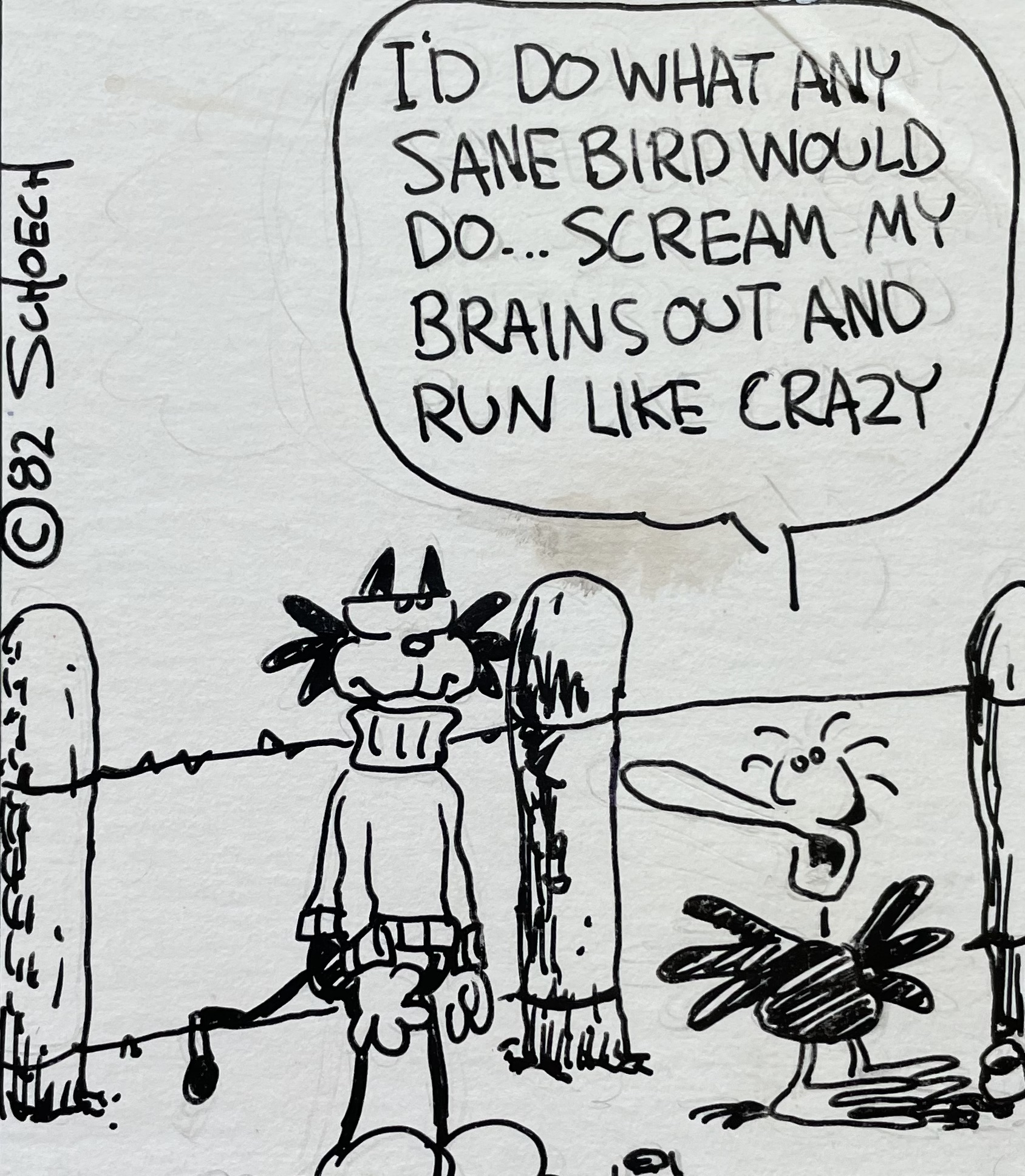
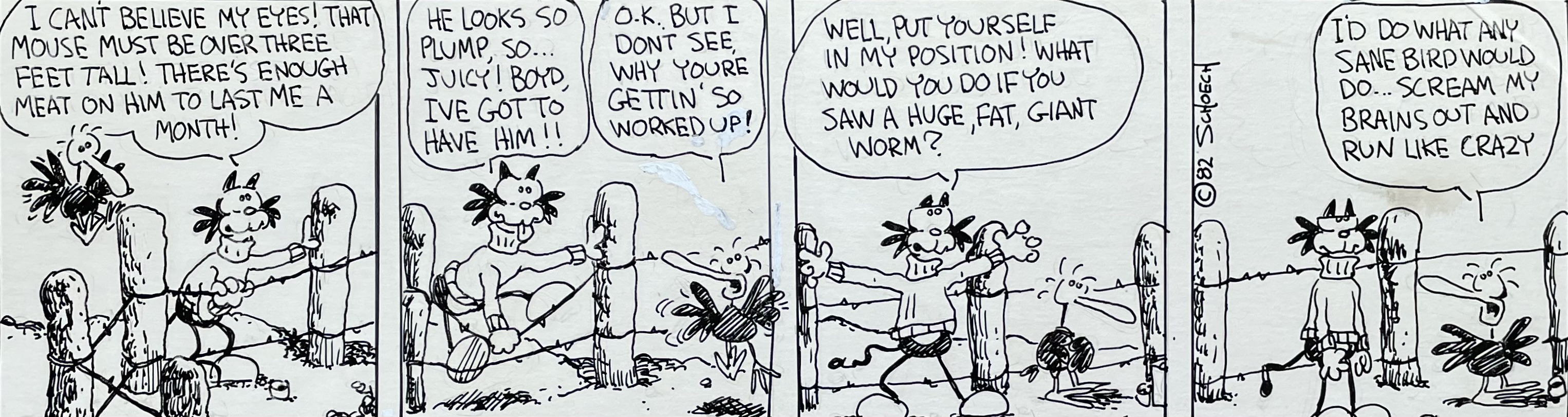
For more, see Dummo Mouse and Friends: The Intro
and Dummo Mouse and friends: The Second Intro.
Or you can read my older brother’s published comic strips, starting with The Lost Adventures of “Calloway the Castaway” Episode 1!
And come back next week for more Dummo Mouse and Friends!
When people find out that I’m a retired English teacher, they sometimes assume that I read a lot and ask me what kind of books I like. I tell them that I like good books. I’m not trying to be a smart-ass. I’m serious: I don’t have one set genre. I just like the good books from different genres.
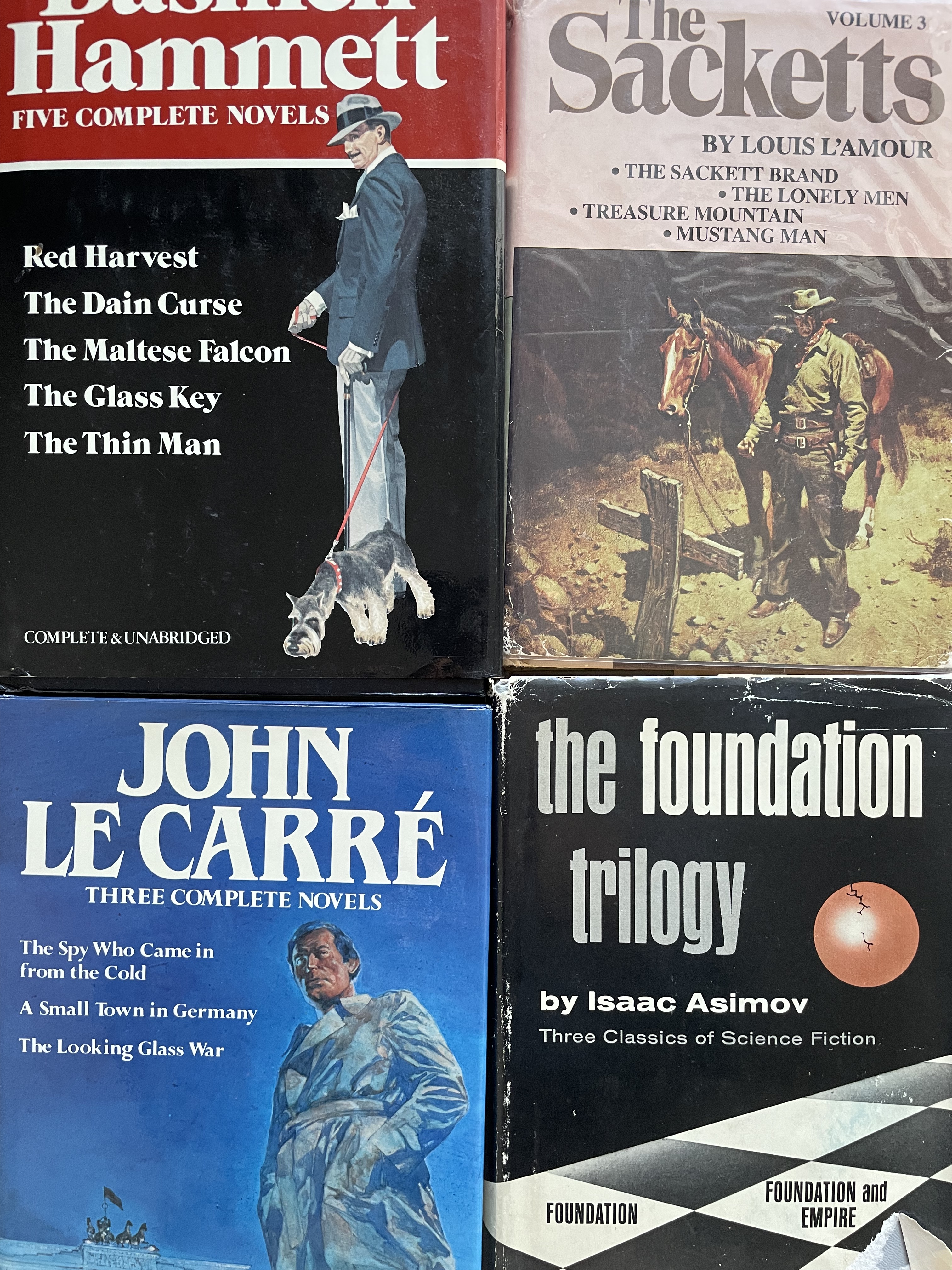
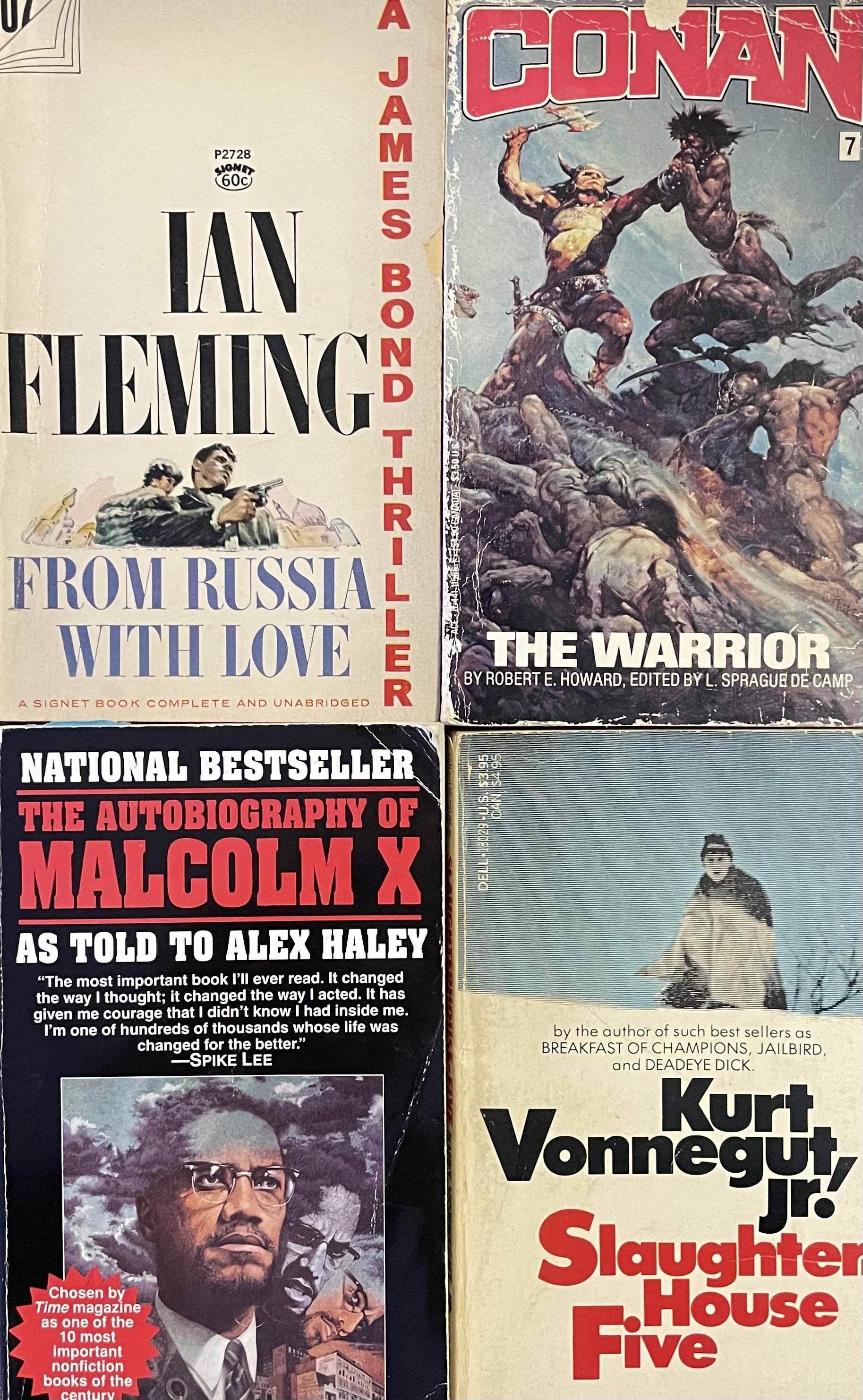
Some readers like specific genres and will read (almost) anything in their favorite genres, but not me. After a few books of any genre or author, I get bored and move on for a while. In the 1970s, I read The Lord of the Rings trilogy, but I got bored with most fantasy. I read I,Robot and a couple Foundation books by Isaac Asimov, but I didn’t care for much science fiction. I read a couple Louis L’amour westerns but not many (and there were many to choose from).
I noticed my tendency in the 1980s when I stopped reading Needful Things by Stephen King. I had read several Stephen King books before, but I quit several in a row after Needful Things. I finished It (the book) though. I almost didn’t read It, but word-of-mouth was so high on the book that I thought I was missing something. It (the book) wasn’t bad (except for THAT scene… if you know what I mean). As I was reading, I wondered why so many people thought this book stood out so much.
Then I remembered that I’m different. I forget that sometimes.
In the 1990s I read a couple John Grisham legal thrillers (The Firm and Something Else). I read a couple John Sandford Prey novels, but I don’t remember their titles: I don’t think there was a Lettuce Prey. I even got through a couple long-winded Tom Clancy military thrillers (they were okay if you skimmed through the tech jargon and laughed at the dialogue).
Sometimes I think that I should have more high brow tastes since I was an English teacher. Then I remember that I was a public school teacher. Oh yeah, public school. Low brow taste is fine.
Anyway, “good” is a good answer to a lot of questions dealing with matters of taste.
“What kind of movies do you like?”
“Good movies.”
“What kind of music do you like?”
“Good music.”
“What kind of food do you like?”
“Good food.”
When I answer “Good” to these types of questions, I need to be prepared to clarify my answer. If I’m not willing to clarify, then I’ll sound like I’m just being a prick (which is a plausible interpretation of my behavior). Since I’m primarily a book blogger, I’m just focusing on books here.
Even though I usually don’t read more than three books by any given author, there are exceptions. I’ll read almost anything Bernard Cornwell publishes. Yeah, he uses the same formula for most of his books, but it’s a good formula. I like his formula. He just takes the same formula, uses it multiple times for one character and time period in a bunch of books. Then he takes the same formula and uses it for another character and time period multiple times.
I’ve accidentally read a couple of Bernard Cornwell’s books more than once because it took me over a hundred pages to realize that I’d read it before. I like his formula so much that I don’t care if I’ve read the same book over and over again.
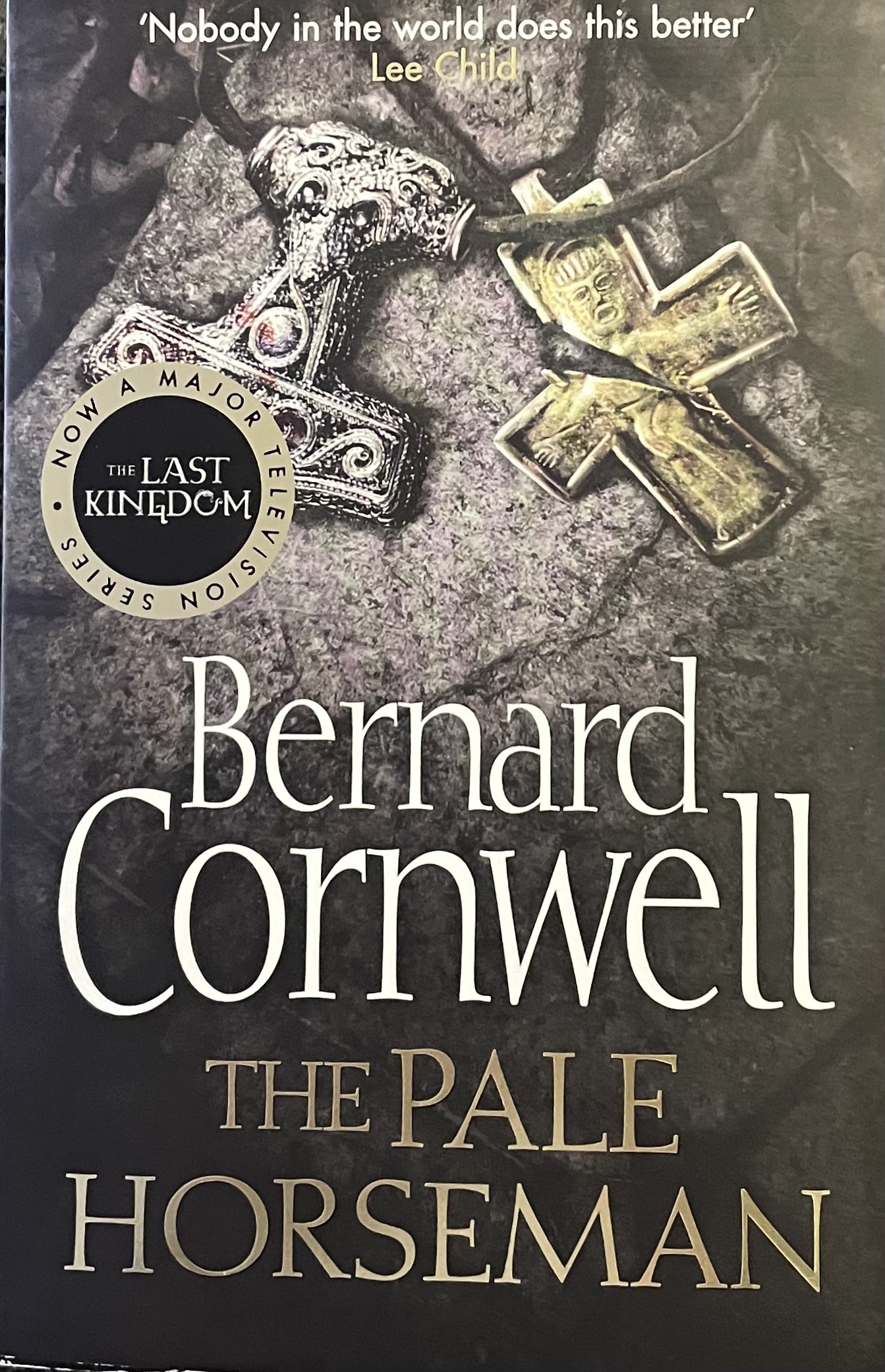
If you ask me who my favorite author is, though, I probably wouldn’t say “Bernard Cornwell.” I just say I don’t have one so that I don’t get pinned down to one author. I don’t even recommend Bernard Cornwall to everybody. He just has discovered the formula that I like the most in novels. Maybe that should make him my favorite author. Maybe he is my favorite author, and I’m just too stubborn to admit it.
My unpredictable taste helps me to be aware of a variety of books because I’m never sure if I’m going to like a book before I start to read. I start many books, but I finish very few. Except for ‘good’ books. I sometimes finish reading those.
Here is a ‘good’ book that I finished writing. Then I finished reading it. It’s called The Sunset Rises, A 1990s Romantic Comedy, and you can find it here on Amazon!!
Or you can buy it below from the ‘trunk of my car.’
The Sunset Rises: A 1990s Romantic Comedy
Get a signed copy of my one and only novel, The Sunset Rises: A 1990s Romantic Comedy. Free delivery in the United States!
$10.00