
One of the easiest jobs in the publishing industry might be book cover designer for Jojo Moyes.
The best seller list for paperbacks is often more interesting than the hardcover fiction list because the paperback novels seem to change more frequently. Hardcover lists are dominated by new books that have been heavily promoted by publishing companies. The current paperback list is a combination of last year’s best sellers and older books that have been discovered or are being turned into movies.
I like paperbacks because they’re cheaper, and they are lighter and easier to carry around in public. Even though I like paperbacks, I’m still picky about what I read, so I have to make split-second decisions based on just a little bit of information about each book.
Below are the best selling paperback novels so far in February, 2016:

I think I could have designed a cover like this.
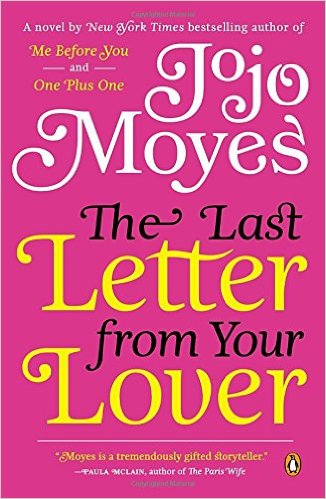
I hope making covers like this is more difficult than it looks.
1. Me Before You by JoJo Moyes- I’ve never read a Jojo Moyes book, but all the covers look alike, with pretty much the same letter fonts and solid backgrounds. That must be a great job, being the cover artist/designer for Jojo Moyes. Jojo Moyes writes a book, and all you do is choose a color for the font and a color for the background, and then you go home and goof off until Moyes writes another book.
2. The Revenant by Michael Punke.- Maybe I’d read this book, but the movie stars Leonardo DiCaprio, and I don’t want to picture his face while I’m reading the book. I have nothing against Leo DiCaprio, except that I think that he’s been miscast in almost every movie he’s been in, and so he’s probably been miscast in this role, and I don’t want to see a miscast actor’s face while I’m reading a book.
3. The Choice by Nicholas Sparks- Ugh, another Nicholas Sparks book turned into a movie. I really hope my wife doesn’t want to see it.
4. The Martian– by Andy Weir- Maybe I’d see Matt Damon’s face when I’m reading this, but at least he hasn’t been miscast as often as Leo DiCaprio. Still, I like to read books made into movies before they’ve actually been made into the movies. That way I can picture the characters my own way before the movie ruins everything.
5. Brooklyn by Colm Toibin- I’ve never been to Brooklyn, and I don’t have any desire to go (no offense, Brooklyn, but there are a bunch of other places I want to see first), so I might read this book just to make up for not going. Maybe I’ll see the movie instead.
6. My Brilliant Friend by Elena Ferrante- This is Book One in a series that is now up to four books, which means I’ll probably never read it because I don’t read book series anymore. If a story can’t be told in three books, I usually don’t read it. Plus, I already have a brilliant friend. My brilliant friend is probably more brilliant that Elena Ferrante’s brilliant friend, but I don’t know for sure, so maybe I should read this book to find out.
7. A Man Called Ove by Fredrick Backman- When I first saw this book, I thought the title had a typo. If a title makes you look twice, it’s a good title.
8. The Alchemist by Paul Coelho- My wife bought this book a few months ago, but she hasn’t read it yet. I keep telling her to download free samples instead of buying new books, but she still impulse buys books. Maybe The Alchemist is good, but I won’t read it until my wife does. Then again, maybe I should read it for her just to make sure we get our money’s worth.
9. A Little Life by Hanya Yanagihara- Here’s a novel that’s won (or almost won) a bunch of awards and lots and lots of praise. Despite it’s title, it’s not so little. I’m sure that was done on purpose. I probably don’t read enough award-winning novels, but this one sounds kind of intense, so I’ll have to be in a certain mood to read it, and I’m hardly ever in that certain mood.
10. Room by Emma Donoghue- I like one-syllable book titles. You don’t see one-syllable book titles very often. I think the publishing world needs more books with one-syllable titles. I read Room a couple years ago, but not because it had a one-syllable title. If you haven’t read it but are interested, you’ll probably know within the first few pages if you’ll enjoy it or not.
+++++
Out of all the above books, the one I’m most likely to read is The Martian. I like science fiction, and I’m pretty sure I can visualize the main character without picturing Matt Damon. I’ll just make sure to buy an older copy that doesn’t have Matt Damon’s face on the cover.
+++++
What do you think? Which book on this list are you most likely to read? What books have been ruined for you by miscasting of characters? Should I read The Alchemist, or should I wait until my wife reads it? Is designing a Jojo Moyes book cover more difficult than I think it is?
+++++
Maybe I shouldn’t complain about another author’s book covers when mine aren’t so great either.

Only 99 cents on the Amazon Kindle!

(image via wikimedia)
Somebody famous died a few days ago, but it was a celebrity I had never heard of before. The television news ran a two-minute segment on this celebrity’s achievements and lamented how this celebrity had died too young. A bunch of bloggers wrote tributes. This celebrity’s name trended on Twitter for a few hours. People who (probably) never had met the celebrity seemed sad.
I don’t know. I have never felt an emotional connection with celebrities. I’ve emotionally bonded with stuffed animals, sock puppets, and even members of my family. But I’ve never felt connected with a celebrity, not so much that it affected me when that celebrity died. When a celebrity dies, I say (or think) “That sucks.” And then I go on with my day. I’ve never felt like writing a tribute to that celebrity on my blog, tweeting about the celebrity, or going to that celebrity’s funeral.
I have nothing against the tribute to dead celebrities. I read other bloggers’ tributes if I’m interested in the dead celebrity. Sometimes I’ll watch the tribute to a dead celebrity on the television news. Maybe I’d write a tribute if the right celebrity died (“right” isn’t the correct word, but you know what I mean, I hope), but it takes me too long to gather my thoughts. By the time I’d finish writing the tribute, the period of social media mourning would be over and nobody would read my tribute.
That might be a bad reason to not write a tribute, but I hate writing stuff that nobody reads. My first year of blogging (maybe more) was filled with writing stuff that nobody read. That was a lousy feeling. I’d spend hours writing long posts that nobody would read and then I’d think, “Why did I spend so much time on that?”
I’ve never written a tribute to a dead celebrity, but I’ve never written a tribute to my deceased relatives either. Several of my deceased relatives deserve a tribute. Maybe all of them do. Maybe instead of writing a tribute to a dead celebrity whom I’ve never met, I should write a tribute to relatives who have had an impact on my life. Fewer people would read a tribute to a relative than a tribute to a celebrity. Page views matter, but my blog numbers aren’t big enough that the difference would be all that much.
There have only been a few times when I’ve felt anything when a celebrity died. I was in ninth grade when John Lennon got shot. That was a big deal, and we talked about it at school, but I was too young to be passionate enough about John Lennon to cry. The most common reaction was: “Now The Beatles will never reunite!” Then we blamed Yoko Ono some more for breaking up The Beatles. That seems kind of shallow, but what else would you expect from ninth-graders?
A few years ago, two celebrities died on the same day, and one of them received far more attention than the other. It was weird, hearing fans of the lesser-known celebrity complaining about the lack of media attention because she had passed on the same day somebody more famous died. I’m pretty sure the semi-ignored dead celebrity didn’t care.
If you don’t like the recently deceased celebrity, the next few days after the celebrity’s death can be brutal. If you hate the dead musician’s songs, the tunes will be stuck in your head. If you didn’t like the celebrity’s movies, friends/co-workers will be reciting quotes. If you despised the deceased politician, newscasters will proclaim how wonderful the politician was, despite doing horrible things that would get normal people like us arrested. We can’t say that we dislike the recently deceased celebrity; that would be rude. We must restrain ourselves for a while, at least one week or until the next celebrity dies, whichever happens second.
I can see why some people connect with celebrities. Celebrities (while they are alive) often say that they love us (at concerts, award ceremonies, or even book signings), but I doubt their sincerity. Celebrities usually leave a few minutes after they tell us they love us. If a woman ever told me that she loved me but then left me forever a few minutes later, I don’t think I’d believe she really loved me. Even during the most gullible phases of my life, I don’t think I’d have believed her. I can’t write a tribute to somebody who says he/she loves me but doesn’t.
Maybe I’m wrong, but it seems like more celebrities than ever are dying. It’s probably because it’s easier to become a celebrity. Maybe that’s why I had never heard of the dead celebrity from a few days ago. There are so many celebrities that a normal person can’t keep track of them anymore.
I’ve met only two celebrities face-to-face. One of them hit on my wife, and the other one yawned in my face. I don’t think I’ll write a tribute to either of them, even if I outlive them, which I might not. If I have the opportunity to write a tribute to them, though, I hope it’s not for a long, long time.
*****
What do you think? Have you ever written a tribute to a deceased celebrity? Which celebrity have you emotionally connected with?

Like Gone Girl a few years ago, this book will not go away.
I’d really like to read a lot more new books, but hardcovers are too expensive and the new books are almost always checked out from my local libraries. Still, I try to keep up with what’s current, even if I can’t read the books right way. It’s important for a book blogger to keep up with what’s hot. Plus, it’s fun to form an opinion about books before I read them.
With that in mind, here are the top ten best selling hardcover books (fiction) so far for January, 2016, according to the New York Times. The commentary is mine.
Star Wars: The Force Awakens by Alan Dean Foster
You can’t get away from Star Wars right now. It’s everywhere, even at the top of the New York Times Best Seller List. I haven’t seen the new Star Wars, but I don’t have to. I saw the original when it came out (before it was called A New Hope), bought the movie adaptation, had the comic books, movie posters, and 1970’s science fiction magazines with tons of Star Wars photos and articles. I have pictures of me standing next to storm troopers and R2D2. I’ve done my Star Wars time.
I’m not sure if the novelization of The Force Awakens is any good, but I know Alan Dean Foster has written some other good science fiction books.
90% chance I watch the movie sometime in my life/ 1% chance I ever read the book.
The Girl on the Train by Paula Hawkins
It’s supposed to be a lot like Gone Girl, but it’s British, and the plot is different. Maybe in a couple years, there will be a lot of books that will be referred to as “This year’s Girl on the Train.” Still, I read Gone Girl and liked it, and making something British usually improves it, so maybe The Girl on the Train will be worth reading later.
50% chance I’ll read The Girl on the Train.
All the Light We Cannot See by Anthony Doerr
This is one of two books in the top ten set during or around World War II. If you’re not sure when to set your novel, set it during World War II. If I ever teach a writing class, that’s what I’ll tell my students.
It’s World War II, so there’s a 20% chance I’ll try the book, but not this year.
Rogue Lawyer by John Grisham
John Grisham has written another lawyer book, but this time, the lawyer has gone rogue. I don’t think Grisham has ever written about a lawyer who has gone rogue before. Good for him.
I’ve already read a bunch of John Grisham books, so there’s less than a 5% chance I’ll read this book.
The Nightingale by Kristin Hannah
Another book set in World War II, this time focusing on two sisters. Again, you can’t go wrong with a book set in World War II.
World War II gives this novel a 20% chance with me, but it’s about sisters and I’m a man (and I’m probably sexist too), so that knocks this book down to less than 10%.
See Me by Nicholas Sparks
I’ve never read a Nicholas Sparks book, but I’ve been forced to sit through a couple movies based on his books. They made me cry, and I don’t like to cry when I read books, especially if I’m reading them in public. If a man cries while reading a book in public, the likelihood of him getting conked on the head skyrockets. I don’t like crying in public, and I really hate getting conked on the head.
0%. I know I will not read this book (but I might have to sit through the movie if it’s made into one).
Cross Justice by James Patterson
It’s an Alex Cross book, and the word Cross is in the title. I wonder if there’s a character named Justice in the book too.
0%
The Bazaar of Bad Dreams by Stephen King
Here’s a collection of short stories, and they’re probably pretty good, if you haven’t read too much Stephen King already. I’m disappointed King used the word Bad in his book title. I know alliteration is important, but using Bad is worse than using an –ly adverb.
I always say I won’t read the next Stephen King book, and then I’m wrong half the time. I can’t help it. 50%
Go Set a Watchman by Harper Lee
This was probably 2015’s most talked about book, and it’s still selling. I don’t hear many people talking about it anymore, though. Yet it still sells.
I say I won’t read it on principal, but I can ignore my principals if I get to read it for free. 20%
Fates and Furies by Lauren Groff
It’s described as a marriage depicted from both points of view. I’m married, but I’m not sure I want to read a novel about it. I have kids, and I don’t read novels about child rearing either.
This book is a wildcard. If I’m in the right mood, I’ll try it. 30%.
*****
What do you think? Have you read any of the books currently on the top ten best seller list? If not, which one would you most likely read? Which book on this list do you know you will never read?
*****
For more insight and wisdom(?), read…
Now only 99 cents on Amazon!

I’m not sure what JK Rowling was saying here, but it probably made the news. (image via Wikimedia)
JK Rowling was at the top of a weekly entertainment website today, with a headline about something she said or tweeted. She doesn’t have any new books coming out this week or anything. I’m not sure exactly what she was talking/tweeting about, but I know she said or tweeted something. Every time I go to the book section of that weekly entertainment site, the headline is something about JK Rowling.
I don’t blame the website. Book news is usually boring. The person in charge of the book section of an entertainment website has a tough job. There aren’t many book announcements or book covers or book controversies to keep people riveted and get clicks. There are maybe four authors who are click-bait material (JK Rowling, Stephen King, George RR Martin, and… and… ugh… James Pppppatterson). Out of those, only one is truly photogenic (sorry guys).
If I ran a prominent book site, I’d have to write up a bunch of JK Rowling stories too. It’s kind of like television news. The local news has to find a good murder, and political reporters have to find a sex scandal or quote Donald Trump. Everything else requires work.
One JK Rowling story was about Stephen King complimenting JK Rowling’s Robert Galbraith series. That was nice but boring. I like Stephen King, but I don’t trust his book recommendations. I read The Passage by Justin Cronin a few years ago because King recommended it in a magazine column, and I was disappointed in the book. It made me wonder if King had actually read it. Now I wonder if he actually read the Robert Galbraith books.
If Stephen King had blasted the Robert Galbraith books, THAT would have been interesting. Man, I would have loved to read about that. A literary feud between JK Rowling and Stephen King is just what book blogs need to bring their numbers up. I know Jonathon Franzen tries to stir things up by making controversial statements, but he only riles up small groups of people.
If Stephen King and JK Rowling got into it, readers would automatically take sides and start insulting each other. I already know whose side I’d take, and I don’t even know what the argument is about.
Covering JK Rowling news is pretty easy. All you need to do is follow her on Twitter. Maybe I’m wrong, but I don’t think reporting a tweet as news is really reporting news.
I guess with Twitter, reporters don’t have to do any hard journalism anymore. In the old days, reporters would hound celebrities, bribe their families and friends, and if they were desperate, reporters would just make stuff up. Now journalists only need to read Twitter, and they can report a tweet as news. I know journalists still hound celebrities, and bribe family members, and make stuff up, but journalists don’t HAVE to do that anymore. I guess only the good journalists do that now.
Even if journalists stalked famous authors like they do other celebrities, authors probably aren’t much fun. Famous actors/actresses, singers, and other performers are glamorous and do glamorous things in their off-time like party crazy and have affairs. Famous authors used to do that too.
Back in the old days, famous authors drank, had affairs, and had public fights with each other. That would have been great in the internet age. But back in the old days, authors were celebrities because there were no movies or televisions, or internet, so there weren’t as many opportunities to become a celebrity. Writers had a good gig. They might die broke, but they lived as celebrities.
Now, we rarely hear about authors doing any of that crazy stuff. It sounds like all authors do is give speeches and write. If JK Rowling started getting drunk in public, having affairs, and getting into fights, it would make the news. But just about any other writer doing that would get ignored, unless it was George R.R. Martin.
If George R.R. Martin started having affairs, a bunch of Game of Thrones fans would freak out. They might be scared that Martin’s mistress would get him too excited.
You wouldn’t want to be the mistress who got George R.R. Martin too excited before he finishes Game of Thrones. That mistress would be vilified worse than Yoko Ono. It’s one thing to break up The Beatles; at least they finished all their songs. But to be the mistress who killed Game of Thrones? I don’t even want to think about it.
It hasn’t happened yet, and hopefully it won’t. But I can guarantee you, if something bad happens to George R.R. Martin before he finishes Game of Thrones, JK Rowling will have something to say about it, and it will get reported.
*****
What do you think? Is getting George R.R. Martin too excited worse than breaking up The Beatles? What famous author would you like to hear about every day? Is reporting a tweet really reporting news?
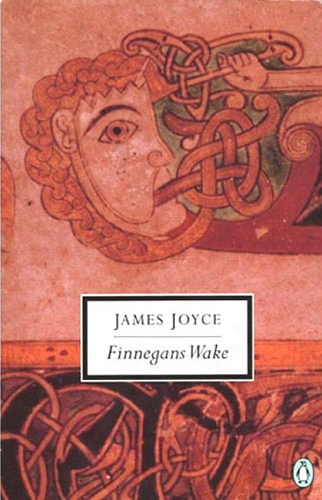
I might never know what James Joyce meant, but most communication is more basic than this.
Even though I can come across as easygoing, I don’t like to get corrected over nitpicky details.
I was at work on a Friday a few weeks ago, and I was late on a project. It wasn’t my fault I was late. The person responsible for the project is notoriously sloppy with details, so I had to doublecheck everything, and he was late sending me his numbers, and that put me in a bad position. I could either tell my boss that the other guy was slow (thus endangering the other guy’s job) or I could keep my mouth shut. My own job wasn’t in danger because my current boss understands I correct other people’s mistakes, which in the long-term makes his own bosses leave him alone.
Anyway, when I was talking to my boss, I said something like: “I’ll have everything done tomorrow.”
Before I could correct myself, my boss said, “You mean Monday.”
My boss was right. I had meant Monday, so I smiled and nodded.
I really wanted to say, “You know what I mean.”
But I didn’t. That kind of response can be misinterpreted. My boss and I get along, but I’ve seen a co-worker get fired for saying James Franco sucks, so I’m polite. Luckily, being polite is easy for me.
The thing is, when it’s Friday, and I say “tomorrow,” everybody knows what I mean, but almost everybody will correct me anyway. Very few people in our office work on Saturday. It wouldn’t make sense for us to work on Saturday. Sometimes we work really late during the week to avoid working on Saturday. Therefore, when I say “tomorrow,” the Monday should be implied.
I know that precision in language is important. I’ve read The Giver. I understand that I must be very deliberate with my words. But this was the conversational spoken word. Conversation is meant to be somewhat sloppy. To me, it’s the written word which should be so precise. If I had written an email to my boss, I would have written Monday. You don’t want to make mistakes in writing because you can think out your words more carefully and the written word lasts forever.
Maybe I should start saying “You know what I mean!” in these situations, but that could backfire. “You know what I mean!” sounds similar to “You know what I mean?” but the two have completely different meanings. You only say “You know what I mean?” if you’re pretty sure nobody knows what you’re talking about or if you’re rambling. That’s why I hesitate to say “You know what I mean!” Even with lots of inflection, “You know what I mean!” could be misinterpreted as “You know what I mean?” That would only make the situation worse.
I decided to try saying “You know what I mean!” (in a gentle way) the next time the situation came up. One evening I was talking to my wife about our oldest daughter (who wasn’t in the room) and I accidentally used our youngest daughter’s name. It was obvious that I had meant my oldest daughter. We had been talking about our oldest daughter, and it was a situation that could have involved only our oldest daughter, but when I said our youngest daughter’s name, my wife still corrected me.
“You mean__________,” she said, referring to our oldest daughter.
“You know what I mean,” I said gently.
“I was just making sure,” my wife said. “And you don’t need to get snippy about it.”
I thought, snippy? Maybe I had better not try saying “You know what I mean!” at work. I wouldn’t want to seem snippy, especially to my boss.
Yesterday was a Friday. My sloppy coworker was late on whatever it was he was supposed to have me check. I wasn’t mad or annoyed because he was actually putting more effort into it than he usually does. When I asked him if it was ready, he said, “I’ll have it for you tomorrow.”
Instead of correcting him, I patted him on the shoulder and said, “That’s okay. You can have it on Monday.”
I think I surprised him, not with my words, but by touching him. I hardly ever touch anybody. I don’t act familiar with people I don’t know well. I also delivered my response with a monotone voice, so he couldn’t tell if I was serious or not. Did he think I really thought he meant Saturday?
Either way, he knows I’m not coming into work on Saturday. Most importantly, I know I didn’t come across as snippy.
*****
What do you think? In what situations would would you want to say “You know what I mean!”? Does saying “You know what I mean!” come across as defensive? Is saying “You know what I mean!” worth the effort, or should I just leave it alone?

The struggling author finally received his payment. (image via Wikimedia)
It’s tough to make a living just by writing. Authors have been saying for years that it’s getting more and more difficult to make a living wage with the written word. The latest complaint has been from the Authors Guild, which shows that even award-winning literary authors have a tough time scraping by from their writing alone.
Some might react by thinking: “Suck it, writers! Everybody’s struggling.”
I’m not the type to say “Suck it!” to somebody, but I kind of understand. I’m in a profession which has nothing to do with writing, and I’m doing okay, but my family has had to cut a bunch of spending. Still, I’d like to help out professional writers.
And I’ve thought of several ways that regular people like me (and maybe you, unless you’re already a professional writer) can help out struggling authors:
-
QUIT WRITING BLOGS
If we’re writing blogs, we’re hurting professional writers in a bunch of different ways. All this time that we’re writing is taking away from all the books and magazines we should be reading instead. Every word I type is a word I’m not reading.
Plus, we bloggers are providing free content. When we read each other’s blogs, it keeps us from reading books and articles that authors get paid to write. We are inadvertently hurting the professionals by writing in our spare time. It would be better for the professionals if we just quit.
The thing is, I like writing blogs. Maybe I’m being selfish, but I don’t want to quit reading and writing blogs.
2. BUY NEWSPAPERS AND MAGAZINES
With the internet, I don’t have to buy newspapers and magazines anymore. Why would I? They clutter the house, and they’re overpriced. In the old days, I didn’t have a choice. I liked to read, and magazines always had the information/entertainment I wanted to read about. They were nice when they were necessary, but we don’t need them anymore.
I know that professional writers who worked for those magazines have taken a hit because those magazines now have to provide free content on their websites in order to compete with schmucks like me who write for free. I feel bad because my habit change has negatively impacted writers who are trying to make a living off of writing. I feel kind of bad about that.
The thing is, I like not having to buy newspapers and magazines anymore. Maybe I’m being selfish, but I probably won’t start buying magazines and newspapers again.
3. BUY MORE NEW BOOKS
When I go to the bookstore, I head straight for the bargain sections and the paperbacks. I’m a cheapskate. I want to support my local bookstore, but I can’t afford to spend $15.00 to $30.00 for new books. I know that writers don’t make much money off the bargain books and paperbacks, but at least they’re getting something.
When I’m on Amazon, I sometimes buy books from unpublished authors who are selling their e-books for $.99 up to $4.99. Some of the e-books are pretty good and are worth the time and money that I spend. Whenever I buy an e-book from an unpublished author, it means that I’m not spending money on something a professional writer wrote.
If everybody stopped buying e-books from unpublished writers, then maybe real professional authors would make more money.
The thing is, I’m on a budget and don’t want to buy new books at full cost. Maybe I’m selfish, but I probably won’t start buying new books at the book store.
4. STOP USING THE LIBRARY
When we go to the library, we borrow books at no personal cost (if you don’t count the taxes which fund the libraries). But if we read a book from the library, that’s less money going to the author who wrote the book (or the publishing company that published it). True, libraries purchase the books, but they only do it once, so when a bunch of people read one library book, the author gets screwed.
The thing is, I like libraries. Maybe I’m being selfish, but I probably won’t stop using libraries.
*****
I’d like to help professional writers. I’m certain you would too. But I don’t want to do what it takes to help them out, and I feel bad about it. Maybe somebody else could help out struggling professional writers, such as their publishing companies. Maybe the publishers could cut the writers some bigger checks. Maybe they could, but the publishers probably have their own reasons not to help out writers too.
*****
What do you think? What ways would you help or NOT help writers to make more money?
*****
Yeah, I know I won’t make much money off my e-book, yet I still try.
NOW ON SALE FOR ONLY 99 CENTS!!!
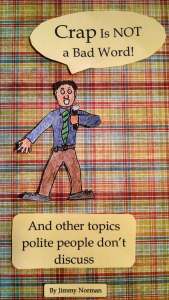
Crap Is NOT a Bad Word!: and Other Topics Polite People Don’t Discuss
Now available on the Amazon Kindle!

Sometimes she doesn’t know when to stop. (image via wikimedia)
My daughter’s math teacher told her to shut up a few months ago, and I just found out about it now. At first, I was a bit concerned when my daughter gave me the short version. “Shut up” seemed like an inappropriate response to a student talking out of turn. “Please be quiet,” or “Would you please focus on your assignment?” seemed more professional. Students have always talked too much in class, especially math, and teachers need to handle that without resorting to “shut up.” At least that was my first reaction.
Then I asked my daughter for more details. In these situations, it’s always good to get more details. She said that the teacher was explaining something (she forgot what it was, she said), and several students were talking without permission, but it wasn’t her (yeah, right, I thought to myself). Out of frustration, the teacher said something like, “You guys are making my hair go gray.”
Then my daughter blurted out, “What hair?”
The class laughed. Her teacher told her to shut up, and everybody went back to work.
She claims he didn’t say “Shut up” in an angry way. His face wasn’t red, and spit wasn’t flying out of his mouth. He said it in a casual way and went about lecturing again. My daughter was just surprised that a teacher would say shut up to her.
I’m a little ticked at my daughter for a couple reasons. For one, my daughter broke my cardinal rule for in-school behavior: don’t be funny in the classroom. Nothing good (except immediate gratification from a laugh) comes from being funny in class. If you don’t try to be funny in class, you probably won’t get in trouble.
Plus, it was a hack joke, even for a teenager. I expect nothing less than original material from my daughters. Going after a male teacher’s baldness is too easy. I wouldn’t want a teacher to make fun of students’ pimples or weight issues or hygiene, so baldness should be off-limits. I asked my daughter if this teacher made fun of any kids like that, and she said no. In that case, she shouldn’t have gone for the bald joke.
I don’t remember many teachers telling students to shut up when I was in school, except an English teacher who’d get frustrated when kids talked during writing assignments. He’d say “Shut up!” whenever a student complained about writer’s block. I don’t remember if writer’s block was a term in the early 1980’s when I was in high school, but if students complained that they couldn’t think of anything to write, this teacher would say “Shut up.” I can’t say that “Shut up” cured my writers block, but the quiet classroom helped me concentrate on my writing in class.
I also heard a teacher call a kid an @sshole once. During a dress rehearsal for a musical in high school, my friend forgot his line. Instead of ad-libbing, my friend stood on stage silently. The other student-actors stood there too, waiting for my friend to remember his line. After a moment, my friend hit himself on the forehead in a symbolic gesture.
“You look like an @sshole!” my drama teacher shouted from the back of the auditorium.
Technically, I guess the teacher didn’t really call my friend an @sshole, but my friend WAS an @sshole, and he knew he was an @sshole, so everything was okay.
Drama teachers probably have to curse at kids to keep them in line. They have too many students running around all over the place, and there’s a show to put on, and the drama teacher gets fired if the performance isn’t any good. When there’s a performance (and a job) on the line, the teacher should be allowed to curse.
The same applies to coaches. High school coaches will say a lot of vile things to get their players fired up. “Shut up” might be mild for a football coach.
I’m surprised teachers don’t say “shut up” (or curse) more often. It’s probably not professional, but most professionals don’t have to stay locked in a room with kids all day. The door might not be locked, but it probably feels locked. When I was a student, the doors felt locked, so maybe teachers feel the same way, except they get paid.
I think my daughter is proud that the teacher told her to shut up. She’s a good student and probably has a reputation of being a goody-two-shoes (outdated term). Getting told to shut up by a math teacher probably gives her a little street cred (updated term). If I remember correctly, it’s good to have a little bit of street credibility so that you don’t get messed with too much. Street credibility is good, but I hope my daughter doesn’t try anything else crazy to get it. And she’d better not get herself called an @sshole.
*****
What do you think? Should teachers say “Shut up!” to students? What are some other things that teachers have said to you? If you’re a teacher, what do you say to students to keep them in line?

(image via wikimedia)
It’s easy for fans to be mad at George R.R. Martin. Last week the Game of Thrones author announced that he won’t be able meet the January, 2016 deadline for his long-awaited 6th book in the Song of Ice and Fire series, The Winds of Winter.
Some readers are angry with George R.R. Martin, claiming that he is taking too long with these books. It’s been several years since the last novel, he’s working on other projects, his blog posts are long when he should be writing books instead, and the HBO series has caught up with his books. In other words, fans are getting restless.
I understand. I don’t read the Song of Ice and Fire series, but I empathize with frustrated fans. When I was a kid, I got depressed after I saw The Empire Strikes Back because there was a cliffhanger and I knew I’d have to wait three years for the next movie. That was a crappy feeling, so it has to be even worse for Game of Thrones fans when The Winds of Winter deadline keeps getting pushed back.
On the other hand, the books might be a lot better if George R.R. Martin takes his time. When George Lucas met his three-year deadline with Return of the Jedi, he gave us Ewoks. Maybe if Lucas had waited an extra year, he might have come up with something better. Fans will be pissed if the White Walkers are defeated not by dragons and Valyrian steel, but by tiny furry huggable creatures. I’m not into gratuitous violence, but I’d kind of like to see what Ramsey Bolton would do to an Ewok.
If George R.R. Martin passes before he finishes A Song of Ice and Fire (and I really hope that doesn’t happen), the first thing that some readers will think is “Now I’ll never find out what happens next! What a rip-off!” They might feel guilty for thinking it, but it’ll be tough not to think it.
Maybe George R.R. Martin doesn’t want to finish Game of Thrones. Every time he falls behind, it gets him a lot of attention, and a bunch of fans remind him how they can’t wait to read his next book. That probably feels great. Once he’s done with the series, that’s it. His readers will be exhausted, and a bunch of them will be angry at how he ended the series.
No matter how he ends it, somebody will be angry. It’s impossible to finish a series like Game of Thrones without making some readers mad. Maybe he thinks he’d be better off by never finishing the whole series.
I can’t criticize George R.R. Martin without coming across as a hypocrite. I complain when James Patterson writes too many books. I can’t then gripe that Martin takes too much time. I mean, I could, but it wouldn’t look good. I believe there’s an in-between point where an author can write books without going too quickly or going too slowly, but I might not be the right guy to make that point.
I wonder, if James Patterson starts missing deadlines, would anybody care? Would readers flip out if they had to wait five years between Alex Cross books? We might never know.
*****
What do you think? What’s worse? Taking too long to finish books or rushing too quickly? Did J.K. Rowling finish the Harry Potter series too quickly? Should Suzanne Collins have taken longer to write Mockinjay? Did Harper Lee take too long to write Go Set a Watchman? What other books do you think authors rushed?
*****
Here are a couple short books to entertain you while you wait for The Winds of Winter or the next season of Game of Thrones!
Now only 99 cents each on the Amazon Kindle!
It might not be polite to self-promote too much, but if I don’t do it, nobody else will.
Getting your mouth washed out with soap is a lot worse than it sounds. Even though it happened to me a few times when I was a kid, I don’t have the words to describe it. It was just pretty bad.
It started when I said the word crap in front of my mom. When she told me not to say crap, I said it again. Then she warned me that if I said crap one more time, she’d wash my mouth out with soap. I weighed my options. How bad could soap be? I liked saying the word crap. So I got in my mom’s face and said the word crap, and she dragged me to the bathroom and shoved a lathery bar of soap into my mouth. After I sputtered and gagged and spit, I vowed that I would never say the word crap again, at least not in front of my mom.
A lot of other words got me in trouble too. I got my mouth washed out for saying Hoover Dam. I probably shouldn’t have whispered “Hoover” and then shouted “DAM!!!!” I got my mouth washed out with soap for saying shih tzu. I probably shouldn’t have shouted “SH*T!” and whispered the zhu. Now that I think about it, I probably deserved getting my mouth washed out with soap.
I promised myself that nobody would ever find out that my mom had soaped my mouth. It wasn’t a punishment you could brag about. A kid could brag about getting beaten by a dad’s belt. Getting beaten with a belt showed how tough you were. But getting my mouth washed out, I kept that to myself. I couldn’t tell that to anybody. What kind of kid allows his mom to stuff a bar of soap into his mouth? Only a sissy kid, and I couldn’t let anybody think I was a sissy. So I kept quiet about it.
Soap-in-the-mouth is a specialized punishment because it’s used only when a kid says something wrong. I never got my mouth washed out for anything I actually did. When I egged a bunch of teachers’ houses, I had to clean up the messes and apologize. When I got caught holding my friends’ drug-related paraphernalia, I got grounded and threatened with counseling. When I got caught changing a grade on my report card, my dad beat me with the belt.
I hated getting my mouth washed out with soap, but I wasn’t stupid. I learned my lesson. I stopped saying the words that got me punished. I grew up to be polite. I said “please” and “thank you” a lot. I spoke in a soft tone of voice. I chose my words carefully. As I got older, I chose my topics of conversation carefully as well.
*****
The above passage is an excerpt from my new e-book
Crap Is NOT a Bad Word!: and Other Topics Polite People Don’t Discuss .
Now for sale on Amazon!!
Now available on the Amazon Kindle!

(image via Wikimedia)
The adverb has an undeservedly bad reputation, I believe. The adverb is a part of speech, so it has to have an important role in grammar and sentence structure. I learned that in school. Yet, famous authors often malign the adverb and say its usage hurts writing. Stephen King has said: “I believe the road to hell is paved with adverbs,…” When the Modern Master of Horror equates a kind of word with eternal damnation, you have to take that seriously.
I just finished reading On Writing by Stephen King. It seems that every writer says that every writer should read it, so if I’m going to be a writer, I thought I’d better read it. I’m not going to review the book because you can get a review of it anywhere. I’ve criticized King recently about how sometimes he doesn’t follow his own writing advice, and he admits this in On Writing.
He also says that he notices too many adverbs in his early books. He says his writing is much tighter now that he doesn’t use adverbs as much.
Maybe that’s true, but the thing is, I like his older books more than his newer stuff. Last week, I read Joyland just to see if his newer, tighter writing made his book any better. I didn’t count adverbs in the whole book. I’m not that kind of blogger. I have nothing against a blogger who reads an entire book counting adverbs. That type of information and analysis might be interesting. It’s too much work for me, though. I read the book just to enjoy it.
Joyland was okay, but it felt like a bunch of other Stephen King books. His protagonists tend to sound alike. I felt like I had read sections of it before. If this sounds like a review, I don’t mean it to. I’m getting to a larger point.
I started reading The Shining again. You can’t go wrong reading The Shining again. It’s not one of my books to cure reader’s block, but it’s still good. I noticed that Stephen King used a lot of –ly adverbs in The Shining. Here are a few examples, all within a few pages of each other.
All of these sentences are towards the end of “Chapter Ten- Hallorann.” The parenthesis are mine to show who/what the pronouns refer to:
“This time they all laughed, even Danny, although he was not completely sure what the joke was,…”
The word completely probably wasn’t necessary. Then again, the word probably wasn’t necessary in my previous sentence either.
“It (the main room) had cleared greatly during the half hour they’d spent in the kitchen.”
The word greatly was unnecessary.
“The nuns who had been sitting by the fire were gone, and the fire itself was down to a bed of comfortably glowing coals.”
The word comfortably does describe the degree of glowing, but it might not have been the best adverb to use, and I’m not passionate enough to come up with a better one.
“He (Halloran) turned to the Torrances as she (Sally, a young maid) strolled away, backside twitching pertly.”
Okay, I didn’t make that up. Stephen King actually wrote backside twitching pertly. I may never become a successful writer, but I don’t think I have written a serious sentence that said anything like backside twitching pertly.
Stephen King says he cringes (or something like that) when he reads his older writing. Maybe “backside twitching pertly” is cringe-worthy, but this was written in the 1970’s. I think backsides twitched pertly back then. I’m not sure what backsides do nowadays because I don’t usually write about backsides. I think they sway a little bit. I usually don’t write about situations where backsides twitch or sway. Maybe it happens in real life, but I don’t write about that very often.
That’s okay. The Shining is still The Shining, and I’ll think it’s great no matter what.
*****
Thank you for reading this far. If you liked this article about Stephen King and adverbs, you’ll probably enjoy these ebooks on Amazon. They don’t cost much, and they help to keep the blog going. Thanks again!
Now only 99 cents each on the Amazon Kindle!


 Dysfunctional Literacy