
Title Tip #1- Take a compound word and reverse it.
Most writers struggle to make money, so it’s news when relatively unknown authors get huge advances for their debut novels. Writers such as Stephanie Danler and Cynthia D’Aprix Sweeney have received huge advances for their recently published debut novels, Sweetbitter and The Nest.
I’ll admit, the phrase “huge advance” is subjective. To me, if it’s enough money to live on for a while, then it’s a huge advance.
Giving out a huge advance for a debut novel is a risk for publishers. The publishing companies want to lock down a potential money-making writer, but if the public doesn’t respond, then the company is stuck with an overpaid author. A part of me thinks it’s impractical to give an unproven writer way too much money.
Then again, I don’t have a problem with some young writer making so much money up front. I’m jealous, but I don’t have a problem with it happening. If a publisher offered me 2 million dollars for my first piece of fiction, I wouldn’t say, “It’s way too much money, and I haven’t proven myself yet.”
An aspiring author like me has to be careful when writing about how much money another writer makes. It’s none of my business how much another writer makes. Another writer’s contract doesn’t affect me at all. If these young authors hadn’t been offered anything, it wouldn’t help me. Plus, griping about another writer’s financial success can come across as sour grapes. But as an aspiring author, I can’t ignore what makes other writers successful.
I began reading The Nest just to see what made publishers so eager to fork out money for it. Maybe I could learn something from this new author’s writing style. What did this new author have that I didn’t (besides talent)? I began with an open mind (When somebody else says that, I usually think “No, you didn’t), but I couldn’t get far.
Below is the first sentence (not first paragraph) of The Nest:
“As the rest of the guests wandered the deck of the beach club under an early-evening midsummer sky, taking pinched, appraising sips of their cocktails to gauge if the bartenders were using the top-shelf stuff and balancing tiny crab cakes on paper napkins while saying appropriate things about how they’d really lucked out with the weather because the humidity would be back tomorrow, or murmuring inappropriate things about the bride’s snug sating dress, wondering if the spilling cleavage was due to bad tailoring or poor taste (a look as their own daughters might say) or an unexpected weight gain, winking and making tired jokes about exchanging toasters for diapers, Leo Plumb left his cousin’s wedding with one of the waitresses.”
I have to give the author credit; I’ll always remember that sentence. But if I had tried to write a sentence like that in high school or college, my writing instructors would have criticized me. None of them would have appreciated that sentence.
Instead of such a long sentence, I would have been encouraged to write something more like:
“As the rest of the guests wandered the deck of the beach club under an early-evening midsummer sky, Leo Plumb left his cousin’s wedding with one of the waitresses.”
A sentence like that is easier to read, but nobody would remember it. It ticks me off when the stuff that I’ve been taught in school turns out to be wrong.
The other new novel from an unproven author was Sweetbitter by Stephanie Danler. This author also has received a huge advance for her book. I thought, maybe I could learn something from this novel as well. Again, I paused after the first sentence.
“You will develop a palate.”
I felt betrayed by my writing instructors! I was taught not to use the word “you” when writing. If I had begun any kind of writing with the sentence “You will develop a palate,” my instructor would have told me to rewrite the sentence. A better alternative (according to them) would have been:
“Everybody will develop a palate.”
Personally, I like “You will develop a palate” better than “Everybody will develop a palate,” but my writing instructors would have disagreed, and they were the ones with the power to grade my papers. But if Stephanie Danler had written “Everybody will develop a palate,” her manuscript might have been tossed aside.
In college, I wrote a short story in 2nd-person. I knew it was frowned upon, so I tried it, and then I got lectured in front of the class for trying it. All the students in the class nodded in agreement with the professor when he said that 2nd-person was inappropriate for fiction. Six months later, Bright Lights, Big City by Jay McInerney became a best seller. Unfortunately, I couldn’t use it to bolster my case because it was a new semester, so the class was over. I hate it when I’m right but I don’t get the proof until after the argument is over.
To be fair, my short story probably sucked, but not because it was written in 2nd-person.
When it comes to 2nd person and long sentences, I don’t know who is right, my former writing instructors or the publishing industry. These rule-breaking opening sentences had to be approved by literary agents, editors, and publishers, but not by writing instructors. Maybe my writing instructors were correct, and the publishing industry is simply rewarding bad behavior. That happens all over society today. The law abiding rule-followers get punished while those who break the rules get rewarded. Maybe that’s the case here.
I’m not sure what to believe anymore.
*****
What do you think? Would you continue reading a novel that starts like Sweetbitter or The Nest? Are publishers making a long-term mistake giving new authors huge contracts for their debut novels?
*****
The first sentence isn’t very long, but I used the word “you” a few times later on to make up for it.
Now available on Amazon!

This picture is so awesome, Donald Trump uses it on his Twitter page.

Social Media Rule #1: Don’t mess with J.K. Rowling! (image via Wikimedia)
In a feud between Donald Trump and J.K. Rowling, almost everybody would root for J.K. Rowling. That’s no insult to Donald Trump (though lots of people like insulting him). J.K. Rowling would get public sympathy in a feud with just about anybody. But last week, J.K. Rowling raised eyebrows a little bit during a speech when she defended Trump’s right to speak in England (if he ever chooses to).
As soon as Rowling mentioned Trump in her speech, she had to clarify what she was talking about with:
“Now, I find almost everything that Mr. Trump says objectionable. I consider him offensive and bigoted. But he has my full support to come to my country and be offensive and bigoted there. His freedom to speak protects my freedom to call him a bigot.”
When celebrities get involved with politics, it can be disastrous, but writers usually handle issues better than actors/singers/performers. Rowling worded her statement carefully so that the focus wasn’t as much about Trump as it was about freedom of speech. Even those who disagreed with her position on freedom of speech couldn’t get angry because she got her licks in on Donald Trump. Trump supporters won’t get angry because J.K. Rowling is British, and Trump supporters don’t care what people outside the United States think about U.S. politics.
Even so, there are some similarities between Donald Trump and J.K. Rowling. The similarities are not eerie, they’re not mind blowing. They might even be trivial. But still, they’re similarities.
- Both are known for using social media.
J.K. Rowling tweets a lot. Donald Trump tweets a lot. I don’t follow either of them on Twitter because whenever one of them writes an interesting tweet, the media reports it. Why would I follow somebody whose tweets get reported all over the place? I only follow people who don’t get reported.
Maybe Trump tweets too much. Maybe presidential candidates shouldn’t use Twitter at all. Maybe somebody else is writing Donald Trump’s tweets. I’m pretty sure J..K Rowling writes her own tweets. Her tweets make the news without having to be controversial. Therefore, when it comes to social media, J.K. Rowling wins.
- Both have secret identities.
Back in the 1990’s, Trump pretended to be a publicist named John Miller talking to reporters. Trump denies that he was the publicist, but nobody believes him. That’s what I like about Trump. He understands that when you have a secret identity, you never admit it.
On the other hand, a few years ago when Robert Galbraith was discovered to be J.K. Rowling, she didn’t try to cover it up. That’s unforgivable. Robert Galbraith’s own Twitter page even admits that he’s J.K. Rowling. Disgraceful. J.K. Rowling obviously doesn’t understand the importance of secrecy in secret identities.
When it comes to secret identities, Trump wins.
- Both have best-selling books.
J.K. Rowling has written one of the greatest fantasy series ever. Trump has written (or somebody wrote for him) a book about how to make money. If Trump becomes president, he’ll be able to write a memoir or two out of that. I’m pretty sure J.K. Rowling has some good books left in her, even if she goes by a different name.
With apologies to Trump (or whoever wrote his books for him), this one isn’t even close. J.K. Rowling wins this category.
Out of all the people who have attacked Donald Trump, J.K. Rowling is the only one whom Trump hasn’t counter-attacked. Maybe Trump is afraid of J.K. Rowling. If I were a politician, I wouldn’t want to take her on. Maybe the Democrats should ditch Hillary Clinton and nominate J.K. Rowling. Sure, she’s British, but Ted Cruz was Canadian and Republicans didn’t care. If nationality becomes an issue, President Obama could sign an executive order making it okay. Democrats could do worse than having J.K. Rowling as a presidential nominee (and probably will end up with somebody worse).
Whenever bloggers or websites needs to spike numbers, they write about Donald Trump or J.K. Rowling (or Game of Thrones or porn). It must be nice to be Trump or Rowling because they can spike their own blog numbers just by writing about themselves. Next week I think I’ll write an article about Donald Trump and J.K. Rowling starring in a porn version of Game of Thrones. It will be a blockbuster.
*****
J.K. Rowling seems very polite. Donald Trump seems like a guy who swears a lot.
Here’s the book dedicated to polite people who like to swear.
Now available on Amazon!

It depends on what is doing the sucking and what is getting sucked. (image via wikimedia)
“This sucks!” my youngest daughter muttered as she was washing the dishes.
I didn’t blame her. The dishes had piled up over the course of the day, and nobody had done them, and my daughter had smarted off to my wife at the wrong time, so now she was stuck with a sinkful of crusty dishes. Yes, we have a dishwasher, but my wife insists on all the dried remnants getting scraped before the dishes are placed into the washer. It’s probably more time consuming than it needs to be, but our dishes never need a rewash.
“Don’t say ‘sucks,’” my wife said. “It’s rude. And it’s vulgar.”
“It is?” my daughter asked.
“It is?” I asked.
I had never thought about it before, and I think about vulgar expressions all the time. I’ve been saying variations of “This sucks” for as long as I remember. I wanted to defend my daughter saying “This sucks,” but there were a lot of chores to do around the house, and all of them sucked, so it wasn’t the best time to get into a linguistics argument with my wife.
Hearing my wife complain about the word sucks brought back bad memories. When I was a kid, I got punished for saying “bad” words like sucks and crap. It ticked me off so much that I even wrote this book Crap Is NOT a Bad Word!: and Other Topics Polite People Don’t Discuss .
A part of me understands my wife’s concerns. Suck/sucks fits the construct of a bad word. Most bad words have four-letter root words. Suck is four letters. But not every four-letter word is a bad word. Suck rhymes with f*ck, and f*ck is a bad word, but not every word that rhymes with f*ck is bad. Muck is okay. Luck and duck are okay too. Therefore, suck might be okay. Like most things, it depends on the context.
One problem with sucks is that sucks is a transitive verb, meaning that there has to be a direct object after it. You don’t just suck. You have to suck something. Without that something (which is the direct object), the sentence is incomplete. For example, a vacuum cleaner doesn’t just suck; a vacuum cleaner sucks dirt/dust/hair/etc…
Just so you know, I don’t really know anything about transitive/intransitive verbs and direct objects. I had to look them up.
Anyway, when you insult somebody by saying “You suck,” the sentence should be “You suck ________.” Whether or not suck is a bad word or not depends on what the direct object is. It depends on what is being sucked.
If the sentence is, “You suck lollipops,” then sucks wouldn’t be bad because it’s okay to suck lollipops and there’s nothing insulting about it. To most people, sucking lollipops is perfectly fine. Saying “This sucks lollipops!” would be a compliment. But that’s never what people mean when they say “This sucks!”
“You suck exhaust fumes” is more problematic because sucking exhaust fumes leads to death and that would be very bad. In most cases, saying “You suck exhaust fumes” could be taken as an insult, but it’s not socially forbidden to talk about exhaust fumes, so it wouldn’t be considered bad or vulgar.
The socially forbidden direct object for “You suck _______!” would be the word d*ck. “You suck d*ck” is probably the worst of the interpretations of “You suck ______” because it is socially forbidden to talk about sucking d*ck. I personally am not judging the physical act of sucking d*ck, but it is considered vulgar to discuss, and I’m a polite person, so I usually don’t talk about sucking d*ck on my blog.
Most people would not blurt out “This sucks d*cks!” But saying “This sucks!” without the word d*ck is almost socially acceptable. People have forgotten what the direct object is. So if you believe that the direct object matters, then you might believe saying “You suck” is a vulgar expression.
Saying “This stinks” is safer because everybody knows what stinks. There is no implied direct object, so nobody can see stinks as a bad word or “This stinks” as a vulgar expression. Saying stinks is safer, but it isn’t as much fun. The sound –inks is nowhere as much fun to say as the sound –uck or –ucks. If I could get away with it, all I’d say are words that end with –uck.
If saying variations of “This sucks” is vulgar, I need an alternative for my daughters so that they don’t get in trouble. “This stinks!” is okay, but it doesn’t have enough emotional impact. Adding a family-friendly direct object to “This sucks!” might make the meaning less ambiguous, and therefore, less vulgar.
Some possibilities include:
“This sucks… the joy out of my life.”
“This sucks… away the free time I had.”
If you would rather not to use the word sucks at all, I prefer the phrase: “This is not an ideal situation.”
“This is not an ideal situation,” is more sophisticated than “This sucks” or “This stinks.” Plus, it has a bit of understatement. There isn’t enough understatement in this world. Some people don’t care for understatement, but I’ve never heard anybody say “Understatement sucks!”
FINAL VERDICT- Sucks is NOT a bad word, but if you run across anybody who disagrees, be prepared to add a family-friendly direct object.
*****
What do you think? Should suck/sucks be a bad word? What better alternatives are there for the word suck?
Would anybody read this if it were set during the Franco-Prussian War instead of World War II?
May is the month before summer begins, and summer means reading lists from just about every book blog and literary website. The following recent hardcover novels might end up on summer reading lists just because they came out before summer began. Others have been on the best sellers list for so long that they’ll be on summer reading lists just by default. And I think a couple of these books will drop like an anvil off the charts before summer even begins.
Below is the best seller list for for hardcover fiction in early May 2016:
-
Extreme Prey by John Sandford
This is the 26th Prey book, where all the novels have the word Prey in the title. With 26 books, the author could have published an alphabet series like Sue Grafton. At some point, Sandford is going to run out of clever Prey titles. I’m waiting for Lettuce Prey (with a vegetarian serial killer), but it hasn’t happened yet.
2. The Last Mile by David Baldacci
The protagonist detective in this novel has a perfect memory, but a perfect anything is a risk for an author. All it takes is one nit-picky reader with too much time on his/her hands to find a mistake, and the whole premise is shattered. I don’t have time (and I’m not nit-picky enough) to find the inconsistencies in the main character’s memory, but I bet if you read this book carefully, this guy’s memory isn’t perfect.
3. The Obsession by Nora Roberts
Nora Roberts has written over 200 books, and I haven’t read any of them. Maybe I’ve read a JD Robb novel. I think I have, so I guess I’ve read a Nora Roberts book. If somebody wanted to read all of Nora Roberts’s books, would they have to read all of JD Robb’s books too? I get obsessed with authors who write tons of books. I used to be obsessed with James Patterson because of all the books with his name on them. Maybe I should become obsessed with Nora Roberts too. Not obsessed enough to get arrested or anything, but just… obsessed.
4. The Girl on the Train by Paula Hawkins
This novel is almost like the Donald Trump of books; nobody I know likes it, but somebody is buying it. To be fair, I know people who like Donald Trump. I don’t know anybody who thinks The Girl on the Train is a great book, at least not great enough to be on the best sellers list for so long.
5. The Nest by Cynthia D’Aprix Sweeney
This book’s plot is described as a dysfunctional family squabbling over an inheritance. I think dysfunctional poor families are more interesting than dysfunctional rich families. I like the word “dysfunctional,” though. I don’t know why.
6. Eligible by Curtis Sittenfeld
Curtis Sittenfeld is a woman? At first, I thought Curtis Sittenfeld was a dude who had written this “modern retelling of Pride and Prejudice.” That might have been more interesting to me (I don’t mean that in a sexist way, but it probably comes across like that anyway). Now that I know Curtis is a woman, that’s all I can focus on. Evelyn Waugh was a guy too. Sometimes the literary world is crazy.
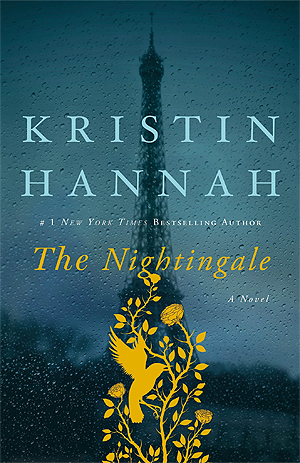
7. The Nightingale by Kristin Hannah
Here’s another novel that’s been on the best seller’s list for a long time. Like a bunch of other recent best sellers (such as All the Light We Cannot See), it’s set during World War II. Everybody understands World War II. It’s the go-to war for fiction. If The Nightingale had been set in France during the Franco-Prussian War of 1870, not as many people would want to read about that. I’m not a history expert, but I think the Franco-Prussian War is underrated as far as influential wars go.
8. As Time Goes By by Mary Higgins Clark
Mary Higgins Clark is known by some as the “Queen of Suspense.” That’s a great nickname, if you’re into royalty (and suspense). I wonder if other female authors who write suspense novels get annoyed that Mary Higgins Clark is the “Queen of Suspense.” Does Nora Roberts get mad? I’m sure Nora Roberts has written suspense novels; she’s written over 200 novels, so some of them have to be suspenseful.
9. All the Light We Cannot See by Anthony Doerr
I would call this the To Kill a Mockingbird of books, except that would be comparing a book to another book. What I mean is that nobody I know dislikes or hates either book. A lot of people have read (or are reading) All the Light We Cannot See, and I haven’t heard many negative comments about it. I rarely hear negative comments about To Kill a Mockingbird either. Other than that (and that Pulitzer Prize for Fiction thing), I don’t think the two books are much alike.
10. Miller’s Valley by Anna Quindlen
This novel seems to be about a family with secrets in a small town (which maybe has some secrets too), but the blurbs don’t tell me much about the book. In a way, I’d like to know more about Miller’s Valley, but then again, I complain when the blurbs give away too much. There are a lot of books out there about families and secrets and small towns and secrets, and I’d like to know what makes this novel different from other novels about families with secrets in small towns. Maybe Anna Quindlen’s writing is what makes the difference.
*****
What do you think? Which of these May best sellers do you think will end up on summer reading lists? Which books are most likely to plummet? What war (other than World War II) would you set your novel in?
*****
The true story of one writer’s moment of high school glory! And it all happened because of…

Only 99 cents on the Amazon Kindle!

Putting your work-in-progress on the writer’s block is never a good idea. (image via wikimedia)
Writer’s block can be an author’s worst enemy. As an aspiring author, I’ve learned how to deal with writer’s block, but since I’m not a famous (or a particularly successful) author, nobody really cares about my opinion about it. I understand that. Maybe successful authors are more credible sources about writer’s block that I am.
Theoretically, a published author should be able to explain how to deal with writer’s block better than a part-time blogger like me. Unfortunately, as we shall soon see, successful writers don’t always give the best advice about writing and writer’s block.
What is writer’s block?
“Writer’s block is just another name for fear.” ― Jacob Nordby, author of a bunch of self-help books
I don’t know much about Jacob Nordby, but this is one of the worst explanations of writer’s block I’ve heard. I know a lot about fear. After all, I’m scared and worried about many things. But even though I feel a lot of emotions (excitement, frustration, anger, exhilaration) when I write, fear isn’t one of them.
The only time I feel fear during the writing process is when somebody is reading my work right in front of me, but that hasn’t happened in over 20 years. With a blog, I never get to see a reader’s reaction. If somebody leaves a comment on my blog telling me that I suck, I’m glad to have gotten a reaction. But if somebody tells me to my face that I suck, it hurts my feelings.
I think a better explanation is that writer’s block is your brain saying “I’m not going to be creative today.” It’s when you want to write and your brain won’t let you. And why would anybody be scared about writing?
What do you do when you get writer’s block?
“Writing about a writer’s block is better than not writing at all” ― Charles Bukowski, author of weird poetry and fiction
If Charles Bukowski says it’s okay, then maybe it’s okay to write about writer’s block, but only as a last resort. It’s like the student who writes a story about not being able to think of a story to write about and then he/she wakes up and it’s all a dream. You don’t want to write a story like that, but sometimes you don’t have a choice.
Whenever I get writer’s block, instead of writing about writer’s block, I just quit until I feel more rested. But maybe writing about writer’s block isn’t a bad idea.
Just so you know, I’m not writing about writer’s block because I have it. I don’t have writer’s block. I have what I think should be called editor’s block. I’m writing a lot of stuff, but I haven’t been successful fixing much of it. My mind has been going blank whenever I’ve been making corrections and adding/deleting word/phrases. This lack of editing has left me with a bunch of substandard drafts that don’t meet my blog’s standards. I know a piece of writing isn’t very good if it doesn’t meet my blog’s standards. I’ve never seen editor’s block before, so maybe I’ll copyright it and see if I can sue somebody when they use without my permission.
What does getting writer’s block say about you as a writer?
“Writer’s block is for people who have the luxury of time.”- Jody Picoult, famous author of a bunch of best selling novels that make people cry
“Luxury of time?” This contradicts everything I know about writer’s block. The only reason writer’s block is a problem is because writers have deadlines (and no time to meet them). If a writer has a lot of time, he/she could quit when writer’s block struck. If you have the luxury of time, you don’t care about writer’s block.
Even though I’d love to be a successful author, I’m glad I’m not a professional writer because I could see myself getting writer’s block at the worst possible moments. And then if I couldn’t conquer writer’s block, I’d get fired. I don’t really care if I get writer’s block now because my blog won’t fire me.
I guess my lack of fear of writer’s block causes me not to have it. Maybe that Jacob Nordby guy was onto something after all.
Why do people get writer’s block?
“There’s no such thing as writer’s block. That was invented by people in California who couldn’t write.” ― Terry Pratchett, famous author of a bunch of humorous fantasy novels
At first, I thought Pratchett was full of crap (Remember, Crap is NOT a Bad Word!), but maybe he is on to something. According to Merriam Webster, the term writer’s block was first used in 1950. California became a state in 1850. It’s possible that somebody in California invented writer’s block. I’m surprised it didn’t exist before 1950, though. We’d had centuries of writers before 1950, and it took that long before somebody became afflicted with writer’s block. It kind of makes sense; a lot of afflictions were created in the 20th century.
I don’t like people who make up afflictions, but I also dislike people who deny that afflictions exist. Maybe Terry Pratchett never experienced writer’s block, but that doesn’t mean it doesn’t exist. When I was a kid, I suffered from motion sickness, and the rest of my family told me it was all in my head. That ticked me off. Now I know that there’s a logical physiological(?) reason that I got motion sickness, and it wasn’t my imagination or me psyching myself out.
If Terry Pratchett didn’t believe in writer’s block, he might not have believed in motion sickness either, and I bet he really wouldn’t have believed in editor’s block.
*****
What do you think? What other questions about writer’s block do you want answered by the pros? Is editor’s block a real thing, or is it all in my head? What do you do when you get writer’s block?

If you’re going to buy this book, get it soon (before Pulitzer puts its name all over the cover).
Whenever a new Pulitzer Prize for Fiction winner is announced, it’s a good idea to go out and buy a copy of the book right away. In a few weeks, the only available copies will have a giant ribbon/blurb on the cover that announces that the book is a Pulitzer Prize winner. After that, it’s tough to find a Pulitzer Prize winning book without the Pulitzer Prize on it. You might have to go to some used book stores. But it’s worth it.
I don’t blame the book publishers for putting the Pulitzer announcement on the book covers. The Pulitzer Prize adds a lot of prestige to a book. But I like having novels without the Prize on the cover. I like to read books before they win awards or are turned into movies. And if I haven’t read them, then I like to pretend that I have.
Here are recent recipients of the Pulitzer Prize for Fiction. It might be tough to find copies without the Pulitzer on the cover, but it’s probably still possible:
2016 The Sympathizer by Viet Thanh Nguyen
As soon as I heard that The Sympathizer had won the 2016 Pulitzer Prize for Fiction, I ran out to the local B&M Bookseller to purchase a copy. I might not ever read The Sympathizer, but I can always brag that I read the book before it won the Pulitzer. After all, I have a copy that was printed before the Pulitzer announcement had been made. I can say I was ahead of the times. I was the trend setter. Yeah, I run the risk of looking like a book snob (and maybe a liar), but people respect book snobs.
2015 All the Light We Cannot See by Anthony Doerr
I write about this book a lot because it’s always on the best sellers lists when I do my monthly review. I haven’t read All the Light We Cannot See, but I know a lot of people who have (or claimed to have read it), and nobody I know despises this book. Usually a Pulitzer brings about a ton of extra criticism, but I haven’t seen any post-Pulitzer backlash for this like I’ve seen from other winners (especially The Goldfinch and A Visit from the Goon Squad).
If a book can be a long-term bestseller AND a Pulitzer Prize winner and NOT get post-award backlash, then that book must be AWESOME (except saying it’s AWESOME would be setting expectations too high and cause more undeserved backlash).
2014 The Goldfinch by Donna Tartt
This is what I’m talking about, a polarizing Pulitzer Prize winner that’s been a bestseller for a long time. A lot of readers love it, and a lot of readers hate it. Readers complain that it’s too long, too slow, and has sections that don’t make sense or contribute to the story. Others say the book is brilliant. Being “brilliant” implies that that readers who complain about the book just don’t get it. Readers who complain about it might say they “get” it but it’s not as brilliant as readers who love it say it is.
I haven’t read it. By my standards, it’s pretty long.
2013 The Orphan Master’s Son by Adam Johnson
North Korea is a rare setting for a novel, and the author uses a bunch of literary devices to describe all the horrible stuff going on there, so it’s more than just a laundry list of human rights abuses. I don’t like reading about human rights abuses, even when I know they’re fictional.
In The Orphan Master’s Son, the orphan master treats his son more harshly than the orphans in his care. That’s how it goes. When I was growing up, a friend of mine’s mom was a teacher, and one year he had to be in his mom’s class for the whole year, and he was miserable because she was always on his case. I’m sure it wasn’t as bad as being an orphan master’s son in North Korea, but still.
2012 No Award
I respect an award where there isn’t always a winner (or recipient). There shouldn’t always be a winner just because there’s an award available. There should be standards, by God!! If no novel written in 2012 meets those standards, then so be it. I wish the Heisman Trophy (for college football) had a No Award option.
2011 A Visit from the Goon Squad by Jennifer Egan
As a writer, you can’t go wrong with a metaphor as a title. As a reader, I can get confused with metaphors because I’m kind of literal. When I read A Visit from the Goon Squad, I was expecting an actual goon squad. I like books with goon squads. I don’t like goon squads in real life because they’re dangerous, but I like goon squads in literature because they make books interesting. Just so you know, there are no real goon squads in A Visit from the Goon Squad. I hope that doesn’t spoil anything.
2010 Tinkers by Paul Harding
Here’s another polarizing Pulitzer winner. Readers either love it or hate it. Some critics call it poetic, and other say the author tried too hard. I know what those critics mean. In this novel an old man is on his death bed thinking about his life with his family around him. It seems like a common idea.
I’ve read books and seen movies with that concept, but Tinkers uses a lot of metaphors regarding clocks and time. Some critics say the author tried too hard to make this book deep, but Tinkers won a Pulitzer, so who cares? If I’m the author and I’ve won a Pulitzer, I don’t care if critics say I tried too hard. Trying too hard shows you care. It’s better than not trying hard enough.
2009 Olive Kitteridge by Elizabeth Strout
When a book title is a character’s name, I sometimes get confused. Did Elizabeth Strout write Olive Kitteridge? Or did Olive Kitteridge write Elizabeth Strout? Elizabeth Strout would have been a cool fictional name, and Olive Kitteridge would be a cool author’s name. At least when Jane Austen wrote Emma, she didn’t give Emma a last name. If Emma had been given a last name, I might have gotten Jane and Emma confused too.
2008 The Brief Wondrous Life of Oscar Wao by Junot Diaz
This is the opposite of Olive Kitteridge. Take a character’s name and add a bunch of adjectives to it. Plus, there are tons of pop cultural references in this book. I wonder how it will hold up 20, 50, even 100 years from now. When somebody reads The Brief Wondrous Life of Oscar Wao in 2108, will readers be turned off by all the references that are no longer in the cultural lexicon? That’s the thing about being a Pulitzer Prize winner; it’s forever. At least, it’s forever as long as people still read books.
2007 The Road by Cormac McCarthy
It’s short. It’s about the post-apocalypse. The characters have no names. It’s kind of depressing. But after you read it, you can brag that you’ve read yet another Pulitzer Prize winning novel.
A post-Apocalyptic Pulitzer Prize winner? You’d think I’d have more to say about it.
2006 March by Geraldine Brooks
I had never heard of this novel until I started researching for this blog post. I don’t know if that’s a reflection of my ignorance or a reflection of this prize winner’s obscurity. I initially didn’t know if March was referring to the month or a verb. If it was about a march during March, that would make March a clever title. I was disappointed to find out that March was the protagonist’s name. Ugh.
Then I found out that the protagonist is the absentee father from Little Women. I know Little Women is public domain and today’s authors can do what they want without permission, but I was surprised that the Pulitzer committee would consider a novel based on a classic. It almost seems like cheating, but I guess Pulitzer disagrees.
*****
What do you think? Which Pulitzer Prize winning novel have you read? Which one are you most likely to read? Does winning a prestigious award even matter to you? Which award means more to you than the Pulitzer?
*****
I wrote a story. I read it in front of my class. And then a bunch of weird stuff happened (but I didn’t win a Pulitzer).
Only 99 cents on the Amazon Kindle!
.png)
People will always ask you for money, even if you don’t have much.(image via Wikimedia)
My daughters stared at me horrified when I refused to make a small donation to a children’s fund. I don’t even remember which children’s fund it was. I was just paying for groceries, and after I’d swiped my card, the screen requested two extra dollars . I stared blankly, and the clerk asked if I wanted to donate to the charity. I said no thanks without thinking about it until I saw my daughters’ facial expressions.
“You were so rude,” my oldest daughter said, as we left the store.
“I said ‘No, thank you’!” I proclaimed. In my opinion, you can’t get any more polite than “No, thank you.”
“It was the way you said it. You were sarcastic.”
“My ‘No, thank you’ is always sincere,” I said.
“You said, ‘No, THAAAAANK you.’”
“How can I sound sarcastic? I have a monotone voice.”
“You just were.”
“Run the video,” I said. I wanted to watch the exchange on one of my daughters’ cell phones and hear if I had truly sounded sarcastic. Sometimes the person speaking is the worst judge of how he/she sounds. But neither of my daughters had been videoing. I was disappointed. That moment with the cashier has been lost forever, and I’ll never really know how I sounded.
“If there’s no video, there’s no foul,” I said.
It’s tough to explain how to say no without making it sound mean. My wife and I work hard, and it seems like more and more people are asking for money. If I said yes to everybody who asked, there wouldn’t be much left. And it’s important for my daughters to know it’s okay to say no.
“Just say no,” gets made fun of a lot. Back in the 1980s, it was seen as an oversimplified solution to a complicated drug use problem. To be fair, it was a lot better than “This is your brain on drugs. Any questions?” And it was better than “I learned it from you!” Anybody can say no. Not everybody can scramble eggs and blame their parents. But “Just say no” gets a lot of grief. It doesn’t get as much flak as “I’ve fallen, and I can’t get up.” But it’s right up there.
“Just say no” is great when it’s not politicized. If somebody asks you for something and you don’t want to give it him/her, just say no. There’s nothing wrong with saying no. And if a person tries to guilt trip you into saying yes, then they probably don’t deserve your help anyway.
Later that day in a shopping plaza, we passed by a table where a bunch of religious trinkets were being sold. The contributions supposedly were being used to help the needy. The people behind the table seemed sincere, but there was no way to verify that.
“Can I have one?” my youngest daughter asked, almost reaching for a cross on a necklace.
“Not today,” I said, trying to keep my voice from sounding sarcastic.
“You mean, not ever,” she said and glanced at the ladies working the table.
“Have a blessed day,” the woman said, with no sarcasm in her voice, but she probably thought I was a cheap, heartless bastard.
“You too,” I said.
“You too?” my daughter said, mocking me. “You never say yes.”
My daughter was trying to shame me. I don’t like guilt trips because the person asking for help shouldn’t make demands. In my mind, the person giving the help sets the rules. I decide when to help somebody and how I’m going to do it. It’s important that my daughters understand that. We might want to help, but that’s our decision. And we don’t have to help if we don’t want to.
I’m glad my daughters are compassionate, and I’m glad they’re polite (except to my wife and me), but I told my daughters that it’s okay to say no. They don’t even have to be polite about it. Polite people have no responsibility to be polite when saying no. I try to be polite, but that’s just how I was taught. You can pretty much say no any way you want to. And if they guilt-trip you, then you can say “Get lost, you leech!” as a final resort.
I don’t insult people very often, but it’s in my arsenal when I need it.
As my daughters and I exited the plaza, we saw a collection stand for children with very serious afflictions. It had the coin slots and the funnel so you could watch the coins roll like a cyclone to the bottom of the canister. It was mesmerizing. And it was (supposedly) to help children with very serious afflictions. If there’s any group that I’ll donate money to, it’s an organization that helps children who have very serious afflictions.
Plus, the collection stand had a coin spiral. I can’t emphasize that enough. I don’t care who I’m donating to if there’s a coin spiral. My money could be going to Donald Trump or Hillary Clinton or any other politician, and I wouldn’t care. I could stare at the coins spiraling all day long. When we had given up all our change, my daughters and I ran back to the car, cleaned coins out of all the compartments, and ran back to the store to feed the coin spiral. And it was all for the children (I hope).
Maybe I’ll buy my own coin funnel and start asking other people for money. I can never say no to the coin funnel.
*****
What do you think? What is your policy for saying yes or no to people who ask for money (or help)? Is there a better way to ask for money than a coin funnel? If so, what is it?
*****
When I was a kid, I was punished for saying the word crap. Looking back, it kind of ticks me off because now I know…
And here is the true story of my one moment of high school glory!
Now only 99 cents each on the Amazon Kindle!
If your book title is Fool Me Once, you might not get a second chance with readers.
It’s tough to keep track of the novels on best sellers lists because the books can change so quickly. Most novels don’t stay on the best sellers lists very long, so you can drive yourself crazy or become obsessive if you check them every day. Still, it’s good to review the best seller lists about once a month to see what’s selling and to keep track of what you might want to read in a few months when the books are more affordable.
Below is a list of the top ten best selling novels for April so far (according to the New York Times):
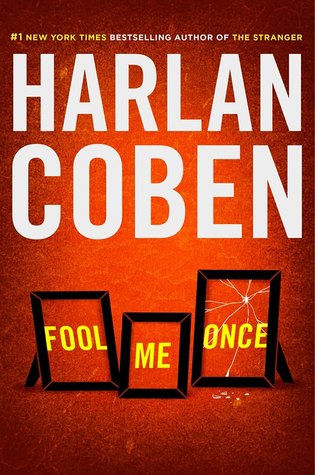
- Fool Me Once, by Harlan Coben
You have to have guts to title your book Fool Me Once. If somebody has read a previous Harlan Coben book and didn’t like it, the reader can say: “You already fooled me once.” Anyway, Harlan Coben has written several best sellers, so he’s had the chance to fool his readers numerous times already, and his books still become best sellers. With a Harlan Coben book, you pretty much know what you’re going to get.
2. The Nest, by Cynthia D’Aprix Sweeney
I had never heard of this author before, and it’s always good to see an unfamiliar author on a best seller’s list. According to the book cover, Amy Poehler thinks this book is “intoxicating.” If you like Amy Poehler, then maybe you’ll like this book. Then again, you may not give a flip whether or not Amy Poehler likes this book, even if you like Amy Poehler. I like Stephen King a lot, but I learned to distrust his book recommendations, so I’m not sure I’ll trust Amy Poehler’s recommendations either.
3. Private Paris, by James Patterson and MARK SULLIVAN
MARK SULLIVAN gets all-caps because James Patterson gets larger letters on the book cover, and I’m certain MARK SULLIVAN did most of the writing. I’m not sure who came up with the title, though. Private Paris is a lousy title for a book. Yeah, it’s a best seller, and I have no business bad mouthing a best seller when I’ve never written one, but the author who is not MARK SULLIVAN can put anything out there with his name on it and it will sell, so I’m pretty sure titling his book Private Paris is his way of showing off.
4. Journey To Munich, by Jacqueline Winspear
Here’s a spy novel set just before World War II. Every best sellers list seems to have at least one novel set during or around World War II. Putting Munich in the title hints at Germany, and if a novel takes place in Germany, it’s most likely going to be set during World War II. The cover says it’s a Maisie Dobbs novel. I’ve never heard of Maisie Dobbs, but if it’s a Maisie Dobbs novel, then there must be other spy novels set during/around World War II.
5. The Nightingale, by Kristin Hannah
Here’s another novel set during World War II, this time in Paris as two sisters have to deal with the war around them. Though this book has been out for just over a year, it still hovers around on best sellers lists with a very high star rating on Amazon. A lot of readers call it “epic,” but probably not in the way people say “epic” when they’re trying to sound cool. I think they mean The Nightingale is kind of deep with a lot of stuff going on.
6. All the Light We Cannot See, by Anthony Doerr
Here’s the third World War II novel in a row on this list, plus, it’s a best seller AND a Pulitzer Prize winner. A lot of people have read it, and I don’t know anybody who hates it. A couple people says it’s too long or overrated, but nobody says it sucks. If that many people have read a book and none of them says it absolutely sucks, then it has to be pretty good.
7. The Summer Before the War, by Helen Simonson
I worry about this novel. If you’re going to set your book during a world war, it’s supposed to be World War II. Instead, The Summer Before the War is set before World War I. I didn’t know the publishing world allowed this. World War I was a dumb war. I mean, most wars are dumb, but when it comes to stupidity, World War I takes the cake.
Maybe readers need more novels set before/during World War I just to remind us how stupid this particular war was. I’m not saying The Summer Before the War is a stupid book just because it’s set before World War I. I’m only saying that World War I was a really stupid war.
8. The Girl on the Train, by Paula Hawkins
This book somehow remains on best sellers lists. I keep expecting backlash to knock this book off the charts, but it has real staying power. Even though this book keeps getting a lot of negative reviews, it won’t stop selling!!
9. Property of a Noblewoman, by Danielle Steel
Danielle Steel is still writing books?
I know Danielle Steel hates it when men ask her if she’s still writing books, but she’s been writing books since I was a kid, and that was a long time ago. Hopefully, when my daughters are my age, they can still ask, “Danielle Steel is still writing books?”
10. Brush of Wings, by Karen Kingsbury
This is four books in a row with a prepositional phrase in the title. A prepositional phrase gives a title gravitas. The title Brush of Wings sounds metaphorical. I’m not sure what Brush of Wings is really about, but I bet it’s not really about wings or brushes. It’s probably deep. Maybe James Patterson could add a prepositional phrase to Private Paris and make his book sound more dramatic. Maybe it could be… The Private Parts of Paris.
The Private Parts of Paris?? Ha ha ha… ha!!
So much for gravitas.
*****
What do you think? Which best selling books from April are you most likely to read? How many novels about World War II do you think will be on next month’s list? Why does a prepositional phrase in a title (usually) give it more gravitas?
Lesson #1- Do NOT sit on that throne.
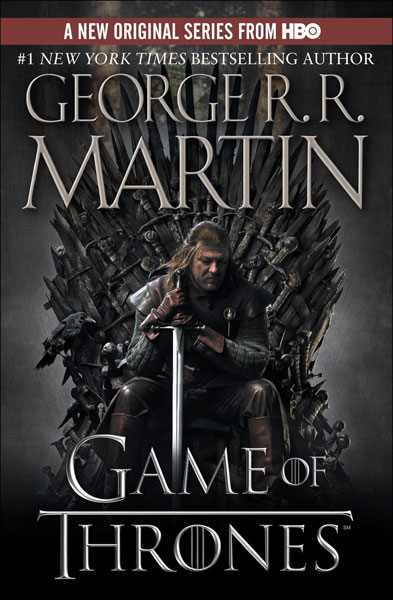
Out of all the reasons to watch Game of Thrones (violence, nudity, ripped-from-history storylines), learning life lessons isn’t one of them. Nobody watches Game of Thrones for morality lessons. If they do, they’re probably disappointed.
Sympathetic characters get killed in horrible ways, and villains seem to thrive. That’s a horrible morality lesson. But if you don’t watch with a good vs. evil perspective, Game of Thrones can give you some practical advice about how to be successful (and avoid getting yourself killed)
All of the lessons below are taken from Game of Thrones quotes. I’m not going to explain the context of the quotes (except for a couple) because that might potentially spoil the show for somebody who hasn’t watched it yet. But even if you haven’t watched it, you can learn from these quotes. Plus, if you use these quotes in everyday conversation, others will think you watch the show and will automatically hold you in higher regard (as long as you don’t tell them you don’t watch the show).
Here are five great Game of Thrones quotes that teach valuable lessons about life:
- “You know nothing.”
Life is easier if you understand that you know nothing. Most problems are caused by people who think they know more than they really do. Unfortunately, those people who don’t know anything are great at pretending they know a lot of stuff. If you can admit you know nothing, you can avoid a lot of stress.
Plus, saying “You know nothing,” is a great response to a lot of insults, especially if somebody curses at you and you don’t want to resort to profanity. If somebody else says “You know nothing” to you, all you have to do is sneer back and retort: “YOU know nothing.”
2. “You are a king. And that means you don’t have to do everything yourself.”
At first, I thought this was sound advice, until a season later when the person who gave this advice murdered the king he had been speaking to. Then I realized, just about every king who has died in Game of Thrones has perished partly because he let somebody else handle important business. Therefore, what I learned was:
Being king means you have to do the important stuff yourself. (It’s not in quotes because I made it up myself.)
Ideally, a king wouldn’t have to do everything himself, but every time kings trust their subordinates to important matters, the subordinates screw it up or betray them. This is true for non-kings as well in real life. If something important has to be done, do it yourself. If you can’t, watch carefully over the person who does it for you.
3. “A Lannister always pays his debts.”
You don’t have to be a Lannister to pay your debts. And on Game of Thrones, the Lannisters furthered their own problems by not paying off their debt to the Iron Bank. In reality, everybody has to be in debt sometime. It’s one way to get ahead in life.
But if you take a debt, it’s very important to pay it back. If you don’t, the people you owe will always get their money back, one way or another. If they can’t get their money back, then most likely you have a very rich (and sometimes deadly) enemy to deal with. I don’t like having enemies, especially rich ones, so I always pay back my debts.
4. “Knowledge is power,” but “Power is power” too.
Yes, knowledge is power, especially if you have knowledge about the people in power, but if the people in power find out that you have knowledge about them, the people in power might have you killed, and if you’re in power and you find out that somebody has knowledge about you, don’t threaten them because then the people with knowledge know they have power over you and might use it to destroy you.
In other words, keep your mouth shut. That’s almost always good advice.
5. “Any man who has to say ‘I am the king’ is no true king.”
If you’re in a position of authority, it’s not a good idea to remind everybody. It undermines your authority. I once had a teacher in junior high who couldn’t control the class, and out of frustration he shouted, “I am the teacher, and you will do what I say!” The class laughed at him (I didn’t), and a bunch of students farted.
In school, farting is power.
*****
I’m sure that anybody can find the lessons they want to find by watching Game of Thrones. What lessons have you learned from watching Game of Thrones?
*****
Here are two books that you might enjoy while you’re waiting for the next episode of Game of Thrones.
Now only 99 cents each on the Amazon Kindle!
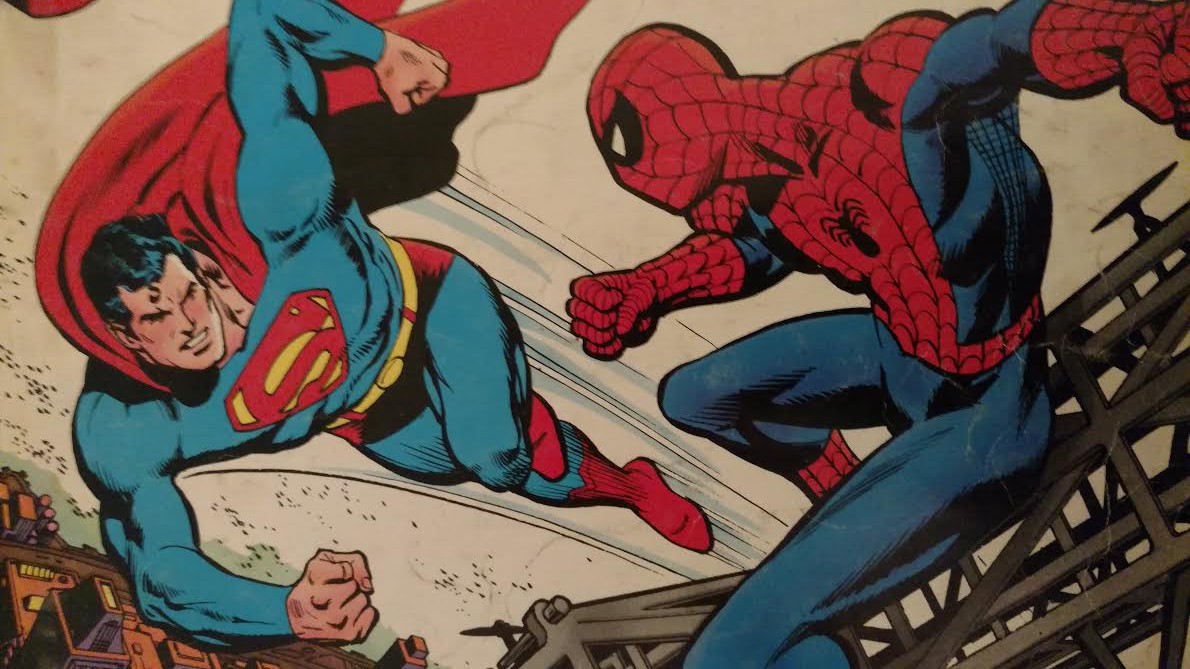
The Superman/Spider-Man movie hasn’t happened yet, but you never know.
There are a lot of superhero movies coming out in 2016 (and 2017… and 2018). Marvel has a bunch of superhero movies coming out. DC has a bunch of movies being released too. As much as the general public love superhero movies, at some point the novelty is going to wear off. And when it does, the superhero movie bubble will burst.
As a former comic book fanboy, I would have loved this superhero movie glut 40 years ago. When I was a kid, there were no superhero movies, except for the cheesy Adam West Batman movie that local TV stations played on Sunday afternoons. Other than that, there was only the Lynda Carter Wonder Woman and Lou Ferrigno as The Incredible Hulk. Lynda Carter and Lou Ferrigno were great, but their shows were low budget. I wanted to see Hulk smash cities, and all he did was lift up trucks and throw bikers around. It’s only been in the last couple decades that it was possible to make a superhero movie look good.
Even when comic books started getting turned into movies, most of them sucked. Superman and Superman II with Christopher Reeves were pretty good, but Superman III and IV sucked. Batman with Michael Keaton was okay, but the other ones sucked (to varying degrees). 1990’s Marvel movies (like The Fantastic Four and Captain America) sucked so bad that they didn’t even make it into theaters.
The first Marvel superhero movie to not suck was X-Men. I remember, that was my first comment when I walked out of the theater in 2000(?).
“Jimmy, what did you think?” a friend asked after we had watched the movie.
“It didn’t suck.”
That was my version of a thumbs up. Back in the late 1990’s, the only thing that didn’t suck was the TV show Buffy the Vampire Slayer. But I was a very hyper-critical fanboy back then.
Some comic collectors think “fanboy” is a derogatory word. I understand. Fanboy rhymes with manboy, and manboy describes a lot of comic collectors. I was a fanboy for a long time. Then I got married and had kids. I just lost interest in comic books. It wasn’t my wife’s fault. Some fanboys blame their wives (or girlfriends), but I just reached a point where I had read too many comic books. But that fanboy part of me still exists, and I get excited whenever a new superhero movie comes out.
Some non-fanboy moviegoers don’t understand these new movies like Batman vs. Superman: Dawn of Justice or Captain America:Civil War where superheroes fight each other. Superheroes have been fighting each other in comic books for decades. Superheroes love to fight because they have all the testosterone that fanboys don’t. After superheroes are done fighting each other, they team up to beat up the bad guy, so everything is usually okay at the end.
Some fanboys say it’s better to have too many superhero movies than not enough. I understand that. For most of my life, there weren’t ANY superhero movies, and I prefer the way things are now. Still, I remember what happened in the early 1990’s when there were too many comic books. I eventually stopped buying them. And that could happen with superhero movies. If it were just one comic company involved, it would make sense for them to bring out the movies slowly. But with Marvel and DC competing, they almost have to push faster than the other. And that will create the superhero movie glut, and then the bubble will burst.
Every bubble bursts. The stock market bubble always bursts. Energy bubbles burst. Technology bubbles burst. Property bubbles burst. Even comic book bubbles burst. Back in the 1990’s, comic book companies went crazy, publishing way too many titles. There must have been 10 different Batman comics every month, 10 Superman comics a month, 10 Spider-Man comics a month. If a character was popular, he/she had 3-10 comics out each month. It was impossible to keep up. Fanboys started speculating, thinking that these overprinted issues would be worth something. And then the comic bubble burst, and a bunch of titles got cancelled, and all those overprinted 1990’s comic books were worthless. I’m no economist, but even I understood economic bubbles.
When it comes to comic books and movies, I’m not taking sides between Marvel and DC. I’m partial to Marvel, but I don’t care enough to defend my opinion. If a DC fanboy says Marvel sucks, I don’t care. Arguing about comic books is almost as pointless as arguing politics. The only fanboys I argue with are the Rob Liefeld fanboys. I openly mock the Rob Liefeld fanboys when I see them at comic conventions. I don’t go to comic conventions often anymore, but when I do, I make sure to mock the Rob Liefeld fanboys.
Anyway, a Marvel-DC movie team up has to happen. If Hollywood could ever make a Superman/Spider-Man movie, I’d stand in line for it. I don’t even go to movies anymore, but I’d stand in line. I’d even wear a costume. It would have to be a Spider-Man costume because I don’t look anything like Superman, and I’d have to suck in my gut a little bit.
I’m too old to dress like a superhero, though. Maybe I could dress up like Stan Lee. Stan Lee hasn’t written a good comic book since maybe 1969, but who cares? I’d still dress up like him if I was in line for a Superman/Spider-Man movie. I could grow a cheesy mustache and wear corny sunglasses and shout “Excelsior!” every once in a while.
And if Hollywood keep churning out superhero movies at this clip, they’ll have to make a Superman/Spider-Man movie just to keep the public’s interest.
*****
What do you think? How many superhero movies are too many? Which superhero movie are you looking forward to the most?


 Dysfunctional Literacy