
If it’s in the title of a song, it has to be a word. (image via wikimedia)
40 years ago, nobody thought ain’t was a real word. After all, it wasn’t in the dictionary. At least, ain’t wasn’t in any of the dictionaries that we students looked in. The conventional wisdom back then was that if a word wasn’t in the dictionary, then it wasn’t really a word. It never occurred to me then that a dictionary could change its mind. Nowadays, if enough people start using words, then the dictionary will bend its judgement and include them, infuriating purists and grammarians everywhere.
If any non-word should become a word, it’s ain’t. I don’t have proof to back this up, but it’s probably been one of the most commonly used non-words over several generations.
In elementary school, I had a friend who used to say, “Ain’t ain’t a word, so you ain’t s’posed to say it three times a day cuz it ain’t proper.”
The humor in that statement was that the word ain’t was used four times in one sentence when you weren’t supposed to say it three times in one day. I had some rebellious friends.
In high school, I even remember a couple teachers who frequently said ain’t. One was a science teacher, and when a bold student corrected her, the science teacher retorted:
“I ain’t a English teacher.”
After the bold student corrected the usage of the words a and an, the science teacher repeated:
“I ain’t a English teacher.”
If teachers were using ain’t in front of their classes, we thought, then it had to be a word, no matter what the English teachers said. The English teachers were outnumbered by every other teacher.
The Merriam Webster Dictionary now states that ain’t is “widely disapproved as nonstandard and more common in the habitual speech of the less educated.”
I would love to have seen my science teacher’s reaction to that.
Even though the word ain’t is considered improper, there’s a logic to its usage. Most (if not all) forms of the verb be have contractions. Is not has isn’t. Was not has wasn’t. Were not has weren’t.
And a few hundred years ago, am not had amn’t.
Somewhere along the way, amn’t became ain’t. And somewhere along the way, ain’t became improper.
Part of that stigma might be because ain’t is a contraction. English teachers used to instruct us students not to use contractions in our writing. As far as contractions go, ain’t is probably the most extreme because it’s often used in situations where am not should not be used.
For example, am not could be used after the pronoun I , but it shouldn’t be used after you, he, she, it, we, and they. Most people use ain’t indiscriminately after any pronoun or subject. I’m just speculating, but ain’t might be frowned upon more than any other contraction simply because it’s so misused. There’s a correct way to use ain’t, and there are many wrong ways.
*****
Correct Example
I am not going to read A Song of Ice and Fire until George RR Martin actually finishes it.
That is grammatically correct.
I ain’t going to read A Song of Ice and Fire until George RR Martin actually finishes it.
If ain’t is ever proper, the above sentence has the correct usage. My science teacher was using ain’t correctly, and I didn’t know it.
*****
Incorrect Example
We am not ever going to read another James Patterson novel.
To be correct, the phrase should be are not instead of am not.
We ain’t ever going to read another James Patterson novel.
Since am not was not grammatically correct in that situation, then ain’t shouldn’t be either.
I kind of wish that the dictionary would outright state that ain’t is not a word. We need higher standards in almost every part of our lives, and language is one of them. That doesn’t mean I’d ever correct anybody for saying ain’t. Correcting grammar is worse than using improper grammar.
No matter what the dictionary decides, ain’t might never become a universally accepted word. It’s too controversial and has had too long of a history. And, if it ever became proper, we’d have to find a new way to annoy grammarians.
*****
What do you think? Should ain’t be considered a real word? If ain’t did become a real word, how else would we annoy grammarians?
*****
Here’s the romantic comedy you can read and listen to…
Check out these books on Amazon!


(image via wikimedia)
The 4th of July is a weird holiday. Not everybody gets the day off. We don’t exchange gifts. We don’t eat a big feast. We might go to a parade, but we pretty much don’t do anything until it gets dark, and then we watch a giant fireworks display.
Back in 1976 when the United States turned 200 years old, I lived in a rural area where we’d have to drive about 20 miles to see the county’s lame fireworks show. In our community a lot of us were pale and had necks of red, and people with necks of red don’t like watching somebody they don’t know (like an outside entity hired by a community leader) shoot off fireworks, no matter how impressive the display is. Most people with necks of red would rather control the fireworks themselves, even if it’s just a bunch of firecrackers and sparklers.
It took a long time for it to get dark on July 4, 1976. Even when we were blowing up M-80s all over town, time passed slowly. Eight boys, a box of M-80s, no adult supervision, and a slow-moving day, that’s a really bad combination.
(If you haven’t read the first part of the story, you can start here.)
The M-80s belonged to Ray who had stolen them from his older brother. I had been peer-pressured into lighting an M-80 outside an open window of a burly neighbor who was emotionally unstable and owned a shotgun (another really bad combination). He had even threatened to shoot Ray (according to Ray). I was 10, so I was stupid enough to carry out somebody else’s bad ideas.
Just so you know, I learned from this experience. I later became the guy who thought of the bad ideas but was smart enough to let somebody else try them out.
Anyway, I knew that several things could go wrong. I could blow my hands off with the M-80. I could be seen by an adult blowing up the M-80, and they’d tell my dad who would beat me with his belt. I could get caught by the burly neighbor, who’d then want to shoot me. I could get shot before I even made it to the porch.
My plan was to approach the house from the side, light the M-80 near his front door (which was wide open), then brazenly run in a straight line away from the house as fast and far as I could toward the other boys. That way if the burly guy saw me, he’d just see my back as I was running with a bunch of other shirtless boys. Only Ray would stand out from the rest of us. Nobody would mind if Ray got shot. His older brother was probably going to kill him anyway once he found out his M-80s were gone.
Still, I didn’t want my hand to get blown off by the M-80. I also didn’t want to get shot by the burly guy.
The rest of the boys stood in a pack a few houses down the street. Anybody who saw us should have known something bad was about to happen. All the houses were one-story, and most were built the same way with a side driveway, then a living room in the front and two small bedrooms on the other side of the front door. I kept low with my back to the house so that the burly neighbor wouldn’t see me from inside. I crept past the living room window, fumbled with the matches, lit the tip of the fuse, and ran like hell.
I must have been fast because I passed my friends before the M-80 even blew. They watched me sprint by and stayed in their pack. I was at least halfway down the block before that M-80 went off. I stood my ground by the stop sign, watching the burly guy’s front door as my friends sped toward me. All of us stood by the corner waiting for the burly guy to plod out. I had images of a shirtless hairy guy with his gut hanging over his shorts. Maybe he’d even come out with his gun. Maybe he’d take a shot at us, but we were too far away. This had gone better than I’d expected.
Except nobody came out. We stood there for a couple minutes, but nothing happened. We were puzzled. His windows were open. His front door was wide open. Other adults in the neighborhood looked out of their windows to see what was going on. We knew the burly guy was home. How come he hadn’t rushed out?
“He’s probably taking a sh*t,” Ray said.
“Should we try it again?” a kid asked. We had one more M-80.
“If you want to get shot, go ahead.”
Everybody seemed let down except me. I was glad he hadn’t come out.
If this seems anti-climactic, I can’t help it. That’s just the way it happened. I was thinking of making the story more dramatic with the burly guy running out with a shotgun. Maybe he could have shot Ray (that would have been a crowd-pleaser), but it didn’t happen that way. I never found out what the burly guy was doing, and I probably don’t want to know.
The thing is, I missed the best part of the whole story. We split up a few minutes later because we’d almost run out of M-80s and it was close to dinnertime. Most of us would see each other later when our parents let us blow up firecrackers that evening.
I wasn’t there when Ray blew up his thumb. He lived in another part of the neighborhood, and he always did his thing without supervision as much as possible. The story was that Ray had run out of M-80s and was blowing stuff up with smaller kinds of explosives. While he was in the process of lighting some kind of firecracker, an adult came out and yelled at Ray to stop. I guess Ray got distracted or argued with the adult or panicked, but by the time he got rid of the firecracker, it was too late. Whatever it was went off and shredded his hand.
A few days later, when my dad heard about Ray losing a thumb, he said calmly, “He shall soon be a frustrated young man.”
My older brothers laughed, and I didn’t understand. A few years later, I figured it out.
That’s how life is. We had spent July 4th trying not to get hurt with an M-80, and then Ray gets disfigured with something as common as a firecracker.
For a few weeks Ray had a cast/bandage on his hand. After that, he had a stump for a thumb. Ray liked to show off the stump to make girls gag, but he was embarrassed by it too. From then on, Ray was the guy who was too dumb to light fireworks, but he didn’t stop. Two summers later, right before we moved, I saw Ray blowing up dolls, telling younger kids to light-and-run. And then he’d show them his stump as a reminder. He was using his stump as a teachable moment, even though the term “teachable moment” hadn’t been invented yet.
*****
I don’t remember which fireworks we blew up that night. It wasn’t as spectacular as vandalizing the community with M-80s, but the whole neighborhood was out there, so it was a lot more fun. Our parents were drinking, but in a good way, and it was a giant party. Even when we ran out of firecrackers, we stayed out for a long time. It was 1976. The United States was 200 years old. We had some celebrating to do.
THE END
*****
What is your favorite 4th of July memory? Have you ever embellished a true story to make it more dramatic?

USA! USA!! USA!!! (image via wikipedia)
Even at a young age, I was taught to be proud that I was a United States citizen. I knew to stand up while reciting the Pledge of Allegiance. I made sure our United States flag never touched the ground. I even tried to sing along as the Star Spangled Banner was being performed, but I was told to mouth the words instead because my singing voice wasn’t good and I sounded disrespectful.
Some people are uncomfortable expressing pride over being an American. Maybe they even feel like it’s arrogant to feel pride in a country. I don’t think my pride is arrogance. I simply recognize that I’m fortunate to live in a country where our U.S. Constitution guarantees certain freedoms and human rights that our government may not arbitrarily take away. This freedom allows Americans to reach our potential in ways that may not be possible in most countries.
The 4th of July is a great time to celebrate those freedoms along with the birth of this country. With that celebration comes lots of fireworks.
*****
“Whatever you do,” Ray explained as he showed us the M-80s he had stolen from his older brother, “don’t hold this while you light it. Put it down. Light the tip of the wick. Then run like hell.”
He demonstrated this process in the local park. It was late afternoon on the 4th of July, and it would be a few more hours before it got dark and parents would let us light fireworks. There were probably six of us elementary school boys gathered around Ray, who was in 8th grade, and there weren’t any parents around.
Ray repeated his instructions and then strolled to the opposite side of the park, trusting me to hold the box of M-80s. Ray set an M-80 on the ground, lit it, and then ran back to us. A few seconds later, it exploded, and we couldn’t believe how loud it was.
All of us jumped in surprise. One boy shrieked like a girl. I think my ears even popped. Ray laughed at our reactions and lit off another one. There was something exhilarating about watching/hearing an M-80 explode. One moment, the park was peaceful; then a violent (but contained) explosion rocked the park, and then a smoky peace returned.
Each one of us took turns lighting an M-80 and running away. I was nervous when it was my turn, but I didn’t have any problems because I had an older brother who smoked, and he would let me light his cigarettes for him.
After a while, we got bored of just lighting M-80s. We started to get creative. We found an old beat-up stuffed bear, put an M-80 into a hole in the bear’s shoulder, lit it, and watched the bear explode into a flurry of fluff. I kind of felt sorry for the stuffed bear. I knew it wasn’t alive, but it deserved better than to get blown apart by an M-80.
We passed a house that belonged to a teacher whom Ray didn’t like. We buried the M-80 in a flower pot on the porch and the pot exploded. Dirt, pottery and bits of flowers scattered in all directions. I didn’t feel bad about the flower pot.
Every time we blew something up, we laughed. It was probably more like a cackle. I knew we shouldn’t have been blowing up stuff, but it was fun. Looking back, I don’t get too down on myself for enjoying this because I was 10, but I still knew blowing up other people’s stuff was a stupid thing to do.
In case you didn’t know, this is what unsupervised kids do. They brain glitch. Even my generation (decades ago), if we knew stuff was wrong, we’d do it anyway, and when an adult asked us why we did something stupid, we’d just say “I don’t know.” When you honestly don’t know why you did something wrong or stupid, that’s the brain glitch.
Don’t get me wrong, a brain glitch isn’t an excuse. As you get older, you have to learn how not to fall for the brain glitches. My dad swung a vicious belt, so the threat of that usually overpowered my normal brain glitch. But the M-80s had magical power. The explosions were mesmerizing. The destruction was compelling.
With dinnertime approaching, we got more daring. We probably should have stopped with the flowerpot. Back then, though, most of our houses didn’t have air conditioning, so the neighborhood was filled with open windows. You could always tell who was home. One kid wanted to scare his older sister, so he snuck up to her window and lit an M-80 next to it outside the house. When it blew up, she screamed and saw us cackling outside the window, and she cussed us out really loud, so we ran. I don’t know why we ran. She’d already seen us.
Scaring people with an M-80 was fun, but we only had a couple left. Ray wanted us to scare the burly guy who lived in the house on the corner. I didn’t have a problem with the guy on the corner, but Ray hated him. Ray told us that the guy had threatened to shoot him if he saw Ray again, so Ray didn’t want to be the one to sneak up on the house. He promised us that the burly guy wouldn’t shoot any of us, as long as he didn’t see the M-80.
“Jimmy,” Ray said, handing me an M-80. “You do it.”
I didn’t want to do it. I was scared of the guy on the corner, even without the threat of being shot. He was big, burly, and hairy. I could sometimes hear him yelling at people from way down the street. My parents told me he was okay if you didn’t make him mad but to stay away from him anyway. I didn’t want to sneak up on his house with an M-80. Even at my age, I knew that was a bad idea.
“Why me?” I asked.
“Because you look innocent.”
That made sense to me. I had been told many times that I looked like a sweet kid, so I understood Ray’s logic. Even though I looked innocent, I knew how to light an M-80. I knew how to sneak up on a house. I knew how to run like hell. If I planned this right, maybe I could blow this M-80 without the burly neighbor even knowing that it was me who’d done it. This was a spontaneous plan, but it could work, I kept thinking as I psyched myself up to blow up an M-80 by the burly neighbor’s house.
You know these things never turn out quite as you expect.
*****
To be concluded in 4th of July Story: The Kid Who Got his Thumb Blown Off.
Or read the first episode at 4th of July Story: The Box of M-80s.

This picture was published in 1902. It was okay for kids to fire off guns back then. (image via Wikipedia)
I was 10 when the United States turned 200 years old. It was a big deal back then, but at the time, the meaning of the 4th of July was lost on me. As an adult, I understand July 4th is the annual celebration of the signing and approval of the Declaration of Independence by the Continental Congress.
I understand how important the following sentence from The Declaration of Independence is:
“We hold these truths to be self-evident, that all men are created equal, that they are endowed by their Creator with certain unalienable Rights, that among these are Life, Liberty and the pursuit of Happiness.”
That one sentence had a bunch of concepts that were unique way back in 1776.
The Declaration of Independence is also known for John Hancock’s really big signature. As an adult, I appreciate how momentous the signing of that document was and how it began the process of liberating the colonies and forming one of the greatest nations in the world. I also appreciate John Hancock’s really big signature. Several jokes have been made about how a guy named John Hancock had a really big signature.
When I was a kid, I didn’t understand all this, including the John Hancock jokes. Back when I was 10, the 4th of July was about shooting off fireworks. And 1976 was a great year to shoot off fireworks.
*****
Back then I lived in a rural town. It wasn’t a suburb. It was a small town over an hour away from the closest city. Nobody ever came to our town to visit. You only went there to live.
I don’t want to sound crude and perpetuate stereotypes, but my friends and I were all pale with necks of red. When we went shirtless during the summer, you could tell what we had worn the rest of the year by the borders of red along our necks. I wore collared pullover shirts, so I had a v-neck of red. Most of my friends wore t-shirts or sweaters, so their necks of red were all circular. Now people can’t tell that I have a neck of red because I wear long sleeve collared shirts and ties most of the time. I am a middle-aged, clean cut guy who speaks properly.
Summer days in a rural town in 1976 could be kind of boring. There was no cable television. We had one movie theater, but it took at least a year for a good movie to get there after it had been released. It was 1976, and we still hadn’t seen the movie Jaws yet. Everybody wanted to see Jaws. We didn’t even live near a beach. We had a lake, but we weren’t supposed to swim in it because some horses had taken dumps in it and a kid had gone blind because of the bacteria. Looking back, our lake was more dangerous than a beach, and we didn’t have any sharks.
Since we were bored, we wandered around a lot that day. We threw rocks at a kid from another neighborhood, but we didn’t really try to hit him. It was fun just scaring him. We rode our bikes to a nearby cliff and threw stuff (nothing alive) off of it.
We were looking forward to the fireworks that night. Our parents would let us light firecrackers and run around with the sparklers. But none of that would get started until it got dark, and that was hours and hours away. We had to find stuff to do to kill the time.
There were probably six of us riding our bikes around, but none of their names are important to the story (because I’m trying to keep it short). We were all within a grade or two of each other. After a while, one or two kids would go home and then another kid or two would take his place. We were interchangeable. I went home once and ate lunch and read comic books and then got on my bike until I found them again.
Things picked up later in the afternoon when we ran into Ray. My mom didn’t like Ray. He was the only boy who wasn’t allowed to come over to my house. He was about three years older than the rest of us, and he didn’t have any friends his own age. He cussed all the time and smoked cigarettes, and his parents were never home, so he was fun to hang out with. He also had a couple big dogs (but I don’t remember the breed because back then Rottweilers and pit bulls weren’t popular).
“C’mere!” he yelled at us from down the street. He didn’t have a bike, but this day he had a box. We gathered around him and peeked inside. I didn’t recognize the contents. I knew they were something like really big firecrackers, thick red cardboard tubes with long wicks sticking out, but they were far bigger than anything my dad let me light off. I didn’t want to look stupid, so I kept my mouth shut and pretended like I knew what they were called.
“What’s that?” some other kid asked.
“M-80s!” Ray said proudly. I had never heard of an M-80 before. A few other kids had, and so they made some exaggerated gasping sounds.
“Where did you get them?” a kid asked.
“Older brother. He left them lying around.”
“What are you going to do with them?”
“What do you think, dipsh*t!” Ray said. “We’re going to blow some sh*t up!”
And with that, our 4th of July started early.
*****
To be continued in 4th of July Story: Waiting for Fireworks.

(image via Wikimedia)
Some guy who is not a writer lost a $1.2 million book deal this week. He had the book deal, and then it fell apart. In most circumstances, I’d feel bad for somebody who had such a large book deal and lost it, but in this case I’m not so sure.
The non-writer involved is a political guy (you can read more details here) who just got fired from a prominent political campaign. People are tired of reading about the politician who this guy worked for. I’ve written about this politician a couple times in the last few months, and I don’t want to become a political blog, so I intentionally left out the politician’s name on the title of this post because putting it there could turn readers off.
But when a guy loses a $1.2 million book deal, I have to write about that.
I’m not the type who delights in the misfortune of others, but I also don’t like it when obnoxious behavior is rewarded. The political guy almost got the book deal because of his former boss and his own obnoxious behavior. He recently got a cable news gig because of his experience with his former boss, but his new peers are upset (partially) because of his obnoxious past. I prefer it when obnoxious behavior gets punished, but losing the book deal isn’t really punishment because he never had the money in the first place, and he’ll probably still get paid in other ways.
It’s a bit unclear why the political guy lost the book deal. It might have been that he had a nondisclosure clause with his former boss. After all, the point of a book would be write a bunch of scandalous stuff about this former boss. Maybe the nondisclosure deal screwed him on the book deal, but he probably got more money from his former boss because of that nondisclosure agreement. I’m not a political guy, so I don’t understand how all these things work, but I know there’s a lot of money involved in politics.
I wonder what it feels like to lose a book deal that big. Maybe $1.2 million isn’t a lot to a political guy, but a book deal worth $1.2 million would change my life. If I had a deal like that and lost it, I’d lose it. I’d cry. Maybe I’d cry and put it on YouTube. I hear that youngsters like to watch reaction videos. I’m sure they would get a kick out of a middle-aged guy crying over a lost book deal. Those youngsters might even be shocked that anybody could make $1.2 million writing a book. Who reads books anymore?
Struggling authors sometimes get mad when a non-writer gets a book deal, but it’s even worse when a non-writer gets a huge advance. The huge advance is like salt in the wound for a struggling author. We struggling authors know that the celebrity/non-writers aren’t taking away readers from us. We know that the people who buy celebrity/non-writer books aren’t going to buy ours. At least, I know that, but I can still get bitter about it if I’m not careful.
I’d almost rather have a $1.2 million book deal fall through than never have the deal at all because it sounds good. At least I could brag that I almost had a $1.2 million book deal. From a practical standpoint, though, no book deal is no book deal, whether it almost happened or not. The thing is, this political guy will probably still get another one. It might not be for $1.2 million, but it will still probably be more than what I’ll get for my own writing.
When this political guy gets his new deal, I really hope I don’t find out about it.
*****
What do you think? How would you react to losing a $1.2 million book deal? How do you react when you find out that a non-writer has received a huge book advance?
*****
Read one of the ebooks below and help make the literary world safe from former political insiders!
Now only 99 cents each on the Amazon Kindle!
This novel had a 100% chance of becoming a best seller. Or is it “bestseller”?
Every author would like to write a best seller, except maybe those who would rather write an award-winner instead. If you’re an author who doesn’t want to write a best seller or an award-winner, I apologize for making a blanket statement. Anyway, two authors claim to have discovered the formula for writing a best selling novel, and they… you won’t believe this… have written a book about it.
The upcoming book is The Bestseller Code: Anatomy of the Blockbuster Novel by Jodie Archer and Matthew L. Jockers. These authors suggest that they have cracked the code on how to write a bestseller. They’ve broken it down to plot and theme and characterization and language.
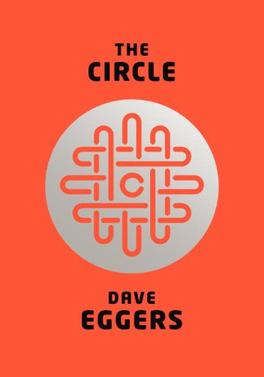
According to this book, the novel that scored highest on their algorithm was The Circle by Dave Eggers. The authors claim to have analyzed 20,000 novels which probably means The Circle beat out books by Stephen King, James Patterson, John Grisham, Tom Clancy, and everybody who wasn’t them. Dave Eggers has had a lot of success as an author, but to write a novel that has a greater chance of being a best seller than a book written by Stephen King?
Stephen King could rewrite the phone book, and it would be a best seller.
Dave Eggers could rewrite the phone book, and it probably would not become a best seller. That’s not an insult. I mean, he’s a good author, but his books don’t automatically become best sellers.
How does a researcher analyze 20,000 books anyway? I don’t think I could even read 20,000 Wikipedia entries about books. I’m sure the The Bestseller Code will explain how the research was done, but research practices are like the fine print on contracts. As soon as I start reading about the research process, I’ll probably lose interest in it. Maybe that’s what researchers count on.
I’m surprised The Circle was deemed the perfect best seller. First of all, it doesn’t take place during World War II. When I do my monthly best seller reviews, at least one novel (and sometimes two or three) take place during World War II. If I wanted to write a best seller, I’d think about setting it during World War II.
If there is an algorithm for a best seller, maybe writers shouldn’t know it, especially the desperate ones. There’s a risk that all novels will start to look the same. We see some of that anyway, with a bunch of best selling authors who kind of write the same books over and over, and the similar books keep selling. Dave Eggers doesn’t write the same book over and over, but he nailed the algorithm for The Circle. As a reader, I wouldn’t want every novel to sound the same. If everybody writes a best seller, then nobody writes a best seller.
A book about how to write a best seller isn’t guaranteed to become a best seller either. I don’t know how many authors are trying to write best selling novels. Out of those authors, how many can fork out money on a hard cover nonfiction book? Then again, I’d rather pay $20-25 for this book than a few hundred dollars for a James Patterson course.
Maybe the authors of The Bestseller Code are making up the entire algorithm. Scientists manipulate data to fit their agendas, including information that strengthens their case and ignoring stuff that undermines their theories. Lawyers do the same thing. Maybe these authors have left out crucial information too.
I don’t trust algorithms anyway. The algorithm Amazon uses to recommend books to me is wrong most of the time because it always suggests books by authors I’ve read or topics I’ve read about. Once I’ve read a book or two by an author, I’m ready to move on. Maybe I’m the opposite of most readers, but the algorithm should have figured that out by now, which means the algorithm is inflexible and therefore inherently inaccurate. Then again, maybe the algorithm is right, and I’m wrong about the books I’ll enjoy.
Trying to figure out what makes a best seller isn’t a new idea. A few years ago I wrote a blog post called How to Write a Best Seller with… Gone Girl by Gillian Flynn . At the time, I believed Gone Girl was the perfect best seller. I didn’t think it was a perfect book, but it had the perfect blend of elements for a best seller. I didn’t have an algorithm, though. I just had book-reading experience. If you want to save yourself $25, you can read my old blog post.
Or better yet, you can…
SHATTER THE ALGORITHM!!!
Read one of the ebooks below, and you can help create the unforeseen bestseller!!
Now only 99 cents each on the Amazon Kindle!
The author of this book might have been motivated by anger.
When I get annoyed at stuff, I write. For a long time, I thought maybe something was wrong with me for using such a negative feeling until I read a portion of Neil Gaiman’s new book A View from the Cheap Seats.
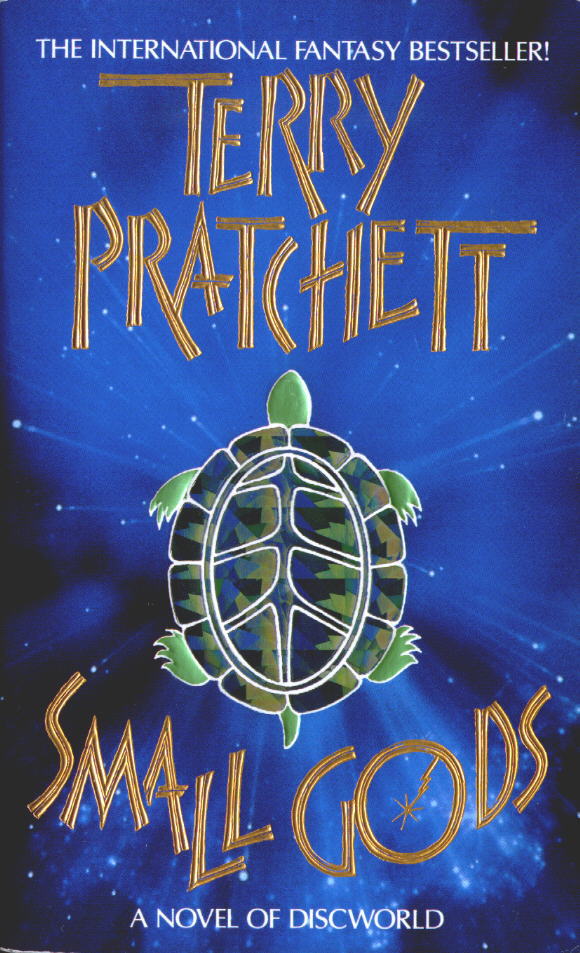
There’s a section at the very end that talked about how famous author Terry Pratchett (Small Gods and a lot of Discworld stuff) used anger as his motivation. In a lot of ways, Pratchett was a humorous writer, so to me, it was surprising that he used anger to drive him to write. Anger is more extreme than annoyance, and Pratchett had some stuff going on in his personal life that justifiably caused extreme emotions. But when I go through an extreme emotional phase, I can’t concentrate on being creative.
Anger is too much for me, but something minor like annoyance? I constantly use annoyance as motivation, which is good because recently there’s been a lot of minor stuff that I’ve found annoying. Maybe I’m getting more annoyed with more stuff as I’m getting older, but it’s been very easy for me to write recently.
Some kid got on national TV for doing mediocre celebrity imitations. A lot of people can do celebrity imitations, but since this was a kid, he got on television. I don’t like it when kids get on television. Almost every show/movie I watch is ruined by kid actors. Plus, being on television teaches kids a bad lesson. Once they’re adults, it’ll be almost impossible to get on television again. They will have peaked as kids. They’ll live the rest of their lives knowing the best is behind them. Then again, that’s what YouTube is for.
But by the time today’s kids are adults, television might be what performers do when they can’t make it big on YouTube.
Anyway, I don’t have to watch kids on TV because when they show up, I suddenly feel motivated to write.
Overenthusiastic applause and cheering is annoying. I can’t watch talk shows or late night shows because the audiences cheer too much. When somebody tells a mediocre joke, the audience laughs too hard. It’s not their fault; they’re having a good time. I don’t want them to change their ways. I can either turn on the captions, or I can change the channel. Or better yet, I can go write.
Almost all new popular music is annoying. That new Ghostbusters theme song by Fall Out Boy is annoying. Even the movie looks annoying, and it’s not because the cast is all-female. The cast seems all-obnoxious. In the original Ghostbusters, only Bill Murray was obnoxious, and his character was punished for it almost as often as he was rewarded. I like movies where obnoxious behavior gets punished, even if it’s just a little bit.
There’s going to be a lot of Ghostbusters hype, so I might be in the mood to write a lot soon.
You can’t really define annoying. All of us have different standards. A few years ago, a study found that the word moist was considered to be the most annoying word in the English language. Moist has no effect on me. To me, share is the most annoying word. I had a teacher who pronounced share as “shaaaaaaaaiiiiiiirrrr,” and she said it a lot. Back then, I didn’t write when I got annoyed. I just shivered and looked down at my desk.
Now that I’m an adult, I have more control over my own actions. When I get annoyed, I can close the door and write.
For a while, I believed I was being too negative for letting my annoyances motivate me to write. Then I realized, if anything, I’m lucky I live today. With so much new content on TV and the internet, it’s easy to find annoying stuff. And that makes it much easier for me to write.
*****
What do you think? What emotion/feeling motivates you to write? What do you find annoying?

We didn’t HAVE to do this. It was merely a suggestion. (image via wikimedia)
The monkey bars at our local park just got taken down because a kid broke his arm on them a few weeks ago. At least, that’s the rumor, and I’m pretty sure it’s true. The park still has some slides and see-saws and exercise equipment, but it’s kind of bare. When I was a kid, parks had more stuff. We had merry go rounds (that we shot bottle rockets off of), monkey bars (that we’d break our arms on), and sand boxes (that somebody peed in). Most of those are gone now.
“That’s stupid,” my youngest daughter said when I told her why the bars were no longer in the park.
I don’t trust my daughter’s opinion on a lot of things. She doesn’t understand liability, hospital bills, and stuff like that. She knows a kid who got her toes sliced on an ice rink, so she understands inherent risk. The ice rink is still open, but part of that might be because parents have to sign waivers. I’m not sure the waivers mean much. A lawyer friend of mine laughs every time we have to sign waivers at a kid’s party.
“These don’t mean sh*t,” he declares, and he signs them without reading them. He’s my friend, but I don’t know how good of a lawyer he is. He travels a lot, though, and his house and cars are bigger than mine. As far as I remember, my parents didn’t have to sign many waivers when I was a kid. Life was more dangerous back then, and we didn’t know it.
My daughters look at me bewildered when I tell them that seat belts were not mandatory when I was growing up. Parents usually forced their kids to wear them but often didn’t do so themselves. That way, the kids might be orphaned after a traffic accident, but at least they’d still be alive. Kids didn’t have to wear helmets while riding bikes. Skateboarders didn’t wear pads, and we intentionally chose streets with the steepest hills to try our stunts.
We used to ride unrestrained in the back of pick up trucks. My hair always looked great after riding in the back of a pick up truck. No hair dryer could get my hair to look as good as it did after riding in the back of a pick up truck. If that pick up truck had ever been in a wreck, I don’t want to think about how far (and fast) my body would have flown and how many places where they would have found my body parts. At least the hair on what was left of my corpse would have looked good.
When I was a kid, bottles didn’t have child safety caps. If I wanted to swallow a bunch of aspirin (that’s what we called pain relief medicine back then), I could open a bottle and chug down a bunch of pills. We had easy access to a bunch of cleaning fluids too. Nobody I know ever drank any though. Our parents would have killed us if we did.
We even had a song about it, based on Comet, a prominent cleaner of the time. I’m not sure what tune it was based on, but the lyrics went like this:
Comet/
It makes your teeth turn green/
Comet/
It tastes like gasoline/
Comet/
It makes you vomit/
So eat some Comet/
And vomit/
Today!!!!!!!!!!
I didn’t write those lyrics, but I recognize the genius behind them. We were too young to worry about body image, so all of us hated vomiting, so therefore nobody would eat Comet or anything like it. But we knew somebody must have done it because otherwise nobody would have written that song.
Pre-teens used to have paper routes. Some kid in a nearby town got killed while he was doing his morning paper route, and the next day another kid took his place. The paper route was a popular job. At the time, I wanted a paper route too. Now, it’s adults who do the paper routes, even though nobody really wants the newspapers anymore.
During the summer I could eat breakfast and tell my mom I was playing outside all day, and it would be okay. Lots of kids played outside, baseball in the streets, riding bikes down steep hills, swimming in backyard pools while the home owners were at work. It was great. Then cable TV was invented. Once we had cable, there was no need to go outside anymore.
Parents today sometimes yearn for the good ol’ days. I like that kids are supervised. If I go to the mall and see a bunch of unsupervised kids running around, I get annoyed. Kids should get bossed around as much as possible. It prepares them for their adult lives. Plus, being supervised makes them safer. All that freedom I had running around, it was great, but I was probably lucky I didn’t get killed.
I’m really glad I didn’t get killed.
*****
What do you think? How dangerous was your daily routine when you were growing up? What safety precautions do you remember not having back then?
*****
And for more about old things that are tough to explain, read Old Things That Are Tough To Explain: You Could Only Watch It Once.

(image via Wikimedia)
Even though Donald Trump is in the title, this really isn’t about politics. It’s about writing about politics. I sometimes write about writers, and Stephen King has been talking and writing about Donald Trump, and since Stephen King is a prolific writer, I think commenting about his comments is justified.
In a recent interview with Rolling Stone, Stephen King was asked his opinion of Donald Trump. When celebrities talk about politics, I usually cringe, but sometimes authors can do a good job because they’re better communicators than other entertainers who only sing and/or act. Since Stephen King is a writer, I was expecting something insightful. Instead, he said something that I thought was the opposite of insightful:
“I am very disappointed in the country. I think that he’s sort of the last stand of a sort of American male who feels like women have gotten out of their place and they’re letting in all these people that have the wrong skin colors. He speaks to those people. Trump is extremely popular because people would like to have a world where you just didn’t question that the white American was at the top of the pecking order.”
To be fair to Stephen King, he was asked the question. It’s not like he brought it up himself, and he’s not paid to be a pundit. On the other hand, I myself am “disappointed” (in quotes because it’s a word King himself used) because I expect professional writers to express ideas that are more original than this. Instead, King went directly to skin color and race. Anybody can do that.
A fiction writer is supposed to have empathy for characters and people in general, and King’s analysis of Trump supporters shows a lack of insight into people with whom he disagrees. A fiction writer should understand human nature. I know a bunch of Trump supporters, and I know a bunch of Clinton supporters, and both groups are great people with different motivations for voting, and the people whom King described don’t match the Trump supporters I know. I thought that since King is a pretty good writer, he would dig deeper than what he did.
Later in the interview, King says something else that wasn’t quite insightful.
“Of all the candidates who ran this year, the only one who is remotely qualified to do the job is Hillary Clinton. There’s a lot of prejudice against her, just because she’s a woman. Having been raised by a woman and lived in a family where my wife has, like, six sisters, I hate that.”
Again, any average person could have said what King said. If anything, the “there’s a lot of prejudice against her, just because she’s a woman” argument might be sexist, because it uses Clinton’s gender to shield her from legitimate criticism.
Besides, if anybody should be criticized, it’s a politician. Politicians write the laws that we (but they often don’t) have to follow, and it’s natural to dislike/distrust people who tell you what to do. A famous writer who delves into human nature should understand all this.
As disappointing as King’s Trump/Clinton commentary was, the anti-Trump open letter last month was even worse. First of all, open letters suck. I’ve never seen a good open letter. Even if an open letter has ever been good, the fact that it was an open letter made it automatically suck.
The worst part of this open letter was that every sentence started with the word because. When I noticed that, I could barely read anything else. Starting with because seems like a high school technique. After the because, each sentence was filled with a bunch of adjectives and generalizations. I’m sure Republicans could take the open letter and just switch out a few adjectives and attack Hillary Clinton the same way.
I’d even say that Donald Trump’s speeches are better written than Stephen King’s open letter. I mean, I don’t agree with a lot of Trump’s speeches, but they were better written than the open letter. If I were a famous author, I’d make sure any open letter I signed was better written than a Donald Trump speech. That’s not a compliment to Trump’s campaign speeches. That’s an insult to open letters.
If I were a famous writer (it probably won’t happen), I’d never sign my name on somebody else’s open letter. Maybe, just maybe, I’d write one of my own, but I wouldn’t sign somebody else’s.
*****
Reading about politics almost always puts me in a grouchy mood. As soon as I saw that Stephen King mentioned politics, I should have stopped reading. I probably shouldn’t have written this either, but I thought maybe a famous writer would have something unique to say. I’ve learned a valuable lesson:
Nobody looks good talking about politics.
And I probably just proved it about myself too.

The hand inside this sock puppet could belong to a plagiarist indie author. (image via wikimedia)
It must be fun plagiarizing other people’s stuff. A plagiarist gets the credit for (and maybe even delusional satisfaction from) creating something original. Maybe the plagiarist even gets paid. Between getting credit and getting paid, there’s a lot of incentive to be a plagiarist.
Technology has made plagiarism a lot easier today than it used to be, but it has also made plagiarism easier to discover. A few months ago, I caught my daughter copy/pasting an article and changing a couple adjectives for a research assignment. After I yelled at her (in a monotone voice) for plagiarism, I showed her how easy it would be for a teacher to prove that she had cheated just by using a search engine. Then I had her explain the paragraph to me while she wasn’t looking at it. I told her to write down what she had said instead of copy/pasting. Maybe my daughter didn’t intend to plagiarize, but adults (especially adults who are writers) should know better.
Supposedly, there’s a lot of plagiarism going on in independent publishing. At least, there are a lot of accusations of plagiarism. It makes sense that a plagiarist would go after an independent author. If you plagiarize a work that has a big publishing company behind it, that company will sue you and destroy you like the insignificant flea you are. But an indie author probably can’t do that.
Suing a plagiarist can be expensive, especially when most indie authors don’t have much money to work with. Any response an author takes requires time and energy, and that’s going to interfere with the indie author’s creative state of mind. Plus, it must be deflating; even if I write something that appeals to a lot of people, somebody else is going to steal it and chances are I won’t even know about it. If I were being plagiarized, I’d almost rather not know about it. Maybe I’d rather be blissfully unaware of the crimes being committed against me as I single-mindedly created new content.
As far as I know, nobody has plagiarized my books or blogs. It’s almost insulting. If somebody plagiarized me, I’d at least feel relevant. Then again, I know I’d be really pissed if I got plagiarized, especially if the plagiarist made money off my stuff. Even I haven’t made money off my stuff. I wouldn’t feel “violated” as some writers put it, but I’d be pissed off.
Some writers plagiarize public domain authors because estates of public domain literature can’t sue anymore. Some authors justify it by giving classics authors co-author credit, such as Pride and Prejudice with Zombies. If I were going to plagiarize public domain, I’d go all-out and make it everybody curse with modern day slang. Cursing is funny to a lot of people, especially if it’s done in formal situations. I could write Pride and Prejudice with Cuss Words or Pride and Profanity. I’d still give Jane Austen top billing on the book cover.
Even though plagiarizing the classics is allowed, it still seems like it’s breaking the rules, and I’m a rule follower. Sometimes I get tired of being the rule follower, though. Maybe I should become the plagiarist after all.
A few years ago I thought about being the sock puppet, an author who writes fake reviews for his/her own books. I thought about creating a bunch of fake accounts and giving myself undeservedly high praise for my own books. I was even going to plagiarize other reviews so that all of my favorable reviews to myself would sound different. Some authors pay for book reviews or have their friends write 5-star reviews. I figured that if I was going to cheat, I’d rather do it myself and not involve others. Even when I was in school, I preferred working by myself, and I haven’t gotten much more sociable as I’ve gotten older.
I decided not to use any fake reviews (as far as I know). Now my books have only a few reviews, but they’re all real (and sincere, I think). Writing my own fake reviews wouldn’t be as bad as plagiarism, but it’s still dishonest.
I think I could have gotten away with it, though. I think I could be a great diabolical mastermind if only I would put my bad ideas into practice. It’s not conscience or lack of guts that keeps me from following through. I just know that if I plagiarized books and wrote fake reviews and STILL couldn’t make a lot of money off my writing, I’d really feel like a failure.
*****
What do you think? If you could plagiarize any book, what would it be? Which public domain book would you like to change around? Has anybody ever plagiarized your work? Have you ever plagiarized?
*****
When I was a kid, I got my mouth washed out with soap for saying the word crap.
Looking back, it ticks me off because now I know….
Now available on Amazon!


 Dysfunctional Literacy