Why is Martin making public appearances? He should be writing Winds of Winter!! (image via wikimedia)
As an aspiring writer, I probably shouldn’t criticize author George R.R. Martin much. He’s more successful than I’ll probably ever be.
As a potential reader, however, I can criticize him a lot. George R.R. Martin has been writing his Game of Thrones series A Song of Ice and Fire for over 20 years, and he still has two more books left to finish. At the pace he’s going now, nobody is sure when (or if) he’s going to finish.
When Martin began the series, the first three books came out at a reasonable clip. The fourth, fifth, and sixth books, however, have taken at least five years each, and they’ve been long and convoluted, and to some fans, unsatisfying. Take a look at the list below, and you’ll see what I mean:
A Game of Thrones August, 1996
A Clash of Kings February 1999
A Storm of Swords November 2000
A Feast for Crows November 2005
A Dance with Dragons July 2011
The Winds of Winter 2017????
A Dream of Spring ?????
At some point, Martin had hoped to have Winds of Winter completed by the end of 2015, and now supposedly he’s hoping to have it done sometime in 2017. Critics say that Martin is taking too long to finish this series. Fans say he should take his time and make the final two books as awesome as possible. Critics then respond by saying that the longer the books take, the worse they are.
Since I haven’t read them, I don’t have an opinion about book quality, but five years between books seems like too long. When I was a teenager, the three years between The Empire Strikes Back and Return of the Jedi was an eternity. Five years as an adult is shorter than three years as a kid, but a movie should take longer to make than a book (I don’t know if that’s true).
One problem is that Martin writes a bunch of stuff that is Game of Thrones related but isn’t Game of Thrones. If I was waiting for Winds of Winter (and I’m not), I’d be pissed. In fact, I’m pissed and I’m not even reading the books!
I’m pissed that Martin writes Dunk and Egg stories instead of finishing Game of Thrones.
I’m pissed that he writes Targaryen history instead of writing Game of Thrones.
I’m pissed that he’s involved with short story anthologies when he should be writing Game of Thrones.
I’m pissed that he does a bunch of speaking engagements when he should be writing Game of Thrones.
I’m pissed, but I’m not a danger to anybody. I’m not going to riot in the streets and break windows and pepper spray people who disagree with me. I’ll go read the Tom Bombadil chapter from The Lord of the Rings. That always calms me down (or puts me to sleep).
To me, Martin’s one job should be to finish the last two books of Game of Thrones. No more Dunk and Egg. No more Targaryen history. No more speaking engagements. Just Game of Thrones. 24 hours a day. 7 days a week.
If Martin can’t do that, he should get James Patterson and his coauthors to finish Game of Thrones. They could be done with both books by summer. I have a problem with a lot of what James Patterson does, but at least he doesn’t make fans wait long between books.
****
What do you think? Will you read a series even if you know the series isn’t finished yet, or am I the only person who does that? How long is a reasonable wait between books? What do you read to calm yourself when you’re angry?
*****
Thank you for reading this far. If you liked this commentary about George R.R. Martin’s writing pace, you’ll probably enjoy these ebooks on Amazon. They don’t cost much, and they help to keep the blog going. Thanks again!

Now only 99 cents each on the Amazon Kindle!

He wasn’t called Tricky Dick for nothing. (image via wikimedia)
Dick has the reputation for being a bad word. Like most bad words, dick has four letters and refers to a body part or body function. Unlike most bad words, dick is also a name, usually the short nickname for a man named Richard. This can be a problem, when a name becomes a derogatory term for the male body part.
Even though it’s a bad word, dick is not exclamatory. You don’t yell out “Dick!!” after you stub your toe or hit your head on a cabinet. You yell out other four-letter words instead.
Dick is often used as an insult to a male. Usually a dick is synonymous with being a jerk. Jerk is a strong word to use, but dick takes it a step further. “Jerk!” is what you say when you’re in an environment where you could get in trouble for saying “dick!”
There usually aren’t too many adjectives used before the word dick. The most somebody might say is “What a dick!” but you usually don’t get the string of profane adjectives like “That sh**-eating motherf***ing dick!” Dick is best used a stand alone.
Everybody knew dick was a bad word back when I was a kid because if you called somebody a dick, he would want to fight you, and parents would punish you if they heard you say it. The only time you could use the word dick was if it was somebody’s name, and even then, you had to be careful. You had to be very clear with your parents that Dick was really that guy’s name.
There were a lot of famous Dicks when I was growing up. A guy named Dick Clark hosted a show called American Bandstand. A syndicated comedy called The Dick Van Dyke show was on TV every afternoon. Even the U. S. President Richard Nixon was nicknamed Dick. So you could be named Dick and still be successful… if you were an adult.
In my elementary school, the entire 1st grade mocked a boy named Dick. He might have gotten away with being named Dick, but he had a funny last name too, so it was impossible to resist. If you’re named Dick and you have a funny last name, you’re screwed. Looking back, I feel bad. Dick with the funny last name, I’m sorry for making fun of you in 1st grade.
Today, even adults laugh at the name Dick. The latest movie based on the classic novel Moby Dick wasn’t called Moby Dick because everybody laughs at Moby Dick. In a moment of irony, a co-worker of mine named Peter laughed at the name Dick. I didn’t have the heart to tell him what Peter means.
Like most profanity, dick has been around longer than some people realize. According to the dictionary, dick has been slang for the male appendage since at least the early 1800’s, so calling somebody a dick is nothing new. If anything, dick has shown great endurance by lasting this long as a bad word.
Dick isn’t the only male name that comes with a negative connotation. Jack is a car thief, and John is a guy who pays for prostitutes. The only reason John and Jack aren’t thought of as bad words is because they don’t refer to a private part. Society seems to think that being called a male appendage is worse than being called a thief or guy who pays for sex. Otherwise, we would consider John and Jack bad words too.
It’s okay to name your kids John and Jack now. If you’re a kid, it’s okay to randomly say “John” or “Jack” without getting punished. Adults can talk about a John or a Jack without anybody trying to suppress immature giggling.
But dick? If you’re a polite person, you probably don’t want to say “dick” in public. And you probably don’t want to name your kid Dick either, unless you expect him to be a jerk. In that case, Dick would be the perfect name.
*****
After more than ten years of blogging, I’ve finally written a novel.
A grammar-obsessed English teacher falls in ‘luuuvvv’ but discovers how chaotic and dangerous ‘luuuvvv’ can be.

The Sunset Rises: A 1990s Romantic Comedy is now available on Amazon and from the trunk of my car at various local bookstores… until parking lot security kicks me out. Buy it now while supplies last!
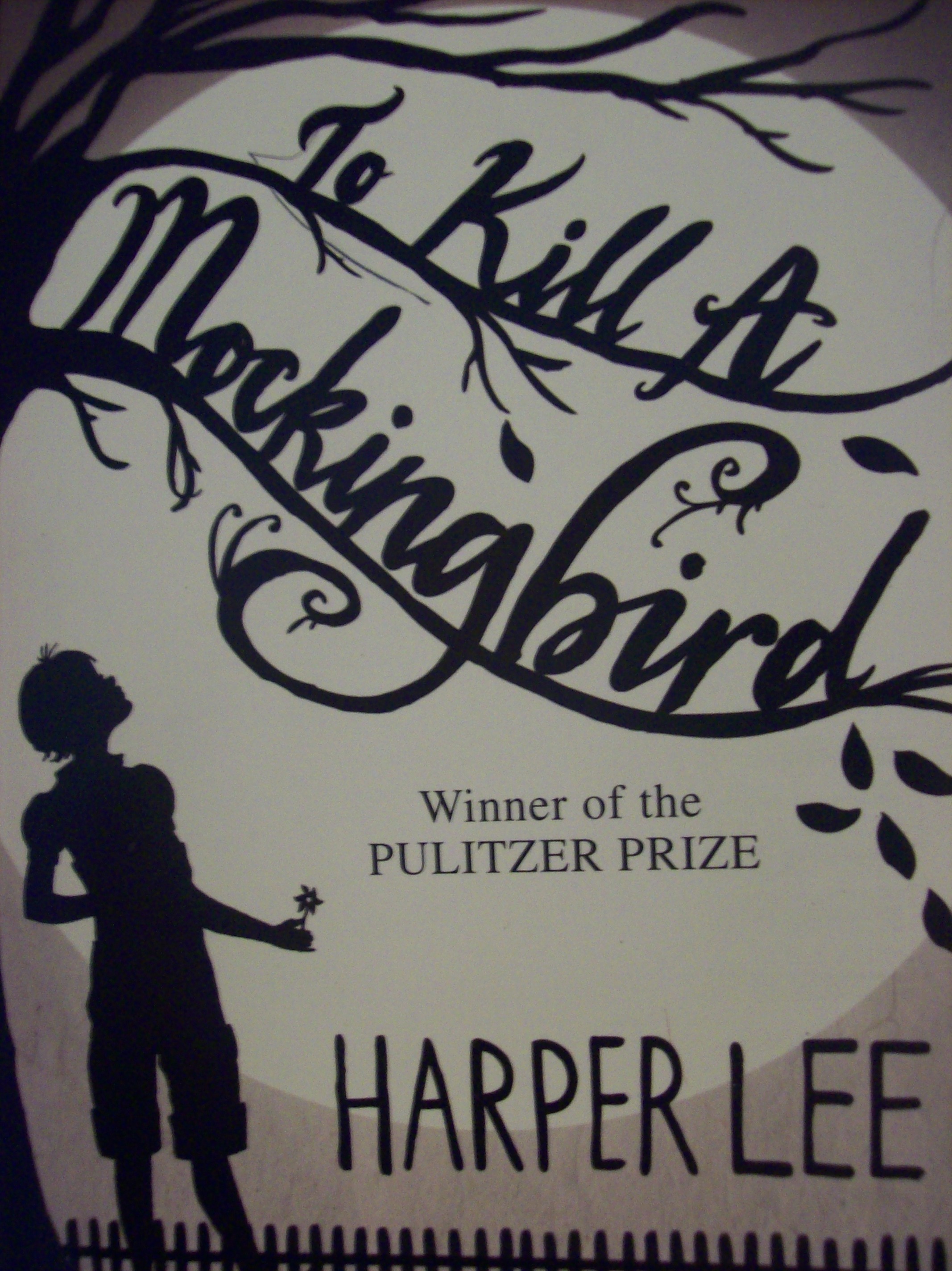
This novel is on almost every must-read list, so it must be pretty good.
Whenever I see a Must-Read Novels list, I automatically don’t want to read the books on the list. It’s a stupid knee-jerk reaction, I know. The authors probably didn’t ask for their books to be put on the list. I just don’t like being told what to read anymore.
There are only two legitimate reasons for a book to be a “must-read.” You fail a class if you don’t read it. Or you get fired from a job for not reading it. I don’t have to worry about failing classes anymore, and I don’t have to read books for my job (I have to read stuff that’s worse than most books), so there are no must-read books anymore.
I understand that using the term must-read is hyperbole. I have nothing against a little hyperbole. And I usually don’t like it when people take hyperbole literally. During the political season, politicians use hyperbole, and then other politicians accuse each other of lying when they were using hyperbole.
Even if the term must-read is hyperbolic, the idea is that these books are better than other books which haven’t made the list. A must-read book has something that other books don’t. A must-read novel has to have some cultural significance. There has to be a reason everybody “must read” it. It has to be more than good.
To Kill a Mockingbird shows up on almost every American Must-Read Novels list. It’s a little unfair because To Kill a Mockingbird is assigned reading to a large part of the U.S. population. Plus, there’s a fairly decent movie that goes along with it. Calling a book that everybody has to read must-read is unnecessary.
Several lists also consider Ulysses by James Joyce to be a “must read.” To me, Ulysses is a Must NOT Read Novel. I’ve tried reading it a couple times because I’ve seen it on so many lists, but I’ve never gotten past the first few pages. I wonder how many people have read Ulysses to the end, and then I wonder how many of those few have actually understood and enjoyed it. I think Ulysses is one of those novels that people claim to have read but haven’t. There’s no way to prove that, unless you walk around with a Ulysses test and hand it out to everybody who’s claimed to have read Ulysses.
No book can be a must-read before it comes out. Every list that proclaims “New Books You Must Read!” is a lie because because nobody knows yet if a book is a must-read (if there is such a thing). Maybe readers can look forward to those books, but anticipation is not the same as must-read.
In fact, a book should be out for at least a decade before it reaches must-read status. A few years ago, The Fault in our Stars by John Green was on a bunch of Must-Read Lists. Now, it’s gone. If a book is a must-read, it should stay a must-read. If a book is only temporarily a must-read, then the list compilers should admit to their error. To be fair, there was nothing wrong with The Fault in our Stars except that it might have been a bit overrated, but sometimes it’s not the book’s fault that it becomes overrated.
There are so many must-read lists, and all of them have different novels. If you tally all the novels on all the must-read lists, it’s into the hundreds and hundreds. I don’t have time to read all the books I want to read, so I definitely don’t have time to read must-read books. The list compilers should respect their readers’ time enough to at least have the same books on all their lists.
Below is a list of novels that seem to be on most of the Must-Read Novels lists. These aren’t my must-read novels. I’m not saying anybody has to read these. If you’re interested in which books tend to make Must-Read Novels lists, here’s your general guide:
To Kill a Mockingbird by Harper Lee
The Great Gatsby by F. Scott Fitzgerald
Pride and Prejudice by Jane Austen
On the Road by Jack Kerouac
Harry Potter and the Sorcerer’s Stone by JK Rowling
1984 by George Orwell
The Bell Jar by Sylvia Plath
Catcher in the Rye by JD Salinger
Great Expectations by Charles Dickens
*****
What do you think? Is there really anything such as a must-read book? If so, which books do you think should be on that list?
*****
These aren’t exactly MUST-READ books. If you don’t read them, nothing bad will happen to you. But they’re pretty good!
Now only 99 cents each on the Amazon Kindle!

It’s an uphill battle when you disagree with a dictionary, but not “literally” uphill. (image via wikimedia)
“This is literally the worst day in my life!” my youngest daughter said when I returned home from work.
Literally? I started to think of my daughter’s other bad days. There have been deaths in the family, serious injuries, and broken friendships. I prepared for the worst. Instead, my daughter explained that there’d been some school drama and a teacher had yelled at her for running in the hallway.
“That’s it?” I said. “You had me scared at literally.”
“You literally take literally too seriously,” she said.
I didn’t argue with her. I’m glad my daughter knows the meaning of literally, but that knowledge shouldn’t excuse her for misusing it.
When it comes to changes in the meanings of words, literally should be the line in the sand. I don’t mean we should literally draw a line in the sand because that would be stupid. I mean, we should remain stubborn against those who would willingly change the meaning of literally to something that doesn’t mean literally.
Even the dictionary has acknowledged the recent change in the misuse of literally. The first definition of literally in the Merriam-Webster dictionary is fine:
in a way that uses the ordinary or primary meaning of a term or expression
So far, so good. That’s pretty much what literally has always meant (and should always mean). Then, in an attempt to explain the new ironic meaning of literally, Merriam-Webster describes definition #2 as:
“in effect: virtually.”
To me, virtually is almost a simile for literally. So Merriam-Webster then has to clarify with:
used in an exaggerated way to emphasize a statement or description that is not literally true or possible
I was told to never use a word to define itself. This new pseudo-definition of literally is so senseless that the dictionary can’t even define it without using the phrase NOT literally. If a new meaning of a word requires that the word itself be used in the definition, then the new meaning is disqualified from being taken seriously.
That’s not really a rule, but it should be.
Merriam-Webster even tries to sidestep the issue, when it posts this at the bottom of the literally definition:
Should literally be used for emphasis?
Sense 2 is common and not at all new but has been frequently criticized as an illogical misuse. It is pure hyperbole intended to gain emphasis, but it often appears in contexts where no additional emphasis is necessary.
That’s a cop-out.
Here’s how that section should have looked.
Should literally be used for emphasis?
No.
See? That’s responsible use of the power that Merriam-Webster has. What’s the point of having authority if you’re not willing to take a stand for something so obvious?
Maybe if Merriam-Webster changes the definition of literally on the website (or in its print edition) without using the phrase “not literally,” then I’ll reconsider my metaphorical line in the sand.
Some might call me a language prude, but that’s just name-calling, and name-calling isn’t really an argument. I write porn jokes and dissect sex scenes in literature, so I’m immune from being called a prude. I even believe in language evolution. But I have my limits, and literally is my limit.
*****
What do you think? Should we let the evolution of literally go unchallenged? What other word meanings do you think should be preserved?
*****
If you read these two books, you might literally enjoy them.
Now only 99 cents each on the Amazon Kindle!

Students getting ready for the big test. (image via wikimedia)
Almost everybody agrees that standardized tests suck. Teachers don’t like them. Students hate them. Parents aren’t thrilled about them either. There are only two groups of people who like standardized tests, government officials and the test makers.
I understand why test makers like standardized tests. Test makers make a ton of money off of standardized tests. I’d like something too if I made a ton of money off it.
I’m not sure why government officials like standardized tests so much. Standardized tests are unpopular. If government officials got rid of standardized testing, their approval ratings would automatically skyrocket.
If statewide (or national) standardized tests just disappeared, would anybody care? Would there be protests? Would there be outrage?
It’s not like Social Security or Medicare. If you take those away, people notice. I’m pretty sure students wouldn’t get angry that they never had the opportunity to take a standardized test. Everybody in the public education system would celebrate.
Even authors whose literature appears on the tests don’t like the standardized tests. When poet Sara Holbrook saw one of her pieces being used as a reading selection on a Texas test (the STAAR, whatever that means), she wasn’t really happy about it. Even worse, she got the answer to one of the questions based on her poem wrong.
A part of me wants to make fun of the poet for missing a question about her own poem. I’m not trying to be mean. On the contrary, I’m very empathetic. When I was in junior high, my math teacher made us write our own story problems. He then used one of my story problems on the story problems test, and I didn’t get the answer right. To make matters worse, the teacher announced to the class that I had missed my own test question (Thanks, teacher!).
I give Sara Holbrook credit for admitting that she missed a question about her poem. It makes a statement. I too should have made a statement. I should have used my moment in math class to denounce story problem tests, and I could have used my experience as an example of how a test-taking education system is ruining our generation, but my teacher would have told me to shut up, and everybody would have laughed at me. Nobody liked protesters where I grew up.
I understand that standardized tests can be used to measure achievement consistently across the state or country. That’s a decent purpose, but dagnabbit it, I see my kids take too many of them every year. I don’t even have to take any standardized tests, and I still think there are too many of them.
Maybe there should be only one standardized test per year, and that’s it. Give schools a day or two to implement it and be done. And schools can judge the results, but nobody gets fired based solely on those results, unless there’s cheating. But without so much pressure, there would be less pressure to cheat.
As an aspiring writer, I want a lot of people to read what I write, but being on a standardized test would probably be one of the worst things that could happen.
I mean, my books could get banned (this one for its use of profanity), and I wouldn’t care (it would be great publicity). The critics could proclaim that my writing is crap, and I wouldn’t care (I might care a little, but not if I’m making money from it).
But please, please, please, never let my writing be used on a standardized reading test. Everybody hates standardized tests, especially the authors whose works appear in them.
*****
What do you think? What are some of your standardized test horror stories?

Bad breath can make anything awkward.
When it comes to awkward sex scenes in books, sometimes an author tries too hard. Instead of explaining what happens in a straightforward way, the author might attempt to get too fancy and use a crazy metaphor where simple language would be enough.
The following excerpt from A Doubter’s Almanac by Ethan Canin was a runner-up for The Literary Review’s Bad Sex in Fiction Award in 2016. Unfortunately, the Literary Review article gives only the excerpt and doesn’t try to explain what makes the scene bad (or awkward). If we aspiring authors are going to improve our own writing, we should examine the excerpts from a writer’s perspective, and see what we could have done differently.
Here is the awkward sex scene excerpt for this post:
The act itself was fervent. Like a brisk tennis game or a summer track meet, something performed in daylight between competitors. The cheap mattress bounced.
First of all, the author describes the act as “fervent.” The word “fervent” implies intense, but then the author compares the sexual activity to tennis and track. As intense as tennis and track can be, the competitors aren’t physical with each other.
There’s distance between athletes in tennis and track, and that image of distance contradicts the concept of intensity. A better sports comparison would be to that of MMA fighters. Now THAT’S intense. Plus, the image of grappling might be similar to what the sexual participants were going through.
Bad similes can ruin a sex scene, especially a long simile. When I wrote a sex scene in my own ebook, I avoided long similes and metaphors, and I stayed away from sports references.
But if an author is determined to compare sexual activity with a sporting activity, another choice would be professional women’s tennis. Those women grunt and groan so loudly that a guy can close his eyes and imagine it’s a certain kind of pornography.
I don’t know if guys do that anymore, though. 20 years ago, before the internet and free porn, guys with no money would have to close their eyes during televised women’s tennis matches. I never did that, but I heard that other guys did. I never heard about women watching women’s tennis for the same purpose, but I guess it’s possible.
The second problem with the excerpt was the bouncing cheap mattress. The most notable characteristic of a cheap mattress during sexual activity is that it’s really uncomfortable. Plus, a cheap mattress doesn’t bounce, no matter how much activity takes place on it. It just thuds. Two adults could jump up and down with impunity on a cheap mattress, and it would thud instead of bounce. I have a lot of experience with cheap mattresses (though the experience isn’t necessarily sexual in nature).
From my experience, it’s the expensive mattresses that bounce. Maybe the author was wrong about what kind of mattress was being used. Journalists get their facts wrong all the time, so maybe the author got his own facts wrong too.
A cheap mattress might not bounce, but it will squeak, and a squeaky mattress during sexual activity can be distracting. It also lets the neighbors know what’s going on (if you live in an apartment or dorm room). The author might have more credibility if he’d simply written “the cheap mattress squeaked.”
So the lesson from this awkward sex scene is clear: Keep your sports metaphors short, and test out mattresses before you write about them.
And for more about awkward sex scenes in books, read the blog post Awkward Sex Scenes in Books.

The cover kind of looks like this a little bit. (image via wikimedia)
“This is it,” a female coworker said as I passed her cubicle. She was reading a paperback novel with a weird alien and an attractive woman on the cover. My coworker probably should have been on the computer doing actual work, but I didn’t mention that.
“This is what?” I asked.
“The book,” she said.
“Your book?” I said. She didn’t strike me as the science fiction type.
“No, it’s ________ book.” I didn’t recognize the name she’d said.
“Whose book?” I said, still confused.
“You know, from the ____________ department.”
I still didn’t know who she was talking about, but when she showed me the author’s photo on the back cover, I said, “Oh, THAT guy.”
I recognized the author as a guy who works at our company. I see the guy a lot at work, but I’ve never talked to him. He doesn’t talk to me either. That made me feel like I wasn’t obligated to read his novel. If he had been within my small circle of acquaintances at work, I would have felt obligated.
Out of curiosity, I bought the book on Amazon anyway and began reading it. As far as science fiction goes, it’s okay. It doesn’t do anything I haven’t seen or read about before. I mean, that’s not what I’m going to say to anybody who asks. I have a few complimentary comments ready which will show everybody at work that I’ve actually read the entire book.
The coworker author set the book up as a series, so there’s a cliffhanger at the end of the book, and I might give the coworker grief if he takes too long to finish the second book. He doesn’t know me well, so if I start calling him George RR Martin for taking too long, he might not understand where I’m coming from, and that could cause friction at work, even though we don’t really have anything to do with each other. My sense of humor doesn’t go over well with people who don’t know me.
The paperback sells for just under $15.00 and the Kindle is $3.99. It’s kind of overpriced for its size, but I don’t think the coworker author has much control over that. I would put it up on this blog, but I’m trying to sell my own ebooks (like this one right here!! If you like this blog, you’ll probably like this too!).
It would hurt my feelings if somebody else’s book got more attention on my blog than my own ebooks. Plus, the coworker author has already gotten a lot of people from work to buy his book. To be fair, I don’t know how hard he pitched his book to everybody in his department. He’s not a boss, so he can’t threaten anybody. But it seems like he needs friends and coworkers to keep his sales rank up. He has a few Amazon reviews (all 5-stars), but I recognize the names of a couple reviewers (coworkers), so I’m curious how this book will do once the friends/family/coworkers are done buying it.
I would ask the coworker some questions about his publishing experience (and how it’s going), but it would be awkward. Again, he doesn’t know me, so there would be no reason for me to come up to him out of nowhere and pester him about his book, especially since I’m not ready to tell people (coworkers and friends) about my blog and ebooks just yet.
I’m curious how successful this author will be in the long run. He’s going about things in a different way than I am. I’m going the indie route and using my blog, and in a few years when my kids don’t need me watching over them/driving them around all the time, I can devote more time to writing and trying new social media strategies. In the meantime, I hope he’s successful, and I’ll probably buy his second book.
But I hope he can drop the price a little next time.

If a guy says the word bitch at the wrong time, this can happen. (image via wikimedia)
When I was a kid and called my dog a bitch, my parents punished me. I tried to argue to them that I was using the word bitch correctly. A bitch was a female dog, I said, and that was exactly what our dog was. I even pulled out a dictionary to make my point.
My dad then told me to look up the word belt, and I knew what he was suggesting, so I stopped arguing. I was correct about the word bitch, but I wasn’t willing to pay the price for it.
Since then, I’ve been reluctant to say most ‘bad’ words. In fact, I don’t even like to use ‘bad’ language in my own writing, but sometimes I’ve had to, especially when I wrote dialogue in my novel The Sunset Rises: A 1990s Romantic Comedy.
For a long time after the incident with my dad, I wondered why bitch was a bad word. First of all, bitch is a five-letter word. Most bad words have four letters. Sh**, d**m, f***, and even c***k and d**k, have four letters.
Plus, bitch is not a body part or a body function. Most bad words refer to body parts that we’re not supposed to talk about or body functions we’re not supposed to talk about. What was wrong about saying a word that meant “female dog”?
What I didn’t understand (and what nobody was willing to explain back then) was that bitch referred to “a female dog in heat,” so calling a woman a bitch implied she was slutty or of low moral character. Centuries ago when the English language was developing, being called a bitch was worse than being called a whore because a whore was at least being practical.
According to the dictionary, bitch comes from the Old English word bicche which meant “female dog” around the 10th century. Then sometime in the 1400s, people began using the word as a derogatory term for women. Nobody knows the name of the person who used the word bitch or bicche as a derogatory term first. It was tough to keep records of that kind of thing back then.
Despite the recent sexual revolution and changes in language and attitudes, the word bitch is still considered bad. Maybe it’s not as bad as it used to be, and I hear women use the word more frequently than men, but I still don’t say it much. I’m more likely to say “son of a bitch” than bitch by itself.
Son of a bitch is an extension of bitch and might even be more commonly used than bitch (I have no proof of this). When I stub my toe, I don’t yell out “Bitch!” I yell out “Son of a bitch!” “Son of a bitch!” is fun to say.
Plus, you’re usually not accused of being a misogynist if you say “son of a bitch,” even if you’re a guy (or a misogynist). You’re still implying that somebody’s mother is a bitch, which would be considered misogynist if you thought bitch was a misogynist term, but people don’t usually make that accusation, especially after you’ve stubbed your toe.
The word bitch has several meanings now. Bitch can be used as a noun, which I avoid. Bitch can also be a verb, as in to complain. I use the word gripe instead of bitch if I need a one-syllable word for complain. Gripe doesn’t quite have the forcefulness of bitch, but it makes its point without offending anybody.
Nowadays, calling a woman a bitch implies that she is mean or cold-hearted. In some ways, the current meaning of bitch is almost the opposite of slutty, which is strange because slut is also a dog reference. Calling a woman a slutty bitch would either be redundant or an oxymoron. Either way, I wouldn’t suggest saying it.
*****
A grammar-obsessed English teacher falls in ‘luuuvvv’ but discovers how chaotic and dangerous ‘luuuvvv’ can be.
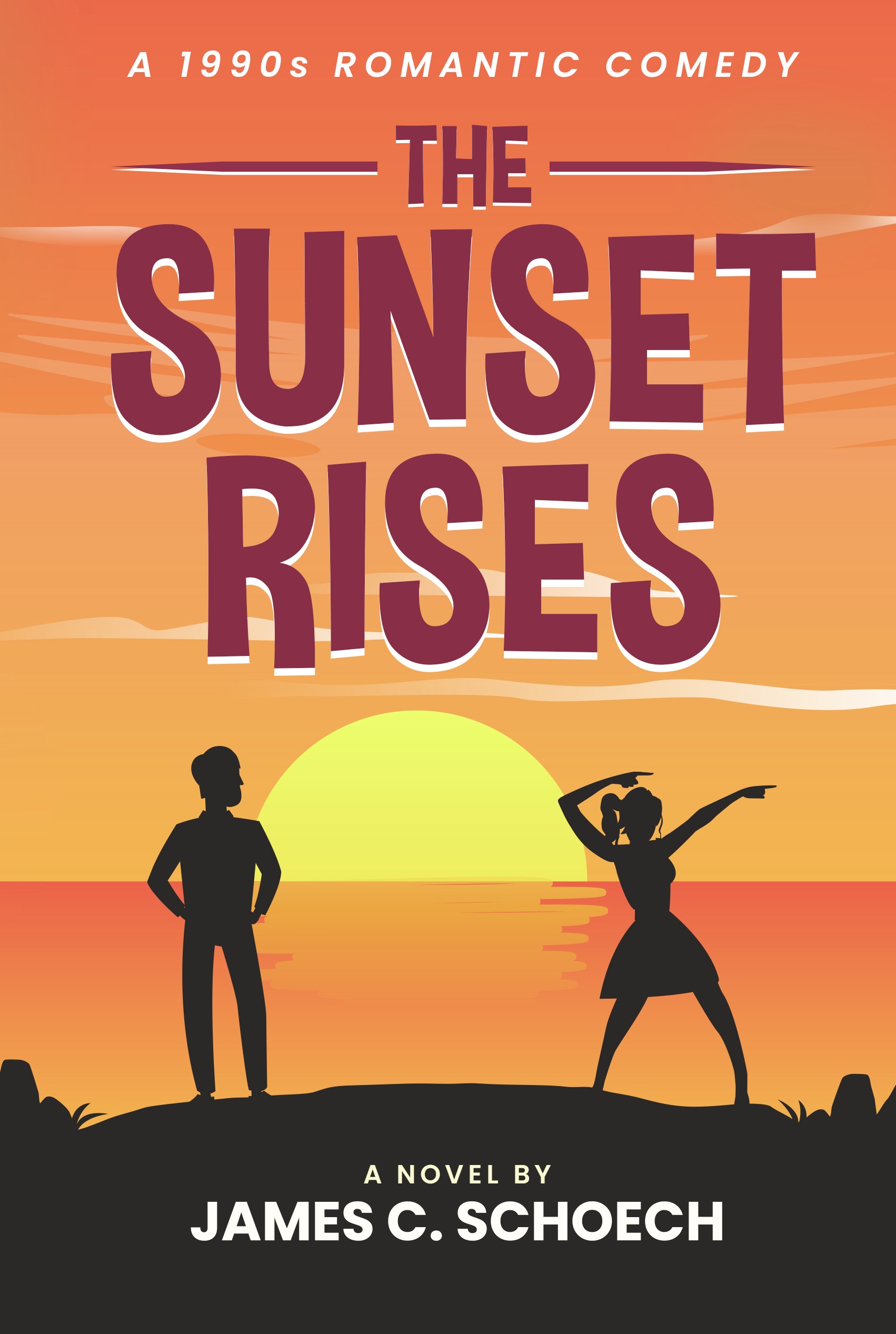
The Sunset Rises: A 1990s Romantic Comedy
Get a signed copy of my one and only novel The Sunset Rises: A 1990s Romantic Comedy. My handwriting is actually legible, but I’m left-handed, so I might smudge the signature. Free shipping in the United States!
$20.00
Or you can buy a copy here on Amazon!
Not sure? Read a sample chapter of The Sunset Rises: A 1990s Romantic Comedy.

(image via wikimedia)
James Patterson writes a lot of books. It’s tough to gripe about it too much because almost every book he writes becomes a best-seller. Despite his success, I’ve thought that an author who puts out as many books a year as he does might not be worried about quality.
To demonstrate this point, I chose an excerpt from Patterson’s latest Alex Cross thriller, Cross the Line.
Chapter Two of this book has one of the least dramatic, least emotional death scenes I have ever read. To keep this blog post short, I’ve added my comments in parenthesis. At the beginning of this scene, the two victims Edita and McGrath are leaving a Whole Foods store after a couple pages of banter:
*****
They turned to head south, Edita a step or two ahead of him.
A second later, McGrath caught red fire flashing in his peripheral vision, heard the boom-boom-boom (Lazy sound effect?) of rapid pistol fire, and felt bullets hit him (Wouldn’t the bullets hit him before he heard the sound?), one of them in his chest. It (More than one bullet hit him, so the pronoun should be “they” unless it was only the bullet that hit him in the chest that brought him down.) drove him to the ground (That’s it? He didn’t feel anything right away?).
Edita started to scream but caught the next two bullets (where?) and fell beside McGrath, the organic groceries tumbling across the bloody (already?) sidewalk.
For McGrath, everything became far away and slow motion (what does that even mean?). He fought for breath (cliché). It felt like he’d been bashed in the ribs with sledgehammers (poorly written cliché). He went on autopilot, fumbled (he’s fumbling while he’s on autopilot?) for his cell phone in his gym-shorts (gym shorts seems like an irrelevant detail at this point; maybe the gym shorts should have been established earlier in the scene) pocket.
He punched in 911, watched dumbly as the unbroken bottle of Clifton Dry rolled away from him down the sidewalk.
A dispatcher said, “District 911, how may I help you?” (That’s a very polite dispatcher. Dispatchers in my area start with “Is this an emergency?”)
“Officer down,” McGrath croaked. “Thirty-two hundred block of Wisconsin Avenue. I repeat, officer…”
He felt himself swoon (“swoon” implies falling down and he’s already on the ground) and start to fade. He let go of (weak verb, maybe use “dropped” instead) the phone and struggled to look at Edita. She wasn’t moving (weak verb phrase), and her face looked blank (cliché) and empty (cliché)
McGrath whispered to her before dying (this action is out of sequence).
“Sorry, ED,” he said (“whispered” has already been established). “For all of it.”
*****
James Patterson is doing something right as an author. After all, he’s sold more books than every other author who has ever lived combined (slight exaggeration). Even so, this scene left me feeling nothing for the murdered victims.
I’ve never been shot, and I’ve never died before, so I’m no expert on how people react to these situations. Still, I imagine that the human mind goes through a lot. That final moment when a character realizes he/she is going to perish should reveal something about that character.
What would I think about in that situation? Did I leave the stove on? Will my wife remember to pay all the bills on time? Crap, I’ll never see my kids grow up or know who won the Super Bowl this year. A writer should be able to come up with some details, anything, to make a death scene emotional.
Maybe I’m being too nit-prickety. Maybe I am biased against James Patterson and don’t recognize his story-telling skills. Maybe I should take his masterclass to learn why everything I’ve written about that scene is wrong.
But in the meantime, here’s my own ebook about a story I wrote that got me in trouble at school.
Nobody has asked me to teach a masterclass.

Maybe this author needs to adjust his goals. (image via Wikimedia)
When it comes to writing, the wrong goal can be a killer. Last year, a blogger I follow stated that her writing goal was to publish a blog post every day for the entire year. Sometime in March, she suddenly burned out and stopped writing. At least, I think she stopped writing because of burn-out. It’s easy to burn out if you set your goals too high.
Another blogger wrote a goal to gain ___ followers in a given year. Despite being a really good writer, the blog didn’t get many new followers that year, and the writer quit blogging, I think out of frustration. You can control the quality of your writing, but you can’t control the number of followers you get.
When I set goals, I try to make it something I control. It would be nice to get ____ followers, but I’m too much of a control freak to set a specific number and then get frustrated when other people don’t cooperate.
I’ve done a lot of writing over the last five years since I started blogging. I haven’t written as much as some other writers (especially James Patterson) but my production hasn’t been bad for a married guy with kids and a full-time job that has nothing to do with writing.
In order to write a blog about reading and writing, I’ve had to set up routines and realistic goals that keep me from burning out.
I only finish books I want to finish.
If I’m going to be a writer, I have to be a reader too. At least, that’s what most writers say. But I don’t want to waste time with books I don’t enjoy. I’m not a student anymore. Nobody can force me to read any books, even if the book is on a MUST-READ list. So to encourage me to read, I only read books that I’m enthusiastic about. Out of the 20 books I start, I probably finish only one.
When I stare at the computer screen for more than 10 seconds, I quit writing.
There’s always something else to do besides writing, such as errands to run or chores to complete or books to read. I usually get my best ideas when I’m in a situation where I can’t write, so doing something else can keep me creative. Plus, getting chores and errands done gives me time to write later on when the right ideas/words come back to me.
I sit for only 15 minutes at a time.
Sitting too long is bad for my back, so I get up and move around. I don’t set a timer or anything like that, but I can just feel when I’ve been sitting too long. This applies to reading, writing, and even watching football. There are a lot of things to get done, and moving around helps me get things done while still giving me time to read and write.
I need to get enough sleep.
I’d rather have a little time to write and be rested than to have of lot of time to write while I’m tired. I don’t know about other aspiring writers, but I have to be alert in order to write.
If I follow my routines, I might not get as much reading/writing done as I want, but I know I’ll get something accomplished, and I know I won’t burn out. And that’s what I want to do ; follow my routines and accomplish something without burning out.
******
What do you think? What realistic writing goals do you have now? What unrealistic goals have frustrated you in the past?
*****
Here are two books that have NOTHING to do with blogging!
Now only 99 cents each on the Amazon Kindle!