My oldest daughter has several books to choose from on her summer reading lists, and one of them is The Great Gatsby. She’s leaning toward it because it’s short and there’s a recent movie. I would tell her those are lousy reasons to choose a book, but I wouldn’t mind if she reads it, and I’ve chosen books because they were short and there were movies.

 Even a great author can write an occasional bad sentence.
When I first read The Great Gatsby decades ago, I didn’t question anything about it. Everybody I knew who read books said it was a great book, so I assumed I was reading a great book. As far as I was concerned, if F. Scott Fitzgerald wrote it, if Hemingway or Steinbeck or Twain or Dickens wrote it, then whatever it was must have been great. I didn’t question these things. Who was I to question the writing of a great novelist?
I started reading The Great Gatsby a couple weeks ago, but I had to stop because of some of the sentences. I don’t know how critical to be of sentences in a great, influential book. I hesitate commenting on The Great Gatsby because I criticized Holden Caulfield last week, and I don’t want to come across as constantly nit-prickety. But at…
View original post 834 more words

If you judge Dave Eggers by the movies based on his books, the last year has been rough. Both The Circle and Hologram for the King bombed at the theaters. But that’s not a fair way to judge authors. Even Stephen King had a rough patch of crappy movies based on his books back in the 1980’s, and he seems to be doing okay.
I’m not sure if Dave Eggers’s latest novel Heroes of the Frontier would make a good movie or not. So far it has a lot of driving, a lot of descriptions of Alaska, and a lot of thinking.
Sometimes too much thinking is bad. During a stream of consciousness moment, characters might have a thought that’s meant to be universal but it only applies to that character (or the author). In this case, early in Chapter I, the narrator is with her family at a zoo and thinks:
“This was not so bad. But it was sad like any zoo is sad, a place where no one really wants to be. The humans feel guilty about being there at all, crushed by thoughts of capture and captivity and bad food and drugs and fences. And the animals barely move.”
This is what I call a false observation. I like zoos, and I know other people like zoos as well. It’s relaxing to walk around a bunch of loafing animals. On a nice day, I’d rather walk around a zoo than watch a nature show where animals tear each other apart. On the other hand, I worry a little bit about people who are too fascinated by animals devouring each other on television. When you break the thought down, the observation becomes more false (for me).
“But it was sad like any zoo is sad, a place where no one really wants to be.”
I don’t recall seeing a bunch of sad faces at the zoo (except at the gift store, where kids throw fits when parents say no). Kids run around, laughing and pointing; parents get mad, but it’s usually temporary. Maybe it’s sad for some of the animals and for people who are opposed to the concept of zoos.
“The humans feel guilty about being there at all, crushed by thoughts of capture and captivity…”
“Crushed” might be overdoing it a little bit. The thought might occur to us, but the animals are also being spared the fate of the average Discovery Channel subject.
“…bad food and drugs and fences.”
That sounds like the average professional sporting event.
“And the animals barely move.”
You just have to get there at the right time.
A false observation like this excerpt makes me distrust either the narrator or the author, but I haven’t read far enough into the novel to decide which one. The narrator might not be trustworthy because she’s driving around Alaska with her young kids in a run-down RV. Whatever her reasons behind this situation, her decision-making skills might not be the best. She might not like zoos, but she is in not in the frame of mind to decide whether or not everybody dislikes zoos.
Maybe the narrator is supposed to be reliable and it’s the author who is at fault. Maybe the author truly believes everybody hates zoos and he’s falsely projecting his own feelings on characters. Maybe I’ll figure that out as I read further into the book.
If you like the kind of stream of consciousness writing from this example, you’ll probably enjoy Heroes of the Frontier. If you think that this writing style makes a book dull and plodding, maybe this novel won’t be your thing. Either way, if they make a movie out of it, I hope they do a better job with it than they’ve done with Dave Eggers’s previous books.

Brad Thor? That can’t be his real name!
For a long time, I was pretty sure that Brad Thor wasn’t Brad Thor’s real name. Brad Thor had to have given himself that name, I thought. Nobody is lucky enough to have a name as cool as Brad Thor. I got stuck with Jimmy and a boring last name. A guy named Brad Thor has it made.
Brad Thor was smart enough to start writing military thrillers. If your last name is Thor, you should write war books (or meteorology manuals, but there’s probably not as much money in that). 25 years ago, Tom Clancy owned the military thriller genre. But then his novels started getting too long, and military readers clamored for shorter thrillers. Clancy started co-writing shorter novels, and authors like Vince Flynn and Brad Thor helped fill the need with novels of their own.
Vince Flynn was a good, tough name for a military thriller guy. Maybe not as tough as Brad Thor, but pretty good.
To be honest, I’m not interested in military thrillers anymore. With the ways that technology and current events (public affairs) change, most novels in that genre feel outdated within a few years. But out of curiosity, I picked up Foreign Agent by Brad Thor just to see what a Brad Thor novel was like.
Because this novel gets into issues like terrorism and U.S. foreign policy, your political beliefs will probably affect your opinion of this book, and I’m not that kind of blogger, so I’m not writing about that aspect of the book. Instead, I’m interested in the quality of writing, and you get everything you need to know about the novel Foreign Agent from the following sentence in Chapter 4.
Her tight dress clung to her stunning body as a faint breeze moved her long, brown hair.
Like I said, that pretty much tells you what you need to know about this book. Some authors might describe what the dress looked like (other than tight). Some authors might describe what her body looked like (other than stunning). As far as hair goes, the description “long , brown” is probably enough. The world doesn’t need more descriptions of hair.
I don’t believe in judging a book by one sentence, so here are a couple others.
WARNING!! This sentence from Chapter 3 is kind of violent.
Even though the Beretta was suppressed, the shot was still audible, and the man’s brains splattered across the café window were extremely visible.
The brains weren’t just “visible” or “noticeable”; they were “extremely visible”.
I know I miss the obvious a lot (like when my wife changes her hair style), but it’s tough to miss splattered brains on a café window. Even if you don’t know what it is, it’s still visible.
Here’s another sentence from Chapter 3:
It was dark.
I like this sentence because if it’s dark, then you can’t really see anything anyways, and it’s pointless to write more. Sometimes authors will spend hundreds of words describing how dark it is when all they have to say is that it’s dark. Everybody understands what dark means.
Even though I’m not jealous of his writing style, I’m jealous of Brad Thor because of his name. Brad Thor. I’ve never been jealous of a name before. I don’t even want to write military thrillers, but I’m still jealous of Brad Thor.

It’s only 99 cents on Amazon!
When I was growing up, I had some teachers with unfortunate last names. In junior high I had a math teacher named Mrs. Butte. She insisted her name was pronounced “Bee-Yute” like the word “beauty,” but she wasn’t attractive at all. If she had been a hot chick with cleavage, we might have pronounced her name correctly. But she wasn’t, so we didn’t.
There was also a social studies teacher named Mr. Dick (and his name was pronounced exactly like it was spelled). Nobody made fun of Mr. Dick. You would think a guy named Mr. Dick would stay out of teaching because of his last name, but nobody ever made fun of him.
Mr. Dick was an old man who had cool tattoos on his arm (none of the tattoos looked anything like his name). He had been teaching for decades, and everybody in town had grown up knowing Mr. Dick (or knowing about him), so nobody thought anything about his name anymore. He was just an old man named Mr. Dick.
There’s no way to prove this, but my junior high school was probably the only one that had a Mrs. Butte and a Mr. Dick.
Then in high school I had an English teacher named Mr. Faggins. Mr. Faggins announced on the first day of school that his name was to be pronounced as “Fay-guns.” I knew my rules of pronunciation and how the double consonant causes the vowel in front of it to have the soft sound, but I was also polite enough not to argue with an adult about how to pronounce the adult’s last name. I’ve always believed that a person should be able to choose how to pronounce his or her name.
Of course, somebody would have to test Mr. Fay-guns…
*****
This is an excerpt from one of my ebooks The Writing Prompt . I wrote it as part of a blog serial a few years ago, converted it to an ebook, and then forgot about it off and on for a while. Looking back on it, I probably should have promoted it more.
But it brings up an interesting question with summer just starting. What memorable last names do you remember from school?
It just happened, the annual gripe session at the beginning of June when students find out they have a summer reading list. This year, I ignored my daughters’ complaints and quietly drove them to Brick & Mortar Booksellers. Two years ago when they complained, I wrote a blog post about their gripe session. It sounded pretty similar to this year’s, just with different books.
 He wondered why there was no Ernest Hemingway on the summer reading list (image via wikimedia)
My oldest daughter received her school’s summer reading list yesterday, and she was not happy about it. Her idea of summer is sitting around the house doing nothing until we take our vacation. I don’t blame her. I had lots of summer vacations where I sat around and did nothing, and that was before cable and the internet. It’s a lot more fun to sit around and do nothing than it was 35 years ago. But this summer, my daughter has another reading list.
“It’s my summer break,” she fumed. “What is it about ‘break’ that they don’t understand?”
I laughed, not at her words, but at her level of outrage. She has to read and complete book reports for a grand total of… two books. Students are supposed to choose one from a…
View original post 794 more words

This was a heckuva way to start a book:
When the destruction of Israel commenced, Isaac Bloch was weighing whether to kill himself or move to the Jewish home.
Not that. That was actually a decent first sentence.
I meant this:
He had lived in an apartment with books touching the ceiling, and rugs thick enough to hide dice; then in a room and a half with dirt floors; on forest floors, under unconcerned stars; under the floorboards of a Christian who, half a world and three-quarters of a century away, would have a tree planted to commemorate his righteousness; in a hole for so many days his knees would never wholly unbend; among Gypsies and partisans and half-decent Poles; in transit, refugee, and displaced person camps; on a boat with a bottle with a boat that an insomniac agnostic had miraculously constructed inside it; on the other side of an ocean he would never wholly cross; above half a dozen grocery stores he killed himself fixing up and selling for small profits; beside a woman who rechecked the locks until she broke them, and died of old age at forty-two without a syllable of praise in her throat but the cells of her murdered mother still dividing in her brain; and finally, for the last quarter century, in a snow-globe quiet Silver Spring split-level: ten pounds of Roman Vishniac bleaching on the coffee table; Enemies, A Love Story demagnetizing in the world’s last functional VCR; egg salad becoming bird flu in a refrigerator mummified with photographs of gorgeous, genius, tumorless great-grandchildren.
I’m not a fan of huge block paragraphs, but I really don’t like long sentences. Despite this, I kept reading (my wife quit) Here I Am by Jonathan Safran Foer, and I started to enjoy the story until there was another huge block sentence a few pages later. It killed the momentum of the scene (I thought).
As far as huge block sentences go, the opening sentence wasn’t horrible. When… I… reread (past tense)… it… slowly… I noticed a lot of the details that I had missed when I just skimmed it. But I didn’t reread the second huge block sentence; I was too tired from the first one. I can handle only one huge block sentence at a time. I’m still reading Here I Am, but I’m cautiously waiting for the next huge block sentence to slow me down.
There might be reasons for starting a book off with a huge block sentence. Maybe the character Isaac Bloch had lived an interesting life, but the way to kill an interesting life is to write about it in a huge block paragraph.
What do you think? Does a huge block sentence help the opening of a book or hurt it? If you take huge blocks on a case-by-case basis, what do you think of this huge block? Will you stop reading a book if it has huge block sentences?
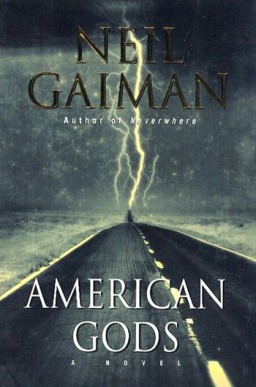
When it comes to American Gods by Neil Gaiman, everybody knows about the “worship” scene. I mean, everybody who’s read (part of) the novel knows about it. It’s within the first few pages of the book, and if you’ve never read American Gods, I’m not going to explain it to you, but the scene stands out.
My youngest daughter walked in on my wife while she was watching the first episode of American Gods on television, and of course it was during the “worship” scene. My youngest daughter usually walks around the house staring at her phone while wearing headphones, but this time she was well aware of her surroundings and saw exactly what was going on in the worship scene on the TV. Now she’s traumatized.
When I checked out the novel American Gods from the library and opened the book, the pages turned right away to the “worship” scene. That told me everything I needed to know about the book’s popularity. Maybe American Gods is well-written. Maybe it has a fascinating blend of old mythology with today’s culture. Maybe the unique plot holds readers’ attentions. But a lot of people like the “worship” scene and probably hope there’s more scenes like that.
A couple years ago, one of my daughters had to read The Graveyard Book, also by Neil Gaiman. She liked it but not enough to go out and read more of his books. I’m glad because she might have grabbed American Gods without me knowing about it and turned straight to the “worship” scene.
There’s a lot more to American Gods than just the “worship” scene, but even if you don’t read the whole book (or watch the whole television series), at least the “worship” scene is memorable. Nobody forgets the “worship” scene.
*****
What do you think? Were you traumatized by the “worship” scene, or do you know anybody who has been? What else is great about American Gods?

(image via wikimedia) The world wants to know…

… whose name will be first on the book cover. (image via wikimedia)
The big James Patterson news this month is that he and former U.S. President Bill Clinton are teaming up to write a political thriller called The President Is Missing.
If you read books, it’s almost impossible to escape James Patterson. When you walk into a bookstore, you can’t miss the shelves devoted exclusively to Patterson novels. Several of my coworkers read different James Patterson novels at any given time. One coworker even listens to James Patterson audio books. A few years ago, my daughters read Patterson’s YA novels, even though I had asked them not to.
If James Patterson put his name on a phone book, readers would buy it. They might get mad after they realized it was a phone book, but most of them would continue reading his books anyway. He has a lot of fans, and they’re loyal.
Bill Clinton fans are also loyal, so he’s a perfect choice for a Patterson coauthor. I might not exactly be a Bill Clinton fan, but I at least recognize his name, and I can’t say that about most of James Patterson’s coauthors. Clinton could write a novel by himself, and it would probably become a best seller, even if it wasn’t any good. He doesn’t need James Patterson to become a best-selling novelist.
It’s almost ironic that Bill Clinton is co-writing a political thriller. 25 years ago, he was the inspiration behind a political novel, Primary Colors by Anonymous, who turned out to be a journalist named Joe Klein. If I’d been Bill Clinton, I might have been ticked off that a journalist used insider information to make a lot of money off of a fictionalized account of my life. Now it’s Bill Clinton (and James Patterson) who can make a lot of money off a (maybe) (fictionalized) account of Bill Clinton’s life.
Conservatives are making fun of the name of the book The President is Missing, but I won’t relay any of those jokes because I’m not a political blogger. Liberals will say that conservatives don’t read books, but I know that’s not true. I know both liberals AND conservatives who read a lot of books and sometimes they even… read… the… same… books.
But they usually don’t read the same books about politics.
Bill Clinton isn’t the only politician who writes fiction. His 1990’s nemesis Newt Gingrich has written a bunch of Civil War novels, and I think those sell fairly well, so a former politician doesn’t need James Patterson to be successful. But James Patterson guarantees a certain level of success that a former politician can’t reach on his/her own.
For a fiction author, it has to be risky teaming up with a politician to write a book. I’m sure liberals didn’t want to give their kids a children’s book coauthored by James Patterson and Bill O’Reilly (who’s considered by some to be conservative). Conservatives won’t want to read a political thriller coauthored by Bill Clinton and James Patterson. If one political side decides to boycott an author, that author can take that as a badge of honor to make money from the other political side. If both conservatives AND liberals boycott an author, then he/she has to rely on the nonpolitical, and I’m not sure how many of us are left.
Since James Patterson writes so many books, he takes a lot of short cuts that most authors can’t get away with. Sometimes I write posts that highlight his sloppy writing. I know my own writing can be sloppy too, but I don’t get paid. Plus, my mistakes are my own. I just have the feeling when I read his books that he hasn’t put a lot of effort into them. At least I put a lot of effort into my mistakes.
James Patterson had better not get sloppy while co-writing Bill Clinton’s novel. If there’s anybody who is precise with language, it’s Bill Clinton, who once said “…it depends upon what the meaning of is is.”
When you coauthor with a guy who’ll argue about the definition of is, you had better get all your words right.

The Girls by Emma Cline has lots of very well-written sentences in it. I mention this because it’s tough to find books with lots of well-written sentences.
Maybe I need to be clear about what I think a well-written sentence is. All I mean is that well-written sentences have interesting phrases and don’t get long-winded, like some literary authors tend to get. Some literary authors sound like they’re trying to impress readers with big words or long rambling phrases, and then the author’s thoughts become hard to follow.
I’m not saying most published books have poorly-written sentences. A lot of books just tell the story with a bit of imagery or an occasional metaphor. Every sentence in The Girls so far has something interesting in it, especially if you read it from a writer’s point-of-view. I mean “every” in a hyperbolic way. Not “every” sentence is great, but a lot of them are pretty good.
Sometimes I’m a contrarian. If somebody else told me that I should read a book because the sentences were well-written or interesting or descriptive, I’d automatically start looking for flaws in those sentences. The analogies are illogical, I might say. The similes are too imprecise. Or maybe they’re too precise. I can’t help it. Maybe it’s a character flaw.
I also mistakenly assume that other people share my character flaws. Just because I automatically get critical of something that’s popular doesn’t mean everybody else is like that. Maybe other people can appreciate well-written sentences after a critic points them out. Maybe other readers aren’t as quick as I am to find flaws in a popular bestselling novel. I guess I’ll find out.
Here’s a pretty good example of well-written sentences from the second page of the book:
They (the three girls) were messing with an uneasy threshold, prettiness and ugliness at the same time, and a ripple of awareness followed them through the park. Mothers glancing around for their children, moved by some feeling they couldn’t name. Women reaching for their boyfriends’ hands. The sun spiked through the trees, like always- the drowsy willows, the hot wind gusting over the picnic blankets- but the familiarity of the day was disturbed by the path the girls cut across the regular world. Sleek and thoughtless as sharks breaching the water.
Some books start off strong, but then the quality of writing fades as the novels continue. Just to make sure this didn’t happen with The Girls, I flipped through the rest of book. I don’t know what happens in The Girls yet, but the sentences are still interesting.
p. 132- As soon as I heard the car back out of the garage, I got out of bed. The house was mine again, and though I expected relief, there was some sadness, too. Sasha and Julian were aimed at another adventure. Clicking back into the momentum of the larger world. I’d recede in their minds- the middle-aged woman in a forgotten house- just a mental footnote getting smaller and smaller as their real life took over.
p. 204- I was scanning the contents of my mother’s refrigerator, the glass jars mortared with dried spills. The fumes of cruciferous vegetables roiling in plastic bags. Nothing to eat, as usual.
I had to look up cruciferous.
p. 319- Already my grief was doubling, absence my only context. Suzanne had left me, for good. A frictionless fall, the shock of a missing step.
These were just sentences on random pages that I turned to. Despite the high quality of sentences, though, it might take me awhile to finish reading it. The story hasn’t gripped me yet (I don’t summarize plots because you can get that on almost any book website), and I have some other books I want to read before I commit. That’s not meant as an insult. No matter how long I take to finish reading The Girls, I’ll think of it as a well-written novel.
*****
What do you think? Do you see these kinds of sentences as well-written, or am I missing something? Do you get hypercritical of popular books? Will you finish a book if it’s well-written but you’re not interested in the story?
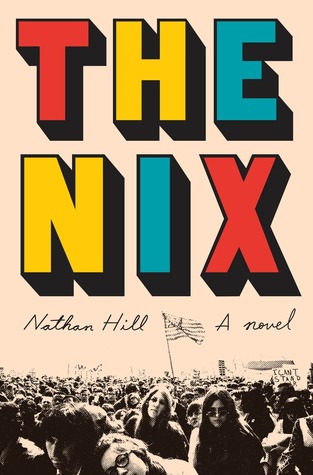
I’m not a fan of present tense usage in fiction, but it’s tough for me to say why. When I tried explaining this in a writer’s group over 20 years ago, I couldn’t find the right words. I ended up saying something like “I just don’t like present tense.”
Another writer in the group said that was a stupid reason and then he called me an a-hole. Maybe I didn’t have a good reason for not liking present tense, and maybe I was an a-hole, but if I was an a-hole back then, it wasn’t because I didn’t like present tense in fiction.
This would have been a great opportunity in our writer’s group to discuss whether present tense adds anything to fiction (or even what makes a person an a-hole), but somebody quickly changed the subject back to the book we were discussing (which I don’t remember… it was some 1990’s literary stuff. It might have been The Shipping News. The guy who called me an a-hole loved The Shipping News, but I don’t remember if The Shipping News used present tense)
A couple weeks later, the guy who called me an a-hole had a flat tire after our meeting and I wouldn’t let him use my jack.
Okay, I’ll admit, at that moment, I was being an a-hole.
*****
There’s a reason I’m thinking about present tense and whether or not I’m an a-hole. I’ve enjoyed what I’ve read so far of The Nix by Nathan Hill. It seems like a good book. The short prologue was great. The first chapter is good, but huge sections of the book are written in the present tense. That still bugs me a little bit.
For example, the first chapter takes place in 2011, but it’s written in the present tense. The portions of the book that take place in 1988 are written in the past tense. To me, the tense change is unnecessary. If anything, the tense change is distracting. Maybe that’s what the author wants. I might be missing something.
Here’s how Part One opens:
The headline appears one afternoon on several websites almost simultaneously: GOVERNOR PACKER ATTACKED!
Television picks it up moments later, bumping into programming as the anchor looks gravely into the camera and says,”…
I know this isn’t a large enough sample size to judge the writing style for an entire novel (I’m trying to keep my blog posts short), but I don’t think the book would lose anything by being in the past tense when the author was clear this is supposed to take place in 2011.
Here’s how the sample would look/sound in the past tense:
The headline appeared one afternoon on several websites almost simultaneously: GOVERNOR PACKER ATTACKED!
Television picked it up moments later, bumping into programming as the anchor looked gravely into the camera and said,”…
Maybe I’m wrong, but using the present tense doesn’t make this excerpt any better. In fact, if this section had been written in the past tense, I probably wouldn’t have even noticed the author’s writing style. To me, the present tense should be used sparingly, and it wasn’t necessary just to remind the readers that we’re in a different section of the book.
I have to admit, I haven’t finished The Nix yet. Maybe the tense changes make more sense once the entire book is finished. If so, hopefully I’ll figure it out. Sometimes I don’t pick up all the literary cues.
I’m probably going to keep reading The Nix, and I mean that as a compliment. I don’t finish reading many books. I sample many but finish few. If I told that guy in my old writer’s group that I didn’t finish most books that I started, he’d probably call me an a-hole again.
*****
What do you think? Is present tense overused in fiction? Am I an a-hole for not articulating a good reason for not liking present tense in fiction? Was I an a-hole for not helping out the guy with the flat tire after he called me an a-hole?


 Dysfunctional Literacy