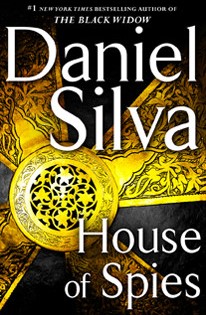
House of Spies by Daniel Silva so far has lots of thinking and planning in it. In the first couple chapters, characters think a lot. They think about their lives, their careers, and their relationships, and that’s usually done while sitting at an office, walking down a street, or eating a meal. That’s a lot of my life too, the planning and thinking about things, not the espionage.
I’m not criticizing House of Spies for having think/planning in it! I promise. I still like it.
The planning and thinking (that I’m NOT complaining about) is interrupted by a terrorist attack that is written differently than most fictional violent scenes:
The venerable Garrick Theatre had seen world wars, a cold war, a depression, and the abdication of a king. But never had it witnessed anything like what occurred at 8:20 that evening, when five ISIS terrorists burst into the theatre and began firing into the crowd. More than a hundred would perish during the first thirty seconds of the assault, and another hundred would die in the terrible five minutes that followed, as the terrorists moved methodically through the theatre, row by row, seat by seat. Some two hundred fortunate souls managed to escape through the side and rear exits, along with the entire cast of the production and stagehands. Many would never work in the theatre again.
The rest of the terrorist scene is as methodical as the terrorists’ technique. The author goes scene by scene, place by place, to describe how the terrorists hit several locations simultaneously. It’s well-written. It’s also kind of unemotional.
Murder/killing scenes are tough to get right because authors sometimes get melodramatic. In this scene from House of Spies, the reader doesn’t know any of the victims. We just learn that several hundred people get murdered at one time. Other authors would often include anecdotes about individual victims, to give the reader a sense of the fear, helplessness, sorrow, or pain. Some authors will devote entire chapters to make an irrelevant character feel real, jut to casually kill off that character and never mention him/her again. But this scene is clinical. The reader feels almost nothing. But the reader knows that the massacre was thought out. And planned.
Popular spy books and popular spy movies are often opposites. A spy movie has lots of action with just a little bit of thinking/plotting, enough to give the audience a slight reason for all the action (and sex). The planning/plotting doesn’t even have to make sense, as long as the action (and sex) is cool. A spy book should be plotting/planning with a little bit of action/sex to keep readers from falling asleep.
For example, most James Bond movies don’t look anything like the books they’re based on, except for From Russia with Love (and maybe a couple others). The Jason Bourne movies might be closer to the books, but the books were almost as stupid as the movies. At least, I thought the books were stupid when I read them. And I read them when I was in high school. If I thought a book was stupid in high school, it was either really stupid or it went over my head. I don’t think the Bourne books go over anybody’s head. But I still liked reading them.
If you like your spy novels with lots of action, House of Spies might not be for you, at least not from what I’ve read so far. If you like to read about characters thinking, this is great. I don’t mind thinking in my espionage books. Some great spy novels have lots of thinking in them, and that makes sense. A spy who doesn’t think or plan will end up dead. Even I know that, and I’m not a spy.
So I’m not complaining about all the thinking and planning! I’m going to keep reading House of Spies, maybe just because of all the thinking and planning.
House of Spies follows another Silva novel The Black Widow, with the same main character, so I might have to go back and read The Black Widow first. I just might go to the book store, or I might buy it on my Kindle, or I might not read it at all. No matter what I choose, I’ll think about it first. And plan.
When I went to Chipotle today, the paper bag essay was written in Pig Latin. 40 years ago, I was pretty fluent in Pig Latin, so once I started translating the essay, I realized the paper bag essay was just about how high quality Chipotle food is.
I went into a rant (my rants are relatively tame) in front of my daughters about how Chipotle paper bag essays used to be written by literary authors and how Pig Latin must be what you do when you can’t get a literary author to write a paper bag essay. My oldest daughter reminded me that I used to complain about the literary authors who wrote the paper bag essays.
She is right, and now I’m embarrassed. I wish I had a paper bag to put over my head.

 It’s tough to read an essay like this, but at least nobody can watch you eat. (image via wikimedia)
First of all, I don’t want to seem like I’m giving Chipotle free advertising. I don’t have anything against the fast food chain; I’m just not that kind of blog. Besides, Chipotle doesn’t give me free advertising, so why should I help them out?
Anyway, Chipotle is printing short essays from several prominent authors (like Jonathan Franzen and Joyce carol Oates) on the chain’s paper bags and cups. The Cultivating Thought paper bag essay isn’t a bad idea, but it would have been more useful 10 years ago before smart phones and tablets. Still, I guess it’s better late than never.
Literature in restaurants isn’t a new idea. Ernest Hemingway supposedly wrote his six-word story on a napkin in a public place, but it probably wasn’t at Chipotle. His tale, “For…
View original post 956 more words

The Late Show by Michael Connelly is a very easy read so far, and I don’t mean that as an insult. My brain hasn’t stumbled on much in the book yet (and my brain stumbles a lot), and I appreciate that.
Mysteries must be difficult to write. The author has to include a bunch of gory crime details, plus make characters, including a bunch of potential suspects, interesting. A lot of mysteries have a tough time finding the right combination of dialogue and exposition. Readers don’t like long paragraphs filled with technical information. But putting all that technical stuff in dialogue makes the conversation sound stilted.
For example, here’s a sample passage where police officers and detectives are discussing a victim:
Another patrol officer was standing in front of the curtain for treatment bay 4 and Ballard and Jenkins proceeded directly toward him. He had three hash marks on his sleeves- fifteen years on the department- and Ballard knew him well.
“Smitty, the doc in there?” Ballard asked.
Officer Melvin Smith looked up from his phone, where he had been composing a text.
“Ballard, Jenkins, how’s it hanging?” Smith said. Then: “Nah, she’s alone. They’re about to take her up to the OR. Fractured skull, brain swelling. They said they need to open her head up to relieve the pressure.”
“I know the feeling,” Jenkins said.
“So she’s not talking?” Ballard asked.
“Not anymore,” Smith said. “They sedated her and I overheard them talking about inducing a coma till the swelling goes down. Hey, how’s Lola, Ballard? Haven’t seen her in a while.”
“Lola’s good,” Ballard said. “Did you guys find her, or was it a call?”
“It was a hot shot,” Smith said. “Somebody must have called it in but they were GOA when we got there. The vic was just lying there alone in the parking lot. We thought she was dead when we first rolled up.”
A couple things were noteworthy about this excerpt. First of all, Jenkins did a good job in not responding to the question “How’s it hanging?” You have to be careful when answering that. The standard acceptable response is “It hangs well” or “It’s well hung,” but you have to be careful who you say that around. If you say “It’s well hung” in front of the wrong person, you can get fired or sued.
You probably shouldn’t say “How’s it hanging?” anymore either, but the guy who asked it has been in the department for 15 years and that kind of banter might have been acceptable 15 years ago.
Since Ballard is female, she probably has a harassment claim ready from that question if she wants to make one. That’s okay. Most guys can’t answer the question “How’s it hanging?” without lying or exaggerating.
Jenkins ruins the good will with his ‘I know the feeling’ comment, but I’ll stop there.
Anyway, my English teachers would have had some punctuation disagreements with the editors of this book. In this excerpt alone, I found three compound sentences without commas. At least, in my version of the book, these sentences have no commas.
Another patrol officer was standing in front of the curtain for treatment bay 4 and Ballard and Jenkins proceeded directly toward him.
There should have a comma separating the two actions in the sentence to make:
Another patrol officer was standing in front of the curtain for treatment bay 4, and Ballard and Jenkins proceeded directly toward him.
Here are two more compound sentences (I think) that don’t have commas.
They sedated her and I overheard them talking about inducing a coma till the swelling goes down.
Somebody must have called it in but they were GOA when we got there.
Both of these sentences should have commas, I think. I’m not complaining that these sentences don’t have commas. I really don’t care, except I would have gotten red-marked in school for not using commas in these sentences, and I thought putting a comma between two independent clauses in a compound sentence was universal. I didn’t know there were exceptions. Are there exceptions that my teachers forgot? I don’t expect my teachers to have known everything, but this is pretty big. If compound sentences don’t need commas, my whole worldview changes. If compound sentences don’t need commas, then I wonder what else has been a lie.
Besides that, The Late Show by Michael Connelly seems like it will be a pretty good book.
Since it’s now the beginning of August, my daughters are starting to realize it’s almost time to go back to school. They could ignore the back-to-school advertising in July, but they can’t ignore it anymore. Now my daughters are grumbling that they only have three more weeks of vacation left.
Only three weeks of vacation?
When they’re older and out of school and have careers (hopefully), three weeks of vacation will seem glorious… if they ever get three weeks of vacation.
 To some, there’s nothing special about going back to school, not even a Back-to-School Special. (image via wikimedia)
Nobody likes going back to school. Students don’t like it. Teachers don’t like going back to school either, and teachers are the ones who are paid to be there. Parents might be glad that school is starting up again, but they don’t have to go every day, so their opinions don’t count.
Even though school can be unpleasant, there are ways to make it easier for everybody involved.
For students, school is a great place to learn diplomacy. A clever student quickly learns what to say and what NOT to say in certain situations with authority figures.
“Can I Use The Bathroom?” and Other Public School Memories
ADVICE TO STUDENTS: When you ask for permission to use the restroom, don’t carry a book with you.
My daughter told me this week that…

View original post 697 more words

(image via wikimedia)
Every once in a while, I tell people that I hit like a girl. I don’t say it often, but it comes up occasionally in conversation or in my writing. I’ve never given the phrase a second thought. I just thought it was a simple expression that explains that I’m not a good fighter.
I’ve been told several times recently that I shouldn’t say that I hit like a girl, that the phrase is sexist. A woman at work told me that it was an inappropriate thing to say. I apologized and made a mental note be very careful about what I say around her from now on. A couple commenters on this blog claim that it was a phrase that I should not use. I’ve even been told that women can hit just as hard as men.
At first, I was surprised I was getting criticism for saying/writing that I hit like a girl. I mean, I’ve written some objectionable stuff on this blog. I’ve written about adult situations. I’ve written about vulgar language and have even used some profanity. I’ve suggested that James Patterson might be a hack (as outrageous as that claim might be). I’ve even written porn jokes, and nobody complained that the porn jokes were sexist. They just said the porn jokes were stupid.
I understand why people would think it’s sexist to say “I hit like a girl.” They think I’m making fun of girls, and I’m saying that the way girls hit is inferior to the way boys hit. I agree that some women can hit just as hard as some men.
I wouldn’t want to get hit by a female MMA fighter. If I got into a brawl with a female MMA fighter, I’d lose because I hit like a girl and she wouldn’t. Female MMA fighters are trained to hit like men (but I guess that would be a sexist statement too. I just keep on digging).
When a man is accused of being sexist, one of two extreme reactions usually happen. The man might curl up into the fetal position, begging for forgiveness for being a man and contributing to the oppressive patriarchy. Or the man might tense up and declare that he’s not sexist and the woman is stupid for calling him that. You usually don’t get too much in between.
When women are called sexist, they sometimes say that women can’t be sexist because we live in a patriarchy where women don’t have enough power to be sexist. And a sexist man would say that logic demonstrates why women shouldn’t be given power.
Being an ineffectual (ineffective?) fighter has shaped my personality. Since I know I’d probably lose most fights, I learned to be diplomatic. I could talk myself out of most conflicts (and I don’t even like talking, so that’s an accomplishment). I’m a pretty good problem solver. Since I’m also good at conflict resolution, I didn’t get angry when commenters criticized me for using a (possibly) sexist phrase.
Saying I hit like a girl doesn’t mean that I throw a punch the same way that a girl throws a punch. The phrase is a simile. A simile isn’t meant to be taken literally. And I don’t care what people say about equality, a guy should never get into a physical altercation with a female. If a girl starts a fight with a guy, the guy should step back defensively and protect himself without harming the female. When a guy fights a girl, most men are disgusted with the guy.
Like I said, similes shouldn’t be taken literally. When my daughter wrote in a story that she ran like a cheetah, I didn’t claim that she couldn’t run 65 miles an hour and she definitely didn’t run on four legs. I DID criticize her for using a cliché, however. Run like a cheetah is so easy that I told her to think of a more creative way to express how fast she ran.
Then again, the phrase I hit like a girl is a cliché as well. I’m not mad that I used a (possibly) sexist phrase. I’m too old to care too much about that stuff anymore. But I take pride in my writing, and I shouldn’t have used such a hack expression. This blog has high standards. What was I thinking?
When I was growing up, it was no big deal to say a guy hit like a girl. The guy might want to fight after he was accused of hitting like a girl, just to prove that he didn’t hit like a girl. But nobody said the phrase was sexist. Then again, we said a lot of stuff back then that we wouldn’t say today. I don’t want to repeat the kind of things we said back in the 1970s because it was pretty bad. If you think saying “he hits like a girl” is sexist, you’d be horrified by some of the other stuff that we said. But I’m probably not going to write about that.
Famous authors like J.K. Rowling and Stephen King have been tweeting a bunch of anti-Trump stuff recently, and now some people who support President Donald Trump claim they’ll never read any more books by those authors again. It works both ways. Authors who tweet out pro-Trump stuff get threats of boycotts too (but I don’t remember who those authors are because maybe they’re not as famous or maybe my memory is bad. It’s a good thing I’m not a journalist).
Anyway, these authors are rich and established, so they probably don’t care, but as an aspiring author, I don’t want to get into topics that can turn potential readers off, especially if that polarizing topic isn’t what my blog is about. I need all the readers I can get. Plus, nobody really cares what I think anyway.
 If you see this look on the interviewer’s face, you might want to change the topic. (image via wikimedia)
When it comes to writing, the topic is everything. I’d rather read a poorly-written piece about an interesting topic than a well-crafted selection about something boring. I’m pretty sure most readers agree with me. I don’t have any statistics to back me up on this, but if I repeat myself loudly enough (“Most readers agree with me!!”), my assertions will eventually become accepted as truth (except I have a quiet voice so nobody will hear me).
If an author delves into a bad topic, the author can phrase things carefully and revise heavily before publishing. But when an author talks about a bad topic, he can get into trouble just like anybody else.
Last week, famous author John Grisham got into trouble for talking about child pornography in an interview. Child pornography…
View original post 660 more words

When The Corrections came out in 2001, I didn’t want to read it because I thought the author Jonathan Franzen came across as a prick. He looked like a prick in his publicity photos. To be fair, a lot of authors look pretentious in their publicity photos, but Franzen came across even worse than most. Plus, he was going through a literary feud with Oprah Winfrey that didn’t make him look good. Even people who despised Oprah Winfrey thought Franzen came across like a prick during their feud.
I admit, most of my anti-Franzen attitude was my own bitterness. Every unsuccessful writer should be allowed to go through a bitter stage, and 2001-2003 was mine. I had just given up on writing after ten years of several projects, one coming kind of close to getting published (“kind of close to” probably meant “never had a chance of,” but I was at least told I was “kind of close”) and I was bitter that some guy like Franzen who wasn’t much older than me was getting published, getting publicized, and then almost winning a Pulitzer, while I had nothing to show for my own efforts. I tried reading The Corrections just so that I could be justified in hating it.
Then when I began, I ran into a paragraph like this early in the book. I don’t remember if this is the exact paragraph (with a really long sentence) that made me pause, but it was something like this:
Ringing throughout the house was an alarm bell that no one but Alfred and Enid could hear directly. It was the alarm bell of anxiety. It was like one of those cast-iron dishes with an electric clapper that send schoolchildren into the street in fire drills. By now it had been ringing for so many hours that the Lamberts no longer heard the message of “bell ringing” but, as with any sound that continues for so long that you have the leisure to learn its component sounds (as with any word you stare until it resolves itself into a string of dead letters), instead heard a clapper rapidly striking a metallic resonator, not a pure tone but a granular sequence of percussions with a keening overlay of overtones; ringing for so many days that it simply blended into the background except at certain early-morning hours when one or the other of them awoke in a sweat and realized that a bell had been ringing in their heads for so long as they could remember; ringing for so many months that the sound had given way to a kind of metasound whose rise and fall was not the beating of compression waves but the much, much slower waxing and waning of their consciousness of the sound. Which consciousness was particularly acute when the weather itself was in an anxious mood. Then Enid and Alfred-she on her knees in the dining room opening drawers, he in the basement surveying the disastrous Ping-Pong table-each felt near to exploding with anxiety.
I think the author was trying to establish Enid and Alfred’s anxiety. At least, that’s what I got out of the excerpt.
I still get baffled by paragraphs (and long sentences) like this. I call stuff like this literary overkill. It’s why I struggle with or skim through a lot of literary fiction. Then again, this passage could have been meant as a parody of literary overkill. If I were writing a parody of literary overkill, I would write something long-winded and absurd just like this (except maybe with a more basic state-school vocabulary).
Or maybe the author was just writing this to see if the editors and publisher would let him get away with it. I think successful authors do that sometimes and won’t admit it until it doesn’t matter anymore. Or maybe it’s just great writing and I really don’t get it, in which case I’m screwed if I want to become an author of literary fiction.
20 years ago, I would have formed my opinion and stuck with it. Now, if somebody tells me this is great writing, I’m more willing to listen.
Plus, I’ve gotten over my bitterness. Blogging helps. I’m not as judgmental about authors’ publicity photos either. In fact, I used a picture of me on my own book cover, and I just realized that I look like a prick too.
I guess it can happen to anybody.
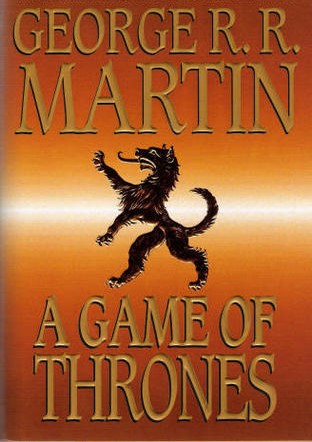
Despite the stigma of being a fantasy novel/series, A Game of Thrones has been a bestseller for a long time. Maybe stigma isn’t the right word anymore. Nowadays it can be cool to read fantasy. You can dress up in a costume as a fantasy character and go out in public, and everybody will want to take their pictures with you.
Back when I was a kid, if you dressed up as a fantasy character and went out in public, you’d get beat up. I almost wish that I was a kid today just so I could dress up as Jon Snow or a White Walker and go to a comic book convention and be cool, but I’ve gotten too old for all that. At my age, I’d have to go as George R.R. Martin, with a costume of a baseball cap, goggle glasses, a fake grizzly beard, frumpy clothes, carrying a blank-paged book with a Winds of Winter cover. That’s probably all I could get away with.
Despite its current social acceptance, there are a lot of reasons why some people hate reading fantasy. If you’re not familiar with a world, it can be tough to visualize. The rules of magic can be inconsistent. Fantasy languages can be boring. Some authors spend so much time on describing new creatures and new settings that there’s no characterization.
What makes A Game of Thrones so different from other fantasy novels? Instead of just asking somebody who’s read it, I decided to start it myself. I’m not ready to read the whole thing yet, but I read a couple chapters anyway. Here is a short excerpt that demonstrates why A Game of Thrones would appeal to readers who don’t normally appreciate fantasy:
Ser Waymar Royce was the youngest son of an ancient house with too many heirs. He was a handsome youth of eighteen, grey-eyed and graceful and slender as a knife. Mounted on his huge black destrier, the knight towered above Will and Gared on their smaller garrons. He wore black leather boots, black woolen pants, black moleskin gloves, and a fine supple coat of gleaming black ringmail over layers of black wool and boiled leather. Ser Waymar had been a Sworn Brother of the Night’s Watch for less than half a year, but no one could say he had not prepared for his vocation. At least insofar as his wardrobe was concerned.
His cloak was his crowning glory; sable, thick and black and soft as sin. “Bet he killed them all himself, he did,” Gared told the barracks over wine, “twisted their little heads off, our mighty warrior.” They had all shared the laugh.
It is hard to take orders from a man you laughed at in your cups, Will reflected as he sat shivering atop his garron. Gared must have felt the same.
Even though this is fantasy, the description in this excerpt wasn’t overwhelming. Just about anybody can relate to the fashion, the all black, and the contempt others feel for a guy who is trying too hard. The writing is grounded in enough reality to make a non-fantasy reader forget that this is a fantasy. Even if you’re not into dragons, magic, and frozen zombies, you can get into the petty squabbling of a bunch of humans unaware of what’s about to happen to them. It’s a cool idea for a story.
I’ve heard that later in the series, the pace slows down, and too many descriptions and minor characters bog the story down. Even if that’s true, the writing quality supposedly doesn’t go down until the fourth book, and that means tons of people are finishing three books in a fantasy series. That’s a heck of an accomplishment.
A lot of readers are eager for the final two novels in the series, and maybe George RR Martin will finish them sometime. I hope he finishes the next one soon. It would be better to walk around a comic convention with a real Winds of Winter novel than a fake one.
Over the last few weeks, I’ve been rereading a lot of books, and my daughters think it’s kind of strange. They claim they don’t understand why I’d read something a second or third time. I laughed at them because they rewatch movies, television shows, and YouTube videos all the time.
 It’s no mystery why it’s a good idea to read some books more than once.
First of all, you don’t need a reason to read a book more than once. When I was a kid, reading a book was the only form of entertainment you could do twice. You could go to see a movie once in the theater, and the next weekend it would be gone forever, replaced by another movie. If you missed a television show, you waited six months for a rerun, and then that show was most likely gone forever. There was no cable, no internet, no tablets. But books? If you liked a book, you could read it as many times as you wanted. Sometimes we read a book more than once simply because we could.
But in these modern times, there are other reasons to read a book more than once. Even with so…
View original post 1,026 more words

(image via wikimedia)
I should have seen the warning signs before I gave this writer’s group a try. First of all, the meeting was held in public, at the back of a book store. Over 30 people were crammed around a couple tables to read their manuscripts and get feedback. Writers weren’t even supposed to make copies. We had to read our words in front of the entire group and then get instant reaction. To me, that was a lousy way to run a writer’s group, but I was desperate.
This was in the early 1990s, and I was trying to get a novel published. I had a humorous mystery about a fake psychic who got coerced into hunting a serial killer, and it was tough back then to get honest feedback for your writing. You can read Writer’s Group Horror Story: The Vulgar Guy for more background information.
Anyway, about an hour into the meeting, a guy my age (early 20s) started reading a graphic sex scene that he had written.
And the guy didn’t use metaphors to disguise what he was talking about. He used the bluntest of four-letter words, and he shouted them angrily as his male character called his female partner a bunch of dirty names. And he spat out the words to this blunt scene with an intense fury.
And he was doing this in public, in a book store, next to the children’s section.
It was a little awkward listening to this guy read the sex scene really loud in public. I could feel myself blushing (and I was a 25 year-old guy), and I stared at the table, and the immature part of me wanted to laugh, but if I had started I wouldn’t have been able to stop. Whenever I glanced up, I saw other writers at the table making eye contact with each other and looking around. Customers moved around us like we were diseased. Kids peeked from behind shelves and mothers pulled them away. I thought about leaving, but you don’t get up during a writer’s group reading. That would be rude.
Looking back, maybe I should have intervened and told the guy to stop because there were kids around, but I was a rule follower. Our writer’s group procedures stated to not interrupt while somebody was reading. It was my first time in this writer’s group, and I didn’t want to be the new guy who thinks he’s better than everybody else and then breaks established rules. To some writers, breaking writer’s group protocol would be worse than reading a graphic sex scene next to the kids section.
If this had happened today, somebody would have taken cell phone footage. I would have been paranoid that we were on one of those shows where they put unwitting fools into awkward situations. I would have thought this was staged for a prank video. But that kind of stuff wasn’t done very often back then.
The five-minute sex reading felt like an hour, and when the guy finished, a silence lingered over the group. Edgar Allen Poe might have called it stone dead silence.
We were supposed to provide feedback, but nobody said anything. I had a few questions. How could a writer be so lacking in self-awareness? How could a writer read a sex scene out loud without shame while there were kids around? How was any other writer going to top that performance?
Nobody offered any critiques. I actually wanted to say something supportive to the guy. When you get silent feedback, you know you sucked, and he started fidgeting, probably realizing that his writing wasn’t as good as he thought it was. That’s a lousy feeling. I’m an expert on that feeling. I was inwardly cringing for the guy, but I couldn’t think of any positive reaction to a vulgar misogynist piece.
Somebody else finally volunteered to read, and that was it. I don’t remember much else. I just remember keeping my head down and hoping nobody I knew (especially from work) had seen me there.
After the meeting, everybody stood around and mingled. Even a quiet guy like me talked. I mentioned my fake psychic idea to a couple other writers, and they pretended to be interested, and they told me about their story ideas as well.
I noticed that a lot of people wanted to talk to the vulgar guy. It was like he was a rock star. I thought he would have been shunned, but I had completely misread the situation. He even got phone numbers from a couple women. Back then, we didn’t have cell phones, and you actually had to write down information, so you could always tell when people were exchanging phone numbers. Ha, I thought, those women probably thought they could save vulgar guy. Or maybe they were into that kind of thing.
I stayed a few minutes longer to buy a couple books. I figured if the book store was nice enough to let us interrupt their business, we should at least buy some stuff. And then I realized I was the only one from our group buying anything. After a few minutes, everybody had left, and the store was almost empty. Even worse, nobody had cleaned up. The writing group area was still messed up, with coffee cups littering the tables and chairs scattered everywhere.
I was mortified. I had cleaned up after myself, but I was the only one. I felt bad for the book store. They had thought they were getting over 30 automatic customers on a weeknight and instead they got a bunch of misfits who scared off families with vulgarity and then didn’t even buy anything. That was worse than not leaving a tip.
I started folding up the chairs and asked an employee about where to stack them, and she said they’d take care of it. I almost apologized for the vulgar guy, but since I hadn’t done anything to stop him when he was reading, I didn’t mention it. The apology would have seemed empty. I found a couple more books and bought them. I couldn’t make up for 30 other thoughtless writers, but I could do my part.
The writer’s group never met again. At least, I never heard about it. When I contacted the group leader a few days later, he said the book store wouldn’t let us back in and that he was trying to find a new location. I never heard back. I guess word got out about the vulgar cheapskate writer’s group.
A few years later, the book store closed down. A few years after that, the plaza was vacant. A few years ago, the condos and town homes went up. I wonder how much the writer’s group caused the domino effect.
As bad as that was (especially for the book store), it wasn’t even the worst writer’s group experience I’ve ever had.
*****
To be continued!


 Dysfunctional Literacy