This sounds stupid, but when I lived in Sewanee, Tennessee, we used to throw rocks at each other for fun. Maybe ‘fun’ isn’t the right word, but there was an adrenaline rush to it. I was somewhere between 5th and 7th grade, and if you don’t keep kids in that age group busy, they’re going to do something stupid.
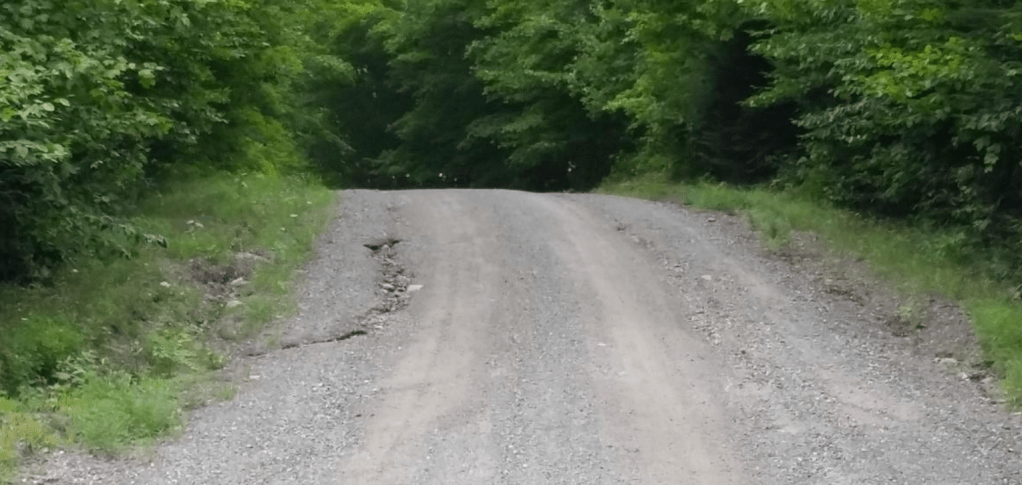
A lot of the streets in Sewanee weren’t paved, and so gravel was everywhere. You could go anywhere and find a rock. Back in the 1970s, there wasn’t much for unsupervised kids to do in the evenings after school or on weekends (except homework and chores), so we’d wander around the town and the surrounding wooded areas and throw rocks.
We threw rocks at each other when we were walking (or running) through Abbo’s Alley. We’d often be at opposite sides of the creek launching gravel or anything we found at each other. We weren’t throwing hard. It was more like lobbing. We didn’t really want to hurt each other. It was more for the challenge. Could we hit moving targets while not getting hit ourselves? It was like paintball but with a little more risk. Kids rarely got truly hurt, but pain avoidance was enough motivation to try to not get hit.
Even though we spent a lot of time in Abbo’s Alley, usually using it as a cut through to get from our neighborhood to the school or the store or the other side of town, it wasn’t the only wooded area in Sewanee.

Forests were everywhere. I could walk outside my house and within two minutes be in the woods walking down the side of the mountain. Some paths were obvious, but in a lot of places the trees were far enough apart that you could just walk freely in any direction. Once I ran out of rocks to throw, I could either find more rocks just laying around or I could keep wandering aimlessly.
I never truly got lost while wandering the side of the mountain. If I wasn’t sure where I was, I’d just walk up the mountain until I ran across a road or somebody’s backyard. From there, I could eventually figure things out. The views were entertaining enough, and you never knew when you were going to discover a small waterfall or stumble into a cave, so I didn’t need rocks most of the time.
Everyone’s favorite view was a place called Morgan’s Steep. It was a cliff at the edge of a small neighborhood (with big houses, I think) at the end of town. On the left side was a path of rock stairs that you could walk down and start wandering. You could wander to the right as well, but I remember a path. Some people loved staring at the valley from the edge of the rock cliff.
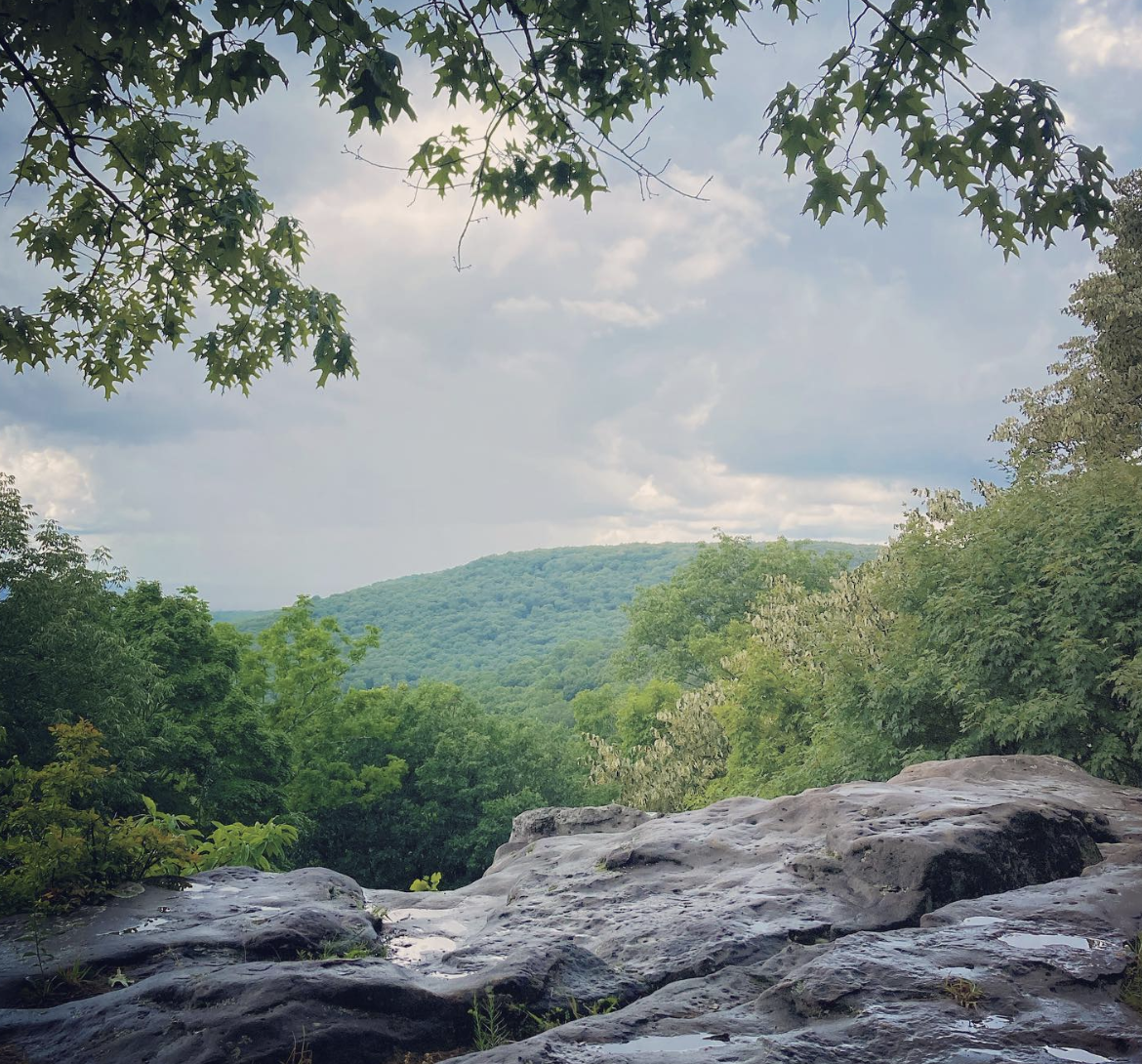
Some people liked to spit off of Morgan’s Steep. I liked to throw rocks off of it. Looking back, I hope I never hit anybody. I just thought it was fun throwing rocks.
Even though we were kind of stupid for throwing rocks at each other, we had unwritten rules. You didn’t throw rocks at little kids , and that was because they were helpless. You didn’t throw rocks at adults because they’d tell your parents. You didn’t throw rocks at teenagers because they’d beat the hell out of you and enjoy it.
I saw one kid my age throw a rock at a teenager, and it ended just like you’d think. Johnny hated a teenager (I think his name was Ronald, but I’m not sure), who had a couple mean yard dogs, and pegged Ronald pretty good on the head. Ronald was pissed and chased Johnny down and beat him to a pulp (almost) in his own front yard. Ronald was lucky that nobody else was home because Johnny had a couple older sisters that were meaner than Johnny, and that would have been a brawl for the ages if they’d seen Ronald beating Johnny like he was a redheaded step-child.
I can write something like that because I was a redheaded step-child.
Anyway, when Ronald finally got tired and left, Johnny hit him again with another rock and ran inside his house. At that point, Ronald couldn’t do much else, so he left. When I saw Johnny later (I don’t remember if it was that day or weeks later), he said that his dad (and his sisters) did worse to him all the time. That explained a few things about Johnny. We’ll come back to Johnny later.
Johnny’s older sisters were 13 and 15. The 13 year-old looked older than the 15 year-old and bragged that she could buy cigarettes by herself. That’s what a lot of the teenagers did; they stood around and smoked. I thought the teenagers were stupid for smoking all the time. The teenagers thought we kids were stupid for throwing rocks at each other.
Now a bunch of those cigarette smokers probably have health issues. But me? All that rock throwing and getting hit didn’t cause any long-term damage. I mean, sometimes my brain doesn’t click on all cylinders and my mind wanders all the time, but I don’t think that has anything to do with rocks hitting me upside the head.
Now that I think about it, I’m supposed to talk about dogs sometime in this story. Maybe I’ll get to that in the next episode. We’ll see.
To read this story from the beginning (where I at least talk about dogs a little bit), go to The Lost Dogs of Abbo’s Alley.
For more of my childhood stories that took place in Sewanee, see the following:
The Tale of the Almost-Expired Milk
Childhood Ghost Story- The Prologue (This one mentions one of the dogs that will be introduced later.)
4th of July Story: The Box of M-80s
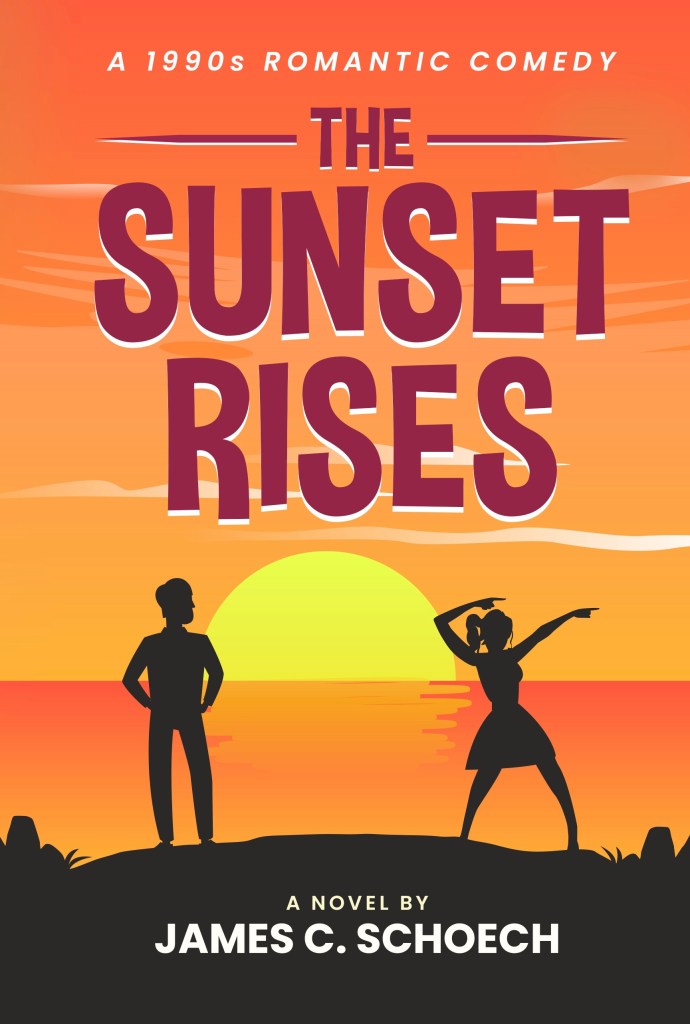
Even better, here is my ONE novel! It’s called The Sunset Rises, A 1990s Romantic Comedy, and you can find it here on Amazon!!
Or you can get it below from the ‘trunk of my car.’
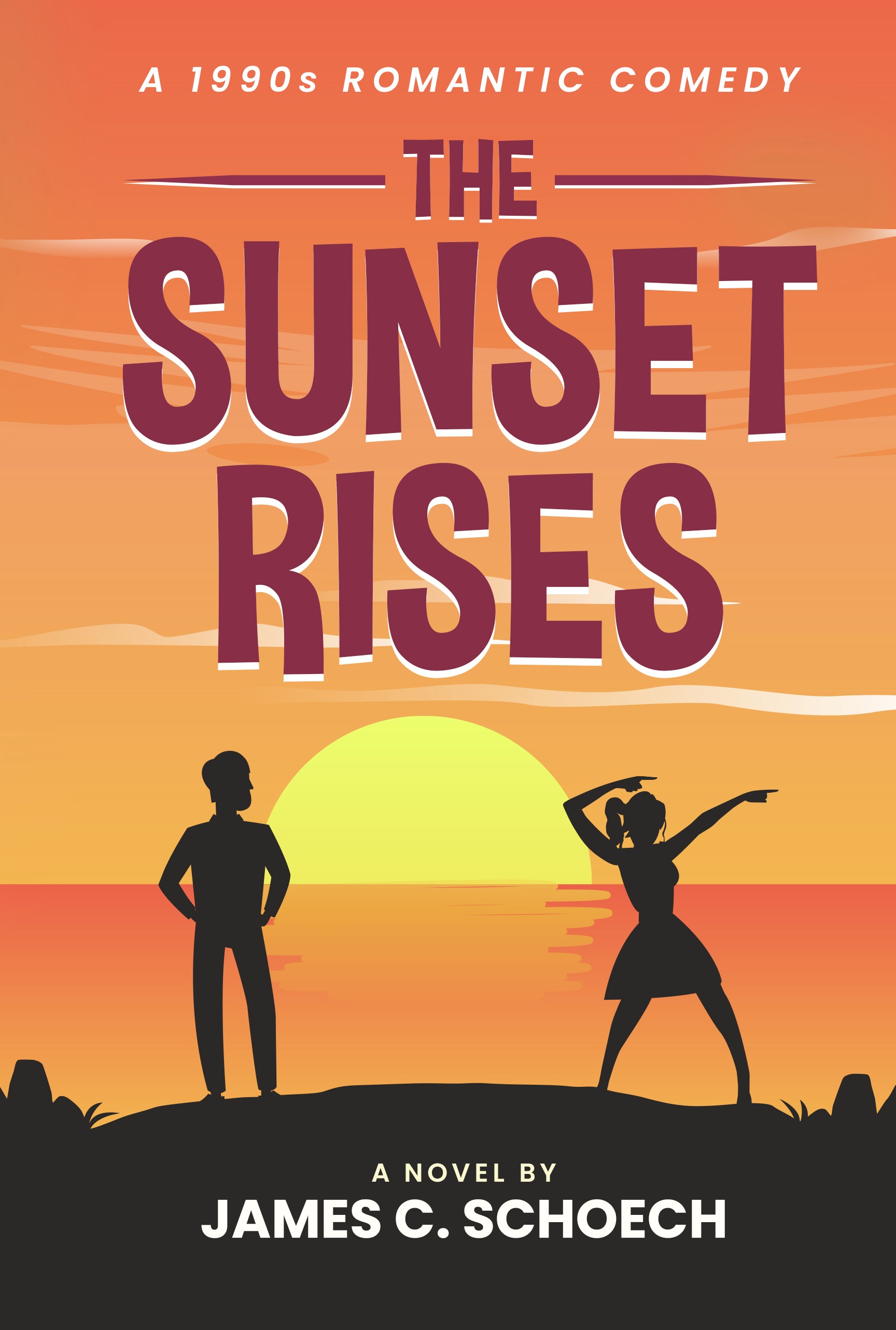
The Sunset Rises: A 1990s Romantic Comedy
Get a signed copy of my one and only novel, The Sunset Rises: A 1990s Romantic Comedy. Free delivery in the United States!
$10.00
As much as I love reading these Dummo Mouse cartoons from 1982, I’m not sure how my older brother would have maintained this drawing style if he’d had to do this every day. A lot of his panels are far more detailed than what you’d see in most daily comic strips in the 1980s. Most comic strip artists use simple lines and no shading and almost no background details. Some of them even hire gag writers so that that they, the artists, don’t have to think of new ideas every day.
I felt almost let down when I found out that some comic artists don’t write most of their strips. If that’s the case, then I guess I should lighten up on James Patterson, who doesn’t seem to write a lot of his own books. Maybe this practice of ghost writing and co-authoring is more widespread than I had originally thought.
At least everything my older brother did was his own stuff.
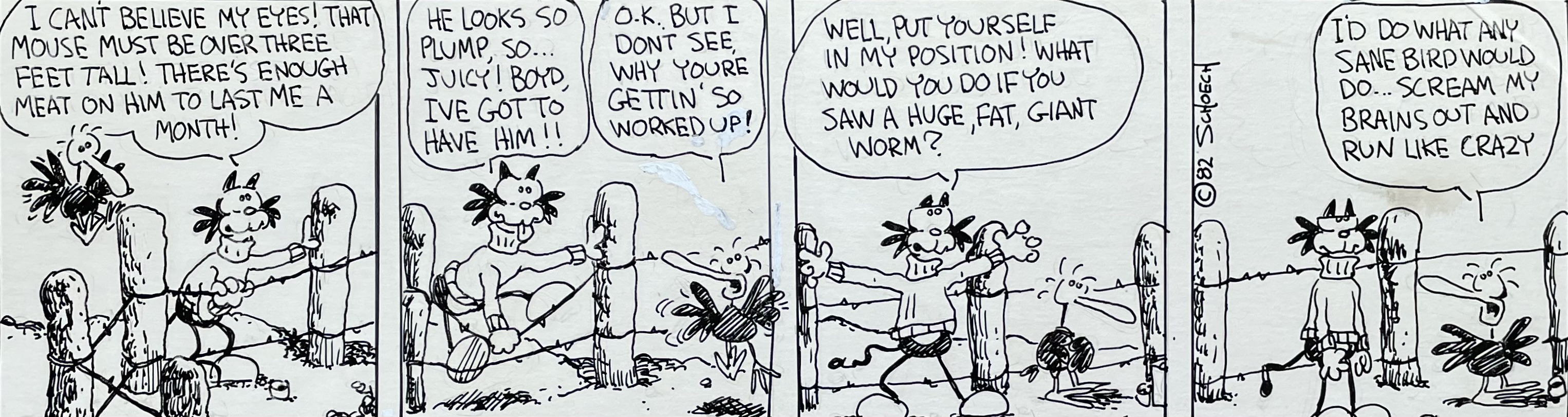
For more, see Dummo Mouse and Friends: The Intro
and Dummo Mouse and friends: The Second Intro.
Or you can read my older brother’s published comic strips, starting with The Lost Adventures of “Calloway the Castaway” Episode 1!
And come back next week for more Dummo Mouse and Friends!
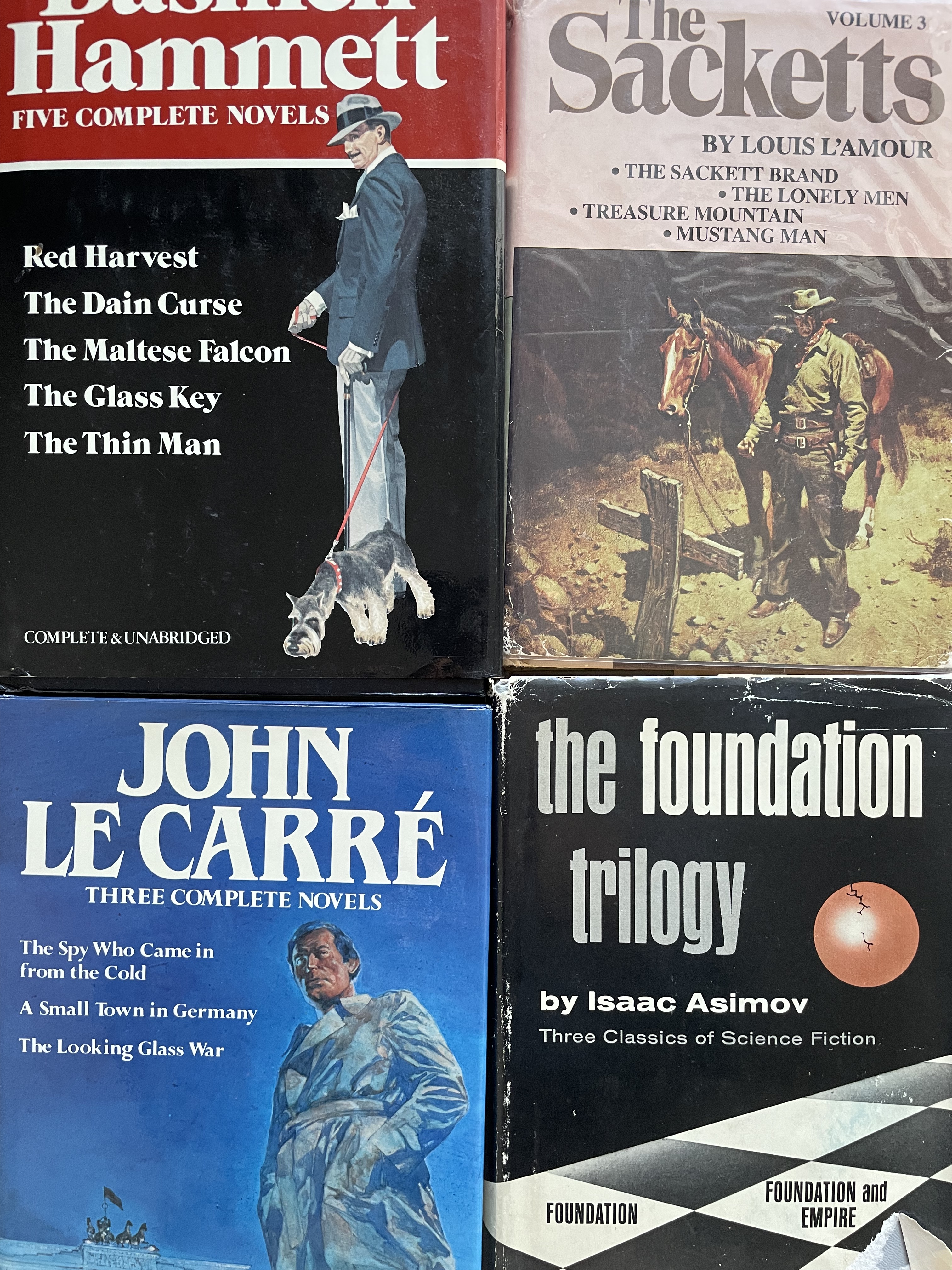
When people find out that I’m a retired English teacher, they sometimes assume that I read a lot and ask me what kind of books I like. I tell them that I like good books. I’m not trying to be a smart-ass. I’m serious: I don’t have one set genre. I just like the good books from different genres.
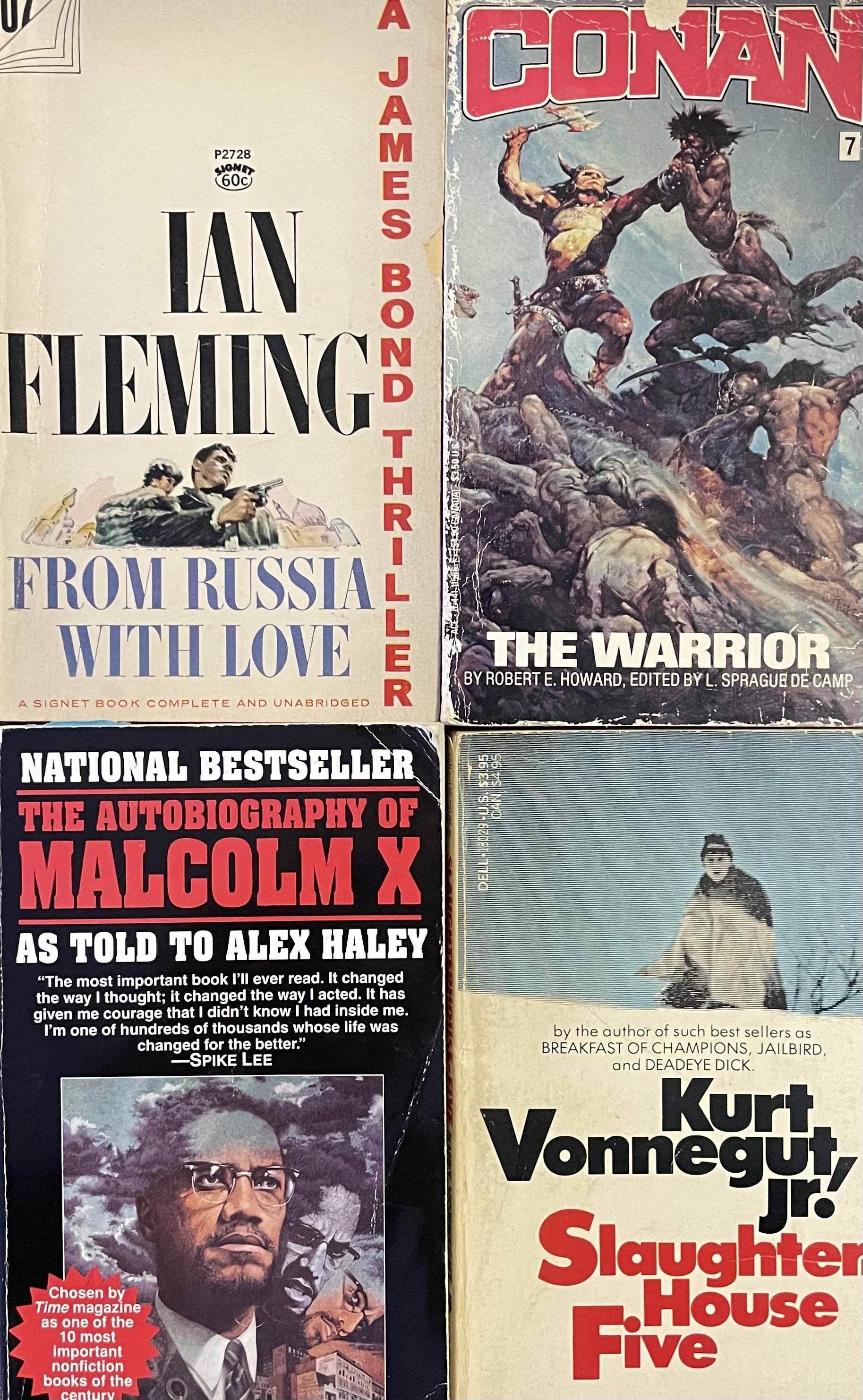
Some readers like specific genres and will read (almost) anything in their favorite genres, but not me. After a few books of any genre or author, I get bored and move on for a while. In the 1970s, I read The Lord of the Rings trilogy, but I got bored with most fantasy. I read I,Robot and a couple Foundation books by Isaac Asimov, but I didn’t care for much science fiction. I read a couple Louis L’amour westerns but not many (and there were many to choose from).
I noticed my tendency in the 1980s when I stopped reading Needful Things by Stephen King. I had read several Stephen King books before, but I quit several in a row after Needful Things. I finished It (the book) though. I almost didn’t read It, but word-of-mouth was so high on the book that I thought I was missing something. It (the book) wasn’t bad (except for THAT scene… if you know what I mean). As I was reading, I wondered why so many people thought this book stood out so much.
Then I remembered that I’m different. I forget that sometimes.
In the 1990s I read a couple John Grisham legal thrillers (The Firm and Something Else). I read a couple John Sandford Prey novels, but I don’t remember their titles: I don’t think there was a Lettuce Prey. I even got through a couple long-winded Tom Clancy military thrillers (they were okay if you skimmed through the tech jargon and laughed at the dialogue).
Sometimes I think that I should have more high brow tastes since I was an English teacher. Then I remember that I was a public school teacher. Oh yeah, public school. Low brow taste is fine.
Anyway, “good” is a good answer to a lot of questions dealing with matters of taste.
“What kind of movies do you like?”
“Good movies.”
“What kind of music do you like?”
“Good music.”
“What kind of food do you like?”
“Good food.”
When I answer “Good” to these types of questions, I need to be prepared to clarify my answer. If I’m not willing to clarify, then I’ll sound like I’m just being a prick (which is a plausible interpretation of my behavior). Since I’m primarily a book blogger, I’m just focusing on books here.
Even though I usually don’t read more than three books by any given author, there are exceptions. I’ll read almost anything Bernard Cornwell publishes. Yeah, he uses the same formula for most of his books, but it’s a good formula. I like his formula. He just takes the same formula, uses it multiple times for one character and time period in a bunch of books. Then he takes the same formula and uses it for another character and time period multiple times.
I’ve accidentally read a couple of Bernard Cornwell’s books more than once because it took me over a hundred pages to realize that I’d read it before. I like his formula so much that I don’t care if I’ve read the same book over and over again.
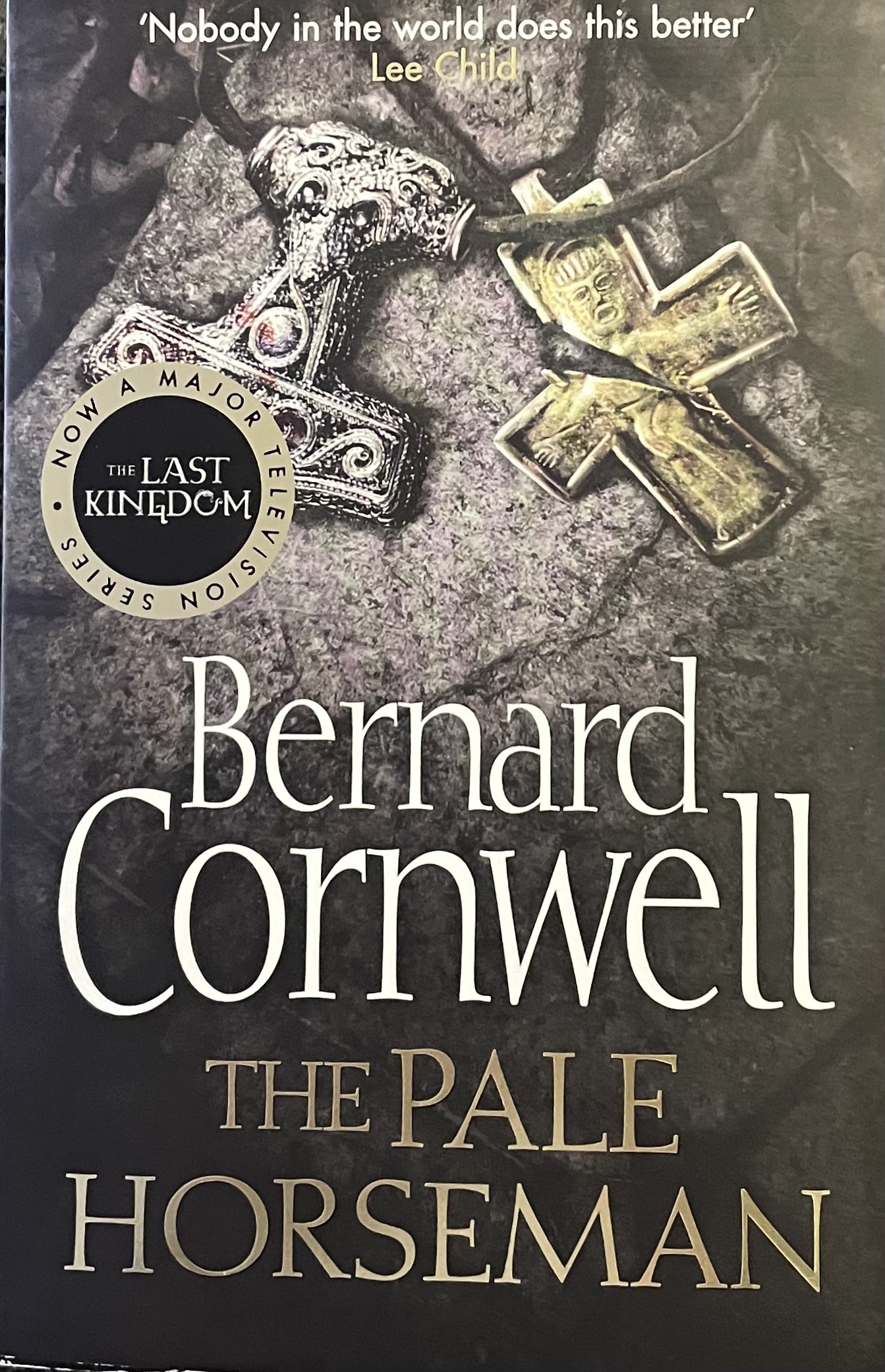
If you ask me who my favorite author is, though, I probably wouldn’t say “Bernard Cornwell.” I just say I don’t have one so that I don’t get pinned down to one author. I don’t even recommend Bernard Cornwall to everybody. He just has discovered the formula that I like the most in novels. Maybe that should make him my favorite author. Maybe he is my favorite author, and I’m just too stubborn to admit it.
My unpredictable taste helps me to be aware of a variety of books because I’m never sure if I’m going to like a book before I start to read. I start many books, but I finish very few. Except for ‘good’ books. I sometimes finish reading those.
Here is a ‘good’ book that I finished writing. Then I finished reading it. It’s called The Sunset Rises, A 1990s Romantic Comedy, and you can find it here on Amazon!!
Or you can buy it below from the ‘trunk of my car.’
The Sunset Rises: A 1990s Romantic Comedy
Get a signed copy of my one and only novel, The Sunset Rises: A 1990s Romantic Comedy. Free delivery in the United States!
$10.00
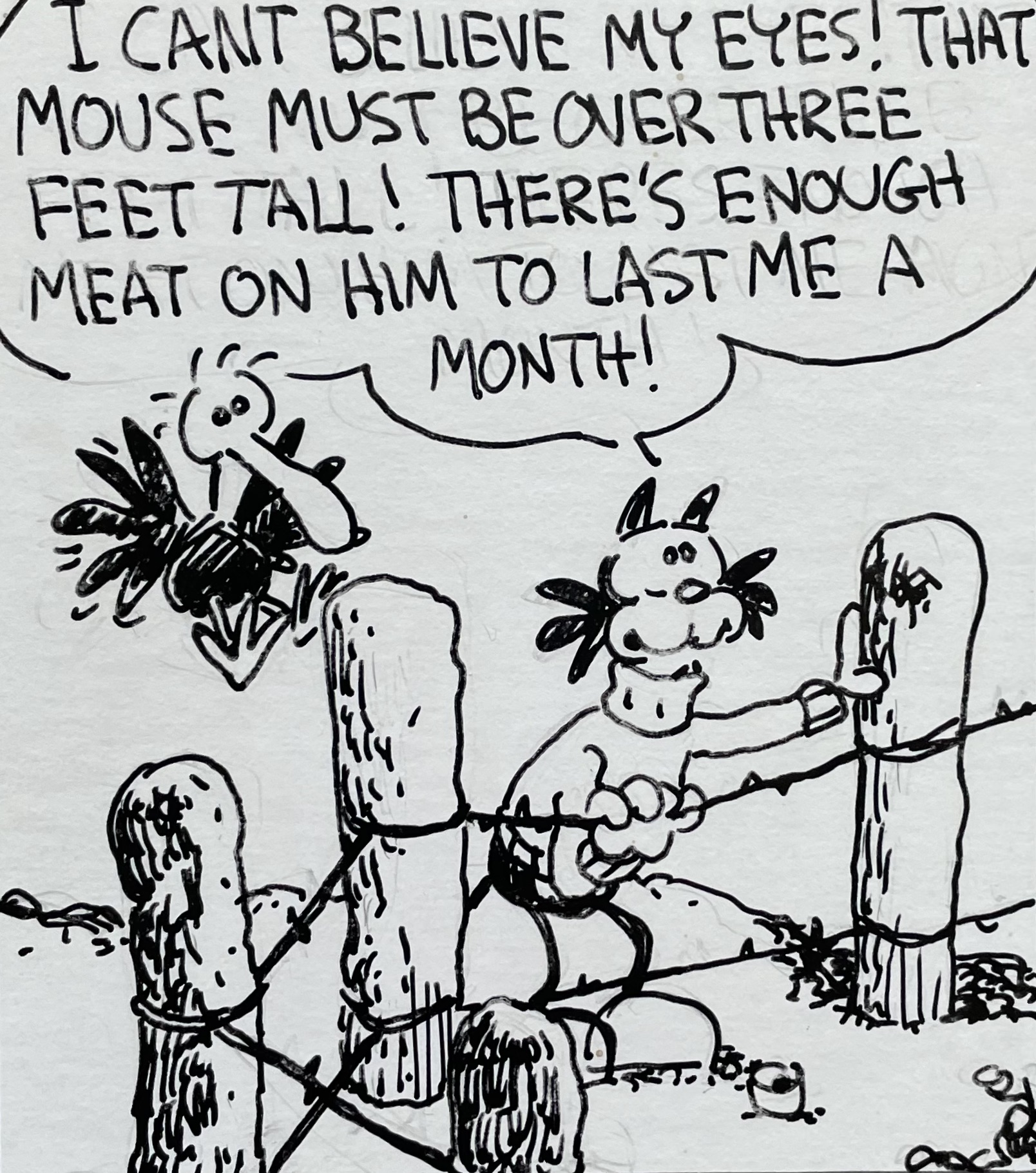
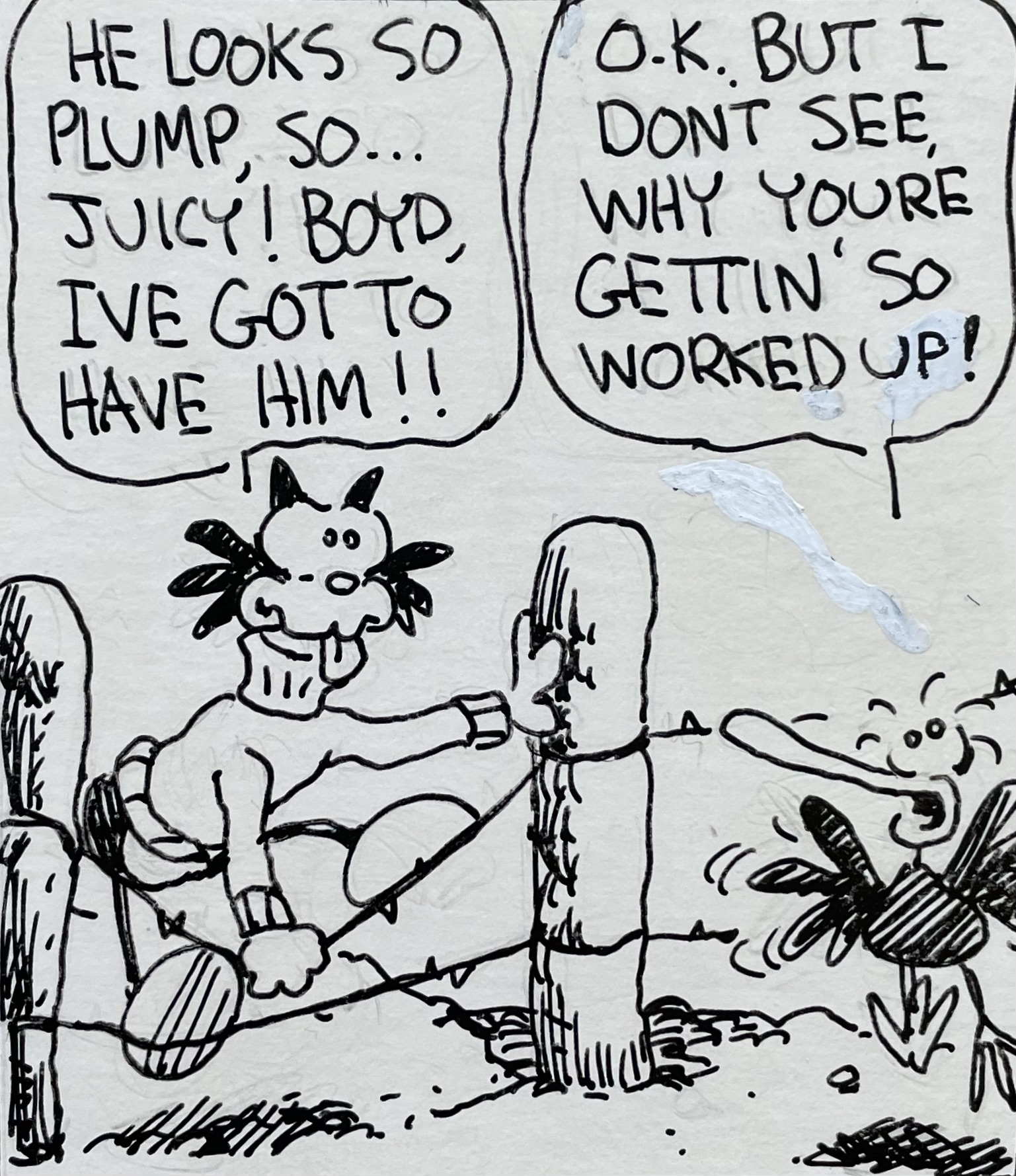
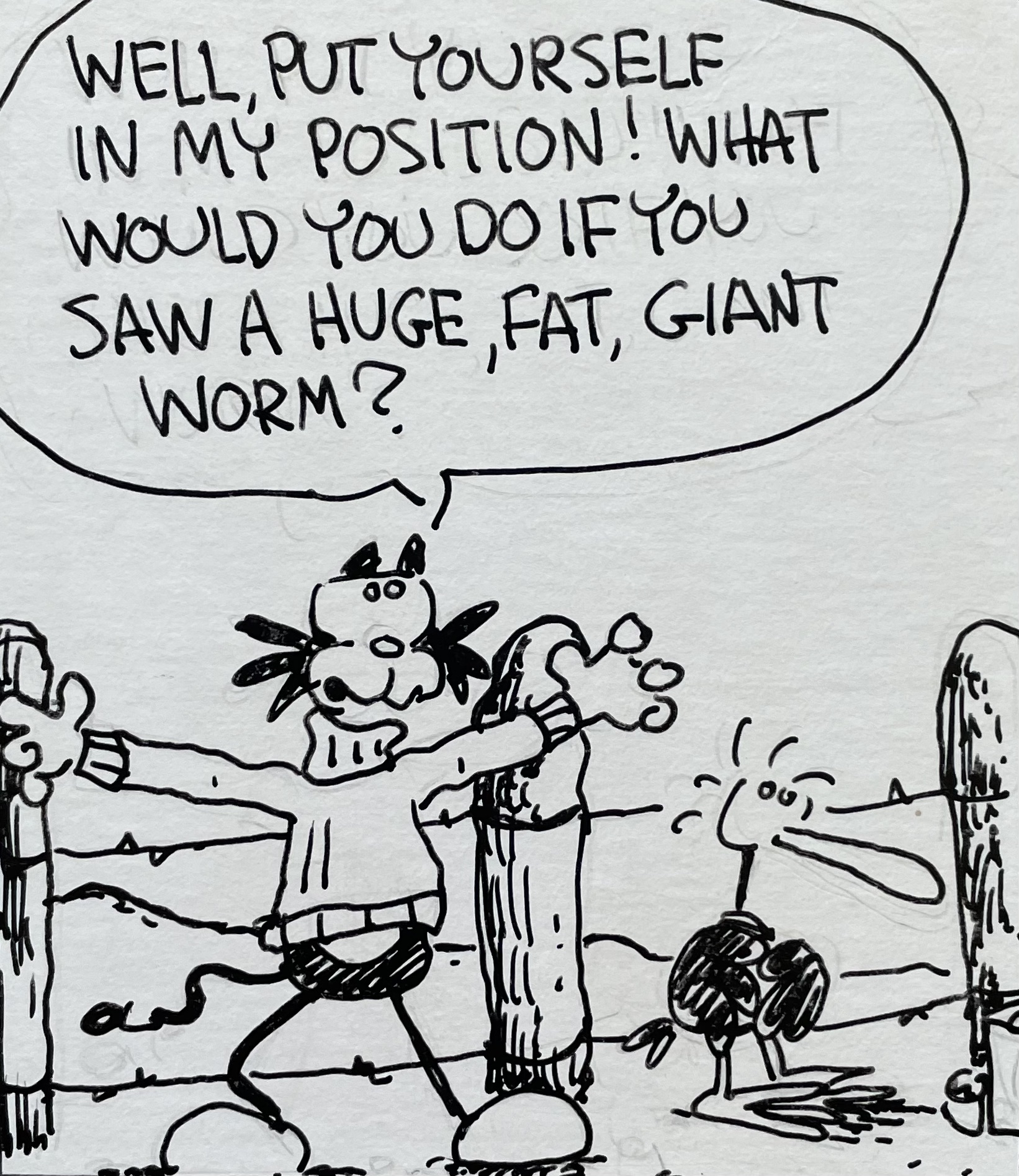
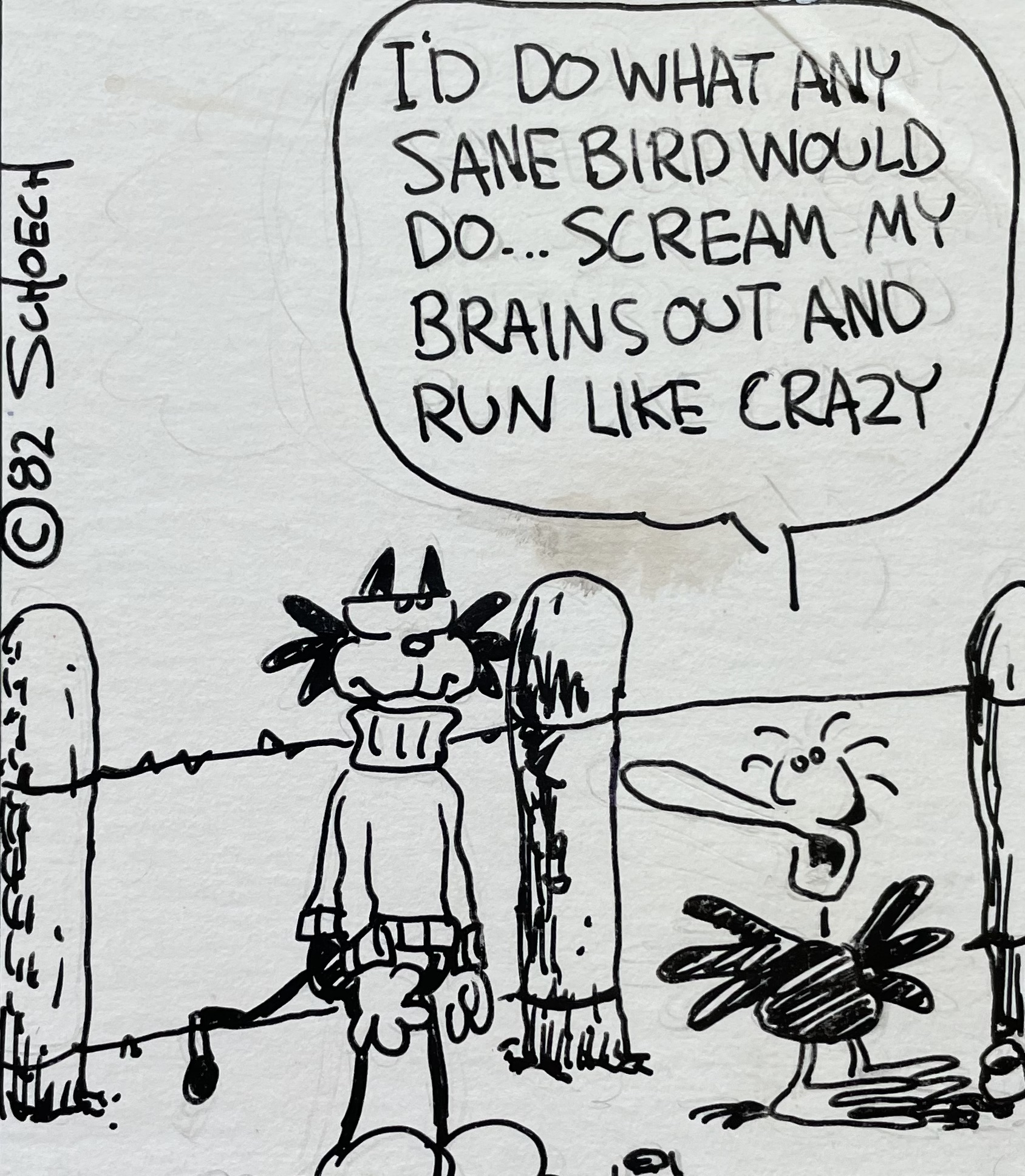
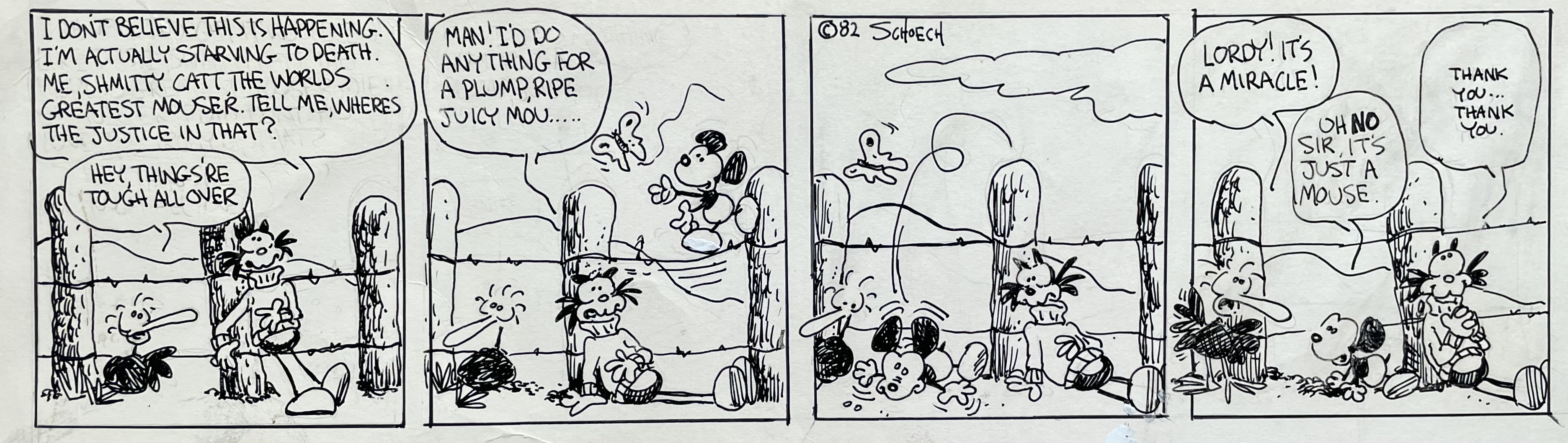
Last week, I published one possible introduction to my older brother’s 1980s comic strip Dummo Mouse. Today’s comic strip also seems like an introduction but with a slower approach.
Unlike my brother’s 1979 comic strip Calloway the Castaway, Dummo Mouse has never been published anywhere, not even in a local weekly newspaper. My brother drew these over 40 years ago, and you’re one of the first people to read this, other than a few family members and friends and a few agents for syndicated comic strip artists back in the early 1980s.
Haha! I just noticed that my brother left out an apostrophe in the first panel.
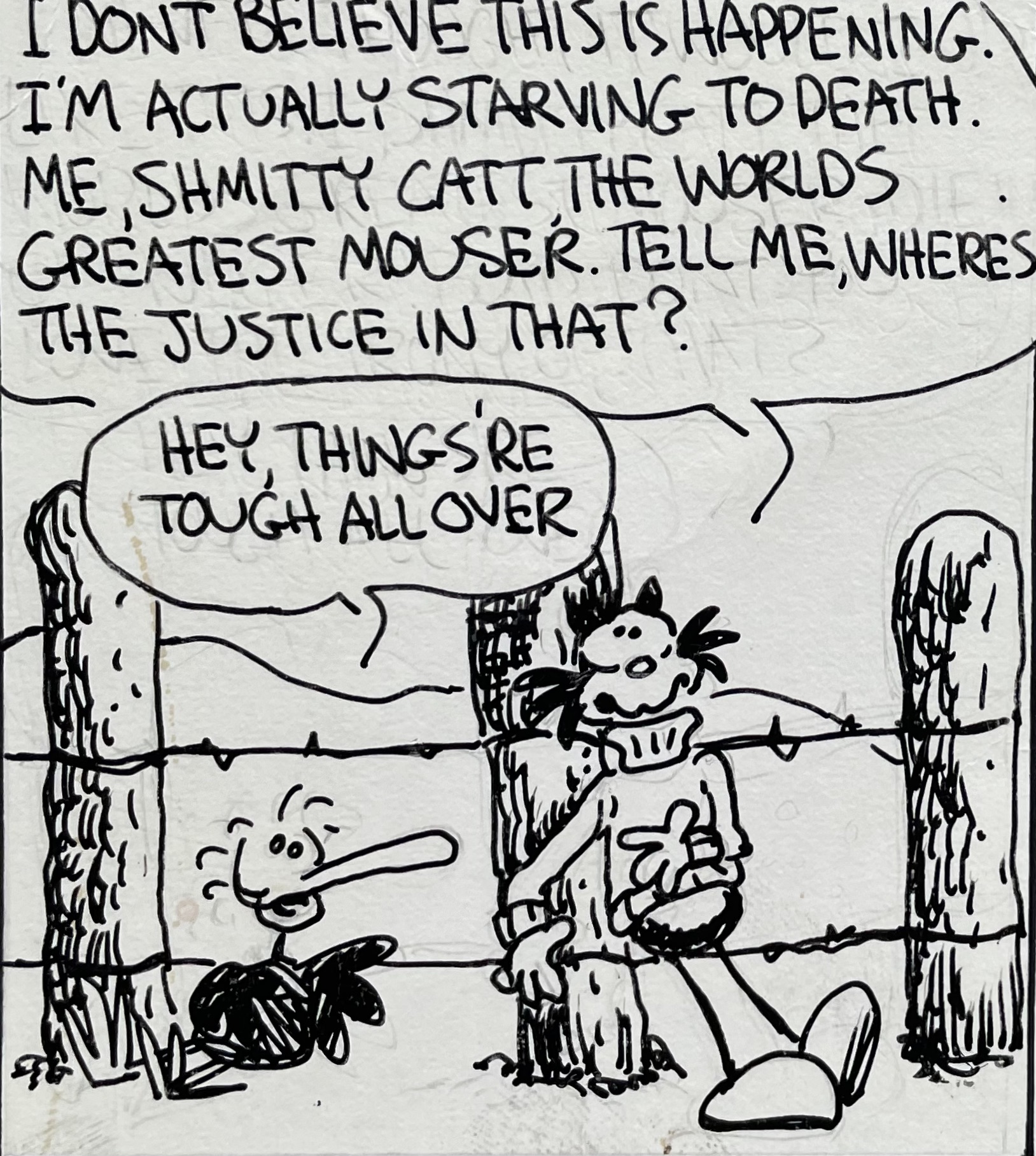
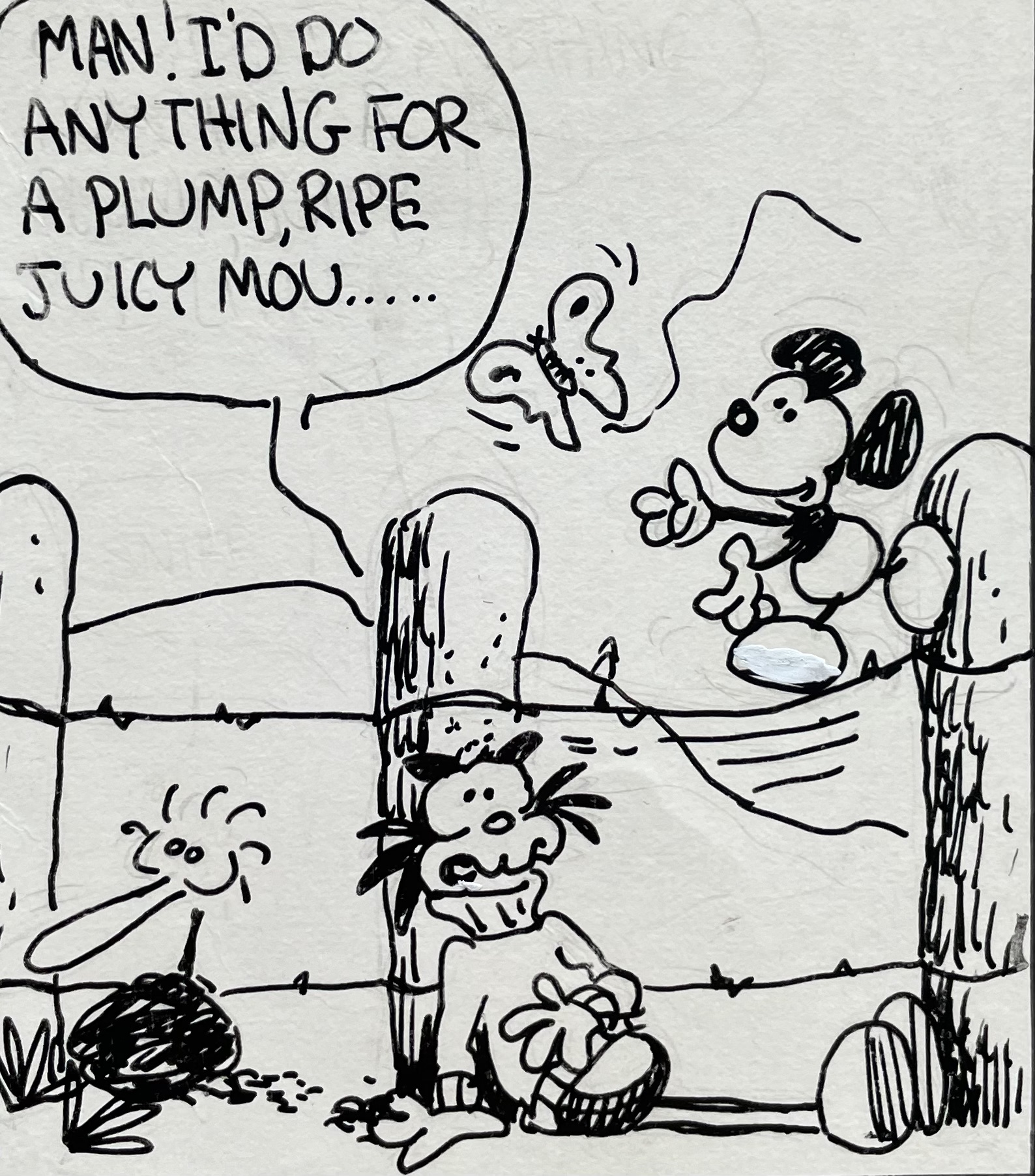
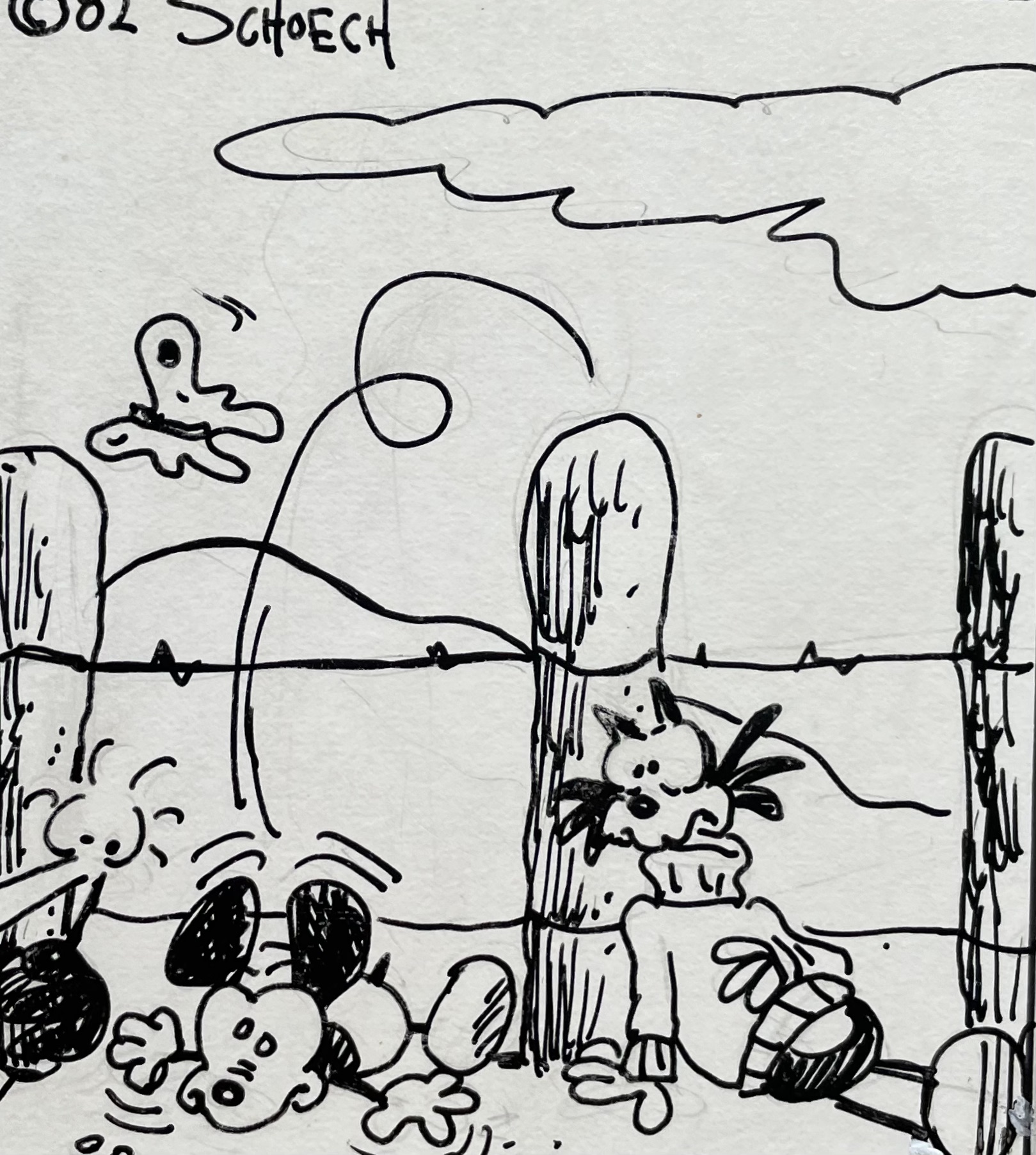
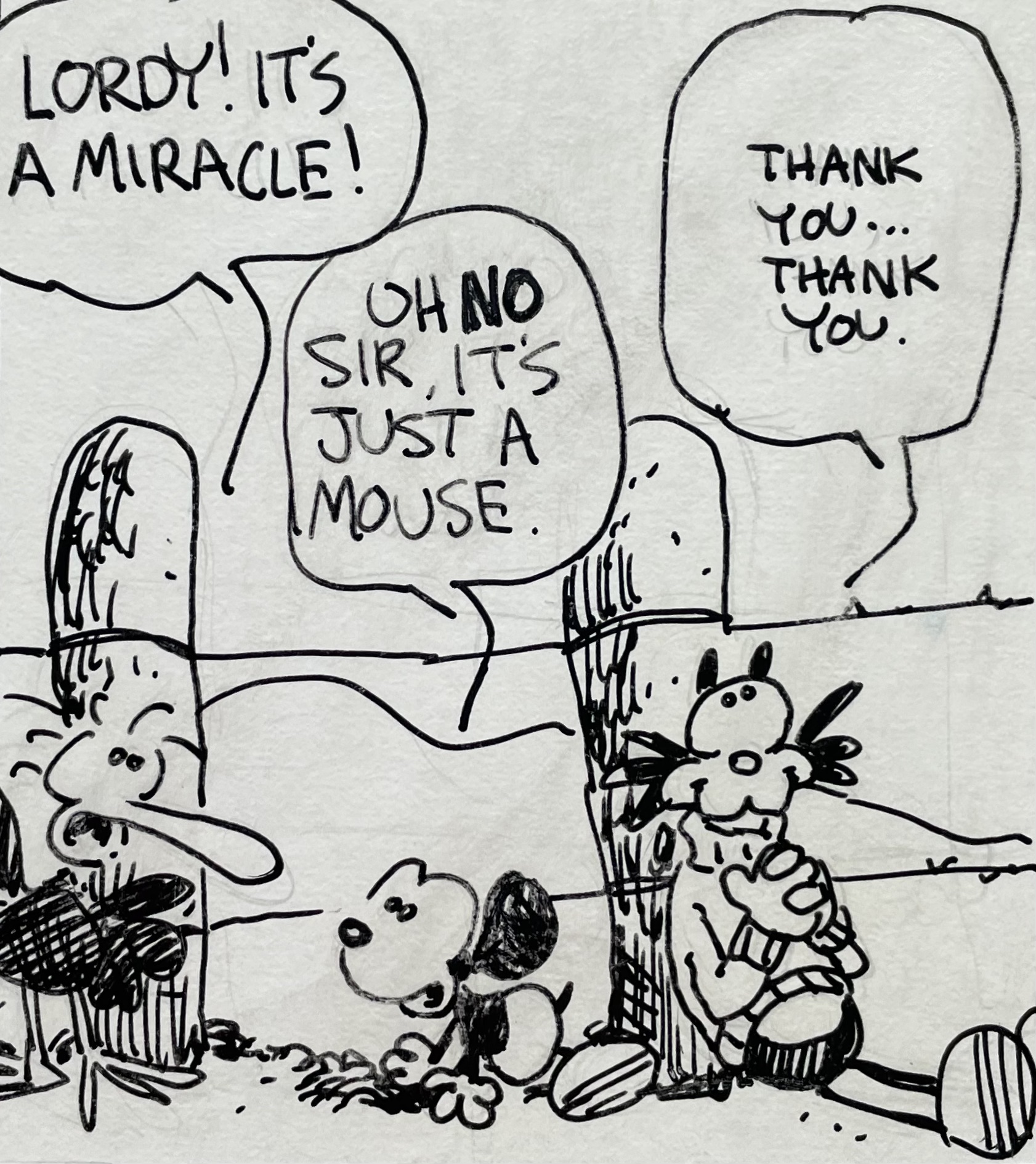
To be continued! Come back next week for Dummo Mouse and the Daily Strip!
First of all, no dogs are going to die in this story. I might mention a dog or two that died or got killed over the years this story takes place, but it won’t be something that I witnessed, so I won’t write a scene about it. Keep in mind, though, that this story takes place 50 years ago. I was ten-years-old at the time, so all the dogs mentioned in this story have probably died. If that bothers you, then don’t read any further.
If it’s any consolation, a lot of the people that I will mention in this story have died too, so, I mean, it’s not just the dogs.
Anyway, in August (I think) of 1975, my family moved to Sewanee, Tennessee, a small college town that’s home of The University of the South on the edge of the Cumberland Plateau. A lot of people have never heard of Sewanee but are more familiar with nearby Monteagle, which is about halfway between Nashville and Chattanooga. My dad had just retired after twenty years in the United States Air Force and had decided to become an Episcopal priest, so he was attending seminary school in Sewanee. It was a weird transition, seeing my dad go from a military guy to a priest guy, but that’s not what this story is about. People aren’t interested in that. People are usually more interested in the dogs.
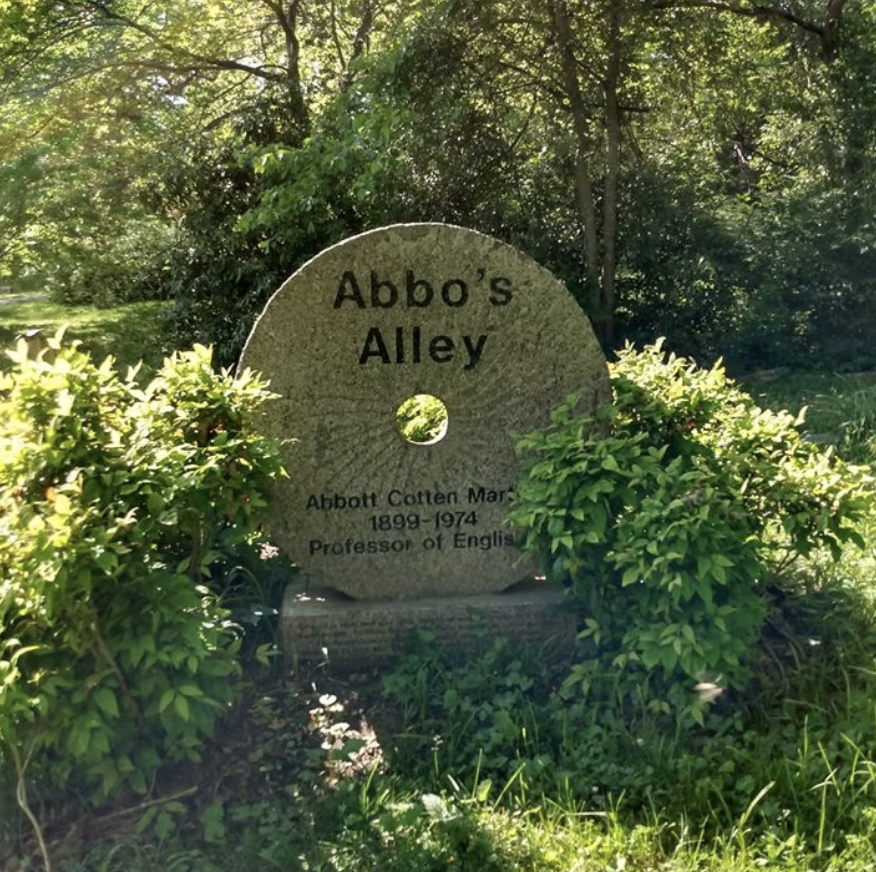
And Sewanee had a lot of dogs. Many of those dogs were strays, and the two dogs that my family eventually adopted hung out in a place called Abbo’s Alley.
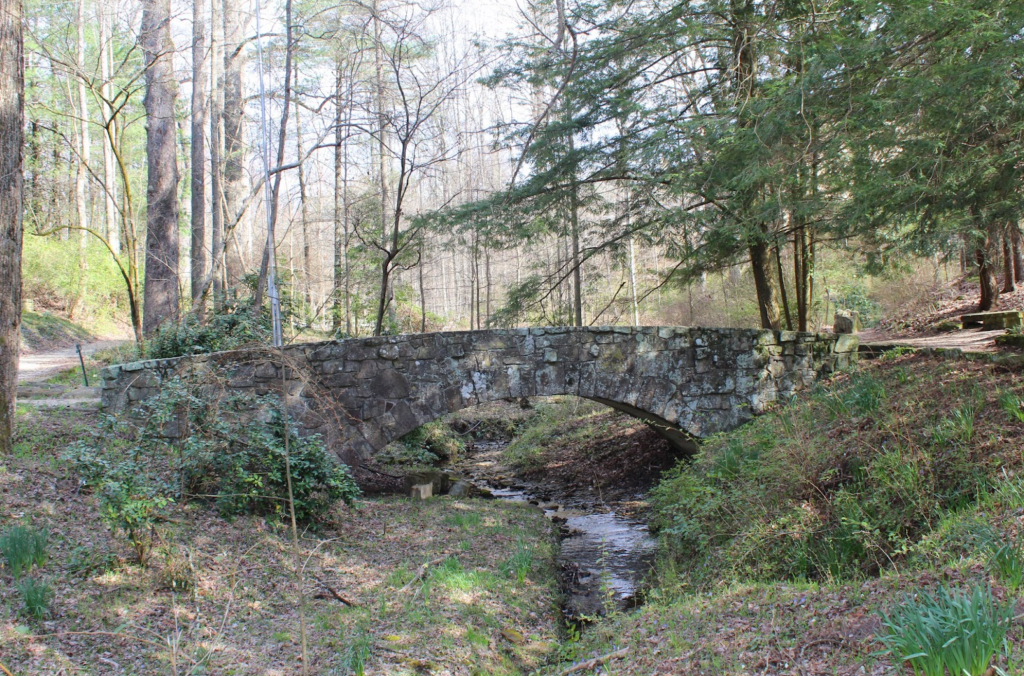
Abbo’s Alley was a wooded area next to some of the dorms (I think). A creek separated the two sections, and a stone bridge was the best way to cross it unless you wanted to take a risk jumping from one side of the creek to the other on a dry day. For a while, a large tree trunk hung over the creek, and kids (along with an occasional adult) would walk or crawl across it, just to do it. I’m sure somebody fell off that trunk at some point, but I never saw it happen. It probably wasn’t that far of a drop anyway.
I’m not sure how long Abbo’s Alley was. For a fifth grader, it felt like maybe a mile or two. It was probably just 100 yards with a few minor turns. As far as width goes, it only took a few minutes to go from the dorms to the bridge to the first set of regular houses on the opposite side. That’s why it was called an alley. I don’t know who Abbo was. The internet didn’t exist back then (well, maybe the military had it, but I didn’t). I could probably look it up now.
The story was that students in the dorms would adopt or feed a lot of the strays during the school semesters, so the dogs would hang around Abbo’s Alley. Since most of the strays were being fed by humans, these dogs were generally friendly to anybody who passed by. The problem was that in the summer, the students would leave, and the dogs would go hungry and then forage into the town’s trash bins or wander the mountainside or get killed on the highway leading into town. The highway was almost always littered with dog bodies.
‘Littered’ might be a strong word, but dead dogs were a common sight on the highway. You’d see the smart dogs looking both ways before crossing the highway and some of the busy streets (well… busy for Sewanee). The non-smart dogs probably didn’t last long during the summer. Mentioning the highway doesn’t count as a scene where a dog dies in this story.
Since my family arrived in August before the college students returned, the neighborhood where we lived was a common hangout for these emaciated strays. We lived maybe a quarter mile from one end of Abbo’s Alley (the end that was near the football field), and it was natural for the dogs to wander down a paved street into our neighborhood. I said ‘paved’ street for a reason, and I’ll get to that later.
My new neighborhood had a bunch of kids my age, and one of the first rules I learned was that you didn’t feed the strays. If you fed the strays, they said, the strays would get attached to you and never leave you alone. You didn’t feed the stray(s) unless you intended to adopt the dog(s).
Well… of course, I fed some strays. But I’ll get to that in the next episode.
For more of my childhood stories that took place in Sewanee (though the setting will be more ambiguous), see the following:
The Tale of the Almost-Expired Milk
Childhood Ghost Story- The Prologue (This one mentions one of the dogs that will be introduced later.)
4th of July Story: The Box of M-80s
*****
No dogs were harmed in the writing of my one novel The Sunset Rises: A 1990s Romantic Comedy. And no dogs are harmed in the novel either. Of course, you can find The Sunset Rises, A 1990s Romantic Comedy here on Amazon!!
Or you can buy it below from the ‘trunk of my car.’
The Sunset Rises: A 1990s Romantic Comedy
Get a signed copy of my one and only novel, The Sunset Rises: A 1990s Romantic Comedy. Free delivery in the United States!
$10.00
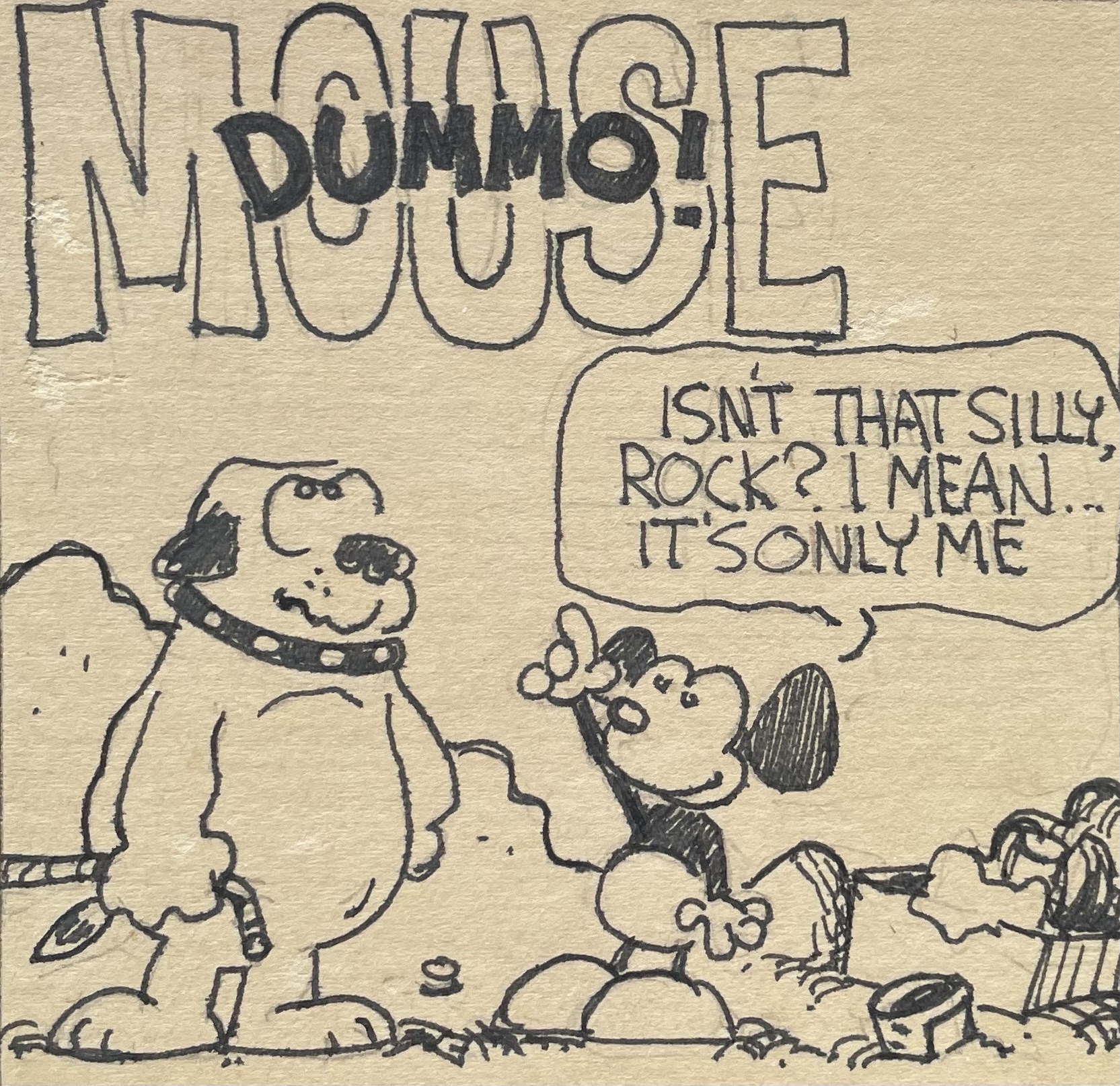
After a short time on the East Coast, my older brother moved to Texas where he got married and messed around with several comic strip ideas as he worked and took care of his kids (short version). This was back in the early 1980s when four-panel comic strips were a big deal, and cartoonists had to get syndicated in order to get published regionally/nationally in newspapers (please don’t make me explain what newspapers were).
My brother’s dream was to be a syndicated cartoonist, and throughout the 1980s he worked on several comic strip ideas while he also juggled work and family. My favorite of these strips was Dummo Mouse. This isn’t the first Dummo Mouse comic strip that my brother drew, but it’s a good introduction.
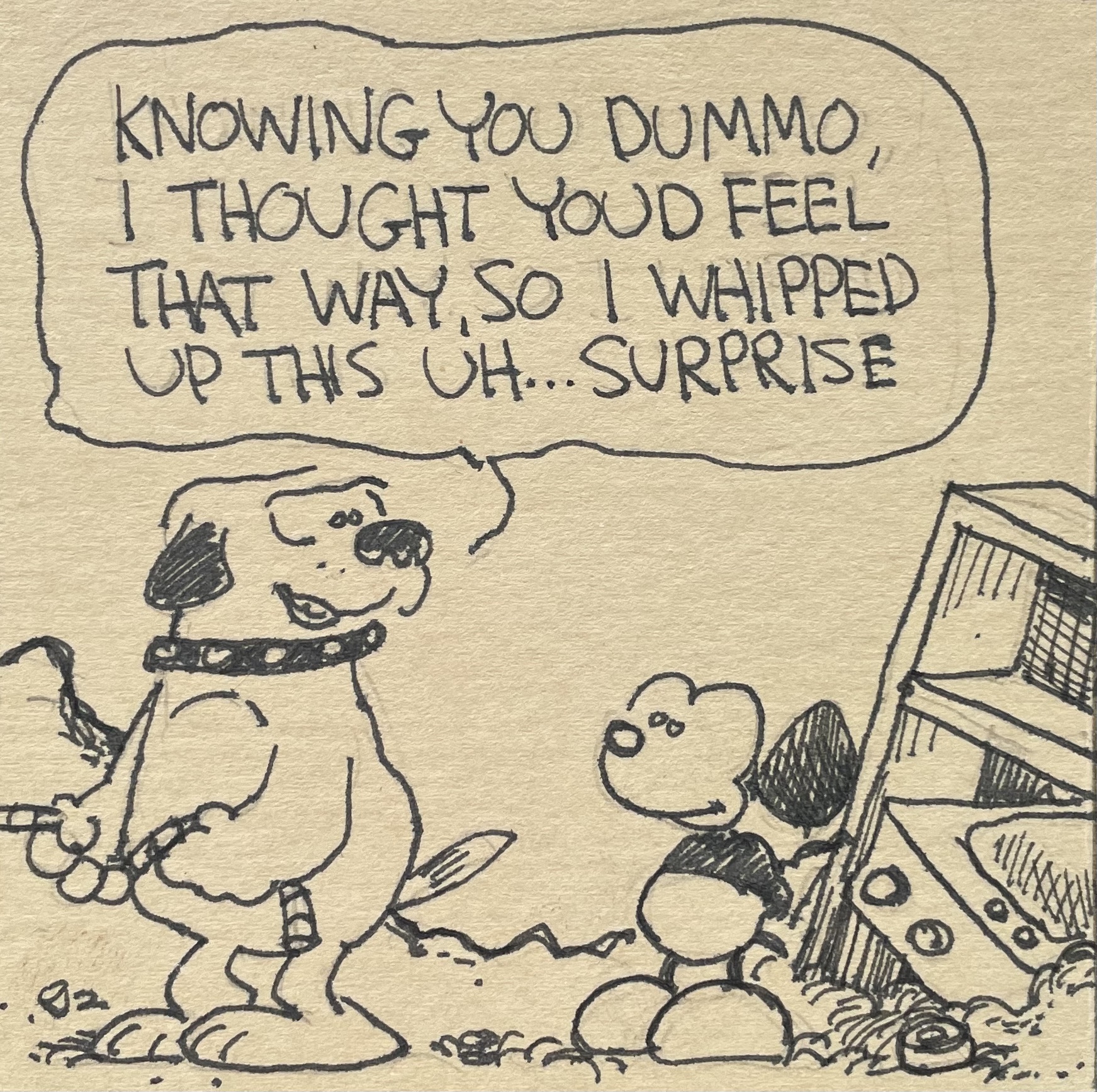
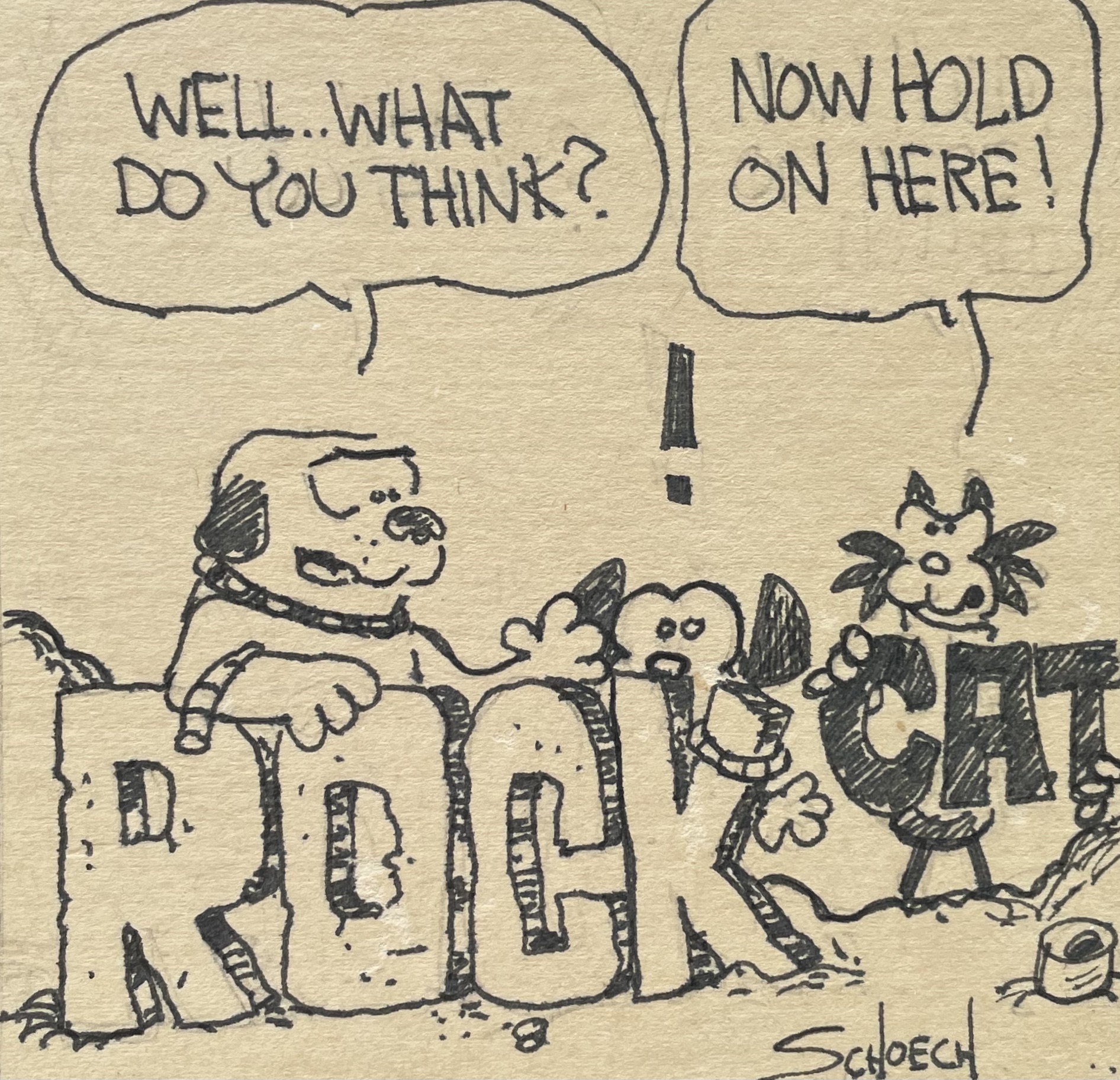
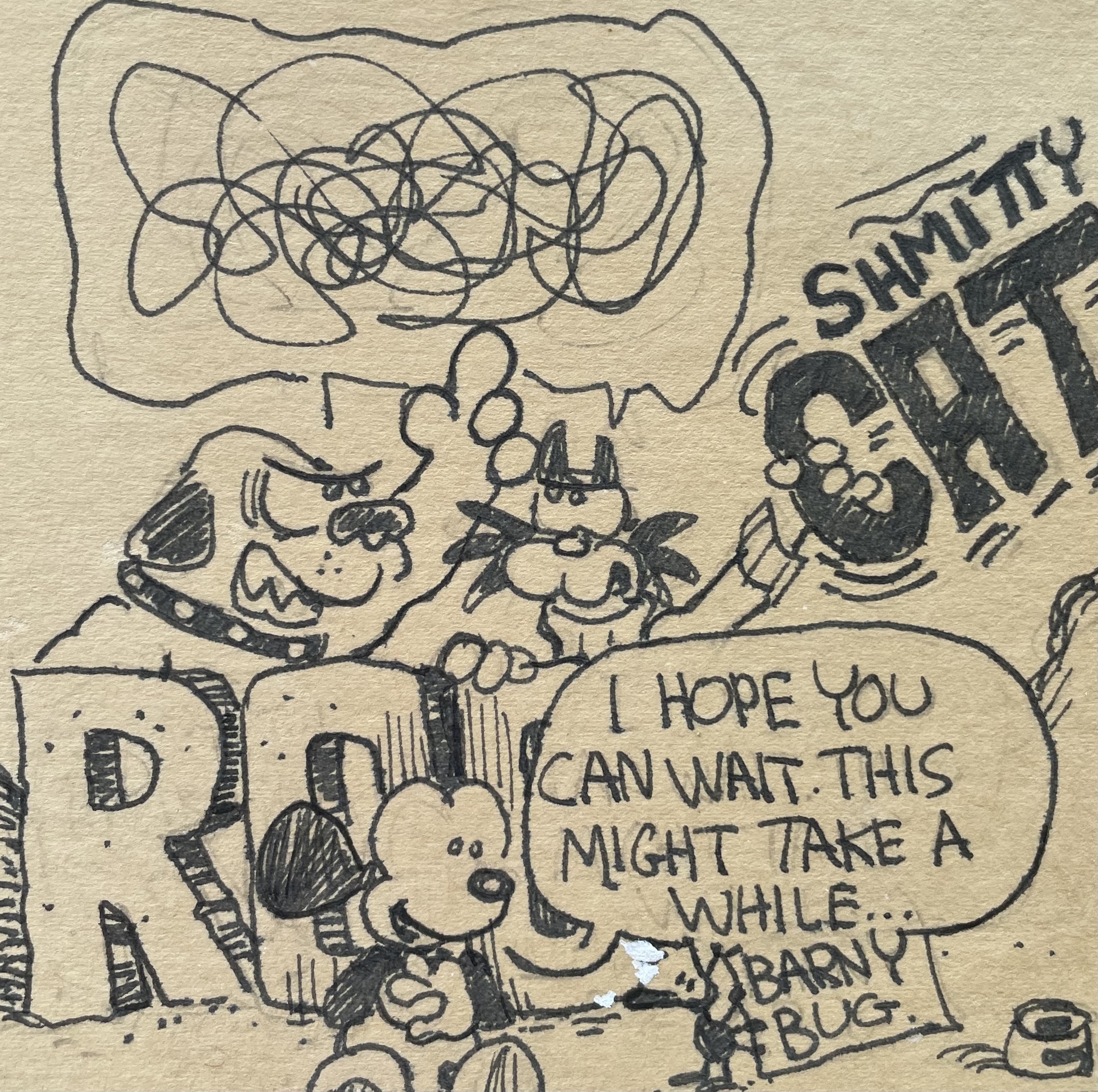
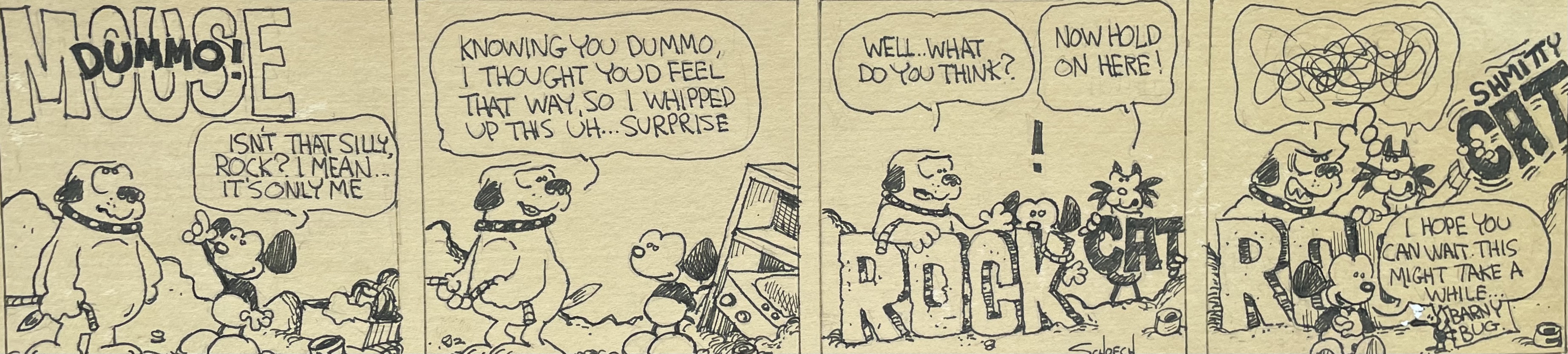
By the way, my older brother is still alive and well. I just used the past tense when it comes to cartooning because he doesn’t draw that much anymore. Maybe he’ll pick things up again. We’ll see.
*****
Come back next Sunday for more Dummo Mouse and Friends!
And to read my older brother’s long-lost 1979 comic strip, start here at The Lost Adventures of “Calloway the Castaway” Episode 1!
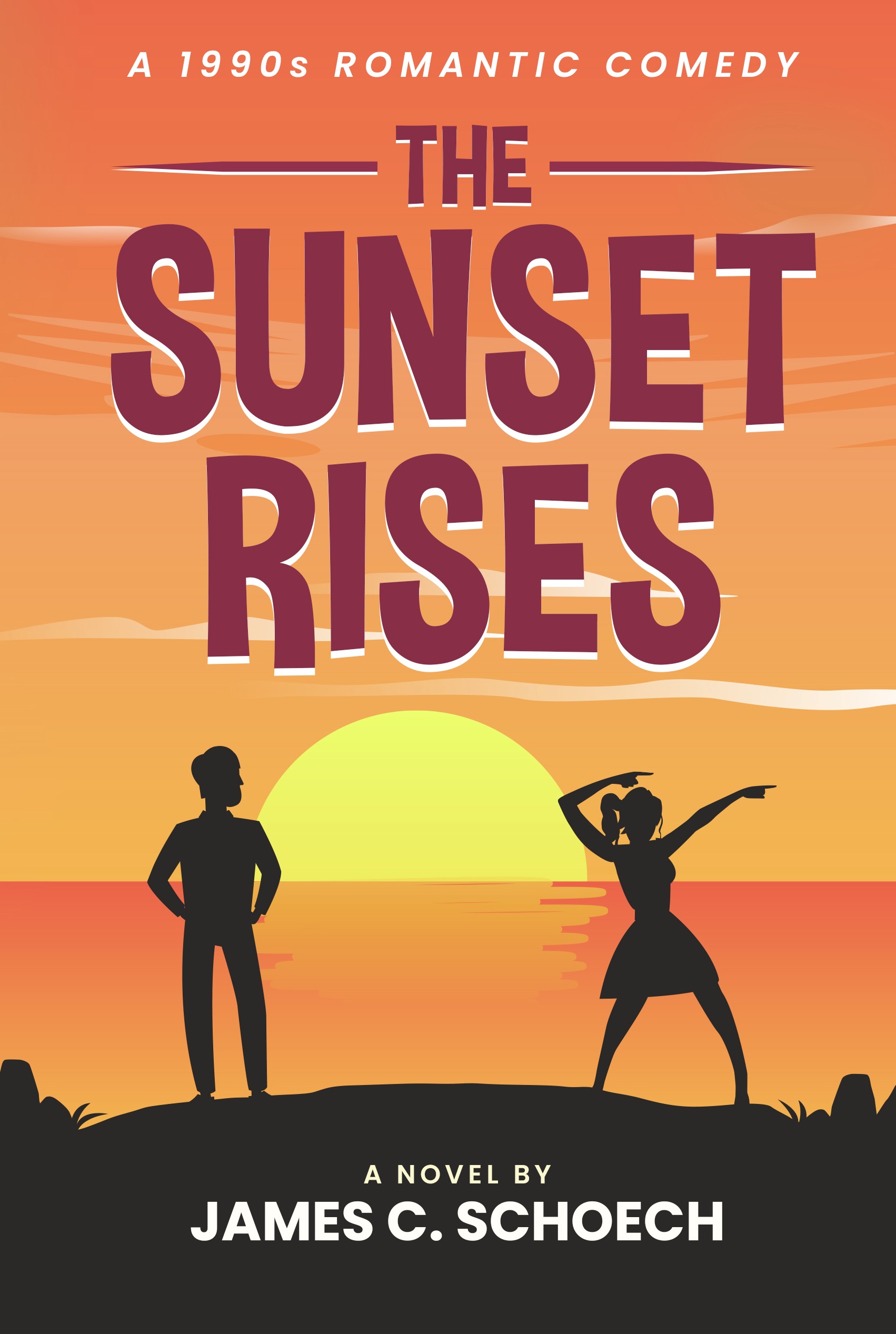
I self-published my one-and-only novel The Sunset Rises: A 1990s Romantic Comedy about a year ago, and the most favorable comments I get are about the cover. That makes sense. Even people who don’t read the book will see the cover. Even people who didn’t care for the book too much said positive stuff about the cover.
Don’t get me wrong. A lot of people have made positive comments about the content of my book as well, but I know The Sunset Rises: A 1990s Romantic Comedy isn’t for everyone. In fact, it can actually be a little polarizing.
After I was finished writing and revising and revising, I had no idea what I wanted in the cover because all I was interested in was trying to write a decent novel when I’m not a novelist. As far as the cover was concerned, I just wanted something that might stand out a little bit. I figured I’d look at iconic covers and see if there was something I could rip-off from one of them. For a few weeks, I scoured book sites and stared at hundreds of famous book covers, but the cover of Joseph Heller’s Catch-22, a novel that I had sitting on my book shelf, stood out to me the most.
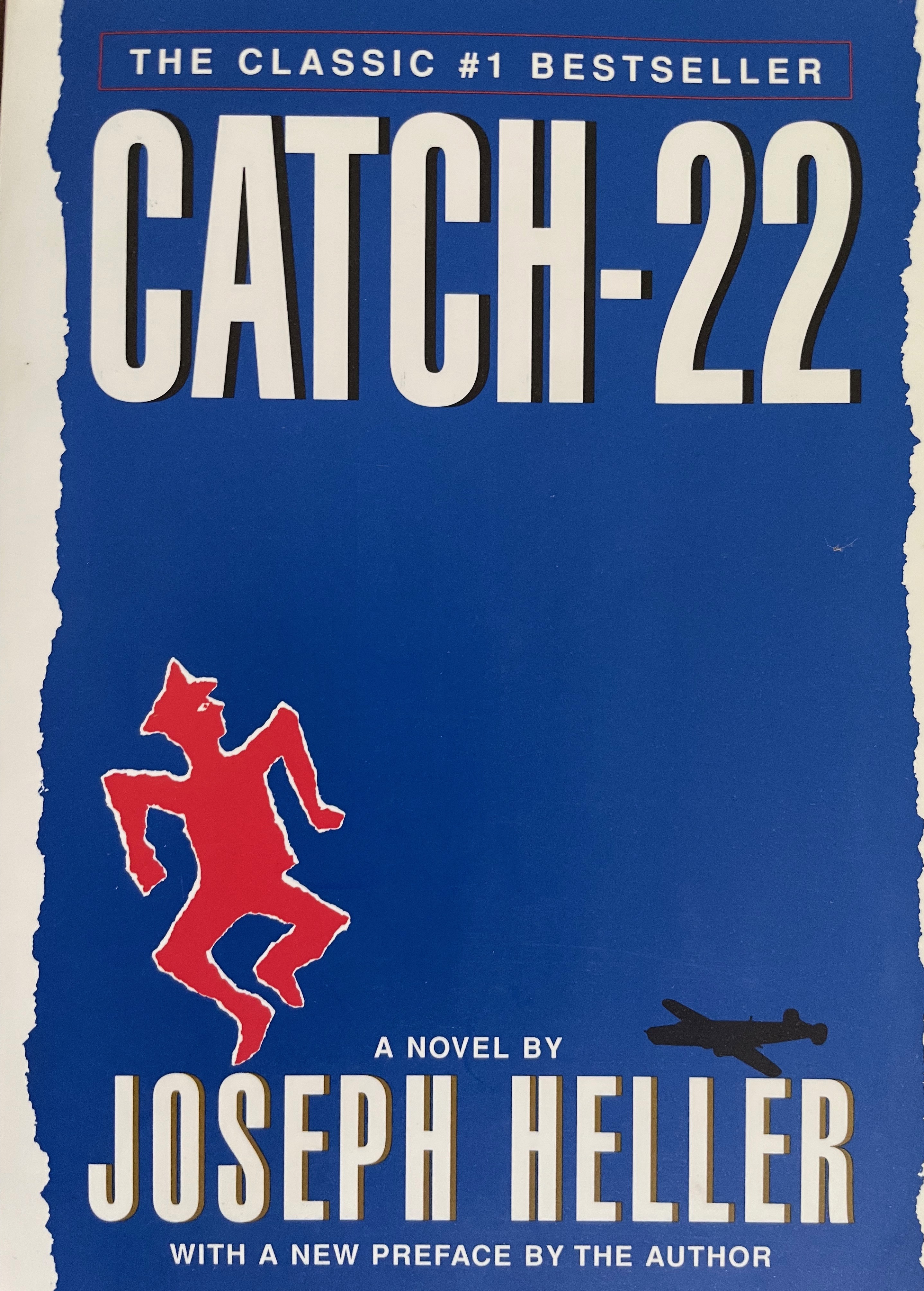
The dancing outline, I thought. I could rip-off the dancing outline.
In fact, I could have two outlines, a hot chick outline dancing crazy and dude outline watching her. I’m not sure my hand drawn outline comes across as an attractive woman, though. I’m not an artist. Even some professional artists can’t draw attractive women very well, so I don’t feel bad about my artwork. I still consider my older brother the artist in the family.
Actually, my uncle is “the” artist in my family, but that’s for another blog post.
I also threw in some editing marks in the title since the main character is an English teacher. I was pretty sure the editing marks would be distracting and confusing, but this was a rough draft cover, and I always include some bad ideas in my rough drafts.
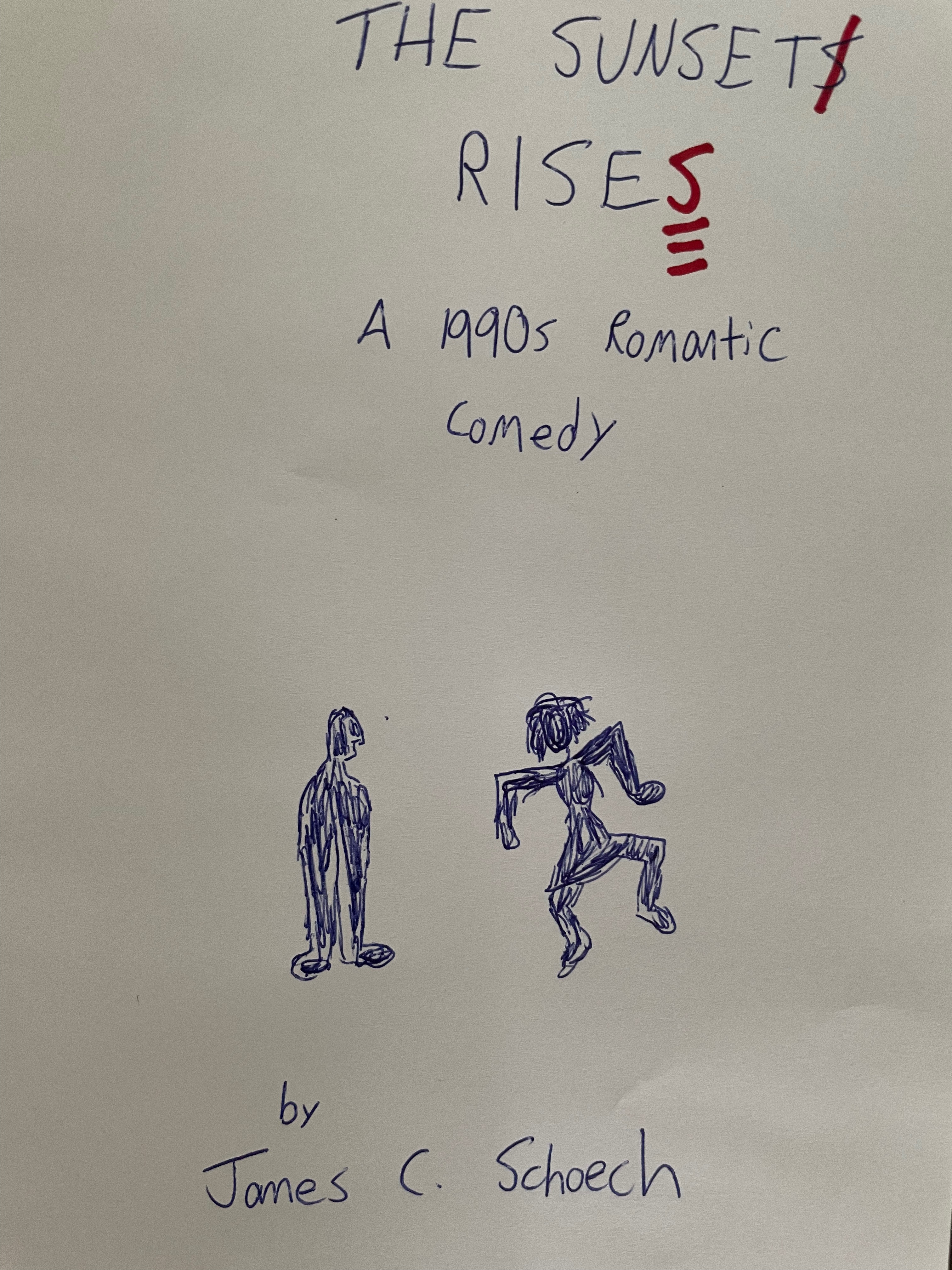
I went to the website 99Designs and sent in my artwork (or whatever that is) to a designer named Setz who always responded within 24 hours (that’s a big deal to me. I don’t expect an immediate response; 24 hours is good). This was the first cover design.
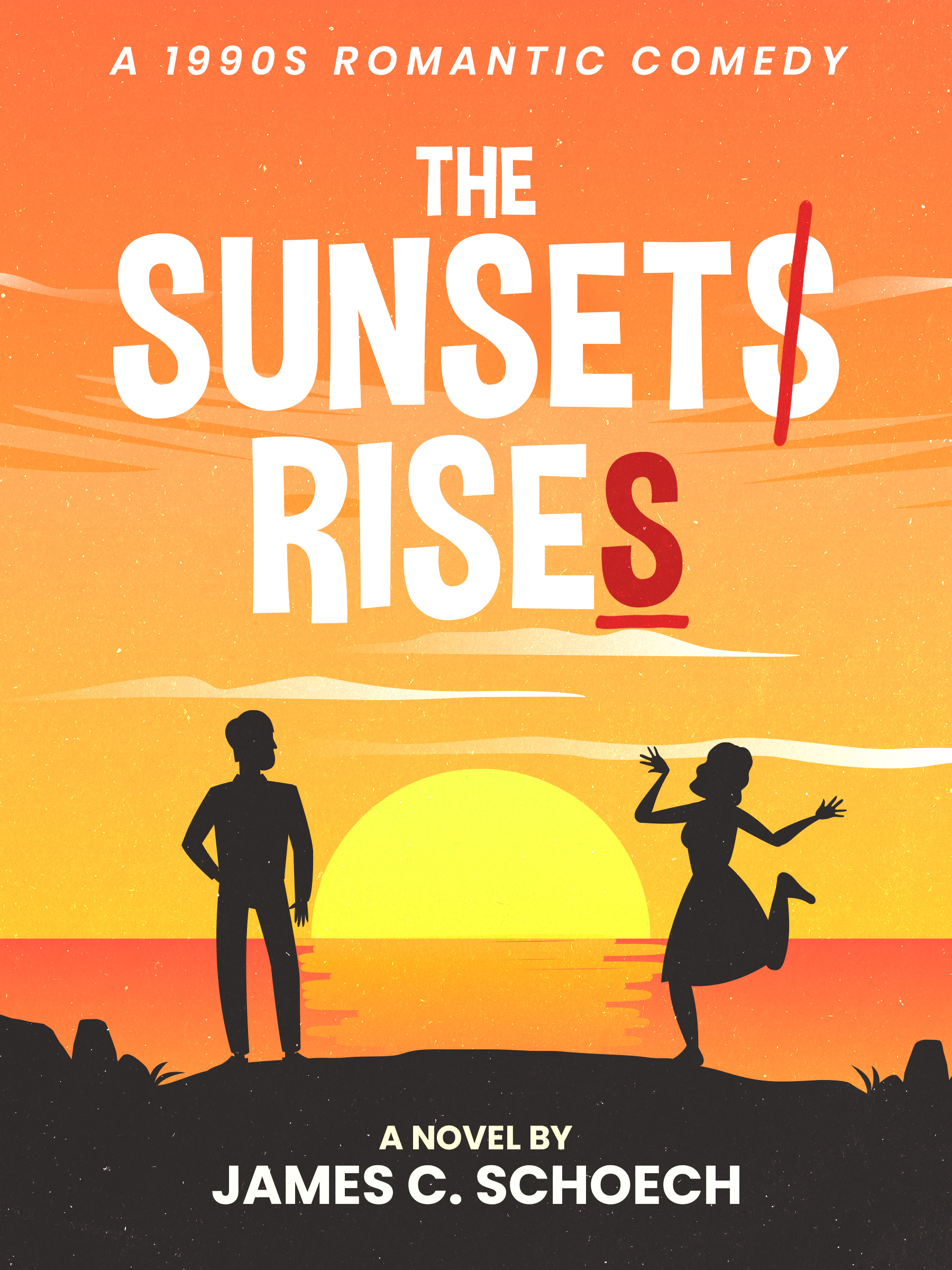
This was the right track, I thought. The editing marks definitely didn’t work, so I asked to see just a normal title.
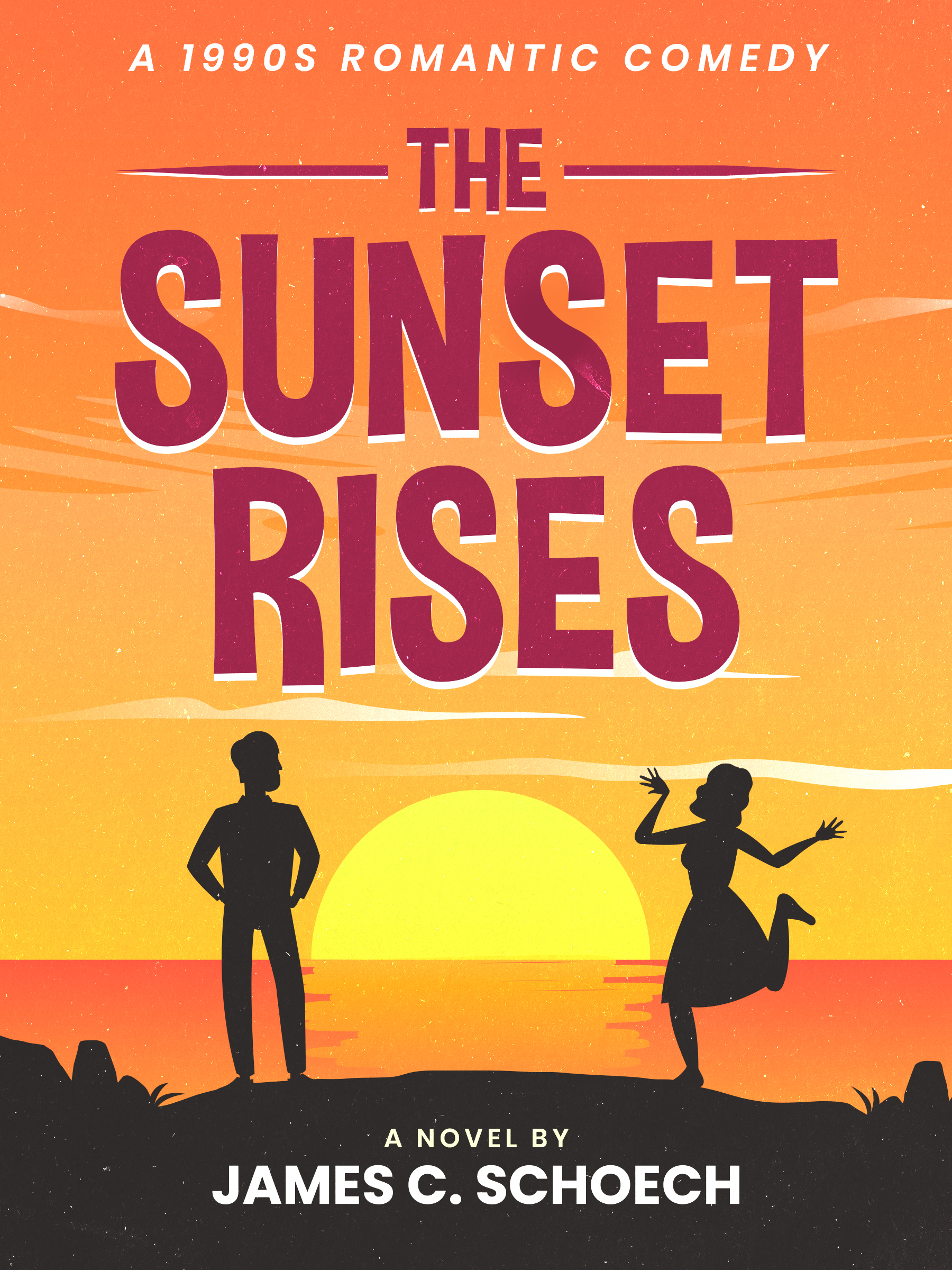
Much better. But I wondered if the dancing female looked more 1950s or 1960s than 1990s, so I asked for an “updated” version.
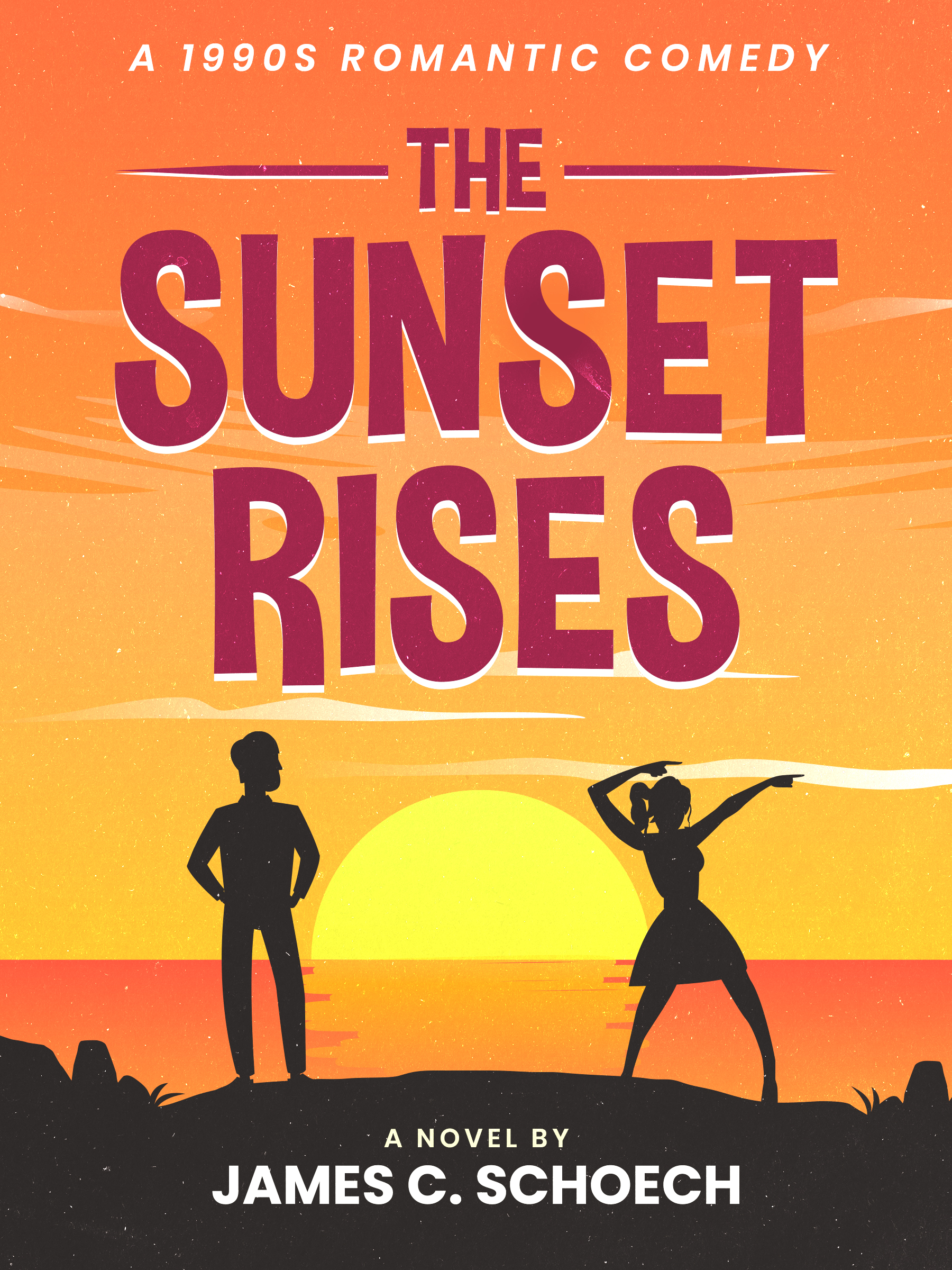
Yes! Then I asked for a lower case ‘s’ in ‘1990s’ so that the ‘s’ didn’t look like a 5. And I asked for the color to be filled in a little more. I might have been getting nitpicky at that point, but Setz still came through within 24 hours.
This was it! I was happy.
Oh yeah! I can’t forget the back and front cover spread.
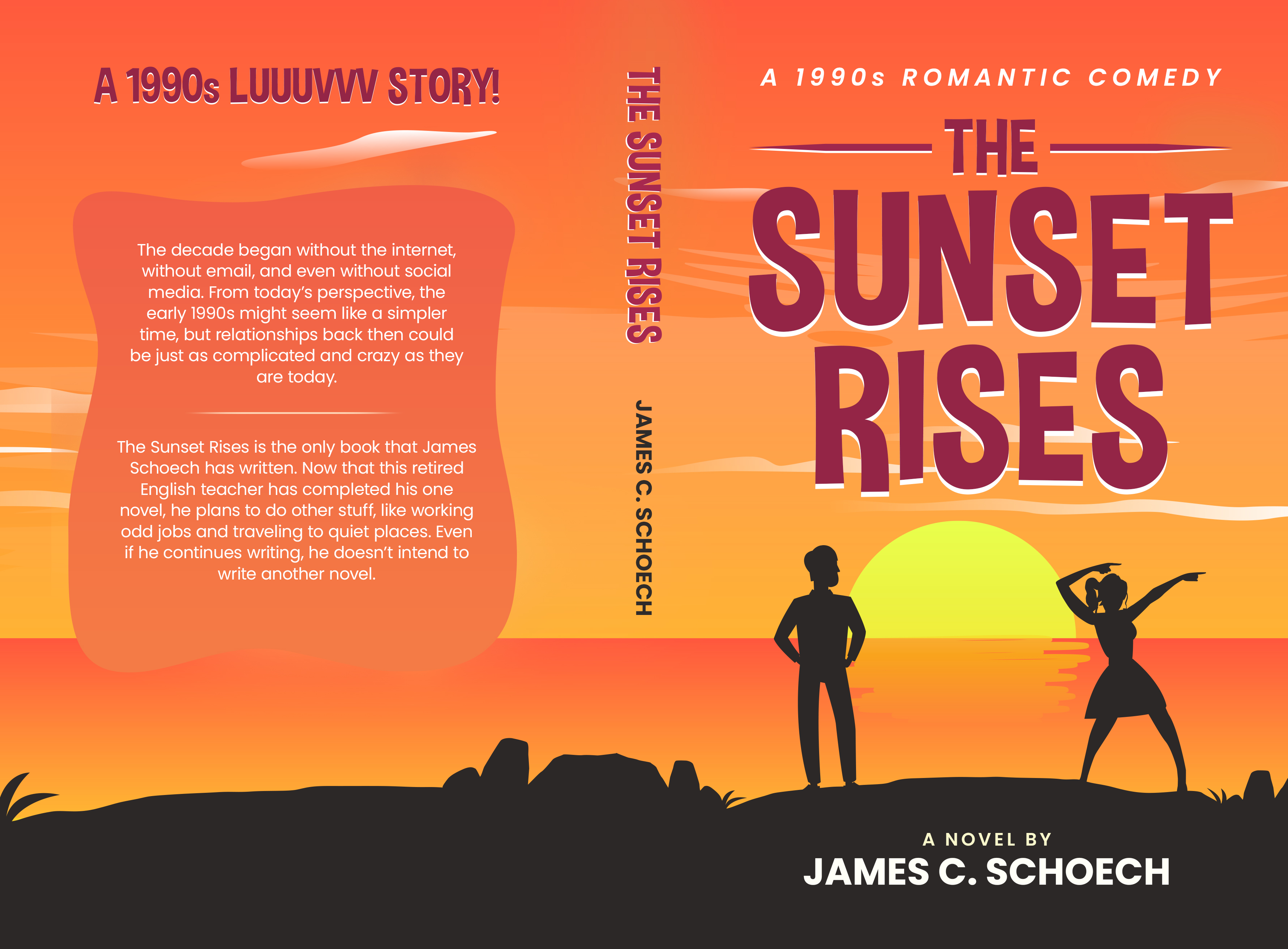
Of course, you can find The Sunset Rises, A 1990s Romantic Comedy here on Amazon!!
Or you can buy it below from the ‘trunk of my car.’
The Sunset Rises: A 1990s Romantic Comedy
Get a signed copy of my one and only novel, The Sunset Rises: A 1990s Romantic Comedy. Free delivery in the United States!
$10.00
And for more about The Sunset Rises: A 1990s Romantic Comedy…
The Main Character Of My Novel Is Not A Simp!
At Least I Know That My Book Doesn’t Suck!
Why Did I Write A Romantic Comedy When I Don’t Read or Watch Romantic Comedies?
Yeah, even I have to admit that this ending is a bit anti-climactic.
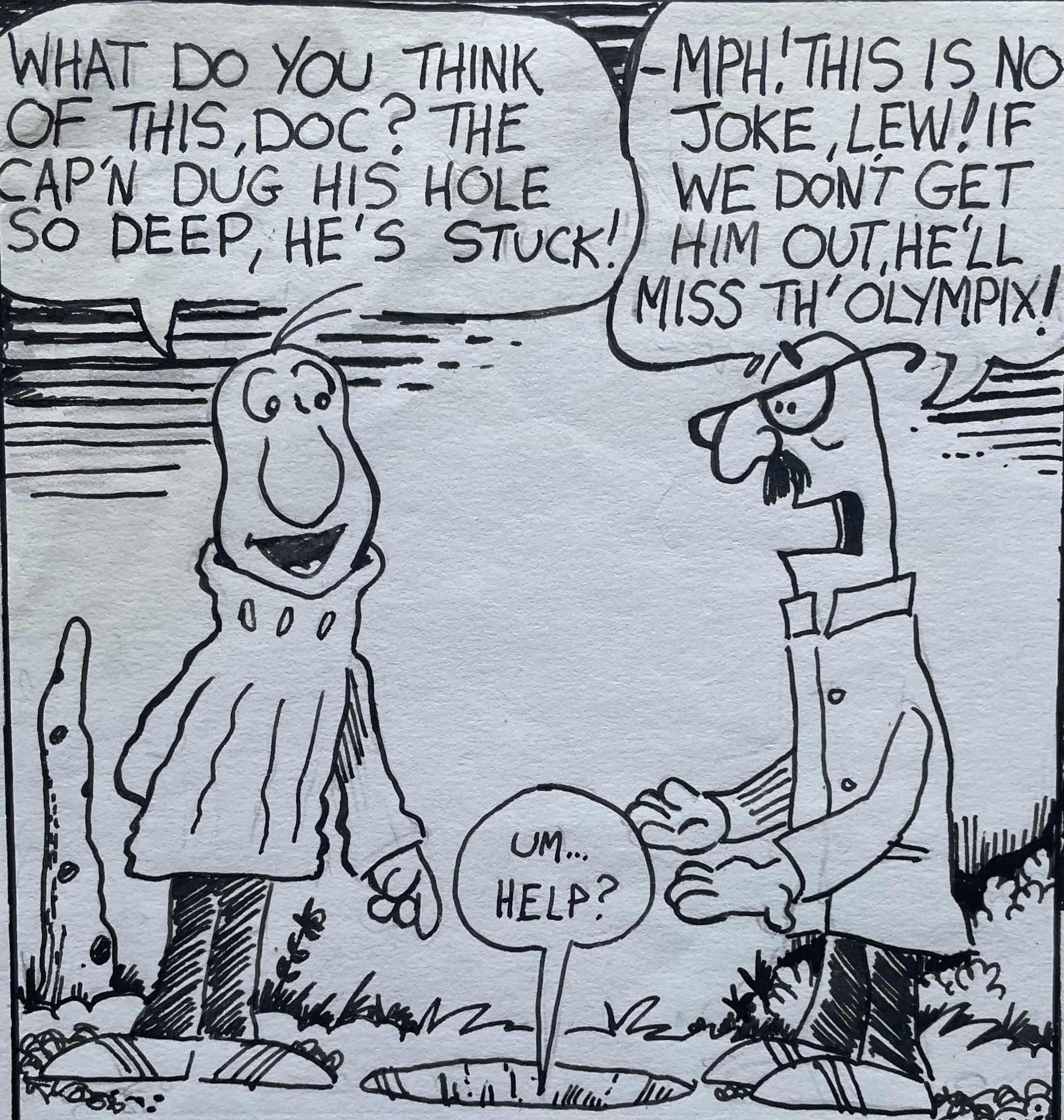
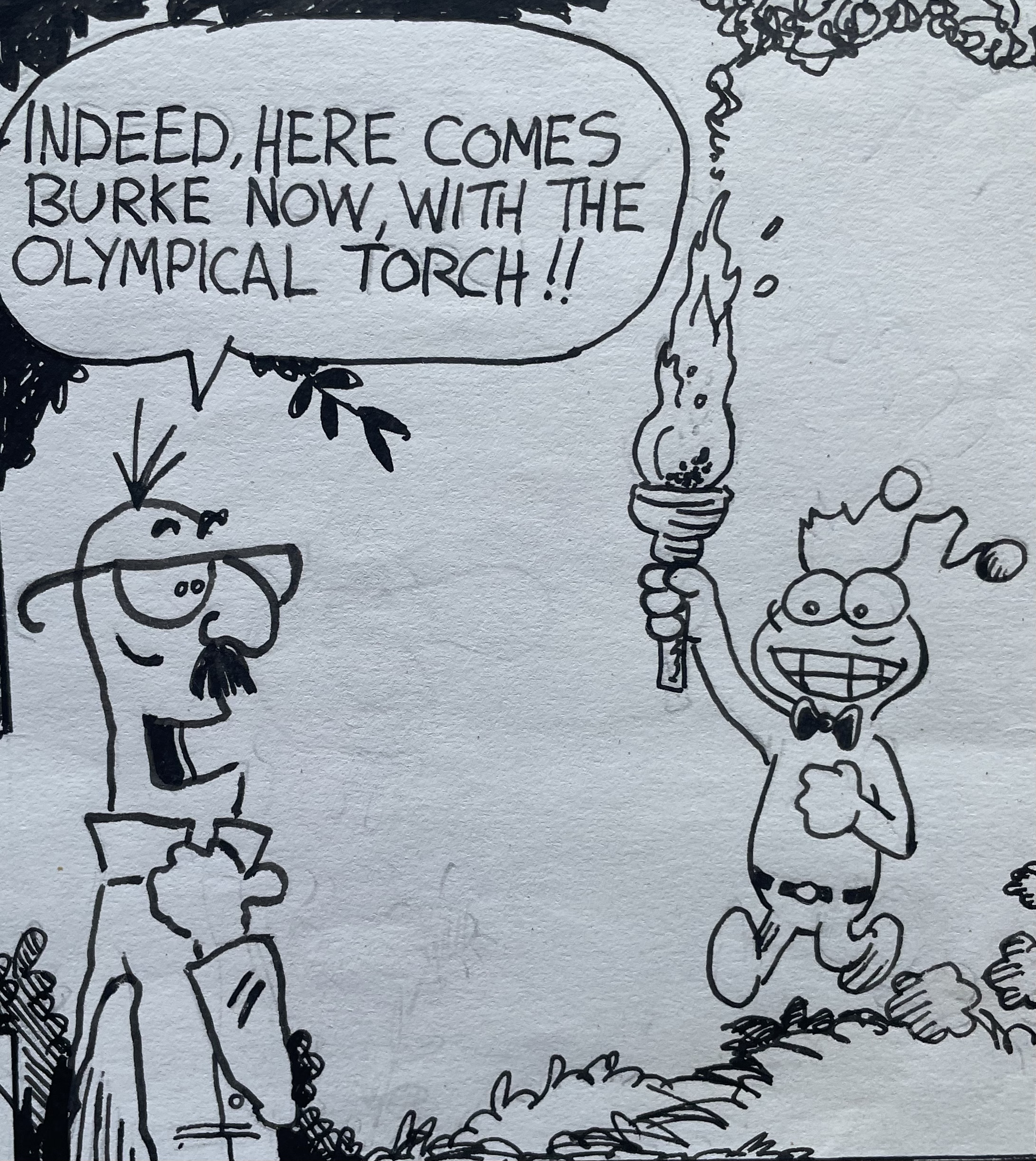
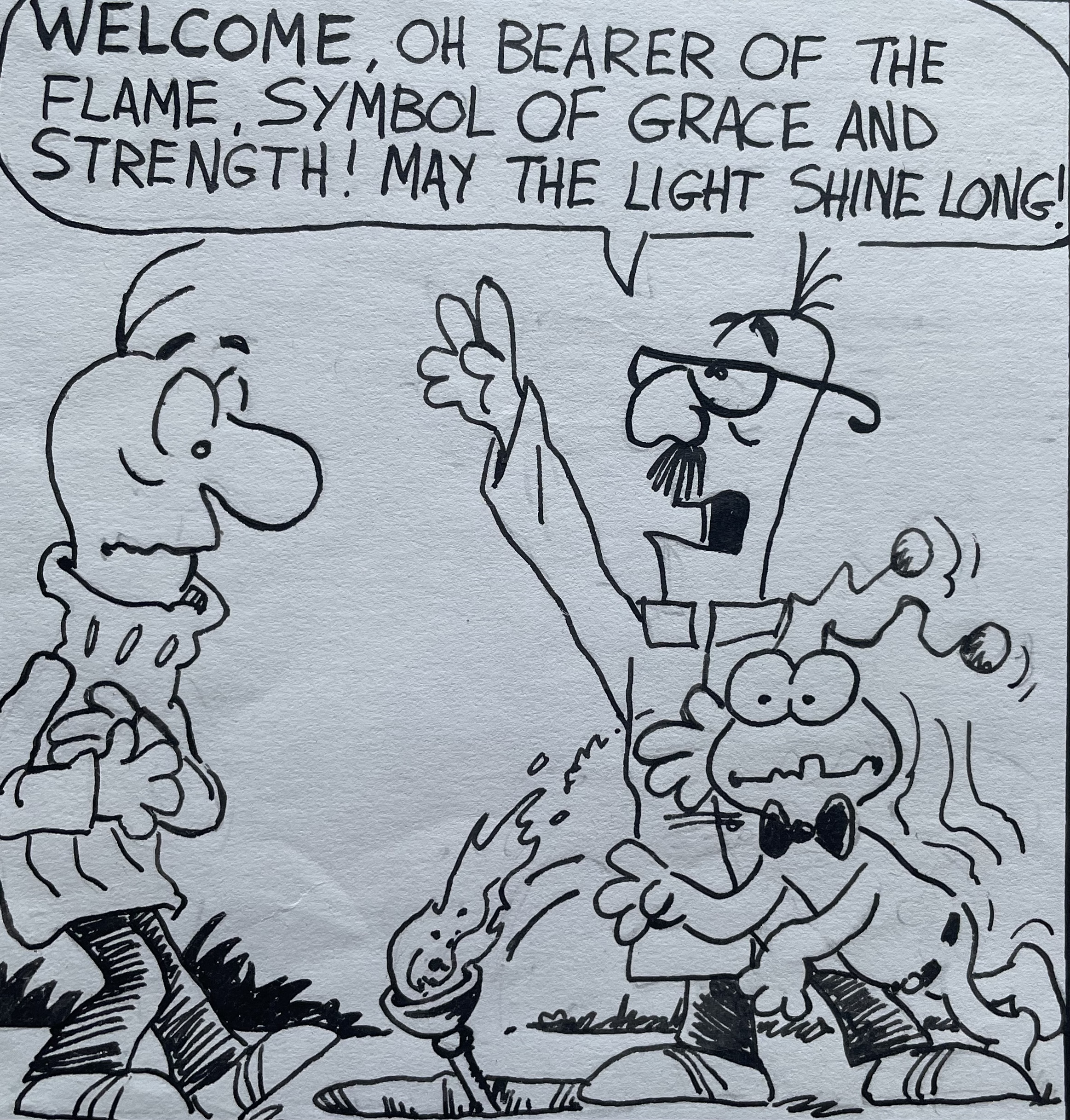
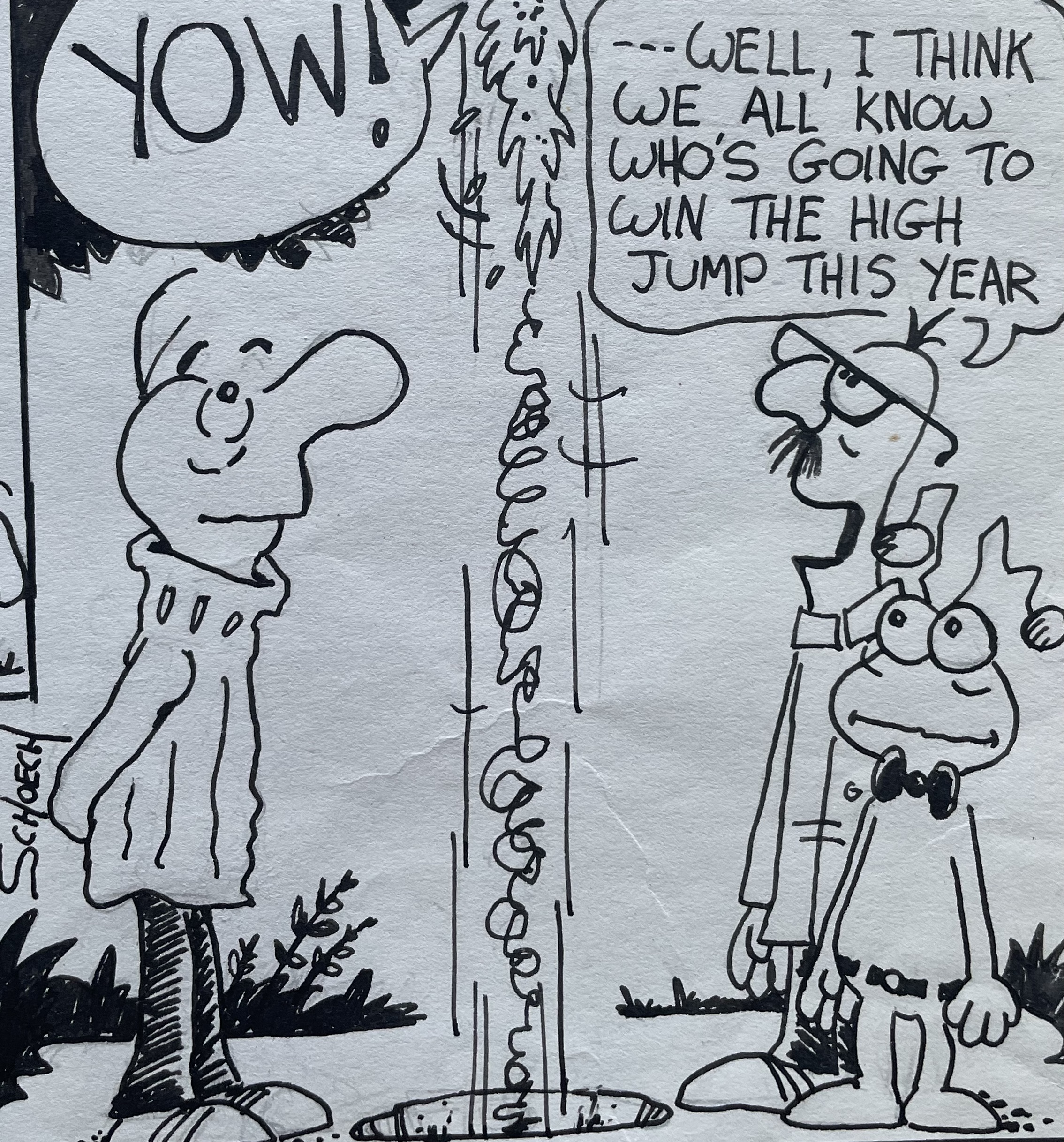
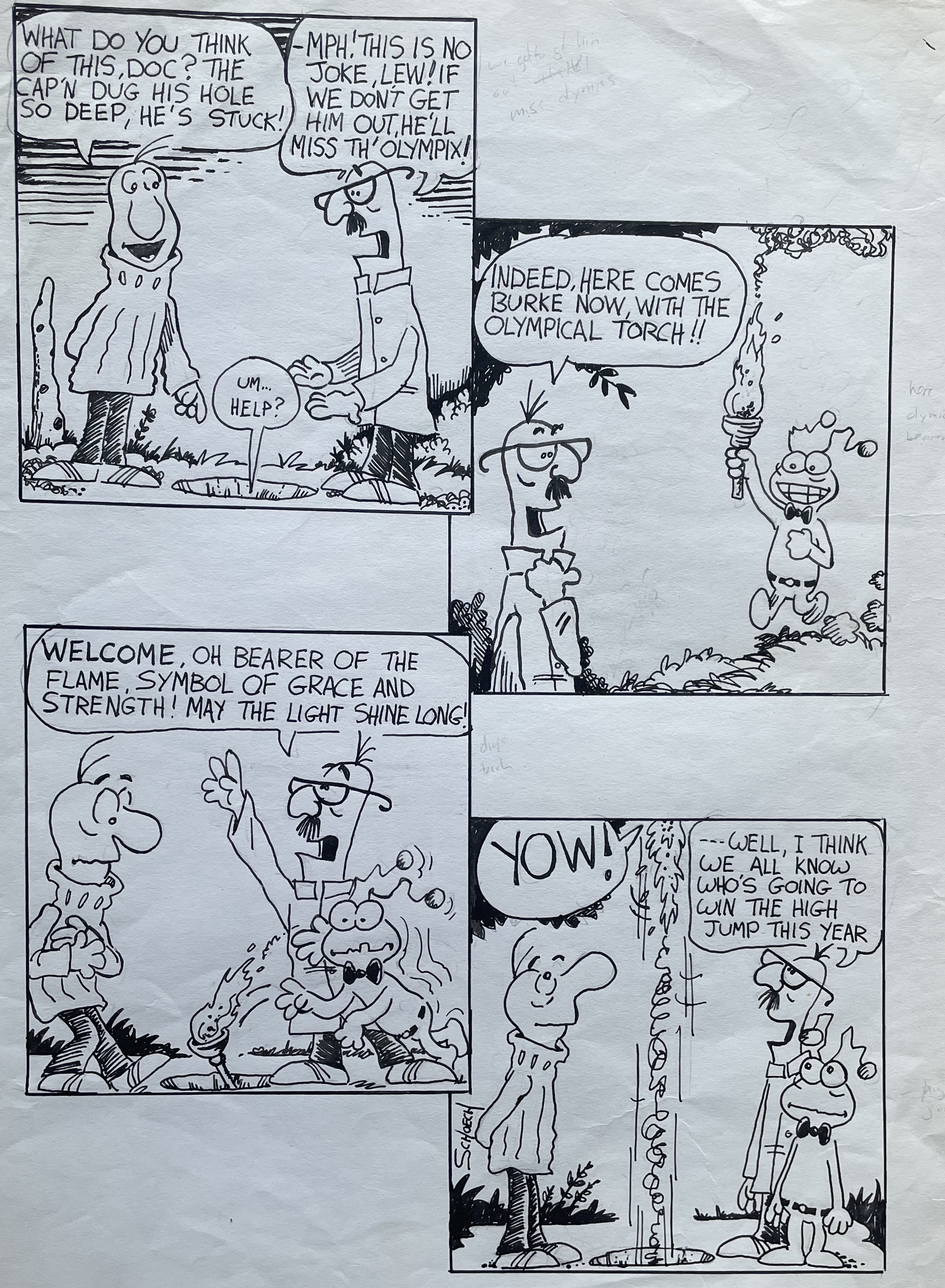
That’s it! No full-cast goodbye cartoon. No explanation of what happened to Captain Calloway. The last we see of Captain Calloway in this episode, we don’t even see him. In fact, we haven’t actually seen Captain Calloway since Episode 21. What a rip-off! Even Charlie Brown was treated better than this. Poor Captain Calloway.
Anyway, my older brother left our hometown and moved to the East Coast in the middle of 1979 for a new job that didn’t work out for very long, and he never continued Calloway the Castaway. He didn’t stop cartooning, though. And I’ll get to his next phase of cartooning next week.
Long live Calloway the Castaway!
For more Calloway the Castaway, back when he was treated with respect, start at The Lost Adventures of “Calloway the Castaway” Episode 1!
Not sure what’s going on? Read the current storyline with Captain Calloway’s final physical appearance from the beginning below.
The Lost Adventures of “Calloway the Castaway” Episode 20 .
And come back next week for the first episode of… Dummo Mouse!?!?

I have a disagreement with Artificial Intelligence. It started when I typed the question “Is ‘crap’ a bad word?” into a search engine, and the following response came up at the top of the page:
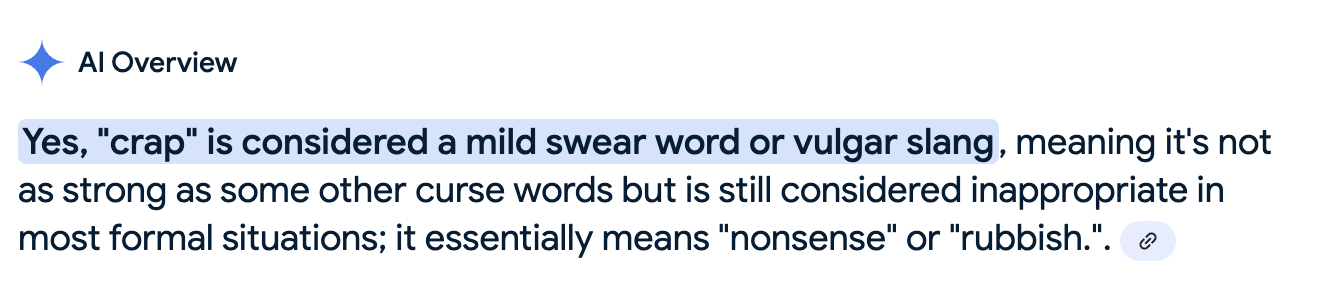
My first thought was, “I disagree. You suck, A.I.”
My second thought was, “How can ‘crap’ be a bad word when “it essentially means ‘nonsense’ or ‘rubbish'”?
Most bad words have to do with bodily functions, sexual references/body parts, or outright curses/slurs. ‘Crap’ refers to garbage. Its only connection to other bad words is that ‘crap’ has four letters in it, so people think of it as one of the four-letter words.
Even ‘crap’s etymology shows that centuries ago ‘crappe’ meant garbage. It’s not the same thing as the word ‘sh*t.’ (I don’t know why I still self-censor stuff on my own blog when everybody knows what I mean). Even worse, the A.I. answer was incomplete because it leaves out an explanation of the necessary components of a bad word. This is Incomplete Artificial Intelligence, otherwise known as I.A.I.
Another problem with the A.I.’s answer is that it makes people’s opinions part of the equation. ‘Crap’ is a bad word because people say it’s a bad word. That’s the type of gibberish that leads to fluff philosophical beliefs like “perception is reality” when, in reality, reality is reality, and individual perceptions by themselves are wrong most of the time.
To be fair to A.I. (I don’t know if I have to be fair to a computer program), it did state that ‘crap’ is “considered a mild swear word or vulgar slang.” It did NOT outright say that ‘crap’ was a bad word. So now we have A.I. hedging its beliefs. This is just getting worse. I didn’t ask if ‘crap’ was considered a bad word. I asked if it actually is. Artificial Intelligence. Pffft.
I grew up believing that ‘crap’ was a bad word and that it meant ‘waste or feces,’ but when I looked up the etymology of ‘crap’ in a dictionary years ago, I realized that I had been wrong all that time. And I was glad that I was wrong. I like saying ‘crap.’ And since more people will trust A.I than will trust me, I want A.I. to agree with me.
Unfortunately, A.I. sucks. But at least A.I. knows that it sucks.

Here’s the blog post that inspired my question to A.I.:
*****
A.I. did not write my ONE novel! I wrote it all by myself, and you can find it here on Amazon!!
Or you can buy it below from the ‘trunk of my car.’
The Sunset Rises: A 1990s Romantic Comedy
Get a signed copy of my one and only novel, The Sunset Rises: A 1990s Romantic Comedy. Free delivery in the United States!
$10.00
More related blog posts:
Don’t Change the Meaning of Literally
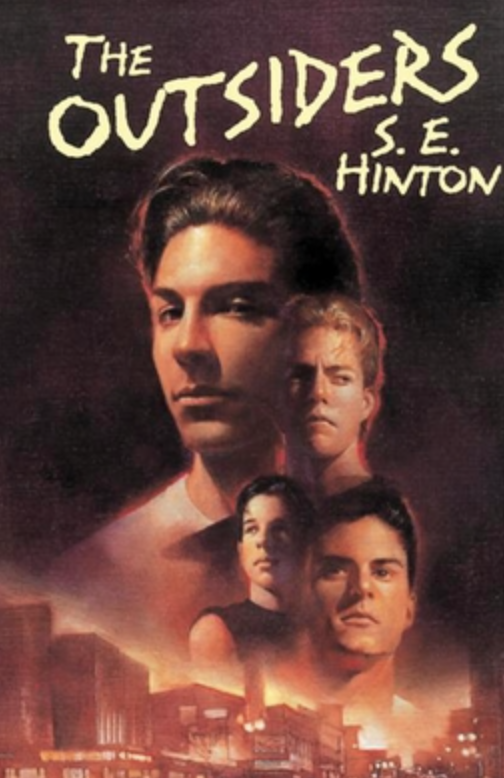
The Outsiders by S.E. Hinton might be the BEST YA NOVEL EVER!!! When The Outsiders was published in 1967, Young Adult fiction didn’t really exist. Bookstores didn’t have YA sections. All the books that weren’t meant for adults were in a kids’ section. If you were a teenager looking for a ‘good’ book, you wouldn’t find it in the kids’ section. If you wanted the good stuff, you had to read what the adults read.
I’m not saying that The Outsiders changed that, but The Outsiders helped. It’s a good book (that’s my book review). I recommend it (that’s a bonus to my book review). Almost everybody likes The Outsiders.
I even liked teaching The Outsiders with my 8th grade students before I retired. The students generally enjoyed The Outsiders (though they weren’t always wild about the essay assignments that came with it), and the book has enough literary weight to justify it being in the curriculum. I appreciated the literary references, and I had fun explaining why Pony Boy read Great Expectations while Johnny liked Gone With The Wind and Darry read The Carpetbaggers. Haha. The Carpetbaggers. Haha. You ought to see what I think about The Carpetbaggers .
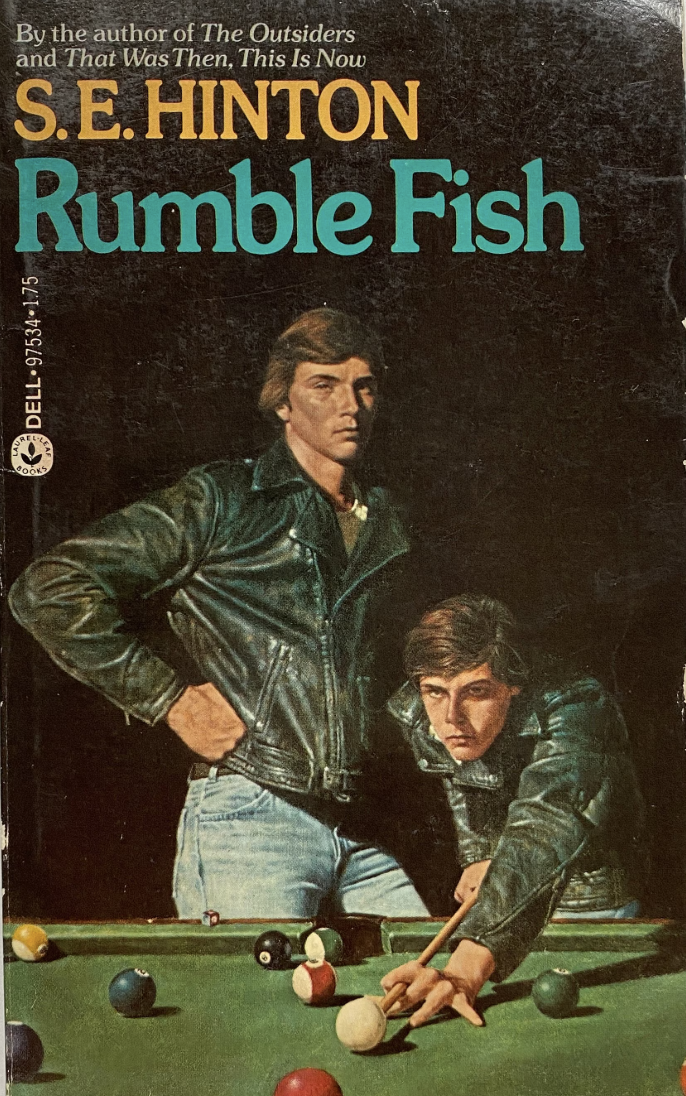
S.E. Hinton wrote a bunch of books as an adult, and none of them that I’ve read come anywhere close to the depth and details that The Outsiders had. I’m not going to go into those details too much because it would be wasted effort. Hardly anybody would read all of it, and anybody who has read S.E. Hinton books probably knows what I’m talking about. Plus, I don’t care enough to make that kind of effort. I’m just wondering.
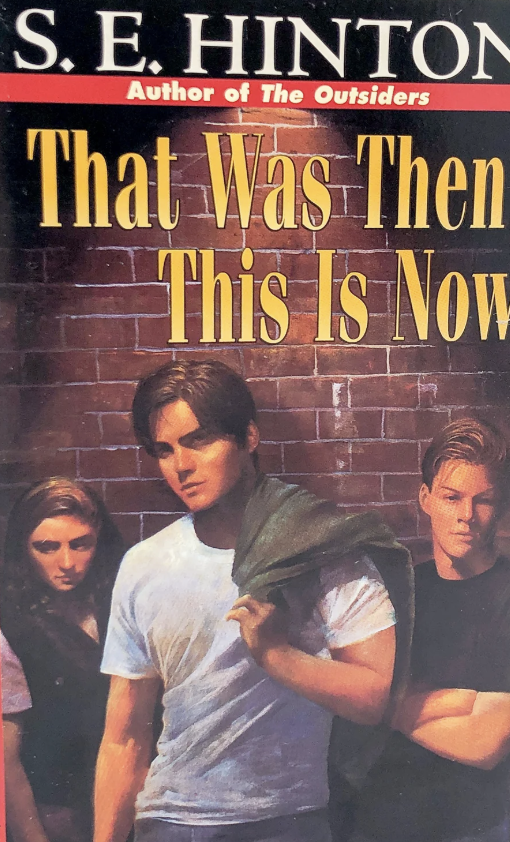
I’m treating this like I treated the argument about who was more important to the creation of Marvel Comics in the 1960s, Stan Lee or Jack Kirby. I just looked at what Jack Kirby created by himself and what Stan Lee created by himself, and I had my answer. With S.E., we can look at The Outsiders, which she allegedly (I’m kidding) wrote when she was around 16, and then look at all the novels she wrote as an adult, and we can see the difference.
I’m not saying that S.E. Hinton DIDN’T write The Outsiders. I just wonder if maybe somebody possibly helped her out and wasn’t credited. Maybe it was Truman Capote (that’s a To Kill A Mockingbird joke). Maybe it was someone else in the book publishing business. I don’t know who it was. And if she had help, that person should get some credit. Then again, that might damage the ‘story’ that a 16 year-old girl wrote this, and the publishing world can’t have that. It’s a good ‘story.’
Even if S.E. Hinton didn’t write The Outsiders by herself, I wouldn’t think of SE Hinton as ‘fake’ like some people think Helen Keller was ‘fake’ or the the moon landing was ‘fake.’ Even if Helen Keller didn’t really accomplish everything she was said to have accomplished (it WAS in a movie, and movies never embellish the truth), it still makes a cool story. Even if the U.S. never put men on the moon, it was a cool story, and it gave the U.S. a win when it needed one. In some situations, you don’t mess with a good ‘story.’
I’m not trying to bash S.E. Hinton or outright make accusations. I know what happens to people who go against the ‘story.’ They’re called ‘crazy.’ They ‘commit suicide.’ Even worse, the algorithm shuts them down. And 50 years later, people(sometimes, not always) look back and think ‘maybe that loon had a point.’
And remember, asking a question is not the same thing as making an accusation. I’m not accusing S.E. Hinton of secretly having help writing The Outsiders. I’m just curious about the disparity in quality between the The Outsiders and the novels she wrote as an adult. I’m just asking the question. I’m just wondering.
I SAID I’M NOT ACCUSING HER OF ANYTHING!!!
Here’s my ONE novel! I wrote it all by myself (you know what I mean), and you can find it here on Amazon!!
Or you can buy it below from the ‘trunk of my car.’
The Sunset Rises: A 1990s Romantic Comedy
Get a signed copy of my one and only novel, The Sunset Rises: A 1990s Romantic Comedy. Free delivery in the United States!
$10.00


 Dysfunctional Literacy