Thanksgiving is a time to appreciate family and friends, but since I’m a book/writing blogger, I’d like to focus a moment on authors for whom I’m thankful. I appreciate that I live during a time when so many authors can publish a wide variety of books, so many that a reader’s selection is limitless.
I’m thankful for James Patterson writing so many cheesy books that I always have something easy to critique on my blog. I’m thankful for authors like Dickens, Twain, Tolkien, Howard, Christie, Rowling, and many others who have given us bibliophiles countless hours of cheap entertainment and enlightenment.
But most of all, I’m thankful for Stephen King.

 (image via Wikimedia)
A few weeks ago, a friend of my wife came over unannounced and uninvited with her family. Any visitors we get are because of my wife. I don’t have friends, so nobody comes over to see me. My wife has lots of friends, and sometimes we end up entertaining families of people whom I barely know. Most of the time I don’t mind, but I don’t like it when the visitors are unannounced and uninvited.
In this case, the family had a teenage son who, according to his parents, is addicted to video games and hates to read. He’s capable of reading, my wife’s friend said, but he won’t do it unless it’s a school assignment.
“At least he completes his school assignments,” I said to my wife’s friend.
“Yeah,” the son said to his mom, but she gave him a dirty look.
I could sympathize with…
View original post 812 more words

Tom Hanks has had a decent career outside of writing. He’s acted in a couple good movies. He has won a couple awards. His son is on a TV show. Nobody has accused him of sexual assault yet. He has stayed married for a while, I think. By Hollywood standards, he’s doing alright.
Now he’s written a collection of short stories called Uncommon Type: Some Stories. Normally I roll my eyes at celebrity books, but I decided to give his a chance. After all, he’s Tom Hanks. He didn’t write a children’s book. It’s not a political book. And it’s not a Hollywood insider book. It’s a book of short stories. That’s an unusual approach for a celebrity, and I appreciate unusual approaches.
I know nobody cares what I think of Tom Hanks’s writing. Fans of Tom Hanks won’t care if I don’t like it because they like Tom Hanks. Tom Hanks doesn’t care because he’s rich, even without his writing. At least, he shouldn’t care.
But maybe he does. Maybe he’s just as insecure about his writing as every other writer. That would be funny, one of the most successful actors of a generation nervously reading reviews of his book.
After a glance of his first short story “Three Exhausting Weeks,” I’ve decided that Tom Hanks should not write in the 1st person point-of-view. That is my only criticism. Since I can picture Tom Hanks in every phase of his life, I visualize the narrator of this story as Tom Hanks. Even if the narrator had been female, I would have pictured her as Tom Hanks. That’s not necessarily his fault. It’s the price of being Tom Hanks. When you’re Tom Hanks, a lot of readers might visualize your protagonist as Tom Hanks.
Here is a scene where the 1st person narrator is being seduced by a long-time friend:
“You know what?” she said to me. “It’s Sunday.”
“I do know that,” I told her. “I live in the moment.”
“I admire that about you. Smart. Caring. Easygoing to the point of sloth.”
“You’ve gone from compliments to insults.”
“Change sloth to languorousness,” she said, sipping wine. “Point is I like you.”
“I like you, too.” I wondered if this conversation was going someplace. “Are you flirting with me?”
“No,” Anna said. “I’m propositioning you. Totally different thing. Flirting is fishing. Maybe you hook up, maybe you don’t. Propositioning is the first step in closing a deal.”
While I was reading this scene, I thought, of course the woman is flirting with Tom Hanks. Every woman would flirt with Tom Hanks. Even women who don’t flirt would flirt with Tom Hanks. My wife would flirt with Tom Hanks. I’d flirt with Tom Hanks.
If this scene were in the 3rd person, maybe I could imagine a character who wasn’t sure if the woman were flirting with him. But this is Tom Hanks. Even if the character isn’t Tom Hanks, he’s still Tom Hanks.
Maybe Tom Hanks should write under a different name. Unfortunately, the book wouldn’t get the publicity and perhaps nobody would read it, and that would defeat the purpose of a celebrity book. If I were Tom Hanks, I’d want everybody to read my book too, so I’d put my name on it. But I’d write my stories in the 3rd person. At least the first story in the collection would be in the 3rd person.
*****
A few years ago, Tom Hanks wrote a piece about his love of typewriters. I gently mocked it because he used his op-ed opportunity to gush about typewriters when there were other issues he could have talked about. I’m sure he has some uncommon typewriters in his collection. Maybe he used an uncommon typewriter to write these stories. Now he has a book called Uncommon Type. I’m sure it means something.
*****
Here are two books that I wrote under a different name. Maybe I’m Tom Hanks. Okay, I admit, I’m not Tom Hanks, but what if I were?
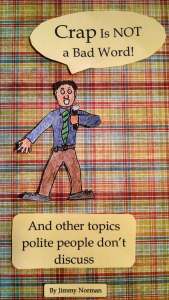

Now only 99 cents each on the Amazon Kindle!
The upcoming holidays can mean a little more time to read than normal. If you’re traveling, maybe you can read in the car or on the airplane (but not if you’re the driver or the pilot). If you’re at a party or a family gathering, you can pretend you’re checking messages while you’re really reading a book and not seem rude. Maybe, just maybe, you’ll get a few minutes to yourself where you can actually sit down at peace and read.
I’m pretty sure next week I’ll have a little extra time, and I need a good book to read, a sure thing. The last time I asked for a book recommendation, several people suggested The Rosie Project by Graeme Simsion. That worked out great because both my wife and I read it, and we rarely read the same books.
Since I might have some reading time and I don’t want to waste it on just any bestseller, I ask again:
Has anybody read any good books lately?
 These are all good books, but I’ve read them, and I’m not in the mood to read them again.
I have a little bit of extra time this week, so I’d like to read a book, maybe two, but I don’t want to waste my time with a book that isn’t any good. I went to the book store a couple days ago and walked out with nothing, not because I’m a cheapskate (Actually, I am a cheapskate, but that wasn’t the reason I walked out with nothing), but because I wasn’t sure I wanted to commit myself to any of the books I looked at.
I don’t have reader’s block. Reader’s block is when nothing interests me. This is a little different. I think I’m getting too hyper-critical. I’m getting annoyed at bad dialogue in novels. I’m losing interest in long paragraphs with lots of description. I get suspicious…
View original post 473 more words
Here’s a recent MUST-READ list that was spotted on a weekly entertainment website. This new MUST-READ list was titled “ 12 Must-Read Books If You Love Murder on the Orient Express.”
That’s a lot of pressure to put on people just for enjoying a book or movie. If they love Murder on the Orient Express, now they MUST READ 12 other books, some of which might not be that good.
For example, Before the Fall by Noah Hawley was on this MUST-READ list. Before the Fall was okay, but I wouldn’t call it MUST-READ!!! Now I can never trust another MUST-READ list again.
And that’s the problem with MUST-READ lists.
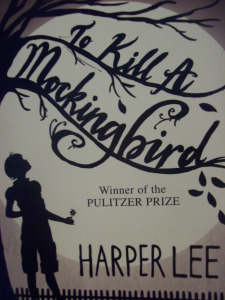 This novel is on almost every must-read list, so it must be pretty good.
Whenever I see a Must-Read Novels list, I automatically don’t want to read the books on the list. It’s a stupid knee-jerk reaction, I know. The authors probably didn’t ask for their books to be put on the list. I just don’t like being told what to read anymore.
There are only two legitimate reasons for a book to be a “must-read.” You fail a class if you don’t read it. Or you get fired from a job for not reading it. I don’t have to worry about failing classes anymore, and I don’t have to read books for my job (I have to read stuff that’s worse than most books), so there are no must-read books anymore.
I understand that using the term must-read is hyperbole. I have nothing against a little hyperbole. And I usually don’t like…
View original post 655 more words
Going to law school is a big deal for a lot of people. When you ask ambitious high school kids what they’re going to be, they usually answer doctor, engineer, or lawyer. Out of those three professions, lawyer is the career that seems to make the most interesting fiction. You don’t see too many bestselling novels about doctors or engineers.
Maybe you can make the case for doctors, but I think there are more lawyer novels out there. I haven’t done the research, though. I’m just making this up.
Anyway, I was once planning to go to law school and I didn’t, so whenever I feel bad about it, I read a John Grisham novel. Grisham has built a successful writing career out of depicting shady lawyers, unethical, law-breaking (and any negative adjective that can make me proud not to be a lawyer) ambulance-chasers.
But that’s not what makes me glad I didn’t go to law school. Sometimes Grisham shows that law school can be really difficult with lots of debt and no hope of getting a good job unless you’re from a prestigious school. I don’t mind hard work (but I avoid it unless it’s necessary), and I don’t like debt, and I really don’t like a shaky job situation.
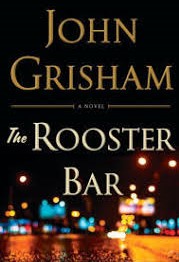
Reading the first couple chapters of The Rooster Bar by John Grisham makes me glad I didn’t go to law school. At the beginning, a couple guys (Mark and Todd) are finishing their final year at a cookie-cutter law university and have little hope of well-paying jobs and no hope of getting out of debt. I’m not sure what their plan is going to be because it’s taking a long time to set up the novel. And that’s the problem so far with The Rooster Bar.
Lots of exposition and little characterization.
It’s not a good sign when even the dialogue is exposition. Here is part of the conversation at a bar between Mark and Todd about Gordy and Zola (two characters who hadn’t been introduced yet):
Mark took a long drink of beer and shook his head. He asked, “Zola’s back already?”
“Yes, evidently she and Gordy hurried back for a few days of fun and games, though I’m not sure they’re having much fun. She thinks he quit his meds about a month ago when we were studying for finals. One day he’s manic and bouncing off the walls; then he’s in a stupor after sipping tequila and smoking weed. He’s talking crazy, says he wants to quit school and run off to Jamaica, with Zola of course. She thinks he might do something stupid and hurt himself.”
“Gordy is stupid. He’s engaged to his high school sweetheart, a real cutie who happens to have money, and now he’s shacking up with an African girl whose parents and brothers are in this country without the benefit of those immigration papers everyone is talking about. Yes, the boy is stupid.”
“Gordy’s in trouble, Mark. He’s been sliding for several weeks and he needs our help.”
Mark pushed his beer away, but only a few inches, and clasped his hands behind his head. “As if we don’t have enough to worry about. How, exactly, are we supposed to help?”
They keep talking, but they don’t really think of a way to help their friend. I’m guessing that whatever they come up with, it’s going to make the situation worse.
John Grisham can write very tight action scenes and can set up much more interesting situations than this with his exposition. The opening of a recent novel of his had some clear descriptions where several characters were working together in different locations to commit a crime. Grisham is good at stuff like that.
But so far this dialogue sounds really unnatural. It’s tough for me to read a novel with bad dialogue.
Maybe the rest of the book picks up, but it’s okay if it doesn’t. Even if I don’t finish reading The Rooster Bar, I’ll always be glad that I didn’t go to law school. That’s something nobody can take away from me. Thank you, John Grisham, for helping me maintain my self-esteem.
Nobody likes to be called a cheater. Even cheaters will deny that they’re cheating. It doesn’t matter if they were caught cheating on a test or cheating on a significant other, they rarely admit it.
I don’t consider myself a cheater. I always completed my own tests (when I lived through that period when I had to take tests), and I’ve always been faithful in my relationships.
I admit to reading a few abridged versions of books in my time, though. I admit that I’m an abridger. But I was once told that reading an abridged book is cheating. That means I have to admit to being a cheater.
Or I have to justify reading an abridged book.
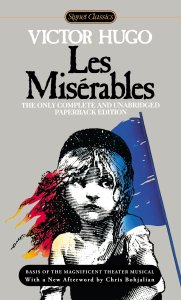 It’s too long, and most people don’t know how to pronounce it.
The problem with long books is that they take a long time to read. Most people, if given a choice, would rather read a short novel than a long one. At least, that’s what I think. I’ve never seen a stat for it, but I bet it’s true. It’s not necessarily a matter of laziness. With so much other stuff to do, it’s kind of inconvenient to read a book that’s too long, even if you like reading long books.
A few days ago I found an old copy of an abridged Les Miserables that I had read in junior high. This reminded me that even before the internet and cable television, I had other things to do besides reading long classics. Now that I think about it though, I didn’t have all that much to do, so I…
View original post 477 more words
A prominent politician has made news in the last couple days by by by publishing a letter to her teenage self . I don’t want to mention that politician’s name because people either love her or despise her and I don’t want to start a political spat with anybody.
I know, however, that writing a letter to your teen self is a bad idea. I tried it a few years ago, and wow, did it backfire!!
 (image via Wikimedia)
I’ve noticed recently that a lot of people are writing letters to themselves in the past. Usually, the letters are to their teenage selves because the teen years are almost always pretty rough. The letters are meant to be encouraging, I guess, or to offer advice, and I remembered my teenage self. He had some social issues and self-esteem issues and there was some family stuff going on, so he could have used some encouragement from his future self.
As intrigued as I was about writing a letter to my teenage self in the past, I knew I had to be careful with it. I didn’t want the letter to be very specific. There was a slight chance that my teenage self would read it, and any information that could change my past behavior might lead to incalculable alterations in history or cause a butterfly effect. If there’s one…
View original post 1,017 more words
I’m not above reading the occasional self-help book, but they usually don’t do me much good. The problem is that I never remember any of the advice after I’ve read the book. What good is a self-help book if I forget everything after I’ve read it?
It’s okay if I forget everything in a novel because that means I can read it again a few years later and be entertained. But a self-help book is worthless if I can’t remember the advice.
That’s why I stick with How To Win Friends & Influence People by Dale Carnegie. If I’m going to forget self-help advice, I want to forget the best!
 If the cover says it’s “the only book you need to lead you to success,” that’s good enough for me!
Just so you know, I didn’t decide to read How to Win Friends and Influence People by Dale Carnegie because I needed some self-help. Well, I might need help, but if I ever read a self-help book because I actually need help, I’m not going to admit that to anybody.
When I was a kid in the 1970s, the big self-help book was called I’m Okay-You’re Okay. That title rubbed me the wrong way because it implied that everybody was okay and even then I knew a lot of people who weren’t okay. I wasn’t even sure I was okay. Maybe the author and I disagree about what “okay” means. I’ve never read the book to find out. Sometimes I think I’m better off if my opinion is uninformed.
View original post 831 more words
“Should I read this?” my daughter asked, pointing to an obscure book with a drab cover of a snow man with a vulgar carrot sticking out.
She was looking for a book at B&M Booksellers and was wandering around aimlessly in the Fiction/Literature section. She used to complain about me doing the same thing, but I didn’t remind her of that.
“I know that book!” I exclaimed. I almost mentioned that I had written about it on my blog once, but she hardly ever reads my blog, and I wanted to keep it that way. We writers have more creative freedom knowing that family members, friends, and coworkers won’t read anything we put on our blogs.
“This?” she said. “You know this book?”
“He cheated to get it into book stores,” I said. “It’s a long story.”
The idea of me telling her a long story scared her off, and she moved along to find another book. But I still have the blog post I wrote.
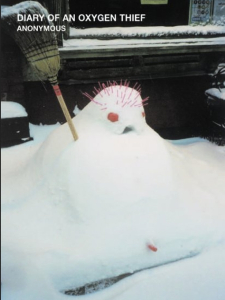 Sigh! Some snowmen will do anything for attention.
There are a lot of ways to cheat when you’re trying to sell a book. You can put cleavage (or a hot shirtless guy) on the cover. You can put profanity in the book title. You can put a humorous vulgar image on the cover. You can give yourself a gimmick pen name, or you can even pretend to be the opposite gender.
I’m not saying that cheating is wrong when it comes to selling a book. New authors have to do what it takes to grab readers’ attention, so I don’t have a problem with an independent author cheating to sell books. I call it cheating because these gimmicks often have nothing to do with the quality of the book, but the cheating isn’t necessarily bad.
The book Diary of an Oxygen Thief by some guy named Anonymous took a…
View original post 745 more words

For as long as I can remember, atheists have been trying to convince me there is no God. That’s okay, because all my life I’ve been going to church and have been immersed in religion, so it’s good to have some balance. I don’t talk about religion much, mainly because it’s personal and I don’t care about other people’s spirituality. I mean, I care, but I don’t start debates about it.
In Origin by Dan Brown, a character claims to have found proof that the teachings of all religions are “dead wrong.” When I read the character’s dramatic statement, instead of being intrigued, I thought, there’s Dan Brown being Dan Brown. And it brought back some pleasant literary memories.
After books like The DaVinci Code and Angels and Demons came out 10-15 years ago, there were a bunch of message board arguments about the accuracy of Brown’s books. For those of you who aren’t old enough to remember, before Facebook and YouTube, internet trolls argued about stuff on message boards that various media sites had. The arguments (usually about trivial matters) were nasty and vicious, and eventually most of the message boards were removed.
I didn’t participate in the online arguments about Dan Brown, but I read a few of them. I never knew which self-proclaimed experts were really experts. Most likely, none of them were because experts usually don’t resort to name-calling on message boards. But the arguments made for fun reading.
I didn’t take any of the arguments seriously. After all, I don’t get my history from historical novels. I don’t form my political views from documentaries. And I take everything I read in a Dan Brown novel with a grain of salt. I treat everything like a fantasy; in his world, everything he writes is true. That way, I can stay out of all the arguing about DaVinci and God and science and religion.
But I do like researching the locations that Brown writes about in his books. In this age of the internet, I don’t have to rely on the words that Dan Brown uses. And that’s good because sometimes his words are inadequate. That’s not a knock on Brown. He chooses some stuff that is difficult to describe. For example, in Chapter 1 of Origin, he describes The Guggenheim Museum in Spain:
Professor Robert Langdon gazed up at the forty-foot tall dog sitting in the plaza. The animal’s fur was a living carpet of grass and fragrant flowers.
I’m trying to love you, he thought. I truly am.
I’m trying to love the descriptions in this book. I truly am. But that’s a fairly lame description of something that could have been interesting. I’m not good at descriptions, so I can’t offer any suggestions. Maybe I shouldn’t criticize if I can’t do any better, but that’s what critics do.
Like I said, I don’t blame Dan Brown. This giant dog is art. It’s difficult to describe art. That’s why it’s art. Art depicts something that is difficult/impossible to put into words. But a giant jigsaw puzzle of flowers that form the shape of a dog should be verbally more interesting than what Brown came up with. Here’s another:
A towering black widow spider rose before him, its slender iron legs supporting a bulbous body at least thirty feet in the air. On the spider’s underbelly hung a wire-mesh egg sac filled with glass orbs.
Again, giant spiders are cool. How can a professional author NOT come up with a cool description of a giant spider? I mean, I know the book is about to get into that proof that the teachings of all the religions are dead wrong. But still, it’s a giant spider. The giant spider deserved so much more.
One last thing. It’s tough to read a Dan Brown novel starring Professor Robert Langdon without picturing Tom Hanks. I’ve never even seen the movies. I read the books before the movies came out. Even so, I still picture Tom Hanks. That might just be me. I picture Tom Hanks when I read a lot of books. The last time I tried to read Moby Dick, I pictured Tom Hanks. I think I was supposed to picture Gregory Peck.


 Dysfunctional Literacy