How To Choose a Book To Read… When There Are So Many Books To Choose From
*****
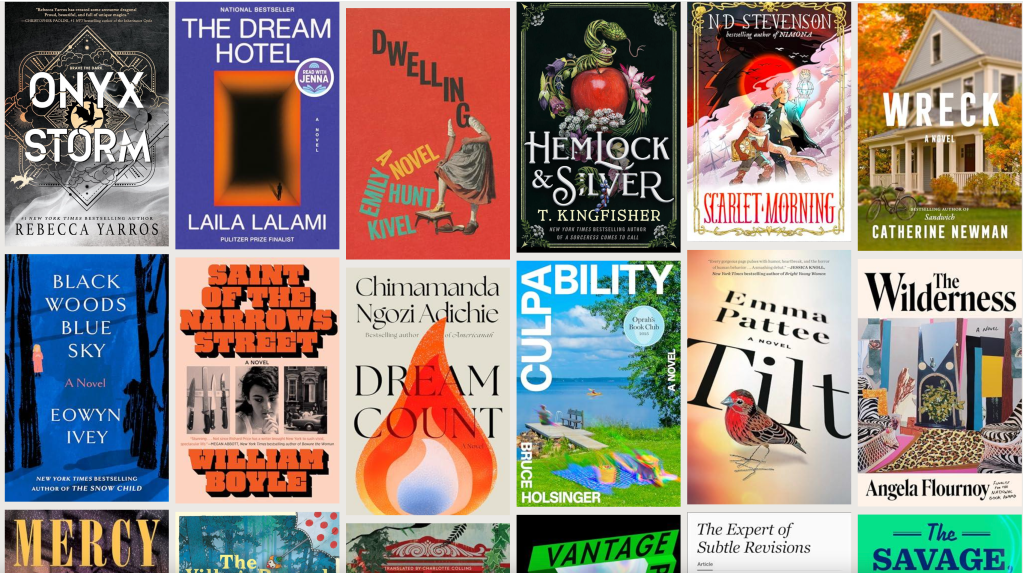
Choosing a book to read can be difficult sometimes because there are so many books to choose from. That makes sense. So many more books are available today than there ever have been before, and tomorrow there will be even more! And even more the day after that!
If you’re looking for something to read, you can choose from the vast collections in your local book stores (if you have any) to what’s in your local libraries (if you have any) to what you can find online (if you have access). You have recent books and all the books that have been published throughout history, including all the books written in languages you might not even be able to read.
That’s a lot of books. I’m pretty sure I’m not going to get to all of them, and I’m not going to try. But with so many books to read and so little time, how do I decide what read?
First of all, I usually avoid recent books. I have anti-recency bias. I’m not a fan of most new books. A lot of new fiction feels like it’s written by immature writers with little life experience. That’s not an insult. I purposefully didn’t become a fiction author because I knew my own life experiences (in some ways) were relatively limited and I’m not sure my insights into the human condition were that noteworthy. When I compare most of today’s fiction to my own writing, though, I feel better.
To navigate the never-ending abundance of books out there, I’ve developed a few rules that help me filter out the waste. These rules aren’t set in stone. They’re more like guidelines, but I like the word ‘rules’ better because I’m a former teacher and people seem to stick to rules better than they do to guidelines. Anyway, I’ve had these rules since I started blogging in 2011. Even though I’ve deviated from these rules a few times, they’ve worked pretty well for reading books without hurting my brain much. I probably wouldn’t still be writing this blog if I weren’t still reading books.
Rule 1- No More Than Three Books Per Author
I don’t read more than three books from any individual author. Yeah, I’ve broken this rule but not often. There are so many books and so many authors that I don’t want to waste my time on more than three books unless that author stands out to me. I’ve read enough Stephen King and John Grisham and James Patterson (James Patterson… haha) and Louis L’Amour and Tom Clancy. It’s not that these authors suck (well… some of them do); it’s that they’ve written so many books that it feels like they’re writing the same book(s) repeatedly.
Rule 2- No Incomplete Series
I don’t start a series unless I know for sure that it’s already done. I don’t want to wait a year or more for a book that resolves a cliffhanger. Cliffhangers tick me off anyway. I had to wait three years for the cliffhanger at the end of The Empire Strikes Back to be resolved. I don’t mind chapters with cliffhangers. I DO mind books with cliffhangers, especially if I purchased the book with my own money.
A book should have enough of a resolution so that the reader feels some sense of finality. Yes, the story can continue. Stories always continue. Life continues. When my story ends, somebody else’s story begins, and everybody else’s story continues on. I might not even have a story. I might be a side character in somebody else’s story. I might be an extra. I might not even be in a story. Baaaah.
Rule 3- Avoid Trilogies
Even if a series is complete, I rarely read a series that goes up to three books. If The Bible can be one book (or two books or even… you know what I mean), if The Lord of the Rings can be three books, then an author should be able to tell his/her story in three books or less. Any more than that, and the author is getting arrogant. It’s tough to imagine an author being arrogant, but it happens.
Honestly, I might read a trilogy if it’s legitimately a great story that is too big for one book. I recently saw the novel Shogun by James Clavell split into two hardcover volumes. I read the book (twice) as a one volume paperback. I’m not sure if the two volume version was a money grab or a way to make a hardcover accessible to weak-armed book readers. Either way, I was surprised the publishers didn’t turn it into three hardcovers and call it a trilogy. I’ve seen publishers pull stunts much worse than that. If Shogun had been split up into four books, I might not have read it.

Rule 4- Limit Genre Bias
Since I try to read only good books (or better books or best books), I don’t care much about the genre as long as the book is good. I’ve read mystery, thriller, historical, science fiction, fantasy, sports, even romance. I’d rather read a good back in an unfamiliar genre than a bad book from a genre that I like.
I also like one of a kind novels, the type where if you ask “What book is similar to this?” the answer is “Nothing.” Sometimes authors will write a one of a kind book but then follow it up with a sequel that’s just like it but not as good, thus ruining the one of a kind element of an original book. I think Lonesome Dove by Larry McMurtry is a one of a kind book, but then he wrote a sequel that ruined the original for me, so I’ve blocked it out. He never wrote the sequel. I don’t even remember the title because the book never happened.
Rule 5- Sample Many, Finish Few
This MIGHT be the most important rule (but I’m too lazy to change the order). With access to libraries and digital content, it’s easier than ever to sample and discard books. Gone are the days when you have to buy a book and then get stuck with a book that you think sucks. I know many/most books out there suck, but I’d rather know for sure than speculate. It’s better to know than not know, and it’s really better to know than to pretend to know but not really know. In fact, pretending to know but not really knowing is the worst. If you sample the first few pages of a book and it’s not for you, then you know. If you find out later that the book really gets good after page 200, then maybe that’s the author’s fault for waiting so long to make his/her book good.
Sampling can backfire, especially with books that have the reputation for starting slowly, like Dune by Frank Herbert. Some people say that Dune doesn’t start getting good until around page 60 (some readers say that it NEVER gets good), but I disagree. It might move a little slowly at first, but I thought it was still good. It just got better after page whatever (I don’t remember the exact page number). I heard the later books were of varying quality, so I’m just sticking with Dune. Maybe one day I’ll sample the next book.
Rule 6- Accept recommendations with caution
You might be the type of person who doesn’t like recommendations. I understand. If somebody else has the same basic taste that I do, I’m more likely to listen to his/her recommendations than to somebody whose literary tastes baffle me. It doesn’t have to be exact. If a book fanatic swears that Finnegans Wake by James Joyce is worth my time and brain cells, then that fanatic loses all literary credibility with me. If another book fanatic likes all sword & sorcery but agrees that Robert E. Howard’s Conans are by far the best, I’ll be more openminded. If somebody ONLY reads Robert E. Howard Conan books and nothing else, then I might wonder about that fanatic’s lack of neuroplasticity.
As far as problems go, finding a good book to read might not rank as the most urgent. If you like reading, however, you want to make sure that you use that limited reading time on books that you’ll enjoy and find useful. These rules have worked well for me over the last decade. Remember, though, they’re not strict rules, and I’m not telling you what do do. I’m not trying to control your life or anything like that.
I SAID I’M NOT TELLING WHAT TO DO!!!
*****
Speaking of NOT telling you what to do, see…
5 Topics Every Author MUST Write About
The Literary Rants: Must-Read Novels
The Literary Rants: The Oxford Comma


 Dysfunctional Literacy